 Скачать презентацию Phil Ward Research Funding Officer October 2008 Research
56f8d7d52fed7edd56608c48b71423bb.ppt
- Количество слайдов: 41



Phil Ward Research Funding Officer October 2008 Research Funding Opportunities in KLS
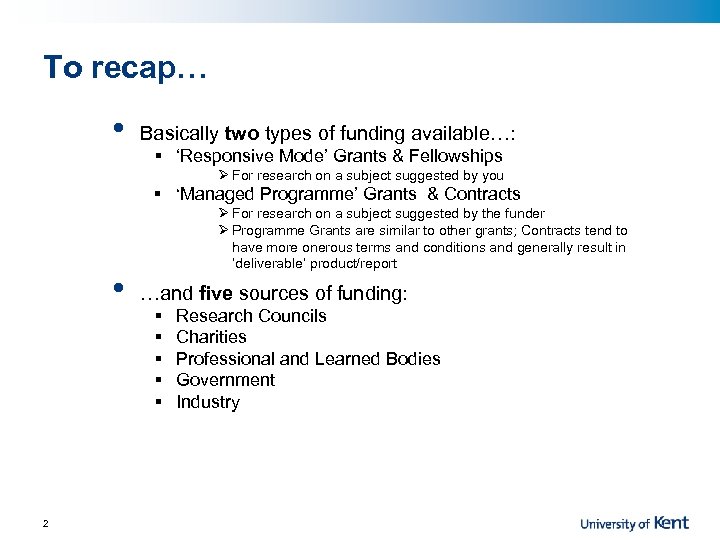
To recap… • Basically two types of funding available…: § ‘Responsive Mode’ Grants & Fellowships Ø For research on a subject suggested by you § ‘Managed Programme’ Grants & Contracts • 2 Ø For research on a subject suggested by the funder Ø Programme Grants are similar to other grants; Contracts tend to have more onerous terms and conditions and generally result in ‘deliverable’ product/report …and five sources of funding: § § § Research Councils Charities Professional and Learned Bodies Government Industry
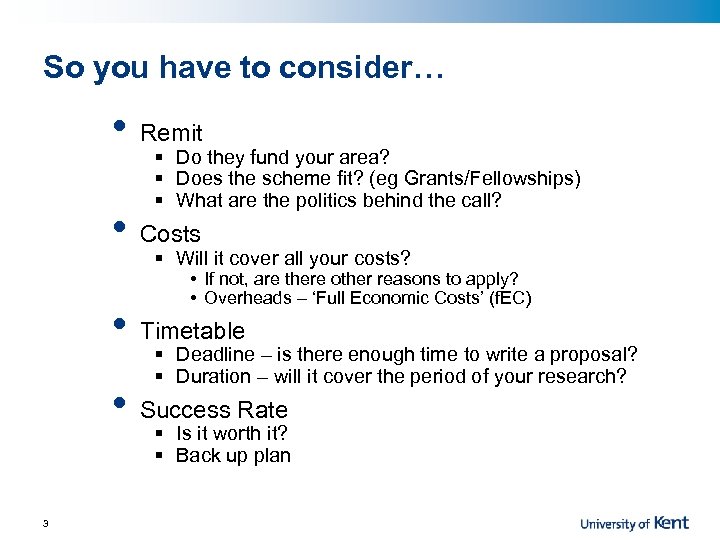
So you have to consider… • Remit • Costs § Do they fund your area? § Does the scheme fit? (eg Grants/Fellowships) § What are the politics behind the call? § Will it cover all your costs? • If not, are there other reasons to apply? • Overheads – ‘Full Economic Costs’ (f. EC) • • 3 Timetable Success Rate § Deadline – is there enough time to write a proposal? § Duration – will it cover the period of your research? § Is it worth it? § Back up plan
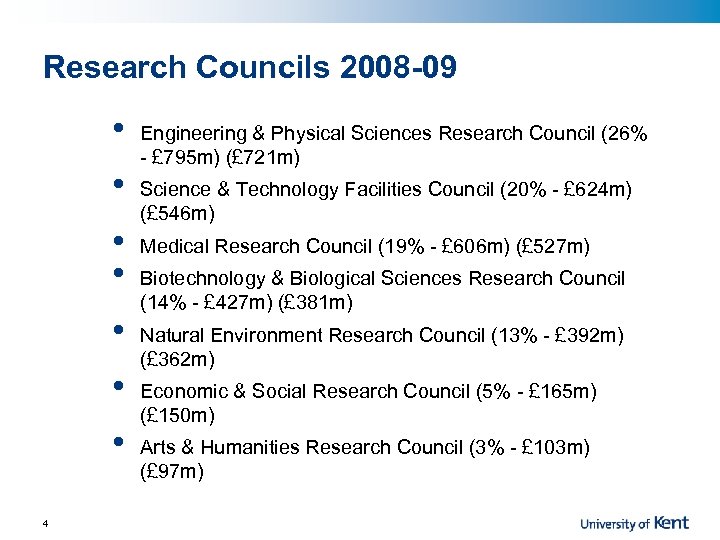
Research Councils 2008 -09 • • 4 Engineering & Physical Sciences Research Council (26% - £ 795 m) (£ 721 m) Science & Technology Facilities Council (20% - £ 624 m) (£ 546 m) Medical Research Council (19% - £ 606 m) (£ 527 m) Biotechnology & Biological Sciences Research Council (14% - £ 427 m) (£ 381 m) Natural Environment Research Council (13% - £ 392 m) (£ 362 m) Economic & Social Research Council (5% - £ 165 m) (£ 150 m) Arts & Humanities Research Council (3% - £ 103 m) (£ 97 m)
Research Council Delivery Plans 2008 -11 • • • 5 RCs laying out their priorities for the next 3 yrs 4 cross-council priorities: § § Energy Living with Environmental Change Global Uncertainties Ageing: Lifelong Health and Wellbeing ‘Economic and Social Benefit’
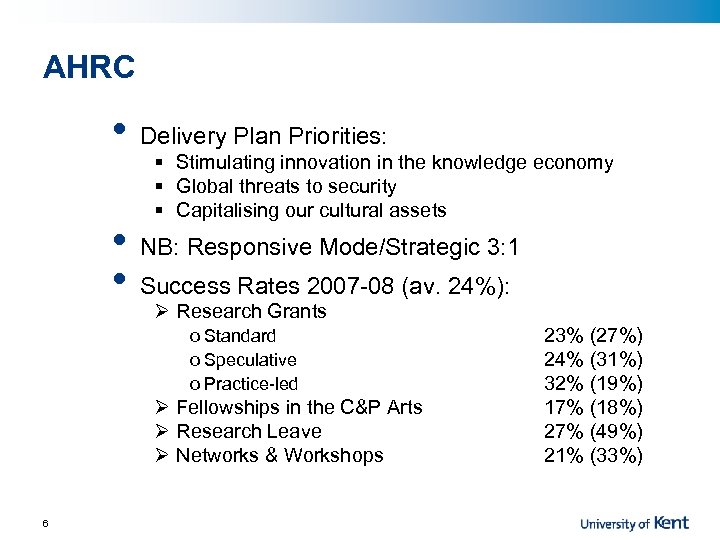
AHRC • • • Delivery Plan Priorities: § Stimulating innovation in the knowledge economy § Global threats to security § Capitalising our cultural assets NB: Responsive Mode/Strategic 3: 1 Success Rates 2007 -08 (av. 24%): Ø Research Grants o Standard o Speculative o Practice-led Ø Fellowships in the C&P Arts Ø Research Leave Ø Networks & Workshops 6 23% (27%) 24% (31%) 32% (19%) 17% (18%) 27% (49%) 21% (33%)
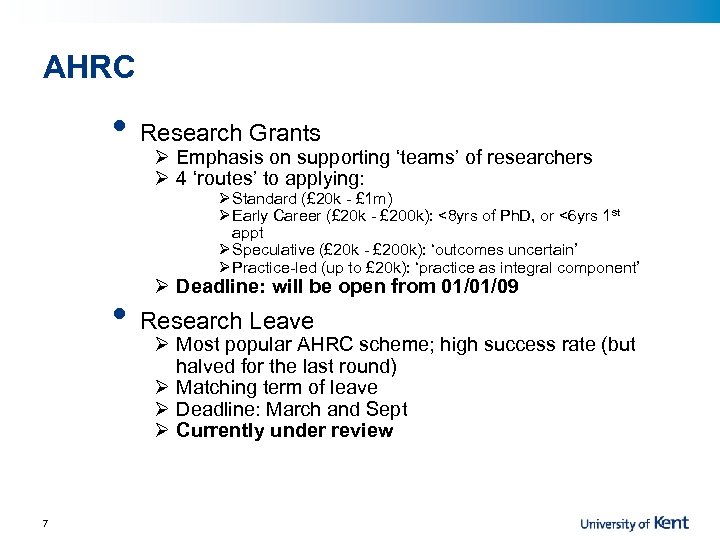
AHRC • Research Grants Ø Emphasis on supporting ‘teams’ of researchers Ø 4 ‘routes’ to applying: Ø Standard (£ 20 k - £ 1 m) Ø Early Career (£ 20 k - £ 200 k): <8 yrs of Ph. D, or <6 yrs 1 st appt Ø Speculative (£ 20 k - £ 200 k): ‘outcomes uncertain’ Ø Practice-led (up to £ 20 k): ‘practice as integral component’ • 7 Ø Deadline: will be open from 01/01/09 Research Leave Ø Most popular AHRC scheme; high success rate (but halved for the last round) Ø Matching term of leave Ø Deadline: March and Sept Ø Currently under review
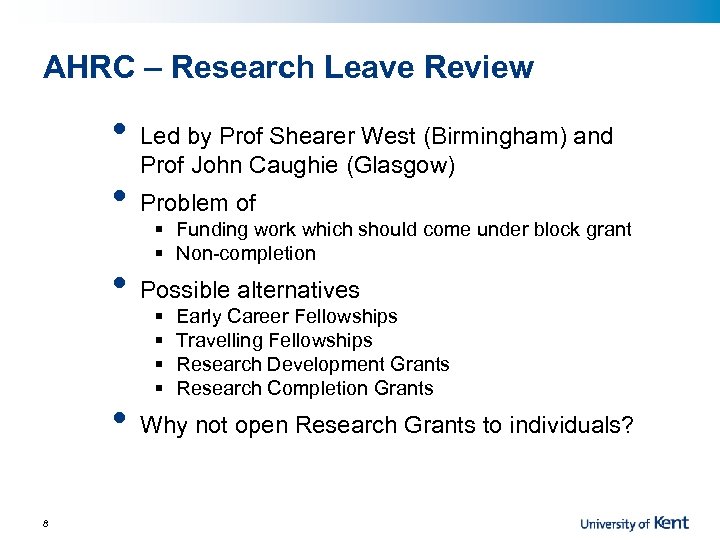
AHRC – Research Leave Review • • Led by Prof Shearer West (Birmingham) and Prof John Caughie (Glasgow) Problem of § Funding work which should come under block grant § Non-completion • • 8 Possible alternatives Why not open Research Grants to individuals? § § Early Career Fellowships Travelling Fellowships Research Development Grants Research Completion Grants
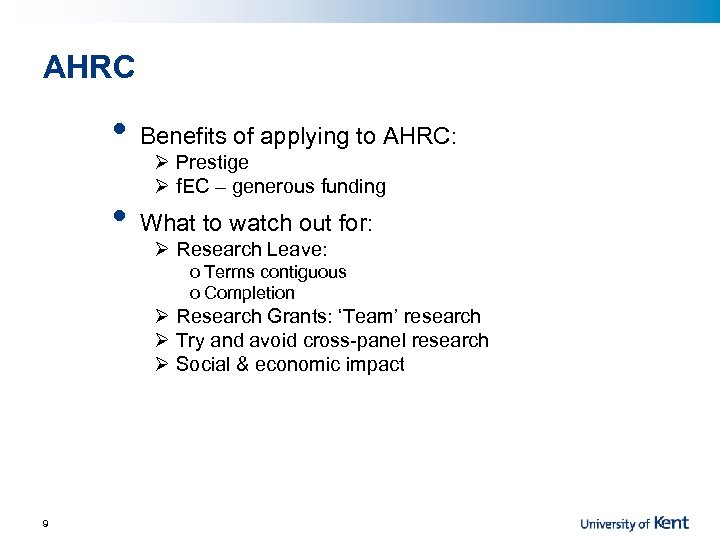
AHRC • Benefits of applying to AHRC: • What to watch out for: Ø Prestige Ø f. EC – generous funding Ø Research Leave: o Terms contiguous o Completion Ø Research Grants: ‘Team’ research Ø Try and avoid cross-panel research Ø Social & economic impact 9
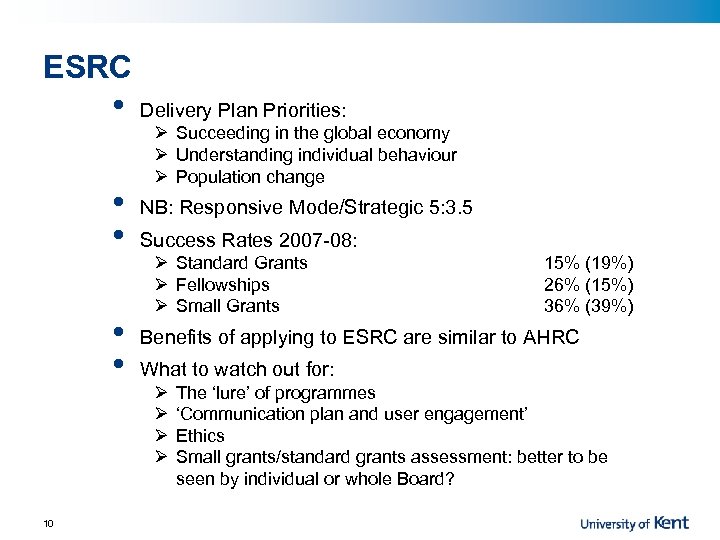
ESRC • • • 10 Delivery Plan Priorities: Ø Succeeding in the global economy Ø Understanding individual behaviour Ø Population change NB: Responsive Mode/Strategic 5: 3. 5 Success Rates 2007 -08: Ø Standard Grants Ø Fellowships Ø Small Grants 15% (19%) 26% (15%) 36% (39%) Benefits of applying to ESRC are similar to AHRC What to watch out for: Ø Ø The ‘lure’ of programmes ‘Communication plan and user engagement’ Ethics Small grants/standard grants assessment: better to be seen by individual or whole Board?
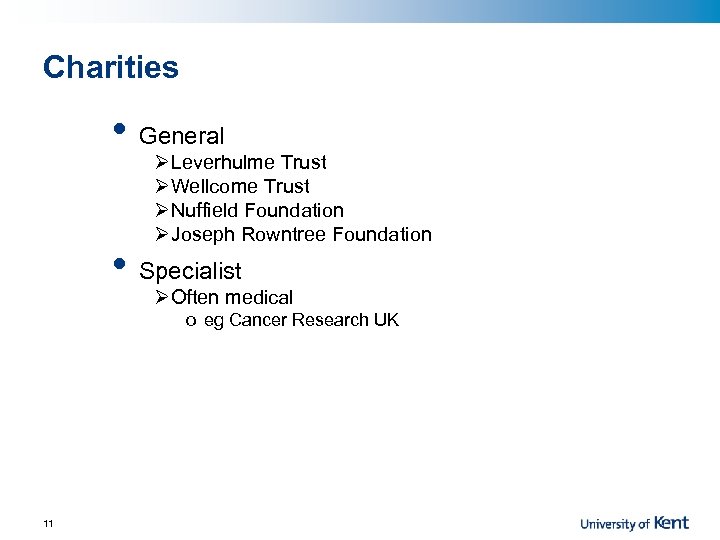
Charities • General ØLeverhulme Trust ØWellcome Trust ØNuffield Foundation ØJoseph Rowntree Foundation • Specialist ØOften medical o eg Cancer Research UK 11
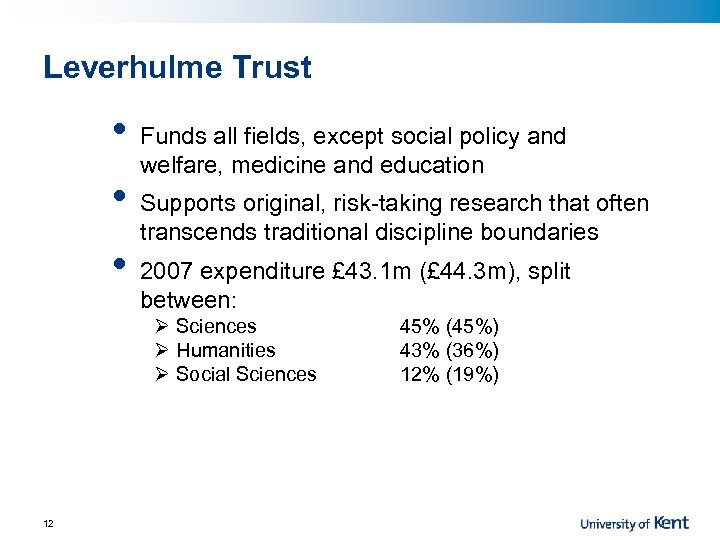
Leverhulme Trust • • • Funds all fields, except social policy and welfare, medicine and education Supports original, risk-taking research that often transcends traditional discipline boundaries 2007 expenditure £ 43. 1 m (£ 44. 3 m), split between: Ø Sciences Ø Humanities Ø Social Sciences 12 45% (45%) 43% (36%) 12% (19%)
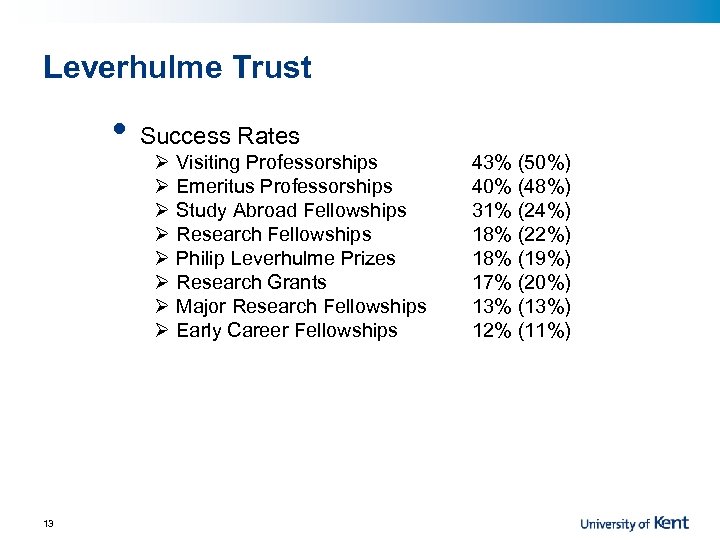
Leverhulme Trust • 13 Success Rates Ø Visiting Professorships Ø Emeritus Professorships Ø Study Abroad Fellowships Ø Research Fellowships Ø Philip Leverhulme Prizes Ø Research Grants Ø Major Research Fellowships Ø Early Career Fellowships 43% (50%) 40% (48%) 31% (24%) 18% (22%) 18% (19%) 17% (20%) 13% (13%) 12% (11%)
Leverhulme Trust • • Benefits of applying to Leverhulme Ø Not ‘restricted’ by demands of distributing public money o no ‘political agenda’ o reporting not as onerous What to watch out for: Ø Research has to appeal to broad general audience o Trustees all ex-Unilever employees o Depend for advice on: o ‘Advisory Committee’ (for smaller grants): 9 professors o ‘Advisory Panel’ (for larger grants): 32 academics Ø Interdisciplinary – but not ‘last resort’ Ø Risk taking Ø Individual ‘vision’ 14
Wellcome Trust • • • ‘To foster and promote research with the aim of improving human and animal health’ Funding expenditure in 2006 -2007 £ 519 m (£ 484 m) As well as Biomedical Research, also supports ‘Biomedical Humanities’ (£ 12. 5 m in 06/07) (£ 8 m) Ø Broad remits: o History: ‘the historical study of all factors affecting the medical and health experience of people and animals in all countries, at all periods. ’ o Ethics: ‘ethical issues that arise in the development and delivery of healthcare, or that arise from the use of medical techniques. This includes ethics of research (involving either humans or animals). ’ 15
Wellcome Trust • • 16 Benefits of applying to Wellcome What to watch out for Ø Wide range of funding Ø More useful feedback following rejection Ø Supportive once you have received funding Ø Bringing in electronic submission in Medical Humanities Ø Biomedical ethics centred on funding for institutions and developing countries Ø Bewildering choice of funding schemes
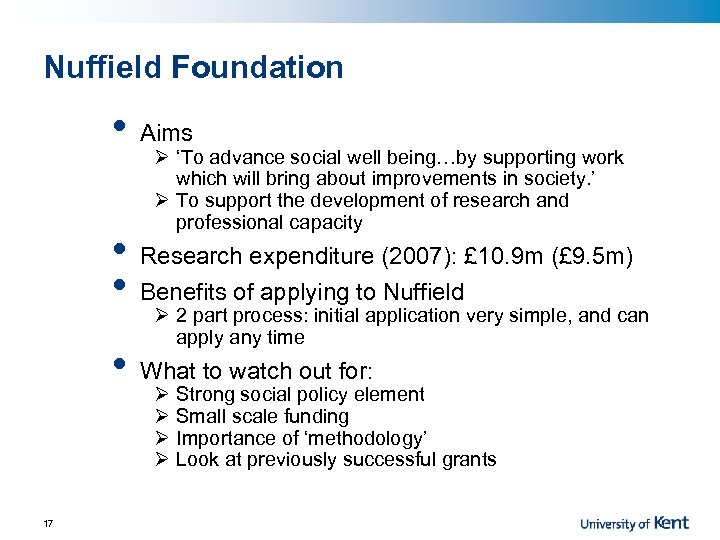
Nuffield Foundation • • • Research expenditure (2007): £ 10. 9 m (£ 9. 5 m) Benefits of applying to Nuffield • 17 Aims What to watch out for: Ø ‘To advance social well being…by supporting work which will bring about improvements in society. ’ Ø To support the development of research and professional capacity Ø 2 part process: initial application very simple, and can apply any time Ø Strong social policy element Ø Small scale funding Ø Importance of ‘methodology’ Ø Look at previously successful grants
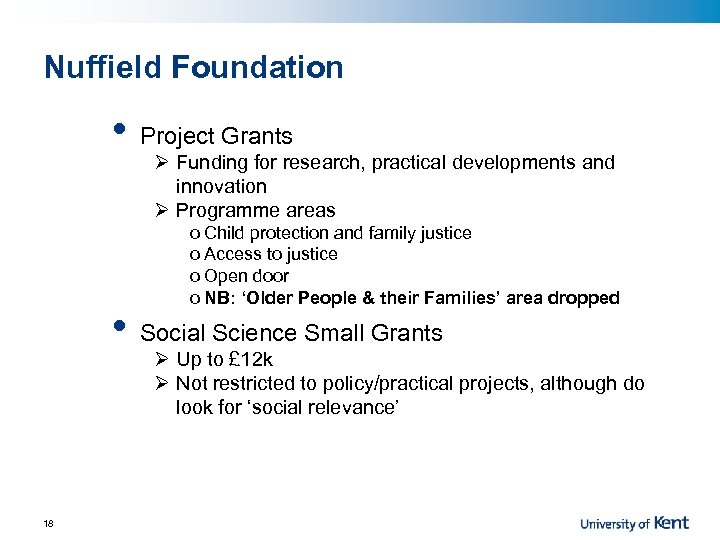
Nuffield Foundation • • 18 Project Grants Ø Funding for research, practical developments and innovation Ø Programme areas o Child protection and family justice o Access to justice o Open door o NB: ‘Older People & their Families’ area dropped Social Science Small Grants Ø Up to £ 12 k Ø Not restricted to policy/practical projects, although do look for ‘social relevance’
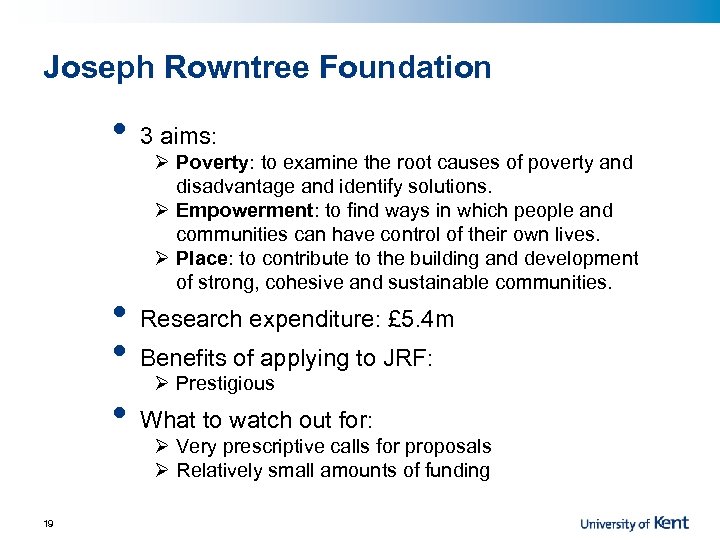
Joseph Rowntree Foundation • • 19 3 aims: Ø Poverty: to examine the root causes of poverty and disadvantage and identify solutions. Ø Empowerment: to find ways in which people and communities can have control of their own lives. Ø Place: to contribute to the building and development of strong, cohesive and sustainable communities. Research expenditure: £ 5. 4 m Benefits of applying to JRF: Ø Prestigious What to watch out for: Ø Very prescriptive calls for proposals Ø Relatively small amounts of funding
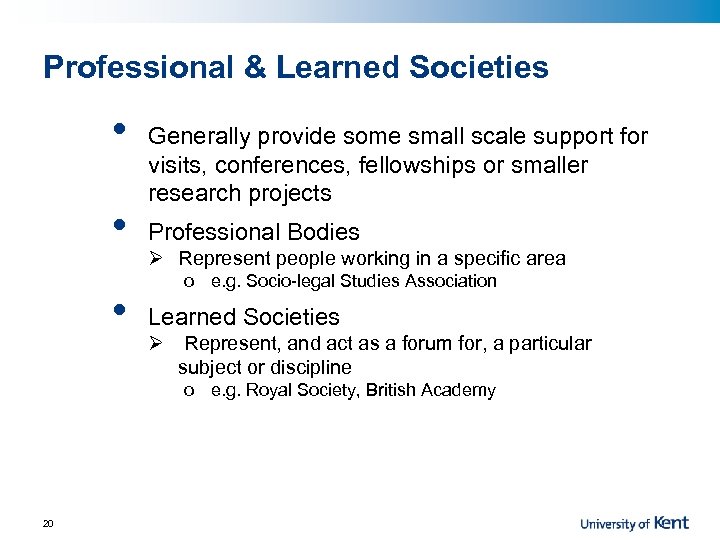
Professional & Learned Societies • • • Generally provide some small scale support for visits, conferences, fellowships or smaller research projects Professional Bodies Ø Represent people working in a specific area o e. g. Socio-legal Studies Association Learned Societies Ø Represent, and act as a forum for, a particular subject or discipline o e. g. Royal Society, British Academy 20
British Academy • • • 21 Funds research in Humanities & Social Sciences Research Expenditure 07/08: £ 22. 4 m (£ 21. 3 m) funding strategy is focused on providing smallscale support, including Development Awards (up to £ 150 k f. EC), fellowships, conference grants and agreements with other countries for international projects
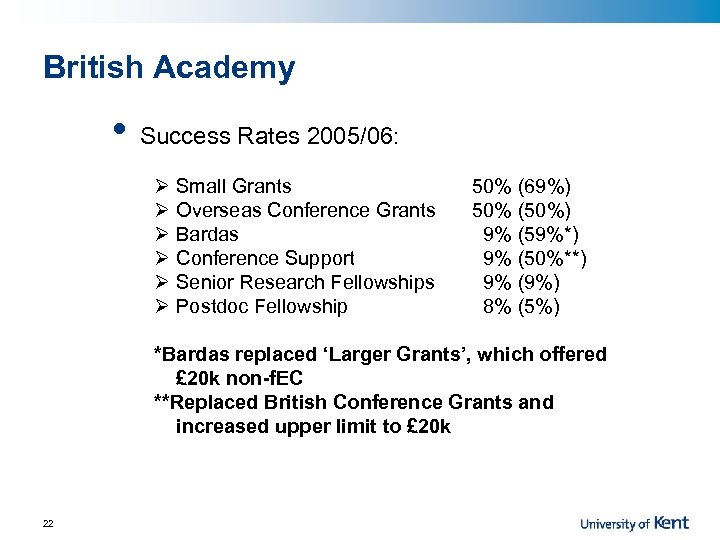
British Academy • Success Rates 2005/06: Ø Small Grants Ø Overseas Conference Grants Ø Bardas Ø Conference Support Ø Senior Research Fellowships Ø Postdoc Fellowship 50% (69%) 50% (50%) 9% (59%*) 9% (50%**) 9% (9%) 8% (5%) *Bardas replaced ‘Larger Grants’, which offered £ 20 k non-f. EC **Replaced British Conference Grants and increased upper limit to £ 20 k 22
British Academy • • 23 Benefits of applying to BA What to watch out for: Ø Small Grants have highest success rate out of all relevant funders Ø Relatively simple forms Ø ‘useful’ pots of money – eg conference funding, collaboration etc Ø Quite a ‘traditional’ funder Ø Liable to SOOH (but Bardas f. EC)
Government • National Ø Government Departments o Usually managed programmes, e. g. DH, DEFRA, DFID o Some responsive mode – e. g. DEFRA’s Darwin Initiative Ø County Councils Ø Other Government-funded organisations • o British Council – collaborative grants o NESTA International Ø Europe o Framework Programme Ø USA o Federal Grants & National Institutes of Health 24
Other National Government Funding • • 25 County Councils British Council Ø Commission surveys etc. Ø Have collaborative agreements with a number of countries
Dept of Health • • Research & Development budget 2008 -09: £ 800 m National Institute for Health Research (NIHR) Ø Umbrella organisation covering a range of funding programmes, including: o Research for Patient Benefit (Rf. PB): ‘it funds research into everyday practice in the health service’ o Service Delivery & Organisation (SDO): ‘commissions research on the way health services are organised and delivered by the NHS. ’ • • 26 Benefits of Do. H: What to watch out for: Ø A lot of funding available, f. EC Ø NIHR success rate good Ø Complex applications Ø Research Governance Framework (RGF)
SE Research Design Service • • 27 £ 5 m service for SE Strategic Health Authority Surrey, Sussex, Kent Advise and support health and social care researchers Free
European Funding • European Commission Ø ‘driving force’ behind EU Ø Drafts laws, manages day-to-day business of EU Ø Organised into 37 Directorates General & Services, including o Justice, Freedom & Security § eg ‘Daphne II Programme’ to combat violence against children, young people and women o Research § Framework Programme o Regional Policy § Interreg Programme 28
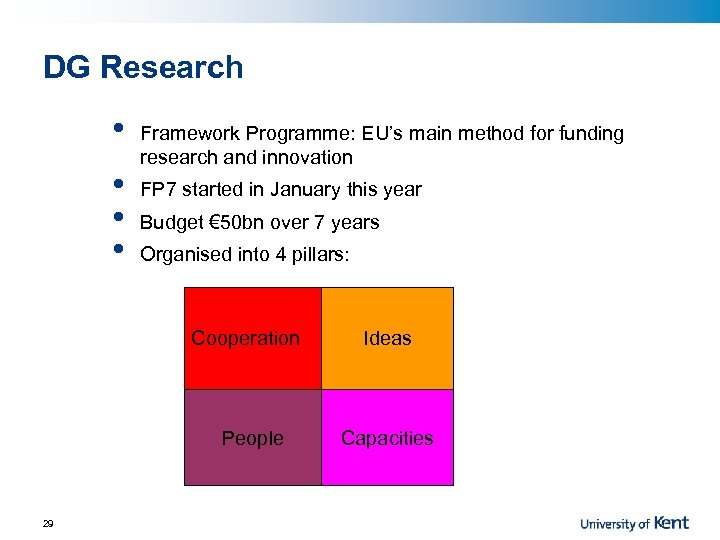
DG Research • • Framework Programme: EU’s main method for funding research and innovation FP 7 started in January this year Budget € 50 bn over 7 years Organised into 4 pillars: Cooperation People 29 Ideas Capacities
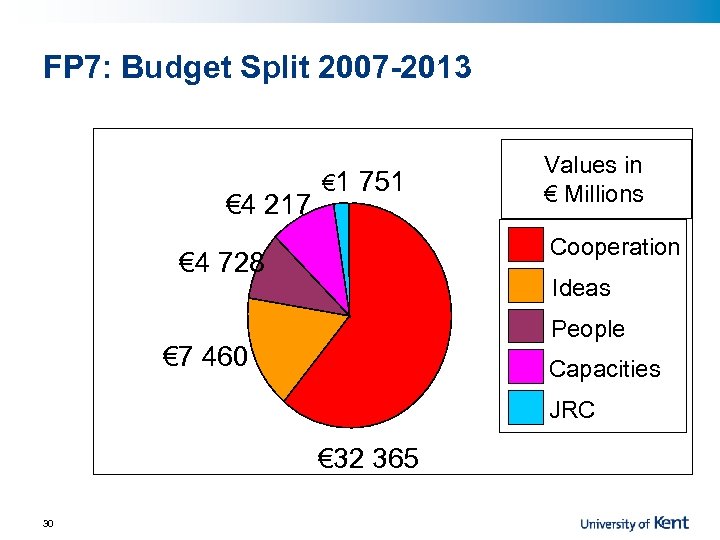
FP 7: Budget Split 2007 -2013 € 4 217 € 1 751 Values in € Millions Cooperation € 4 728 Ideas People € 7 460 Capacities JRC € 32 365 30
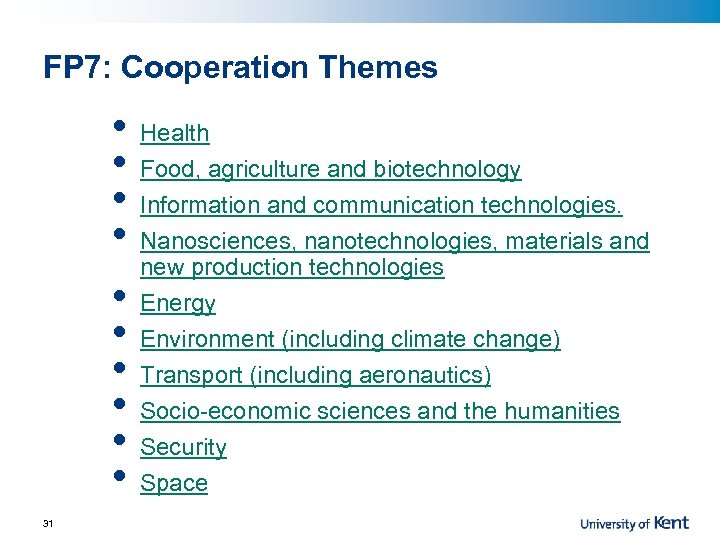
FP 7: Cooperation Themes • • • 31 Health Food, agriculture and biotechnology Information and communication technologies. Nanosciences, nanotechnologies, materials and new production technologies Energy Environment (including climate change) Transport (including aeronautics) Socio-economic sciences and the humanities Security Space
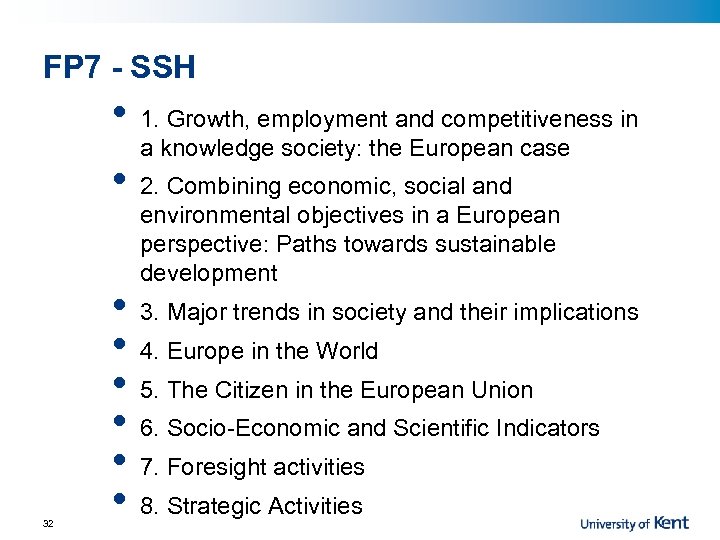
FP 7 - SSH • • 32 • • • 1. Growth, employment and competitiveness in a knowledge society: the European case 2. Combining economic, social and environmental objectives in a European perspective: Paths towards sustainable development 3. Major trends in society and their implications 4. Europe in the World 5. The Citizen in the European Union 6. Socio-Economic and Scientific Indicators 7. Foresight activities 8. Strategic Activities
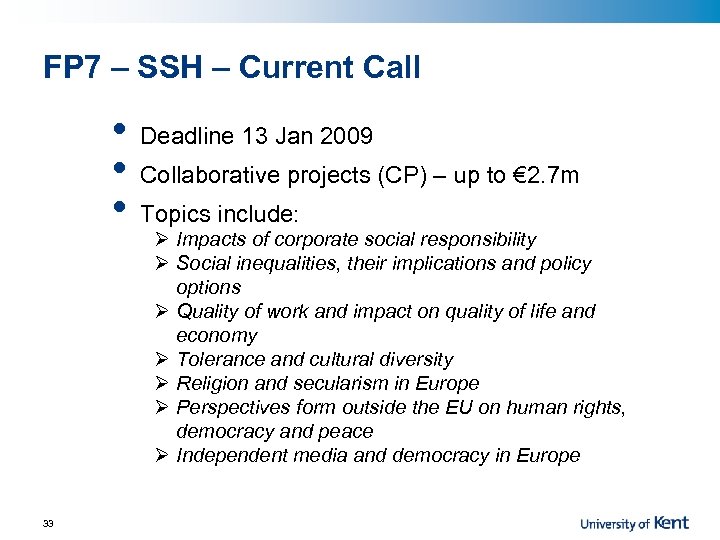
FP 7 – SSH – Current Call • • • 33 Deadline 13 Jan 2009 Collaborative projects (CP) – up to € 2. 7 m Topics include: Ø Impacts of corporate social responsibility Ø Social inequalities, their implications and policy options Ø Quality of work and impact on quality of life and economy Ø Tolerance and cultural diversity Ø Religion and secularism in Europe Ø Perspectives form outside the EU on human rights, democracy and peace Ø Independent media and democracy in Europe
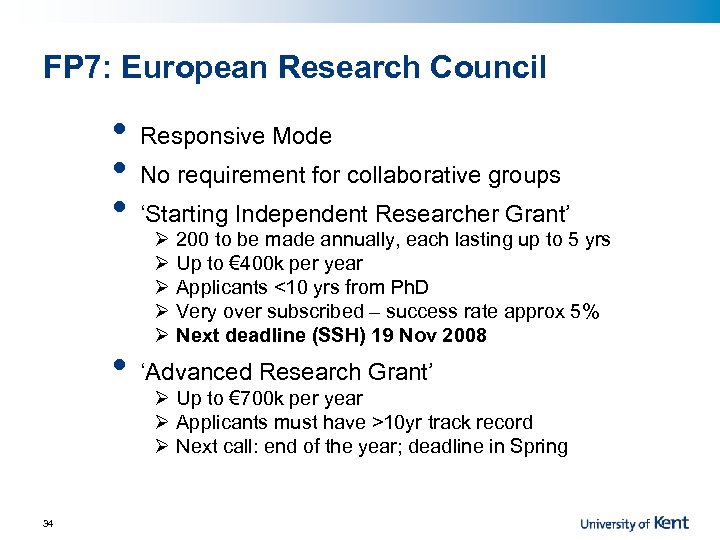
FP 7: European Research Council • • 34 Responsive Mode No requirement for collaborative groups ‘Starting Independent Researcher Grant’ Ø 200 to be made annually, each lasting up to 5 yrs Ø Up to € 400 k per year Ø Applicants <10 yrs from Ph. D Ø Very over subscribed – success rate approx 5% Ø Next deadline (SSH) 19 Nov 2008 ‘Advanced Research Grant’ Ø Up to € 700 k per year Ø Applicants must have >10 yr track record Ø Next call: end of the year; deadline in Spring
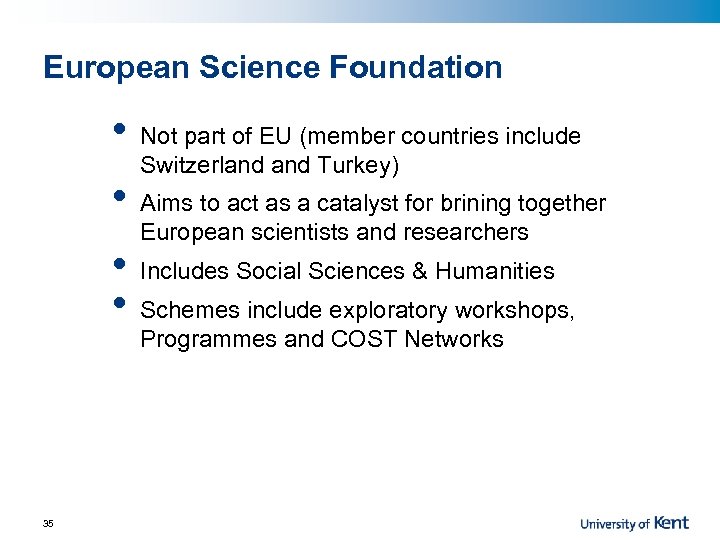
European Science Foundation • • 35 Not part of EU (member countries include Switzerland Turkey) Aims to act as a catalyst for brining together European scientists and researchers Includes Social Sciences & Humanities Schemes include exploratory workshops, Programmes and COST Networks
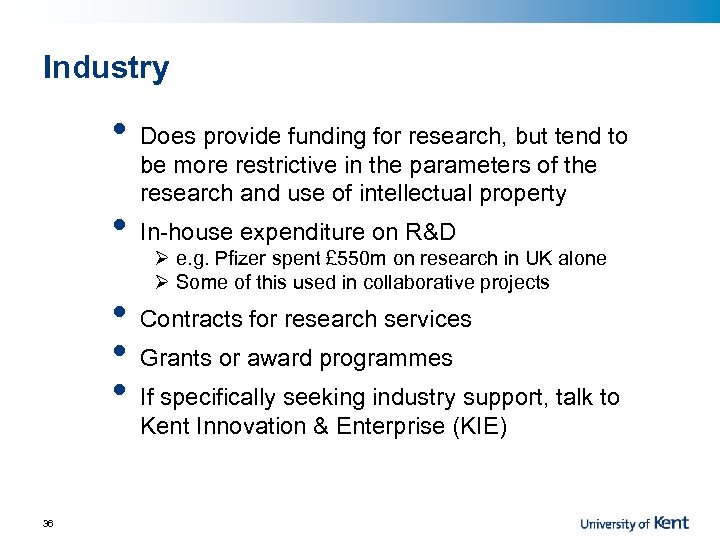
Industry • • • 36 Does provide funding for research, but tend to be more restrictive in the parameters of the research and use of intellectual property In-house expenditure on R&D Ø e. g. Pfizer spent £ 550 m on research in UK alone Ø Some of this used in collaborative projects Contracts for research services Grants or award programmes If specifically seeking industry support, talk to Kent Innovation & Enterprise (KIE)
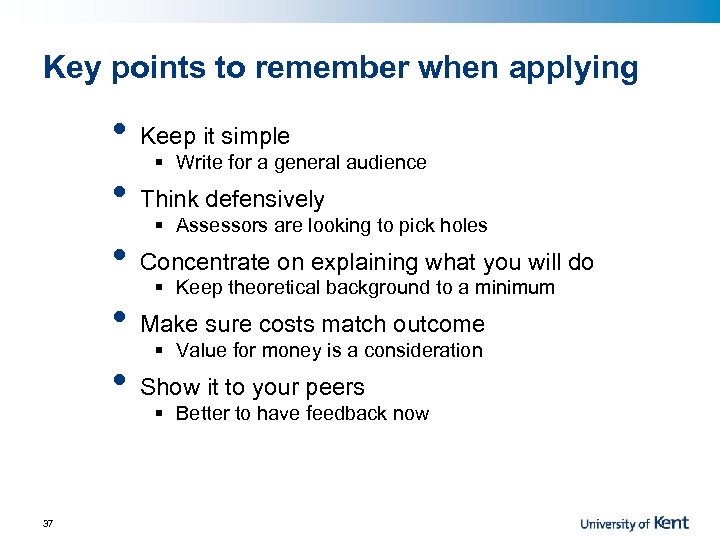
Key points to remember when applying • • • 37 Keep it simple § Write for a general audience Think defensively § Assessors are looking to pick holes Concentrate on explaining what you will do § Keep theoretical background to a minimum Make sure costs match outcome § Value for money is a consideration Show it to your peers § Better to have feedback now
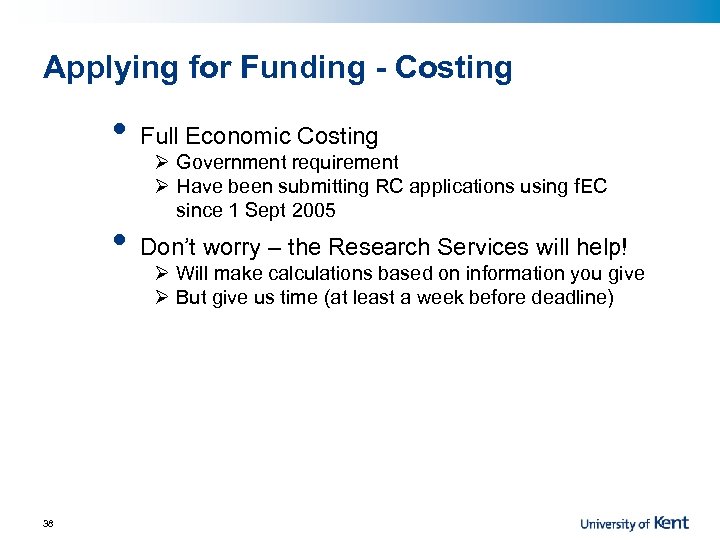
Applying for Funding - Costing • • 38 Full Economic Costing Don’t worry – the Research Services will help! Ø Government requirement Ø Have been submitting RC applications using f. EC since 1 Sept 2005 Ø Will make calculations based on information you give Ø But give us time (at least a week before deadline)
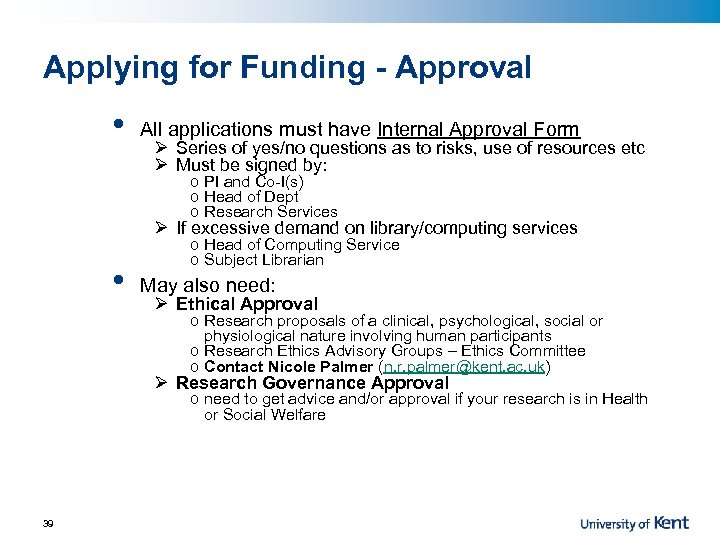
Applying for Funding - Approval • All applications must have Internal Approval Form Ø Series of yes/no questions as to risks, use of resources etc Ø Must be signed by: o PI and Co-I(s) o Head of Dept o Research Services Ø If excessive demand on library/computing services • o Head of Computing Service o Subject Librarian May also need: Ø Ethical Approval o Research proposals of a clinical, psychological, social or physiological nature involving human participants o Research Ethics Advisory Groups – Ethics Committee o Contact Nicole Palmer (n. r. palmer@kent. ac. uk) Ø Research Governance Approval o need to get advice and/or approval if your research is in Health or Social Welfare 39
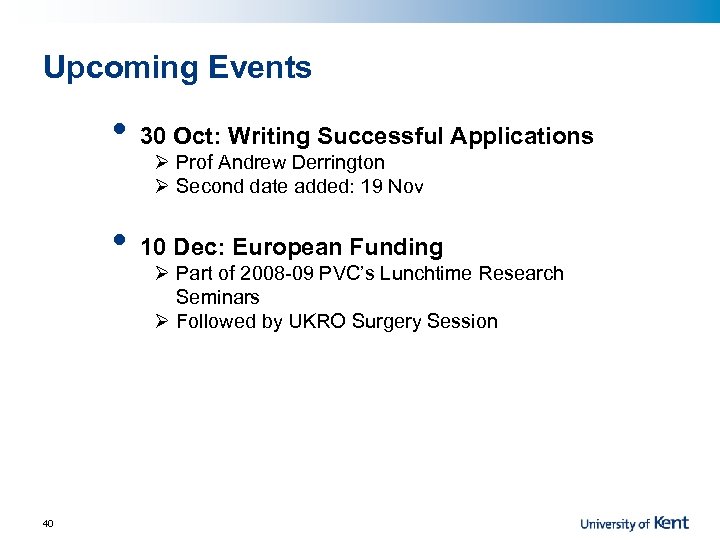
Upcoming Events • • 40 30 Oct: Writing Successful Applications 10 Dec: European Funding Ø Prof Andrew Derrington Ø Second date added: 19 Nov Ø Part of 2008 -09 PVC’s Lunchtime Research Seminars Ø Followed by UKRO Surgery Session
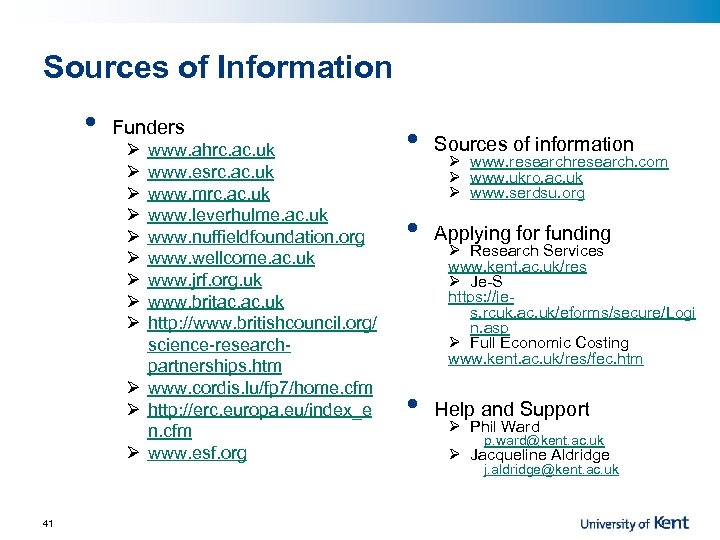
Sources of Information • 41 Funders Ø Ø Ø Ø Ø www. ahrc. ac. uk www. esrc. ac. uk www. mrc. ac. uk www. leverhulme. ac. uk www. nuffieldfoundation. org www. wellcome. ac. uk www. jrf. org. uk www. britac. uk http: //www. britishcouncil. org/ science-researchpartnerships. htm Ø www. cordis. lu/fp 7/home. cfm Ø http: //erc. europa. eu/index_e n. cfm Ø www. esf. org • Sources of information • Applying for funding • Help and Support Ø www. research. com Ø www. ukro. ac. uk Ø www. serdsu. org Ø Research Services www. kent. ac. uk/res Ø Je-S https: //jes. rcuk. ac. uk/eforms/secure/Logi n. asp Ø Full Economic Costing www. kent. ac. uk/res/fec. htm Ø Phil Ward p. ward@kent. ac. uk Ø Jacqueline Aldridge j. aldridge@kent. ac. uk
Скачать презентацию Phil Ward Research Funding Officer October 2008 Research
56f8d7d52fed7edd56608c48b71423bb.ppt