


 Скачать презентацию Phenylpropanolamine Risk of Hemorrhagic Stroke Lois La
a2d910b2dd8a7bfdc46d02d378c871bc.ppt
- Количество слайдов: 85
 Phenylpropanolamine & Risk of Hemorrhagic Stroke Lois La Grenade, M. D. , M. P. H. Office of Postmarketing Drug Risk Assessment Center for Drug Evaluation and Research Food and Drug Administration
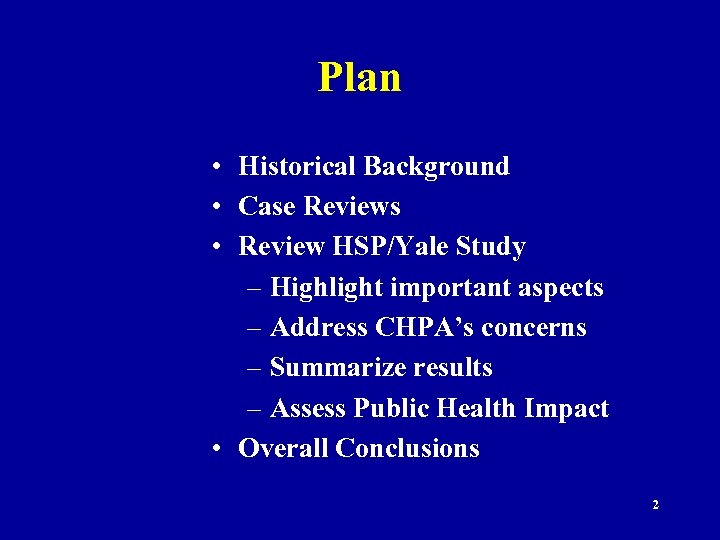 Plan • Historical Background • Case Reviews • Review HSP/Yale Study – Highlight important aspects – Address CHPA’s concerns – Summarize results – Assess Public Health Impact • Overall Conclusions 2
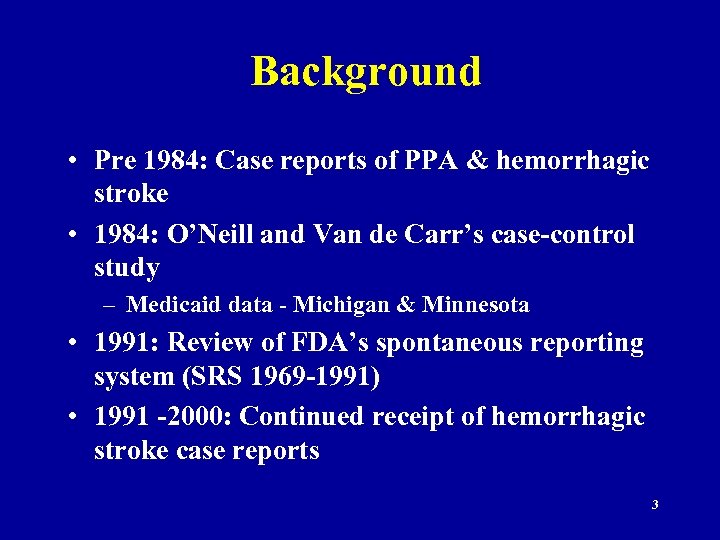 Background • Pre 1984: Case reports of PPA & hemorrhagic stroke • 1984: O’Neill and Van de Carr’s case-control study – Medicaid data - Michigan & Minnesota • 1991: Review of FDA’s spontaneous reporting system (SRS 1969 -1991) • 1991 -2000: Continued receipt of hemorrhagic stroke case reports 3
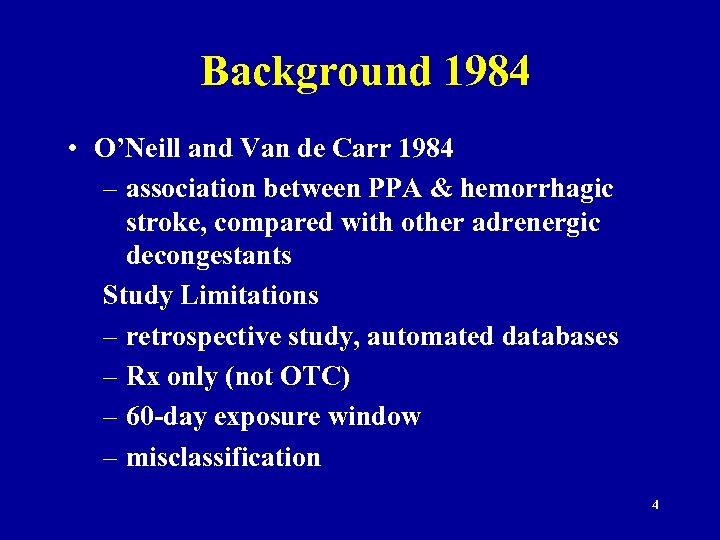 Background 1984 • O’Neill and Van de Carr 1984 – association between PPA & hemorrhagic stroke, compared with other adrenergic decongestants Study Limitations – retrospective study, automated databases – Rx only (not OTC) – 60 -day exposure window – misclassification 4
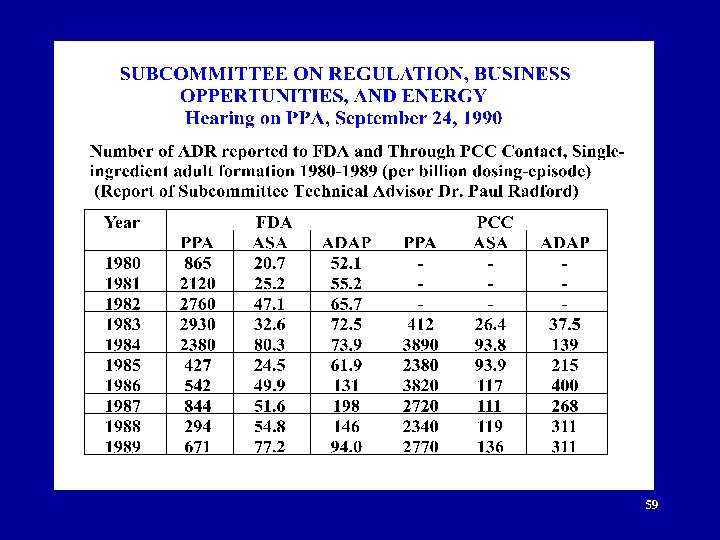
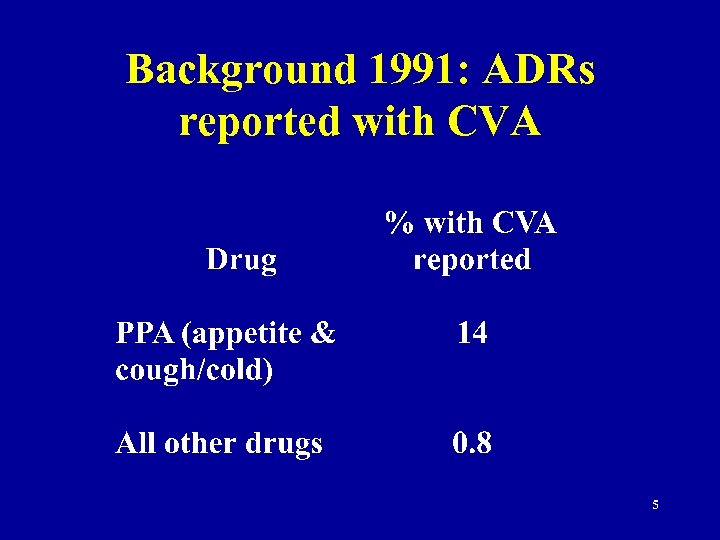 Background 1991: ADRs reported with CVA 5
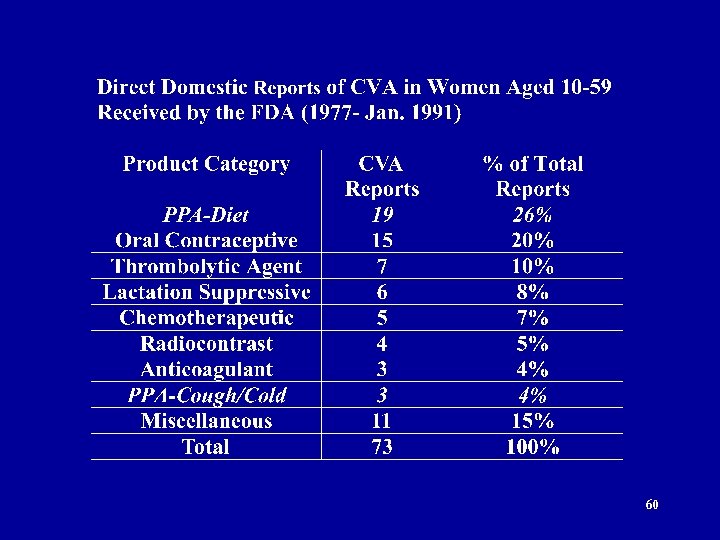
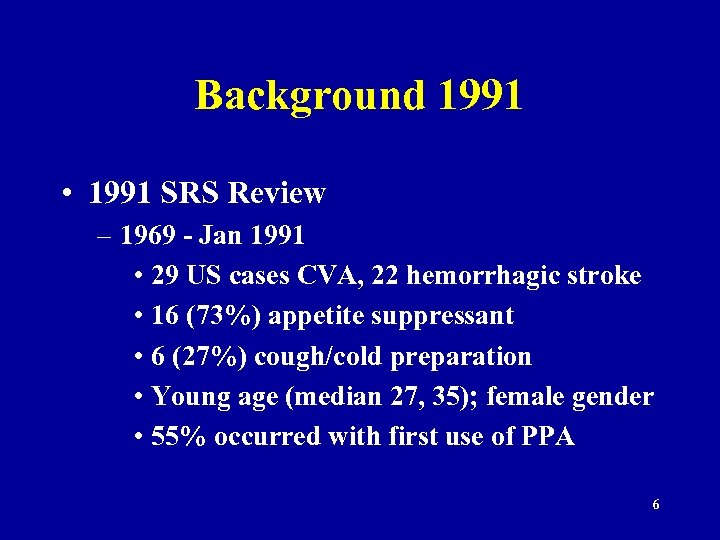 Background 1991 • 1991 SRS Review – 1969 - Jan 1991 • 29 US cases CVA, 22 hemorrhagic stroke • 16 (73%) appetite suppressant • 6 (27%) cough/cold preparation • Young age (median 27, 35); female gender • 55% occurred with first use of PPA 6
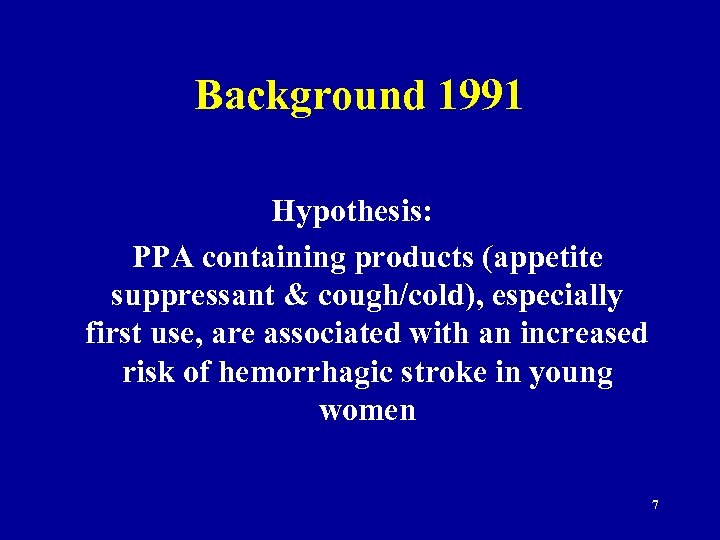 Background 1991 Hypothesis: PPA containing products (appetite suppressant & cough/cold), especially first use, are associated with an increased risk of hemorrhagic stroke in young women 7
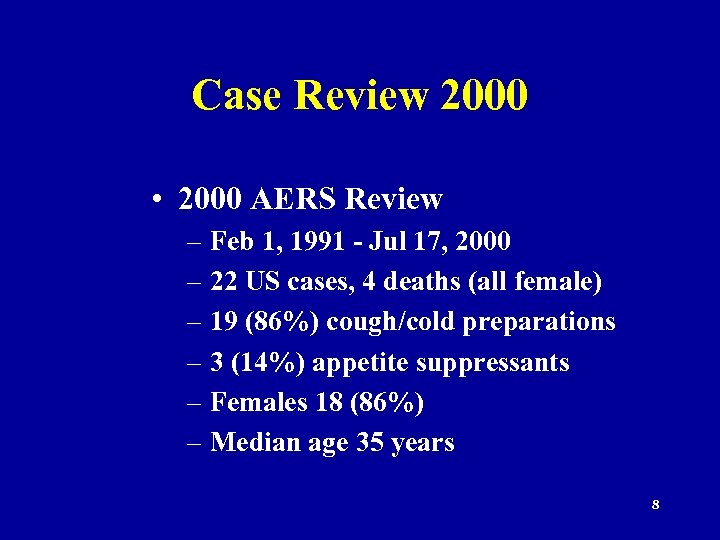 Case Review 2000 • 2000 AERS Review – Feb 1, 1991 - Jul 17, 2000 – 22 US cases, 4 deaths (all female) – 19 (86%) cough/cold preparations – 3 (14%) appetite suppressants – Females 18 (86%) – Median age 35 years 8
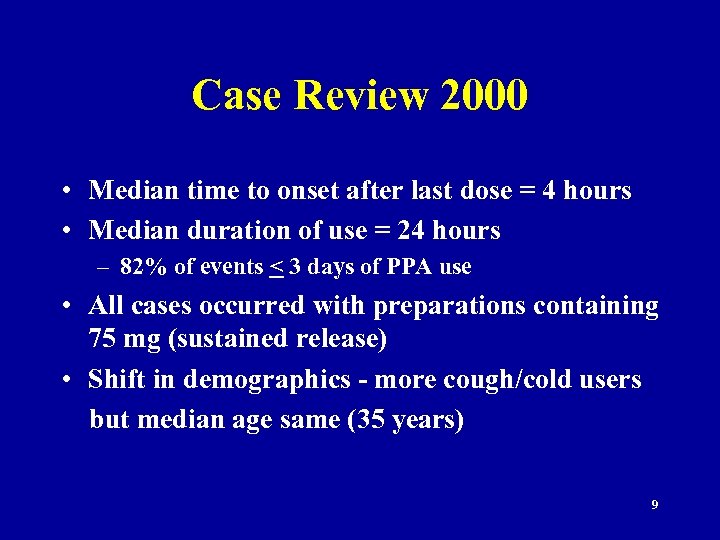 Case Review 2000 • Median time to onset after last dose = 4 hours • Median duration of use = 24 hours – 82% of events < 3 days of PPA use • All cases occurred with preparations containing 75 mg (sustained release) • Shift in demographics - more cough/cold users but median age same (35 years) 9
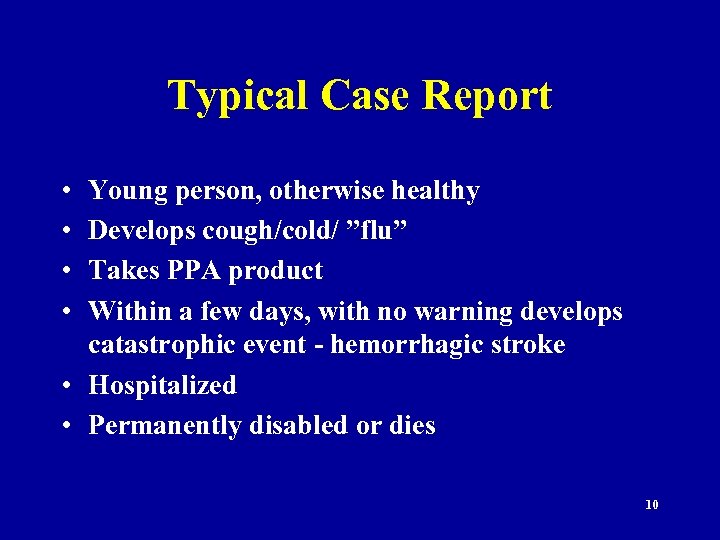 Typical Case Report • • Young person, otherwise healthy Develops cough/cold/ ”flu” Takes PPA product Within a few days, with no warning develops catastrophic event - hemorrhagic stroke • Hospitalized • Permanently disabled or dies 10
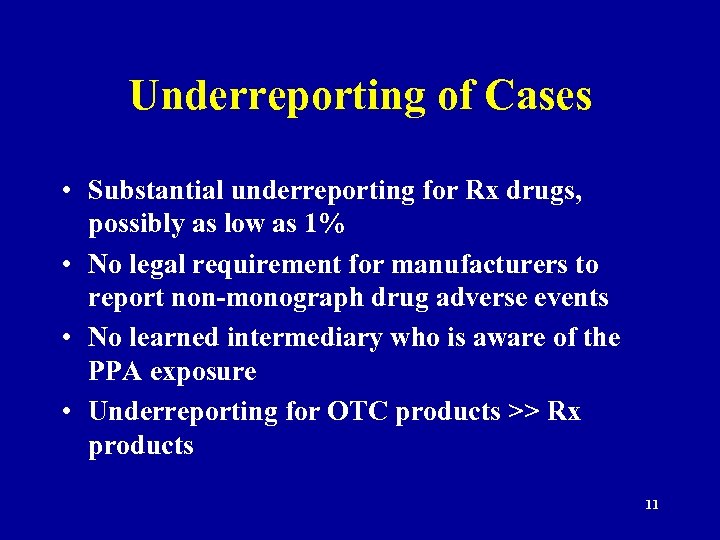 Underreporting of Cases • Substantial underreporting for Rx drugs, possibly as low as 1% • No legal requirement for manufacturers to report non-monograph drug adverse events • No learned intermediary who is aware of the PPA exposure • Underreporting for OTC products >> Rx products 11
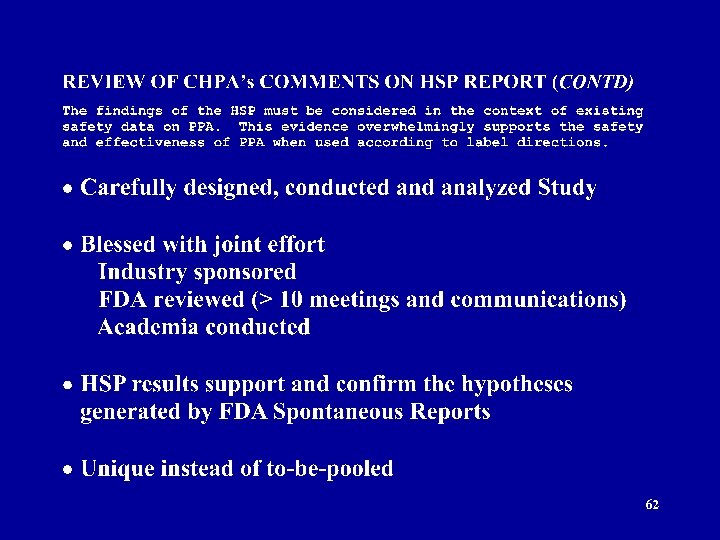
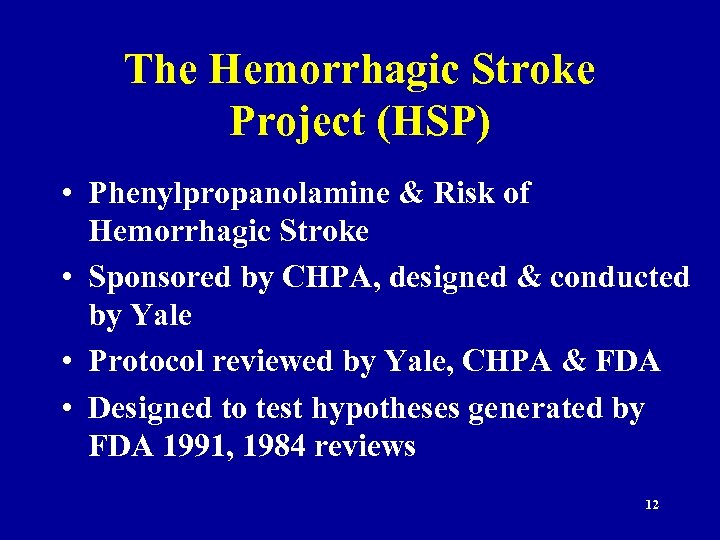 The Hemorrhagic Stroke Project (HSP) • Phenylpropanolamine & Risk of Hemorrhagic Stroke • Sponsored by CHPA, designed & conducted by Yale • Protocol reviewed by Yale, CHPA & FDA • Designed to test hypotheses generated by FDA 1991, 1984 reviews 12
 HSP Case-control Study PPA & Hemorrhagic Stroke • Objectives 1. Among men and women aged 18 – 49 years, to estimate the association between PPA and hemorrhagic stroke generally, and 2. by type of PPA exposure 13
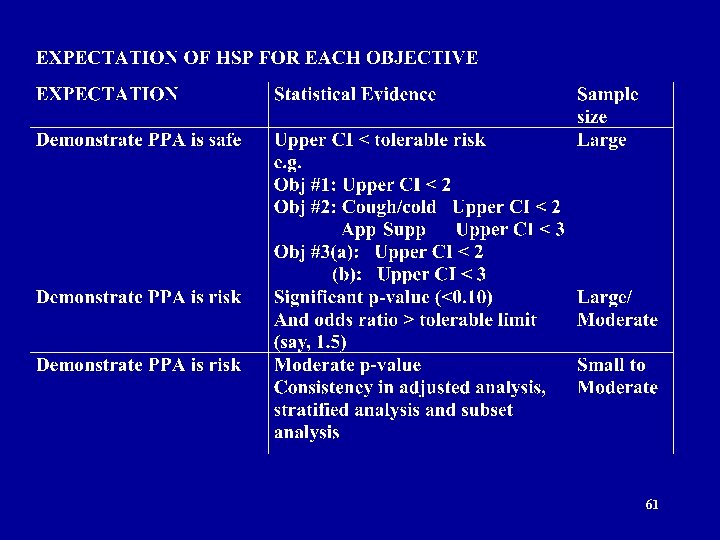
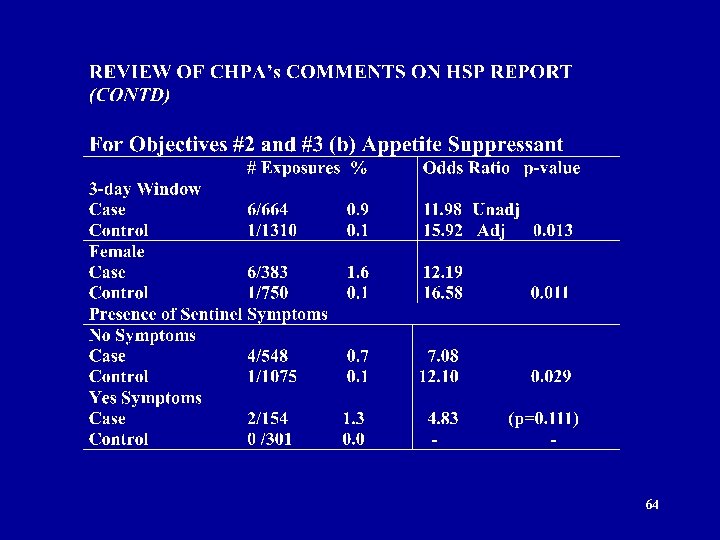
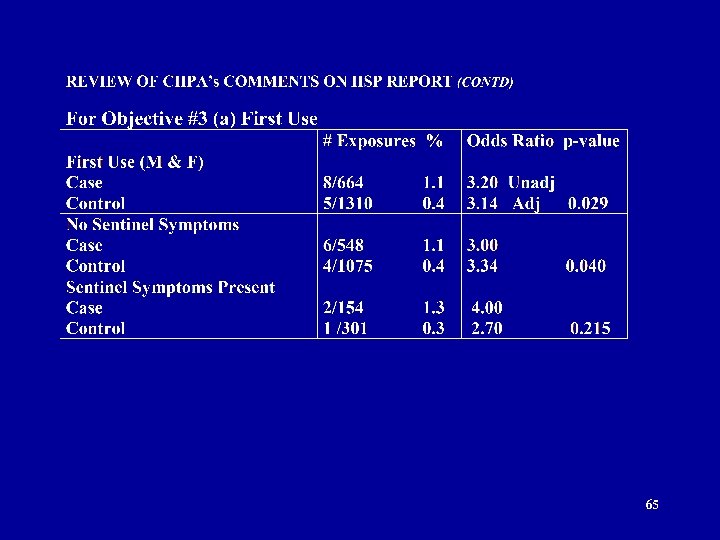
 Objectives contd. 3. Among women aged 18 -49 years to estimate (a) the association between first use of PPA and hemorrhagic stroke and (b) PPA in appetite suppressants and hemorrhagic stroke. Most important from FDA viewpoint as this was generated from our reviews 14
 Study Design • Case-control method - suited to rare events such as hemorrhagic stroke in young people – Captures all cases in a specified time-period – Results available more quickly than with cohort studies – Less expensive 15
 Design Strengths • • • Targeted to test specific hypotheses Prospective Carefully designed to minimize bias Conducted with great attention to detail Careful analysis – Internal consistency shown across the various strata that were analyzed • Largest hemorrhagic stroke study to date 16
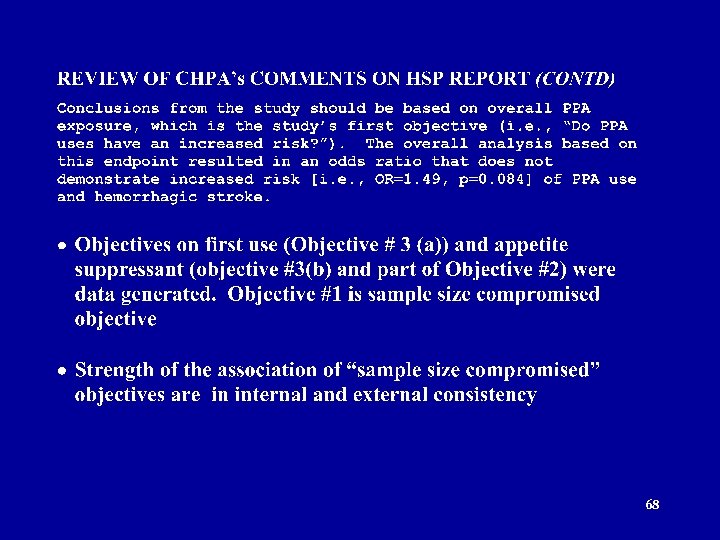
 Design Limitations • Sample size & power borderline • Powered to detect OR of 5 or greater – for practical, not scientific/public health considerations • Study duration was 5+ years 17
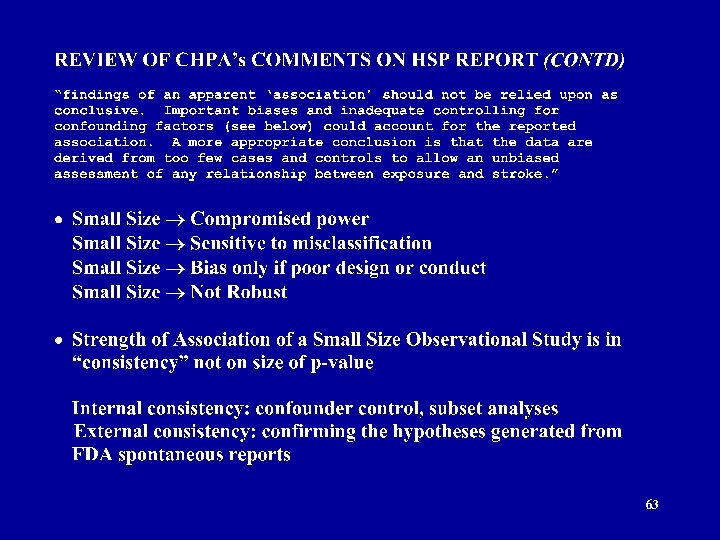
 Small Sample Size (CHPA) • • Low statistical power May be subject to exposure misclassification May introduce important biases Results may not be robust 18
 Small Sample Size (FDA) • Largest study ever of hemorrhagic stroke • Low power reduces probability of showing a difference if one exists – major difference observed despite low power • Bias is a product of poor study design/conduct – HSP well designed, internal safeguards, QA • Internal consistency in subset analyses underscores robustness of data 19
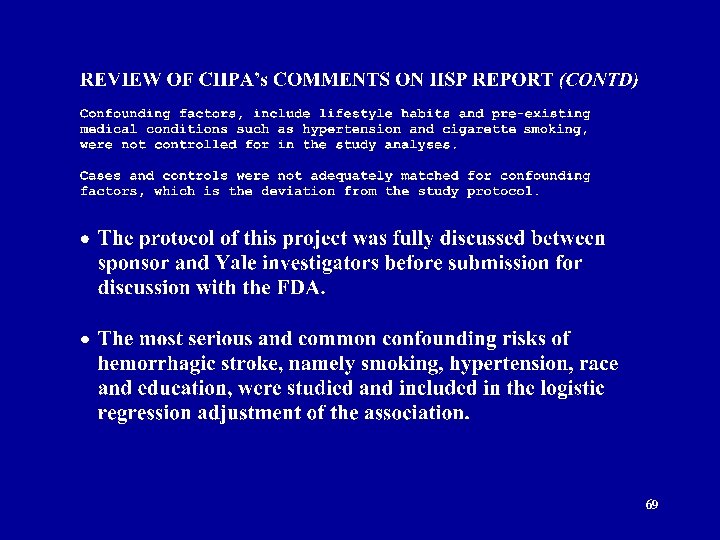
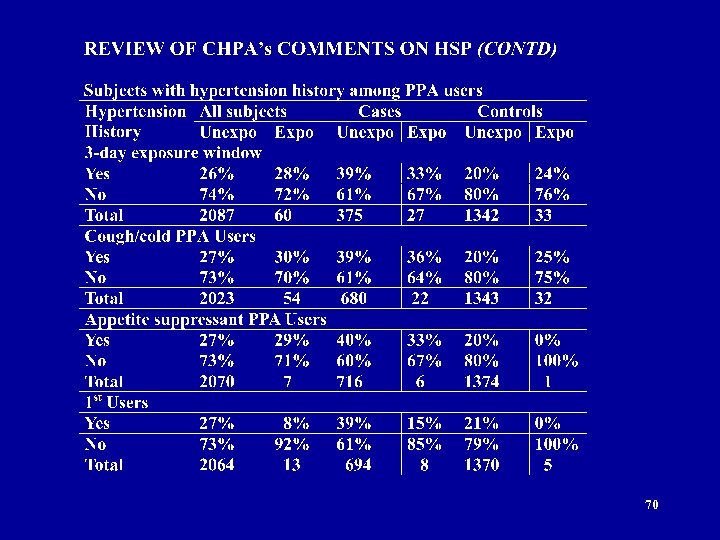
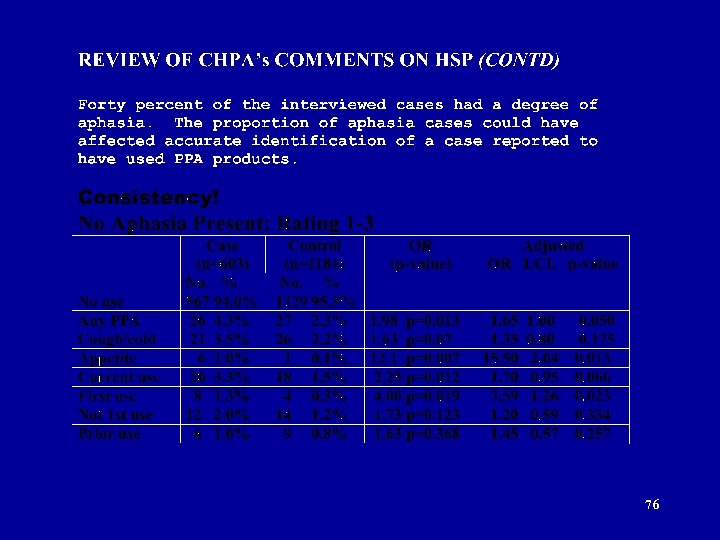
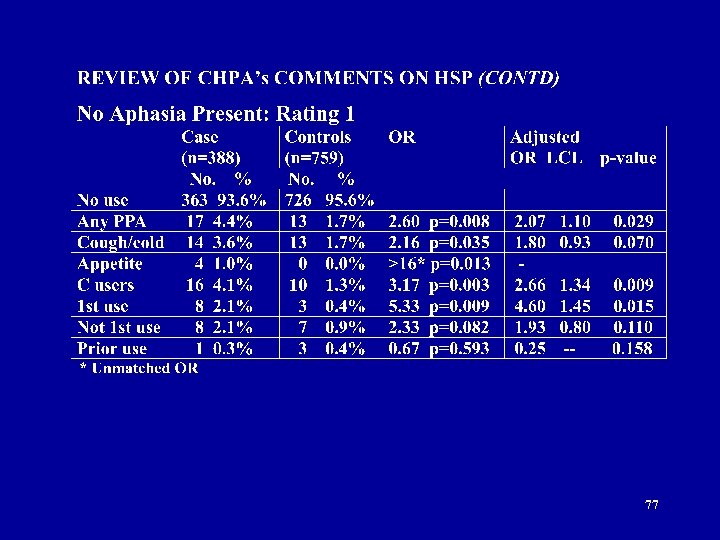
 Potential Confounders – Aphasia – Smoking – Hypertension – Race – Education • Each adjusted for in analysis • Not necessary to match for all - too long, too complex 20
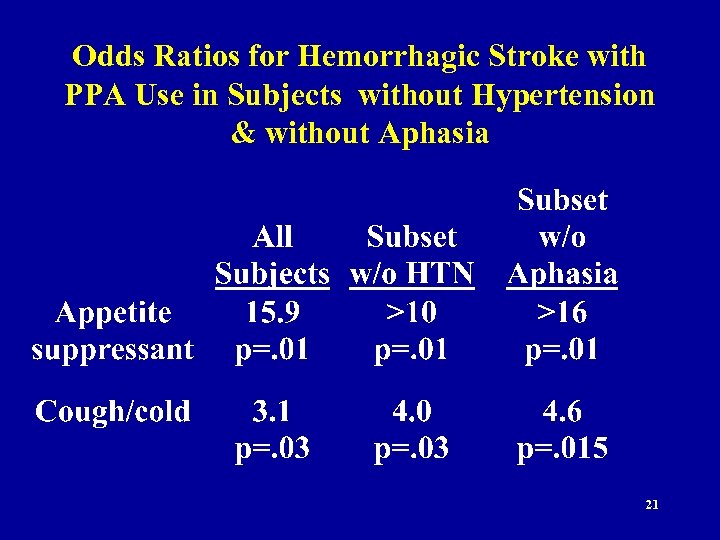 Odds Ratios for Hemorrhagic Stroke with PPA Use in Subjects without Hypertension & without Aphasia 21
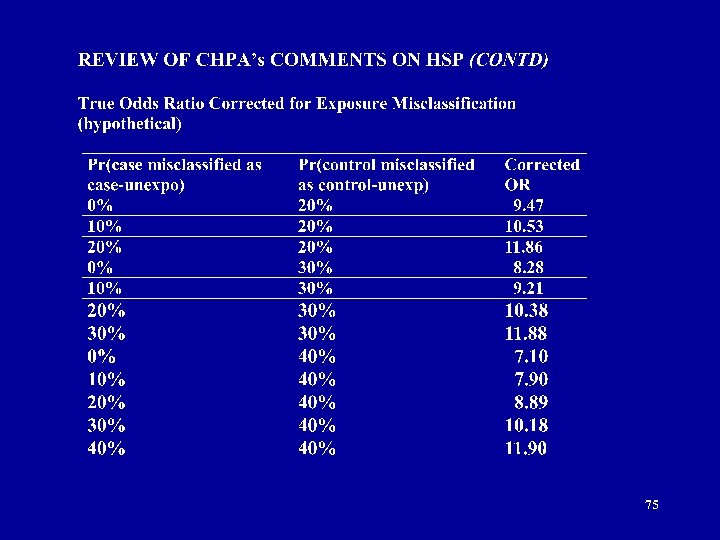
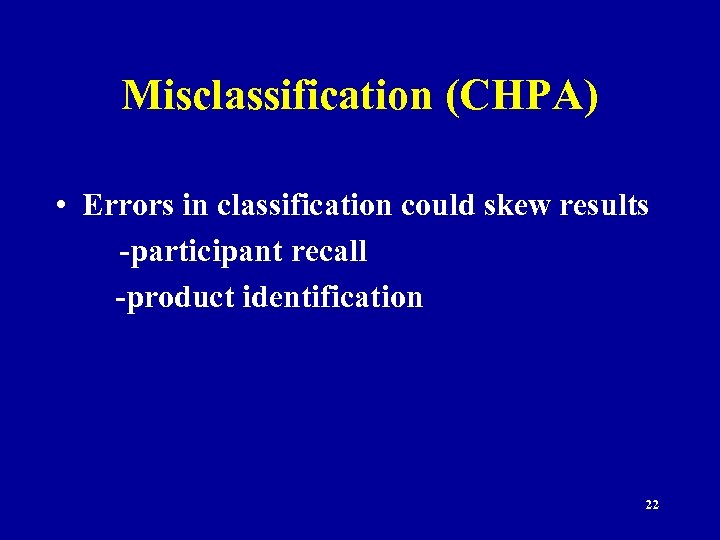 Misclassification (CHPA) • Errors in classification could skew results -participant recall -product identification 22
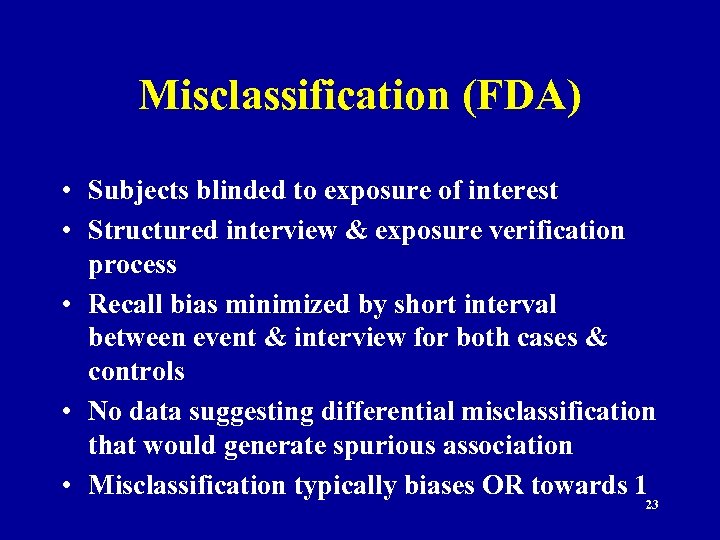 Misclassification (FDA) • Subjects blinded to exposure of interest • Structured interview & exposure verification process • Recall bias minimized by short interval between event & interview for both cases & controls • No data suggesting differential misclassification that would generate spurious association • Misclassification typically biases OR towards 1 23
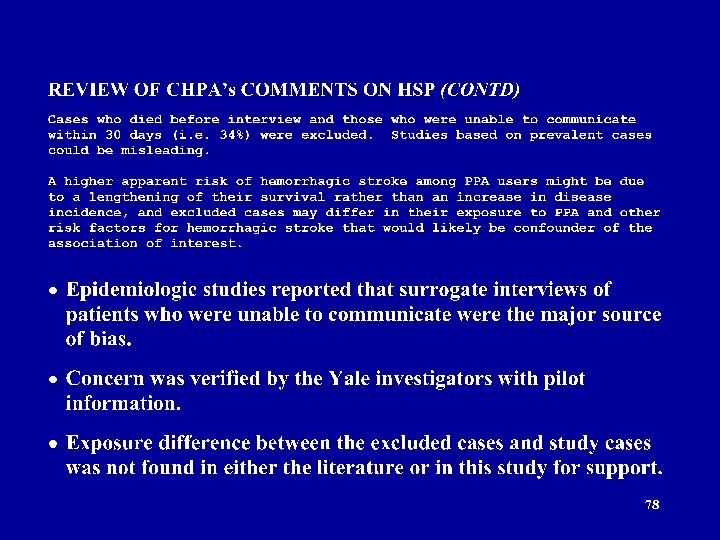
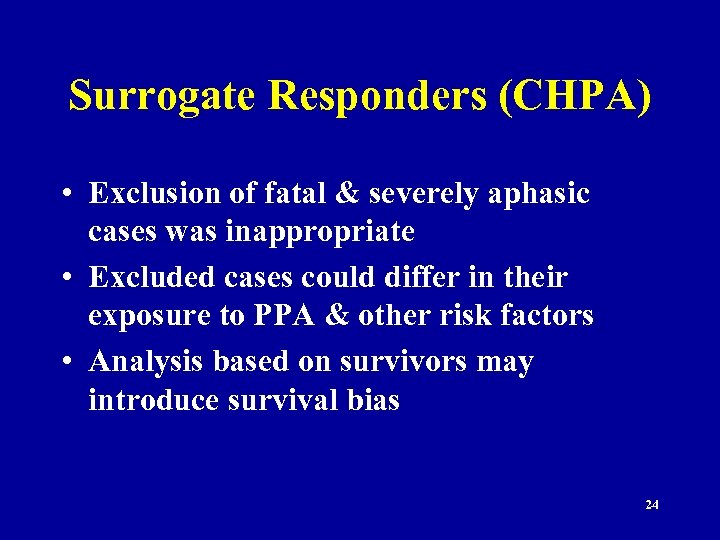 Surrogate Responders (CHPA) • Exclusion of fatal & severely aphasic cases was inappropriate • Excluded cases could differ in their exposure to PPA & other risk factors • Analysis based on survivors may introduce survival bias 24
 Surrogate Responders (FDA) • Modest use of surrogate responders would introduce overwhelming misclassification error – verified by FDA & HSP investigators in planning stage, and agreed to by CHPA – would remove all possibility of detecting an association between PPA and hemorrhagic stroke 25
 Surrogate Responders (FDA) contd • Aphasic subjects may underreport PPA exposure (given the increased OR for nonaphasic subjects) • No data to suggest that PPA exposure is related to the severity of the stroke • Several epidemiologic studies show that use of surrogate interviews is a major source of bias* *Armstrong, White & Saracci, 1992 26
 FDA Analyses • Confirmed the major findings by conducting its own analyses on data submitted by Yale • Explored dose response relationship • Conducted sensitivity analyses to examine sparse data bias due to small sample size 27
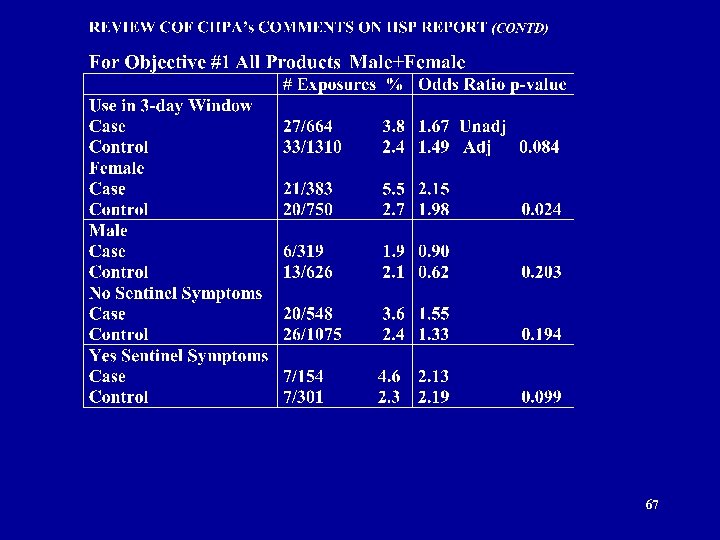
 HSP Study Results • The Yale study supported an increased risk of hemorrhagic stroke associated with PPA use. • Findings were statistically significant among appetite suppressant users and first day users of PPA as a cough/cold remedy. 28
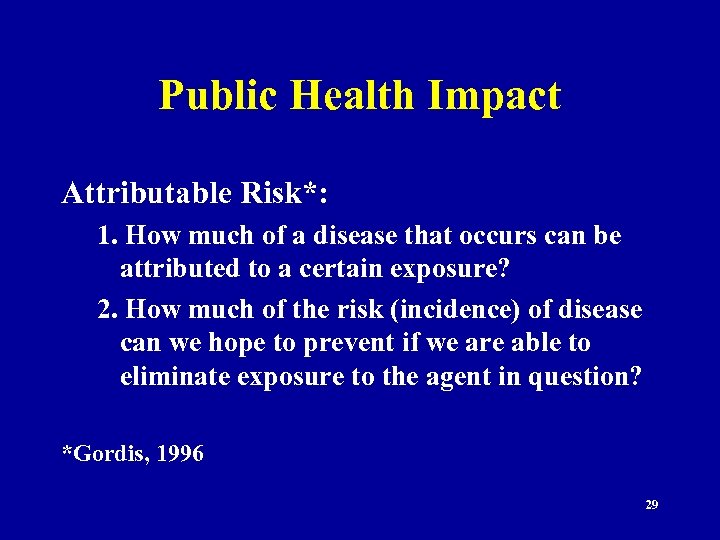 Public Health Impact Attributable Risk*: 1. How much of a disease that occurs can be attributed to a certain exposure? 2. How much of the risk (incidence) of disease can we hope to prevent if we are able to eliminate exposure to the agent in question? *Gordis, 1996 29
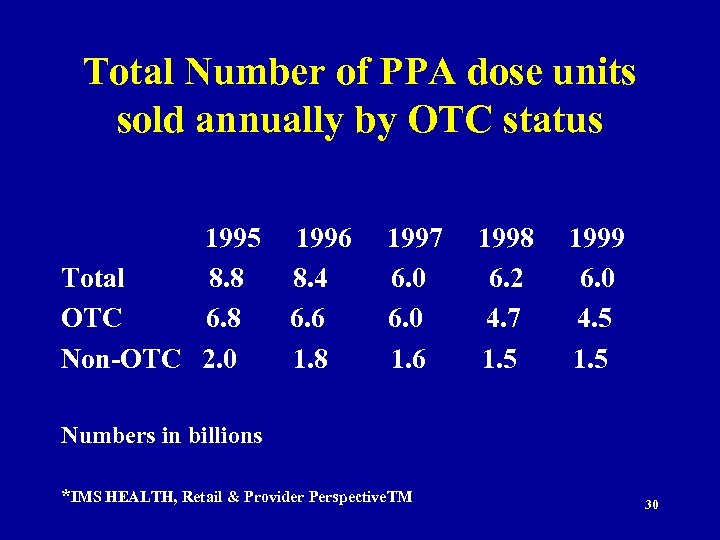 Total Number of PPA dose units sold annually by OTC status 1995 Total 8. 8 OTC 6. 8 Non-OTC 2. 0 1996 8. 4 6. 6 1. 8 1997 6. 0 1. 6 1998 6. 2 4. 7 1. 5 1999 6. 0 4. 5 1. 5 Numbers in billions *IMS HEALTH, Retail & Provider Perspective. TM 30
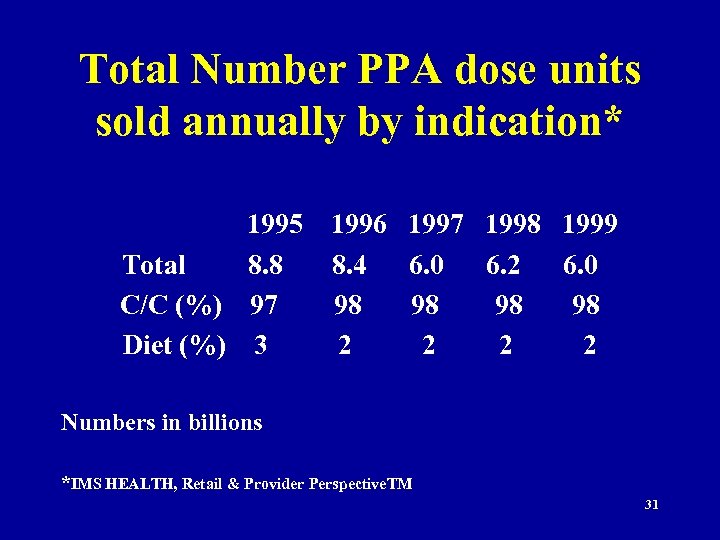 Total Number PPA dose units sold annually by indication* 1995 1996 1997 1998 1999 Total 8. 8 8. 4 6. 0 6. 2 6. 0 C/C (%) 97 98 98 Diet (%) 3 2 2 Numbers in billions *IMS HEALTH, Retail & Provider Perspective. TM 31
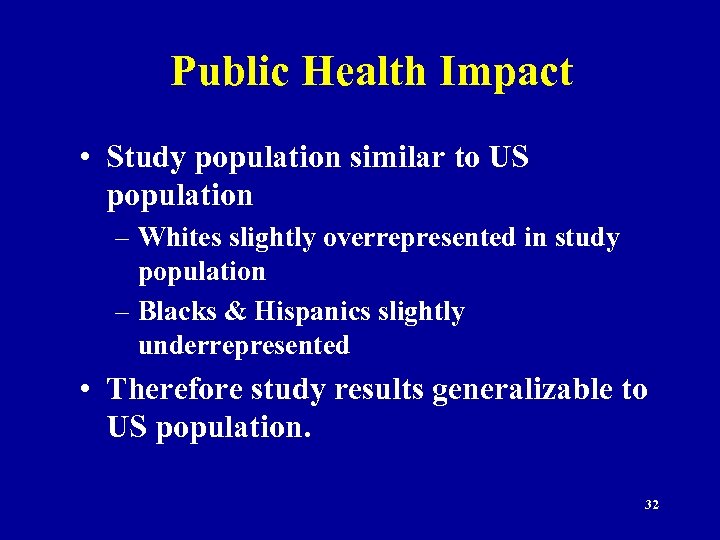 Public Health Impact • Study population similar to US population – Whites slightly overrepresented in study population – Blacks & Hispanics slightly underrepresented • Therefore study results generalizable to US population. 32
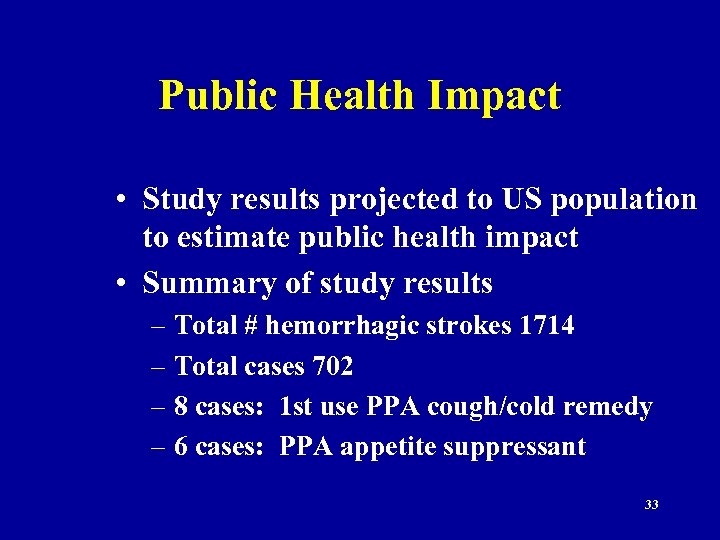 Public Health Impact • Study results projected to US population to estimate public health impact • Summary of study results – Total # hemorrhagic strokes 1714 – Total cases 702 – 8 cases: 1 st use PPA cough/cold remedy – 6 cases: PPA appetite suppressant 33
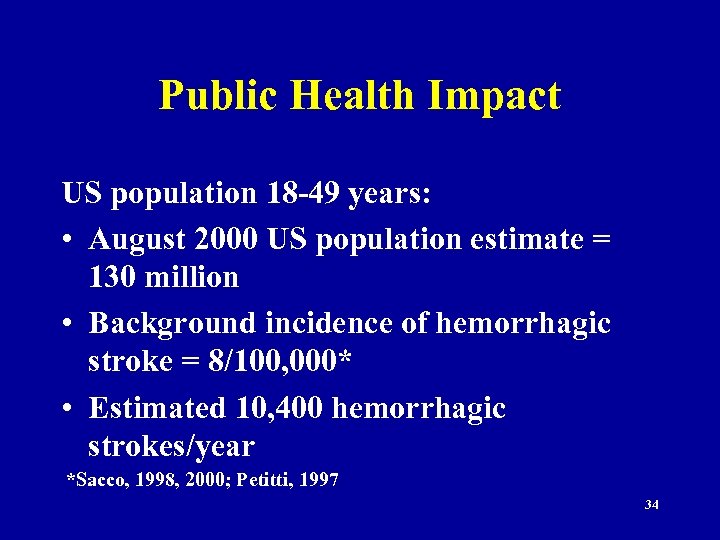 Public Health Impact US population 18 -49 years: • August 2000 US population estimate = 130 million • Background incidence of hemorrhagic stroke = 8/100, 000* • Estimated 10, 400 hemorrhagic strokes/year *Sacco, 1998, 2000; Petitti, 1997 34
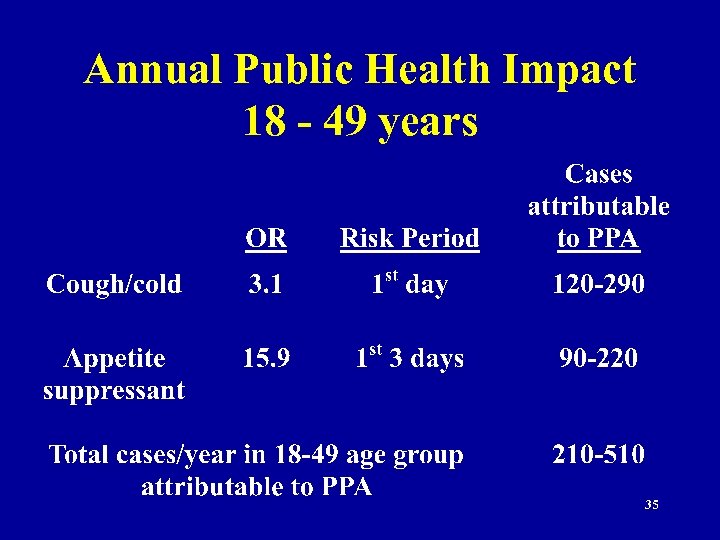 Annual Public Health Impact 18 - 49 years 35
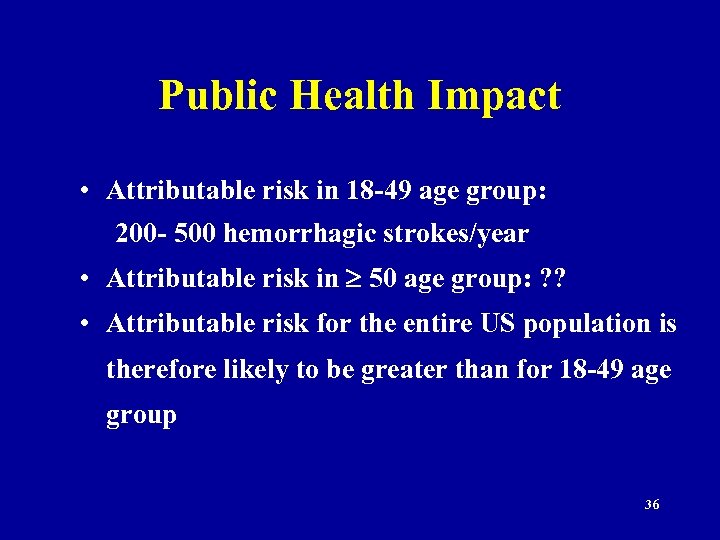 Public Health Impact • Attributable risk in 18 -49 age group: 200 - 500 hemorrhagic strokes/year • Attributable risk in 50 age group: ? ? • Attributable risk for the entire US population is therefore likely to be greater than for 18 -49 age group 36
 Criteria for Causal Association • • • Temporal Relationship Strength of the association Dose response relationship Biological plausibility Consistency with other knowledge Replication of the findings 37
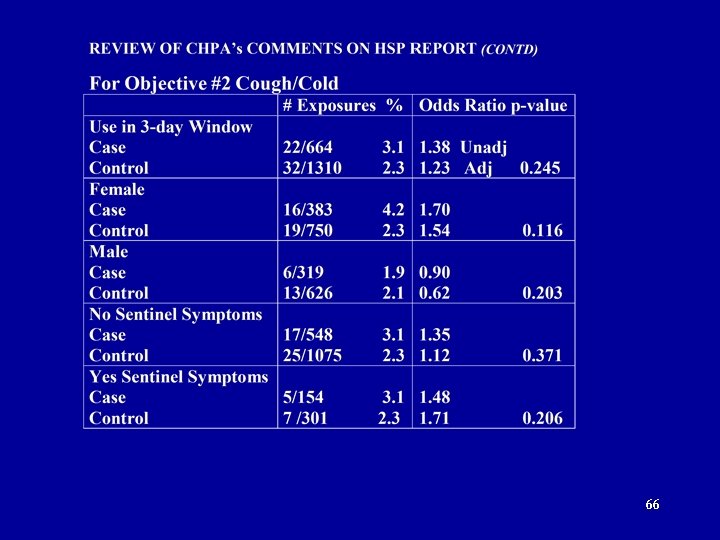
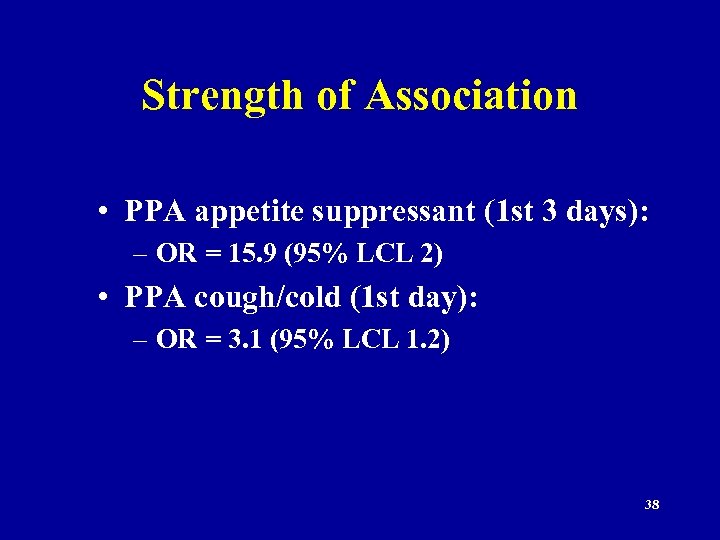 Strength of Association • PPA appetite suppressant (1 st 3 days): – OR = 15. 9 (95% LCL 2) • PPA cough/cold (1 st day): – OR = 3. 1 (95% LCL 1. 2) 38
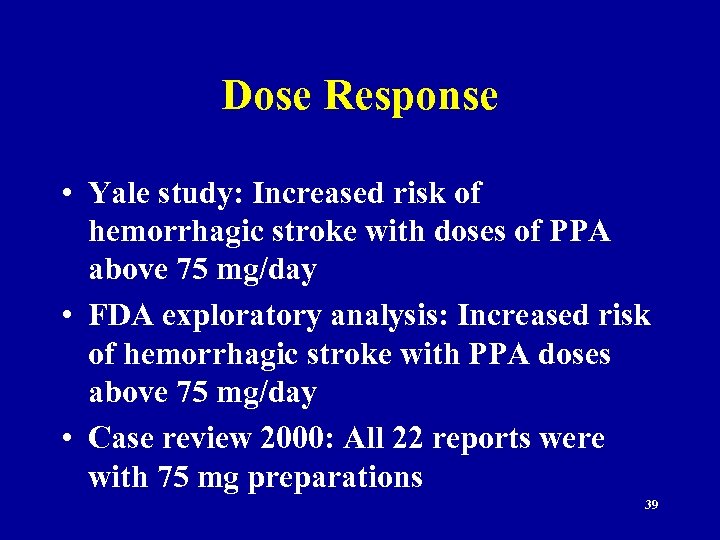 Dose Response • Yale study: Increased risk of hemorrhagic stroke with doses of PPA above 75 mg/day • FDA exploratory analysis: Increased risk of hemorrhagic stroke with PPA doses above 75 mg/day • Case review 2000: All 22 reports were with 75 mg preparations 39
 Biological Plausibility • • PPA = sympathomimetic amine Demonstrated pressor effects Clear cut tachyphylaxis Pressor effect greater for sustained release 40
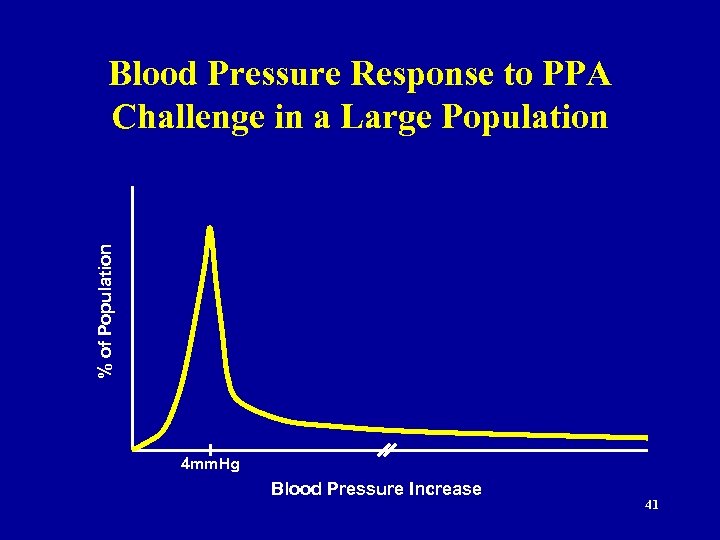 % of Population Blood Pressure Response to PPA Challenge in a Large Population 4 mm. Hg Blood Pressure Increase 41
 Consistency with Other Knowledge • Numerous case reports in the literature – Kase, 1987; Lake, 1990 – Lake - largest series, 24 cases ICH, 15 hypertensive encephalopathy/seizure, all with onset <24 hrs, most at 75 mg/day • O’Neill and Van de Carr Study • Case reviews 1984, 1991, 2000 42
 Summary • Hypothesis of increased risk of hemorrhagic stroke with early PPA use generated from case reports • Well designed prospective case control study strongly supports FDA hypothesis • Criteria for causality largely fulfilled • Estimated 200 -500 strokes/yr in young people potentially preventable 43
 Conclusions • The use of PPA as treatment for cough/cold symptoms & as an appetite suppressant confers an increased risk of hemorrhagic stroke in young people. • Substantial public health burden: in excess of 200 -500 hemorrhagic strokes/year attributable to PPA • There is evidence to suggest that the risk of hemorrhagic stroke may be higher with PPA doses at or above 75 mg/day. 44
 Team: OPDRA/ Office of Biostatistics • • Parivash Nourjah, Ph. D David Graham, MD, MPH Anne Trontell, MD, MPH Julie Beitz, MD Joslyn Swann, RPh Yi Tsong, Ph. D Stella Machado Ph. D Robert O’Neill, Ph. D 45
 46
46
 Back-up slides 47
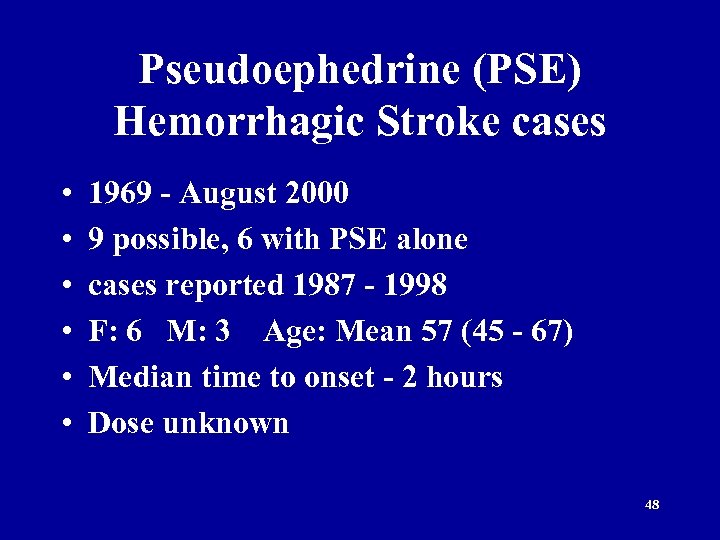 Pseudoephedrine (PSE) Hemorrhagic Stroke cases • • • 1969 - August 2000 9 possible, 6 with PSE alone cases reported 1987 - 1998 F: 6 M: 3 Age: Mean 57 (45 - 67) Median time to onset - 2 hours Dose unknown 48
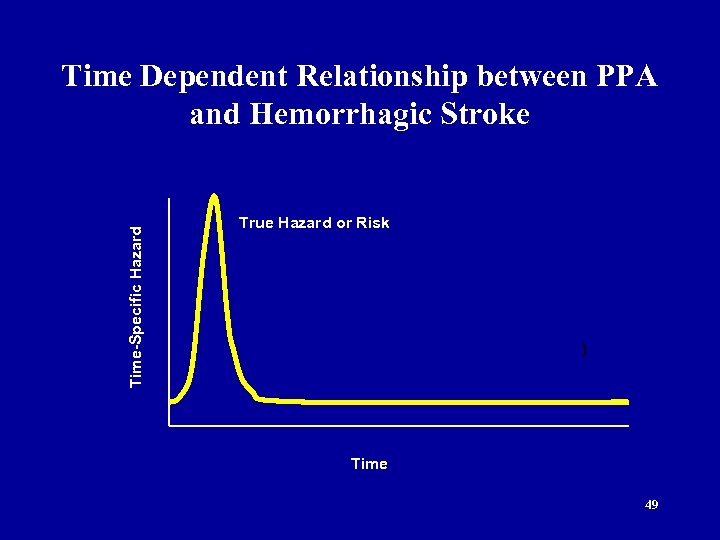 Time-Specific Hazard Time Dependent Relationship between PPA and Hemorrhagic Stroke True Hazard or Risk ) Time 49
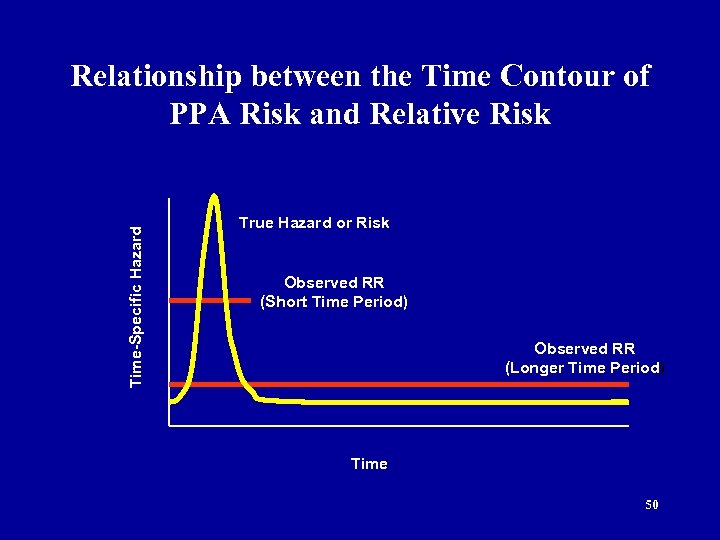 Time-Specific Hazard Relationship between the Time Contour of PPA Risk and Relative Risk True Hazard or Risk Observed RR (Short Time Period) Observed RR (Longer Time Period) Time 50
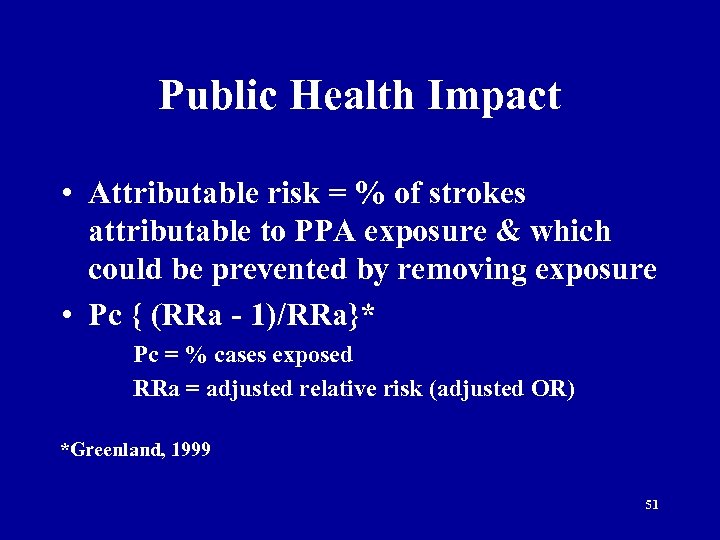 Public Health Impact • Attributable risk = % of strokes attributable to PPA exposure & which could be prevented by removing exposure • Pc { (RRa - 1)/RRa}* Pc = % cases exposed RRa = adjusted relative risk (adjusted OR) *Greenland, 1999 51
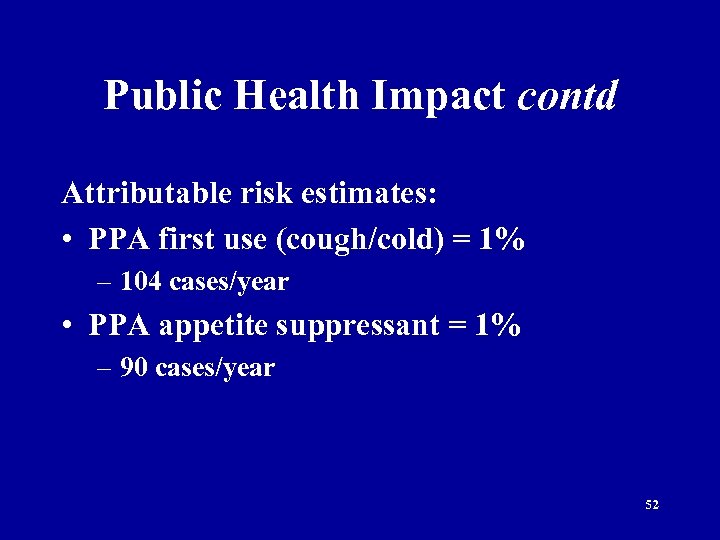 Public Health Impact contd Attributable risk estimates: • PPA first use (cough/cold) = 1% – 104 cases/year • PPA appetite suppressant = 1% – 90 cases/year 52
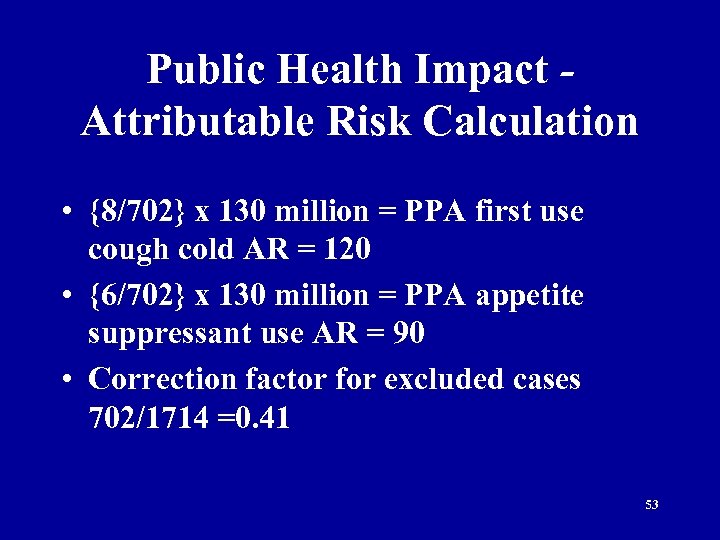 Public Health Impact Attributable Risk Calculation • {8/702} x 130 million = PPA first use cough cold AR = 120 • {6/702} x 130 million = PPA appetite suppressant use AR = 90 • Correction factor for excluded cases 702/1714 =0. 41 53
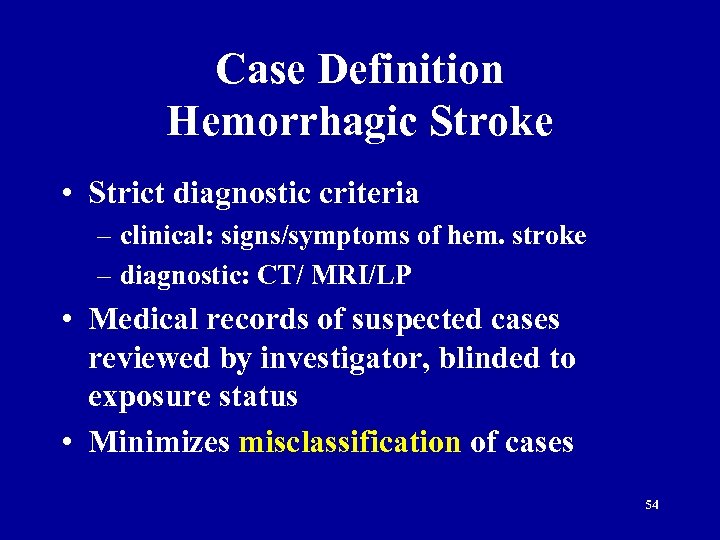 Case Definition Hemorrhagic Stroke • Strict diagnostic criteria – clinical: signs/symptoms of hem. stroke – diagnostic: CT/ MRI/LP • Medical records of suspected cases reviewed by investigator, blinded to exposure status • Minimizes misclassification of cases 54
 Exposure Definition/Ascertainment • Exposure = PPA use – exposure defined, “first use”, “any use” – exposure window identified – exposure confirmed by “PI book” • Interviewer bias minimized – blinded to exposure drug – randomly assigned to cases/controls 55
 Strategies for Reducing Recall Bias • Cases with stroke more likely to remember event surrounding stroke than controls (no stroke) – controls identified/interviewed within short time – focal time matched to case’s time of stroke – data collected on all medicines used – date prompts e. g birthdays 56
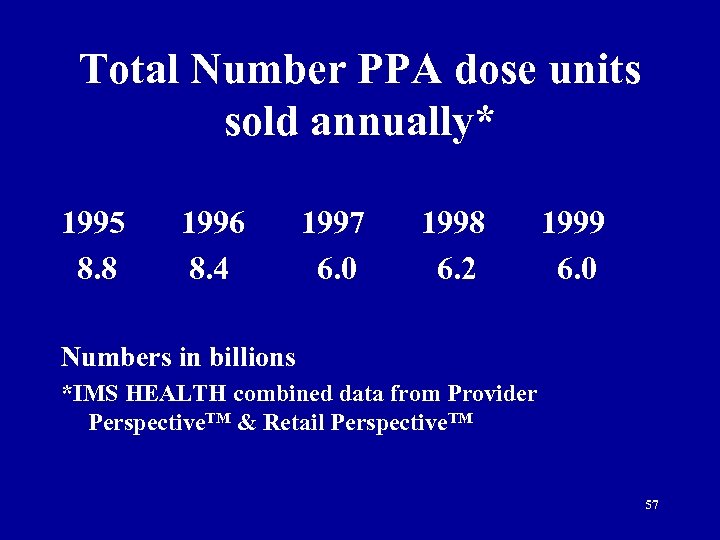 Total Number PPA dose units sold annually* 1995 8. 8 1996 8. 4 1997 6. 0 1998 6. 2 1999 6. 0 Numbers in billions *IMS HEALTH combined data from Provider Perspective. TM & Retail Perspective. TM 57
 58
58
 59
59
 60
60
 61
61
 62
62
 63
63
 64
64
 65
65
 66
66
 67
67
 68
68
 69
69
 70
70
 71
71
 72
72
 73
73
 74
74
 75
75
 76
76
 77
77
 78
78
 79
79
 80
80
 81
81
 82
82
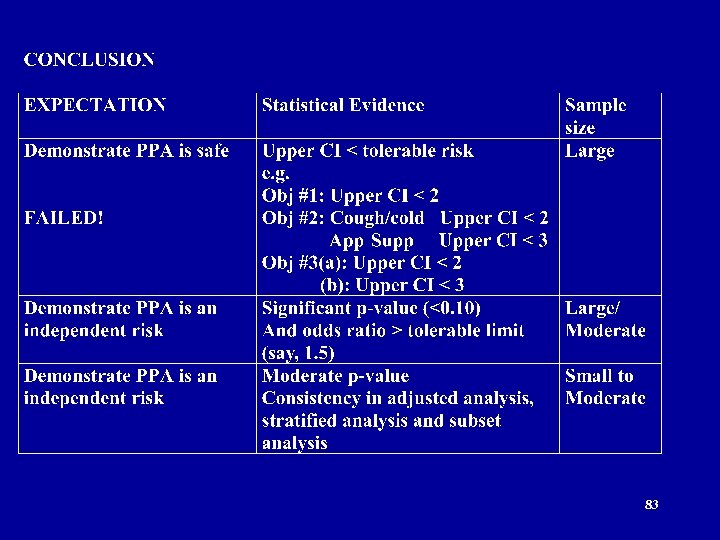 83
83
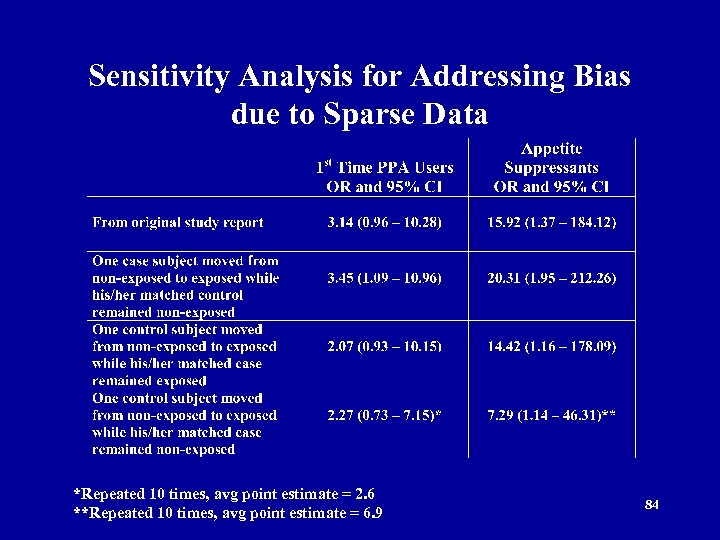 Sensitivity Analysis for Addressing Bias due to Sparse Data *Repeated 10 times, avg point estimate = 2. 6 **Repeated 10 times, avg point estimate = 6. 9 84
 85
85