


 Скачать презентацию Phenylpropanolamine R William Soller Ph D Senior Vice
e1333cecd8b14cb122d2d9dbc2ba6108.ppt
- Количество слайдов: 25
 Phenylpropanolamine R. William Soller, Ph. D. Senior Vice President and Director of Science & Technology Consumer Healthcare Products Association Washington, DC October 19, 2000 WS-1
 2 Outline l Background l Independent l Conclusion Expert Panel
 What did we know about PPA when the HSP study was started? WS-3
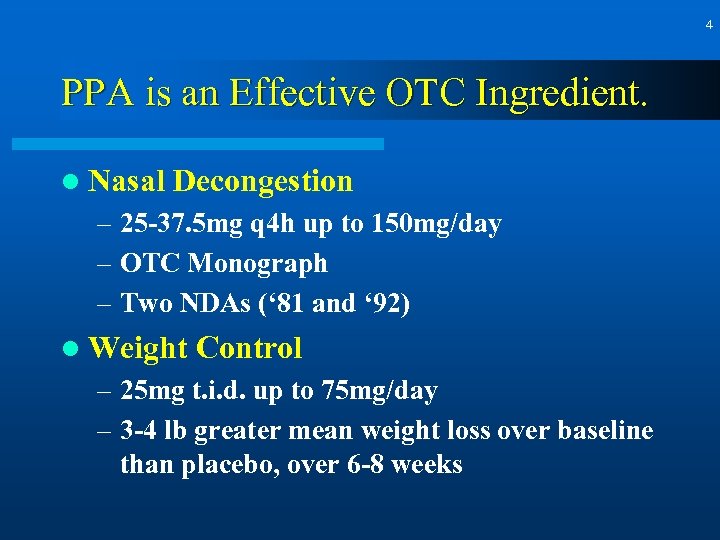 4 PPA is an Effective OTC Ingredient. l Nasal Decongestion – 25 -37. 5 mg q 4 h up to 150 mg/day – OTC Monograph – Two NDAs (‘ 81 and ‘ 92) l Weight Control – 25 mg t. i. d. up to 75 mg/day – 3 -4 lb greater mean weight loss over baseline than placebo, over 6 -8 weeks
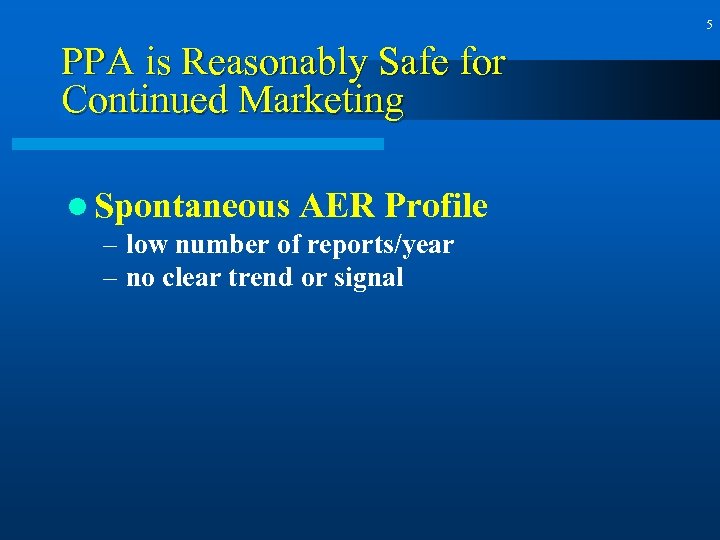 5 PPA is Reasonably Safe for Continued Marketing l Spontaneous AER Profile – low number of reports/year – no clear trend or signal
 6 PPA is Reasonably Safe for Continued Marketing l Blood Pressure – Clinical Studies: • Normotensives, controlled hypertensives • Obese, non-obese • Single, multiple and ascending dose models – No clinically meaningful elevations in blood pressure, other vital signs, CNS stimulation or subjective effects at recommended doses – Blackburn et al. (JAMA 261: 3267 -72, 1989)
 7 PPA is Reasonably Safe for Continued Marketing l Two retrospective epidemologic studies – Boston Collaborative Drug Surveillance Program – National Hospital Discharge Survey – No indication of a signal
 8 PPA is Reasonably Safe for Continued Marketing l Aselton and Jick (1985): PPA All Uses – Boston Collaborative Drug Surveillance Program – Based on Rx’s filled (253, 334 scripts for <65 yo; ‘ 77 -’ 82; calculated on the basis of estimated person-days at risk) – PPA users vs. non users (1 vs. 275 hospital admissions for thrombotic or nonthrombotic cerebrovascular events)
 9 PPA is Reasonably Safe for Continued Marketing l National Hospital Discharge Survey Analysis (1991): Diet Aids, 15 -44 yo – Morbidity Ratios • Observed: expected hemorrhagic strokes under first dose or multiple dose exposure assumptions – Background rate: 16. 31/100, 000 females (15 -44 y) – Estimated Morbidity Ratios: • First dose, 0. 02 • Multiple dose, 0. 36
 10 Summary So, at the start of the HSP study, a hypothesis had been generated, despite clinical and epidemiologic support for PPA’s safety as well as clinical demonstration of benefit.
 11 CHPA & the HSP Study l Consensus view prior to HSP Study – Continued OTC availability with additional study to optimize our understanding of PPA’s safety profile, given: • AER profile, blood pressure studies, available epi studies l Industry’s involvement in the study – Input on design, and funding, but… virtually no involvement in conduct/analysis l Apparent results over-interpretation of the study – CHPA contacted leading independent experts.
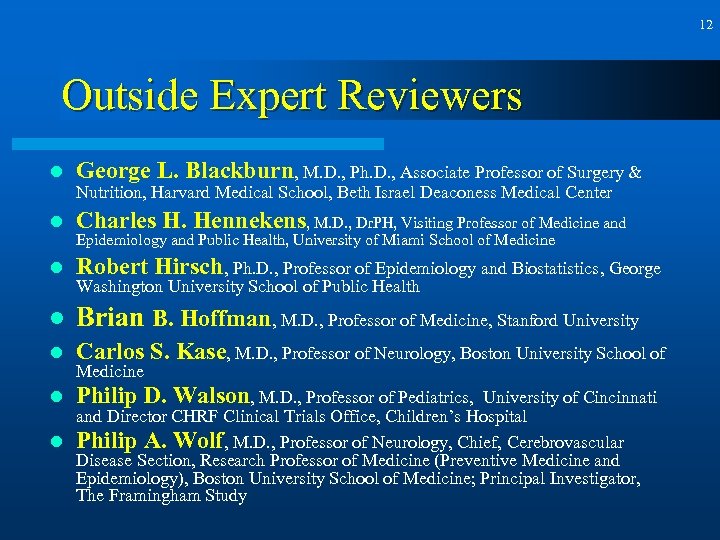 12 Outside Expert Reviewers l George L. Blackburn, M. D. , Ph. D. , Associate Professor of Surgery & l Charles H. Hennekens, M. D. , Dr. PH, Visiting Professor of Medicine and l Robert Hirsch, Ph. D. , Professor of Epidemiology and Biostatistics, George l Brian B. Hoffman, M. D. , Professor of Medicine, Stanford University l Carlos S. Kase, M. D. , Professor of Neurology, Boston University School of l Philip D. Walson, M. D. , Professor of Pediatrics, Nutrition, Harvard Medical School, Beth Israel Deaconess Medical Center Epidemiology and Public Health, University of Miami School of Medicine Washington University School of Public Health Medicine University of Cincinnati and Director CHRF Clinical Trials Office, Children’s Hospital l Philip A. Wolf, M. D. , Professor of Neurology, Chief, Cerebrovascular Disease Section, Research Professor of Medicine (Preventive Medicine and Epidemiology), Boston University School of Medicine; Principal Investigator, The Framingham Study
 13 Independent Expert Panel l Noel Weiss, M. D. , Dr. P. H. , University of Washington Chairman of the Expert Panel
 14
14
 15 Conclusions l Current FDA OTC Policy l Recommended Next Steps
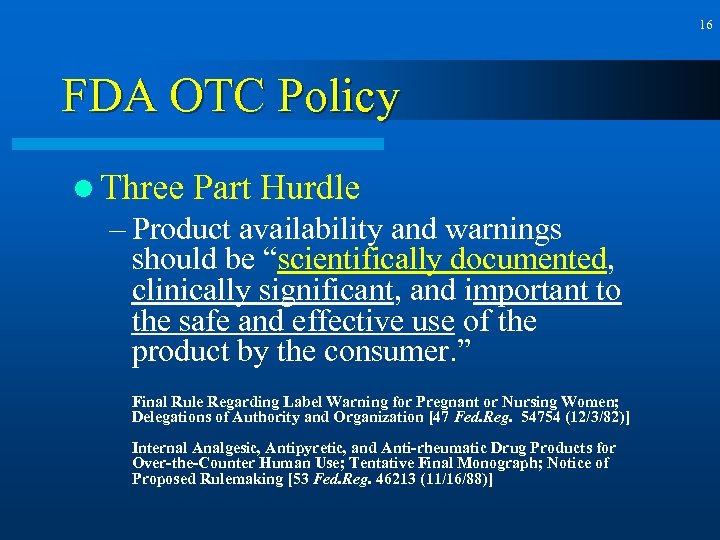 16 FDA OTC Policy l Three Part Hurdle – Product availability and warnings should be “scientifically documented, clinically significant, and important to the safe and effective use of the product by the consumer. ” Final Rule Regarding Label Warning for Pregnant or Nursing Women; Delegations of Authority and Organization [47 Fed. Reg. 54754 (12/3/82)] Internal Analgesic, Antipyretic, and Anti-rheumatic Drug Products for Over-the-Counter Human Use; Tentative Final Monograph; Notice of Proposed Rulemaking [53 Fed. Reg. 46213 (11/16/88)]
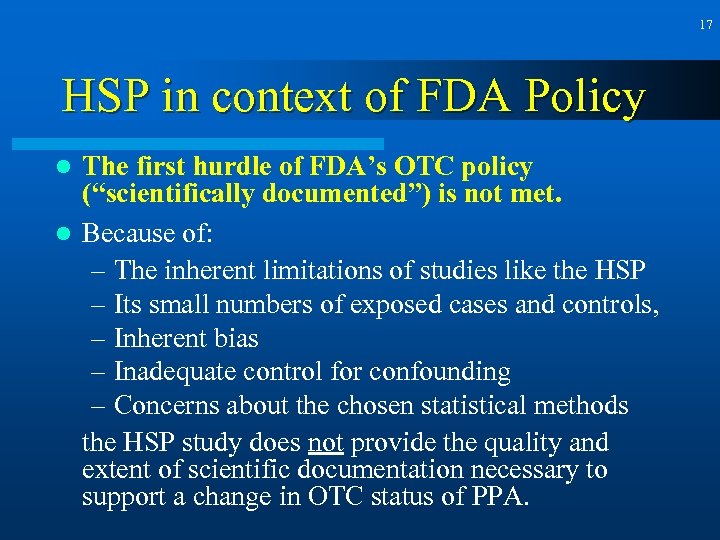 17 HSP in context of FDA Policy The first hurdle of FDA’s OTC policy (“scientifically documented”) is not met. l Because of: – The inherent limitations of studies like the HSP – Its small numbers of exposed cases and controls, – Inherent bias – Inadequate control for confounding – Concerns about the chosen statistical methods the HSP study does not provide the quality and extent of scientific documentation necessary to support a change in OTC status of PPA. l
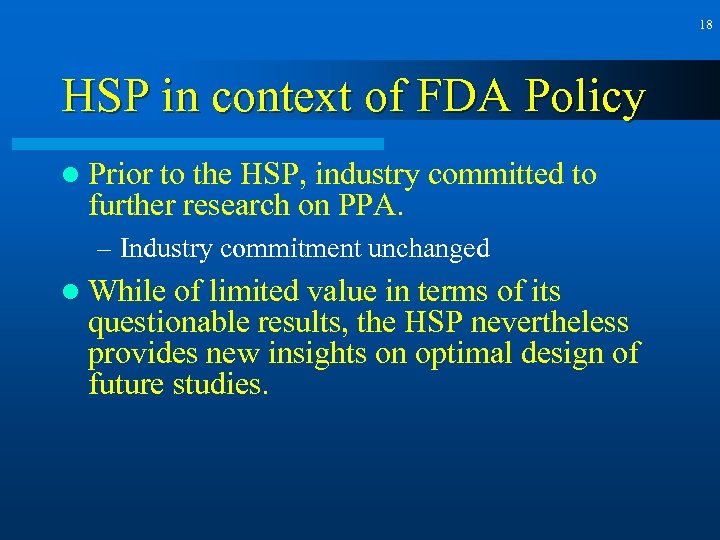 18 HSP in context of FDA Policy l Prior to the HSP, industry committed to further research on PPA. – Industry commitment unchanged l While of limited value in terms of its questionable results, the HSP nevertheless provides new insights on optimal design of future studies.
 19 Recommended Next Steps l Further epidemiologic study l Finalization of labeling requirements l Stepped-up surveillance
 20
20
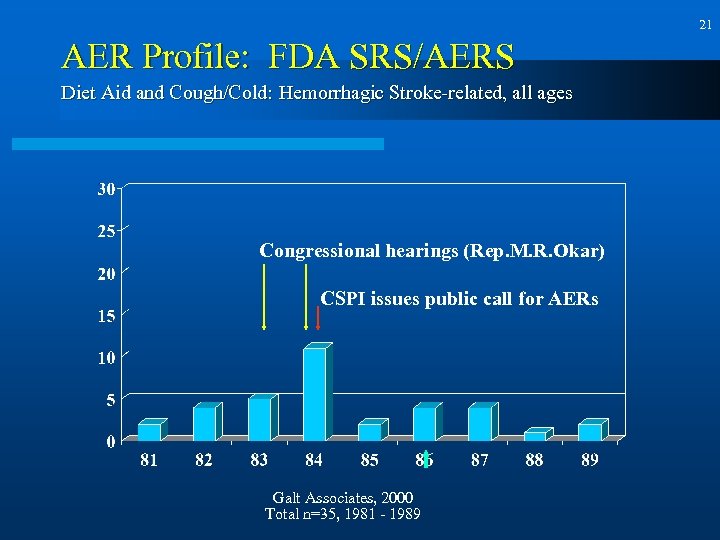 21 AER Profile: FDA SRS/AERS Diet Aid and Cough/Cold: Hemorrhagic Stroke-related, all ages Congressional hearings (Rep. M. R. Okar) CSPI issues public call for AERs Galt Associates, 2000 Total n=35, 1981 - 1989
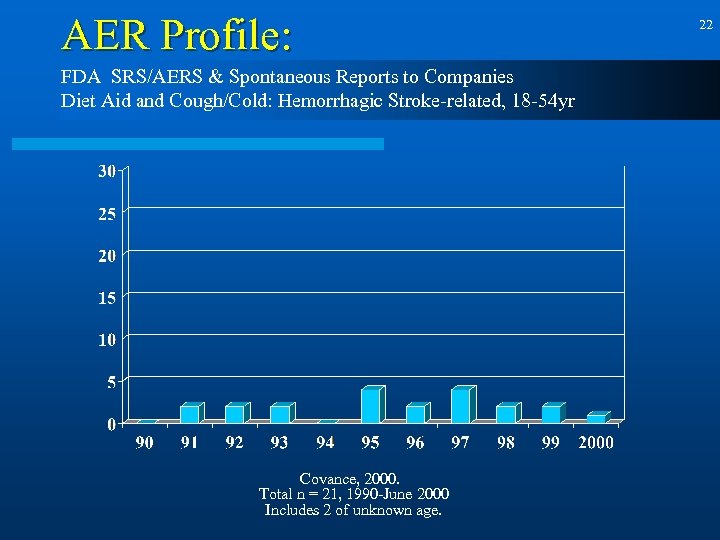 AER Profile: FDA SRS/AERS & Spontaneous Reports to Companies Diet Aid and Cough/Cold: Hemorrhagic Stroke-related, 18 -54 yr Covance, 2000. Total n = 21, 1990 -June 2000 Includes 2 of unknown age. 22
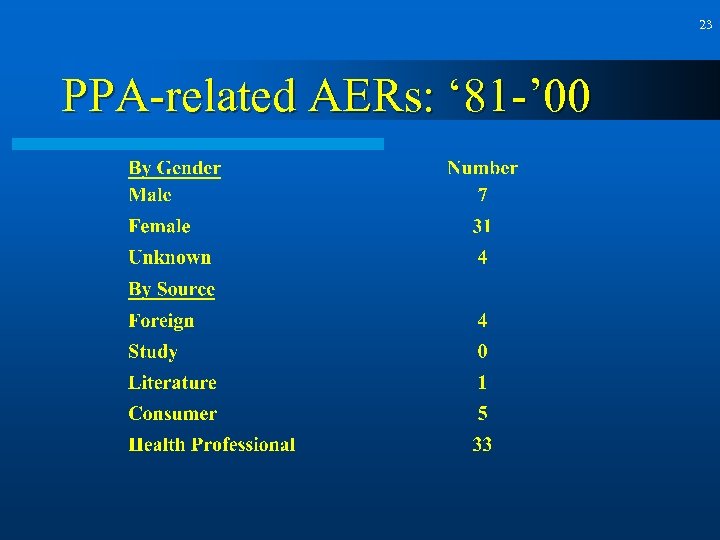 23 PPA-related AERs: ‘ 81 -’ 00
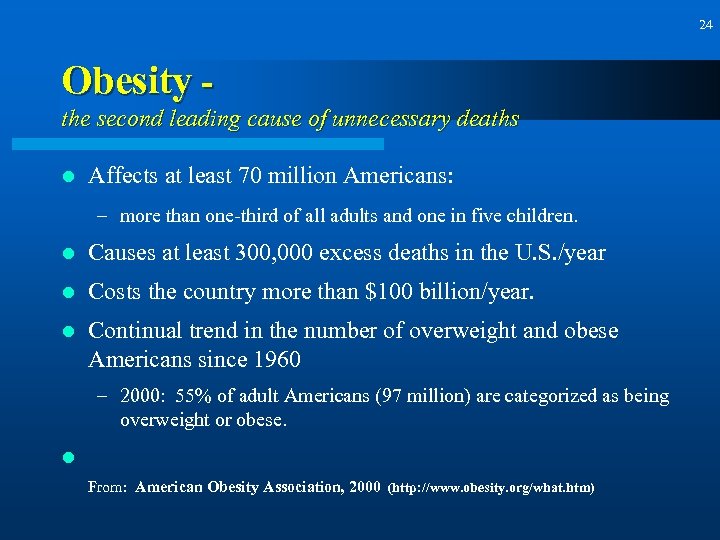 24 Obesity the second leading cause of unnecessary deaths l Affects at least 70 million Americans: – more than one-third of all adults and one in five children. l Causes at least 300, 000 excess deaths in the U. S. /year l Costs the country more than $100 billion/year. l Continual trend in the number of overweight and obese Americans since 1960 – 2000: 55% of adult Americans (97 million) are categorized as being overweight or obese. l From: American Obesity Association, 2000 (http: //www. obesity. org/what. htm)
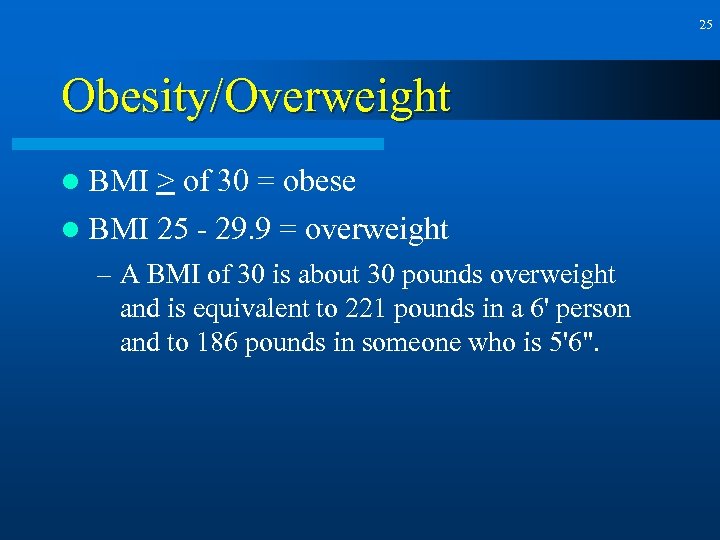 25 Obesity/Overweight l BMI > of 30 = obese l BMI 25 - 29. 9 = overweight – A BMI of 30 is about 30 pounds overweight and is equivalent to 221 pounds in a 6' person and to 186 pounds in someone who is 5'6".