 Скачать презентацию PHENIX Spin Program Recent results A Bazilevsky Brookhaven
dfcce4679be17016e5c7a07893e59b38.ppt
- Количество слайдов: 28



PHENIX Spin Program Recent results A. Bazilevsky Brookhaven National Laboratory for the PHENIX Collaboration XXXXth Rencontres de Moriond - March 12 -19, 2005 QCD and Hadronic interactions at high energy
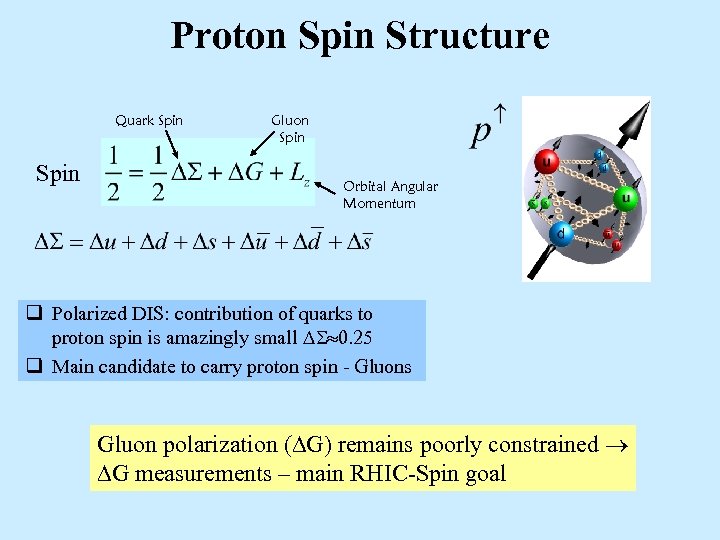
Proton Spin Structure Quark Spin Gluon Spin Orbital Angular Momentum q Polarized DIS: contribution of quarks to proton spin is amazingly small S 0. 25 q Main candidate to carry proton spin - Gluons Gluon polarization ( G) remains poorly constrained G measurements – main RHIC-Spin goal
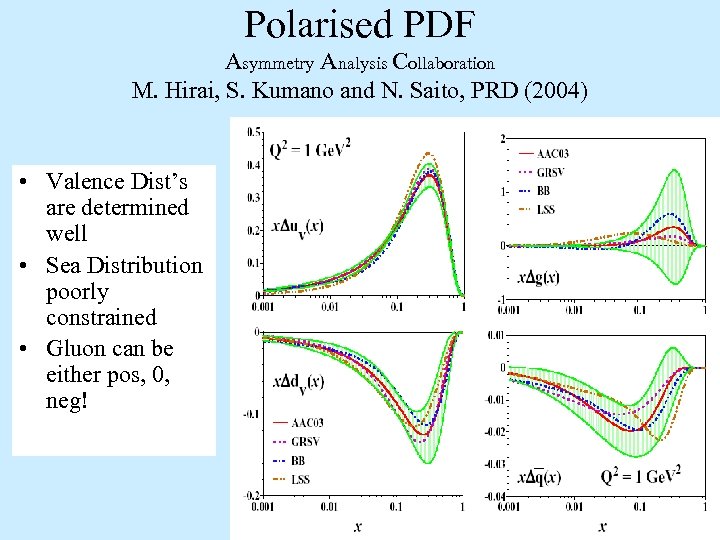
Polarised PDF Asymmetry Analysis Collaboration M. Hirai, S. Kumano and N. Saito, PRD (2004) • Valence Dist’s are determined well • Sea Distribution poorly constrained • Gluon can be either pos, 0, neg!
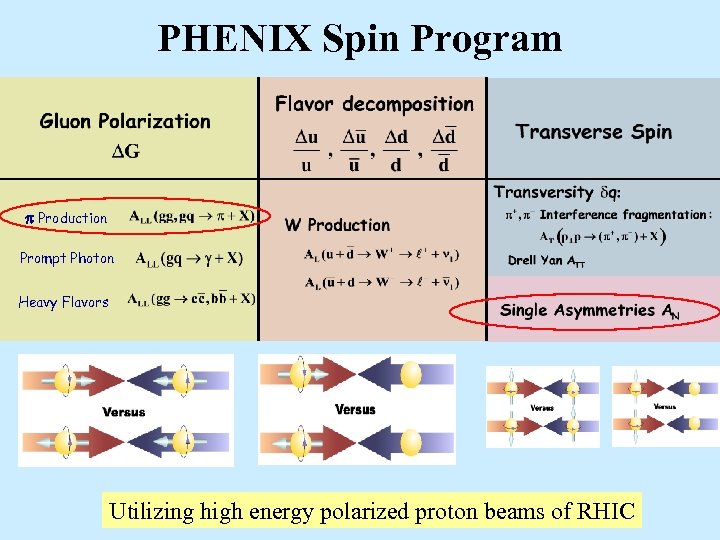
PHENIX Spin Program Production Prompt Photon Heavy Flavors Utilizing high energy polarized proton beams of RHIC
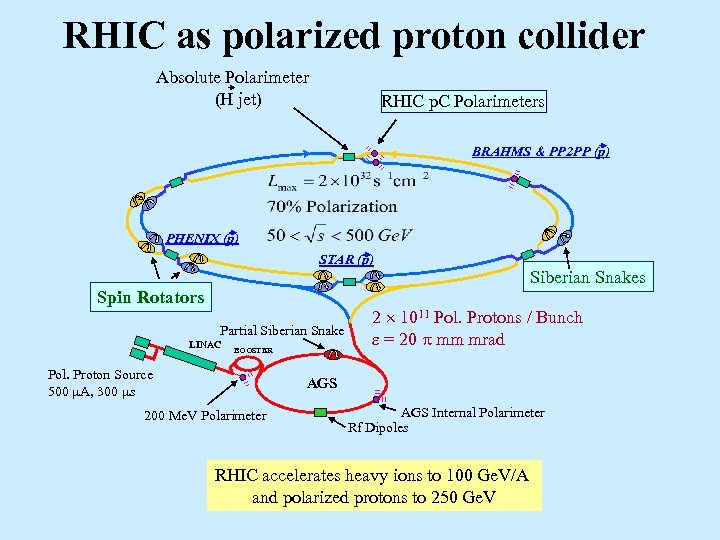
RHIC as polarized proton collider Absolute Polarimeter (H jet) RHIC p. C Polarimeters BRAHMS & PP 2 PP (p) PHENIX (p) STAR (p) Siberian Snakes Spin Rotators Partial Siberian Snake LINAC BOOSTER Pol. Proton Source 500 m. A, 300 ms 2 1011 Pol. Protons / Bunch e = 20 mm mrad AGS 200 Me. V Polarimeter AGS Internal Polarimeter Rf Dipoles RHIC accelerates heavy ions to 100 Ge. V/A and polarized protons to 250 Ge. V
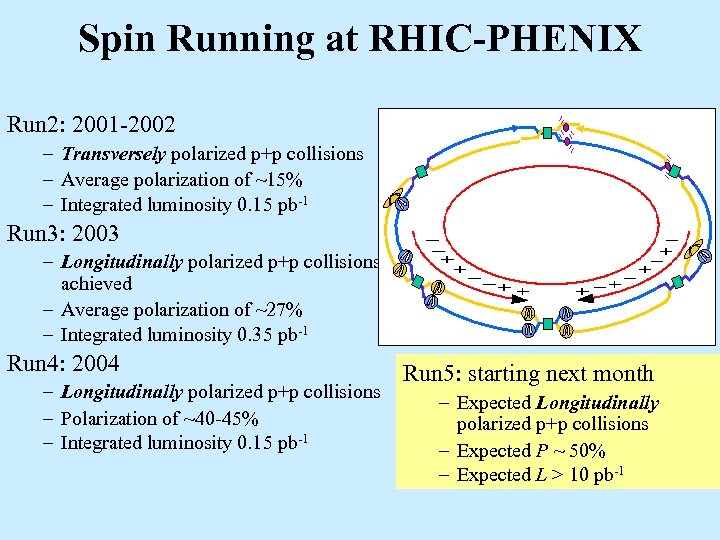
Spin Running at RHIC-PHENIX Run 2: 2001 -2002 – Transversely polarized p+p collisions – Average polarization of ~15% – Integrated luminosity 0. 15 pb-1 Run 3: 2003 – Longitudinally polarized p+p collisions achieved – Average polarization of ~27% – Integrated luminosity 0. 35 pb-1 Run 4: 2004 – Longitudinally polarized p+p collisions – Polarization of ~40 -45% – Integrated luminosity 0. 15 pb-1 Run 5: starting next month – Expected Longitudinally polarized p+p collisions – Expected P ~ 50% – Expected L > 10 pb-1
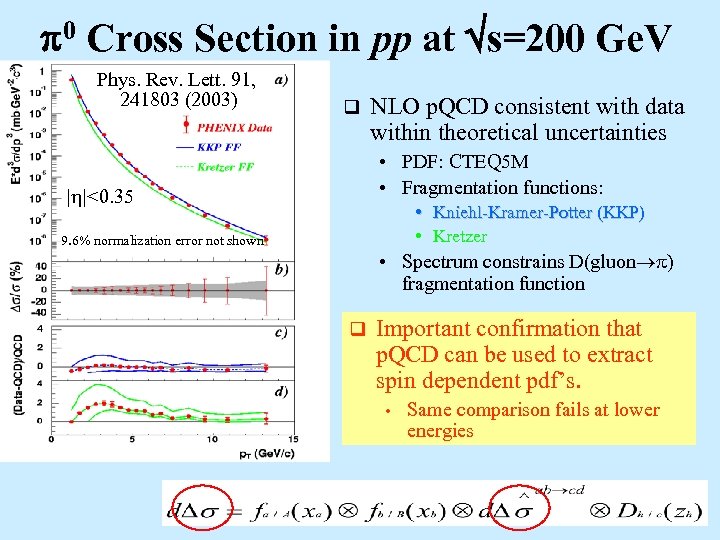
0 Cross Section in pp at s=200 Ge. V Phys. Rev. Lett. 91, 241803 (2003) q NLO p. QCD consistent with data within theoretical uncertainties • PDF: CTEQ 5 M • Fragmentation functions: | |<0. 35 • Kniehl-Kramer-Potter (KKP) • Kretzer 9. 6% normalization error not shown • Spectrum constrains D(gluon ) fragmentation function q Important confirmation that p. QCD can be used to extract spin dependent pdf’s. • Same comparison fails at lower energies
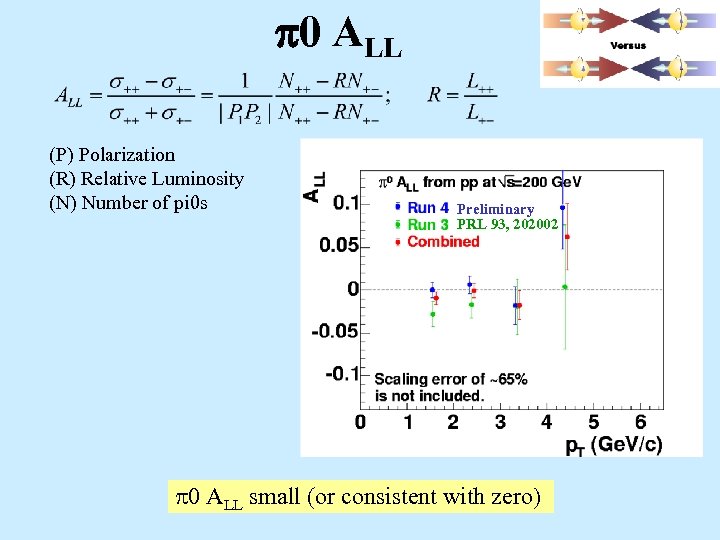
0 ALL (P) Polarization (R) Relative Luminosity (N) Number of pi 0 s Preliminary PRL 93, 202002 0 ALL small (or consistent with zero)
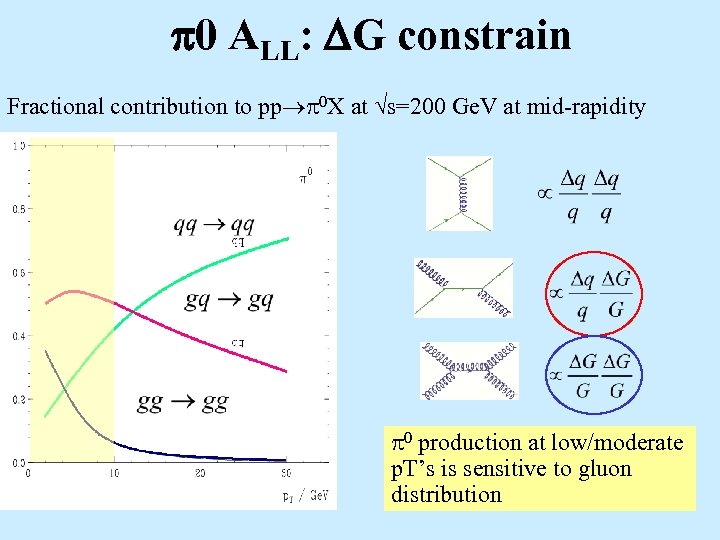
0 ALL: G constrain Fractional contribution to pp 0 X at s=200 Ge. V at mid-rapidity 0 production at low/moderate p. T’s is sensitive to gluon distribution
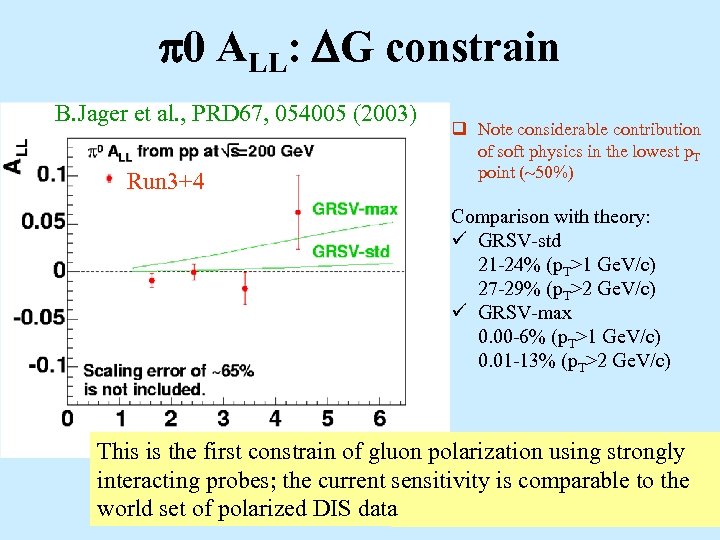
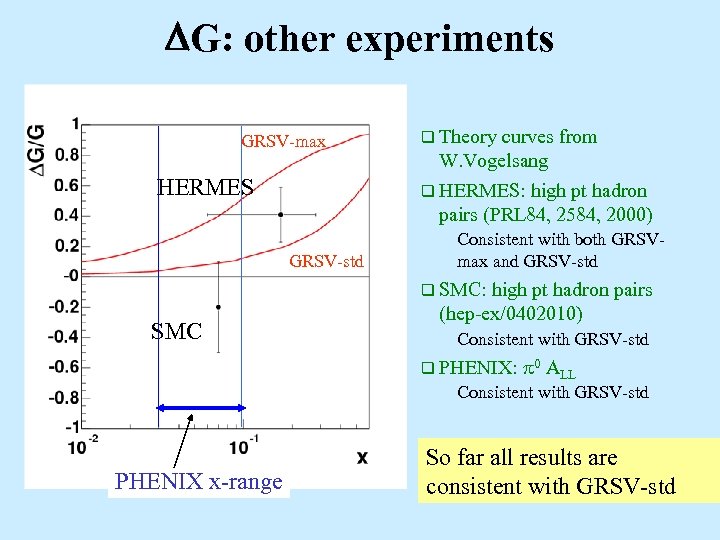
0 ALL: G constrain B. Jager et al. , PRD 67, 054005 (2003) Run 3+4 q Note considerable contribution of soft physics in the lowest p. T point ( 50%) Comparison with theory: ü GRSV-std 21 -24% (p. T>1 Ge. V/c) 27 -29% (p. T>2 Ge. V/c) ü GRSV-max 0. 00 -6% (p. T>1 Ge. V/c) 0. 01 -13% (p. T>2 Ge. V/c) This is the first constrain of gluon polarization using strongly interacting probes; the current sensitivity is comparable to the Consistent with GRSV-std world set of polarized DIS data Less consistent with GRSV-max
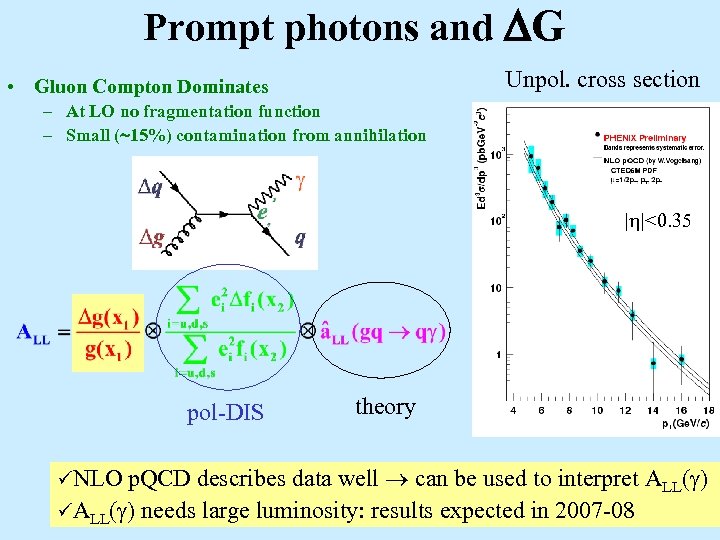
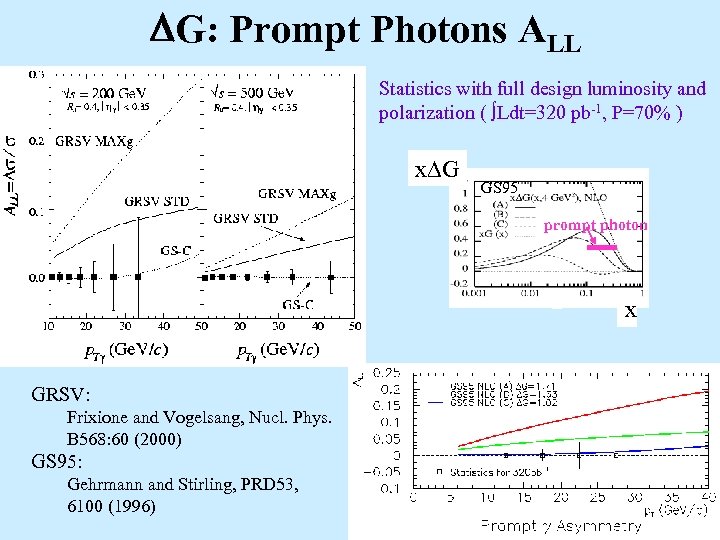
Prompt photons and G Unpol. cross section • Gluon Compton Dominates – At LO no fragmentation function – Small ( 15%) contamination from annihilation | |<0. 35 pol-DIS theory üNLO p. QCD describes data well can be used to interpret ALL( ) üALL( ) needs large luminosity: results expected in 2007 -08
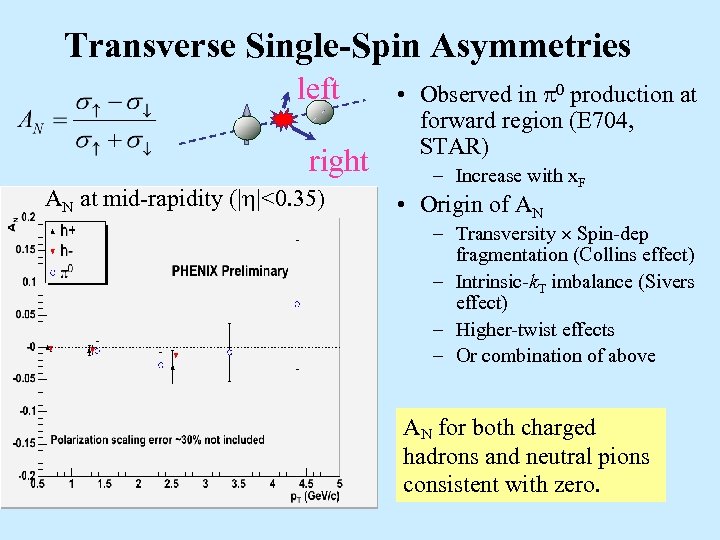
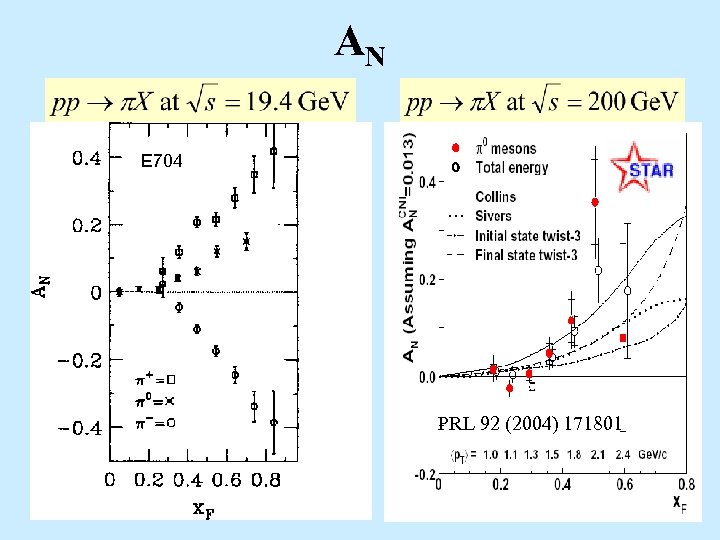
Transverse Single-Spin Asymmetries left right AN at mid-rapidity (| |<0. 35) • Observed in 0 production at forward region (E 704, STAR) – Increase with x. F • Origin of AN – Transversity Spin-dep fragmentation (Collins effect) – Intrinsic-k. T imbalance (Sivers effect) – Higher-twist effects – Or combination of above AN for both charged hadrons and neutral pions consistent with zero.
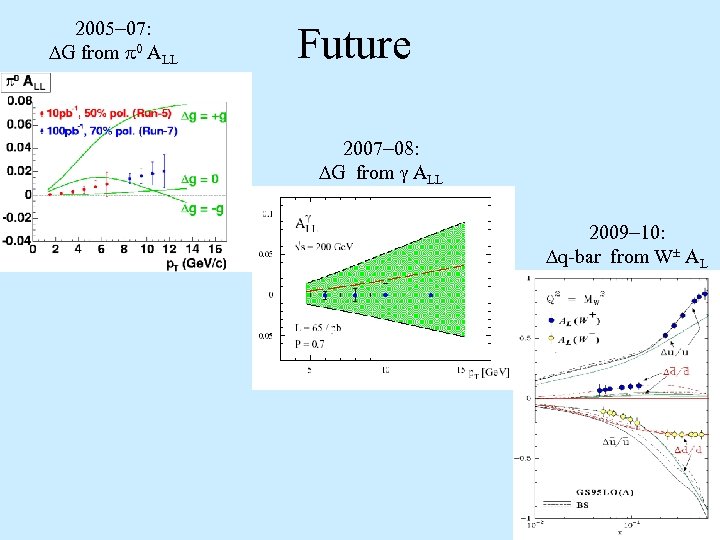
2005 07: G from 0 ALL Future 2007 08: G from ALL 2009 10: q-bar from W AL
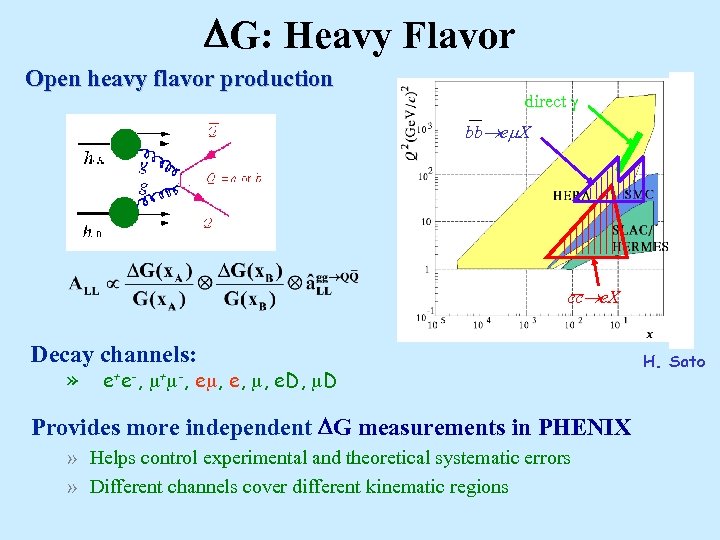
Summary • RHIC has been successful as the world’s first polarized proton collider, opening up new kinematic regions for investigating the spin of the proton • The first spin results from PHENIX are out and stimulating discussion within theoretical community – AN of neutral pions and non-identified charged hadrons – ALL of neutral pions Many more years of exciting data and results to look forward to! • Spin physics at PHENIX planned for 2005 and beyond – Measure gluon polarization via direct photon double longitudinal asymmetry – Probe gluon polarization from heavy flavor production (gg fusion) via electrons – Probe polarization of sea quarks via W boson single longitudinal asymmetry

Backup slides
Brazil China University of São Paulo, São Paulo Academia Sinica, Taipei, Taiwan China Institute of Atomic Energy, Beijing Peking University, Beijing France LPC, University de Clermont-Ferrand, Clermont-Ferrand Dapnia, CEA Saclay, Gif-sur-Yvette IPN-Orsay, Universite Paris Sud, CNRS-IN 2 P 3, Orsay LLR, Ecòle Polytechnique, CNRS-IN 2 P 3, Palaiseau SUBATECH, Ecòle des Mines at Nantes, Nantes Germany University of Münster, Münster Hungary Central Research Institute for Physics (KFKI), Budapest Debrecen University, Debrecen Eötvös Loránd University (ELTE), Budapest India Banaras Hindu University, Banaras Bhabha Atomic Research Centre, Bombay Israel Weizmann Institute, Rehovot Japan Center for Nuclear Study, University of Tokyo, Tokyo Hiroshima University, Higashi-Hiroshima KEK, Institute for High Energy Physics, Tsukuba Kyoto University, Kyoto 12 Countries; 57 Institutions; 460 Participants Nagasaki Institute of Applied Science, Nagasaki RIKEN, Institute for Physical and Chemical Research, Wako RIKEN-BNL Research Center, Upton, NY USA Abilene Christian University, Abilene, TX Brookhaven National Laboratory, Upton, NY University of Tokyo, Bunkyo-ku, Tokyo University of California - Riverside, CA Tokyo Institute of Technology, Tokyo University of Tsukuba, Tsukuba University of Colorado, Boulder, CO Waseda University, Tokyo Columbia University, Nevis Laboratories, Irvington, NY S. Korea Cyclotron Application Laboratory, KAERI, Seoul Florida State University, Tallahassee, FL Kangnung National University, Kangnung Georgia State University, Atlanta, GA Korea University, Seoul University of Illinois Urbana Champaign, IL Myong Ji University, Yongin City Iowa State University and Ames Laboratory, Ames, IA System Electronics Laboratory, Seoul Nat. University, Seoul Los Alamos National Laboratory, Los Alamos, NM Yonsei University, Seoul Lawrence Livermore National Laboratory, Livermore, CA Russia Institute of High Energy Physics, Protovino University of New Mexico, Albuquerque, NM Joint Institute for Nuclear Research, Dubna New Mexico State University, Las Cruces, NM Kurchatov Institute, Moscow Dept. of Chemistry, Stony Brook Univ. , Stony Brook, NY PNPI, St. Petersburg Nuclear Physics Institute, St. Petersburg Dept. Phys. and Astronomy, Stony Brook Univ. , Stony Brook, NY St. Petersburg State Technical University, St. Petersburg Oak Ridge National Laboratory, Oak Ridge, TN Sweden Lund University, Lund University of Tennessee, Knoxville, TN Vanderbilt University, Nashville, TN
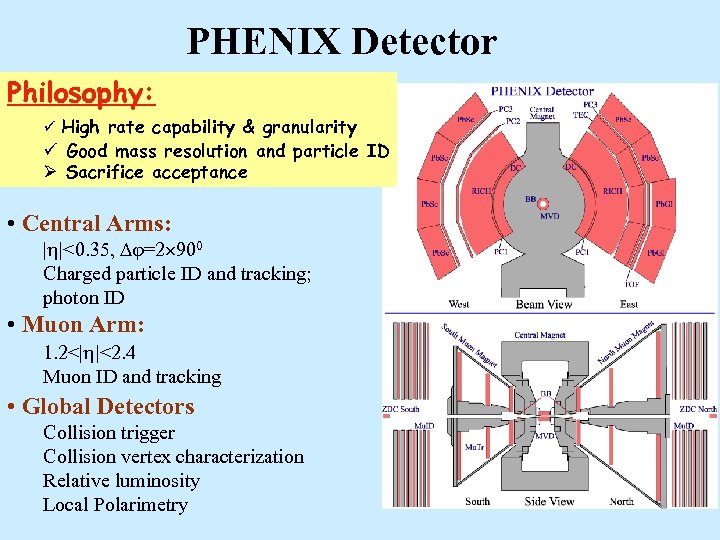
PHENIX Detector Philosophy: ü High rate capability & granularity ü Good mass resolution and particle ID Ø Sacrifice acceptance • Central Arms: | |<0. 35, =2 900 Charged particle ID and tracking; photon ID • Muon Arm: 1. 2<| |<2. 4 Muon ID and tracking • Global Detectors Collision trigger Collision vertex characterization Relative luminosity Local Polarimetry
G: other experiments GRSV-max HERMES GRSV-std q Theory curves from W. Vogelsang q HERMES: high pt hadron pairs (PRL 84, 2584, 2000) Consistent with both GRSVmax and GRSV-std q SMC: high pt hadron pairs SMC (hep-ex/0402010) Consistent with GRSV-std q PHENIX: 0 ALL Consistent with GRSV-std PHENIX x-range So far all results are consistent with GRSV-std
G: Prompt Photons ALL Statistics with full design luminosity and polarization ( Ldt=320 pb-1, P=70% ) x G GS 95 prompt photon x GRSV: Frixione and Vogelsang, Nucl. Phys. B 568: 60 (2000) GS 95: Gehrmann and Stirling, PRD 53, 6100 (1996)
AN E 704 PRL 92 (2004) 171801
G: Heavy Flavor Open heavy flavor production direct bb e X cc e. X Decay channels: » e+e-, m+m-, em, e, m, e. D, m. D Provides more independent G measurements in PHENIX » Helps control experimental and theoretical systematic errors » Different channels cover different kinematic regions H. Sato
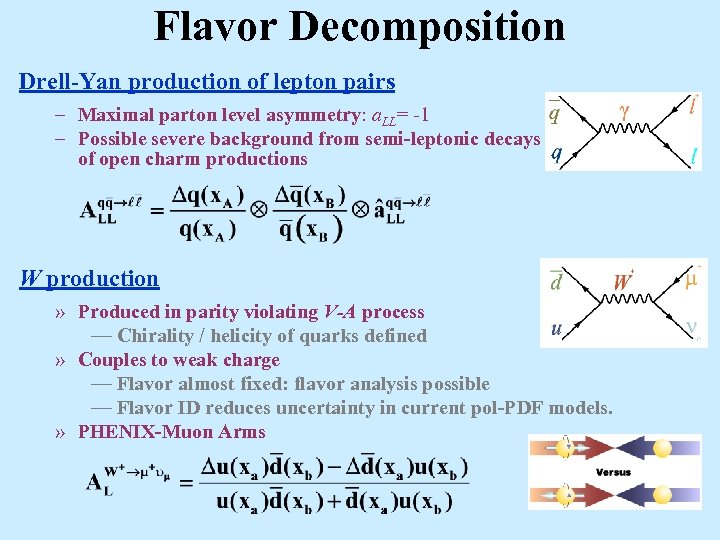
Flavor Decomposition Drell-Yan production of lepton pairs – Maximal parton level asymmetry: a. LL= -1 – Possible severe background from semi-leptonic decays of open charm productions W production » Produced in parity violating V-A process — Chirality / helicity of quarks defined » Couples to weak charge — Flavor almost fixed: flavor analysis possible — Flavor ID reduces uncertainty in current pol-PDF models. » PHENIX-Muon Arms
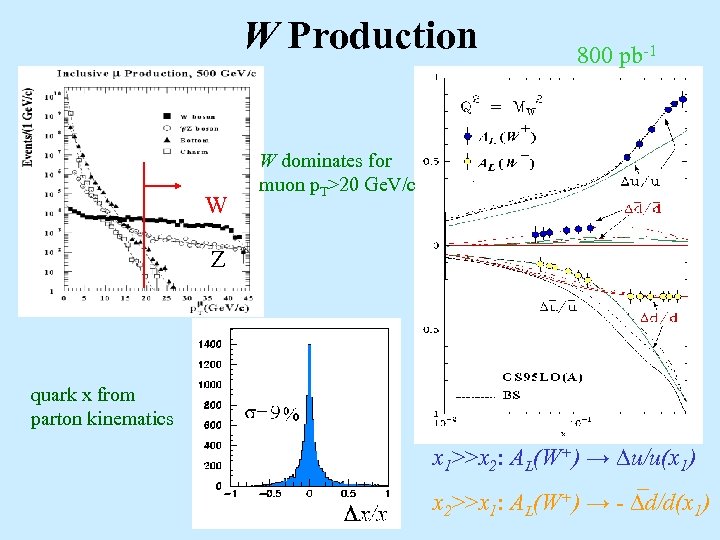
W Production W 800 pb-1 W dominates for muon p. T>20 Ge. V/c Z quark x from parton kinematics x 1>>x 2: AL(W+) → u/u(x 1) _ x 2>>x 1: AL(W+) → - d/d(x 1)
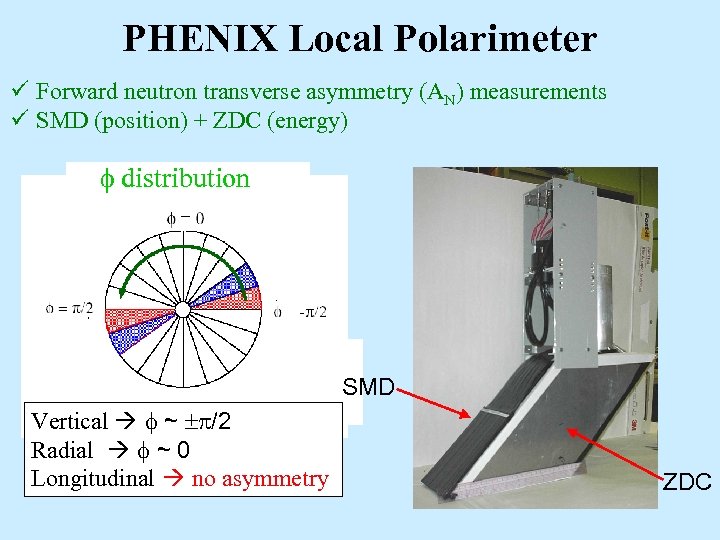
PHENIX Local Polarimeter ü Forward neutron transverse asymmetry (AN) measurements ü SMD (position) + ZDC (energy) f distribution SMD Vertical f ~ /2 Radial f ~ 0 Longitudinal no asymmetry ZDC
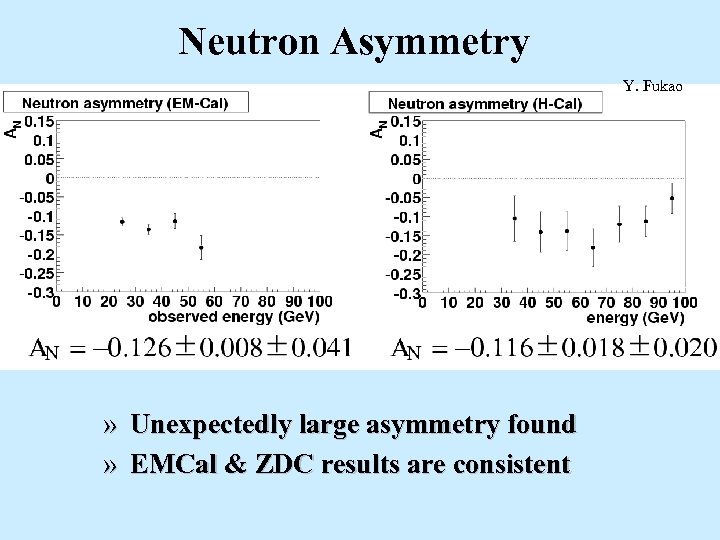
Neutron Asymmetry Y. Fukao » Unexpectedly large asymmetry found » EMCal & ZDC results are consistent
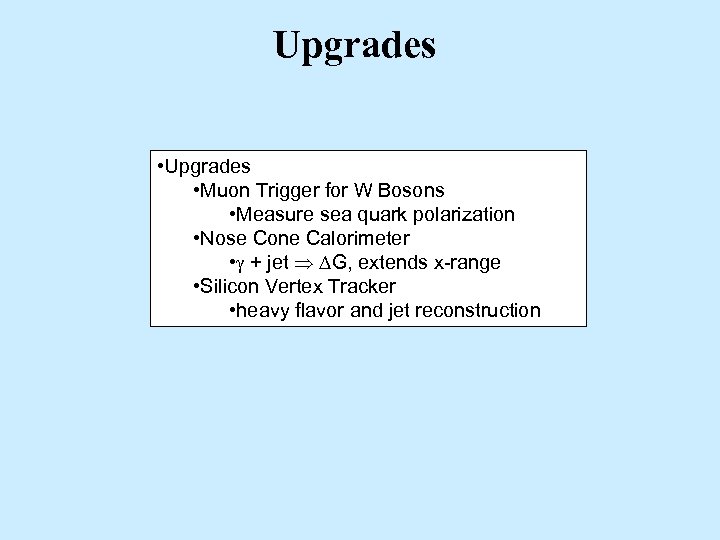
Upgrades • Muon Trigger for W Bosons • Measure sea quark polarization • Nose Cone Calorimeter • + jet G, extends x-range • Silicon Vertex Tracker • heavy flavor and jet reconstruction
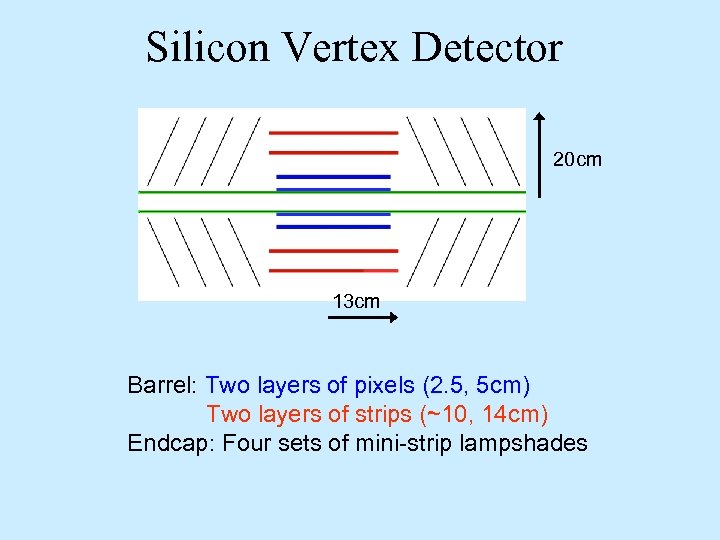
Silicon Vertex Detector 20 cm 13 cm Barrel: Two layers of pixels (2. 5, 5 cm) Two layers of strips (~10, 14 cm) Endcap: Four sets of mini-strip lampshades
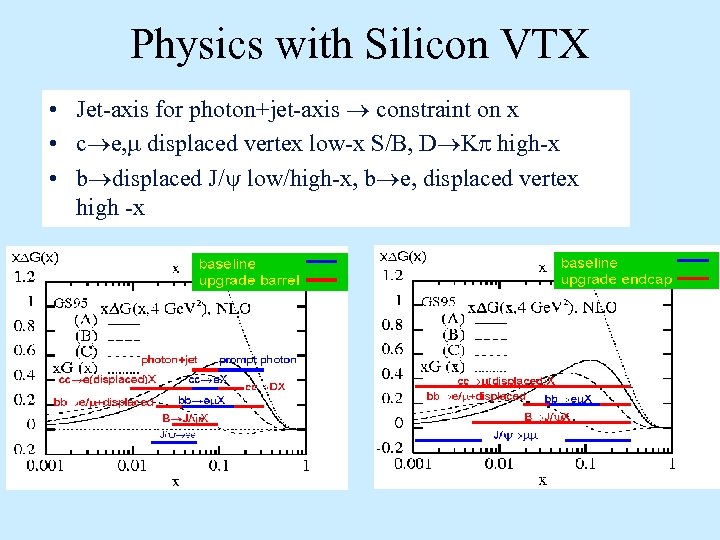
Physics with Silicon VTX • Jet-axis for photon+jet-axis constraint on x • c e, m displaced vertex low-x S/B, D K high-x • b displaced J/y low/high-x, b e, displaced vertex high -x
Скачать презентацию PHENIX Spin Program Recent results A Bazilevsky Brookhaven
dfcce4679be17016e5c7a07893e59b38.ppt