 Скачать презентацию PHARMACOTHERAPY OBJECTIVES Know and understand Key
18ae5683b37f8a85709ed1cc74f3a577.ppt
- Количество слайдов: 53




PHARMACOTHERAPY
OBJECTIVES Know and understand: • Key issues in geriatric pharmacology • Effects of age on pharmacokinetics and pharmacodynamics • Risk factors for adverse drug events for older patients and ways to mitigate them • Principles of prescribing for older patients Slide 2
TOPICS COVERED • Challenges of Geriatric Pharmacology • Aging and Pharmacokinetics • Aging and Pharmacodynamics • Adverse Drug Events • Drug-drug & Drug-disease Interactions • Principles of Prescribing for Older Adults • Nonadherence Slide 3
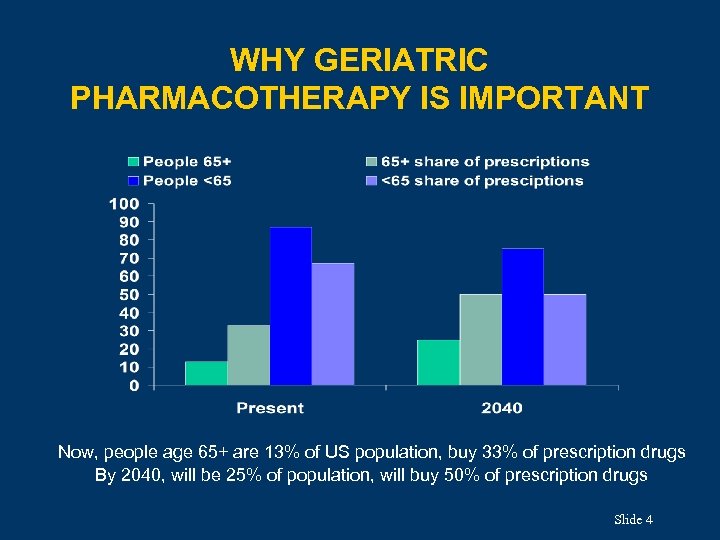
WHY GERIATRIC PHARMACOTHERAPY IS IMPORTANT Now, people age 65+ are 13% of US population, buy 33% of prescription drugs By 2040, will be 25% of population, will buy 50% of prescription drugs Slide 4
WHY GERIATRIC PHARMACOTHERAPY IS CHALLENGING • More drugs are available each year • FDA and off-label indications are expanding • Formularies change frequently • Knowledge of drug-drug interactions advances • Drugs change from prescription to OTC • “Nutraceuticals” (herbal preparations, nutritional supplements) are booming Slide 5
PHARMACOKINETICS Absorption Distribution Metabolism Elimination Slide 6
AGING AND ABSORPTION • Amount absorbed (bioavailability) is not changed • Peak serum concentrations may be lower and delayed • Exceptions: drugs with extensive first-pass effect (bioavailability may increase and serum concentrations may be higher because less drug is extracted by the liver, which is smaller with reduced blood flow) Slide 7
FACTORS THAT AFFECT DRUG ABSORPTION (1 of 2) • Route of administration • What is taken with the drug • Comorbid illnesses Slide 8
FACTORS THAT AFFECT DRUG ABSORPTION (2 of 2) • Divalent cations (calcium, magnesium, iron) can affect absorption of many fluoroquinolones (eg, ciprofloxacin) • Enteral feedings interfere with absorption of some drugs (eg, phenytoin) • Increased gastric p. H may increase or decrease absorption of some drugs • Drugs that affect GI motility can affect absorption Slide 9
EFFECTS OF AGING ON VOLUME OF DISTRIBUTION (VD) • Age-associated changes in body composition can alter drug distribution • body water lower VD for hydrophilic drugs • lean body mass lower VD for drugs that bind to muscle • fat stores higher VD for lipophilic drugs • plasma protein (albumin) higher percentage of drug that is unbound (active) Slide 10
AGING AND METABOLISM Metabolic clearance of a drug by the liver may be reduced because: • Aging decreases liver blood flow, size and mass • The liver is the most common site of drug metabolism Slide 11
WHY THE METABOLIC PATHWAY MATTERS • Phase I pathways (eg, hydroxylation, oxidation, dealkylation, and reduction) convert drugs to metabolites with <, =, or > pharmacologic effect than parent compound • Phase II pathways convert drugs to inactive metabolites that do not accumulate Ø With few exceptions, drugs metabolized by phase II pathways are preferred for older patients Slide 12
OTHER FACTORS THAT AFFECT DRUG METABOLISM • Age and gender (eg, oxazepam is metabolized faster in older men than in older women; nefazodone concentrations are 50% higher in older women than in younger women) • Hepatic congestion from heart failure (eg, reduces metabolism of warfarin) • Smoking (eg, increases clearance of theophylline) Slide 13
KEY CONCEPTS ABOUT DRUG ELIMINATION • Half-life: time for serum concentration of drug to decline by 50% • Clearance: volume of serum from which the drug is removed per unit of time (eg, L/hour or m. L/minute) Slide 14
KIDNEY FUNCTION IS CRITICAL FOR DRUG ELIMINATION • Most drugs exit the body via the kidney • Reduced elimination drug accumulation and toxicity • Aging and common geriatric disorders can impair kidney function Slide 15
THE EFFECTS OF AGING ON THE KIDNEY kidney size renal blood flow number of functioning nephrons renal tubular secretion Result: Lower glomerular filtration rate Slide 16
SERUM CREATININE DOES NOT REFLECT CREATININE CLEARANCE lean body mass lower creatinine production and glomerular filtration rate (GFR) Result: In older persons, serum creatinine stays in normal range, masking change in creatinine clearance (Cr. Cl) Slide 17
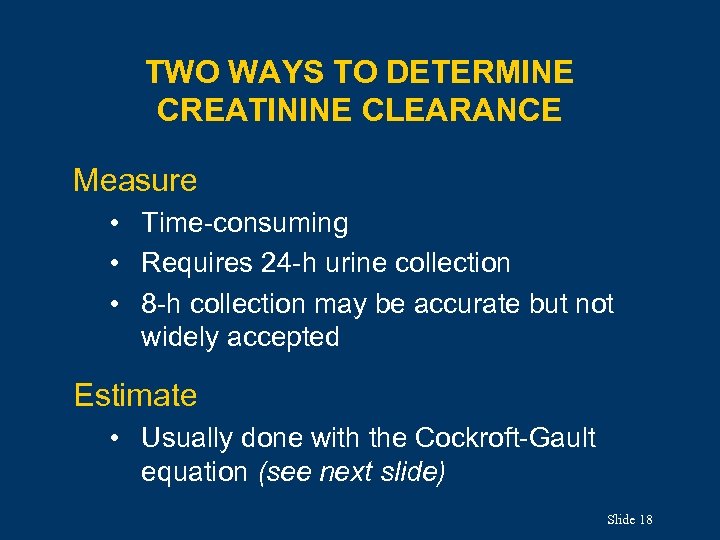
TWO WAYS TO DETERMINE CREATININE CLEARANCE Measure • Time-consuming • Requires 24 -h urine collection • 8 -h collection may be accurate but not widely accepted Estimate • Usually done with the Cockroft-Gault equation (see next slide) Slide 18
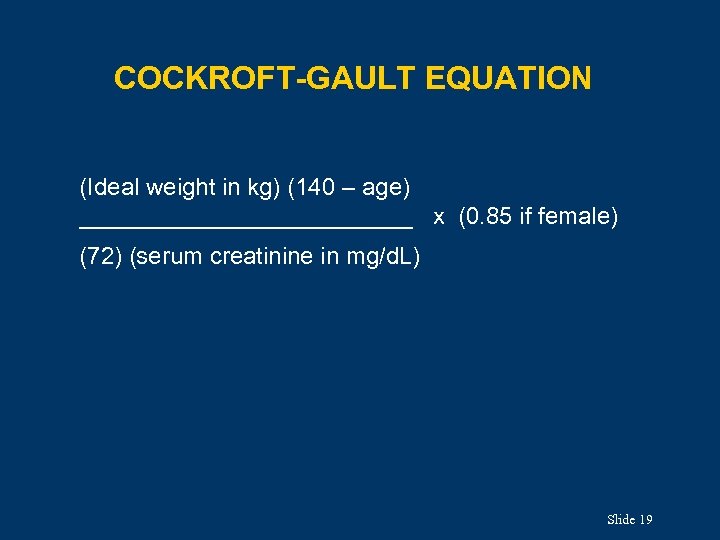
COCKROFT-GAULT EQUATION (Ideal weight in kg) (140 – age) _____________ x (0. 85 if female) (72) (serum creatinine in mg/d. L) Slide 19
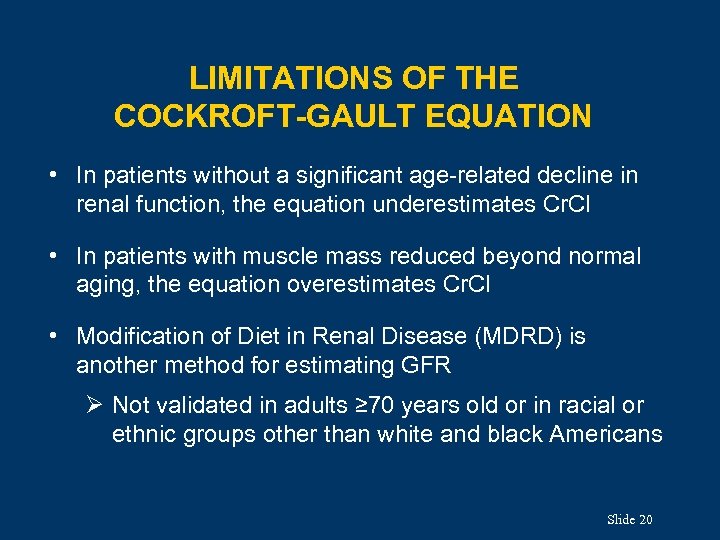
LIMITATIONS OF THE COCKROFT-GAULT EQUATION • In patients without a significant age-related decline in renal function, the equation underestimates Cr. Cl • In patients with muscle mass reduced beyond normal aging, the equation overestimates Cr. Cl • Modification of Diet in Renal Disease (MDRD) is another method for estimating GFR Ø Not validated in adults ≥ 70 years old or in racial or ethnic groups other than white and black Americans Slide 20
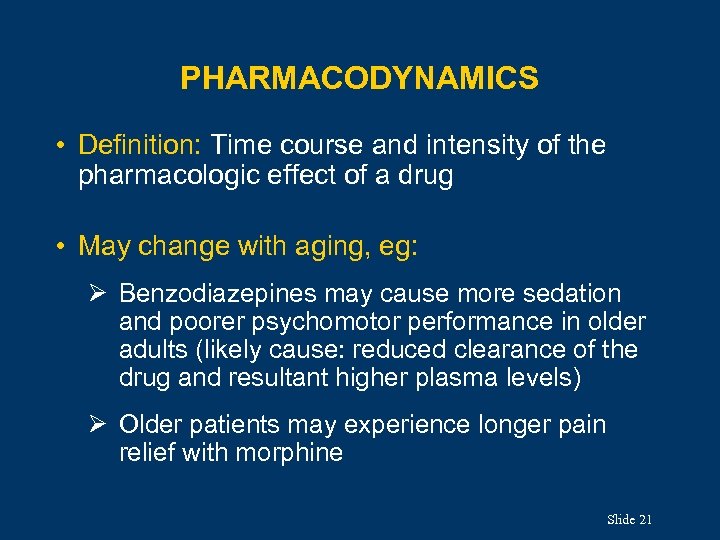
PHARMACODYNAMICS • Definition: Time course and intensity of the pharmacologic effect of a drug • May change with aging, eg: Ø Benzodiazepines may cause more sedation and poorer psychomotor performance in older adults (likely cause: reduced clearance of the drug and resultant higher plasma levels) Ø Older patients may experience longer pain relief with morphine Slide 21
SUCCESSFUL PHARMACOTHERAPY • Uses the correct drug • Prescribes the correct dosage • Targets the correct condition • Is appropriate for the patient Failure in any one of these can result in adverse drug events (ADEs) Slide 22
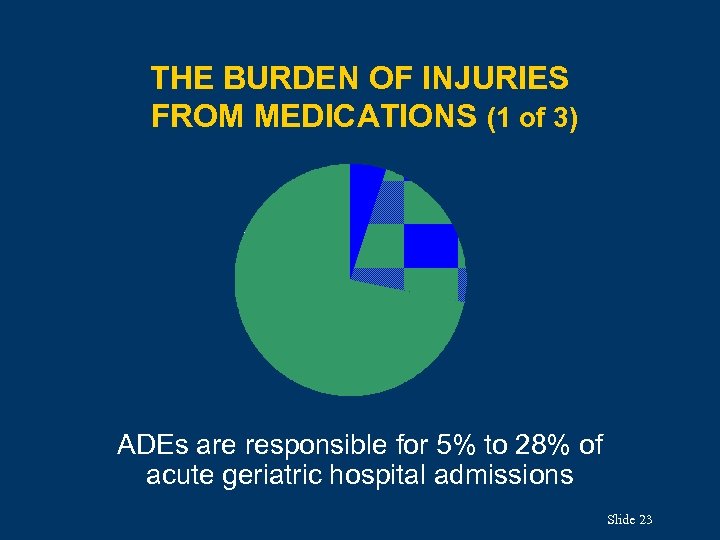
THE BURDEN OF INJURIES FROM MEDICATIONS (1 of 3) ADEs are responsible for 5% to 28% of acute geriatric hospital admissions Slide 23
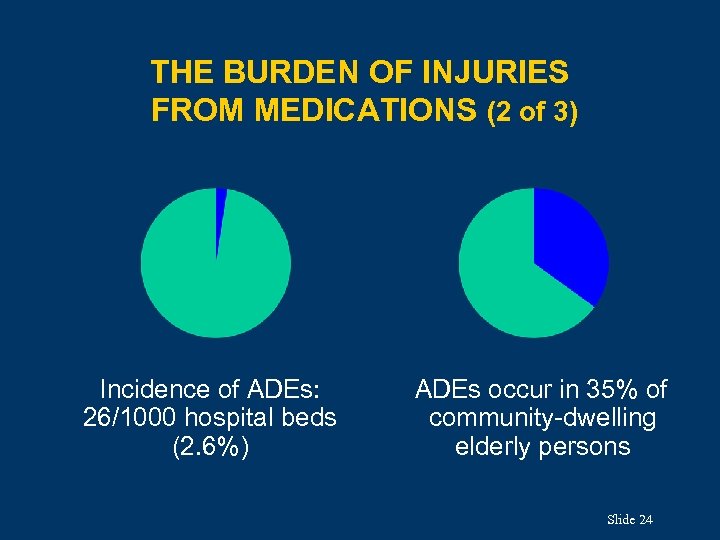
THE BURDEN OF INJURIES FROM MEDICATIONS (2 of 3) Incidence of ADEs: 26/1000 hospital beds (2. 6%) ADEs occur in 35% of community-dwelling elderly persons Slide 24
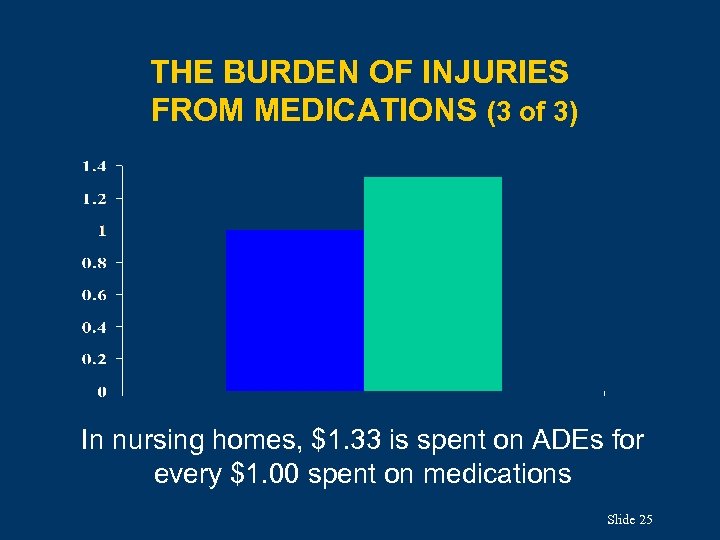
THE BURDEN OF INJURIES FROM MEDICATIONS (3 of 3) In nursing homes, $1. 33 is spent on ADEs for every $1. 00 spent on medications Slide 25
MOST COMMON MEDICATIONS INVOLVED IN ADEs • Cardiovascular drugs, diuretics, NSAIDs, hypoglycemics and anticoagulants • Medications with a narrow margin of safety Slide 26
OPTIMIZING PRESCRIBING • Achieve balance between over- and underprescribing of beneficial therapies • >20% of ambulatory older adults receive at least one potentially inappropriate medication • Nearly 4% of office visits and 10% of hospital admissions result in prescription of medications classified as never or rarely appropriate • Underprescribing can result from thinking older adults will not benefit from medications intended as primary or secondary prevention or from aggressive treatment of chronic conditions Slide 27
COMMONLY OVERPRESCRIBED AND INAPPROPRIATELY USED DRUGS • Anti-infective agents • Anticholinergic agents • Urinary & GI antispasmodics • Antipsychotics • Benzodiazepines • Digoxin for diastolic dysfunction • Dipyridamole • • H 2 receptor antagonists Laxatives & fecal softeners NSAIDs Propoxyphene Proton-pump inhibitors Sedating antihistamines Tricyclic antidepressants Vitamins and minerals Slide 28
COMMONLY UNDERPRESCRIBED DRUGS • • ACE inhibitors for patients with diabetes and proteinuria Angiotensin-receptor blockers Anticoagulants Antihypertensives and diuretics for uncontrolled hypertension β-blockers for patients after MI or with heart failure Bronchodilators Proton-pump inhibitors or misoprostol for GI protection from NSAIDs • Statins • Vitamin D and calcium for patients with or at risk of osteoporosis Slide 29
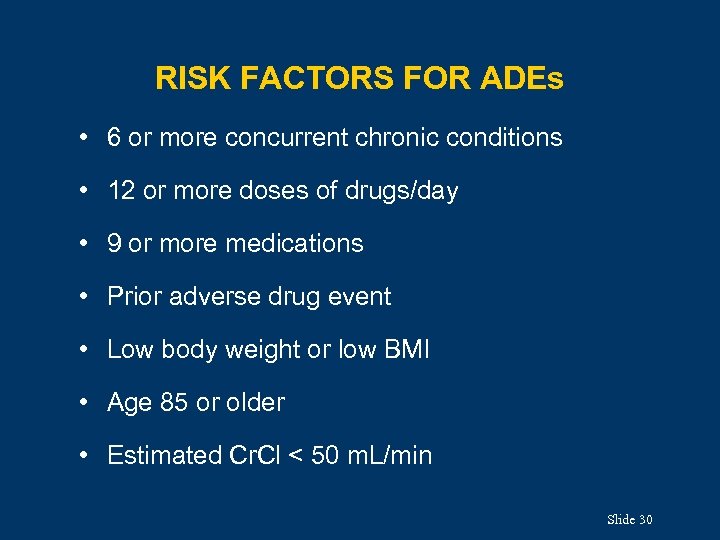
RISK FACTORS FOR ADEs • 6 or more concurrent chronic conditions • 12 or more doses of drugs/day • 9 or more medications • Prior adverse drug event • Low body weight or low BMI • Age 85 or older • Estimated Cr. Cl < 50 m. L/min Slide 30
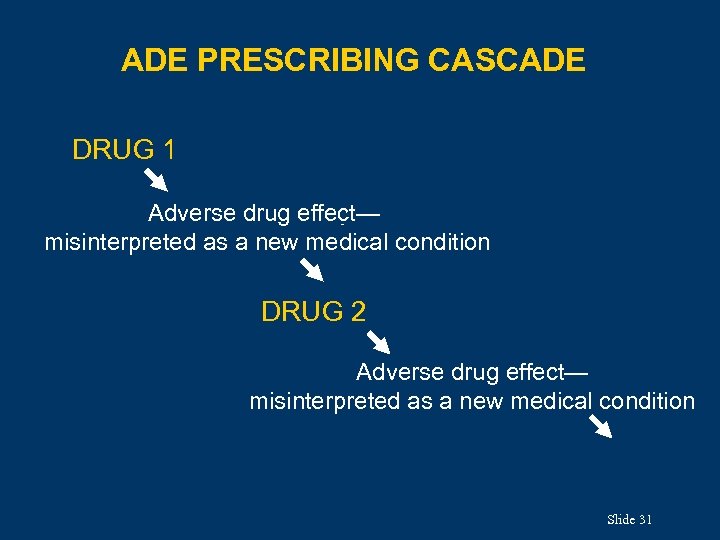
ADE PRESCRIBING CASCADE DRUG 1 Adverse drug effect— misinterpreted as a new medical condition DRUG 2 Adverse drug effect— misinterpreted as a new medical condition Slide 31
DRUG-DRUG INTERACTIONS • May lead to ADEs • Likelihood as number of medications • Most common: cardiovascular and psychotropic drugs Slide 32
KEY FACTS ABOUT DRUG-DRUG INTERACTIONS • Absorption can be or • Use of drugs with similar or opposite effects can result in exaggerated or diminished effects • Drug metabolism may be inhibited or induced • Herbal preparations may also interact Slide 33
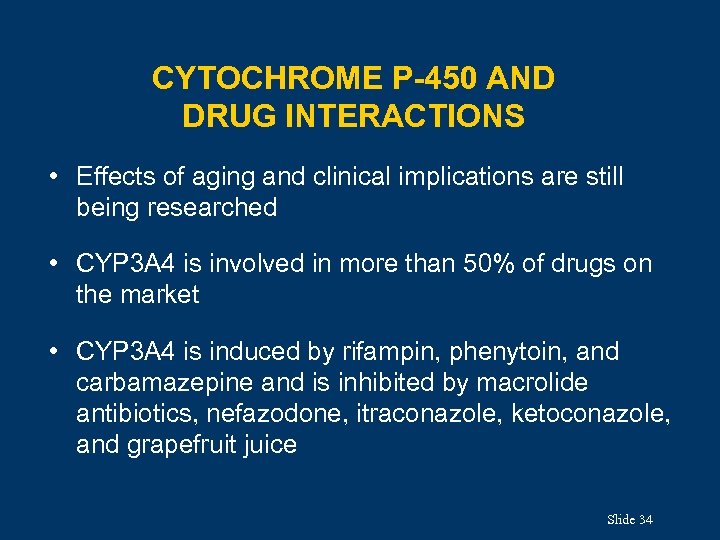
CYTOCHROME P-450 AND DRUG INTERACTIONS • Effects of aging and clinical implications are still being researched • CYP 3 A 4 is involved in more than 50% of drugs on the market • CYP 3 A 4 is induced by rifampin, phenytoin, and carbamazepine and is inhibited by macrolide antibiotics, nefazodone, itraconazole, ketoconazole, and grapefruit juice Slide 34
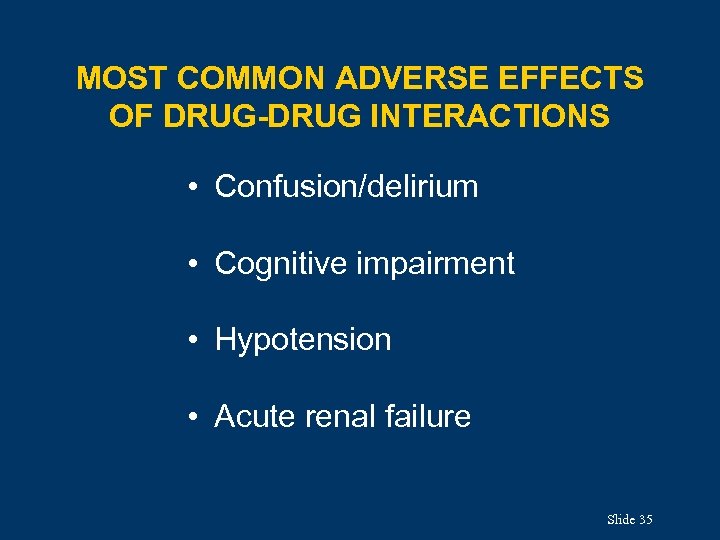
MOST COMMON ADVERSE EFFECTS OF DRUG-DRUG INTERACTIONS • Confusion/delirium • Cognitive impairment • Hypotension • Acute renal failure Slide 35
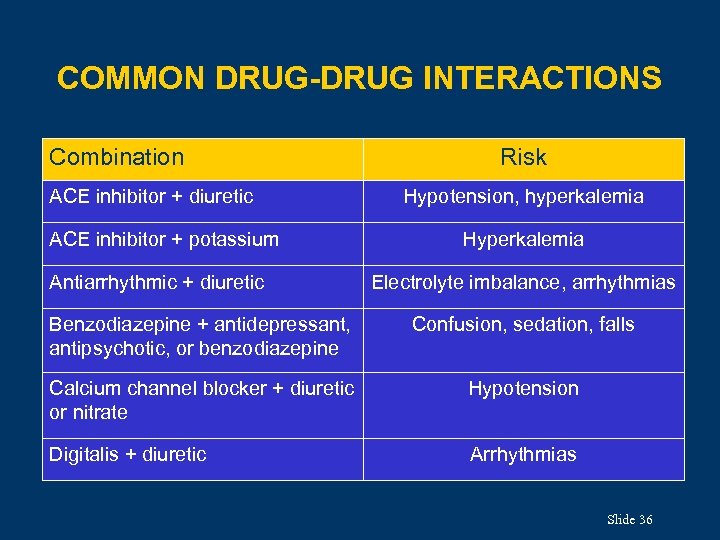
COMMON DRUG-DRUG INTERACTIONS Combination ACE inhibitor + diuretic ACE inhibitor + potassium Antiarrhythmic + diuretic Risk Hypotension, hyperkalemia Hyperkalemia Electrolyte imbalance, arrhythmias Benzodiazepine + antidepressant, antipsychotic, or benzodiazepine Confusion, sedation, falls Calcium channel blocker + diuretic or nitrate Hypotension Digitalis + diuretic Arrhythmias Slide 36
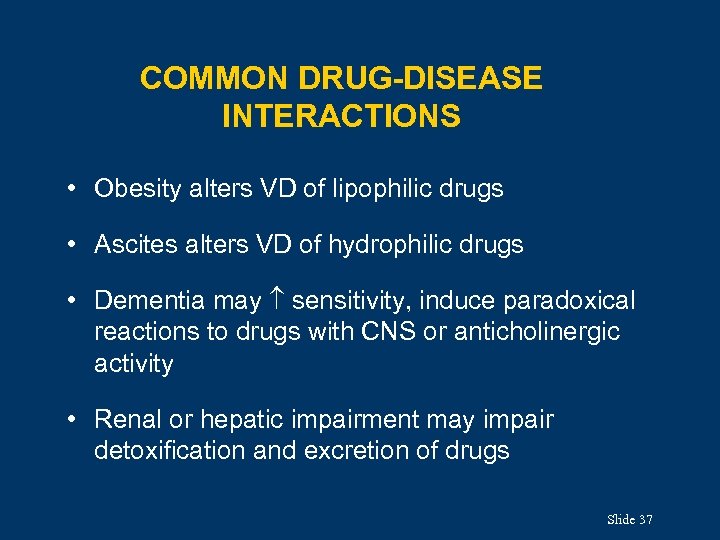
COMMON DRUG-DISEASE INTERACTIONS • Obesity alters VD of lipophilic drugs • Ascites alters VD of hydrophilic drugs • Dementia may sensitivity, induce paradoxical reactions to drugs with CNS or anticholinergic activity • Renal or hepatic impairment may impair detoxification and excretion of drugs Slide 37
PRINCIPLES OF PRESCRIBING FOR OLDER PATIENTS: THE BASICS • Start with a low dose • Titrate upward slowly, as tolerated by the patient • Avoid starting 2 drugs at the same time Slide 38
BEFORE PRESCRIBING A NEW DRUG, CONSIDER: • Is this medication necessary? • What are therapeutic end points? • Do the benefits outweigh the risks? • Is it used to treat effects of another drug? • Could 1 drug be used to treat 2 conditions? • Could it interact with diseases, other drugs? • Does patient know what it’s for, how to take it, and what ADEs to look for? Slide 39
PRINCIPLES OF PRESCRIBING ANNUALLY • Ask patient to bring in all medications (prescribed, OTC, supplements) for review • Ask about side effects and screen for drug and disease interactions • Look for duplicate therapies or pharmacologic effect • Eliminate unnecessary medications and simplify dosing regimens Slide 40
NONADHERENCE • May be as high as 50% among older patients • May result from clinician’s failure to consider patient’s financial, cognitive, functional status • May result from patient’s beliefs and understanding of drugs and diseases Slide 41
SUMMARY • Successful prescribing means choosing the correct dosage of the correct drug for the condition and individual patient • Age alters pharmacokinetics (drug absorption, distribution, metabolism, and elimination) • ADEs are common but can be minimized with strict attention to risk factors, drug-drug interactions, and drug-disease interactions Slide 42
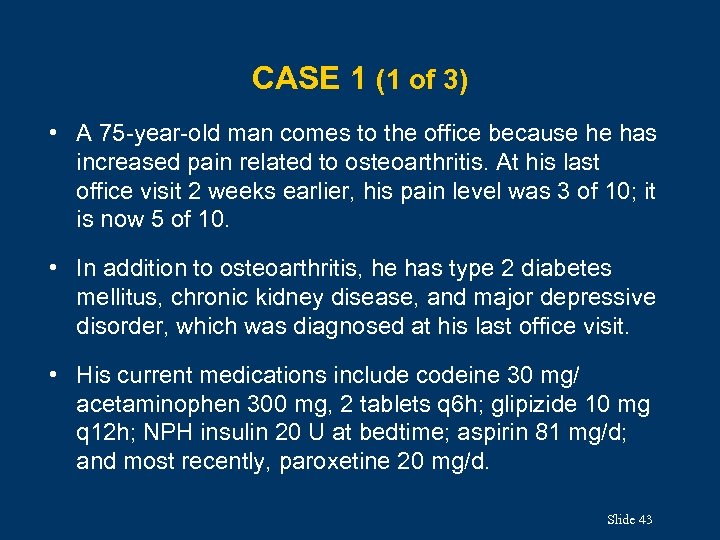
CASE 1 (1 of 3) • A 75 -year-old man comes to the office because he has increased pain related to osteoarthritis. At his last office visit 2 weeks earlier, his pain level was 3 of 10; it is now 5 of 10. • In addition to osteoarthritis, he has type 2 diabetes mellitus, chronic kidney disease, and major depressive disorder, which was diagnosed at his last office visit. • His current medications include codeine 30 mg/ acetaminophen 300 mg, 2 tablets q 6 h; glipizide 10 mg q 12 h; NPH insulin 20 U at bedtime; aspirin 81 mg/d; and most recently, paroxetine 20 mg/d. Slide 43
CASE 1 (2 of 3) Which of the following is the best option for managing this patient’s pain? (A) Increase codeine/acetaminophen dose. (B) Change codeine/acetaminophen to oxycodone/ acetaminophen. (C) Change codeine/acetaminophen to propoxyphene/ acetaminophen. (D) Add ibuprofen 200 mg q 6 h. (E) Discontinue paroxetine. Slide 44
CASE 1 (3 of 3) Which of the following is the best option for managing this patient’s pain? (A) Increase codeine/acetaminophen dose. (B) Change codeine/acetaminophen to oxycodone/ acetaminophen. (C) Change codeine/acetaminophen to propoxyphene/ acetaminophen. (D) Add ibuprofen 200 mg q 6 h. (E) Discontinue paroxetine. Slide 45
CASE 2 (1 of 3) • A 79 -year-old woman comes to the office to establish care. She reports that she often feels sleepy. • History includes osteoporosis, hip fracture, systolic heart failure, hypertension, frequent falls, chronic kidney disease, and post-herpetic neuralgia. • Medications include extended-release metoprolol 100 mg/d, gabapentin 600 mg q 8 h, alendronate 35 mg/wk, vitamin D 800 IU/d, calcium carbonate 500 mg q 8 h, and aspirin 81 mg/d. • Serum creatinine is 1. 5 mg/d. L, with estimated creatinine clearance of 30 m. L/min. Slide 46
CASE 2 (2 of 3) Which of the following would be most likely to relieve this patient’s sleepiness? (A) Reduce gabapentin dosage to 600 mg q 12 h. (B) Start lisinopril 2. 5 mg/d. (C) Discontinue alendronate. (D) Increase vitamin D to 1200 IU/d. (E) Switch extended-release metoprolol to metoprolol 50 mg q 12 h. Slide 47
CASE 2 (3 of 3) Which of the following would be most likely to relieve this patient’s sleepiness? (A) Reduce gabapentin dosage to 600 mg q 12 h. (B) Start lisinopril 2. 5 mg/d. (C) Discontinue alendronate. (D) Increase vitamin D to 1200 IU/d. (E) Switch extended-release metoprolol to metoprolol 50 mg q 12 h. Slide 48
CASE 3 (1 of 4) • A 79 -year-old woman comes for a follow-up office visit 2 weeks after hospital discharge. She had been admitted for exacerbation of heart failure. • She has atrial fibrillation, hypertension, systolic heart failure (New York Heart Association class III), and coronary artery disease. • Medications include furosemide 20 mg q 12 h, potassium 10 m. Eq/d, lisinopril 10 mg/d, warfarin 2 mg/d, metoprolol 25 mg q 12 h, and, since hospital discharge, spironolactone 12. 5 mg/d. • On examination, the patient’s weight is stable and she has returned to baseline function. Slide 49
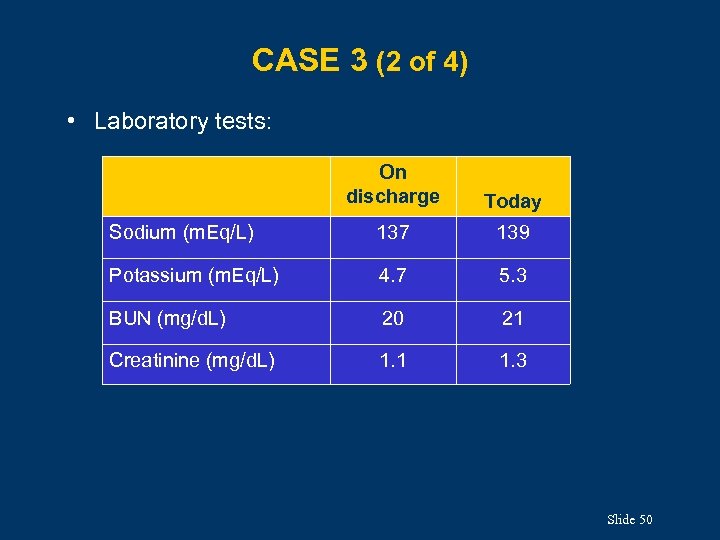
CASE 3 (2 of 4) • Laboratory tests: On discharge Today Sodium (m. Eq/L) 137 139 Potassium (m. Eq/L) 4. 7 5. 3 BUN (mg/d. L) 20 21 Creatinine (mg/d. L) 1. 1 1. 3 Slide 50
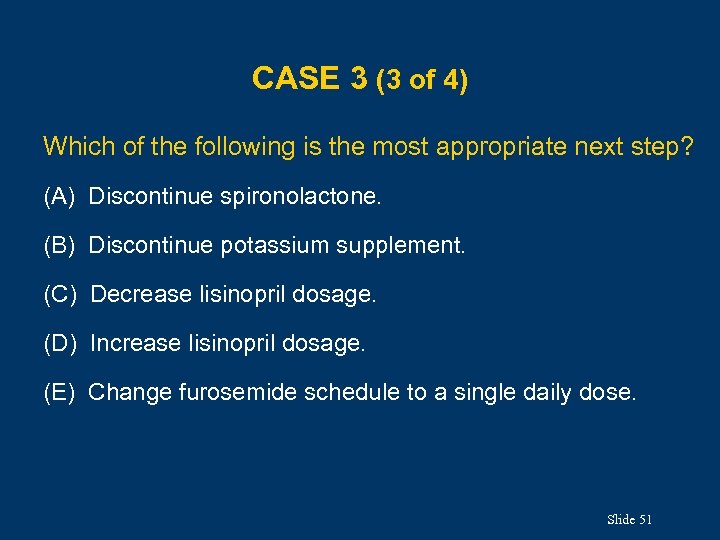
CASE 3 (3 of 4) Which of the following is the most appropriate next step? (A) Discontinue spironolactone. (B) Discontinue potassium supplement. (C) Decrease lisinopril dosage. (D) Increase lisinopril dosage. (E) Change furosemide schedule to a single daily dose. Slide 51
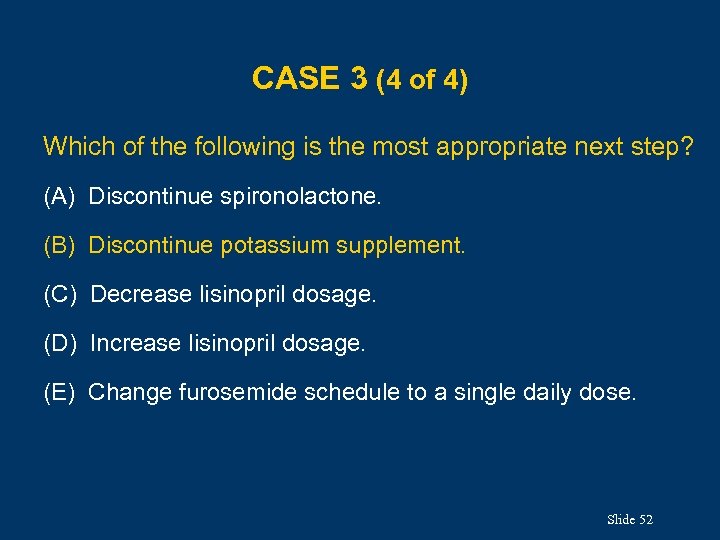
CASE 3 (4 of 4) Which of the following is the most appropriate next step? (A) Discontinue spironolactone. (B) Discontinue potassium supplement. (C) Decrease lisinopril dosage. (D) Increase lisinopril dosage. (E) Change furosemide schedule to a single daily dose. Slide 52
ACKNOWLEDGMENTS Editor: Annette Medina-Walpole, MD GRS 7 Chapter Author: Todd P. Semla, MS, Pharm. D GRS 7 Question Writer: Shelly L. Gray, Pharm. D, MS Medical Writers: Beverly A. Caley Faith Reidenbach Managing Editor: Andrea N. Sherman, MS Copyright © 2010 American Geriatrics Society Slide 53
Скачать презентацию PHARMACOTHERAPY OBJECTIVES Know and understand Key
18ae5683b37f8a85709ed1cc74f3a577.ppt