


 Скачать презентацию Pharmaceutics 1 Introduction to Drugs and Pharmacy
6dd4eedf46b9895a72bb018a15c8e946.ppt
- Количество слайдов: 85
 Pharmaceutics
 1. Introduction to Drugs and Pharmacy 1. Heritage of pharmacy 2. Drug standards (药品标准) 3. The Pharmacist’s contemporary role
 A drug is defined as an agent intended for use in the diagnosis, mitigation, treatment, cure, or prevention of disease in humans or in other animals. 药物是有目的地用于诊断、缓解、治疗、 治愈或预防人类或动物疾病的物质。
 • Emetic (induce vomiting催 吐 剂 ) and antiemetic (prevent vomiting止 吐 剂 ) drugs • Diuretic drugs (increase the flow of urine 利尿剂)
 • Expectorant drugs (increase respiratory tract fluid除痰剂) • Cathartics or laxatives (evacuate the bowel泻药) • Other drugs decrease the flow of urine, diminish body secretions, or induce constipation (便秘)
 • Drugs may be used to reduce pain, fever, thyroid(甲状腺) activity, rhinitis(鼻炎 ), insomnia (失眠), gastric acidity, motion sickness, blood pressure, and mental depression. • Other drugs can elevate mood, blood pressure, or activity of the endocrine glands.
 Drugs are used to treat • common infections, • AIDS, • benign prostatic hyperplasia, • cancer, • cardiovascular disease, • Asthma (气喘, 哮喘) • Glaucoma (青光眼), etc.
 Where do new drugs come from? New drugs may be derived from • Plant • Animal sources • As byproducts of microbial growth • Through chemical synthesis • Molecular modification • Biotechnology
 The process of drug discovery and development • • Complex Organic, physical, and analytical chemists Biochemists Molecular biologists Bacteriologists Physiologists(生理学家) Pharmacologists
 • • • Toxicologists Hematologists(血液学家) Immunologists Endocrinologists(内分泌学家) Pathologists(病理学家) Biostatisticians Pharmaceutical scientists Clinical pharmacists Physicians Many others
 After a potential new drug substance is discovered 1) A great deal of biologic information must be gathered • basic pharmacology • toxicologic features • ADME • short term and long term effects of the drug on various body cells, tissues and organs
 2) The most effective routes of administration must be determined • And Guidelines for dosages recommended for • Persons of varying ages (e. g. , neonates, children, adults, geriatrics) • Weights • States of illness • have to be established.
 3) Formulation • Active therapeutic ingredients • Fillers • Thickeners • Solvents • Suspending agents • Tablet coatings • Disintegrants • Stabilizing agents • Antimicrobial preservatives • Flavors • Colorants • sweeteners
 4) Stability • the principles of chemistry, • physical pharmacy, • microbiology, • pharmaceutical technology applied. must be
 1. The Heritage of Pharmacy Early drugs Ebers papyrus, a continuous scroll (16 th century)-埃伯斯纸草文稿 The text of the Ebers papyrus is dominated by drug formulas, with more than 800 formulas or prescriptions being described and more than 700 drugs mentioned.
 The drugs are chiefly botanical, although mineral and animal drugs are also noted. • Acacia (阿拉伯树胶) • Castor bean (蓖麻子) • Iron oxide • Sodium carbonate • Sodium chloride • Sulfur • Animal excrements (排泄物)
 The vehicles were • Beer • Wine • Milk • honey
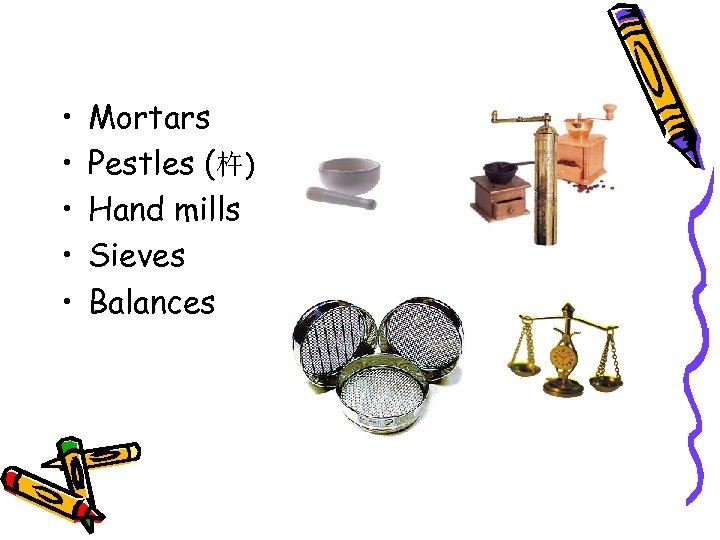 • • • Mortars Pestles (杵) Hand mills Sieves Balances
 2) Introduction of the scientific viewpoint • Hippocrates, a Greek physician, is credited with the introduction of scientific pharmacy and medicine. • He rationalized medicine, systematized medical knowledge, and put the practice of medicine on a high ethical plane.
 • Dioscorides, a Greek physician and botanist, was the first to deal with botany as an applied science of pharmacy. • Claudius Galen, a Greek pharmacistphysician, aimed to creat a perfect system of physiology, pathology, and treatment.
 • Paracelsus, a Swiss physician and chemist, he influenced the transformation of pharmacy from a profession based primarily on botanical science to one based on chemical science.
 3) Early research 1) Swede Karl Wilhelm Scheele (17421786) • Lactic acid (乳酸) • Citric acid (柠檬酸) • Oxalic acid (草酸) • Tartaric acid (酒石酸) • Arsenic acid (砒霜) • Identified glycerin
 • Invented new methods of preparing calomel (甘汞)and benzoic acid (安 息香酸) • Discovered oxygen
 2) Friedrich Serturner (1783 -1841), German pharmacist • Isolation of morphine from opium(鸦片) 3) Joseph Caventou (1795 -1877) and Joseph Pelletier (1788 -1842) • isolation quinine and cinchonine (弱金鸡 钠碱) from cinchona and strychnine (士 的宁) and brucine (番木鳖碱) from nux vomica.
 2. Drug standards The united states pharmacopeia (药典) and the national formulary (国家药品标准) • Pharmakon, meaning “drug”; poiein, meaning “make”; • The combination indicates any recipe or formula or other standards required to make or prepare a drug. • Organized sets of monographs or books of these standards are called pharmacopeias or formularies.
 In 1778, the first American Pharmacopeia (Lititz Pharmacopeia) was published. • 32 -page booklet containing information on 84 internal and 16 external drugs and preparations. In 1808, Massachusetts pharmacopeia • 272 page, 536 drugs and pharmaceutical preparations
 • In 1820, the first USP was published. • In 1900, issue supplements to the USP • In 1940, it was decided to revise the USP every 5 years
 In 1888, National Formulary of Unofficial Preparations was published. • The formulary containing many of the popular drugs and formulas denied admission to the USP. In 1906, the title was changed to National Formulary (NF) • Both USP and NF as establishing legal standards for medicinal and pharmaceutical substances.
 • In 1980, the first combined compendium (摘要, 纲要), comprising the USP XX and NF XV became official. • In 1995, the USP 23 -National Formulary 18 was the first edition to drop the use of roman numerals in favor of arabic numerals.
 • In 2002, the USP-NF became an annual publication with USP 25 -NF 20 • The 2003 edition, USP 26 -NF 21, contains approximately 4000 drug monographs. • The newest edition 2010, USP 33 - NF 28
 USP and NF adopt standards for • drug substances • pharmaceutic ingredients • dosage forms reflecting the best in the current practices of medicine and pharmacy • provide suitable tests and assay procedures for demonstrating compliance with these standards.
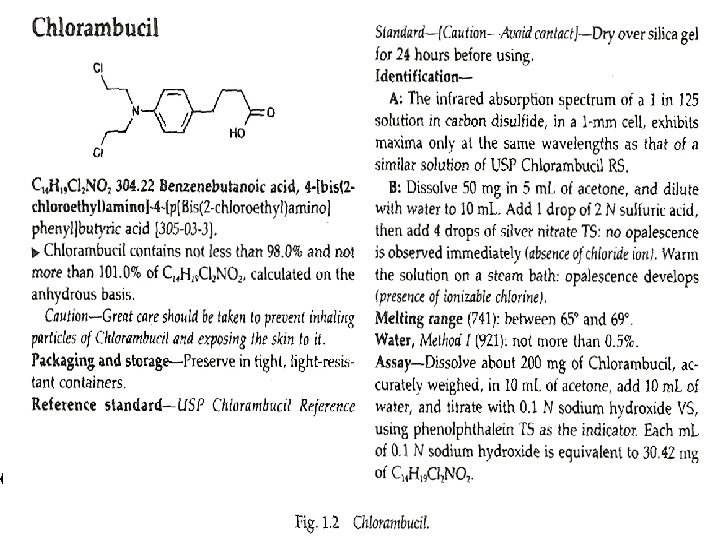
 Standards Set Forth in FDA-Approved New -drug applications FDA批准的新药物的应用的标准中规定
 International Organization for standardization (ISO) • is an international consortium of representative bodies constituted to develop and promote uniform or harmonized international standards. • 国际标准化组织是一个代表性的国际联合会, 其设立是为了发展和增进国际标准的均一性和 协调性。 • ISO 9000 -ISO 9004 used in the pharmaceutical industry
 • ISO included standards pertaining to development, production, quality assurance, quality control, detection of defective products, quality management, and other issues as product safety and liability. • ISO 包括标准适合开发、生产、质量保证、质 量控制、缺陷产品的检测、质量管理和其他如 产品安全性和责任的问题。 • Internationally recognized qualitymanagement system.
 Drug Regulation and Control • The federal food, drug, and cosmetic act (条例 )of 1938 • Comprehensive drug abuse prevention and control act of 1970 • Drug listing act(药品上市的行为条例) • of 1972 • Drug price competition and patent term restoration act(药品价格竞争和专利期恢复法) of 1984 • Drug product recall
 Drug Regulation and Control Prescription Drug Marketing Act(处方药营销 法) of 1987 • Dietary Supplement Health and Education Act(膳食补充剂健康与教育法 )of 1994 • The FDA and the Food and Drug Administration Modernization Act. FDA和食品 和药物管理局现代化法) of 1997 • Code of Federal Regulations and Federal Register(联邦法规和联邦注册的代码 ) • Drug product recall
 中国药典 1)药典 (pharmacopoeia)是一个国家记载药 品规格和标准的法典。由国家组织的药典 委员会编写,并由政府颁布施行,具有法 律的约束力。 中华人民共和国药典 F 1949年,编纂我国第一部 《中华人民共 和国药典》,简称《中国药典》;
 F 1953年版,收载各类药品531 种; F 1957年又出版了《中国药典 》1953年版第一增补本; F 1963年编纂出版了《中国药 典》1963年版,共分一、二 两部,收载中西药品1310种。
 F《中国药典》1977年版,于1980年 1月 1日 起施行。 - 共收载中西药品1925种; - 一部收载中药材和中成药 1152种; - 二部收载 773种,剂型增加了气雾剂、冲剂、 滴丸剂、糖丸、耳丸、汤剂、眼药水和滴耳 液等。
 《中国药典》 1985年版,本版药典收载的 品种其质量标准均有一定的提高: - 药品的理化鉴别增加了薄层扫描法、高效液 相层析法、紫外、红外光谱法、荧光分析法 和原子吸收分光光度法等。 F《中国药典》1990年版, 1991年 7月1日起 颁布施行。 - 共收载中西药品1751种; - 收载中药材、植物油脂、中药成方及单味制 剂等784种;
 - 化学药、生化药、抗生素、放射性药品、生 物制品及各类制剂共 967种; - 以后又出版了《中国药典》 1990年版增补本。
 F《中国药典》1995年版于1996年 4月1日起 颁布执行。 - 共收载中西药品2375种,一部为 920种,二 部为 1455种; - 本版药典增加了搽剂、露剂、颗粒剂、口 服液和缓释制剂等剂型; - 1995年版药典中的药名有较大变动,一部 大多为天然药物,采用国际上通用拉丁文 学名; - 二部则取消拉丁文药名而改为英文药名, 附录中试药的外文名称亦作了相应修改。
 F《中国药典》2000年版, - 共收载中西药品2691种,一部为 992种,二部 为 1699种; - 首次收载药品标准分析方法验证指导原则; - 药物制剂人体生物利用度和生物等效性试验指 导原则; - 药物稳定性指导原则; - 缓释、控释制剂指导原则; - 微囊、微球和脂质体制剂指导原则; - 细菌内毒素检查法应用指导原则。
 F中国药典 2005版 F 2005. 7. 1 施行
 2)国家药品标准 《中华人民共和国药品标准》简称《国家药品 标准》,由国家药品监督管理局编纂并颁布实 施的,主要包括以下几个方面的药物: 1) 药品监督管理局审批的国内创新的重大品种, 国内未生产的新药。 2) 药典收载过而现行版未列入的疗效肯定、国内 几省仍在生产、使用并修定标准的药品。 3) 疗效肯定、但质量标准仍需进一步改进的新药。
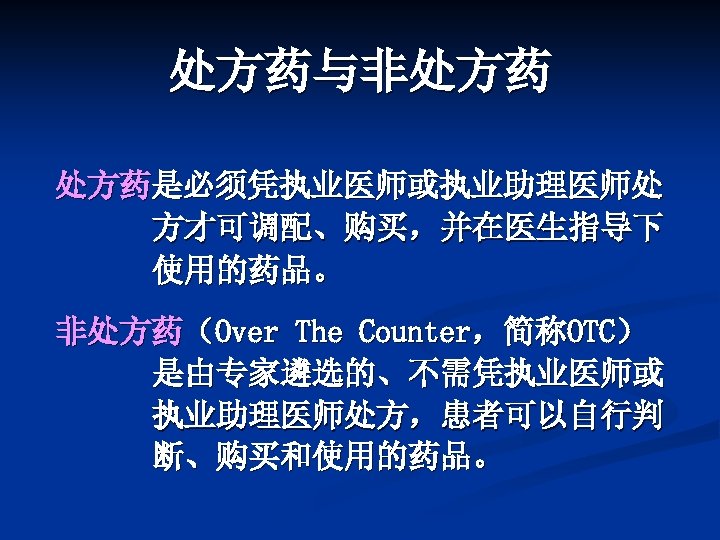 处方药与非处方药 处方药是必须凭执业医师或执业助理医师处 方才可调配、购买,并在医生指导下 使用的药品。 非处方药(Over The Counter,简称OTC) 是由专家遴选的、不需凭执业医师或 执业助理医师处方,患者可以自行判 断、购买和使用的药品。
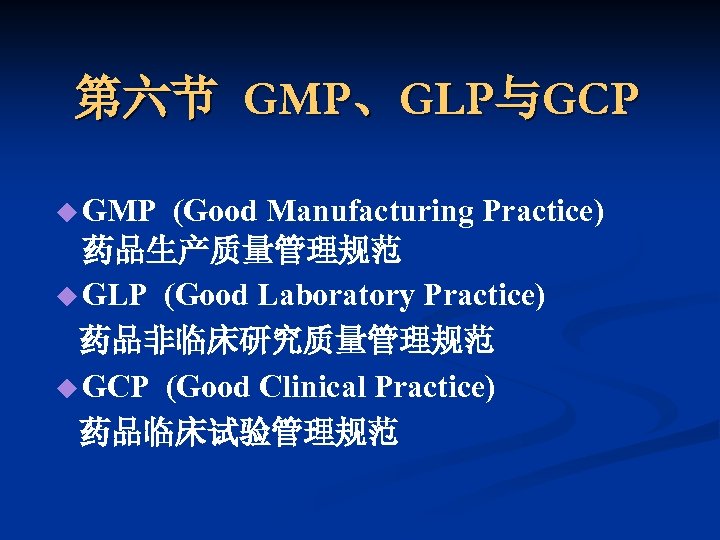 第六节 GMP、GLP与GCP u GMP (Good Manufacturing Practice) 药品生产质量管理规范 u GLP (Good Laboratory Practice) 药品非临床研究质量管理规范 u GCP (Good Clinical Practice) 药品临床试验管理规范
 GMP的检查对象 人 u 生产环境 u 药品制剂生产的全过程 u
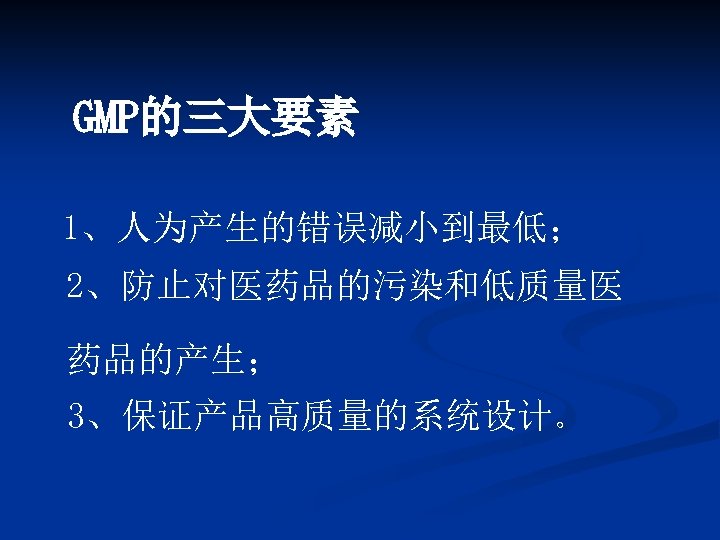 GMP的三大要素 1、人为产生的错误减小到最低; 2、防止对医药品的污染和低质量医 药品的产生; 3、保证产品高质量的系统设计。
 GLP 主要内容是在规定试验条件下,进行 药效、毒性动物试验的准则:对急性,亚 急性,慢性毒性试验,生殖试验,致癌, 致畸,致突变以及其它毒性试验等临床前 安全试验作出规定,是保证药品安全有效 的法规。
 GLP的检查对象 相应的实验设施和适当的动 物饲养设施 u人 u
 GCP l药品临床试验是指在任何人体(病人或 健康的志愿者)进行的药品系统性研究, 以证实或揭示试验用药品的作用及不良反 应等。 l制定GCP的目的:保证临床试验过程规范, 结果科学可靠,保证受试者的权益并保障 其安全。
 GCP的检查对象 u人
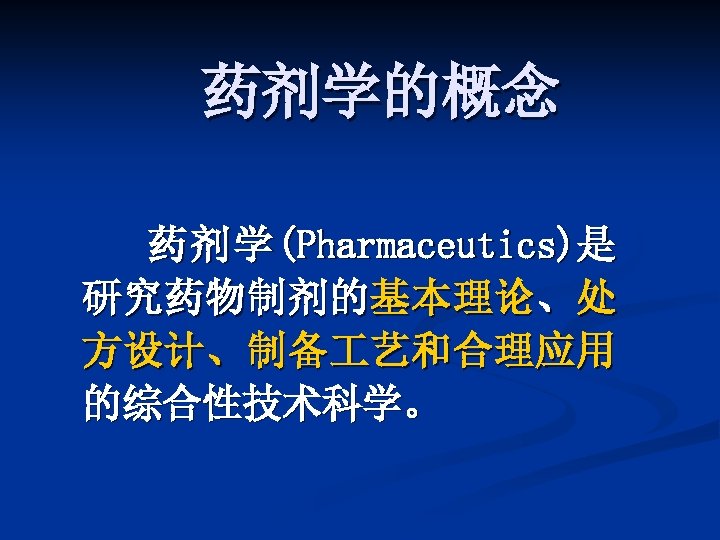 药剂学的概念 药 剂 学 (Pharmaceutics)是 研究药物制剂的基本理论、处 方设计、制备 艺和合理应用 的综合性技术科学。
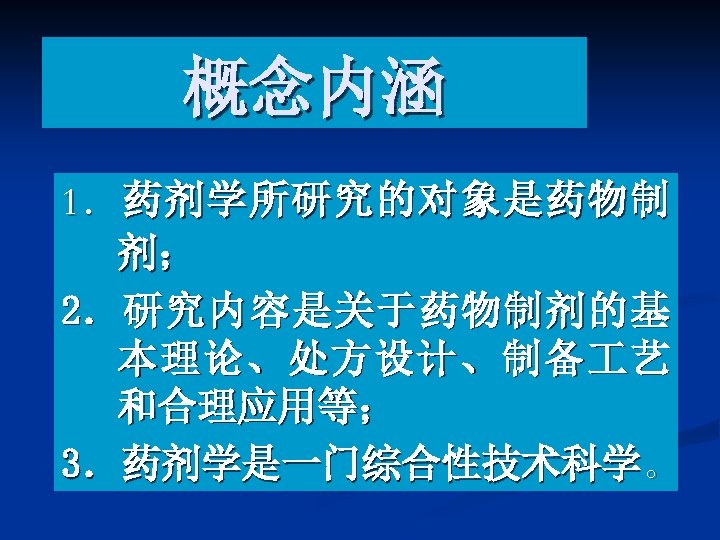 概念内涵 1. 药 剂 学 所 研 究 的 对 象 是 药 物 制 剂; 2. 研 究 内 容 是 关 于 药 物 制 剂 的 基 本理论、处方设计、制备 艺 和合理应用等; 3.药剂学是一门综合性技术科学。
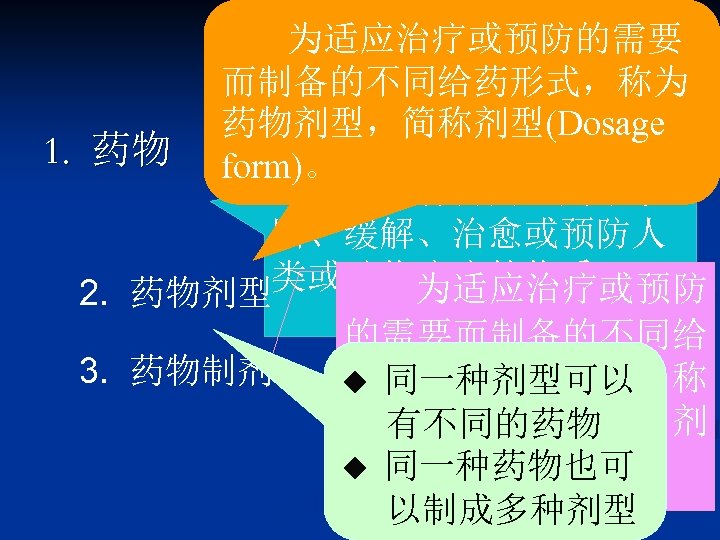 为适应治疗或预防的需要 而制备的不同给药形式,称为 药物剂型,简称剂型(Dosage 1. 药物 form)。 药物是有目的地用于诊 断、缓解、治愈或预防人 类或动物疾病的物质。 为适应治疗或预防 2. 药物剂型 基本概念 3. 药物制剂 的需要而制备的不同给 药形式的具体品种,称 ◆ 同一种剂型可以 为药物制剂,简称制剂 有不同的药物 (Preperations)。 ◆ 同一种药物也可 以制成多种剂型
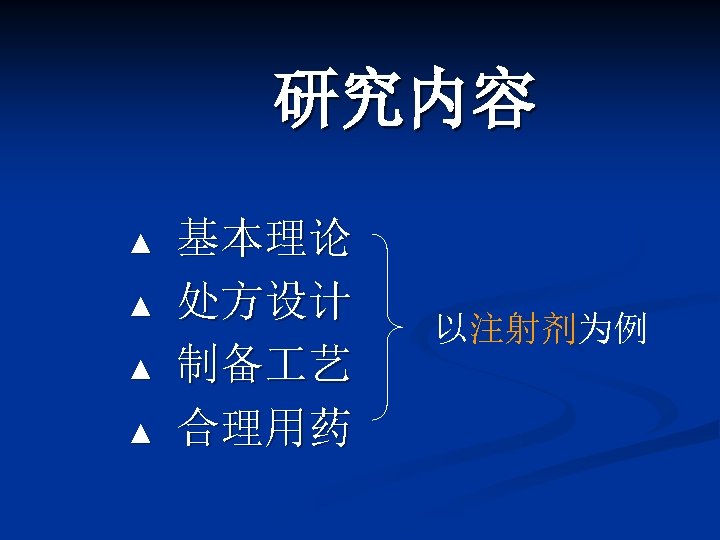 研究内容 ▲ ▲ 基本理论 处方设计 制备 艺 合理用药 以注射剂为例
 涉及学科 药剂学的研究涉及到许多 相关的学科,从数学、化学、 物理学、生物化学、微生物学、 药理学、物理化学、化 原理 以及机械设备等等,因此说药 剂学是一门综合性技术科学。
 药剂学任务 ● 药剂学基本理论的研究 ● 新剂型的研究与开发 ● 新技术的研究与开发 ● 新辅料的研究与开发 ● 中药新剂型的研究与开发 ● 生物技术药物制剂的研究与开发 ● 制剂新机械和新设备的研究与开发
 业药剂学(industrial pharmaceutics)是药剂学的核心,系研 究药物制成稳定制剂的规律和生产设计 的一门应用技术学科。
 业药剂学 主要任务: 研究剂型及制剂生产的基本理论、 艺技术、生产设备和质量管理。 目的: 为临床提供安全、有效、稳定和 便于使用的优质产品。
 药用高分子材料学(polymers in pharmaceutics)主要介绍药剂学的 剂型设计和制剂处方中常用的合成 和天然高分子材料的结构、制备、 物理化学特征以及其功能与应用。
 生物药剂学(biopharmaceutics)是研 究药物在体内的吸收、分布、代谢与排 泄的机制及过程,阐明药物因素、剂型 因素和生理因素与药效之间关系的边缘 学科。致力于研究从机体用药到药物排 出体外全过程中有关药物量变和质变所 有问题。
 药代动力学(pharmacokinetics)是 采用数学的方法,研究药物的吸收、 分布、代谢与排泄的体内经时过程与 药效之间关系的学科,具体研究体内 药物的存在位置、数量(或浓度)的变 化与时间的关系。对指导制剂设计、 剂型改革、安全合理用药等提供量化 指标。
 临床药剂学(clinical pharmaceutics)是以患者为 对象,研究合理、有效、安全用药等与临床治疗学 紧密联系的新学科,亦称(广义的)调剂学或临床 药学。是从治疗疾病观念出发来认识药品的一门应 用科学。 主要内容:提供特定患者所需药品的情报;临床用 制剂和处方研究;药物制剂的临床研究和评价;药 物制剂的生物利用度研究;药物剂量的临床监控; 药物配伍变化及相互作用等。 主要任务:指导临床正确选择安全、合理、有效的 药物疗法,以提高临床治疗水平。
 第三节 药物剂型与DDS 一、药物剂型的重要性 剂型是药物的传递体,是临床 使用的最终形式。
 药物剂型与给药途径 n 药物剂型的选择与给药途径密切相关, 应根据药物的性质、不同的治疗目的 选择合理的剂型与给药方式。药物剂 型必须与给药途径相适应。
 药物剂型的重要性 1. 不同剂型改变药物的作用性质 2. 不同剂型改变药物的作用速度 3. 不同剂型改变药物的毒副作用 4. 有些剂型可产生靶向作用 5. 有些剂型影响疗效
 三、药物的传递系统(DDS) 药物传递系统(drug delivery system, DDS) n 缓释、控释制剂 n 靶向制剂(包括靶向修饰) n 脉冲给药系统 n 择时给药系统 n 自调式释药系统 n 经皮给药系统 n 生物技术制剂 n 粘膜给药系统
 3. The Pharmacist’s contemporary role • • Community pharmacies Patient-care institutions Managed care Home health care Military and government service Academic settings Professional associations Pharmaceutical research and manufacturing industry
 Community pharmacy Pharmacist plays an active role in • the patient’s use of prescription and nonprescription medication, • diagnostic agents, • durable medical equipment and devices, • other health-related products.
 Hospitals, clinics Pharmacists 1) Manage drug distribution and control systems 2) Provide a variety of clinical services as • drug utilization reviews, • drug use evaluations,
 • therapeutic drug monitoring, (治疗药物 的监测) • intravenous admixture programs(静脉药 物配置方案) • pharmacokinetic consult service, • investigational drug supplies, • poison control, • drug information.
 Pharmaceutical Industry Pharmacist Drug discovery, Drug analysis and quality control, Product development and production, Clinical studies and drug evaluation, Labeling and drug literature, Marketing and sales, Management.
 In government service, pharmacists perform professional and administrative functions • in the development and implementation of pharmaceutical care delivery programs( 医药保健服务计划 ) • in the design and enforcement of regulations involving drug distribution and drug quality standards.
 Government service Military service, Public Health Service, Food and Drug Administration, Veterans Administration (退伍军人管理), Department of Health and Human Services, Drug Enforcement Administration(毒品管理), National Institutes of Health
 State and local level Health department, Family and children’s services, Drug investigation and regulatory control, Clinics, other health-care institutions.
 New positions Pharmacy benefits managers(药品福利管理), Disease management specialists(疾病管理专家 ), Drug formulary managers, Therapeutic outcomes researchers, Drug utlization review specialists, etc.
 The mission of Pharmacy • The mission of pharmacy is to serve society as the profession responsible for the appropriate use of medications, devices, and services to achieve optimal therapeutic outcomes. • 药学的使命是服务社会,有责任通过适当使用 药物治疗、装置和服务达到最佳治疗效果。
 Definition of Pharmaceutical care • Pharmaceutical care is that component of pharmacy practice which entails the direct interaction of the pharmacist with the patient for the purpose of caring for that patient’s drug-related needs. • 药学服务是药学实践的一个部分,是药师与患 者的直接影响,其目的是患者药物有关的需要。
 • The mission of the pharmacist is to provide pharmaceutical care. Pharmaceutical care is the direct, responsible provision of medicationrelated care for the purpose of achieving definite outcomes that improve a patient’s quality of life. • 药师的使命是提供药学服务。药学服务是药物 治疗有关服务的直接的、责任性的提供,目的 是达到增进患者生活质量的明确的结果。
 The successful pharmacy graduate must be • A problem solver, capable of adapting to changes in health care; • Able to achieve health outcomes through effective medication use that are valued by the health care system; • Able to collaborate with and be a resource to physicians, nurses, and other health care team members, • A committed life-long learner
 Pharmacy Practice Standards The Omnibus Budget Reconsiliation Act 综合预算调节法)of 1990 Code of Ethics for Pharmacists of the American Pharmaceutical Association Code of Ethics of the American Association of Pharmaceutical Scientists
 Questions 1. What is pharmaceutics? How many branches of pharmaceutics ? 2. What is a drug? Give some examples 3. Where do new drugs come from? Give examples. 4. Explain: drug standards, pharmacopeia, ISO 5. How do you understand your role as a clinical pharmacist?