


 Скачать презентацию Pervasive Computing What is it good for Andrew
5b16e6e0ca1a6fd51c12d8458b8fcc55.ppt
- Количество слайдов: 15
 Pervasive Computing: What is it good for? Andrew C. Huang, Benjamin C. Ling, Shankar Ponnekanti, Armando Fox Stanford University
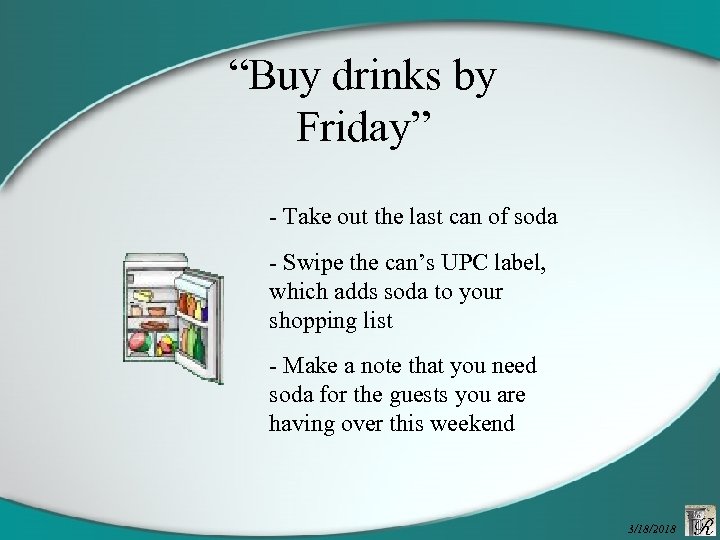 “Buy drinks by Friday” - Take out the last can of soda - Swipe the can’s UPC label, which adds soda to your shopping list - Make a note that you need soda for the guests you are having over this weekend 3/18/2018
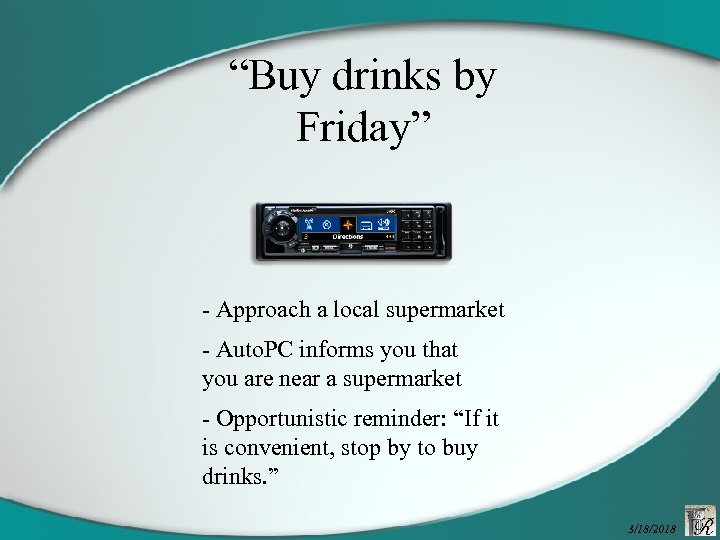 “Buy drinks by Friday” - Approach a local supermarket - Auto. PC informs you that you are near a supermarket - Opportunistic reminder: “If it is convenient, stop by to buy drinks. ” 3/18/2018
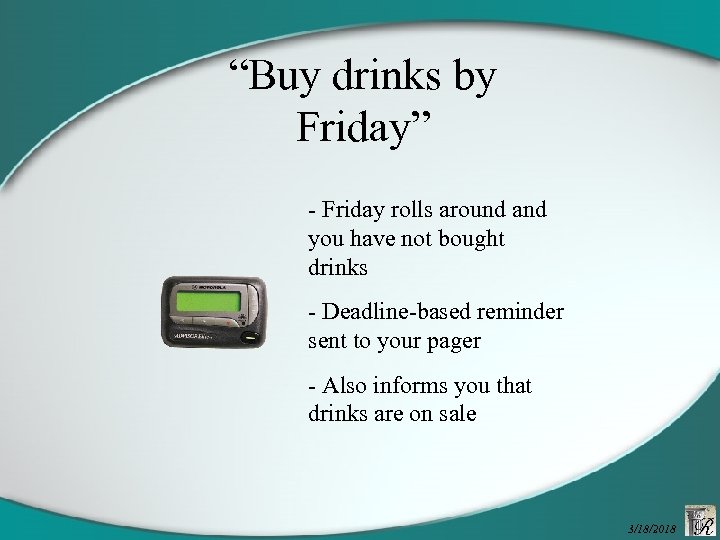 “Buy drinks by Friday” - Friday rolls around and you have not bought drinks - Deadline-based reminder sent to your pager - Also informs you that drinks are on sale 3/18/2018
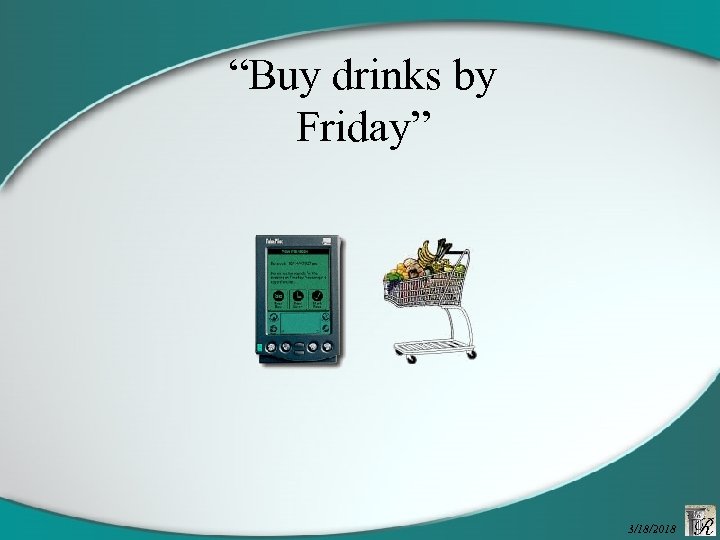 “Buy drinks by Friday” 3/18/2018
 What do we do with all this information? • We are constantly receiving information • The problem: – Information is only received once or twice – It is not received when and where we need it • A possible solution: – Place information into the context in which it will be most useful – Devices accept and/or deliver information 3/18/2018
 Rome manages the information • The devices are available • What is missing is the software framework • Rome is an architecture that addresses the information management problem – Incorporates pervasive computing devices into the system as information managers – Introduces an abstraction to describe contextsensitive information 3/18/2018
 Incorporating devices into the network • Enables communication among devices • Gives devices access to Internet services – Unwieldy datasets (e. g. , UPC database) – Rapidly-changing data (e. g. , product pricing) – Computationally intensive (e. g. , mapping) • Must deal with device heterogeneity – Limitations: connectivity, computation, UI, etc. – Devices have a permanent representative 3/18/2018
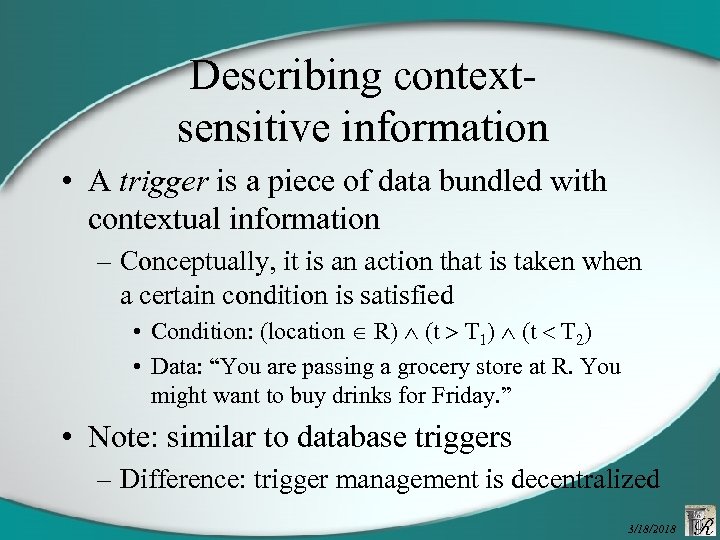 Describing contextsensitive information • A trigger is a piece of data bundled with contextual information – Conceptually, it is an action that is taken when a certain condition is satisfied • Condition: (location R) (t T 1) (t T 2) • Data: “You are passing a grocery store at R. You might want to buy drinks for Friday. ” • Note: similar to database triggers – Difference: trigger management is decentralized 3/18/2018
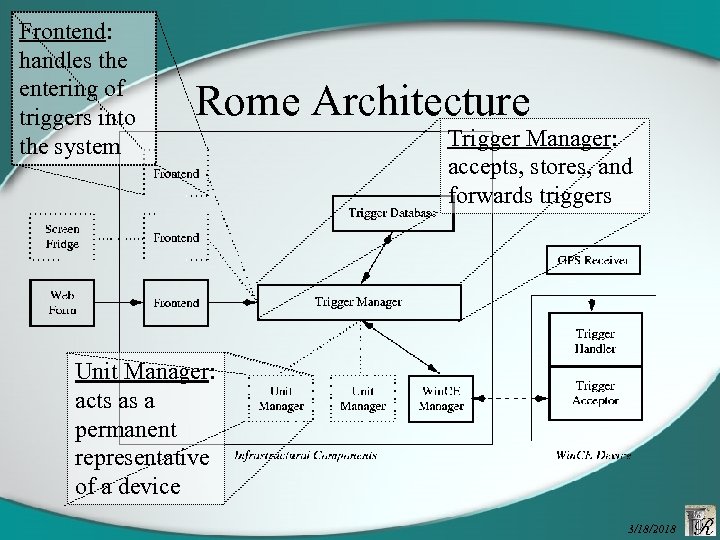 Frontend: handles the entering of triggers into the system Rome Architecture Trigger Manager: accepts, stores, and forwards triggers Unit Manager: acts as a permanent representative of a device 3/18/2018
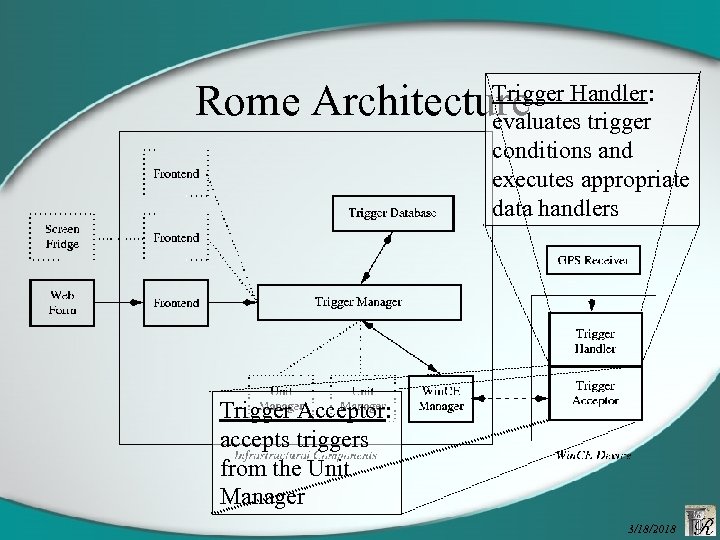 Trigger Rome Architecture Handler: evaluates trigger conditions and executes appropriate data handlers Trigger Acceptor: accepts triggers from the Unit Manager 3/18/2018
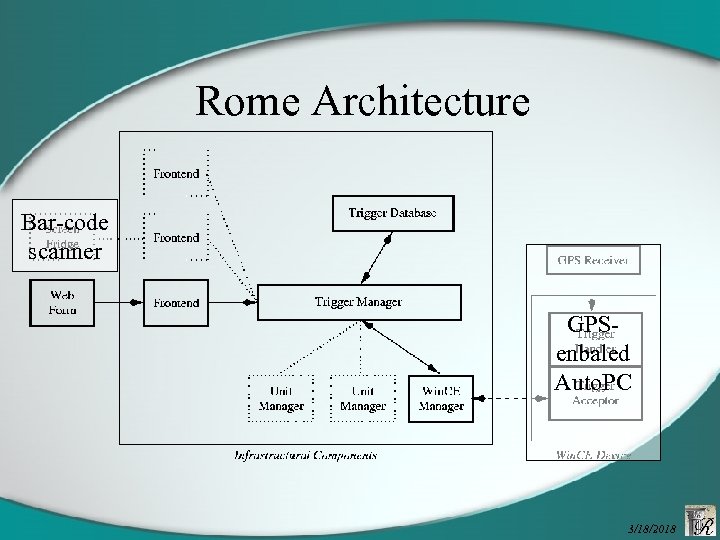 Rome Architecture Bar-code scanner GPSenbaled Auto. PC 3/18/2018
 Open Questions • Trigger consistency – Deleting triggers once a high-level task is accomplished • User interface and semantic translation – Translating high-level requests into triggers • Multiple users – Sharing the system in the public infrastructure – Adding a trigger to be seen by another user 3/18/2018
 Summary • Information management applications are a natural target for pervasive computing • Rome provides an extensible framework and some basic building blocks – Communication – Leveraging Internet services – Triggers abstraction 3/18/2018
 Andrew C. Huang, Benjamin C. Ling, Shankar Ponnekanti, Armando Fox