


 Скачать презентацию Personal Pronouns Личные местоимения Nominative Case Именительный
Personal pronouns.ppt
- Количество слайдов: 16
 Personal Pronouns Личные местоимения
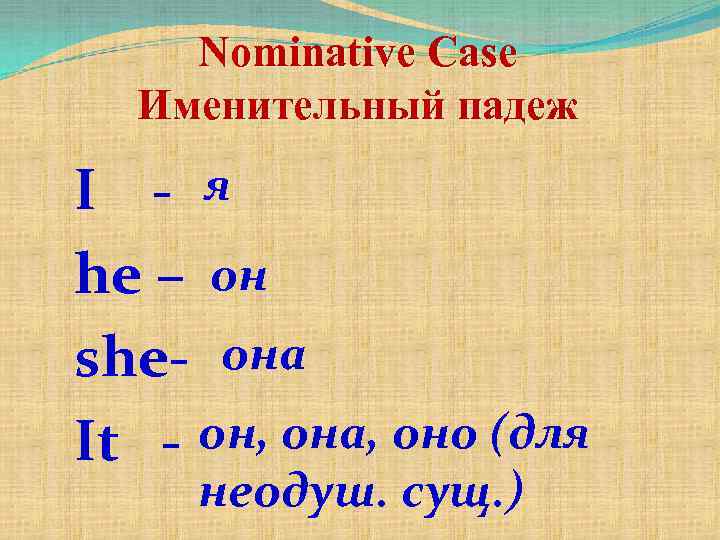 Nominative Case Именительный падеж I - я he – он she- она It - он, она, оно (для неодуш. сущ. )
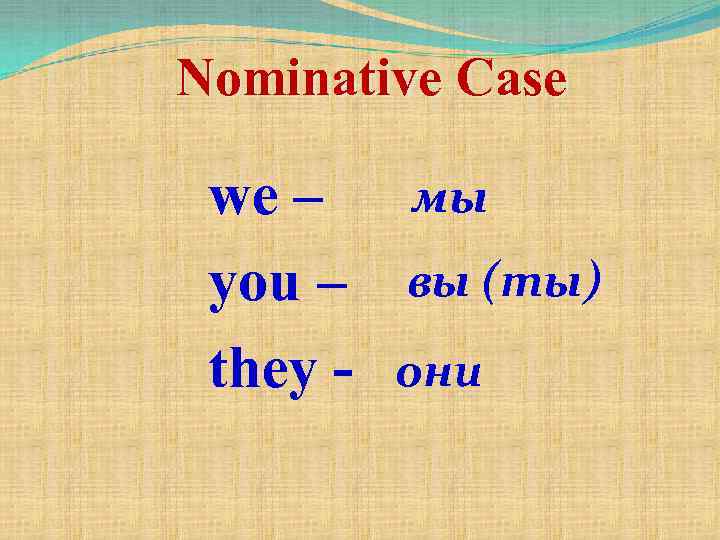 Nominative Case we – you – they - мы вы (ты) они
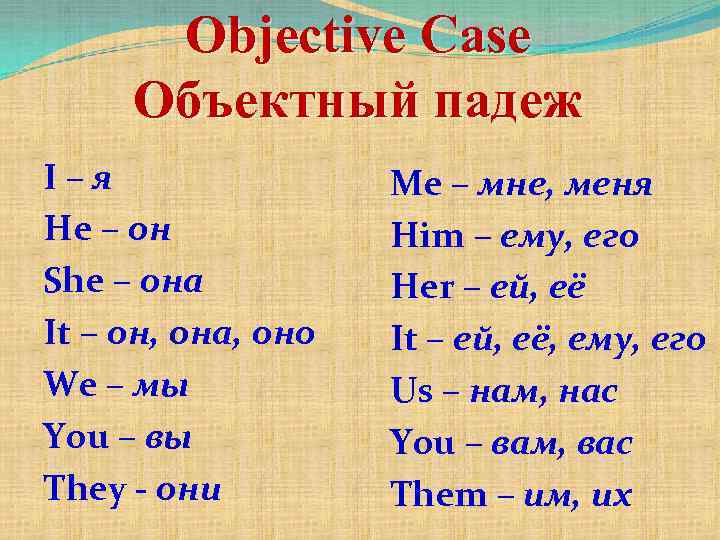 Objective Case Объектный падеж I–я He – он She – она It – он, она, оно We – мы You – вы They - они Me – мне, меня Him – ему, его Her – ей, её It – ей, её, ему, его Us – нам, нас You – вам, вас Them – им, их
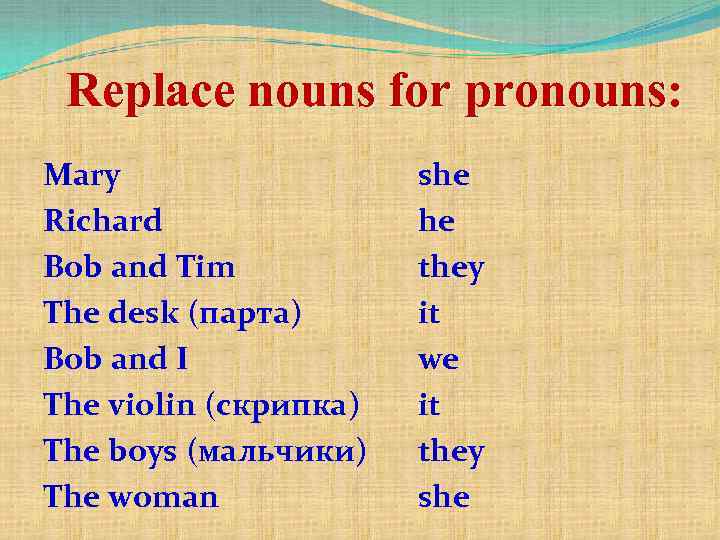 Replace nouns for pronouns: Mary Richard Bob and Tim The desk (парта) Bob and I The violin (скрипка) The boys (мальчики) The woman she he they it we it they she
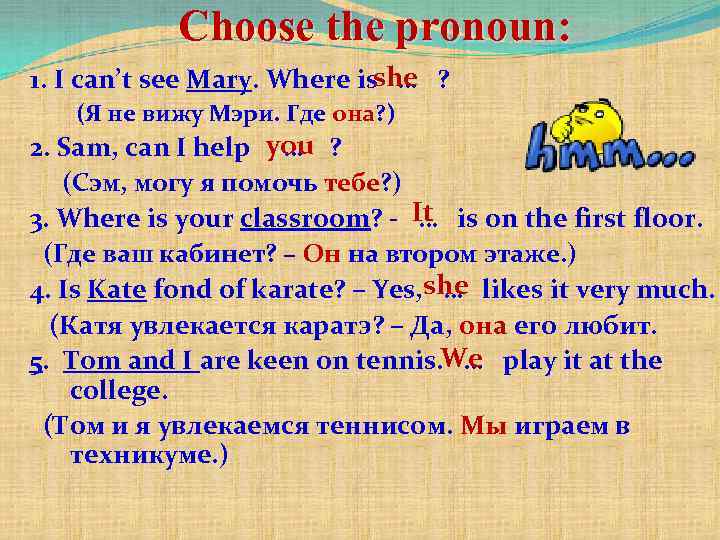 Choose the pronoun: 1. I can’t see Mary. Where isshe ? … (Я не вижу Мэри. Где она? ) 2. Sam, can I help you ? … (Сэм, могу я помочь тебе? ) 3. Where is your classroom? - It is on the first floor. … (Где ваш кабинет? – Он на втором этаже. ) 4. Is Kate fond of karate? – Yes, she likes it very much. … (Катя увлекается каратэ? – Да, она его любит. 5. Tom and I are keen on tennis. We play it at the … college. (Том и я увлекаемся теннисом. Мы играем в техникуме. )
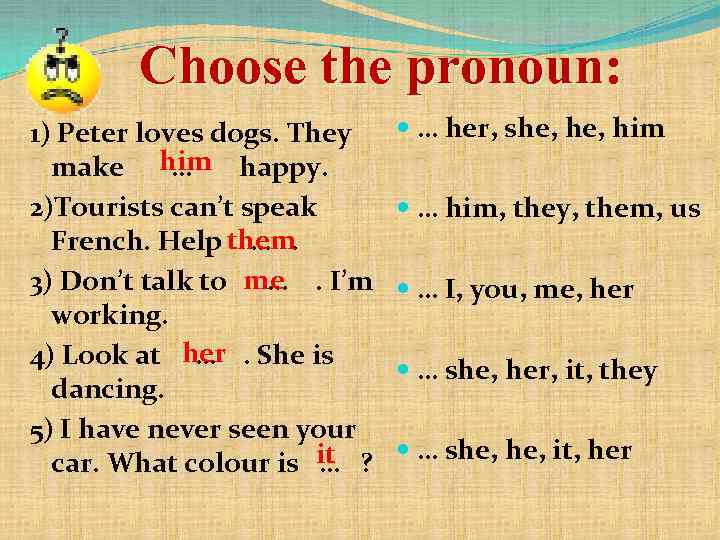 Choose the pronoun: 1) Peter loves dogs. They make him happy. … 2)Tourists can’t speak French. Help them …. 3) Don’t talk to me. I’m … working. 4) Look at her. She is … dancing. 5) I have never seen your car. What colour is it ? … … her, she, him … him, they, them, us … I, you, me, her … she, her, it, they … she, it, her
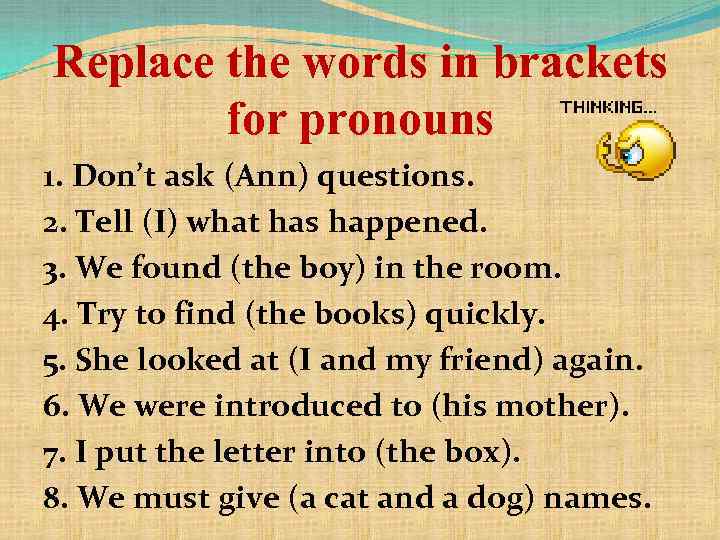 Replace the words in brackets for pronouns 1. Don’t ask (Ann) questions. 2. Tell (I) what has happened. 3. We found (the boy) in the room. 4. Try to find (the books) quickly. 5. She looked at (I and my friend) again. 6. We were introduced to (his mother). 7. I put the letter into (the box). 8. We must give (a cat and a dog) names.
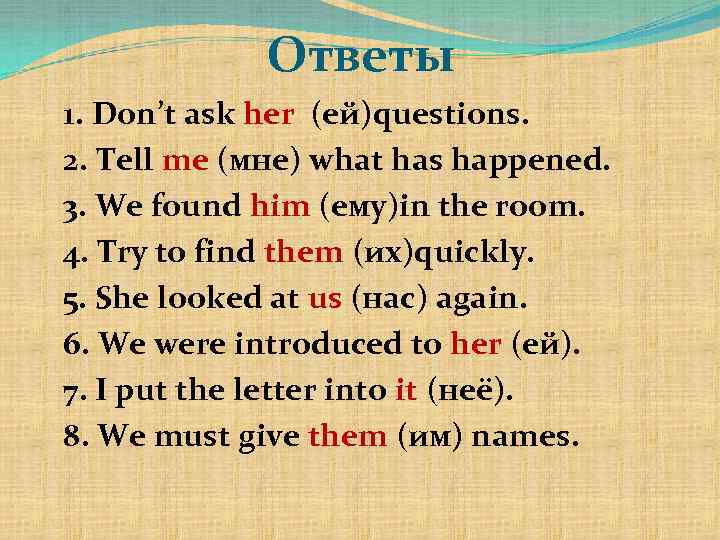 Ответы 1. Don’t ask her (ей)questions. 2. Tell me (мне) what has happened. 3. We found him (ему)in the room. 4. Try to find them (их)quickly. 5. She looked at us (нас) again. 6. We were introduced to her (ей). 7. I put the letter into it (неё). 8. We must give them (им) names.
 Possessive Pronouns Притяжательные местоимения выражают принадлежность и отвечают на вопрос Whose? - чей? Притяжательные местоимения не употребляются с артиклем или указательным местоимением.
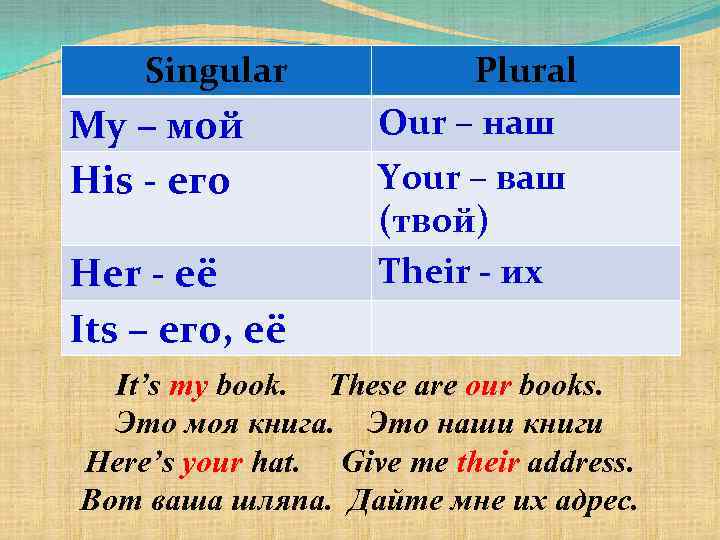 Singular My – мой His - его Her - её Its – его, её Plural Our – наш Your – ваш (твой) Their - их It’s my book. These are our books. Это моя книга. Это наши книги Here’s your hat. Give me their address. Вот ваша шляпа. Дайте мне их адрес.
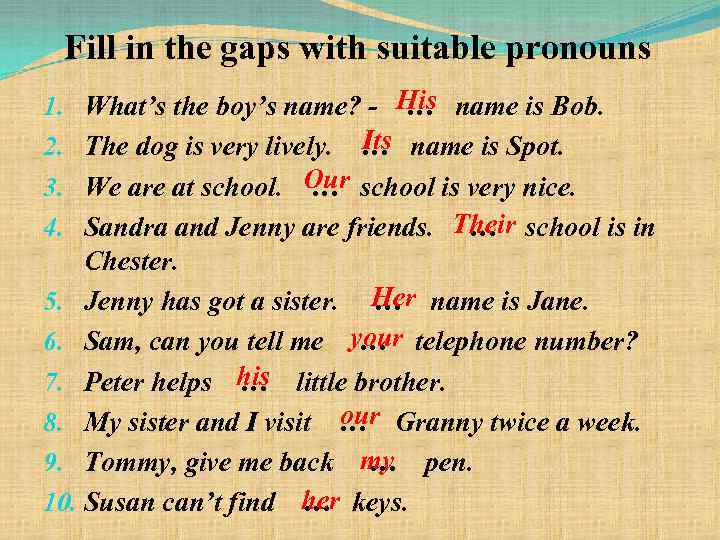 Fill in the gaps with suitable pronouns What’s the boy’s name? - His name is Bob. … Its The dog is very lively. … name is Spot. We are at school. Our school is very nice. … Sandra and Jenny are friends. Their school is in … Chester. 5. Jenny has got a sister. Her name is Jane. … 6. Sam, can you tell me your telephone number? … 7. Peter helps his little brother. … our 8. My sister and I visit … Granny twice a week. 9. Tommy, give me back my pen. … 10. Susan can’t find her keys. … 1. 2. 3. 4.
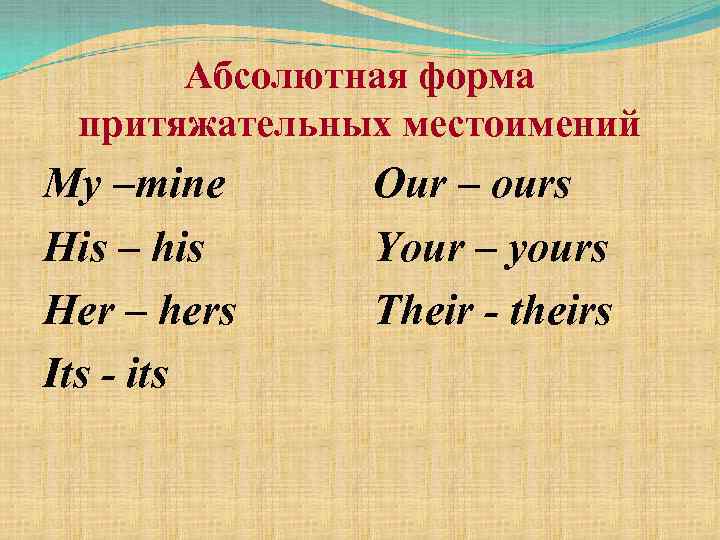 Абсолютная форма притяжательных местоимений My –mine His – his Her – hers Its - its Our – ours Your – yours Their - theirs
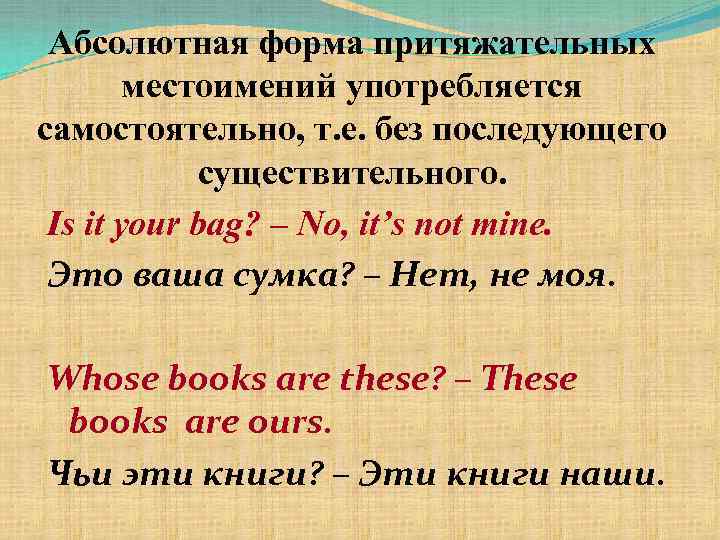 Абсолютная форма притяжательных местоимений употребляется самостоятельно, т. е. без последующего существительного. Is it your bag? – No, it’s not mine. Это ваша сумка? – Нет, не моя. Whose books are these? – These books are ours. Чьи эти книги? – Эти книги наши.
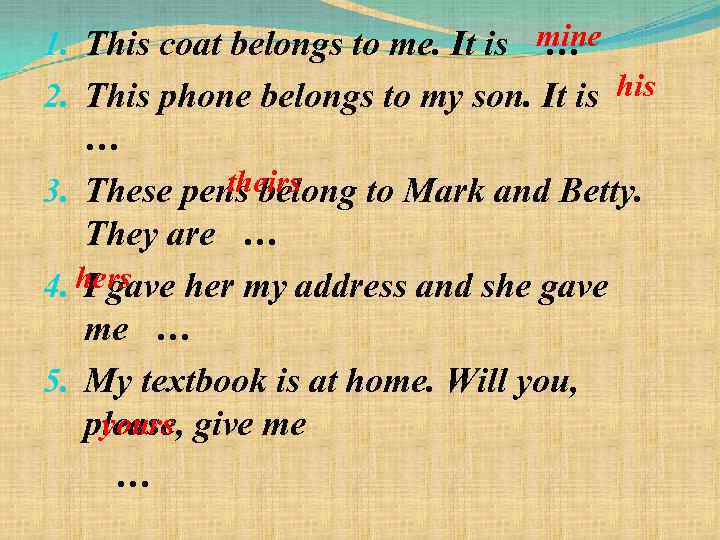 1. This coat belongs to me. It is mine … 2. This phone belongs to my son. It is his … theirs 3. These pens belong to Mark and Betty. They are … 4. hers her my address and she gave I gave me … 5. My textbook is at home. Will you, yours please, give me …
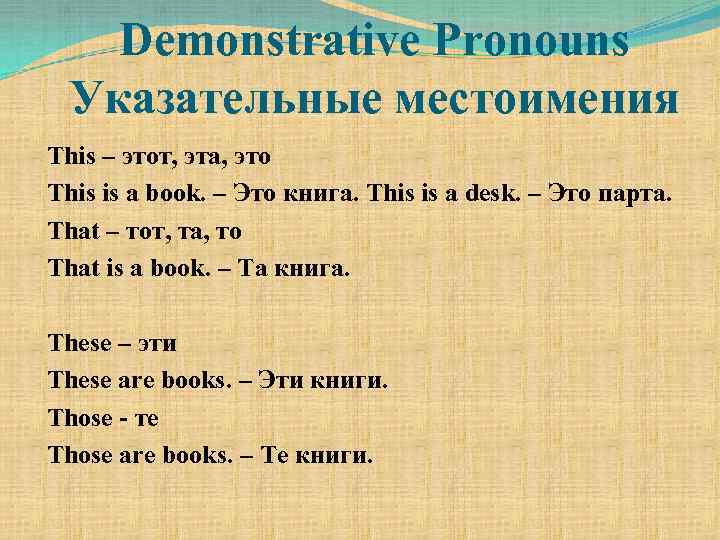 Demonstrative Pronouns Указательные местоимения This – этот, эта, это This is a book. – Это книга. This is a desk. – Это парта. That – тот, та, то That is a book. – Та книга. These – эти These are books. – Эти книги. Those - те Those are books. – Те книги.