


 Скачать презентацию Perpetual Maintenance Is a Reality or Resources to
f512dafcfa69007ba533081466a127ef.ppt
- Количество слайдов: 44
 Perpetual Maintenance Is a Reality (or Resources to Spare for Real Development).
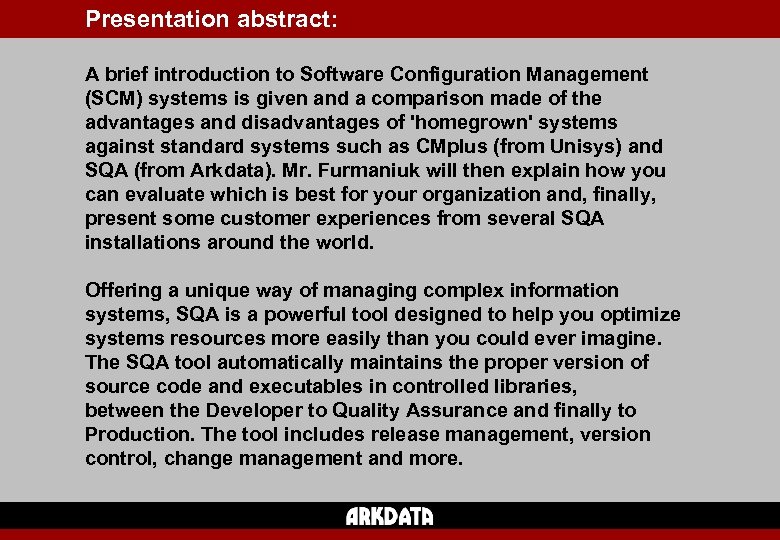 Presentation abstract: A brief introduction to Software Configuration Management (SCM) systems is given and a comparison made of the advantages and disadvantages of 'homegrown' systems against standard systems such as CMplus (from Unisys) and SQA (from Arkdata). Mr. Furmaniuk will then explain how you can evaluate which is best for your organization and, finally, present some customer experiences from several SQA installations around the world. Offering a unique way of managing complex information systems, SQA is a powerful tool designed to help you optimize systems resources more easily than you could ever imagine. The SQA tool automatically maintains the proper version of source code and executables in controlled libraries, between the Developer to Quality Assurance and finally to Production. The tool includes release management, version control, change management and more.
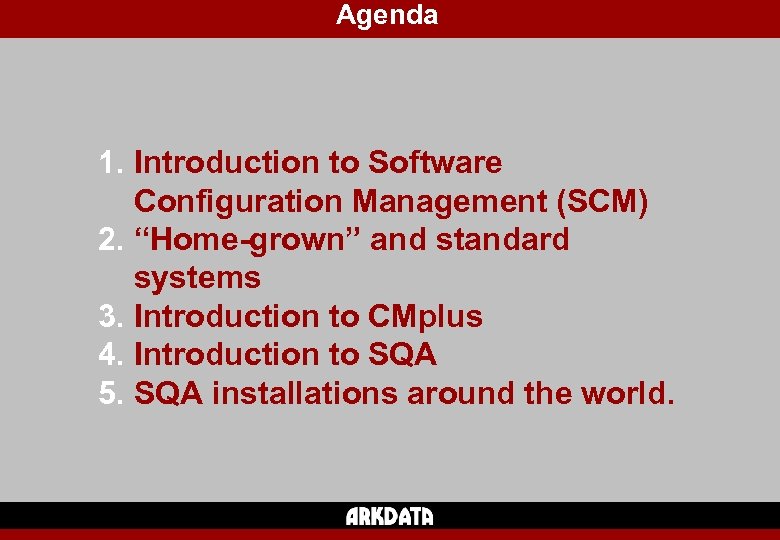 Agenda 1. Introduction to Software Configuration Management (SCM) 2. “Home-grown” and standard systems 3. Introduction to CMplus 4. Introduction to SQA 5. SQA installations around the world.
 Huge amount invested in legacy IT systems. 180 billion COBOL lines (The Gartner Group) + billions Assembler, Fortran and other languages Difficult, expensive, time consuming to rewrite application with the same functionality on another platform (even if the estimate of time IS correct!)
 Because of this and because the business process is constantly changing, program maintenance is and always will be with us. It is better, therefore, to successfully manage this maintenance and development in the most efficient manner to the satisfaction of all.
 Software Configuration Management "COBOL is still the most widely used programming language in business with a tremendous impact on the international economy, and on peoples' daily lives as well. " The Gartner Group
 Software Configuration Management Definition 1. Distinct, secure repository for source code 2. Multiple registration of one element to several amendments (tasks) 3. Automatic transfer to Production (only changed programs) 4. Detailed database of all changes 5. Detailed database of all releases 6. Detailed historical database for auditing 7. Local procedures can be integrated 8. Paperless Change Administration 9. Clearly defined limits between the Development, QA & Production areas 10. All elements and changes archived (forever) “Who made changes in the IT system, why, what and when”.
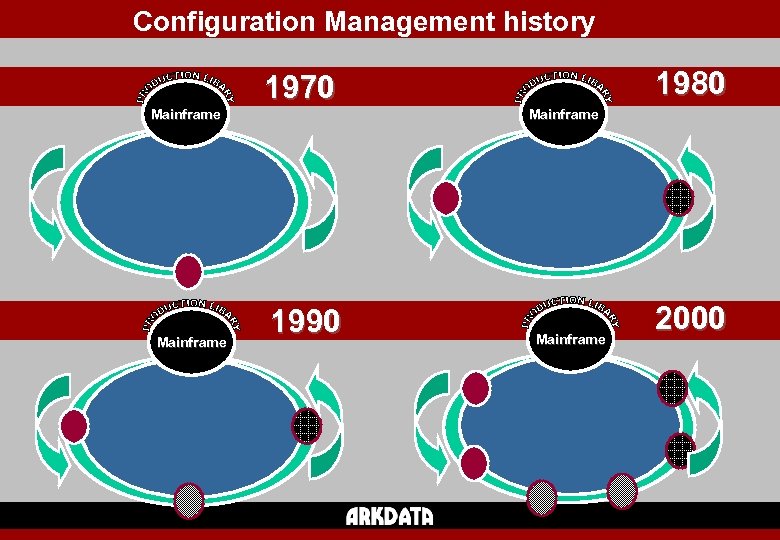 Configuration Management history Mainframe 1970 1990 1980 Mainframe 2000
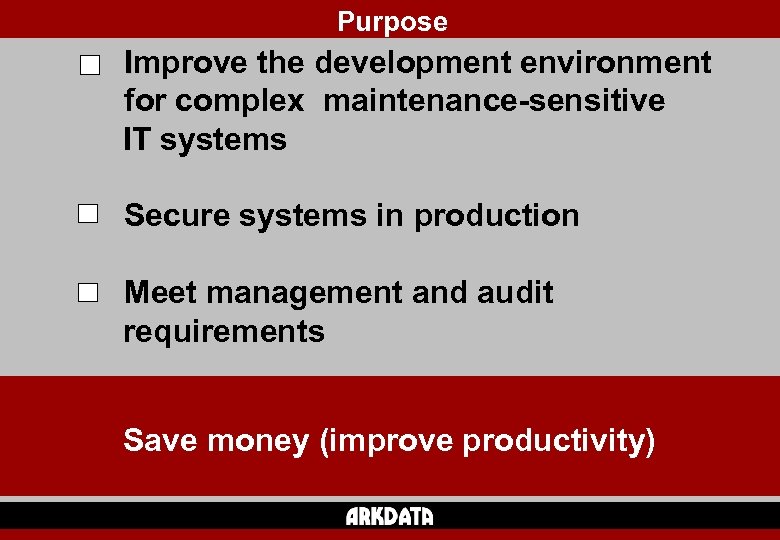 Purpose Improve the development environment for complex maintenance-sensitive IT systems Secure systems in production Meet management and audit requirements Save money (improve productivity)
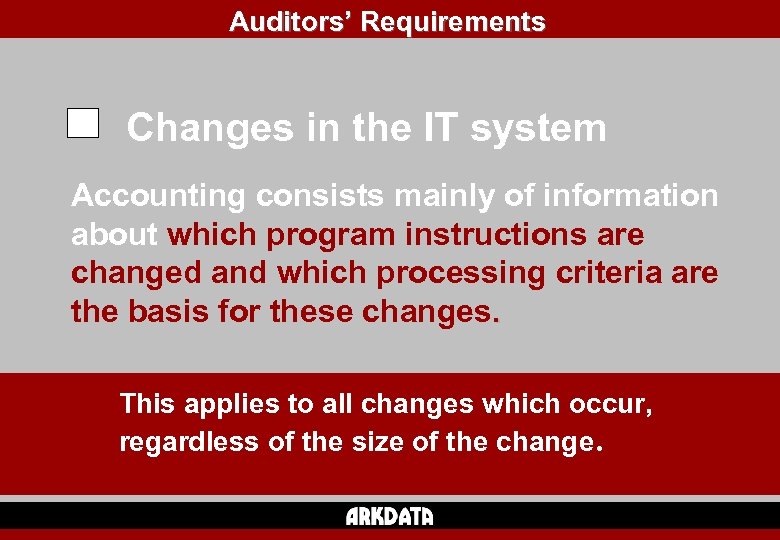 Auditors’ Requirements Changes in the IT system Accounting consists mainly of information about which program instructions are changed and which processing criteria are the basis for these changes. This applies to all changes which occur, regardless of the size of the change.
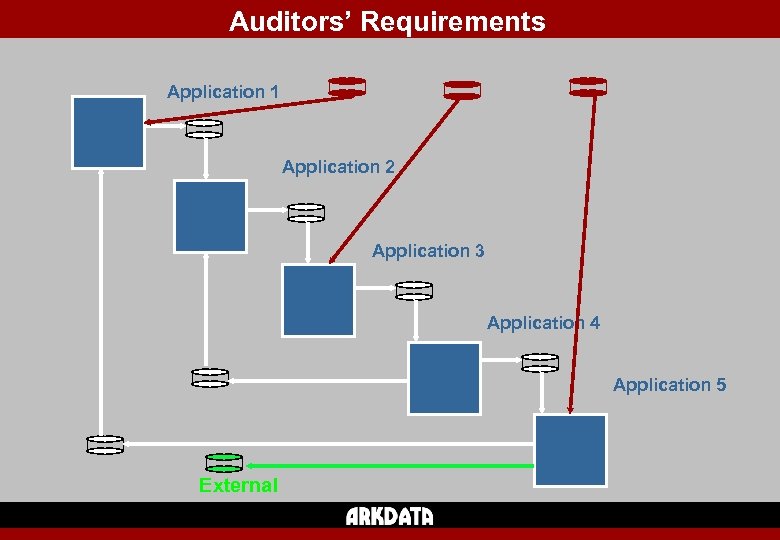 Auditors’ Requirements Application 1 Application 2 Application 3 Application 4 Application 5 External
 An SCM for OS 2200 Standard tool and homegrown CMplus from UNISYS SQA from ARKDATA ”HGS” (the generic homegrown system) HGS
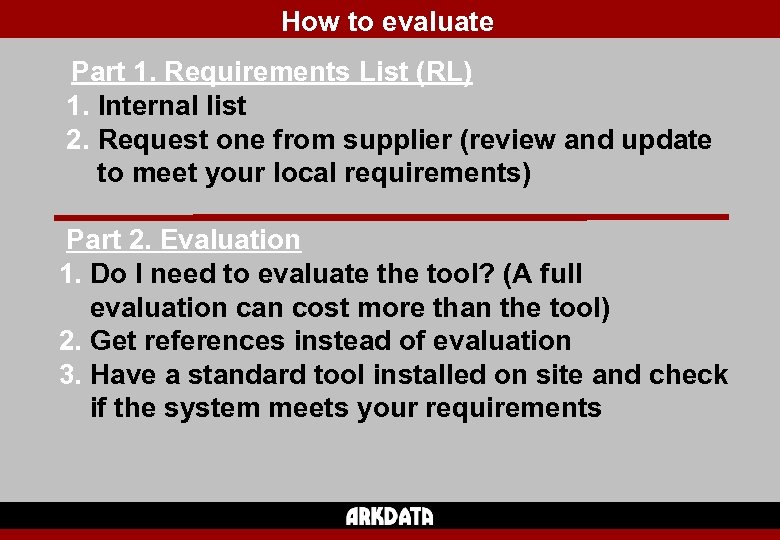 How to evaluate Part 1. Requirements List (RL) 1. Internal list 2. Request one from supplier (review and update to meet your local requirements) Part 2. Evaluation 1. Do I need to evaluate the tool? (A full evaluation can cost more than the tool) 2. Get references instead of evaluation 3. Have a standard tool installed on site and check if the system meets your requirements
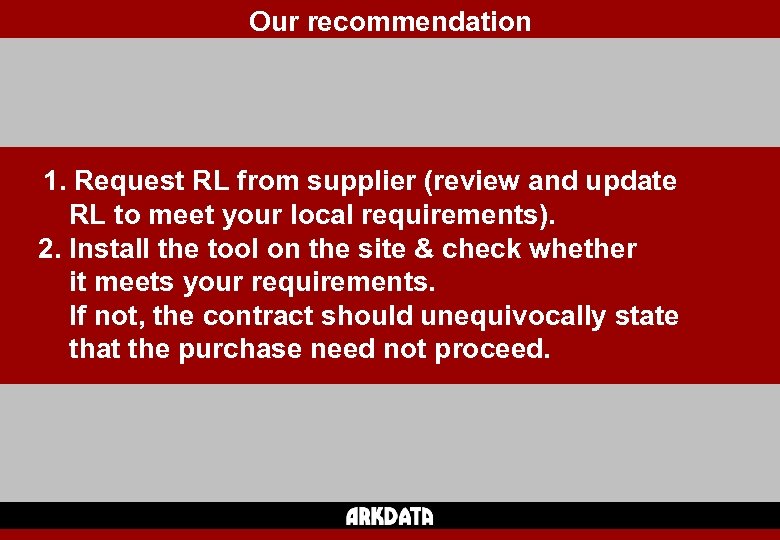 Our recommendation 1. Request RL from supplier (review and update RL to meet your local requirements). 2. Install the tool on the site & check whether it meets your requirements. If not, the contract should unequivocally state that the purchase need not proceed.
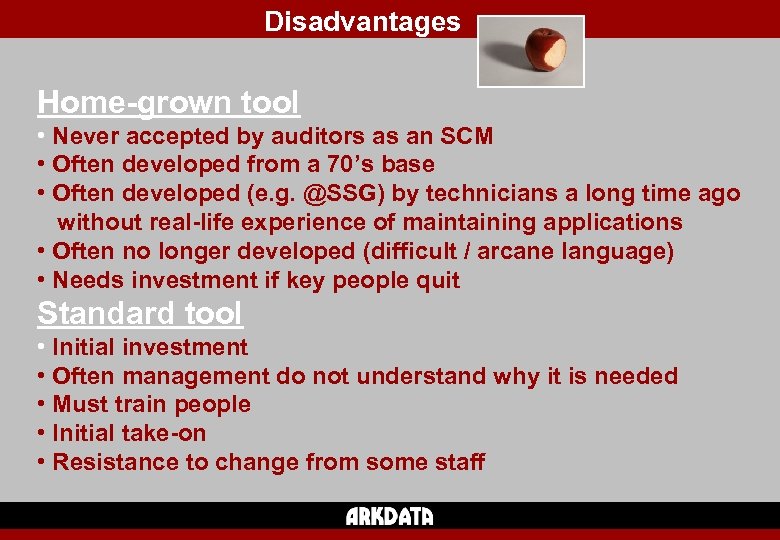 Disadvantages Home-grown tool • Never accepted by auditors as an SCM • Often developed from a 70’s base • Often developed (e. g. @SSG) by technicians a long time ago without real-life experience of maintaining applications • Often no longer developed (difficult / arcane language) • Needs investment if key people quit Standard tool • Initial investment • Often management do not understand why it is needed • Must train people • Initial take-on • Resistance to change from some staff
 Advantages Home-grown tool • Probably 100% knowledge of using the tool • Fits in the environment and “we know what we have” feeling Standard tool • Developed by people who have worked for years with a CM tool and applications • Ongoing development and meets future challenges • Often richly featured • Releases resources for the real development
 Conclusion A Standard tool is in the long run: • Cheaper • Safer for IT department • Kept up to date with new releases OS 2200 • Less human dependent Standard SCM tool makes it easier to organize current work and all future activities.
 Standard tool Objections “It is impossible to gather the necessary resources to get started with the new SCM system. It is best to leave everything as it is. We don’t have time! We have managed this way for (25 - 30 years). ” Comment: An SCM should be regarded as a help tool which pays for itself very quickly. A short period of effort ensures worry-free maintenance for many years to come!
 SCM Benefits An SCM is just a clever system which takes care of other systems. It’s that simple. * reduces errors * increases control * increases visibility of changes * improves productivity * improves resource allocation * improves planning/budgeting * improves security * reduces administrative burdens * reduces risk
 Introduction to CMplus Configuration Management Program Librarian For Unisys Systems (CMplus)
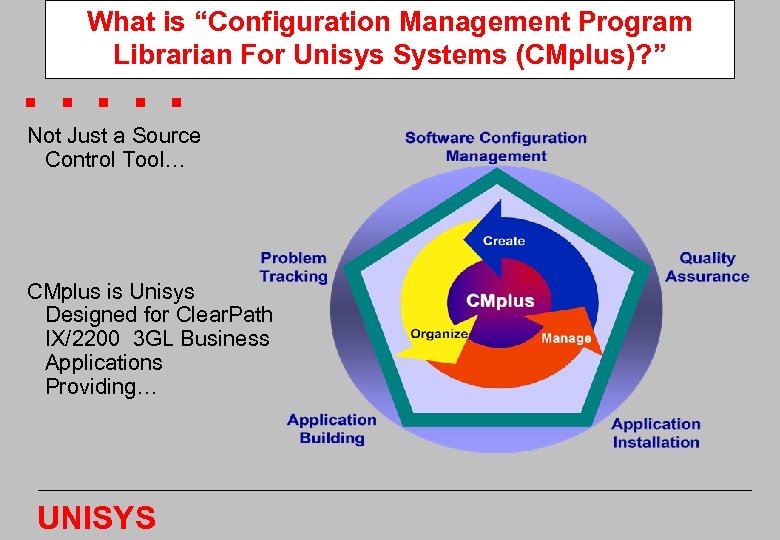 What is “Configuration Management Program Librarian For Unisys Systems (CMplus)? ” . . . Not Just a Source Control Tool… CMplus is Unisys Designed for Clear. Path IX/2200 3 GL Business Applications Providing… UNISYS
 Introduction to SQA Software Quality Assurance
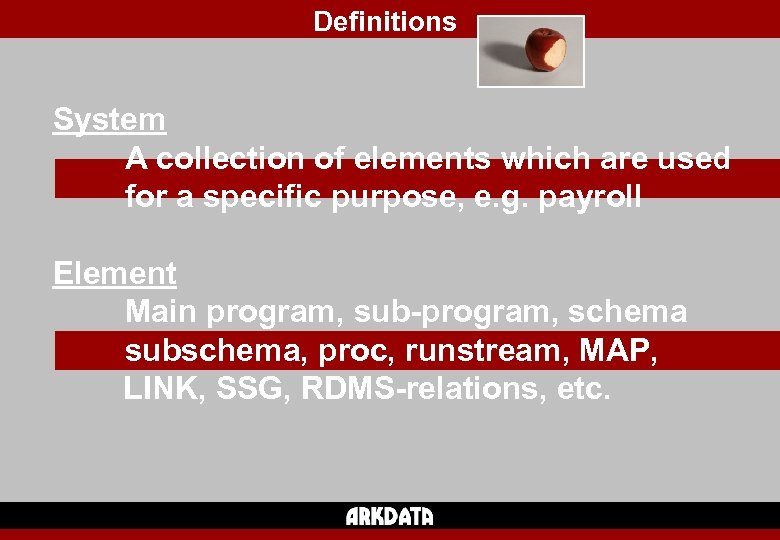 Definitions System A collection of elements which are used for a specific purpose, e. g. payroll Element Main program, sub-program, schema subschema, proc, runstream, MAP, LINK, SSG, RDMS-relations, etc.
 Definitions Task A collection of elements which are to be altered to effect a particular change. One change can be broken into several tasks. One task can be connected to several changes. One task can be linked to release ID
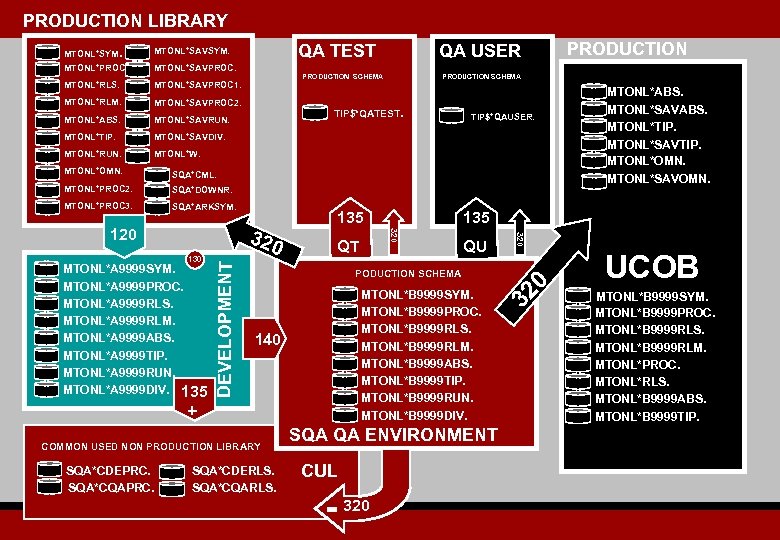
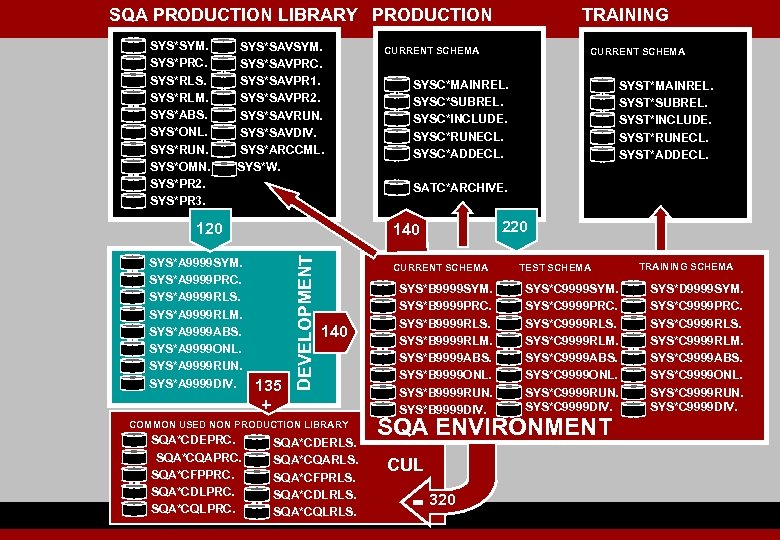
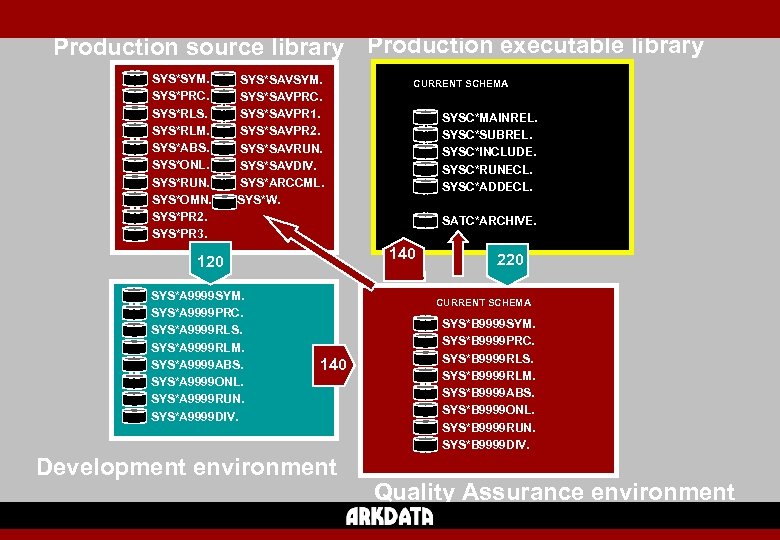 Production source library Production executable library SYS*SYM. SYS*PRC. SYS*RLS. SYS*RLM. SYS*ABS. SYS*ONL. SYS*RUN. SYS*OMN. SYS*PR 2. SYS*PR 3. SYS*SAVSYM. SYS*SAVPRC. SYS*SAVPR 1. SYS*SAVPR 2. SYS*SAVRUN. SYS*SAVDIV. SYS*ARCCML. SYS*W. SYSC*MAINREL. SYSC*SUBREL. SYSC*INCLUDE. SYSC*RUNECL. SYSC*ADDECL. SATC*ARCHIVE. 140 120 SYS*A 9999 SYM. SYS*A 9999 PRC. SYS*A 9999 RLS. SYS*A 9999 RLM. SYS*A 9999 ABS. SYS*A 9999 ONL. SYS*A 9999 RUN. SYS*A 9999 DIV. CURRENT SCHEMA 220 CURRENT SCHEMA 140 Development environment SYS*B 9999 SYM. SYS*B 9999 PRC. SYS*B 9999 RLS. SYS*B 9999 RLM. SYS*B 9999 ABS. SYS*B 9999 ONL. SYS*B 9999 RUN. SYS*B 9999 DIV. Quality Assurance environment
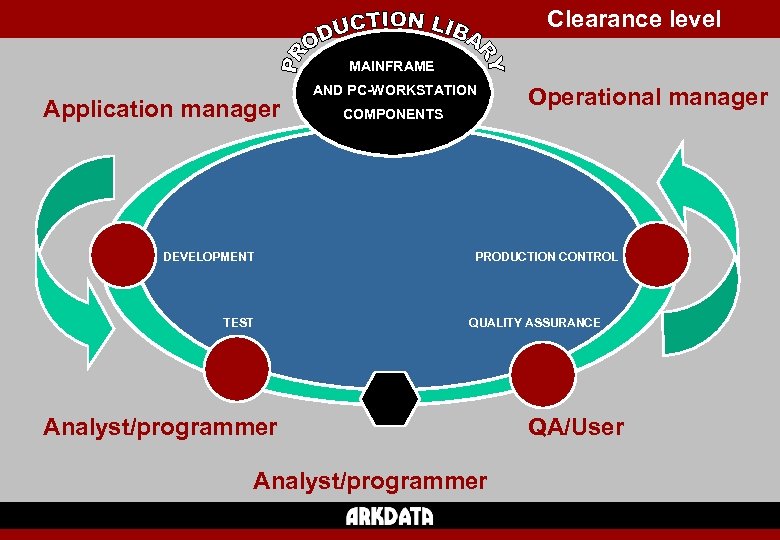 Clearance level MAINFRAME Application manager DEVELOPMENT TEST AND PC-WORKSTATION COMPONENTS Operational manager PRODUCTION CONTROL QUALITY ASSURANCE Analyst/programmer QA/User
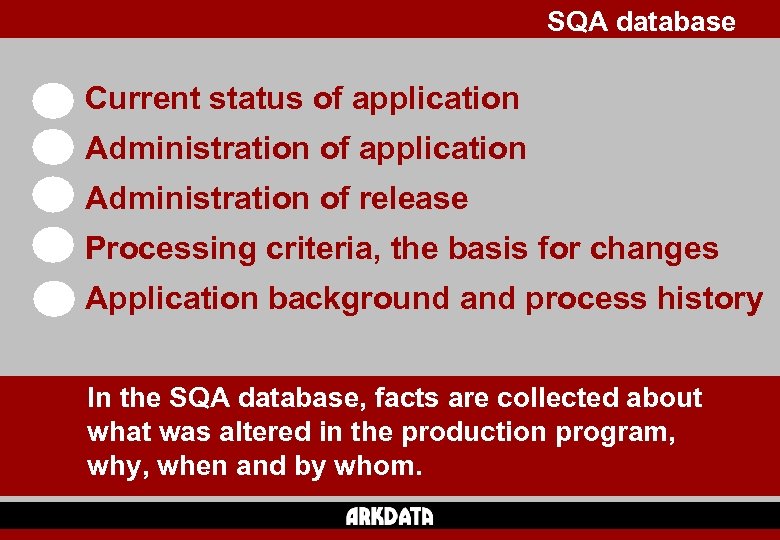 SQA database Current status of application Administration of release Processing criteria, the basis for changes Application background and process history In the SQA database, facts are collected about what was altered in the production program, why, when and by whom.
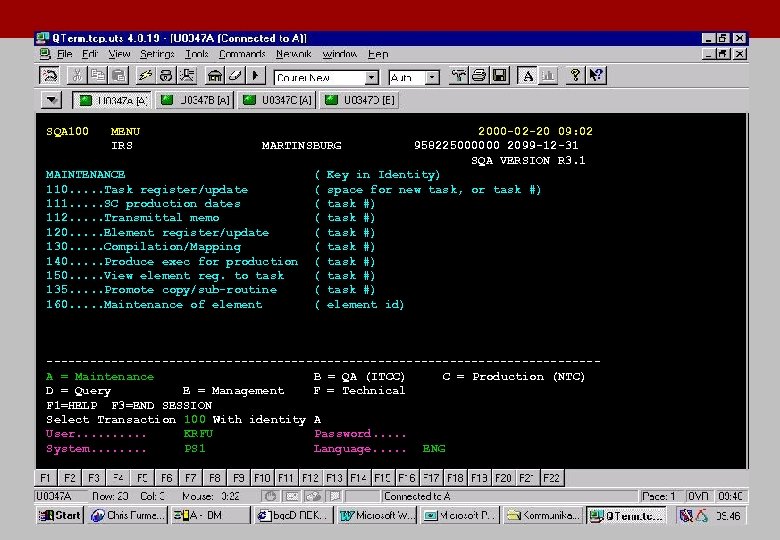 SQA 100 MENU IRS 2000 -02 -20 09: 02 MARTINSBURG 958225000000 2099 -12 -31 SQA VERSION R 3. 1 MAINTENANCE ( Key in Identity) 110. . . Task register/update ( space for new task, or task #) 111. . . SC production dates ( task #) 112. . . Transmittal memo ( task #) 120. . . Element register/update ( task #) 130. . . Compilation/Mapping ( task #) 140. . . Produce exec for production ( task #) 150. . . View element reg. to task ( task #) 135. . . Promote copy/sub-routine ( task #) 160. . . Maintenance of element ( element id) --------------------------------------A = Maintenance B = QA (ITCC) C = Production (NTC) D = Query E = Management F = Technical F 1=HELP F 3=END SESSION Select Transaction 100 With identity A User. . KRFU Password. . . System. . . . PS 1 Language. . . ENG
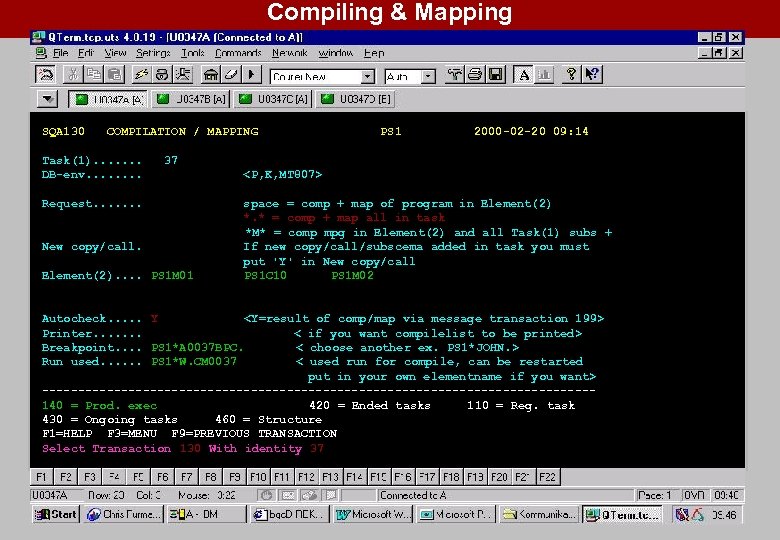 Compiling & Mapping SQA 130 COMPILATION / MAPPING Task(1). . . . DB-env. . . . PS 1 2000 -02 -20 09: 14 37 Request. . . . New copy/call. Element(2). . PS 1 M 01
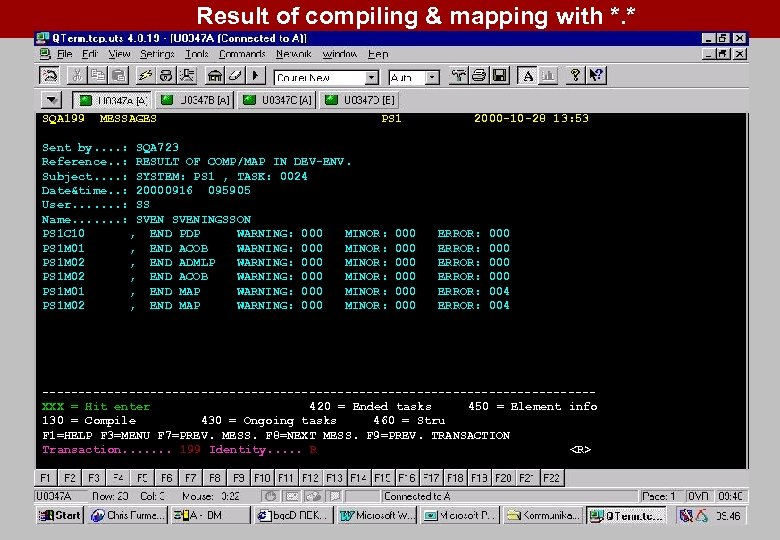 Result of compiling & mapping with *. * SQA 199 MESSAGES PS 1 Sent by. . : SQA 723 Reference. . : RESULT OF COMP/MAP IN DEV-ENV. Subject. . : SYSTEM: PS 1 , TASK: 0024 Date&time. . : 20000916 095905 User. . . . : SS Name. . . . : SVENINGSSON PS 1 C 10 , END PDP WARNING: 000 MINOR: PS 1 M 01 , END ACOB WARNING: 000 MINOR: PS 1 M 02 , END ADMLP WARNING: 000 MINOR: PS 1 M 02 , END ACOB WARNING: 000 MINOR: PS 1 M 01 , END MAP WARNING: 000 MINOR: PS 1 M 02 , END MAP WARNING: 000 MINOR: 000 000 000 2000 -10 -28 13: 53 ERROR: ERROR: 000 000 004 --------------------------------------XXX = Hit enter 420 = Ended tasks 450 = Element info 130 = Compile 430 = Ongoing tasks 460 = Stru F 1=HELP F 3=MENU F 7=PREV. MESS. F 8=NEXT MESS. F 9=PREV. TRANSACTION Transaction. . . . 199 Identity. . . R
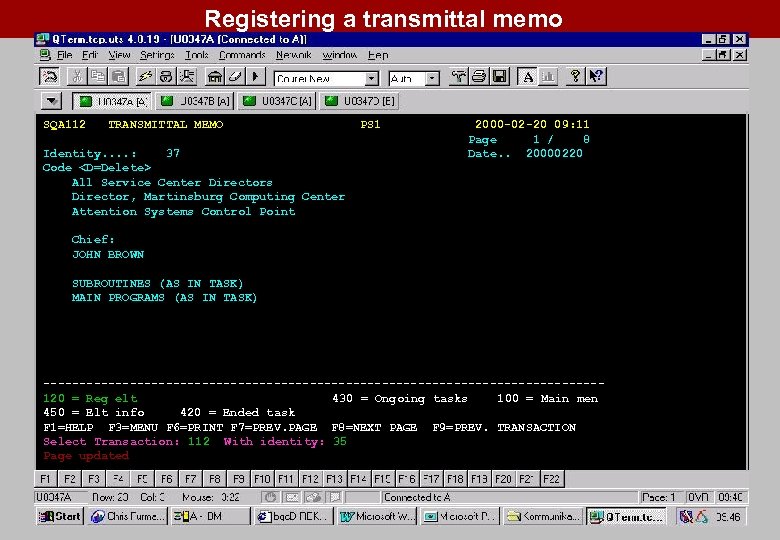 Registering a transmittal memo SQA 112 TRANSMITTAL MEMO Identity. . : 37 Code
 Some SQA installations
 SQA installation IRS New Carrollton, MD USA
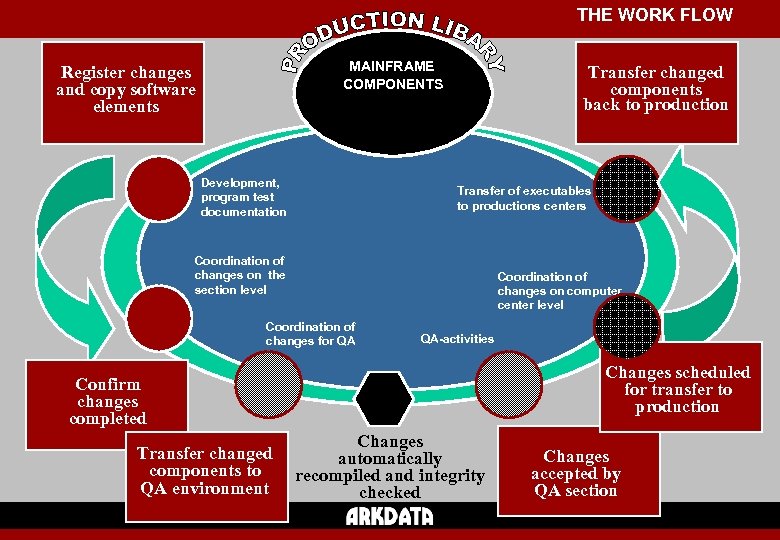 THE WORK FLOW MAINFRAME COMPONENTS Register changes and copy software elements Development, program test documentation Transfer changed components back to production Transfer of executables to productions centers Coordination of changes on the section level Coordination of changes on computer center level Coordination of changes for QA QA-activities Changes scheduled for transfer to production Confirm changes completed Transfer changed components to QA environment Changes automatically recompiled and integrity checked Changes accepted by QA section
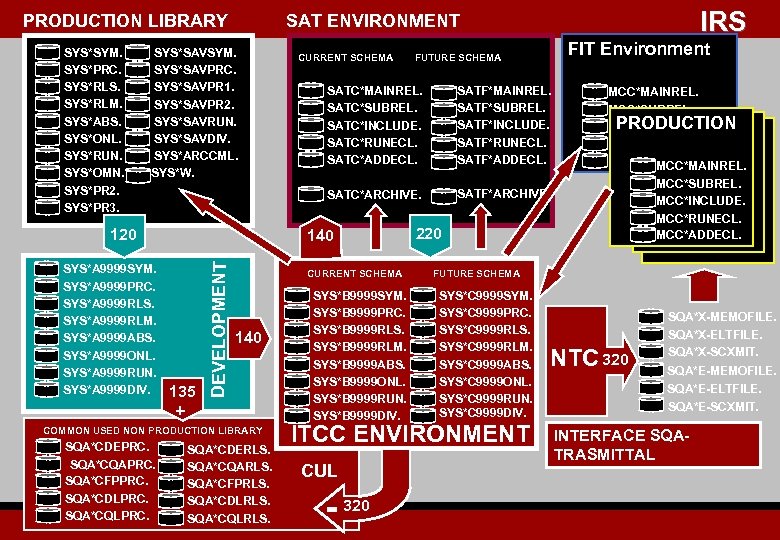 PRODUCTION LIBRARY SYS*SYM. SYS*PRC. SYS*RLS. SYS*RLM. SYS*ABS. SYS*ONL. SYS*RUN. SYS*OMN. SYS*PR 2. SYS*PR 3. SYS*SAVSYM. SYS*SAVPRC. SYS*SAVPR 1. SYS*SAVPR 2. SYS*SAVRUN. SYS*SAVDIV. SYS*ARCCML. SYS*W. FIT Environment FUTURE SCHEMA SATC*MAINREL. SATC*SUBREL. SATC*INCLUDE. SATC*RUNECL. SATC*ADDECL. SATF*MAINREL. SATF*SUBREL. SATF*INCLUDE. MCC*MAINREL. MCC*SUBREL. PRODUCTION MCC*INCLUDE. SATF*RUNECL. SATF*ADDECL. MCC*RUNECL. MCC*ADDECL. MCC*MAINREL. SATF*ARCHIVE. 135 DEVELOPMENT 140 CURRENT SCHEMA 140 + COMMON USED NON PRODUCTION LIBRARY SQA*CDEPRC. SQA*CQAPRC. SQA*CFPPRC. SQA*CDLPRC. SQA*CQLPRC. CURRENT SCHEMA SATC*ARCHIVE. 120 SYS*A 9999 SYM. SYS*A 9999 PRC. SYS*A 9999 RLS. SYS*A 9999 RLM. SYS*A 9999 ABS. SYS*A 9999 ONL. SYS*A 9999 RUN. SYS*A 9999 DIV. IRS SAT ENVIRONMENT SQA*CDERLS. SQA*CQARLS. SQA*CFPRLS. SQA*CDLRLS. SQA*CQLRLS. SYS*B 9999 SYM. SYS*B 9999 PRC. SYS*B 9999 RLS. SYS*B 9999 RLM. SYS*B 9999 ABS. SYS*B 9999 ONL. SYS*B 9999 RUN. SYS*B 9999 DIV. 220 FUTURE SCHEMA SYS*C 9999 SYM. SYS*C 9999 PRC. SYS*C 9999 RLS. SYS*C 9999 RLM. SYS*C 9999 ABS. SYS*C 9999 ONL. SYS*C 9999 RUN. SYS*C 9999 DIV. ITCC ENVIRONMENT CUL - 320 MCC*SUBREL. MCC*INCLUDE. MCC*RUNECL. MCC*ADDECL. NTC 320 SQA*X-MEMOFILE. SQA*X-ELTFILE. SQA*X-SCXMIT. SQA*E-MEMOFILE. SQA*E-ELTFILE. SQA*E-SCXMIT. INTERFACE SQATRASMITTAL
 SQA installation Western Union Montvale, NJ USA
 PRODUCTION LIBRARY MTONL*SYM. MTONL*PROC. MTONL*SAVPROC. MTONL*RLS. MTONL*SAVPROC 1. MTONL*RLM. MTONL*SAVPROC 2. MTONL*ABS. MTONL*SAVRUN. MTONL*TIP. PRODUCTION QA USER MTONL*SAVDIV. MTONL*RUN. QA TEST MTONL*SAVSYM. MTONL*W. MTONL*OMN. TIP$*QAUSER. SQA*ARKSYM. DEVELOPMENT MTONL*A 9999 SYM. MTONL*A 9999 PROC. MTONL*A 9999 RLS. MTONL*A 9999 RLM. MTONL*A 9999 ABS. MTONL*A 9999 TIP. MTONL*A 9999 RUN. MTONL*A 9999 DIV. 135 QT QU PODUCTION SCHEMA MTONL*B 9999 SYM. MTONL*B 9999 PROC. MTONL*B 9999 RLS. MTONL*B 9999 RLM. MTONL*B 9999 ABS. MTONL*B 9999 TIP. MTONL*B 9999 RUN. MTONL*B 9999 DIV. 140 + COMMON USED NON PRODUCTION LIBRARY SQA*CDEPRC. SQA*CQAPRC. 135 320 120 MTONL*ABS. MTONL*SAVABS. MTONL*TIP. MTONL*SAVTIP. MTONL*OMN. MTONL*SAVOMN. SQA*DOWNR. MTONL*PROC 3. TIP$*QATEST. SQA*CML. MTONL*PROC 2. PRODUCTION SCHEMA SQA*CDERLS. SQA*CQARLS. SQA QA ENVIRONMENT CUL - 320 3 20 UCOB MTONL*B 9999 SYM. MTONL*B 9999 PROC. MTONL*B 9999 RLS. MTONL*B 9999 RLM. MTONL*PROC. MTONL*RLS. MTONL*B 9999 ABS. MTONL*B 9999 TIP.
 SQA Installation Swedish Defense Arboga Sweden
 SQA PRODUCTION LIBRARY PRODUCTION SYS*SYM. SYS*PRC. SYS*RLS. SYS*RLM. SYS*ABS. SYS*ONL. SYS*RUN. SYS*OMN. SYS*PR 2. SYS*PR 3. SYS*SAVSYM. SYS*SAVPRC. SYS*SAVPR 1. SYS*SAVPR 2. SYS*SAVRUN. SYS*SAVDIV. SYS*ARCCML. SYS*W. CURRENT SCHEMA SYSC*MAINREL. SYSC*SUBREL. SYSC*INCLUDE. SYSC*RUNECL. SYSC*ADDECL. 135 DEVELOPMENT 140 CURRENT SCHEMA 140 + COMMON USED NON PRODUCTION LIBRARY SQA*CDEPRC. SQA*CQAPRC. SQA*CFPPRC. SQA*CDLPRC. SQA*CQLPRC. CURRENT SCHEMA SYST*MAINREL. SYST*SUBREL. SYST*INCLUDE. SYST*RUNECL. SYST*ADDECL. SATC*ARCHIVE. 120 SYS*A 9999 SYM. SYS*A 9999 PRC. SYS*A 9999 RLS. SYS*A 9999 RLM. SYS*A 9999 ABS. SYS*A 9999 ONL. SYS*A 9999 RUN. SYS*A 9999 DIV. TRAINING SQA*CDERLS. SQA*CQARLS. SQA*CFPRLS. SQA*CDLRLS. SQA*CQLRLS. SYS*B 9999 SYM. SYS*B 9999 PRC. SYS*B 9999 RLS. SYS*B 9999 RLM. SYS*B 9999 ABS. SYS*B 9999 ONL. SYS*B 9999 RUN. SYS*B 9999 DIV. 220 TEST SCHEMA SYS*C 9999 SYM. SYS*C 9999 PRC. SYS*C 9999 RLS. SYS*C 9999 RLM. SYS*C 9999 ABS. SYS*C 9999 ONL. SYS*C 9999 RUN. SYS*C 9999 DIV. SQA ENVIRONMENT CUL - 320 TRAINING SCHEMA SYS*D 9999 SYM. SYS*C 9999 PRC. SYS*C 9999 RLS. SYS*C 9999 RLM. SYS*C 9999 ABS. SYS*C 9999 ONL. SYS*C 9999 RUN. SYS*C 9999 DIV.
 Legacy Systems - Who will look after them when a whole generation of developers retires?
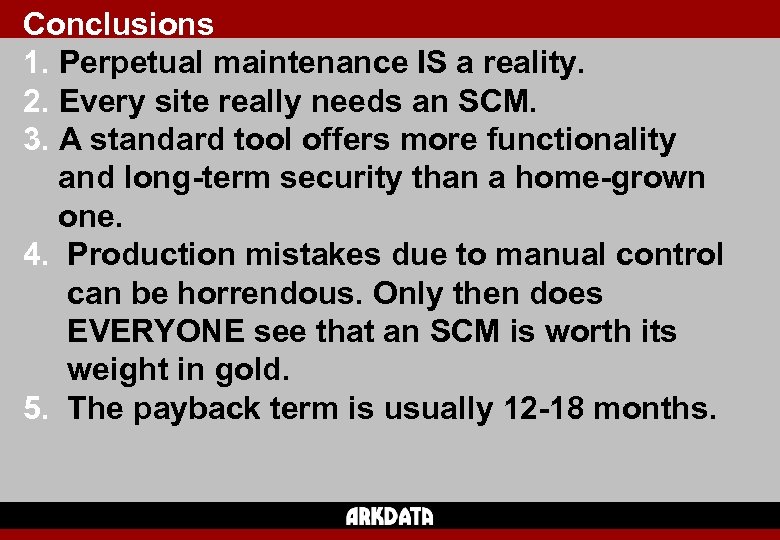 Conclusions 1. Perpetual maintenance IS a reality. 2. Every site really needs an SCM. 3. A standard tool offers more functionality and long-term security than a home-grown one. 4. Production mistakes due to manual control can be horrendous. Only then does EVERYONE see that an SCM is worth its weight in gold. 5. The payback term is usually 12 -18 months.
 SQA
SQA
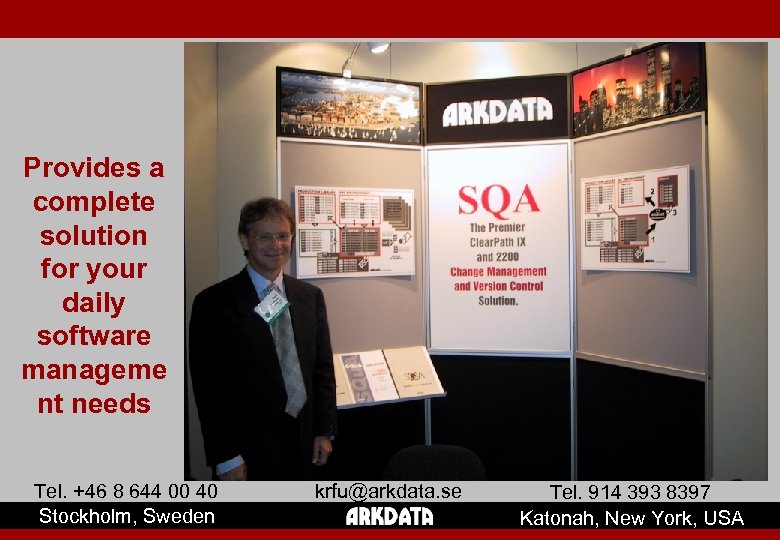 Provides a complete solution for your daily software manageme nt needs Tel. +46 8 644 00 40 Stockholm, Sweden krfu@arkdata. se Tel. 914 393 8397 Katonah, New York, USA