


 Скачать презентацию Periodization Early Middle Ages 500 1000 High
5e640de0212be0fe0a91970a7b29021d.ppt
- Количество слайдов: 56
 Periodization Early Middle Ages: 500 – 1000 High Middle Ages: 1000 – 1250 Late Middle Ages: 1250 - 1500
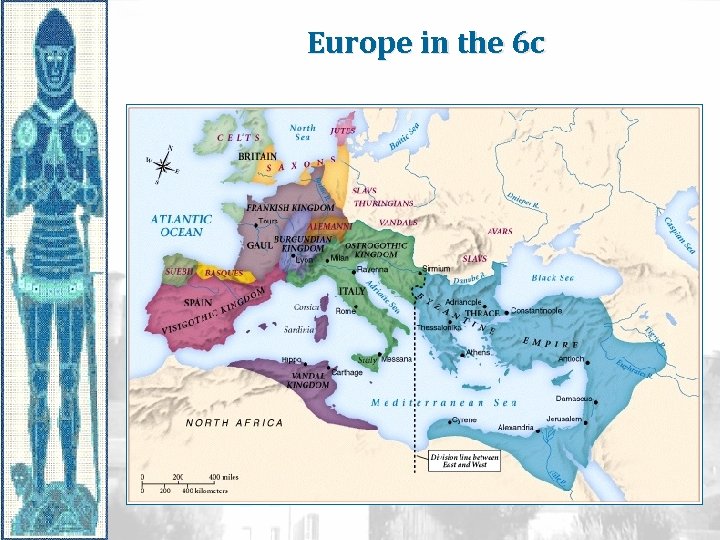 Europe in the 6 c
 The Medieval Catholic Church v filled the power vacuum left from the collapse of the classical world. v monasticism: § St. Benedict – Benedictine Rule of poverty, chastity, and obedience. § provided schools for the children of the upper class. § inns, hospitals, refuge in times of war. § libraries & scriptoria to copy books and illuminate manuscripts. § monks missionaries to the barbarians. [St. Patrick, St. Boniface]
 The Power of the Medieval Church v bishops and abbots played a large part in the feudal system. v the church controlled about 1/3 of the land in Western Europe. v tried to curb feudal warfare only 40 days a year for combat. v curb heresies crusades; Inquisition v tithe 1/10 tax on your assets given to the church. v Peter’s Pence 1 penny person [paid by the peasants].
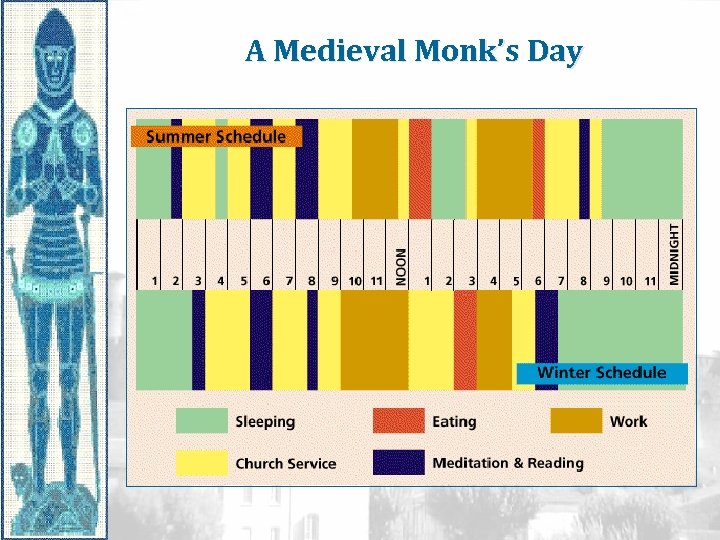 A Medieval Monk’s Day
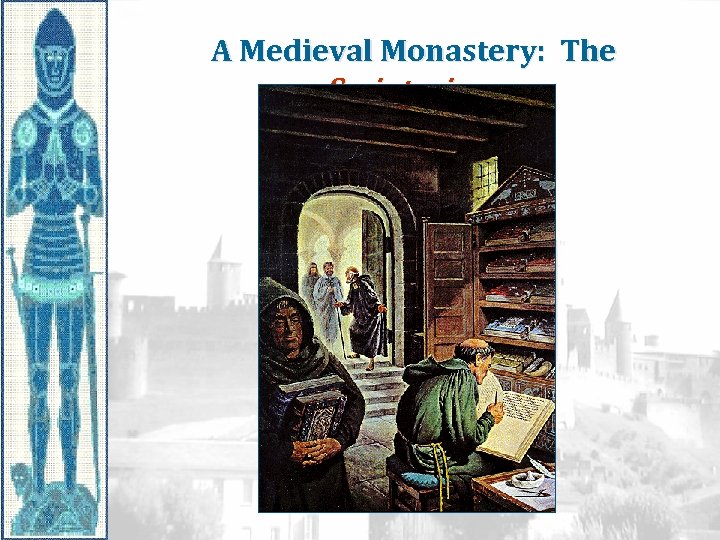 A Medieval Monastery: The Scriptorium
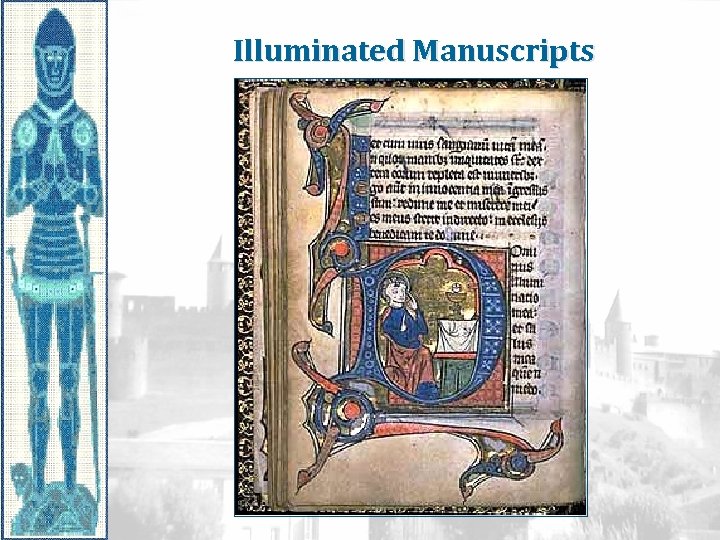 Illuminated Manuscripts
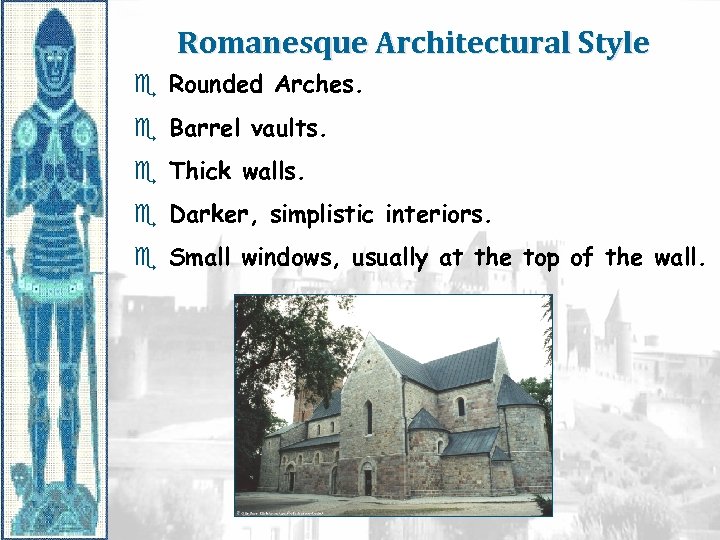 Romanesque Architectural Style e Rounded Arches. e Barrel vaults. e Thick walls. e Darker, simplistic interiors. e Small windows, usually at the top of the wall.
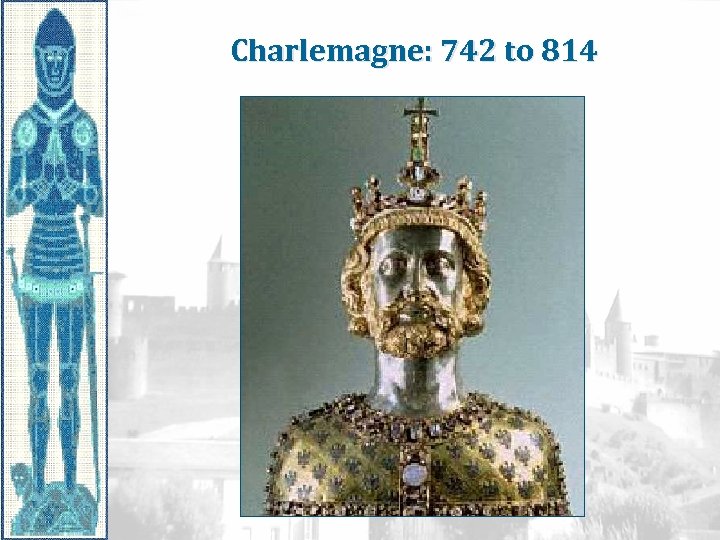 Charlemagne: 742 to 814
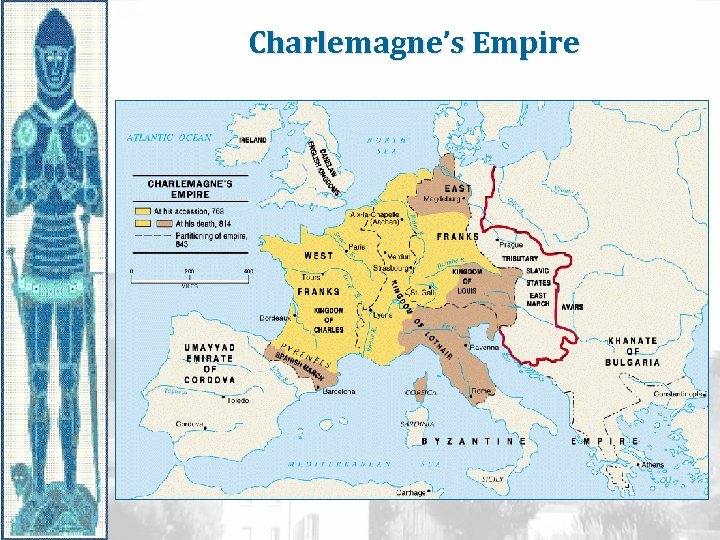 Charlemagne’s Empire
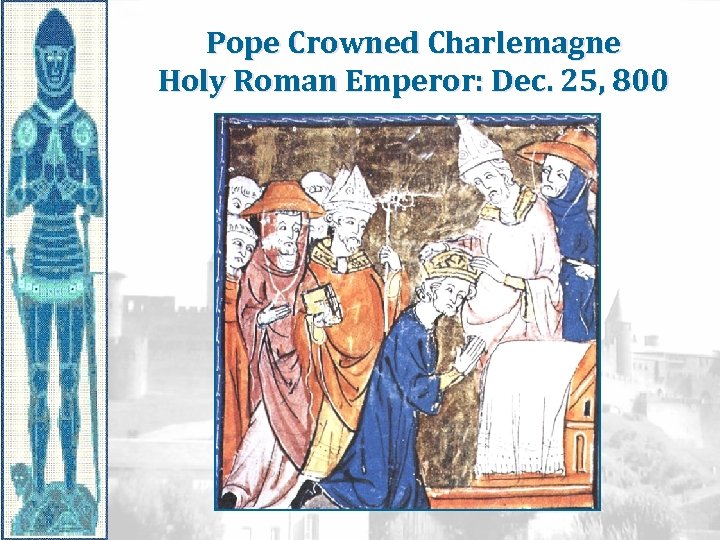 Pope Crowned Charlemagne Holy Roman Emperor: Dec. 25, 800
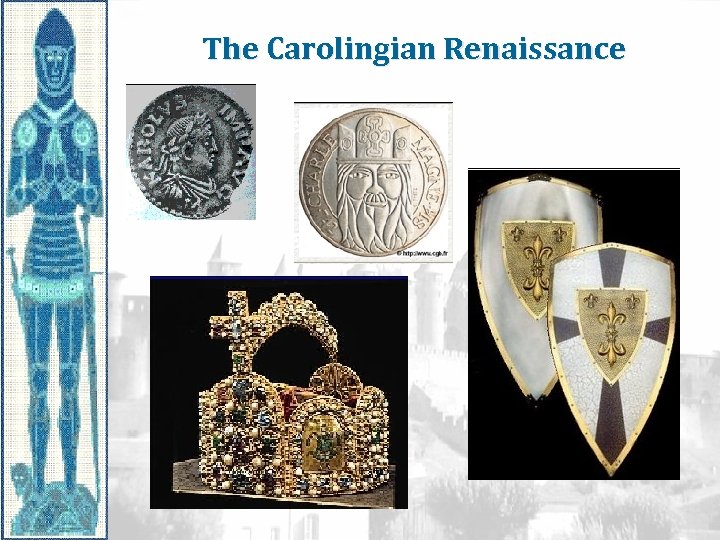 The Carolingian Renaissance
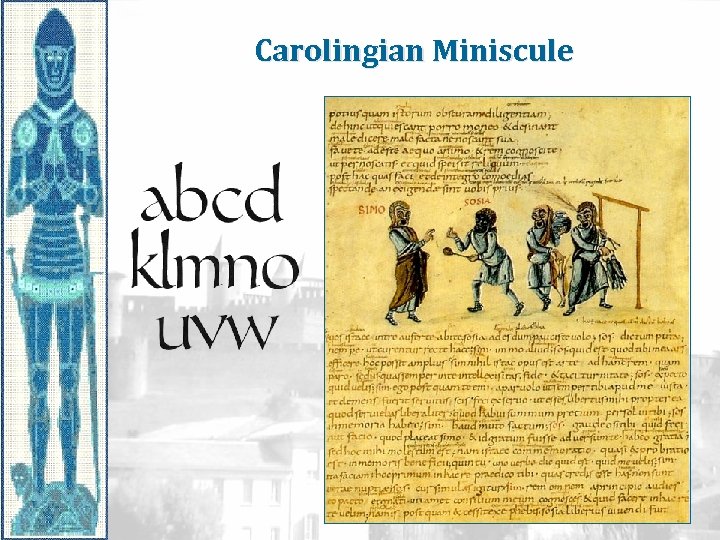 Carolingian Miniscule
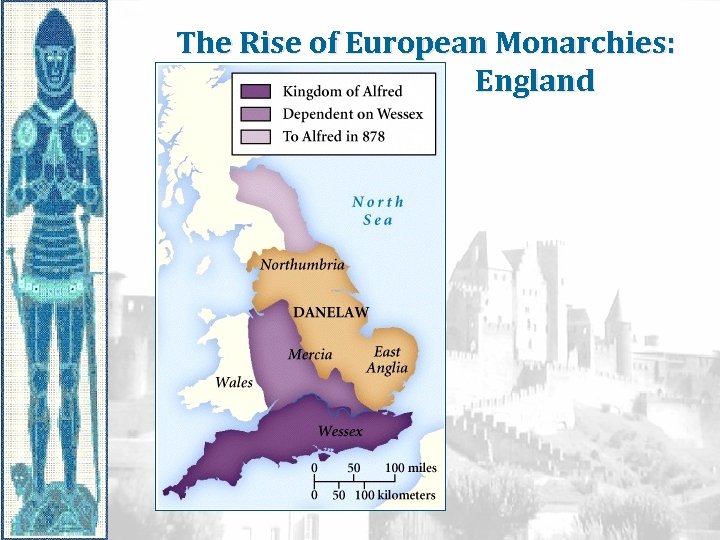 The Rise of European Monarchies: England
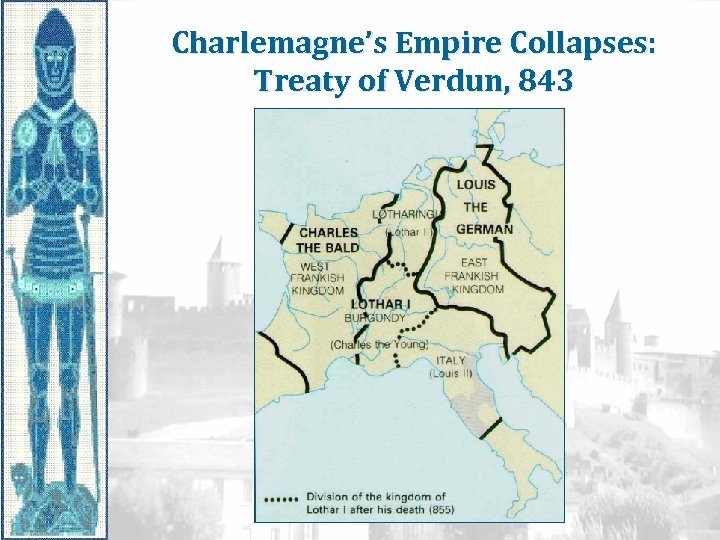 Charlemagne’s Empire Collapses: Treaty of Verdun, 843
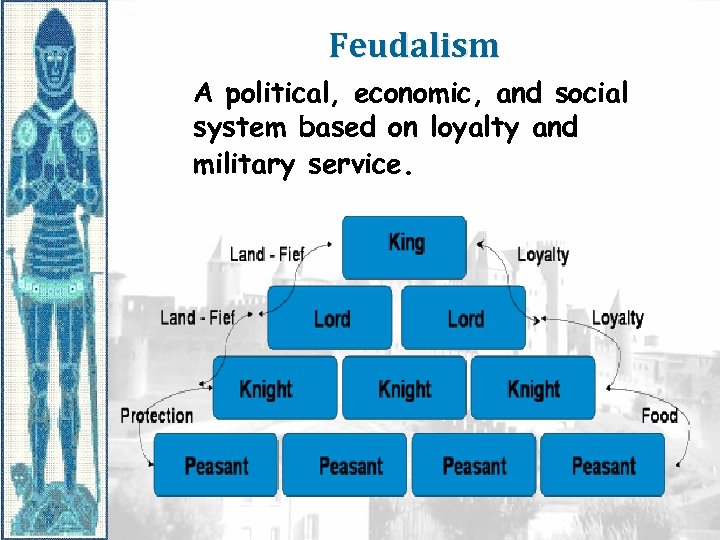 Feudalism A political, economic, and social system based on loyalty and military service.
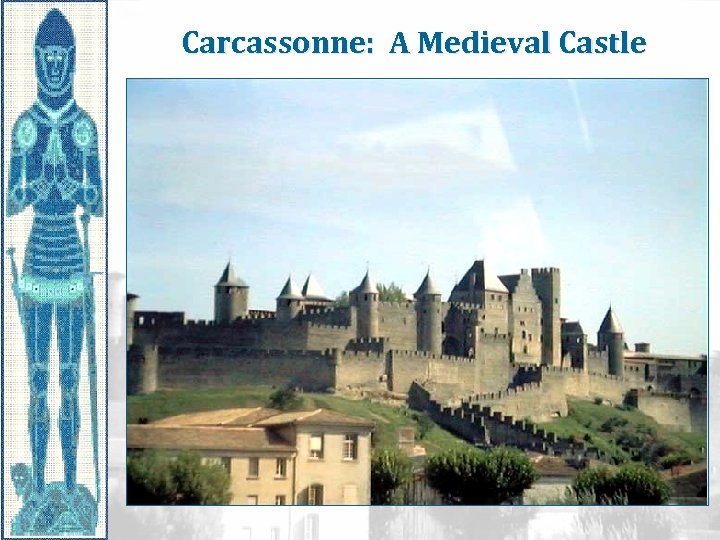 Carcassonne: A Medieval Castle
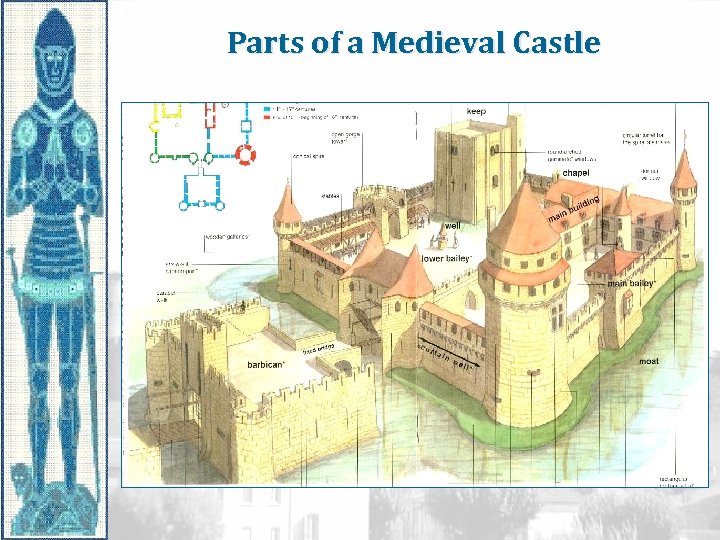 Parts of a Medieval Castle
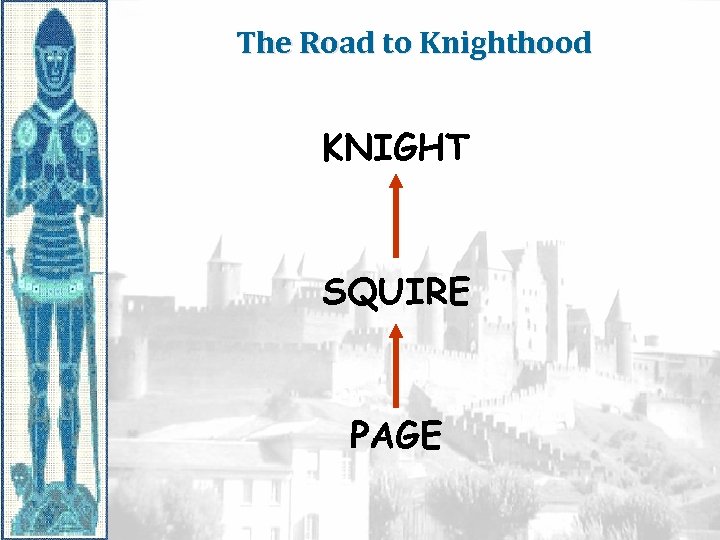 The Road to Knighthood KNIGHT SQUIRE PAGE
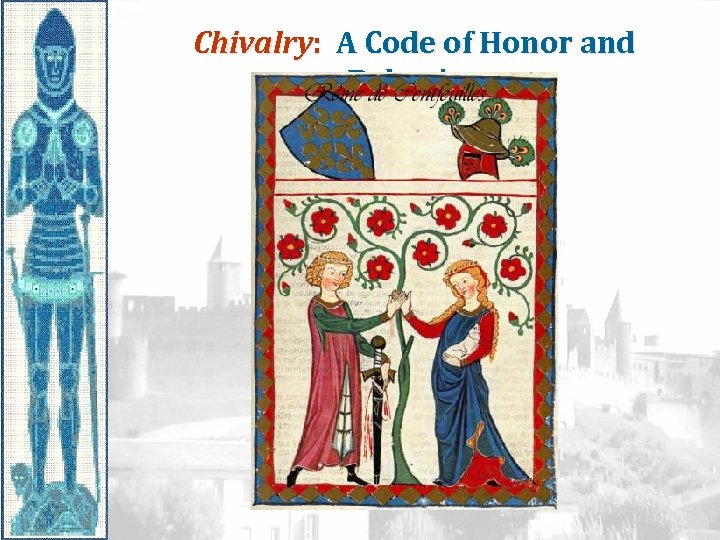 Chivalry: A Code of Honor and Behavior
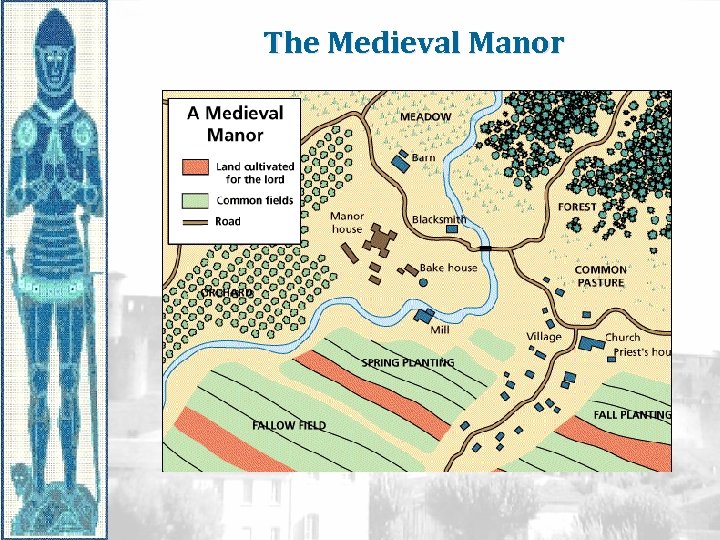 The Medieval Manor
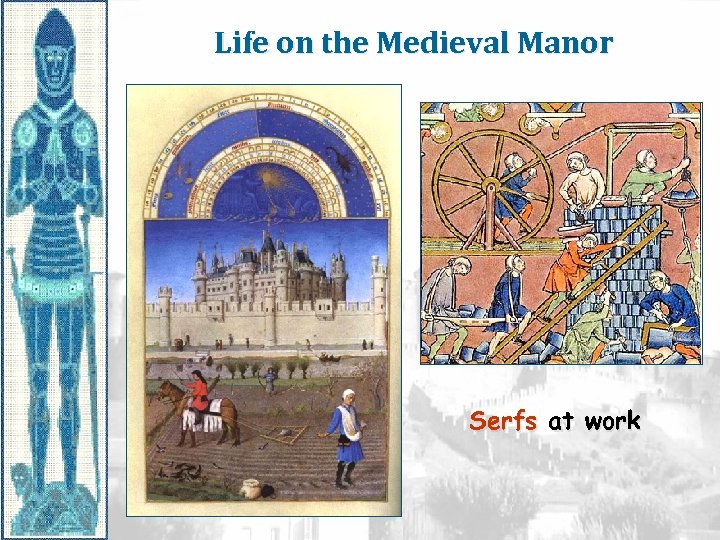 Life on the Medieval Manor Serfs at work
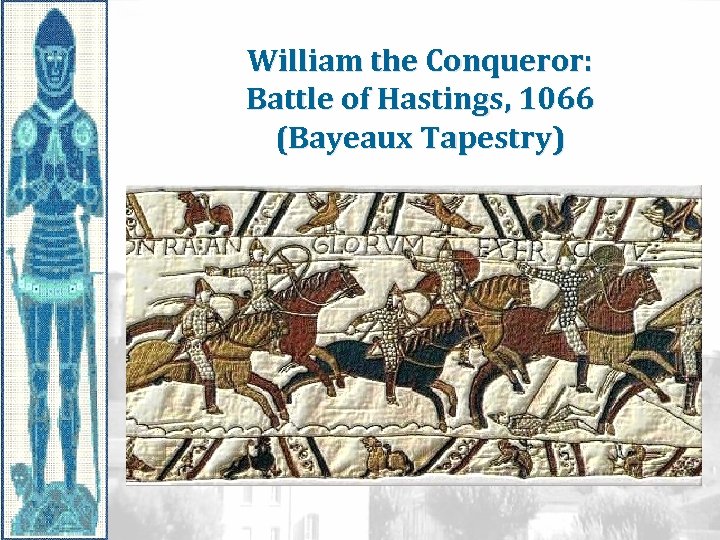 William the Conqueror: Battle of Hastings, 1066 (Bayeaux Tapestry)
 Evolution of England’s Political System v Henry I: § William’s son. § set up a court system. § Exchequer dept. of royal finances. v Henry II: § established the principle of common law throughout the kingdom. § grand jury. § trial by jury.
 Evolution of England’s Political System v Henry I: § William’s son. § set up a court system. § Exchequer dept. of royal finances. v Henry II: § established the principle of common law throughout the kingdom. § grand jury. § trial by jury.
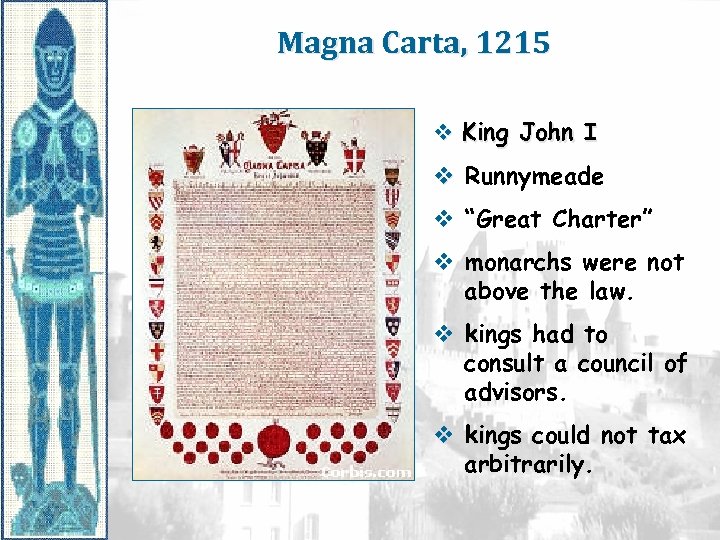 Magna Carta, 1215 v King John I v Runnymeade v “Great Charter” v monarchs were not above the law. v kings had to consult a council of advisors. v kings could not tax arbitrarily.
 The Beginnings of the British Parliament v Great Council: § middle class merchants, townspeople [burgesses in Eng. , bourgeoisie in Fr. , burghers in Ger. ] were added at the end of the 13 c. § eventually called Parliament. § by 1400, two chambers evolved: o House of Lords nobles & clergy. o House of Commons knights and burgesses.
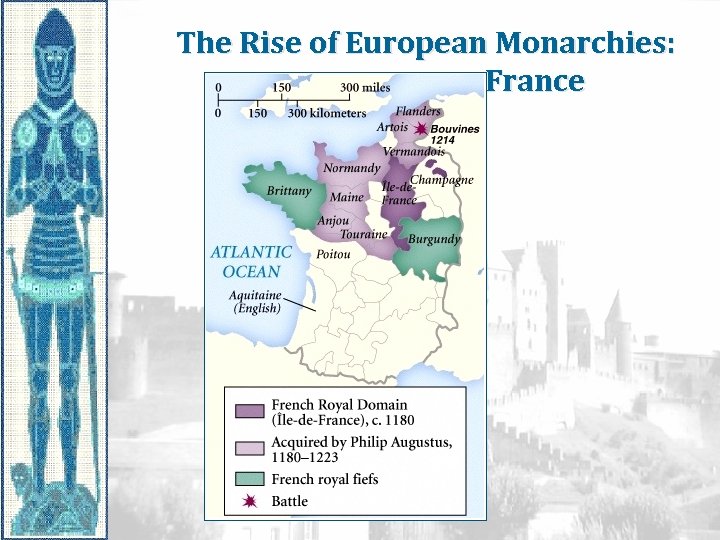 The Rise of European Monarchies: France
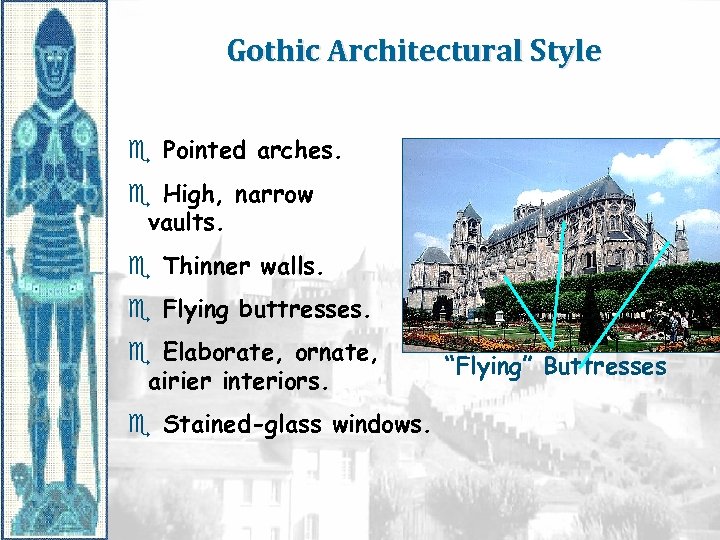 Gothic Architectural Style e Pointed arches. e High, narrow vaults. e Thinner walls. e Flying buttresses. e Elaborate, ornate, airier interiors. e Stained-glass windows. “Flying” Buttresses
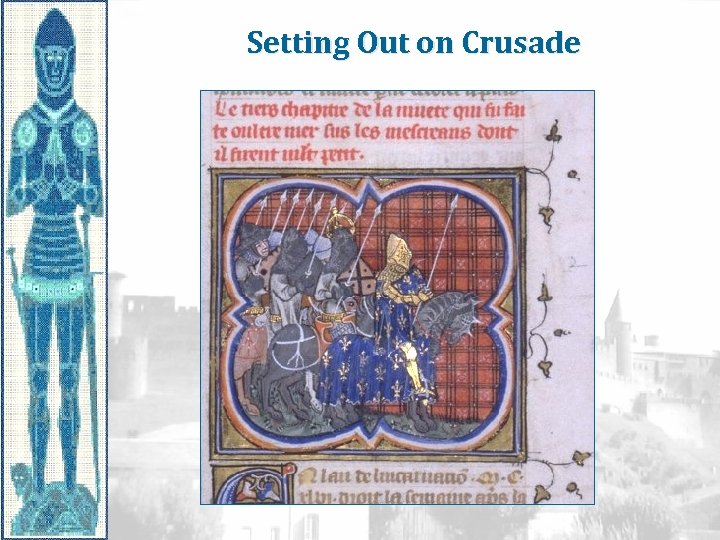
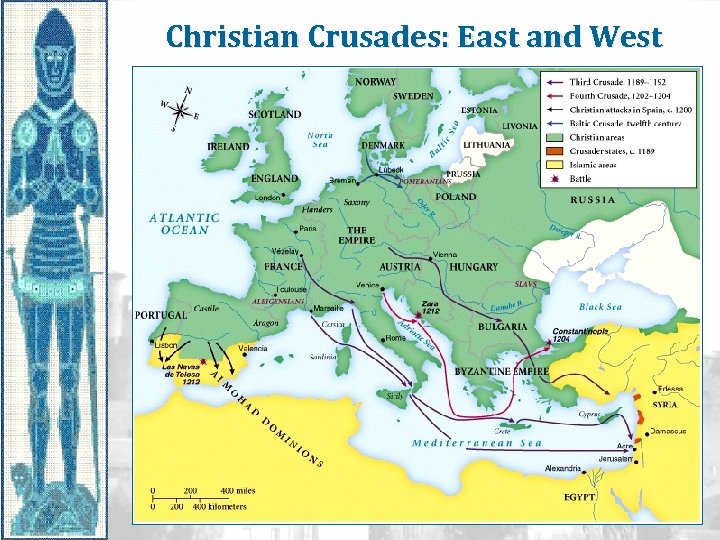
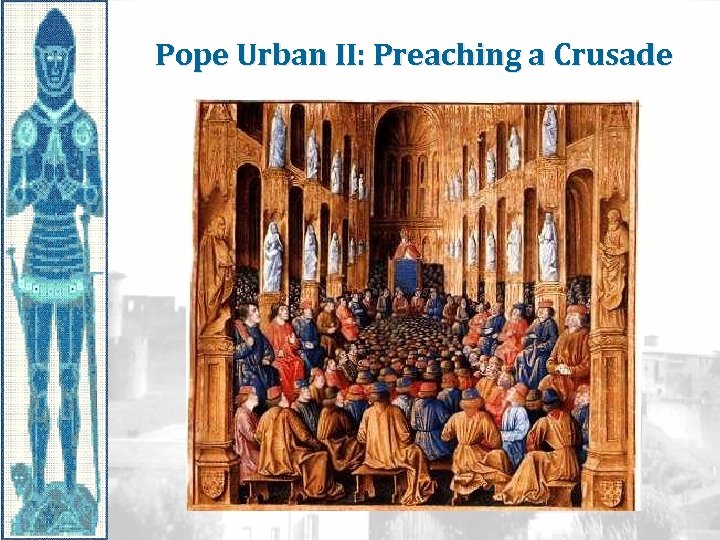 Pope Urban II: Preaching a Crusade
 Setting Out on Crusade
 Christian Crusades: East and West
 Medieval Universities
 Oxford University
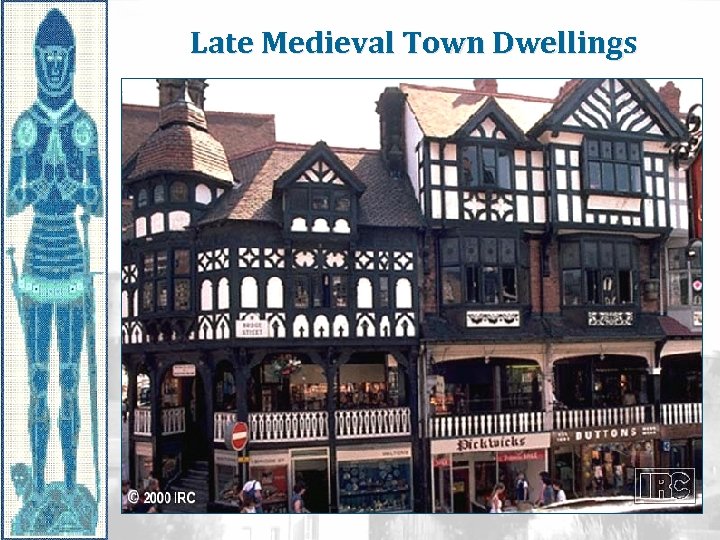 Late Medieval Town Dwellings
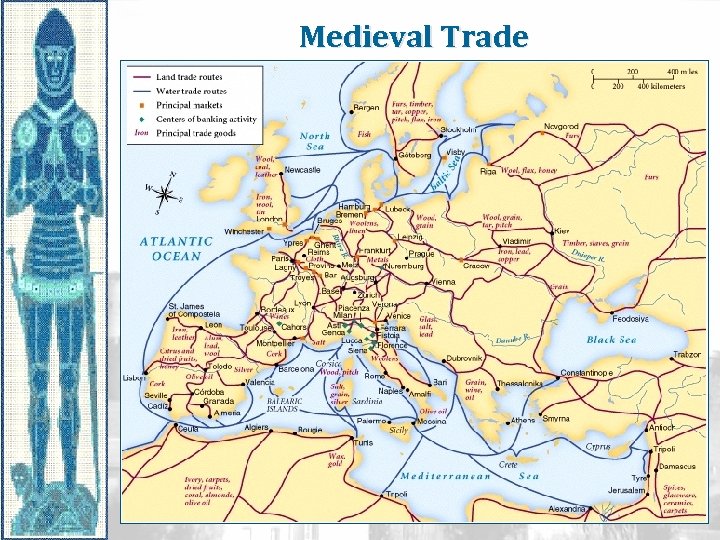 Medieval Trade
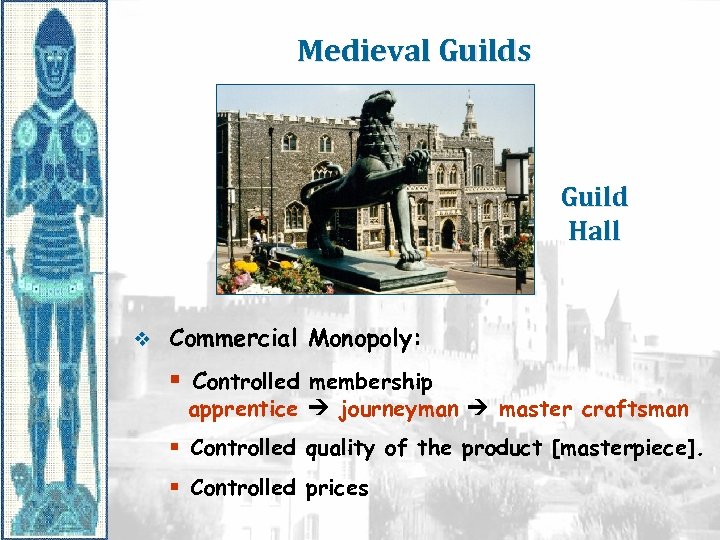 Medieval Guilds Guild Hall v Commercial Monopoly: § Controlled membership apprentice journeyman master craftsman § Controlled quality of the product [masterpiece]. § Controlled prices
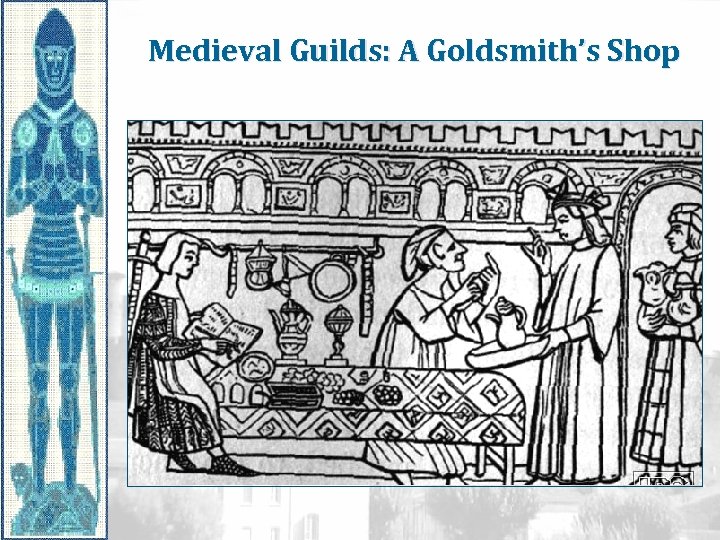 Medieval Guilds: A Goldsmith’s Shop
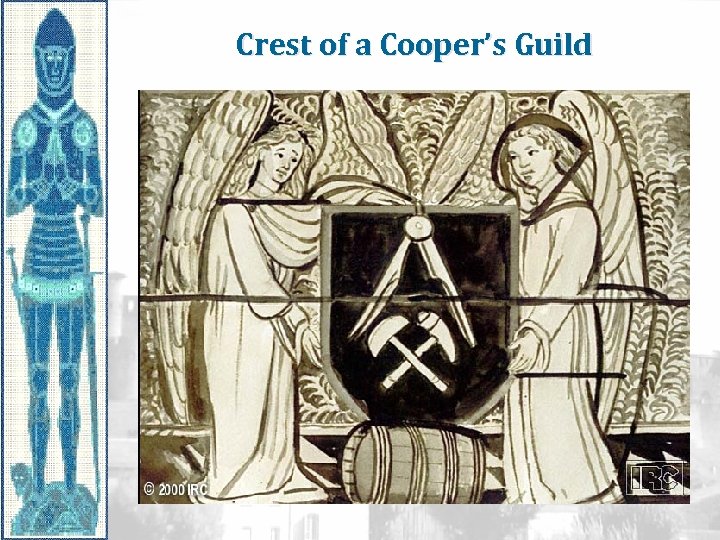 Crest of a Cooper’s Guild
 Late Medieval Europe 1300 -1450
 More than you ever wanted to know about the Anglo-French connections • Roots in the Norman Conquest of England in 1066 (Battle of Hastings) • French dukes of Normandy retained lands in France and held title of “King of England” • French kings were weak feudal lords holding little authority outside of Île de France (Paris and the surrounding countryside) • French aristocracy often married their daughters off to the sons of the kings of England, further complicating dynastic alliances – Eleanor of Aquitaine: m. Louis IX of France, then Henry II of England (large French province become English land) – Isabella of Angoulême: m. John I, mother to Henry III – Eleanor of Provence: m. Henry III, mother to Edward I – Isabella of France: m Edward II, mother to Edward III, overthrew husband with aid of her lover, Roger Mortimer, imprisoned by her son • Edward III was heir to properties in France which made him a threat to French royal power, in addition to his claim to the throne
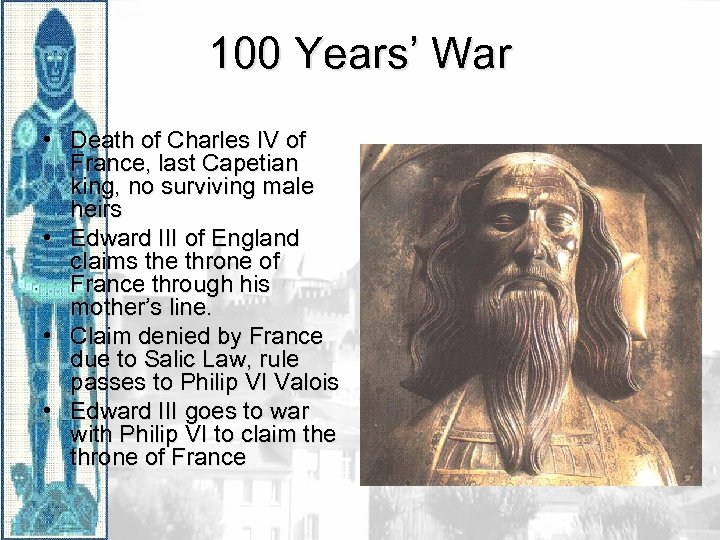 100 Years’ War • Death of Charles IV of France, last Capetian king, no surviving male heirs • Edward III of England claims the throne of France through his mother’s line. • Claim denied by France due to Salic Law, rule passes to Philip VI Valois • Edward III goes to war with Philip VI to claim the throne of France
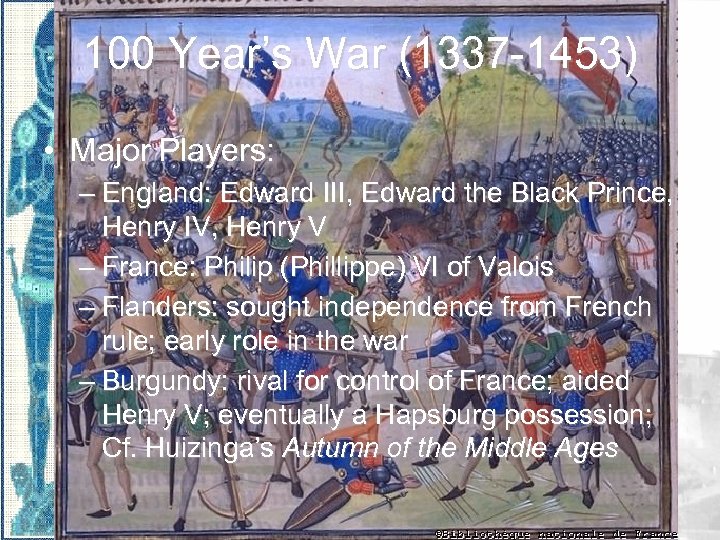 100 Year’s War (1337 -1453) • Major Players: – England: Edward III, Edward the Black Prince, Henry IV, Henry V – France: Philip (Phillippe) VI of Valois – Flanders: sought independence from French rule; early role in the war – Burgundy: rival for control of France; aided Henry V; eventually a Hapsburg possession; Cf. Huizinga’s Autumn of the Middle Ages
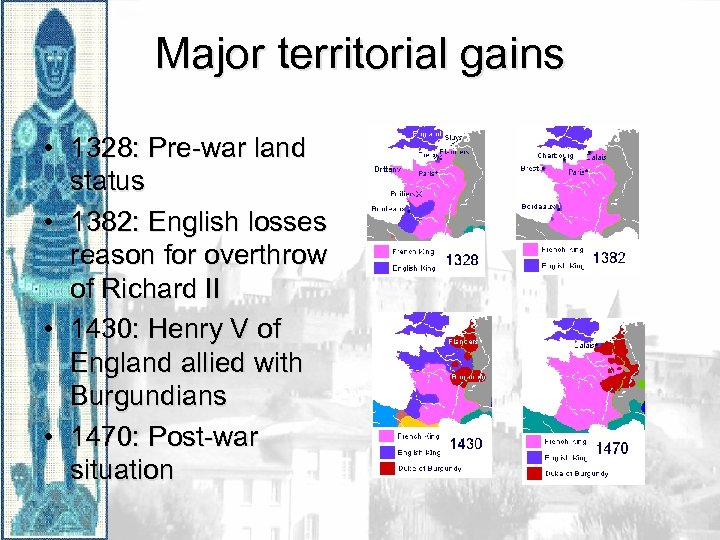 Major territorial gains • 1328: Pre-war land status • 1382: English losses reason for overthrow of Richard II • 1430: Henry V of England allied with Burgundians • 1470: Post-war situation
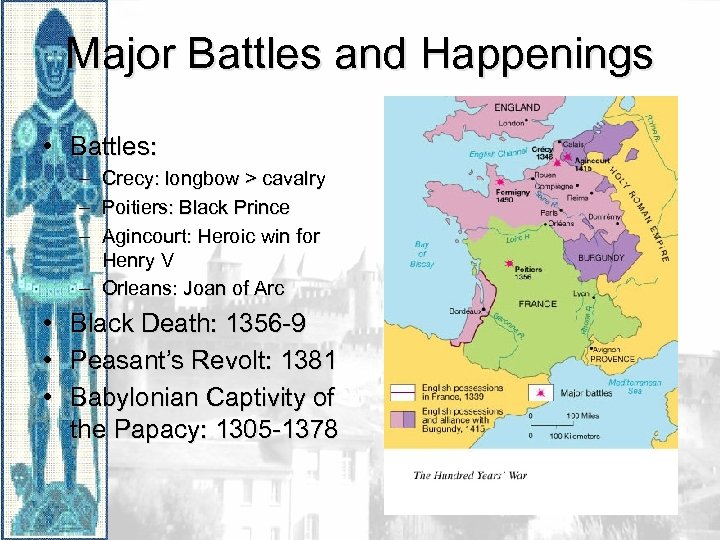 Major Battles and Happenings • Battles: – Crecy: longbow > cavalry – Poitiers: Black Prince – Agincourt: Heroic win for Henry V – Orleans: Joan of Arc • • • Black Death: 1356 -9 Peasant’s Revolt: 1381 Babylonian Captivity of the Papacy: 1305 -1378
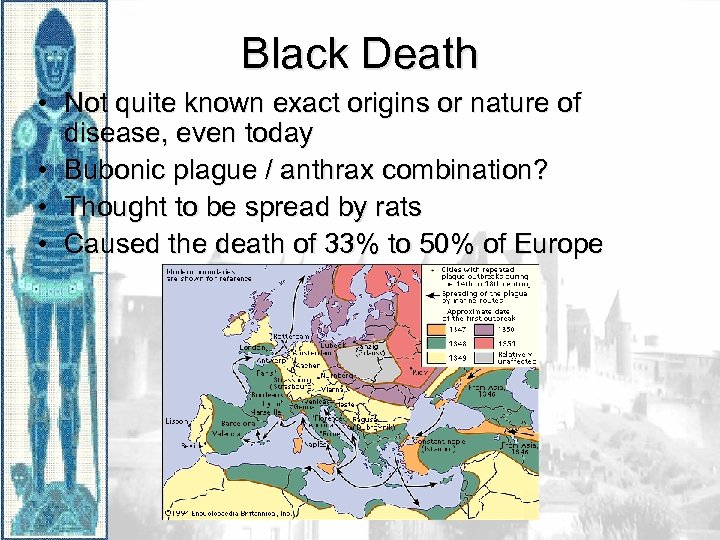 Black Death • Not quite known exact origins or nature of disease, even today • Bubonic plague / anthrax combination? • Thought to be spread by rats • Caused the death of 33% to 50% of Europe
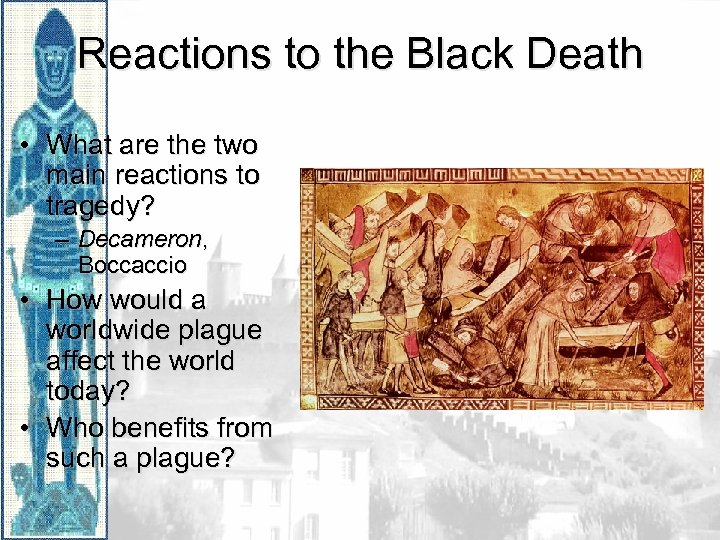 Reactions to the Black Death • What are the two main reactions to tragedy? – Decameron, Boccaccio • How would a worldwide plague affect the world today? • Who benefits from such a plague?
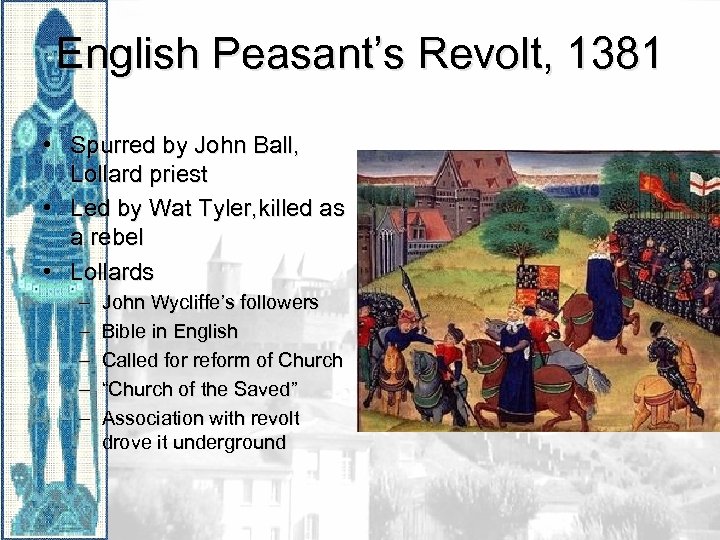 English Peasant’s Revolt, 1381 • Spurred by John Ball, Lollard priest • Led by Wat Tyler, killed as a rebel • Lollards – – – John Wycliffe’s followers Bible in English Called for reform of Church “Church of the Saved” Association with revolt drove it underground
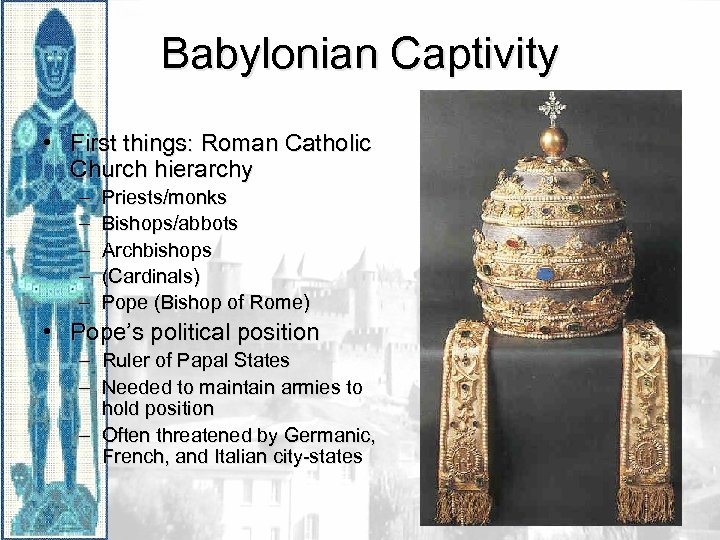 Babylonian Captivity • First things: Roman Catholic Church hierarchy – – – Priests/monks Bishops/abbots Archbishops (Cardinals) Pope (Bishop of Rome) • Pope’s political position – Ruler of Papal States – Needed to maintain armies to hold position – Often threatened by Germanic, French, and Italian city-states
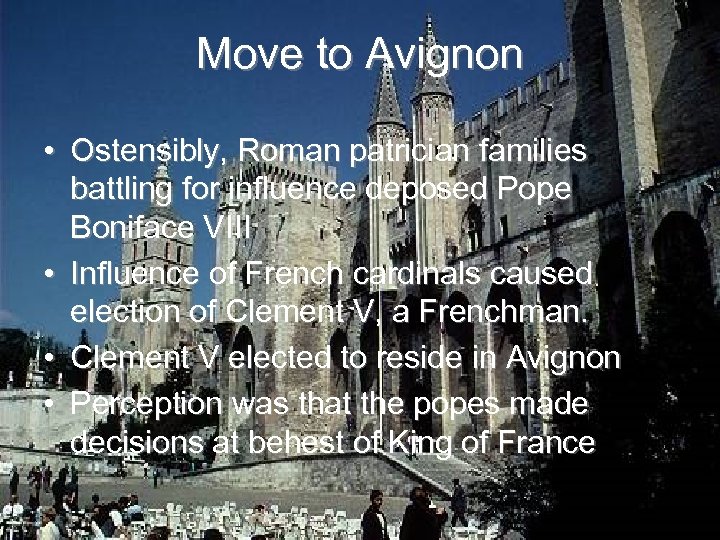 Move to Avignon • Ostensibly, Roman patrician families battling for influence deposed Pope Boniface VIII • Influence of French cardinals caused election of Clement V, a Frenchman. • Clement V elected to reside in Avignon • Perception was that the popes made decisions at behest of King of France
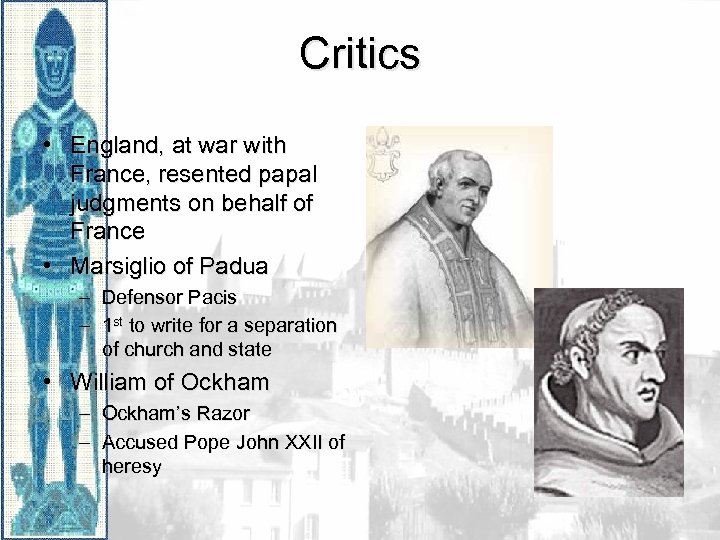 Critics • England, at war with France, resented papal judgments on behalf of France • Marsiglio of Padua – Defensor Pacis – 1 st to write for a separation of church and state • William of Ockham – Ockham’s Razor – Accused Pope John XXII of heresy
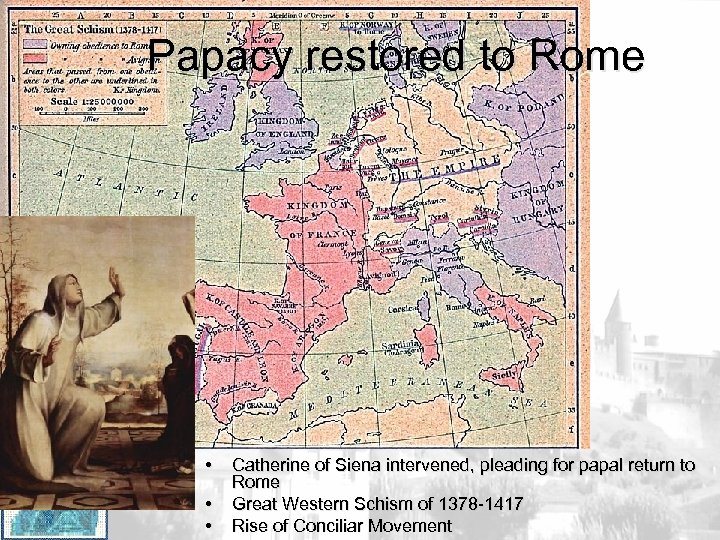 Papacy restored to Rome • • • Catherine of Siena intervened, pleading for papal return to Rome Great Western Schism of 1378 -1417 Rise of Conciliar Movement
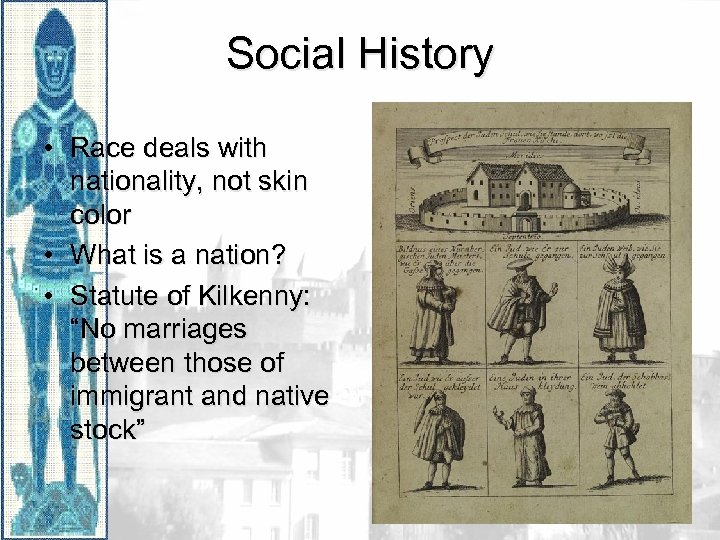 Social History • Race deals with nationality, not skin color • What is a nation? • Statute of Kilkenny: “No marriages between those of immigrant and native stock”
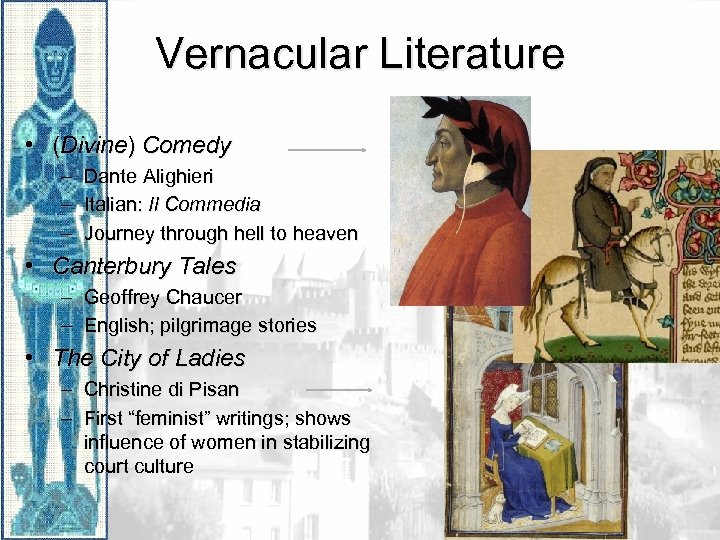 Vernacular Literature • (Divine) Comedy – – – Dante Alighieri Italian: Il Commedia Journey through hell to heaven • Canterbury Tales – Geoffrey Chaucer – English; pilgrimage stories • The City of Ladies – Christine di Pisan – First “feminist” writings; shows influence of women in stabilizing court culture