


 Скачать презентацию Periodisation Old English OE Middle English ME
Лекция старые тексты3.ppt
- Количество слайдов: 42
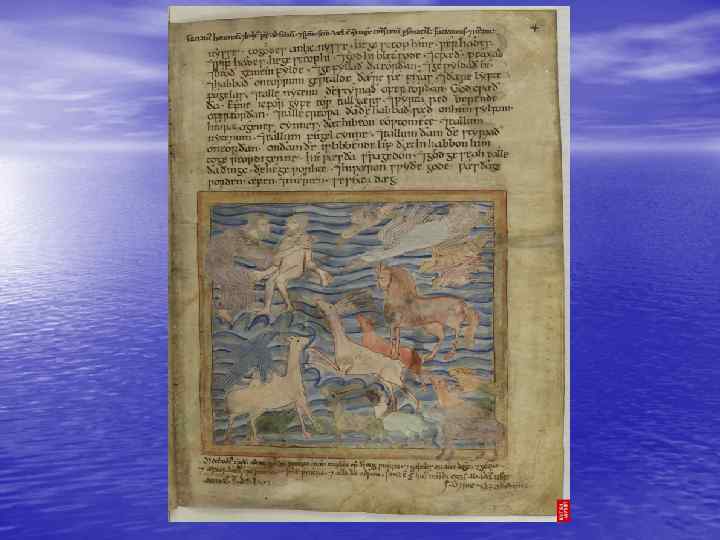
 Periodisation • Old English (OE), Middle English (ME) and New English (NE)
 Periodisation • The first period, which may be termed Early Old English, lasts from the West Germanic invasion of Britain till the beginning of writing, that is from the 5 th to the close of the 7 th c.
 Periodisation • The second historical period extends from the 8 th c. till the end of the 11 th.
 Periodisation • The third period, known as Early Middle English, starts after 1066, the year of the Norman Conquest, and covers the 12 th, 13 th and half of the 14 th c.
 Periodisation • The fourth period – from the later 14 th c. till the end of the 15 th – embraces the age of Chaucer, the greatest English medieval writer and forerunner of the English Renaissance.
 Periodisation • The fifth period is called Early New English, lasted from the introduction of printing to the age of Shakespeare. The first printed book in English was published by William Caxton in 1475.
 Periodisation • The sixth period extends from the mid 17 th c. to the close of the 18 th c. In the history of the language it is often called “the age of normalization and correctness”, in the history of literature – the “neoclassical” age.
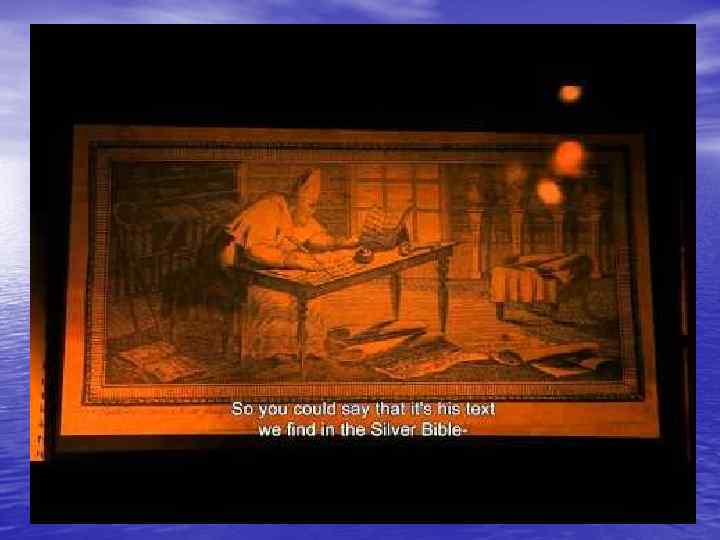
 • The Silver Bible, which in 2011 has been added to UNESCO's Memory of the World Register, is despite its name not a complete Bible but the four gospels written in the Gothic language.
 • The translation from Greek to Gothic was done in the fourth century by the Gothic Bishop Ulfilas, who also constructed the Gothic alphabet. The Silver Bible was probably copied in Ravenna in the period under the Ostrogoths, and possibly for their King Theoderic the Great, at the beginning of the 6 th century.
 • The silver script is dominant and has given rise to the term the "silver book", "codex argenteus".
 • The Silver Bible was known of in the 16 th century when it was in a Benedictine Monastry in Werden in the Ruhr district. By the year 1600 it had passed into the hands of the Holy Roman Emperor Rudolph II and was in Prague when the Swedes stormed the city in 1648.
 • As Swedish war booty it arrived in Stockholm and became part of Queen Christina's library. After the Queen's abdication it passed to one of her librarians, Isaac Vossius, who took it to Holland. From there it was bought by the Lord Chamberlain (and University Chancellor) Magnus Gabriel De la Gardie, who presented it to Uppsala University in 1669.
 • The Silver Bible originally had at least 336 leaves. Of these 187 are in Uppsala. Another leaf has survived for posterity and is in Speyer in Germany. It was discovered sensationally in 1970 in Speyer Cathedral together with some hidden relics. This leaf appears to have travelled a somewhat different path than the others before it came to light again.
 • The text of the Silver Bible has been published in various editions. The latest and most important is the facsimile edition which was made in 1927 with high technological equipment and the expertise of among others Professor The Swedberg.
 • The Poetic Edda, also known as Sæmundar Edda or the Elder Edda, is a collection of Old Norse poems from the Icelandic medieval manuscript Codex Regius ("Royal Book").
 • The poems in the second part narrate legends about Norse heroes and heroines, such as Sigurd, Brynhildr and Gunnar.
 • The Codex Regius was written down in the 13 th century but nothing is known of its whereabouts until 1643 when it came into the possession of Brynjólfur Sveinsson, then the Church of Iceland's Bishop of Skálholt.
 • At that time, versions of the Prose Edda were well known in Iceland, but scholars speculated that there once was another Edda—an Elder Edda—which contained the pagan poems Snorri quotes in his book.
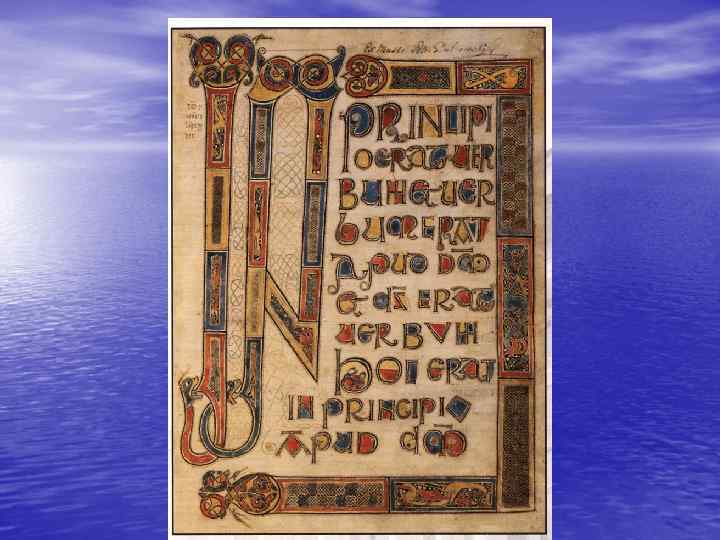
 • Brynjólfur attributed the manuscript to Sæmundr the Learned, a larger-than-life 12 th century Icelandic priest.
 • Bishop Brynjólfur sent the Codex Regius as a present to King Christian IV of Denmark, hence the name Codex Regius. For centuries it was stored in the Royal Library in Copenhagen but in 1971 it was returned to Iceland.
 • The Prose Edda, sometimes referred to as the Younger Edda or Snorri's Edda is an Icelandic manual of poetics which also contains many mythological stories.
 • Its purpose was to enable Icelandic poets and readers to understand the subtleties of alliterative verse, and to grasp the mythological allusions behind the many kennings that were used in skaldic poetry.
 • It was written by the Icelandic scholar and historian Snorri Sturluson around 1220. It survives in seven main manuscripts, written down from about 1300 to about 1600.
 • The Prose Edda consists of a Prologue and three separate books: Gylfaginning, concerning the creation and foretold destruction and rebirth of the Norse mythical world, Skáldskaparmál, a dialogue between Ægir, a supernatural figure connected with the sea, and Bragi, a god connected with skaldship, and Háttatal, a demonstration of verse forms used in Norse mythology.
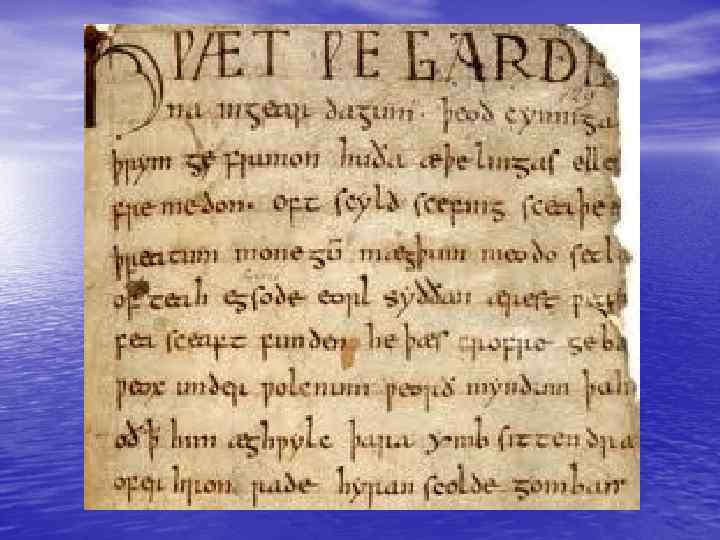
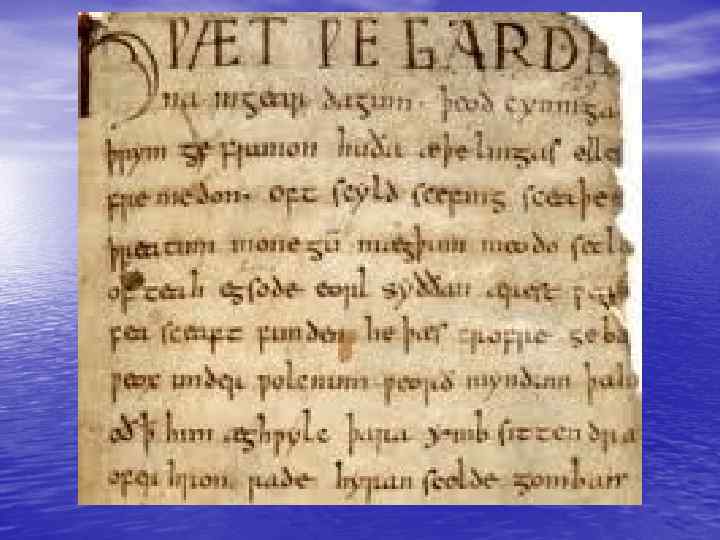
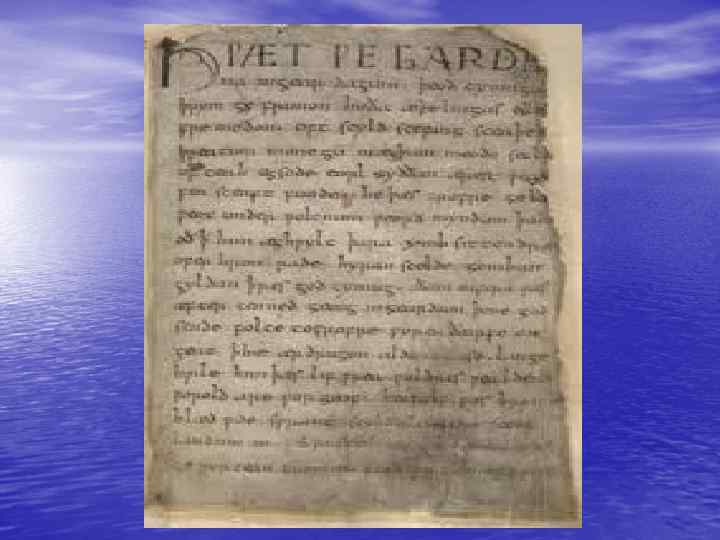
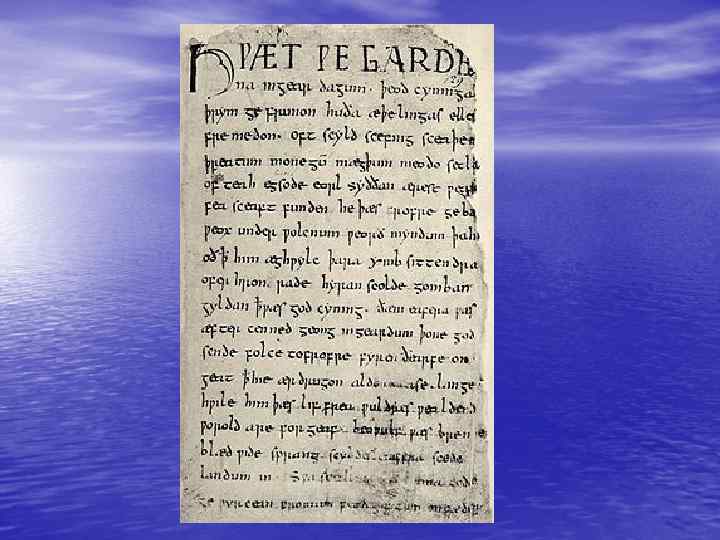
![• Beowulf (/beɪ. ɵwʊlf/; in Old English [beo wʊlf] or [beəwʊlf], literally](https://present5.com/presentation/10141631_136432160/image-28.jpg "• Beowulf (/beɪ. ɵwʊlf/; in Old English [beo wʊlf] or [beəwʊlf], literally") • Beowulf (/beɪ. ɵwʊlf/; in Old English [beo wʊlf] or [beəwʊlf], literally "bee wolf" i. e. "bee hunter", a kenning for "bear") is the conventional title of an Old English heroic epic poem consisting of 3182 alliterative long lines, set in Scandinavia, commonly cited as one of the most important works of Anglo-Saxon literature.
• Beowulf (/beɪ. ɵwʊlf/; in Old English [beo wʊlf] or [beəwʊlf], literally "bee wolf" i. e. "bee hunter", a kenning for "bear") is the conventional title of an Old English heroic epic poem consisting of 3182 alliterative long lines, set in Scandinavia, commonly cited as one of the most important works of Anglo-Saxon literature.
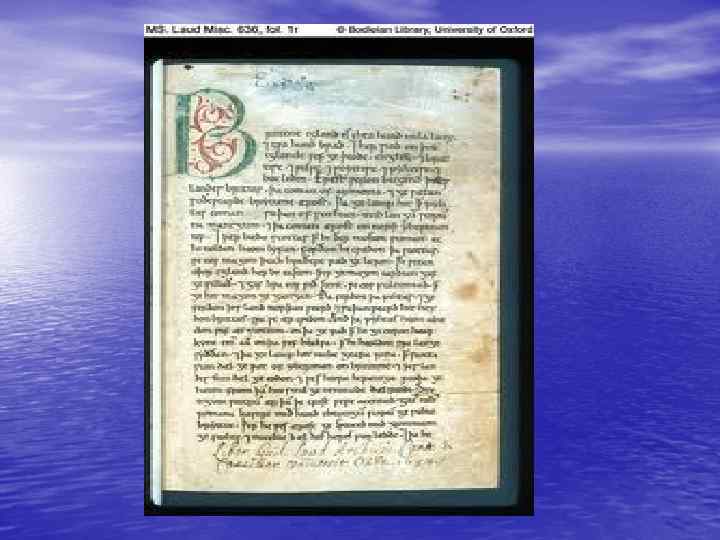
 • It survives in a single manuscript known as the Nowell Codex. Its composition by an anonymous Anglo-Saxon poet is dated between the 8 th and the early 11 th century. In 1731, the manuscript was badly damaged by a fire that swept through the building which housed a collection of medieval manuscripts that had been assembled by Sir Robert Bruce Cotton.
 • It fell into obscurity for many decades, and its existence did not become widely known again until it was printed in 1815 in an edition prepared by the Icelandic scholar Grímur Jónsson Thorkelin
 • In the poem, Beowulf, a hero of the Geats, battles three antagonists: Grendel, who has been attacking the resident warriors of the mead hall of Hroðgar (the king of the Danes), Grendel's mother, and an unnamed dragon.
 • After the first two victories, Beowulf goes home to Geatland in Sweden and becomes king of the Geats. The last fight takes place fifty years later. In this final battle, Beowulf is fatally wounded. After his death, his servants bury him in a tumulus in Geatland
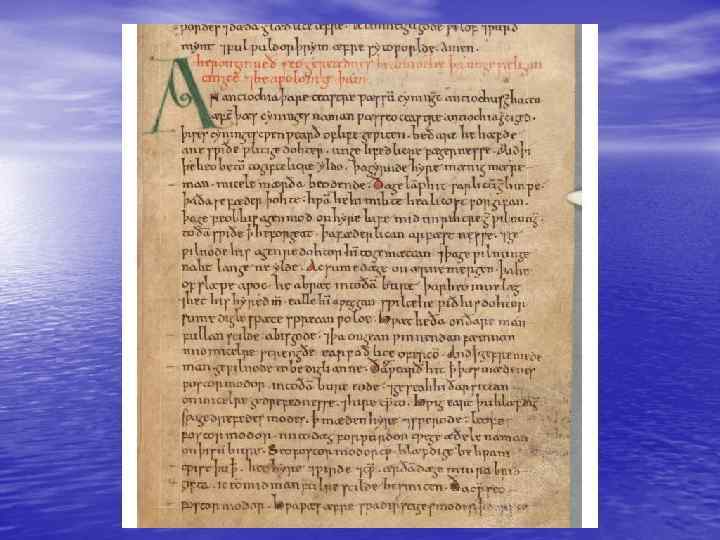
 • The Old English Texts • Early West Saxon • Anglo-Saxon Chronicle • Cædmon’s Hymn • Bishop Ulfilas • Queen Christina's library • The pagan poems Snorri • Bishop Brynjólfur • the Nowell Codex