


 Скачать презентацию Perinatal Health in Canada An Overview K S
9d78679de34c884874f86684170e7c64.ppt
- Количество слайдов: 47
 Perinatal Health in Canada: An Overview K. S. Joseph MD, Ph. D Canadian Perinatal Surveillance System
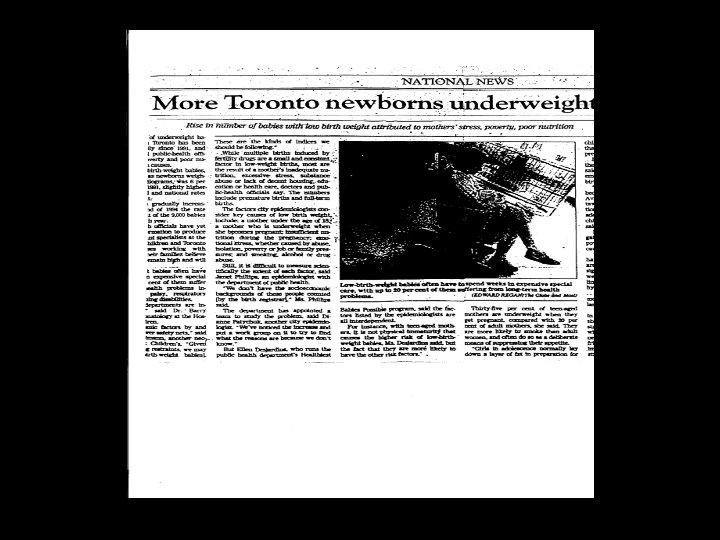
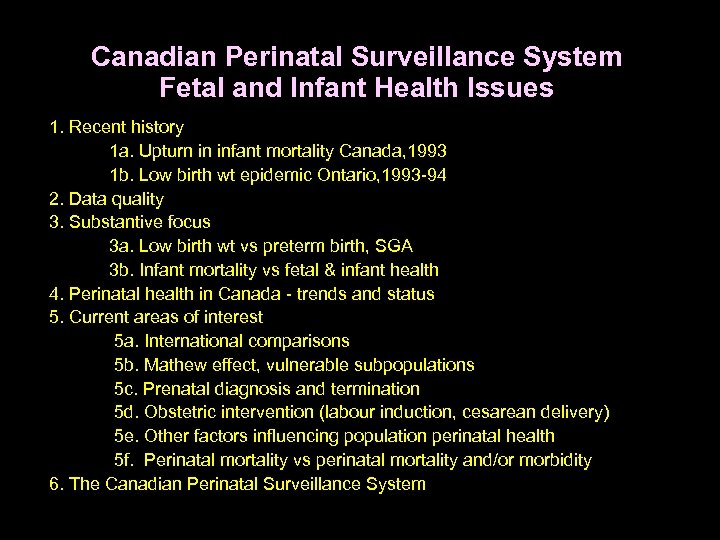 Canadian Perinatal Surveillance System Fetal and Infant Health Issues 1. Recent history 1 a. Upturn in infant mortality Canada, 1993 1 b. Low birth wt epidemic Ontario, 1993 -94 2. Data quality 3. Substantive focus 3 a. Low birth wt vs preterm birth, SGA 3 b. Infant mortality vs fetal & infant health 4. Perinatal health in Canada - trends and status 5. Current areas of interest 5 a. International comparisons 5 b. Mathew effect, vulnerable subpopulations 5 c. Prenatal diagnosis and termination 5 d. Obstetric intervention (labour induction, cesarean delivery) 5 e. Other factors influencing population perinatal health 5 f. Perinatal mortality vs perinatal mortality and/or morbidity 6. The Canadian Perinatal Surveillance System
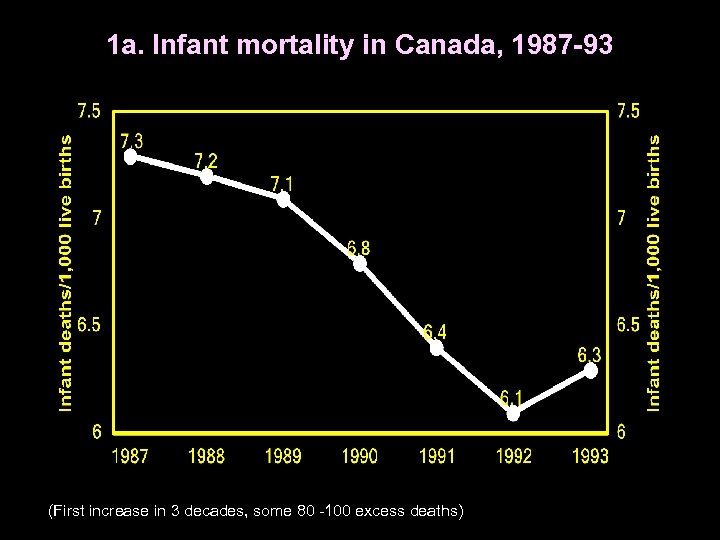 1 a. Infant mortality in Canada, 1987 -93 (First increase in 3 decades, some 80 -100 excess deaths)
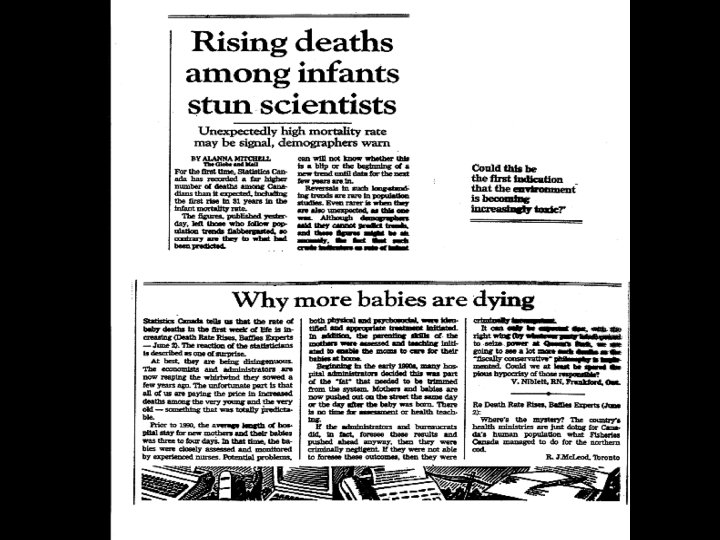
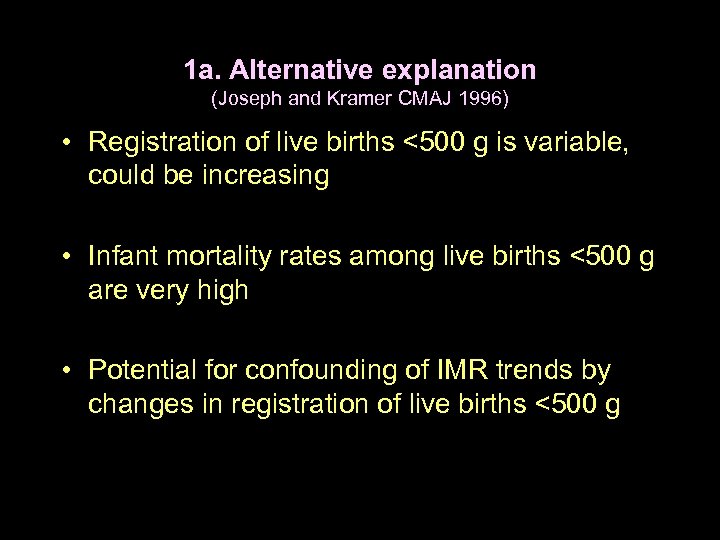 1 a. Alternative explanation (Joseph and Kramer CMAJ 1996) • Registration of live births <500 g is variable, could be increasing • Infant mortality rates among live births <500 g are very high • Potential for confounding of IMR trends by changes in registration of live births <500 g
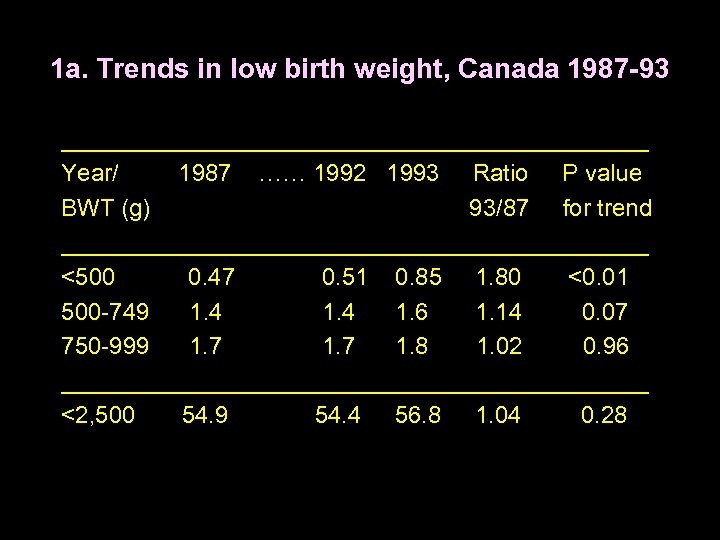 1 a. Trends in low birth weight, Canada 1987 -93 ______________________ Year/ 1987 …… 1992 1993 Ratio P value BWT (g) 93/87 for trend ______________________ <500 0. 47 0. 51 0. 85 1. 80 <0. 01 500 -749 1. 4 1. 6 1. 14 0. 07 750 -999 1. 7 1. 8 1. 02 0. 96 ______________________ <2, 500 54. 9 54. 4 56. 8 1. 04 0. 28
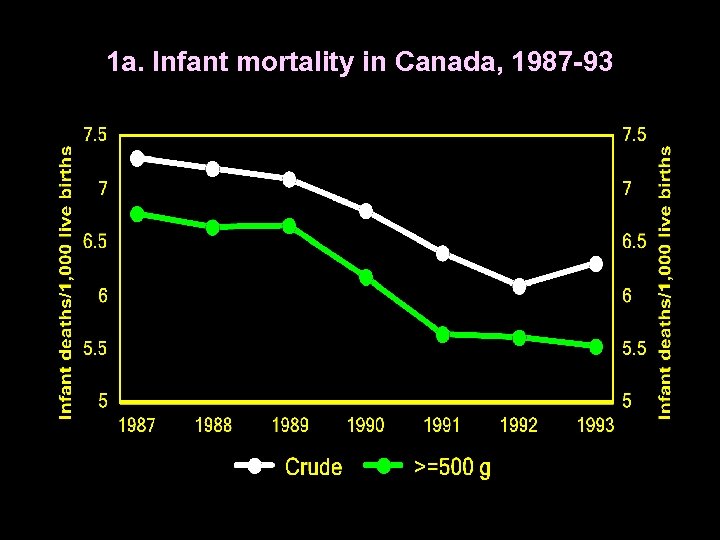 1 a. Infant mortality in Canada, 1987 -93
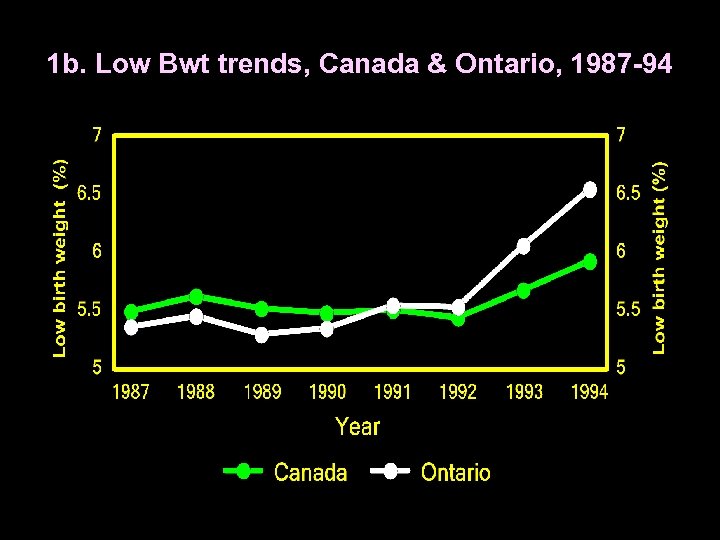 1 b. Low Bwt trends, Canada & Ontario, 1987 -94
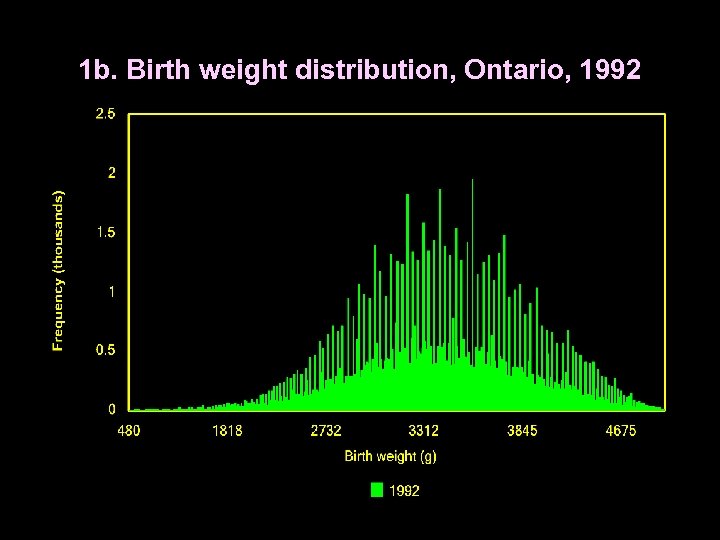 1 b. Birth weight distribution, Ontario, 1992
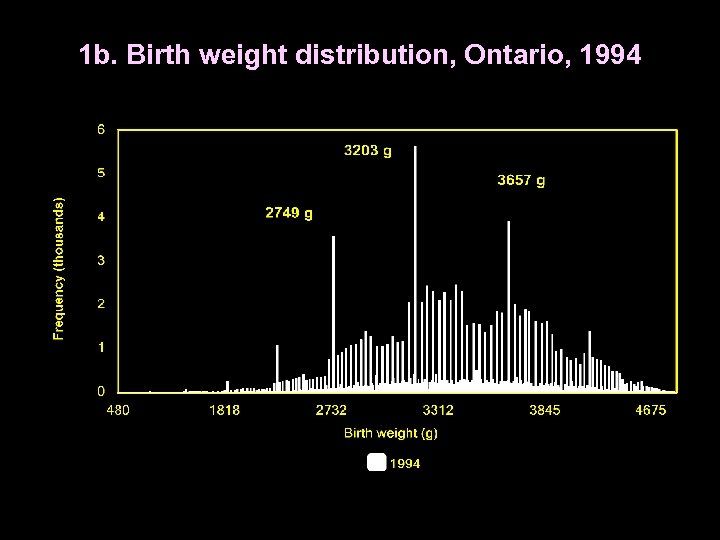 1 b. Birth weight distribution, Ontario, 1994
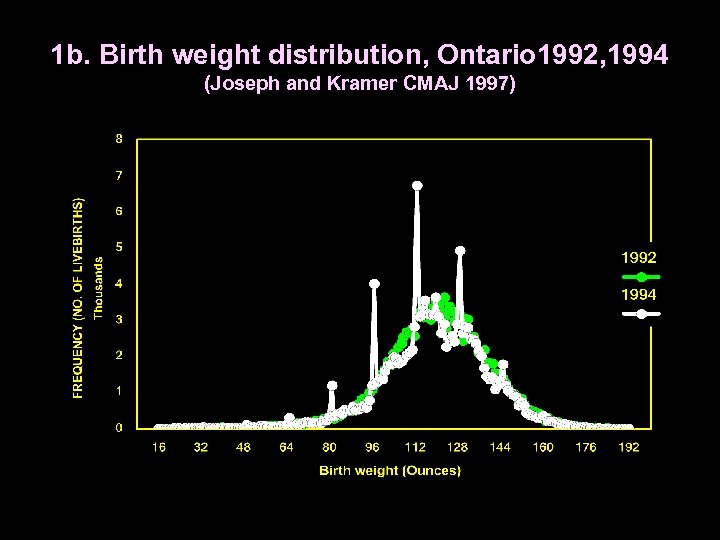 1 b. Birth weight distribution, Ontario 1992, 1994 (Joseph and Kramer CMAJ 1997)
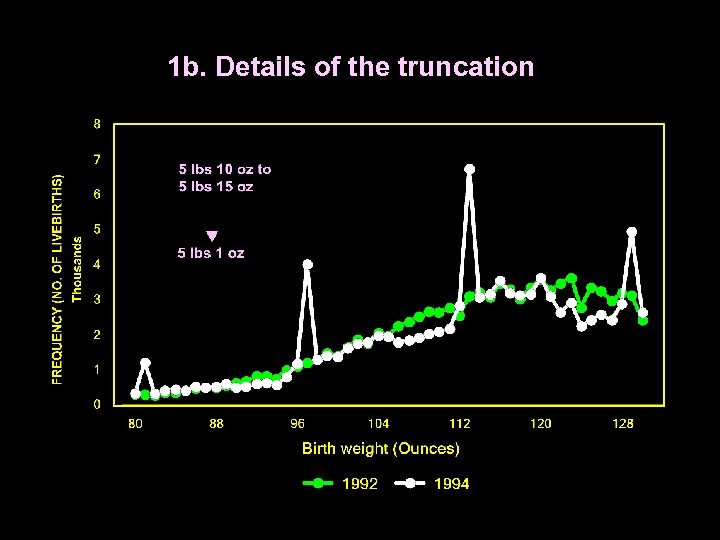 1 b. Details of the truncation
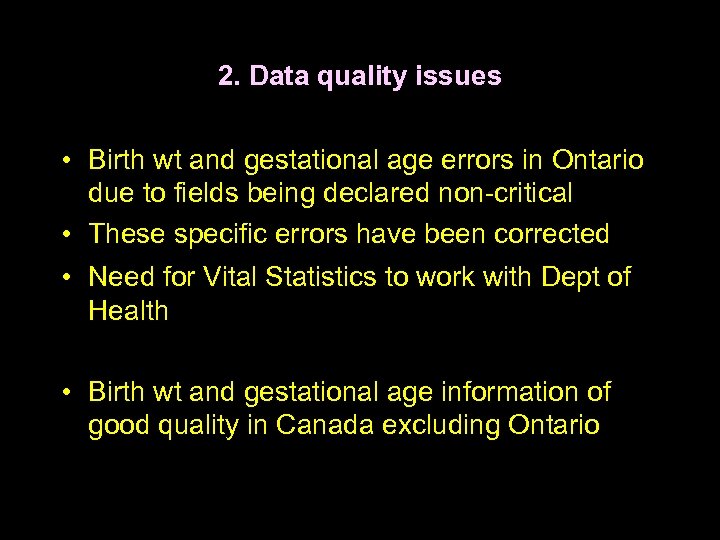 2. Data quality issues • Birth wt and gestational age errors in Ontario due to fields being declared non-critical • These specific errors have been corrected • Need for Vital Statistics to work with Dept of Health • Birth wt and gestational age information of good quality in Canada excluding Ontario
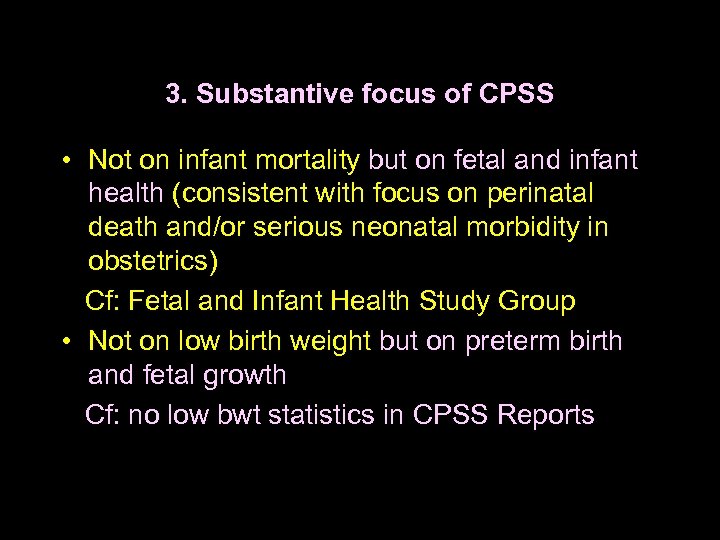 3. Substantive focus of CPSS • Not on infant mortality but on fetal and infant health (consistent with focus on perinatal death and/or serious neonatal morbidity in obstetrics) Cf: Fetal and Infant Health Study Group • Not on low birth weight but on preterm birth and fetal growth Cf: no low bwt statistics in CPSS Reports
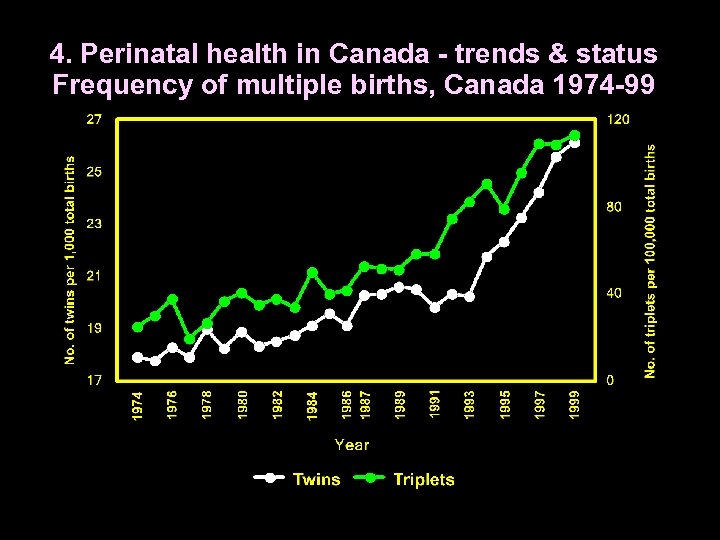 4. Perinatal health in Canada - trends & status Frequency of multiple births, Canada 1974 -99
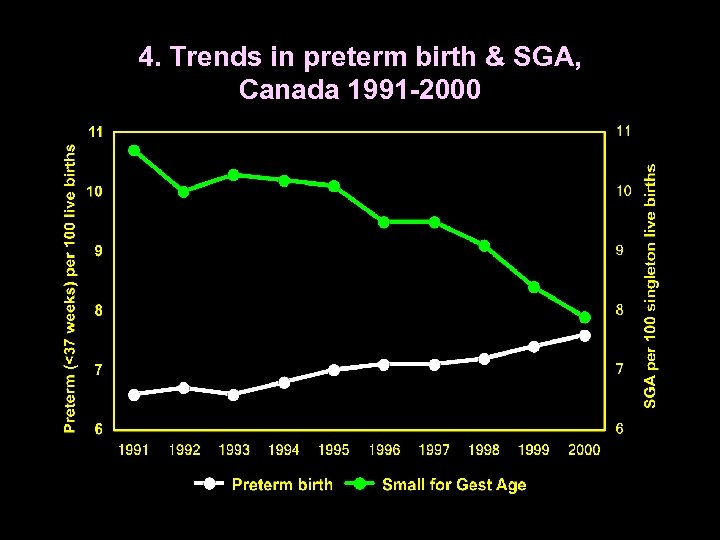 4. Trends in preterm birth & SGA, Canada 1991 -2000
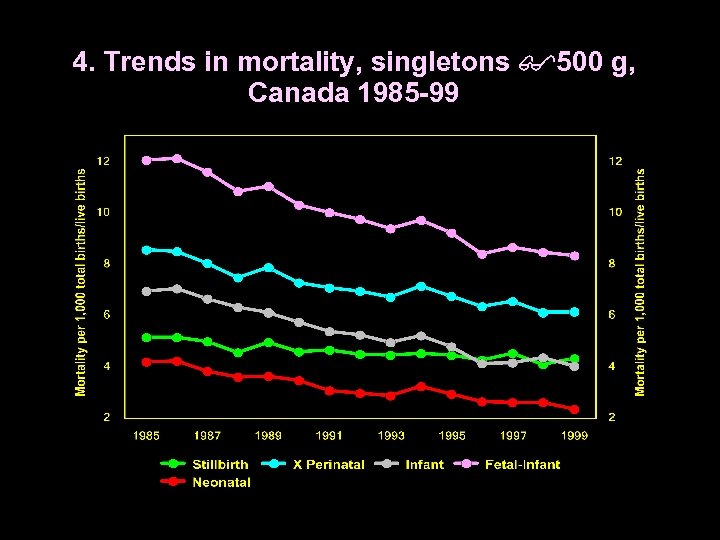 4. Trends in mortality, singletons 500 g, Canada 1985 -99
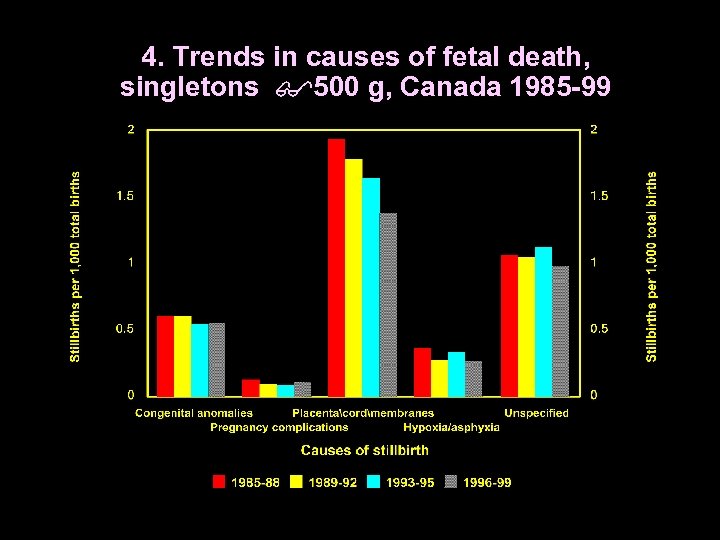 4. Trends in causes of fetal death, singletons 500 g, Canada 1985 -99
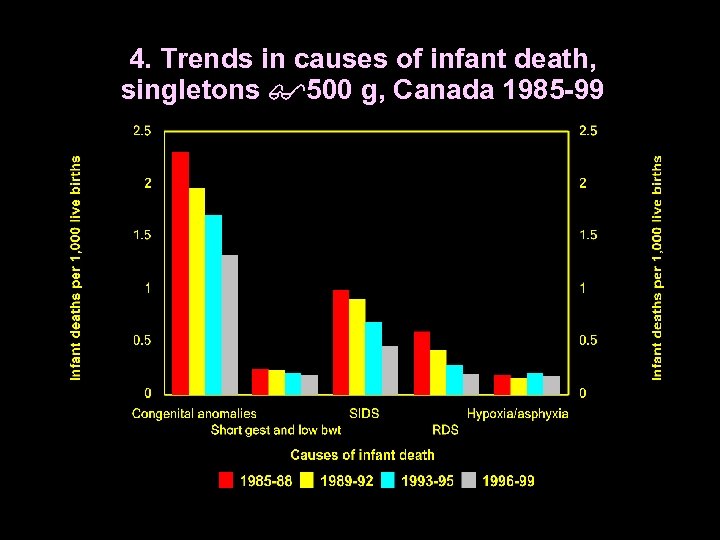 4. Trends in causes of infant death, singletons 500 g, Canada 1985 -99
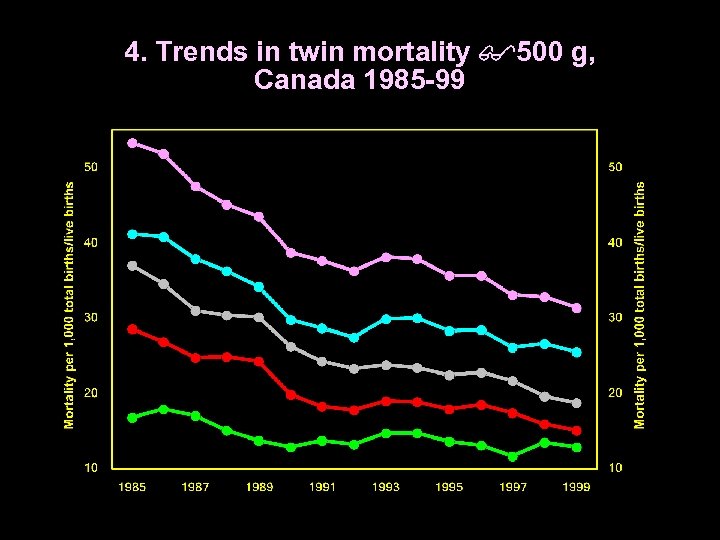 4. Trends in twin mortality 500 g, Canada 1985 -99
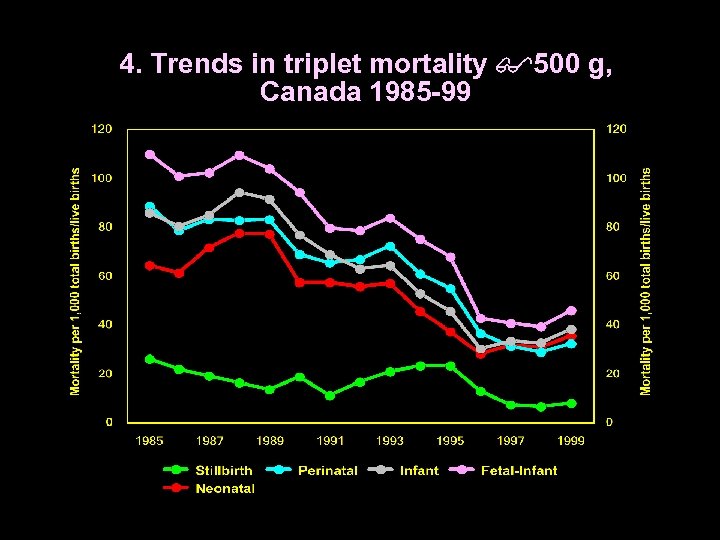 4. Trends in triplet mortality 500 g, Canada 1985 -99
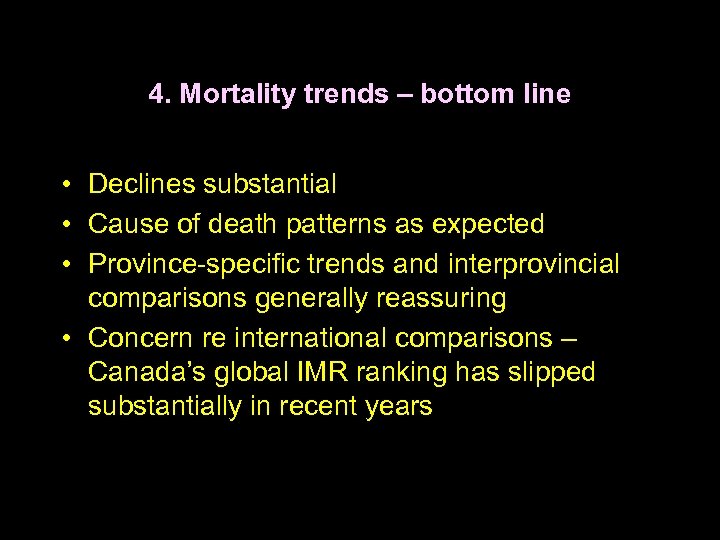 4. Mortality trends – bottom line • Declines substantial • Cause of death patterns as expected • Province-specific trends and interprovincial comparisons generally reassuring • Concern re international comparisons – Canada’s global IMR ranking has slipped substantially in recent years
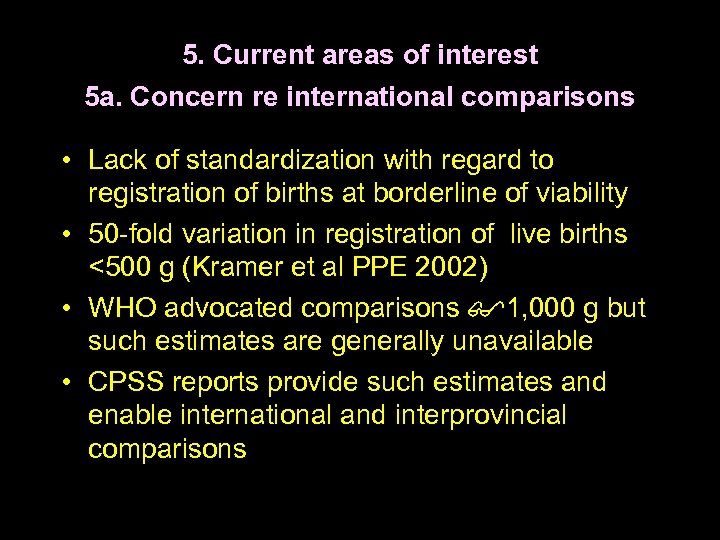 5. Current areas of interest 5 a. Concern re international comparisons • Lack of standardization with regard to registration of births at borderline of viability • 50 -fold variation in registration of live births <500 g (Kramer et al PPE 2002) • WHO advocated comparisons 1, 000 g but such estimates are generally unavailable • CPSS reports provide such estimates and enable international and interprovincial comparisons
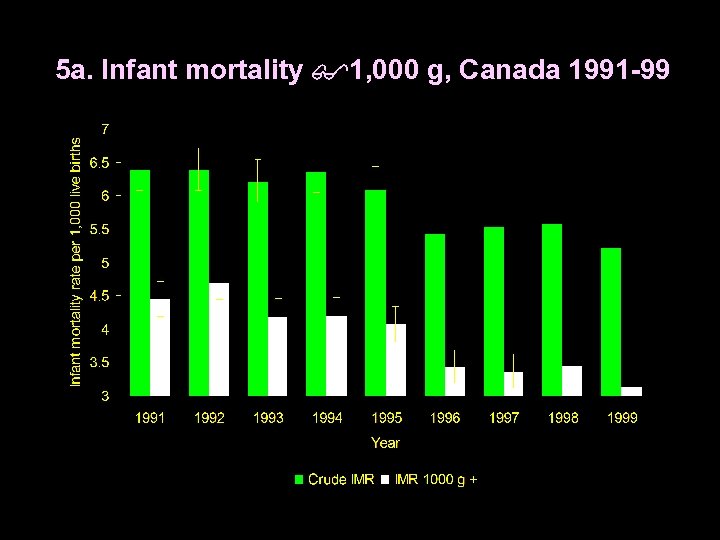 5 a. Infant mortality 1, 000 g, Canada 1991 -99
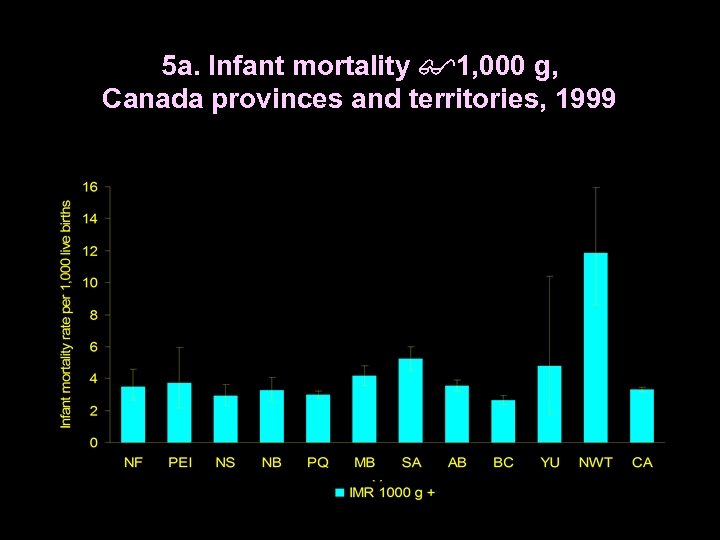 5 a. Infant mortality 1, 000 g, Canada provinces and territories, 1999
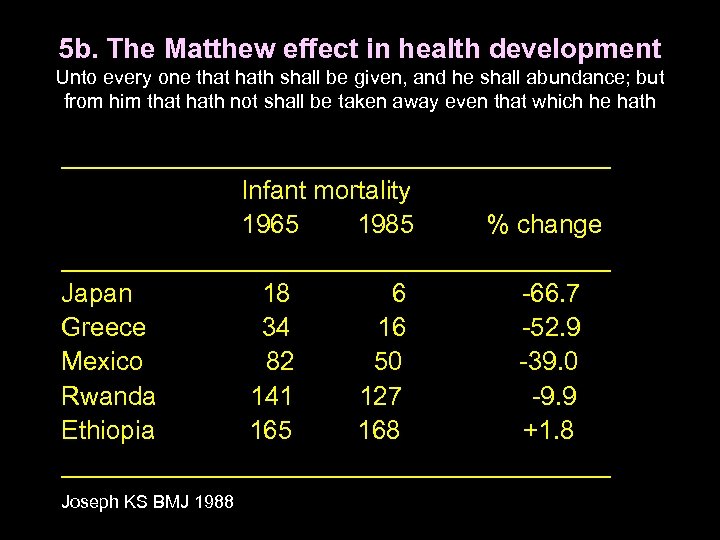 5 b. The Matthew effect in health development Unto every one that hath shall be given, and he shall abundance; but from him that hath not shall be taken away even that which he hath ___________________ Infant mortality 1965 1985 % change ___________________ Japan 18 6 -66. 7 Greece 34 16 -52. 9 Mexico 82 50 -39. 0 Rwanda 141 127 -9. 9 Ethiopia 165 168 +1. 8 ___________________ Joseph KS BMJ 1988
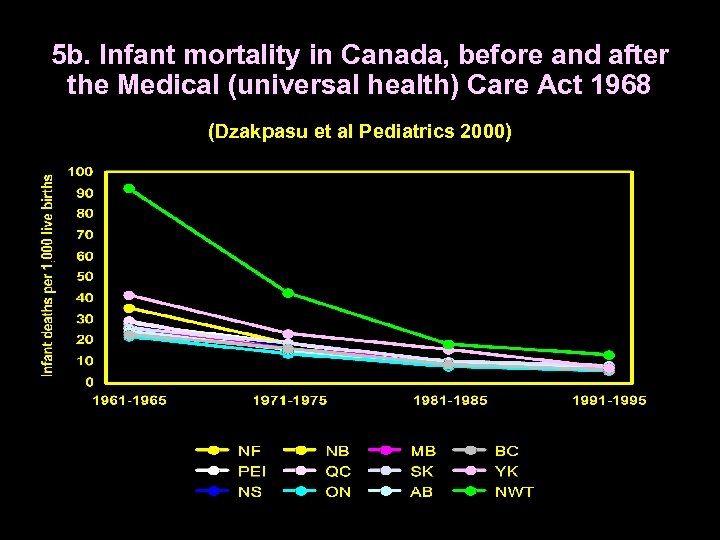 5 b. Infant mortality in Canada, before and after the Medical (universal health) Care Act 1968 (Dzakpasu et al Pediatrics 2000)
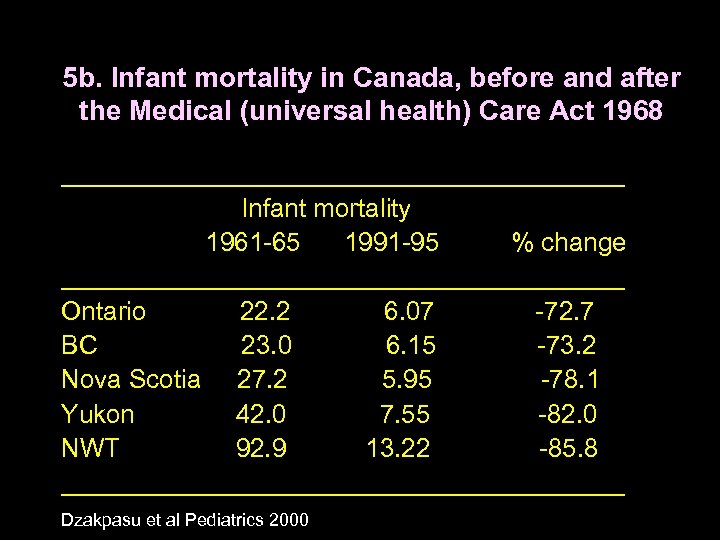 5 b. Infant mortality in Canada, before and after the Medical (universal health) Care Act 1968 ____________________ Infant mortality 1961 -65 1991 -95 % change ____________________ Ontario 22. 2 6. 07 -72. 7 BC 23. 0 6. 15 -73. 2 Nova Scotia 27. 2 5. 95 -78. 1 Yukon 42. 0 7. 55 -82. 0 NWT 92. 9 13. 22 -85. 8 ____________________ Dzakpasu et al Pediatrics 2000
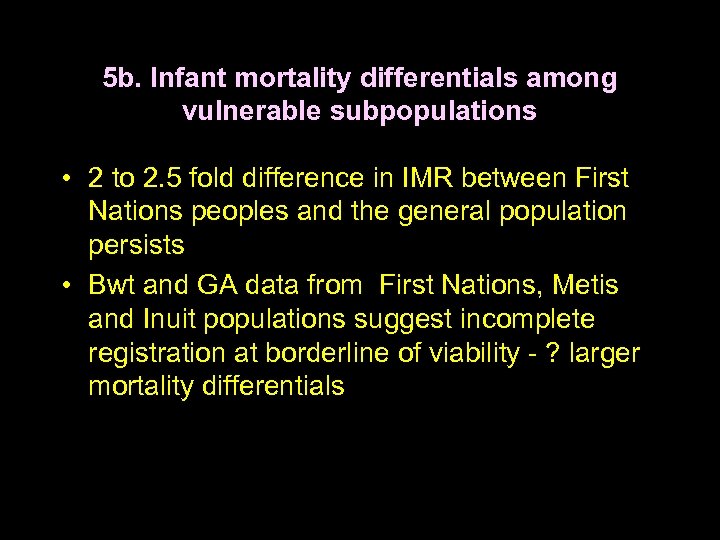 5 b. Infant mortality differentials among vulnerable subpopulations • 2 to 2. 5 fold difference in IMR between First Nations peoples and the general population persists • Bwt and GA data from First Nations, Metis and Inuit populations suggest incomplete registration at borderline of viability - ? larger mortality differentials
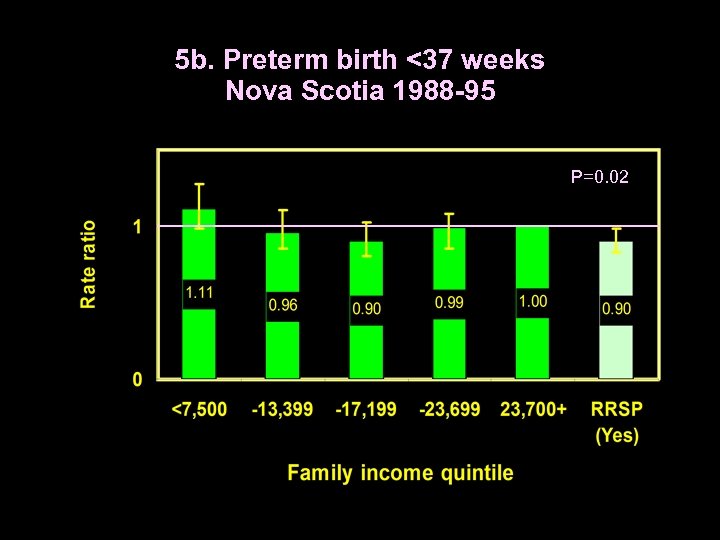 5 b. Preterm birth <37 weeks Nova Scotia 1988 -95 P=0. 02
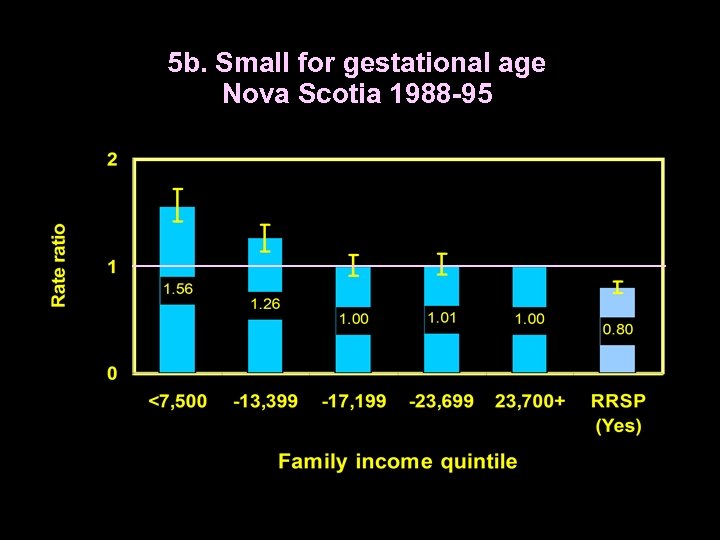 5 b. Small for gestational age Nova Scotia 1988 -95
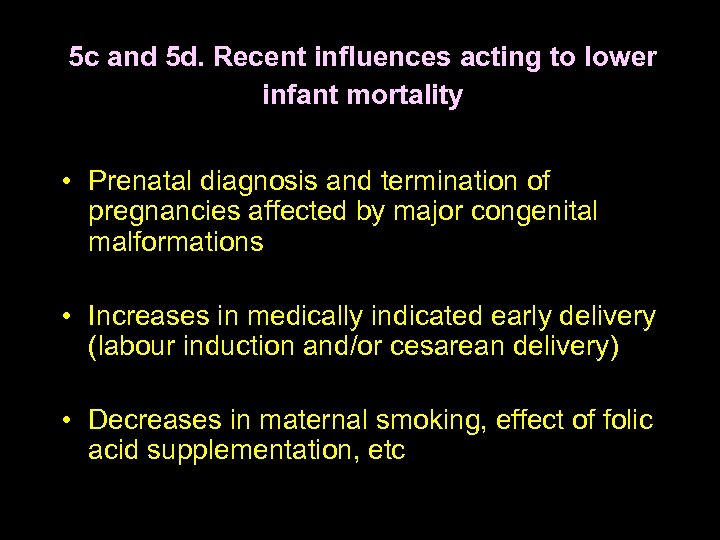 5 c and 5 d. Recent influences acting to lower infant mortality • Prenatal diagnosis and termination of pregnancies affected by major congenital malformations • Increases in medically indicated early delivery (labour induction and/or cesarean delivery) • Decreases in maternal smoking, effect of folic acid supplementation, etc
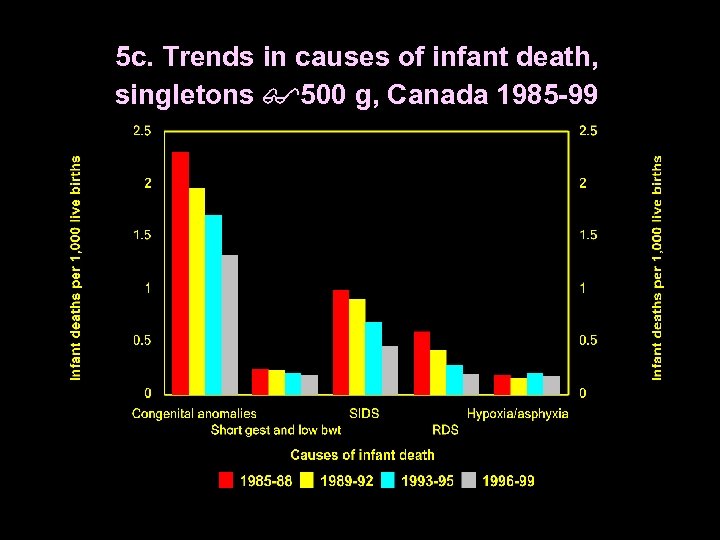 5 c. Trends in causes of infant death, singletons 500 g, Canada 1985 -99
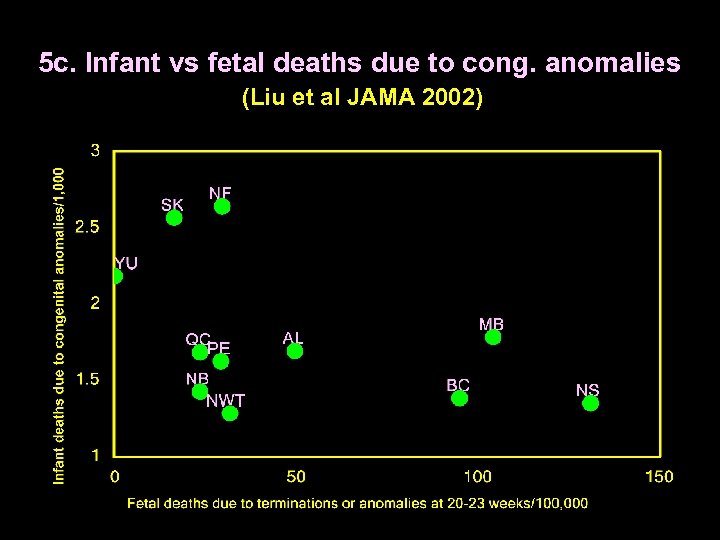 5 c. Infant vs fetal deaths due to cong. anomalies (Liu et al JAMA 2002)
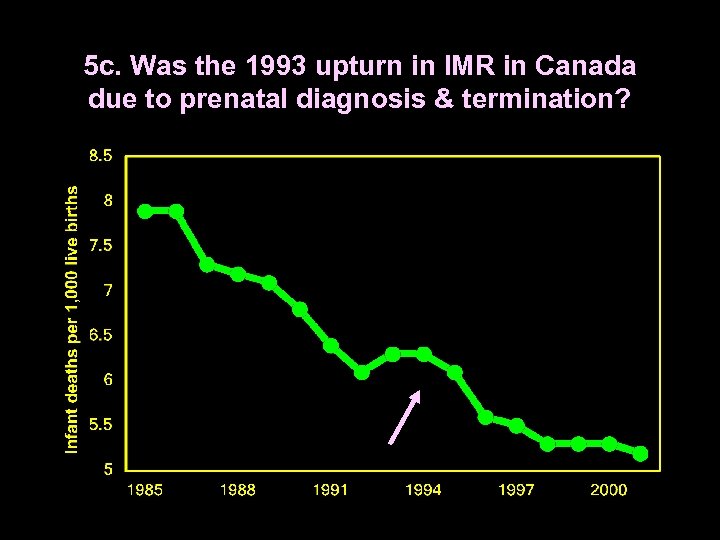 5 c. Was the 1993 upturn in IMR in Canada due to prenatal diagnosis & termination?
 5 d. Increases in medically indicated early delivery • Medically indicated early delivery is the cornerstone of modern obstetrics • Rates of labour induction and/or cesarean delivery have increased dramatically over the last 2 decades • Linked to newer technologies including antenatal corticosteroids use, surfactant use, better methods of ventilation, etc.
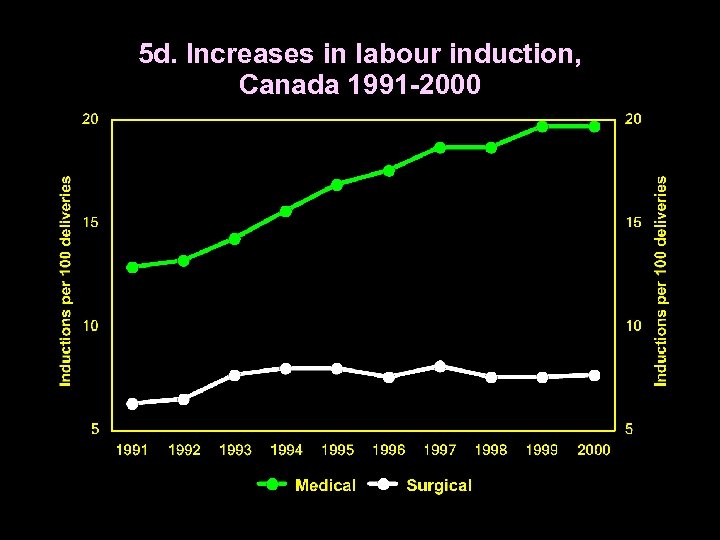 5 d. Increases in labour induction, Canada 1991 -2000
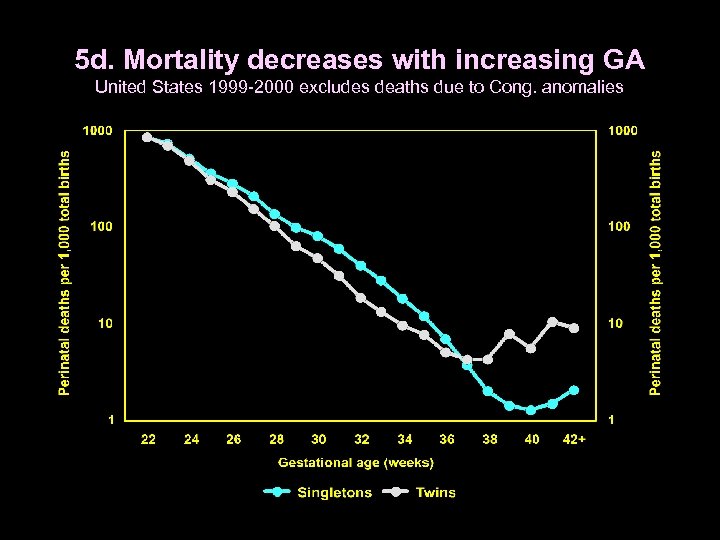 5 d. Mortality decreases with increasing GA United States 1999 -2000 excludes deaths due to Cong. anomalies
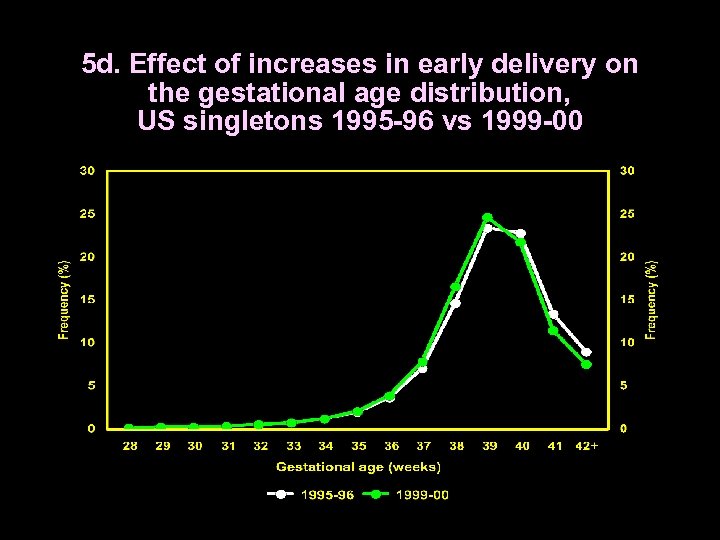 5 d. Effect of increases in early delivery on the gestational age distribution, US singletons 1995 -96 vs 1999 -00
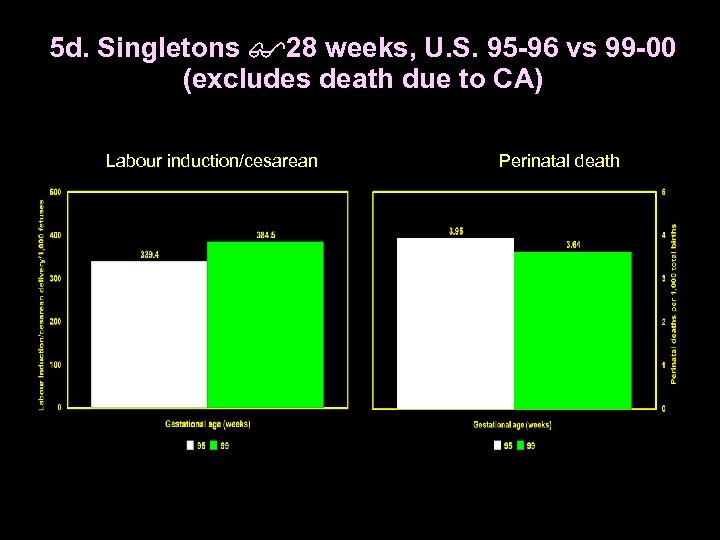 5 d. Singletons 28 weeks, U. S. 95 -96 vs 99 -00 (excludes death due to CA) Labour induction/cesarean Perinatal death
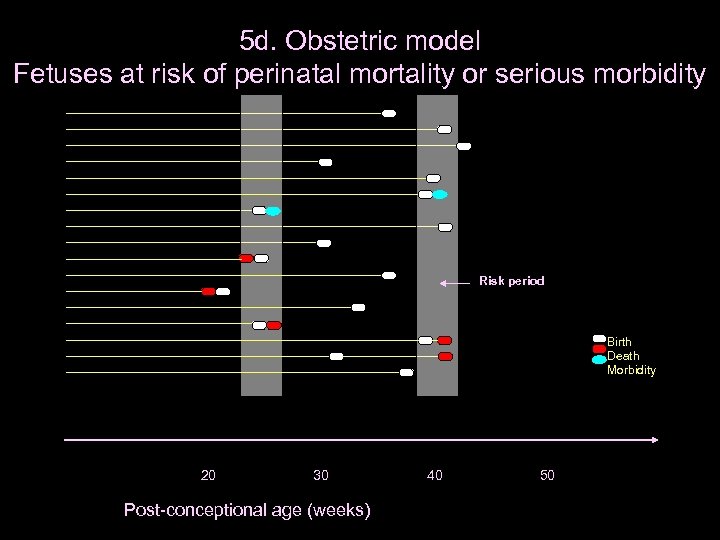 5 d. Obstetric model Fetuses at risk of perinatal mortality or serious morbidity Risk period Birth Death Morbidity 20 30 Post-conceptional age (weeks) 40 50
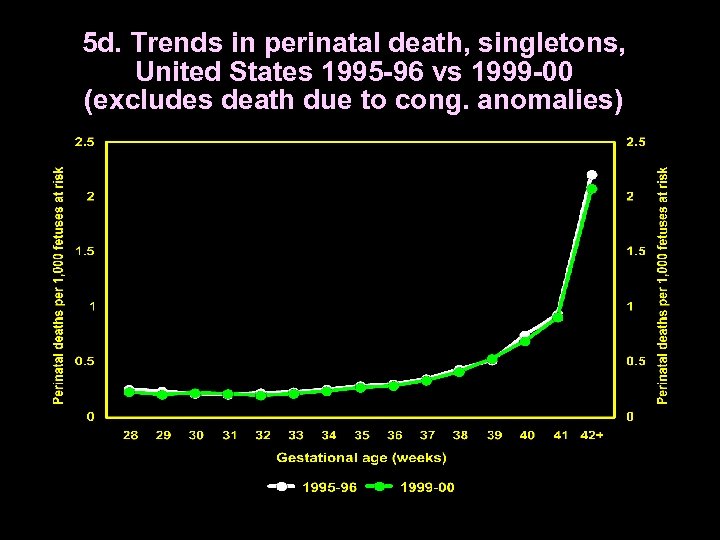 5 d. Trends in perinatal death, singletons, United States 1995 -96 vs 1999 -00 (excludes death due to cong. anomalies)
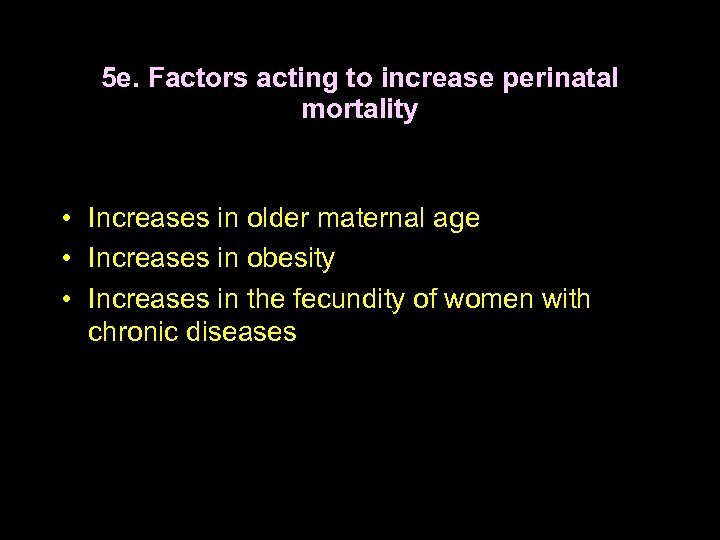 5 e. Factors acting to increase perinatal mortality • Increases in older maternal age • Increases in obesity • Increases in the fecundity of women with chronic diseases
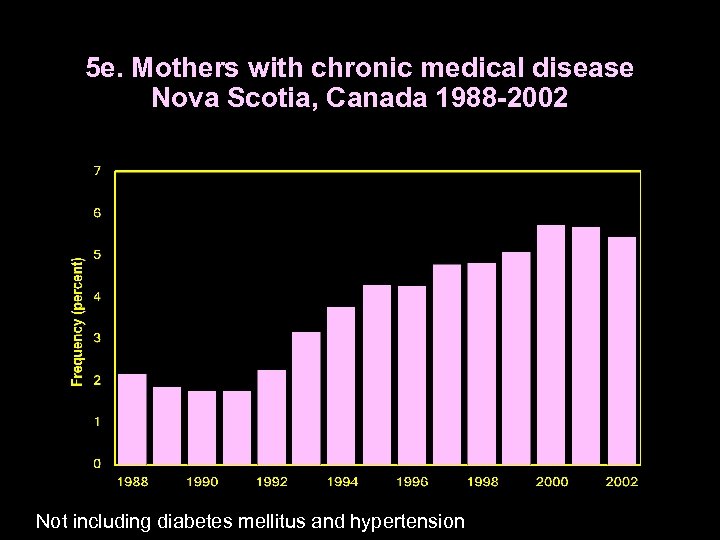 5 e. Mothers with chronic medical disease Nova Scotia, Canada 1988 -2002 Not including diabetes mellitus and hypertension
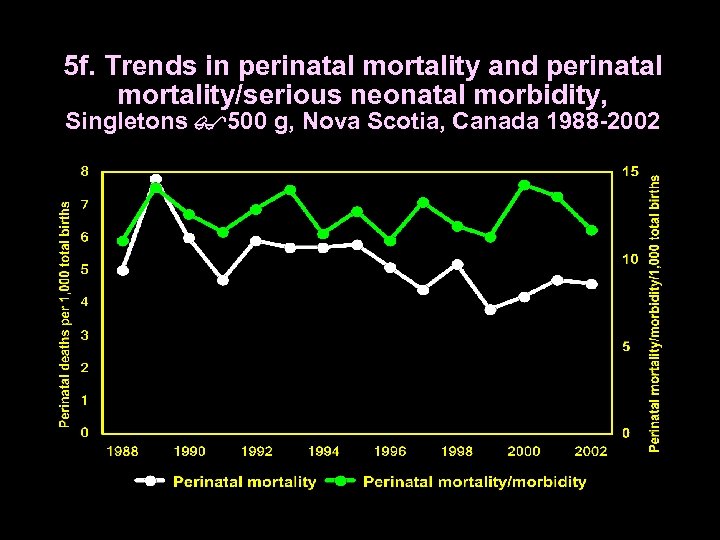 5 f. Trends in perinatal mortality and perinatal mortality/serious neonatal morbidity, Singletons 500 g, Nova Scotia, Canada 1988 -2002
 6. Re the Canadian Perinatal Surveillance System (CPSS) - Initiative of Health Canada Contact address CPSS@hc-sc. gc. ca - Membership includes federal and provincial stakeholders, health professional organizations, advocacy groups and university based researchers - Focus on Fetal and infant health Maternal Health Maternity experiences - Publishes routine surveillance reports (see Canadian Perinatal Health Report 2003 http: //www. hc-sc. gc. ca/pphb-dgspsp/rhs-ssg/index. html)