

Peformed by Belov Ilya Parfenov Maxim Contents General


Peformed by Belov Ilya Parfenov Maxim
Contents General information Three generations of camps Achievements of boot camps Females in Boot Camps Boot camps in other countries Criticism of boot camps
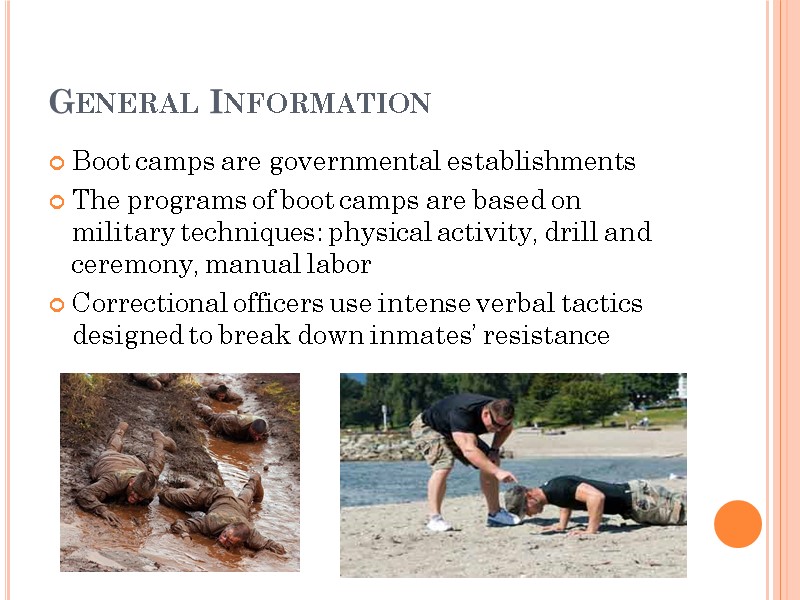
General Information Boot camps are governmental establishments The programs of boot camps are based on military techniques: physical activity, drill and ceremony, manual labor Correctional officers use intense verbal tactics designed to break down inmates’ resistance
Three Generations of Camps Boot camps proliferated in the late 1980s and early 1990s First-generation camps stressed military discipline, physical training, and hard work Second-generation camps emphasized rehabilitation by adding such components as alcohol and drug treatment and prosocial skills training Third-generation boot camps, particularly those for juveniles, have substituted an emphasis on educational and vocational skills
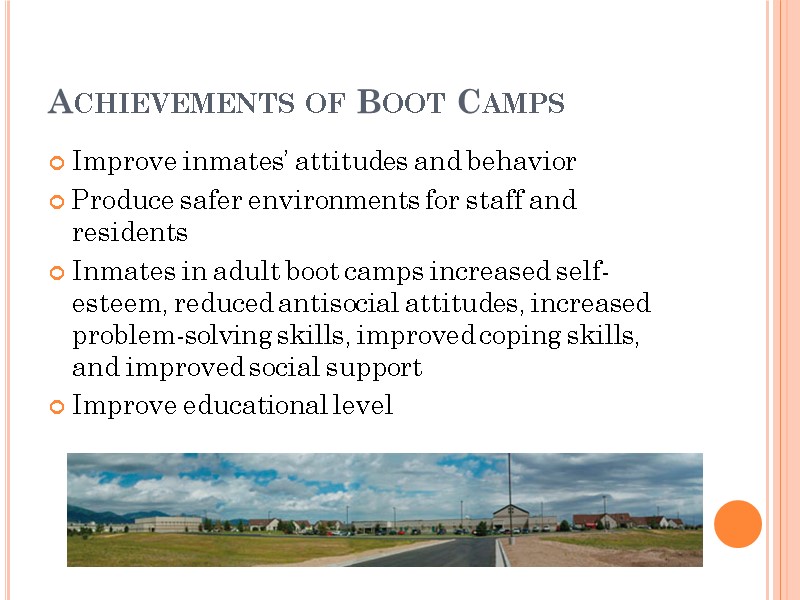
Achievements of Boot Camps Improve inmates’ attitudes and behavior Produce safer environments for staff and residents Inmates in adult boot camps increased self-esteem, reduced antisocial attitudes, increased problem-solving skills, improved coping skills, and improved social support Improve educational level
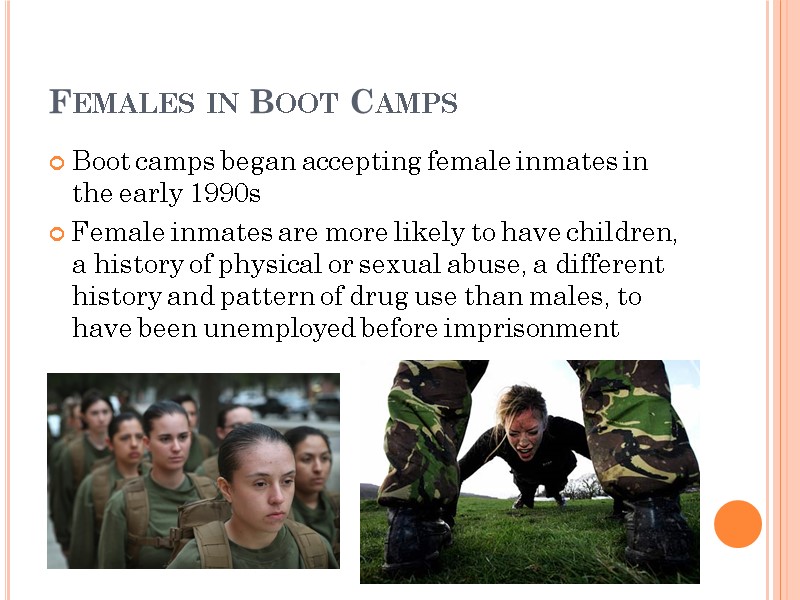
Females in Boot Camps Boot camps began accepting female inmates in the early 1990s Female inmates are more likely to have children, a history of physical or sexual abuse, a different history and pattern of drug use than males, to have been unemployed before imprisonment
Boot Camps in Other Countries Canada: Voluntary The first one was opened in 1997 in Ontario Positive impact on the reduction of recidivism New Zealand: First boot camps in 1971 Since 2008, only for drug addicts
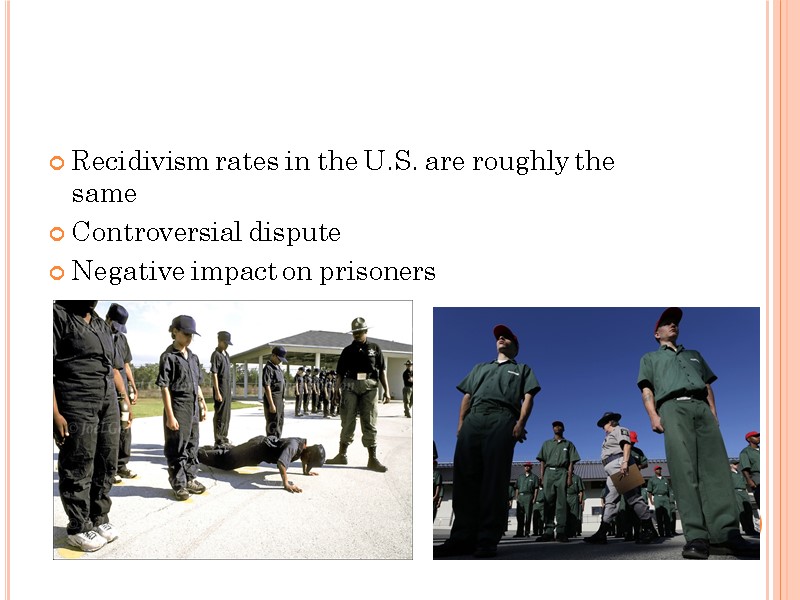
Recidivism rates in the U.S. are roughly the same Controversial dispute Negative impact on prisoners
 Скачать презентацию Peformed by Belov Ilya Parfenov Maxim Contents General
37788-boot_camps.ppt
- Количество слайдов: 8