


 Скачать презентацию Pediatric Cardiomyopathy and Anesthesia Alexander Zlotnik MD Ph
Pediatric Cardiomyopathy and Anesthesia.pptx
- Количество слайдов: 19
 Pediatric Cardiomyopathy and Anesthesia Alexander Zlotnik MD, Ph. D Professor and Chairman, Soroka University Medical Center, Ben Gurion University of the Negev Beer Sheva, Israel
 Cardiomyopathy (CM) is defined by WHO as ‘a disease of the myocardium associated with cardiac dysfunction’ and is either: dilated, hypertrophic, restrictive, arrhythmogenic right ventricular, or unclassified The incidence of paediatric CM is 4. 8 per 100 000 infants and 1. 3 per 100 000 children under 10 yr. Of them: Dilated CM 60%. Hypertrophic 25% Ventricular non-compaction 9% Restrictive 2. 5% Arrhythmogenic right ventricular dysplasia 2%
 The prognosis is poor. 40% of children presenting with symptomatic CM in the USA either receive a heart transplant or die within 2 y. A significant part of CM remains undiagnosed by the surgery. Children with either symptomatic or asymptomatic CM remain at significant risk of perioperative arrhythmia, cardiac arrest, and death
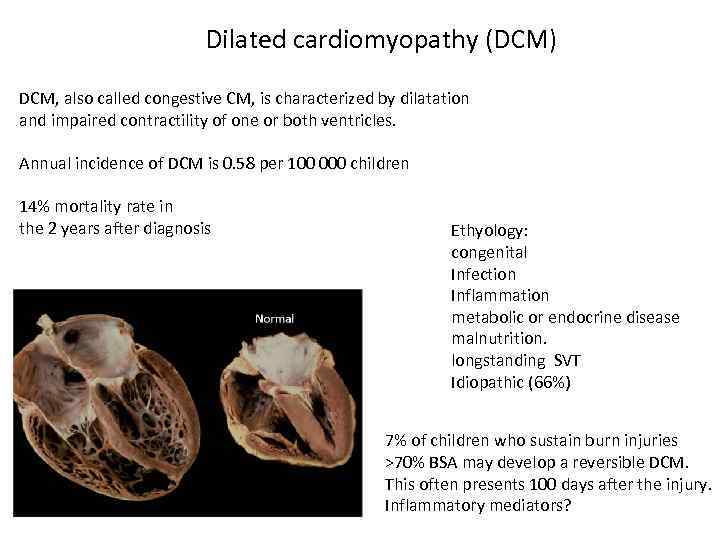 Dilated cardiomyopathy (DCM) DCM, also called congestive CM, is characterized by dilatation and impaired contractility of one or both ventricles. Annual incidence of DCM is 0. 58 per 100 000 children 14% mortality rate in the 2 years after diagnosis Ethyology: congenital Infection Inflammation metabolic or endocrine disease malnutrition. longstanding SVT Idiopathic (66%) 7% of children who sustain burn injuries >70% BSA may develop a reversible DCM. This often presents 100 days after the injury. Inflammatory mediators?
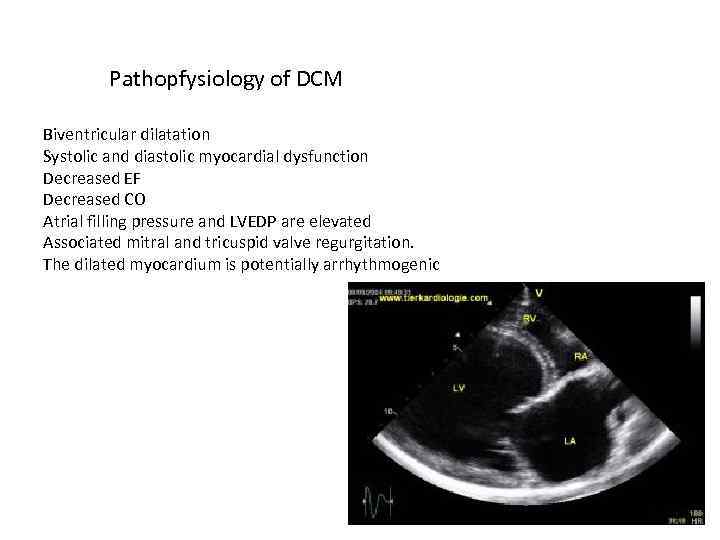 Pathopfysiology of DCM Biventricular dilatation Systolic and diastolic myocardial dysfunction Decreased EF Decreased CO Atrial filling pressure and LVEDP are elevated Associated mitral and tricuspid valve regurgitation. The dilated myocardium is potentially arrhythmogenic
 Preanesthetic management of DCM The enlarged heart extrinsic airway compression at the origin of the LMB. Carefully adjusted CPAP overcomes the obstruction. Most children have treatment with ACE inhibitors and β-blockers Continue the treatment including the day of surgery, despite risk of hypotension. Diuretics Check volemia and potassium level TEE is desirable to guide anesthesia
 Anesthetic management of DCM Optimization of coronary perfusion Maintain adequate diastolic pressure Adequate preload Maintenance of CO Avoid cardiodepressive drugs (fentanyl/midazolam seems to be preferable) Low concentrations of Sevoflurane Avoid increase of SVR Avoid certain inotropes and ketamine as sole anesthetic Inotropic support Milrinon and dobutamine are preferable
 Hypertrophic cardiomyopathy HCM More common in adults, the incidence is low in children (5/1, 000). As patients can be asymptomatic, the diagnosis is often PM A focal area of hypertrophy may also incorporate and surround a coronary vessel, so-called myocardial bridging significant coronary hypoperfusion risk of sudden death.
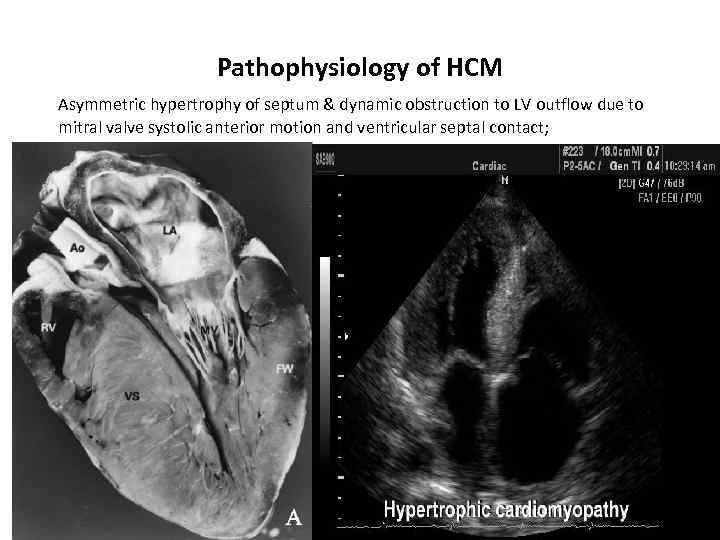 Pathophysiology of HCM Asymmetric hypertrophy of septum & dynamic obstruction to LV outflow due to mitral valve systolic anterior motion and ventricular septal contact;
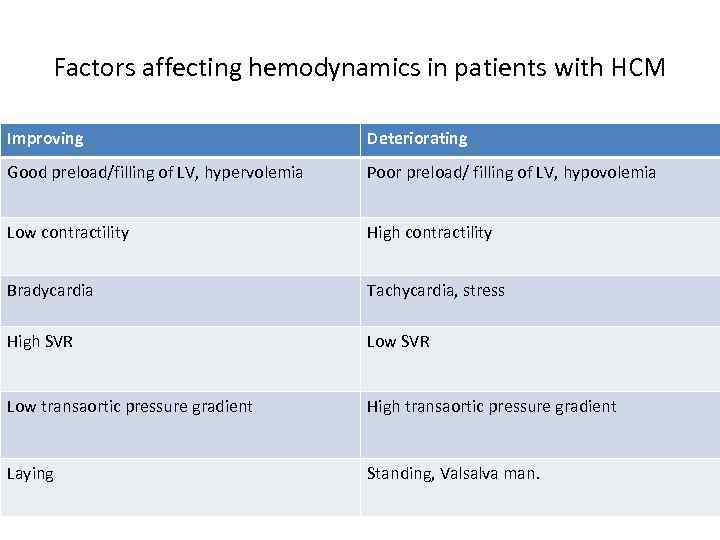 Factors affecting hemodynamics in patients with HCM Improving Deteriorating Good preload/filling of LV, hypervolemia Poor preload/ filling of LV, hypovolemia Low contractility High contractility Bradycardia Tachycardia, stress High SVR Low transaortic pressure gradient High transaortic pressure gradient Laying Standing, Valsalva man.
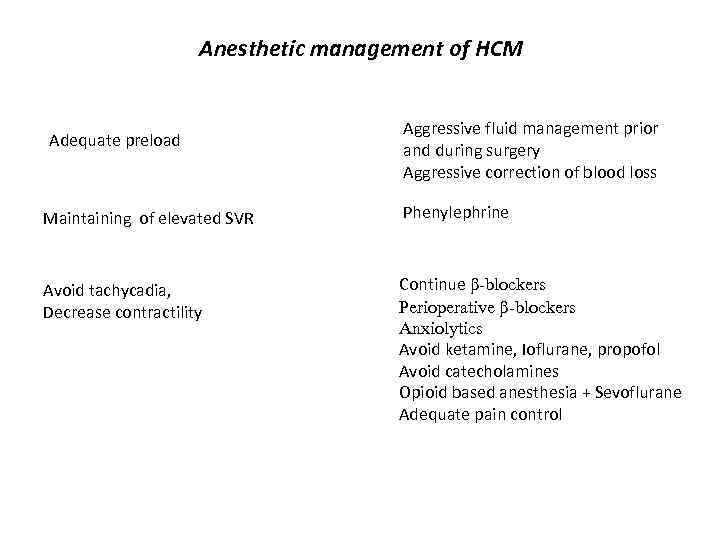 Anesthetic management of HCM Adequate preload Aggressive fluid management prior and during surgery Aggressive correction of blood loss Maintaining of elevated SVR Phenylephrine Avoid tachycadia, Decrease contractility Continue β-blockers Perioperative β-blockers Anxiolytics Avoid ketamine, Ioflurane, propofol Avoid catecholamines Opioid based anesthesia + Sevoflurane Adequate pain control
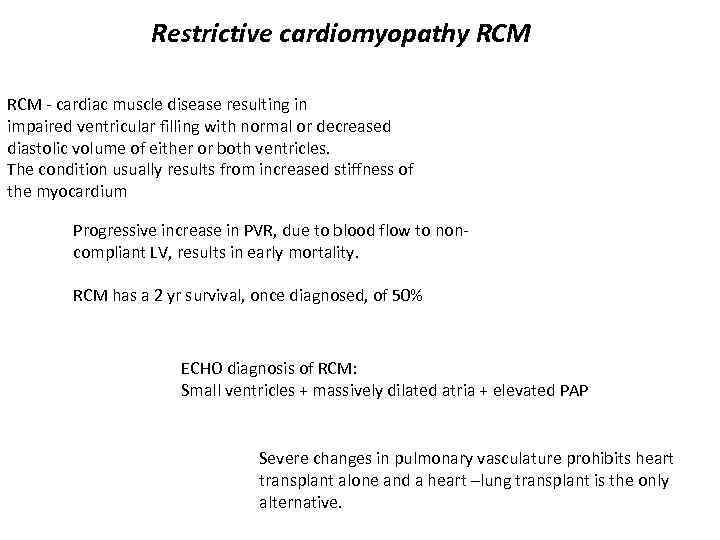 Restrictive cardiomyopathy RCM - cardiac muscle disease resulting in impaired ventricular filling with normal or decreased diastolic volume of either or both ventricles. The condition usually results from increased stiffness of the myocardium Progressive increase in PVR, due to blood flow to noncompliant LV, results in early mortality. RCM has a 2 yr survival, once diagnosed, of 50% ECHO diagnosis of RCM: Small ventricles + massively dilated atria + elevated PAP Severe changes in pulmonary vasculature prohibits heart transplant alone and a heart –lung transplant is the only alternative.
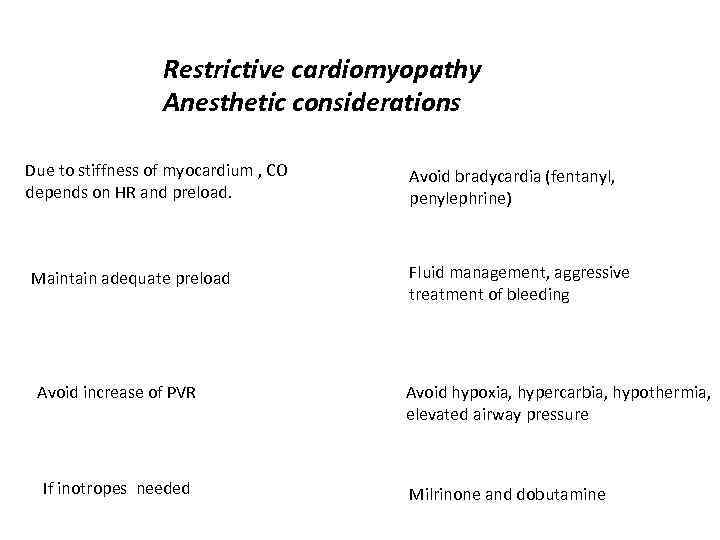 Restrictive cardiomyopathy Anesthetic considerations Due to stiffness of myocardium , CO depends on HR and preload. Maintain adequate preload Avoid increase of PVR If inotropes needed Avoid bradycardia (fentanyl, penylephrine) Fluid management, aggressive treatment of bleeding Avoid hypoxia, hypercarbia, hypothermia, elevated airway pressure Milrinone and dobutamine
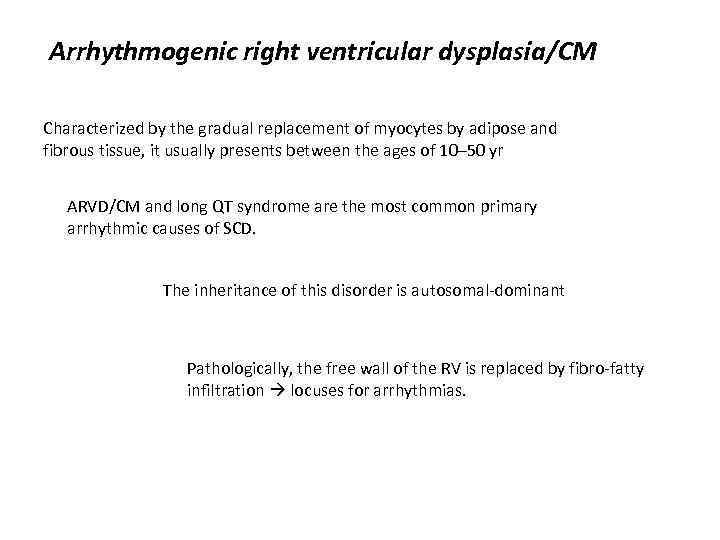 Arrhythmogenic right ventricular dysplasia/CM Characterized by the gradual replacement of myocytes by adipose and fibrous tissue, it usually presents between the ages of 10– 50 yr ARVD/CM and long QT syndrome are the most common primary arrhythmic causes of SCD. The inheritance of this disorder is autosomal-dominant Pathologically, the free wall of the RV is replaced by fibro-fatty infiltration locuses for arrhythmias.
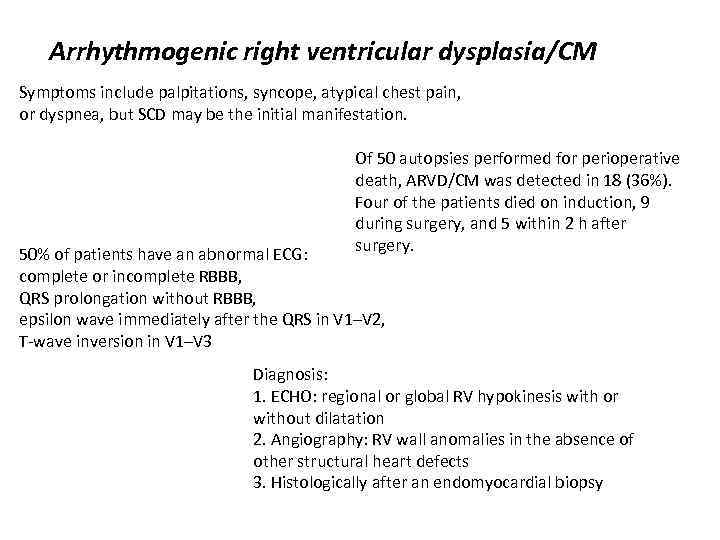 Arrhythmogenic right ventricular dysplasia/CM Symptoms include palpitations, syncope, atypical chest pain, or dyspnea, but SCD may be the initial manifestation. Of 50 autopsies performed for perioperative death, ARVD/CM was detected in 18 (36%). Four of the patients died on induction, 9 during surgery, and 5 within 2 h after surgery. 50% of patients have an abnormal ECG: complete or incomplete RBBB, QRS prolongation without RBBB, epsilon wave immediately after the QRS in V 1–V 2, T-wave inversion in V 1–V 3 Diagnosis: 1. ECHO: regional or global RV hypokinesis with or without dilatation 2. Angiography: RV wall anomalies in the absence of other structural heart defects 3. Histologically after an endomyocardial biopsy
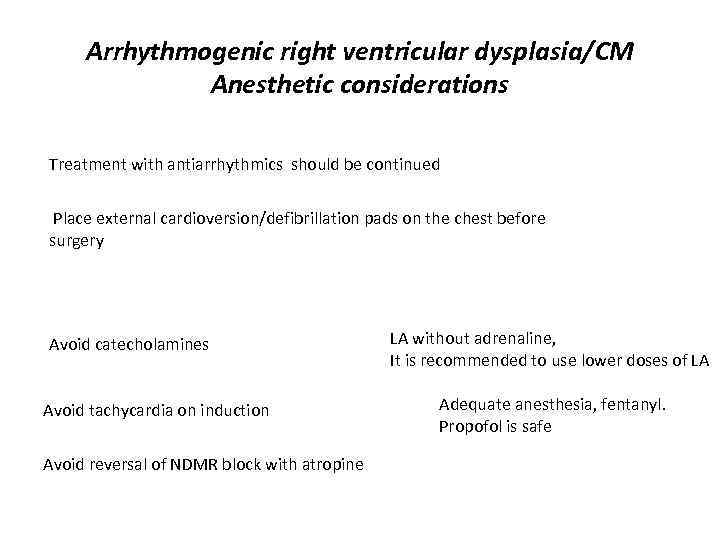 Arrhythmogenic right ventricular dysplasia/CM Anesthetic considerations Treatment with antiarrhythmics should be continued Place external cardioversion/defibrillation pads on the chest before surgery Avoid catecholamines Avoid tachycardia on induction Avoid reversal of NDMR block with atropine LA without adrenaline, It is recommended to use lower doses of LA Adequate anesthesia, fentanyl. Propofol is safe
 Thank you!