


 Скачать презентацию Pediatric Anti-Retroviral Drug Formulary 2004 Celia DC Christie
615e79a837f42393df18e86ff1689728.ppt
- Количество слайдов: 38
 Pediatric Anti-Retroviral Drug Formulary 2004 Celia DC Christie CHART Conference Montego Bay, Jamaica July 18, 2004
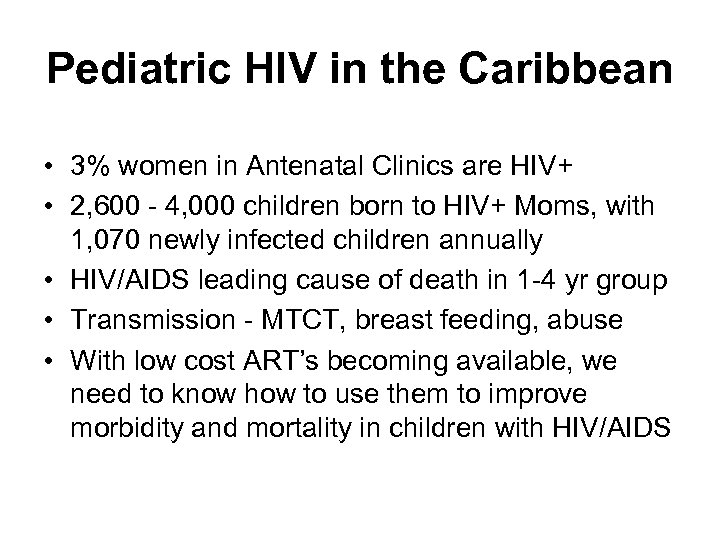 Pediatric HIV in the Caribbean • 3% women in Antenatal Clinics are HIV+ • 2, 600 - 4, 000 children born to HIV+ Moms, with 1, 070 newly infected children annually • HIV/AIDS leading cause of death in 1 -4 yr group • Transmission - MTCT, breast feeding, abuse • With low cost ART’s becoming available, we need to know how to use them to improve morbidity and mortality in children with HIV/AIDS
 Caribbean Diversity • Wide diversity – Expertise – Health care facilities – Lab diagnostic capacity – Treatment options • p. ARV monitored by pediatricians with – Expertise in treating p. HIV, OI’s, using ARV’s
 Purpose • Principles of anti-retroviral therapy (p. ARV) – Whom should we treat – First line and second line ARVs – Monitoring of p. ARVs, clinical and lab – Reasons for changing HAART • Pediatric ARV formulary for Caribbean • Special issues in Children • Case histories and prognosis
 Principles of p. ART • MTCT HIV progresses more rapidly in infants and children that HIV in adults • 10 yrs post infection 50% adults AIDS • 3 years post infection 50% kids AIDS • Rapid, slow and no disease progression • CNS damage common in infants • Viral load and CD 4 counts are not as predictive of outcome in 1 st year vs. later
 NIH’s ART Treatment Decisions • We SHOULD treat: – All HIV-infected children < 1 year, regardless of clinical, immunologic, or virologic status – All HIV infected children > 1 year if, recent symptoms of ongoing HIV infection, or significant immune suppression, or viral load suggests disease progression, ie. , viral load > 100, 000 copies/ml • Delay ART if stable, or non-compliance
 WHO’s treatment decisions • < 18 months: if virologically proven, or CD 4 available – All clinical AIDS, stage 3 – All stage 2, with CD 4 < 20% – All symptomatic stage 1, with CD 4 < 20% • > 18 months and HIV positive – All clinical AIDS, stage 3 – All stage 2 HIV, CD 4 + < 15% assist decision – All stage 1, CD 4 and < 15% (asymptomatic)
 Goals of Therapy • Achieve and maintain HIV viral load = zero – Prevents disease progression – Optimizes recovery – Prevents ART drug resistance • Temporary partial suppression of viral replication leads to resistance and limits future treatment options
 Individualize Treatment Plans • • Clinical considerations Drug side effects, interactions Patient convenience Drug availability and cost
 Adherence Treatment failures from non-adherence – Establish trust, mutually acceptable goals for care – Evaluate nursing, social, behavioral assessments – Obtaining, storing, administering medications – Who is responsible and how dosing is done? – Intensive family education and medication training before initiating treatment
 Teaching Pill-swallowing • Children 3 years of age can be pill-trained • No unpleasant experiences with pill-taking and no behavior problems • Relax, give child increasing sizes of placebo, encourage to swallow with water • Encourage with minimal extrinsic rewards • Once child starts taking ART’s, he cannot be allowed to refuse meds • Disallow any other activity until ART’s are taken
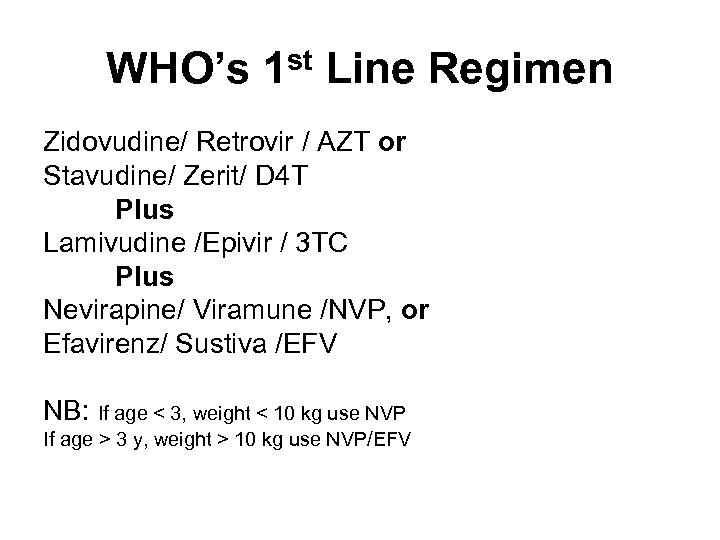 WHO’s 1 st Line Regimen Zidovudine/ Retrovir / AZT or Stavudine/ Zerit/ D 4 T Plus Lamivudine /Epivir / 3 TC Plus Nevirapine/ Viramune /NVP, or Efavirenz/ Sustiva /EFV NB: If age < 3, weight < 10 kg use NVP If age > 3 y, weight > 10 kg use NVP/EFV
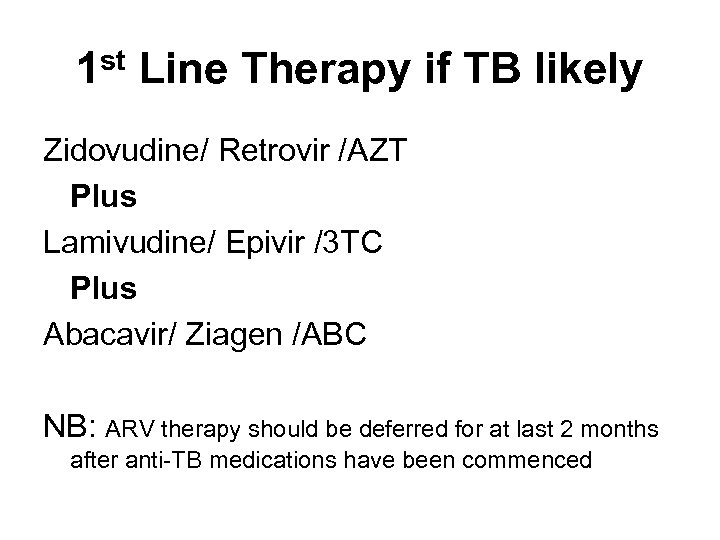 1 st Line Therapy if TB likely Zidovudine/ Retrovir /AZT Plus Lamivudine/ Epivir /3 TC Plus Abacavir/ Ziagen /ABC NB: ARV therapy should be deferred for at last 2 months after anti-TB medications have been commenced
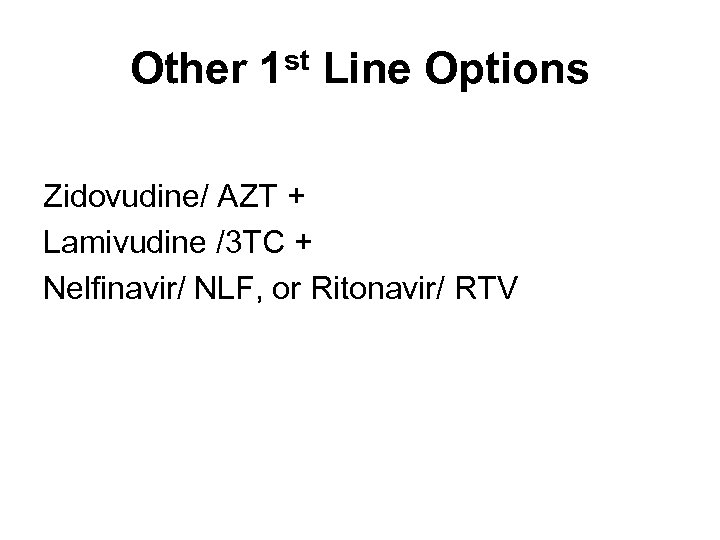 Other 1 st Line Options Zidovudine/ AZT + Lamivudine /3 TC + Nelfinavir/ NLF, or Ritonavir/ RTV
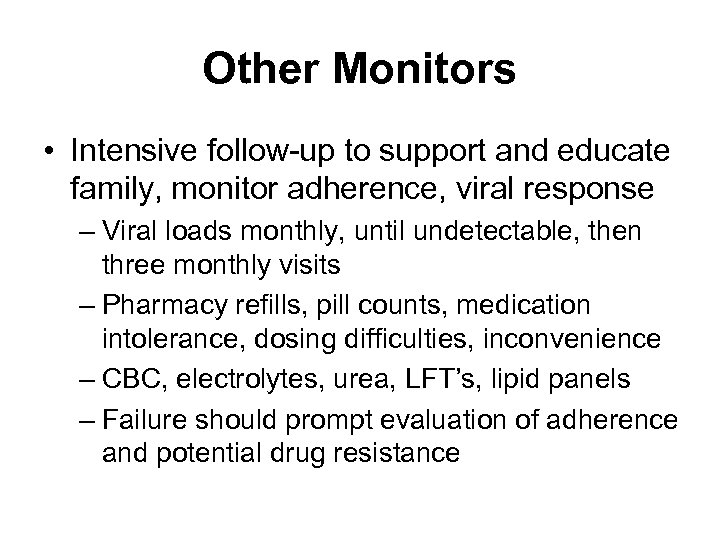 Other Monitors • Intensive follow-up to support and educate family, monitor adherence, viral response – Viral loads monthly, until undetectable, then three monthly visits – Pharmacy refills, pill counts, medication intolerance, dosing difficulties, inconvenience – CBC, electrolytes, urea, LFT’s, lipid panels – Failure should prompt evaluation of adherence and potential drug resistance
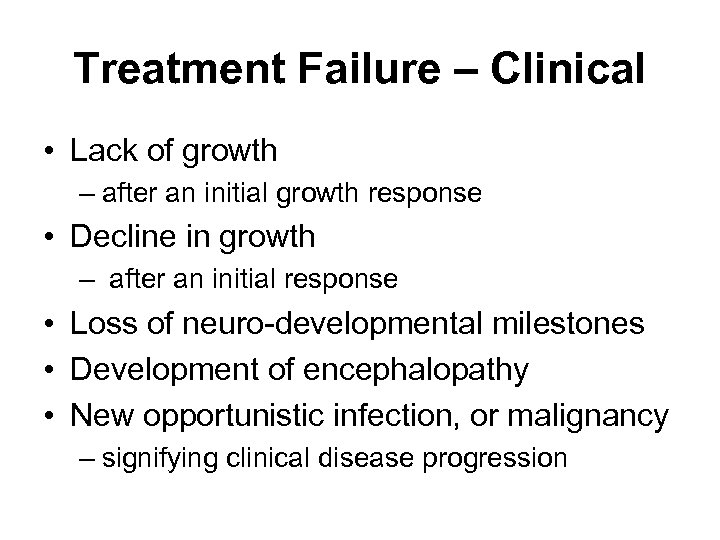 Treatment Failure – Clinical • Lack of growth – after an initial growth response • Decline in growth – after an initial response • Loss of neuro-developmental milestones • Development of encephalopathy • New opportunistic infection, or malignancy – signifying clinical disease progression
 Treatment Failure - Immunological • Return of CD 4 count, or if age < 6 yrs, of CD 4 percentage to pre-baseline or below • > 50% fall from peak level on therapy of CD 4 cell percentage without obvious cause
 Preventing Resistance • Replicating virus in presence of drug promotes resistance • Treatment must achieve suppression of viral load to zero to prevent resistance • Non-adherence or resistance must be considered if viral load does not decay rapidly to undetectable
 Changing ART Regimen • Do not change ART’s until you have ruled out non-adherence • Confirm viral load that suggest a change is needed • Because of limited treatment options, better to accept a suboptimal response than to change to a new regimen that may not control viral replication
 WHO’s 2 nd Line ARV’s Abacavir/ Ziagen/ ABC plus Didanosine/ Videx/ dd. I plus PI Lopinavir/ritonavir/ Kaletra/ LPV/r or Saquinavir/ Fortovase/ SQVr
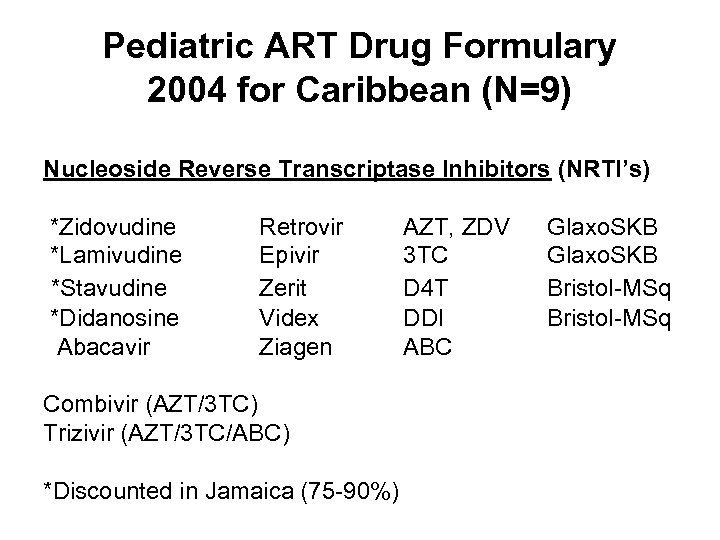 Pediatric ART Drug Formulary 2004 for Caribbean (N=9) Nucleoside Reverse Transcriptase Inhibitors (NRTI’s) *Zidovudine *Lamivudine *Stavudine *Didanosine Abacavir Retrovir Epivir Zerit Videx Ziagen Combivir (AZT/3 TC) Trizivir (AZT/3 TC/ABC) *Discounted in Jamaica (75 -90%) AZT, ZDV 3 TC D 4 T DDI ABC Glaxo. SKB Bristol-MSq
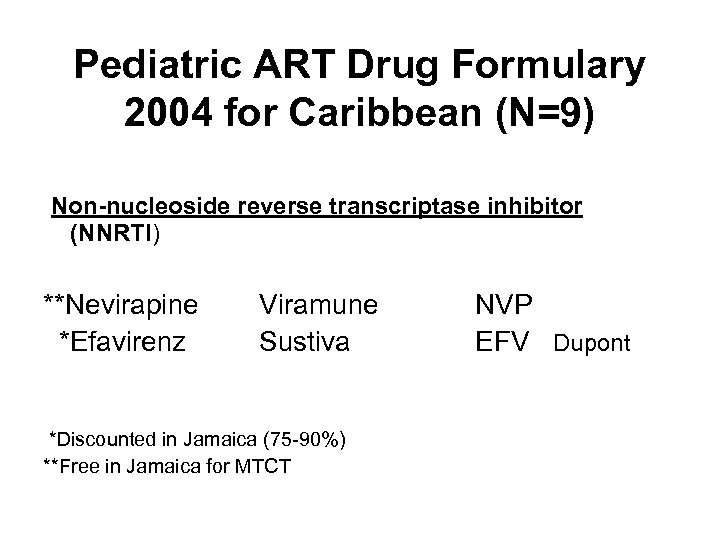 Pediatric ART Drug Formulary 2004 for Caribbean (N=9) Non-nucleoside reverse transcriptase inhibitor (NNRTI) **Nevirapine *Efavirenz Viramune Sustiva *Discounted in Jamaica (75 -90%) **Free in Jamaica for MTCT NVP EFV Dupont
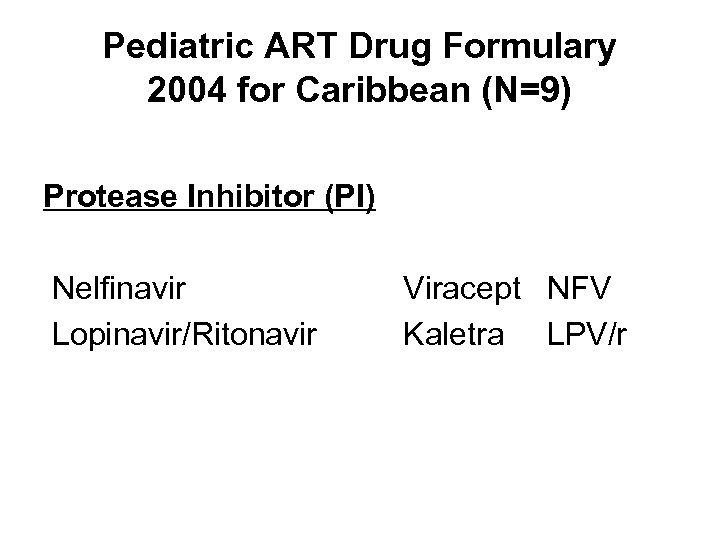 Pediatric ART Drug Formulary 2004 for Caribbean (N=9) Protease Inhibitor (PI) Nelfinavir Lopinavir/Ritonavir Viracept NFV Kaletra LPV/r
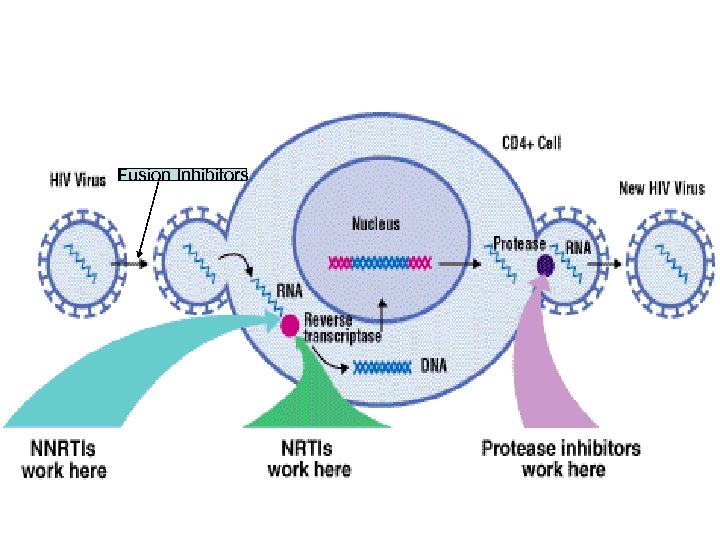 Fusion Inhibitors
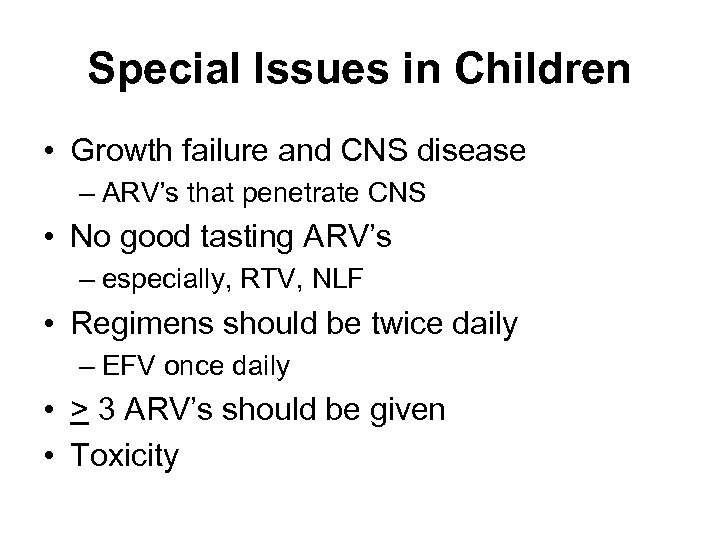 Special Issues in Children • Growth failure and CNS disease – ARV’s that penetrate CNS • No good tasting ARV’s – especially, RTV, NLF • Regimens should be twice daily – EFV once daily • > 3 ARV’s should be given • Toxicity
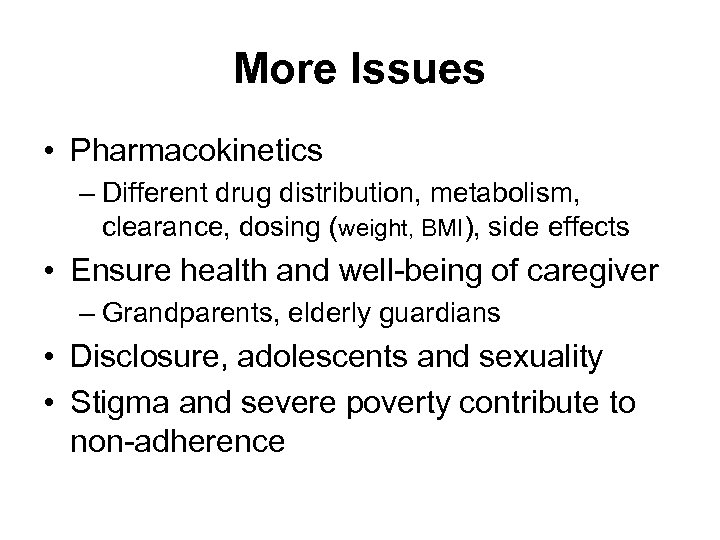 More Issues • Pharmacokinetics – Different drug distribution, metabolism, clearance, dosing (weight, BMI), side effects • Ensure health and well-being of caregiver – Grandparents, elderly guardians • Disclosure, adolescents and sexuality • Stigma and severe poverty contribute to non-adherence
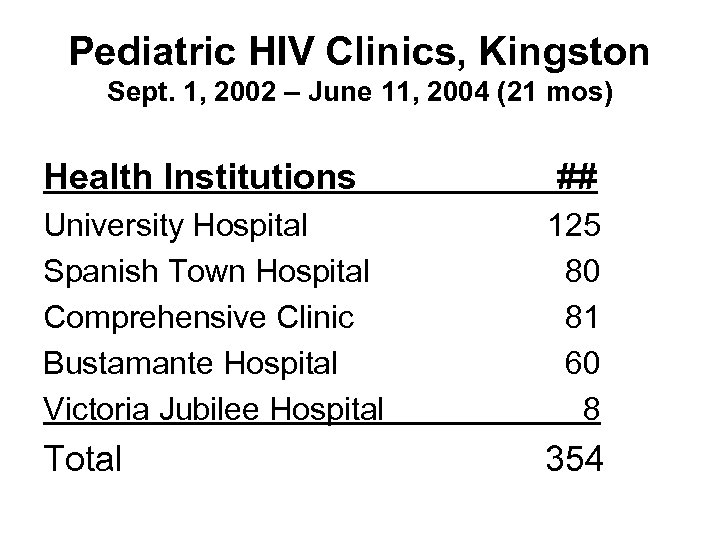 Pediatric HIV Clinics, Kingston Sept. 1, 2002 – June 11, 2004 (21 mos) Health Institutions ## University Hospital Spanish Town Hospital Comprehensive Clinic Bustamante Hospital Victoria Jubilee Hospital 125 80 81 60 8 Total 354
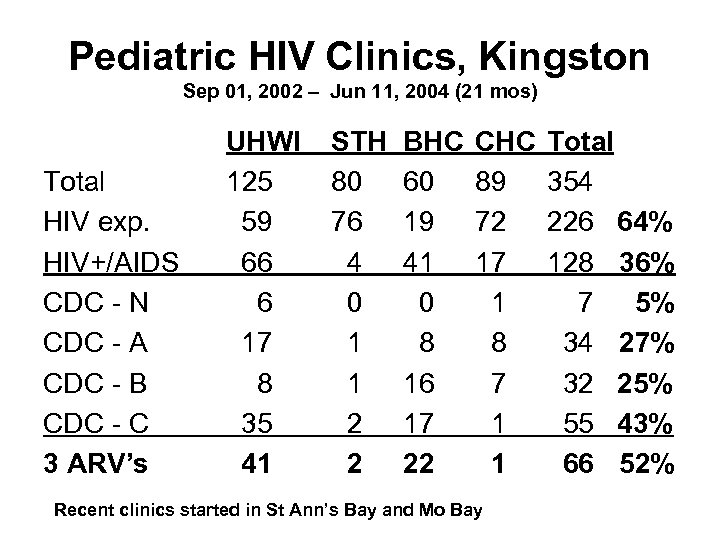 Pediatric HIV Clinics, Kingston Sep 01, 2002 – Jun 11, 2004 (21 mos) Total HIV exp. HIV+/AIDS CDC - N CDC - A CDC - B CDC - C 3 ARV’s UHWI 125 59 66 6 17 8 35 41 STH 80 76 4 0 1 1 2 2 BHC 60 19 41 0 8 16 17 22 CHC 89 72 17 1 8 7 1 1 Recent clinics started in St Ann’s Bay and Mo Bay Total 354 226 64% 128 36% 7 5% 34 27% 32 25% 55 43% 66 52%
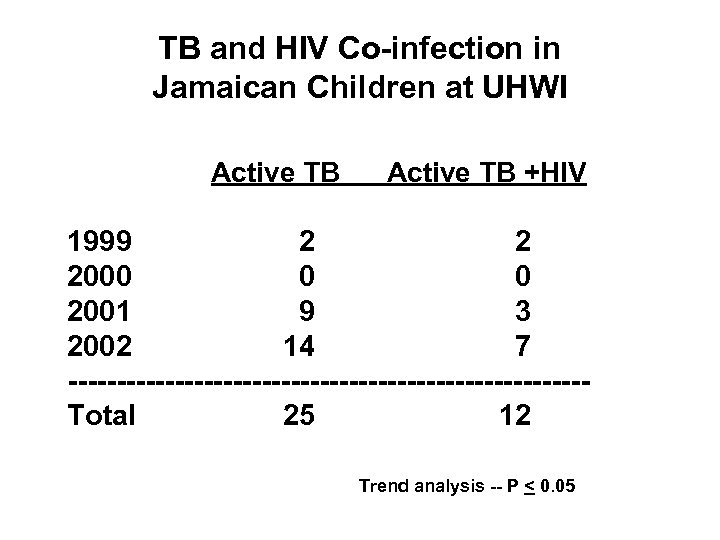 TB and HIV Co-infection in Jamaican Children at UHWI Active TB +HIV 1999 2 2 2000 0 0 2001 9 3 2002 14 7 ---------------------------Total 25 12 Trend analysis -- P < 0. 05
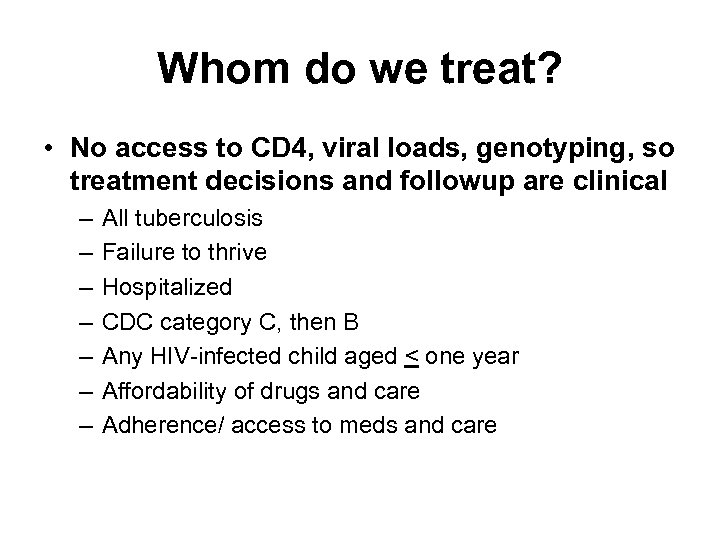 Whom do we treat? • No access to CD 4, viral loads, genotyping, so treatment decisions and followup are clinical – – – – All tuberculosis Failure to thrive Hospitalized CDC category C, then B Any HIV-infected child aged < one year Affordability of drugs and care Adherence/ access to meds and care
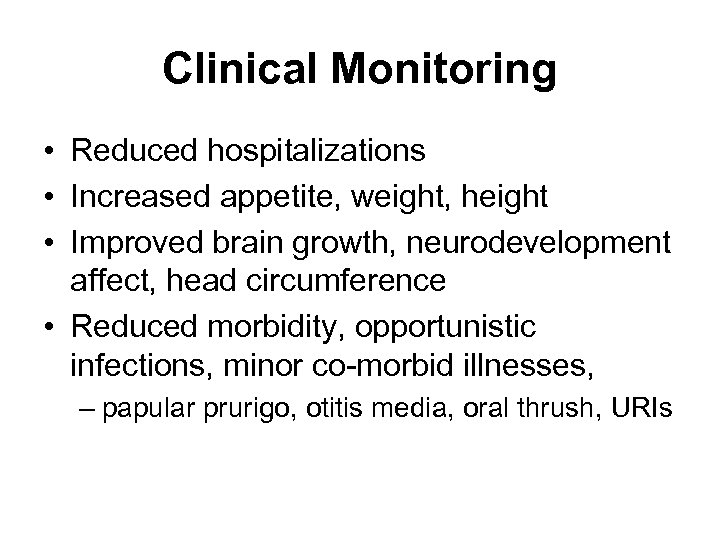 Clinical Monitoring • Reduced hospitalizations • Increased appetite, weight, height • Improved brain growth, neurodevelopment affect, head circumference • Reduced morbidity, opportunistic infections, minor co-morbid illnesses, – papular prurigo, otitis media, oral thrush, URIs
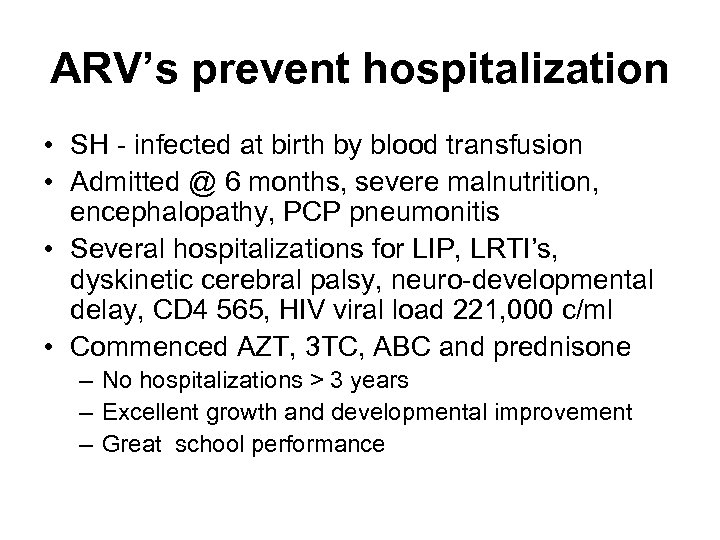 ARV’s prevent hospitalization • SH - infected at birth by blood transfusion • Admitted @ 6 months, severe malnutrition, encephalopathy, PCP pneumonitis • Several hospitalizations for LIP, LRTI’s, dyskinetic cerebral palsy, neuro-developmental delay, CD 4 565, HIV viral load 221, 000 c/ml • Commenced AZT, 3 TC, ABC and prednisone – No hospitalizations > 3 years – Excellent growth and developmental improvement – Great school performance
 ARV’s improve growth • SF – HIV via MTCT, symptomatic at age 10 mos, with recurrent otitis media, sinusitis, chronic diarrhea, LRTI’s, cryptosporidiosis, salmonella UTI’s, failure to thrive, thrombocytopenia • Commenced AZT, 3 TC, NVP • Voracious appetite, weight gain, no more infections
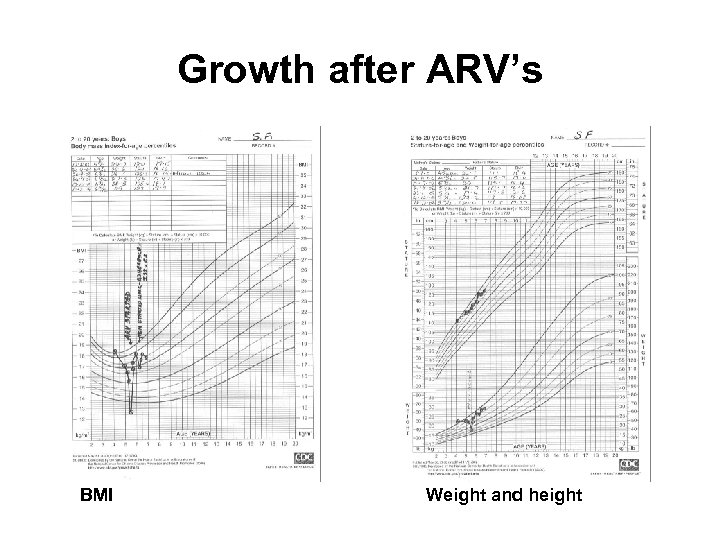 Growth after ARV’s BMI Weight and height
 TB Co-infection cured • • SP, 6 yo F with HIV MTCT TB with recurrent RUL pneumonia CD 4 -154 Treated with INH, RIF, PZA and ETH x 2 mos then INH and RIF x 10 mos • AZT, 3 TC and ABC • TB cured and good growth
 HIV and TB Co-infections Outcomes at UHWI • Mortality, morbidity and hospital stay longer in HIV and TB co-infections • Children treated with anti-TB drugs alone – Get better in hospital then die – Get better in hospital, then deteriorate during outpatient follow-up • Children treated with anti-TB meds AND anti retrovirals (ARTs) are usually cured
 Summary • Pediatric HIV/AIDS is being diagnosed • ARV’s are now available for management • ARV’s can only control but not cure this devastating chronic disease • Children are growing up to consider a university education, buy a house, marry and even have children • While p. MTCT HIV, prognoses for pediatric HIV/AIDS can be excellent, long-term
 WEST INDIAN MEDICAL JOURNAL - SPECIAL ISSUE Pediatric and Perinatal HIV/AIDS in Jamaica Supported in part by the Elizabeth Glaser Pediatric AIDS Foundation Pfizer Foundation (Pharmaceuticals), the University of the West Indies and the Jamaican Ministry Health.