


 Скачать презентацию Peak oil climate change and transition PLACE
32d7ad6cf37a259a8f4b1295ba06184d.ppt
- Количество слайдов: 38
 Peak oil, climate change and transition – PLACE: nn-Mmm-08 Ben Brangwyn Co-founder, Transition Network
 Agenda n n n Peak Oil and its effects Climate Change Responses at different levels – global, national, local, personal n n PO + CC ≠ “business as usual” What is a transition town Examples and achievements so far Q&A discussion
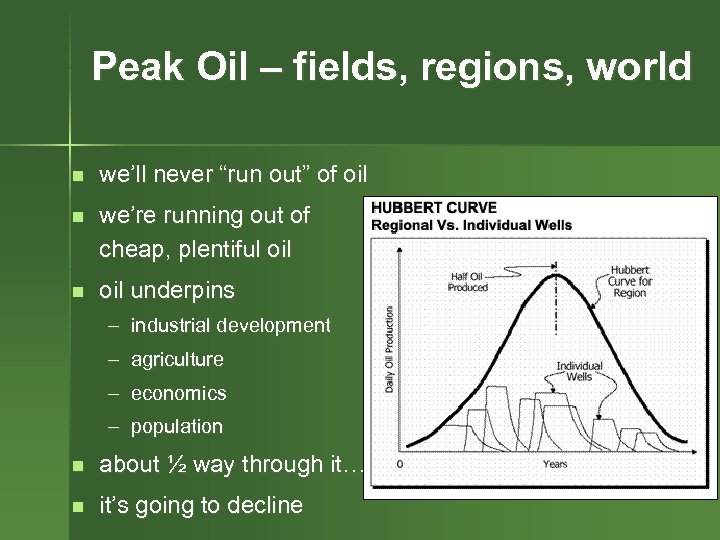 Peak Oil – fields, regions, world n we’ll never “run out” of oil n we’re running out of cheap, plentiful oil n oil underpins – industrial development – agriculture – economics – population n about ½ way through it… n it’s going to decline
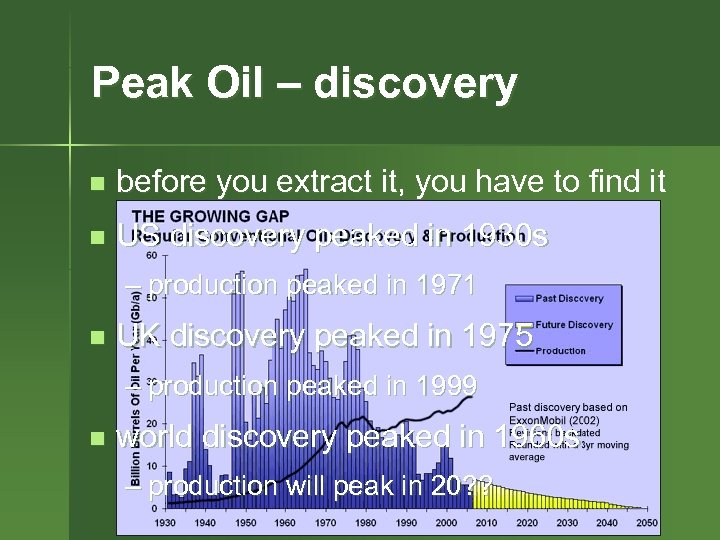 Peak Oil – discovery n before you extract it, you have to find it n US discovery peaked in 1930 s – production peaked in 1971 n UK discovery peaked in 1975 – production peaked in 1999 n world discovery peaked in 1960 s – production will peak in 20? ?
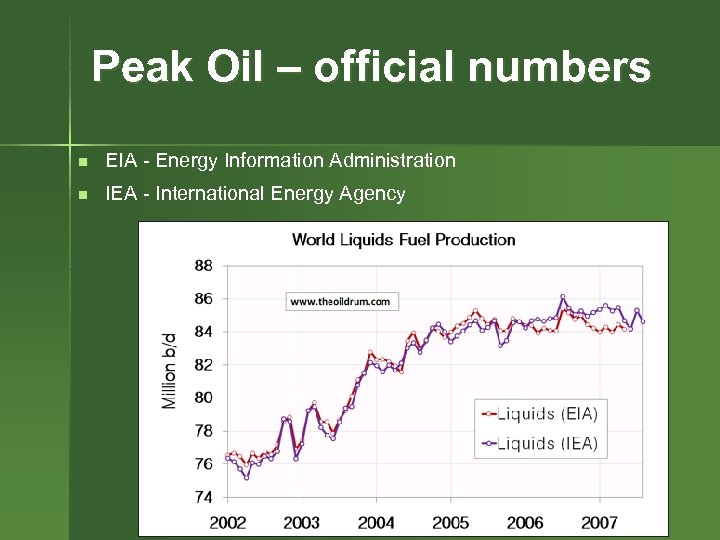 Peak Oil – official numbers n EIA - Energy Information Administration n IEA - International Energy Agency
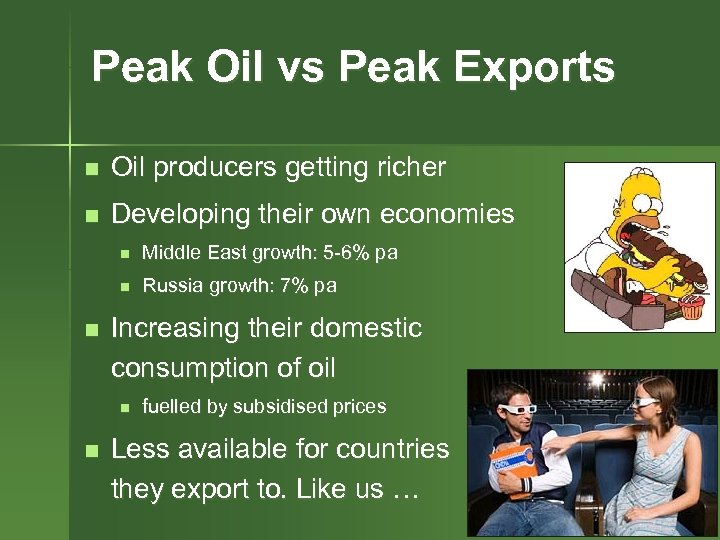 Peak Oil vs Peak Exports n Oil producers getting richer n Developing their own economies n n n Middle East growth: 5 -6% pa Russia growth: 7% pa Increasing their domestic consumption of oil n n fuelled by subsidised prices Less available for countries they export to. Like us …
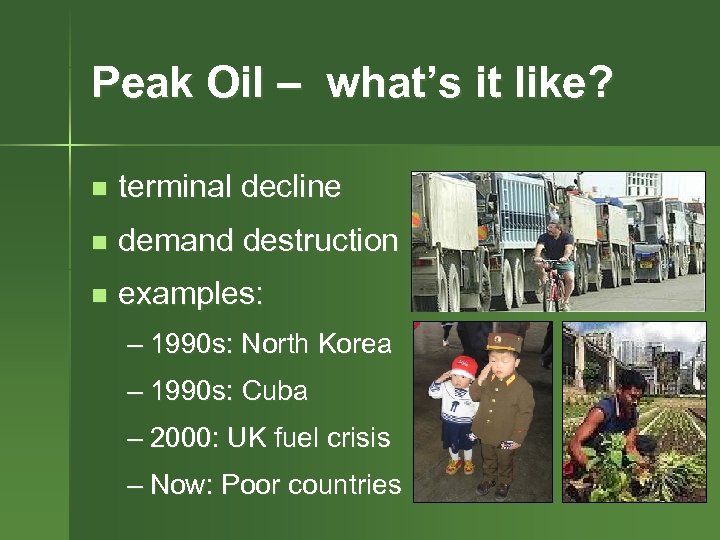 Peak Oil – what’s it like? n terminal decline n demand destruction n examples: – 1990 s: North Korea – 1990 s: Cuba – 2000: UK fuel crisis – Now: Poor countries
 Peak Oil – happening now (if you’re poor) n Asia n Africa n Americas – Nepal – Uganda – Argentina – Pakistan – Zimbabwe – Nicaragua – Bangladesh – Ghana – Chile – Sri Lanka – Nigeria – Costa Rica – Philippines – Senegal – Dominican Republic – China – Kenya – India – Gambia – Iraq – Vietnam – Philippines – Iran n Middle East
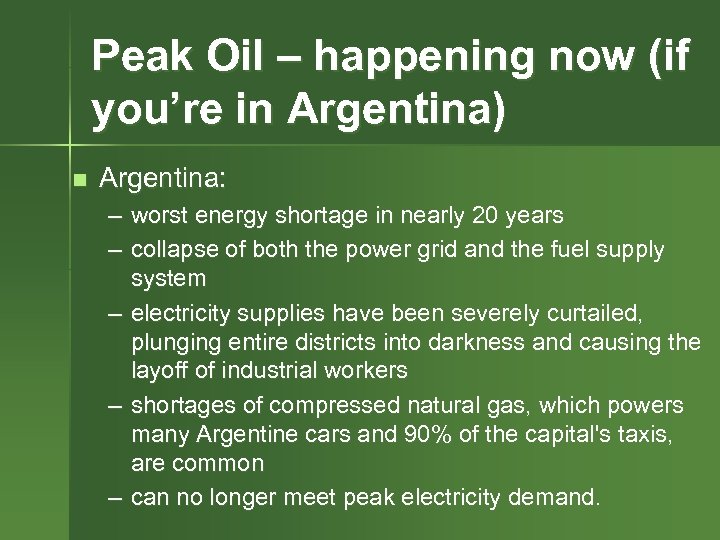 Peak Oil – happening now (if you’re in Argentina) n Argentina: – worst energy shortage in nearly 20 years – collapse of both the power grid and the fuel supply system – electricity supplies have been severely curtailed, plunging entire districts into darkness and causing the layoff of industrial workers – shortages of compressed natural gas, which powers many Argentine cars and 90% of the capital's taxis, are common – can no longer meet peak electricity demand.
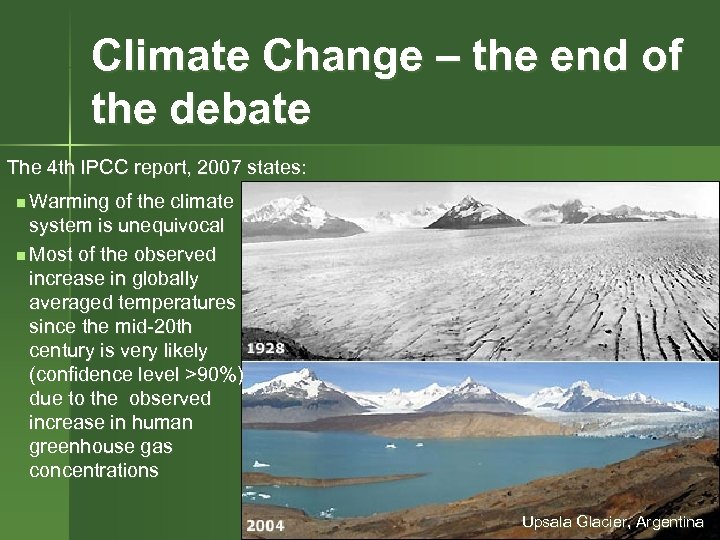 Climate Change – the end of the debate The 4 th IPCC report, 2007 states: n Warming of the climate system is unequivocal n Most of the observed increase in globally averaged temperatures since the mid-20 th century is very likely (confidence level >90%) due to the observed increase in human greenhouse gas concentrations Upsala Glacier, Argentina
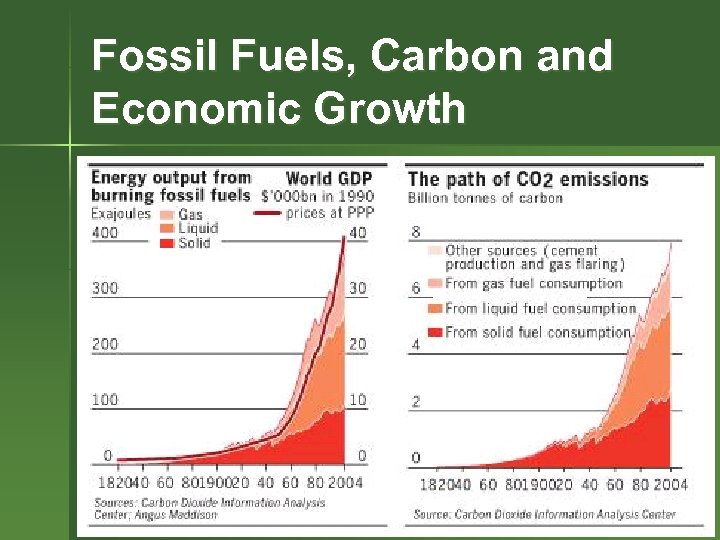 Fossil Fuels, Carbon and Economic Growth
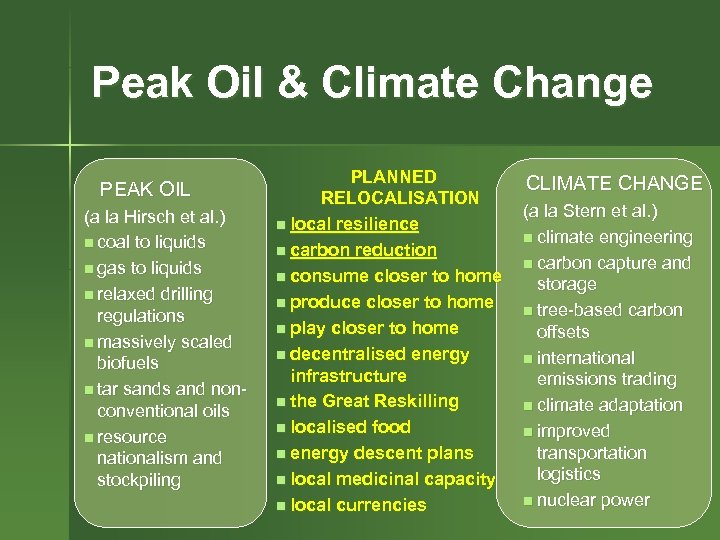 Peak Oil & Climate Change PEAK OIL (a la Hirsch et al. ) n coal to liquids n gas to liquids n relaxed drilling regulations n massively scaled biofuels n tar sands and nonconventional oils n resource nationalism and stockpiling PLANNED RELOCALISATION n local resilience n carbon reduction n consume closer to home n produce closer to home n play closer to home n decentralised energy infrastructure n the Great Reskilling n localised food n energy descent plans n local medicinal capacity n local currencies CLIMATE CHANGE (a la Stern et al. ) n climate engineering n carbon capture and storage n tree-based carbon offsets n international emissions trading n climate adaptation n improved transportation logistics n nuclear power
 What can be done? n Global – – – n Oil Depletion Protocol Contraction and Convergence Kyoto National – TEQs (energy rationing) n Community – Transition Towns, cities, villages, rural n Personal – – – “The work that reconnects” lessons from addiction counselling getting Gaia’ed
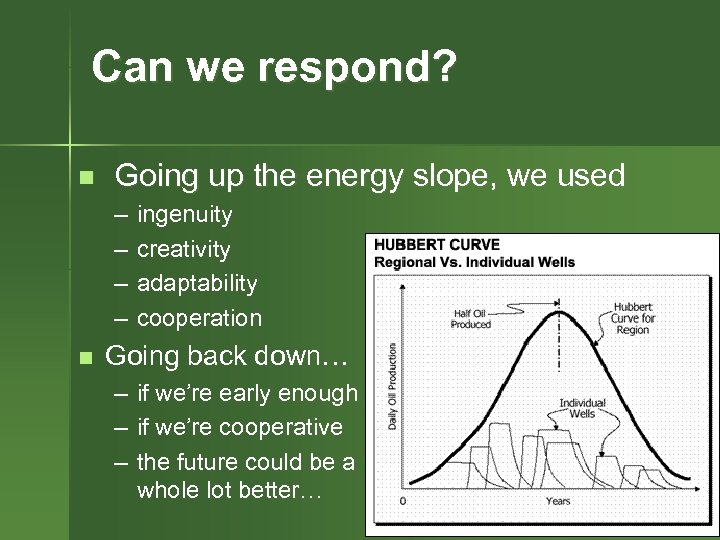 Can we respond? n Going up the energy slope, we used – – n ingenuity creativity adaptability cooperation Going back down… – if we’re early enough – if we’re cooperative – the future could be a whole lot better…
 What’s stopping us? (1) n Myths of today – – – – – n Things are getting better We must keep shopping Technology will solve all our problems There is no alternative You can’t stop progress Living standards are rising New, better, faster, shinier ____ are just around the corner Humans are selfish and greedy by nature The market will solve it We’re all doomed…
 What’s stopping us? (2) n n Cognitive Load Theory (fruit salad experiment) Short term vs long term thinking – rational vs emotional, neocortex vs mammalian vs reptilian n Belief in authority figures – electrocution experiment - 65% gave lethal dose – obedient children survive n Sunk cost, or investment in the present – “it’s difficult convincing a person of something when his job depends on him not believing it” n Optimism – an optimistic outlook is neurochemically self-fulfilling n Left brain, right brain
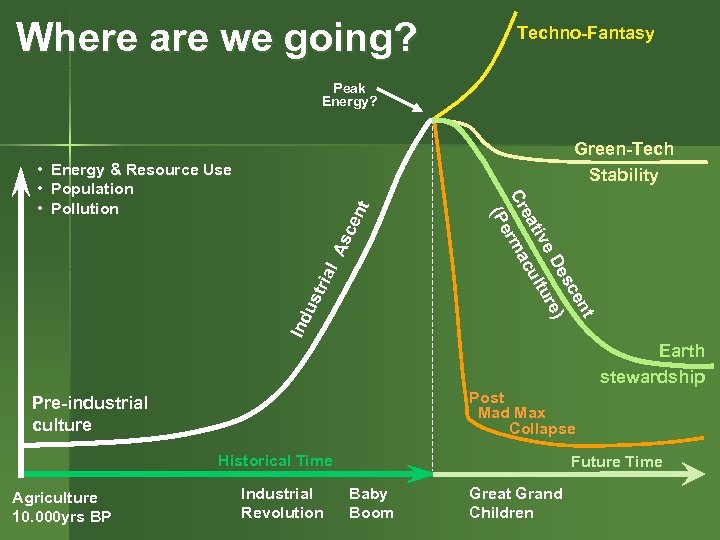 Where are we going? Techno-Fantasy Peak Energy? Green-Tech Stability en t As c ial us tr Ind nt ce es e) r e. D tiv cultu ea Cr rma e (P • Energy & Resource Use • Population • Pollution Earth stewardship Post Mad Max Collapse Pre-industrial culture Historical Time Agriculture 10. 000 yrs BP Industrial Revolution Future Time Baby Boom Great Grand Children
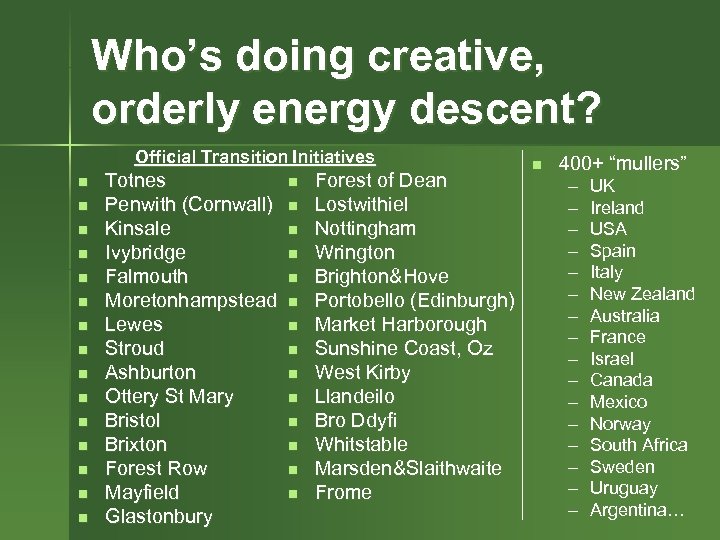 Who’s doing creative, orderly energy descent? Official Transition Initiatives n n n n Totnes Penwith (Cornwall) Kinsale Ivybridge Falmouth Moretonhampstead Lewes Stroud Ashburton Ottery St Mary Bristol Brixton Forest Row Mayfield Glastonbury n n n n Forest of Dean Lostwithiel Nottingham Wrington Brighton&Hove Portobello (Edinburgh) Market Harborough Sunshine Coast, Oz West Kirby Llandeilo Bro Ddyfi Whitstable Marsden&Slaithwaite Frome n 400+ “mullers” – – – – UK Ireland USA Spain Italy New Zealand Australia France Israel Canada Mexico Norway South Africa Sweden Uruguay Argentina…
 How are they organising? Transition Model n Understanding: n PO + CC ≠ “business as usual” n Adaptability, creative n NOW 7 Buts n 12 Steps n Transition Network n
 Transition Model – 7 “buts” (1) 1) we don’t have funding 2) “they” won’t let us – no enemies… apparently 3) turf wars with other green groups
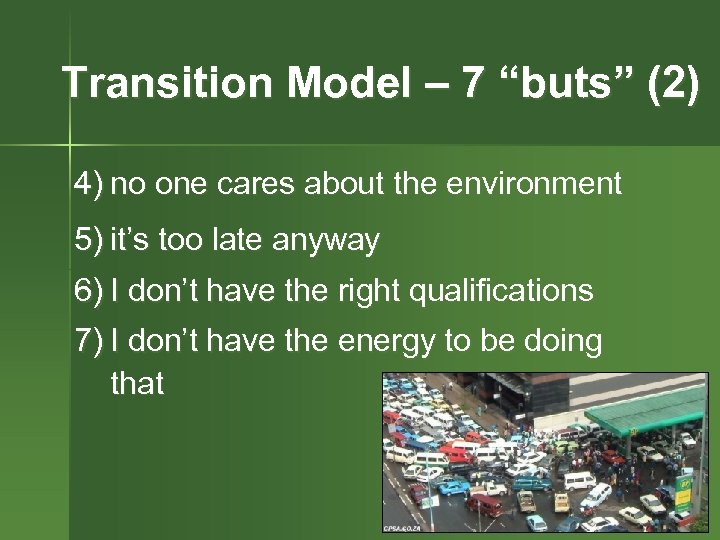 Transition Model – 7 “buts” (2) 4) no one cares about the environment 5) it’s too late anyway 6) I don’t have the right qualifications 7) I don’t have the energy to be doing that
 Transition Model - Step 1 n Set Up a Steering Group and Design Its Demise from the Outset – atrophy – personal agendas – humility – stages 2 -5 – reforms from subgroups
 Transition Model - Step 2 n Awareness raising – allies and networks – prepare community – movies – talks – events
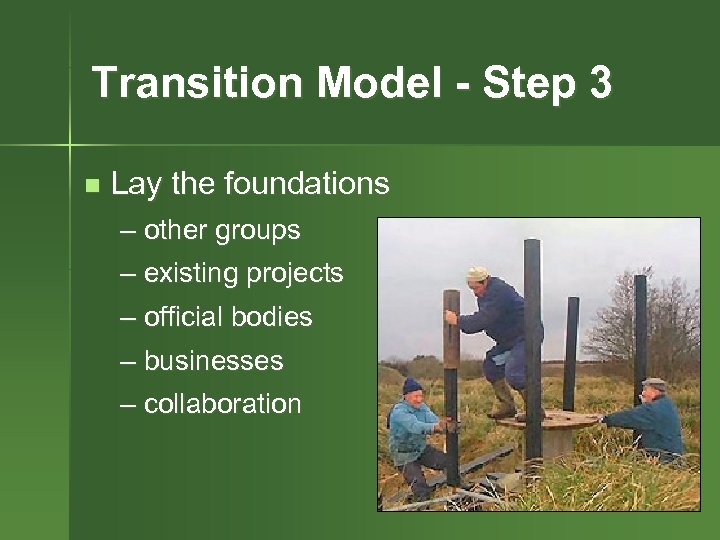 Transition Model - Step 3 n Lay the foundations – other groups – existing projects – official bodies – businesses – collaboration
 Transition Model - Step 4 n Organise a Great Unleashing – coming of age – powerful, passionate, informative, inspirational – timing – content – making connections
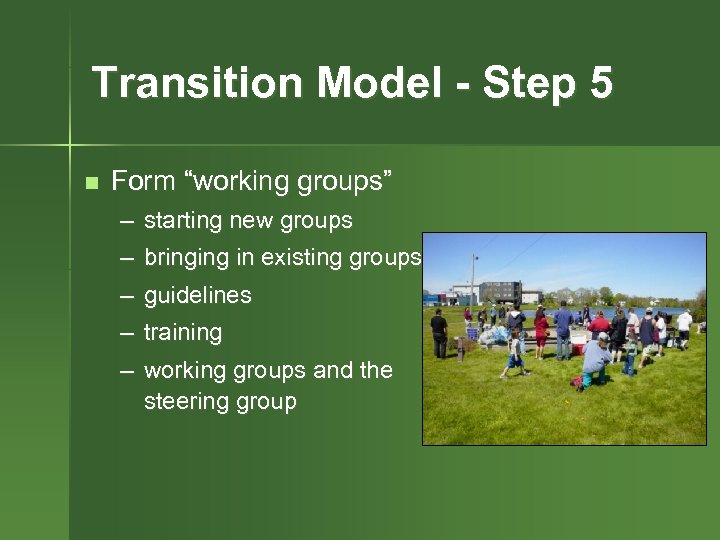 Transition Model - Step 5 n Form “working groups” – starting new groups – bringing in existing groups – guidelines – training – working groups and the steering group
 Transition Model - Step 6 n Use “Open Space” – shouldn’t work! – requirements – preparations – World Café n Harrison Owen - Open Space Technology: A User’s Guide n Peggy Holman and Tom Devane’ The Change Handbook: Group Methods for Shaping the Future
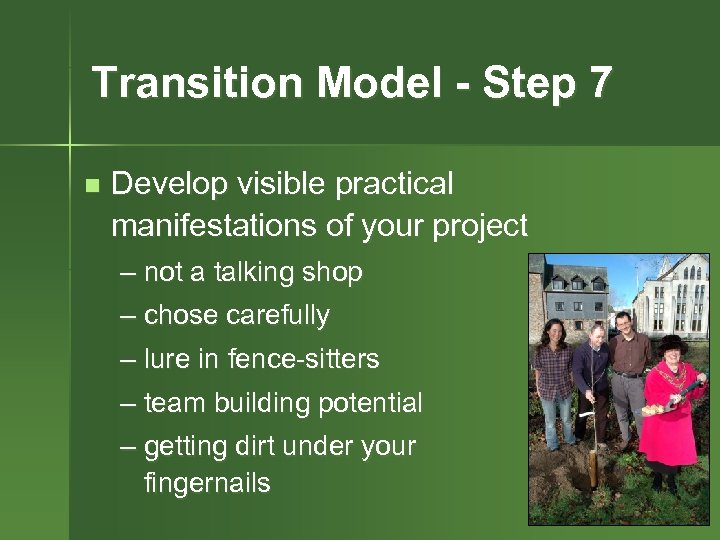 Transition Model - Step 7 n Develop visible practical manifestations of your project – not a talking shop – chose carefully – lure in fence-sitters – team building potential – getting dirt under your fingernails
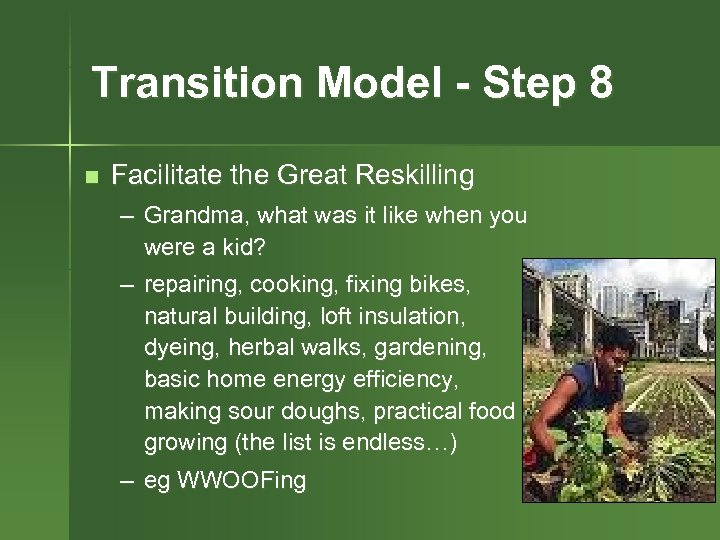 Transition Model - Step 8 n Facilitate the Great Reskilling – Grandma, what was it like when you were a kid? – repairing, cooking, fixing bikes, natural building, loft insulation, dyeing, herbal walks, gardening, basic home energy efficiency, making sour doughs, practical food growing (the list is endless…) – eg WWOOFing
 Transition Model - Step 9 n Build bridges to Local Government – becomes crucial – don’t wait too long… – open door – Community Development Plan – elections…!
 Transition Model - Step 10 n Honour the Elders – elders as a community resource – 1930 to 1960 – moving from oil scarcity to abundance – oral history – community infrastructure – not about going backwards
 Transition Model - Step 11 n Let it go where it wants to go… – focus on the questions – unleash the community – any sense of control is illusory
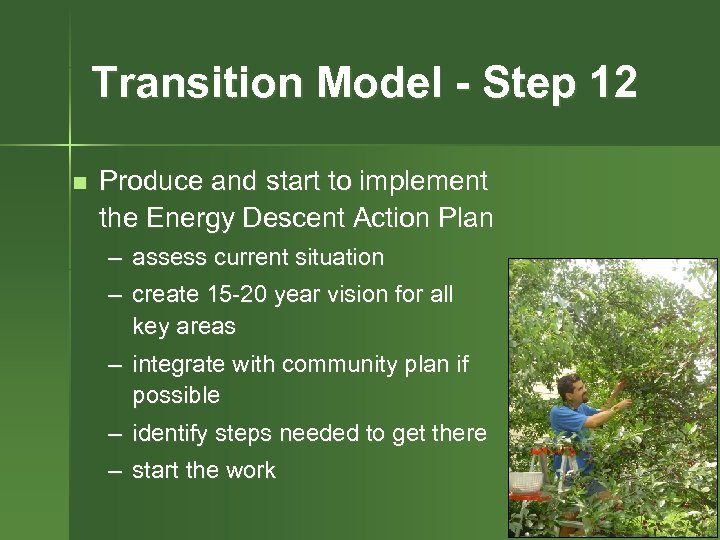 Transition Model - Step 12 n Produce and start to implement the Energy Descent Action Plan – assess current situation – create 15 -20 year vision for all key areas – integrate with community plan if possible – identify steps needed to get there – start the work
 What have they achieved so far…? (1) Totnes 8 films, 11 talks, 7 events n 10 -week “skilling up for powerdown” course n seed sharing days n oil vulnerability auditing n Estates in Transition n local food directory n local currency (phase 2) n oral history archives n nut tree capital of Britain n transition stories n lobbying (food and sustainable building regs) n community plan engagement n Totnes Renewable Energy Company n Lewes school workshops n grow your own food courses n rug making course n mending course n Lewes non-plastic bag n library books on sustainability n many events, talks and films n Penwith many films and talks n food and farming day with Soil Association n reskilling – composting toilets and reedbeds n
 What have they achieved so far…? (2) Brixton green mapping / urban agriculture project n permaculture design course n films and talks n presenting to school boards on peak oil and climate change n urban food growers network day n Bristol many films, talks and events n transition training 2 -day course n city orchard (central buying of trees for productive planting by individual homeowners n guerilla gardening n photo exhibition and competition of “living more, using less” n Stroud CSA, local food festival n tool share n textile courses, visits to hemp manufacturers, fashion show n planning Stroud Hemporium n Heinberg meeting with council n Transition “think tank” with local council n many events and talks n
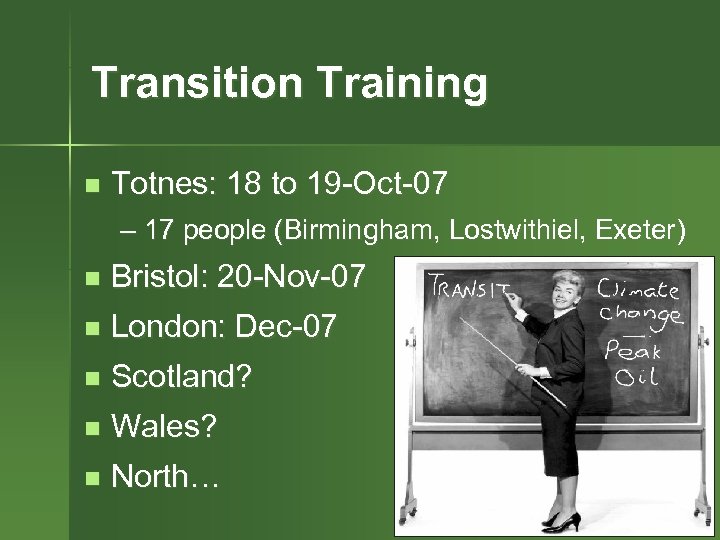 Transition Training n Totnes: 18 to 19 -Oct-07 – 17 people (Birmingham, Lostwithiel, Exeter) n Bristol: 20 -Nov-07 n London: Dec-07 n Scotland? n Wales? n North…
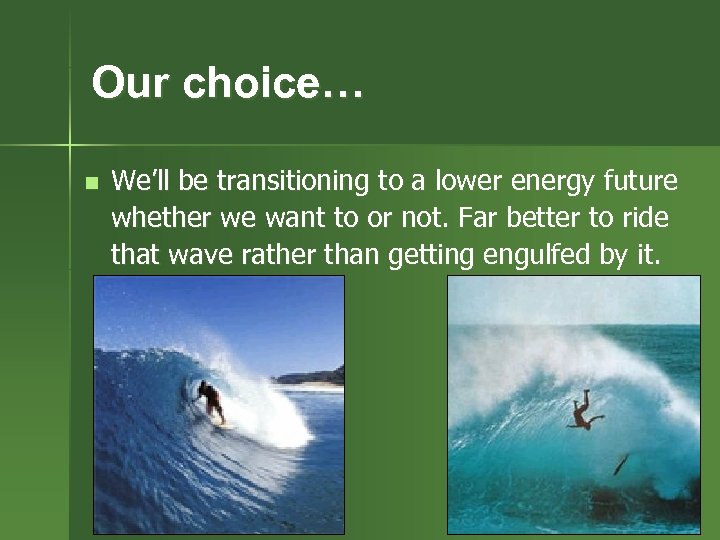 Our choice… n We’ll be transitioning to a lower energy future whether we want to or not. Far better to ride that wave rather than getting engulfed by it.
 Transition Initiatives Thank you Ben Brangwyn