


 Скачать презентацию Peacetime Aviation Chapter Five War Is Over
474da5df650547ea92608a1c2520c033.ppt
- Количество слайдов: 65
 Peacetime Aviation Chapter Five
 War Is Over Ø Surplus of airmen and airplanes Ø Airplanes were ØLarger ØStronger ØMore powerful engines ØMore reliable Ø Instrument/radio development ØFrequently installed in aircraft
 Crossing the Atlantic Ø German U-Boat Threat ØBring war to submarines ØWartime shipping space limited ØNeed for patrol aircraft ØCurtiss design for Navy ØPatrol wherever subs might be ØLong range capability ØLarge aircraft ØMultiple engines ØLand on rough seas ØNC Flying Boats (Nancy)
 Crossing the Atlantic Ø 4 planes to be built Ø 3 Liberty engines – tractor mode ØDesignated NC-1 through 4 ØNC-1 maiden flight – October 1918 ØWar already over Ø World record ØHighest number of passengers Ø 51 Ø 18 Nov 1918 ØConsidered underpowered
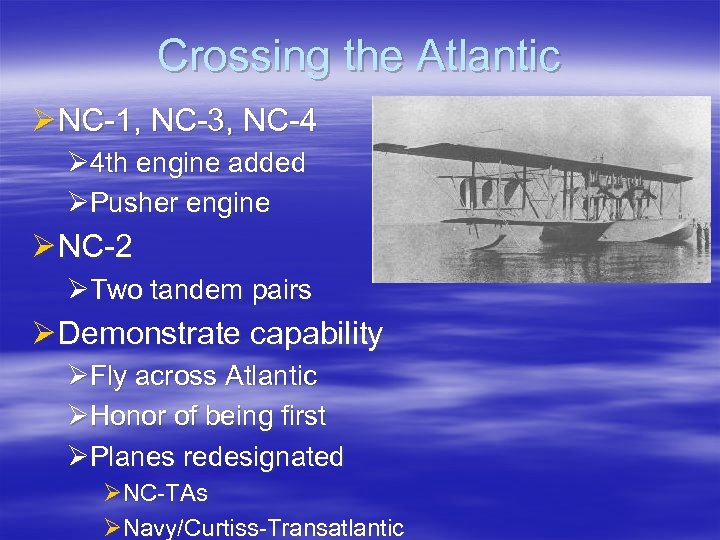 Crossing the Atlantic Ø NC-1, NC-3, NC-4 Ø 4 th engine added ØPusher engine Ø NC-2 ØTwo tandem pairs Ø Demonstrate capability ØFly across Atlantic ØHonor of being first ØPlanes redesignated ØNC-TAs ØNavy/Curtiss-Transatlantic
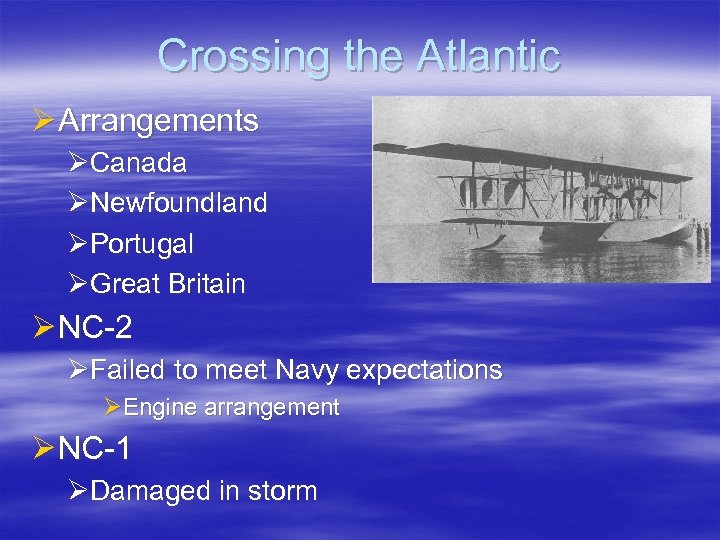 Crossing the Atlantic Ø Arrangements ØCanada ØNewfoundland ØPortugal ØGreat Britain Ø NC-2 ØFailed to meet Navy expectations ØEngine arrangement Ø NC-1 ØDamaged in storm
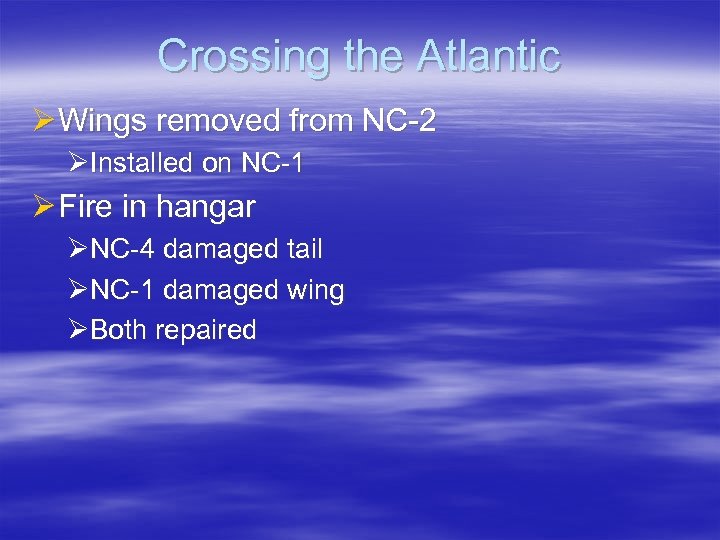 Crossing the Atlantic Ø Wings removed from NC-2 ØInstalled on NC-1 Ø Fire in hangar ØNC-4 damaged tail ØNC-1 damaged wing ØBoth repaired
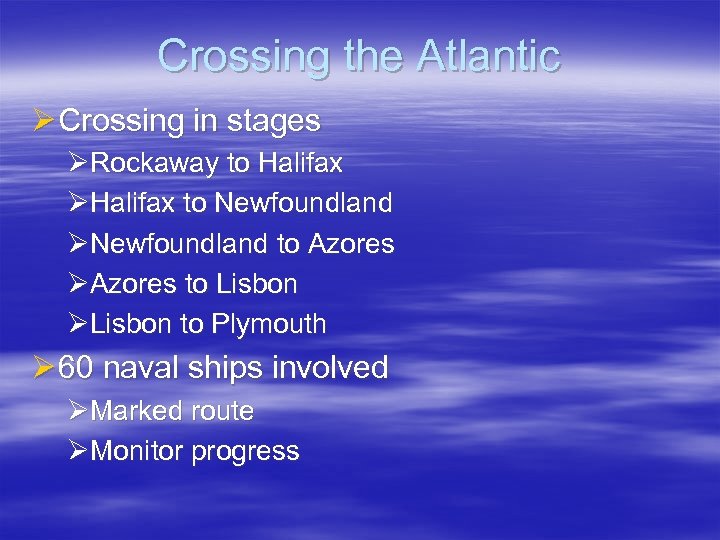 Crossing the Atlantic Ø Crossing in stages ØRockaway to Halifax ØHalifax to Newfoundland ØNewfoundland to Azores ØAzores to Lisbon ØLisbon to Plymouth Ø 60 naval ships involved ØMarked route ØMonitor progress
 Crossing the Atlantic Ø 8 May 1919 Ø 3 airplanes takeoff ØNC-4 engine trouble ØStopped in Massachusetts ØRepaired ØCaught others in Trepassy Bay (Newfoundland) ØAnother replacement engine Ø Newfoundland to Azores ØRadio ØLisbon to Plymouth Ø 60 naval ships involved
 Crossing the Atlantic Ø Newfoundland to Azores (16 May) ØRadio communication failed ØNC-1 and NC-3 ØNC-4 worked ØEncountered bad weather ØNC-1 & NC-3 ditched at sea ØNC-1 Ø Crew rescued Ø Aircraft sank ØNC-3 taxied 200 miles to Azores ØNC-4 ØCompleted flight to Azores
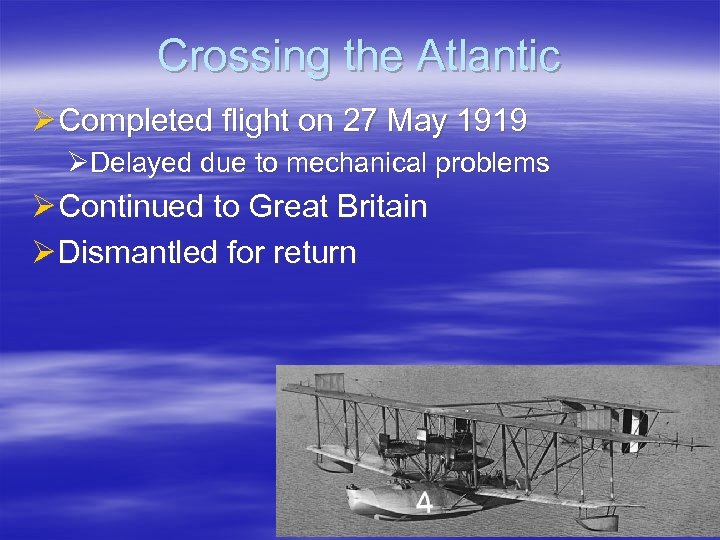 Crossing the Atlantic Ø Completed flight on 27 May 1919 ØDelayed due to mechanical problems Ø Continued to Great Britain Ø Dismantled for return
 Alcock-Brown Ø Daily Mail resumes competition ØExcluded countries ØAny point in United States/Newfoundland ØAny point in Great Britain/Ireland ØEither way Ø 72 consecutive hours Ø 11 entries Ø 3 from St. John’s Newfoundland ØPrevailing winds
 Alcock-Brown Ø Vickers Vimy Ø“Atlantic” ØState-of-the-art bomber ØDeliver heavy loads into Germany ØDid not see action – war ended Ø 2 engines ØOne test flight ØDisassembled, crated, shipped
 Alcock-Brown Ø June 14 ØOver 1, 000 gallons of fuel ØBarely made off ground ØNavigation - celestial ØAltitudes between 100 to 11, 000 feet ØMechanical problems ØBroken exhaust pipe ØInoperative intercom ØRadio failure ØOne misfiring engine ØIced fuel overflow gauge ØFrozen airspeed indicator (stuck at 90 knots)
 Alcock-Brown Ø Landing ØGalway region of Ireland Ø 16 hours 27 minutes Ø 1, 980 miles Ø Accolades ØKing George V knighted them Ø“Atlantic” went to London Science Museum
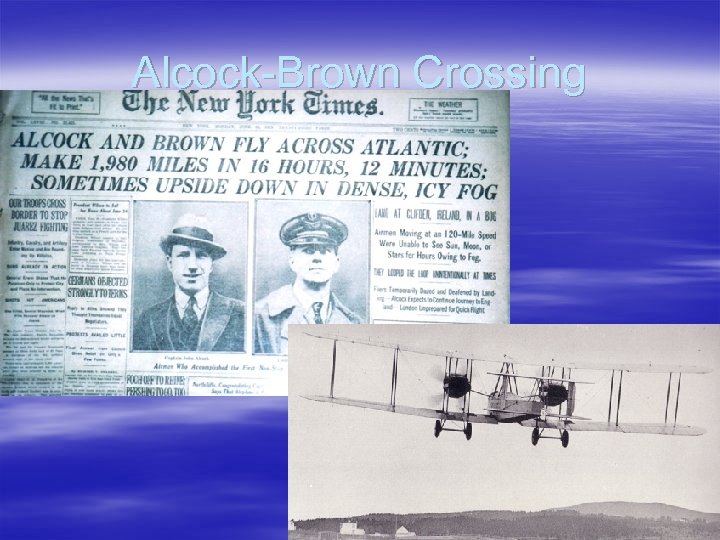 Alcock-Brown Crossing
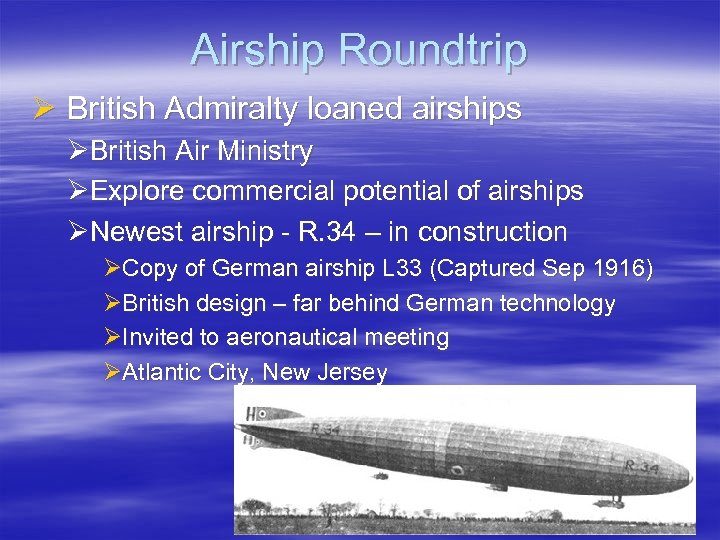 Airship Roundtrip Ø British Admiralty loaned airships ØBritish Air Ministry ØExplore commercial potential of airships ØNewest airship - R. 34 – in construction ØCopy of German airship L 33 (Captured Sep 1916) ØBritish design – far behind German technology ØInvited to aeronautical meeting ØAtlantic City, New Jersey
 Airship Roundtrip Ø United States capability ØNo rigid airships ØNo large airships ØNo hangers ØNo landing crew (approx 300) Ø U. S. Navy ØProvided mooring and supplies Ø British ØSent advance party ØOrganize/train ground crew ØSpare parts
 Airship Roundtrip Ø Lifted off 2 Jul 1919 Ø 8 officers/22 men/American naval officer ØMail ØFilm of Paris Peace Conference ØChewing gum ØSubstitute for smoking ØLanded 108 hours after departure Ø Returned 2 days later ØMail ØFilm of arrival ØU. S. Army observer
 Other Long Distance Flights Ø England – Australia ØAustralian Prime Minister Ø 10, 000 pound prize ØFirst Australian to fly route ØComplete by 31 Dec 1920 ØComplete within 30 days Ø 4 Australians ØSmith Brothers (Ross and Keith) Ø 2 Mechanics ØVickers Vimy Ø Fresh from factory Ø Rigged with extra fuel tanks
 England - Australia Ø Carefully planned route ØSpecifically supplied to support flight Ø Departed London - 12 November ØLogged 235 hours and 55 minutes Ø 11, 123 miles Ø Landed Darwin – 10 December ØPresented with prize ØKnighted Ø“One of the greatest flight, if not the greatest, in the history of aviation. ”
 England - Australia Ø Others tried Ø 21 October - Capt Matthews and Sgt Kay ØInprisoned in Yugoslavia ØCrashed in Bali Ø 13 November – Lt Douglas and Ross ØCrashed in Surbiton ØBoth died from injuries Ø 21 November – Lt Rendle ØCrash landed at Suda Bay Ø 8 January 1920 – Lt Parer and Mc. Intosh ØCompleted in 206 days ØConsolation prize – 1, 000 pounds
 Other Long-Distance Flights Ø England to South Africa ØJanuary 1920 ØStopped prematurely in Tanganyika ØRadiator problems ØFebruary 1920 ØLt Ryneveld and Maj Brand ØRadiator problems ØEgyptian government loaned another aircraft ØDamaged plane during takeoff ØBorrowed de Havilland DH 9 ØReceived prize ØKnighted
 Other Long-Distance Flights Ø Melbourne to Darwin ØSurveying air route Ø 16 November – 12 December Ø 2, 500 miles – 46 flying hours Ø Vickers Vimy ØAircraft of choice Ø 99 to RAF
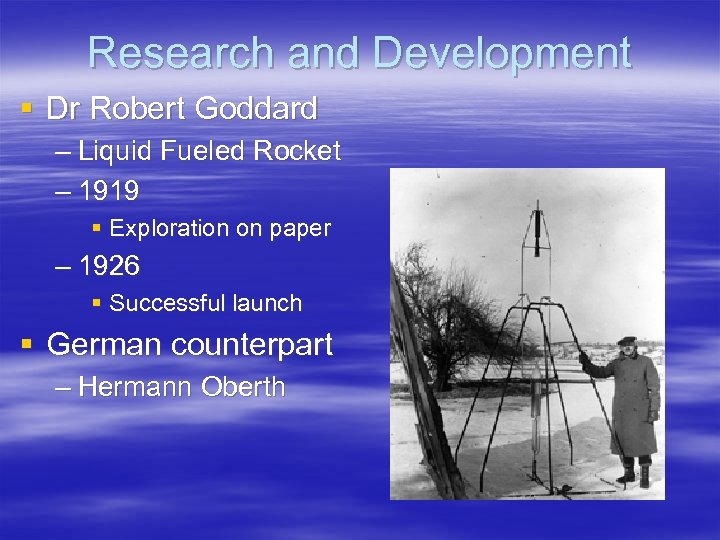 Research and Development § Dr Robert Goddard – Liquid Fueled Rocket – 1919 § Exploration on paper – 1926 § Successful launch § German counterpart – Hermann Oberth
 Airships § Germany – Zeppelins § Still state-of-the-art § Commercial passenger service – LZ 120 Bodensee § Freidrichshafen to Berlin § More than 100 flights (late 1919) § Confiscated by Allies – France § Flights to African colonies § Possible commercial airline development
 Airships § Restitution to: – Belgium – Great Britain – Japan § Dismantled for shipping § Never reassembled § Great Britain – Captured modern airships during war
 R-38 § Made in Great Britain – United States to buy § Fly across Atlantic – Test flights § High-speed test § Sharp turn – Turn prohibited by Germans § Frame snapped § 44 airmen died
 Roma § Italian Made – War surplus – Test flights in 1922 § Navy didn’t like § Modified airship – Crashed and burned – 21 Feb 1922 – 34 airmen died § Abandon hydrogen – Too flammable – Use helium § Safer § More expensive
 Shenandoah § First helium airship – First rigid airship made in U. S. – Based on captured German L-49 – Maiden flight – 4 Sep 1923 – Navy § Send to North Pole § Mooring test – Damaged – Cancelled polar flight § Transcontinental flight – October 1924 – 19 days – 9, 000 miles
 Los Angeles § Zeppelin production to be destroyed – U. S. requested exemption § One airship be built § Compensation for war claim § Allies approved request – LZ 126 (Los Angeles) § Delivered October 1924 § Eckener – Convinced Allies not militarily viable – Saved Zeppelin works – Revival of German airship industry
 Gliding
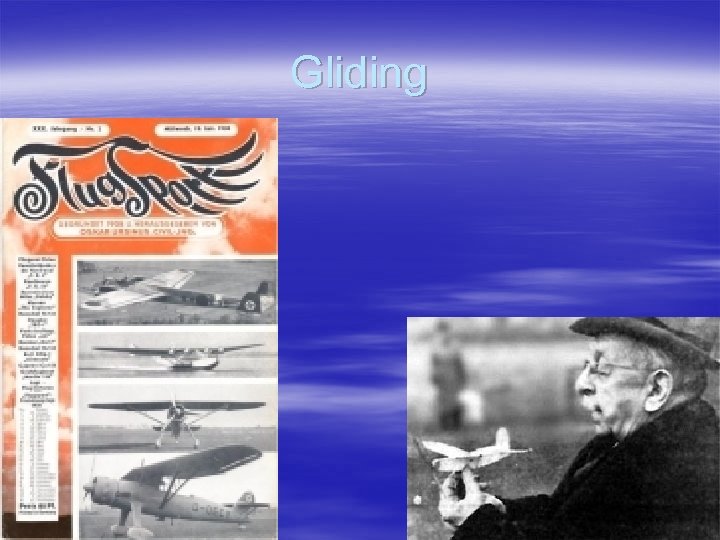
 Gliding Ø Germany ØMajor aeronautical activity ØGliding Rally - 1920 Ø 11 registered ØGliding Rally – 1921 ØOver 20 gliders ØWorld distance record ØWorld endurance record ØGliding Rally – 1922 Ø 53 registered aircraft ØInternational attention ØGerman National sport
 German Gliding Ø “If we can’t fly with motors, we’ll fly without them” ØMapped “air roads” ØFly for hours Ø 1926 – glider round trip ØMax Kegel ØThunderstorm thermal updraft ØLanded more than 55 kilometers away
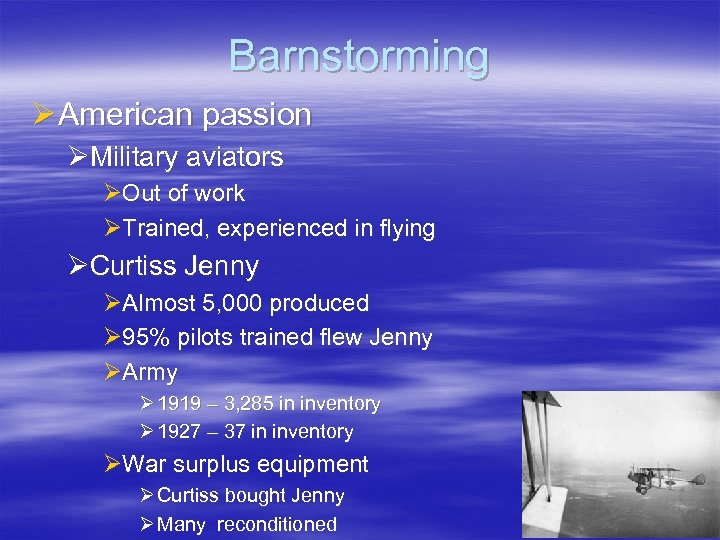 Barnstorming Ø American passion ØMilitary aviators ØOut of work ØTrained, experienced in flying ØCurtiss Jenny ØAlmost 5, 000 produced Ø 95% pilots trained flew Jenny ØArmy Ø 1919 – 3, 285 in inventory Ø 1927 – 37 in inventory ØWar surplus equipment Ø Curtiss bought Jenny Ø Many reconditioned
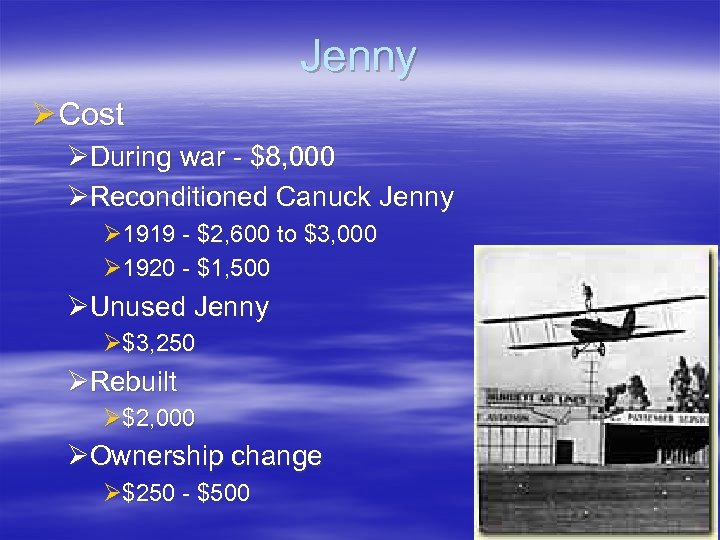 Jenny Ø Cost ØDuring war - $8, 000 ØReconditioned Canuck Jenny Ø 1919 - $2, 600 to $3, 000 Ø 1920 - $1, 500 ØUnused Jenny Ø$3, 250 ØRebuilt Ø$2, 000 ØOwnership change Ø$250 - $500
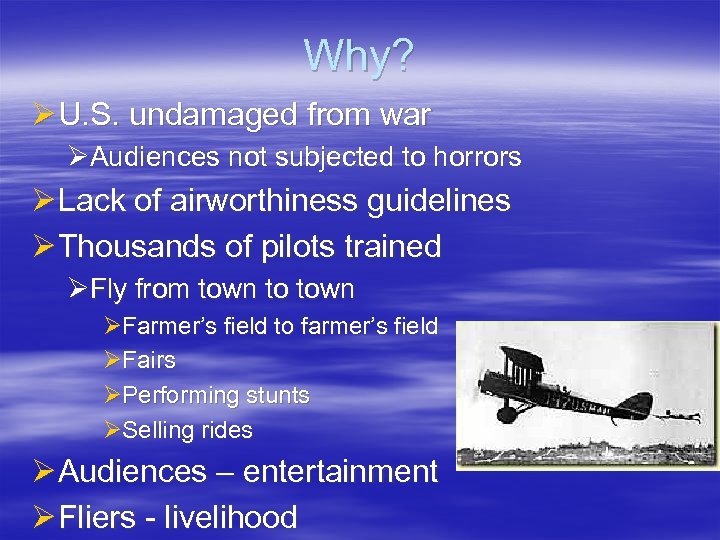 Why? Ø U. S. undamaged from war ØAudiences not subjected to horrors Ø Lack of airworthiness guidelines Ø Thousands of pilots trained ØFly from town to town ØFarmer’s field to farmer’s field ØFairs ØPerforming stunts ØSelling rides Ø Audiences – entertainment Ø Fliers - livelihood
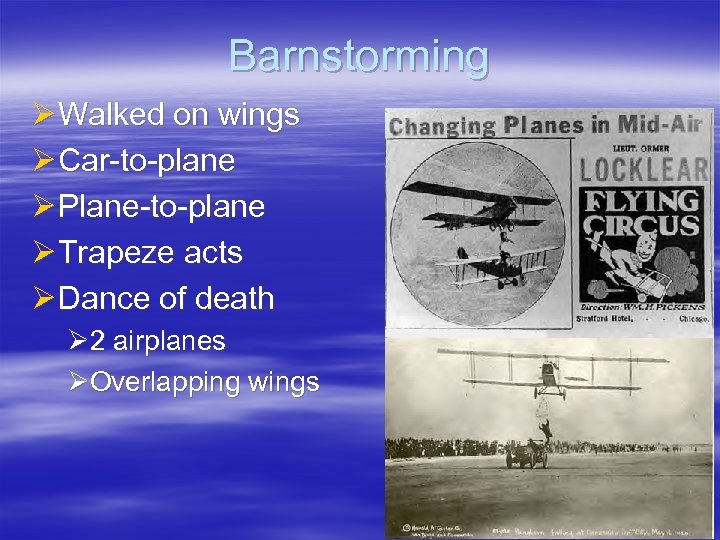 Barnstorming Ø Walked on wings Ø Car-to-plane Ø Plane-to-plane Ø Trapeze acts Ø Dance of death Ø 2 airplanes ØOverlapping wings
 Europe Barnstorming Ø Germany ØRestriction lifted ØAir shows ØErnst Udet
 Army World Flight § United States Army Air Service – Altitude records – Speed records – Endurance records – Technological advance – Publicity for accomplishments § Wartime – 9, 000 pilots – 1920 - 1, 000 pilots
 Army World Flight § Army sponsored flights – Around rim of United States (1919) – Round trip between U. S & Alaska (1920) – Sank captured battleship with bombs (9121) – First non-stop transcontinental flight (1923) – First aerial refueling plane (1923) § “The Plan” – Around the World Flight – “The first to circle the globe”
 Army World Flight § Ordered 4 aircraft – Douglas World Cruiser § Navy torpedo bomber § Two-seat, open cockpit, biplane § No radios – save weight – Used 35 liberty engines § Four for each aircraft § Others distributed along planned route – Boston – Chicago – New Orleans – Seattle
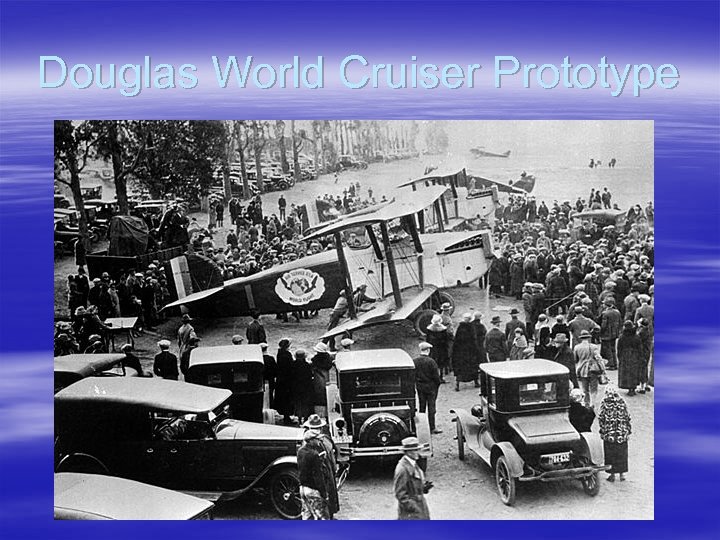 Douglas World Cruiser Prototype
 Army World Flight § Cooperation for support with: – Navy – Coast Guard – Bureau of Fisheries – More than 20 countries § Personnel and supplies § Fifty locations around globe § Others distributed along planned route § Other attempts – Lacked logistical support – Private ventures
 Army World Flight § Takeoff on 6 April 1924 – Seattle (Sand Point) § “Seattle” crashed in Alaska § Replaced engines in England – “Boston” ditched § Land on 28 Sep 1924 – 363 hours 7 minutes flight time – 26, 345 miles – Replaced 17 engines – 5 forced landings – International line of support
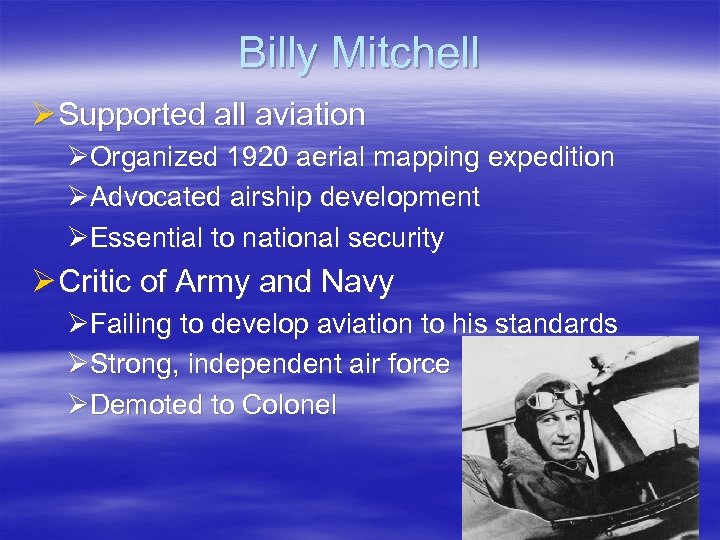 Billy Mitchell Ø Supported all aviation ØOrganized 1920 aerial mapping expedition ØAdvocated airship development ØEssential to national security Ø Critic of Army and Navy ØFailing to develop aviation to his standards ØStrong, independent air force ØDemoted to Colonel
 Billy Mitchell Ø Loss of Shenandoah/Navy airplanes ØIssued 17 -page statement ØBlamed military aviation in general ØIncompetency, criminal negligence, treasonable ØAviation decisions made by non-aviation officers ØBad decisions Ø General court martial ØGuilty of insubordination ØSuspended for 5 years ØMitchell resigns
 Speed Records Ø Suspended records during war Ø 1919 – 126. 667 mph Ø 1920 – 171. 041 mph ØChanged 7 times in 1920 ØFinal - 194. 516 mph Ø 1922 ØBilly Mitchell – 222. 970 mph Ø 1924 ØFrench pilot – Florentin Bonnet Ø 278. 481 mph
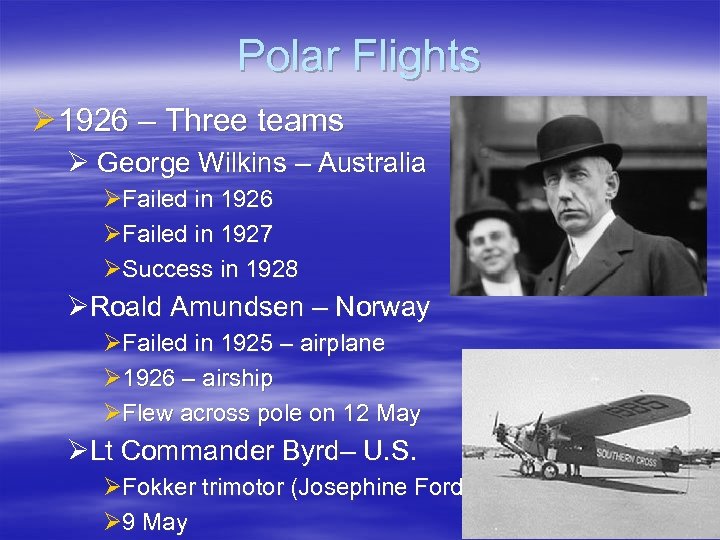 Polar Flights Ø 1926 – Three teams Ø George Wilkins – Australia ØFailed in 1926 ØFailed in 1927 ØSuccess in 1928 ØRoald Amundsen – Norway ØFailed in 1925 – airplane Ø 1926 – airship ØFlew across pole on 12 May ØLt Commander Byrd– U. S. ØFokker trimotor (Josephine Ford) Ø 9 May
 Research and Development Ø Militaries Ø Converted war surplus ships to carriers Ø Retractable undercarriage ØDayton-Wright Co. – RB Racer Ø Autorotation ØEngine set rotor in motion ØAirborne – motion continued via slipstream Ø Cyclic control - helicopters ØMechanism – change pitch of individual blades
 Research and Development Ø Orville Wright Ø Applied for patent (31 May 1921) ØSplit flap ØIncrease lift of airfoil ØPermit flying at lower speeds
 Commercial Airmail § Airlines/airmail developed together § France – Well-developed aviation production – Encouraged aviation – Subsidized § Development and sale of aircraft § Training § Buying airplanes for personal use
 Latecoere § Planned commercial airmail venture – Link France with French territories – First priority - Africa – Obtained government approval – Hired pilots – Spanish government authorization § Overfly § Build airfields § Buying airplanes for
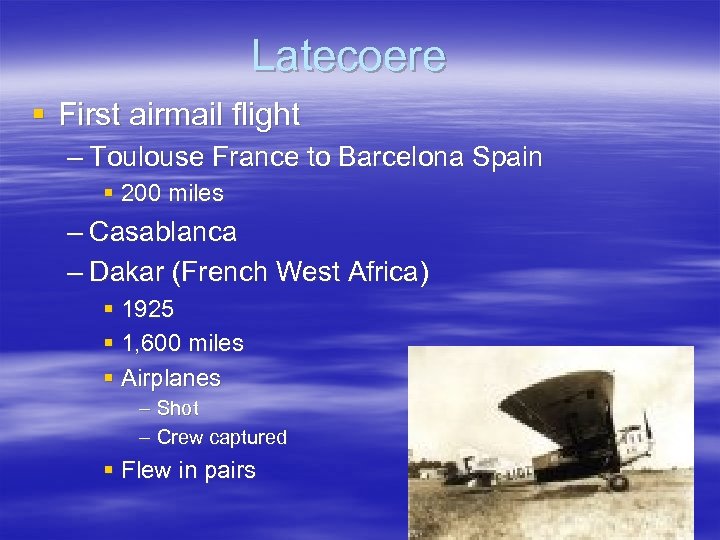 Latecoere § First airmail flight – Toulouse France to Barcelona Spain § 200 miles – Casablanca – Dakar (French West Africa) § 1925 § 1, 600 miles § Airplanes – Shot – Crew captured § Flew in pairs
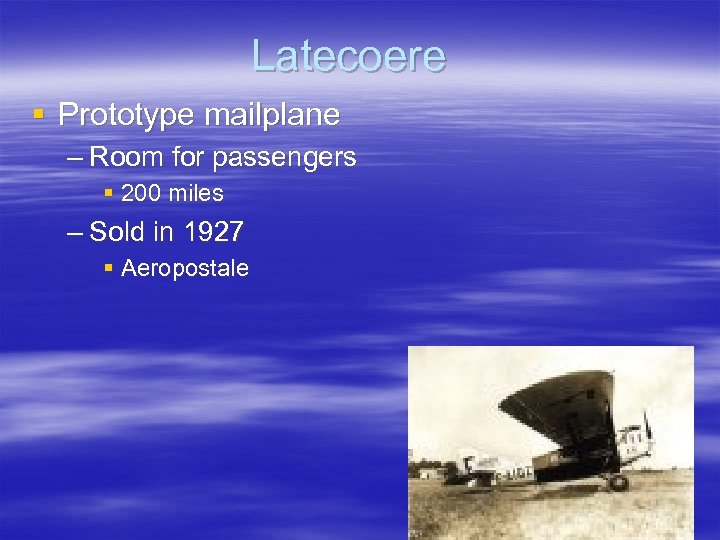 Latecoere § Prototype mailplane – Room for passengers § 200 miles – Sold in 1927 § Aeropostale
 Aerial Diplomacy Ø 1919 Paris Peace Conference ØInternational convention ØDrafted multilateral system ØManaging airspace over participating nations ØFacilitated development of airlines ØTreaty of Versailles ØProhibited German military aviation ØLondon Ultimatum of 1921 ØProhibited production of all aircraft ØRest of year – extended to mid-1922
 Aerial Diplomacy Ø International Conference of Ambassadors ØGermany had met Article 202 requirements ØResume manufacturing, exporting, importing ØCivil aviation equipment ØNew restrictions ØEngines – no more than 60 HP ØAirplane speed – not to exceed 106 MPH ØAltitude – not higher than 13, 000 feet ØCargo – not more than 1, 300 pounds Ø 1 January 1923 ØTreaty restrictions expired
 Germany Ø Invited Germany ØAccept international convention for navigation ØChose to remain outside system ØBilateral agreements Ø Restricted German airspace Ø Establish commercial air routes Ø No agreement – special authorization required Ø Confiscated 14 French aircraft Ø Flights between Berlin and Paris Ø German commercial aviation expanded Ø More than 50 applications for airliners Ø Lufthansa acquired many airlines/airplanes
 Airlines Ø Imperial Airways (Britain) ØSeveral airline began post-war ØMerger – national airline ØDeveloped routed to India and Africa ØTargeting British colonial ports ØIgnored domestic/European routes ØTargeted luxury-class passengers
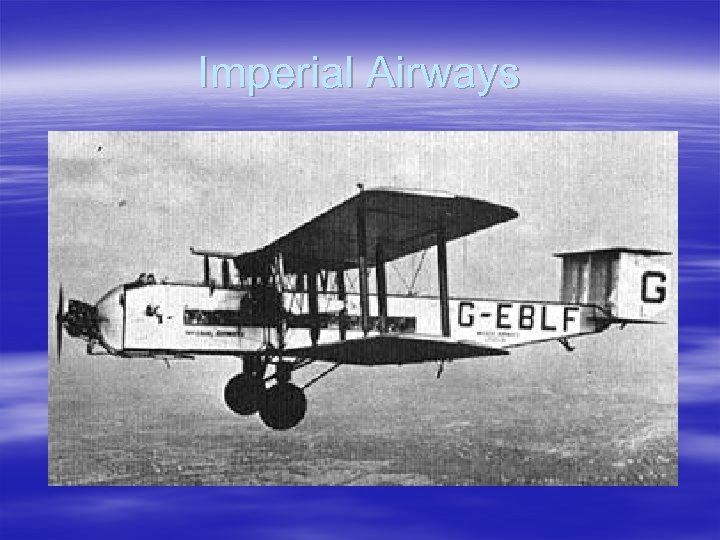 Imperial Airways
 United States Ø Airmail service ØMilitary proved route and concept ØFirst flight – 15 May 1918 ØNew York – Philadelphia - Washington ØU. S. Post Office assumes responsibility ØAugust 1918 - Same route as Army ØOver 700 flights/80, 000 miles Ø 46 forced landings Ø 1919 – 1, 600 flights/400, 000 miles Ø 160 forced landings
 U. S. Airmail Service Ø Transcontinental service Ø 1919 ØNew York – Cleveland ØCleveland - Chicago ØAirmail – day/transferred to trains for night Ø 1920 ØChicago - Omaha ØOmaha – San Francisco ØSeptember – 83 hours to complete
 Air Mail Acts § Air Mail Act of 1925 (Kelly Act) – Airmail service contract to commercial airlines – Airlines organized in response § Post Office phased out § Airlines subsidized for winning contracts § Air Commerce Act of 1926 – Department of Commerce § Assumes aviation tasks § Maintenance/operations of airways § Licensing of pilots § Airworthiness regulations § Federal activities in civil aviation
 Air Mail Acts § Sudden growth in airlines – Lagged behind Europe – Development of mailplanes/airliners – Colonial Air Transport – Colorado Airways – Florida Airways – Ford Motor Company – National Air Transport – Northwest Airways – Pacific Air Transport – Robertson Aircraft – Stout Air Service – Varney Air Lines – Western Air Express
 Summary § § § § Navy/Curtiss Flying Boats Alcock-Brown Crossing Airship Roundtrip Gliding and Barnstormers Army World Flight Billy Mitchell Polar Flights Air Mail Acts