


PE A UM I LG BE AN I LG E B IA ED L SC ND A M R S E N IL E L D E U C A T IO N IN S T IT U Y R IT N S H N R G TIO A I E V H A IV E – IC N N U S UN N S C E A L E M T E 4 H M A S I O 1 T S 0 S C U 2 R W R B O E C B S M O E M C E D M A E T IO N F O R
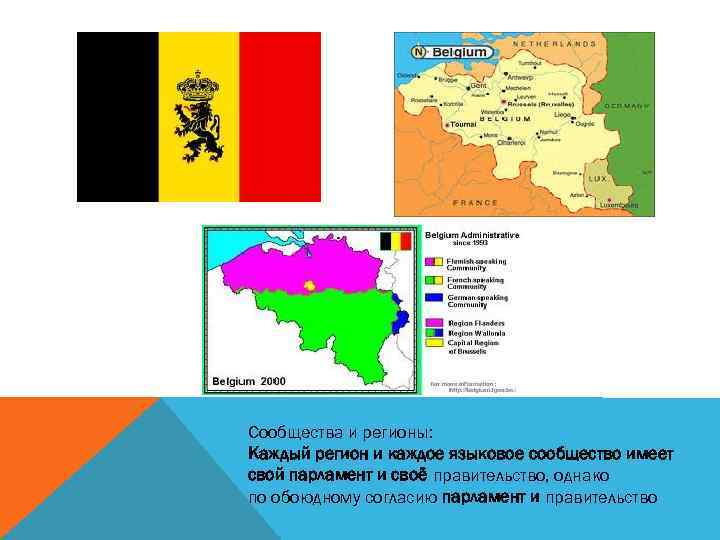
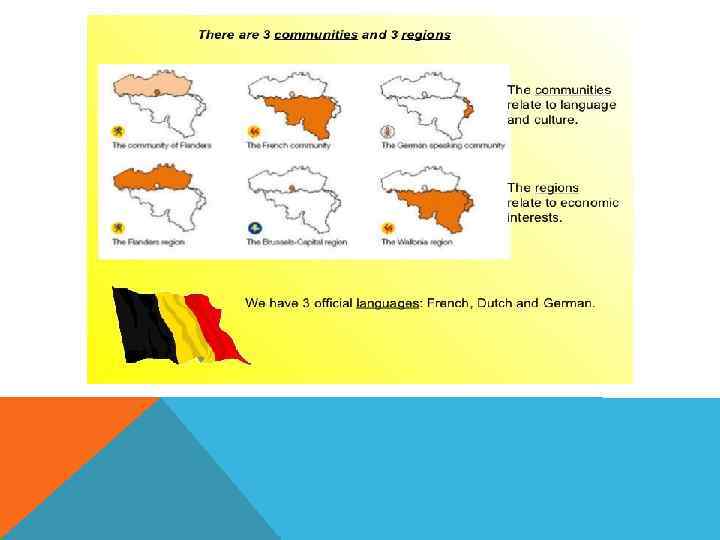
Сообщества и регионы: Каждый регион и каждое языковое сообщество имеет свой парламент и своё правительство, однако по обоюдному согласию парламент и правительство
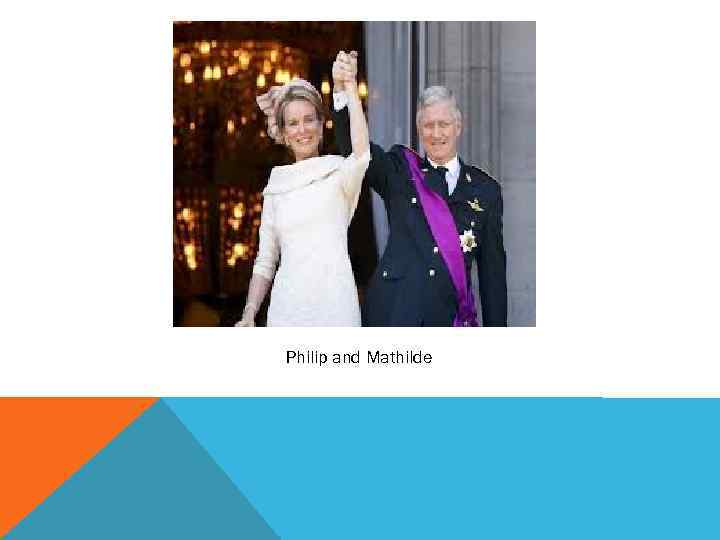
Philip and Mathilde
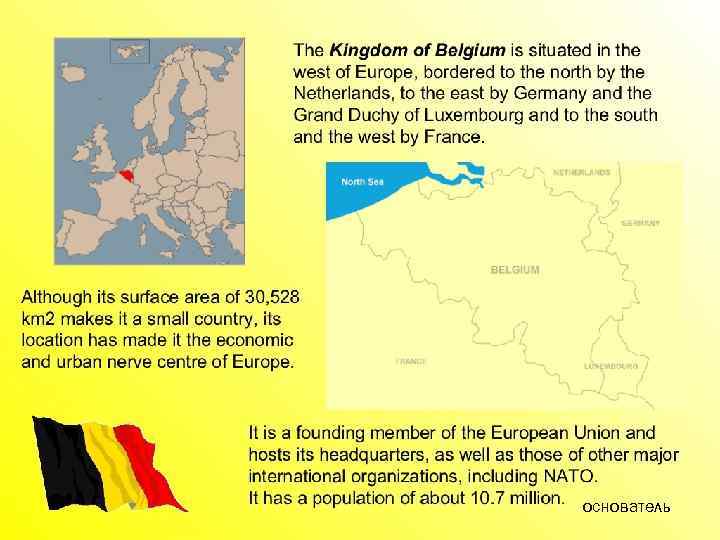
основатель
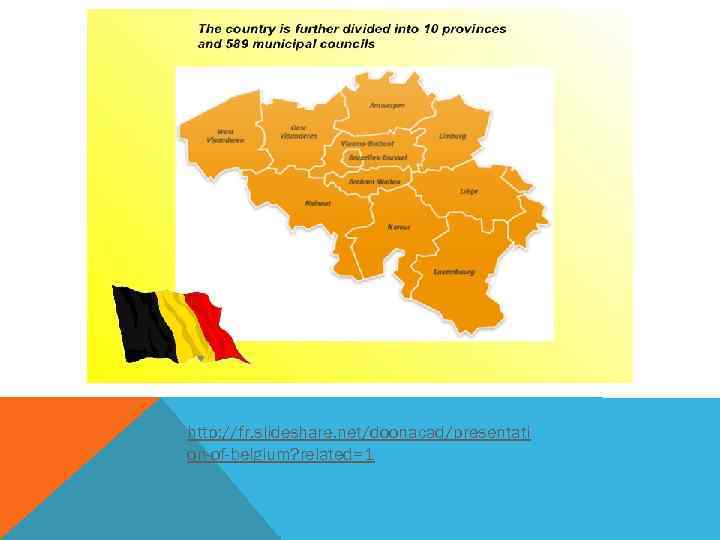
http: //fr. slideshare. net/doonacad/presentati on-of-belgium? related=1
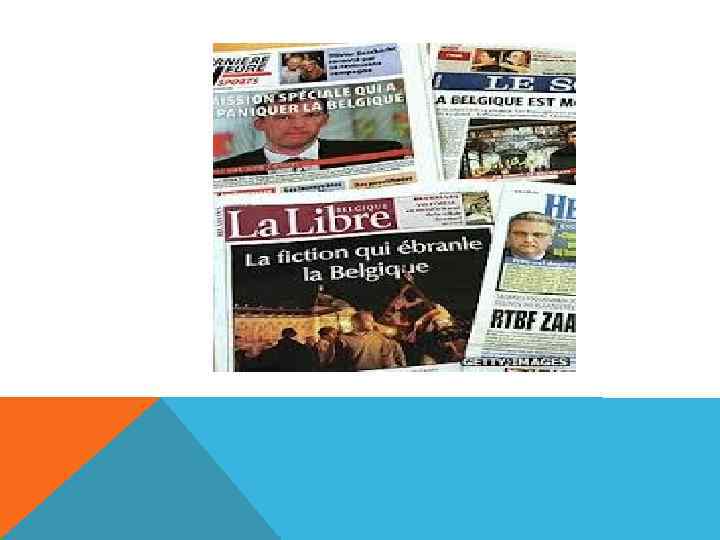
BELGIAN MEDIA LANDSCAPE PRINTED PRESS Major newspapers and magazines in Belgium: printed monolingual -> Dutch or French. Bilingual publications are very minor. Belgium's major news agency: Belga (news agency). Belgium's major photo agencies are Scripta, IP Plurimedia or Mediashake. http: //www. onlinenewspapers. com/belgium. htm
De Standaard De Morgen De Tijd De Gentenaar Gazet Van Antwerpen Het Belang van Limburg Het Laatste Nieuws Het Nieuwsblad La Libre Belgique Le Soir La Meuse L'Echo Vers l'Avenir
Newspapers Major Dutch-language daily newspapers: Het Laatste Nieuws (De Persgroep) (30. 96%), Het Nieuwsblad (Corelio) (27. 04%), Gazet van Antwerpen (Concentra) (11. 27%), Het Belang van Limburg (Concentra) (10. 71%), De Standaard (Corelio) (9. 95%), De Morgen (De Persgroep) (5. 99%) and De Tijd (Mediafin) (4. 08%).
Major French-language daily newspapers: La Dernière Heure (IPM) (16. 1%), Le Soir (Groupe Rossel) (16. 0%), Vers l'Avenir (Corelio) (15. 8%), La Libre Belgique (IPM) (8. 3%), L'Echo (Mediafin) (3. 7%) and La Meuse (newspaper) (Groupe Rossel), La Capitale (Groupe Rossel), La Nouvelle Gazette (Groupe Rossel), La Province (Groupe Rossel) and Nord Eclair (Groupe Rossel) (22. 0%). The only major German-language daily newspaper : Grenz Echo (Groupe Rossel). Metro (Belgian newspaper)
Press groups: Flanders: the Corelio group: quality paper De Standaard and the two popular titles, Het Nieuwsblad and De Gentenaar. Second important group : De Persgroep, with the popular titles Het Laatste Nieuws and De Nieuwe Gazet and the quality paper De Morgen. The popular titles are rather right-wing liberal, while De Morgen has a more progressive streak. Het Laatste Nieuws is the best-selling title in Belgium, with a circulation of more than 300, 000 copies. Third Flemish group is Concentra, which publishes two regional titles: Het Belang van Limburg and Gazet van Antwerpen.
Wallonia: Rossel Group: the biggest editor (редактор). It owns the quality title Le Soir. This paper has a neutral perspective. It also has a share of the German title, Grenz Echo, which has a small circulation (10, 000 copies). It also publishes popular titles.
The second, much smaller group in Wallonia, is IPM. It publishes two titles: La Libre Belgique, a conservative quality paper, and the popular La Dernière Heure, a right-wing liberal paper. Media ownership (владение) in Belgium was until recently determined by language interests. Only a few years ago did the Flemish newspaper group Corelio take an interest in and eventually buy out a Walloon media group, Mediabel.
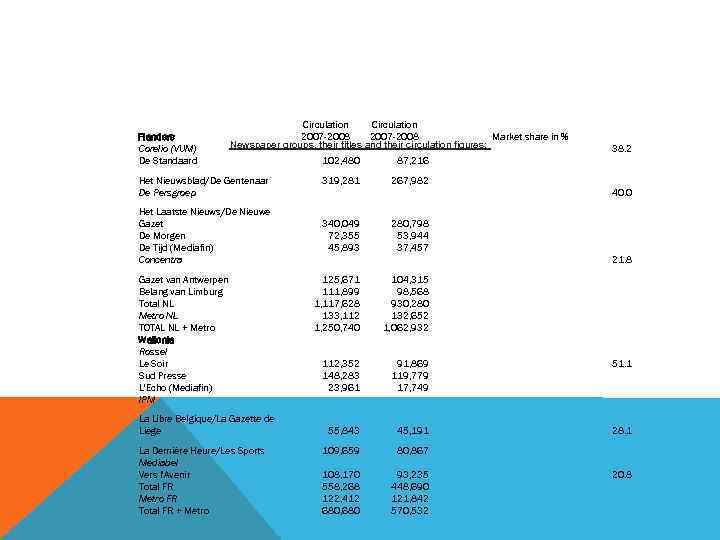
Flanders Corelio (VUM) De Standaard Circulation 2007 -2008 Market share in % Newspaper groups, their titles and their circulation figures: 102, 480 87, 216 Het Nieuwsblad/De Gentenaar De Persgroep Het Laatste Nieuws/De Nieuwe Gazet De Morgen De Tijd (Mediafin) Concentra Gazet van Antwerpen Belang van Limburg Total NL Metro NL TOTAL NL + Metro Wallonia Rossel Le Soir Sud Presse L'Echo (Mediafin) IPM 319, 281 340, 049 72, 355 45, 893 40. 0 280, 798 53, 944 37, 457 125, 671 111, 899 1, 117, 628 133, 112 1, 250, 740 112, 352 148, 283 23, 961 La Libre Belgique/La Gazette de Liège La Dernière Heure/Les Sports Mediabel Vers l'Avenir Total FR Metro FR Total FR + Metro 267, 982 55, 843 108, 170 558, 268 122, 412 680, 680 21. 8 104, 315 98, 568 930, 280 132, 652 1, 062, 932 91, 869 119, 779 17, 749 45, 191 109, 659 38. 2 80, 867 93, 235 448, 690 121, 842 570, 532 51. 1 28. 1 20. 8
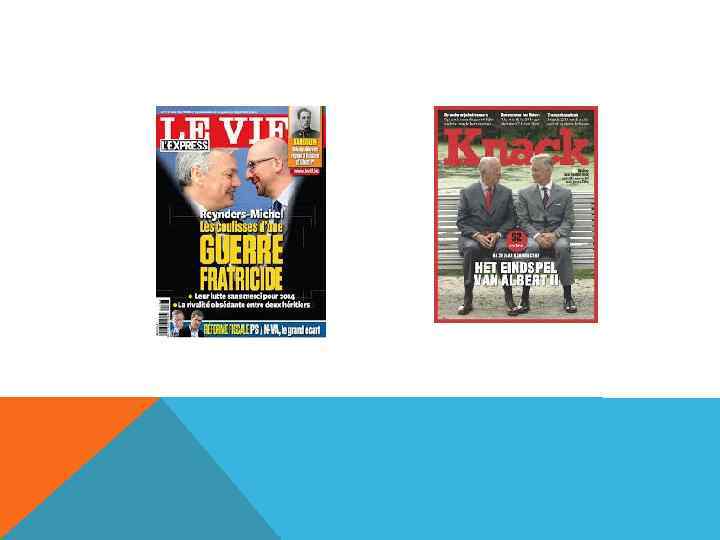
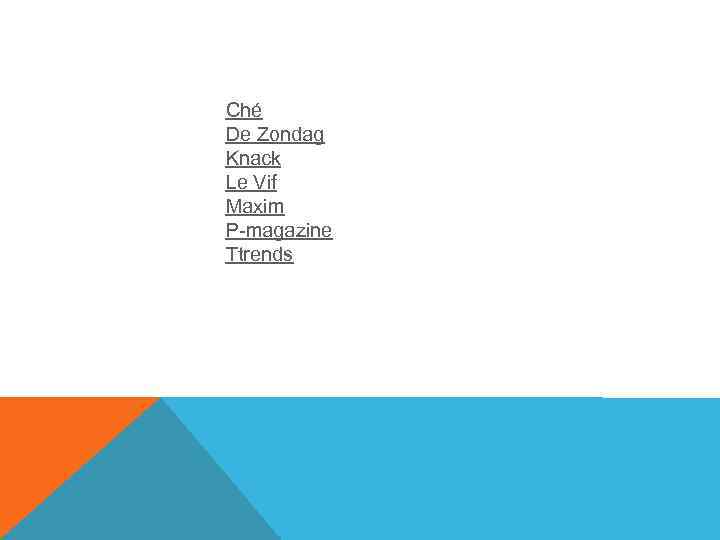
Ché De Zondag Knack Le Vif Maxim P-magazine Ttrends
Magazines The largest group is VNU (Verenigde Nederlandse Uitgeverijen) /Sanoma (Finnish). A dominant player in both Flanders and the French-speaking part of Belgium. Roularta has a monopoly on informative weeklies. Knack is the most-read quality weekly. Trends and Trends/Tendances, for the French-speaking part of Belgium, are the only financial-economic magazines on the Belgian market. In Wallonia, Roularta publishes the only remaining news magazine, Le Vif/L’Express, after acquiring and abolishing two of its competitors in earlier decades.
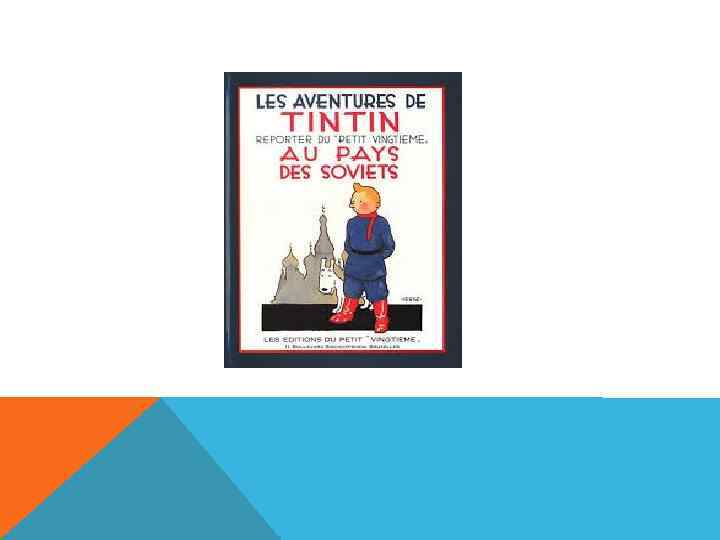
Books The Belgian book market comprises mainly scientific (научное) and non-fiction publications. Educational publications constitute a fifth of the market. Children’s books are also popular. The historically important comic book market has been declining in recent years, primarily because of foreign import. There about 90 book publishers (издатель) in Belgium. Because of the small market, most books in Belgium do not earn turn profits. As such, many authors and publishers are dependent on government subsidies.
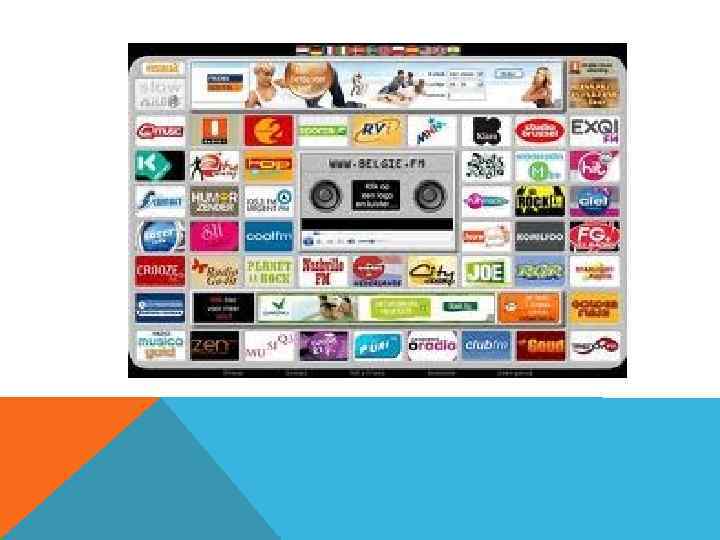
Bel RTL Fun Radio Q-Music Radio 1 Radio 2 Radio Contact Radio Klara Studio Brussels Radio Nostalgie
RADIO First radio stations in Belgium ->1920 s private initiatives. 1930 -> law that founded the Public Service Broadcasting institution. It was financed by a licence fee from the start. Advertising was not allowed. Second World War and the German occupation -> private radio stations were outlawed. 1981 -> private radio stations (частные радиостанции) were allowed again. In the years that followed, advertising and the formation of networks became widespread.
Local radio stations became popular music stations, although little remained of the idealistic stations that marked the heydays of illegal local radio. 1998 : three different types of radio stations: local radio, city radio and regional radio. The year 2001 was big for private radio. In Wallonia, private radio stations were legalised (легализованный) in 1982. In the years before, a great many of them had been broadcasting clandestinely. The forming of networks was, as in Flanders, only allowed (разрешенный) later, in 1987. The Walloon private radio stations compete (конкурировать) with the Public Service Broadcasting more than Flemish stations.
2 be ARD Belgischer Rundfunk und Fernsehen (BRF) Eén Canvas Fédération des Télés Locales Wallonie -Bruxelles Ketnet Jim TV Radio Télévision Belge Francophone (RTBF) RTL VIJFtv Vitaya Vlaamse Radio Televisie Omroep (VRT) Vlaamse Televisie Maatschappij (VTM) VT 4 TF 1 The Music Factory (TMF) ZDF
TELEVISION 1953: first Belgian television broadcasts 1960, division between Flemish and Walloon public broadcasters : Flanders got the Belgische Radio and Televisie (BRT) Wallonia got to watch and listen to the Radio Télévision Belge Francophone (RTBF). The broadcasters continued to share some facilities. Both could be characterised by a rather strong degree of politicisation.
Ø cultural-linguistic communities received increasing political autonomy. Ø 1977: the German part of Belgium also got its own public broadcaster, the Belgischer Rundfunk und Fernsehen (BRF). Ø 1994: complete regional autonomy of public broadcasters. BRT and RTBF : monopoly in their respective markets. Ø cable television (кабельное телевидение): broadcast of 25 foreign television stations > competitive pressure The dilemma of public broadcasters everywhere, whether to go for quality in programming or for quantity in audiences.
1981: a new law allowed for the presence of private pay-TV (частное задолженность телевидение), regional television and, most importantly, a private national television broadcaster (передатчик )> Wallonia + Flanders It took six years for Wallonia and eight years for Flanders to install a private competitor to the public monopoly.
1991: BRT > BRTN: it was now culturally labelled as Flemish. In 1997, a new name was chosen: VRT: Vlaamse Radio Televisie Omroep, underscoring the Flemish character of the channel. The Flemish public broadcaster > to loosen its relationship with the political world. (политическую окраску) 2002: VRT became the market leader in 2002. The goals of the VRT between 2007 and 2011 call for it to become a digital broadcaster (передатчик). Its core mission remains to be a general-audience station that also supplies programmes for specific target groups, such as children, and programmes on culture, news and sports. Part of its financing comes from advertising.
1989: The Vlaamse Televisie Maatschappij (VTM), the Flemish commercial (коммерческий) broadcaster, International European pressure and domestic pressure (давление): abolition (отмена) of the public service monopoly for television 1994: another commercial channel: VT 4 Flanders also has 11 regional TV stations, although some are struggling to survive. The Walloon public broadcaster, the RTBF, had always coped problems similar to those facing its Flemish counterpart. Competition with the French channel TF 1. It also receives some income from advertising revenue. First private television broadcaster in Wallonia : RTL/TVI>2005 licence in Luxemburg Wallonia has 11 regional TV stations 1989: Canal Plus: pay television > 2004: Be TV
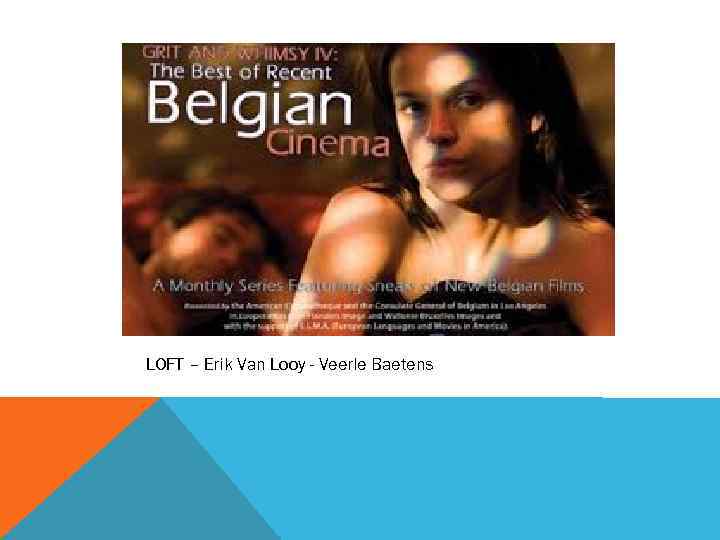
LOFT – Erik Van Looy - Veerle Baetens
1990: decline of moviegoers (снижение зритель) 2000 s: boost (повышение)> French and Flemish films: Rosetta (1999) The Alzheimer Case (2003) L'Enfant (2005) Loft (2008) Several film festivals: Filmfestival Ghent is the most renowned (известны). Its first edition was in 1974, when it hosted but 18 films. Today, it attracts around 110, 000 visitors.
INTERNET 2008: 64 % of the Belgian population lived in households with Internet access (доступ в интернет). 2014: 73 % of the Belgian population Flemish Internet access is higher, When it comes to broadband access (широкополосный доступ), Belgium used to be one of the top countries worldwide. Broadband had a fast penetration rate. By 2006, Belgium had lost that top position to Denmark (Дания), the Netherlands and Iceland.
Federal A federation Federated states Federalism
THE COUNCIL (СОВЕТ) OF EUROPE : 5/5/1949 1 st common organisation used for political cooperation Belgium, Denmark, France, Ireland, Italy, Luxembourg, Norway, the Netherlands, the United Kingdom and Sweden. Very first international parliamentary assembly. Strasbourg
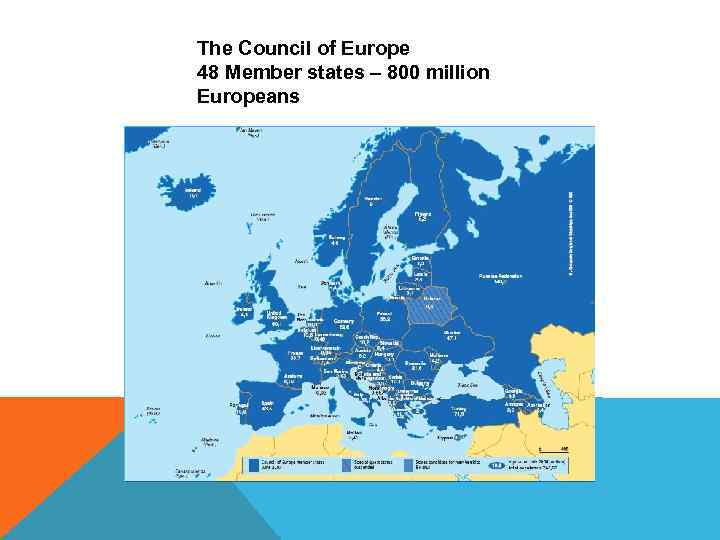
The Council of Europe 48 Member states – 800 million Europeans
- Only coal and steel (уголь и сталь)! - France + Germany - Belgium, The Netherlands, Luxemburg, Italy. - UK : not interested cooperation with ECSC
- Recognition (опознание) of the high Authority - Creation of a common assembly - Creation of a Court of Justice (суд) - Creation of a Council of Ministers
- Countries which refused to be part of the economic integration formed the EFTA (European Free Trade Association) in 1959. -UK, Norway, Sweden, DK, A, PT, Iceland Switzerland, later Finland -But : most members (член) left to join the EEC
1950 s: - High Spirits, Failures - Threat (угроза) = communism Germany must be rearmed(вооружиться) and in Western Europe
30 March 1962: - ‘European Parliamentary Assembly’ ‘European Parliament’ - Most countries against universal suffrage (универсал избирательное право) for EP
- European flag : 29 May 1986 - European driving licences (водительские права): January 1986 - 30 March 1985 : mutual recognition (опознание) of higher education diplomas: Measures to facilitate the free movement of students. Access to employment in national civil services for all citizens who were nationals of a Community Member State.
Public opinion -Begins to be taken into account: referenda -Assessing public opinion and keeping citizens informed regarded as essential elements in the process of European integration Eurobarometer : http: //ec. europa. eu/public_opini on/index_en. htm
1986: 12 member states : 6 + UK, IRL, DK + GR, E, PT. Need for more effective and democratic structures. Single European Act
1990 German reunification 1995 : Austria, Sweden, Finland 2004 : Big Bang : 10 new member states : Baltic states : Estonia, Latvia, Lithuania, Hungary, Czech Republic, Poland, Slovakia, Slovenia, Malta, Cyprus 2007 : Romania and Bulgaria
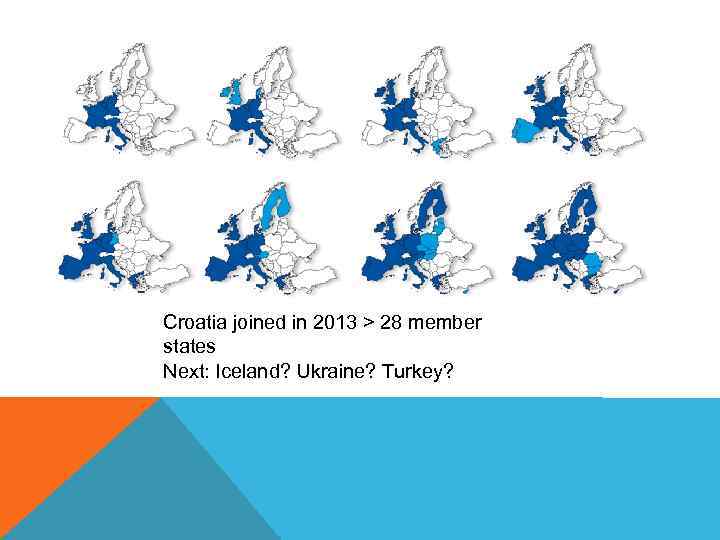
Croatia joined in 2013 > 28 member states Next: Iceland? Ukraine? Turkey?
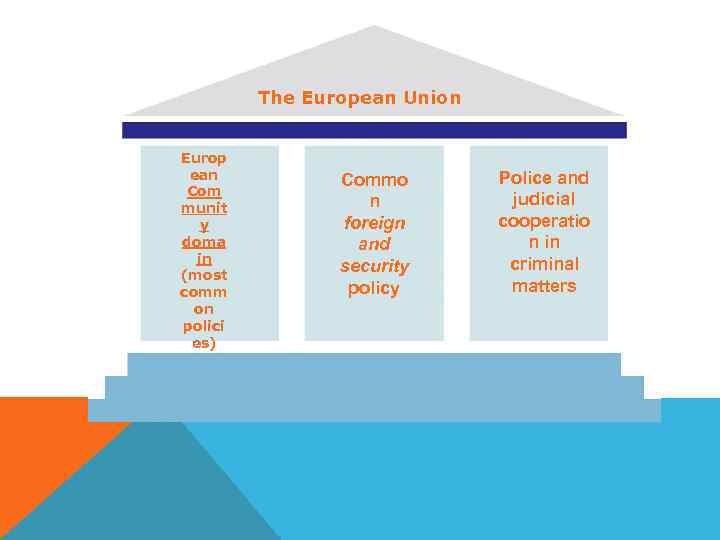
The European Union Europ ean Com munit y doma in (most comm on polici es) Commo n foreign and security policy Police and judicial cooperatio n in criminal matters
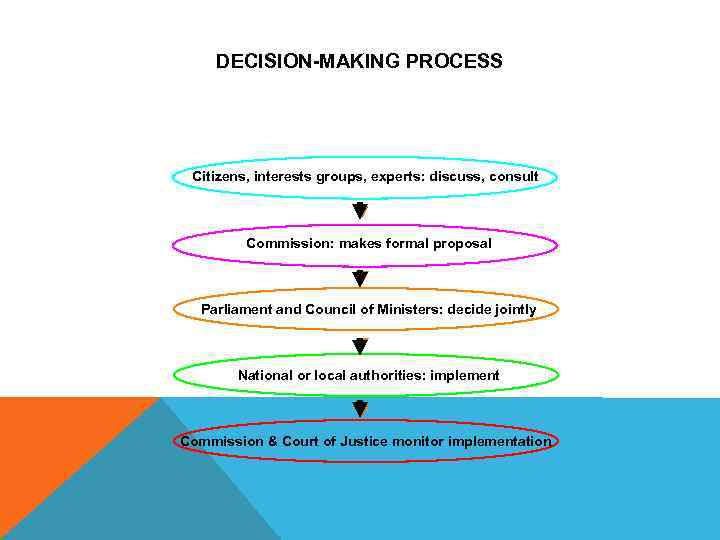
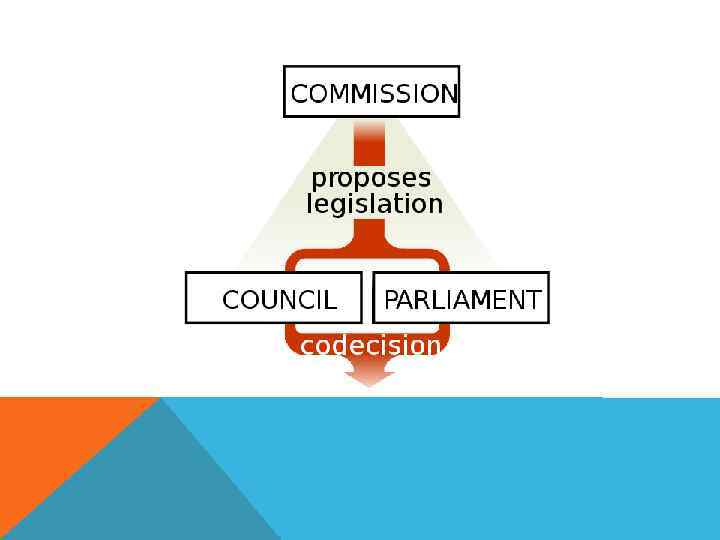
DECISION-MAKING PROCESS Citizens, interests groups, experts: discuss, consult Commission: makes formal proposal Parliament and Council of Ministers: decide jointly National or local authorities: implement Commission & Court of Justice monitor implementation
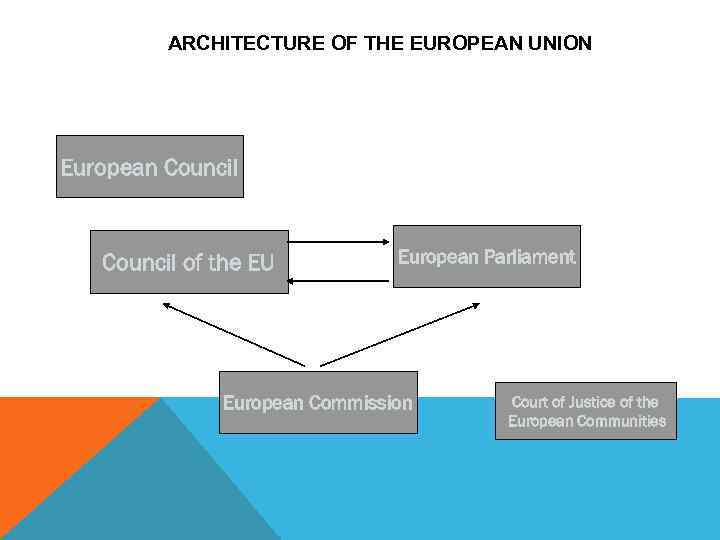
ARCHITECTURE OF THE EUROPEAN UNION European Council of the EU European Parliament European Commission Court of Justice of the European Communities
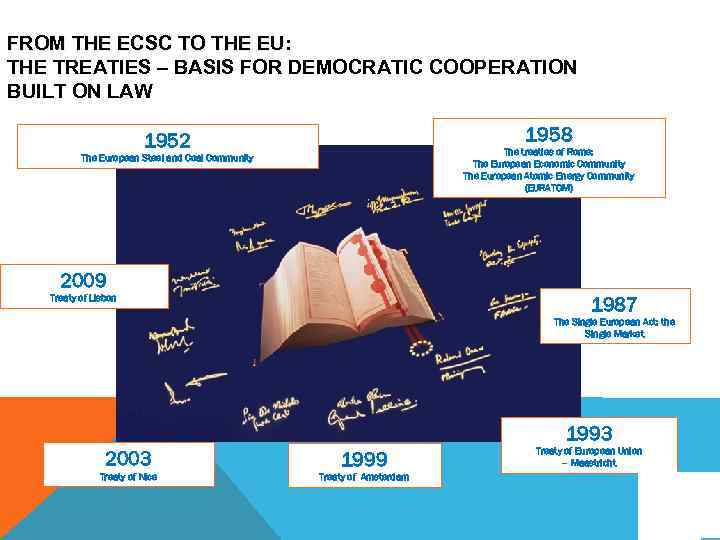
FROM THE ECSC TO THE EU: FROM THE ECSC TO THE EU THE TREATIES – BASIS FOR DEMOCRATIC COOPERATION BUILT ON LAW 1958 1952 The treaties of Rome: The European Economic Community The European Atomic Energy Community (EURATOM) The European Steel and Coal Community 2009 Treaty of Lisbon 1987 The Single European Act: the Single Market 1993 2003 1999 Treaty of Nice Treaty of Amsterdam Treaty of European Union – Maastricht
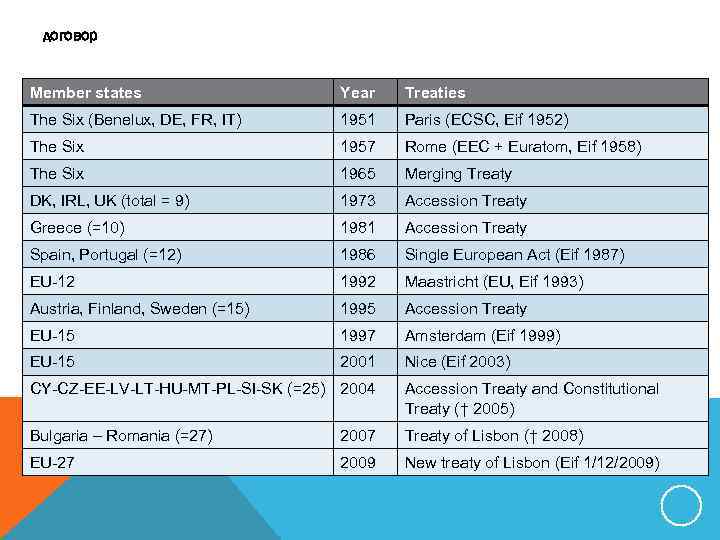
договор Member states Year Treaties The Six (Benelux, DE, FR, IT) 1951 Paris (ECSC, Eif 1952) The Six 1957 Rome (EEC + Euratom, Eif 1958) The Six 1965 Merging Treaty DK, IRL, UK (total = 9) 1973 Accession Treaty Greece (=10) 1981 Accession Treaty Spain, Portugal (=12) 1986 Single European Act (Eif 1987) EU-12 1992 Maastricht (EU, Eif 1993) Austria, Finland, Sweden (=15) 1995 Accession Treaty EU-15 1997 Amsterdam (Eif 1999) EU-15 2001 Nice (Eif 2003) CY-CZ-EE-LV-LT-HU-MT-PL-SI-SK (=25) 2004 Accession Treaty and Constitutional Treaty († 2005) Bulgaria – Romania (=27) 2007 Treaty of Lisbon († 2008) EU-27 2009 New treaty of Lisbon (Eif 1/12/2009)

NS O TI U T E H У Ч Р IT STИ Е N I Е Ж Д Е Н
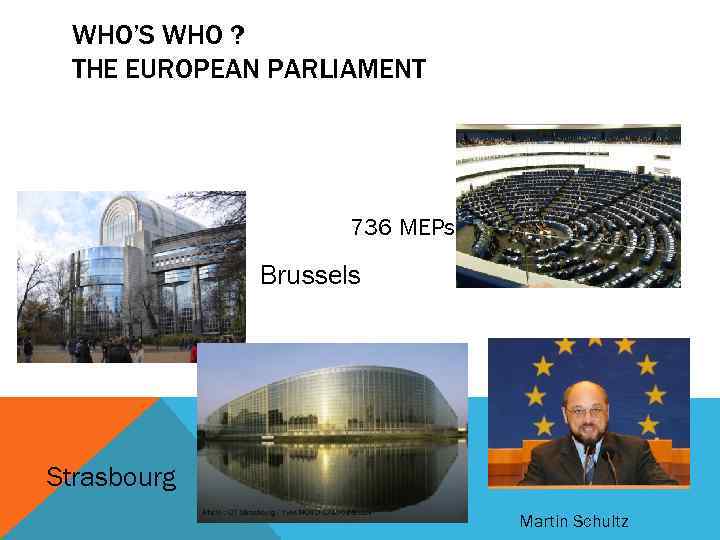
WHO’S WHO ? THE EUROPEAN PARLIAMENT 736 MEPs Brussels Strasbourg Martin Schultz
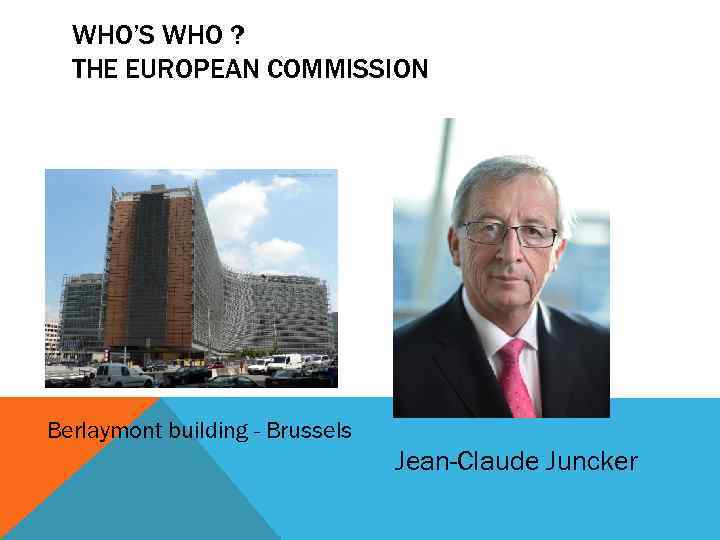
WHO’S WHO ? THE EUROPEAN COMMISSION Berlaymont building - Brussels Jean-Claude Juncker
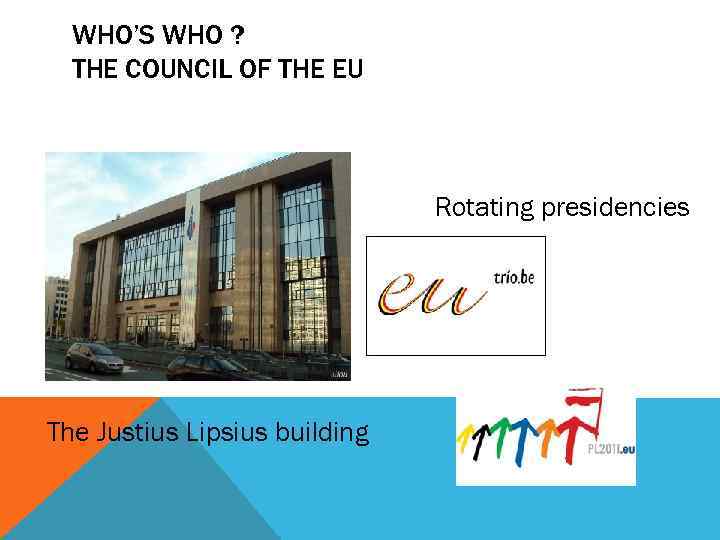
WHO’S WHO ? THE COUNCIL OF THE EU Rotating presidencies The Justius Lipsius building
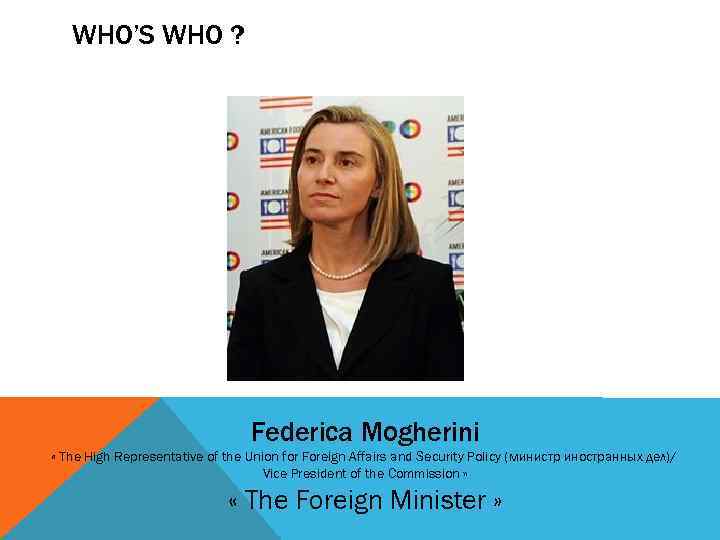
WHO’S WHO ? Federica Mogherini « The High Representative of the Union for Foreign Affairs and Security Policy (министр иностранных дел)/ Vice President of the Commission » « The Foreign Minister »
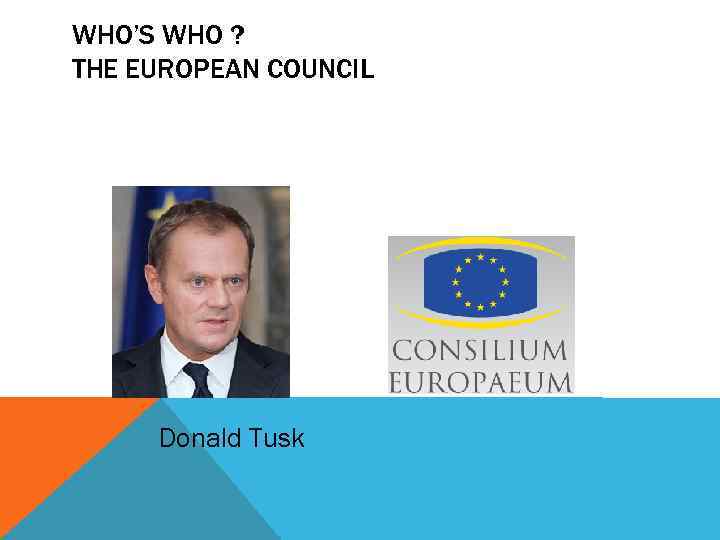
WHO’S WHO ? THE EUROPEAN COUNCIL Donald Tusk
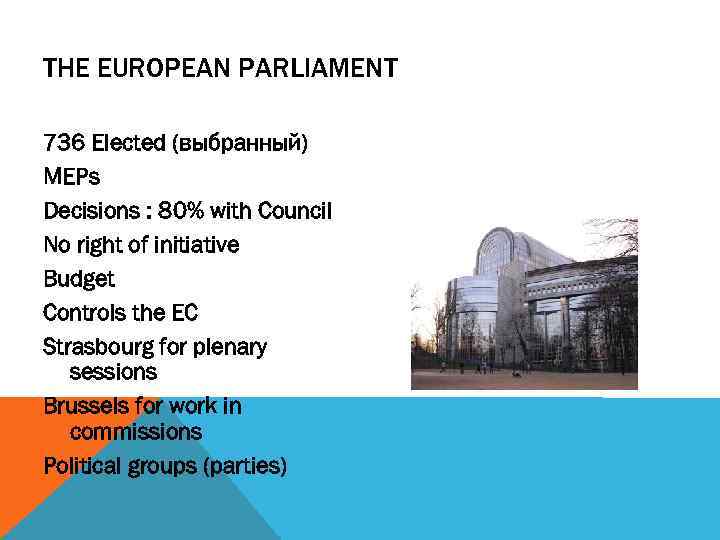
THE EUROPEAN PARLIAMENT 736 Elected (выбранный) MEPs Decisions : 80% with Council No right of initiative Budget Controls the EC Strasbourg for plenary sessions Brussels for work in commissions Political groups (parties)
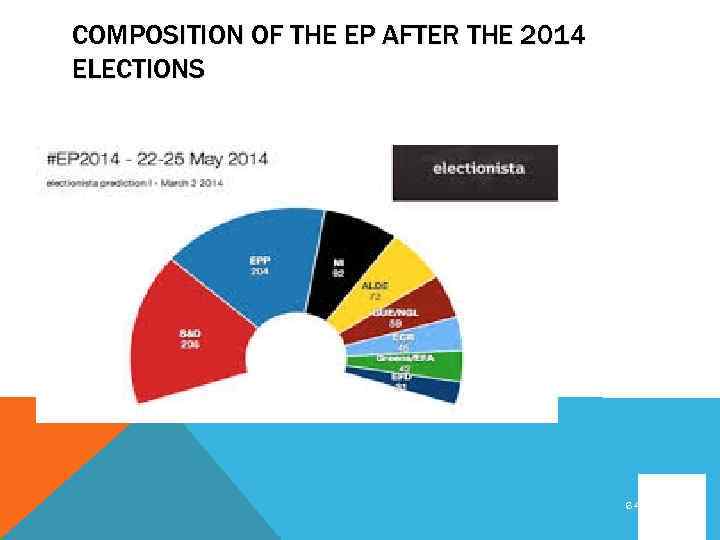
COMPOSITION OF THE EP AFTER THE 2014 ELECTIONS The EP in today’s EU for an enhanced European democracy: http: //www. youtube. com/watch? v=OCUF 5 t 1 k. Rl. I 64
EUROPEAN POLITICAL PARTIES are they really parties ? § No militants (активист) § Resources are allocated by the national parties, members of the group § No campaign as such for the elections of the EP § No real programme (because the Commission has the right of proposal)
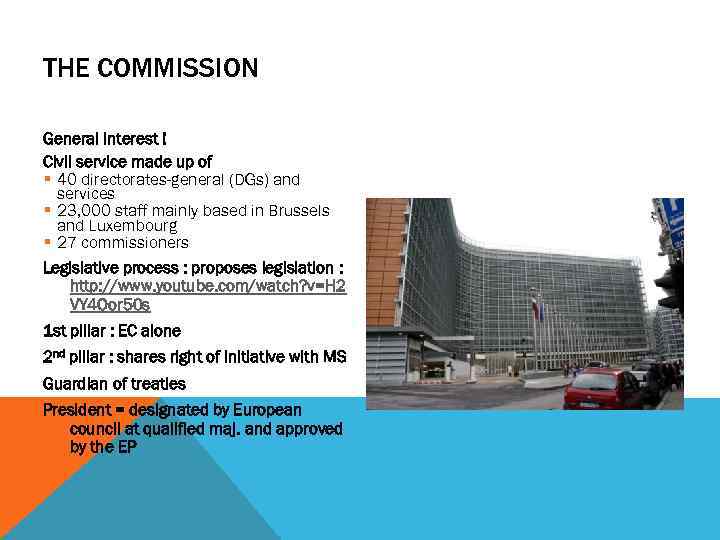
THE COMMISSION General interest ! Civil service made up of § 40 directorates-general (DGs) and services § 23, 000 staff mainly based in Brussels and Luxembourg § 27 commissioners Legislative process : proposes legislation : http: //www. youtube. com/watch? v=H 2 VY 4 Qor 50 s 1 st pillar : EC alone 2 nd pillar : shares right of initiative with MS Guardian of treaties President = designated by European council at qualified maj. and approved by the EP
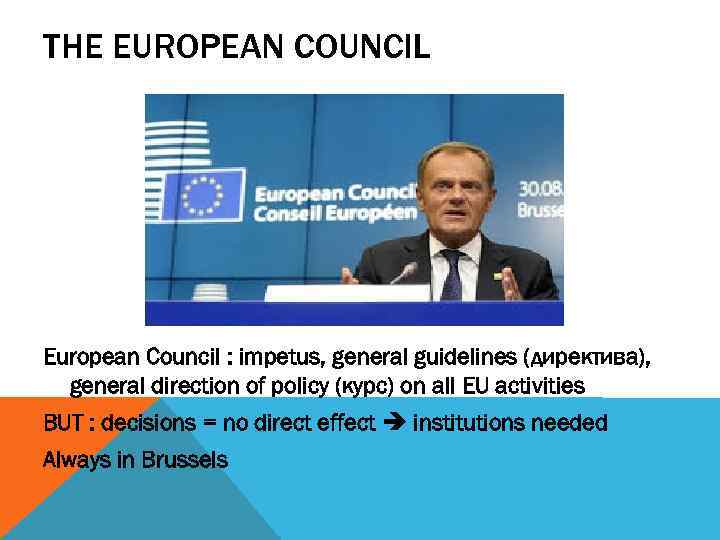
THE EUROPEAN COUNCIL European Council : impetus, general guidelines (директива), general direction of policy (курс) on all EU activities BUT : decisions = no direct effect institutions needed Always in Brussels
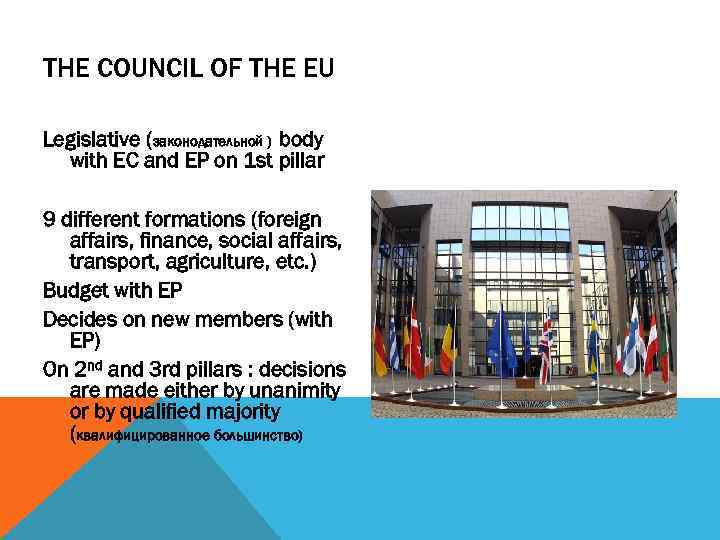
THE COUNCIL OF THE EU Legislative (законодательной ) body with EC and EP on 1 st pillar 9 different formations (foreign affairs, finance, social affairs, transport, agriculture, etc. ) Budget with EP Decides on new members (with EP) On 2 nd and 3 rd pillars : decisions are made either by unanimity or by qualified majority (квалифицированное большинство)
WHOSE INTEREST ? COMMission = COMMon interest COUncil = interest of the COUntries (исполнительный) European Parliament = interest of the Peoples
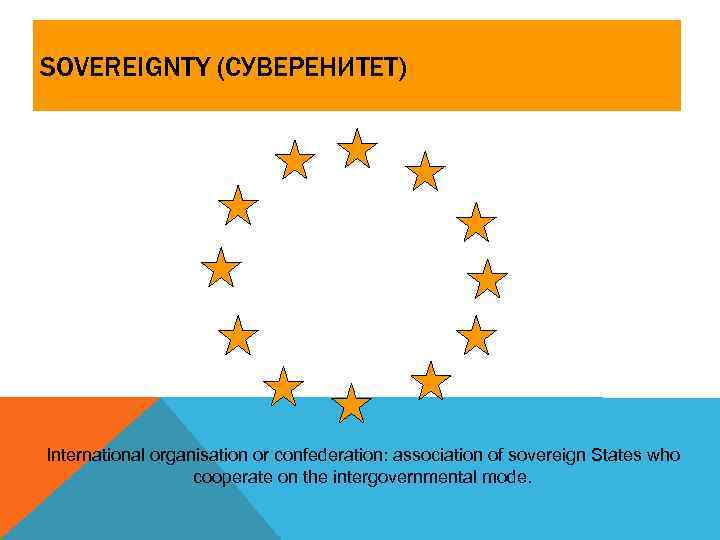
SOVEREIGNTY (СУВЕРЕНИТЕТ) International organisation or confederation: association of sovereign States who cooperate on the intergovernmental mode.
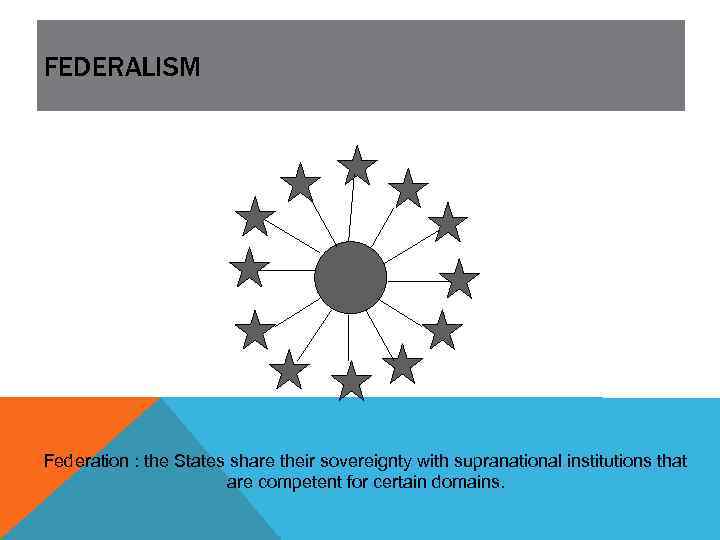
FEDERALISM Federation : the States share their sovereignty with supranational institutions that are competent for certain domains.
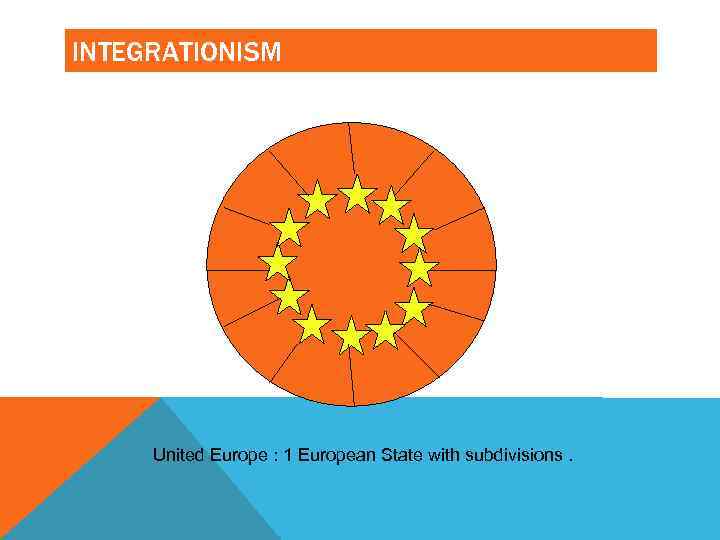
INTEGRATIONISM United Europe : 1 European State with subdivisions.
CONCLUSION The initial ideal (идеал): peace !!! New goal ? The environment (среда) ?
Europe and communication Part 2 : The Non-Communication Policy
INTRODUCTION 45 % of Europeans have a positive image of the EU But … Europe doesn’t get you elected (politicians) Europe doesn’t sell (media) Europe and propaganda (teachers)
The issue n n n 500, 000 citizens (гражданин) 23 different languages EU = complex Difficult to simplify (упростить) legal and economic decisions Ccl : communicating is difficult
The perception n n n « Brussels » = away, unreachable Lack of knowledge of EU decisions feeling of distance; Gap between citizens and institutions Brussels has decided The eurocrats … The bureaucracy … A Europe of States and citizens ? NO ! A Europe of the States ! the citizen is not interested
1995 n Launch of the Europa website : http: //www. europa. eu/
1999 n n Public opinion = very negative Especially UK 1 st time the whole Commission resigns (Santer) (уходить в отставку) « democratic deficit » (дефицит демократии)appears for 1 st time
Democratic deficit n The democratic deficit is a concept invoked principally in the argument that the European Union and its various bodies suffer from a lack of democracy and seem inaccessible to the ordinary citizen because their method of operating is so complex. The view is that the Community institutional set-up is dominated by an institution combining legislative and government powers (the Council of the European Union) and an institution that lacks democratic legitimacy (the European Commission). http: //europa. eu/scadplus/glossary/democratic_deficit_en. htm
Europa website n n 500, 000 daily visitors Information in 23 languages on EU history, policies, institutions n EUR-Lex (legislation) n EU bookshop (publications) n Who’s who n
Conclusion n n EUROPA website is the future of communication policy of the EU Users (= citizens) should be playing a more important role (роль) in debating (обсуждать) on new EU policies What should EU communication focus on ? What about citzens’ discussions on Lisbon Treaty ?
INTERESTING LINKS About the EU: http: //europa. eu/about-eu/index_en. htm EU’s history: http: //europa. eu/about-eu/eu-history/index_en. htm Treaty on the EU and treaty on the functioning on the EU (Lisbon treaty): http: //europa. eu/lisbon_treaty/index_en. htm After Lisbon: http: //ec. europa. eu/education/jeanmonnet/doc/ecsa 10/rossi_en. pdf EU institutions: http: //europa. eu/about-eu/institutionsbodies/index_en. htm EU policies: http: //ec. europa. eu/policies/index_en. htm Sights and sounds of Europe: www. youtube. com/user/eutube European navigator: http: //www. ena. lu/ Official translations: http: //iate. europa. eu 83
How have the media in Eastern and Western Europe dealt with European issues in the post-war period?
Media references to ‘Europe’ and European identity are relatively uncommon in Western European countries. This may reflect the fact that they regard themselves as part of Europe’s historical core and take their ‘Europeanness’ for granted.
Starting in the 1980 s, there is a noticeable change: Their focus shifts away from Europe to the European Union. This trend gathers pace in the 1990 s, with the concept of ‘Europe’ being largely eclipsed thereafter by a notion of ‘the EU’. _ In the ‘East’, references to Europe or the EU are rare before 1989.
_ After 1989, with the continent undergoing geopolitical reorganization, media references to Europe become more common in Eastern and Central Europe. This is particularly true for countries such as Poland Slovenia that have sought to redefine their Europeanness.
_ Whereas Europe and the EU appear as clearly defined notions in Western countries, references to them in Central Eastern countries are ambiguous. - A positive perception of the ‘EU’ as a unifying force dominates public opinion after the end of the Cold War.
Why is there so little media coverage of EU topics?
European and EU-related news topics tend to play a relatively minor and sporadic role in the overall content of the mass media. The lack of EU-related news coverage reflects: · the privileged (привилегированный) status of national/regional news relative to the seemingly ‘foreign’, and a general neglect of business, politics and international news in favour of less serious content. A preponderance of evidence shows there is no shared ‘European’ dimension to journalistic cultures.
Journalism cultures are intrinsically ethnocentric and statecentric. EU issues are still largely viewed through a national media lens. It is virtually impossible to create a common informational or editorial product across national/cultural boundaries in the short or medium-term.
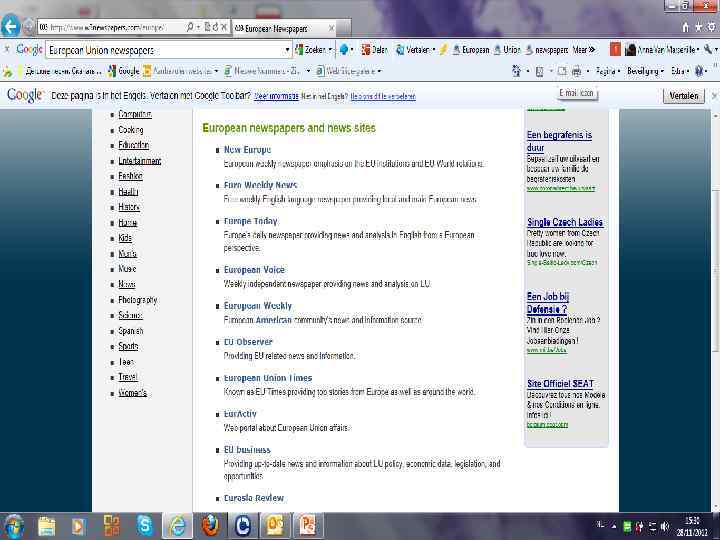
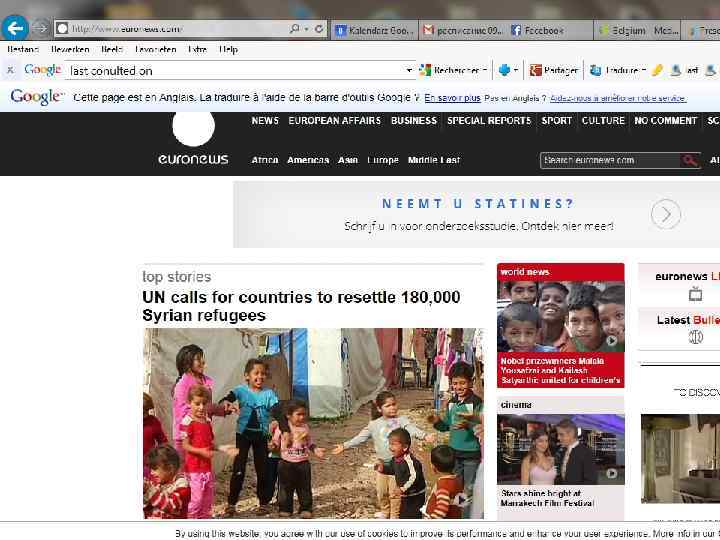
SOURCES: -CSC – La Garenne (2014)- Presentation of Belgium http: //fr. slideshare. net/doonacad/presentation-of-belgium? related=1 (last consulted on 6 December 2014) -Europe and Communication (2014) – IHECS course: Luca Copetti – Anne Van Marsenille -European Research Area (2009) - European Policy Brief -ftp: //ftp. cordis. europa. eu/pub/fp 7/ssh/docs/emediate-bursi_en. pdf (last consulted on 8 December 2014) -Media Landscapes – Belgium – Introduction (2014 http: //ejc. net/media_landscapes/belgium (last consulted on 8 December 2014)
Thank you for your attention! СПАСИБО ЗА ВНИМАНИЕ!
