


 Скачать презентацию PCI Trends in Japan Transradial for CTO and
e08413a7374b3ce6909ef559d961e110.ppt
- Количество слайдов: 57
 PCI Trends in Japan Transradial for CTO and AMI Shigeru Saito, MD, FACC, FSCAI, FJCC Kamakura & Sapporo, Japan
 DISCLOSURES Shigeru Saito, MD I have no real or apparent conflicts of interest to report.
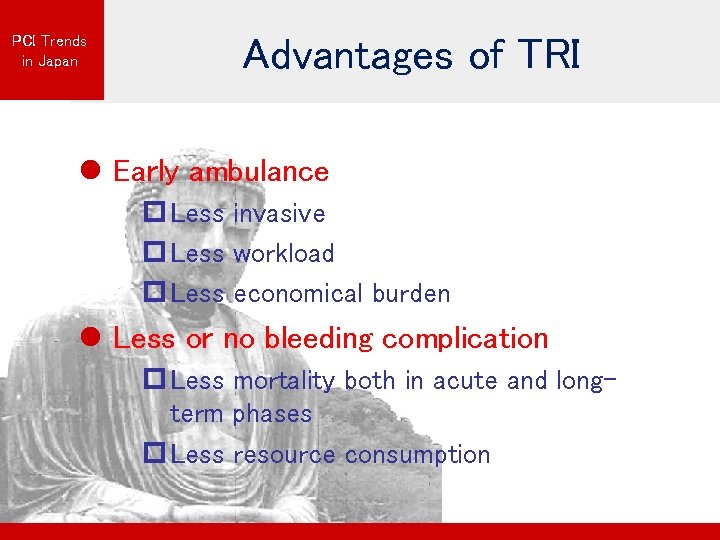 PCI Trends in Japan Advantages of TRI l Early ambulance p Less invasive p Less workload p Less economical burden l Less or no bleeding complication p Less mortality both in acute and longterm phases p Less resource consumption
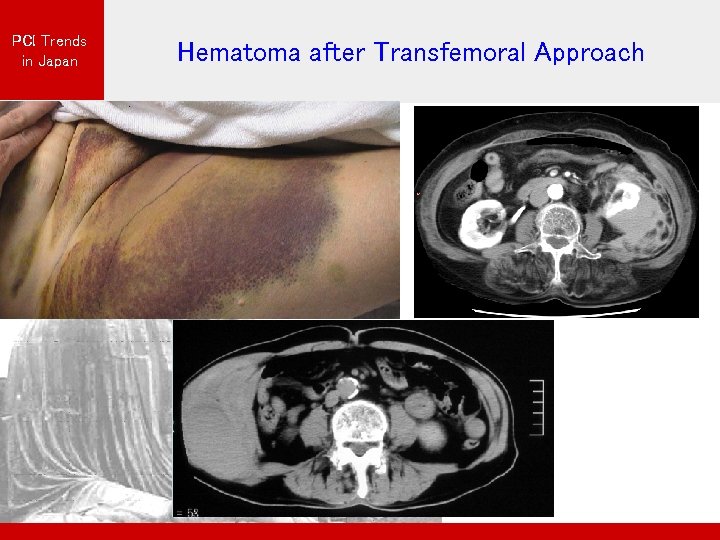 PCI Trends in Japan Hematoma after Transfemoral Approach
 PCI Trends in Japan Bleeding complication is not only the risk during the acute phase but also increases the long-term mortality as well.
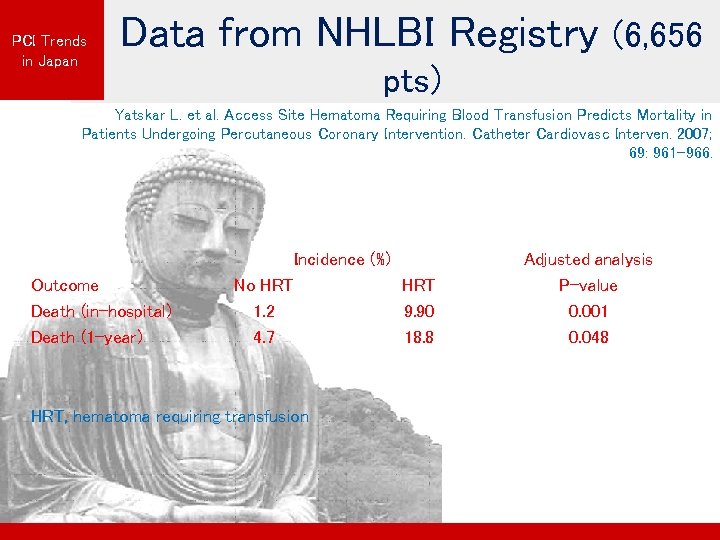 PCI Trends in Japan Data from NHLBI Registry (6, 656 pts) Yatskar L. et al. Access Site Hematoma Requiring Blood Transfusion Predicts Mortality in Patients Undergoing Percutaneous Coronary Intervention. Catheter Cardiovasc Interven. 2007; 69: 961– 966. Outcome Death (in-hospital) Death (1 -year) Incidence (%) No HRT 1. 2 9. 90 4. 7 18. 8 HRT, hematoma requiring transfusion Adjusted analysis P-value 0. 001 0. 048
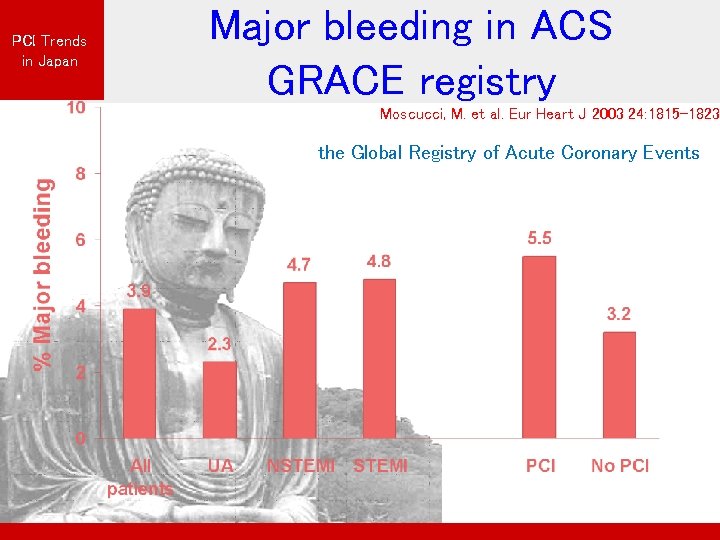 PCI Trends in Japan Major bleeding in ACS GRACE registry Moscucci, M. et al. Eur Heart J 2003 24: 1815 -1823 the Global Registry of Acute Coronary Events
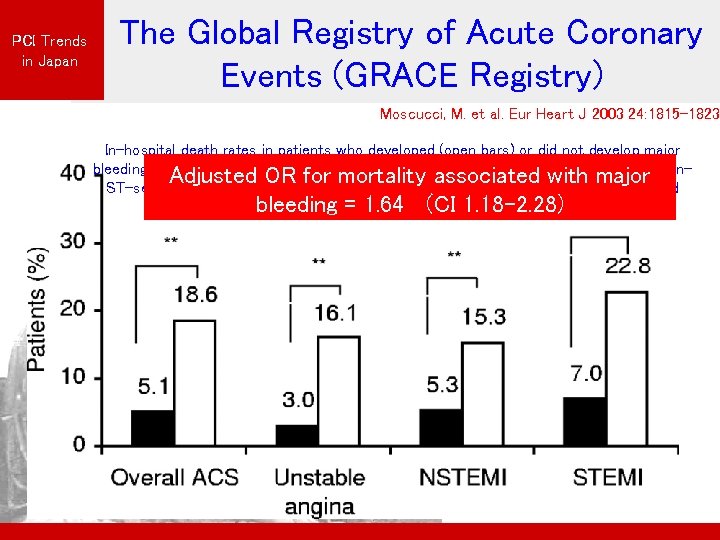 PCI Trends in Japan The Global Registry of Acute Coronary Events (GRACE Registry) Moscucci, M. et al. Eur Heart J 2003 24: 1815 -1823 In-hospital death rates in patients who developed (open bars) or did not develop major bleeding (closed bars) (STEMI=ST-segment elevation myocardial infarction; NSTEMI=non. Adjusted OR for mortality associated with major ST-segment elevation myocardial infarction). **P< 0. 001 for differences in unadjusted bleeding =death rates. 1. 18 -2. 28) 1. 64 (CI
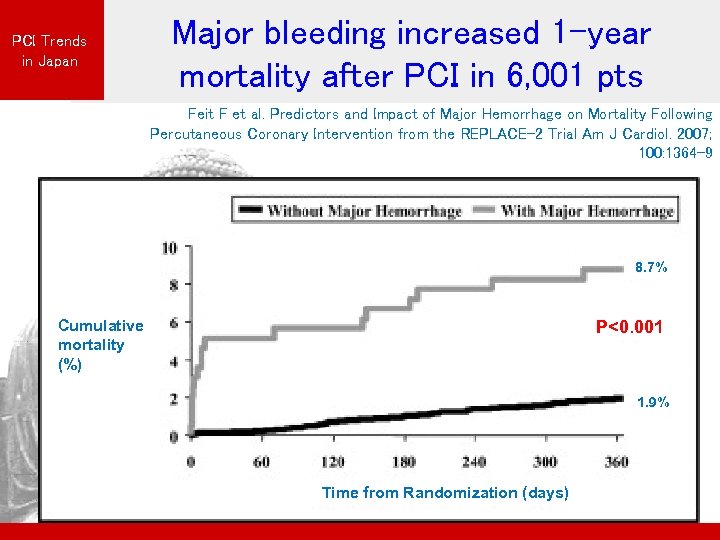 PCI Trends in Japan Major bleeding increased 1 -year mortality after PCI in 6, 001 pts Feit F et al. Predictors and Impact of Major Hemorrhage on Mortality Following Percutaneous Coronary Intervention from the REPLACE-2 Trial Am J Cardiol. 2007; 100: 1364 -9 8. 7% Cumulative mortality (%) P<0. 001 1. 9% Time from Randomization (days)
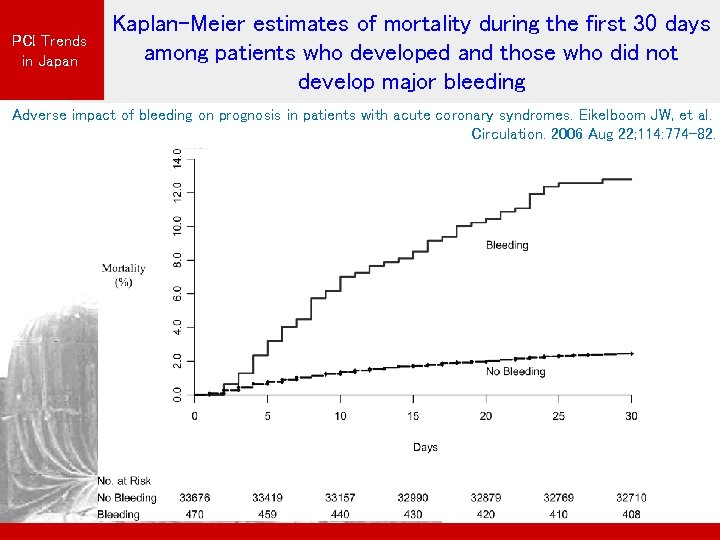 PCI Trends in Japan Kaplan-Meier estimates of mortality during the first 30 days among patients who developed and those who did not develop major bleeding Adverse impact of bleeding on prognosis in patients with acute coronary syndromes. Eikelboom JW, et al. Circulation. 2006 Aug 22; 114: 774 -82.
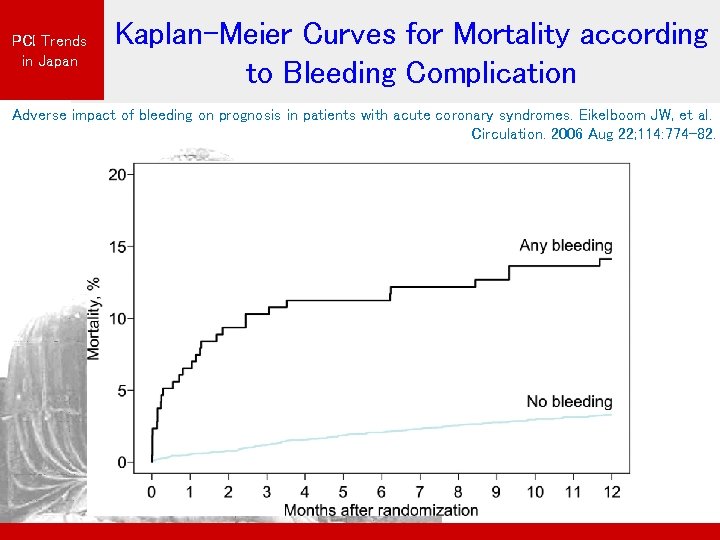 PCI Trends in Japan Kaplan-Meier Curves for Mortality according to Bleeding Complication Adverse impact of bleeding on prognosis in patients with acute coronary syndromes. Eikelboom JW, et al. Circulation. 2006 Aug 22; 114: 774 -82.
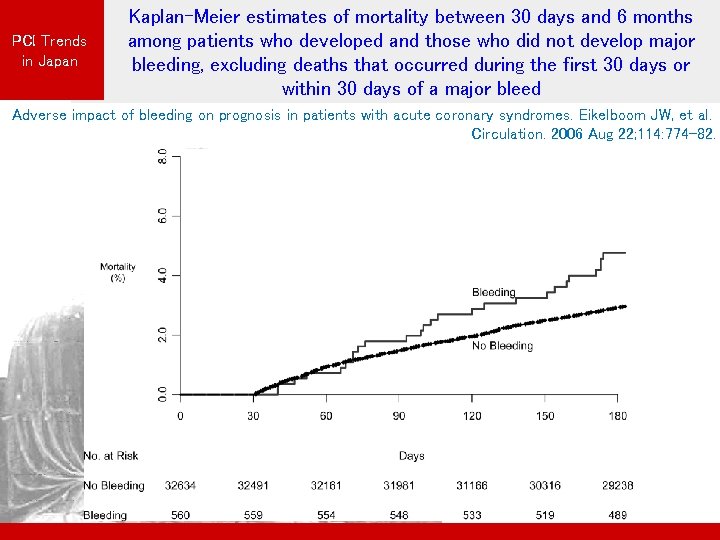
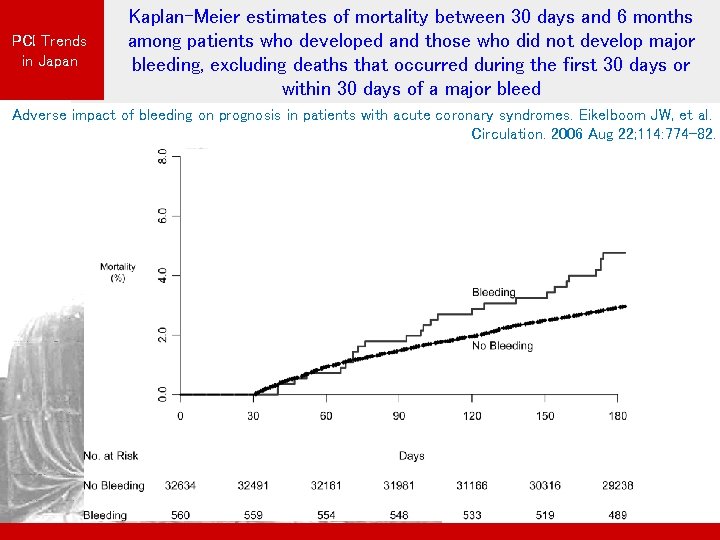 PCI Trends in Japan Kaplan-Meier estimates of mortality between 30 days and 6 months among patients who developed and those who did not develop major bleeding, excluding deaths that occurred during the first 30 days or within 30 days of a major bleed Adverse impact of bleeding on prognosis in patients with acute coronary syndromes. Eikelboom JW, et al. Circulation. 2006 Aug 22; 114: 774 -82.
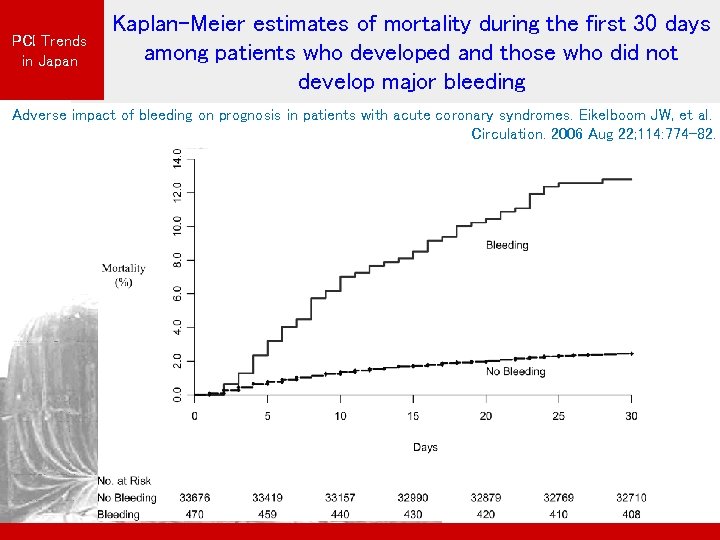 PCI Trends in Japan Kaplan-Meier estimates of mortality during the first 30 days among patients who developed and those who did not develop major bleeding Adverse impact of bleeding on prognosis in patients with acute coronary syndromes. Eikelboom JW, et al. Circulation. 2006 Aug 22; 114: 774 -82.
 PCI Trends in Japan Kaplan-Meier estimates of mortality between 30 days and 6 months among patients who developed and those who did not develop major bleeding, excluding deaths that occurred during the first 30 days or within 30 days of a major bleed Adverse impact of bleeding on prognosis in patients with acute coronary syndromes. Eikelboom JW, et al. Circulation. 2006 Aug 22; 114: 774 -82.
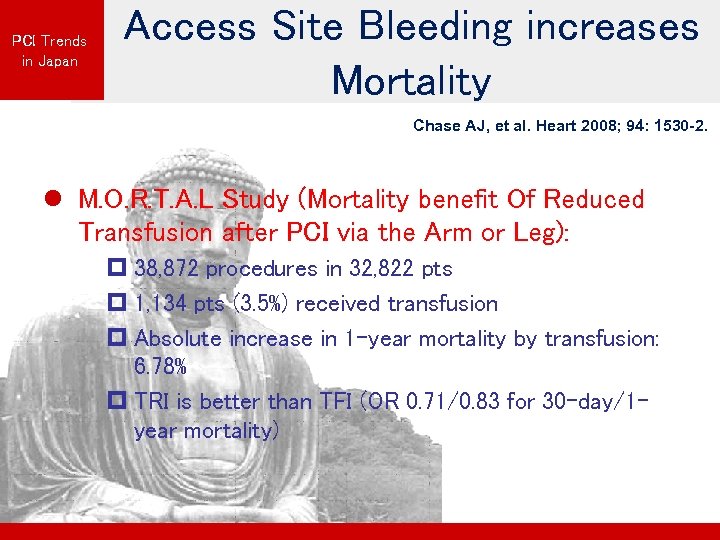 PCI Trends in Japan Access Site Bleeding increases Mortality Chase AJ, et al. Heart 2008; 94: 1530 -2. l M. O. R. T. A. L Study (Mortality benefit Of Reduced Transfusion after PCI via the Arm or Leg): p 38, 872 procedures in 32, 822 pts p 1, 134 pts (3. 5%) received transfusion p Absolute increase in 1 -year mortality by transfusion: 6. 78% p TRI is better than TFI (OR 0. 71/0. 83 for 30 -day/1 year mortality)
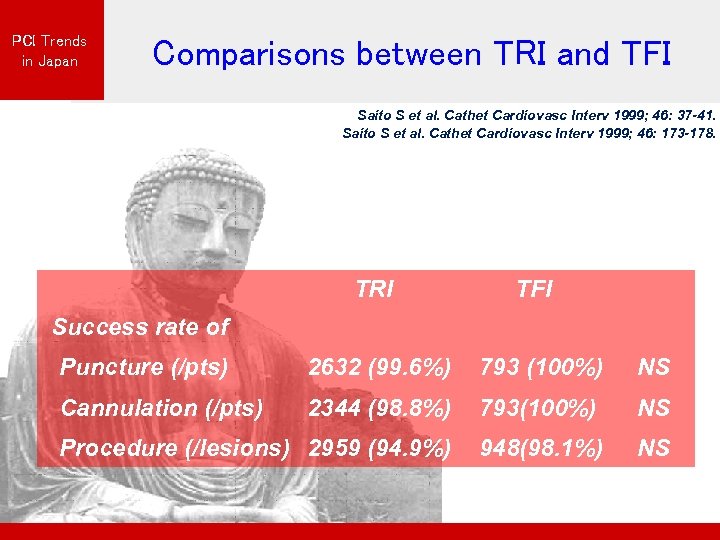 PCI Trends in Japan Comparisons between TRI and TFI Saito S et al. Cathet Cardiovasc Interv 1999; 46: 37 -41. Saito S et al. Cathet Cardiovasc Interv 1999; 46: 173 -178. TRI TFI Success rate of Puncture (/pts) 2632 (99. 6%) 793 (100%) NS Cannulation (/pts) 2344 (98. 8%) 793(100%) NS Procedure (/lesions) 2959 (94. 9%) 948(98. 1%) NS
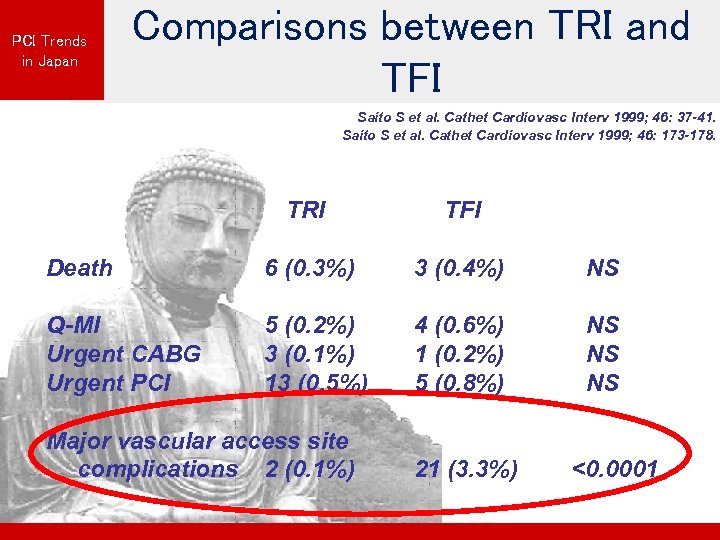 PCI Trends in Japan Comparisons between TRI and TFI Saito S et al. Cathet Cardiovasc Interv 1999; 46: 37 -41. Saito S et al. Cathet Cardiovasc Interv 1999; 46: 173 -178. TRI TFI Death 6 (0. 3%) 3 (0. 4%) NS Q-MI Urgent CABG Urgent PCI 5 (0. 2%) 3 (0. 1%) 13 (0. 5%) 4 (0. 6%) 1 (0. 2%) 5 (0. 8%) NS NS NS Major vascular access site complications 2 (0. 1%) 21 (3. 3%) <0. 0001
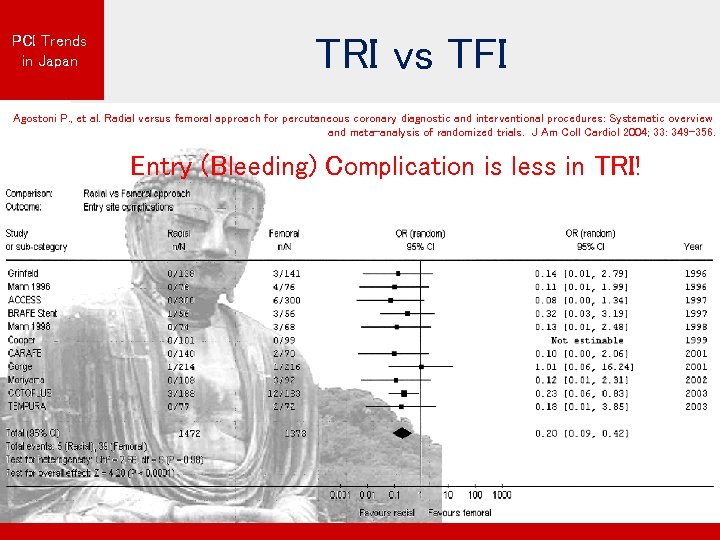 PCI Trends in Japan TRI vs TFI Agostoni P. , et al. Radial versus femoral approach for percutaneous coronary diagnostic and interventional procedures: Systematic overview and meta-analysis of randomized trials. J Am Coll Cardiol 2004; 33: 349 -356. Entry (Bleeding) Complication is less in TRI!
 PCI Trends in Japan Saito S, et al. Comparative study on transradial approach vs. transfemoral approach in primary stent implantation for patients with acute myocardial infarction: Results of the test for myocardial infarction by prospective unicenter randomization for access sites (TEMPURA) trial. Catheter Cardiovasc Interv 2003; 59: 26 -33. TEMPURA Trial: TEst for Myocardial infarction by Prospective Unicenter Randomization for Access sites 27 May 2004 P 19
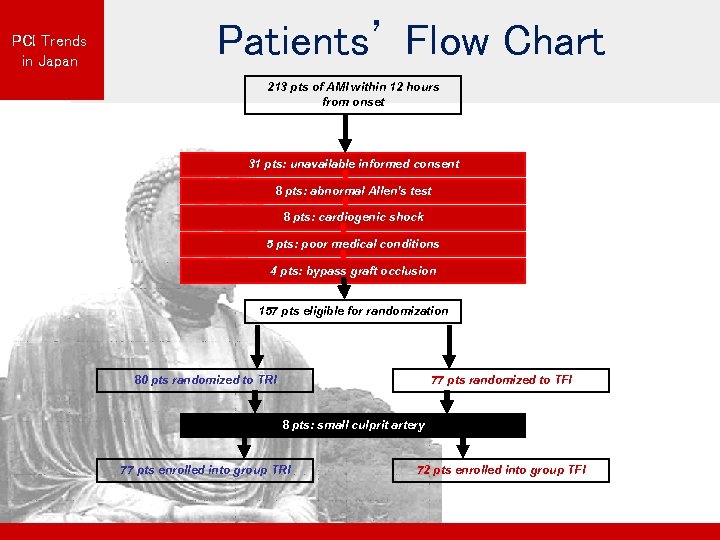 PCI Trends in Japan Patients’ Flow Chart 213 pts of AMI within 12 hours from onset 31 pts: unavailable informed consent 8 pts: abnormal Allen’s test 8 pts: cardiogenic shock 5 pts: poor medical conditions 4 pts: bypass graft occlusion 157 pts eligible for randomization 80 pts randomized to TRI 77 pts randomized to TFI 8 pts: small culprit artery 77 pts enrolled into group TRI 72 pts enrolled into group TFI
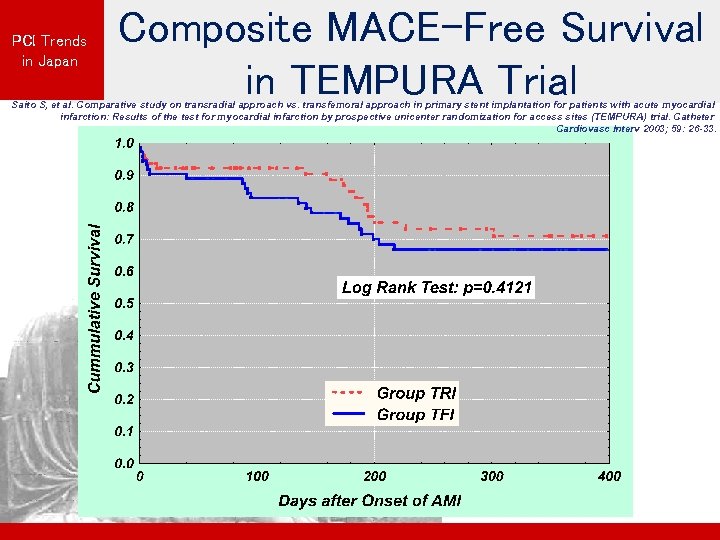 PCI Trends in Japan Composite MACE-Free Survival in TEMPURA Trial Saito S, et al. Comparative study on transradial approach vs. transfemoral approach in primary stent implantation for patients with acute myocardial infarction: Results of the test for myocardial infarction by prospective unicenter randomization for access sites (TEMPURA) trial. Catheter Cardiovasc Interv 2003; 59: 26 -33.
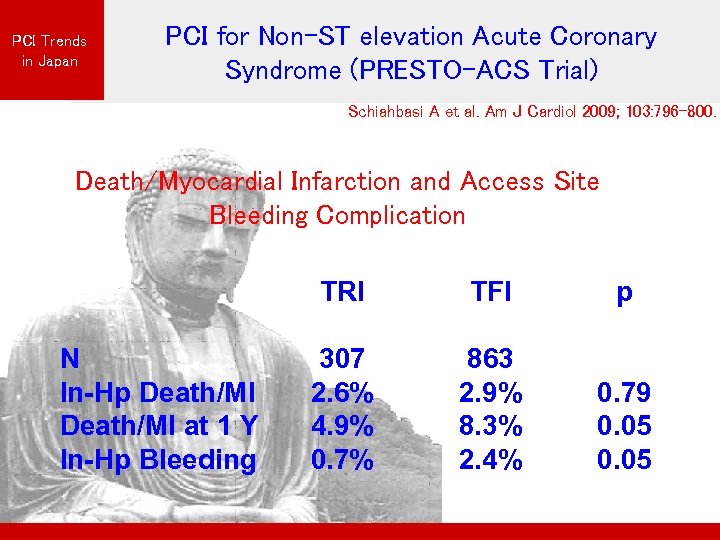 PCI Trends in Japan PCI for Non-ST elevation Acute Coronary Syndrome (PRESTO-ACS Trial) Schiahbasi A et al. Am J Cardiol 2009; 103: 796 -800. Death/Myocardial Infarction and Access Site Bleeding Complication TRI N In-Hp Death/MI at 1 Y In-Hp Bleeding TFI p 307 2. 6% 4. 9% 0. 7% 863 2. 9% 8. 3% 2. 4% 0. 79 0. 05
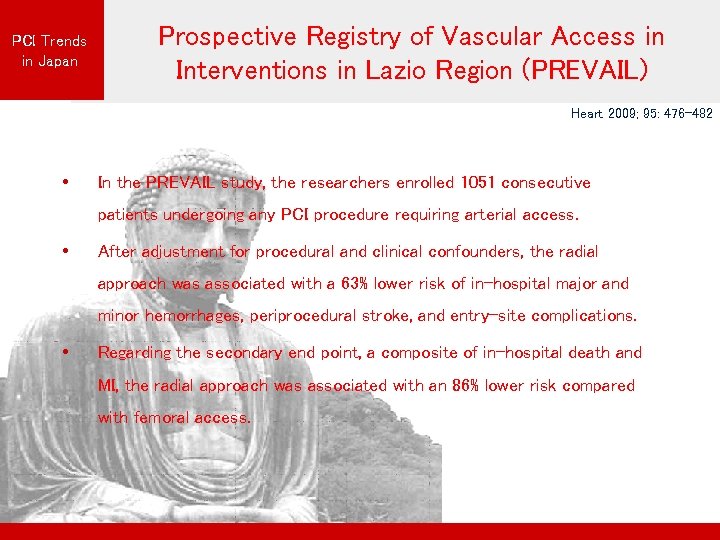 PCI Trends in Japan Prospective Registry of Vascular Access in Interventions in Lazio Region (PREVAIL) Heart 2009; 95: 476 -482 • In the PREVAIL study, the researchers enrolled 1051 consecutive patients undergoing any PCI procedure requiring arterial access. • After adjustment for procedural and clinical confounders, the radial approach was associated with a 63% lower risk of in-hospital major and minor hemorrhages, periprocedural stroke, and entry-site complications. • Regarding the secondary end point, a composite of in-hospital death and MI, the radial approach was associated with an 86% lower risk compared with femoral access.
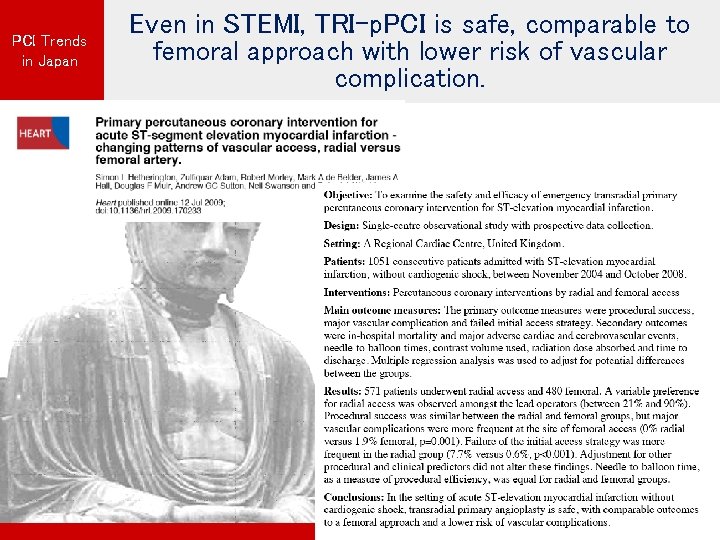 PCI Trends in Japan Even in STEMI, TRI-p. PCI is safe, comparable to femoral approach with lower risk of vascular complication.
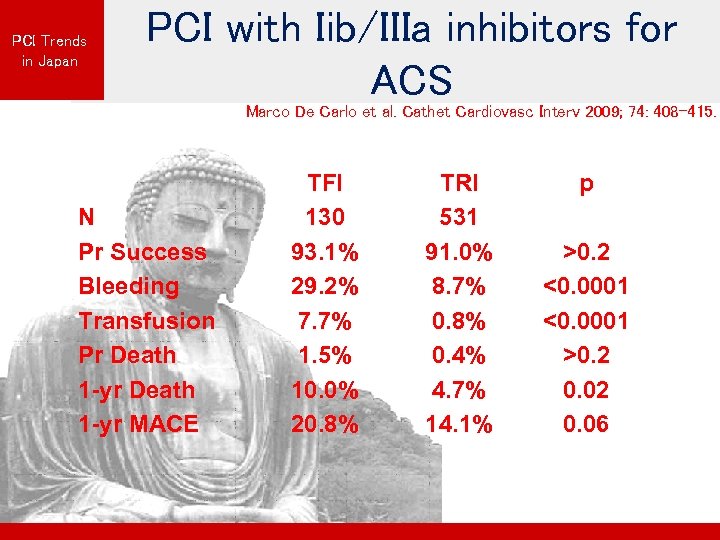 PCI Trends in Japan PCI with Iib/IIIa inhibitors for ACS Marco De Carlo et al. Cathet Cardiovasc Interv 2009; 74: 408 -415. N Pr Success Bleeding Transfusion Pr Death 1 -yr MACE TFI 130 93. 1% 29. 2% 7. 7% 1. 5% 10. 0% 20. 8% TRI 531 91. 0% 8. 7% 0. 8% 0. 4% 4. 7% 14. 1% p >0. 2 <0. 0001 >0. 2 0. 06
 PCI Trends in Japan TRI for AMI can be done? Yes, we can! Not only that, we have to do by TRI! 27 May 2004 P 26
 PCI Trends in Japan TRI for CTO l Before discussing about TRI for CTO, we have to make 3 important questions: 1. What are the limitation and advantage of TRI? 2. What kinds of techniques are necessary for CTO angioplasty? 3. Those techniques as above are possible under the limitation of TRI?
 PCI Trends in Japan l l l l l Special Techniques required for CTO Angioplasty Double guidewire technique Triple guidewire technique Side branch technique “Open Sesame” technique IVUS-guided technique Anchoring balloon technique Use of Tornus device Mother-and-Child catheter technique Retrograde (Bi-directional) approach
 PCI Trends in Japan l l l l l Special Techniques required for CTO difficult by 6 Fr guider Double guidewire technique Triple guidewire technique Side branch technique “Open Sesame” technique IVUS-guided technique Anchoring balloon technique Use of Tornus device Mother-and-Child catheter technique Retrograde (Bi-directional) approach
 PCI Trends in Japan l l l l l Special Techniques required for CTO difficult by 7 Fr guider Double guidewire technique Triple guidewire technique Side branch technique “Open Sesame” technique IVUS-guided technique Anchoring balloon technique Use of Tornus device Mother-and-Child catheter technique Retrograde (Bi-directional) approach
 PCI Trends in Japan Radial Artery Diameter in the Consecutive 250 Japanese Patients who underwent TRI. Saito S, Ikei H, Hosokawa G, Tanaka S. Influence of the ratio between radial artery inner diameter and sheath outer diameter on radial artery flow after transradial coronary intervention. Catheter Cardiovasc Interv 1999; 46: 173 -8. 27 May 2004 P 31
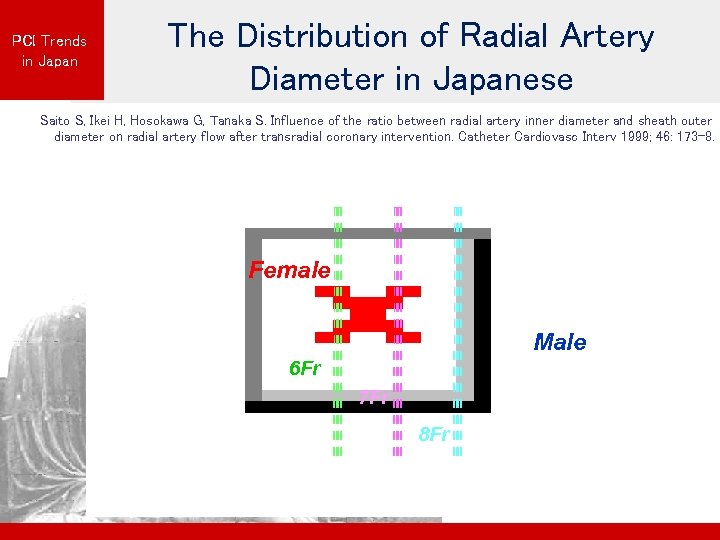 PCI Trends in Japan The Distribution of Radial Artery Diameter in Japanese Saito S, Ikei H, Hosokawa G, Tanaka S. Influence of the ratio between radial artery inner diameter and sheath outer diameter on radial artery flow after transradial coronary intervention. Catheter Cardiovasc Interv 1999; 46: 173 -8. Female Male 6 Fr 7 Fr 8 Fr
 PCI Trends in Japan To overcome poor backup support:
 PCI Trends in Japan Use “Anchoring-balloon” technique!
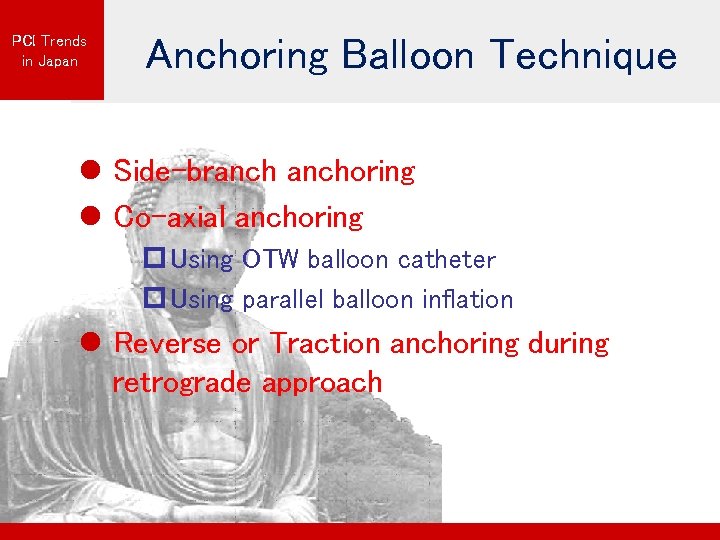 PCI Trends in Japan Anchoring Balloon Technique l Side-branchoring l Co-axial anchoring p Using OTW balloon catheter p Using parallel balloon inflation l Reverse or Traction anchoring during retrograde approach
 PCI Trends in Japan Use “Mother-and-Child” or “ 5 -in 6” guiding catheter technique! Takahashi S, Saito S, et al. New method to increase a backup support of a 6 French guiding coronary catheter. Catheter Cardiovasc Interv. 2004 ; 63: 452 -6.
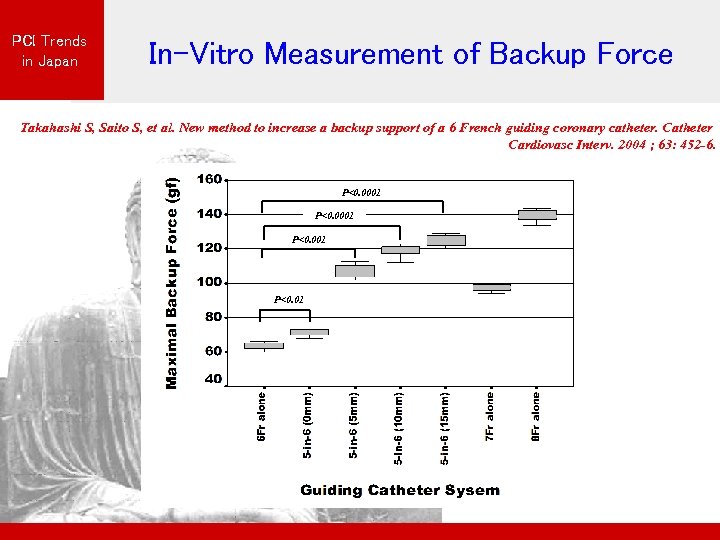 PCI Trends in Japan In-Vitro Measurement of Backup Force Takahashi S, Saito S, et al. New method to increase a backup support of a 6 French guiding coronary catheter. Catheter Cardiovasc Interv. 2004 ; 63: 452 -6. P<0. 0001 P<0. 01
 PCI Trends in Japan Use “Tornus” Device!
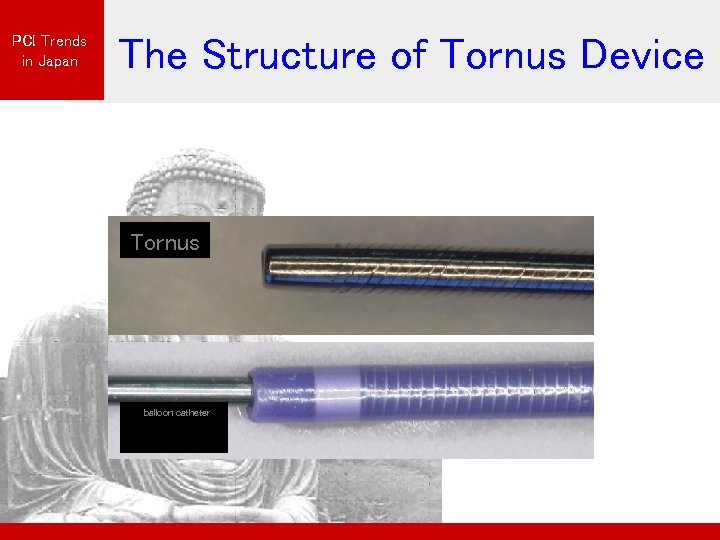 PCI Trends in Japan The Structure of Tornus Device Tornus balloon catheter
 PCI Trends in Japan My Recommendation in TRI for CTO l Based on the understanding of the limitation of TRI and various kinds of techniques used in CTO angioplasty, we can do TRI in those types of CTO lesions as: p CTO with microchannels p CTO with clear distal anatomy p CTO without calcification or tortuosity p CTO with “no need for IVUS guidance”
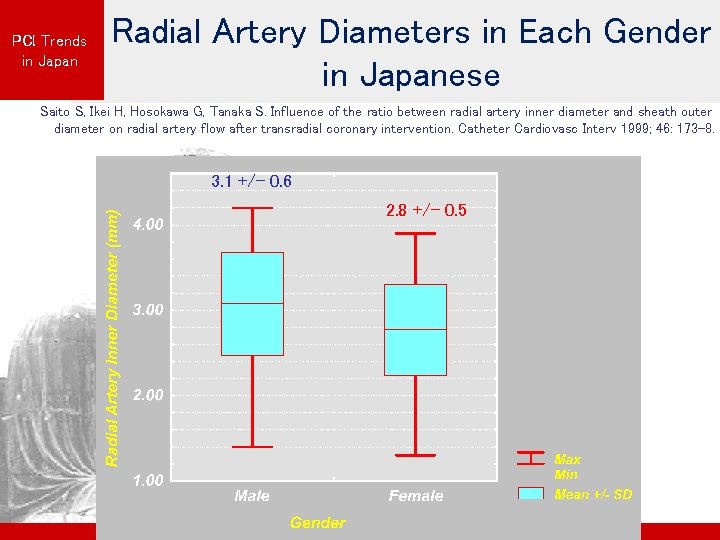 PCI Trends in Japan Radial Artery Diameters in Each Gender in Japanese Saito S, Ikei H, Hosokawa G, Tanaka S. Influence of the ratio between radial artery inner diameter and sheath outer diameter on radial artery flow after transradial coronary intervention. Catheter Cardiovasc Interv 1999; 46: 173 -8. 3. 1 +/- 0. 6 2. 8 +/- 0. 5
 PCI Trends in Japan This limitaion of the radial artery size is now promoting new trends of TRI in Japan 27 May 2004 P 42
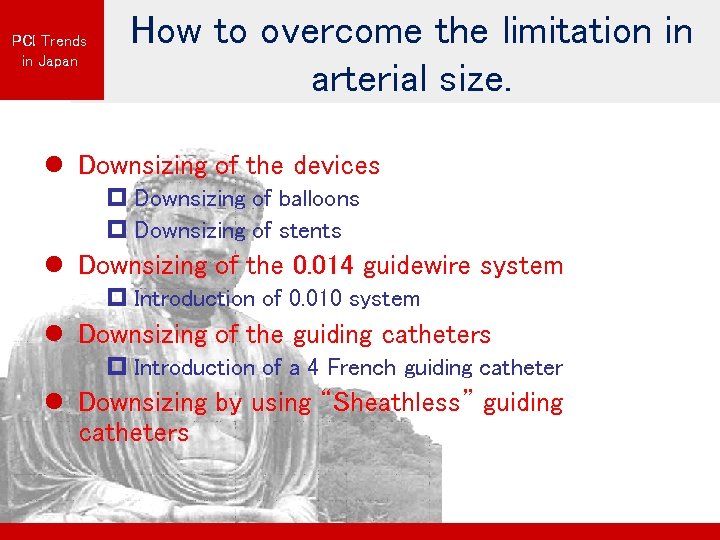 PCI Trends in Japan How to overcome the limitation in arterial size. l Downsizing of the devices p Downsizing of balloons p Downsizing of stents l Downsizing of the 0. 014 guidewire system p Introduction of 0. 010 system l Downsizing of the guiding catheters p Introduction of a 4 French guiding catheter l Downsizing by using “Sheathless” guiding catheters
 PCI Trends in Japan PCI with a Novel 4 French Coronary Accessor Takeshita S, Shiono T, Takagi A, Ito T, Saito S. Percutaneous coronary intervention using a novel 4 -French coronary accessor. Catheter Cardiovasc Interv. 2008; 72: 222 -7.
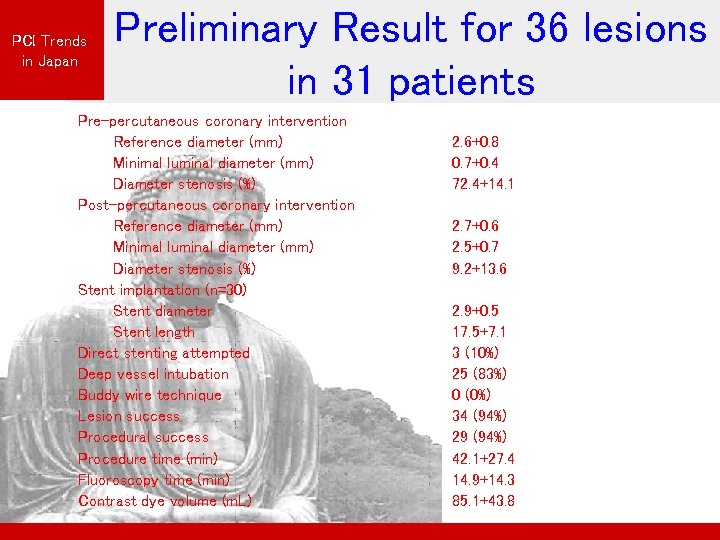 PCI Trends in Japan Preliminary Result for 36 lesions in 31 patients Pre-percutaneous coronary intervention Reference diameter (mm) Minimal luminal diameter (mm) Diameter stenosis (%) Post-percutaneous coronary intervention Reference diameter (mm) Minimal luminal diameter (mm) Diameter stenosis (%) Stent implantation (n=30) Stent diameter Stent length Direct stenting attempted Deep vessel intubation Buddy wire technique Lesion success Procedural success Procedure time (min) Fluoroscopy time (min) Contrast dye volume (m. L) 2. 6+0. 8 0. 7+0. 4 72. 4+14. 1 2. 7+0. 6 2. 5+0. 7 9. 2+13. 6 2. 9+0. 5 17. 5+7. 1 3 (10%) 25 (83%) 0 (0%) 34 (94%) 29 (94%) 42. 1+27. 4 14. 9+14. 3 85. 1+43. 8
 PCI Trends in Japan PCI using 4 French Coronary Accessors l Summary: p PCI using a 4 Fr coronary accessor is safe and applicable to different kinds of coronary lesions, and can replace some of larger guide catheters. The advent of this 4 Fr stent delivery system may lead to less invasive approach with earlier ambulation and without possible access site complications.
 PCI Trends in Japan NAUSICA Trial l Novel Angioplasty USIng Coronary Accessor (NAUSICA) Trial p Randomization between 4 and 6 French TRI groups (>160 Cases in Total) p Primary Endpoint: Preservation of Radial Pulse Next Day after TRI p International Web-base Randomization
 PCI Trends in Japan Case Randomization through Web Page
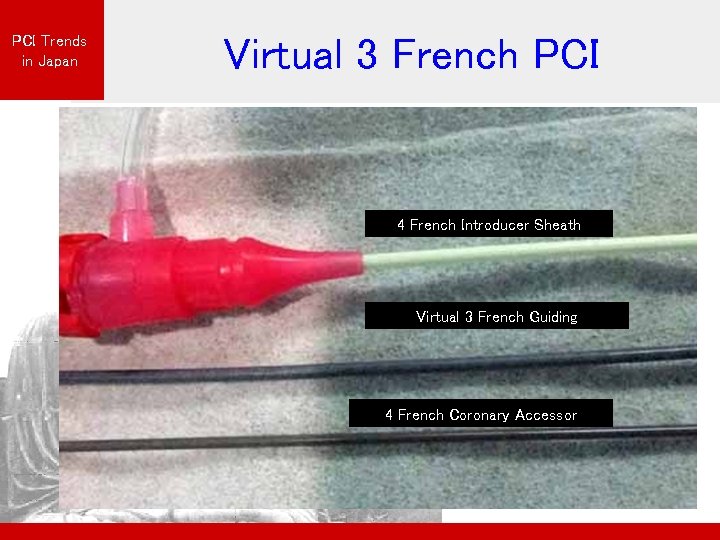
 PCI Trends in Japan Virtual 3 French System Takeshita S, Saito S. Transradial coronary intervention using a novel 5 -Fr sheathless guiding catheter. Catheter Cardiovasc Interv. 2009 Apr 27. {Epub Aheard of print]. Percutaneous coronary intervention using a virtual 3 -Fr guiding catheter. Mizuno S, Takeshita S, Taketani Y, Saito S. Catheter Cardiovasc Interv. 2009 Nov 25. [Epub ahead of print]
 PCI Trends in Japan Sheathless System l Normal System: p In order to introduce a 6 French guiding catheter, first we have to insert a 6 French introducer into the radial artery. p The outer diameter of a 6 French introducer is as similar as an 8 French guiding catheter. l Sheathless System: p The outer diameter of a 5 French sheathless guiding catheter is equivalent to a 3 French introducer. p By putting “ 3 French” system, we can achieve 0. 059 inch diameter in inner lumen. This is the concept of “Virtual” 3 French System.
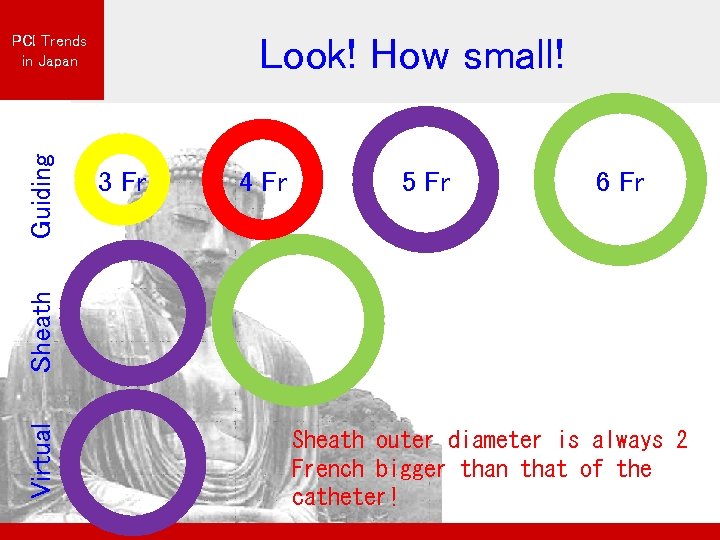 Look! How small! 3 Fr 4 Fr 5 Fr 6 Fr Virtual Sheath Guiding PCI Trends in Japan Sheath outer diameter is always 2 French bigger than that of the catheter!
 PCI Trends in Japan Virtual 3 French PCI 4 French Introducer Sheath Virtual 3 French Guiding 4 French Coronary Accessor
 PCI Trends in Japan Sheathless System for TRI l Advantages: p Less traumatic to the radial arteries p Achievement of the bigger lumen for the guiding catheter in a limited size of the radial artery p Possible improvement in the preservation of the radial pulse
 PCI Trends in Japan Virtual 2 French System Tanaka A, Saito S. Percutaneous coronary intervention with a virtual 2 -Fr system. Catheter Cardiovasc Interv. 2010, In press.
 PCI Trends in Japan Next Step after Virtual 3 French System l It is Virtual 2 French System: p Insert a 4 French Coronary Accessor without any introducer. p That means “Virtual” 2 French system. p We have treated almost 20 cases by using this system.
 PCI Trends in Japan Conclusion l TRI clearly reduce the bleeding complications, which will lead to the decreased mortality not only in the acute phase but also the longterm period. l Transradial route should be considered the 1 st approach for AMI patients. l With several limitations, TRI can be applied for CTO lesions.
 PCI Trends in Japan Transradial Coronary Intervention Just TRI It! TRY It!