


 Скачать презентацию Patterns of larval development in the Anura palaeontological
b9e5207b082c2fbf698264d935c546c6.ppt
- Количество слайдов: 27
 Patterns of larval development in the Anura: palaeontological evidence Zbyněk Roček and Eddie Van Dijk
 Bechlejovice, Late Oligocene, -32 Mya, Czech Republic
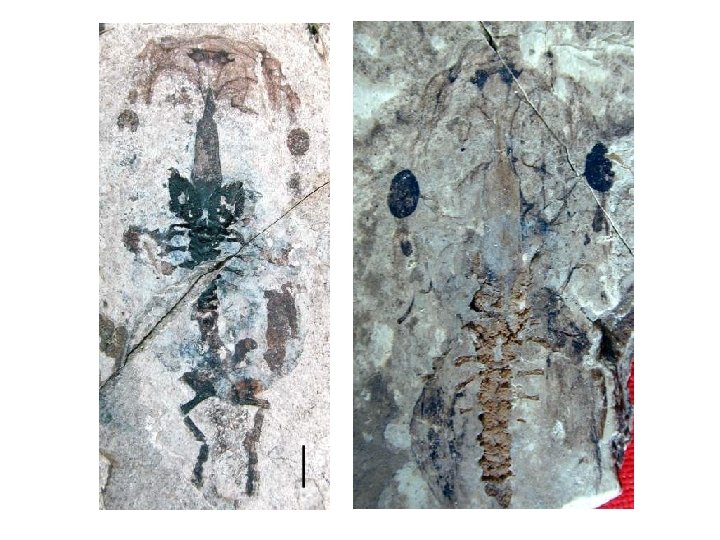
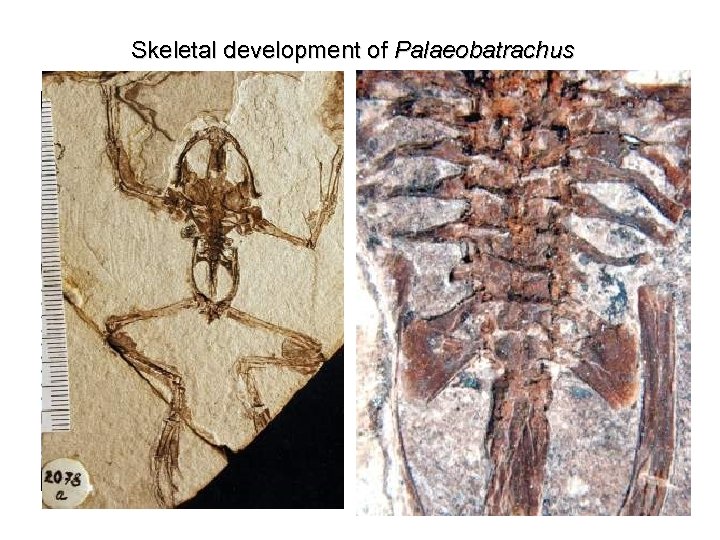
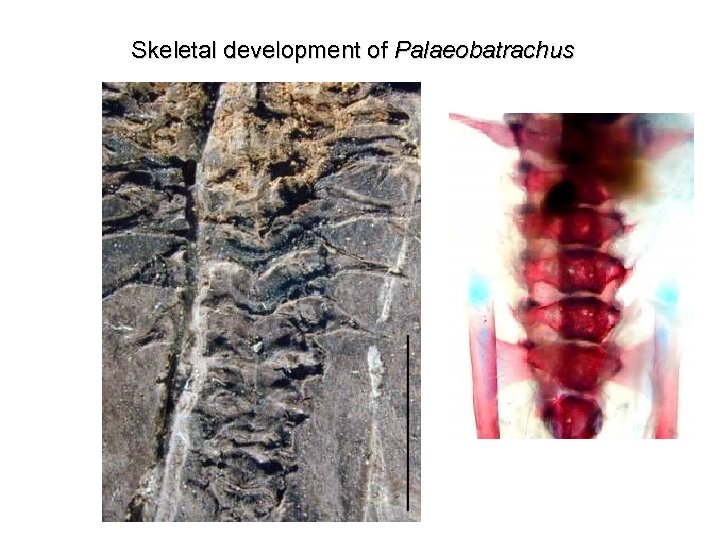
 Palaeobatrachidae - the only anuran group that became extinct; - Late Cretaceous – Middle Pleistocene (-70 -0. 9 Mya); - found only in Europe; - similar to pipid frogs of southern hemisphere but different in procoelous, instead of opisthocoelous, vertebral centra; - the most representative developmental series of fossil frogs ever found (covering late larval development and complete metamorphosis).
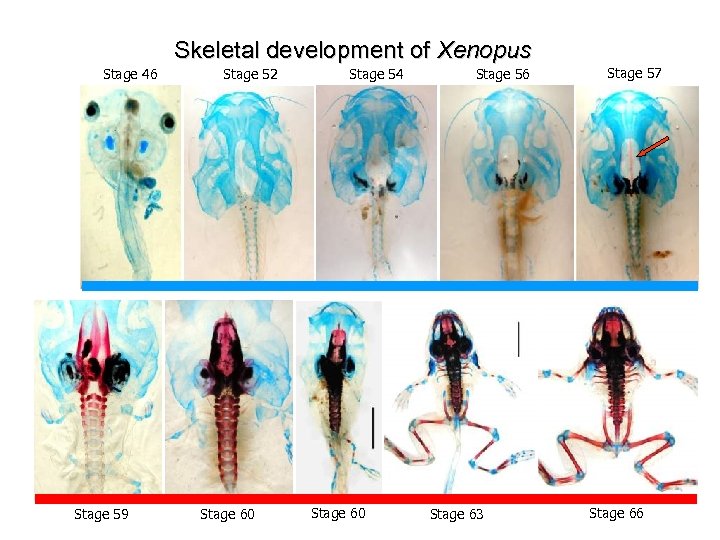 Skeletal development of Xenopus Stage 46 Stage 59 Stage 52 Stage 60 Stage 54 Stage 60 Stage 56 Stage 63 Stage 57 Stage 66
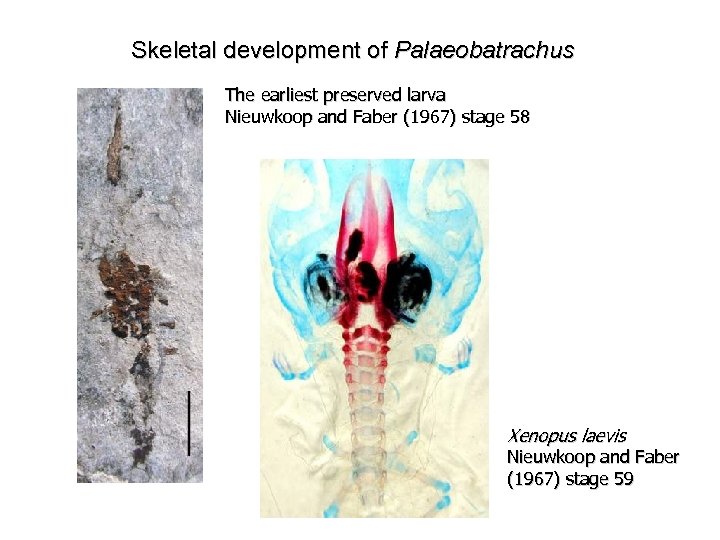 Skeletal development of Palaeobatrachus The earliest preserved larva Nieuwkoop and Faber (1967) stage 58 Xenopus laevis Nieuwkoop and Faber (1967) stage 59
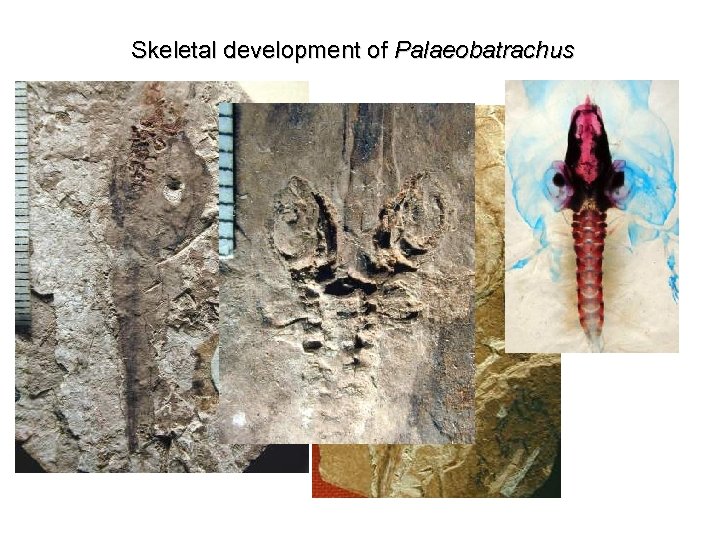 Skeletal development of Palaeobatrachus
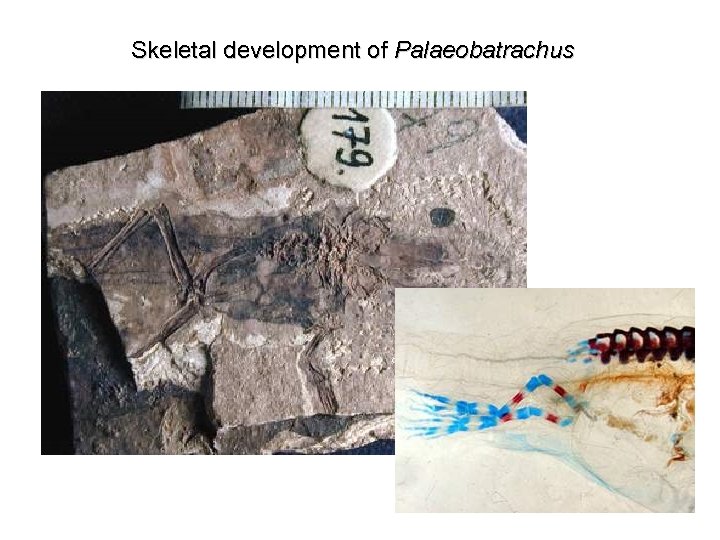 Skeletal development of Palaeobatrachus
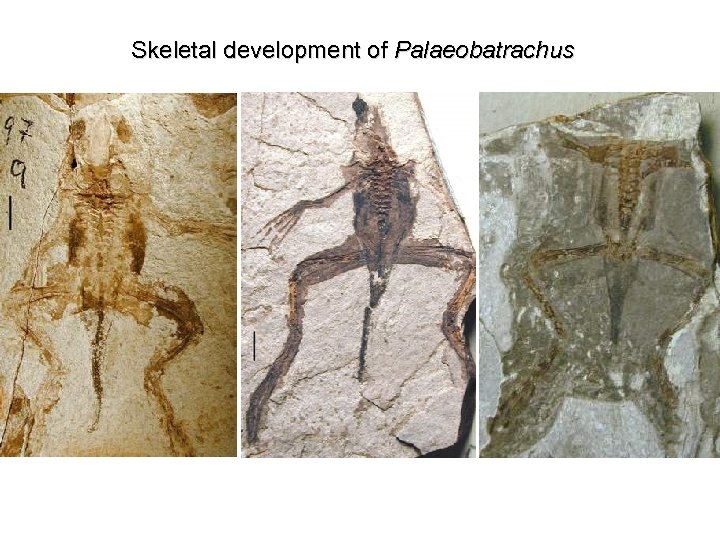 Skeletal development of Palaeobatrachus
 Skeletal development of Palaeobatrachus
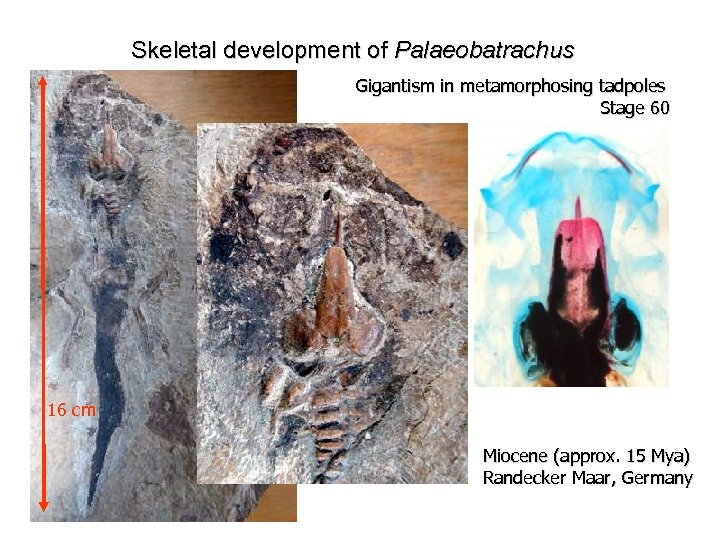 Skeletal development of Palaeobatrachus Gigantism in metamorphosing tadpoles Stage 60 16 cm Miocene (approx. 15 Mya) Randecker Maar, Germany
 Skeletal development of Palaeobatrachus
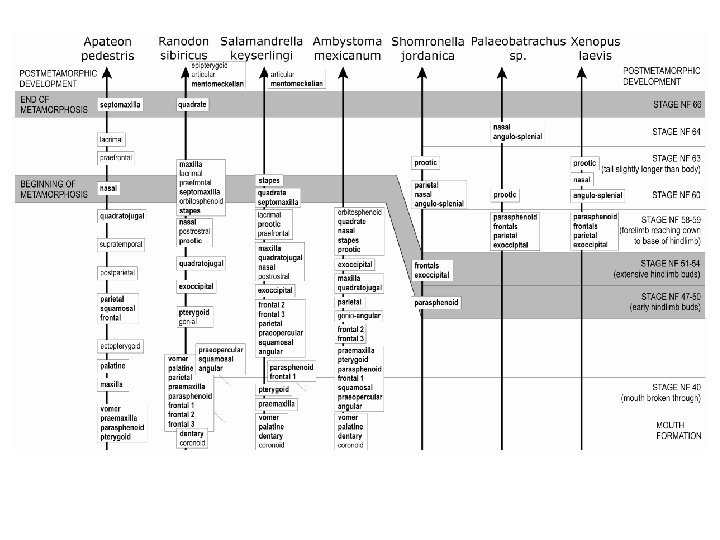
 Comparisons with fossil Pipidae - the earliest tadpoles ever found (Late Jurassic, -150 Mya, Zaire); - sometimes excellent preservation; - found only in Gondwanan continents; - large series of certain developmental stages.
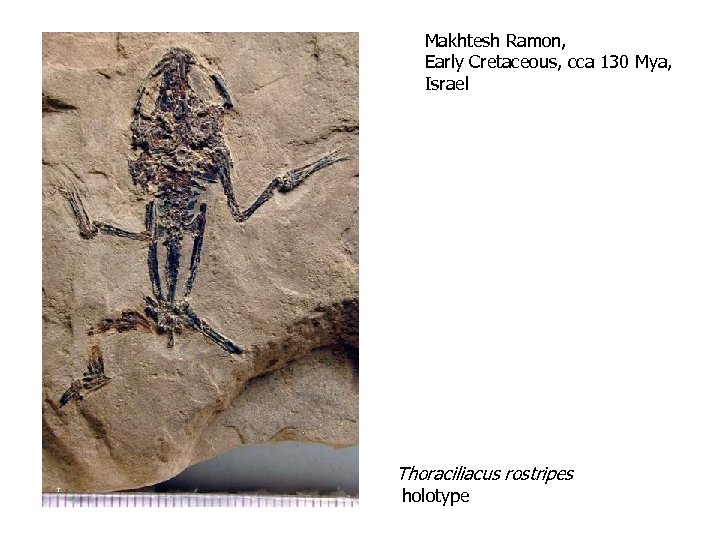 Makhtesh Ramon, Early Cretaceous, cca 130 Mya, Israel Thoraciliacus rostripes holotype
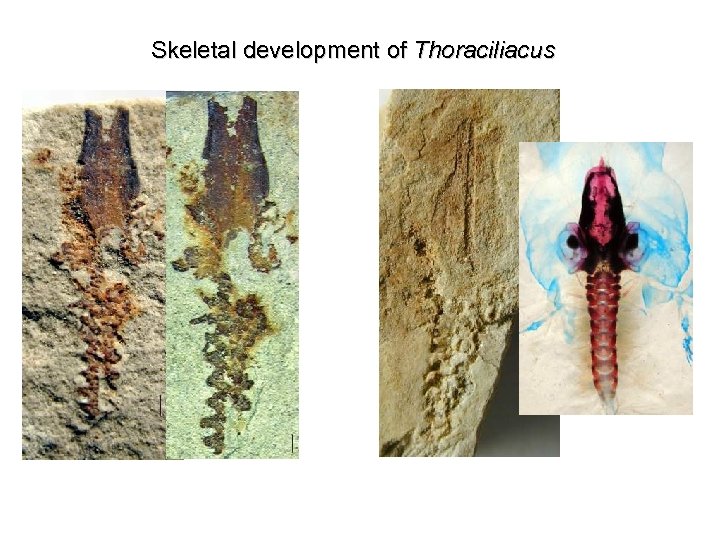 Skeletal development of Thoraciliacus
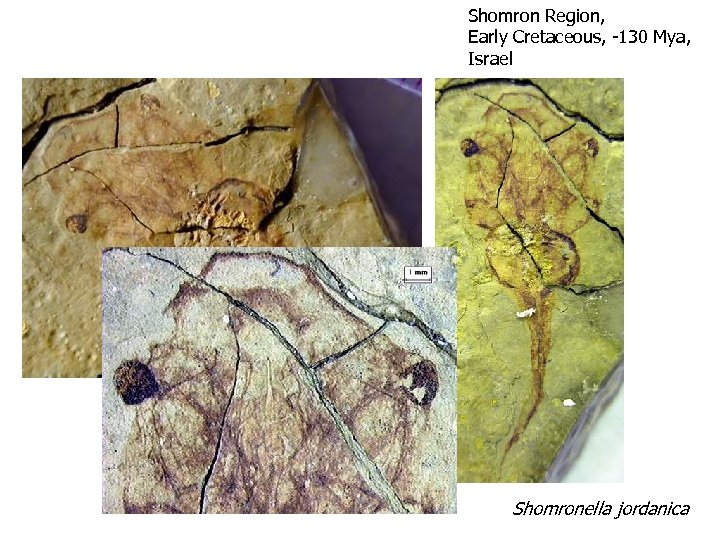 Shomron Region, Early Cretaceous, -130 Mya, Israel Shomronella jordanica
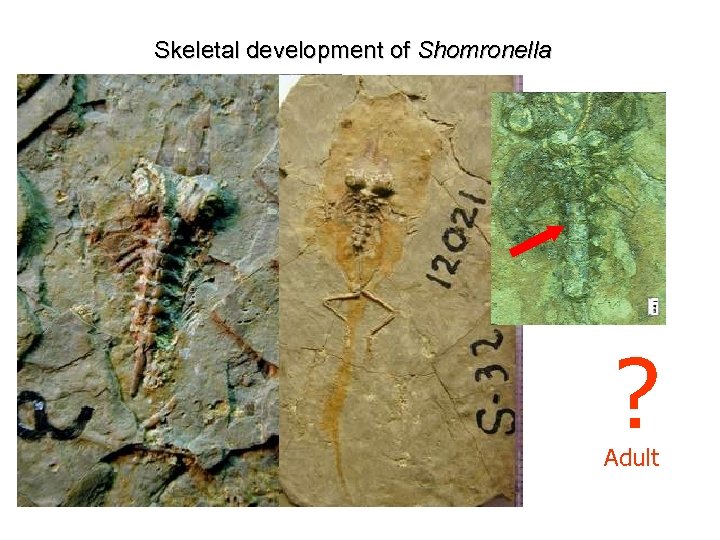 Skeletal development of Shomronella ? Adult
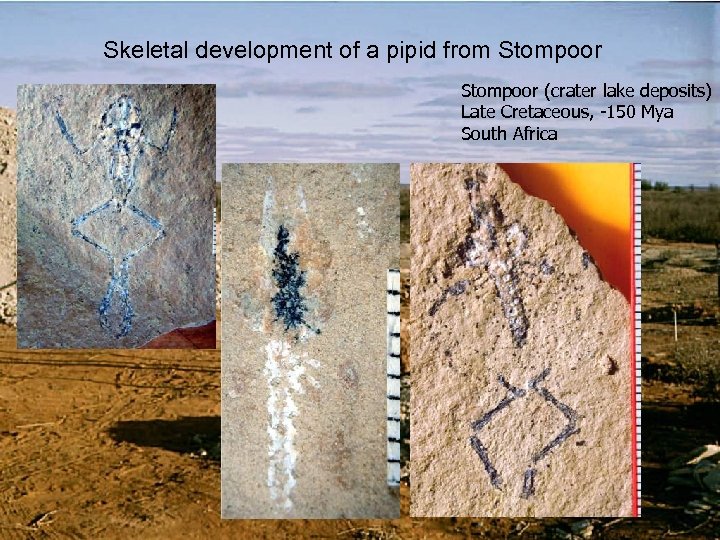 Skeletal development of a pipid from Stompoor (crater lake deposits) Late Cretaceous, -150 Mya South Africa
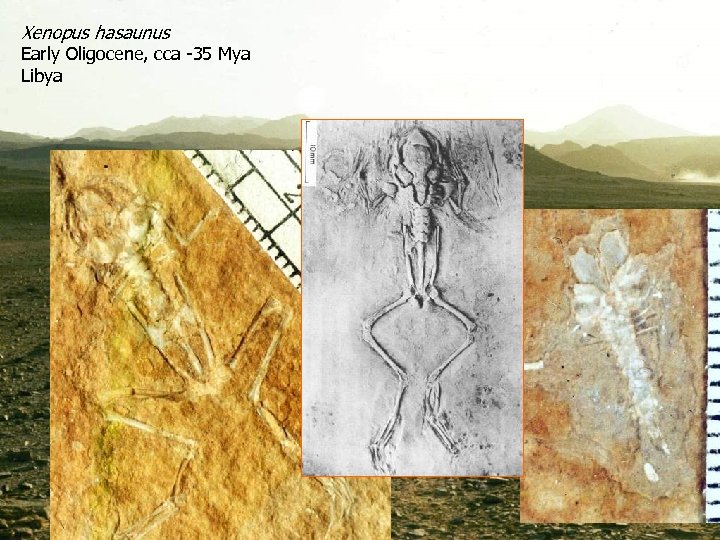 Xenopus hasaunus Early Oligocene, cca -35 Mya Libya
 Pelobatidae - represented by genera Pelobates and Eopelobates; - fossil record from the Paleocene (-60 Mya); - found only in Europe; - developmental series covering both pre-metamorphic and metamorphic stages.
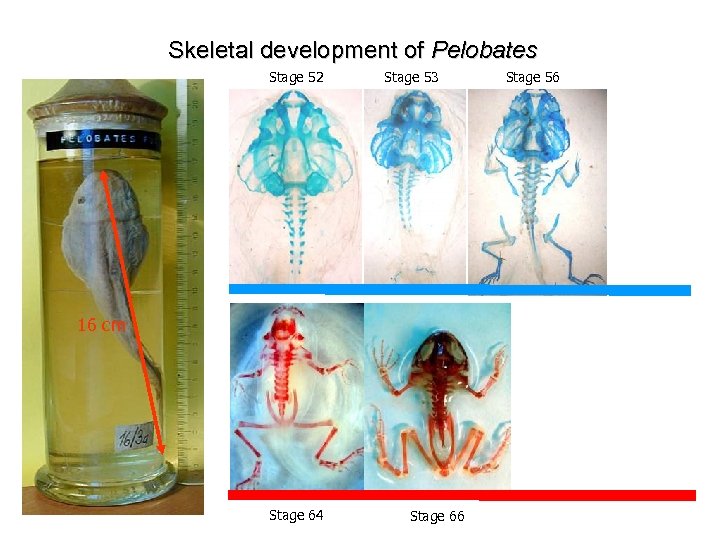 Skeletal development of Pelobates Stage 52 Stage 53 16 cm Stage 64 Stage 66 Stage 56
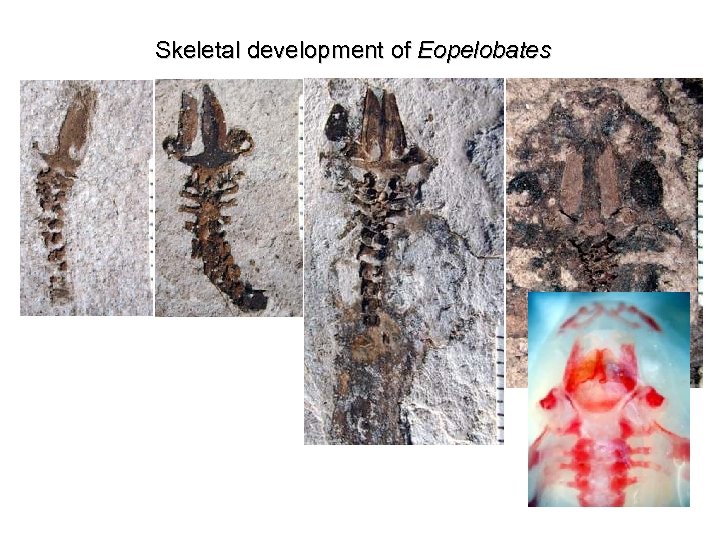 Skeletal development of Eopelobates
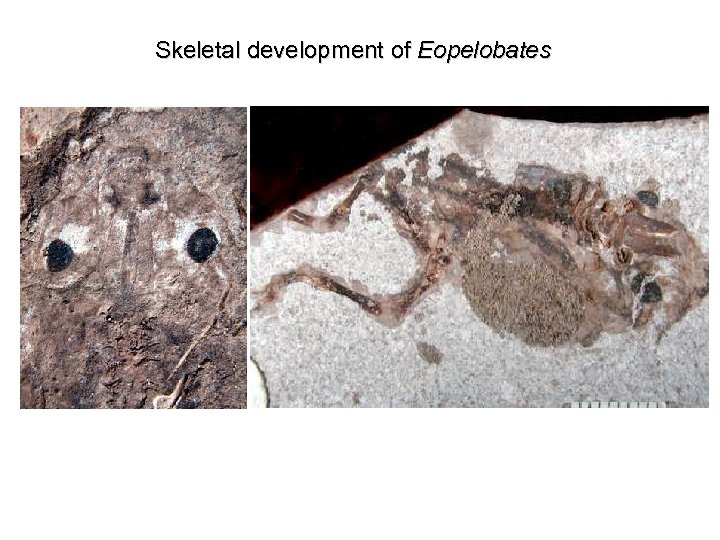 Skeletal development of Eopelobates
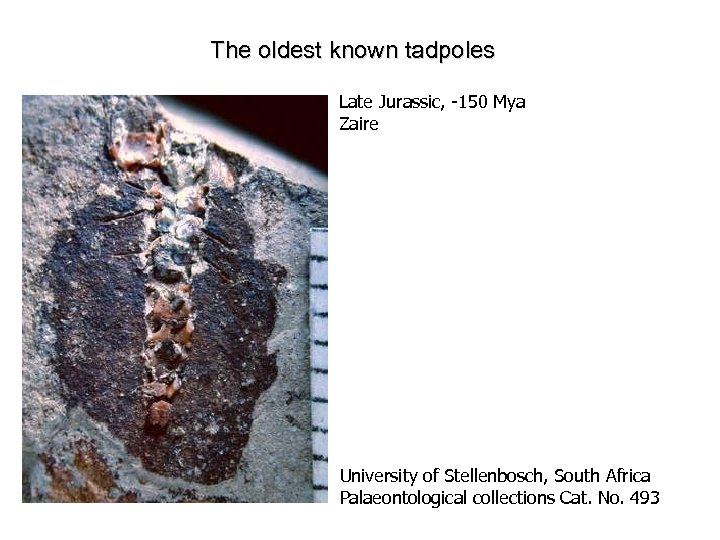 The oldest known tadpoles Late Jurassic, -150 Mya Zaire University of Stellenbosch, South Africa Palaeontological collections Cat. No. 493
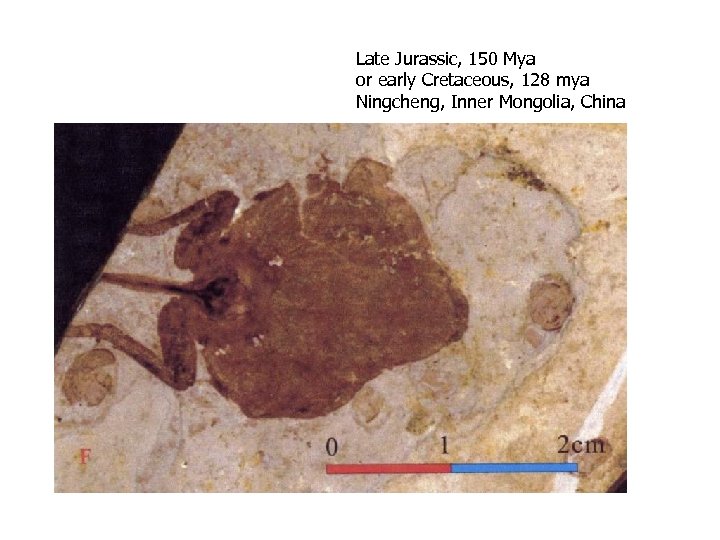 Late Jurassic, 150 Mya or early Cretaceous, 128 mya Ningcheng, Inner Mongolia, China
 Conclusions - fossil tadpoles may provide an important information on development of extinct anuran taxa; - although the development is mostly documented by ossified elements, sometimes astonishing details of soft anatomy may be recorded; - developmental processes, such as origin of vertebral centra or transverse processes, may help to clarify the taxonomic position of studied taxa and their phylogenetic distance.