 Скачать презентацию Patient Navigation in Breast Health Services Improving Quality
d3a15df934dddaded601fdc4549cb742.ppt
- Количество слайдов: 28



Patient Navigation in Breast Health Services: Improving Quality of Services at a Safety Net Hospital in Chicago An Avon Foundation Safety Net Grant Kristi Allgood, MPH Steven Whitman, Ph. D Mary Rinder Contact information: sankr@sinai. org 773 -257 -2525 http: //www. suhichicago. org/ November 5, 2007 1
Outline • Epidemiology of Breast Cancer in Chicago • Discuss the Avon Navigation Project • Outcomes • Conclusions/Next Steps 2
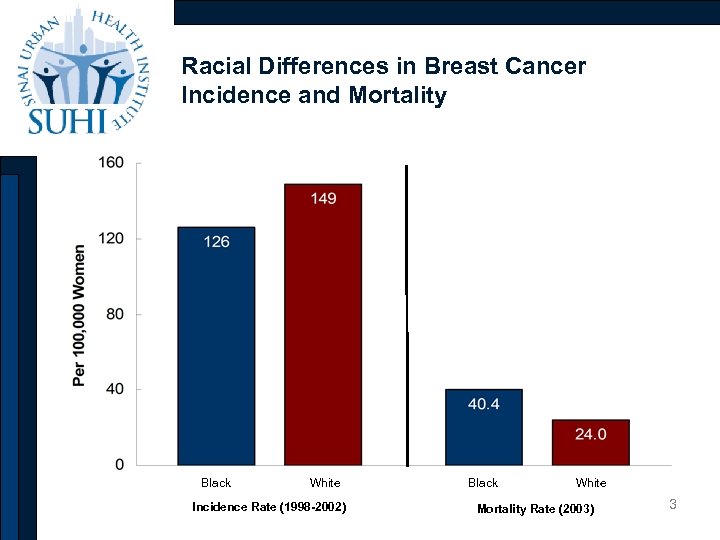
Racial Differences in Breast Cancer Incidence and Mortality Black White Incidence Rate (1998 -2002) Black White Mortality Rate (2003) 3
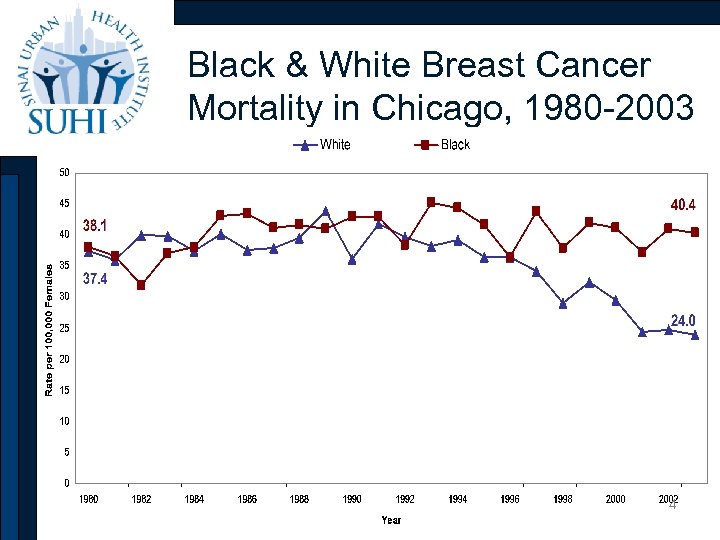
Black & White Breast Cancer Mortality in Chicago, 1980 -2003 4
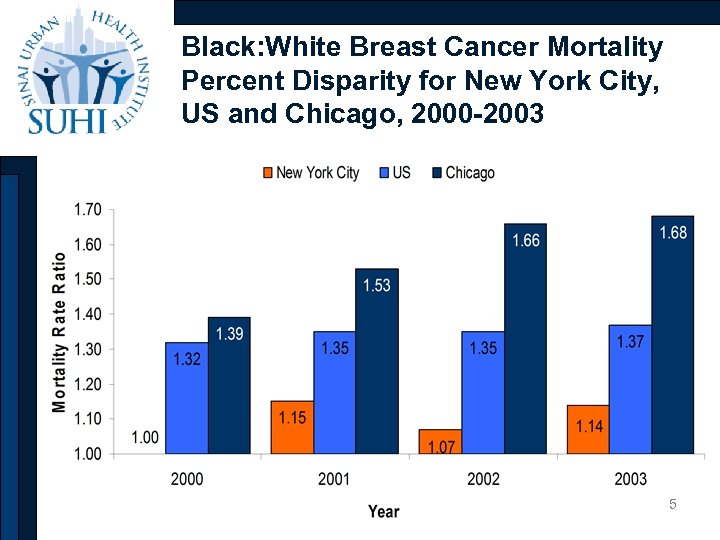
Black: White Breast Cancer Mortality Percent Disparity for New York City, US and Chicago, 2000 -2003 5
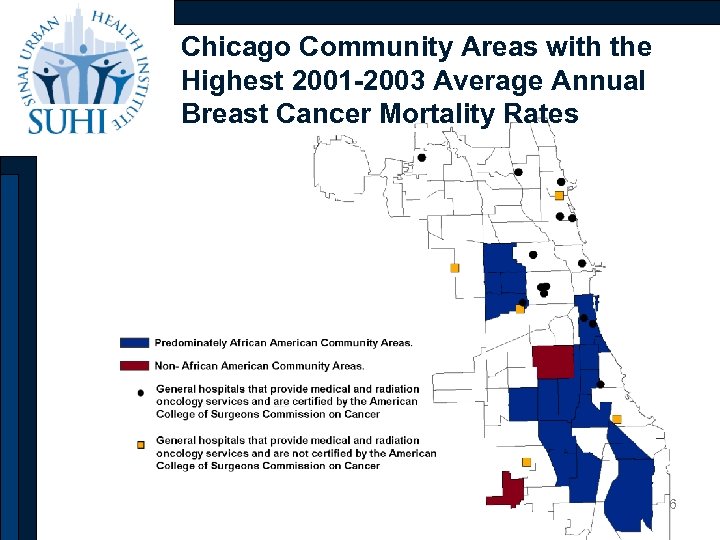
Chicago Community Areas with the Highest 2001 -2003 Average Annual Breast Cancer Mortality Rates 6
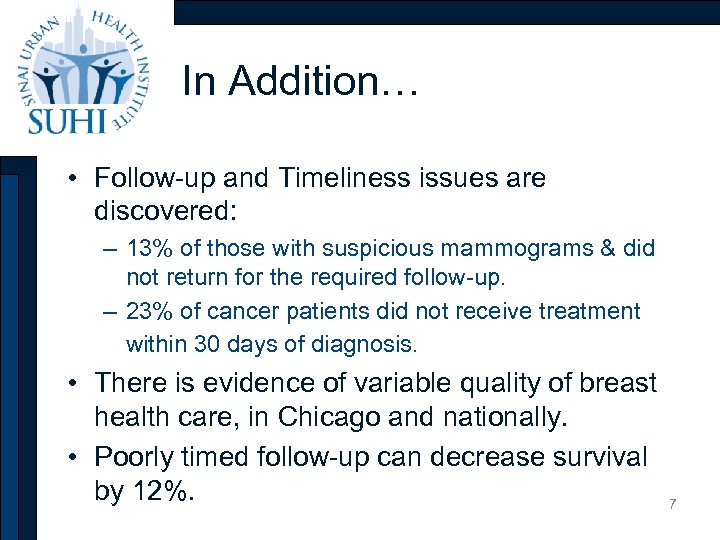
In Addition… • Follow-up and Timeliness issues are discovered: – 13% of those with suspicious mammograms & did not return for the required follow-up. – 23% of cancer patients did not receive treatment within 30 days of diagnosis. • There is evidence of variable quality of breast health care, in Chicago and nationally. • Poorly timed follow-up can decrease survival by 12%. 7
Outline • Epidemiology of Breast Cancer in Chicago • Discuss the Avon Navigation Project • Outcomes • Conclusions/Next Steps 8
Patient Navigation • Improving breast health services by using a patient navigator to facilitate imaging, diagnosis and treatment of breast cancer at Mount Sinai Hospital 1. – Literally walk patients from place to place – Assist patient during procedures – Reduce any controllable barriers – Educate patients – Facilitate patient centered care – Acquire comparison films – Referral assistance 1. Freeman H. A Model patient Navigation Program. Oncology Issues Sept/Oct 2004, p 44 -46. 9
Sinai Health System • One of the largest Medicaid Providers in Chicago – Accepts all patients regardless of ability to pay • i. e. , a safety-net hospital • Located in North Lawndale, a community area with one of the highest breast cancer mortality rates in Chicago • Serves about 50% Black and 50% Latino patients – Many Latino patients cannot speak English 10
Avon Project Goals: • • Decrease loss to follow-up Expedite follow-up for diagnosis & treatment – Communicate results to PCP to facilitate the referral process for additional services – Ensure a scheduled appointment and communicate this to the patient – Contact patients for missed follow-up appointments – Acquire comparison films upon request – Reduce patient barriers to making appointments • • • Navigate patient through diagnosis and treatment Implement Prospective Treatment Planning Improve quality of services 11
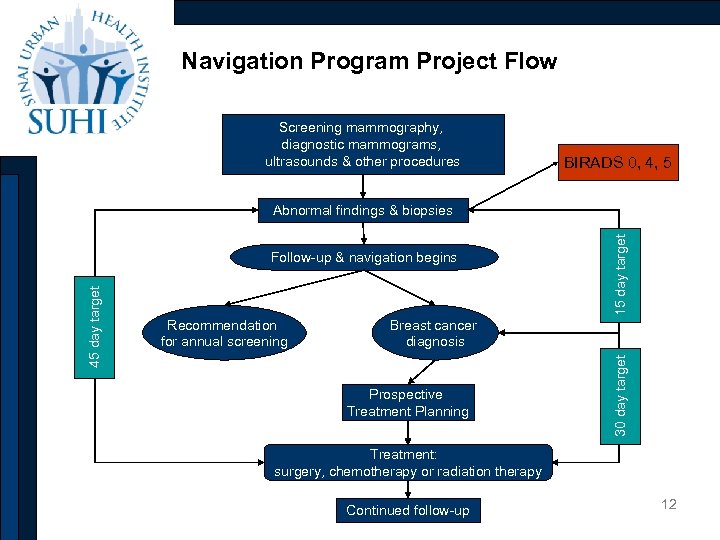
Navigation Program Project Flow Screening mammography, diagnostic mammograms, ultrasounds & other procedures BIRADS 0, 4, 5 Recommendation for annual screening Breast cancer diagnosis Prospective Treatment Planning 30 day target 45 day target Follow-up & navigation begins 15 day target Abnormal findings & biopsies Treatment: surgery, chemotherapy or radiation therapy Continued follow-up 12
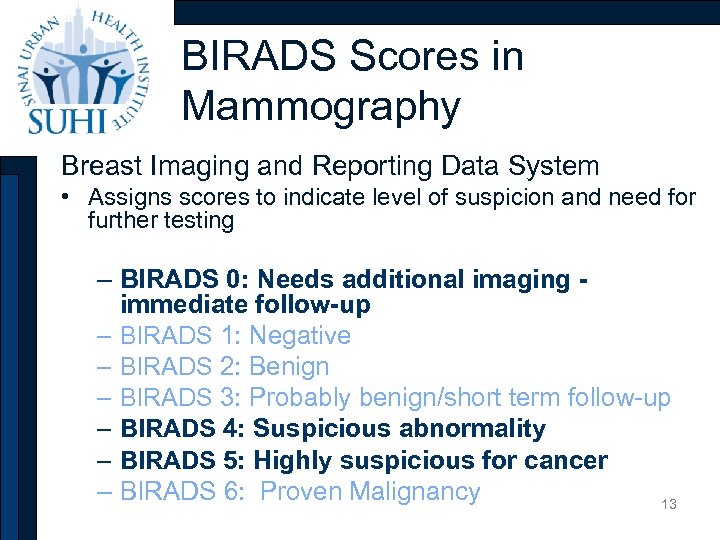
BIRADS Scores in Mammography Breast Imaging and Reporting Data System • Assigns scores to indicate level of suspicion and need for further testing – BIRADS 0: Needs additional imaging - immediate follow-up – BIRADS 1: Negative – BIRADS 2: Benign – BIRADS 3: Probably benign/short term follow-up – BIRADS 4: Suspicious abnormality – BIRADS 5: Highly suspicious for cancer – BIRADS 6: Proven Malignancy 13
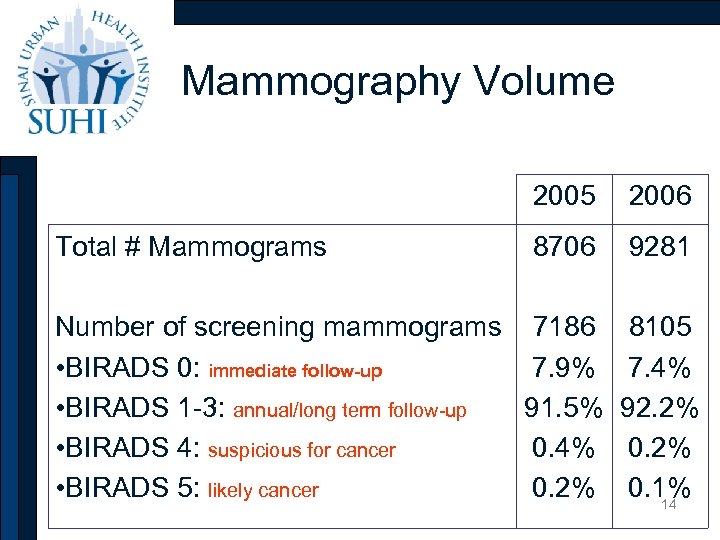
Mammography Volume 2005 Total # Mammograms 2006 8706 9281 Number of screening mammograms 7186 8105 • BIRADS 0: immediate follow-up 7. 9% 7. 4% • BIRADS 1 -3: annual/long term follow-up 91. 5% 92. 2% • BIRADS 4: suspicious for cancer 0. 4% 0. 2% • BIRADS 5: likely cancer 0. 2% 0. 1% 14
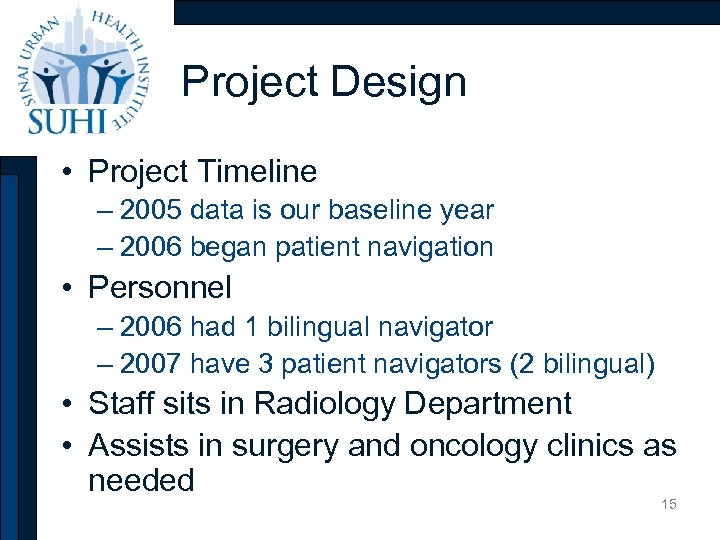
Project Design • Project Timeline – 2005 data is our baseline year – 2006 began patient navigation • Personnel – 2006 had 1 bilingual navigator – 2007 have 3 patient navigators (2 bilingual) • Staff sits in Radiology Department • Assists in surgery and oncology clinics as needed 15
Outline • Epidemiology of Breast Cancer in Chicago • Discuss the Avon Navigation Project • Outcomes • Conclusions/Next Steps 16
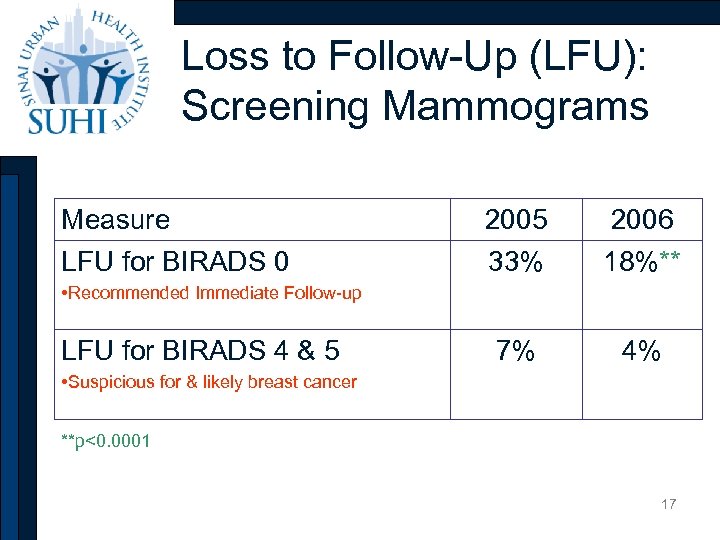
Loss to Follow-Up (LFU): Screening Mammograms Measure LFU for BIRADS 0 2005 33% 2006 18%** 7% 4% • Recommended Immediate Follow-up LFU for BIRADS 4 & 5 • Suspicious for & likely breast cancer **p<0. 0001 17
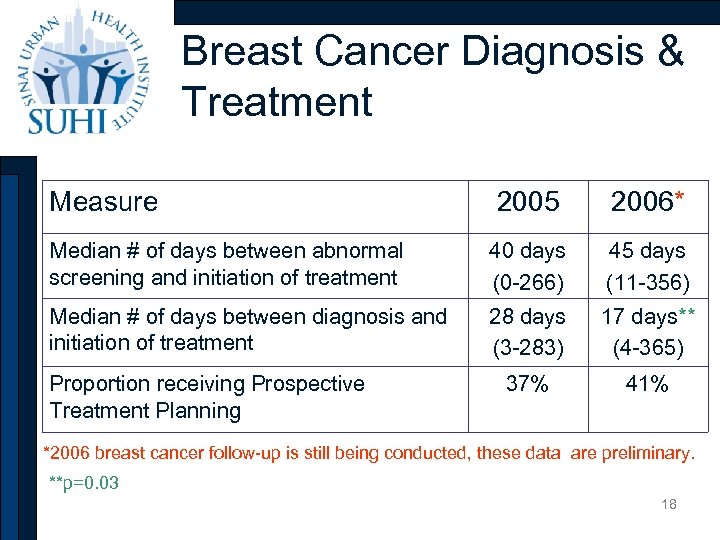
Breast Cancer Diagnosis & Treatment Measure 2005 2006* Median # of days between abnormal screening and initiation of treatment 40 days (0 -266) 45 days (11 -356) Median # of days between diagnosis and initiation of treatment 28 days (3 -283) 17 days** (4 -365) 37% 41% Proportion receiving Prospective Treatment Planning *2006 breast cancer follow-up is still being conducted, these data are preliminary. **p=0. 03 18
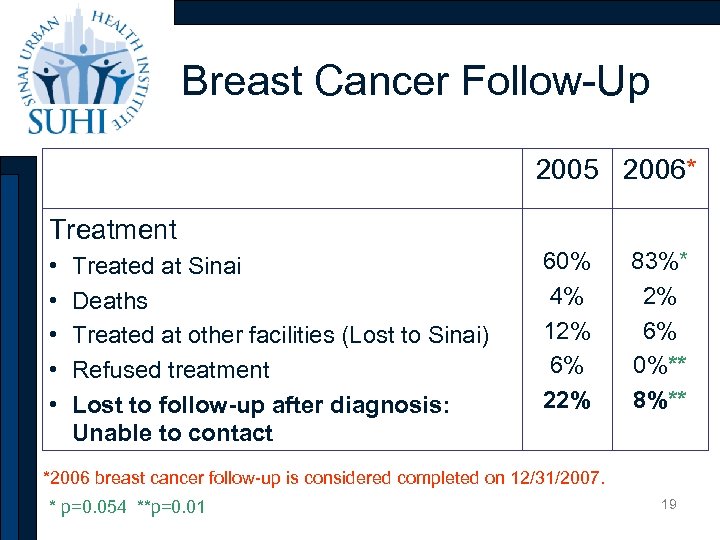
Breast Cancer Follow-Up 2005 2006* Treatment • • • Treated at Sinai Deaths Treated at other facilities (Lost to Sinai) Refused treatment Lost to follow-up after diagnosis: Unable to contact 60% 4% 12% 6% 22% 83%* 2% 6% 0%** 8%** *2006 breast cancer follow-up is considered completed on 12/31/2007. * p=0. 054 **p=0. 01 19
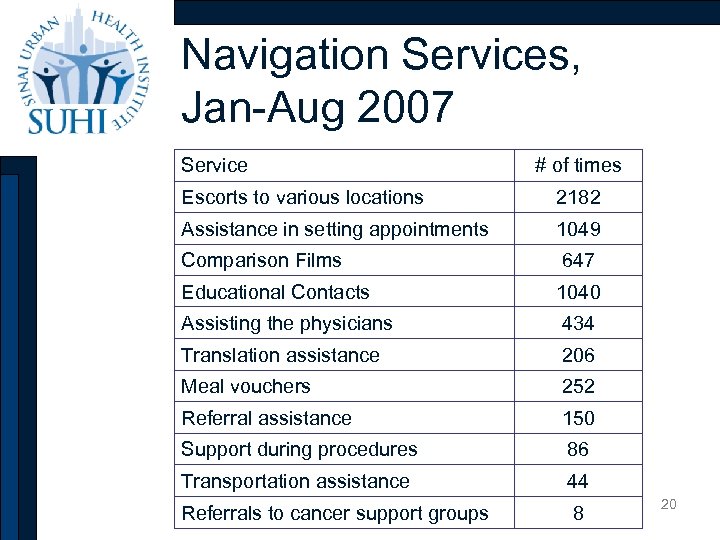
Navigation Services, Jan-Aug 2007 Service # of times Escorts to various locations 2182 Assistance in setting appointments 1049 Comparison Films 647 Educational Contacts 1040 Assisting the physicians 434 Translation assistance 206 Meal vouchers 252 Referral assistance 150 Support during procedures 86 Transportation assistance 44 Referrals to cancer support groups 8 20
Case Studies 21
Patient seen in Emergency Department • Mom sent to ED after feeling abdominal pain at visit with oncologist, referred for a CT scan – Waited several hours and was not seen by the staff • Daughter calls the navigator, who had been following her mom though her cancer diagnosis and treatment, – Navigator coordinated seeing doc in ED & CT scan – She also stayed late to ensure that the service was provided • Mom was admitted, and the navigators paid her a visit in her room the next day 22
Patient fearful of surgery • 49 year old, Latina, needed breast biopsy – Very nervous of what the doctors would find – And that husband would have to miss work • Met patient in lobby and remained with her for procedure – Husband did not have to miss work – Held her hand spoke to her in Spanish about family – Patient’s daughter told navigator that mom was at ease • Pathology revealed breast cancer, patient needs surgery —she considered not seeking treatment because she was afraid the surgeon would remove her breast • Navigator comforts patient for consult appointment and meets in lobby for appointment 23
Outline • Epidemiology of Breast Cancer in Chicago • Discuss the Avon Navigation Project • Outcomes • Conclusions/Next Steps 24
Main Findings: Avon Outcomes • Decreased loss to follow-up among the following: – Among those requiring additional imaging – Among those diagnosed with breast cancer • Improved treatment timeliness • Improved the numbers treated for breast cancer at MSH – Decreased the percent of patients who refused to be treated for breast cancer 25
Overarching Outcomes • Patient Satisfaction – Patients have personally expressed satisfaction in letters – As well as in person • Easing the burden on the clinic staff – Physicians and other clinicians have been able to focus on the patient’s direct care rather than coordinating all additional testing needed for procedures. 26
Moving Forward • Move Navigation from the hospital to the community – In 2 distinct west side community areas of Chicago: • North Lawndale (~90% black) • Humboldt Park (50% Black, 25% Mexican and 25% Puerto Rican) – These 2 community areas will have different assets and needs • An example of translational research, moving from the hospital to the community 27
Acknowledgements • Avon Foundation Breast Cancer Crusade • Diana Salgado, Lead Avon Patient Navigator • Suzan Gil & Monique Mitts, Patient Navigators • Mary Rinder, Manager of Women’s Health • Steven Whitman, Ph. D, Director of the Sinai Urban Health Institute & Principal Investigator 28
Скачать презентацию Patient Navigation in Breast Health Services Improving Quality
d3a15df934dddaded601fdc4549cb742.ppt