


 Скачать презентацию PATIENT CENTERED SPECIALTY CARE PCSC Medication Management Improving
34a2ca7992f5b4a8f0f9be785565b734.ppt
- Количество слайдов: 45
 PATIENT CENTERED SPECIALTY CARE (PCSC) Medication Management Improving Medication Adherence
 Important Note § The information, resources, and tools that Anthem provides to you through the Enhanced Personal Health Care Program are intended for general educational purposes only, and should not be interpreted as directing, requiring, or recommending any type of care or treatment decision for Anthem members or any other patient. Anthem cannot guarantee that the information provided is absolutely accurate, current or exhaustive since the field of health is constantly changing. § The information contained in presentations that Anthem makes available to you is compiled largely from publicly available sources and does not represent the opinions of Anthem or its personnel delivering the presentations. § If Anthem provides links to or examples of information, resources or tools not owned, controlled or developed by Anthem, this does not constitute or imply an endorsement by Anthem. Additionally, we do not guarantee the quality or accuracy of the information presented in, or derived from, any non-health plan resources and tools. § We do not advocate the use of any specific product or activity identified in this educational material, and you may choose to use items not represented in the materials provided to you. Trade names of commonly used medications and products are provided for ease of education but are not intended as particular endorsement. § None of the information, resources or tools provided is intended to be required for use in your practice or infer any kind of obligation on you in exchange for any value you may receive from the program. Physicians and other health professionals must rely on their own expertise in evaluating information, tools, or resources to be used in their practice. The information, tools, and resources provided for your consideration are never a substitute for your professional judgment. § With respect to the issue of coverage, each Anthem Member should review his/her Certificate of Coverage and Schedule of Benefits for details concerning benefits, procedures and exclusions prior to receiving treatment. If Members have any questions concerning their benefits, they may call the Member Services number listed on the back of their ID card. PROPRIETARY AND CONFIDENTIAL | DO NOT COPY 2
 Learning Objectives § Describe the impact of medication non-adherence and associated outcomes § Understand the predictors or the five dimensions of medication non-adherence (barriers) § Become familiar with the “SIMPLE” interventions for preventing and solving for medication adherence barriers § Describe opportunities for the care team to evaluate and improve medication adherence in routine care processes in the daily practice of medicine PROPRIETARY AND CONFIDENTIAL | DO NOT COPY 3
 Agenda § Medication Adherence: Why does it matter? § Data Analysis § Predictors of Medication Non-adherence (five interacting dimensions) § Medication Adherence “SIMPLE” Interventions § Taking Action: Steps for the Care Team § Next Steps PROPRIETARY AND CONFIDENTIAL | DO NOT COPY 4
 Medication Management § The appropriate use and coordination of medication therapy is a critical factor to improving patient health, improving quality and decreasing costs § Medications matter because they are involved in 80% of all treatments § Medication management processes currently occur at various levels within physician practices on a daily basis § Medication adherence is just one part of improving your practice’s overall approach to medication management § The Patient Centered Primary Care Collaborative has published a resource guide on Integrating Comprehensive Medication Management to optimize patient outcomes PROPRIETARY AND CONFIDENTIAL | DO NOT COPY 5
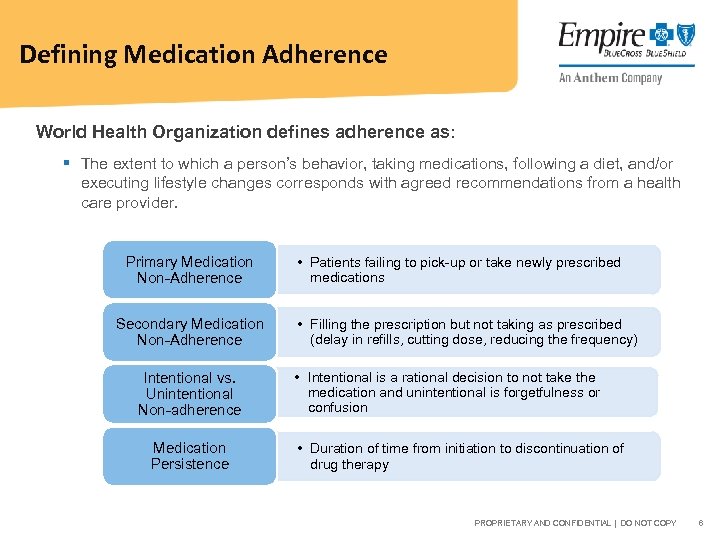 Defining Medication Adherence World Health Organization defines adherence as: § The extent to which a person’s behavior, taking medications, following a diet, and/or executing lifestyle changes corresponds with agreed recommendations from a health care provider. Primary Medication Non-Adherence Secondary Medication Non-Adherence Intentional vs. Unintentional Non-adherence Medication Persistence • Patients failing to pick-up or take newly prescribed medications • Filling the prescription but not taking as prescribed (delay in refills, cutting dose, reducing the frequency) • Intentional is a rational decision to not take the medication and unintentional is forgetfulness or confusion • Duration of time from initiation to discontinuation of drug therapy PROPRIETARY AND CONFIDENTIAL | DO NOT COPY 6
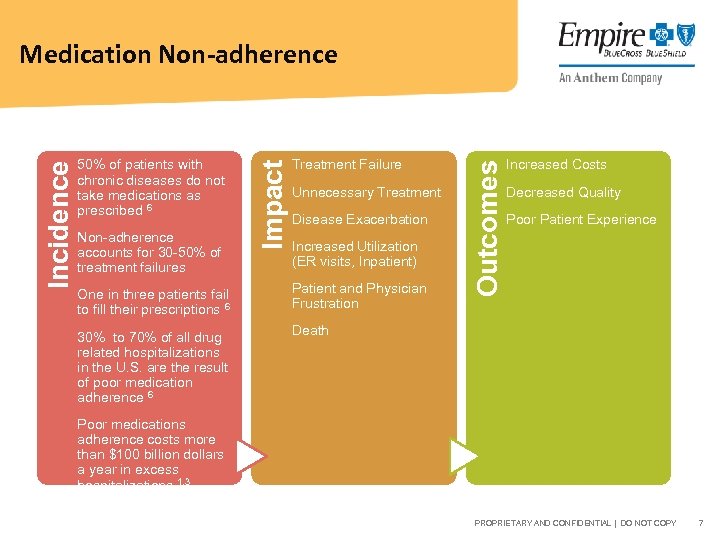 Non-adherence accounts for 30 -50% of treatment failures Treatment Failure Unnecessary Treatment Disease Exacerbation Increased Utilization (ER visits, Inpatient) One in three patients fail to fill their prescriptions 6 Patient and Physician Frustration 30% to 70% of all drug related hospitalizations in the U. S. are the result of poor medication adherence 6 Outcomes 50% of patients with chronic diseases do not take medications as prescribed 6 Impact Incidence Medication Non-adherence Increased Costs Decreased Quality Poor Patient Experience Death Poor medications adherence costs more than $100 billion dollars a year in excess hospitalizations 1, 3 PROPRIETARY AND CONFIDENTIAL | DO NOT COPY 7
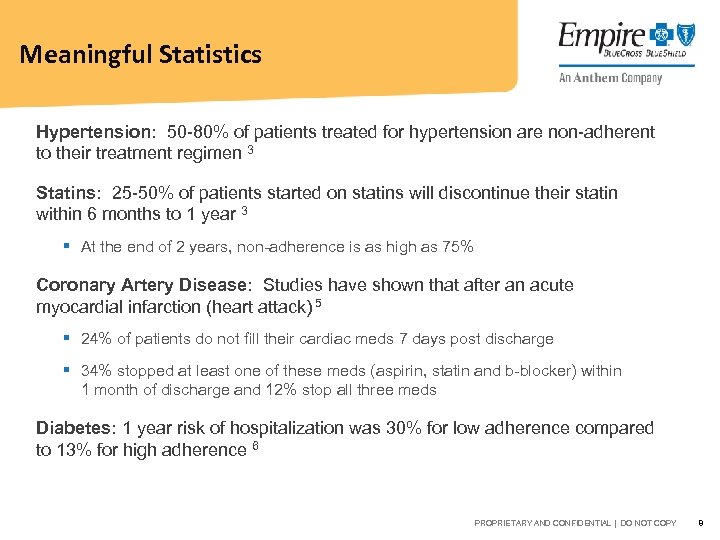 Meaningful Statistics Hypertension: 50 -80% of patients treated for hypertension are non-adherent to their treatment regimen 3 Statins: 25 -50% of patients started on statins will discontinue their statin within 6 months to 1 year 3 § At the end of 2 years, non-adherence is as high as 75% Coronary Artery Disease: Studies have shown that after an acute myocardial infarction (heart attack) 5 § 24% of patients do not fill their cardiac meds 7 days post discharge § 34% stopped at least one of these meds (aspirin, statin and b-blocker) within 1 month of discharge and 12% stop all three meds Diabetes: 1 year risk of hospitalization was 30% for low adherence compared to 13% for high adherence 6 PROPRIETARY AND CONFIDENTIAL | DO NOT COPY 8
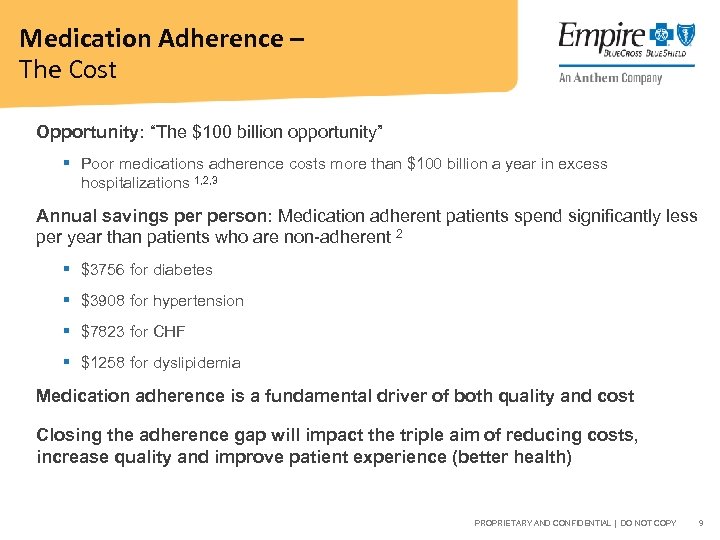 Medication Adherence – The Cost Opportunity: “The $100 billion opportunity” § Poor medications adherence costs more than $100 billion a year in excess hospitalizations 1, 2, 3 Annual savings person: Medication adherent patients spend significantly less per year than patients who are non-adherent 2 § $3756 for diabetes § $3908 for hypertension § $7823 for CHF § $1258 for dyslipidemia Medication adherence is a fundamental driver of both quality and cost Closing the adherence gap will impact the triple aim of reducing costs, increase quality and improve patient experience (better health) PROPRIETARY AND CONFIDENTIAL | DO NOT COPY 9
 Predictors of Medication Non-Adherence (Barriers)
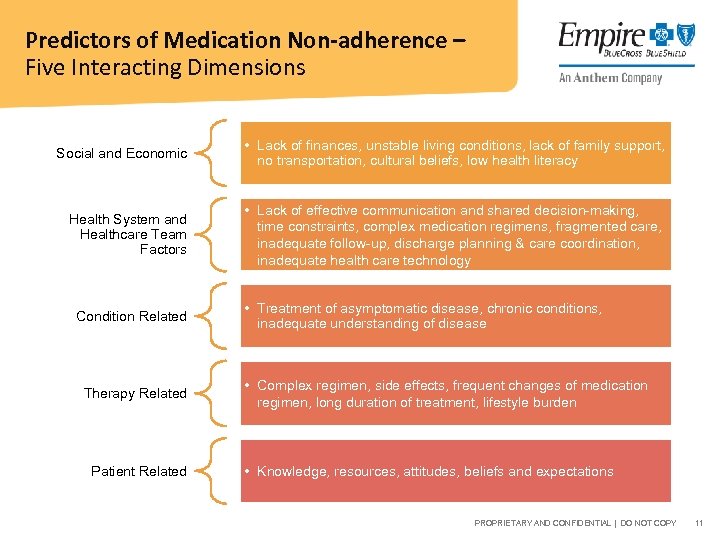 Predictors of Medication Non-adherence – Five Interacting Dimensions Social and Economic • Lack of finances, unstable living conditions, lack of family support, no transportation, cultural beliefs, low health literacy Health System and Healthcare Team Factors • Lack of effective communication and shared decision-making, time constraints, complex medication regimens, fragmented care, inadequate follow-up, discharge planning & care coordination, inadequate health care technology Condition Related Therapy Related Patient Related • Treatment of asymptomatic disease, chronic conditions, inadequate understanding of disease • Complex regimen, side effects, frequent changes of medication regimen, long duration of treatment, lifestyle burden • Knowledge, resources, attitudes, beliefs and expectations PROPRIETARY AND CONFIDENTIAL | DO NOT COPY 11
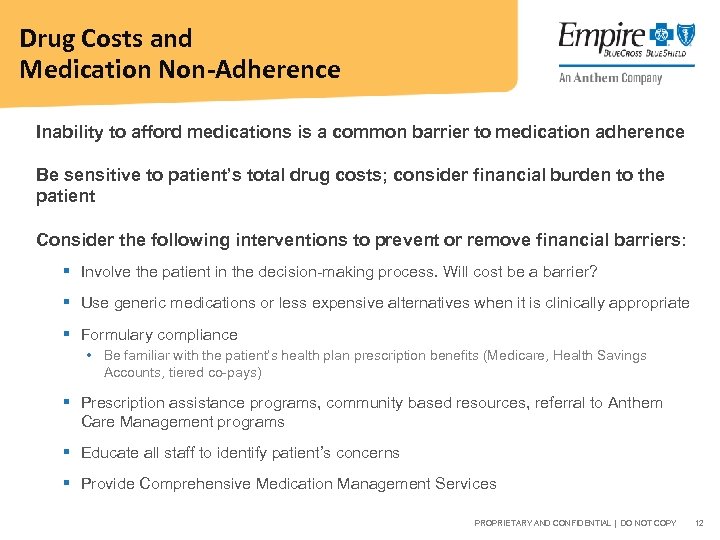 Drug Costs and Medication Non-Adherence Inability to afford medications is a common barrier to medication adherence Be sensitive to patient’s total drug costs; consider financial burden to the patient Consider the following interventions to prevent or remove financial barriers: § Involve the patient in the decision-making process. Will cost be a barrier? § Use generic medications or less expensive alternatives when it is clinically appropriate § Formulary compliance • Be familiar with the patient’s health plan prescription benefits (Medicare, Health Savings Accounts, tiered co-pays) § Prescription assistance programs, community based resources, referral to Anthem Care Management programs § Educate all staff to identify patient’s concerns § Provide Comprehensive Medication Management Services PROPRIETARY AND CONFIDENTIAL | DO NOT COPY 12
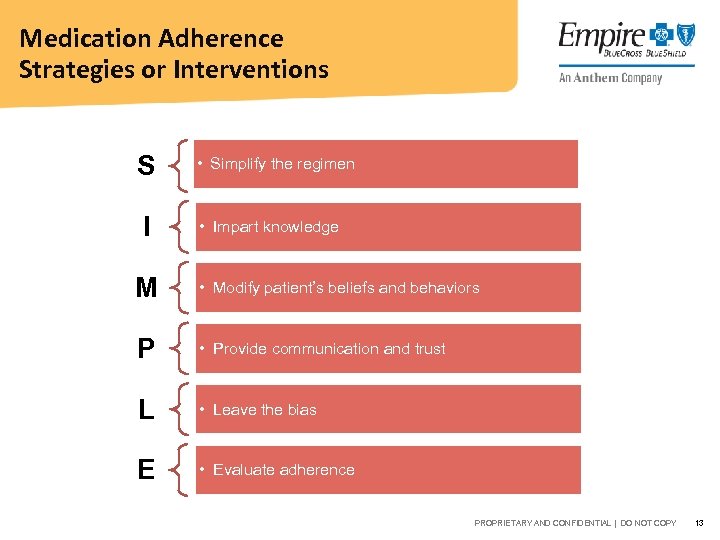 Medication Adherence Strategies or Interventions S I • Simplify the regimen • Impart knowledge M • Modify patient’s beliefs and behaviors P • Provide communication and trust L • Leave the bias E • Evaluate adherence PROPRIETARY AND CONFIDENTIAL | DO NOT COPY 13
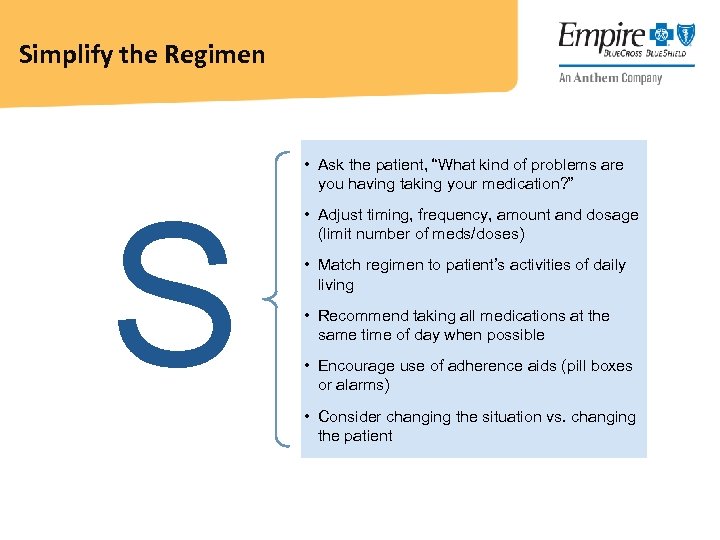 Simplify the Regimen S • Ask the patient, “What kind of problems are you having taking your medication? ” • Adjust timing, frequency, amount and dosage (limit number of meds/doses) • Match regimen to patient’s activities of daily living • Recommend taking all medications at the same time of day when possible • Encourage use of adherence aids (pill boxes or alarms) • Consider changing the situation vs. changing the patient
 Impart Knowledge I • Ask patients what they know about their medical condition and their medications to treat the condition • Patient-provider shared decision-making • Encourage discussions with physician, nurse and pharmacist • Provide clear medication instructions (written and verbal) • Improve patients understanding of their conditions (written, verbal, video, classes) • Involve patient’s family or caregivers if appropriate • Reinforce all discussions especially for low literacy patients PROPRIETARY AND CONFIDENTIAL | DO NOT COPY 15
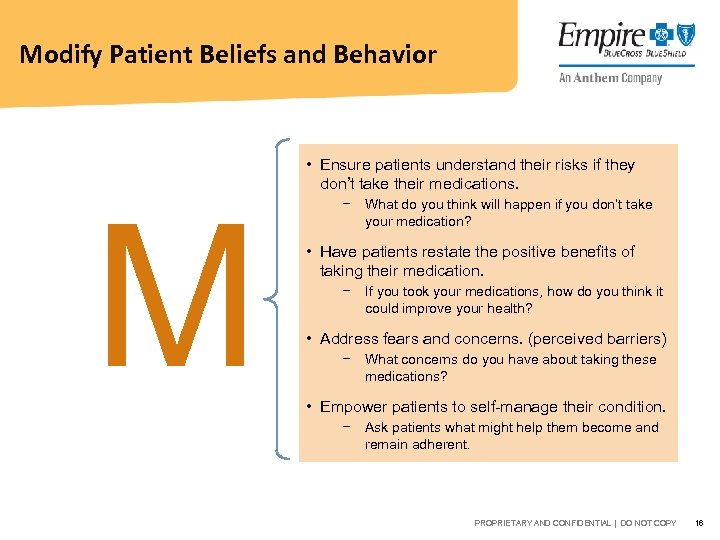 Modify Patient Beliefs and Behavior • Empower patients to self-manage their • condition Ensure patients understand their risks if they M • don’t take their medications. Ask patients what might help them become and remain adherent. − What do you think will happen if you don’t take your medication? • Ensure patients understand their risks if they don’t take their medications • Have patients restate the positive benefits of • What do you think will happen if you don’t taking their medication. take your medication? − If you took your medications, how do you think it could improve your health? • Have patients restate the positive benefits of taking their medication • Address fears and concerns. (perceived barriers) • If you took your medications how do you − What concerns do you have about taking these think it could improve your health? medications? • Address fears and concerns (perceived • Empower patients to self-manage their condition. barriers) − Ask patients what might help them become and • What concerns do you have about taking remain adherent. these medications? PROPRIETARY AND CONFIDENTIAL | DO NOT COPY 16
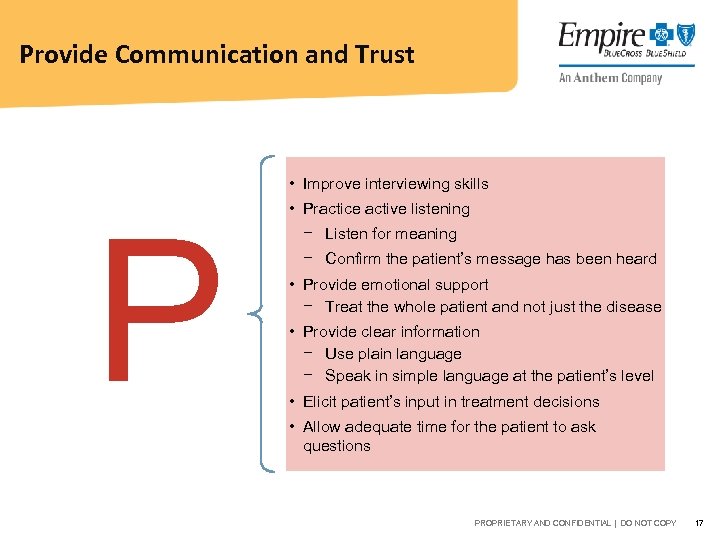 Provide Communication and Trust • Improve interviewing skills P • Practice active listening − Listen for meaning − Confirm the patient’s message has been heard • Provide emotional support − Treat the whole patient and not just the disease • Provide clear information − Use plain language − Speak in simple language at the patient’s level • Elicit patient’s input in treatment decisions • Allow adequate time for the patient to ask questions PROPRIETARY AND CONFIDENTIAL | DO NOT COPY 17
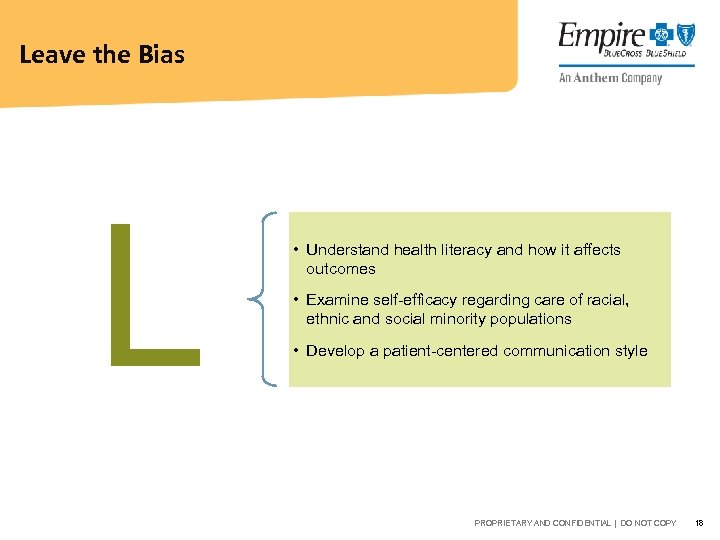 Leave the Bias L • Understand health literacy and how it affects outcomes • Examine self-efficacy regarding care of racial, ethnic and social minority populations • Develop a patient-centered communication style PROPRIETARY AND CONFIDENTIAL | DO NOT COPY 18
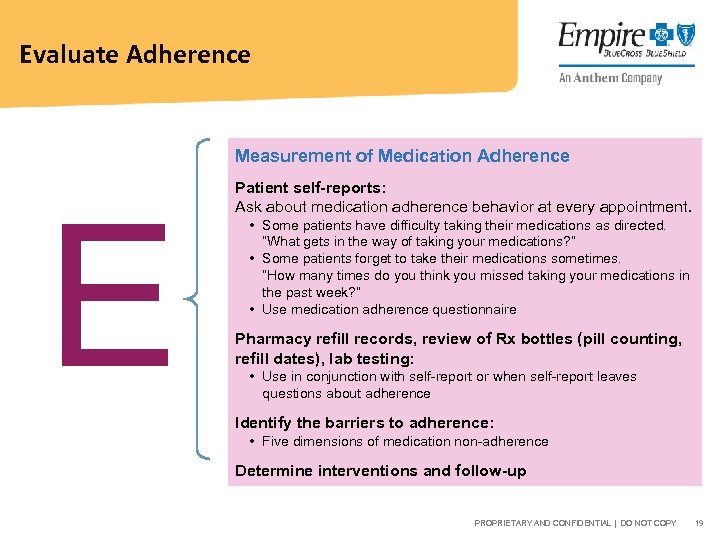 Evaluate Adherence • Empower patients to self-manage their Measurement of Medication Adherence condition E • Ask patients what might help them become and Patient self-reports: remain adherent. Ask about medication adherence behavior at every appointment. • • Ensure patients understand their risks if they Some patients have difficulty taking their medications as directed. don’t take their medications “What gets in the way of taking your medications? ” • Some patients forget to take their medications sometimes. • What do you think will happen if you don’t “How many times do you think you missed taking your medications in take your medication? the past week? ” Use medication adherence questionnaire • • Have patients restate the positive benefits of taking their medication Pharmacy refill records, review of Rx bottles (pill counting, • dates), lab testing: refill. If you took your medications how do you think it could improve your health? • Use in conjunction with self-report or when self-report leaves questions about adherence • Address fears and concerns (perceived barriers) Identify the barriers to adherence: • • Five dimensions of medication non-adherence What concerns do you have about taking these medications? Determine interventions and follow-up PROPRIETARY AND CONFIDENTIAL | DO NOT COPY 19
 Steps for the Care Team Improved medication adherence depends on successful interventions into routine care processes in the daily practice of medicine. PROPRIETARY AND CONFIDENTIAL | DO NOT COPY 20
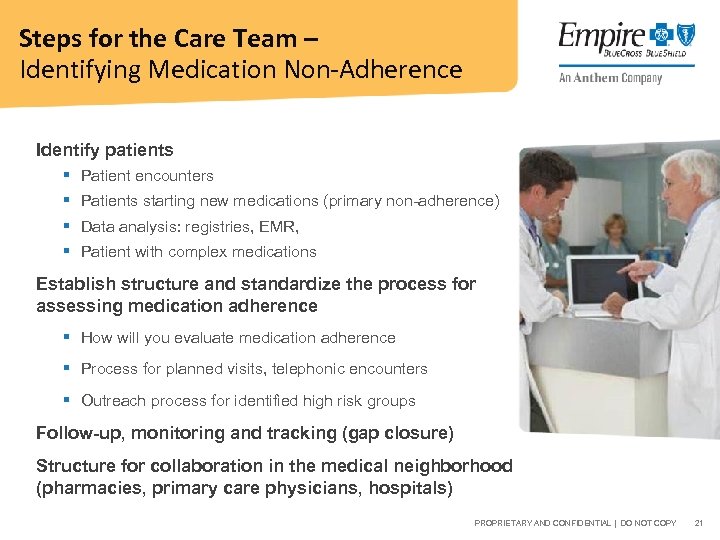 Steps for the Care Team – Identifying Medication Non-Adherence Identify patients § Patient encounters § Patients starting new medications (primary non-adherence) § Data analysis: registries, EMR, § Patient with complex medications Establish structure and standardize the process for assessing medication adherence § How will you evaluate medication adherence § Process for planned visits, telephonic encounters § Outreach process for identified high risk groups Follow-up, monitoring and tracking (gap closure) Structure for collaboration in the medical neighborhood (pharmacies, primary care physicians, hospitals) PROPRIETARY AND CONFIDENTIAL | DO NOT COPY 21
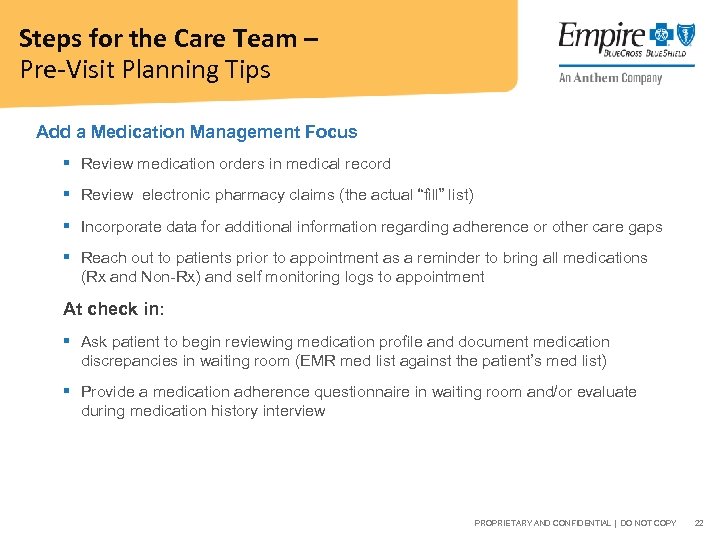 Steps for the Care Team – Pre-Visit Planning Tips Add a Medication Management Focus § Review medication orders in medical record § Review electronic pharmacy claims (the actual “fill” list) § Incorporate data for additional information regarding adherence or other care gaps § Reach out to patients prior to appointment as a reminder to bring all medications (Rx and Non-Rx) and self monitoring logs to appointment At check in: § Ask patient to begin reviewing medication profile and document medication discrepancies in waiting room (EMR med list against the patient’s med list) § Provide a medication adherence questionnaire in waiting room and/or evaluate during medication history interview PROPRIETARY AND CONFIDENTIAL | DO NOT COPY 22
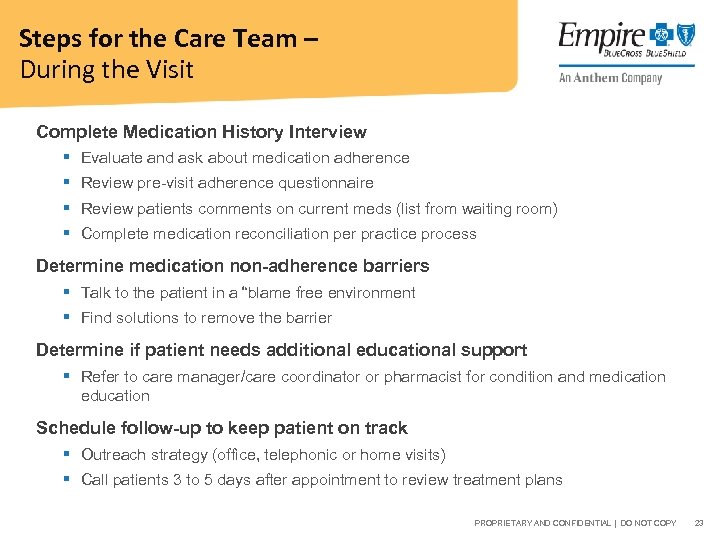 Steps for the Care Team – During the Visit Complete Medication History Interview § Evaluate and ask about medication adherence § Review pre-visit adherence questionnaire § Review patients comments on current meds (list from waiting room) § Complete medication reconciliation per practice process Determine medication non-adherence barriers § Talk to the patient in a “blame free environment § Find solutions to remove the barrier Determine if patient needs additional educational support § Refer to care manager/care coordinator or pharmacist for condition and medication education Schedule follow-up to keep patient on track § Outreach strategy (office, telephonic or home visits) § Call patients 3 to 5 days after appointment to review treatment plans PROPRIETARY AND CONFIDENTIAL | DO NOT COPY 23
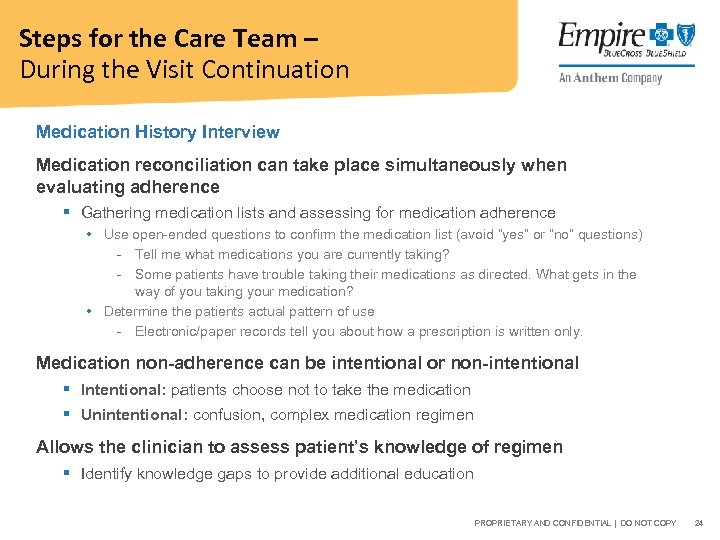 Steps for the Care Team – During the Visit Continuation Medication History Interview Medication reconciliation can take place simultaneously when evaluating adherence § Gathering medication lists and assessing for medication adherence • Use open-ended questions to confirm the medication list (avoid “yes” or “no” questions) - Tell me what medications you are currently taking? - Some patients have trouble taking their medications as directed. What gets in the way of you taking your medication? • Determine the patients actual pattern of use - Electronic/paper records tell you about how a prescription is written only. Medication non-adherence can be intentional or non-intentional § Intentional: patients choose not to take the medication § Unintentional: confusion, complex medication regimen Allows the clinician to assess patient’s knowledge of regimen § Identify knowledge gaps to provide additional education PROPRIETARY AND CONFIDENTIAL | DO NOT COPY 24
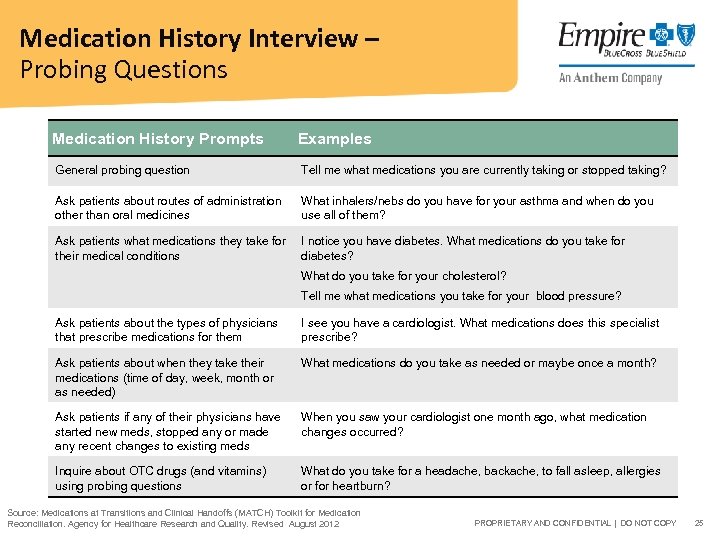 Medication History Interview – Probing Questions Medication History Prompts Examples General probing question Tell me what medications you are currently taking or stopped taking? Ask patients about routes of administration other than oral medicines What inhalers/nebs do you have for your asthma and when do you use all of them? Ask patients what medications they take for their medical conditions I notice you have diabetes. What medications do you take for diabetes? What do you take for your cholesterol? Tell me what medications you take for your blood pressure? Ask patients about the types of physicians that prescribe medications for them I see you have a cardiologist. What medications does this specialist prescribe? Ask patients about when they take their medications (time of day, week, month or as needed) What medications do you take as needed or maybe once a month? Ask patients if any of their physicians have started new meds, stopped any or made any recent changes to existing meds When you saw your cardiologist one month ago, what medication changes occurred? Inquire about OTC drugs (and vitamins) using probing questions What do you take for a headache, backache, to fall asleep, allergies or for heartburn? Source: Medications at Transitions and Clinical Handoffs (MATCH) Toolkit for Medication Reconciliation. Agency for Healthcare Research and Quality. Revised August 2012 PROPRIETARY AND CONFIDENTIAL | DO NOT COPY 25
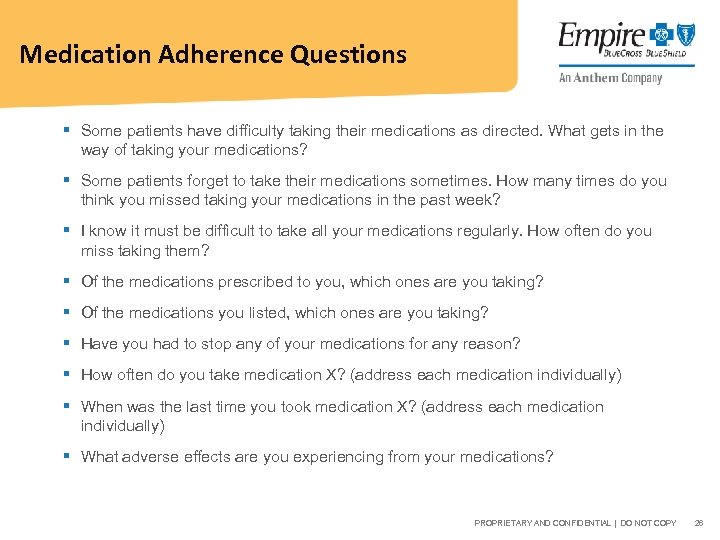 Medication Adherence Questions § Some patients have difficulty taking their medications as directed. What gets in the way of taking your medications? § Some patients forget to take their medications sometimes. How many times do you think you missed taking your medications in the past week? § I know it must be difficult to take all your medications regularly. How often do you miss taking them? § Of the medications prescribed to you, which ones are you taking? § Of the medications you listed, which ones are you taking? § Have you had to stop any of your medications for any reason? § How often do you take medication X? (address each medication individually) § When was the last time you took medication X? (address each medication individually) § What adverse effects are you experiencing from your medications? PROPRIETARY AND CONFIDENTIAL | DO NOT COPY 26
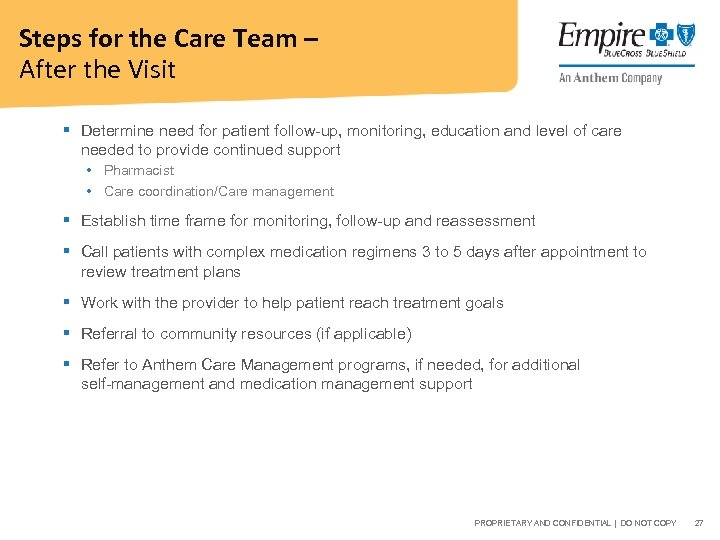 Steps for the Care Team – After the Visit § Determine need for patient follow-up, monitoring, education and level of care needed to provide continued support • Pharmacist • Care coordination/Care management § Establish time frame for monitoring, follow-up and reassessment § Call patients with complex medication regimens 3 to 5 days after appointment to review treatment plans § Work with the provider to help patient reach treatment goals § Referral to community resources (if applicable) § Refer to Anthem Care Management programs, if needed, for additional self-management and medication management support PROPRIETARY AND CONFIDENTIAL | DO NOT COPY 27
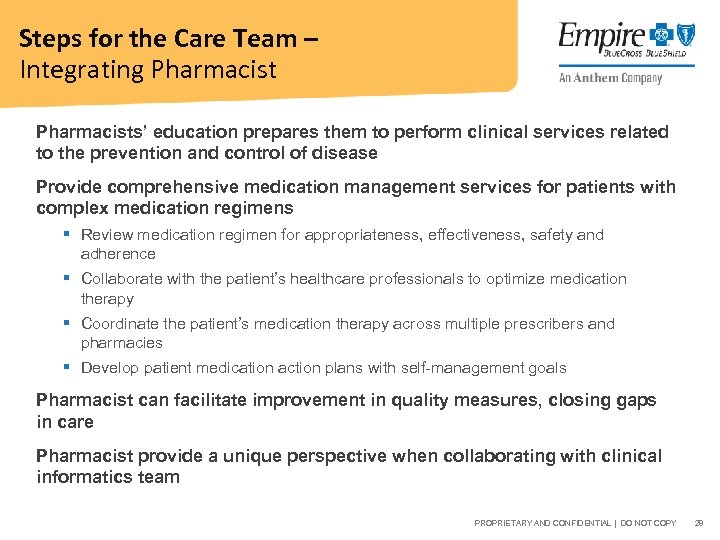 Steps for the Care Team – Integrating Pharmacists’ education prepares them to perform clinical services related to the prevention and control of disease Provide comprehensive medication management services for patients with complex medication regimens § Review medication regimen for appropriateness, effectiveness, safety and adherence § Collaborate with the patient’s healthcare professionals to optimize medication therapy § Coordinate the patient’s medication therapy across multiple prescribers and pharmacies § Develop patient medication action plans with self-management goals Pharmacist can facilitate improvement in quality measures, closing gaps in care Pharmacist provide a unique perspective when collaborating with clinical informatics team PROPRIETARY AND CONFIDENTIAL | DO NOT COPY 28
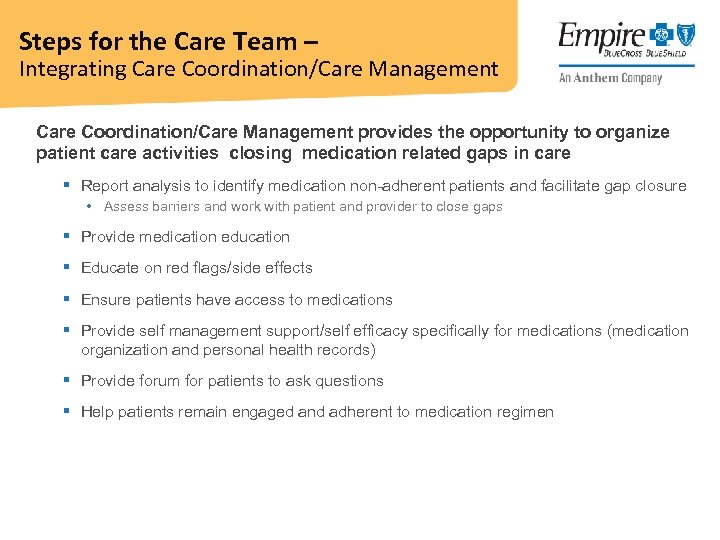 Steps for the Care Team – Integrating Care Coordination/Care Management provides the opportunity to organize patient care activities closing medication related gaps in care § Report analysis to identify medication non-adherent patients and facilitate gap closure • Assess barriers and work with patient and provider to close gaps § Provide medication education § Educate on red flags/side effects § Ensure patients have access to medications § Provide self management support/self efficacy specifically for medications (medication organization and personal health records) § Provide forum for patients to ask questions § Help patients remain engaged and adherent to medication regimen
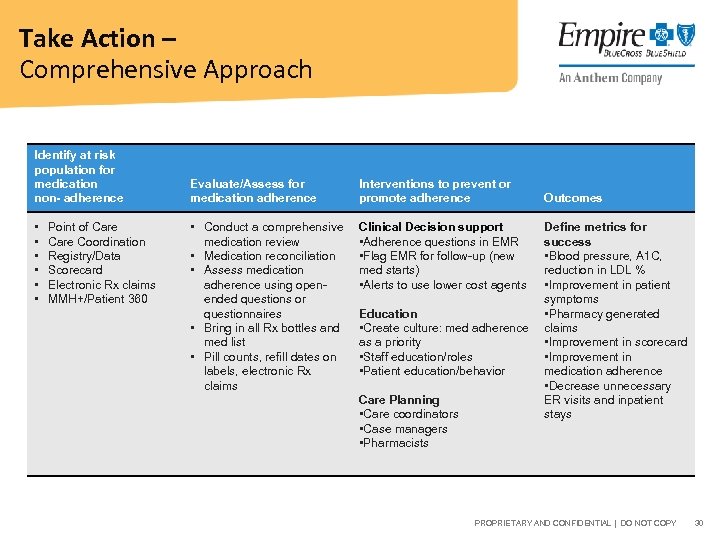 Take Action – Comprehensive Approach Identify at risk population for medication non- adherence • • • Point of Care Coordination Registry/Data Scorecard Electronic Rx claims MMH+/Patient 360 Evaluate/Assess for medication adherence Interventions to prevent or promote adherence • Conduct a comprehensive medication review • Medication reconciliation • Assess medication adherence using openended questions or questionnaires • Bring in all Rx bottles and med list • Pill counts, refill dates on labels, electronic Rx claims Clinical Decision support • Adherence questions in EMR • Flag EMR for follow-up (new med starts) • Alerts to use lower cost agents Education • Create culture: med adherence as a priority • Staff education/roles • Patient education/behavior Care Planning • Care coordinators • Case managers • Pharmacists Outcomes Define metrics for success • Blood pressure, A 1 C, reduction in LDL % • Improvement in patient symptoms • Pharmacy generated claims • Improvement in scorecard • Improvement in medication adherence • Decrease unnecessary ER visits and inpatient stays PROPRIETARY AND CONFIDENTIAL | DO NOT COPY 30
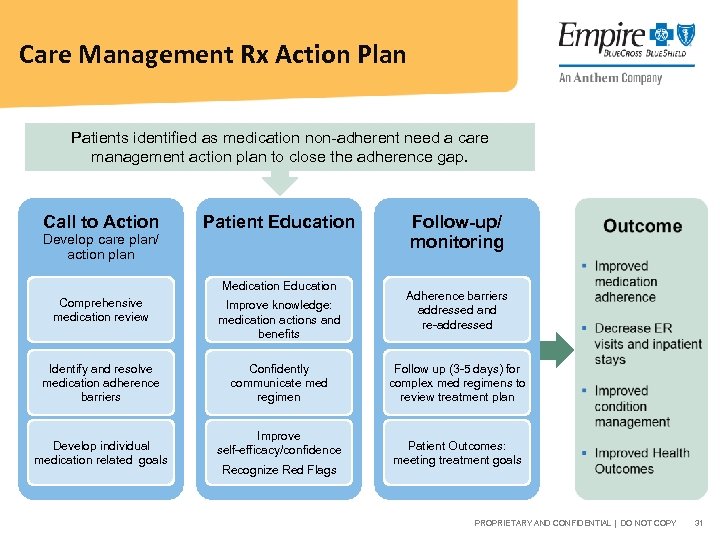 Care Management Rx Action Plan Patients identified as medication non-adherent need a care management action plan to close the adherence gap. Call to Action Develop care plan/ action plan Patient Education Medication Education Comprehensive medication review Improve knowledge: medication actions and benefits Identify and resolve medication adherence barriers Confidently communicate med regimen Develop individual medication related goals Improve self-efficacy/confidence Recognize Red Flags Follow-up/ monitoring Adherence barriers addressed and re-addressed Follow up (3 -5 days) for complex med regimens to review treatment plan Patient Outcomes: meeting treatment goals PROPRIETARY AND CONFIDENTIAL | DO NOT COPY 31
 Tools/Resources
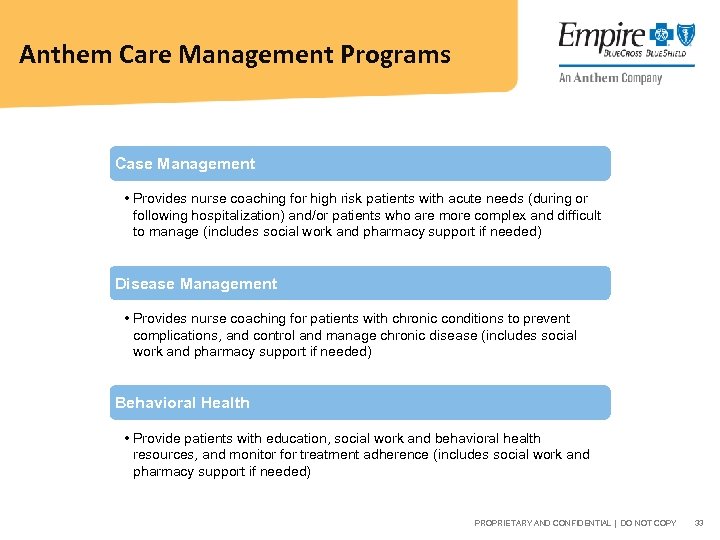 Anthem Care Management Programs Case Management • Provides nurse coaching for high risk patients with acute needs (during or following hospitalization) and/or patients who are more complex and difficult to manage (includes social work and pharmacy support if needed) Disease Management • Provides nurse coaching for patients with chronic conditions to prevent complications, and control and manage chronic disease (includes social work and pharmacy support if needed) Behavioral Health • Provide patients with education, social work and behavioral health resources, and monitor for treatment adherence (includes social work and pharmacy support if needed) PROPRIETARY AND CONFIDENTIAL | DO NOT COPY 33
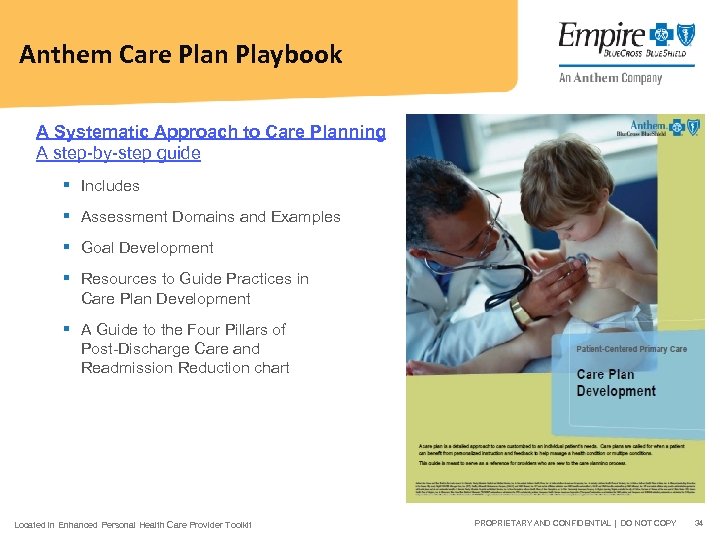 Anthem Care Plan Playbook A Systematic Approach to Care Planning A step-by-step guide § Includes § Assessment Domains and Examples § Goal Development § Resources to Guide Practices in Care Plan Development § A Guide to the Four Pillars of Post-Discharge Care and Readmission Reduction chart Located in Enhanced Personal Health Care Provider Toolkit PROPRIETARY AND CONFIDENTIAL | DO NOT COPY 34
 ACP Practice Advisor® Building a Foundation § § § Work as a Team Communicate with Patients Engage Patients Coordinate Care Facilitate Transitions I and II Improving Clinical Care § Depression Screening and Care § Addressing Substance Use § Motivational Interviewing Specialty Practice Recognition § Track and Coordinate Referrals § Provide Access and Communication PROPRIETARY AND CONFIDENTIAL | DO NOT COPY 35
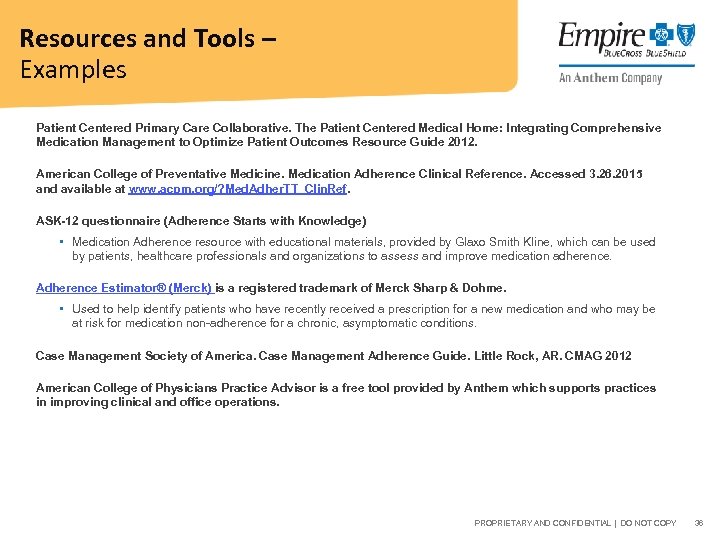 Resources and Tools – Examples Patient Centered Primary Care Collaborative. The Patient Centered Medical Home: Integrating Comprehensive Medication Management to Optimize Patient Outcomes Resource Guide 2012. American College of Preventative Medicine. Medication Adherence Clinical Reference. Accessed 3. 26. 2015 and available at www. acpm. org/? Med. Adher. TT_Clin. Ref. ASK-12 questionnaire (Adherence Starts with Knowledge) • Medication Adherence resource with educational materials, provided by Glaxo Smith Kline, which can be used by patients, healthcare professionals and organizations to assess and improve medication adherence. Adherence Estimator® (Merck) is a registered trademark of Merck Sharp & Dohme. • Used to help identify patients who have recently received a prescription for a new medication and who may be at risk for medication non-adherence for a chronic, asymptomatic conditions. Case Management Society of America. Case Management Adherence Guide. Little Rock, AR. CMAG 2012 American College of Physicians Practice Advisor is a free tool provided by Anthem which supports practices in improving clinical and office operations. PROPRIETARY AND CONFIDENTIAL | DO NOT COPY 36
 Next Steps
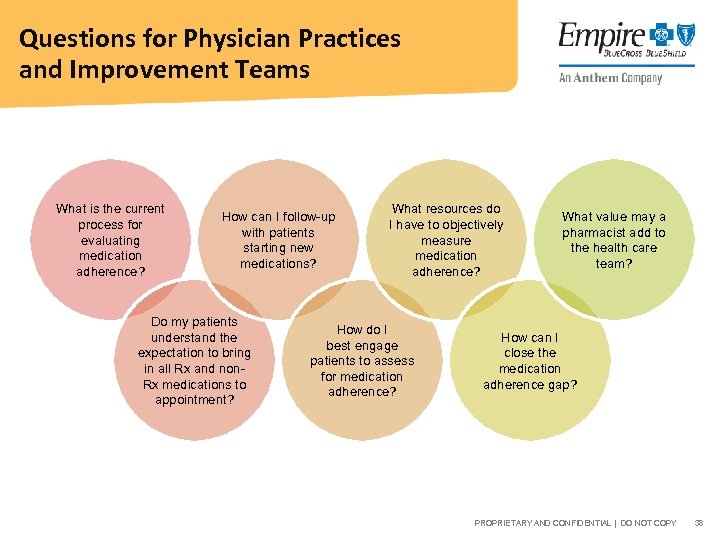 Questions for Physician Practices and Improvement Teams What is the current process for evaluating medication adherence? How can I follow-up with patients starting new medications? Do my patients understand the expectation to bring in all Rx and non. Rx medications to appointment? What resources do I have to objectively measure medication adherence? How do I best engage patients to assess for medication adherence? What value may a pharmacist add to the health care team? How can I close the medication adherence gap? PROPRIETARY AND CONFIDENTIAL | DO NOT COPY 38
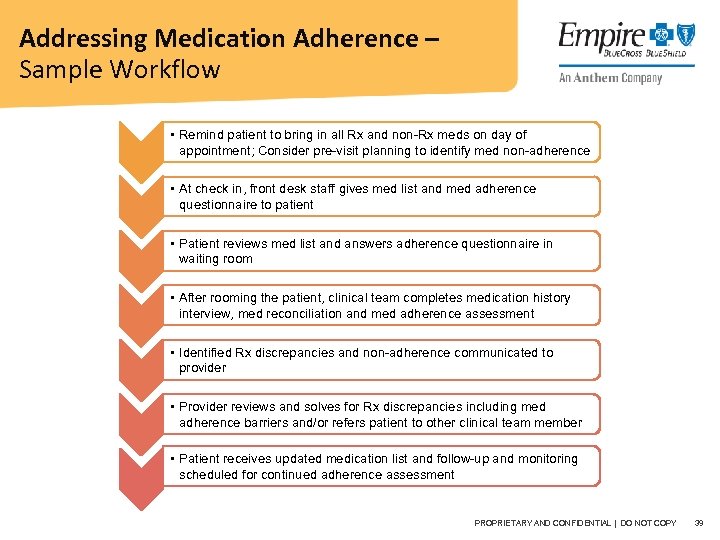 Addressing Medication Adherence – Sample Workflow • Remind patient to bring in all Rx and non-Rx meds on day of appointment; Consider pre-visit planning to identify med non-adherence • At check in, front desk staff gives med list and med adherence questionnaire to patient • Patient reviews med list and answers adherence questionnaire in waiting room • After rooming the patient, clinical team completes medication history interview, med reconciliation and med adherence assessment • Identified Rx discrepancies and non-adherence communicated to provider • Provider reviews and solves for Rx discrepancies including med adherence barriers and/or refers patient to other clinical team member • Patient receives updated medication list and follow-up and monitoring scheduled for continued adherence assessment PROPRIETARY AND CONFIDENTIAL | DO NOT COPY 39
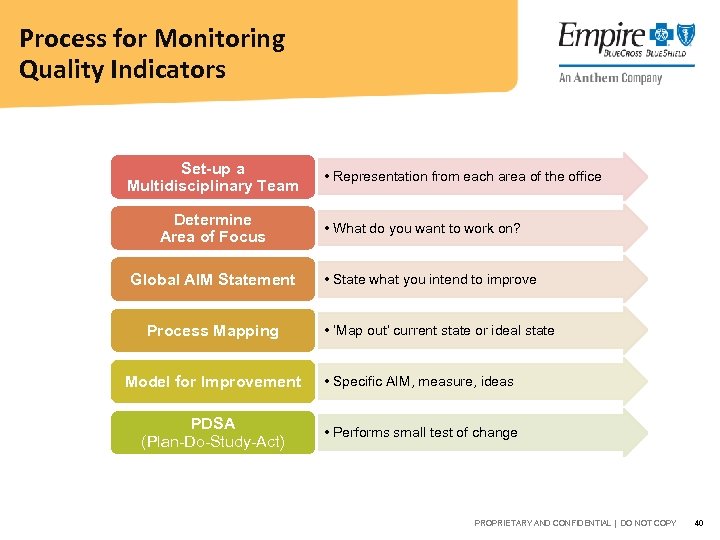 Process for Monitoring Quality Indicators Set-up a Multidisciplinary Team Determine Area of Focus Global AIM Statement Process Mapping • Representation from each area of the office • What do you want to work on? • State what you intend to improve • ‘Map out’ current state or ideal state Model for Improvement • Specific AIM, measure, ideas PDSA (Plan-Do-Study-Act) • Performs small test of change PROPRIETARY AND CONFIDENTIAL | DO NOT COPY 40
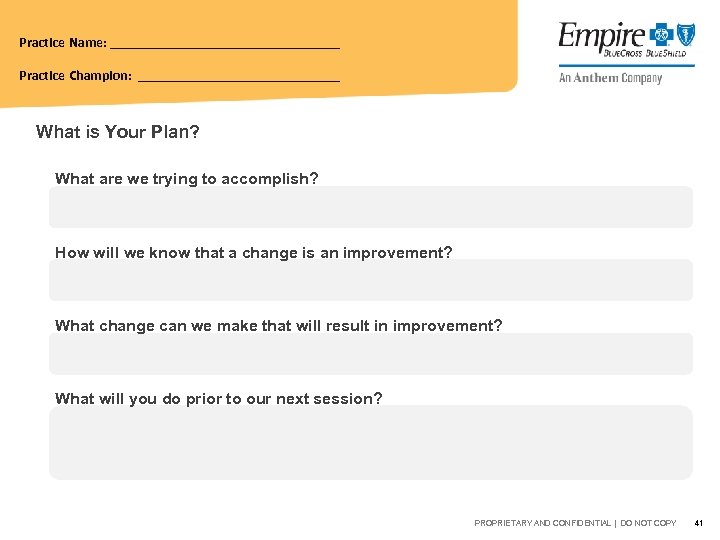 Practice Name: _________________ Practice Champion: _______________ What is Your Plan? What are we trying to accomplish? How will we know that a change is an improvement? What change can we make that will result in improvement? What will you do prior to our next session? PROPRIETARY AND CONFIDENTIAL | DO NOT COPY 41
 Next Steps – Intervention Examples § Identify and outreach chronic condition patients with medication erratic refill within the next 30 to 60 days § Care Coordinator will complete patient assessment to identify barriers/care gaps causing the medication non-adherence within the 30 days of identification § Care Coordinator will create a care plan/goals with the patient to address the barriers/gaps to Medication Adherence § Care Coordinator will provide follow-up with patients and close gaps in care within 30 days of initiating the intervention § Care Coordinator will share data on number of patients identified, assessed, and barriers/gaps closed every 3 months PROPRIETARY AND CONFIDENTIAL | DO NOT COPY 42
 References 1. Osterberg, L; Blaschke, T. Adherence to Medication. N Engl J Med. 2005; 353(5): 487 -497 2. Roebuck MC, Lieberman JN, Gemmill-Toyama M, and Brennan TA. Medication Adherence Leads to Lower Healthcare use and costs despite increased in drug spending. Health Affairs January 1, 2011: 30 (1)L 90 -99 3. Brown, Marie T, Bussell, Jennifer K. Medication adherence: Who cares? . Mayo Clin Proc. 2011; 86(4): 304 -314 4. Sabate E. Adherence to long term therapies: Evidence for Action. Geneva World Health Organization 2003. 5. Ho, P. Michaek. Medication Adherence. Its Importance in Cardiovascular Outcomes. Circulation. 2009; 119: 3028 -3035. Accessed 4/4/2014. circ. ahajournals. org/content/119/23/3028. full. pdf+html. com 6. New England Healthcare Institute (NEHI). Thinking Outside the Pillbox. A System-wide Approach to Improving Patient Medication Adherence for Chronic Disease. A NEHI Research Brief –August 2009. Accessed 5/5/2015. www. nehi. net 7. Case Management Society of America. Case Management Adherence Guide. Little Rock, AR. CMAG 2012. 8. Medication Adherence Time Tool: Improving Health Outcomes. Accessed 3. 2015. www. acpm. org/? Med. Adher. TT_Clin. Ref#Strategies PROPRIETARY AND CONFIDENTIAL | DO NOT COPY 43
 References continued 9. Medication Adherence. Centers for Disease Control and Prevention. Accessed 3. 2015. Available at www. cdc. gov/primarycare/materials/medication/index. html 10. Strategies to Enhance Patient Adherence: Making it Simple. Accessed 3. 2015. www. ncbi. nlm. nih. gov/pmc/articles/PMC 1681370 11. Smith M, Bates DW, Bodenheimer TS. Pharmacist Belong in Accountable Care Organizations and Integrated Care Teams. Health Affairs 32, NO 11 (2013): 1963 -1970. 12. Manolakis PG, Skelton JB. Pharmacists’ Contributions to Primary Care in the U. S. -Collaborating to Address Unmet Patient Care Needs: The Emerging Role for Pharmacists to Address the Shortage of Primary Care Providers. Am J Pharm Educ. 2010 Dec 15; 74(10): S 7 13. New England Healthcare Institute (NEHI). Ready for Pick-up: Reducing Primary Medication Nonadherence. A NEHI research Brief- October 2014. Accessed 5/5/2015. www. nehi. net 14. Gleason KM, Brake H, Agramonte V, Perfetti C. ; Medications at Transitions and Clinical Handoffs (MATCH) Toolkit for Medication Reconciliation. Agency for Healthcare Research and Quality. Revised August 2012. Accessed on 7/6/2015. www. ahrq. gov/qual/match. pdf PROPRIETARY AND CONFIDENTIAL | DO NOT COPY 44
 Legal Services provided by Empire Health. Choice HMO, Inc. and/or Empire Health. Choice Assurance, Inc. , licensees of the Blue Cross and Blue Shield Association, an association of independent Blue Cross and Blue Shield plans. PROPRIETARY AND CONFIDENTIAL | DO NOT COPY 45