


 Скачать презентацию Paths to Space Settlement Space Tourism — Space
b1bd6e9d347b8c00636a1f17d9d3f02a.ppt
- Количество слайдов: 35
 Paths to Space Settlement Space Tourism -- Space Solar Power -- Planetary Defense "For me the single overarching goal of human space flight is the human settlement of the solar system, and eventually beyond. I can think of no lesser purpose sufficient to justify the difficulty of the enterprise, and no greater purpose is possible, " -- Michael Griffin Al Globus San Jose State University, NASA Ames Chairman, NSS Space Settlement Advocacy Committee
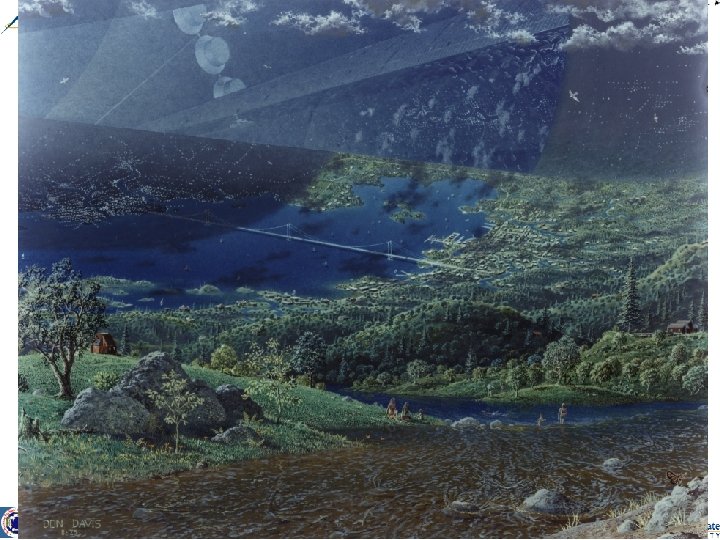
 Space Settlement • Not just a place to go work or visit for a limited time – Not a space station like ISS – Not exploration • A home in space – Hundreds or thousands of residents – Many space settlements (thousands) • Some stay for life • Some raise kids
 Where? Orbit • To raise children that can visit Earth requires 1 g • • • – Moon 1/6 g Mars 1/3 g – Orbit any g, for 1 g rotate at 2 rpm = 250 m radius Continuous solar energy Large-scale construction easier in 0 g Short supply line to Earth (hours vs days/months) Greater growth (Moon/Mars 2 x vs orbit 100+x) Orbital disadvantage: materials – Need millions of tons, mostly shielding and structure – Moon: metals, Si, O – Near Earth Objects (NEO): wide variety
 Why
Why
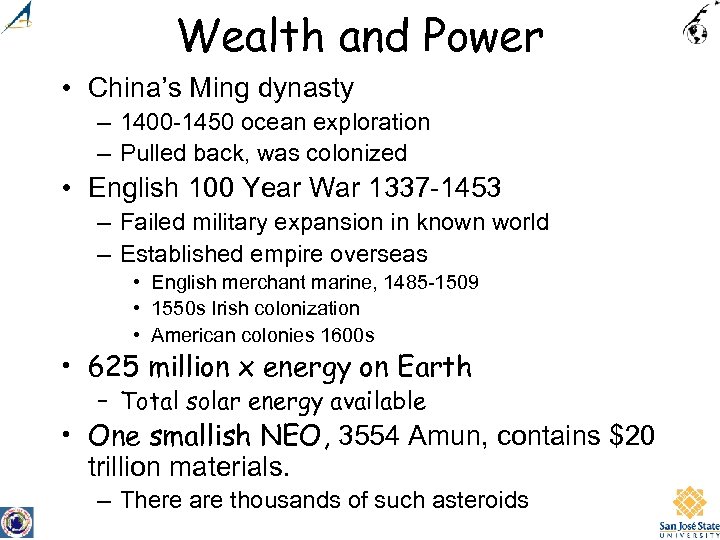 Wealth and Power • China’s Ming dynasty – 1400 -1450 ocean exploration – Pulled back, was colonized • English 100 Year War 1337 -1453 – Failed military expansion in known world – Established empire overseas • English merchant marine, 1485 -1509 • 1550 s Irish colonization • American colonies 1600 s • 625 million x energy on Earth – Total solar energy available • One smallish NEO, 3554 Amun, contains $20 trillion materials. – There are thousands of such asteroids
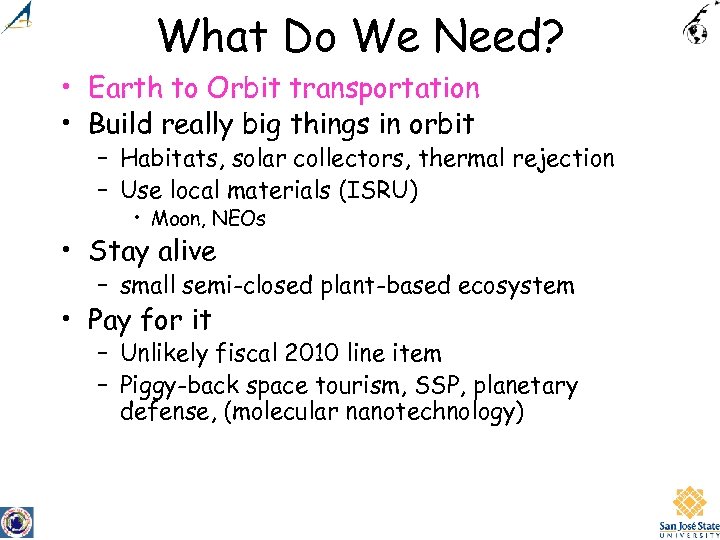 What Do We Need? • Earth to Orbit transportation • Build really big things in orbit – Habitats, solar collectors, thermal rejection – Use local materials (ISRU) • Moon, NEOs • Stay alive – small semi-closed plant-based ecosystem • Pay for it – Unlikely fiscal 2010 line item – Piggy-back space tourism, SSP, planetary defense, (molecular nanotechnology)
 Launch Problem • Thousands of dollars per kg • Failure rate about one percent • Forces mass, power optimization – Leads to small margins requiring extensive analysis and testing – No repairman! • Redundancy expensive, particularly testing • In man-hr/kg to orbit, Saturn V cheapest! • Low volume (55 in 2005)
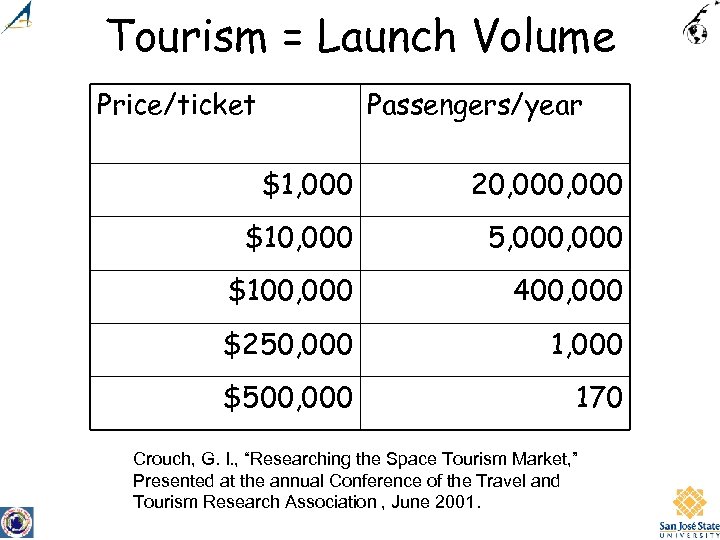 Tourism = Launch Volume Price/ticket Passengers/year $1, 000 20, 000 $10, 000 5, 000 $100, 000 400, 000 $250, 000 1, 000 $500, 000 170 Crouch, G. I. , “Researching the Space Tourism Market, ” Presented at the annual Conference of the Travel and Tourism Research Association , June 2001.
 Tourism Path • Sub-orbital tourism – Virgin Galactic ($200 K) – XCOR ($95 K) • Orbital tourism • Orbital hotels – ISS ($30 M) – Bigalow (2011? ) • Low-g retirement • Special group habitats • General space settlement
 Launch Prizes • • Pay to put people in orbit Pay for many launches Limit payout fraction to any one competitor Estimate $1 - 8 billion in prizes to get cost to $10, 000/person • Based on costs estimates by t. Space, Space. Dev • Safety: key personnel on flights
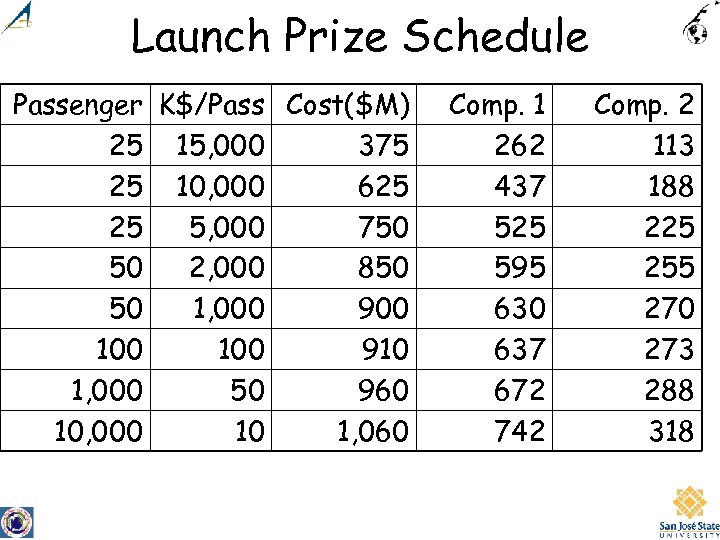 Launch Prize Schedule Passenger K$/Pass Cost($M) 25 15, 000 375 25 10, 000 625 25 5, 000 750 50 2, 000 850 50 1, 000 900 100 910 1, 000 50 960 10, 000 10 1, 060 Comp. 1 262 437 525 595 630 637 672 742 Comp. 2 113 188 225 255 270 273 288 318
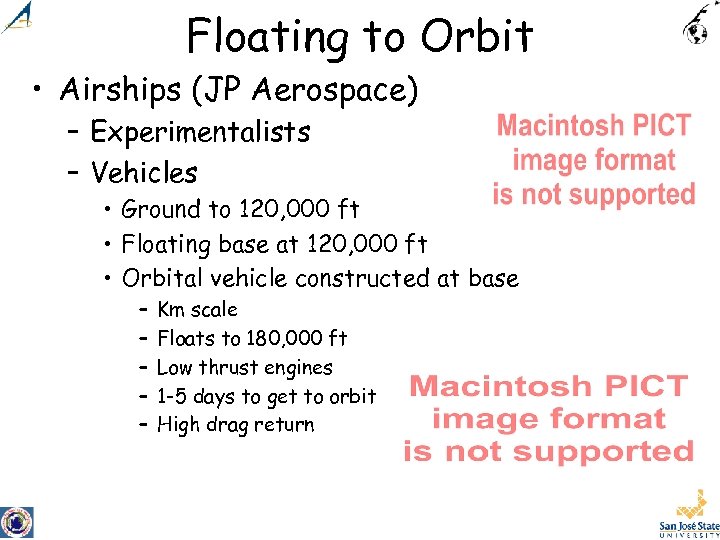 Floating to Orbit • Airships (JP Aerospace) – Experimentalists – Vehicles • Ground to 120, 000 ft • Floating base at 120, 000 ft • Orbital vehicle constructed at base – – – Km scale Floats to 180, 000 ft Low thrust engines 1 -5 days to get to orbit High drag return
 SSP = Launch Volume, ISRU • Today’s market 18 TW – $8 Tr/yr @ $0. 05/kw-hr • US Military $1/kw-hr remote regions – Tomorrow’s market much larger – 18 Mtons sat @ 1 kg/kw • 100, 000 Ares V launches – Depose King Oil • Requires electric cars • ISRU – Lunar Si and metals supply most mass – Extremely green
 SSP Systems (60 s) • Sea Dragon Launch Vehicle – – – – 150 m tall, 23 m diameter Pressure-fed engines 8 mm steel tankage Ocean launch, shipyard construction 1. 2 million lb to LEO @ $200/lb 0. 5 GW sat per launch $27 B development cost • Solar-electric orbital transfer vehicle • Teleoperated robotic assembly
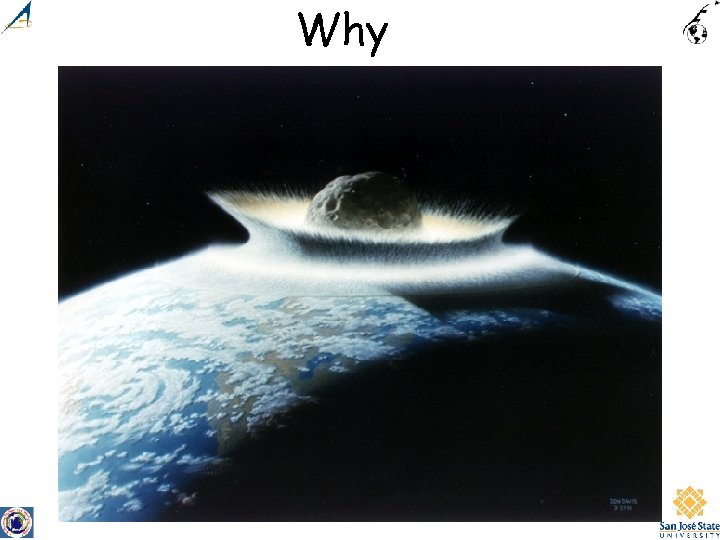
 Planetary Defense • Thousands of dangerous NEOs • Large fraction will impact Earth • NEO detection identifies potential materials sources • Deflection technology may be adapted for retrieval – Small NEOs (10 -50 m) for safety • Modest cost for excellent program
 Space Programs • Constitutional (promote the general Welfare) – – – Earth observation Launch Planetary defense Aeronautics SSP Science • Space Settlement – – Launch Lunar/NEO mine Material transport In-orbit materials processing and manufacture – SSP – Large construction – Life support
 Life Support ‘Easy’ • Consider Biosphere II • Six people in closed environment for over one year on first try – We know it was closed, ran out of oxygen • Scientific failure hid engineering success • Lots of species – Survival of the fittest – Make sure most are edible
 Conclusion The settlement of the solar system could be the next great adventure for humanity. There is nothing but rock and radiation in space, no living things, no people. The solar system is waiting to be brought to life by humanity's touch.
 Nice Place to Live • Great views • Low/0 -g recreation – – Human powered flight Cylindrical swimming pools Dance, gymnastics Sports: soccer • Independence – Separate environment – Easy-to-control borders
 Low-g Retirement • • • No wheelchairs needed. No bed sores. Never fall and break hip. Grandchildren will love to visit. Need good medical facilities. – Telemedicine • Probably can’t return to Earth.
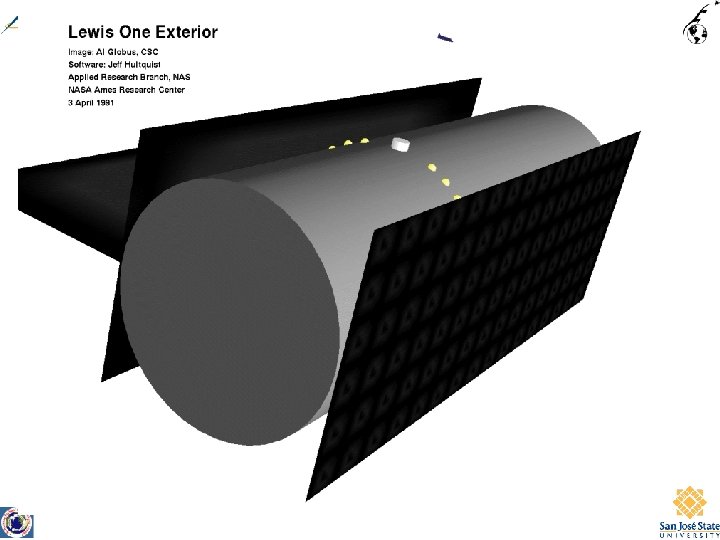
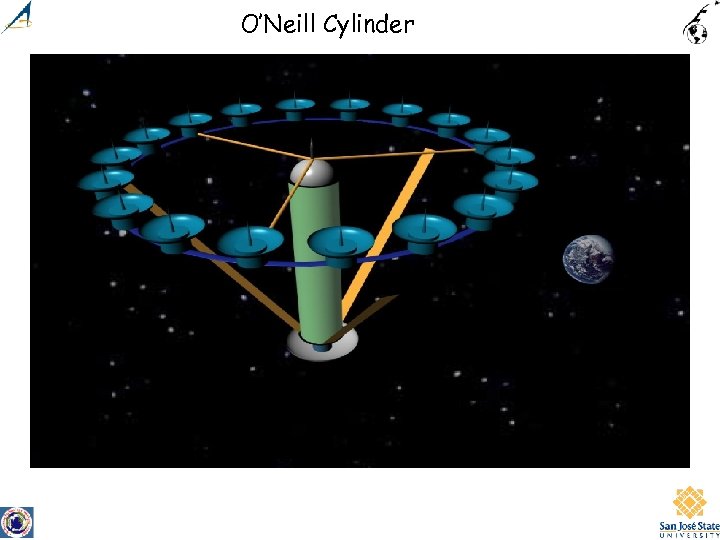 O’Neill Cylinder
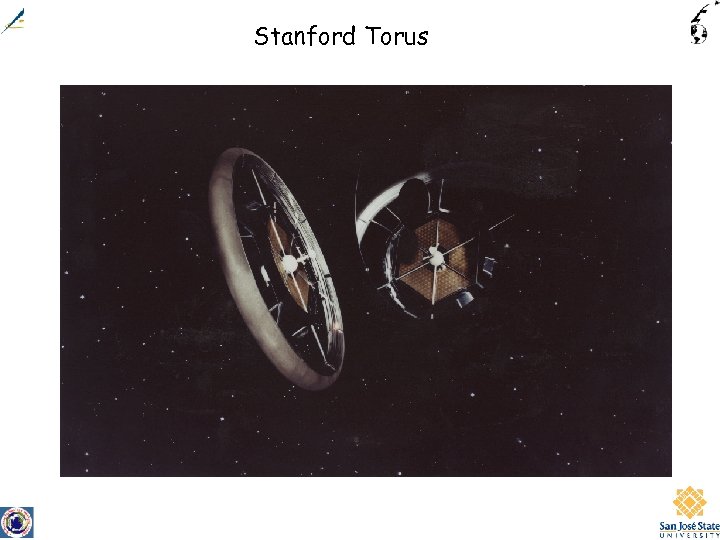 Stanford Torus
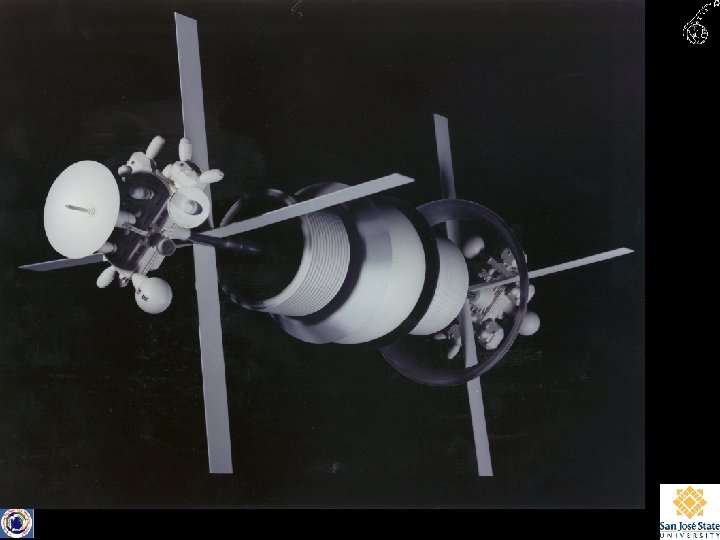
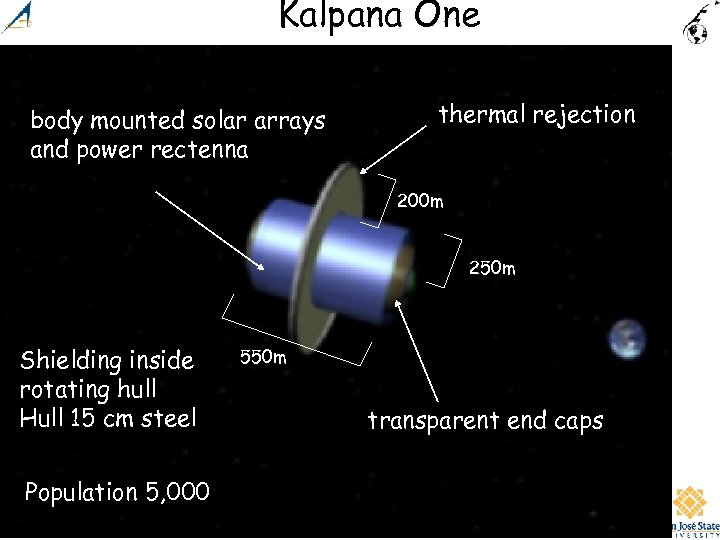 Kalpana One body mounted solar arrays and power rectenna thermal rejection 200 m 250 m Shielding inside rotating hull Hull 15 cm steel Population 5, 000 550 m transparent end caps
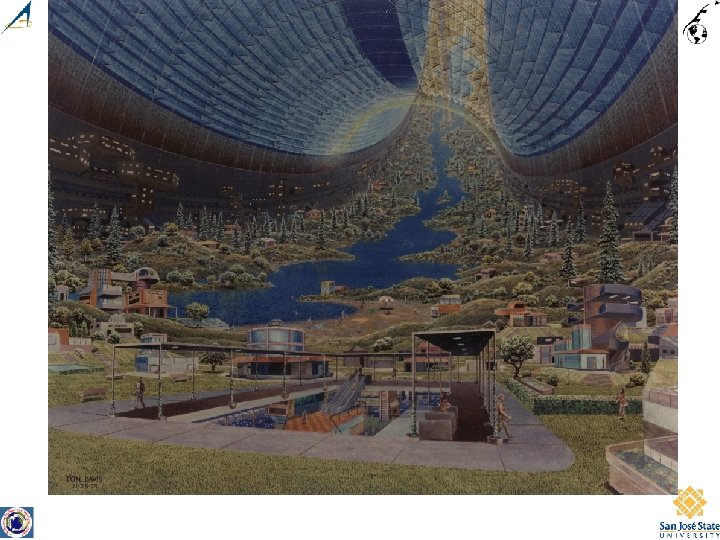
 Growth • Largest asteroid converted to space settlements can produce 1 g living area 100 -1000 times the surface area of the Earth. – Reason: 3 D object to 2 D shells – Easily support trillions of people. – New land • Build it yourself • Don’t take from others
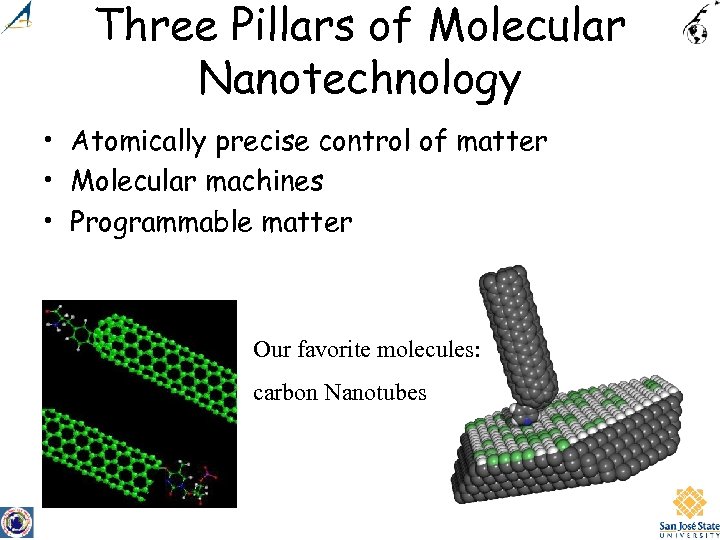 Three Pillars of Molecular Nanotechnology • Atomically precise control of matter • Molecular machines • Programmable matter Our favorite molecules: carbon Nanotubes
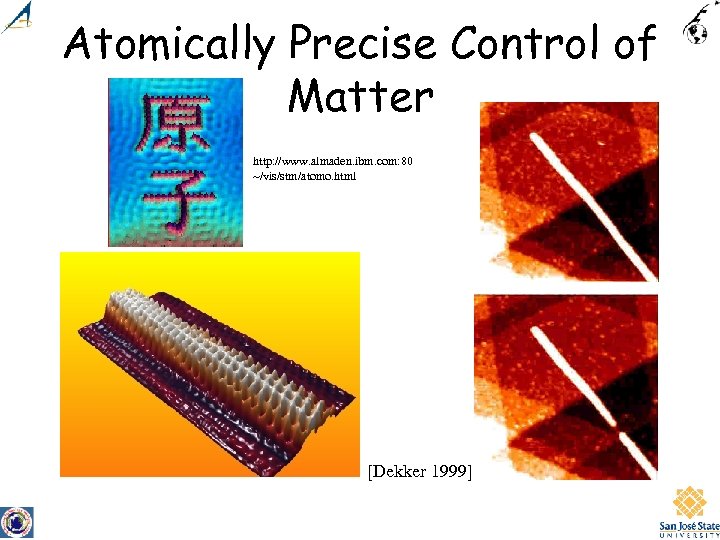 Atomically Precise Control of Matter http: //www. almaden. ibm. com: 80 ~/vis/stm/atomo. html [Dekker 1999]
![Molecular Machines [Cassell 1999]](https://present5.com/presentation/b1bd6e9d347b8c00636a1f17d9d3f02a/image-31.jpg "Molecular Machines [Cassell 1999]") Molecular Machines [Cassell 1999]
Molecular Machines [Cassell 1999]
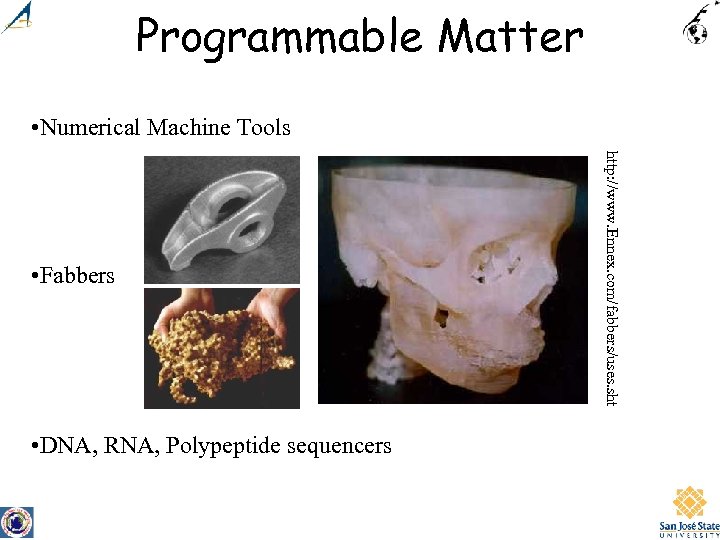 Programmable Matter • Numerical Machine Tools • DNA, RNA, Polypeptide sequencers http: //www. Ennex. com/fabbers/uses. sht • Fabbers
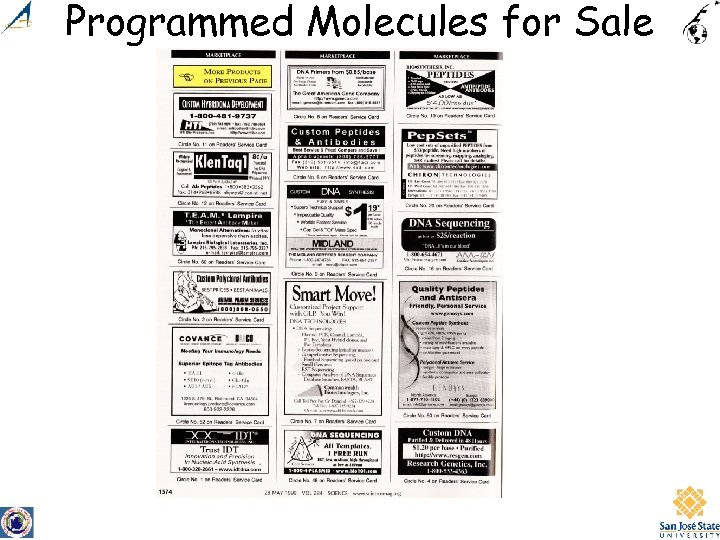 Programmed Molecules for Sale
 What Can you Get? • Diamondoid materials with great strength, thermal properties, stiffness. • Existing design diamondoid SSTO $153412/kg to orbit vs $16, 000 -59, 000/kg for titanium [Mc. Kendree 95] • Three-ton four-person clean sheet diamondoid SSTO vehicle [Drexler 1992] • May enable space elevator
 Paths • Space Tourism – Launch - Habitats - Life support • Space Solar Power – Launch - Large structures - Lunar ISRU • Planetary defense – NEO ISRU