


 Скачать презентацию Passivhaus in the UK — are we making
d3aada6a20cf69354ba0eb0e61561340.ppt
- Количество слайдов: 25
 Passivhaus in the UK - are we making progress? Liz Reason, Director, Carbon. Lite
 The UK government has ambitious ambitions Targets for new buildings • zero carbon homes by 2016 • zero carbon non-domestic buildings by 2020 • the Eco-Town Challenge § reducing CO 2 emissions by 80% across developments as a whole § making it possible for residents to live within a 2 tonne CO 2 budget DECC Department of Energy and Climate Change Government is consulting on a strategy to reduce CO 2 from existing buildings by 80% Zero carbon schools Zero carbon colleges 3/15/2018 A 60% cut in carbon footprint 2
 And has devised the Code for Sustainable Homes for starters
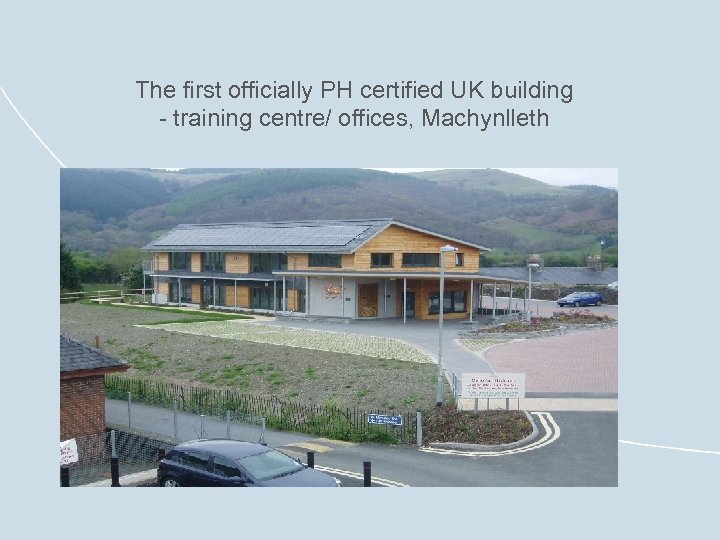 The first officially PH certified UK building - training centre/ offices, Machynlleth
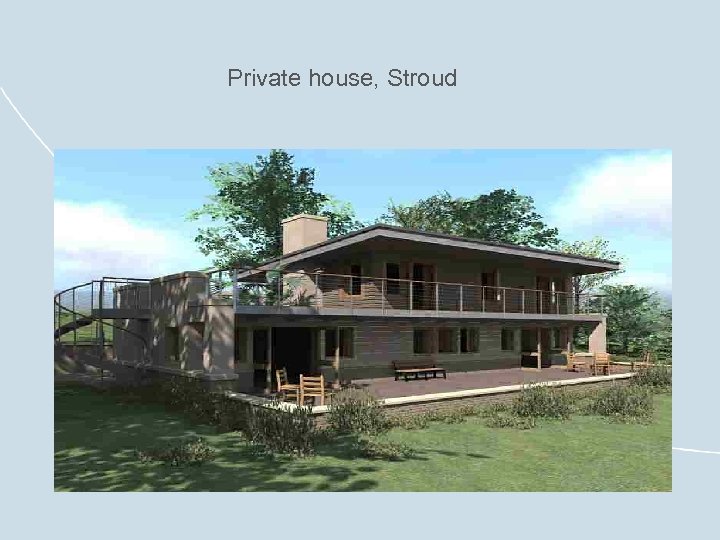 Private house, Stroud
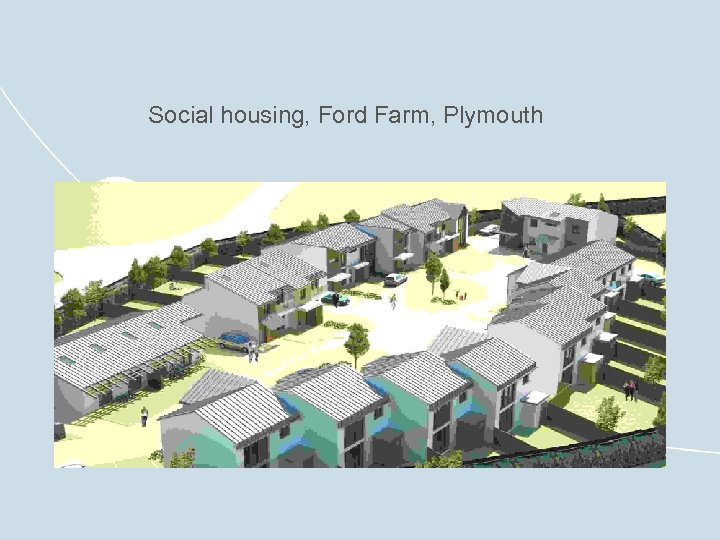 Social housing, Ford Farm, Plymouth
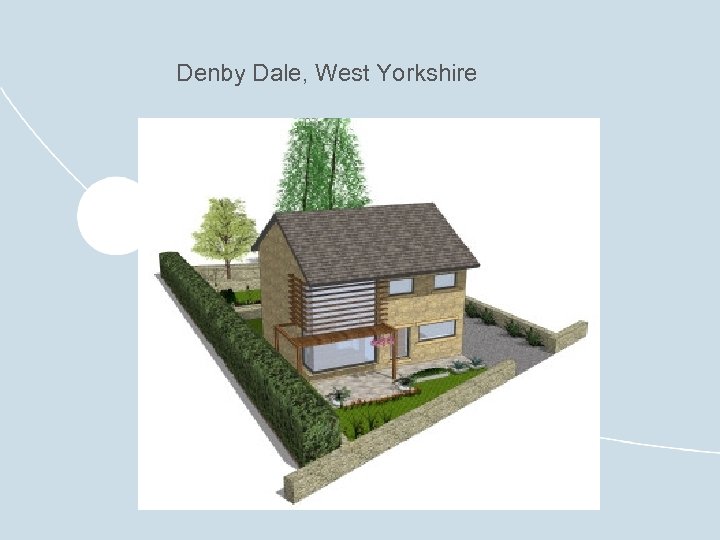 Denby Dale, West Yorkshire
 Disability Essex, Rochford
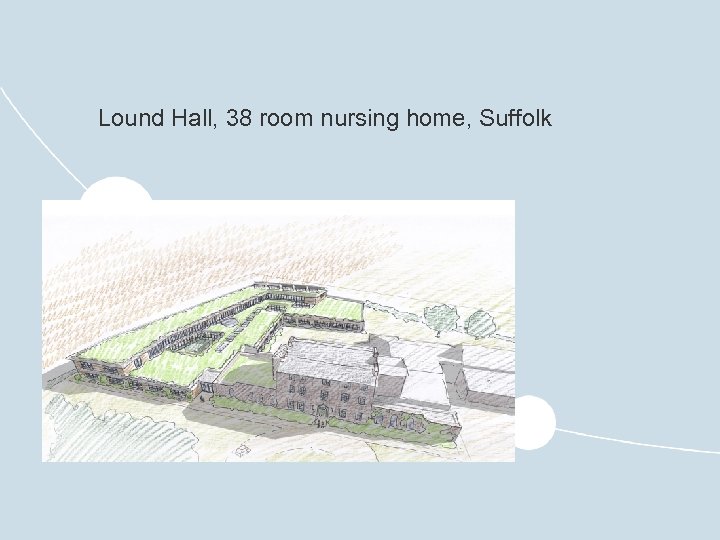 Lound Hall, 38 room nursing home, Suffolk
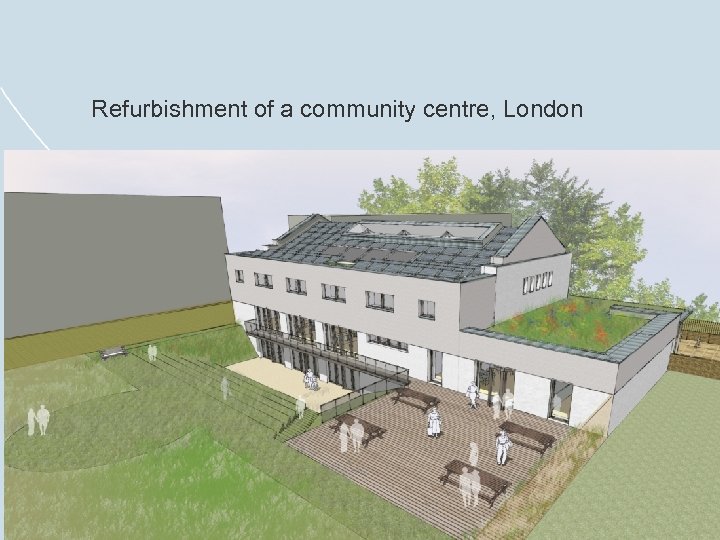 Refurbishment of a community centre, London
 Gentoo Housing Association - Racecourse Estate Houghton-Le-Spring, Tyne and Wear 25 homes
 Victorian Cottage, Hereford
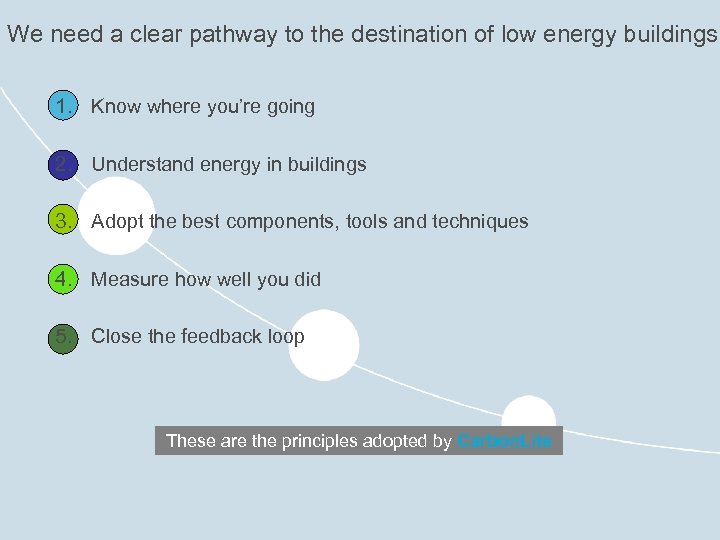 We need a clear pathway to the destination of low energy buildings 1. Know where you’re going 2. Understand energy in buildings 3. Adopt the best components, tools and techniques 4. Measure how well you did 5. Close the feedback loop These are the principles adopted by Carbon. Lite
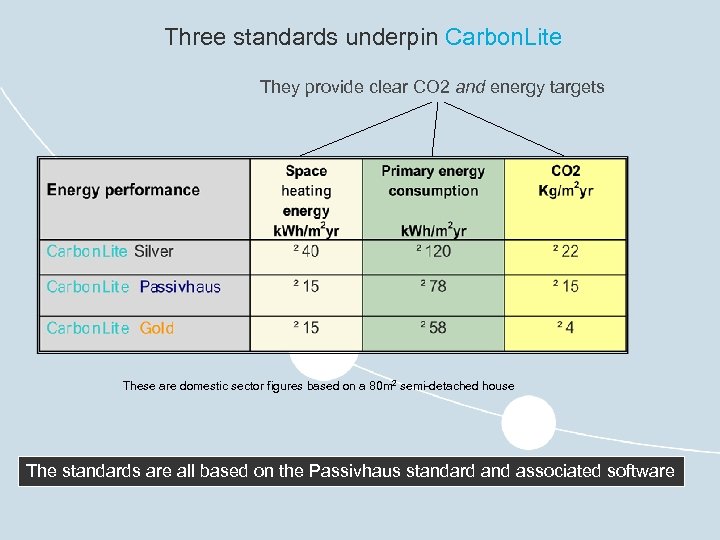 Three standards underpin Carbon. Lite They provide clear CO 2 and energy targets These are domestic sector figures based on a 80 m 2 semi-detached house The standards are all based on the Passivhaus standard and associated software
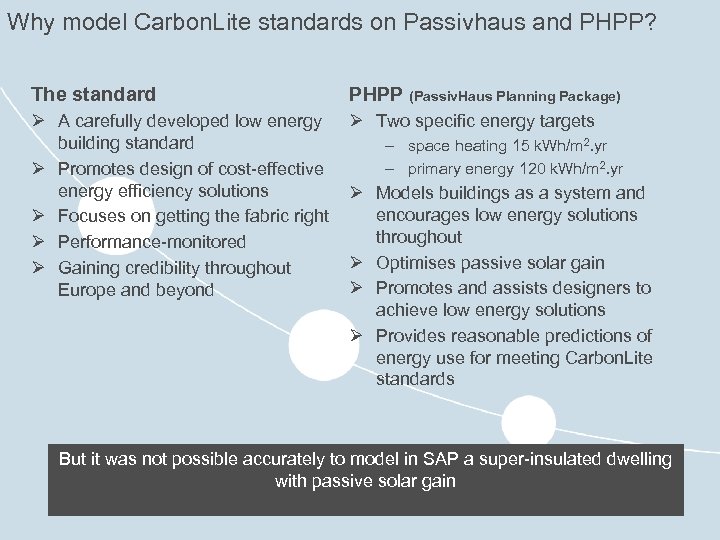 Why model Carbon. Lite standards on Passivhaus and PHPP? The standard PHPP (Passiv. Haus Planning Package) Ø A carefully developed low energy building standard Ø Promotes design of cost-effective energy efficiency solutions Ø Focuses on getting the fabric right Ø Performance-monitored Ø Gaining credibility throughout Europe and beyond Ø Two specific energy targets – space heating 15 k. Wh/m 2. yr – primary energy 120 k. Wh/m 2. yr Ø Models buildings as a system and encourages low energy solutions throughout Ø Optimises passive solar gain Ø Promotes and assists designers to achieve low energy solutions Ø Provides reasonable predictions of energy use for meeting Carbon. Lite standards But it was not possible accurately to model in SAP a super-insulated dwelling with passive solar gain
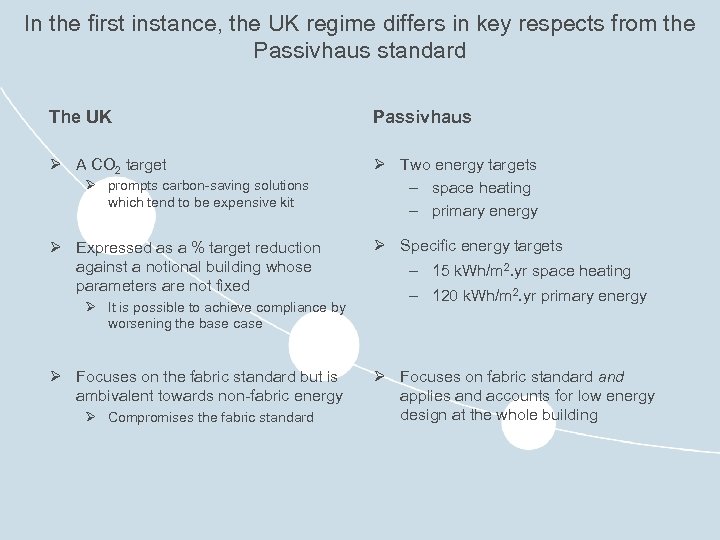 In the first instance, the UK regime differs in key respects from the Passivhaus standard The UK Passivhaus Ø A CO 2 target Ø Two energy targets – space heating – primary energy Ø prompts carbon-saving solutions which tend to be expensive kit Ø Expressed as a % target reduction against a notional building whose parameters are not fixed Ø It is possible to achieve compliance by worsening the base case Ø Focuses on the fabric standard but is ambivalent towards non-fabric energy Ø Compromises the fabric standard Ø Specific energy targets – 15 k. Wh/m 2. yr space heating – 120 k. Wh/m 2. yr primary energy Ø Focuses on fabric standard and applies and accounts for low energy design at the whole building
 The comparison of SAP and PHPP The key findings: Ø When modeling well-insulated low energy dwellings, we found: Our approach: 1. We set up a PHPP model of a standard UK developer 3 bed semidetached house, altered to meet the PH standard 2. We then set up a SAP model of the same house and found differences 3. Where assumptions in the two models differed, we introduced the SAP assumptions into PHPP – PHPP tended to predict higher heating requirements than SAP – SAP predicted no heating at all (where in practice some heating is needed) Ø Because there are no fixed energy limits, inefficient built forms are favoured rather than penalised Ø SAP indicates that carbon savings can only be delivered by expensive kit before using useful energy efficiency measures So what’s going on?
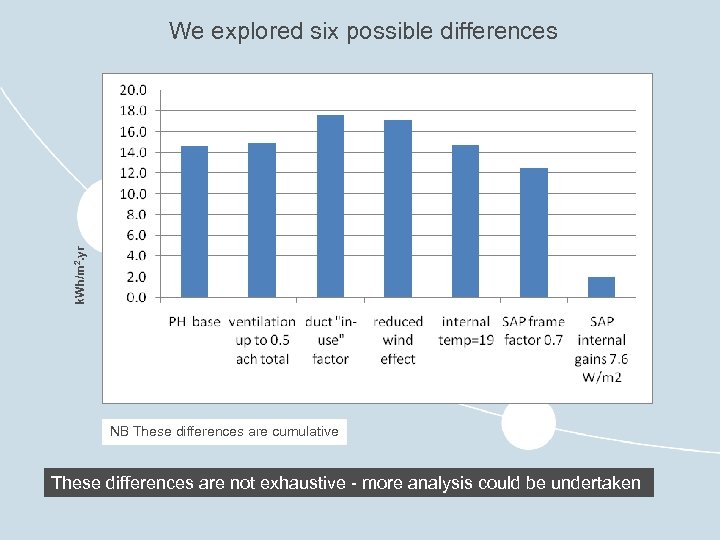 k. Wh/m 2. yr We explored six possible differences NB These differences are cumulative These differences are not exhaustive - more analysis could be undertaken
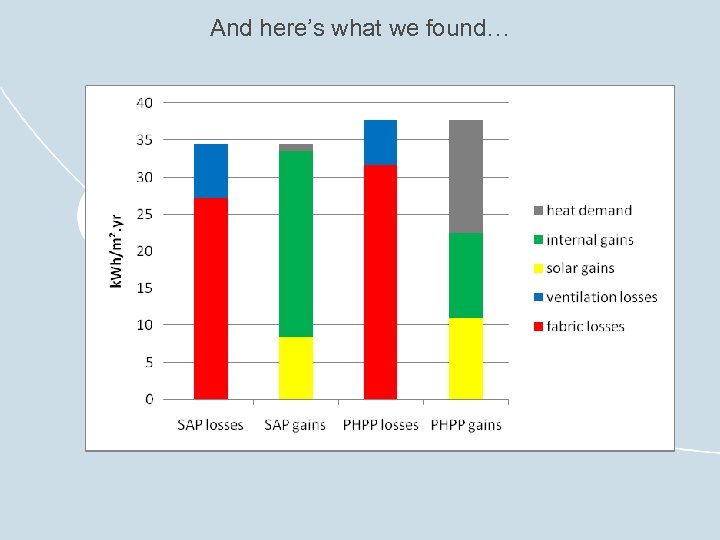 And here’s what we found…
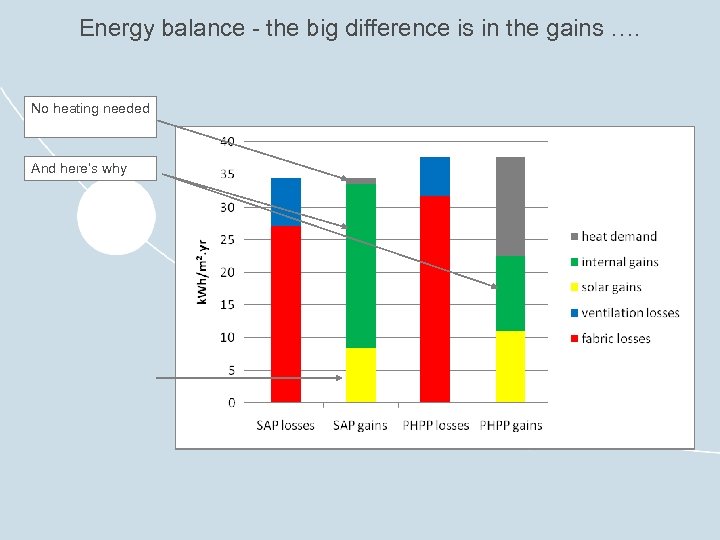 Energy balance - the big difference is in the gains …. No heating needed And here’s why
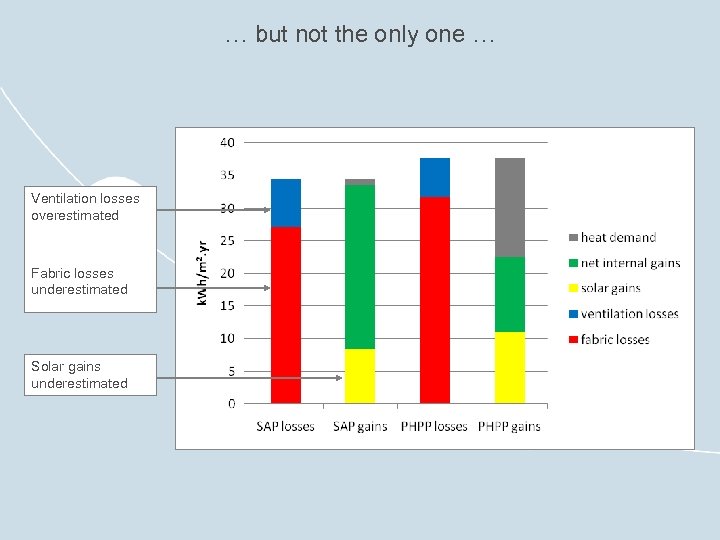 … but not the only one … Ventilation losses overestimated Fabric losses underestimated Solar gains underestimated
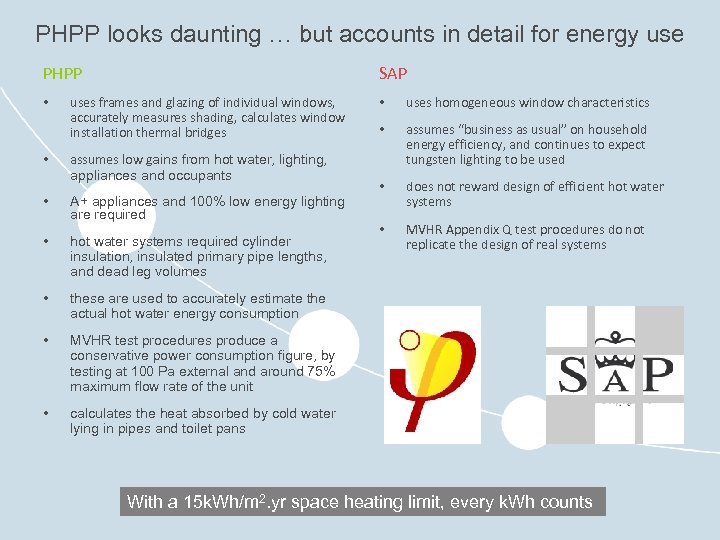 PHPP looks daunting … but accounts in detail for energy use PHPP • • SAP uses frames and glazing of individual windows, accurately measures shading, calculates window installation thermal bridges assumes low gains from hot water, lighting, appliances and occupants • A+ appliances and 100% low energy lighting are required • hot water systems required cylinder insulation, insulated primary pipe lengths, and dead leg volumes • • assumes “business as usual” on household energy efficiency, and continues to expect tungsten lighting to be used • does not reward design of efficient hot water systems • MVHR Appendix Q test procedures do not replicate the design of real systems MVHR test procedures produce a conservative power consumption figure, by testing at 100 Pa external and around 75% maximum flow rate of the unit • uses homogeneous window characteristics these are used to accurately estimate the actual hot water energy consumption • • calculates the heat absorbed by cold water lying in pipes and toilet pans With a 15 k. Wh/m 2. yr space heating limit, every k. Wh counts
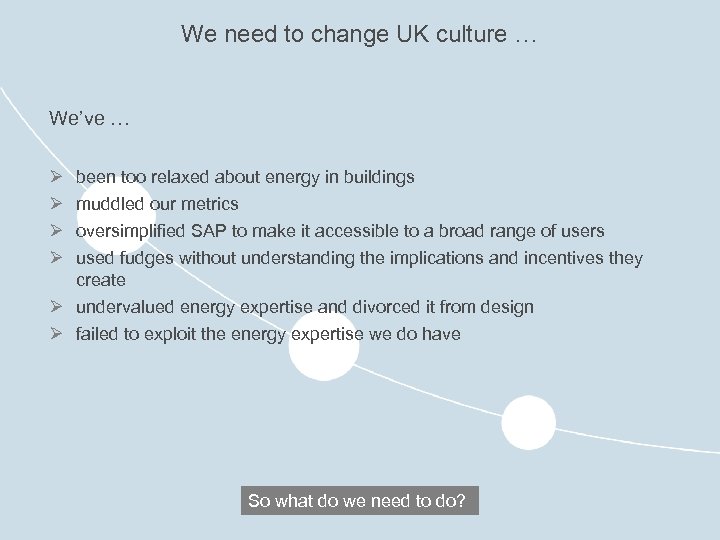 We need to change UK culture … We’ve … Ø Ø been too relaxed about energy in buildings muddled our metrics oversimplified SAP to make it accessible to a broad range of users used fudges without understanding the implications and incentives they create Ø undervalued energy expertise and divorced it from design Ø failed to exploit the energy expertise we do have So what do we need to do?
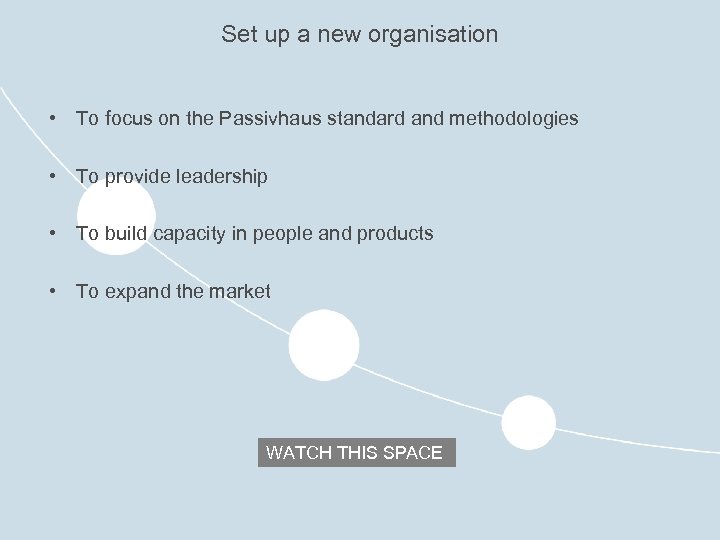 Set up a new organisation • To focus on the Passivhaus standard and methodologies • To provide leadership • To build capacity in people and products • To expand the market WATCH THIS SPACE
 Carbon. Lite www. carbonlite. net