


 Скачать презентацию PARTNERING TO END HOMELESSNESS IN A CHANGING HEALTH
a1139923d309afefc5339452eec84761.ppt
- Количество слайдов: 14
 PARTNERING TO END HOMELESSNESS IN A CHANGING HEALTH CARE ENVIRONMENT Pamela S. Hyde, J. D. SAMHSA Administrator National Alliance to End Homelessness U. S. Interagency Council on Homelessness Washington, DC • July 16, 2012
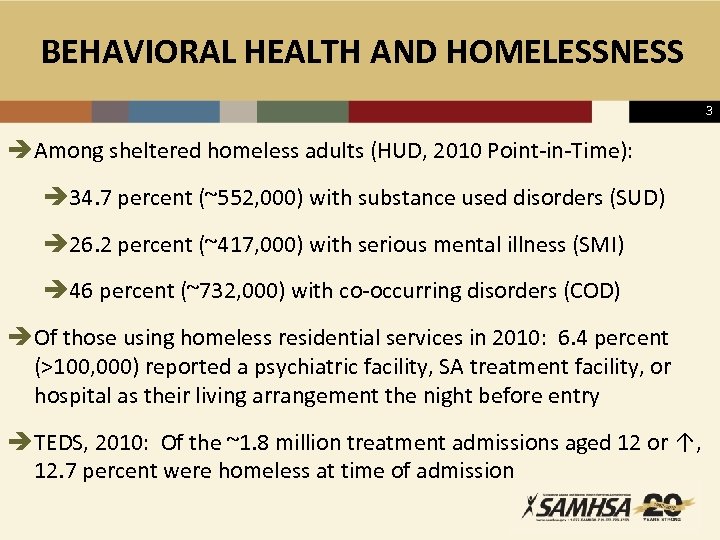 BEHAVIORAL HEALTH AND HOMELESSNESS 3 è Among sheltered homeless adults (HUD, 2010 Point-in-Time): è 34. 7 percent (~552, 000) with substance used disorders (SUD) è 26. 2 percent (~417, 000) with serious mental illness (SMI) è 46 percent (~732, 000) with co-occurring disorders (COD) è Of those using homeless residential services in 2010: 6. 4 percent (>100, 000) reported a psychiatric facility, SA treatment facility, or hospital as their living arrangement the night before entry è TEDS, 2010: Of the ~1. 8 million treatment admissions aged 12 or ↑, 12. 7 percent were homeless at time of admission
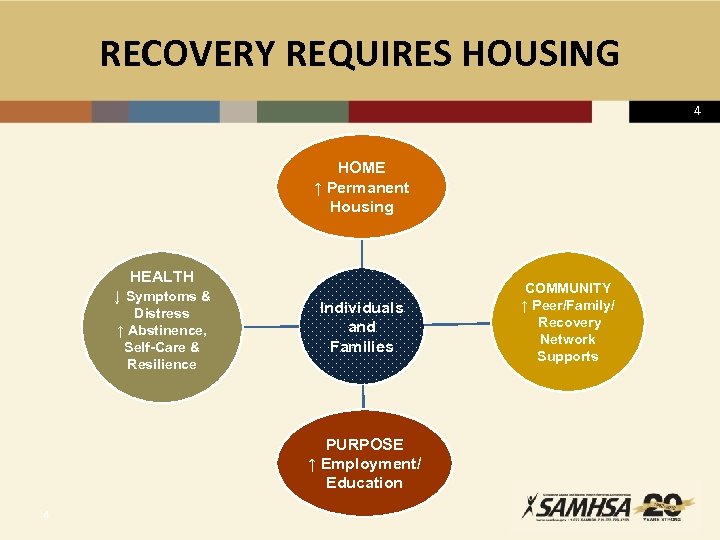 RECOVERY REQUIRES HOUSING 4 HOME ↑ Permanent Housing HEALTH ↓ Symptoms & Distress ↑ Abstinence, Self-Care & Resilience Individuals and Families PURPOSE ↑ Employment/ Education 4 COMMUNITY ↑ Peer/Family/ Recovery Network Supports
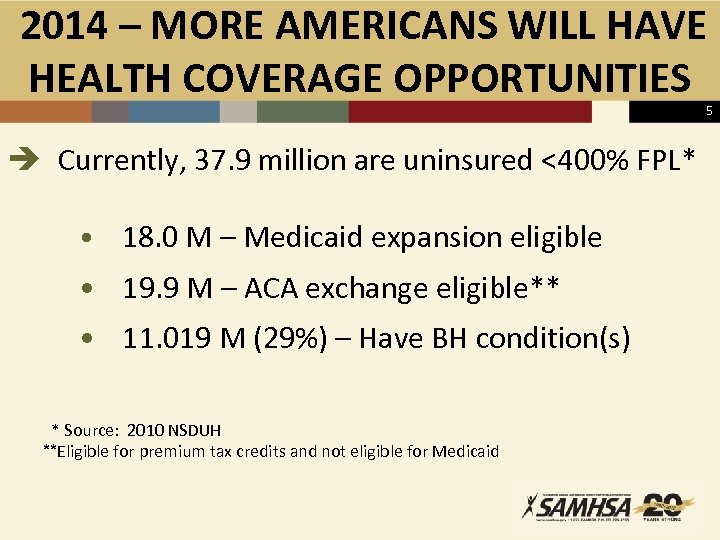 2014 – MORE AMERICANS WILL HAVE HEALTH COVERAGE OPPORTUNITIES 5 è Currently, 37. 9 million are uninsured <400% FPL* • 18. 0 M – Medicaid expansion eligible • 19. 9 M – ACA exchange eligible** • 11. 019 M (29%) – Have BH condition(s) * Source: 2010 NSDUH **Eligible for premium tax credits and not eligible for Medicaid
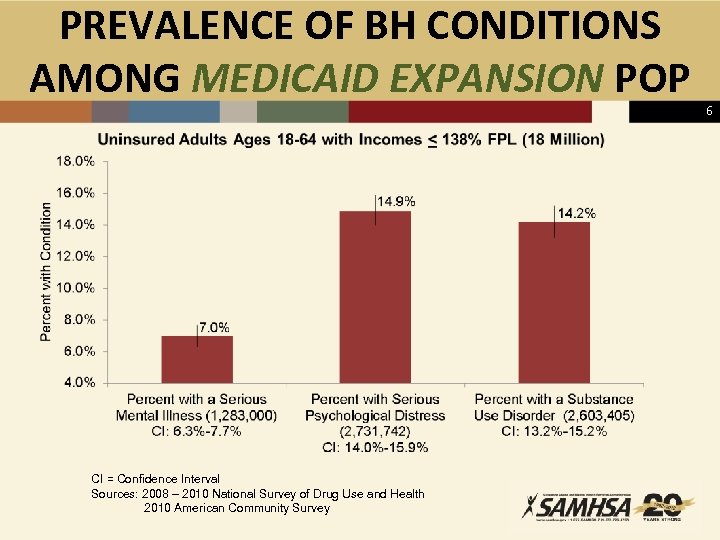 PREVALENCE OF BH CONDITIONS AMONG MEDICAID EXPANSION POP CI = Confidence Interval Sources: 2008 – 2010 National Survey of Drug Use and Health 2010 American Community Survey 6
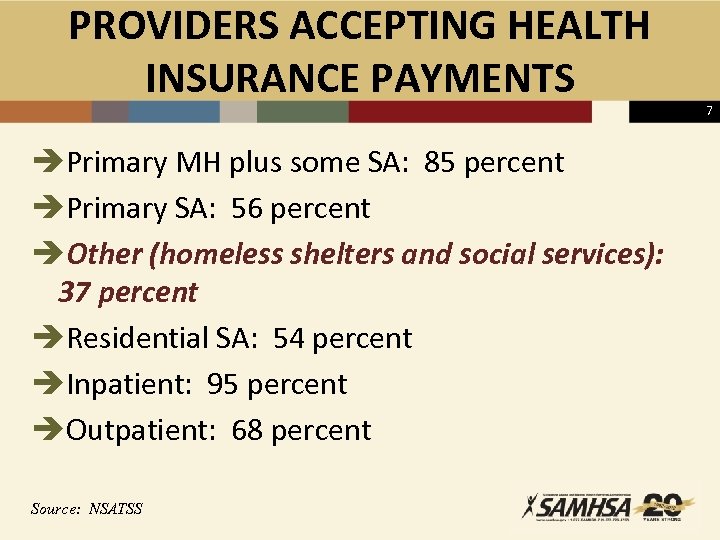 PROVIDERS ACCEPTING HEALTH INSURANCE PAYMENTS èPrimary MH plus some SA: 85 percent èPrimary SA: 56 percent èOther (homeless shelters and social services): 37 percent èResidential SA: 54 percent èInpatient: 95 percent èOutpatient: 68 percent Source: NSATSS 7
 SAMHSA ENROLLMENT ACTIVITIES 8 èConsumer Enrollment Assistance (thru BRSS TACS) • • • Outreach/public education Enrollment/re-determination assistance Plan comparison and selection Grievance procedures Eligibility/enrollment communication materials èEnrollment Assistance Best Practices TA – Toolkits èCommunication Strategy – Message Testing, Outreach to Stakeholder Groups, Webinars/Training Opportunities èSOAR Changes to Address New Environment èData Work with ASPE and CMS
 SAMHSA PROVIDER CAPACITY EFFORTS èProvider Business Operations Contract • • • Billing Electronic Health Records Compliance Business Planning Being in a Provider Network èTechnical Assistance and Training èWorkforce Issues
 SAMHSA FUNDING TO ADDRESS HOMELESSNESS 10 èSAMHSA’s 2012 homeless programs budget (PATH, GBHI & SSH) is ~$139 million èSupport for 220 direct grantees and > 600 PATH provider agencies in 50 states è 93 active grantees: GBHI, including CABHI and CSAT’s Services in Supportive Housing (SSH) and general grantees è 71 active grantees: SSH programs, supported by CMHS
 SAMHSA’S CABHI PROGRAM 11 èSubprogram of GBHI • A 3 -year program that began in September 2011 • 31 active CABHI grants èCABHI Grantees: • Development/implementation of programs integrating services and treatment for individuals who are chronically homeless • ↑ number of individuals who are placed in permanent housing with supportive services • ↑ provider capabilities to enroll individuals in mainstream benefit programs (e. g. , Medicaid, SSI/SSDI, SNAP)
 CABHI COLLABORATION WITH HOUSING PARTNERS 12 è First 6 months, CABHI grantees placed > 300 individuals into housing è Funding sources • U. S. Department of Housing and Urban Development: àSupportive Housing Program àProject-based vouchers àShelter Plus Care vouchers àSection 8 vouchers • U. S. Department of Veterans Affairs Supportive Housing Vouchers • Public and private program partnerships • Local housing authorities
 COMMUNITY LIVING INITIATIVE (CLI) 13 è HHS’s CLI promotes federal partnerships in support of the 1999 Olmstead decision è As part of the CLI, HUD and HHS cooperated in the Housing Capacity Building Initiative for Community Living èCombines efforts among HUD, CMS and SAMHSA èEncourages public housing agencies to establish persons transitioning from institutions as a priority population for public housing and Housing Choice vouchers èAwarded ~ 1, 000 of the 5, 400 new Non-Elderly Disabled (NED) vouchers to individuals leaving institutions, including many in the CMS Money Follows the Person program
 2013: SAMHSA POLICY ACADEMY 14 è Focus on states or cities with high rates of chronic homelessness è Federal partners include HRSA, HUD, VA, CMS and ASPE è Process will rely heavily on web technology in providing TA and communicating with teams è Teams will include policymakers in housing, BH, Medicaid, criminal justice, labor, and veterans affairs è Consumer leaders and members of State Interagency Councils, Continuums of Care, and Coalitions for the Homeless will participate