Скачать презентацию Particle Physics Ancient times People think that
5f679a7aca99fc9954dbf81e1a36f1db.ppt
- Количество слайдов: 121
 Particle Physics
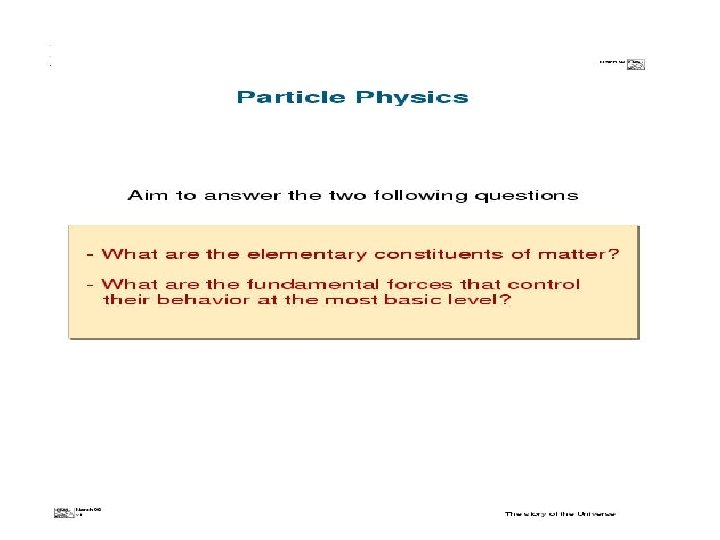
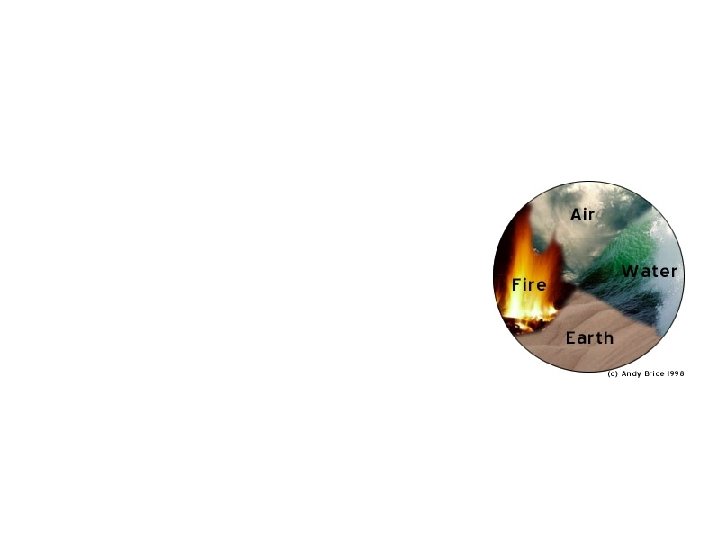

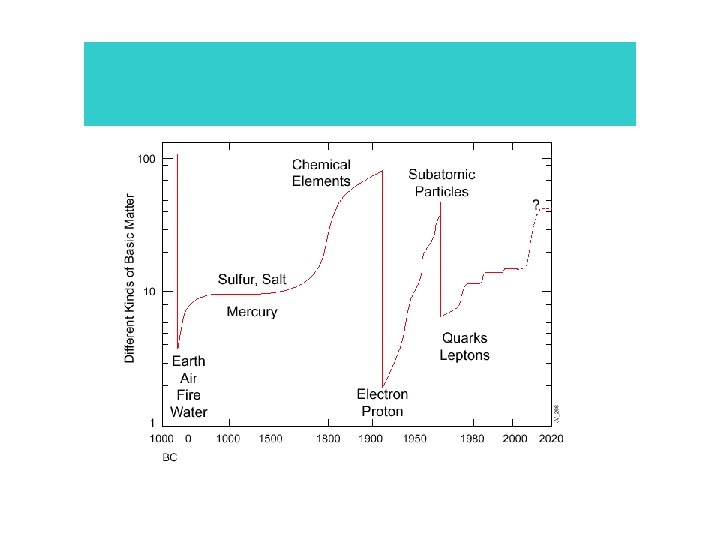
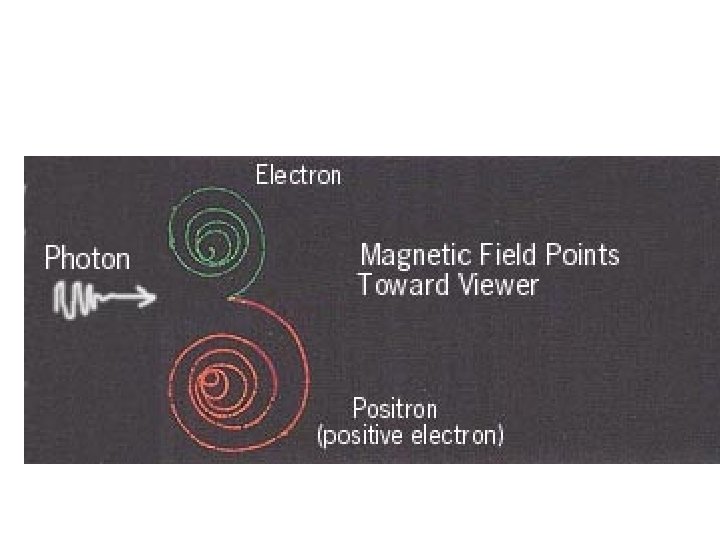
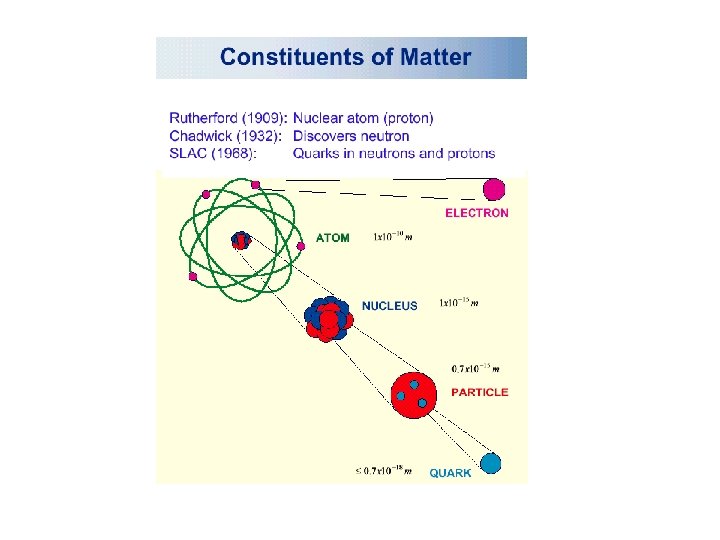
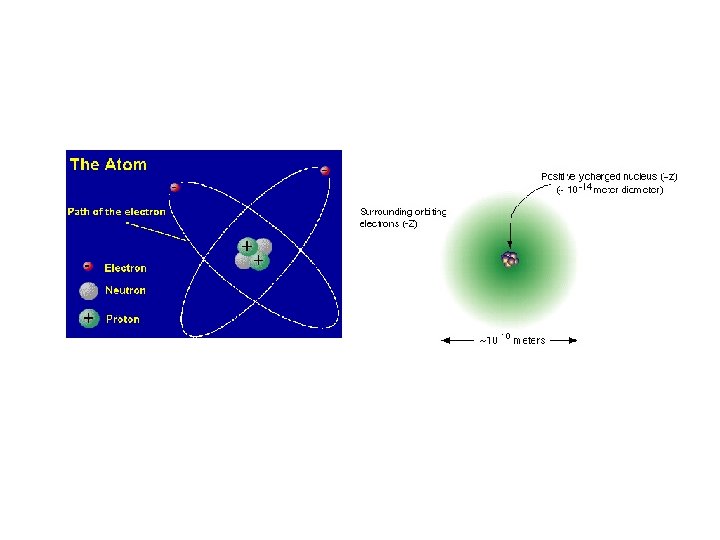


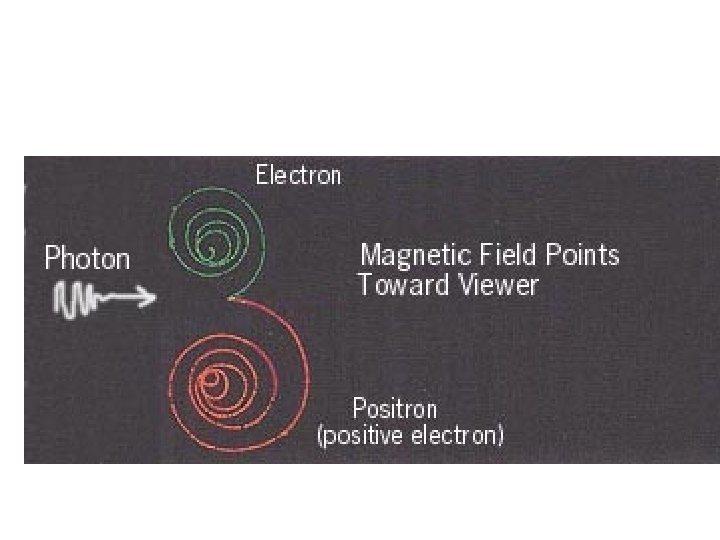
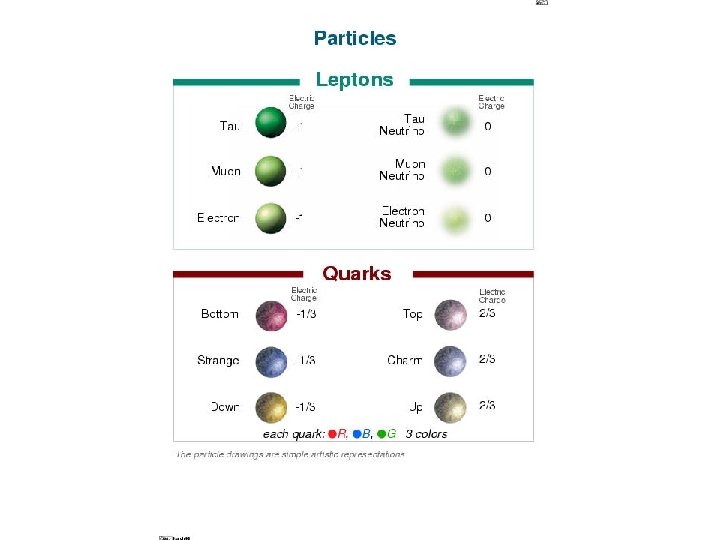
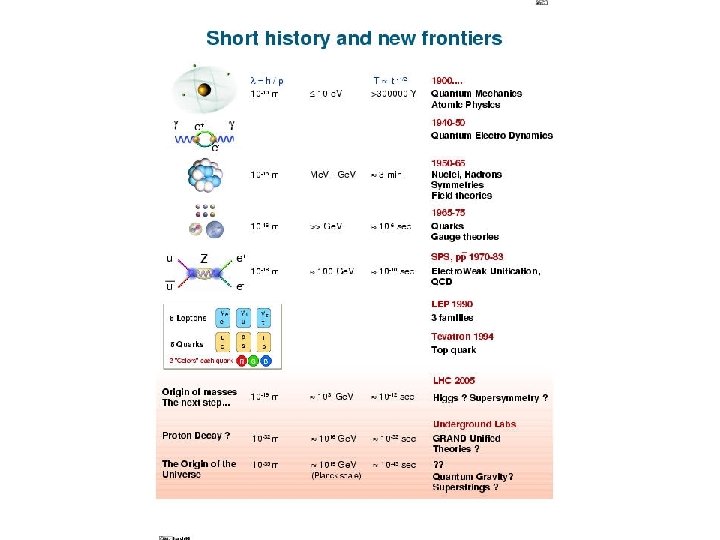
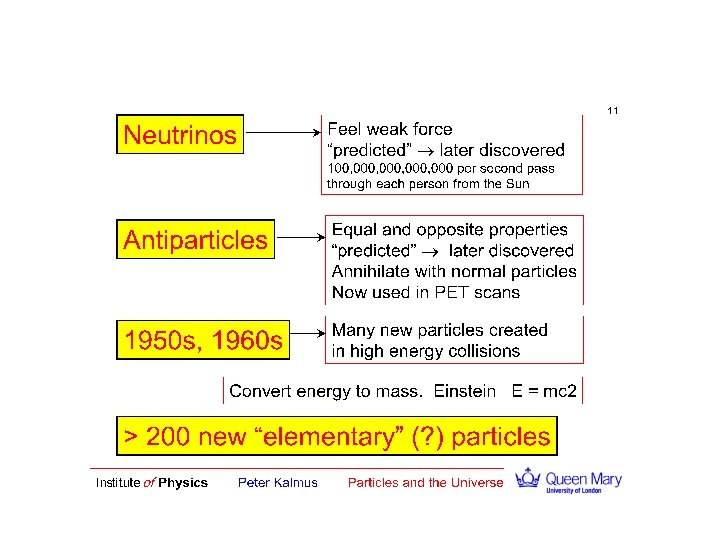
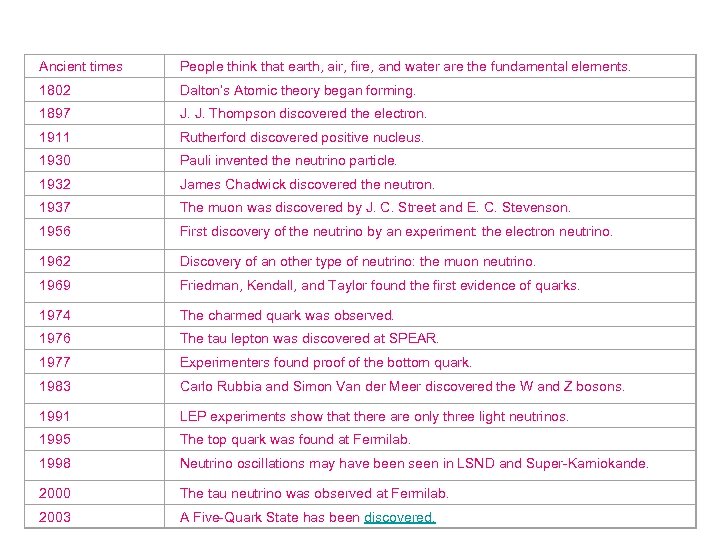 Ancient times People think that earth, air, fire, and water are the fundamental elements. 1802 Dalton’s Atomic theory began forming. 1897 J. J. Thompson discovered the electron. 1911 Rutherford discovered positive nucleus. 1930 Pauli invented the neutrino particle. 1932 James Chadwick discovered the neutron. 1937 The muon was discovered by J. C. Street and E. C. Stevenson. 1956 First discovery of the neutrino by an experiment: the electron neutrino. 1962 Discovery of an other type of neutrino: the muon neutrino. 1969 Friedman, Kendall, and Taylor found the first evidence of quarks. 1974 The charmed quark was observed. 1976 The tau lepton was discovered at SPEAR. 1977 Experimenters found proof of the bottom quark. 1983 Carlo Rubbia and Simon Van der Meer discovered the W and Z bosons. 1991 LEP experiments show that there are only three light neutrinos. 1995 The top quark was found at Fermilab. 1998 Neutrino oscillations may have been seen in LSND and Super-Kamiokande. 2000 The tau neutrino was observed at Fermilab. 2003 A Five-Quark State has been discovered.



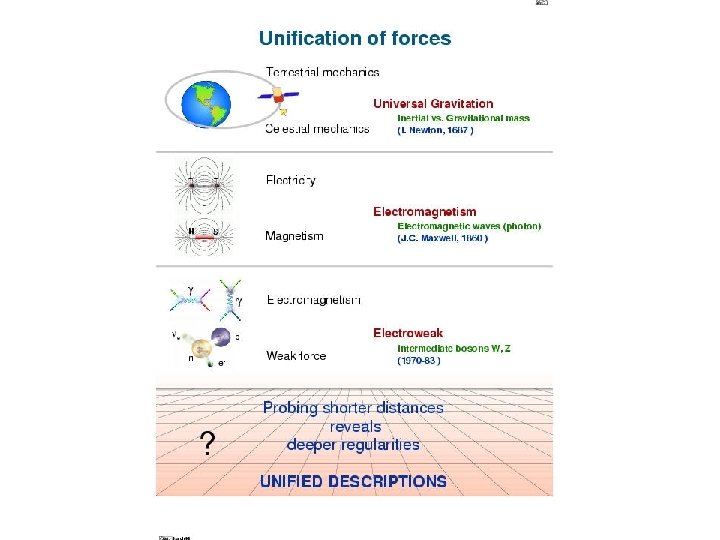
 Unifying Principle
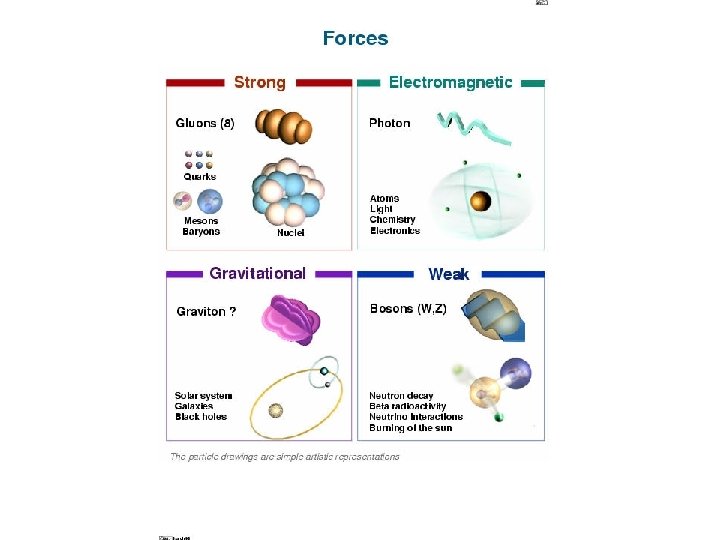
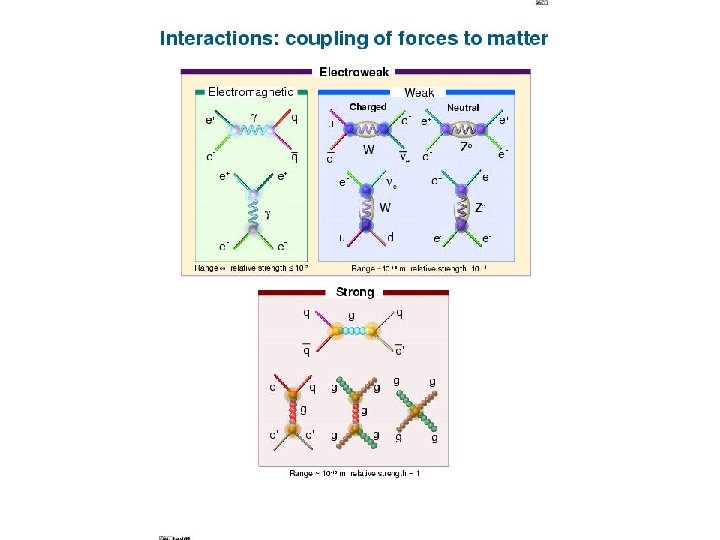
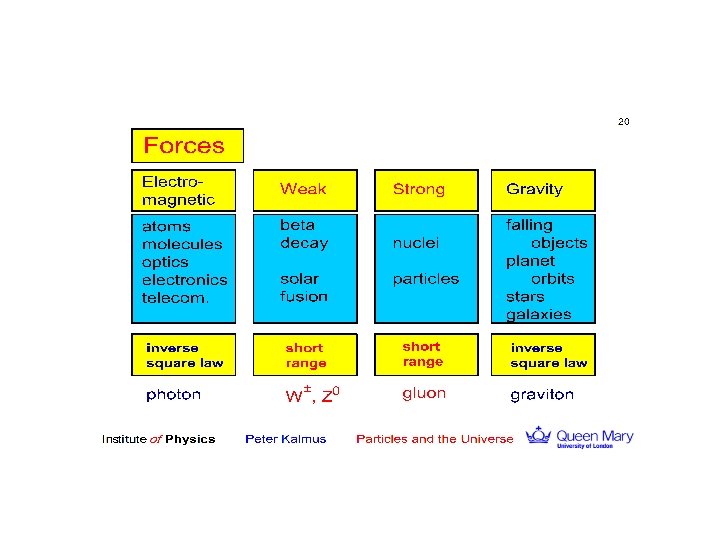
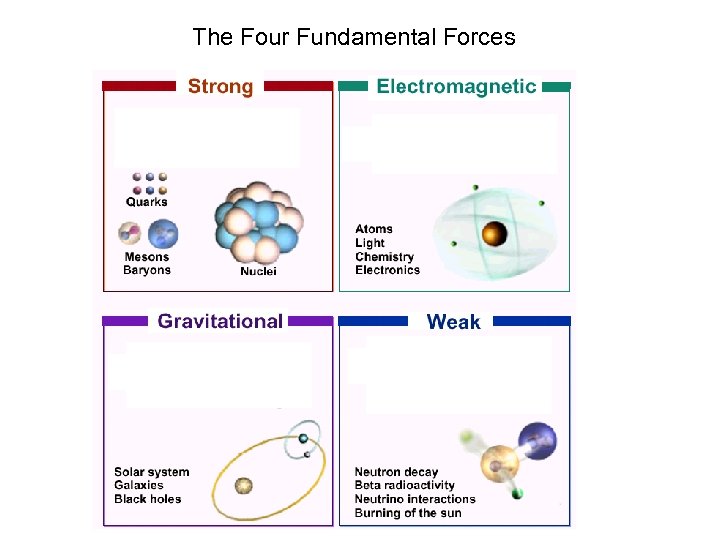 The Four Fundamental Forces
 Symmetry Breaking

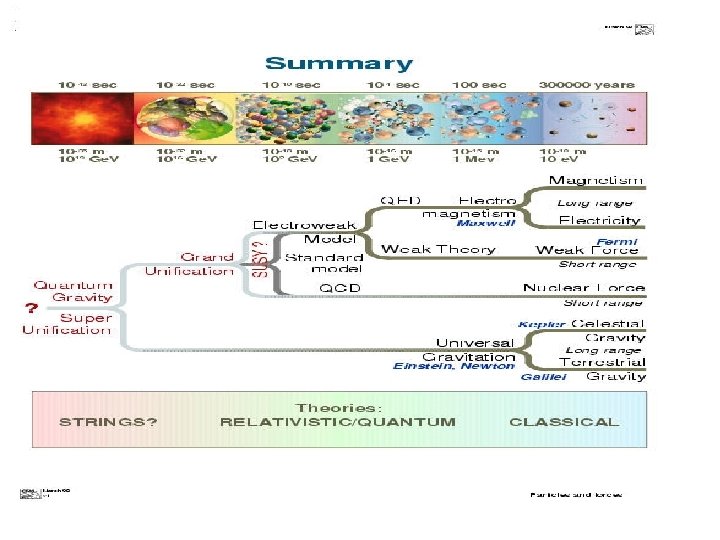
 What next?
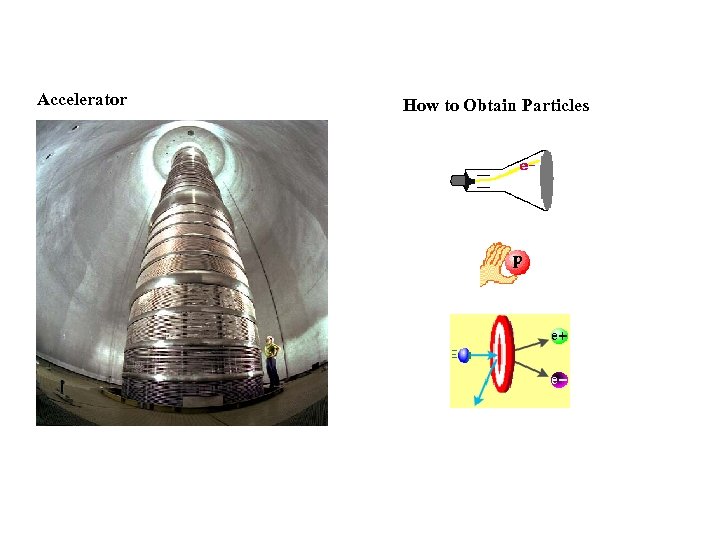 Accelerator How to Obtain Particles
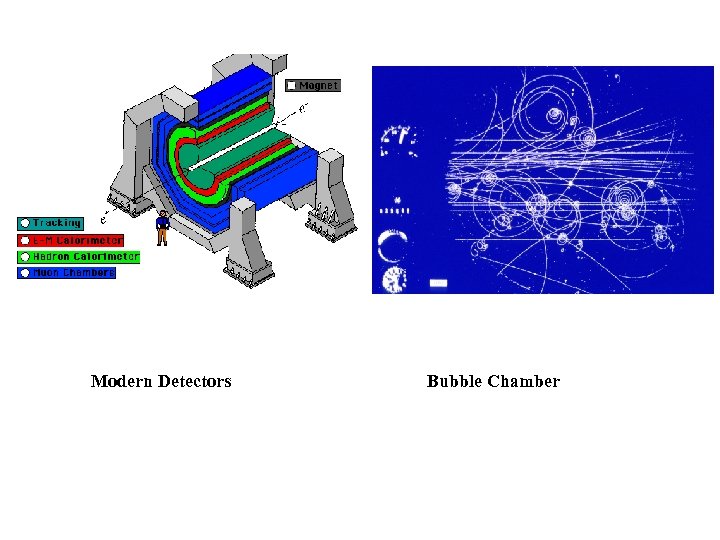 Modern Detectors Bubble Chamber
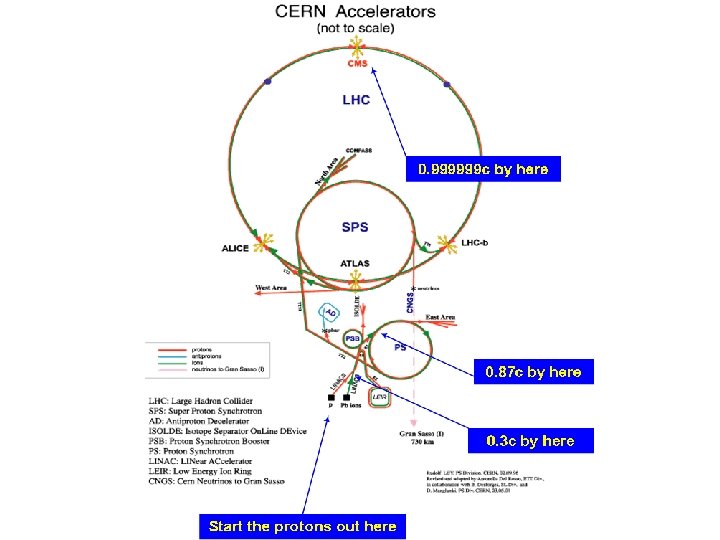
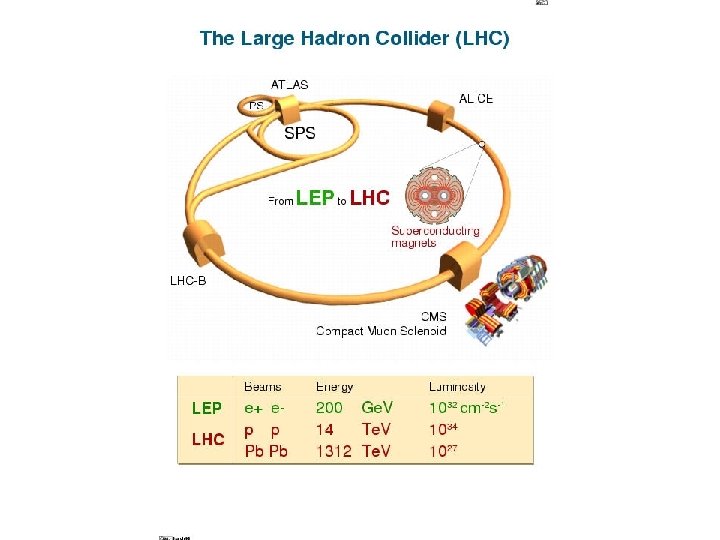
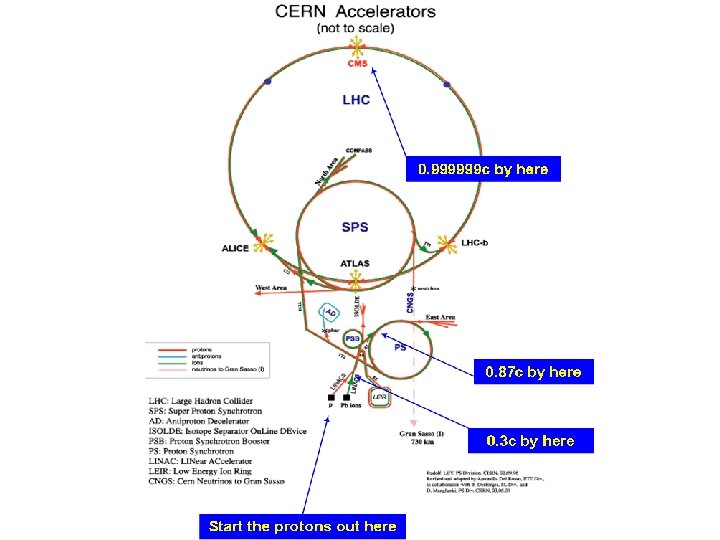
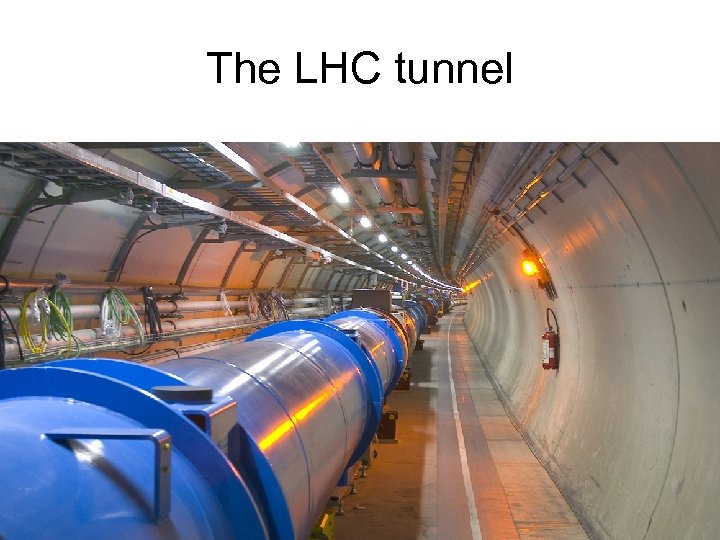 The LHC tunnel
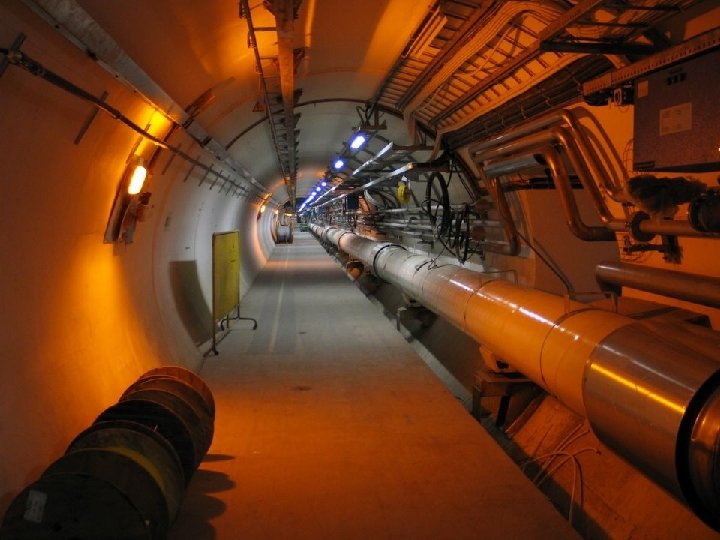
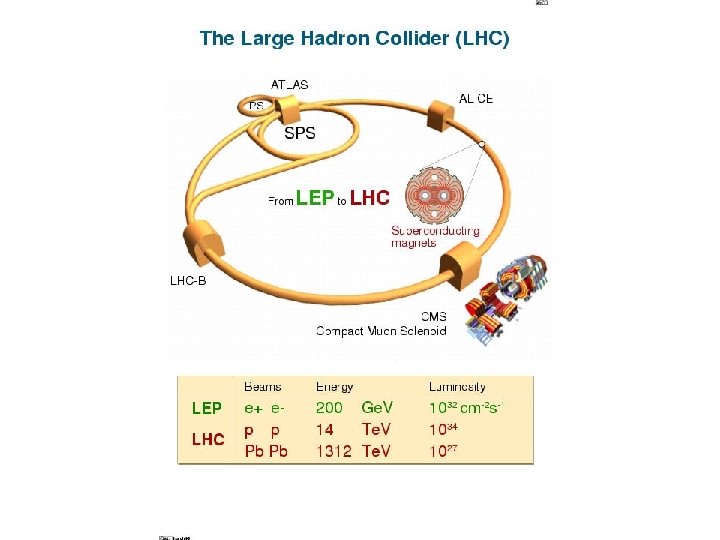
 The large hadron collider
 What to look for?
 What to look for?

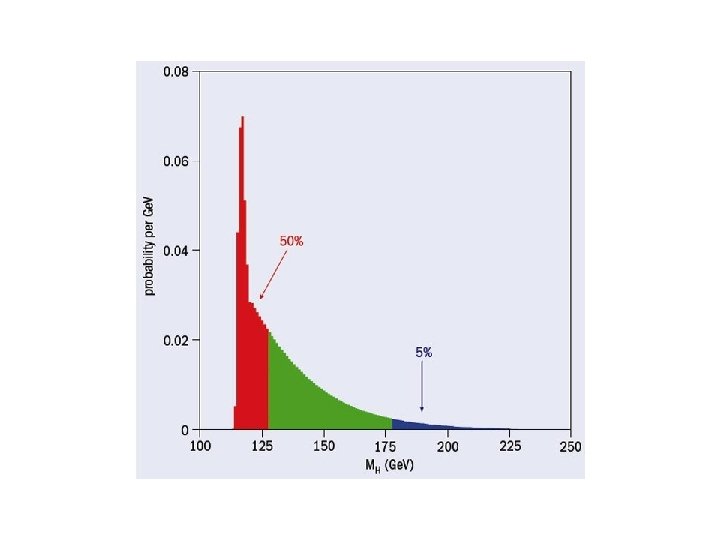
 HIGGS
HIGGS
 Susy particles



 Spinn offs from Particle Physics
 The International Linear Collider
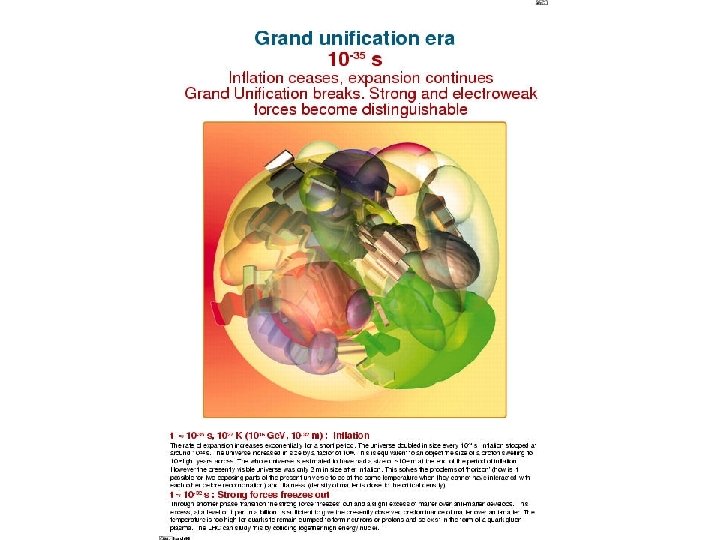
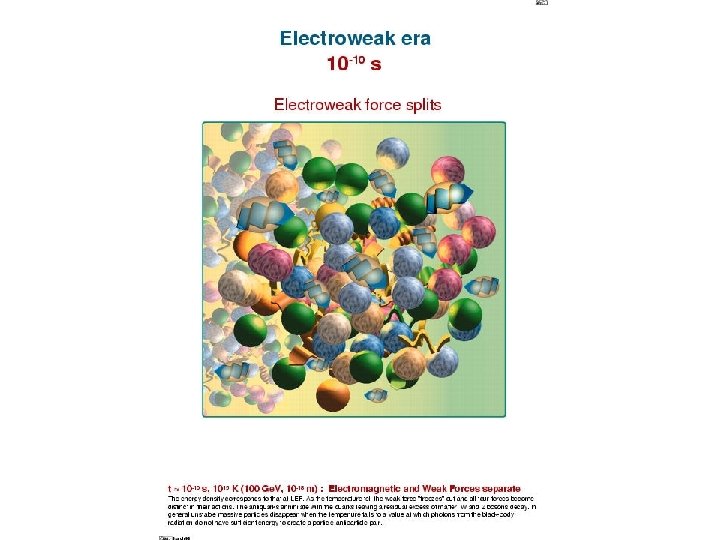
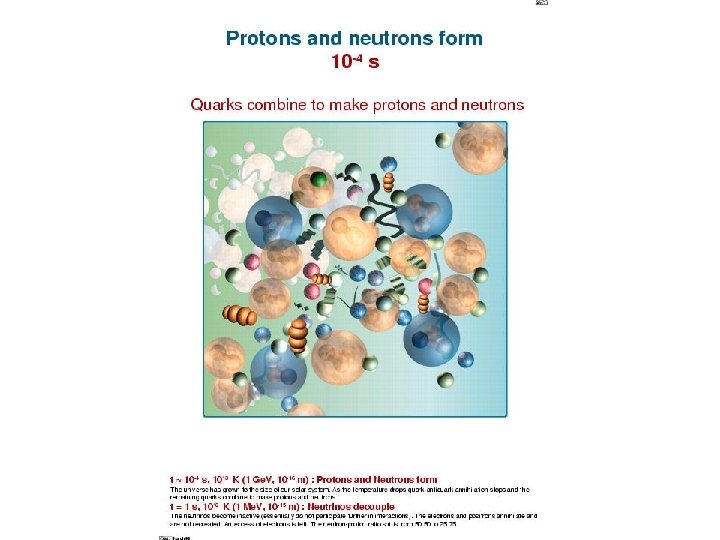
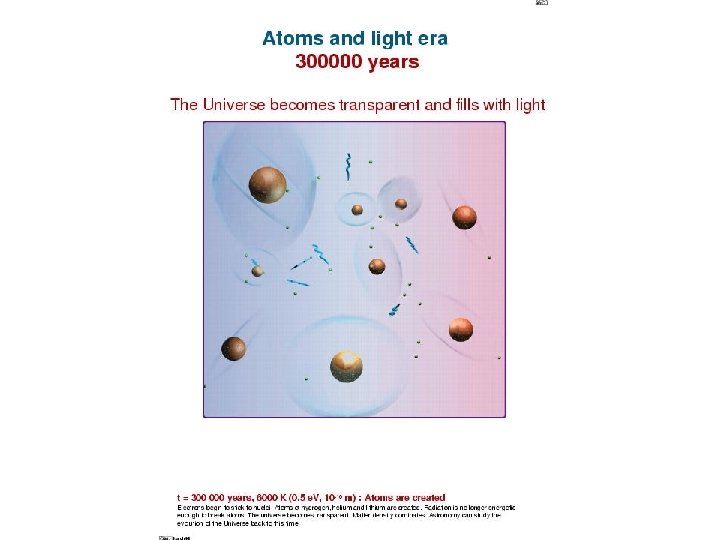
 Implications for Cosmology

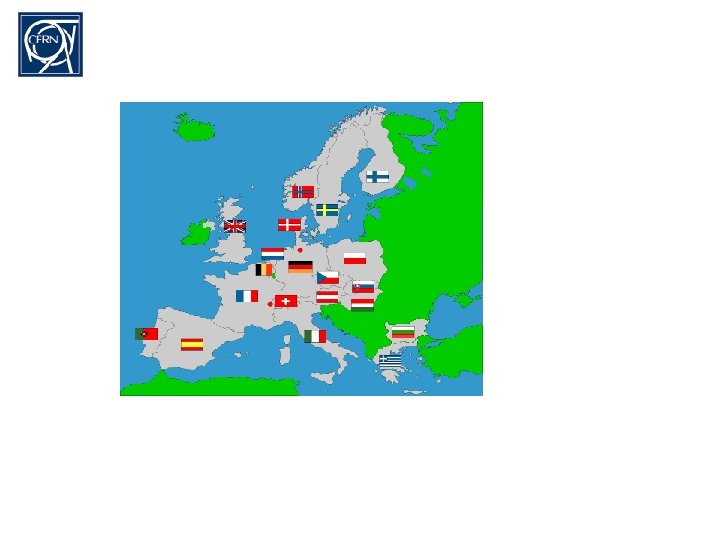

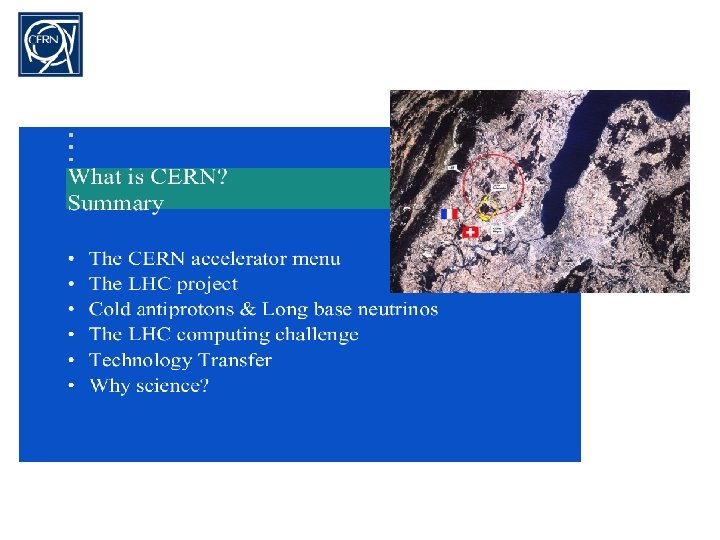
 The CERN convention states: The Organization shall provide for collaboration among European States in nuclear research of a pure scientific and fundamental character, and in research essentially related thereto. The Organization shall have no concern with work for military requirements and the results of its experimental and theoretical work shall be published or otherwise made generally available.

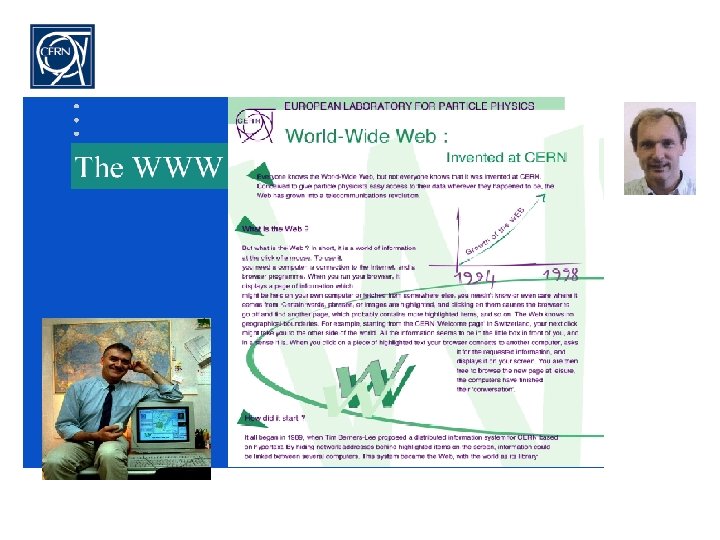
 The "Web" as it is affectionately called, was originally conceived and developed for the large high-energy physics collaborations which have a demand for instantaneous information sharing between physicists working in different universities and institutes all over the world. Now it has millions of academic and commercial users.
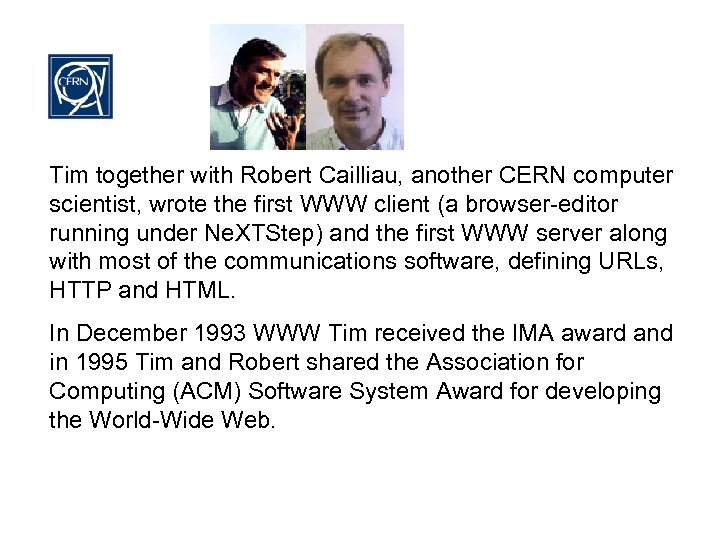 Tim together with Robert Cailliau, another CERN computer scientist, wrote the first WWW client (a browser-editor running under Ne. XTStep) and the first WWW server along with most of the communications software, defining URLs, HTTP and HTML. In December 1993 WWW Tim received the IMA award and in 1995 Tim and Robert shared the Association for Computing (ACM) Software System Award for developing the World-Wide Web.




 3 Some Familiar Particles





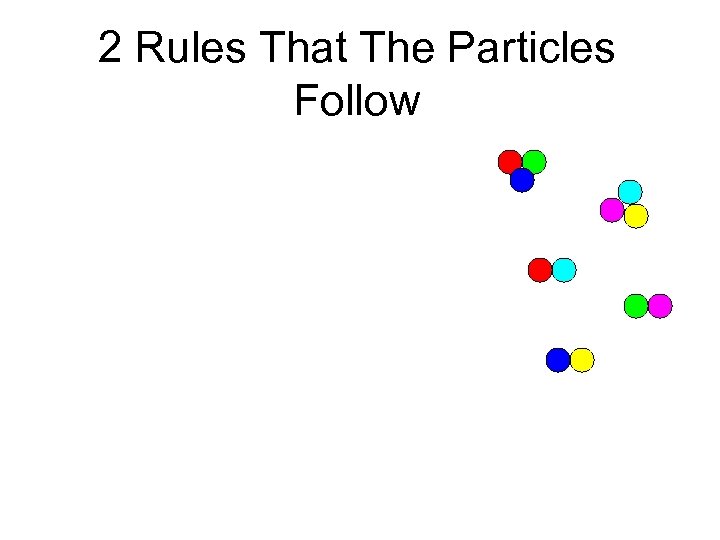 2 Rules That The Particles Follow
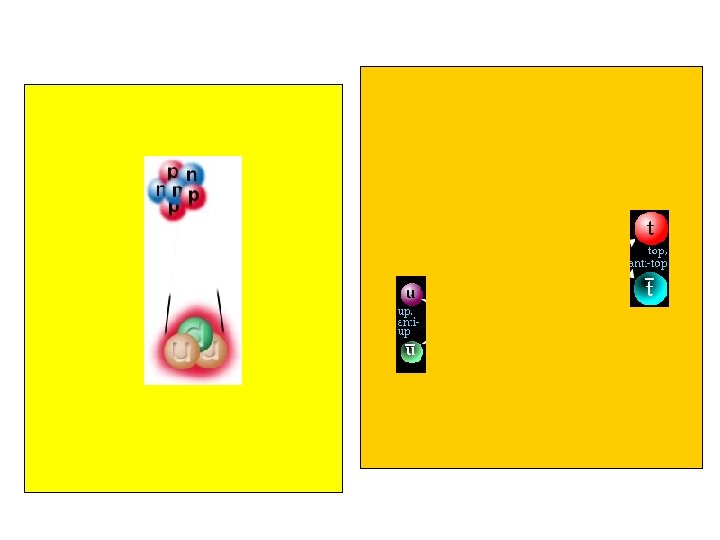
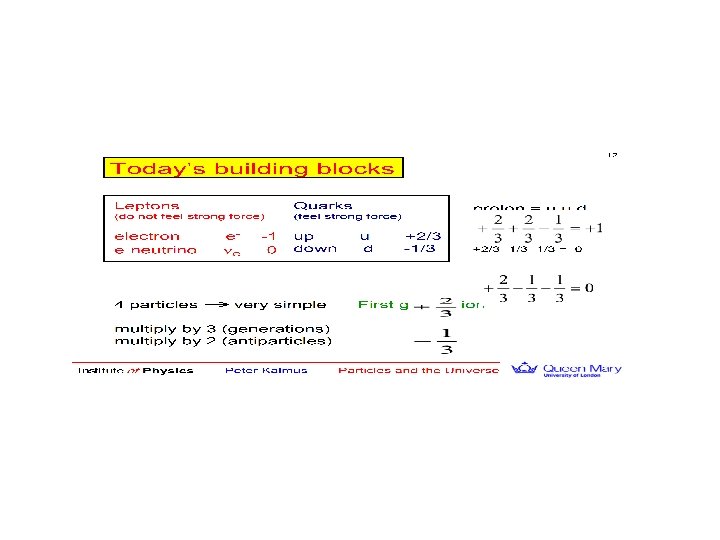
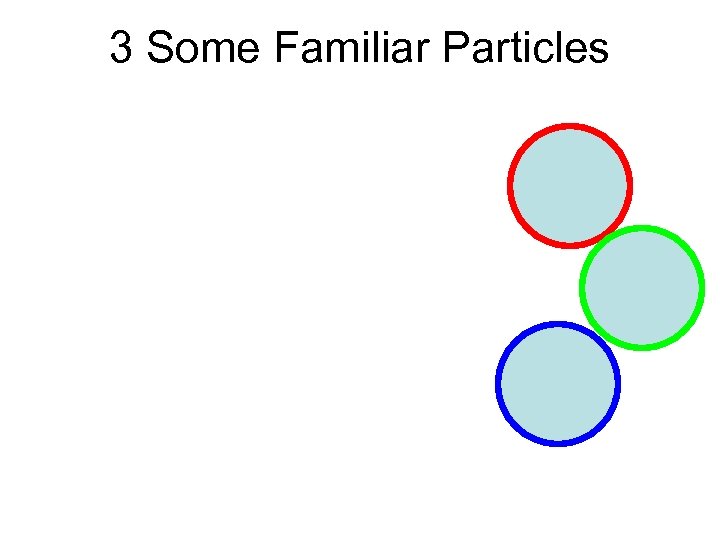 3 Some Familiar Particles
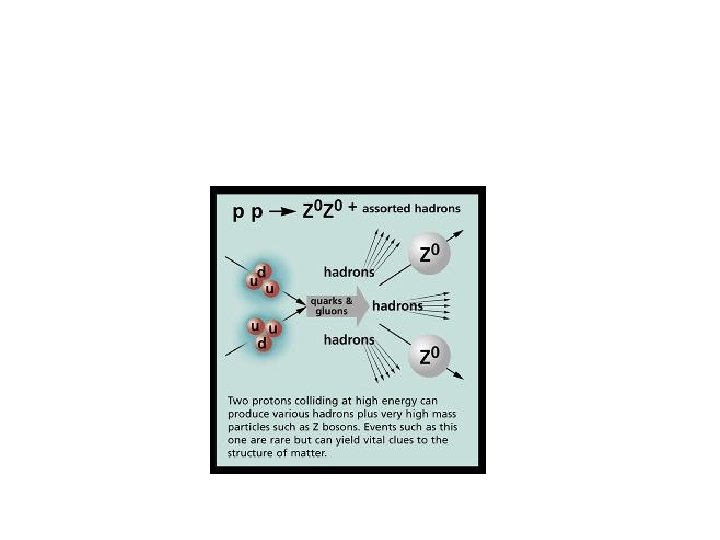
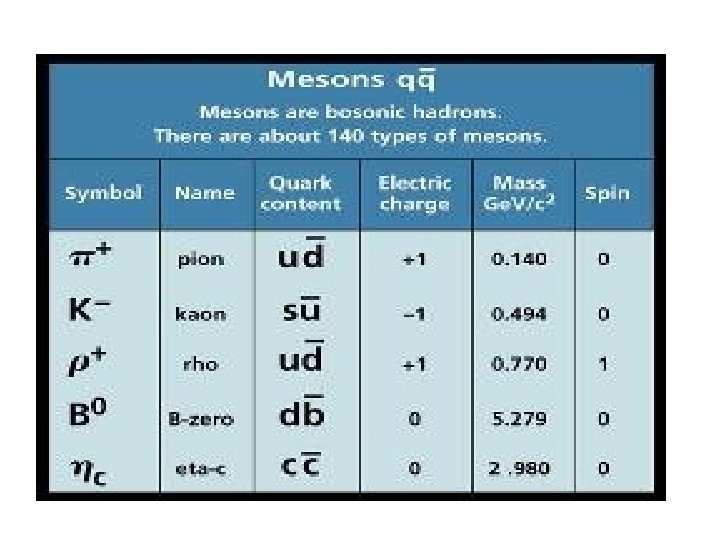
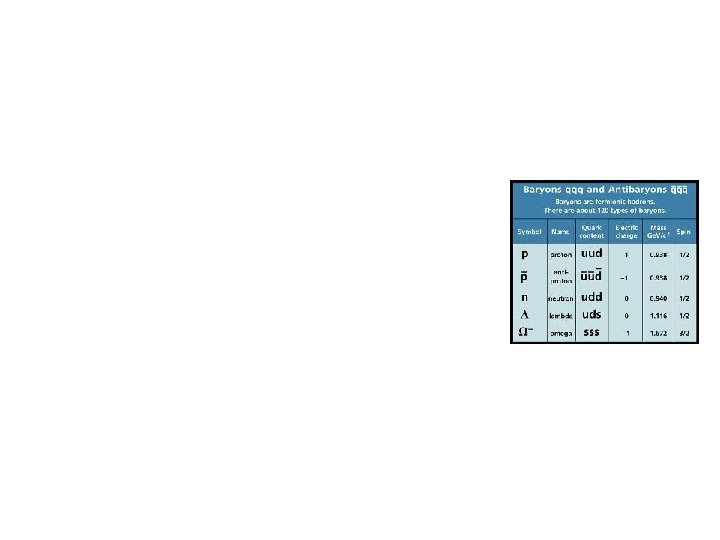
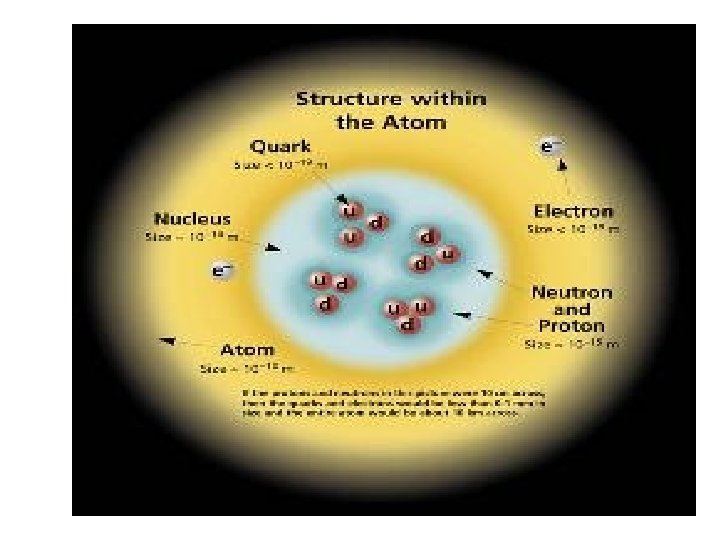
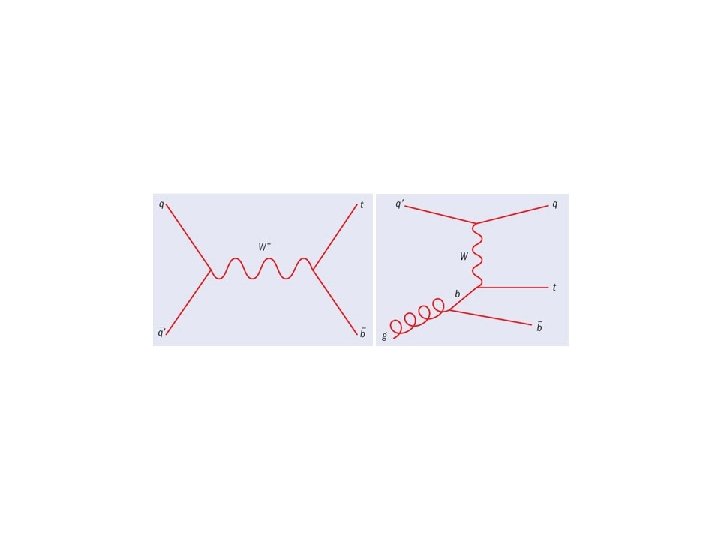
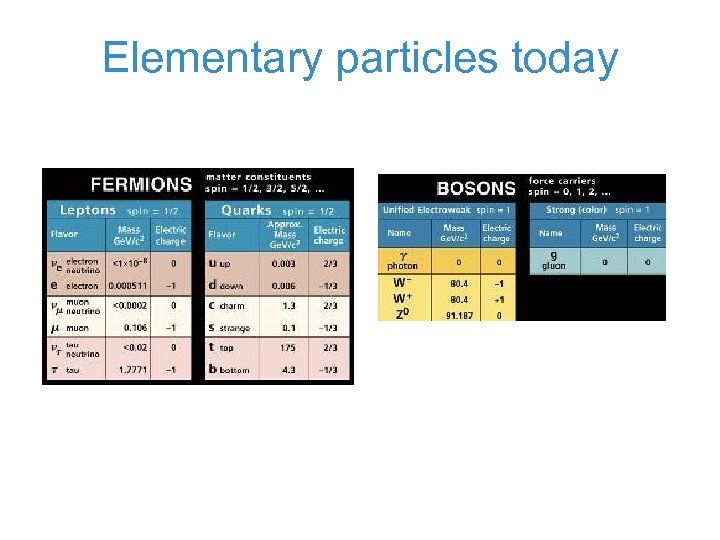 Elementary particles today