 Скачать презентацию Particle and sensible heat fluxes measured by eddy
90d0bbeb9173a3093d4c22131c686549.ppt
- Количество слайдов: 21



Particle and sensible heat fluxes measured by eddy covariance above and within an urban canopy Ian D. Longley, M. W. Gallagher School of Earth, Atmospheric & Environmental Sciences, University of Manchester, UK Presented at the 6 th International Conference on the Urban Climate, Göteborg, 2006
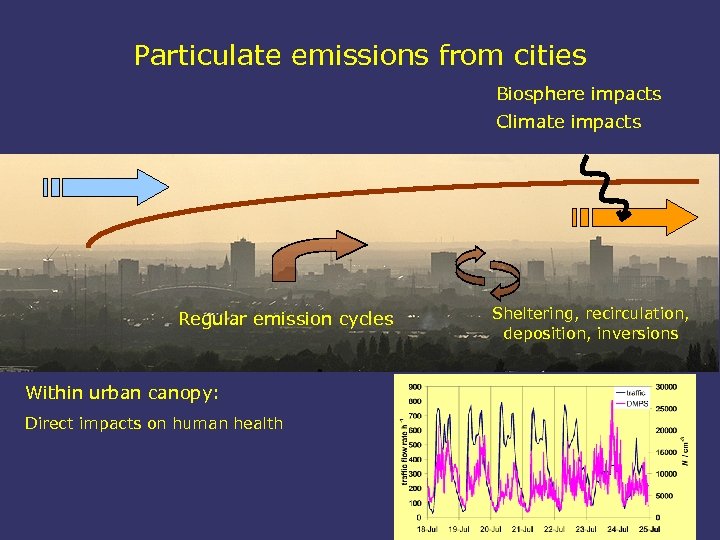
Particulate emissions from cities Biosphere impacts Climate impacts Regular emission cycles Within urban canopy: Direct impacts on human health Sheltering, recirculation, deposition, inversions
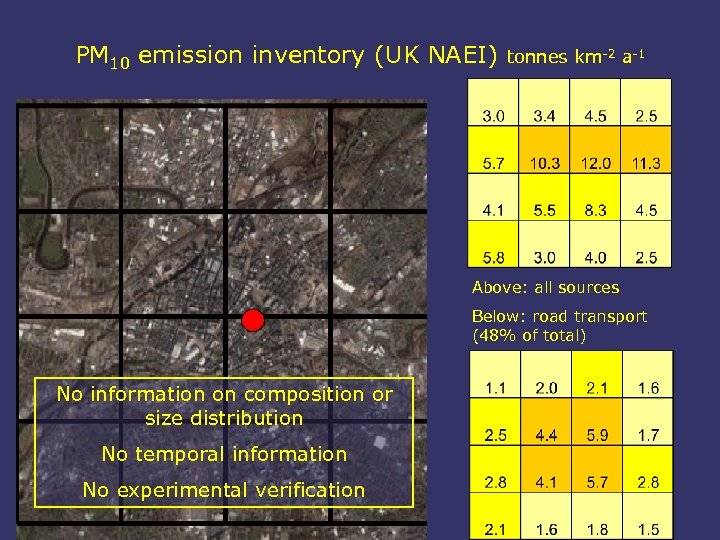
PM 10 emission inventory (UK NAEI) tonnes km-2 a-1 Above: all sources Below: road transport (48% of total) No information on composition or size distribution No temporal information No experimental verification
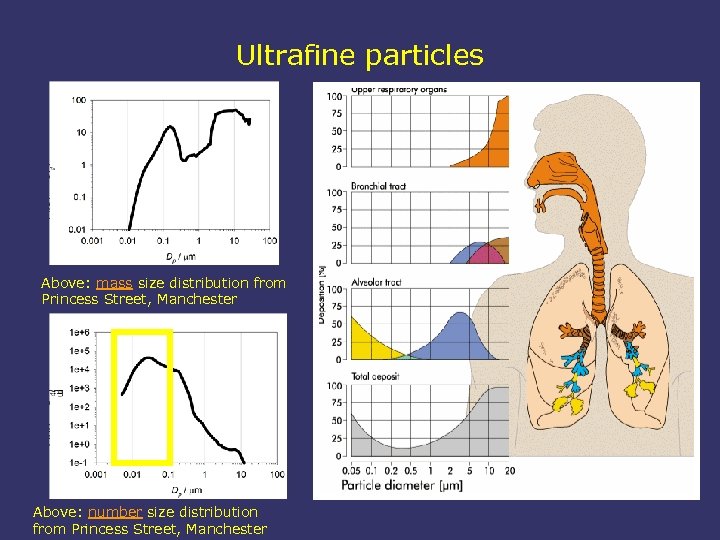
Ultrafine particles Above: mass size distribution from Princess Street, Manchester Above: number size distribution from Princess Street, Manchester
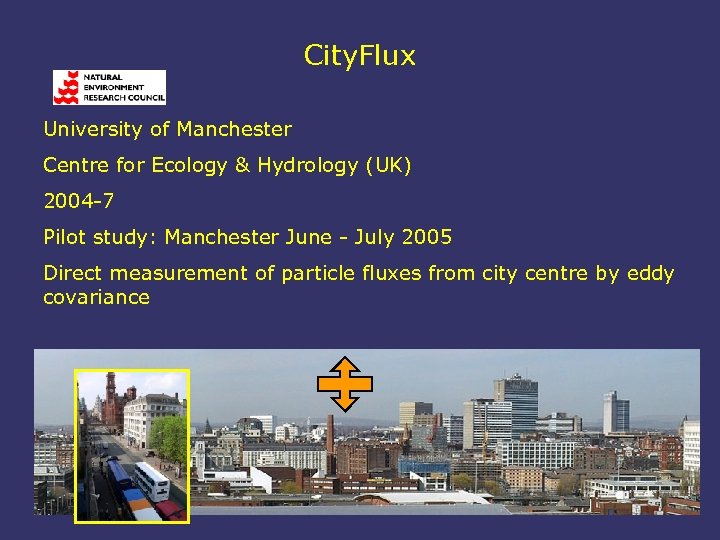
City. Flux University of Manchester Centre for Ecology & Hydrology (UK) 2004 -7 Pilot study: Manchester June - July 2005 Direct measurement of particle fluxes from city centre by eddy covariance
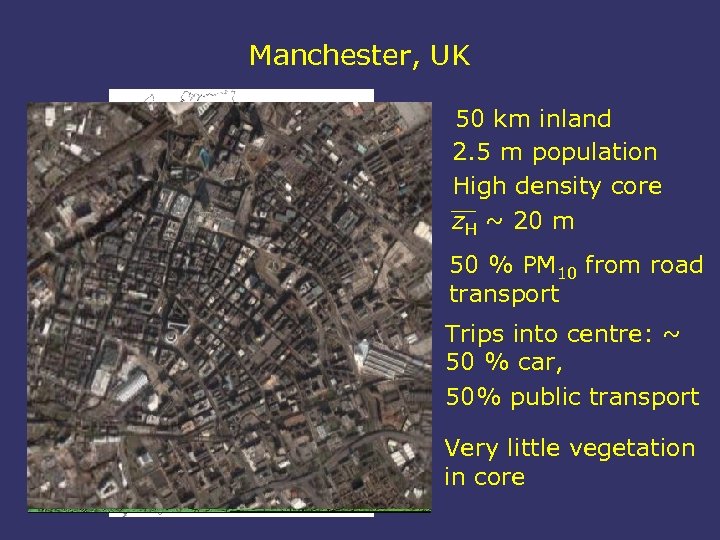
Manchester, UK 50 km inland 2. 5 m population High density core z. H ~ 20 m 50 % PM 10 from road transport Trips into centre: ~ 50 % car, 50% public transport Very little vegetation in core
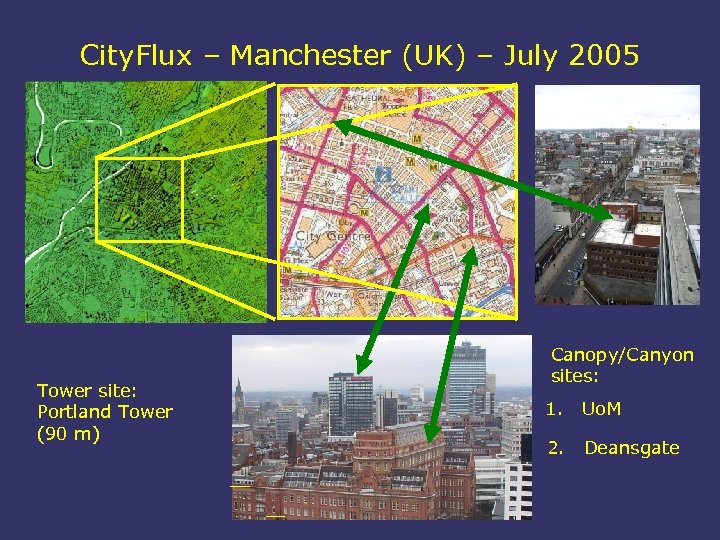
City. Flux – Manchester (UK) – July 2005 Tower site: Portland Tower (90 m) Canopy/Canyon sites: 1. Uo. M 2. Deansgate
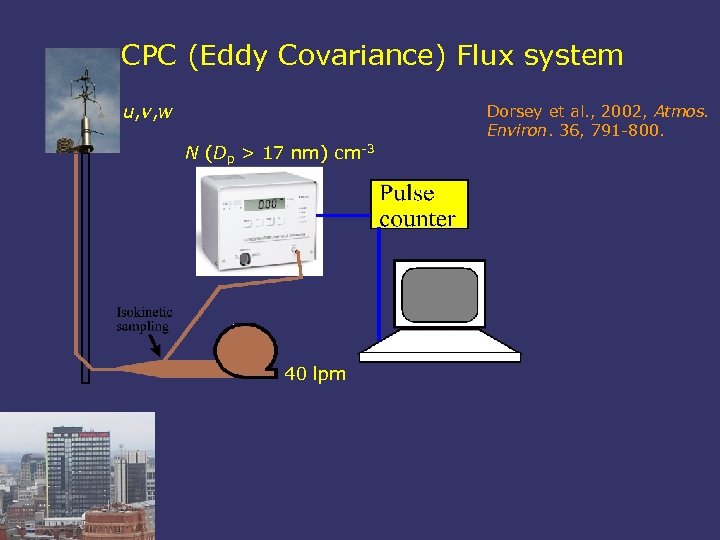
CPC (Eddy Covariance) Flux system u, v, w Dorsey et al. , 2002, Atmos. Environ. 36, 791 -800. N (Dp > 17 nm) cm-3 40 lpm
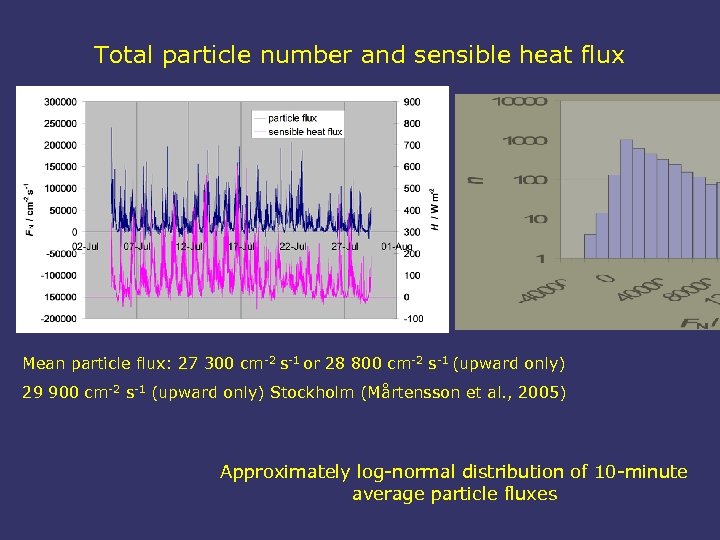
Total particle number and sensible heat flux Mean particle flux: 27 300 cm-2 s-1 or 28 800 cm-2 s-1 (upward only) 29 900 cm-2 s-1 (upward only) Stockholm (Mårtensson et al. , 2005) Approximately log-normal distribution of 10 -minute average particle fluxes
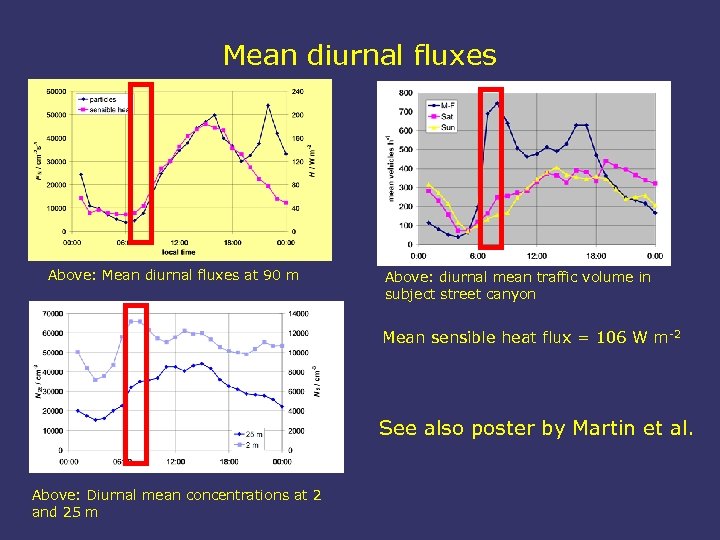
Mean diurnal fluxes Above: Mean diurnal fluxes at 90 m Above: diurnal mean traffic volume in subject street canyon Mean sensible heat flux = 106 W m-2 See also poster by Martin et al. Above: Diurnal mean concentrations at 2 and 25 m
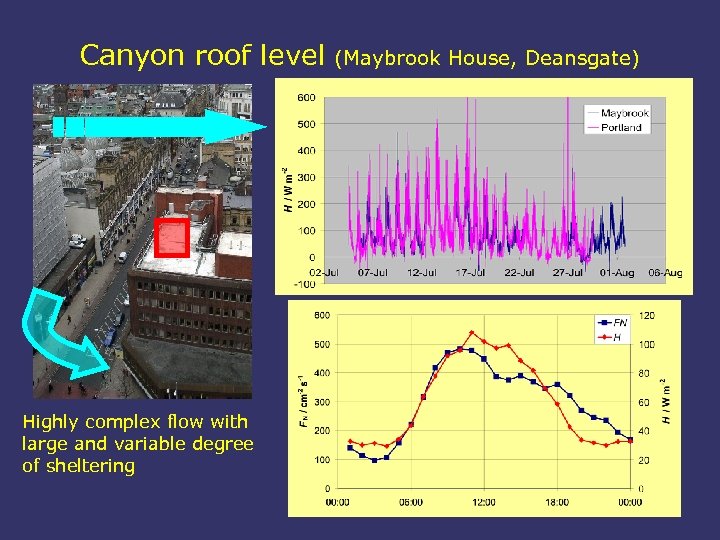
Canyon roof level Highly complex flow with large and variable degree of sheltering (Maybrook House, Deansgate)
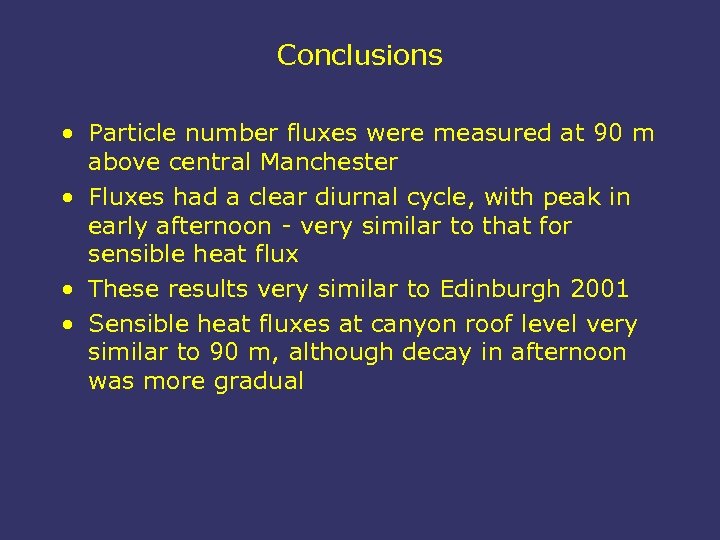
Conclusions • Particle number fluxes were measured at 90 m above central Manchester • Fluxes had a clear diurnal cycle, with peak in early afternoon - very similar to that for sensible heat flux • These results very similar to Edinburgh 2001 • Sensible heat fluxes at canyon roof level very similar to 90 m, although decay in afternoon was more gradual
Forthcoming analysis • • Winter 2006 data (poster by Martin et al. ) Influence of stability Model for particle ventilation fluxes Prediction of urban canopy concentrations Spring/Summer 2006 • Continued measurements at Portland Tower, including size-segregated fluxes • Multi-level compositional measurements by AMS • Tracer release to identify source-receptor relationships and transport timescales

Acknowledgements Many thanks to Bruntwood Properties for kind permission to use Portland Tower And GVA Grimley for kind permission to use Maybrook House
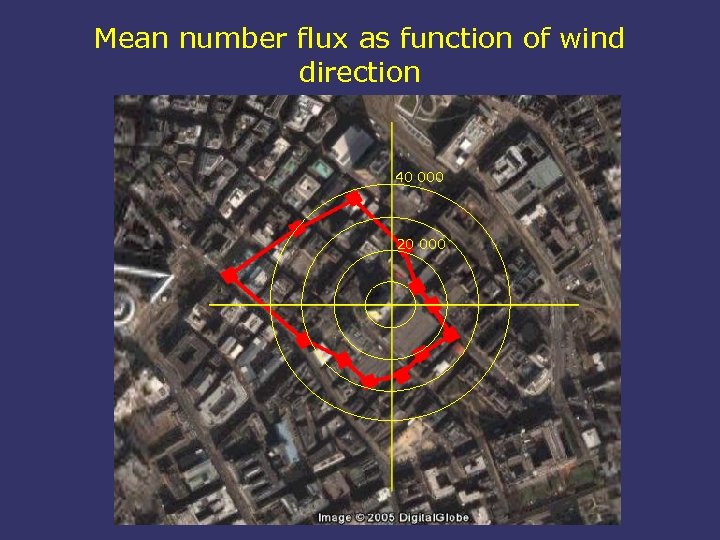
Mean number flux as function of wind direction 40 000 20 000
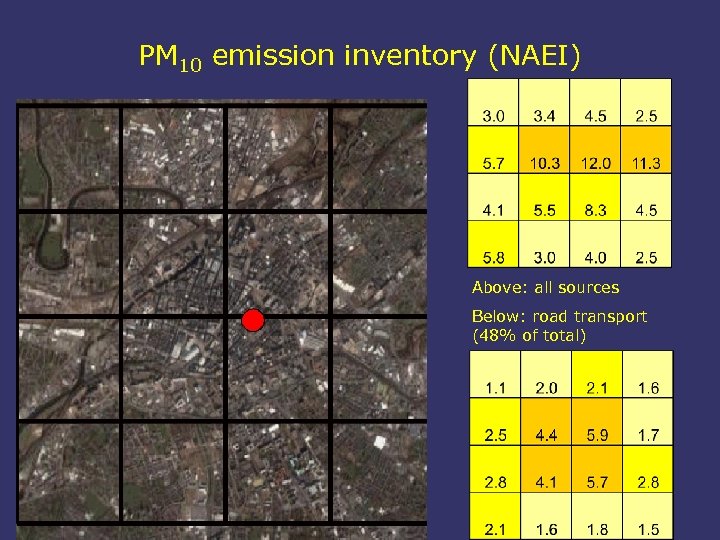
PM 10 emission inventory (NAEI) Above: all sources Below: road transport (48% of total)
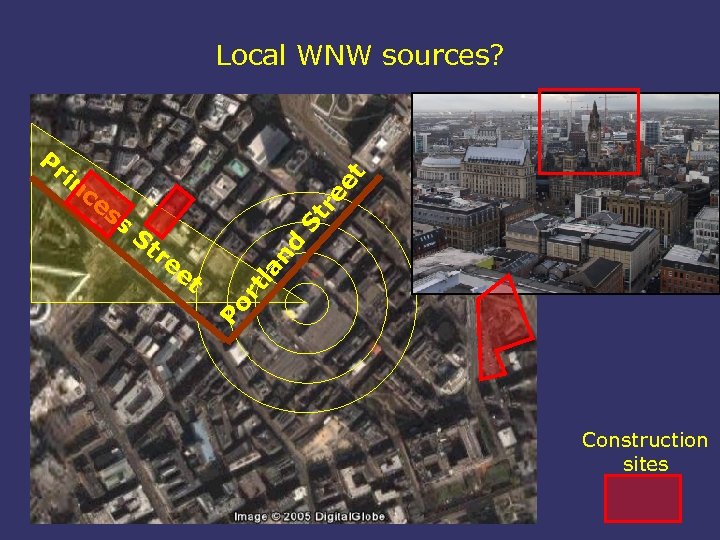
Local WNW sources? Pr i St nd et la St re Po rt s re et nc es Construction sites
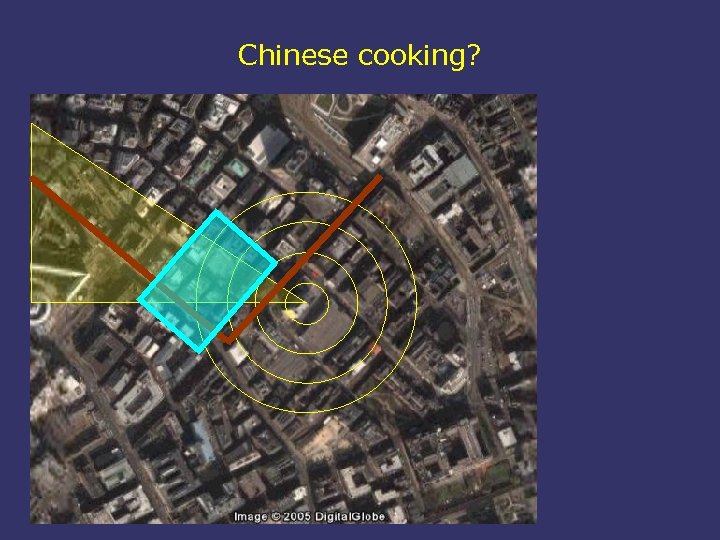
Chinese cooking?
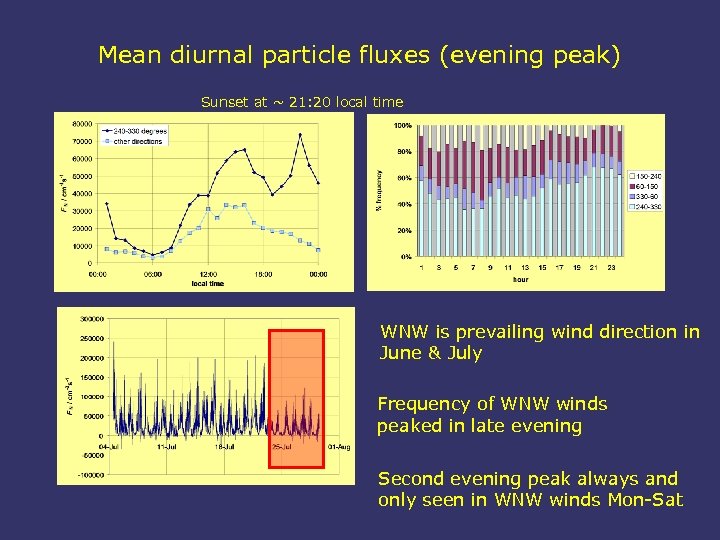
Mean diurnal particle fluxes (evening peak) Sunset at ~ 21: 20 local time WNW is prevailing wind direction in June & July Frequency of WNW winds peaked in late evening Second evening peak always and only seen in WNW winds Mon-Sat
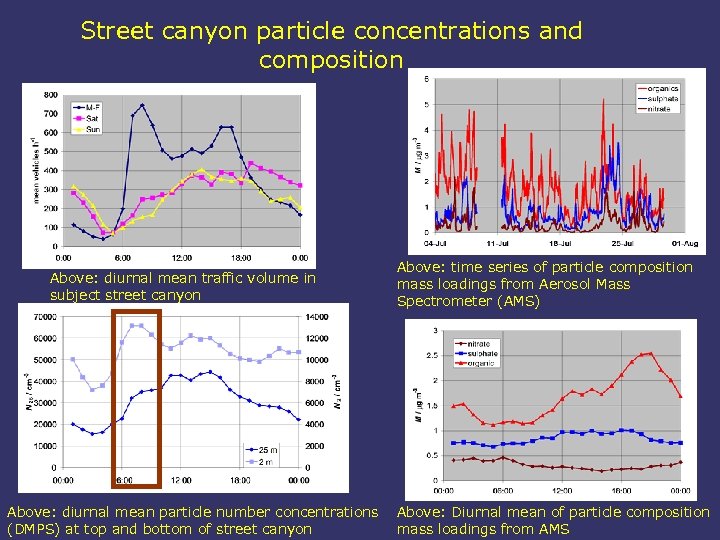
Street canyon particle concentrations and composition Above: diurnal mean traffic volume in subject street canyon Above: diurnal mean particle number concentrations (DMPS) at top and bottom of street canyon Above: time series of particle composition mass loadings from Aerosol Mass Spectrometer (AMS) Above: Diurnal mean of particle composition mass loadings from AMS
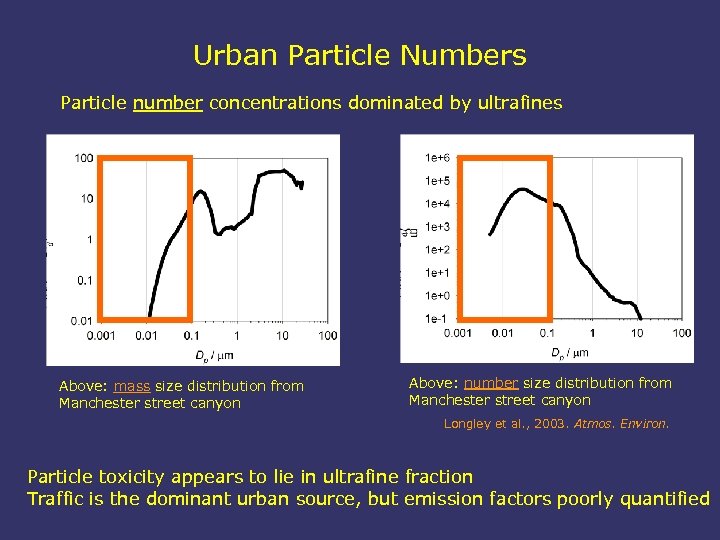
Urban Particle Numbers Particle number concentrations dominated by ultrafines Above: mass size distribution from Manchester street canyon Above: number size distribution from Manchester street canyon Longley et al. , 2003. Atmos. Environ. Particle toxicity appears to lie in ultrafine fraction Traffic is the dominant urban source, but emission factors poorly quantified
Скачать презентацию Particle and sensible heat fluxes measured by eddy
90d0bbeb9173a3093d4c22131c686549.ppt