


 Скачать презентацию Part 4 Volcanic Hazards Monitoring Normal
de3a8e98f3330cc9e49eb66c41a1cd44.ppt
- Количество слайдов: 58
 Part 4: Volcanic Hazards & Monitoring • “Normal” view has a Notes panel below with lecture notes and links to video lectures, activities, or web sites. • “Slide Show” view has animated elements that pop up on clicking • Video & animations were removed to increase speed. Download information is in the Notes panel in Normal view. If you got this slide show on a DVD, the related animations will also be in a folder associated with the Power. Point. • Modify slide show liberally for your own needs! Slide show prepared by Dr. Beth Pratt-Sitaula (Central Washington University) and Jenda Johnson (IRIS).
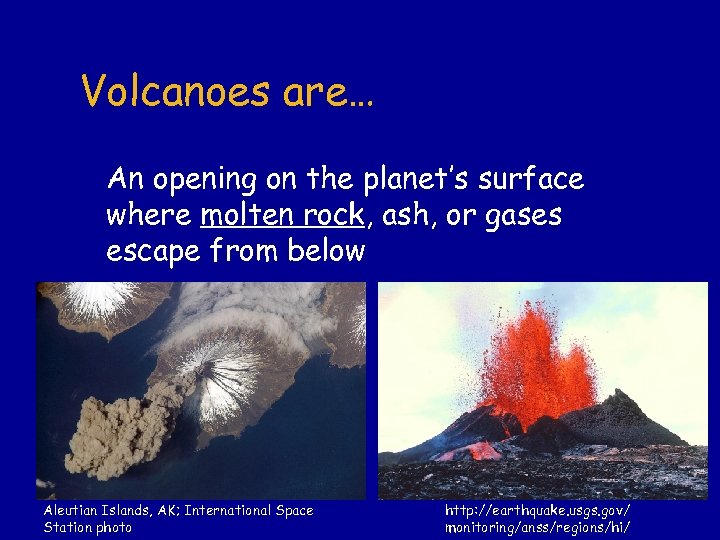 Volcanoes are… An opening on the planet’s surface where molten rock, ash, or gases escape from below Aleutian Islands, AK; International Space Station photo http: //earthquake. usgs. gov/ monitoring/anss/regions/hi/
 Volcano Prior Knowledge Survey TRUE/FALSE –> thumbs up OR down 1. Volcanoes are steep-sided and ooze hot runny lava FALSE - “Hot runny” volcanoes are mostly flat or shield like
 http: //www. imdb. com/m edia/rm 1327600128/tt 0445548
 Volcano Prior Knowledge Survey TRUE/FALSE –> thumbs up OR down 2. The biggest eruptions flatten topography. TRUE – largest volume eruptions lead to flood basalt plateaus; most explosive eruptions lead to mountains getting blown to bits
 http: //www. imdb. com/m edia/rm 1327600128/tt 0445548
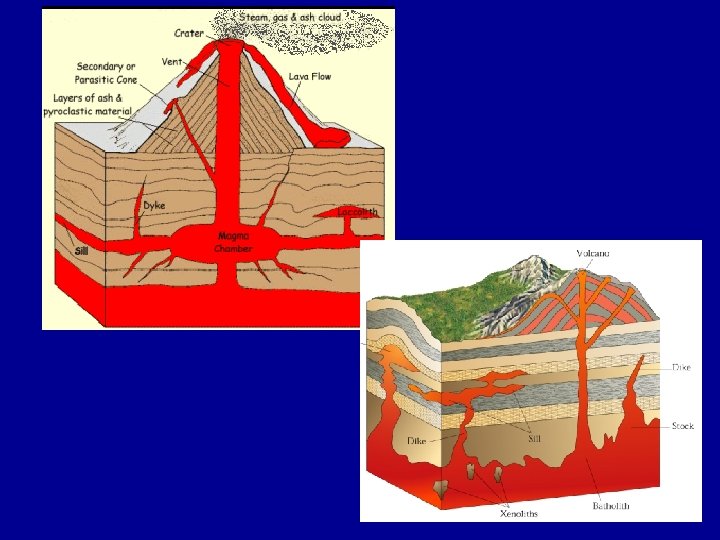
 Volcano Prior Knowledge Survey TRUE/FALSE –> thumbs up OR down 3. Magma chambers are…big chambers of liquid rock FALSE - Magma “chambers” form when lava is injected in cracks and crevasses and pushes against existing rock. They are usually more of a plumbing system than a chamber.
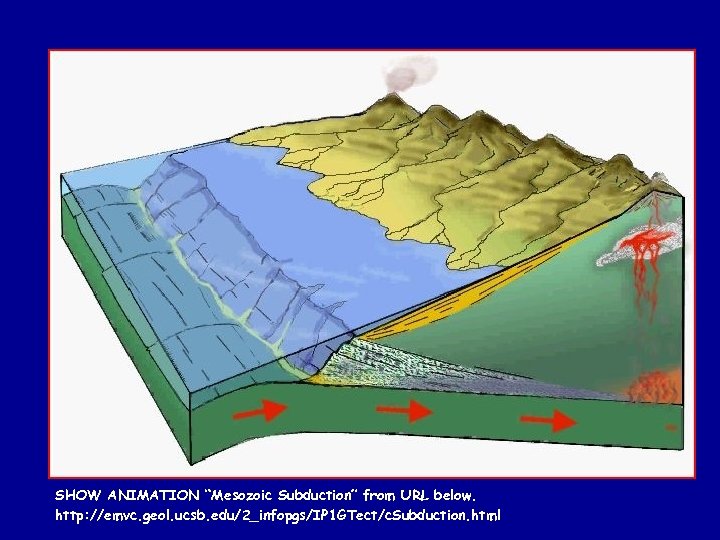 SHOW ANIMATION “Mesozoic Subduction” from URL below. http: //emvc. geol. ucsb. edu/2_infopgs/IP 1 GTect/c. Subduction. html
 Some volcano stats • How many active volcanoes on Earth? ~1, 500 active volcanoes • How many volcanoes erupt per year? ~60 volcanoes erupt per year • How many people are killed by volcanoes? ~200, 000 in the last 200 years
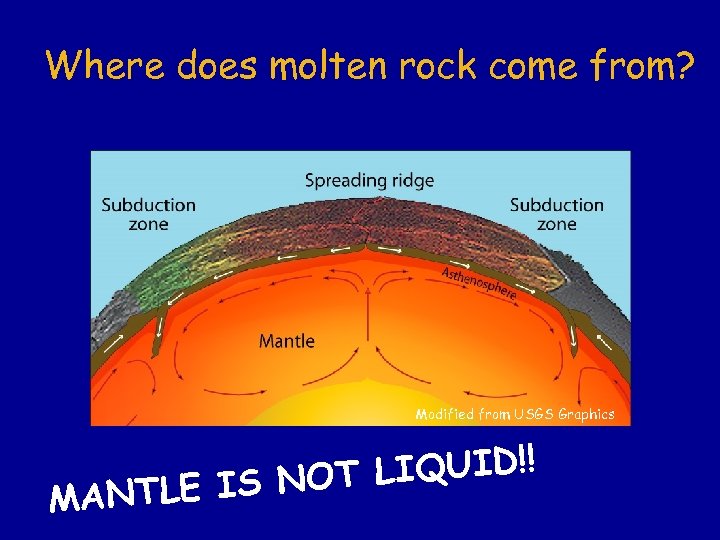 Where does molten rock come from? Modified from USGS Graphics IQUID!! IS NOT L MANTLE
 Where do volcanoes form? • Subduction zones • Mid-ocean ridges • “Hot spots” • Continental rift zones
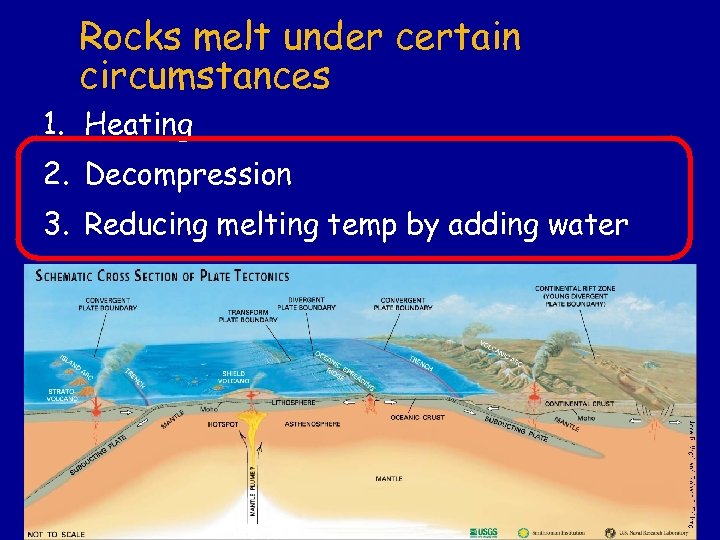 Rocks melt under certain circumstances 1. Heating 2. Decompression 3. Reducing melting temp by adding water
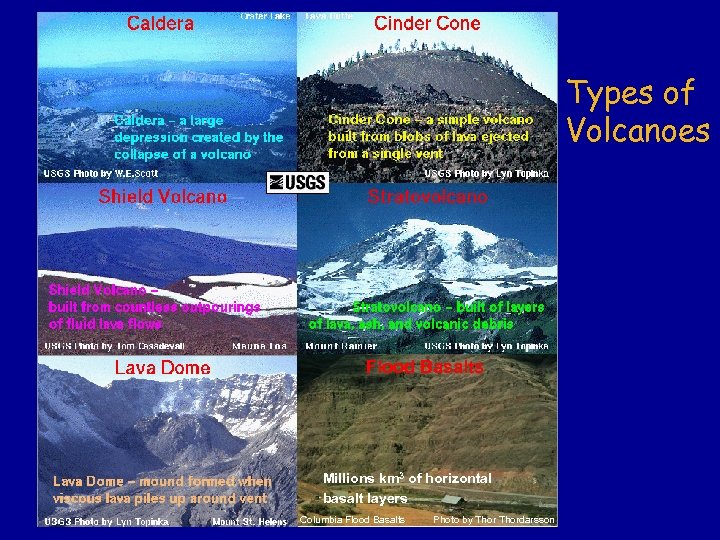 Types of Volcanoes Flood Basalts Millions km 3 of horizontal basalt layers Columbia Flood Basalts Photo by Thordarsson
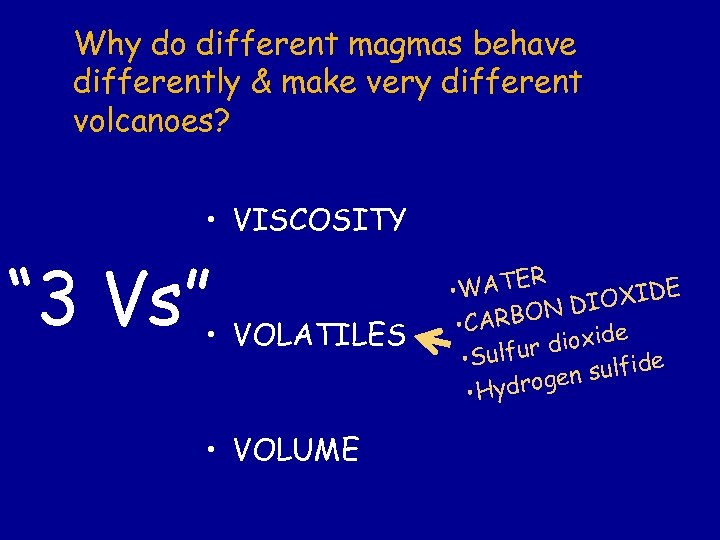 Why do different magmas behave differently & make very different volcanoes? • VISCOSITY “ 3 Vs” • VOLATILES • VOLUME R E • WATE IOXID D RBON • CA de r dioxi • Sulfu e n sulfid ydroge • H
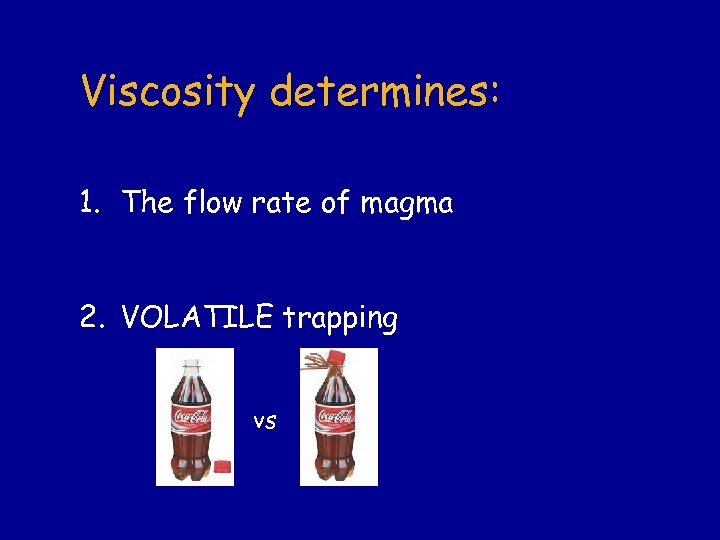 Viscosity determines: 1. The flow rate of magma 2. VOLATILE trapping vs
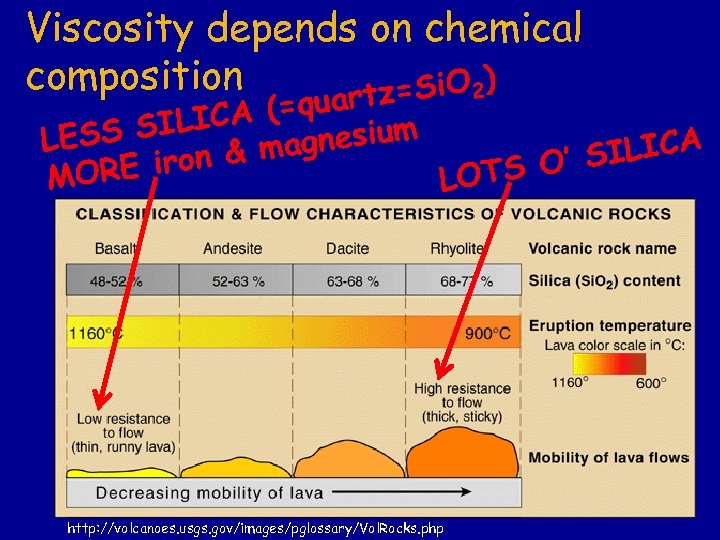 Viscosity depends on chemical composition z=Si. O 2) rt (=qua r SILICA LESS agnesium & m SILICA S O’ RE iron MO LOT http: //volcanoes. usgs. gov/images/pglossary/Vol. Rocks. php
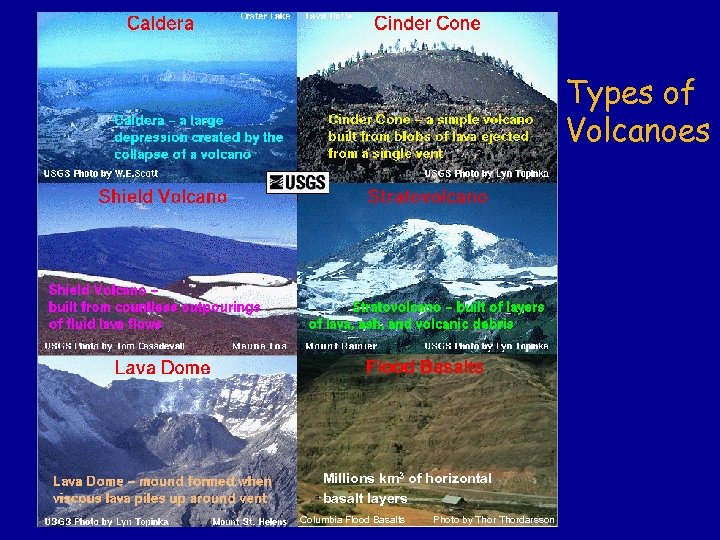 Types of Volcanoes Flood Basalts Millions km 3 of horizontal basalt layers Columbia Flood Basalts Photo by Thordarsson
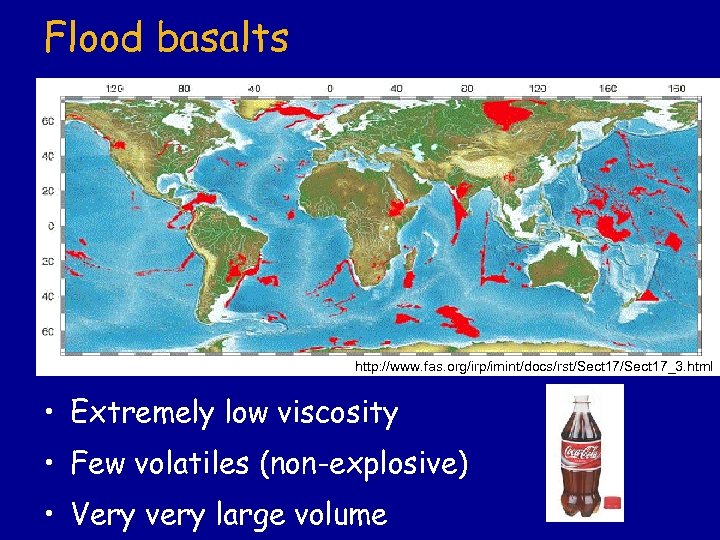 Flood basalts http: //www. fas. org/irp/imint/docs/rst/Sect 17_3. html • Extremely low viscosity • Few volatiles (non-explosive) • Very very large volume
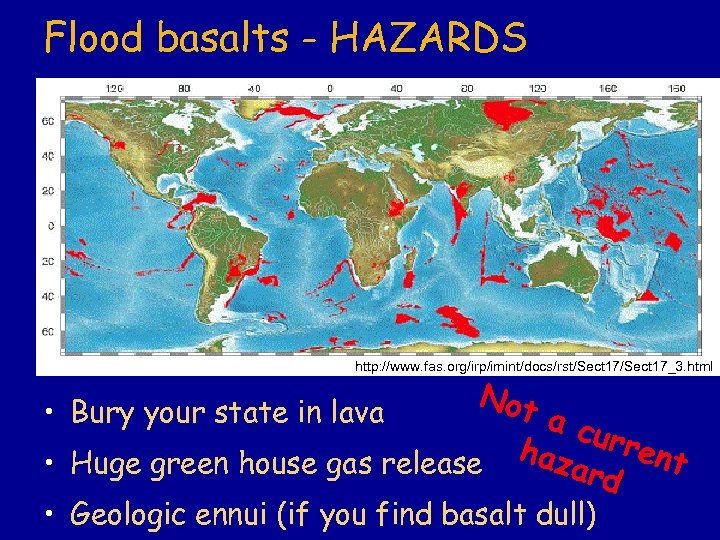 Flood basalts - HAZARDS http: //www. fas. org/irp/imint/docs/rst/Sect 17_3. html Not • Bury your state in lava a cu haz rrent • Huge green house gas release ard • Geologic ennui (if you find basalt dull)
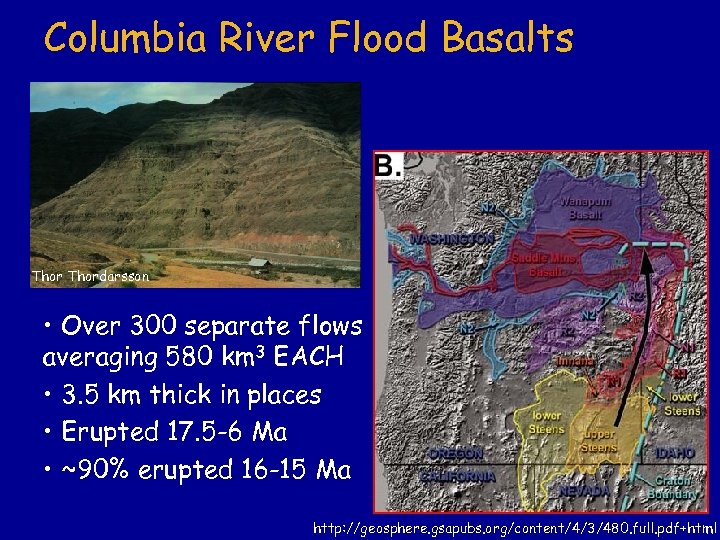 Columbia River Flood Basalts Thordarsson • Over 300 separate flows averaging 580 km 3 EACH • 3. 5 km thick in places • Erupted 17. 5 -6 Ma • ~90% erupted 16 -15 Ma http: //geosphere. gsapubs. org/content/4/3/480. full. pdf+html
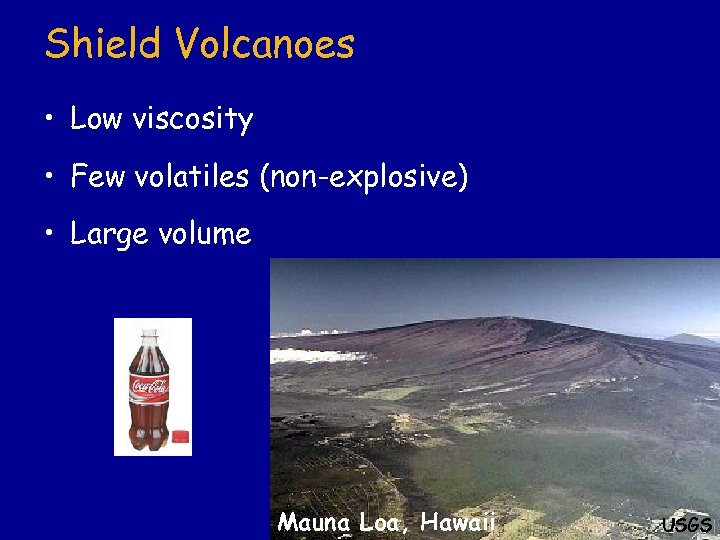 Shield Volcanoes • Low viscosity • Few volatiles (non-explosive) • Large volume Mauna Loa, Hawaii USGS
 Shield Volcanoes - HAZARDS • Lava flows • Volcanic gasses (esp. CO 2) Not huge ly haza rdous Medicine Lake Volcano, CA USGS
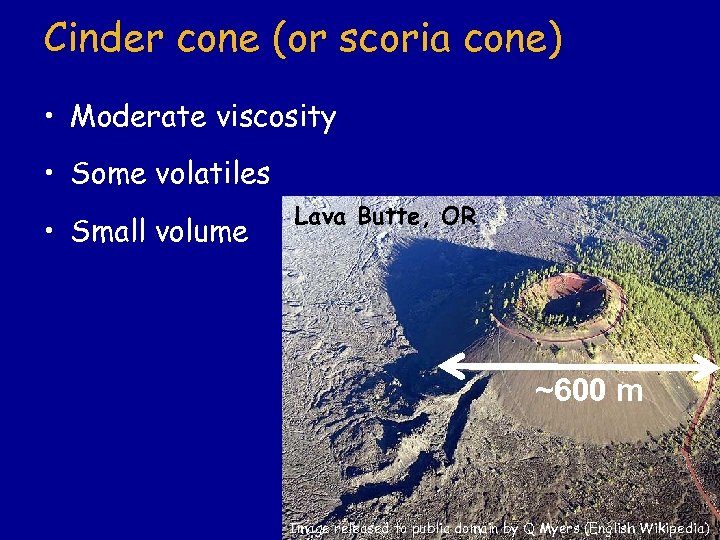 Cinder cone (or scoria cone) • Moderate viscosity • Some volatiles • Small volume Lava Butte, OR ~600 m Image released to public domain by Q Myers (English Wikipedia)
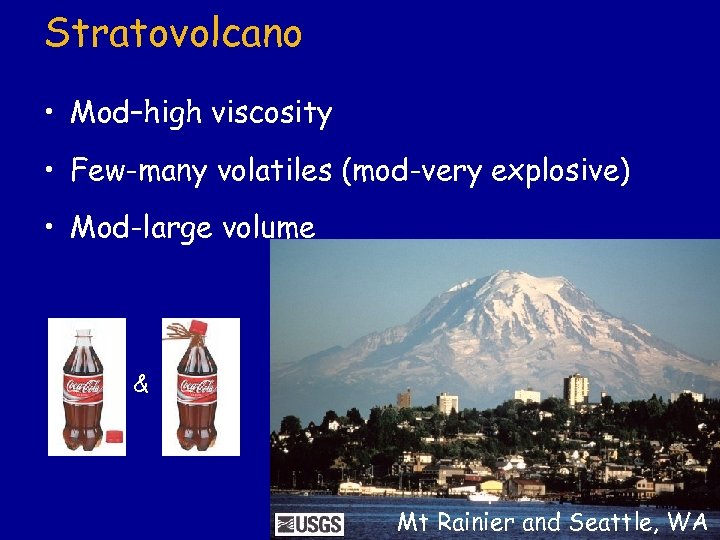 Stratovolcano • Mod–high viscosity • Few-many volatiles (mod-very explosive) • Mod-large volume & Mt Rainier and Seattle, WA
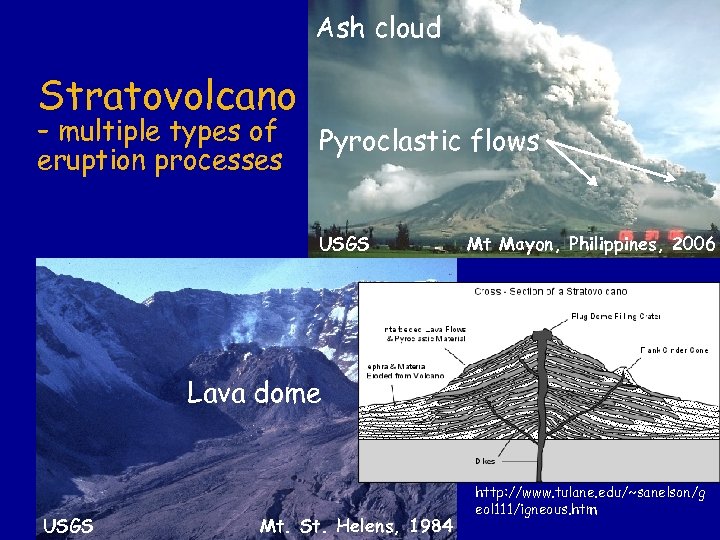 Ash cloud Stratovolcano – multiple types of eruption processes Pyroclastic flows USGS Mt Mayon, Philippines, 2006 Lava dome USGS Mt. St. Helens, 1984 http: //www. tulane. edu/~sanelson/g eol 111/igneous. htm
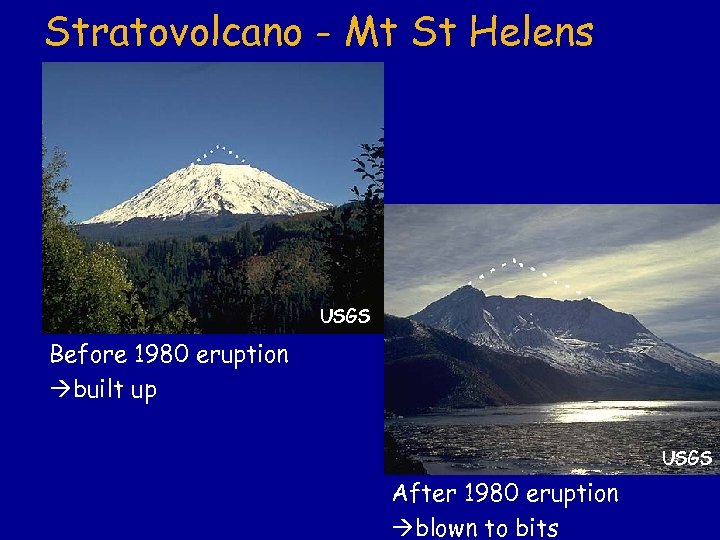 Stratovolcano - Mt St Helens USGS Before 1980 eruption built up USGS After 1980 eruption blown to bits
 Stratovolcano - HAZARDS • Pretty much all types of volcanic hazards ELY NIT S!! EFI DOU D ZAR HA USGS
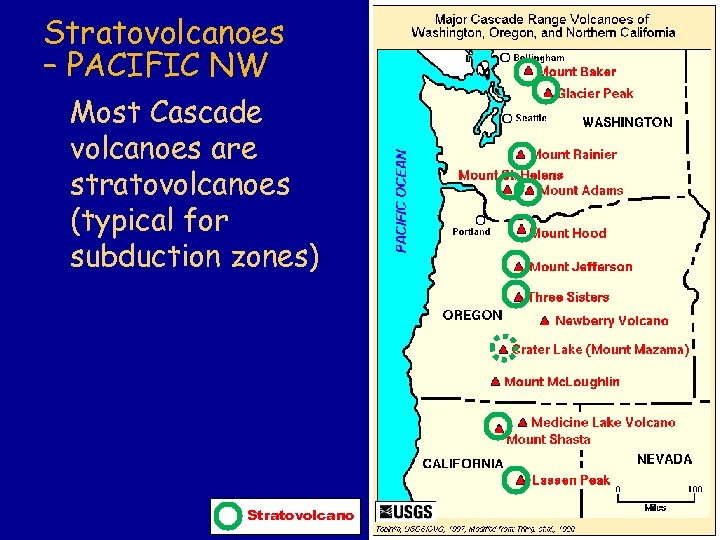 Stratovolcanoes – PACIFIC NW Most Cascade volcanoes are stratovolcanoes (typical for subduction zones) Stratovolcano
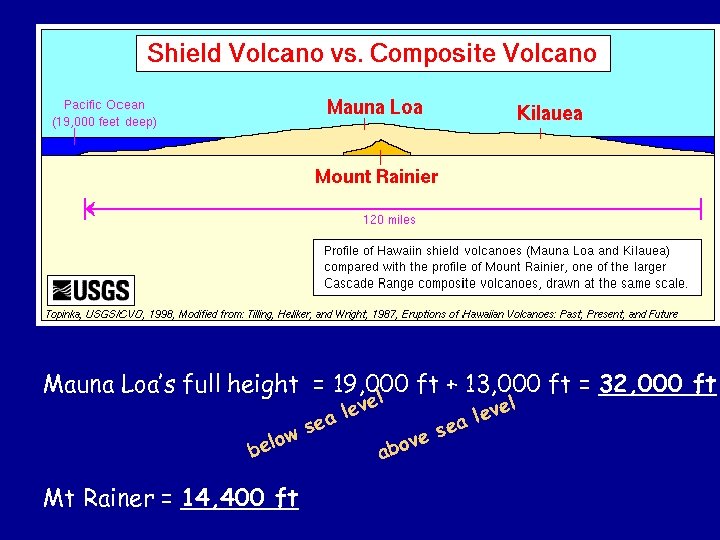 shield vs composite Mauna Loa’s full height = 19, 000 ft + 13, 000 ft = 32, 000 ft l e l leve sea w o ve bel abo Mt Rainer = 14, 400 ft
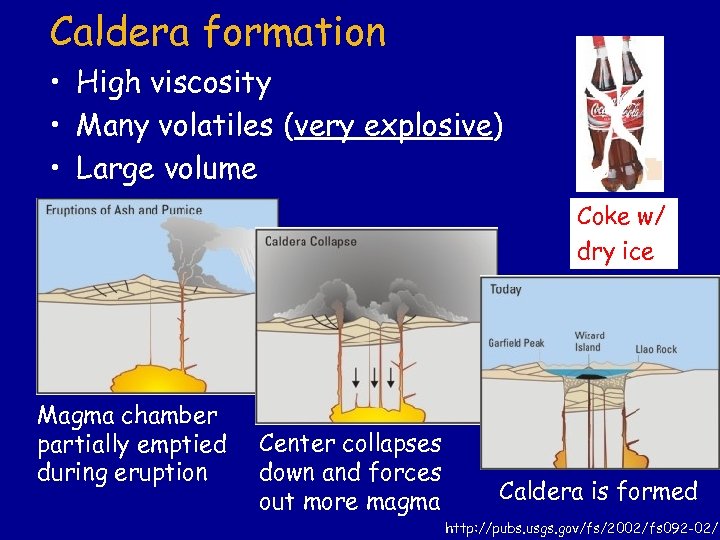 Caldera formation • High viscosity • Many volatiles (very explosive) • Large volume Coke w/ dry ice Magma chamber partially emptied during eruption Center collapses down and forces out more magma Caldera is formed http: //pubs. usgs. gov/fs/2002/fs 092 -02/
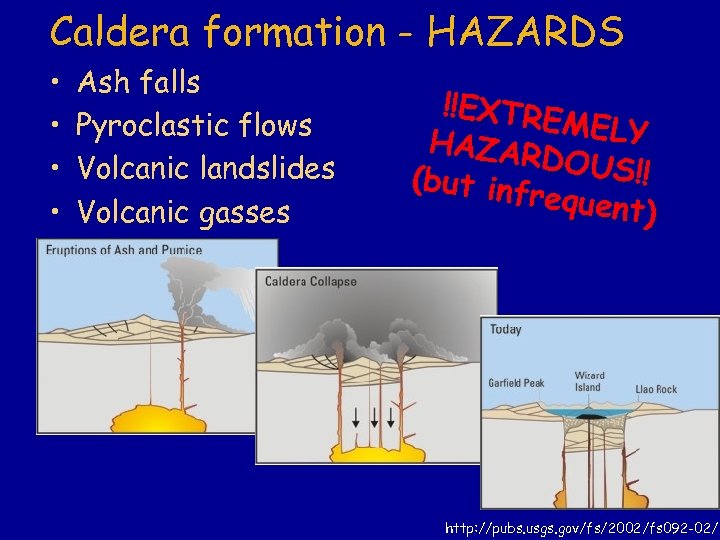 Caldera formation - HAZARDS • • Ash falls Pyroclastic flows Volcanic landslides Volcanic gasses !!EXTRE MELY HAZAR DOUS!! (but inf requent ) http: //pubs. usgs. gov/fs/2002/fs 092 -02/
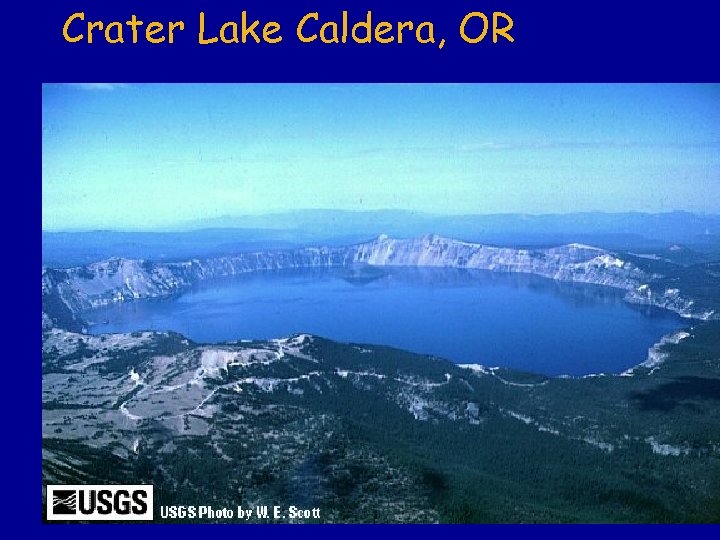 Crater Lake Caldera, OR
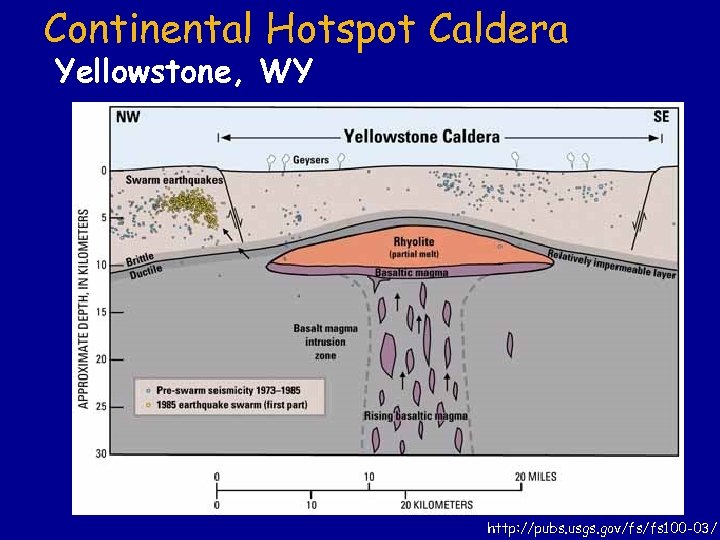 Continental Hotspot Caldera Yellowstone, WY http: //pubs. usgs. gov/fs/fs 100 -03/
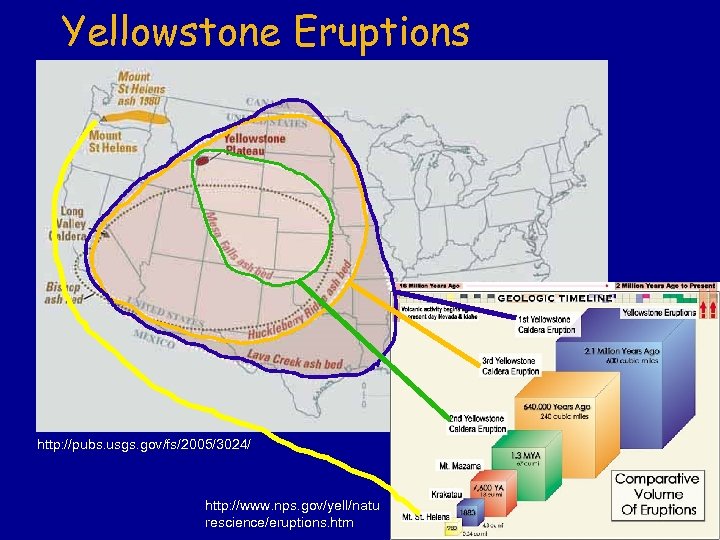 Yellowstone Eruptions http: //pubs. usgs. gov/fs/2005/3024/ http: //www. nps. gov/yell/natu rescience/eruptions. htm
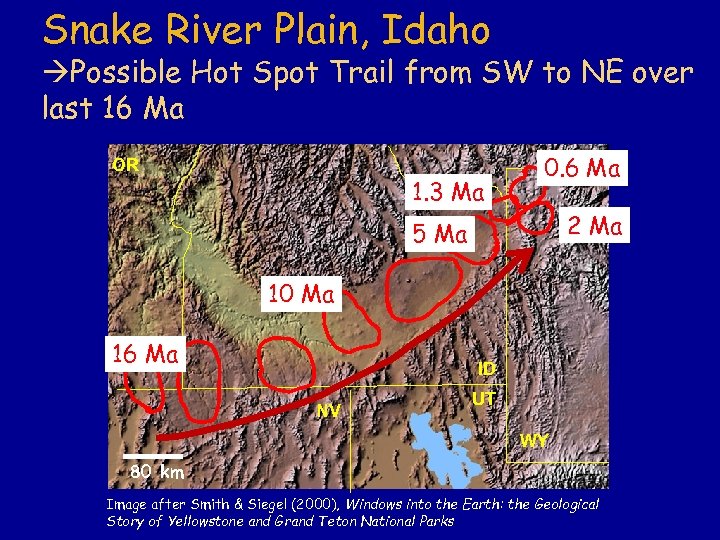 Snake River Plain, Idaho Possible Hot Spot Trail from SW to NE over last 16 Ma OR 1. 3 Ma 0. 6 Ma 2 Ma 5 Ma 10 Ma 16 Ma ID NV UT WY 80 km Image after Smith & Siegel (2000), Windows into the Earth: the Geological Story of Yellowstone and Grand Teton National Parks
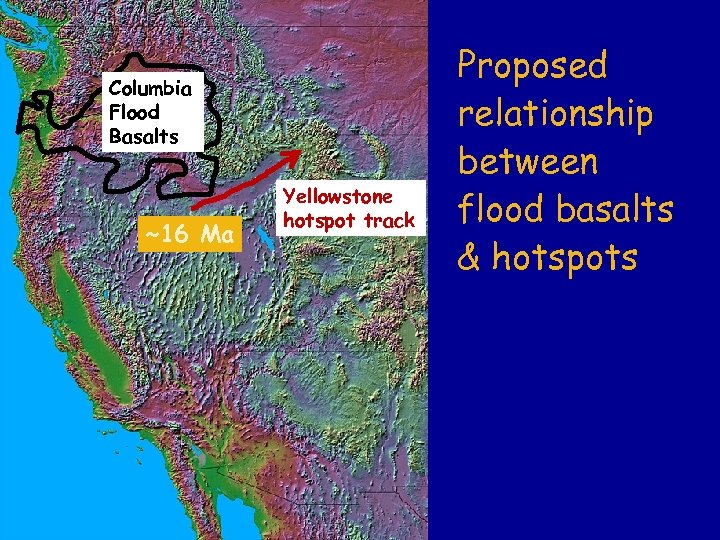 Columbia Flood Basalts ~16 Ma Yellowstone hotspot track Proposed relationship between flood basalts & hotspots
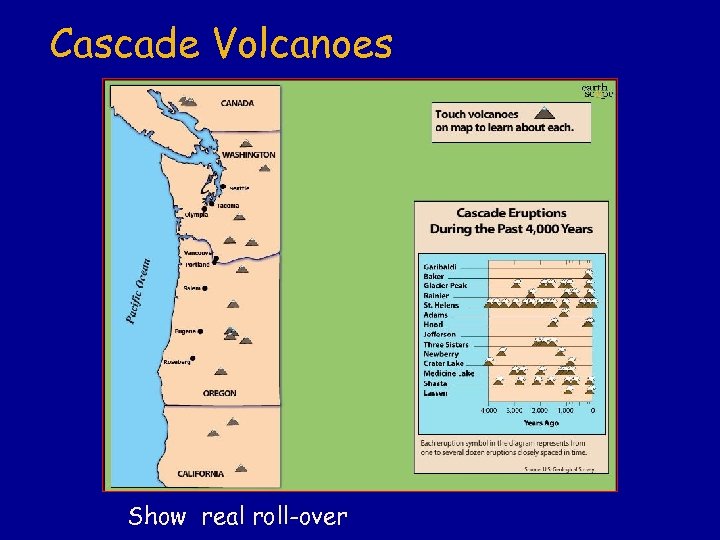 Cascade Volcanoes Show real roll-over
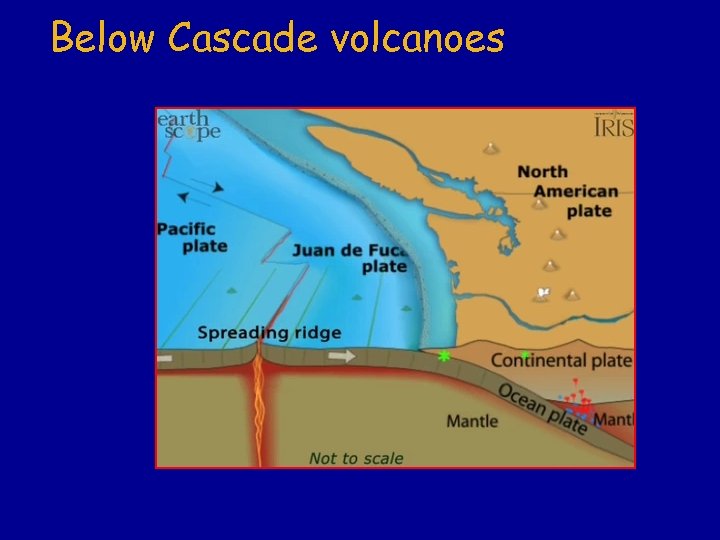 Below Cascade volcanoes
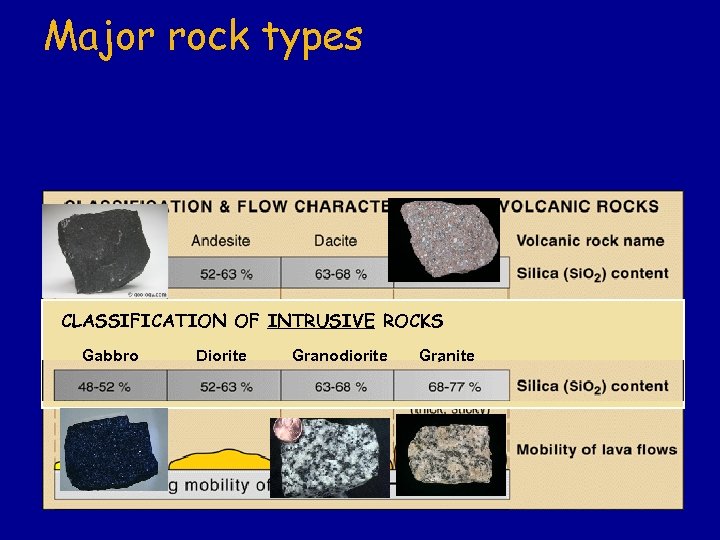 Major rock types CLASSIFICATION OF INTRUSIVE ROCKS Gabbro Diorite Granodiorite Granite
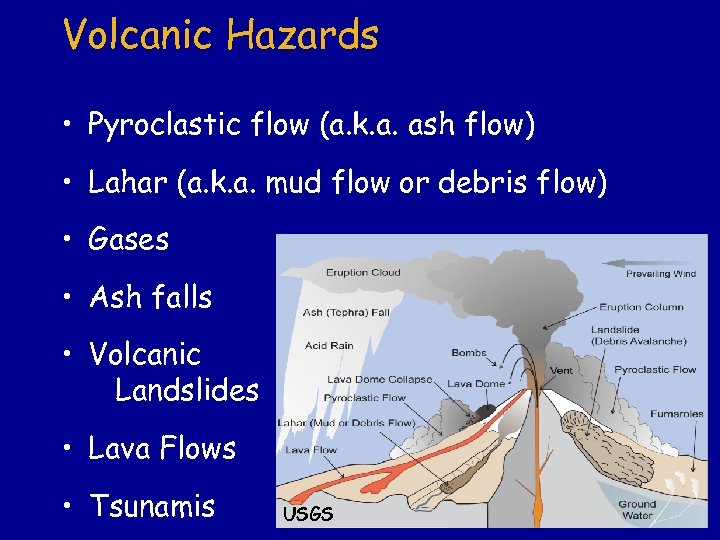 Volcanic Hazards • Pyroclastic flow (a. k. a. ash flow) • Lahar (a. k. a. mud flow or debris flow) • Gases • Ash falls • Volcanic Landslides • Lava Flows • Tsunamis USGS
 Show Understanding Volcanic Hazards clips
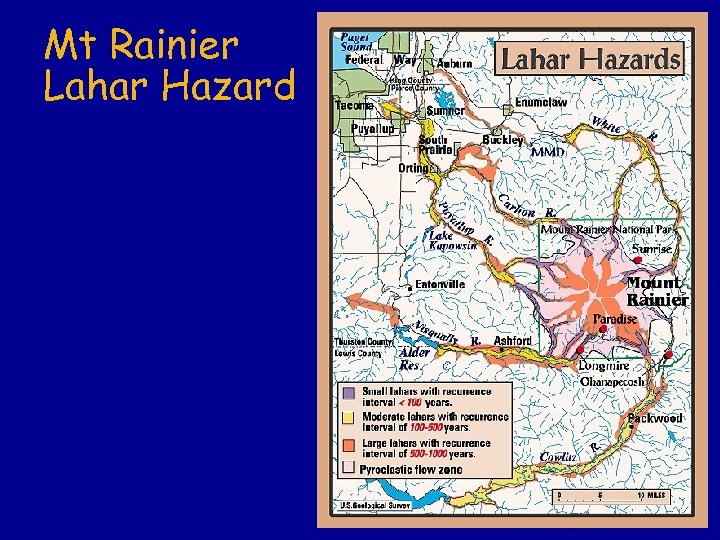 Mt Rainier Lahar Hazard
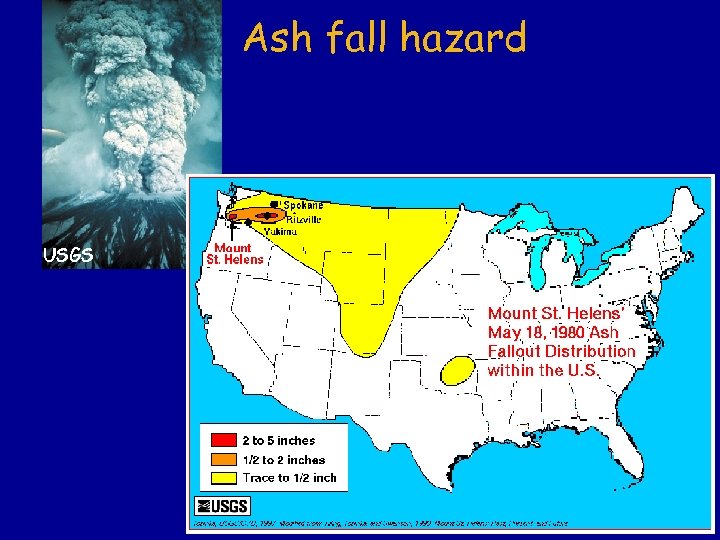 Ash fall hazard USGS
 The Science of Prediction Monitoring Volcanic Activity
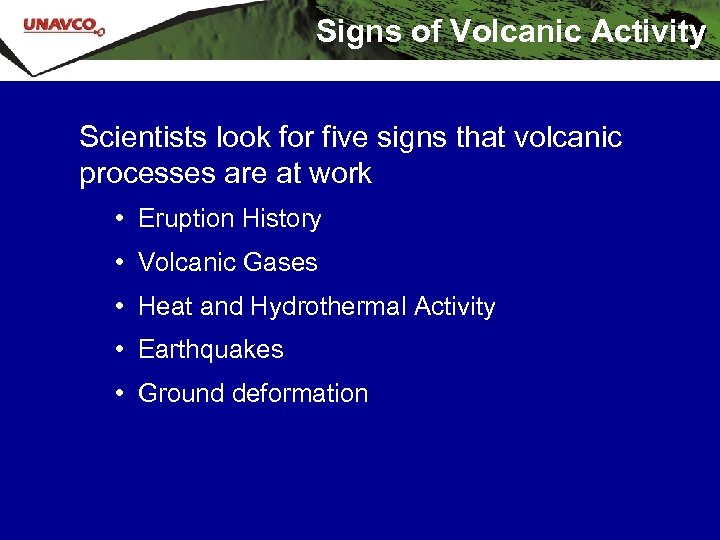 Signs of Volcanic Activity Scientists look for five signs that volcanic processes are at work • Eruption History • Volcanic Gases • Heat and Hydrothermal Activity • Earthquakes • Ground deformation
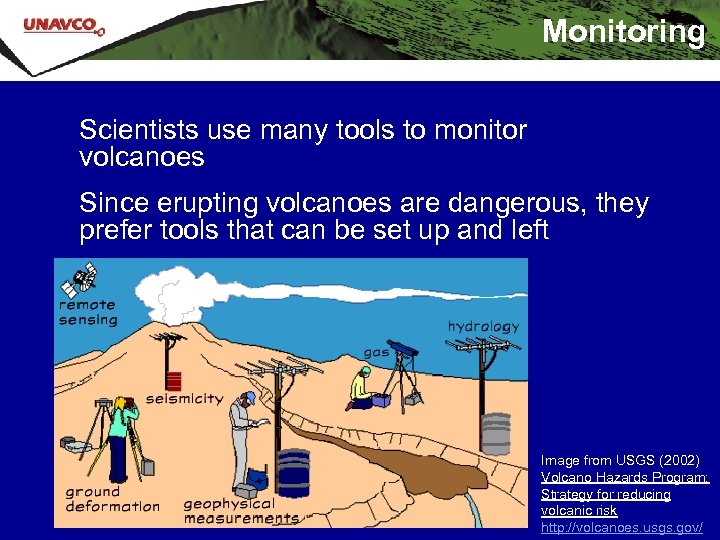 Monitoring Scientists use many tools to monitor volcanoes Since erupting volcanoes are dangerous, they prefer tools that can be set up and left Image from USGS (2002) Volcano Hazards Program: Strategy for reducing volcanic risk http: //volcanoes. usgs. gov/
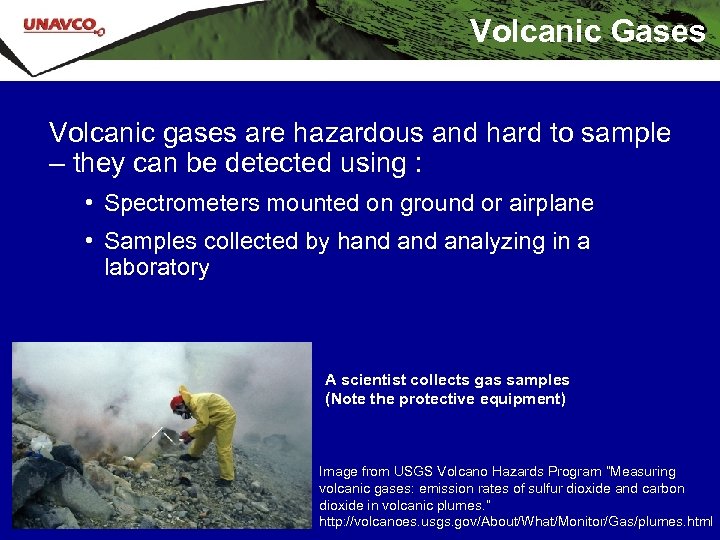 Volcanic Gases Volcanic gases are hazardous and hard to sample – they can be detected using : • Spectrometers mounted on ground or airplane • Samples collected by hand analyzing in a laboratory A scientist collects gas samples (Note the protective equipment) Image from USGS Volcano Hazards Program “Measuring volcanic gases: emission rates of sulfur dioxide and carbon dioxide in volcanic plumes. ” http: //volcanoes. usgs. gov/About/What/Monitor/Gas/plumes. html
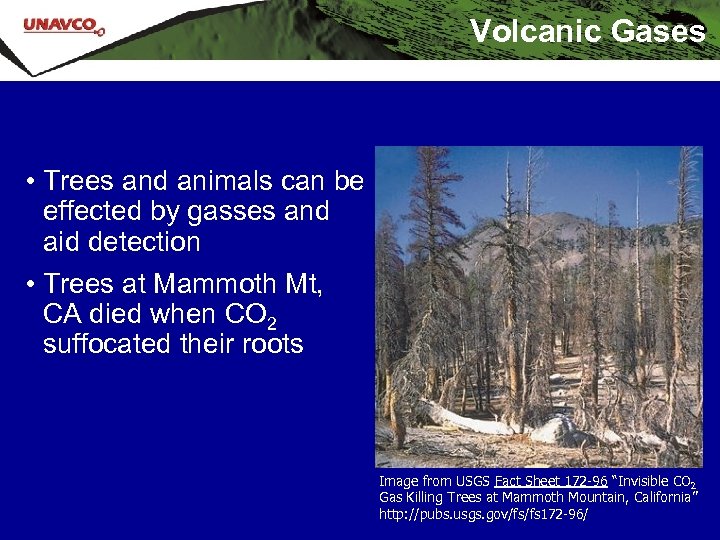 Volcanic Gases • Trees and animals can be effected by gasses and aid detection • Trees at Mammoth Mt, CA died when CO 2 suffocated their roots Image from USGS Fact Sheet 172 -96 “Invisible CO 2 Gas Killing Trees at Mammoth Mountain, California” http: //pubs. usgs. gov/fs/fs 172 -96/
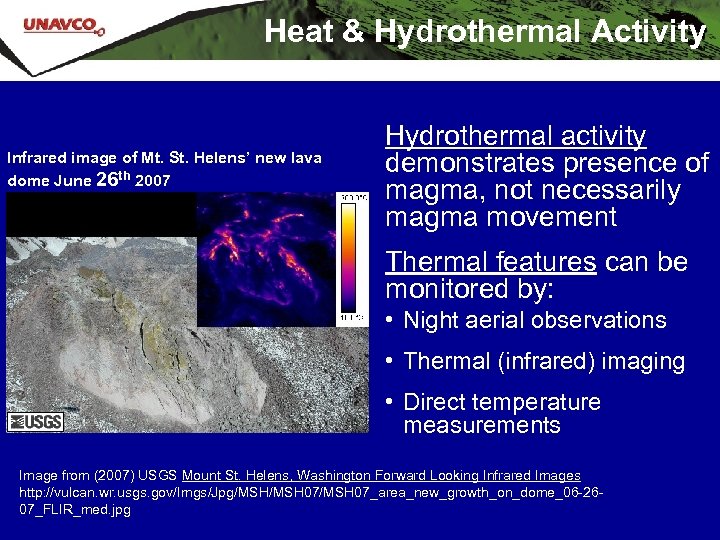 Heat & Hydrothermal Activity Infrared image of Mt. St. Helens’ new lava dome June 26 th 2007 Hydrothermal activity demonstrates presence of magma, not necessarily magma movement Thermal features can be monitored by: • Night aerial observations • Thermal (infrared) imaging • Direct temperature measurements Image from (2007) USGS Mount St. Helens, Washington Forward Looking Infrared Images http: //vulcan. wr. usgs. gov/Imgs/Jpg/MSH 07/MSH 07_area_new_growth_on_dome_06 -2607_FLIR_med. jpg
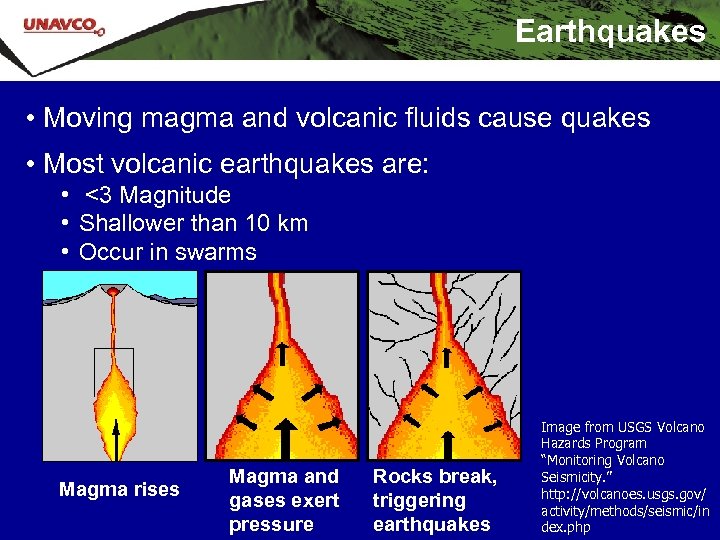 Earthquakes • Moving magma and volcanic fluids cause quakes • Most volcanic earthquakes are: • <3 Magnitude • Shallower than 10 km • Occur in swarms Magma rises Magma and gases exert pressure Rocks break, triggering earthquakes Image from USGS Volcano Hazards Program “Monitoring Volcano Seismicity. ” http: //volcanoes. usgs. gov/ activity/methods/seismic/in dex. php
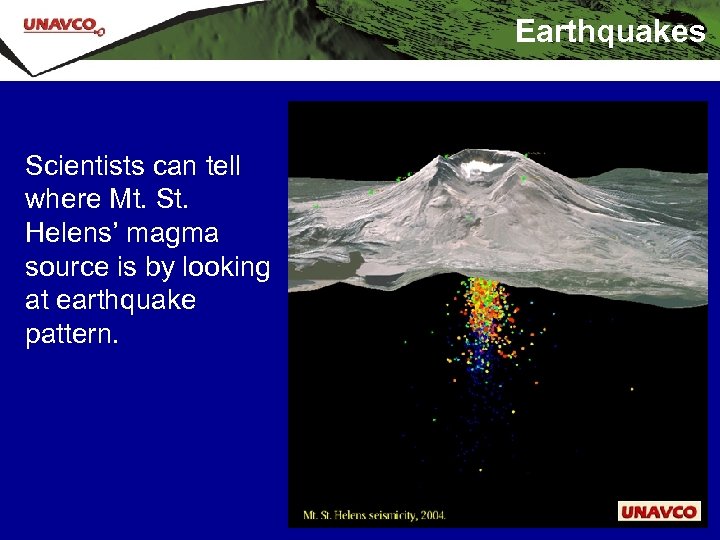 Earthquakes Scientists can tell where Mt. St. Helens’ magma source is by looking at earthquake pattern.
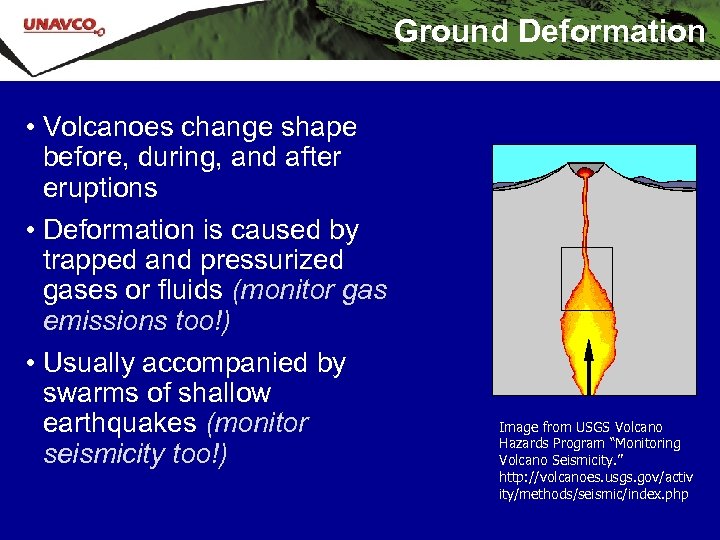 Ground Deformation • Volcanoes change shape before, during, and after eruptions • Deformation is caused by trapped and pressurized gases or fluids (monitor gas emissions too!) • Usually accompanied by swarms of shallow earthquakes (monitor seismicity too!) Image from USGS Volcano Hazards Program “Monitoring Volcano Seismicity. ” http: //volcanoes. usgs. gov/activ ity/methods/seismic/index. php
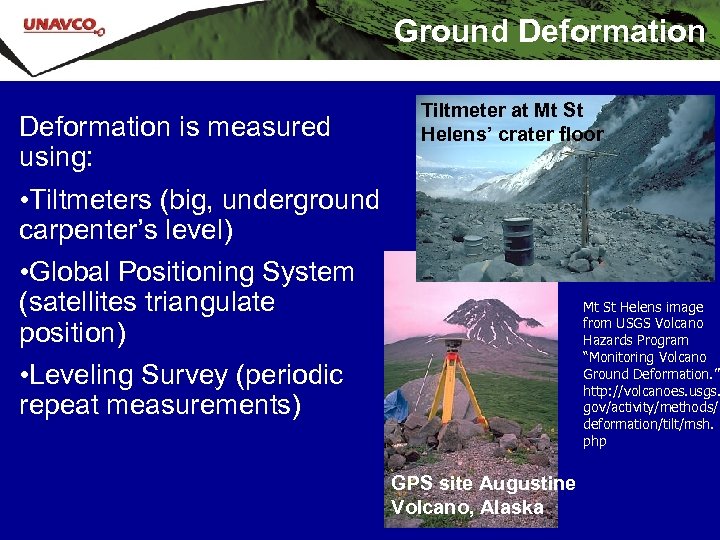 Ground Deformation is measured using: Tiltmeter at Mt St Helens’ crater floor • Tiltmeters (big, underground carpenter’s level) • Global Positioning System (satellites triangulate position) • Leveling Survey (periodic repeat measurements) Mt St Helens image from USGS Volcano Hazards Program “Monitoring Volcano Ground Deformation. ” http: //volcanoes. usgs. gov/activity/methods/ deformation/tilt/msh. php GPS site Augustine Volcano, Alaska
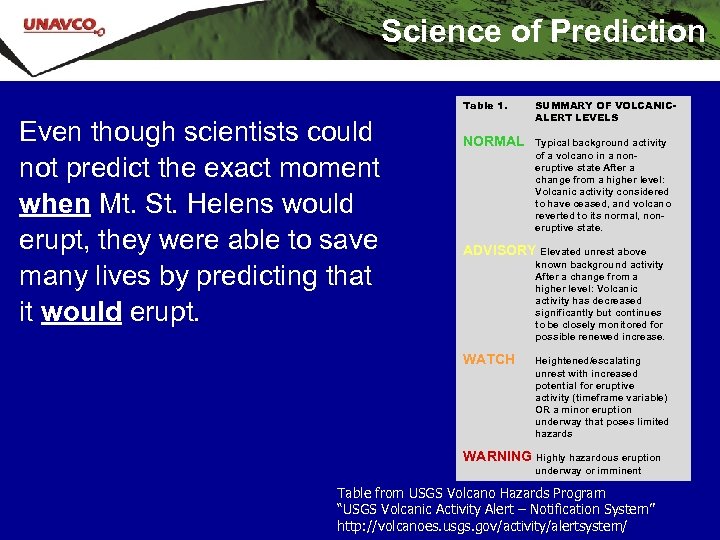 Science of Prediction Table 1. Even though scientists could not predict the exact moment when Mt. St. Helens would erupt, they were able to save many lives by predicting that it would erupt. SUMMARY OF VOLCANICALERT LEVELS NORMAL Typical background activity of a volcano in a noneruptive state After a change from a higher level: Volcanic activity considered to have ceased, and volcano reverted to its normal, noneruptive state. ADVISORY Elevated unrest above known background activity After a change from a higher level: Volcanic activity has decreased significantly but continues to be closely monitored for possible renewed increase. WATCH Heightened/escalating unrest with increased potential for eruptive activity (timeframe variable) OR a minor eruption underway that poses limited hazards WARNING Highly hazardous eruption underway or imminent Table from USGS Volcano Hazards Program “USGS Volcanic Activity Alert – Notification System” http: //volcanoes. usgs. gov/activity/alertsystem/
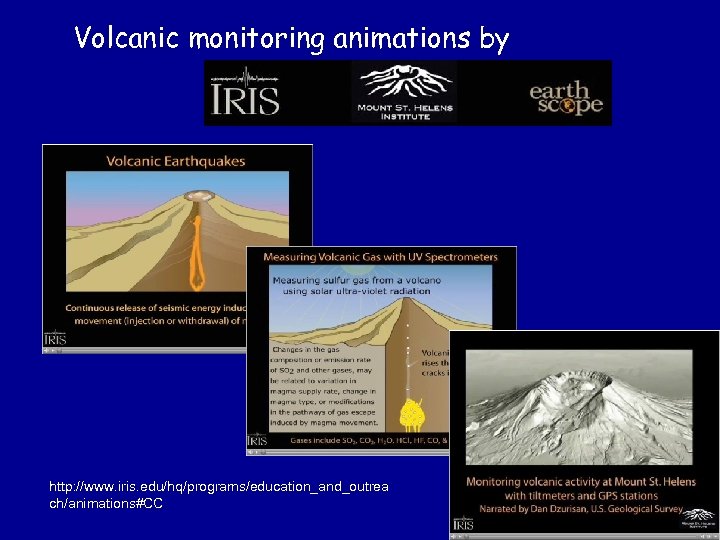 Volcanic monitoring animations by http: //www. iris. edu/hq/programs/education_and_outrea ch/animations#CC
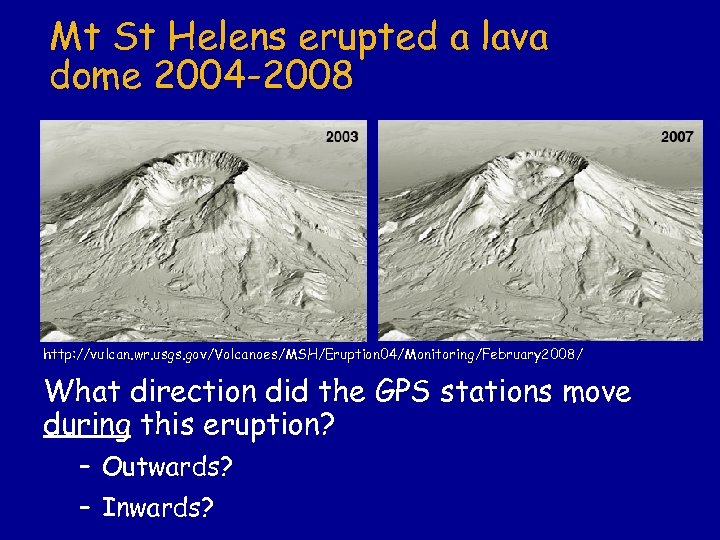 Mt St Helens erupted a lava dome 2004 -2008 http: //vulcan. wr. usgs. gov/Volcanoes/MSH/Eruption 04/Monitoring/February 2008/ What direction did the GPS stations move during this eruption? – Outwards? – Inwards?
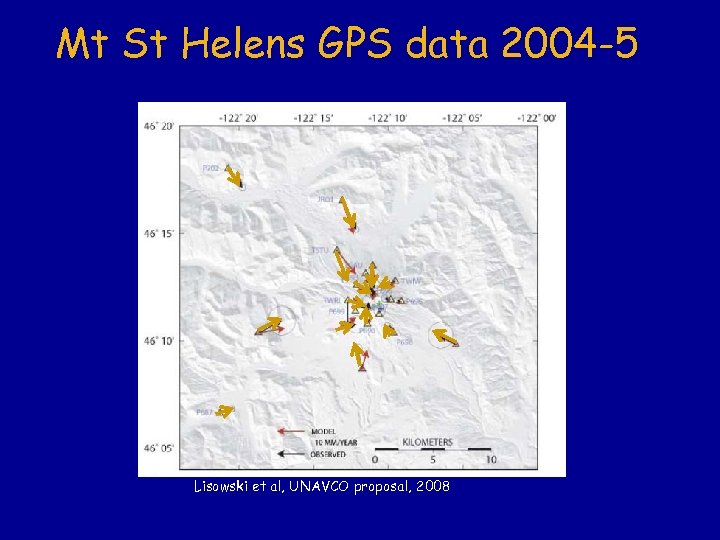 Mt St Helens GPS data 2004 -5 Lisowski et al, UNAVCO proposal, 2008