


 Скачать презентацию Part 1 Nitric Oxide Pathogenic or Protective Several
bbb314c9295a87bf143a989d4e145631.ppt
- Количество слайдов: 28
 Part 1 Nitric Oxide: Pathogenic or Protective? Several Malarial Anemia
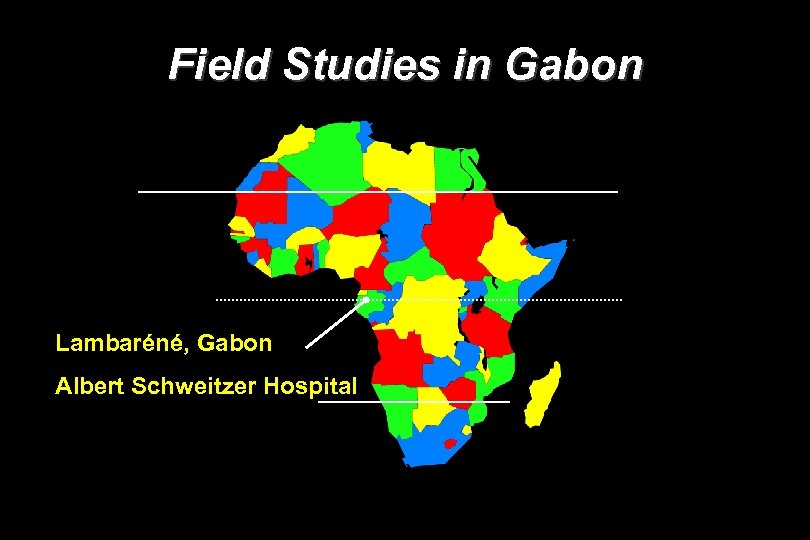 Field Studies in Gabon Lambaréné, Gabon Albert Schweitzer Hospital
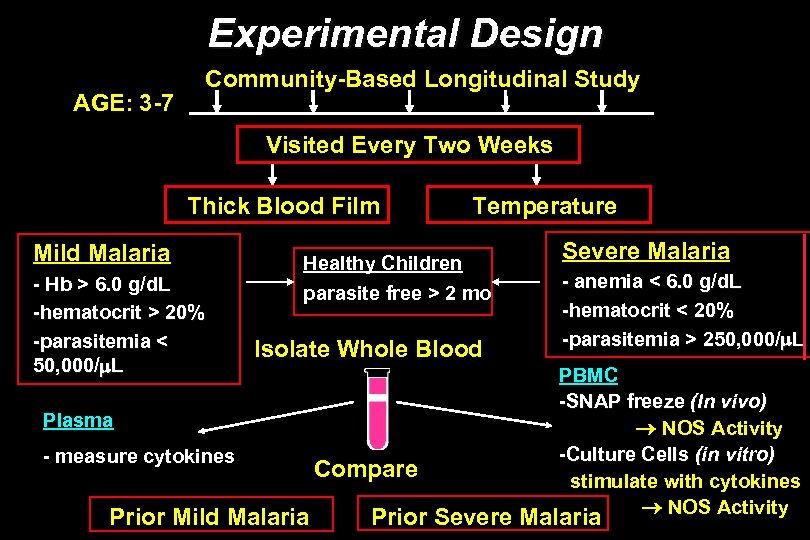 Experimental Design AGE: 3 -7 Community-Based Longitudinal Study Visited Every Two Weeks Thick Blood Film Mild Malaria - Hb > 6. 0 g/d. L -hematocrit > 20% -parasitemia < 50, 000/m. L Temperature Healthy Children parasite free > 2 mo Isolate Whole Blood Plasma - measure cytokines Prior Mild Malaria Compare Severe Malaria - anemia < 6. 0 g/d. L -hematocrit < 20% -parasitemia > 250, 000/m. L PBMC -SNAP freeze (In vivo) NOS Activity -Culture Cells (in vitro) stimulate with cytokines NOS Activity Prior Severe Malaria
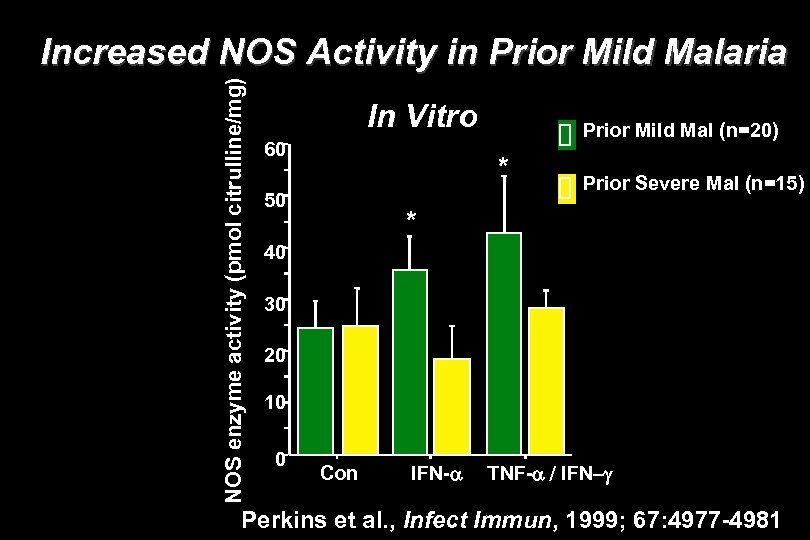 B NOS enzyme activity (pmol citrulline/mg) Increased NOS Activity in Prior Mild Malaria In Vitro 60 Prior Mild Mal (n=20) * 50 Prior Severe Mal (n=15) * 40 30 20 10 0 Con IFN-a TNF-a / IFN-g Perkins et al. , Infect Immun, 1999; 67: 4977 -4981
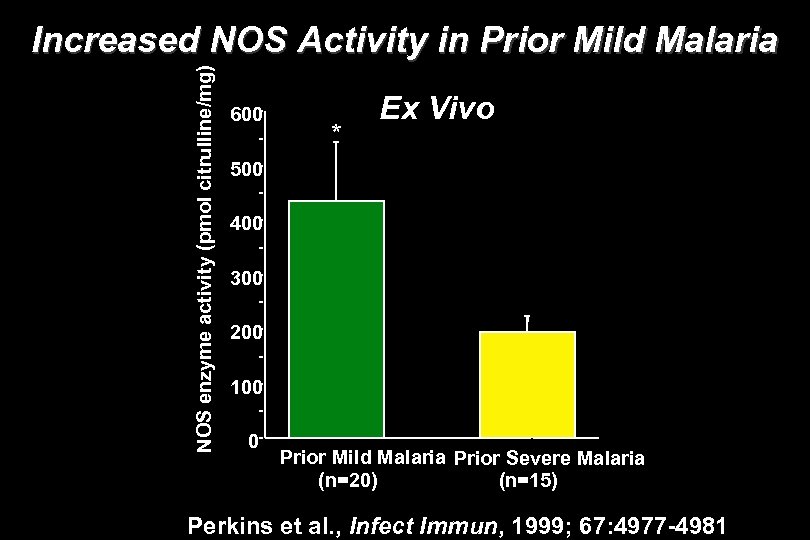 NOS enzyme activity (pmol citrulline/mg) Increased NOS Activity in Prior Mild Malaria 600 * Ex Vivo 500 400 300 200 100 0 Prior Mild Malaria Prior Severe Malaria (n=20) (n=15) Perkins et al. , Infect Immun, 1999; 67: 4977 -4981
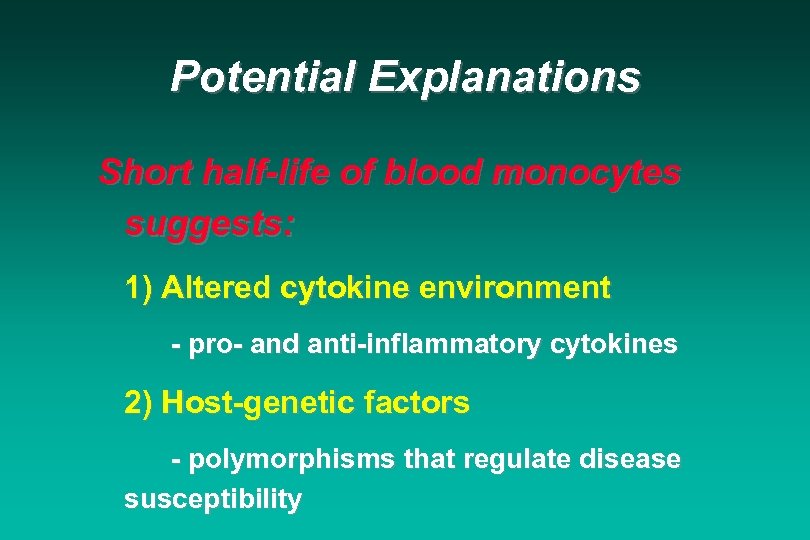 Potential Explanations Short half-life of blood monocytes suggests: 1) Altered cytokine environment - pro- and anti-inflammatory cytokines 2) Host-genetic factors - polymorphisms that regulate disease susceptibility
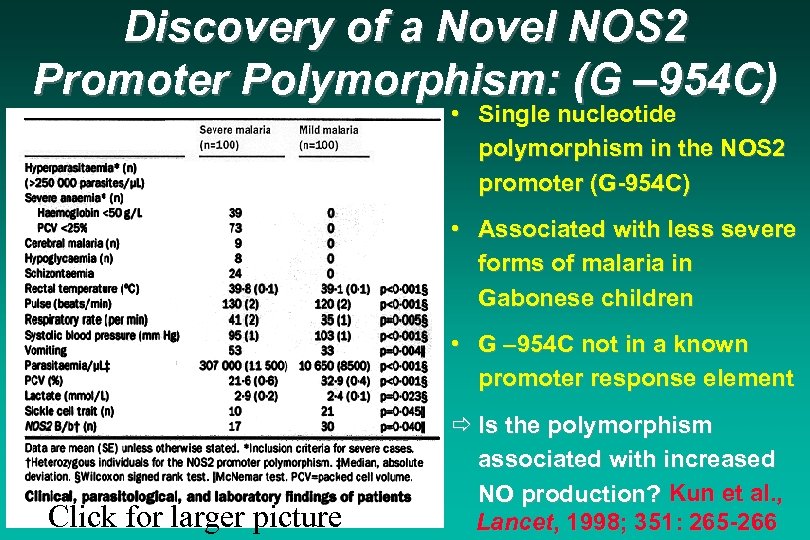 Discovery of a Novel NOS 2 Promoter Polymorphism: (G – 954 C) • Single nucleotide polymorphism in the NOS 2 promoter (G-954 C) • Associated with less severe forms of malaria in Gabonese children • G – 954 C not in a known promoter response element Click for larger picture ð Is the polymorphism associated with increased NO production? Kun et al. , Lancet, 1998; 351: 265 -266
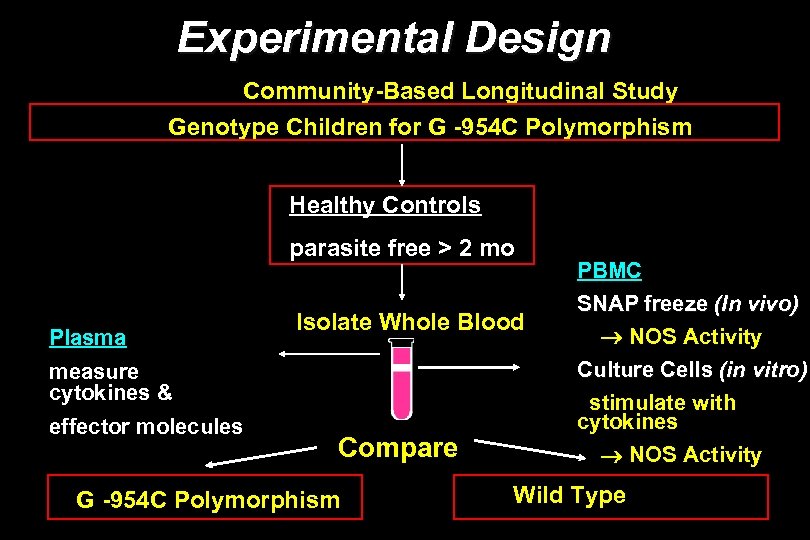 Experimental Design Community-Based Longitudinal Study Genotype Children for G -954 C Polymorphism Healthy Controls parasite free > 2 mo Plasma Isolate Whole Blood measure cytokines & effector molecules Compare G -954 C Polymorphism PBMC SNAP freeze (In vivo) NOS Activity Culture Cells (in vitro) stimulate with cytokines NOS Activity Wild Type
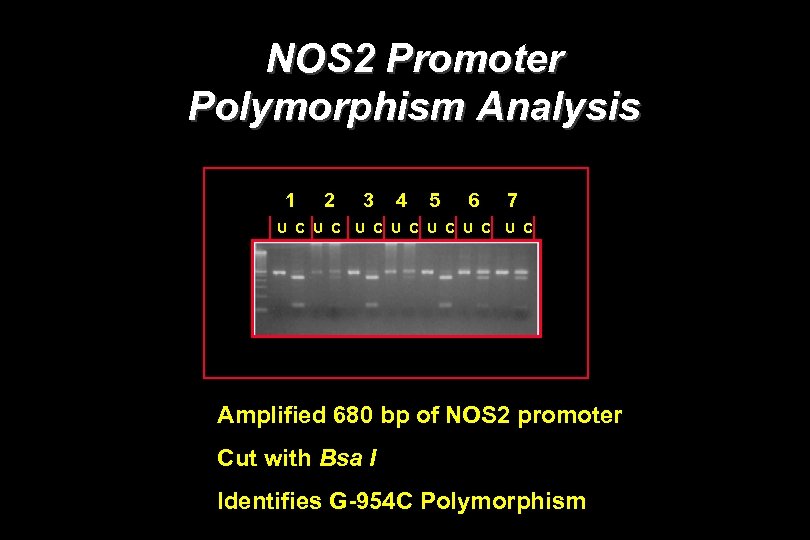 NOS 2 Promoter Polymorphism Analysis 1 2 U C 3 4 5 6 U C U C 7 U C Amplified 680 bp of NOS 2 promoter Cut with Bsa I Identifies G-954 C Polymorphism
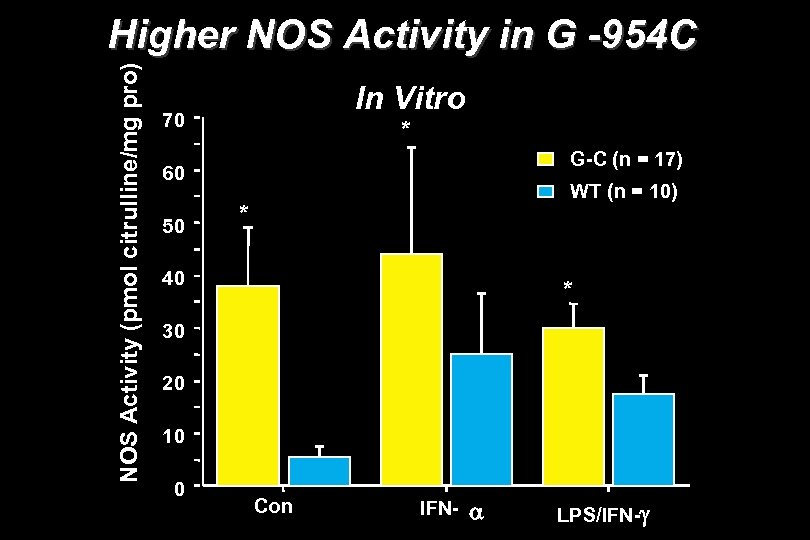 NOS Activity (pmol citrulline/mg pro) Higher NOS Activity in G -954 C In Vitro 70 * G-C (n = 17) 60 50 WT (n = 10) * 40 * 30 20 10 0 Con IFN- a LPS/IFN-g
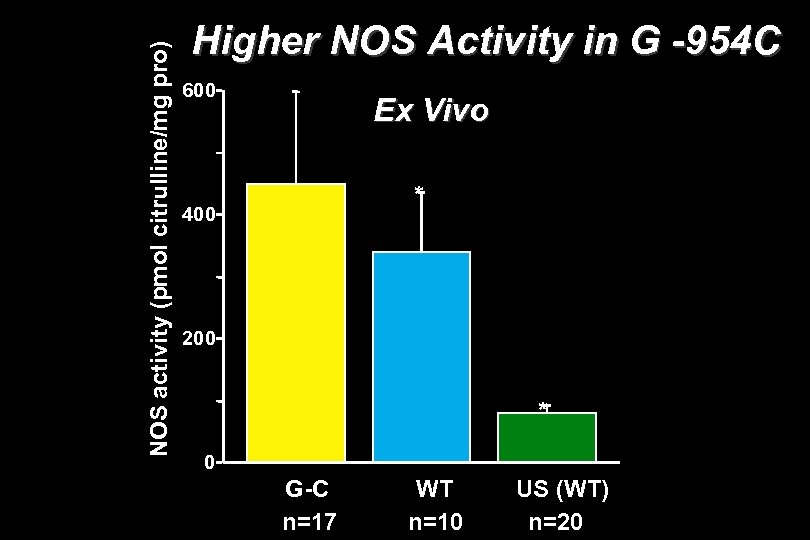 NOS activity (pmol citrulline/mg pro) Higher NOS Activity in G -954 C 600 Ex Vivo * 400 200 * 0 G-C n=17 1 WT n=10 US (WT) n=20
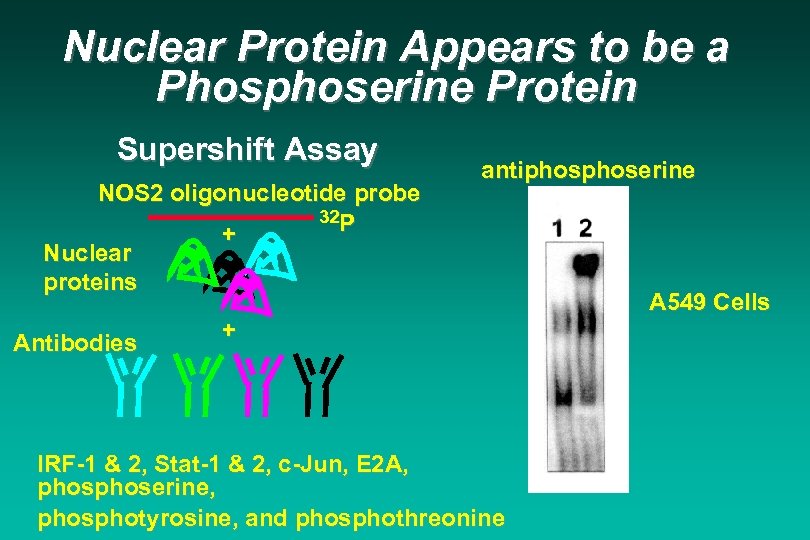 Nuclear Protein Appears to be a Phosphoserine Protein Supershift Assay NOS 2 oligonucleotide probe 32 P + Nuclear proteins Antibodies antiphoserine + IRF-1 & 2, Stat-1 & 2, c-Jun, E 2 A, phoserine, phosphotyrosine, and phosphothreonine A 549 Cells
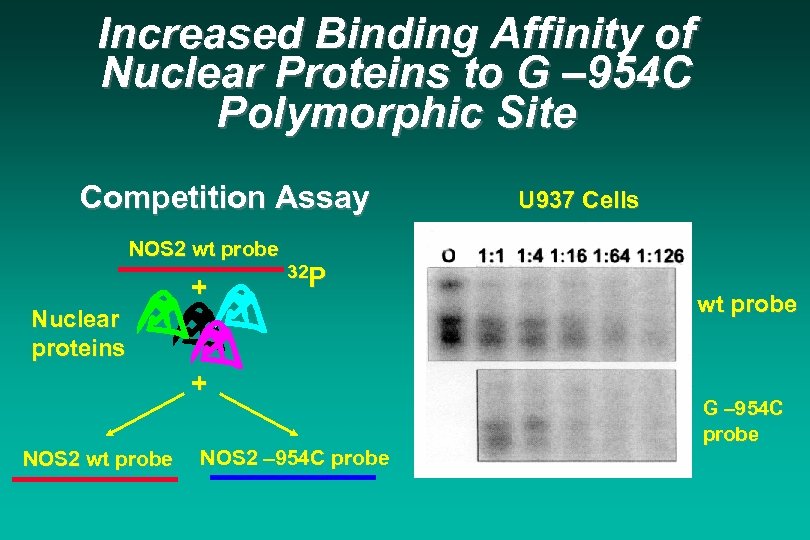 Increased Binding Affinity of Nuclear Proteins to G – 954 C Polymorphic Site Competition Assay U 937 Cells NOS 2 wt probe + 32 P Nuclear proteins + NOS 2 wt probe NOS 2 – 954 C probe wt probe G – 954 C probe
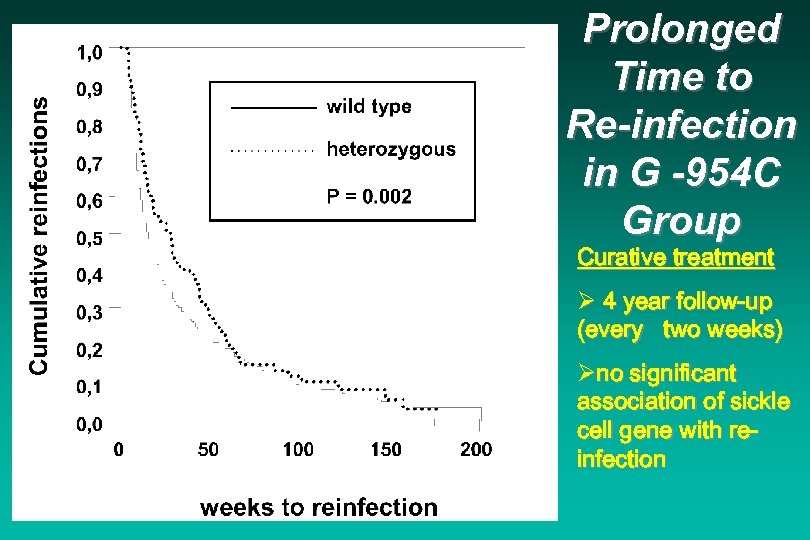 Prolonged Time to Re-infection in G -954 C Group Curative treatment Ø 4 year follow-up (every two weeks) Øno significant association of sickle cell gene with reinfection
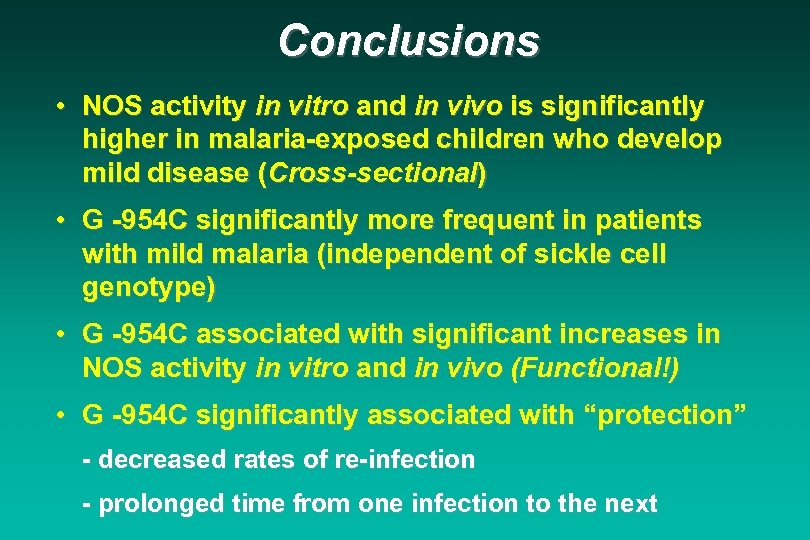 Conclusions • NOS activity in vitro and in vivo is significantly higher in malaria-exposed children who develop mild disease (Cross-sectional) • G -954 C significantly more frequent in patients with mild malaria (independent of sickle cell genotype) • G -954 C associated with significant increases in NOS activity in vitro and in vivo (Functional!) • G -954 C significantly associated with “protection” - decreased rates of re-infection - prolonged time from one infection to the next
 Part 2 Association of NOS 2 (G – 954 C) with Cerebral Malaria
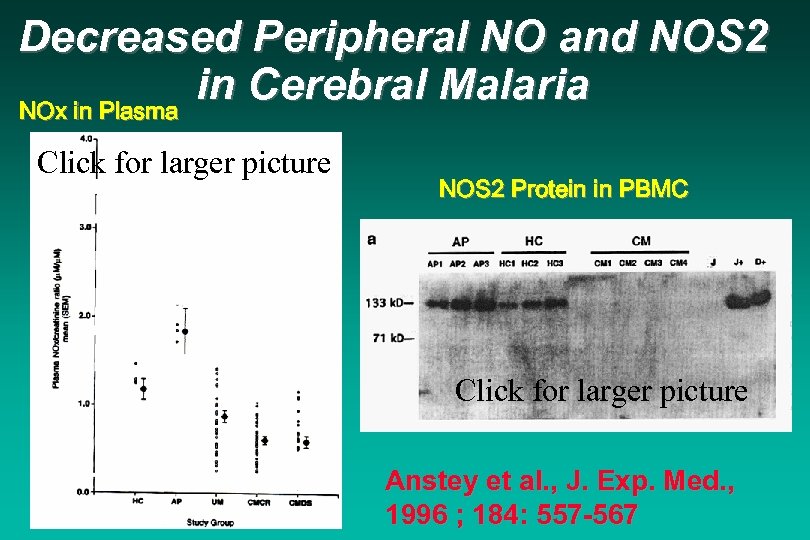 Decreased Peripheral NO and NOS 2 in Cerebral Malaria NOx in Plasma Click for larger picture NOS 2 Protein in PBMC Click for larger picture Anstey et al. , J. Exp. Med. , 1996 ; 184: 557 -567
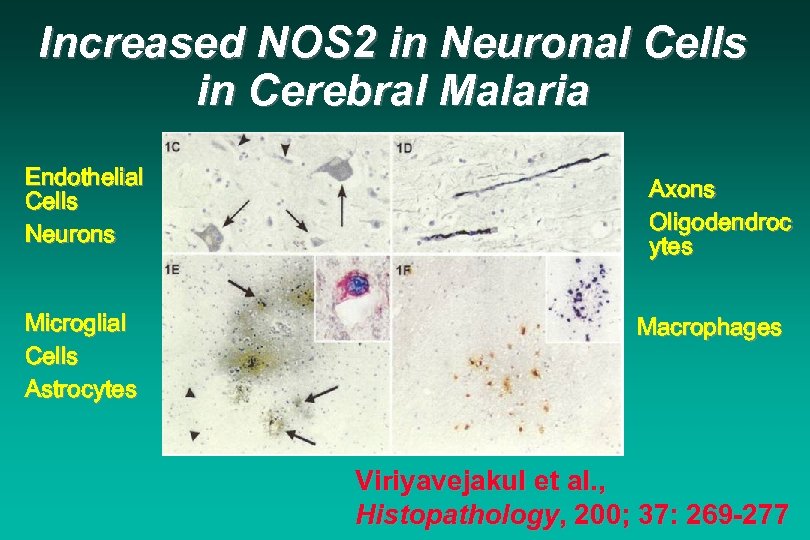 Increased NOS 2 in Neuronal Cells in Cerebral Malaria Endothelial Cells Neurons Microglial Cells Astrocytes Axons Oligodendroc ytes Macrophages Viriyavejakul et al. , Histopathology, 200; 37: 269 -277
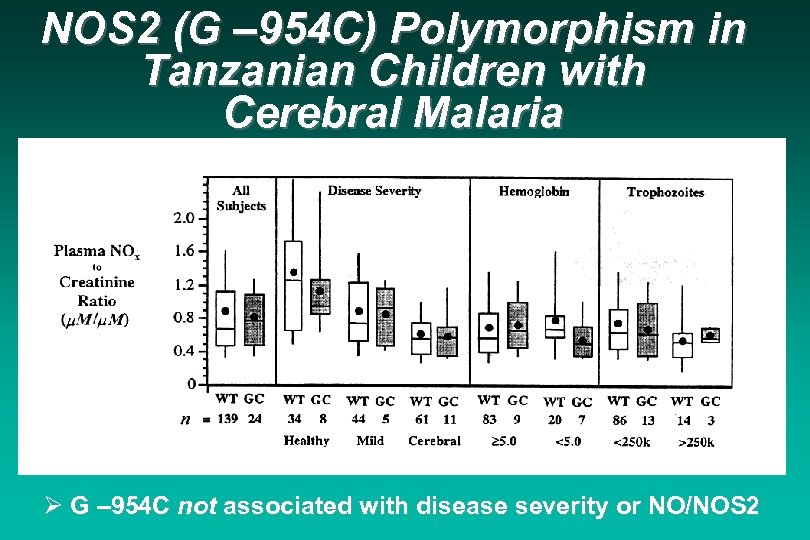 NOS 2 (G – 954 C) Polymorphism in Tanzanian Children with Cerebral Malaria Ø G – 954 C not associated with disease severity or NO/NOS 2
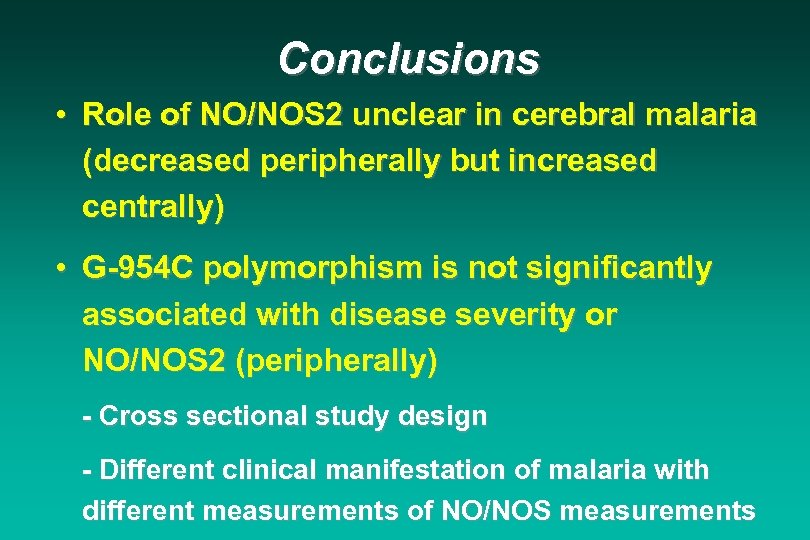 Conclusions • Role of NO/NOS 2 unclear in cerebral malaria (decreased peripherally but increased centrally) • G-954 C polymorphism is not significantly associated with disease severity or NO/NOS 2 (peripherally) - Cross sectional study design - Different clinical manifestation of malaria with different measurements of NO/NOS measurements
 Part 3 NOS 2 (G – 954 C) in a Holoendemic Area of Malaria Transmission Severe Malarial Anemia
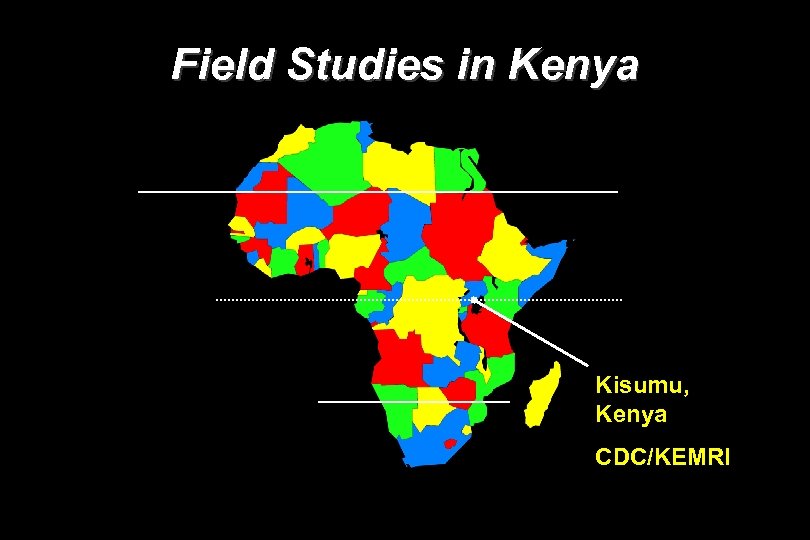 Field Studies in Kenya Kisumu, Kenya CDC/KEMRI
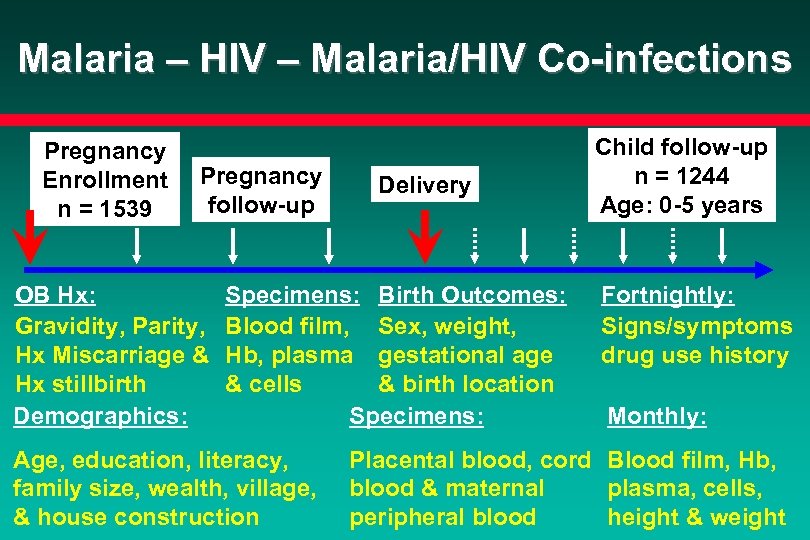 Malaria – HIV – Malaria/HIV Co-infections Pregnancy Enrollment n = 1539 Pregnancy follow-up OB Hx: Gravidity, Parity, Hx Miscarriage & Hx stillbirth Demographics: Delivery Specimens: Birth Outcomes: Blood film, Sex, weight, Hb, plasma gestational age & cells & birth location Specimens: Age, education, literacy, family size, wealth, village, & house construction Child follow-up n = 1244 Age: 0 -5 years Fortnightly: Signs/symptoms drug use history Monthly: Placental blood, cord Blood film, Hb, blood & maternal plasma, cells, peripheral blood height & weight
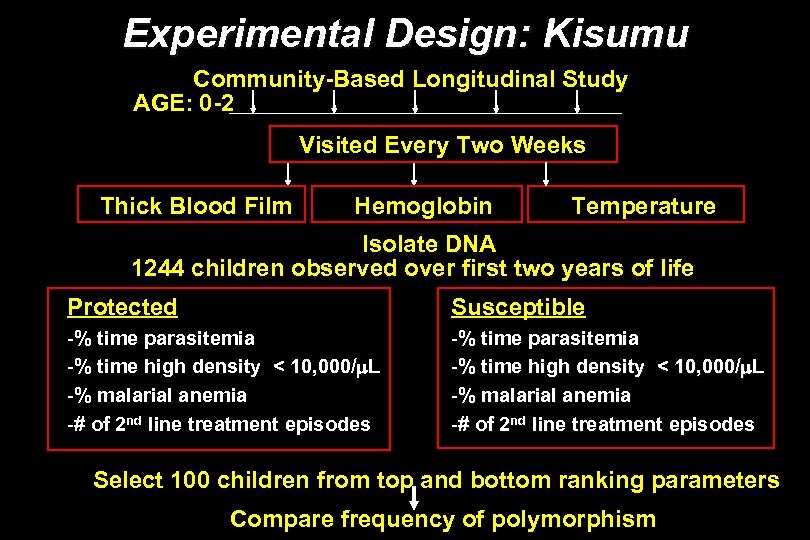 Experimental Design: Kisumu Community-Based Longitudinal Study AGE: 0 -2 Visited Every Two Weeks Thick Blood Film Hemoglobin Temperature Isolate DNA 1244 children observed over first two years of life Protected Susceptible -% time parasitemia -% time high density < 10, 000/m. L -% malarial anemia -# of 2 nd line treatment episodes Select 100 children from top and bottom ranking parameters Compare frequency of polymorphism
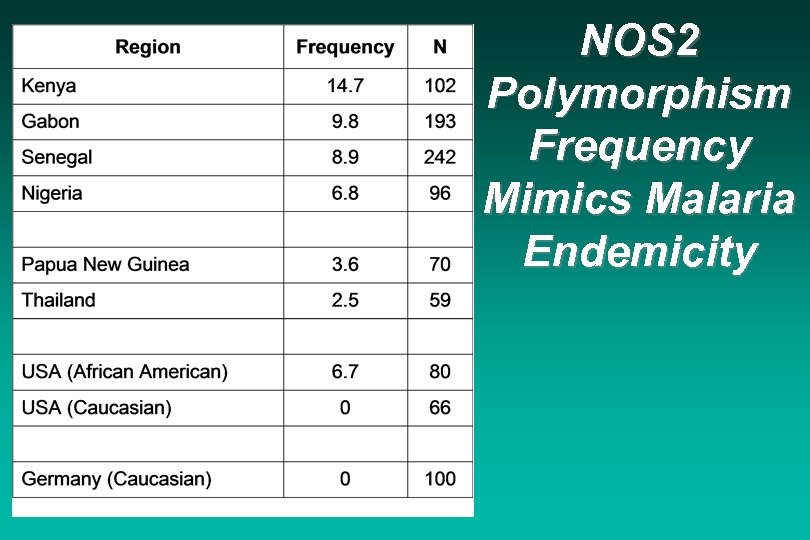 NOS 2 Polymorphism Frequency Mimics Malaria Endemicity
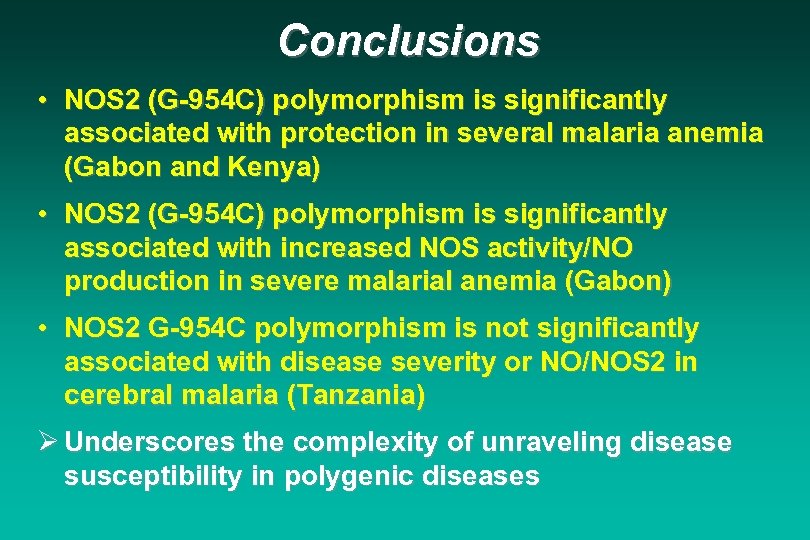 Conclusions • NOS 2 (G-954 C) polymorphism is significantly associated with protection in several malaria anemia (Gabon and Kenya) • NOS 2 (G-954 C) polymorphism is significantly associated with increased NOS activity/NO production in severe malarial anemia (Gabon) • NOS 2 G-954 C polymorphism is not significantly associated with disease severity or NO/NOS 2 in cerebral malaria (Tanzania) Ø Underscores the complexity of unraveling disease susceptibility in polygenic diseases
 Future Directions
 Collaborators Albert Schweitzer Hospital CDC / KEMRI University of Tuebingen Dr. Altaf Lal Prof. Dr. Peter G. Kremsner Dr. Udhayakumar Kumar Dr. Doris Luckner Dr. Ya Ping Shi Dr. Daniela Schmid Dr. Jürgen Kun Dr. Benjamin Mordmüller University of Pittsburgh Dr. David Finegold Dr. Robert Ferrell Duke University Dr. David Peters Dr. J. Brice Weinberg Christopher Keller Dr. Marc Levesque Benjamin Nti Mary A. Misukionis Jamie Slingluff