 Скачать презентацию Parliament and Parliamentary Reform In decline Labour
ce4fbeefd1c18340ea2abdf73e43f88d.ppt
- Количество слайдов: 22




Parliament and Parliamentary Reform
In decline? Labour backbenchers — the most supine Members of Parliament in British history — must decide where their loyalty lies. – Roy Hattersley (2005) The House of Commons… had [1995] yet to adopt that posture of slavishness and ineffectuality that now characterises it. - Simon Heffer (2005)
![In decline? It is one of the assured parts of his [Blair’s] legacy that](https://present5.com/presentation/ce4fbeefd1c18340ea2abdf73e43f88d/image-3.jpg "In decline? It is one of the assured parts of his [Blair’s] legacy that")
In decline? It is one of the assured parts of his [Blair’s] legacy that he leaves the House of Commons in a far worse state than he found it. The place is a glimmer of its former self. . . – Henry Porter (2007)
In decline? The Executive in Britain is now more powerful in relation to Parliament than it has been probably since the time of Walpole… The whips have enforced party discipline more forcefully and fully than they did in the past.
Four criticisms • Blair’s attitude • ‘Modernisation’ • Lords reform • Labour MPs – especially the women
But imagine a parliament… • With rock solid discipline • With part-time MPs, with no resources • With MPs isolated from their constituents • With no investigatory scrutiny committees • With a defunct second chamber
MPs now more likely… • to come from their constituency • to live in their constituencies • to have staffed offices in their constituency • to spend time in the constituency • to receive mail (and emails) • to be writing to their constituents
The rise of the Lords • Effectively dead in 1950 s • More than 400 defeats since 1999 • Forget Tony’s cronies
Modernisation • Meaningless term - meaning different things to different people • Patchy – and dependent on people (both Lo. H and CW) • But not all bad: • Changes to Select Committees • Standing Committees • Timetable • Carry-over • Westminster Hall, • Liaison Committee
…and more likely to defy the whip • A majority of 60+, but four defeats • Free votes and other retreats • Rebellions runs at 28% in first session • Other victories by single figures • Other victories thanks to Conservative support
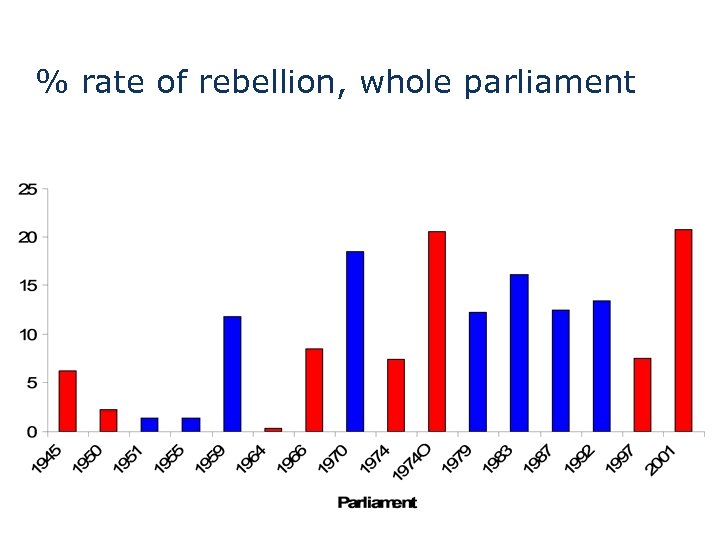
% rate of rebellion, whole parliament
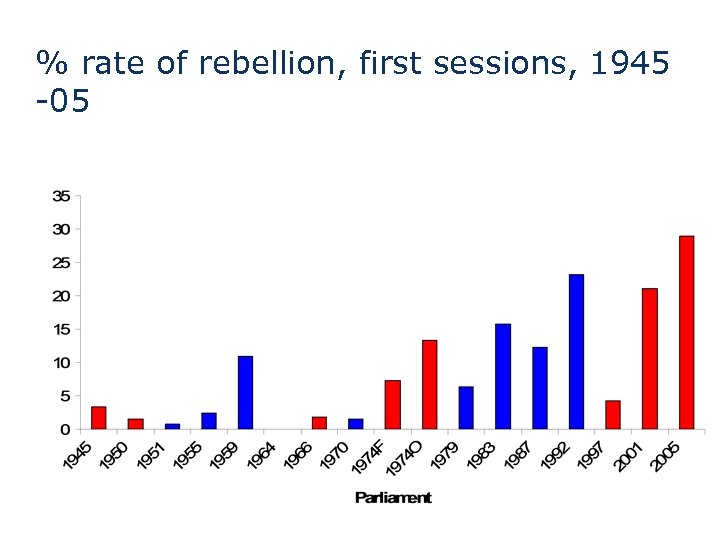
% rate of rebellion, first sessions, 1945 -05
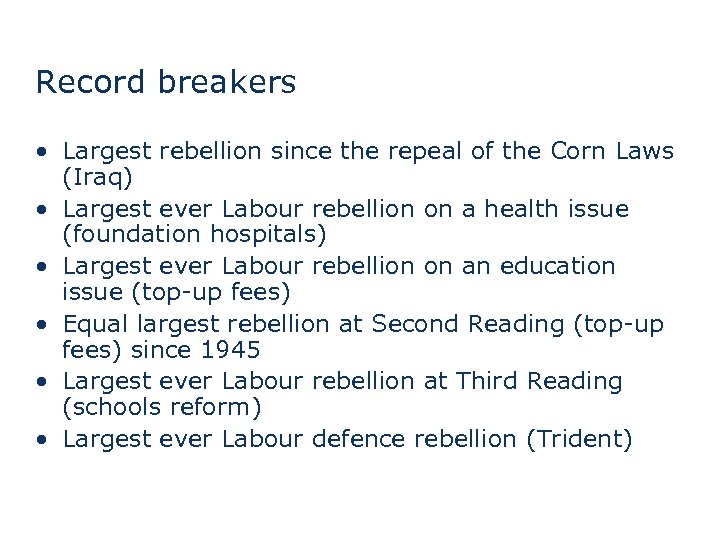
Record breakers • Largest rebellion since the repeal of the Corn Laws (Iraq) • Largest ever Labour rebellion on a health issue (foundation hospitals) • Largest ever Labour rebellion on an education issue (top-up fees) • Equal largest rebellion at Second Reading (top-up fees) since 1945 • Largest ever Labour rebellion at Third Reading (schools reform) • Largest ever Labour defence rebellion (Trident)
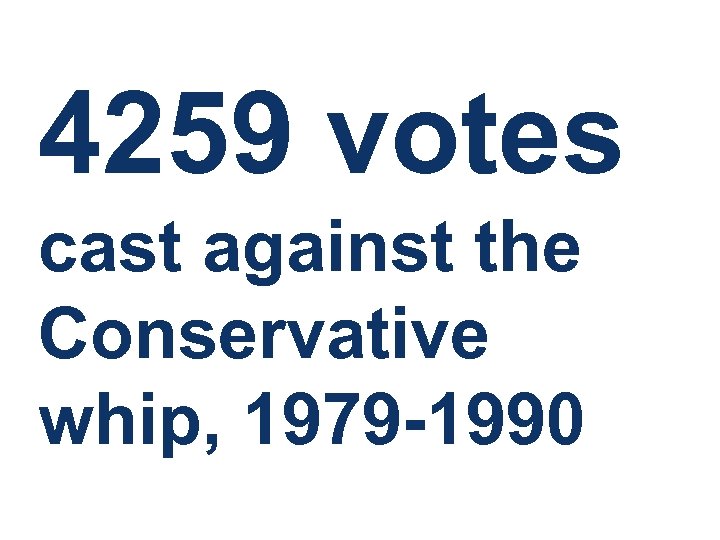
4259 votes cast against the Conservative whip, 1979 -1990
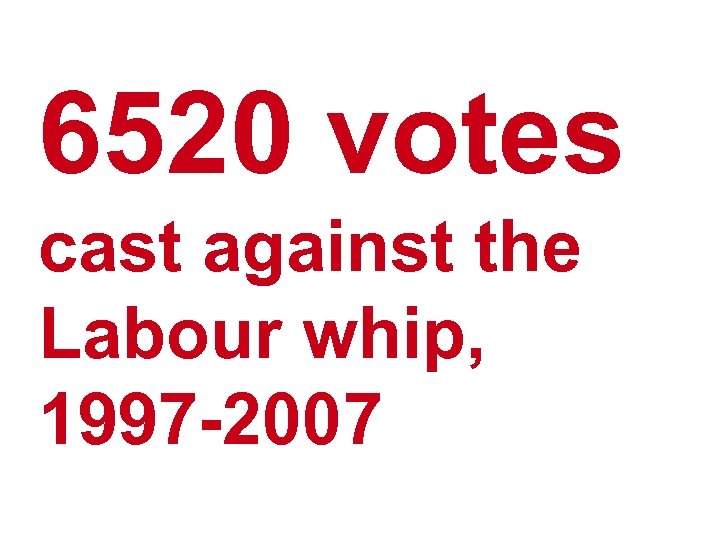
6520 votes cast against the Labour whip, 1997 -2007
Correlation, rebellions 199798 and 2001 -05
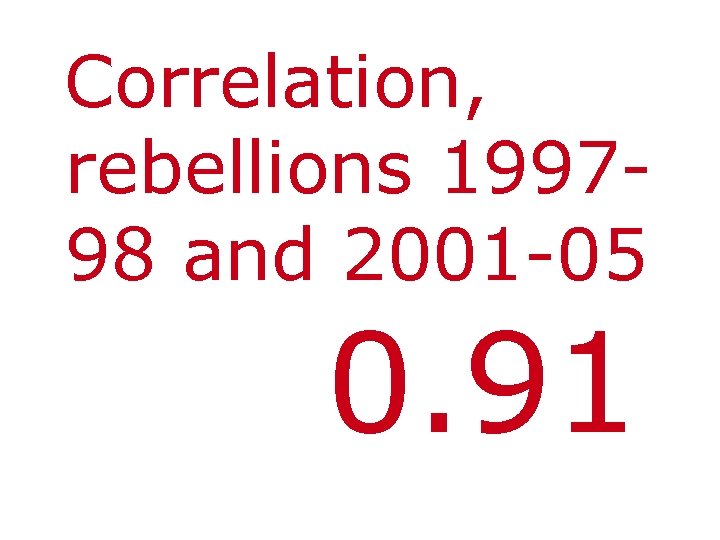
Correlation, rebellions 199798 and 2001 -05 0. 91
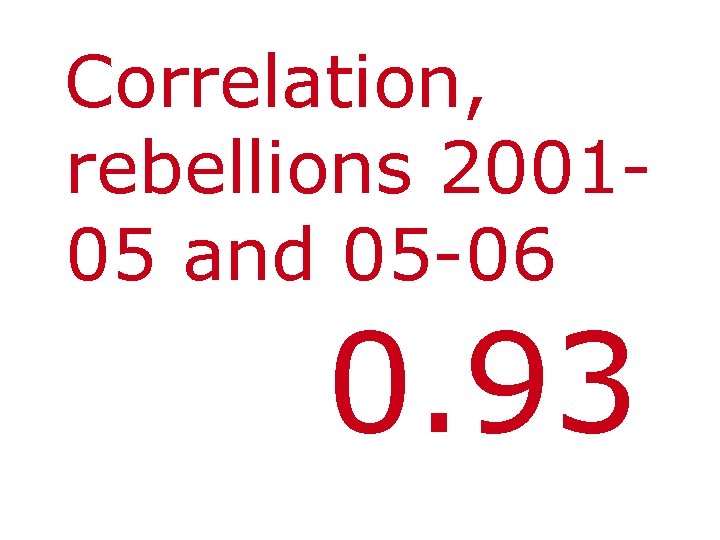
Correlation, rebellions 200105 and 05 -06 0. 93
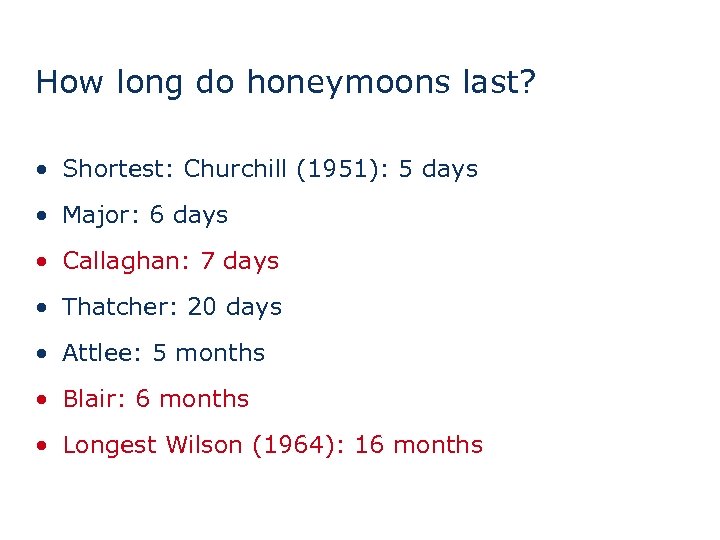
How long do honeymoons last? • Shortest: Churchill (1951): 5 days • Major: 6 days • Callaghan: 7 days • Thatcher: 20 days • Attlee: 5 months • Blair: 6 months • Longest Wilson (1964): 16 months
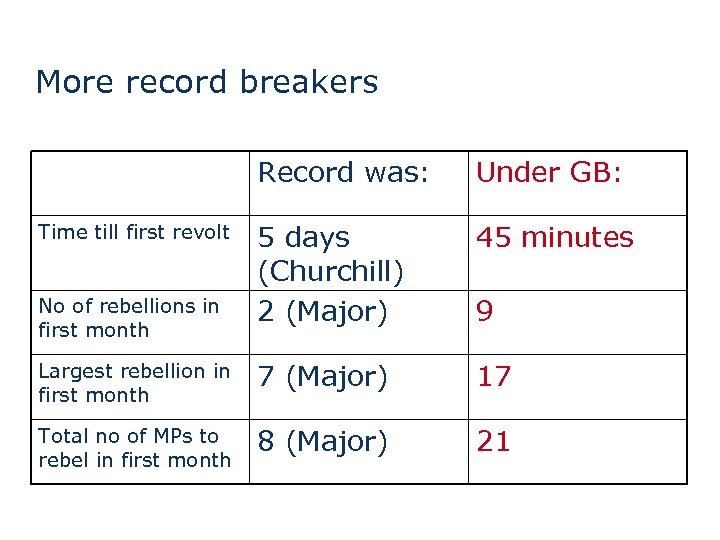
More record breakers Record was: Under GB: 5 days (Churchill) 2 (Major) 45 minutes Largest rebellion in first month 7 (Major) 17 Total no of MPs to rebel in first month 8 (Major) 21 Time till first revolt No of rebellions in first month 9
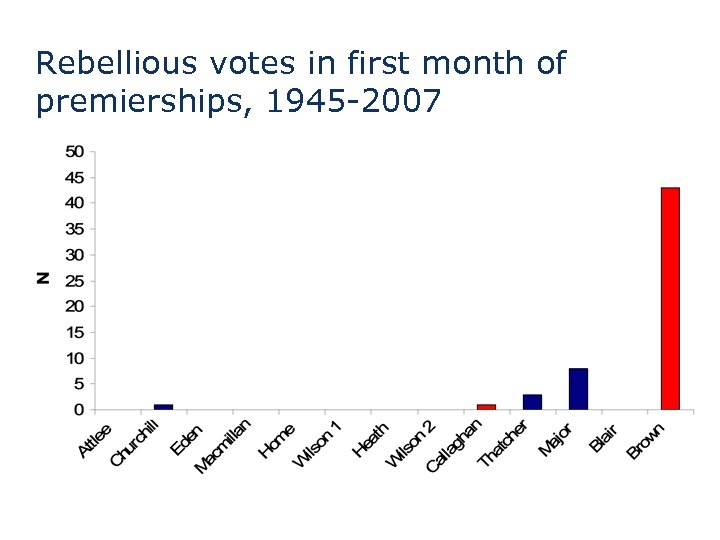
Rebellious votes in first month of premierships, 1945 -2007
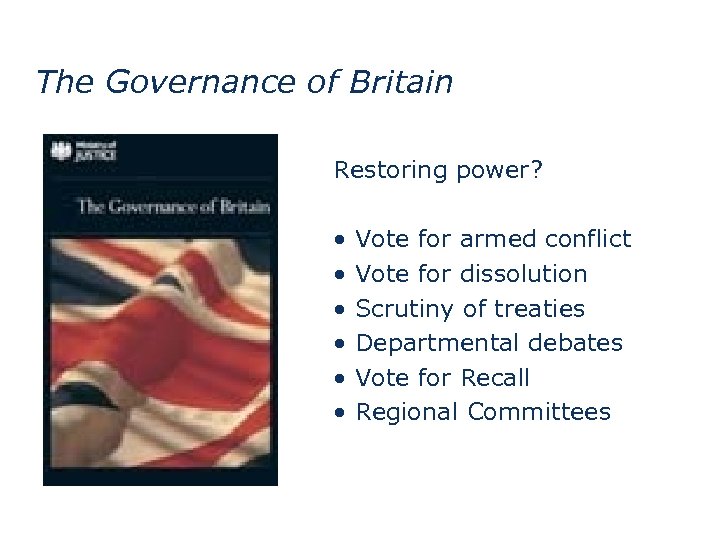
The Governance of Britain Restoring power? • • • Vote for armed conflict Vote for dissolution Scrutiny of treaties Departmental debates Vote for Recall Regional Committees
Скачать презентацию Parliament and Parliamentary Reform In decline Labour
ce4fbeefd1c18340ea2abdf73e43f88d.ppt