


 Скачать презентацию Paper Prototyping Anyone can do it
928614320850190b0e2ddb910addeafe.ppt
- Количество слайдов: 14
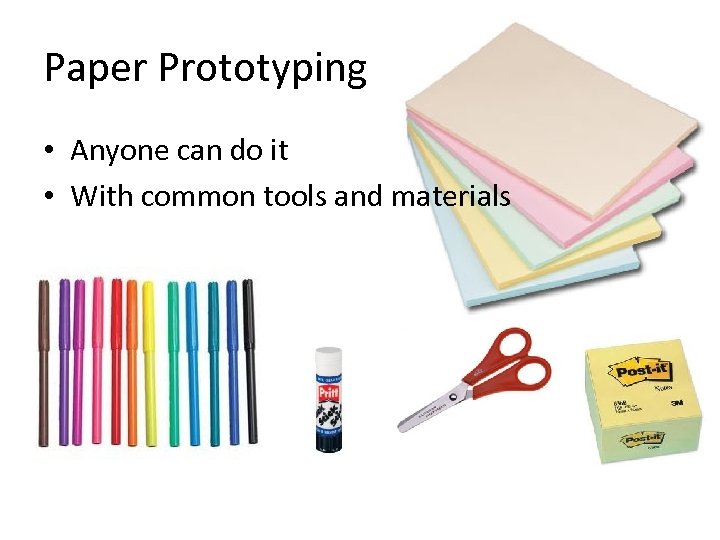 Paper Prototyping • Anyone can do it • With common tools and materials
 Useful steps: Personas • Who are your users? • Write personas that bring them to life Bill is a 52 year old lecturer who has only recently moved to a smartphone. Bill is still Jane is a digitally-connected undergraduate. Jill is always on her mob, using FB and Twitter. Jill ….
 Useful steps: Find the essence • Smartphone apps are generally best at doing just a few things well “search catalogue and locate book or reserve it” essence This is not always true, but is a good guide
 Identify scope and constraints • Are any constraints raised by the combination of users and essence? What does Bill need in order to use the app? Is Bill in our target audience? be ay /m What does Jill need in the app to make it both useful and attractive to her? no s/ e
 Get ready to design • List things of interest in your app and what’s important about them What parts of a catalogue entry do you need to show? • Draw the flow through your app, from screen to screen How …. ?
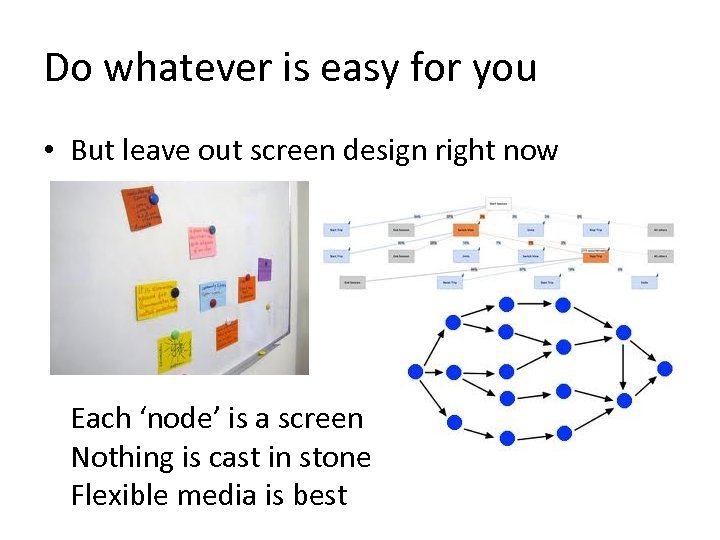 Do whatever is easy for you • But leave out screen design right now Each ‘node’ is a screen Nothing is cast in stone Flexible media is best
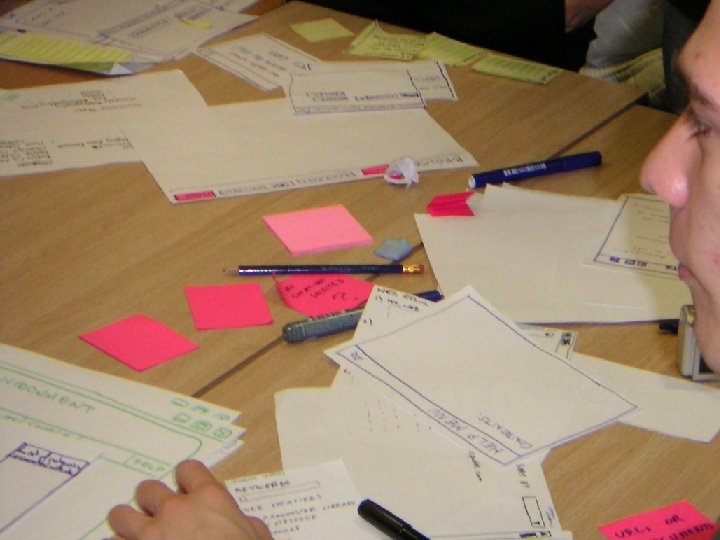
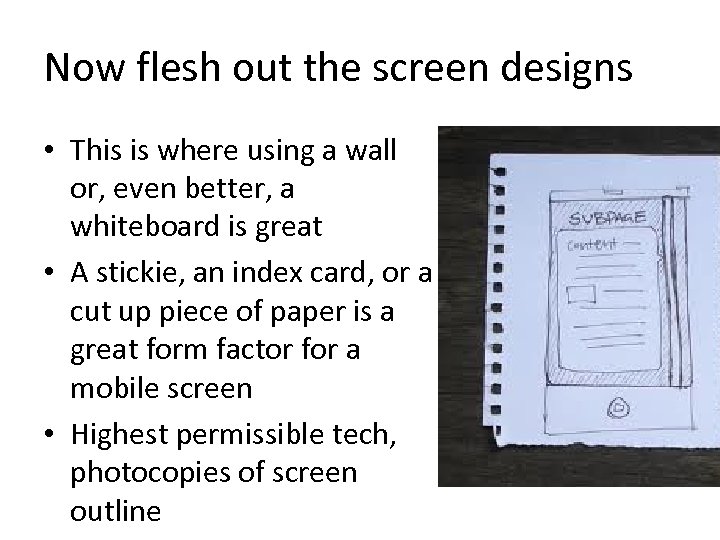 Now flesh out the screen designs • This is where using a wall or, even better, a whiteboard is great • A stickie, an index card, or a cut up piece of paper is a great form factor for a mobile screen • Highest permissible tech, photocopies of screen outline
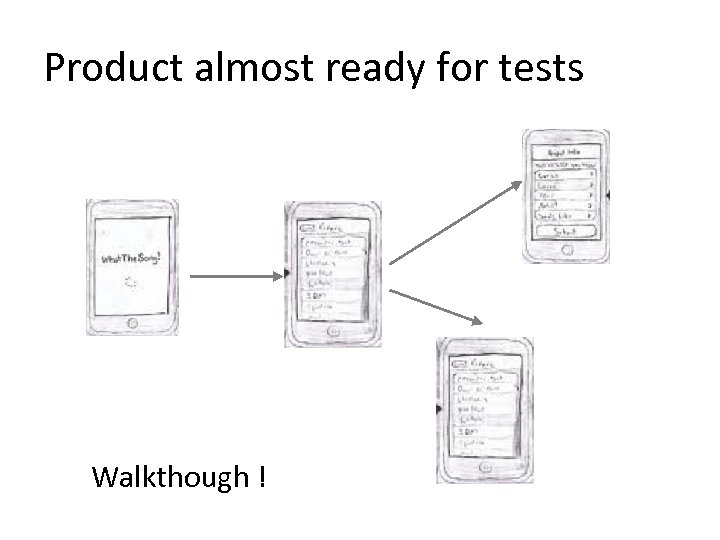 Product almost ready for tests Walkthough !
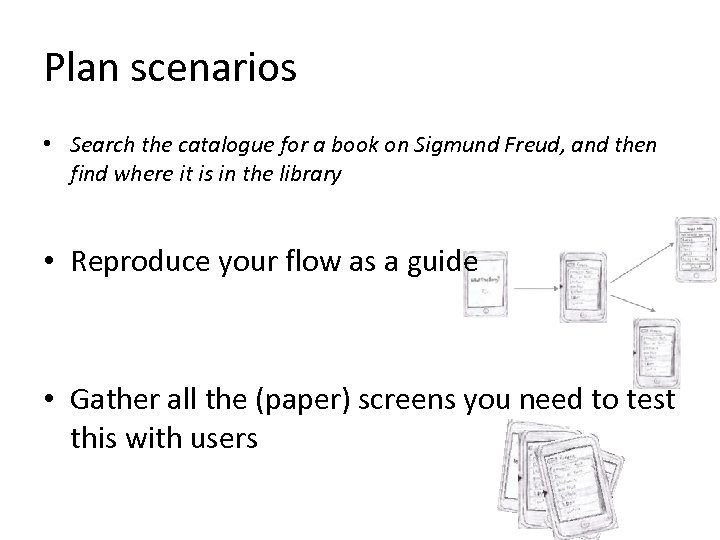 Plan scenarios • Search the catalogue for a book on Sigmund Freud, and then find where it is in the library • Reproduce your flow as a guide • Gather all the (paper) screens you need to test this with users
 Improve your prototype with users • Give a potential user the scenario • Ask then to use your paper app to perform the scenario task(s) • When you find a problem, solve it with the user, draw new screens, try to the new design with the user (and the next users you test with) • Congratulations, that’s participatory design
 Ready to rock?
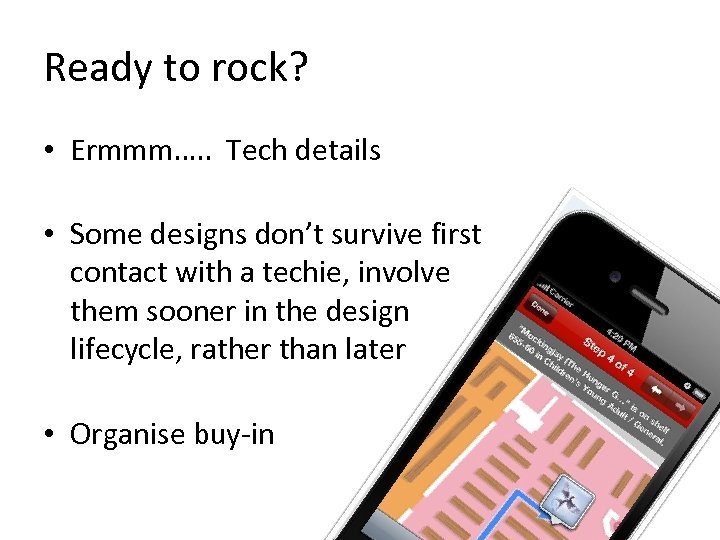 Ready to rock? • Ermmm…. . Tech details • Some designs don’t survive first contact with a techie, involve them sooner in the design lifecycle, rather than later • Organise buy-in
 Thank you, questions