 Скачать презентацию Pan African Workshop on Sustainable Tourism and Poverty
270abd04feffc67d37594c6a4ae3627e.ppt
- Количество слайдов: 50



Pan African Workshop on Sustainable Tourism and Poverty Alleviation, Kigali, Rwanda, 25 -27 January 2010 TOURISM AS A SYSTEM Dr Trevor Sofield Professor of Tourism University of Tasmania
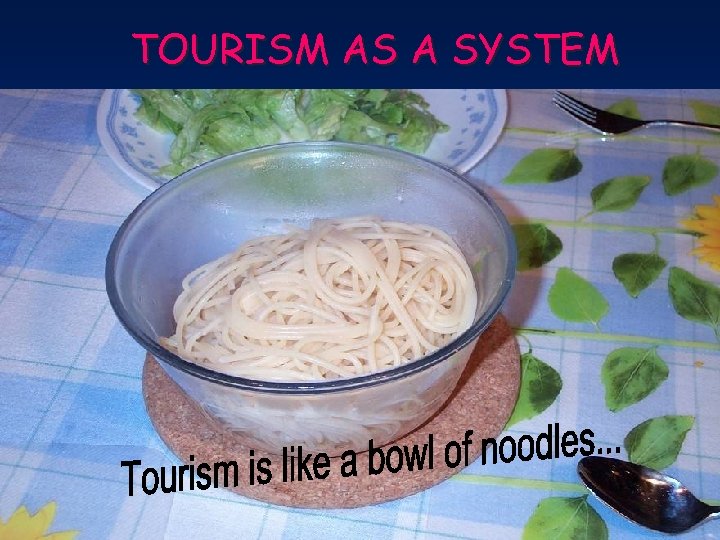
TOURISM AS A SYSTEM
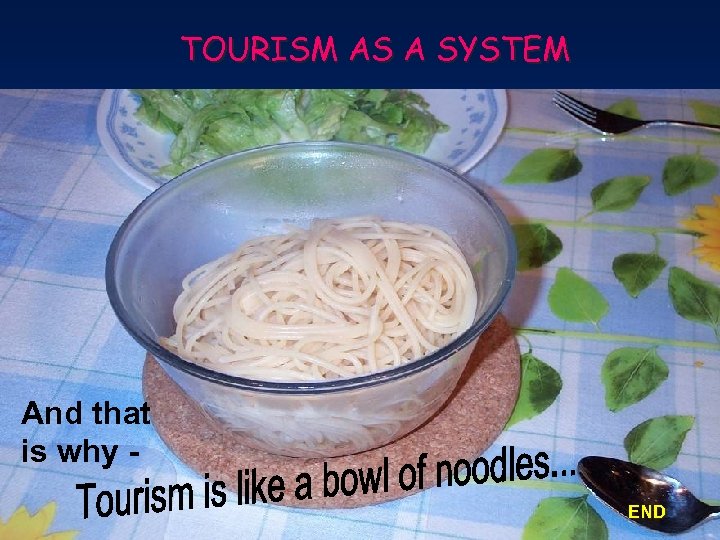
TOURISM AS A SYSTEM Just as each of the noodles has mutli-faceted contact with other strands of noodles, so the tourism system consists of thousands of different businesses, activities and ventures that all interrelate with each other in many different ways. Trying to unravel these interconnections is as difficult as trying to identify each of the contacts that every strand in this bowl of noodles has with surrounding strands. But noodles are of course static, not alive. Tourism activities, businesses and components by contrast are dynamic, and the relationships between them are constantly changing!
TOURISM AS A SYSTEM In the presentation that follows I have separated out the individual components and arranged them in seven major themes. This separation will help to provide clarity on the tourism system. But it must be remembered that it is artificial: in real life the components are not neatly categorised and are like this bowl of noodles – all of a heap!!!!!
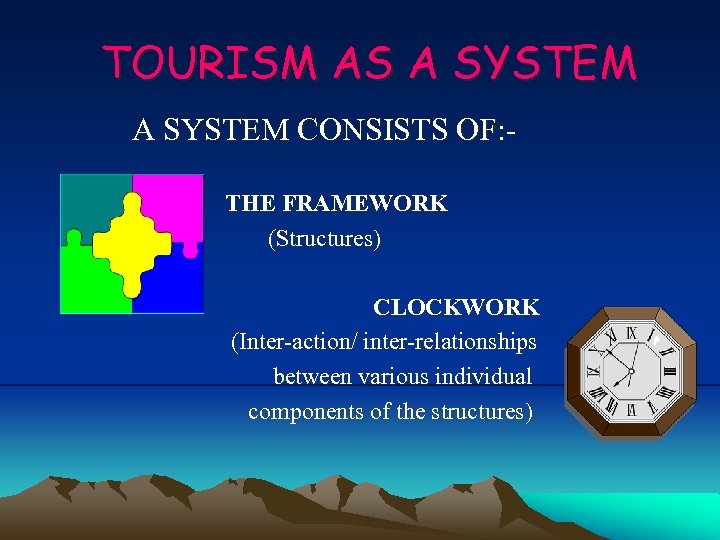
TOURISM AS A SYSTEM CONSISTS OF: THE FRAMEWORK (Structures) CLOCKWORK (Inter-action/ inter-relationships between various individual components of the structures)
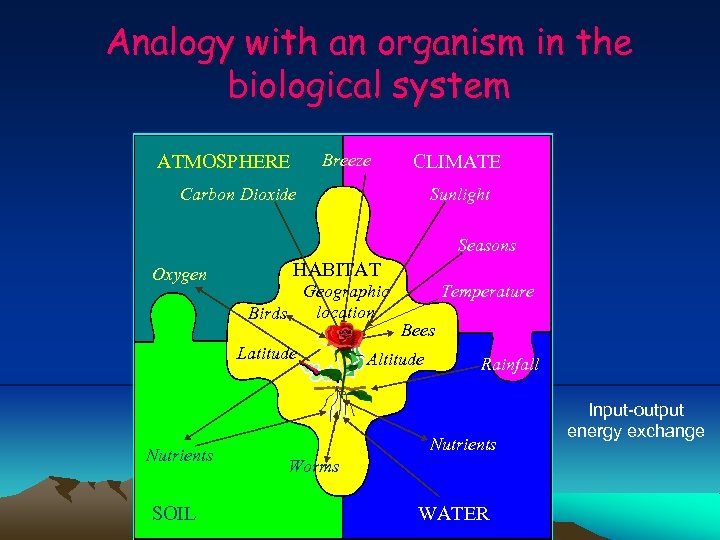
Analogy with an organism in the biological system Breeze ATMOSPHERE CLIMATE Carbon Dioxide Sunlight Seasons Oxygen HABITAT Geographic location Birds Latitude Nutrients SOIL Temperature Bees Altitude Rainfall Nutrients Worms WATER Input-output energy exchange
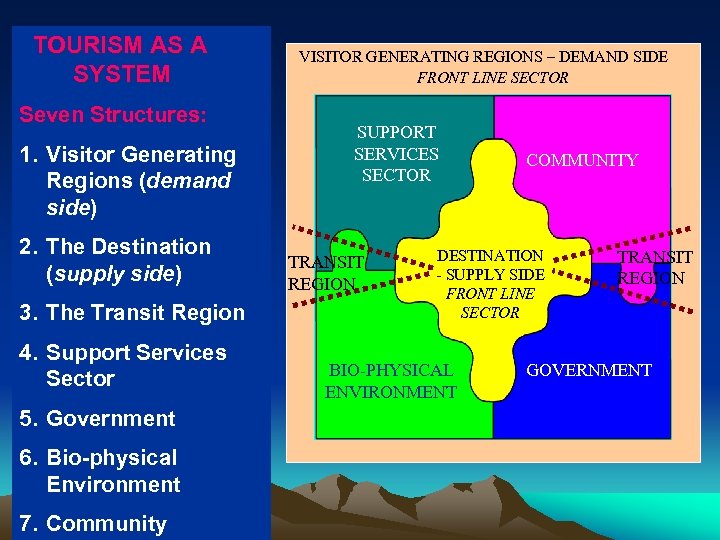
TOURISM AS A SYSTEM Seven Structures: 1. Visitor Generating Regions (demand side) 2. The Destination (supply side) 3. The Transit Region 4. Support Services Sector 5. Government 6. Bio-physical Environment 7. Community VISITOR GENERATING REGIONS – DEMAND SIDE FRONT LINE SECTOR SUPPORT SERVICES SECTOR TRANSIT REGION COMMUNITY DESTINATION - SUPPLY SIDE FRONT LINE SECTOR BIO-PHYSICAL ENVIRONMENT TRANSIT REGION GOVERNMENT
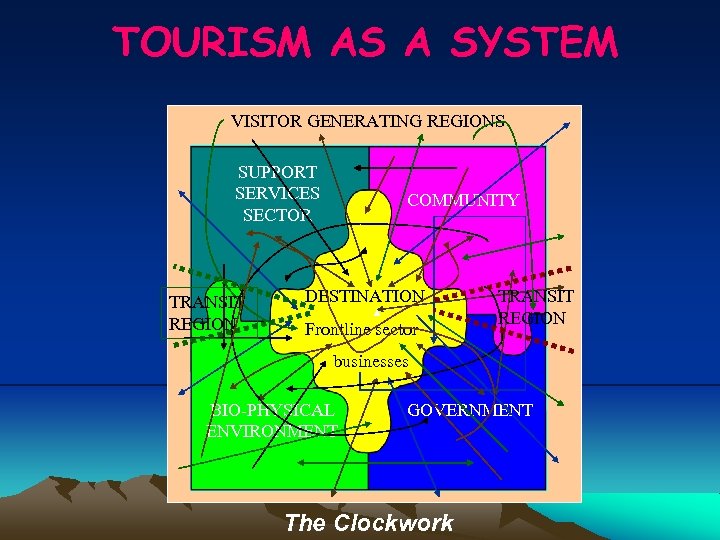
TOURISM AS A SYSTEM VISITOR GENERATING REGIONS SUPPORT SERVICES SECTOR TRANSIT REGION COMMUNITY DESTINATION Frontline sector TRANSIT REGION businesses BIO-PHYSICAL ENVIRONMENT GOVERNMENT The Clockwork
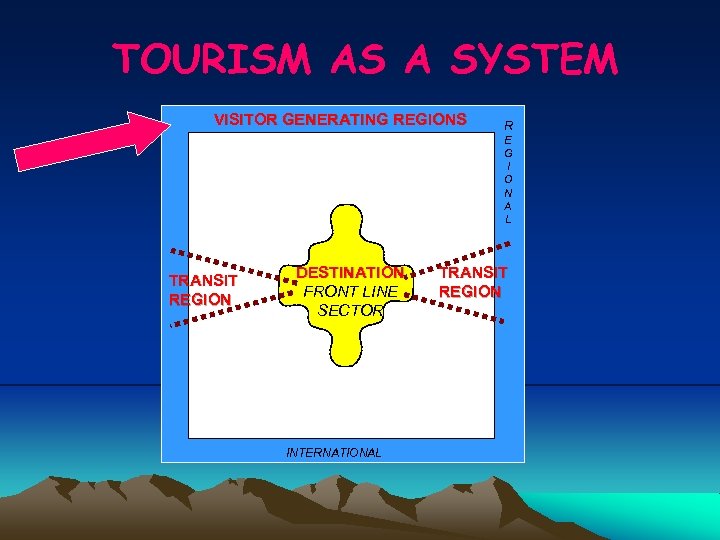
TOURISM AS A SYSTEM VISITOR GENERATING REGIONS TRANSIT REGION DESTINATION FRONT LINE SECTOR INTERNATIONAL R E G I O N A L TRANSIT REGION
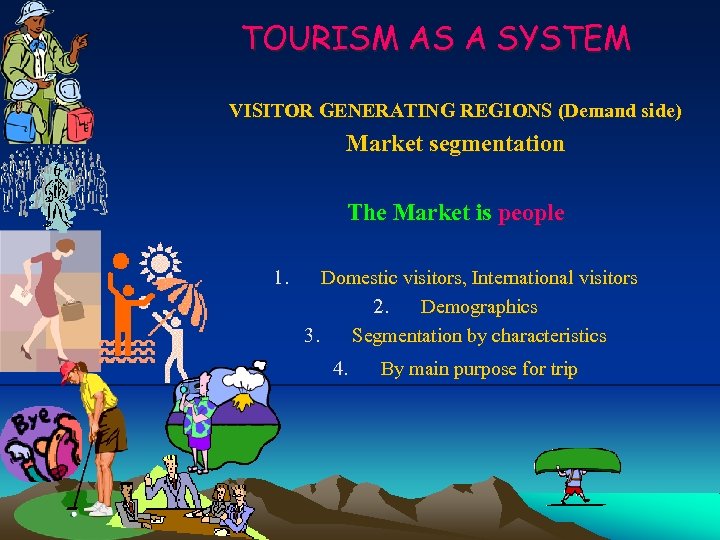
TOURISM AS A SYSTEM VISITOR GENERATING REGIONS (Demand side) Market segmentation The Market is people 1. Domestic visitors, International visitors 2. Demographics 3. Segmentation by characteristics 4. By main purpose for trip
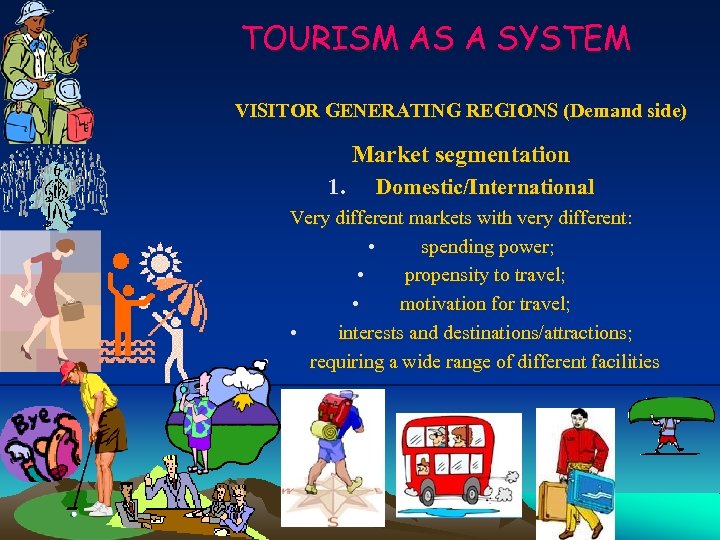
TOURISM AS A SYSTEM VISITOR GENERATING REGIONS (Demand side) Market segmentation 1. Domestic/International Very different markets with very different: • spending power; • propensity to travel; • motivation for travel; • interests and destinations/attractions; • requiring a wide range of different facilities
TOURISM AS A SYSTEM VISITOR GENERATING REGIONS (Demand side) Market segmentation 1. Domestic/International Tourist (domestic) any person who travels away from their normal residence to visit other places [at least 40 kms distant] within their own home for a period of at least one night but not exceeding [12] months for recreational purposes Overnight accommodation is a key component of the definition of a tourist
TOURISM AS A SYSTEM VISITOR GENERATING REGIONS (Demand side) 1. Domestic/International Tourist (international) Any person who visits a country other than the one in which he or she lives, i. e. crosses an international border, as a temporary visitor staying at least 24 hours and less than one year whose purpose for the journey can be classified as either for leisure or recreation When Roger Federer goes to Paris to play tennis in the French Open, is he a tourist engaging in a recreational activity? When goes to Florida to play golf how would you classify her? If Roger Federer and both travel to Castaway Resort in Kenya and play golf and tennis while there, what are they? ? ?
TOURISM AS A SYSTEM VISITOR GENERATING REGIONS (Demand side) 2. Demographics Analysis of national population census from source market countries Age gender, spending power, level of education, employment classifications Family composition etc
TOURISM AS A SYSTEM VISITOR GENERATING REGIONS (Demand side) 3. Segmentation by Characteristics “Baby Boomers” “Empty Nesters” “Restless youths” “Silver hairs” “O. L. s” Backpackers “Grey nomads” “WOOFers” “Experience Seekers”
VISITOR GENERATING REGIONS (Demand side) Market segmentation 4. By Main Purpose of Visit Holiday/recreation (the original meaning of holiday = holy day). Ø Ø Ø Ø Holiday Business Education Religion (pilgrimage) Sport Conference Visiting Friends & Relatives
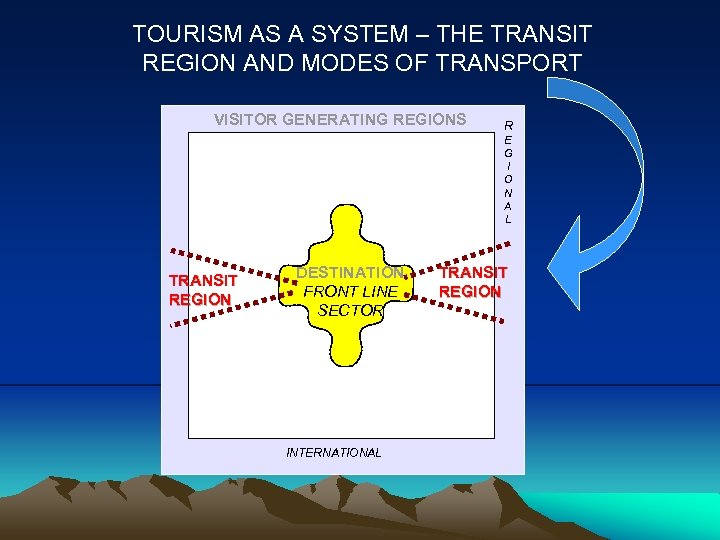
TOURISM AS A SYSTEM – THE TRANSIT REGION AND MODES OF TRANSPORT VISITOR GENERATING REGIONS TRANSIT REGION DESTINATION FRONT LINE SECTOR INTERNATIONAL R E G I O N A L TRANSIT REGION
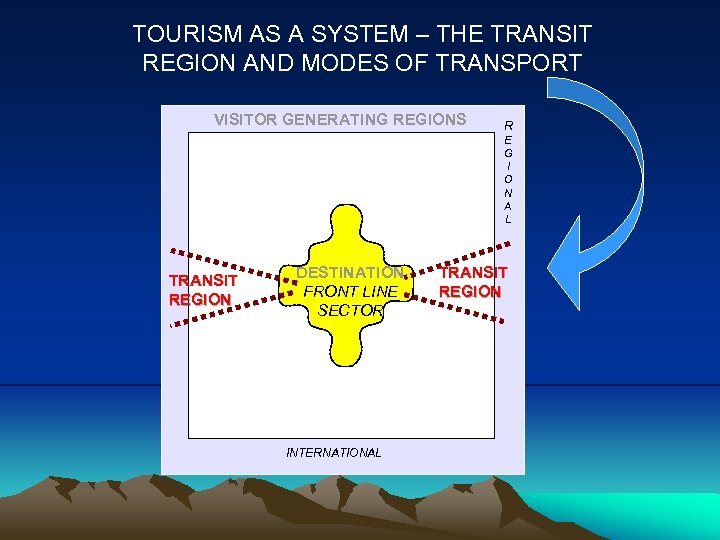
TOURISM AS A SYSTEM – THE TRANSIT REGION AND MODES OF TRANSPORT VISITOR GENERATING REGIONS TRANSIT REGION DESTINATION FRONT LINE SECTOR INTERNATIONAL R E G I O N A L TRANSIT REGION
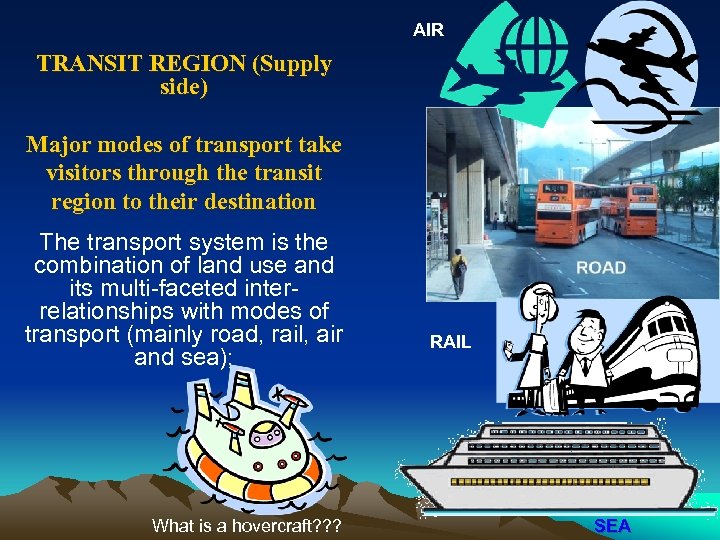
AIR TRANSIT REGION (Supply side) Major modes of transport take visitors through the transit region to their destination The transport system is the combination of land use and its multi-faceted interrelationships with modes of transport (mainly road, rail, air and sea); What is a hovercraft? ? ? RAIL SEA
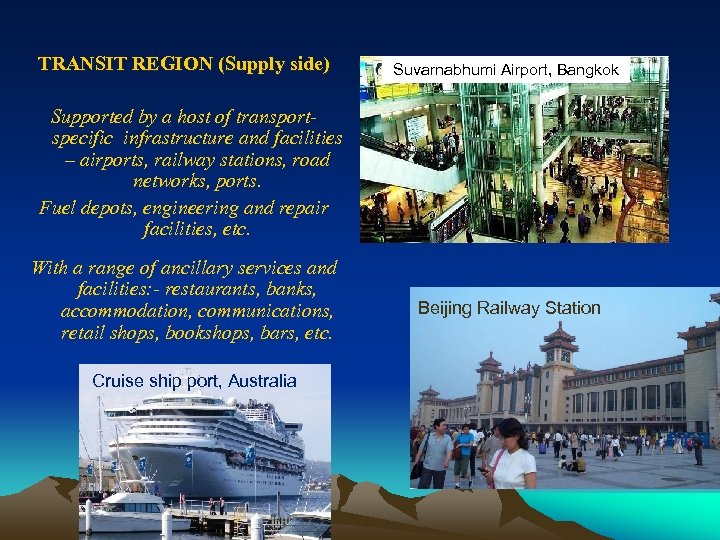
TRANSIT REGION (Supply side) Suvarnabhumi Airport, Bangkok Supported by a host of transportspecific infrastructure and facilities – airports, railway stations, road networks, ports. Fuel depots, engineering and repair facilities, etc. With a range of ancillary services and facilities: - restaurants, banks, accommodation, communications, retail shops, bookshops, bars, etc. Cruise ship port, Australia Beijing Railway Station
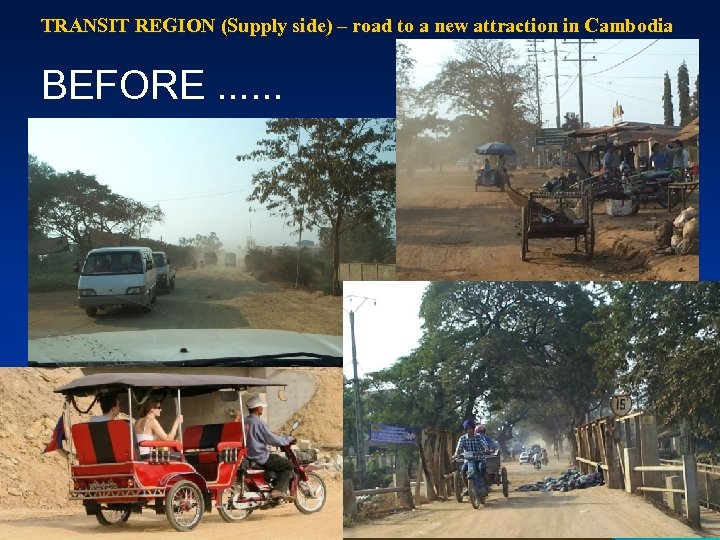
TRANSIT REGION (Supply side) – road to a new attraction in Cambodia BEFORE. . .
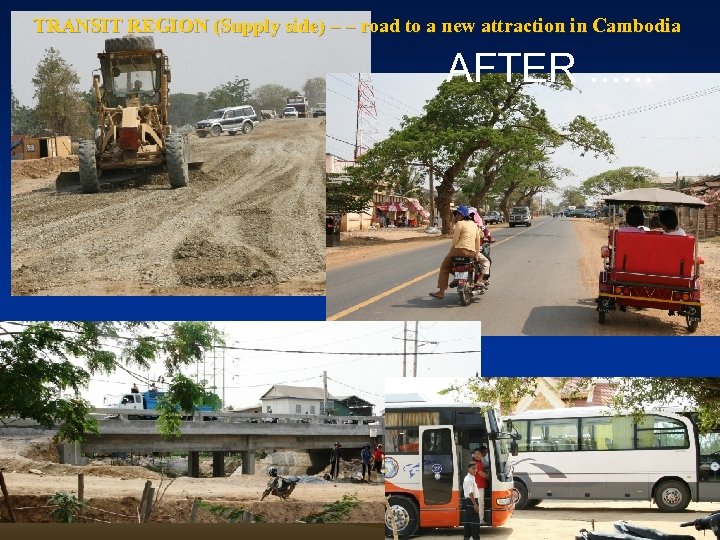
TRANSIT REGION (Supply side) – – road to a new attraction in Cambodia AFTER. . .
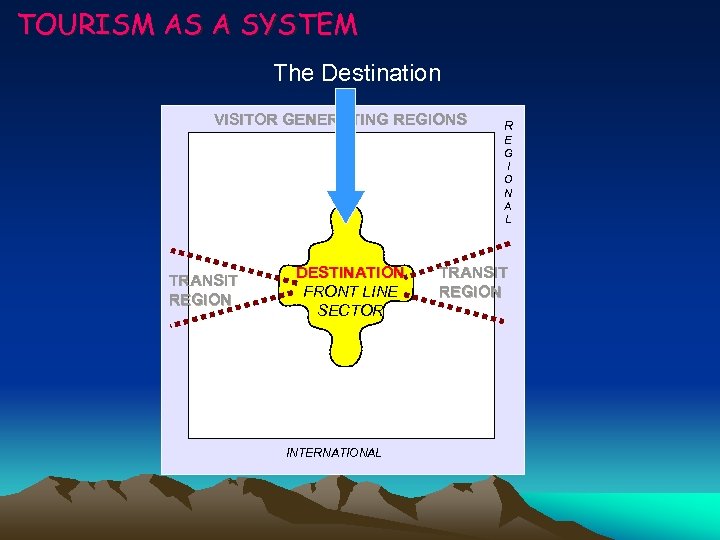
TOURISM AS A SYSTEM The Destination VISITOR GENERATING REGIONS TRANSIT REGION DESTINATION FRONT LINE SECTOR INTERNATIONAL R E G I O N A L TRANSIT REGION
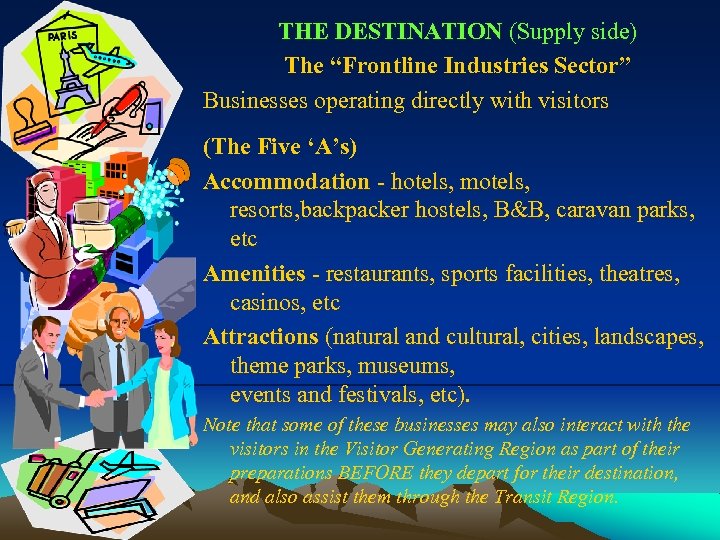
THE DESTINATION (Supply side) The “Frontline Industries Sector” Businesses operating directly with visitors (The Five ‘A’s) Accommodation - hotels, motels, resorts, backpacker hostels, B&B, caravan parks, etc Amenities - restaurants, sports facilities, theatres, casinos, etc Attractions (natural and cultural, cities, landscapes, theme parks, museums, events and festivals, etc). Note that some of these businesses may also interact with the visitors in the Visitor Generating Region as part of their preparations BEFORE they depart for their destination, and also assist them through the Transit Region.
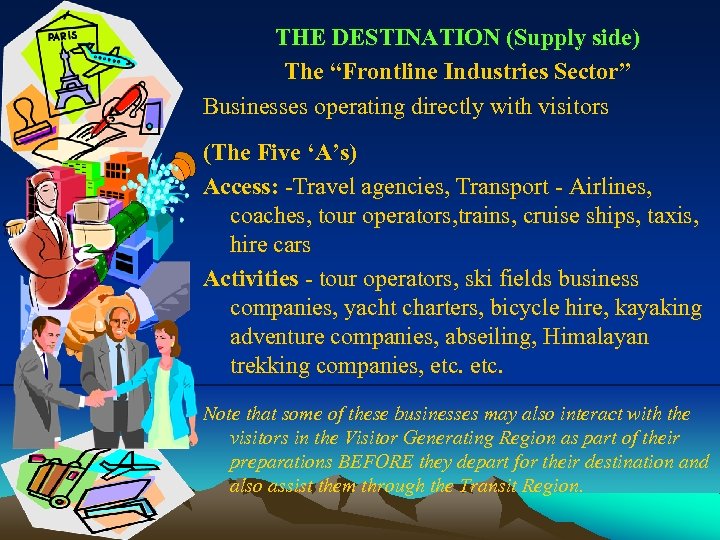
THE DESTINATION (Supply side) The “Frontline Industries Sector” Businesses operating directly with visitors (The Five ‘A’s) Access: -Travel agencies, Transport - Airlines, coaches, tour operators, trains, cruise ships, taxis, hire cars Activities - tour operators, ski fields business companies, yacht charters, bicycle hire, kayaking adventure companies, abseiling, Himalayan trekking companies, etc. Note that some of these businesses may also interact with the visitors in the Visitor Generating Region as part of their preparations BEFORE they depart for their destination and also assist them through the Transit Region.
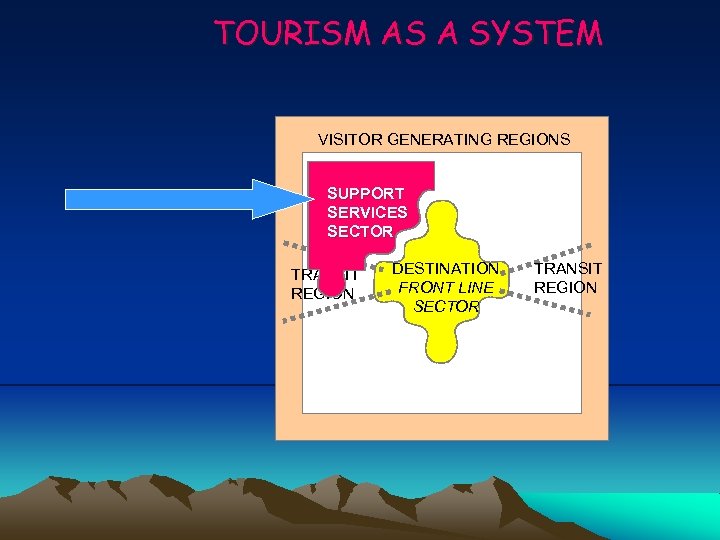
TOURISM AS A SYSTEM VISITOR GENERATING REGIONS SUPPORT SERVICES SECTOR TRANSIT REGION DESTINATION FRONT LINE SECTOR TRANSIT REGION
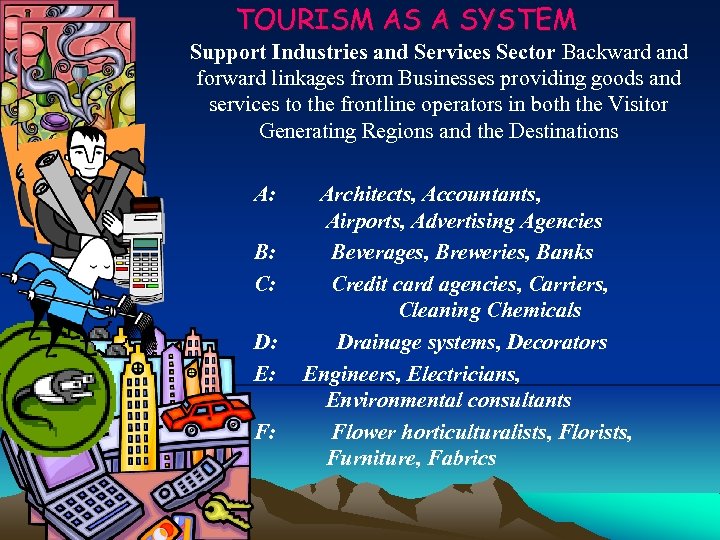
TOURISM AS A SYSTEM Support Industries and Services Sector Backward and forward linkages from Businesses providing goods and services to the frontline operators in both the Visitor Generating Regions and the Destinations A: B: C: D: E: F: Architects, Accountants, Airports, Advertising Agencies Beverages, Breweries, Banks Credit card agencies, Carriers, Cleaning Chemicals Drainage systems, Decorators Engineers, Electricians, Environmental consultants Flower horticulturalists, Florists, Furniture, Fabrics
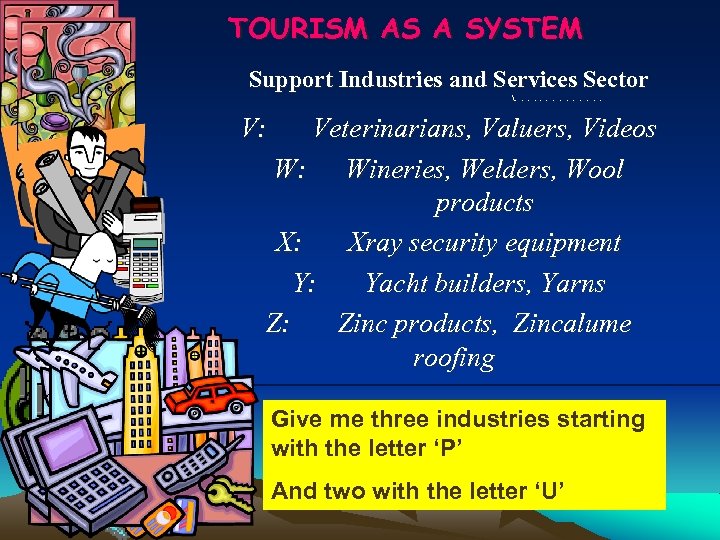
TOURISM AS A SYSTEM Support Industries and Services Sector . . . V: Veterinarians, Valuers, Videos W: Wineries, Welders, Wool products X: Xray security equipment Y: Yacht builders, Yarns Z: Zinc products, Zincalume roofing Give me three industries starting with the letter ‘P’ And two with the letter ‘U’
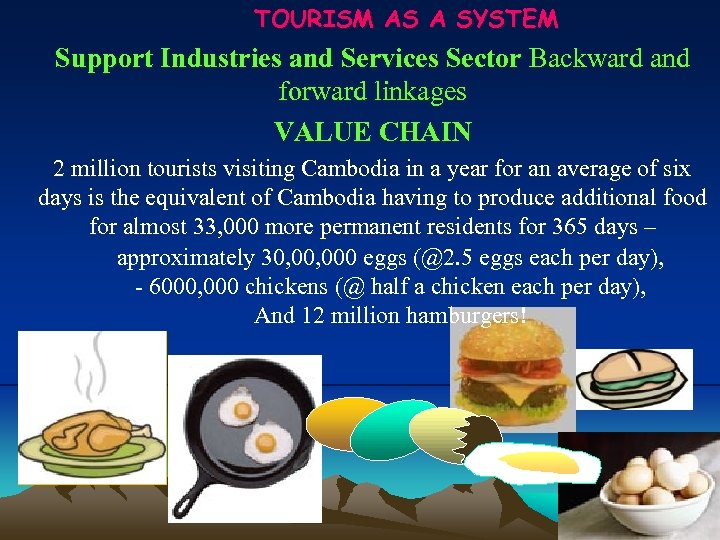
TOURISM AS A SYSTEM Support Industries and Services Sector Backward and forward linkages VALUE CHAIN 2 million tourists visiting Cambodia in a year for an average of six days is the equivalent of Cambodia having to produce additional food for almost 33, 000 more permanent residents for 365 days – approximately 30, 000 eggs (@2. 5 eggs each per day), - 6000, 000 chickens (@ half a chicken each per day), And 12 million hamburgers!
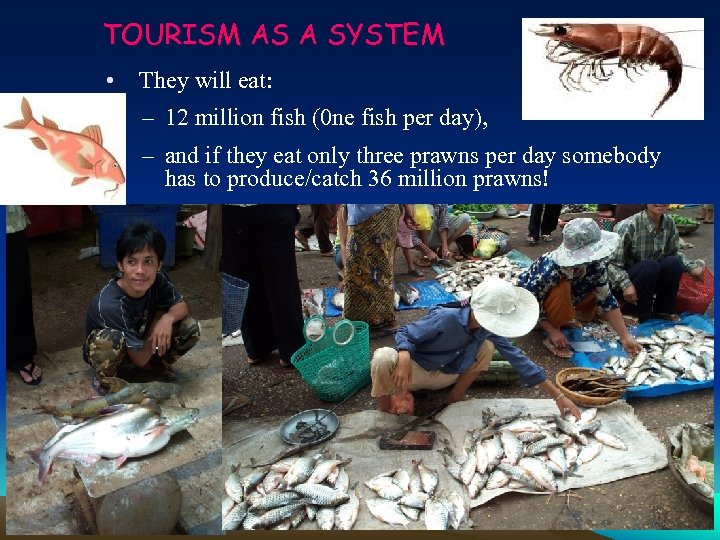
TOURISM AS A SYSTEM • They will eat: – 12 million fish (0 ne fish per day), – and if they eat only three prawns per day somebody has to produce/catch 36 million prawns!
TOURISM AS A SYSTEM – They will drink 12 million bottles of water (one bottle per day) and – 36 million cups of coffee and tea; and – At one bottle of beer each and one coca cola each per day, 24 million beverages will be consumed.
TOURISM AS A SYSTEM • Add in all the other consumables that are needed, such as: – electricity consumption and light bulbs; – furniture to sit on and sleep on; – soap for showers and laundry; – bed linen, table linen, curtains, and lounge fabrics; – pots and pans, cups and plates and knives and forks; – tennis balls; swimming goggles; golf buggies; beach umbrellas; – etcetera, and - • the myth of tourism being ‘just a service industry that doesn’t produce anything’ is completely exploded. • Thus, when we look at tourism as a tool for poverty alleviation we find that we can look well beyond the front line sector to a multiplicity of opportunities ….
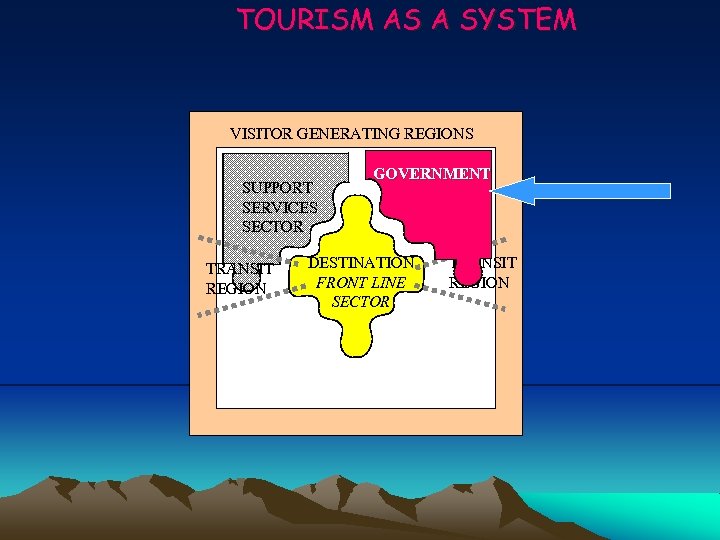
TOURISM AS A SYSTEM VISITOR GENERATING REGIONS SUPPORT SERVICES SECTOR TRANSIT REGION GOVERNMENT DESTINATION FRONT LINE SECTOR TRANSIT REGION
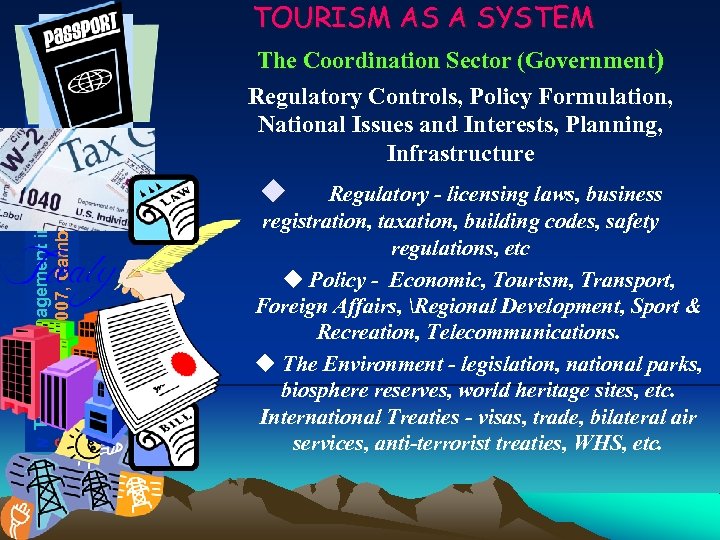
Tourism Management in Project Mekong Tourism Developmentthe GMS Short Course: Tourism Policy, Strategy & Planning June - July 2007, Cambodia TOURISM AS A SYSTEM The Coordination Sector (Government) Regulatory Controls, Policy Formulation, National Issues and Interests, Planning, Infrastructure u Regulatory - licensing laws, business registration, taxation, building codes, safety regulations, etc u Policy - Economic, Tourism, Transport, Foreign Affairs, Regional Development, Sport & Recreation, Telecommunications. u The Environment - legislation, national parks, biosphere reserves, world heritage sites, etc. International Treaties - visas, trade, bilateral air services, anti-terrorist treaties, WHS, etc.
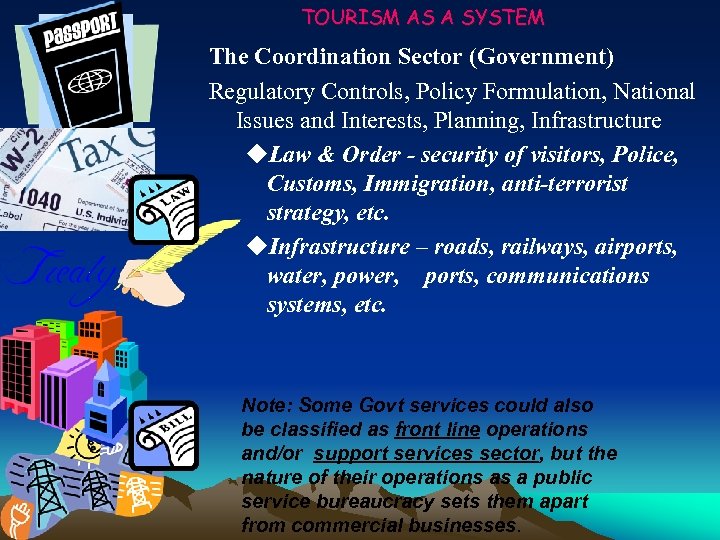
TOURISM AS A SYSTEM The Coordination Sector (Government) Regulatory Controls, Policy Formulation, National Issues and Interests, Planning, Infrastructure u. Law & Order - security of visitors, Police, Customs, Immigration, anti-terrorist strategy, etc. u. Infrastructure – roads, railways, airports, water, power, ports, communications systems, etc. Note: Some Govt services could also be classified as front line operations and/or support services sector, but the nature of their operations as a public service bureaucracy sets them apart from commercial businesses.
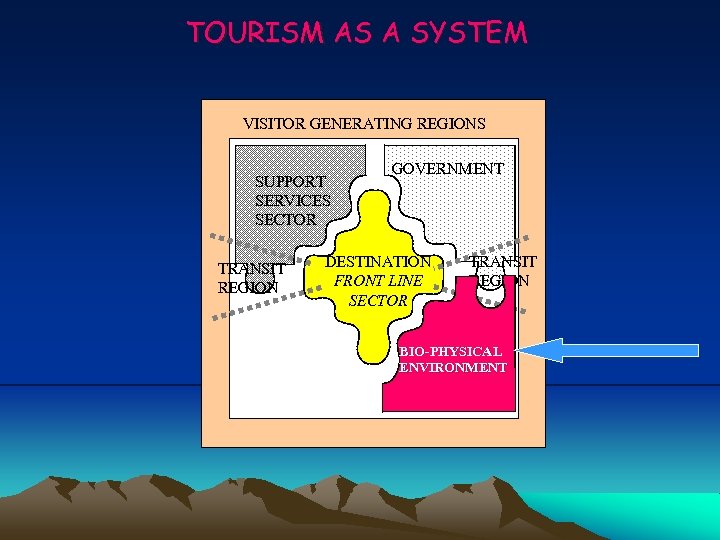
TOURISM AS A SYSTEM VISITOR GENERATING REGIONS SUPPORT SERVICES SECTOR TRANSIT REGION GOVERNMENT DESTINATION FRONT LINE SECTOR TRANSIT REGION BIO-PHYSICAL ENVIRONMENT
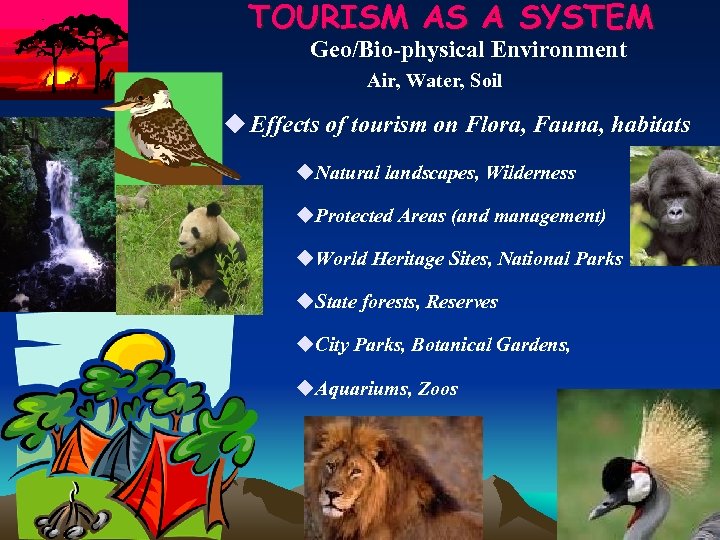
TOURISM AS A SYSTEM Geo/Bio-physical Environment Air, Water, Soil u Effects of tourism on Flora, Fauna, habitats u. Natural landscapes, Wilderness u. Protected Areas (and management) u. World Heritage Sites, National Parks u. State forests, Reserves u. City Parks, Botanical Gardens, u. Aquariums, Zoos
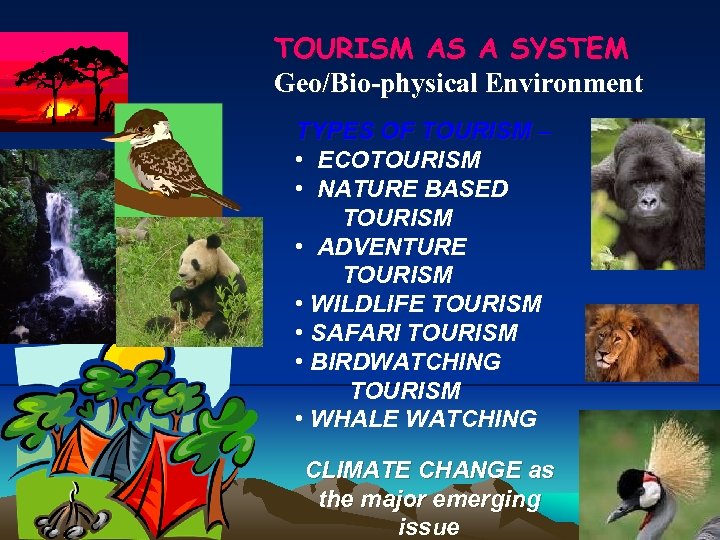
TOURISM AS A SYSTEM Geo/Bio-physical Environment TYPES OF TOURISM – • ECOTOURISM • NATURE BASED TOURISM • ADVENTURE TOURISM • WILDLIFE TOURISM • SAFARI TOURISM • BIRDWATCHING TOURISM • WHALE WATCHING CLIMATE CHANGE as the major emerging issue
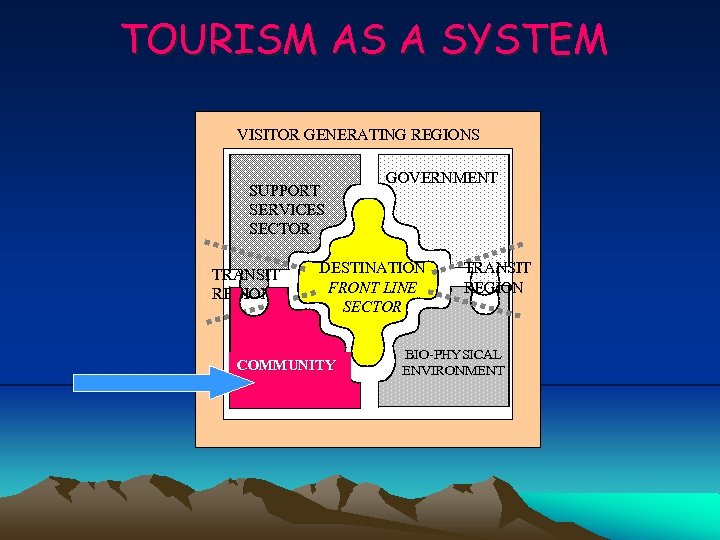
TOURISM AS A SYSTEM VISITOR GENERATING REGIONS SUPPORT SERVICES SECTOR TRANSIT REGION GOVERNMENT DESTINATION FRONT LINE SECTOR COMMUNITY TRANSIT REGION BIO-PHYSICAL ENVIRONMENT
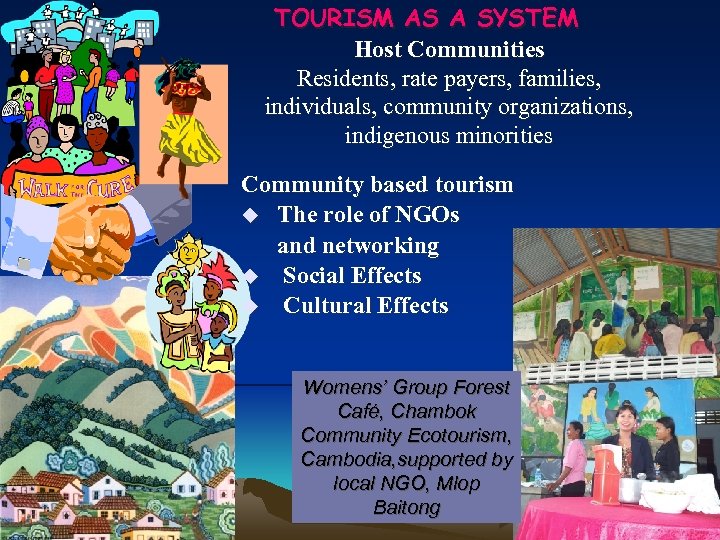
TOURISM AS A SYSTEM Host Communities Residents, rate payers, families, individuals, community organizations, indigenous minorities Community based tourism u The role of NGOs and networking u Social Effects u Cultural Effects Womens’ Group Forest Café, Chambok Community Ecotourism, Cambodia, supported by local NGO, Mlop Baitong
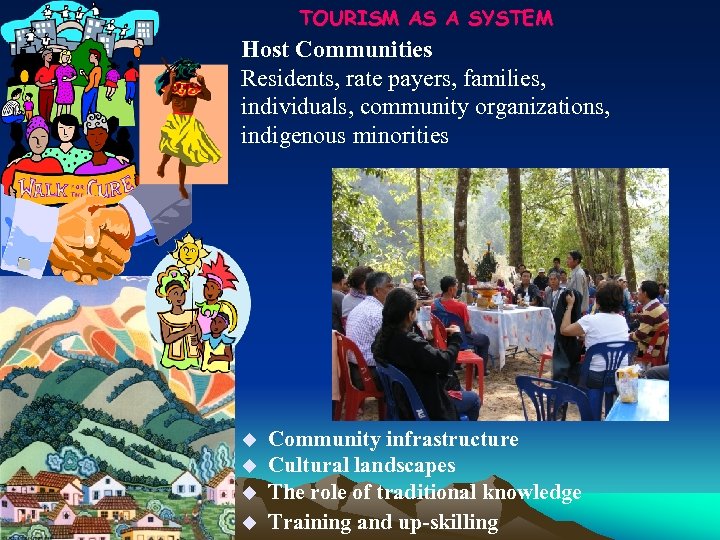
TOURISM AS A SYSTEM Host Communities Residents, rate payers, families, individuals, community organizations, indigenous minorities u u Community infrastructure Cultural landscapes The role of traditional knowledge Training and up-skilling
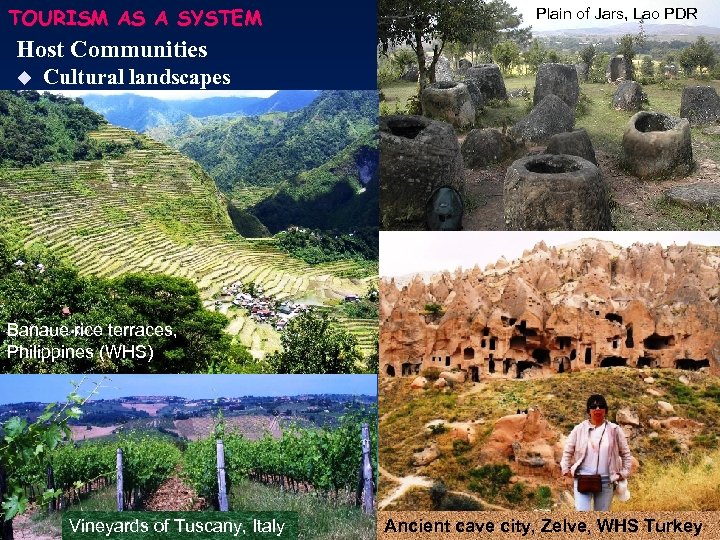
TOURISM AS A SYSTEM Plain of Jars, Lao PDR Host Communities u Cultural landscapes Banaue rice terraces, Philippines (WHS) WHS, Philippines Vineyards of Tuscany, Italy Ancient cave city, Zelve, WHS Turkey
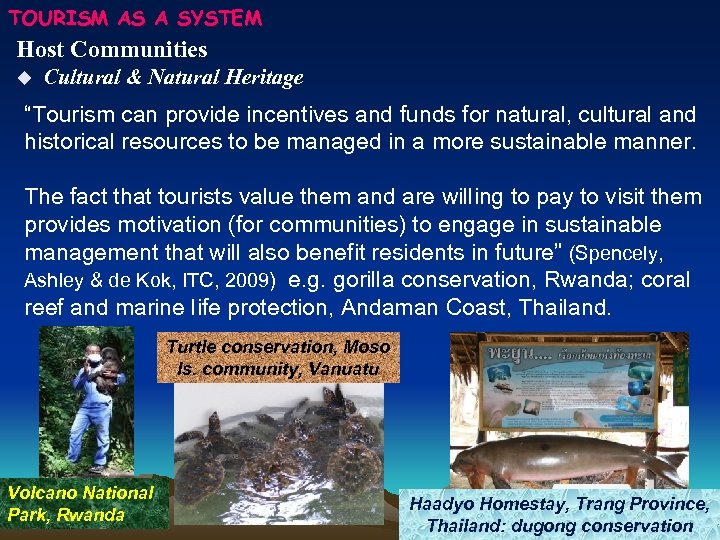
TOURISM AS A SYSTEM Host Communities u Cultural & Natural Heritage “Tourism can provide incentives and funds for natural, cultural and historical resources to be managed in a more sustainable manner. The fact that tourists value them and are willing to pay to visit them provides motivation (for communities) to engage in sustainable management that will also benefit residents in future” (Spencely, Ashley & de Kok, ITC, 2009) e. g. gorilla conservation, Rwanda; coral reef and marine life protection, Andaman Coast, Thailand. Turtle conservation, Moso Is. community, Vanuatu Volcano National Park, Rwanda Haadyo Homestay, Trang Province, Thailand: dugong conservation
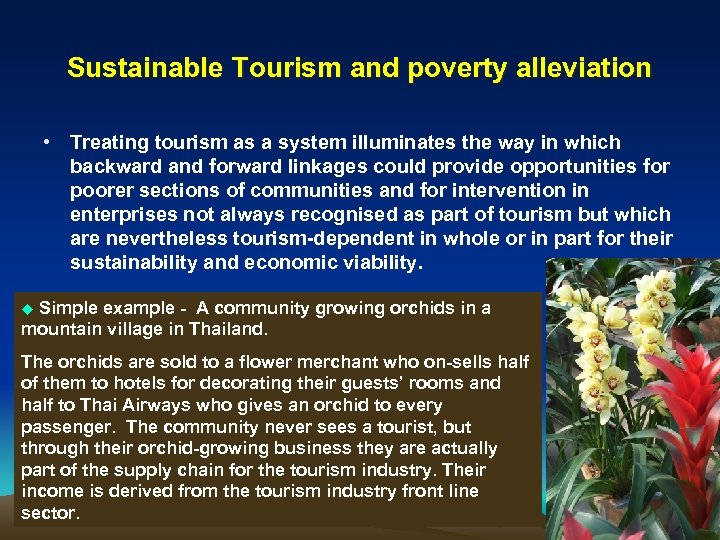
Sustainable Tourism and poverty alleviation • Treating tourism as a system illuminates the way in which backward and forward linkages could provide opportunities for poorer sections of communities and for intervention in enterprises not always recognised as part of tourism but which are nevertheless tourism-dependent in whole or in part for their sustainability and economic viability. Simple example - A community growing orchids in a mountain village in Thailand. u The orchids are sold to a flower merchant who on-sells half of them to hotels for decorating their guests’ rooms and half to Thai Airways who gives an orchid to every passenger. The community never sees a tourist, but through their orchid-growing business they are actually part of the supply chain for the tourism industry. Their income is derived from the tourism industry front line sector.
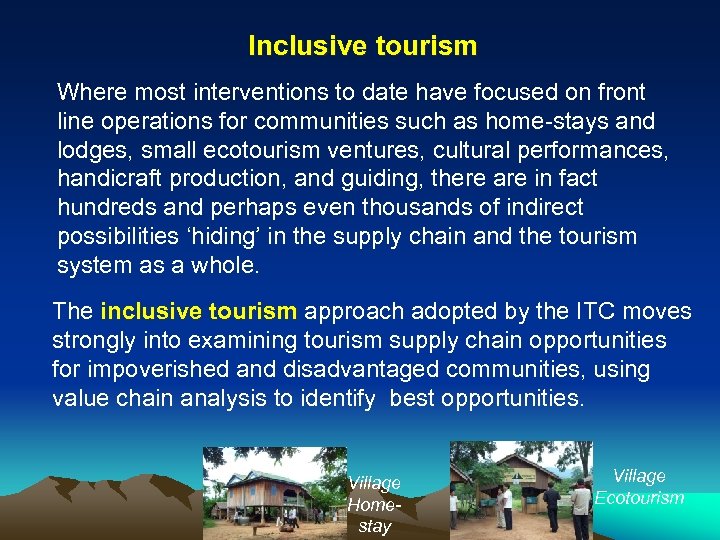
Inclusive tourism Where most interventions to date have focused on front line operations for communities such as home-stays and lodges, small ecotourism ventures, cultural performances, handicraft production, and guiding, there are in fact hundreds and perhaps even thousands of indirect possibilities ‘hiding’ in the supply chain and the tourism system as a whole. The inclusive tourism approach adopted by the ITC moves strongly into examining tourism supply chain opportunities for impoverished and disadvantaged communities, using value chain analysis to identify best opportunities. Village Homestay Village Ecotourism
Inclusive tourism Value Chain analysis as we have heard is a valuable tool that allows us to identify specific viabilities in the tourism supply chain that could be utilised for poverty alleviation by linking the demand side of the system to impoverished communities or poor and disadvantaged segments of populations. However, we need to consider ‘mainstreaming’ tourismbased interventions by linking into mass tourism destinations where the economies of scale may offer greater prospects for new sources of supply and therefore greater prospects for poverty alleviation. (e. g. GTZ analysis of Sandals integrated resorts in the Caribbean, and the ITC initiative in Bahia Coconut Coast, Brazil.
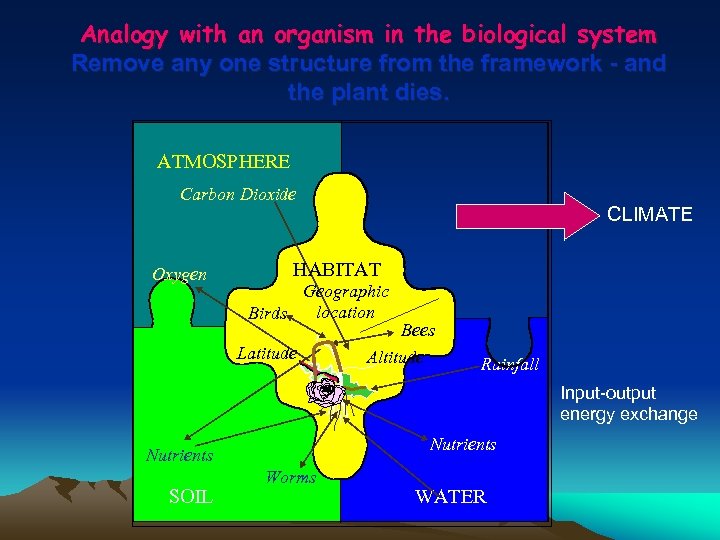
Analogy with an organism in the biological system Remove any one structure from the framework - and the plant dies. ATMOSPHERE Carbon Dioxide Oxygen CLIMATE HABITAT Geographic location Birds Latitude Bees Altitude Rainfall Input-output energy exchange Nutrients SOIL Worms WATER
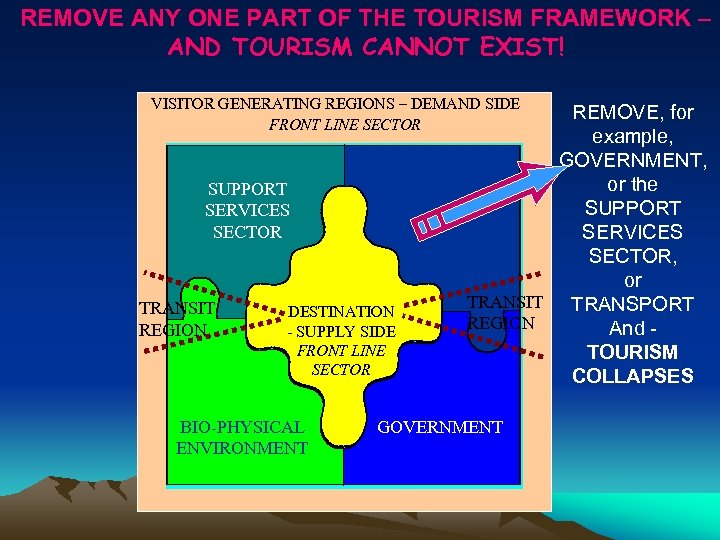
REMOVE ANY ONE PART OF THE TOURISM FRAMEWORK – AND TOURISM CANNOT EXIST! VISITOR GENERATING REGIONS – DEMAND SIDE FRONT LINE SECTOR SUPPORT SERVICES SECTOR TRANSIT REGION DESTINATION - SUPPLY SIDE FRONT LINE SECTOR BIO-PHYSICAL ENVIRONMENT REMOVE, for example, GOVERNMENT, or the SUPPORT SERVICES SECTOR, or TRANSIT TRANSPORT REGION And TOURISM COLLAPSES GOVERNMENT
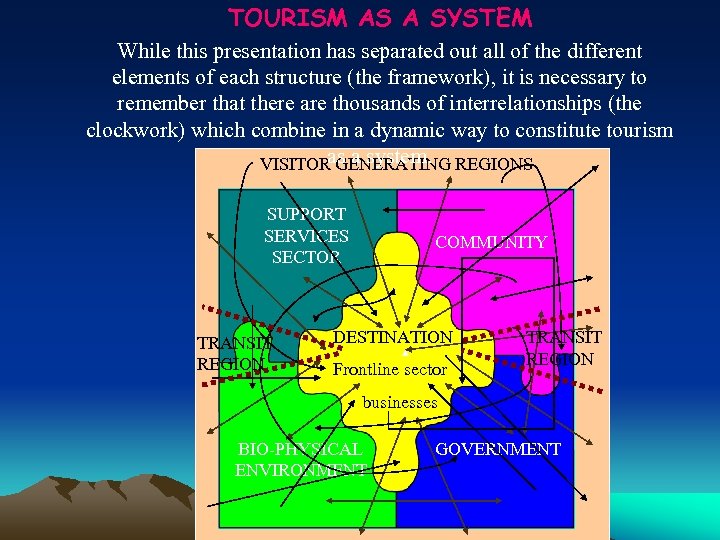
TOURISM AS A SYSTEM While this presentation has separated out all of the different elements of each structure (the framework), it is necessary to remember that there are thousands of interrelationships (the clockwork) which combine in a dynamic way to constitute tourism VISITORas a system. REGIONS GENERATING SUPPORT SERVICES SECTOR TRANSIT REGION COMMUNITY DESTINATION Frontline sector TRANSIT REGION businesses BIO-PHYSICAL ENVIRONMENT GOVERNMENT
TOURISM AS A SYSTEM And that is why END
Скачать презентацию Pan African Workshop on Sustainable Tourism and Poverty
270abd04feffc67d37594c6a4ae3627e.ppt