


 Скачать презентацию Palliative Care in General Practice Dr Peter Fleischl
4d5a11ad9fa4d267f7e5ac36fda137ce.ppt
- Количество слайдов: 47
 Palliative Care in General Practice Dr. Peter Fleischl MBCh. B, Dip. Obst, FRNZCGP, Dip. Ger. Med, MClin. ED 1
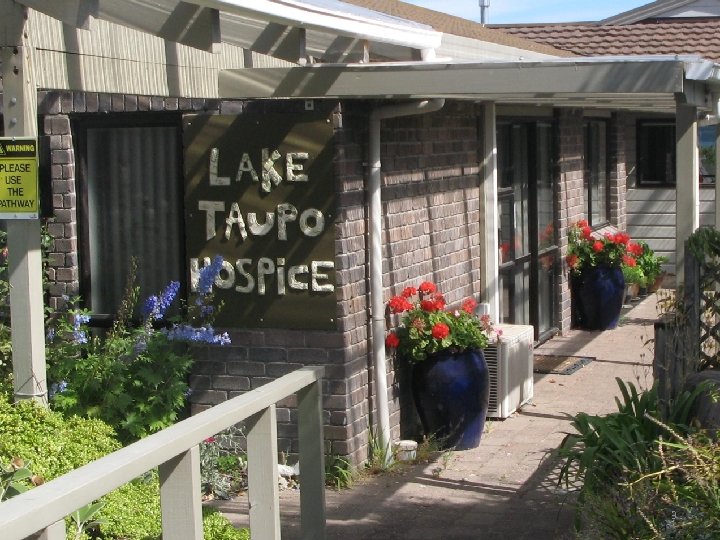
 Overview of Presentation Lake Taupo Hospice Palliative Care in my General Practice Brief data on 89 cases A Survey of Senior Registrars in General Practice • Questions for the future of medical education • • 2
 3
3
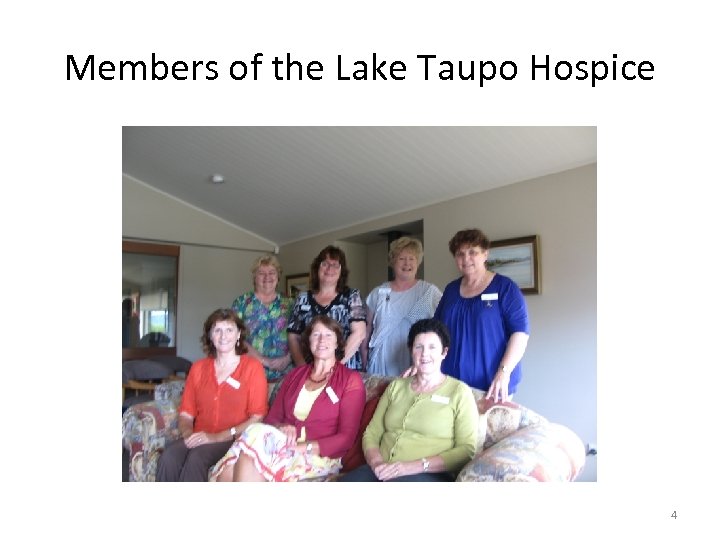 Members of the Lake Taupo Hospice 4
 5
5
 6
6
 7
7
 Evidence GPs want to be involved in Palliative Care Mc. Kinlay E. Evaluation of the Palliative Care Partnership. NZMed. J 2007; 120(1263) Rural GPs are involved in Palliative Care Smyth D. Palliative Care provision by rural GPs in NZ. JPalliat. Med. 2010; 13(3)(4) Their involvement improves care outcomes Aabom. Does persistent involvement by the GP improve palliative care at home for end-stage cancer patients? Palliat. Med. 2006; 20(5) 8
 The Partners 9
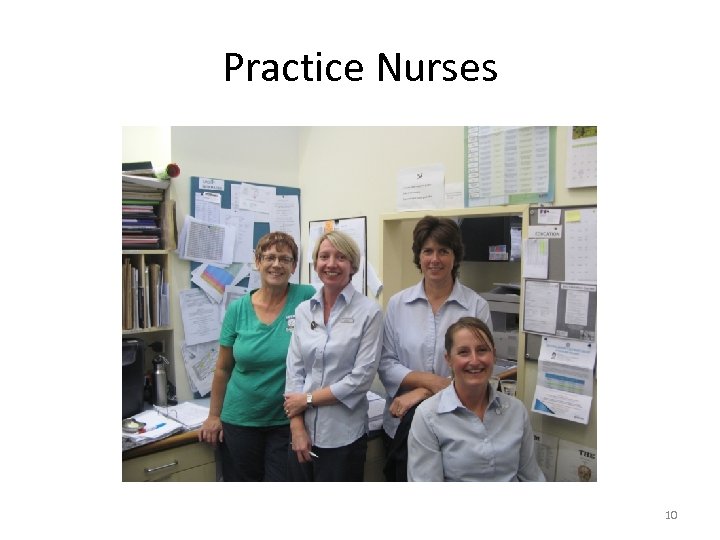 Practice Nurses 10
 Reception Staff 11
 Our place 12
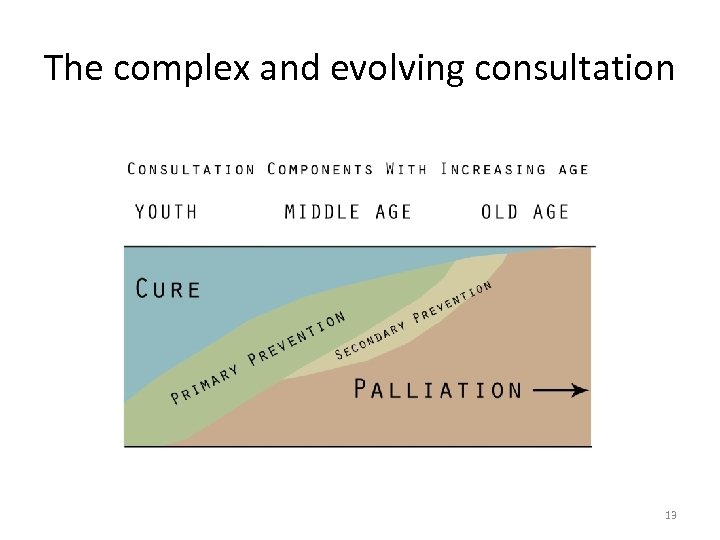 The complex and evolving consultation 13
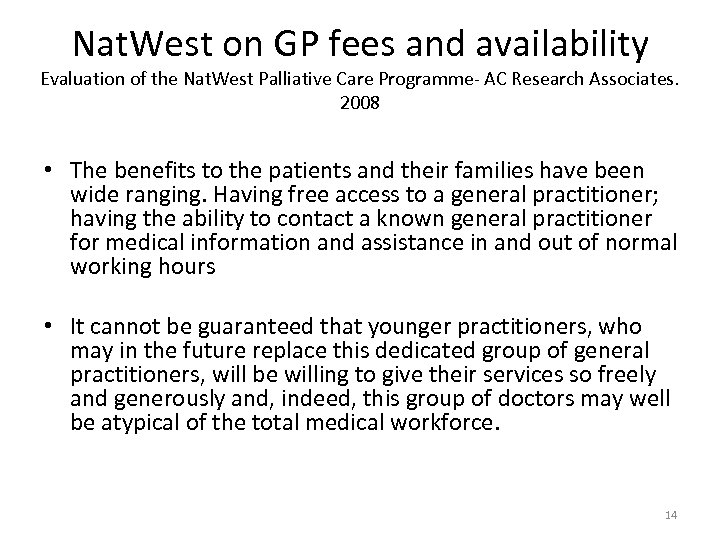 Nat. West on GP fees and availability Evaluation of the Nat. West Palliative Care Programme- AC Research Associates. 2008 • The benefits to the patients and their families have been wide ranging. Having free access to a general practitioner; having the ability to contact a known general practitioner for medical information and assistance in and out of normal working hours • It cannot be guaranteed that younger practitioners, who may in the future replace this dedicated group of general practitioners, will be willing to give their services so freely and generously and, indeed, this group of doctors may well be atypical of the total medical workforce. 14
 15
15
 16
16
 17
17
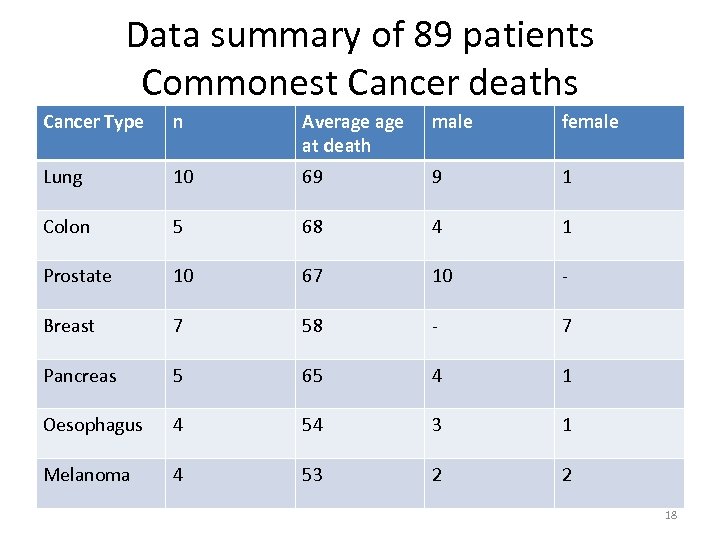 Data summary of 89 patients Commonest Cancer deaths Cancer Type n Average at death male female Lung 10 69 9 1 Colon 5 68 4 1 Prostate 10 67 10 - Breast 7 58 - 7 Pancreas 5 65 4 1 Oesophagus 4 54 3 1 Melanoma 4 53 2 2 18
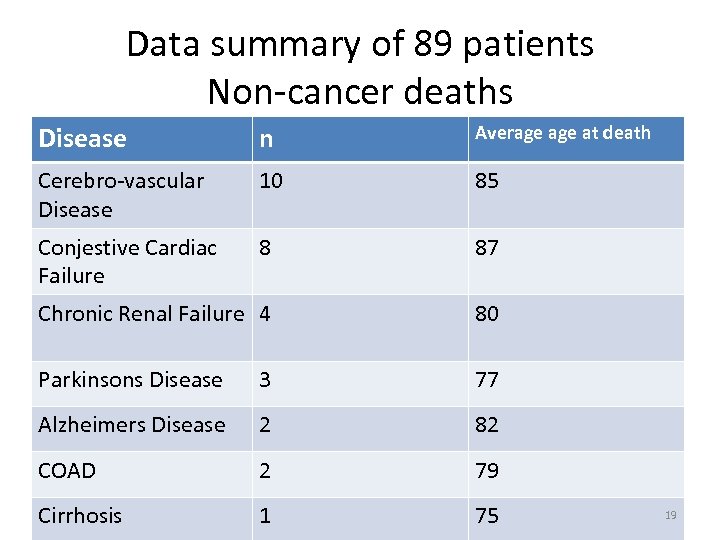 Data summary of 89 patients Non-cancer deaths Disease n Average at death Cerebro-vascular Disease 10 85 Conjestive Cardiac Failure 8 87 Chronic Renal Failure 4 80 Parkinsons Disease 3 77 Alzheimers Disease 2 82 COAD 2 79 Cirrhosis 1 75 19
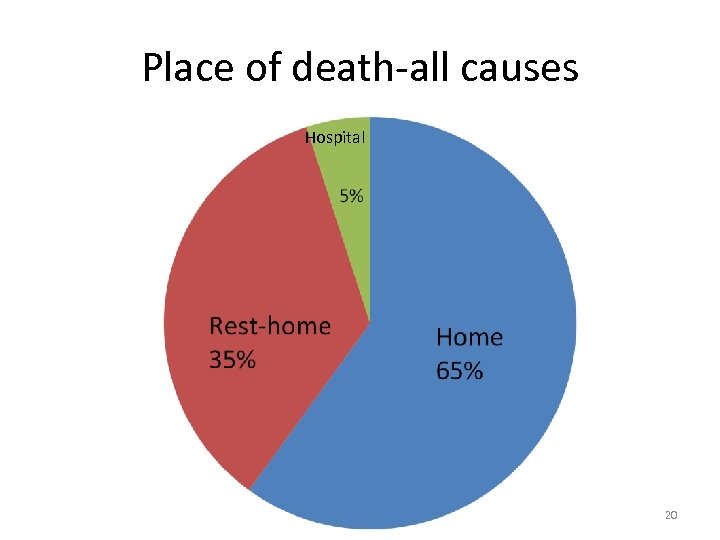 Place of death-all causes Hospital 20
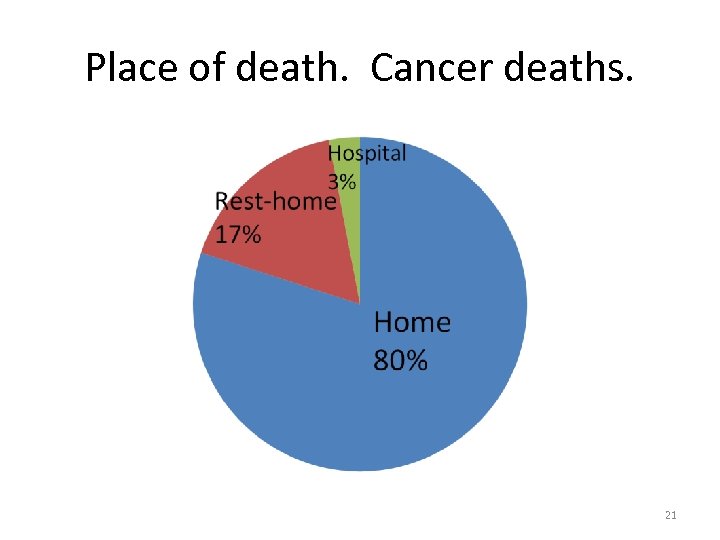 Place of death. Cancer deaths. 21
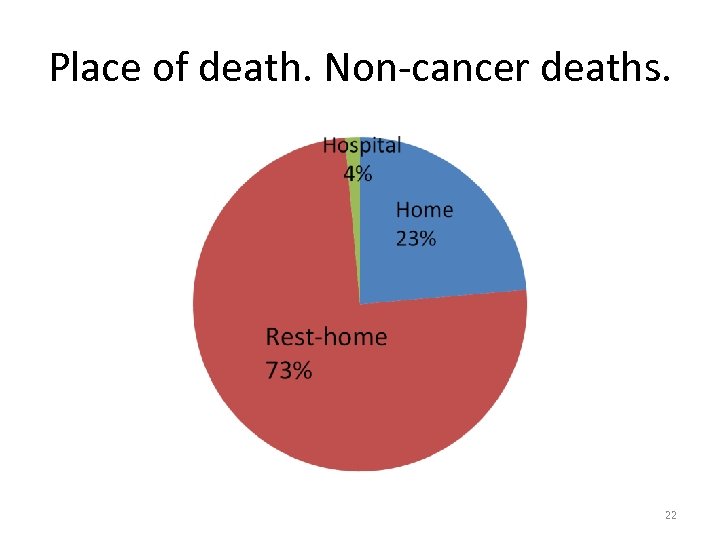 Place of death. Non-cancer deaths. 22
 Place of death. Cancer deaths. 23
 “Are Senior General Practice Registrars prepared to work in Palliative Care Teams ? The Barriers and Benefits” An online questionnaire using mixed methods Research Team- P. Fleischl. Prof. J. Weller, Dr. B. Shulruf. 24
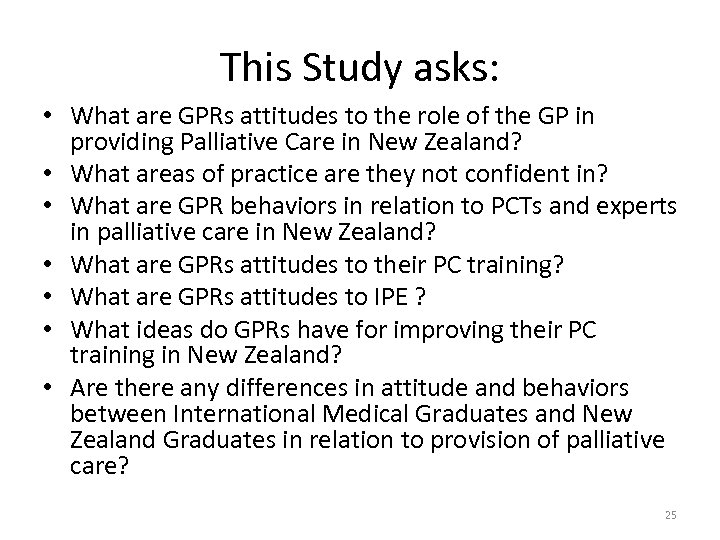 This Study asks: • What are GPRs attitudes to the role of the GP in providing Palliative Care in New Zealand? • What areas of practice are they not confident in? • What are GPR behaviors in relation to PCTs and experts in palliative care in New Zealand? • What are GPRs attitudes to their PC training? • What are GPRs attitudes to IPE ? • What ideas do GPRs have for improving their PC training in New Zealand? • Are there any differences in attitude and behaviors between International Medical Graduates and New Zealand Graduates in relation to provision of palliative care? 25
 Why do this study ? • Global Ageing Population • GP demographic changes • Need for Curriculum Development within GP vocational training scheme 26
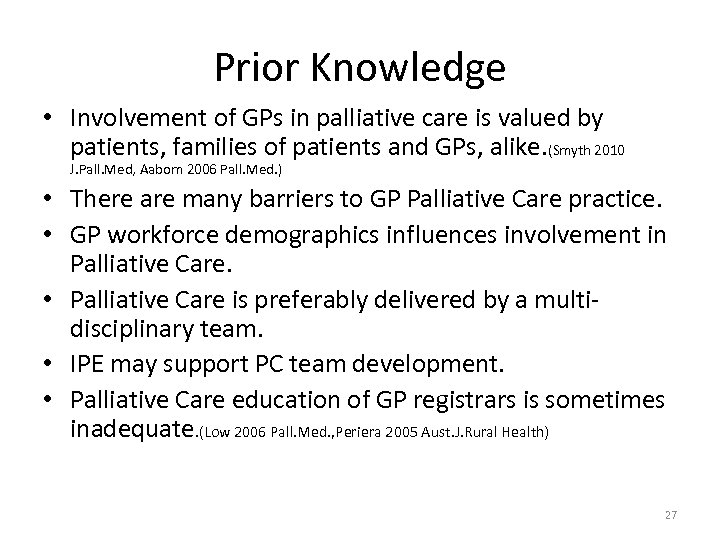 Prior Knowledge • Involvement of GPs in palliative care is valued by patients, families of patients and GPs, alike. (Smyth 2010 J. Pall. Med, Aabom 2006 Pall. Med. ) • There are many barriers to GP Palliative Care practice. • GP workforce demographics influences involvement in Palliative Care. • Palliative Care is preferably delivered by a multidisciplinary team. • IPE may support PC team development. • Palliative Care education of GP registrars is sometimes inadequate. (Low 2006 Pall. Med. , Periera 2005 Aust. J. Rural Health) 27
 Methodology • • • Online Questionnaire Ethics Literature search Refining the research questions Consultation with stakeholders Questionnaire construction Piloting Final questionnaire refinement Quantitative data analysis- SPSS Qualitative data analysis- n. Vivo 28
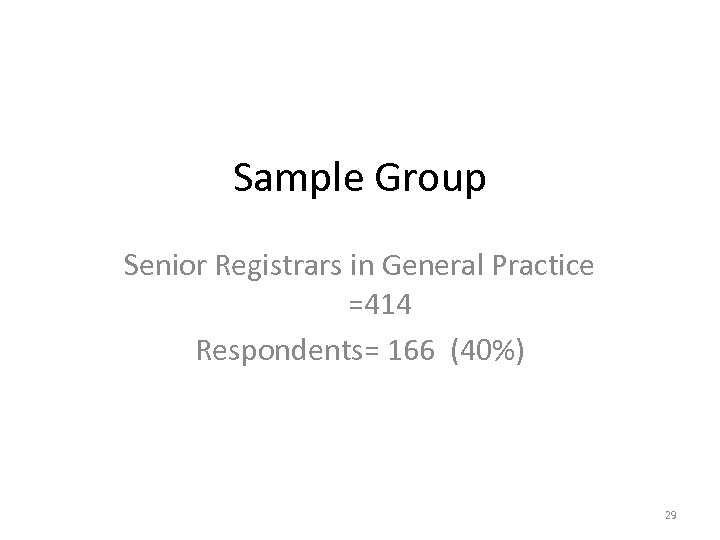 Sample Group Senior Registrars in General Practice =414 Respondents= 166 (40%) 29
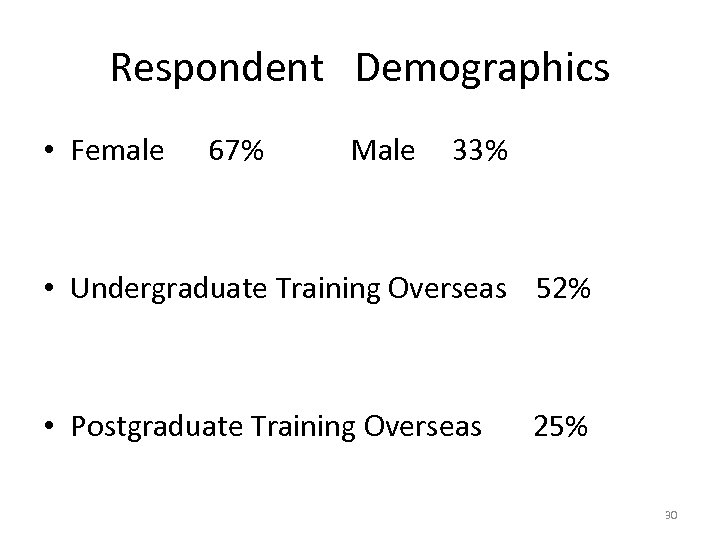 Respondent Demographics • Female 67% Male 33% • Undergraduate Training Overseas 52% • Postgraduate Training Overseas 25% 30
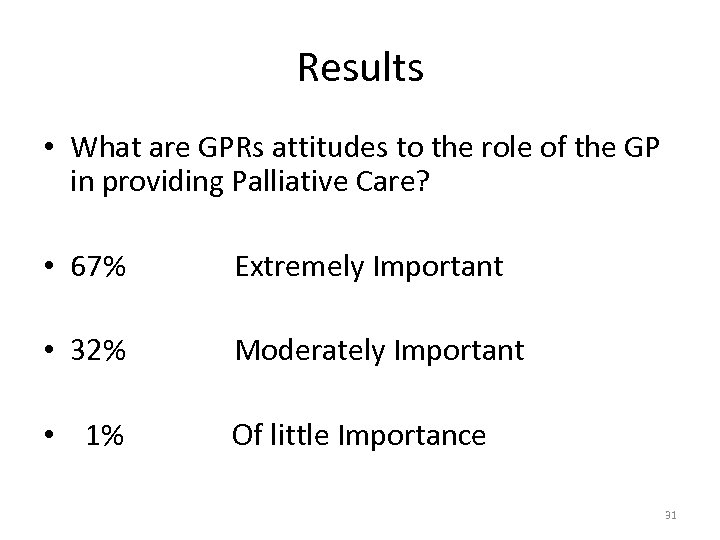 Results • What are GPRs attitudes to the role of the GP in providing Palliative Care? • 67% Extremely Important • 32% Moderately Important • 1% Of little Importance 31
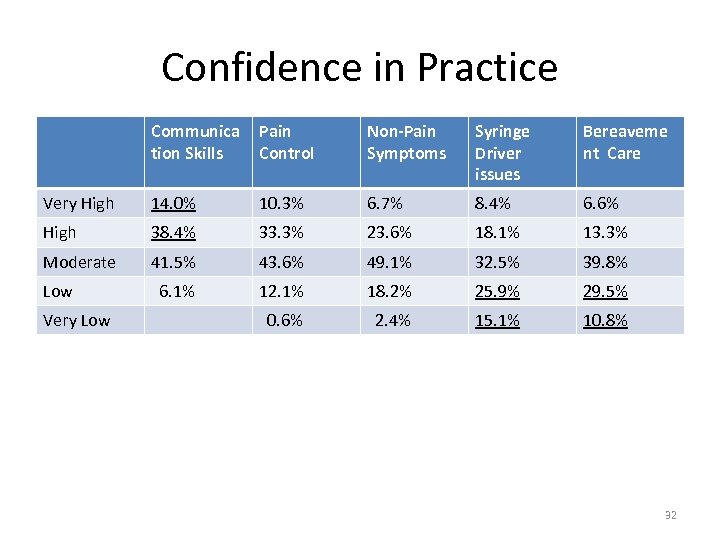 Confidence in Practice Communica tion Skills Pain Control Non-Pain Symptoms Syringe Driver issues Bereaveme nt Care Very High 14. 0% 10. 3% 6. 7% 8. 4% 6. 6% High 38. 4% 33. 3% 23. 6% 18. 1% 13. 3% Moderate 41. 5% 43. 6% 49. 1% 32. 5% 39. 8% 6. 1% 12. 1% 18. 2% 25. 9% 29. 5% 0. 6% 2. 4% 15. 1% 10. 8% Low Very Low 32
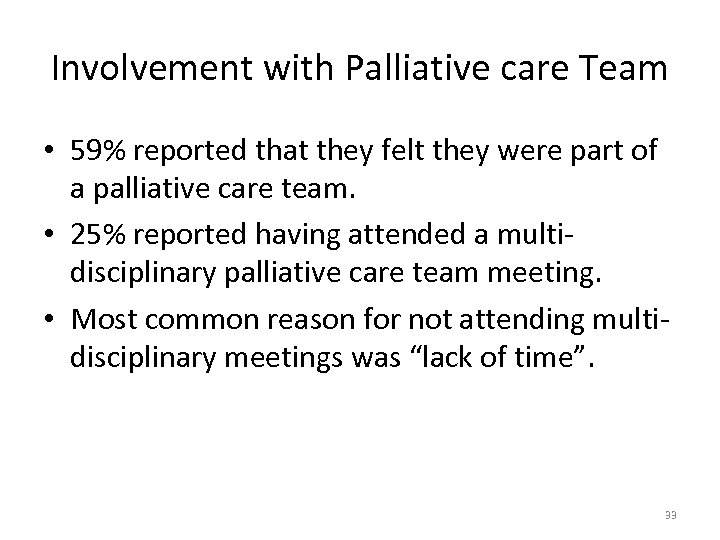 Involvement with Palliative care Team • 59% reported that they felt they were part of a palliative care team. • 25% reported having attended a multidisciplinary palliative care team meeting. • Most common reason for not attending multidisciplinary meetings was “lack of time”. 33
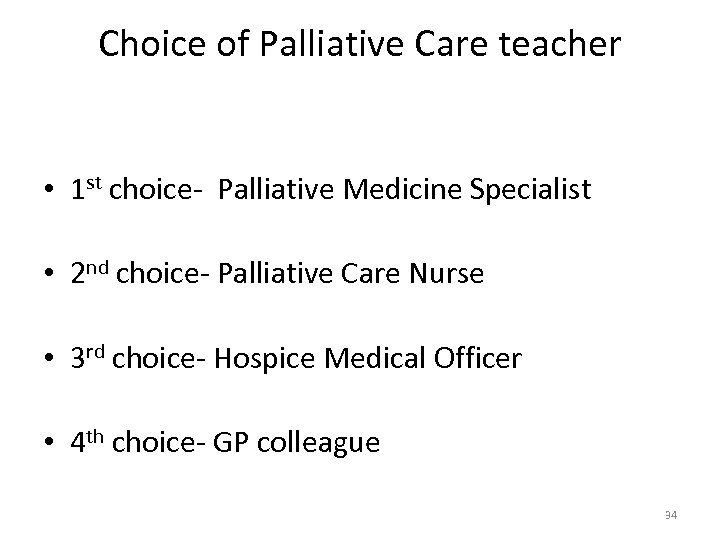 Choice of Palliative Care teacher • 1 st choice- Palliative Medicine Specialist • 2 nd choice- Palliative Care Nurse • 3 rd choice- Hospice Medical Officer • 4 th choice- GP colleague 34
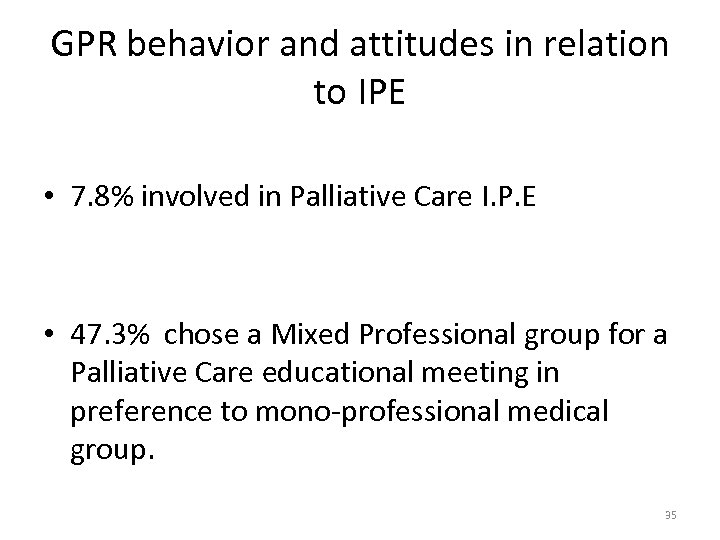 GPR behavior and attitudes in relation to IPE • 7. 8% involved in Palliative Care I. P. E • 47. 3% chose a Mixed Professional group for a Palliative Care educational meeting in preference to mono-professional medical group. 35
 Qualitative Data • Structure of GP Palliative Care Training • Learning about Palliative care (knowledge gaps, creating opportunity, supported early experience, self-motivation) • Inter-professional Collaboration 36
 Structure of Palliative Care. Training * Lack of structure* • “There needs to be a more structured approach” • “More formal in-depth training required” • “ It’s been minimal and picked-up along the way rather than structured” • “I’ve had rather little structured palliative care training in relation to its’ importance. ” 37
 Learning about Palliative Care *Self-motivation and opportunity* • “My knowledge is largely self-taught, also used BMJ online, CME and advice/help from other GPs /Hospice. ” • “Minimal training, so I arranged a day with the local hospice, on the strength of which I now work 1 -2 days per week there as a medical officer. ” • “As GP there seems to be a dearth of opportunities, unless one takes the initiative. ” • “Palliative care was an area that I took interest in as opposed to having it taught. ” 38
 Learning about Palliative care * Importance of Experience* • “The most useful thing at the end of the day is getting out there and doing it. ” • “Much of my knowledge has been acquired from working as a house officer and learning from colleagues on the job-not an ideal situation. ” • “Experience gained from looking after patients with terminal illness in conjunction with palliative care nurses were my greatest learning point. When you are in a rural practice you develop a special bond with your patients and make an extra effort to learn in order to care for them. ” 39
 Learning about Palliative Care *Gaps in learning* • “I have realized that I have huge gaps in my knowledge about how to care for a palliative care patient. ” • “No formal training in this area was given. ” • “There was virtually NO training in Palliative Care during my training (Auckland Medical School/GPEP 1 registrar). ” • “Poorly trained. Not much attention given by trainers and by me. ” • “I feel I need more knowledge in working out why certain symptoms are occurring. . ” 40
 Learning about Palliative Care * Support in early experiences* • “How much the training is imprinted probably depends very much upon the opportunities and the support(key) with which an individual doctor is presented in the practical component of their training. ” • “Availability of supervised palliative care exposure for senior GP Registrars or GPs with an interest, to try out work in the area, with the relevant support. ” • “I rely on hospice to tell me what to do. ” 41
 Inter-professional Collaboration • A wide range of responses. The elements of the positive responses included good communication, supported practice, feedback from the team, informal meetings and learning opportunities. 42
 Study Limitations • Resource Limitation in TIME and MONEY • What do GPRs know ? • What do GPRs do ? • Non-Respondents ? ? ? 43
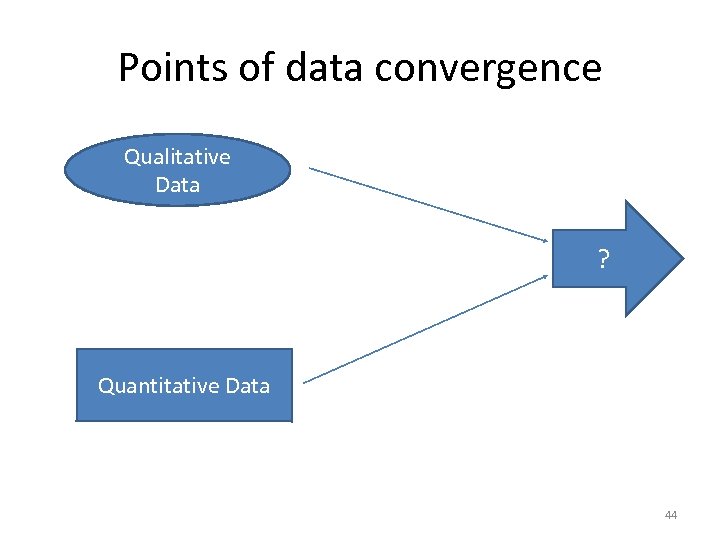 Points of data convergence Qualitative Data ? Quantitative Data 44
 Summary • GPRs value GP Palliative Care practice. • GPRs recognize the value of different members of PCT in areas of training and clinical practice. • Confidence in Bereavement Care and Syringe driver issues is lower than other domains AND the preferred support professionals in these 2 domains are not GP educators. • There may be an unmet need for greater Inter. Professional education. • GPRs value enhanced PC training. 45
 Unanswered Questions • Will the GPs of the future get the training and experience they need in Palliative Care? • What role does the Palliative Care Team have to play in providing this? • What initiatives will increase the involvement of GPs with Palliative Care Teams? 46
 Summary of Presentation Lake Taupo Hospice Palliative Care in my General Practice Brief data on 89 cases A Survey of Senior Registrars in General Practice • Questions for the future of medical education • • 47