


 Скачать презентацию Palliative Care in CKD Patients Peenida Skulratanasak Division
76bedf2f09a1be2d4d00a34625f72f86.ppt
- Количество слайдов: 23
 Palliative Care in CKD Patients Peenida Skulratanasak Division of Nephrology, Siriraj hospital
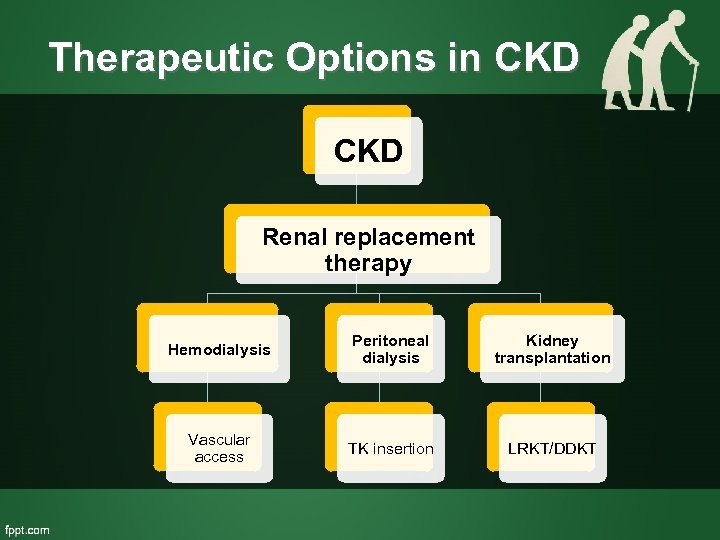 Therapeutic Options in CKD Renal replacement therapy Hemodialysis Peritoneal dialysis Kidney transplantation Vascular access TK insertion LRKT/DDKT
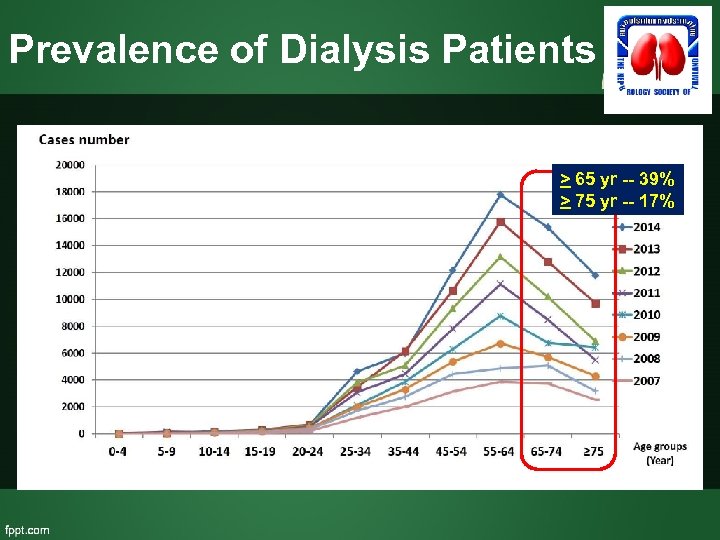 Prevalence of Dialysis Patients > 65 yr -- 39% > 75 yr -- 17%
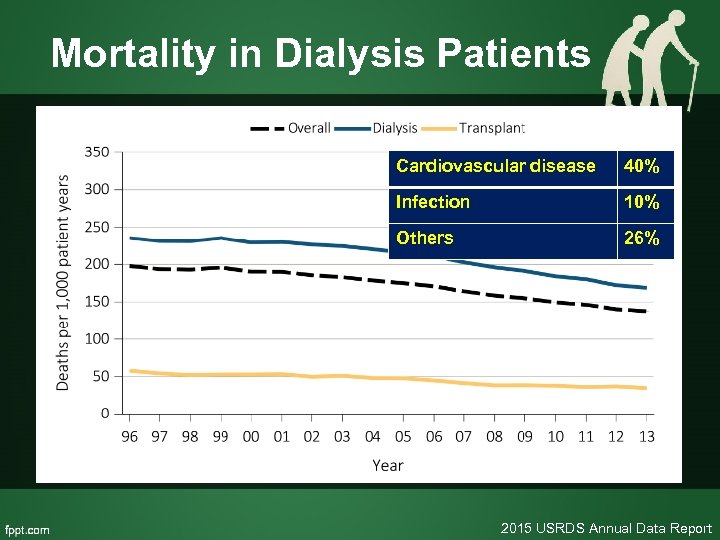 Mortality in Dialysis Patients Cardiovascular disease 40% Infection 10% Others 26% 2015 USRDS Annual Data Report
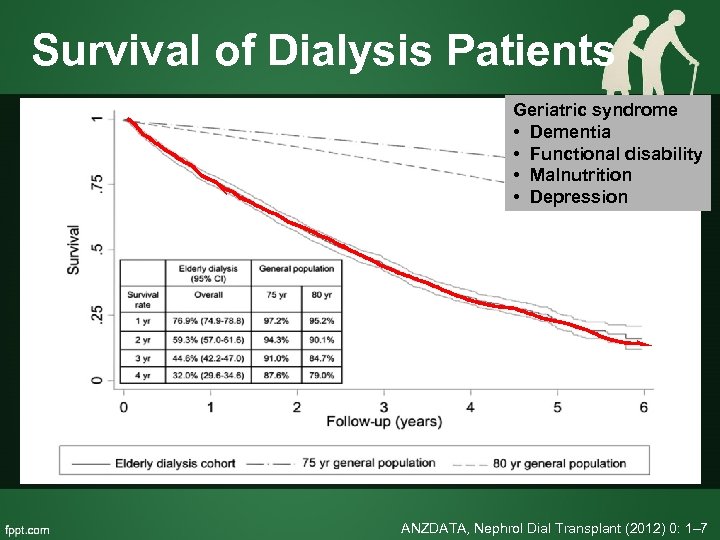 Survival of Dialysis Patients Geriatric syndrome • Dementia • Functional disability • Malnutrition • Depression ANZDATA, Nephrol Dial Transplant (2012) 0: 1– 7
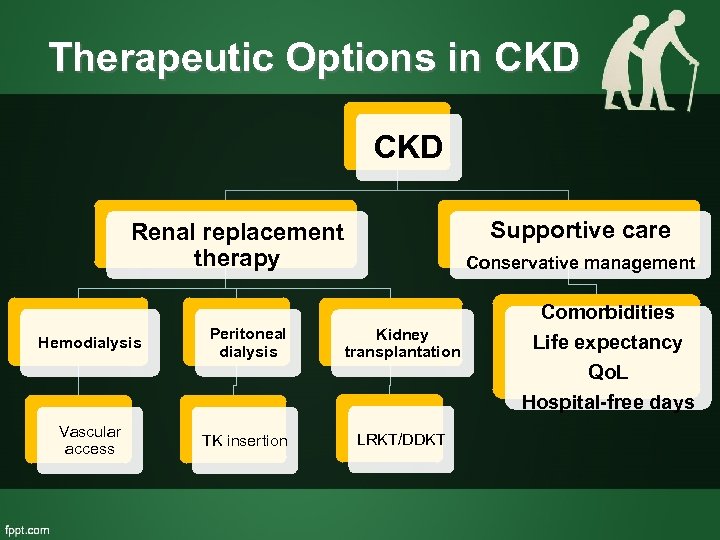 Therapeutic Options in CKD Supportive care Renal replacement therapy Hemodialysis Peritoneal dialysis Conservative management Kidney transplantation Comorbidities Life expectancy Qo. L Hospital-free days Vascular access TK insertion LRKT/DDKT
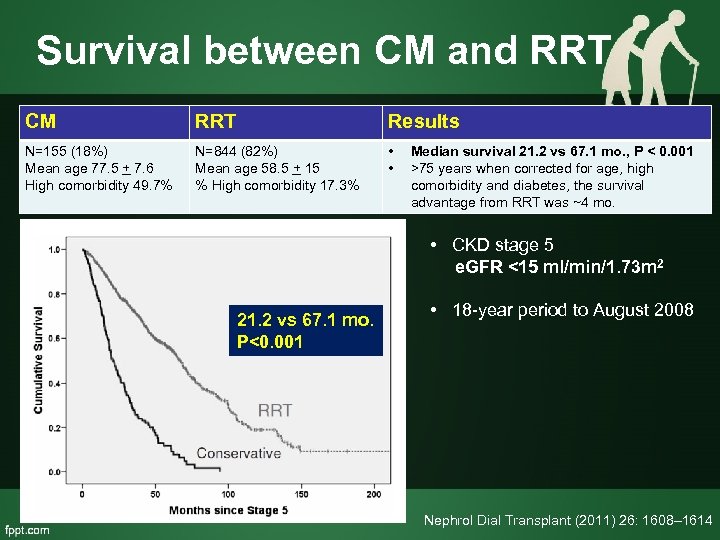 Survival between CM and RRT CM RRT Results N=155 (18%) Mean age 77. 5 + 7. 6 High comorbidity 49. 7% N=844 (82%) Mean age 58. 5 + 15 % High comorbidity 17. 3% • • Median survival 21. 2 vs 67. 1 mo. , P < 0. 001 >75 years when corrected for age, high comorbidity and diabetes, the survival advantage from RRT was ~4 mo. • CKD stage 5 e. GFR <15 ml/min/1. 73 m 2 21. 2 vs 67. 1 mo. P<0. 001 • 18 -year period to August 2008 Nephrol Dial Transplant (2011) 26: 1608– 1614
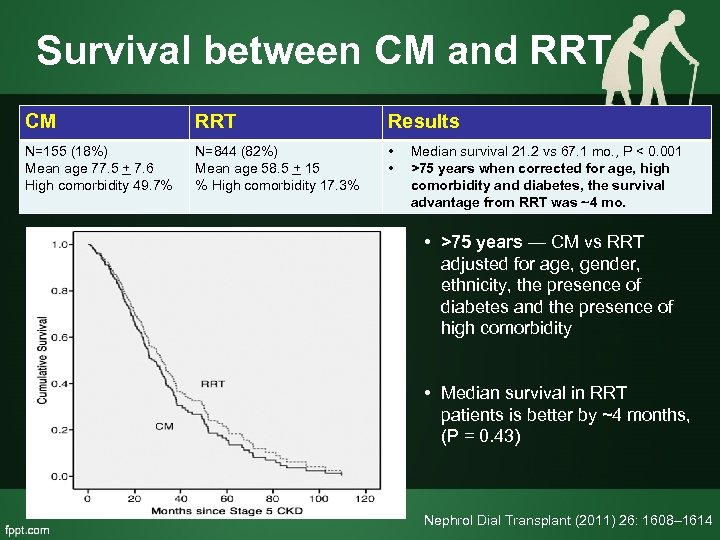 Survival between CM and RRT CM RRT Results N=155 (18%) Mean age 77. 5 + 7. 6 High comorbidity 49. 7% N=844 (82%) Mean age 58. 5 + 15 % High comorbidity 17. 3% • • Median survival 21. 2 vs 67. 1 mo. , P < 0. 001 >75 years when corrected for age, high comorbidity and diabetes, the survival advantage from RRT was ~4 mo. • >75 years — CM vs RRT adjusted for age, gender, ethnicity, the presence of diabetes and the presence of high comorbidity • Median survival in RRT patients is better by ~4 months, (P = 0. 43) Nephrol Dial Transplant (2011) 26: 1608– 1614
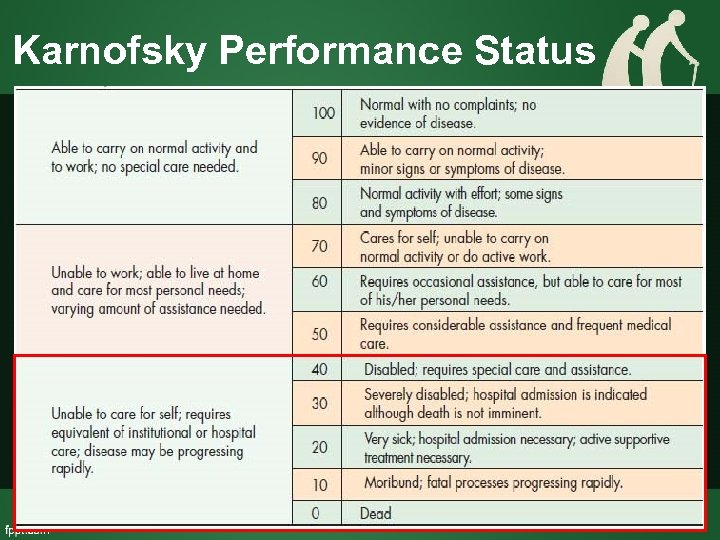
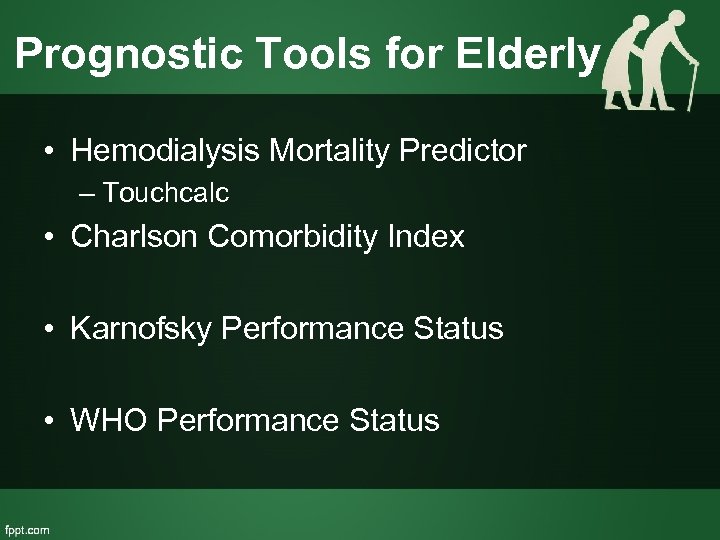 Prognostic Tools for Elderly • Hemodialysis Mortality Predictor – Touchcalc • Charlson Comorbidity Index • Karnofsky Performance Status • WHO Performance Status
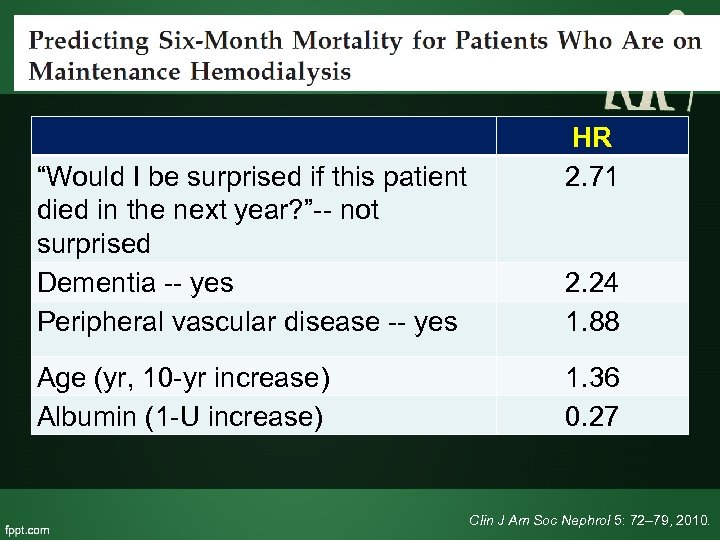 “Would I be surprised if this patient died in the next year? ”-- not surprised Dementia -- yes Peripheral vascular disease -- yes Age (yr, 10 -yr increase) Albumin (1 -U increase) HR 2. 71 2. 24 1. 88 1. 36 0. 27 Clin J Am Soc Nephrol 5: 72– 79, 2010.
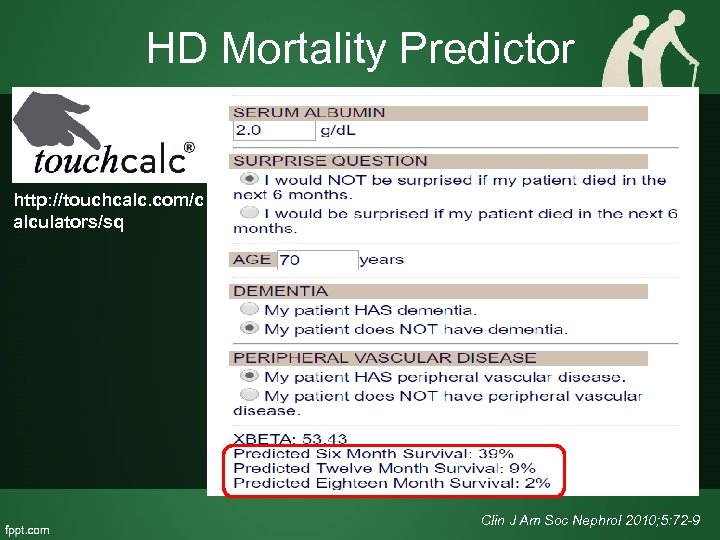 HD Mortality Predictor http: //touchcalc. com/c alculators/sq Clin J Am Soc Nephrol 2010; 5: 72 -9
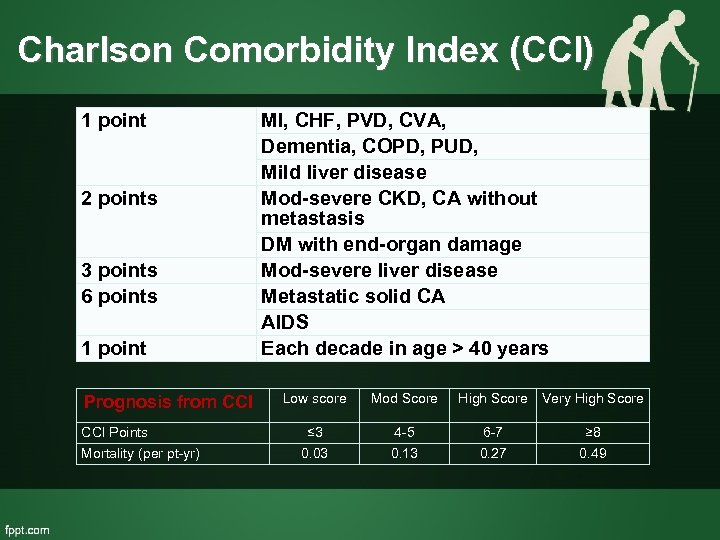 Charlson Comorbidity Index (CCI) 1 point 2 points 3 points 6 points 1 point Prognosis from CCI Points Mortality (per pt-yr) MI, CHF, PVD, CVA, Dementia, COPD, PUD, Mild liver disease Mod-severe CKD, CA without metastasis DM with end-organ damage Mod-severe liver disease Metastatic solid CA AIDS Each decade in age > 40 years Low score Mod Score High Score Very High Score ≤ 3 0. 03 4 -5 0. 13 6 -7 0. 27 ≥ 8 0. 49
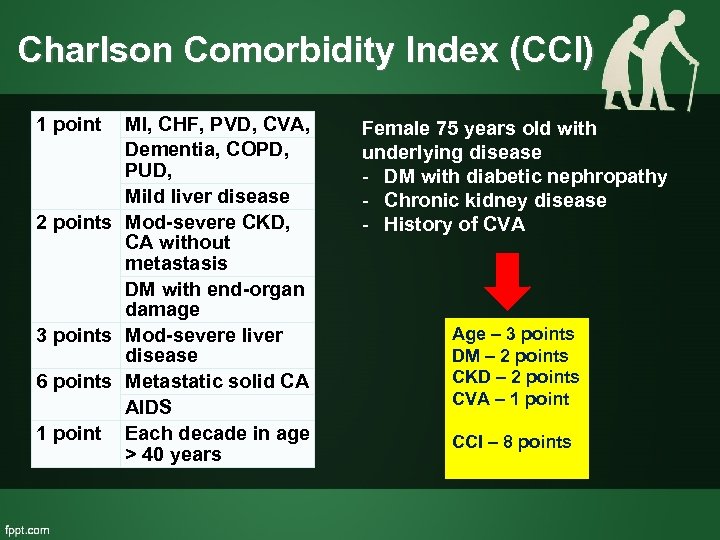 Charlson Comorbidity Index (CCI) 1 point MI, CHF, PVD, CVA, Dementia, COPD, PUD, Mild liver disease 2 points Mod-severe CKD, CA without metastasis DM with end-organ damage 3 points Mod-severe liver disease 6 points Metastatic solid CA AIDS 1 point Each decade in age > 40 years Female 75 years old with underlying disease - DM with diabetic nephropathy - Chronic kidney disease - History of CVA Age – 3 points DM – 2 points CKD – 2 points CVA – 1 point CCI – 8 points
 Karnofsky Performance Status
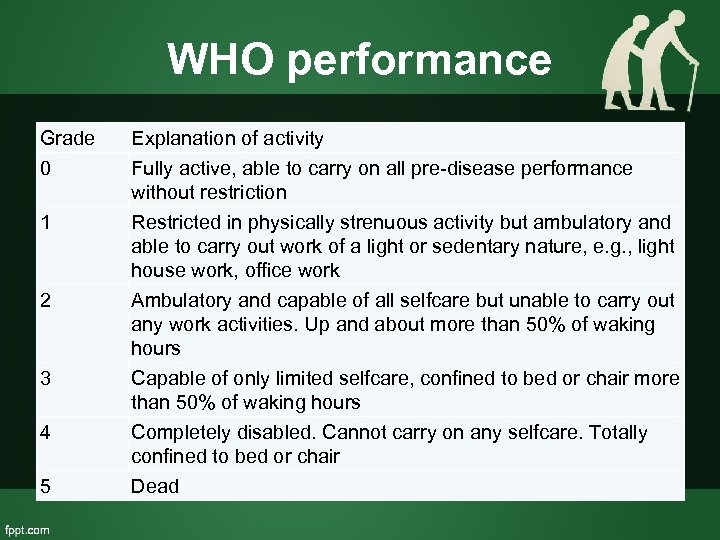 WHO performance Grade 0 1 2 3 4 5 Explanation of activity Fully active, able to carry on all pre-disease performance without restriction Restricted in physically strenuous activity but ambulatory and able to carry out work of a light or sedentary nature, e. g. , light house work, office work Ambulatory and capable of all selfcare but unable to carry out any work activities. Up and about more than 50% of waking hours Capable of only limited selfcare, confined to bed or chair more than 50% of waking hours Completely disabled. Cannot carry on any selfcare. Totally confined to bed or chair Dead
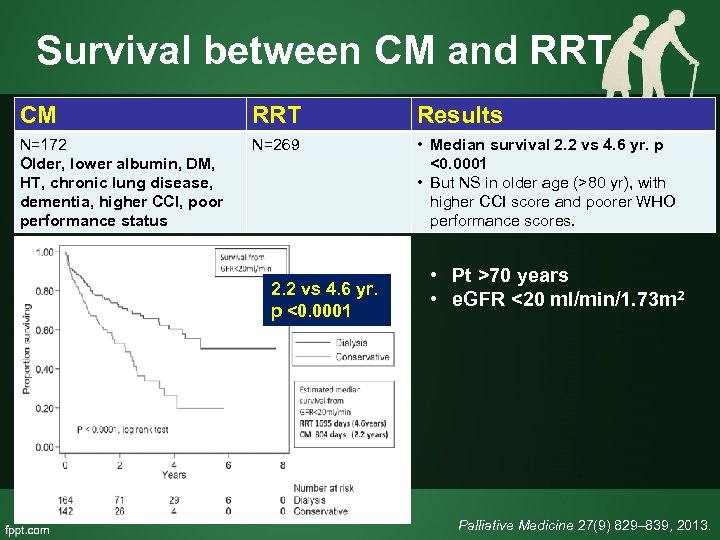 Survival between CM and RRT CM RRT Results N=172 Older, lower albumin, DM, HT, chronic lung disease, dementia, higher CCI, poor performance status N=269 • Median survival 2. 2 vs 4. 6 yr. p <0. 0001 • But NS in older age (>80 yr), with higher CCI score and poorer WHO performance scores. 2. 2 vs 4. 6 yr. p <0. 0001 • Pt >70 years • e. GFR <20 ml/min/1. 73 m 2 Palliative Medicine 27(9) 829– 839, 2013.
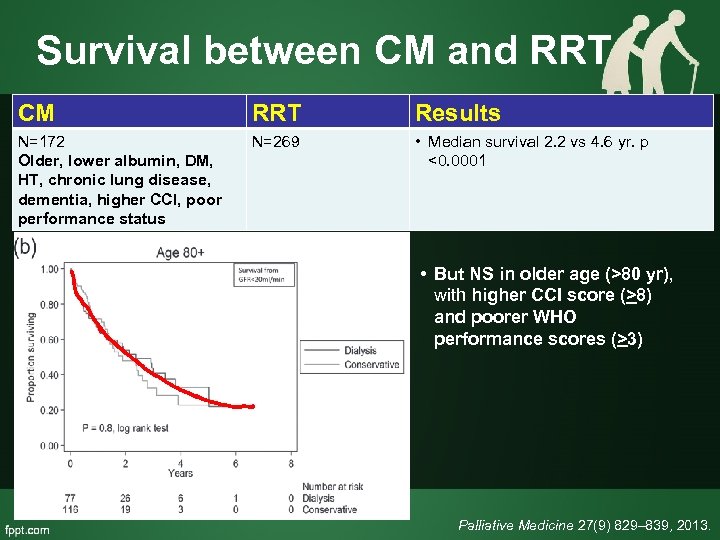 Survival between CM and RRT CM RRT Results N=172 Older, lower albumin, DM, HT, chronic lung disease, dementia, higher CCI, poor performance status N=269 • Median survival 2. 2 vs 4. 6 yr. p <0. 0001 • But NS in older age (>80 yr), with higher CCI score (>8) and poorer WHO performance scores (>3) Palliative Medicine 27(9) 829– 839, 2013.
 • • Optimize Qo. L Avoid unnecessary hospitalizations Hospital-free day Control symptoms • A prospective study from the UK – Conservative management – Patient survival of 1. 95 years, with a 1 year survival rate of 65% – 60% of these patients did not have any hospital admissions over the 3 -year follow-up Ren. Fail. 29(6), 653– 659 (2007)
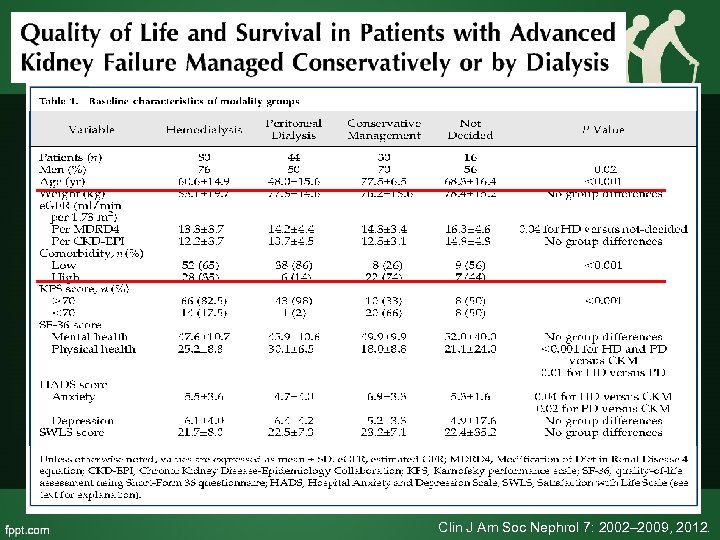 • Quality of life assessment – SF-36 mental health and physical health – HADS: Hospital anxiety and depression scale – SWLS: Satisfaction with life scale Clin J Am Soc Nephrol 7: 2002– 2009, 2012.
 • Multilevel growth models demonstrated no serial change in quality-of-life measures • Starting dialysis led to a significant decrease in the SWLS score Clin J Am Soc Nephrol 7: 2002– 2009, 2012.
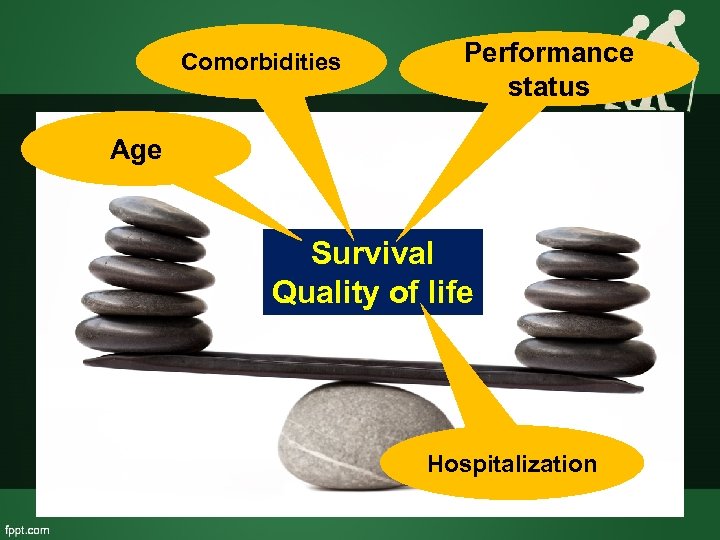 Comorbidities Performance status Age Survival Quality of life Hospitalization
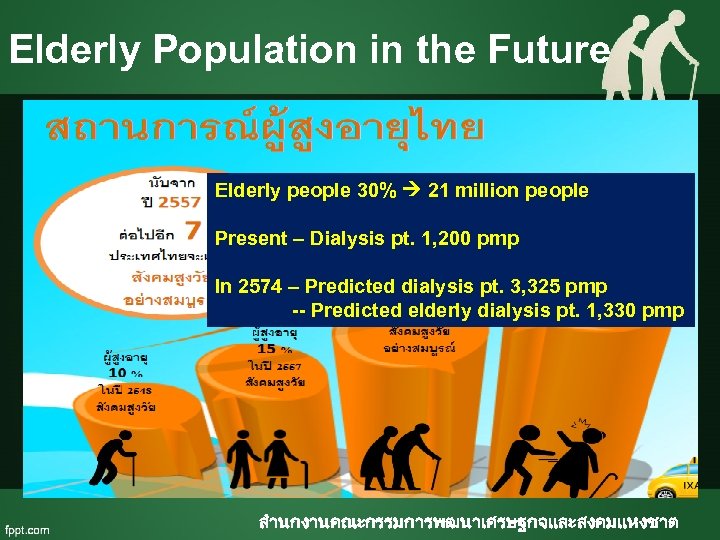 Elderly Population in the Future Elderly people 30% 21 million people Present – Dialysis pt. 1, 200 pmp In 2574 – Predicted dialysis pt. 3, 325 pmp -- Predicted elderly dialysis pt. 1, 330 pmp สำนกงานคณะกรรมการพฒนาเศรษฐกจและสงคมแหงชาต
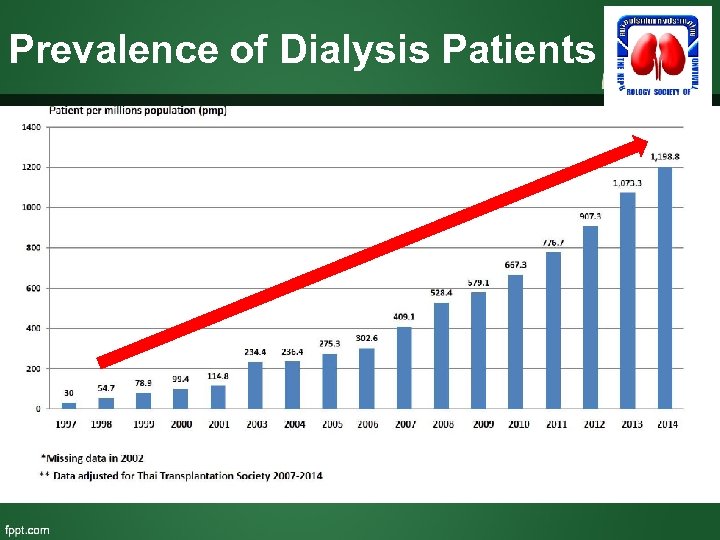 Prevalence of Dialysis Patients