 Скачать презентацию PALESTİNE Black- The Prophet Mohammad 570 -632
a07cf8a72b1b708afe747f74d46d4af1.ppt
- Количество слайдов: 29



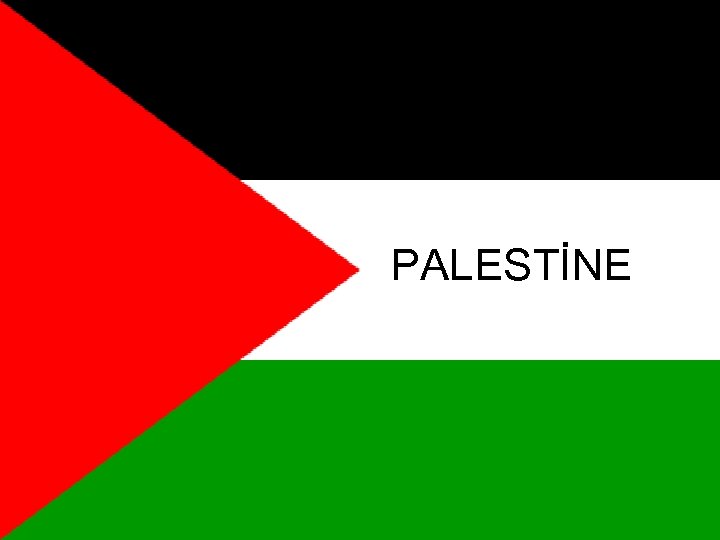
PALESTİNE
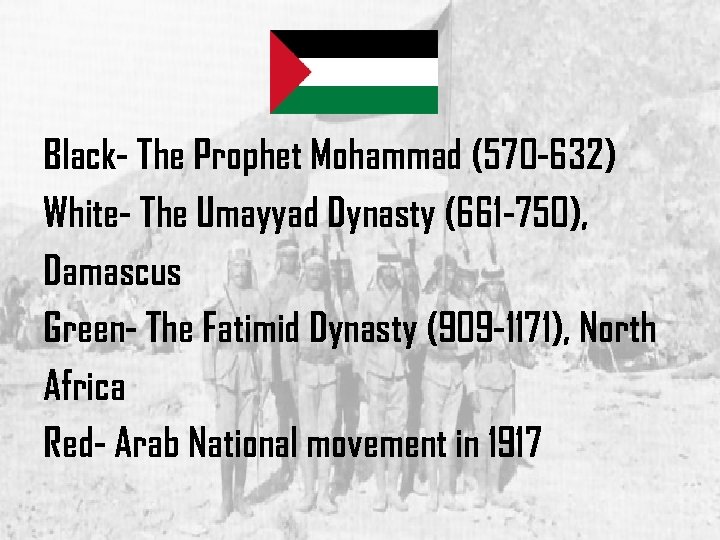
Black- The Prophet Mohammad (570 -632) White- The Umayyad Dynasty (661 -750), Damascus Green- The Fatimid Dynasty (909 -1171), North Africa Red- Arab National movement in 1917
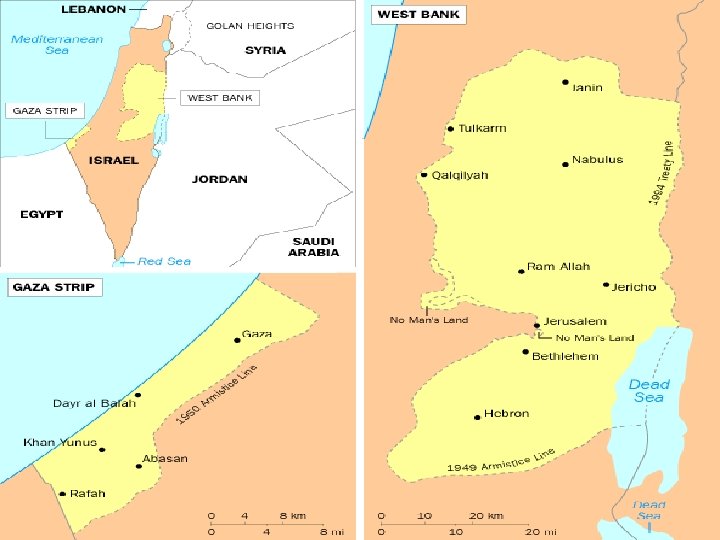
CONTENT 1. Introduction 2. Maps of Gaza Strip & West Bank 3. Palestinian National Authority 3. 1 General Informations about “Gaza Strip” 3. 2 General Informations about “West Bank” 4. Historical chronology of “Palestine”
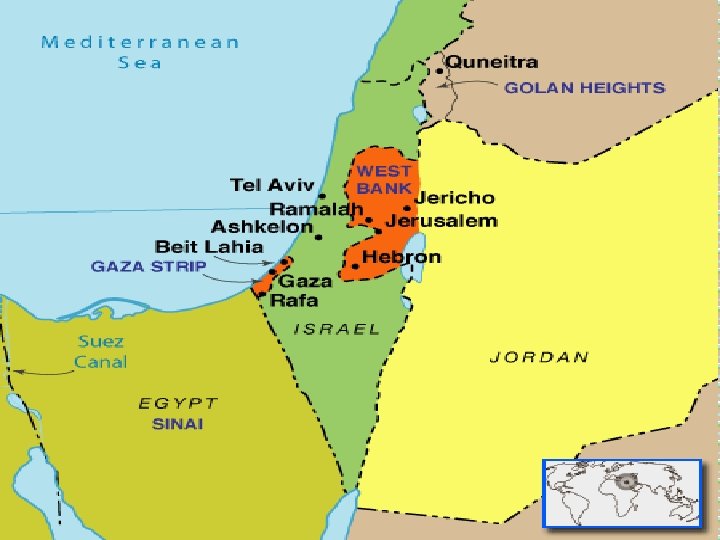
Geography
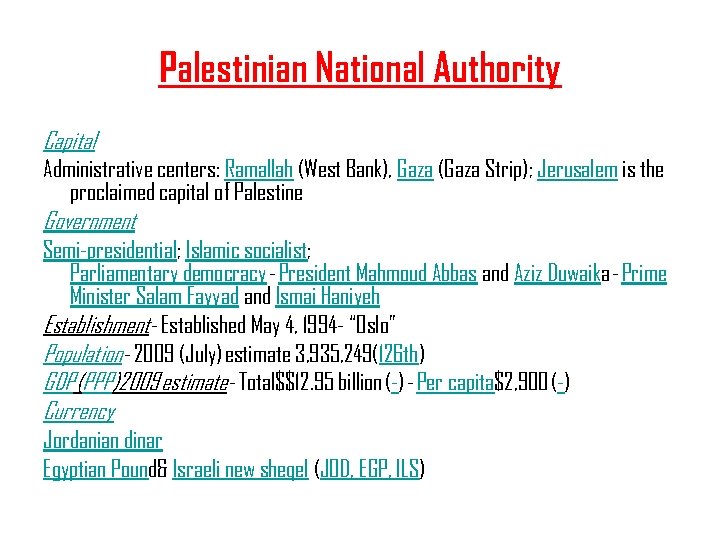
Palestinian National Authority Capital Administrative centers: Ramallah (West Bank), Gaza (Gaza Strip); Jerusalem is the proclaimed capital of Palestine Government Semi-presidential; Islamic socialist; Parliamentary democracy - President Mahmoud Abbas and Aziz Duwaika - Prime Minister Salam Fayyad and Ismai Haniyeh Establishment - Established May 4, 1994 - “Oslo” Population - 2009 (July) estimate 3, 935, 249(126 th) GDP (PPP)2009 estimate - Total$$12. 95 billion (-) - Per capita$2, 900 (-) Currency Jordanian dinar Egyptian Pound& Israeli new sheqel (JOD, EGP, ILS)
? Representation of the Palestinian National Authority abroad is performed by the Palestine Liberation Organization. In states that recognise the State of Palestine it maintains embassies and in other states it maintains "delegations" or "missions". Representations of foreign states to the Palestinian National Authority are performed by "missions" or "offices" in Ramallah and Gaza. States that recognise the State of Palestine also accredit to the Palestine Liberation Organization (as the government-in-exile of the State of Palestine) non-resident ambassadors residing in third countries
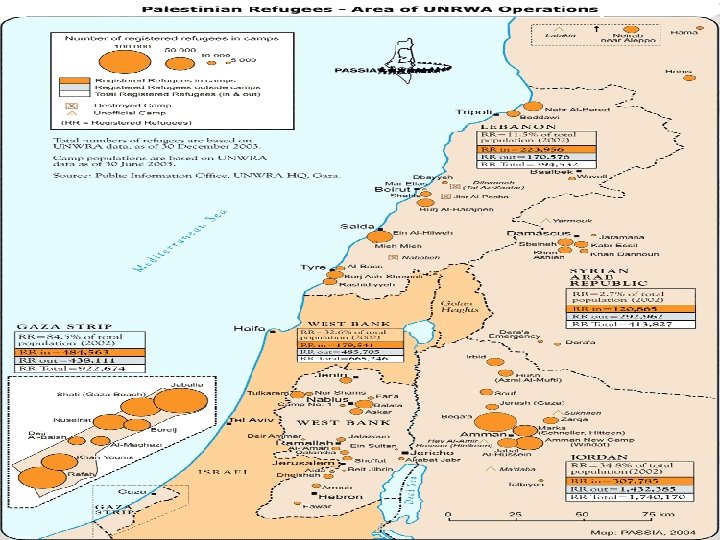
I. Gaza Strip II. West Bank I. Gaza Strip: Location: Middle East, bordering the Mediterranean Sea, between Egypt and Israel Population: 1, 604, 238 (July 2010 est. ) country comparison to the world: 149 Ethnic groups: Palestinian Arab Religions: Muslim (predominantly Sunni) 99. 3%, Christaian 0. 7% Languages: Arabic, Hebrew (spoken by many Palestinians), English (widely understood) Economy: High population density, limited land sea access, continuing isolation, and strict internal and external security controls => fighting between HAMAS and Israel during December 2008 -January 2009, resulted in the near collapse of most of the private sector, extremely high unemployment, and high poverty rates. Natural resources: arable land, natural gas Land use: arable land: 29% permanent crops: 21% other: 50% (2002)
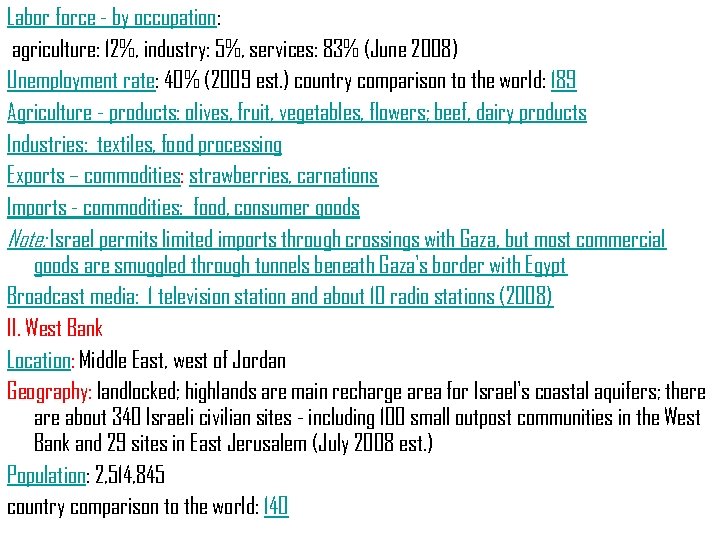
Labor force - by occupation: agriculture: 12%, industry: 5%, services: 83% (June 2008) Unemployment rate: 40% (2009 est. ) country comparison to the world: 189 Agriculture - products: olives, fruit, vegetables, flowers; beef, dairy products Industries: textiles, food processing Exports – commodities: strawberries, carnations Imports - commodities: food, consumer goods Note: Israel permits limited imports through crossings with Gaza, but most commercial goods are smuggled through tunnels beneath Gaza's border with Egypt Broadcast media: 1 television station and about 10 radio stations (2008) II. West Bank Location: Middle East, west of Jordan Geography: landlocked; highlands are main recharge area for Israel's coastal aquifers; there about 340 Israeli civilian sites - including 100 small outpost communities in the West Bank and 29 sites in East Jerusalem (July 2008 est. ) Population: 2, 514, 845 country comparison to the world: 140
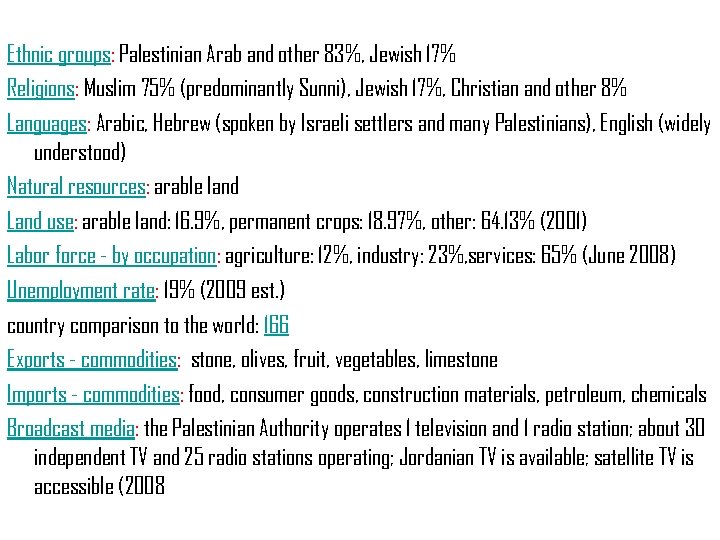
Ethnic groups: Palestinian Arab and other 83%, Jewish 17% Religions: Muslim 75% (predominantly Sunni), Jewish 17%, Christian and other 8% Languages: Arabic, Hebrew (spoken by Israeli settlers and many Palestinians), English (widely understood) Natural resources: arable land Land use: arable land: 16. 9%, permanent crops: 18. 97%, other: 64. 13% (2001) Labor force - by occupation: agriculture: 12%, industry: 23%, services: 65% (June 2008) Unemployment rate: 19% (2009 est. ) country comparison to the world: 166 Exports - commodities: stone, olives, fruit, vegetables, limestone Imports - commodities: food, consumer goods, construction materials, petroleum, chemicals Broadcast media: the Palestinian Authority operates 1 television and 1 radio station; about 30 independent TV and 25 radio stations operating; Jordanian TV is available; satellite TV is accessible (2008
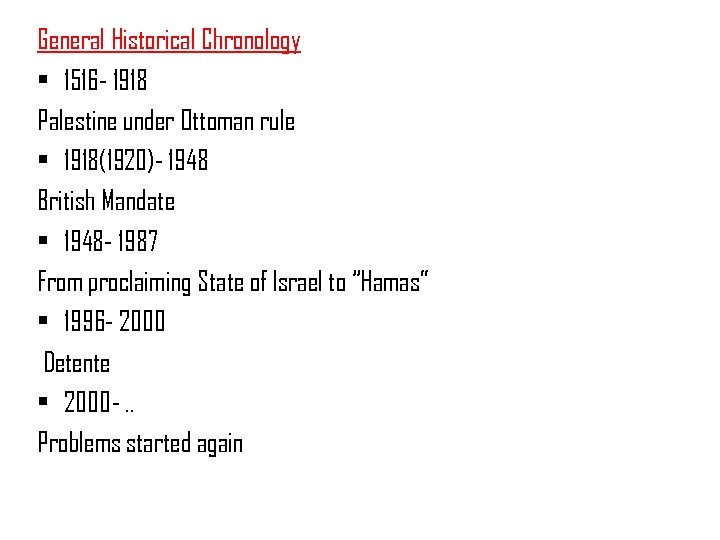
General Historical Chronology • 1516 - 1918 Palestine under Ottoman rule • 1918(1920)- 1948 British Mandate • 1948 - 1987 From proclaiming State of Israel to “Hamas” • 1996 - 2000 Detente • 2000 -. . Problems started again
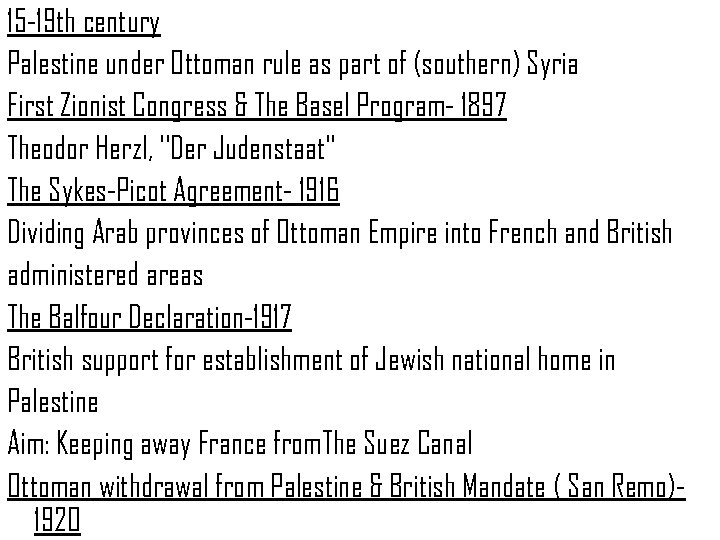
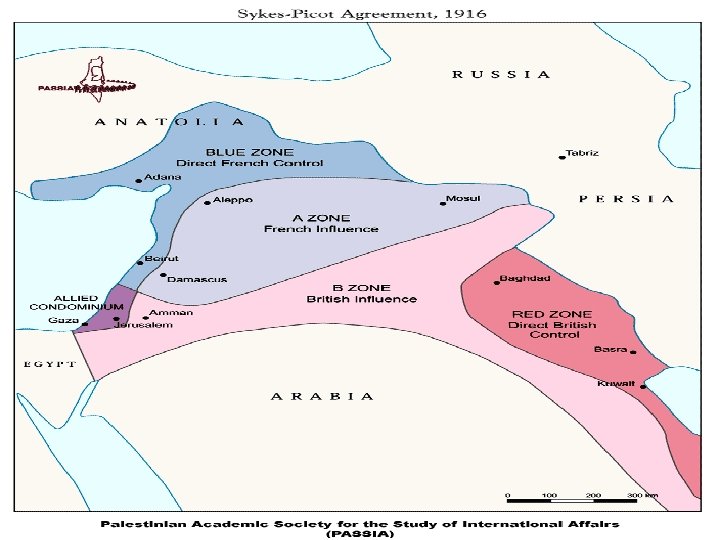
15 -19 th century Palestine under Ottoman rule as part of (southern) Syria First Zionist Congress & The Basel Program- 1897 Theodor Herzl, ''Der Judenstaat'' The Sykes-Picot Agreement- 1916 Dividing Arab provinces of Ottoman Empire into French and British administered areas The Balfour Declaration-1917 British support for establishment of Jewish national home in Palestine Aim: Keeping away France from. The Suez Canal Ottoman withdrawal from Palestine & British Mandate ( San Remo)1920
• Islam (97%) Christianity (3%)
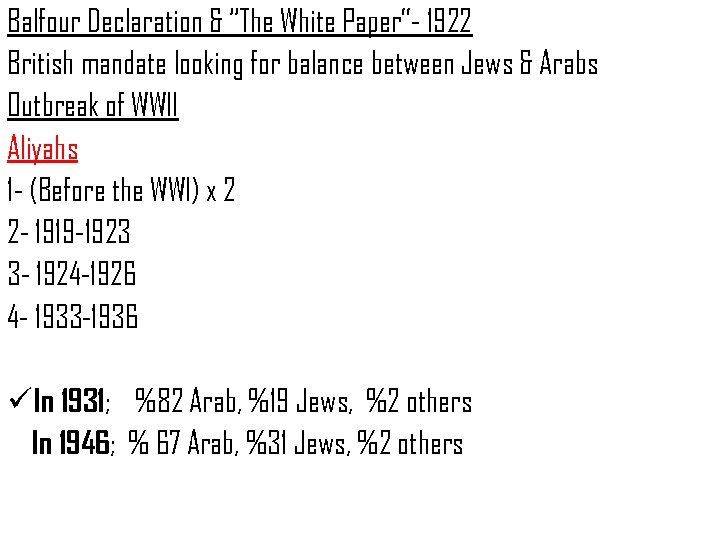
Balfour Declaration & “The White Paper”- 1922 British mandate looking for balance between Jews & Arabs Outbreak of WWII Aliyahs 1 - (Before the WWI) x 2 2 - 1919 -1923 3 - 1924 -1926 4 - 1933 -1936 ü In 1931; %82 Arab, %19 Jews, %2 others In 1946; % 67 Arab, %31 Jews, %2 others
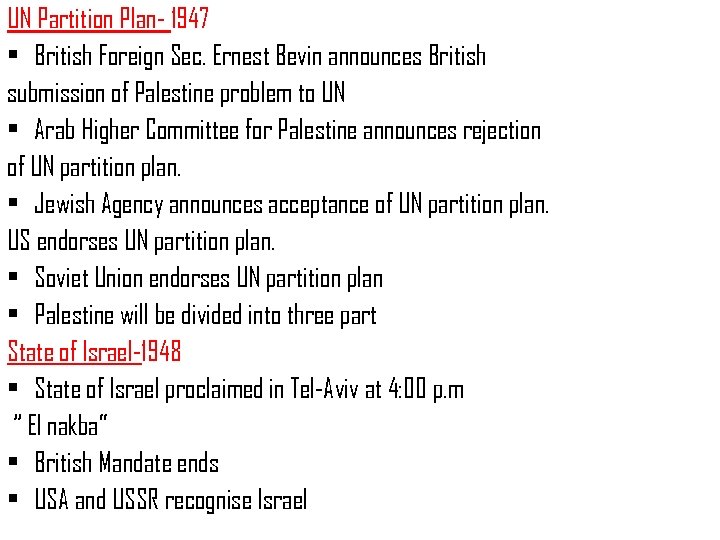
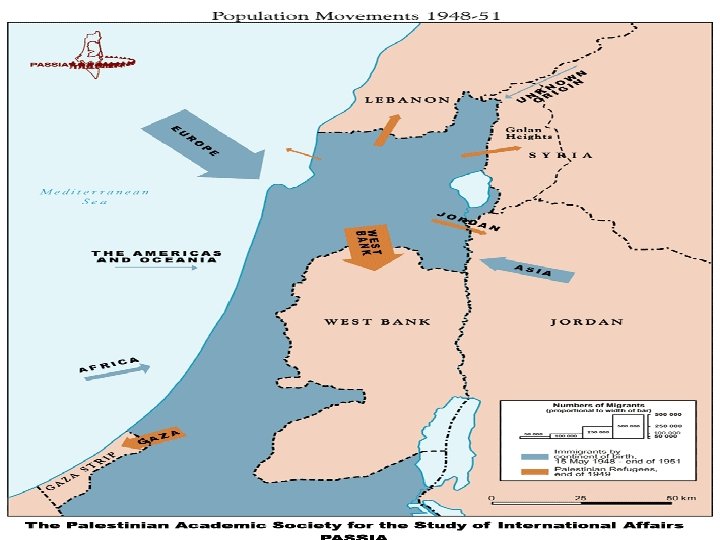
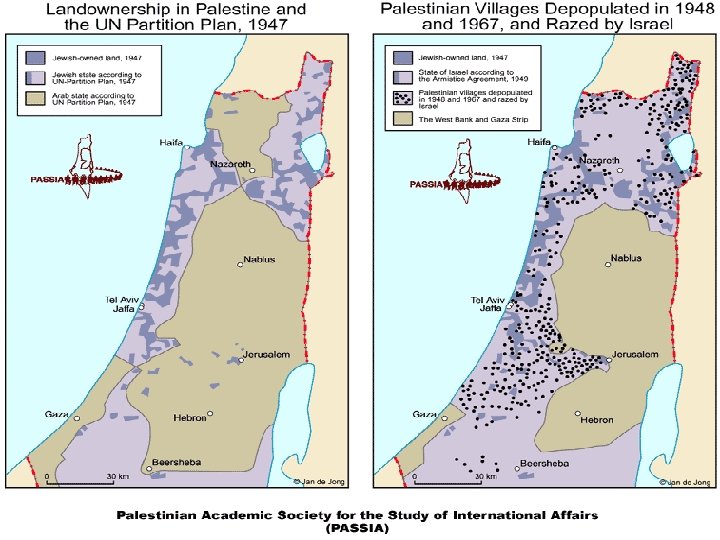
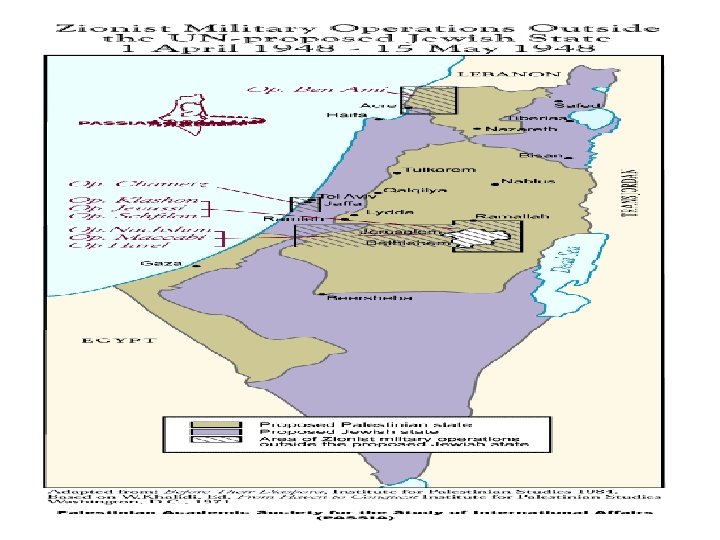
UN Partition Plan- 1947 • British Foreign Sec. Ernest Bevin announces British submission of Palestine problem to UN • Arab Higher Committee for Palestine announces rejection of UN partition plan. • Jewish Agency announces acceptance of UN partition plan. US endorses UN partition plan. • Soviet Union endorses UN partition plan • Palestine will be divided into three part State of Israel-1948 • State of Israel proclaimed in Tel-Aviv at 4: 00 p. m “ El nakba” • British Mandate ends • USA and USSR recognise Israel
15 th-19 th Century Palestine under Ottoman rule as part of (southern) Syria
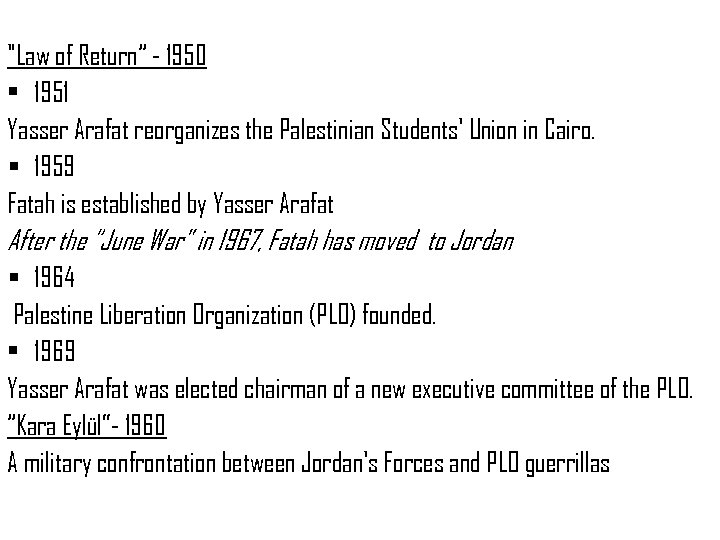
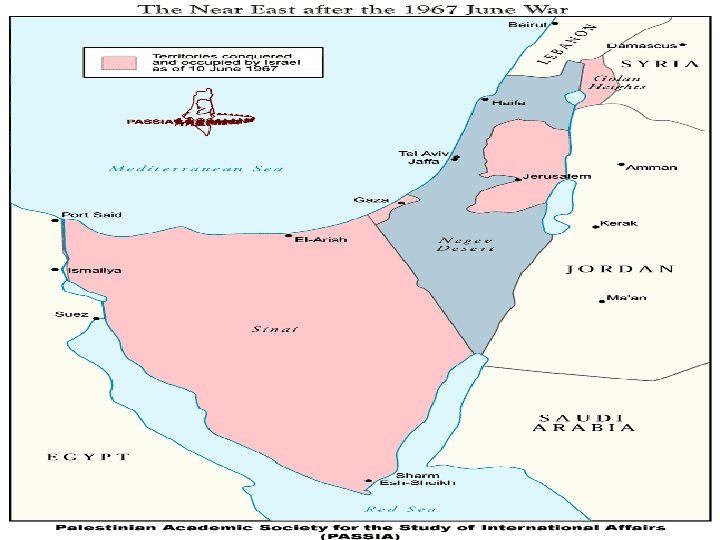
"Law of Return“ - 1950 • 1951 Yasser Arafat reorganizes the Palestinian Students' Union in Cairo. § 1959 Fatah is established by Yasser Arafat After the “June War” in 1967, Fatah has moved to Jordan § 1964 Palestine Liberation Organization (PLO) founded. • 1969 Yasser Arafat was elected chairman of a new executive committee of the PLO. “Kara Eylül”- 1960 A military confrontation between Jordan's Forces and PLO guerrillas
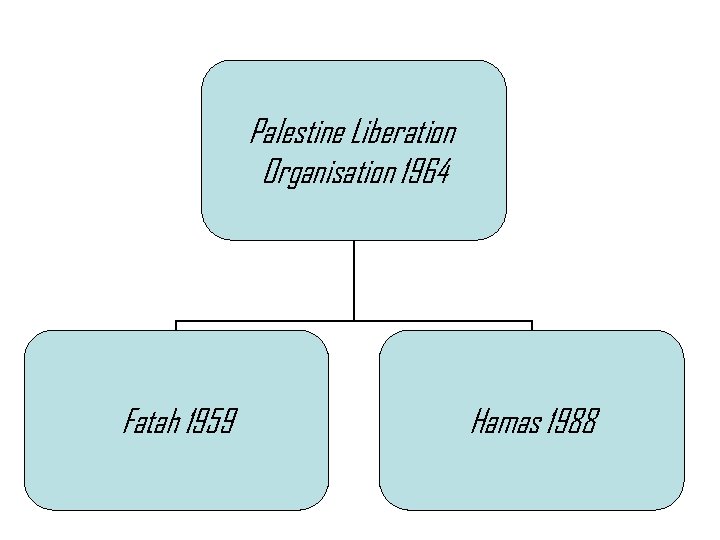
Palestine Liberation Organisation 1964 Fatah 1959 Hamas 1988
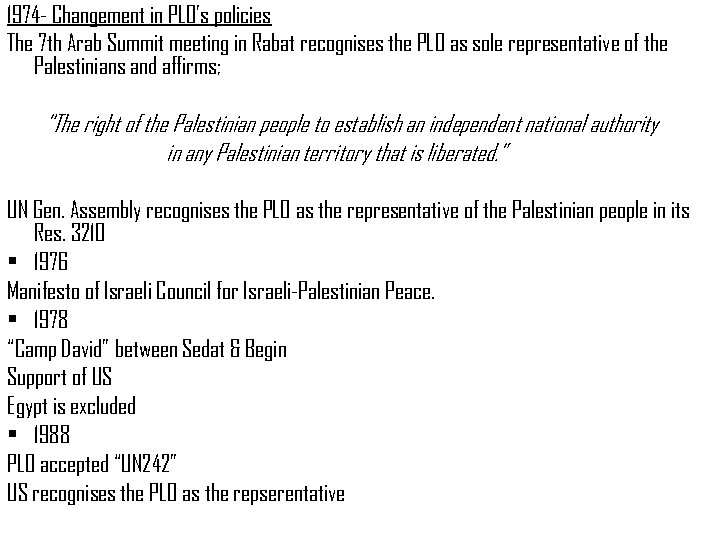
1974 - Changement in PLO’s policies The 7 th Arab Summit meeting in Rabat recognises the PLO as sole representative of the Palestinians and affirms; “The right of the Palestinian people to establish an independent national authority in any Palestinian territory that is liberated. ” UN Gen. Assembly recognises the PLO as the representative of the Palestinian people in its Res. 3210 • 1976 Manifesto of Israeli Council for Israeli-Palestinian Peace. • 1978 “Camp David” between Sedat & Begin Support of US Egypt is excluded • 1988 PLO accepted “UN 242” US recognises the PLO as the repserentative
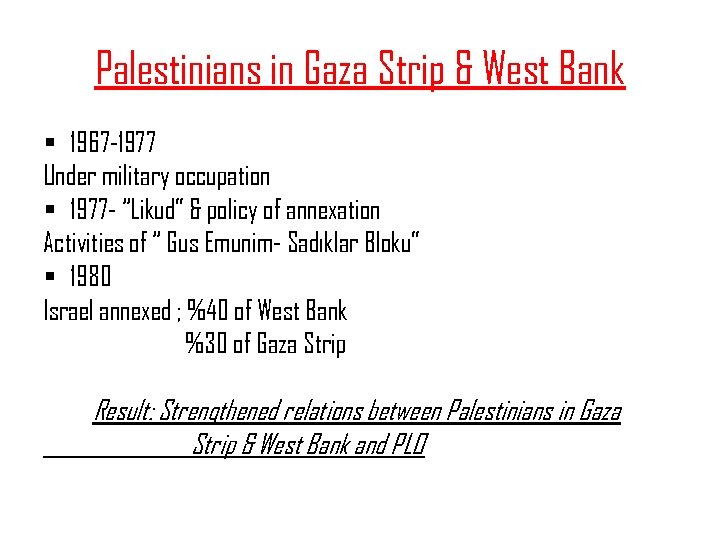
Palestinians in Gaza Strip & West Bank § 1967 -1977 Under military occupation § 1977 - “Likud” & policy of annexation Activities of “ Gus Emunim- Sadıklar Bloku” § 1980 Israel annexed ; %40 of West Bank %30 of Gaza Strip Result: Strengthened relations between Palestinians in Gaza Strip & West Bank and PLO
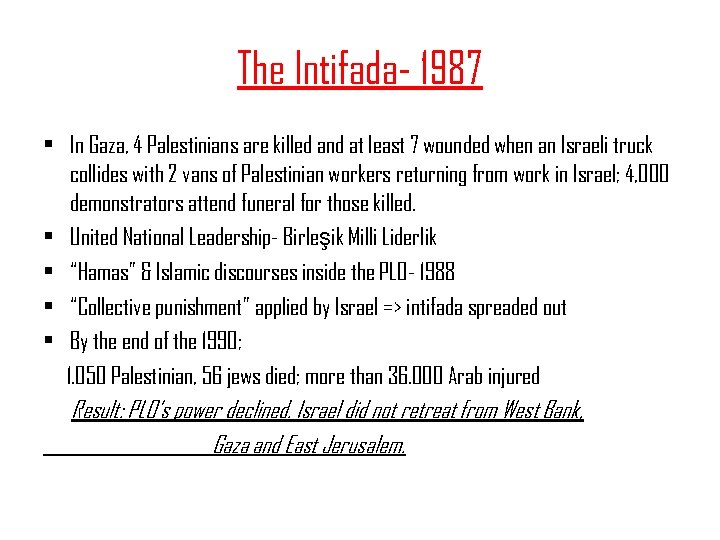
The Intifada- 1987 • In Gaza, 4 Palestinians are killed and at least 7 wounded when an Israeli truck collides with 2 vans of Palestinian workers returning from work in Israel; 4, 000 demonstrators attend funeral for those killed. • United National Leadership- Birleşik Milli Liderlik • “Hamas” & Islamic discourses inside the PLO- 1988 • “Collective punishment” applied by Israel => intifada spreaded out • By the end of the 1990; 1. 050 Palestinian, 56 jews died; more than 36. 000 Arab injured Result: PLO’s power declined. Israel did not retreat from West Bank, Gaza and East Jerusalem.
Oslo Accords “Declaration of Principles on Interim Self-Government Arrangements” or “Declaration of Principles” • • Milestone in the ongoing Palestinian-Israeli conflict Between government of Israel & PLO Madrid Conference-1991 Public Ceramony in Washington; 13 September 1993, in the presence of PLO chairman Yasser Arafat, Israeli Prime Minister Yitzhak Rabin and US President Bill Clinton • The Palestinian Authority would have responsibility for the administration of the territory under its control. The Accords also called for the withdrawal of the Israel Defense Forces (IDF) from parts of the Gaza Strip and West Bank. Problems: “Tunusians” inside the PLO & Hamas’s practices ; religionists reactions in Israel
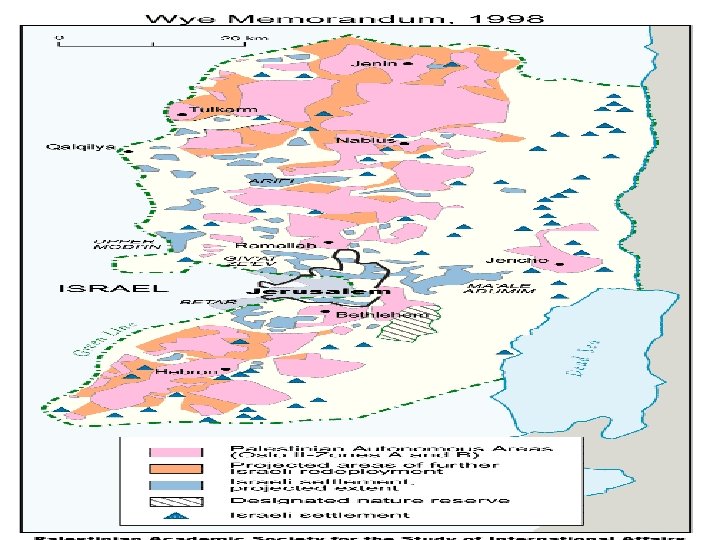
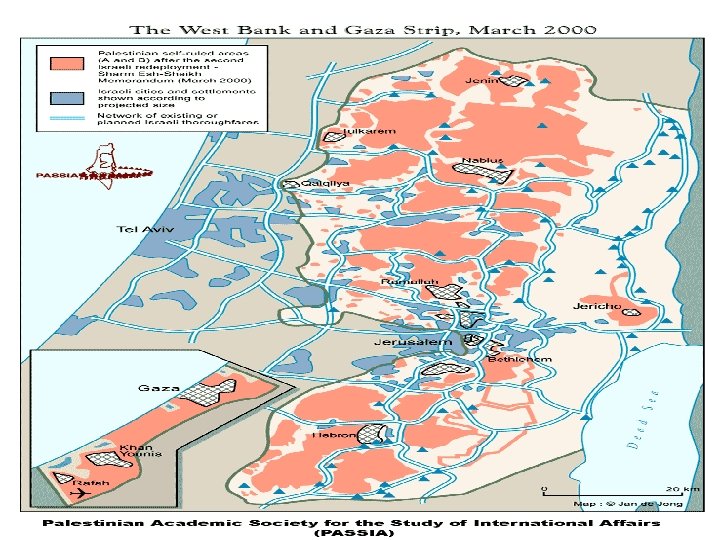
Wye Memorandum- 1998 • Netenyahu & Arafat + US • Israel’s withdraw from %13 of West Bank • Problems in “Likud” & Barak • Camp Dawid II- 2000 Barak& Arafat + US ( Bill Clington) “Different comments on Jerusalem” Second Intifada- 2000 Pressure of Israel increased “Harem-ul Serif” More militarized than the first one
 Скачать презентацию PALESTİNE Black- The Prophet Mohammad 570 -632
a07cf8a72b1b708afe747f74d46d4af1.ppt