


 Скачать презентацию Pakistan Educational Leadership Institute 2010 July 05 -31
10600b941c33f72f53138370fc0748d8.ppt
- Количество слайдов: 16
 Pakistan Educational Leadership Institute 2010 July 05 -31, 2010 Academic Dimensions
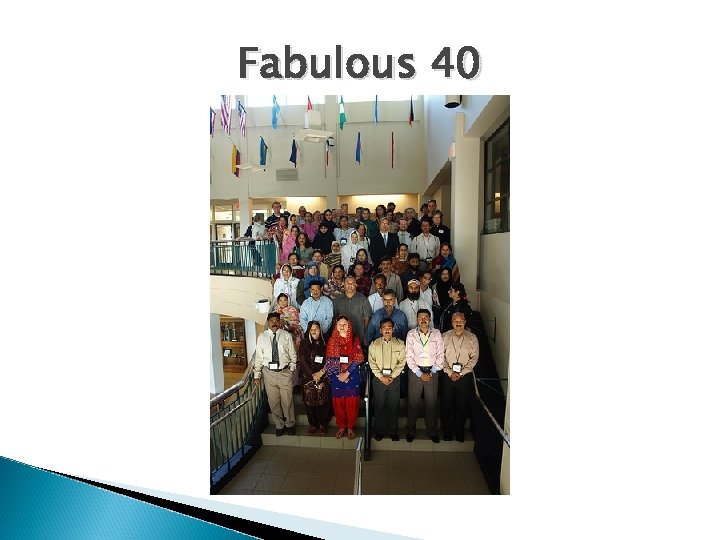 Fabulous 40
 Presentation outline 1. 2. 3. 4. Thematic Areas Instructional Methodologies Course Content, and Pedagogical Learning
 1. Thematic Areas Educational leadership as a keystone of civil society Ethical decision making and advocacy for change Best practice and innovations in science education, incorporating environmental models Strategies for the effective delivery of environmental literacy in English Explore strategic planning initiatives to expand alumni outreach and engagement
 2. Instructional Methodologies Classroom Based Sessions Discussion Individual/Group work Presentation Hands-on-task Reflection Questioning Role play
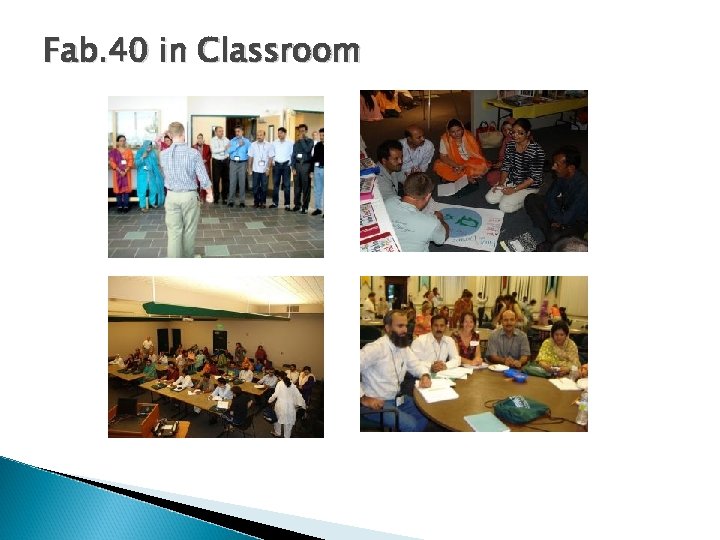 Fab. 40 in Classroom
 2. Instructional Methodologies Field trip ◦ Environmental education walking tour-NH sewerage system ◦ Visit to watersheds e. g. Baker river, Pemi river, squame lake ◦ School visit ◦ Visit to Science museum ◦ Visit to historical places/sites ◦ Visit to local communities; Dr. Salman, Gaye Gould, Susan, Blake Allan ◦ White mountain national forest
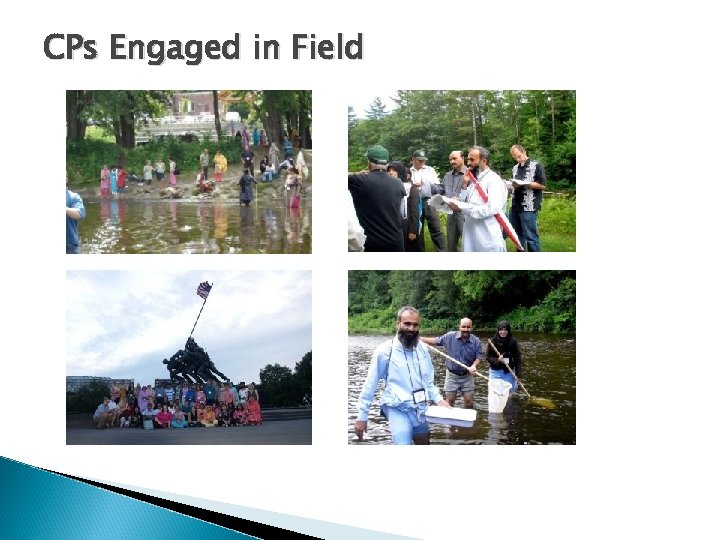 CPs Engaged in Field
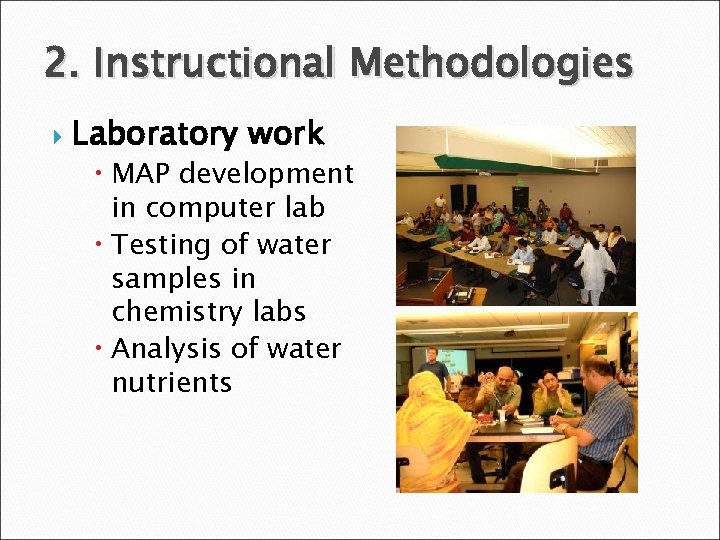 2. Instructional Methodologies Laboratory work MAP development in computer lab Testing of water samples in chemistry labs Analysis of water nutrients
 2. Instructional Methodologies Home Task Reflection writing Readings MAP development Preparation for cultural night event Make-up of left over work
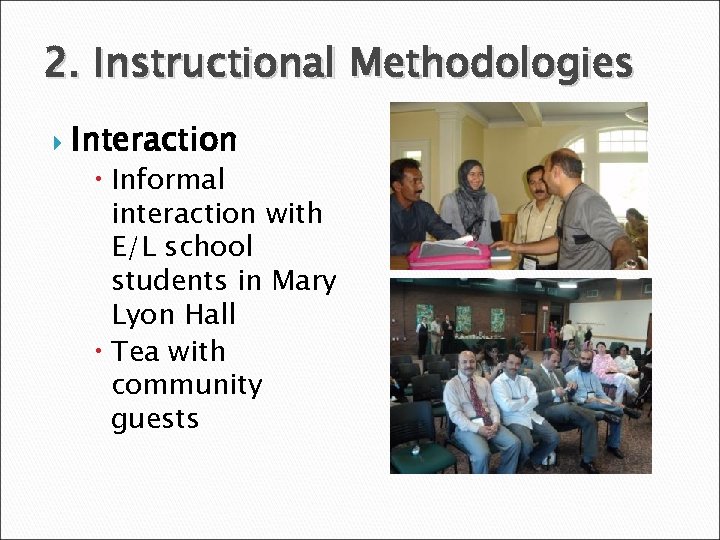 2. Instructional Methodologies Interaction Informal interaction with E/L school students in Mary Lyon Hall Tea with community guests
 3. Content ◦ Language immersion models-ESOL issues and solutions ◦ Arts in education institute ◦ Wordless books presentation
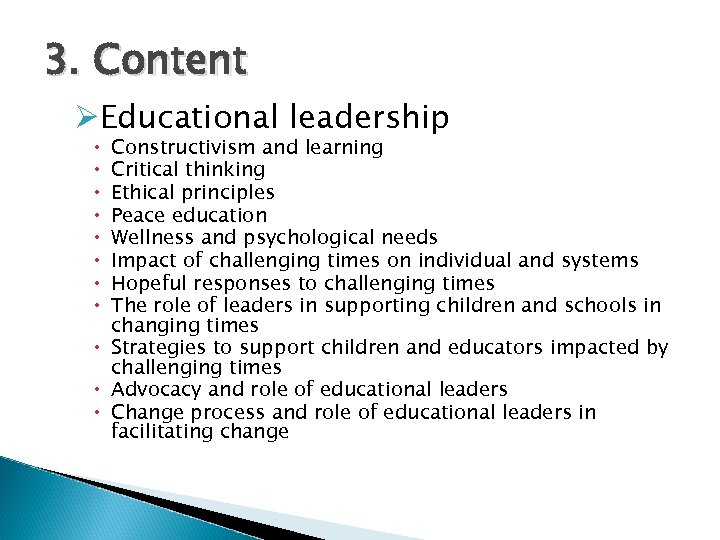 3. Content ØEducational leadership Constructivism and learning Critical thinking Ethical principles Peace education Wellness and psychological needs Impact of challenging times on individual and systems Hopeful responses to challenging times The role of leaders in supporting children and schools in changing times Strategies to support children and educators impacted by challenging times Advocacy and role of educational leaders Change process and role of educational leaders in facilitating change
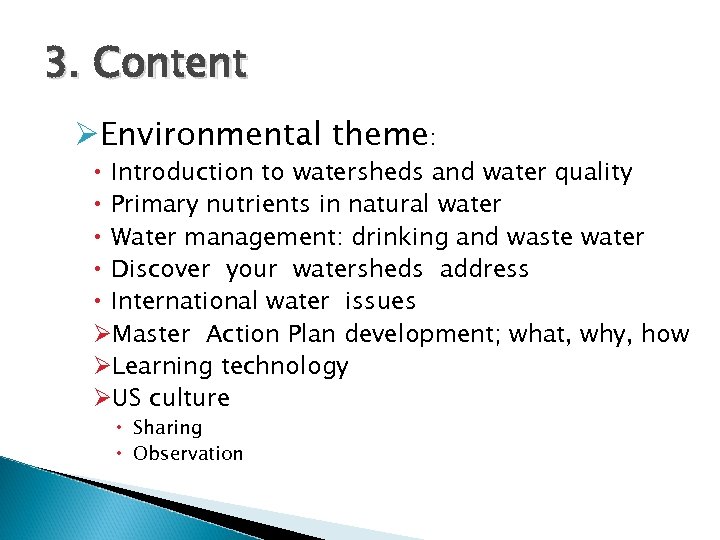 3. Content ØEnvironmental theme: Introduction to watersheds and water quality Primary nutrients in natural water Water management: drinking and waste water Discover your watersheds address International water issues ØMaster Action Plan development; what, why, how ØLearning technology ØUS culture Sharing Observation
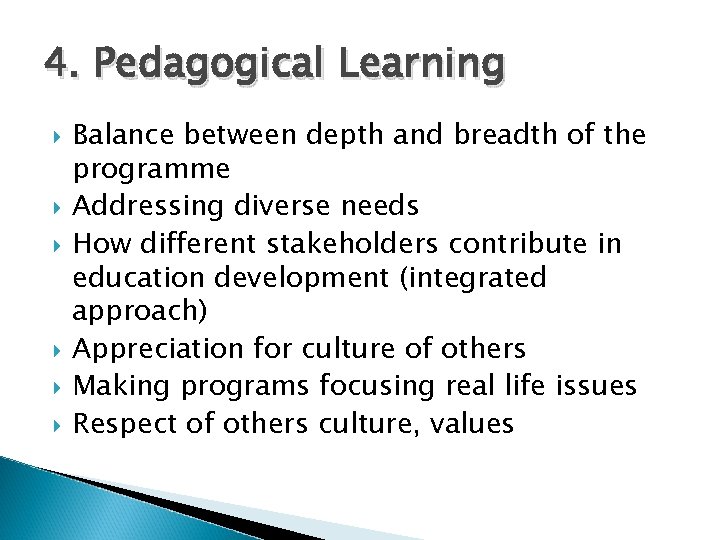 4. Pedagogical Learning Balance between depth and breadth of the programme Addressing diverse needs How different stakeholders contribute in education development (integrated approach) Appreciation for culture of others Making programs focusing real life issues Respect of others culture, values
 Thank you