


 Скачать презентацию Paddy soil cracks characteristics and their impact on
9a04fac140d740c671aaaf3706d98810.ppt
- Количество слайдов: 18
 Paddy soil cracks: characteristics and their impact on preferential flow Zhongbin ZHANG and Xinhua PENG Institute of Soil Science, Nanjing, CAS 15, April, 2015 Sponsored by NFSC and CAS
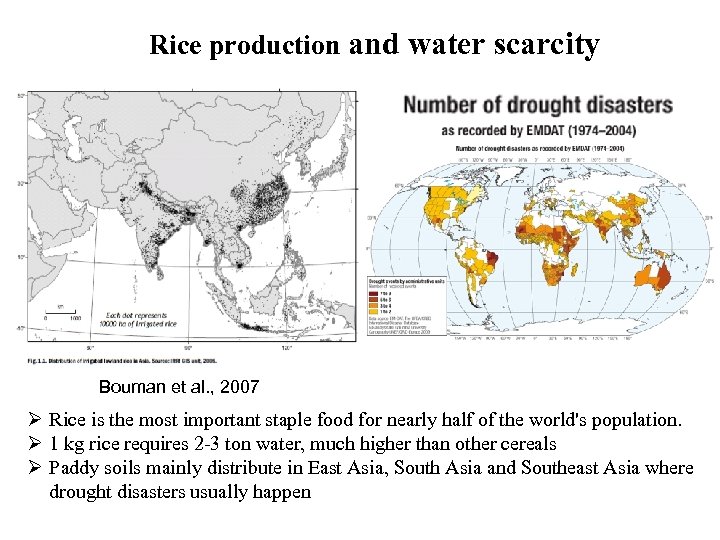 Rice production and water scarcity Bouman et al. , 2007 Ø Rice is the most important staple food for nearly half of the world's population. Ø 1 kg rice requires 2 -3 ton water, much higher than other cereals Ø Paddy soils mainly distribute in East Asia, South Asia and Southeast Asia where drought disasters usually happen
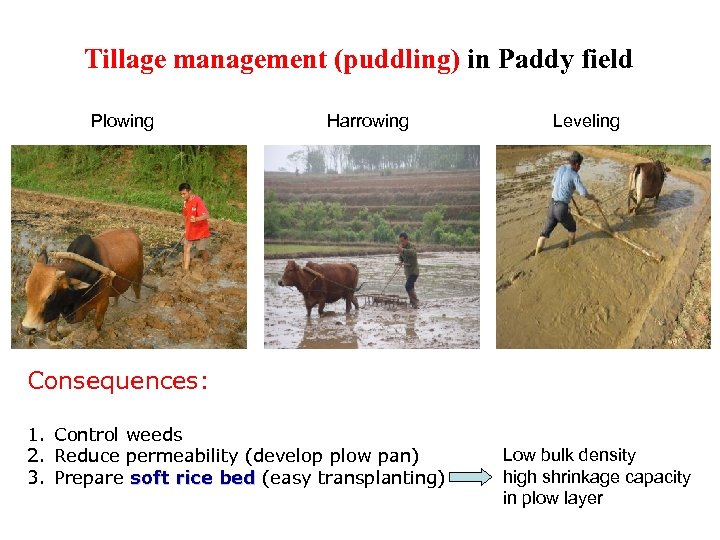 Tillage management (puddling) in Paddy field Plowing Harrowing Leveling Consequences: 1. Control weeds 2. Reduce permeability (develop plow pan) 3. Prepare soft rice bed (easy transplanting) Low bulk density high shrinkage capacity in plow layer
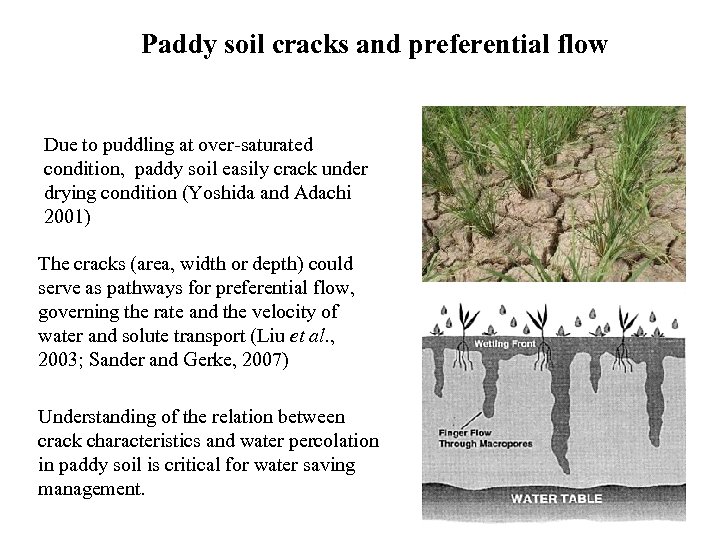 Paddy soil cracks and preferential flow Due to puddling at over-saturated condition, paddy soil easily crack under drying condition (Yoshida and Adachi 2001) The cracks (area, width or depth) could serve as pathways for preferential flow, governing the rate and the velocity of water and solute transport (Liu et al. , 2003; Sander and Gerke, 2007) Understanding of the relation between crack characteristics and water percolation in paddy soil is critical for water saving management.
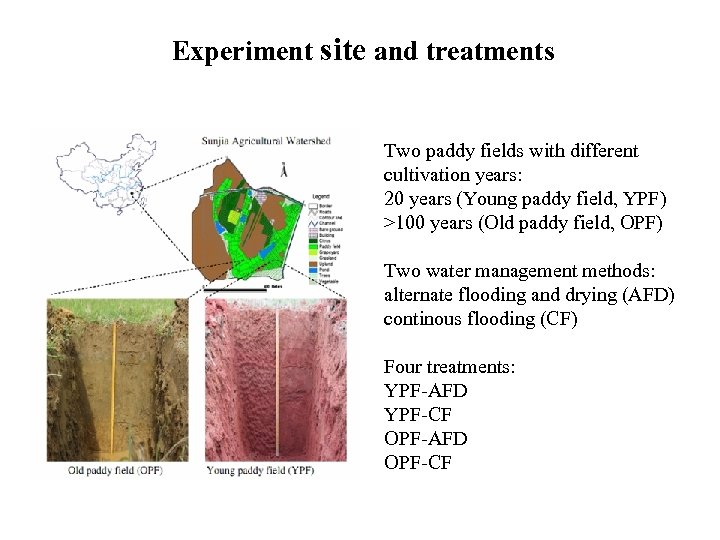 Experiment site and treatments Two paddy fields with different cultivation years: 20 years (Young paddy field, YPF) >100 years (Old paddy field, OPF) Two water management methods: alternate flooding and drying (AFD) continous flooding (CF) Four treatments: YPF-AFD YPF-CF OPF-AFD OPF-CF
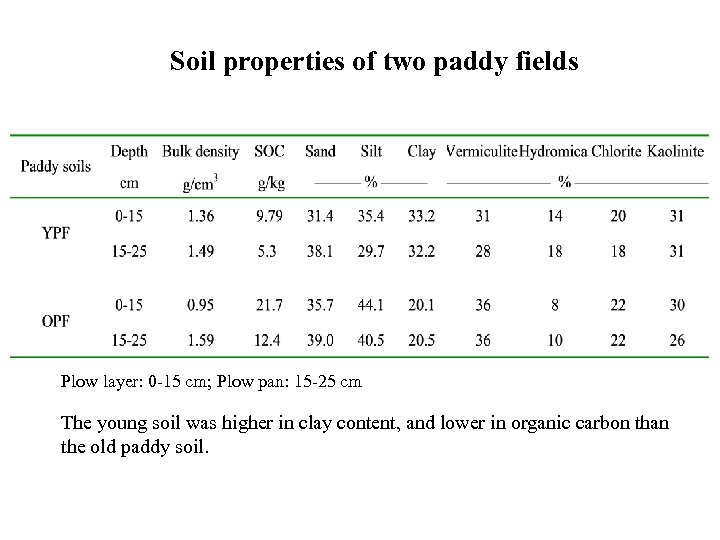 Soil properties of two paddy fields Plow layer: 0 -15 cm; Plow pan: 15 -25 cm The young soil was higher in clay content, and lower in organic carbon than the old paddy soil.
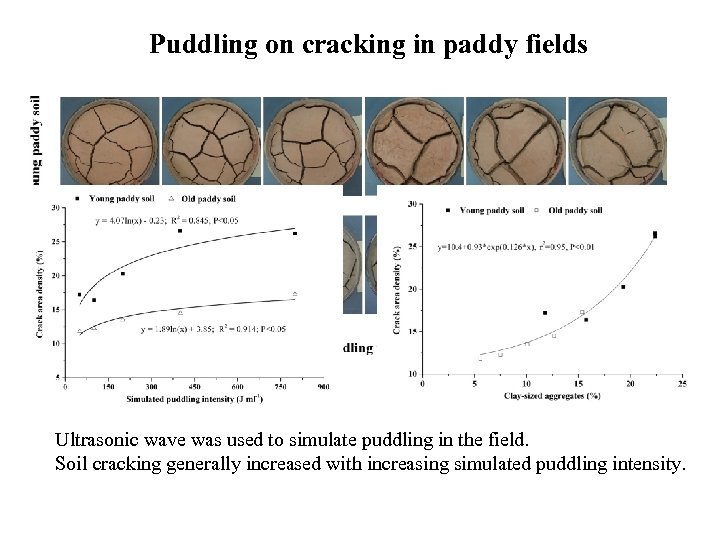 Puddling on cracking in paddy fields Ultrasonic wave was used to simulate puddling in the field. Soil cracking generally increased with increasing simulated puddling intensity.
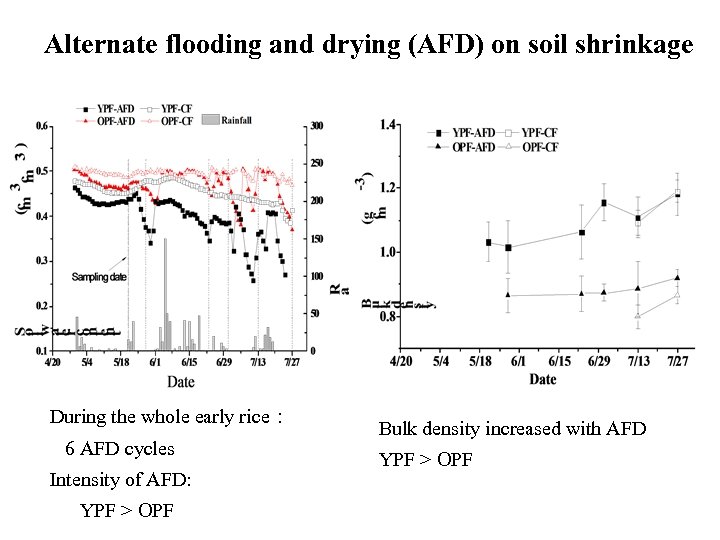 Alternate flooding and drying (AFD) on soil shrinkage During the whole early rice: 6 AFD cycles Intensity of AFD: YPF > OPF Bulk density increased with AFD YPF > OPF
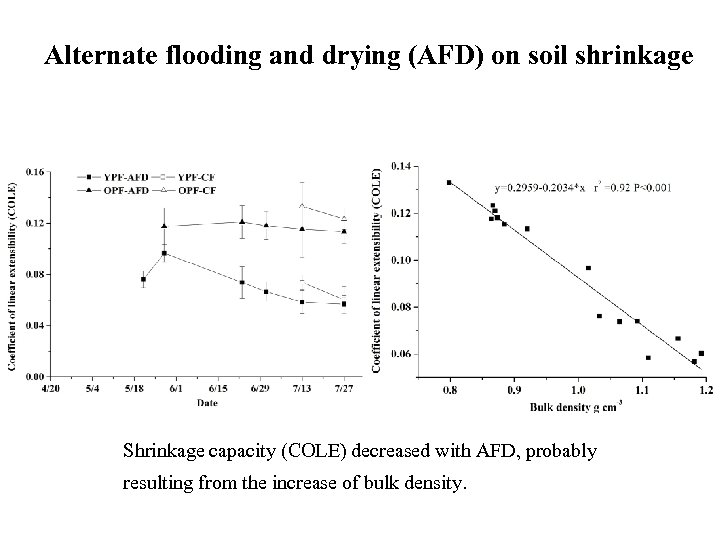 Alternate flooding and drying (AFD) on soil shrinkage Shrinkage capacity (COLE) decreased with AFD, probably resulting from the increase of bulk density.
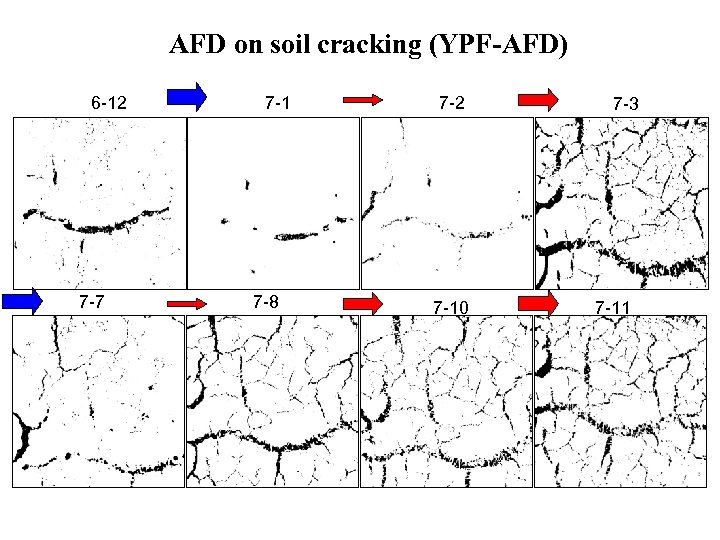 AFD on soil cracking (YPF-AFD) 6 -12 7 -7 7 -1 7 -8 7 -2 7 -10 7 -3 7 -11
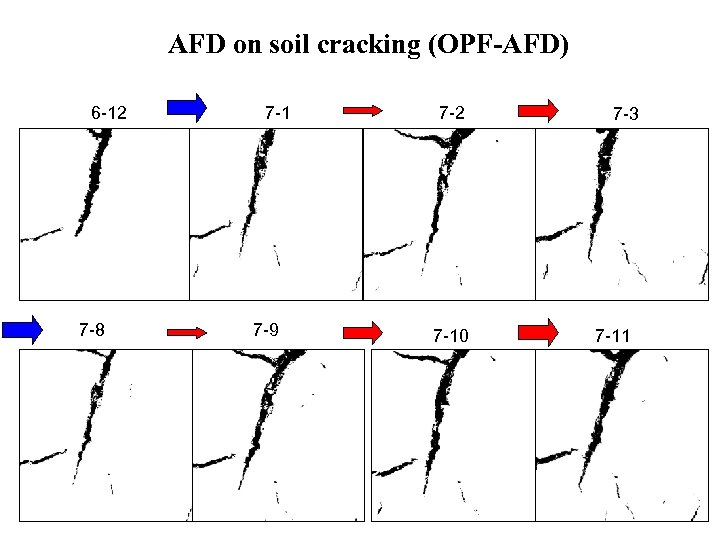 AFD on soil cracking (OPF-AFD) 6 -12 7 -8 7 -1 7 -9 7 -2 7 -10 7 -3 7 -11
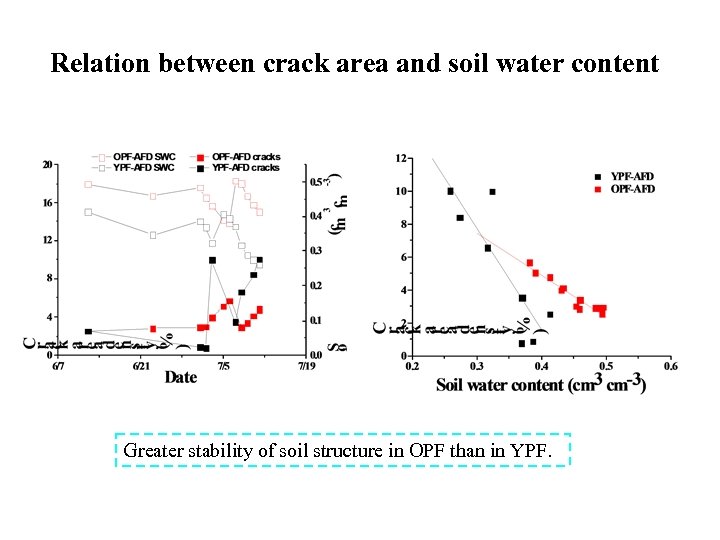 Relation between crack area and soil water content Greater stability of soil structure in OPF than in YPF.
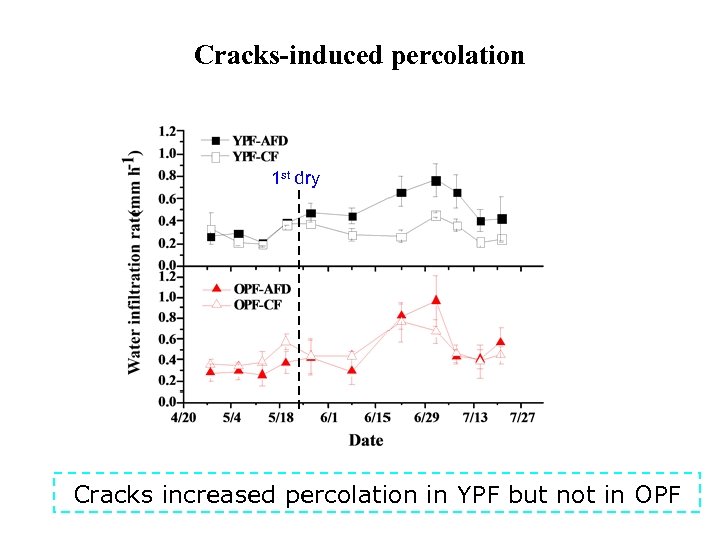 Cracks-induced percolation 1 st dry Cracks increased percolation in YPF but not in OPF
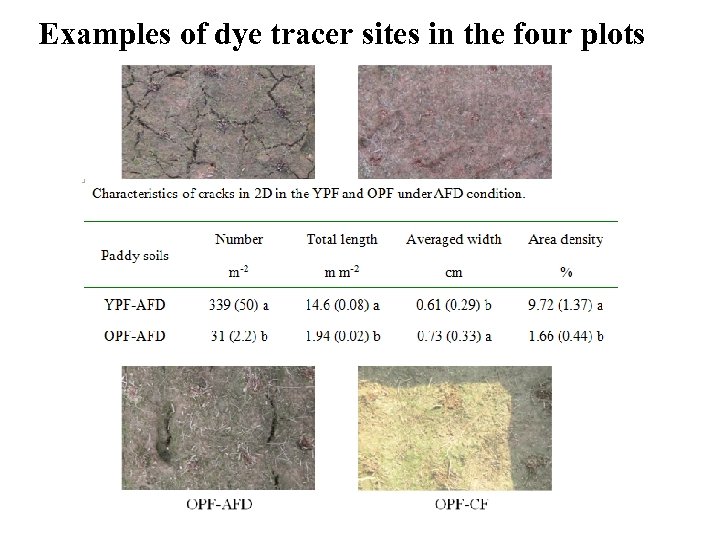 Examples of dye tracer sites in the four plots
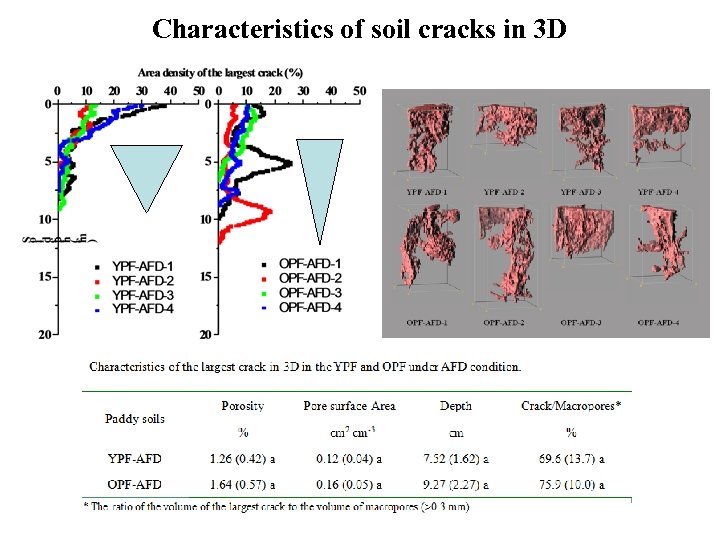 Characteristics of soil cracks in 3 D
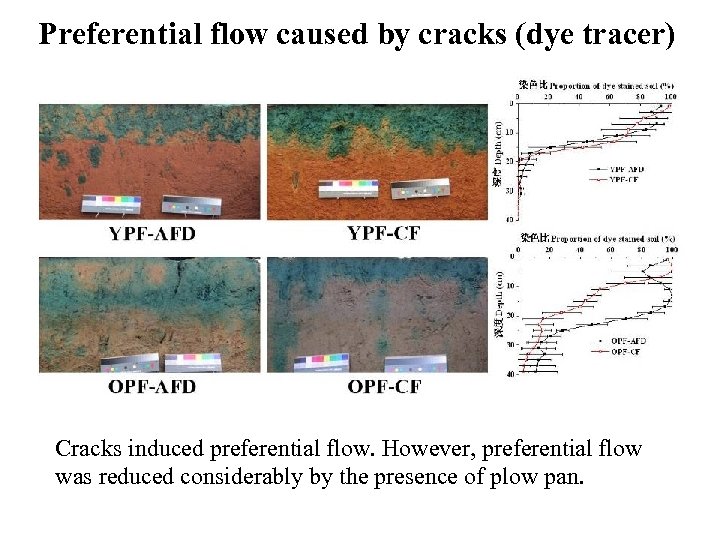 Preferential flow caused by cracks (dye tracer) Cracks induced preferential flow. However, preferential flow was reduced considerably by the presence of plow pan.
 Conclusions Ø Soil cracking increases with puddling intensity, probably resulting from increase of clay-sized aggregates. AFD decreases shrinkage capacity and influences soil cracking patterns. Ø Cracks geometry (2 D and 3 D) is different in the YPF and the OPF. Therefore the effect of cracks on infiltration was different in the two soils. Ø Cracks induced preferential flow in the plow layer. However, the preferential flow was reduced considerably by the presence of plow pan.
 Thanks for your attention