 Скачать презентацию Pacific Northwest Resource Adequacy Standard GRAC Meeting October
c05c7b8076faf4c8e80e6805e03611c1.ppt
- Количество слайдов: 48



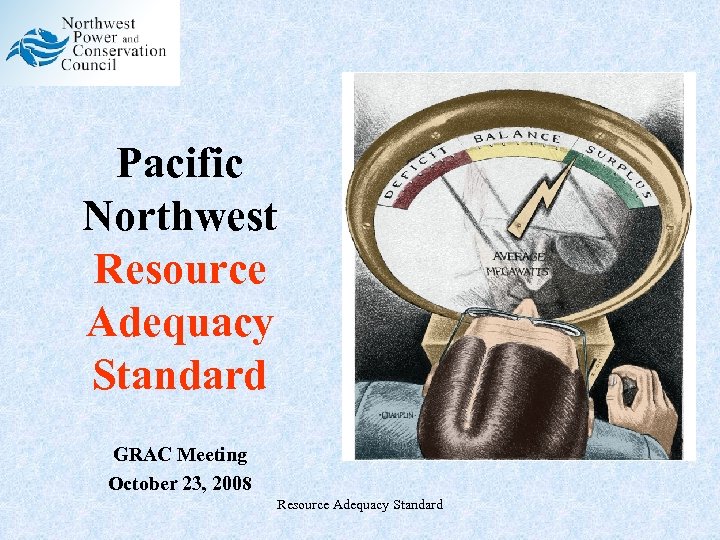
Pacific Northwest Resource Adequacy Standard GRAC Meeting October 23, 2008 Resource Adequacy Standard
Outline • • • What makes up the Northwest power supply? What is a “resource adequacy” standard? Didn’t we already have one? Why do we need (a new) one? What exactly is it? How is it enforced? What is the status of the power supply? How does it compare to last years assessment? How does this compare to other reports? Resource Adequacy Standard 2
What makes up the Northwest Power Supply? Resource Adequacy Standard
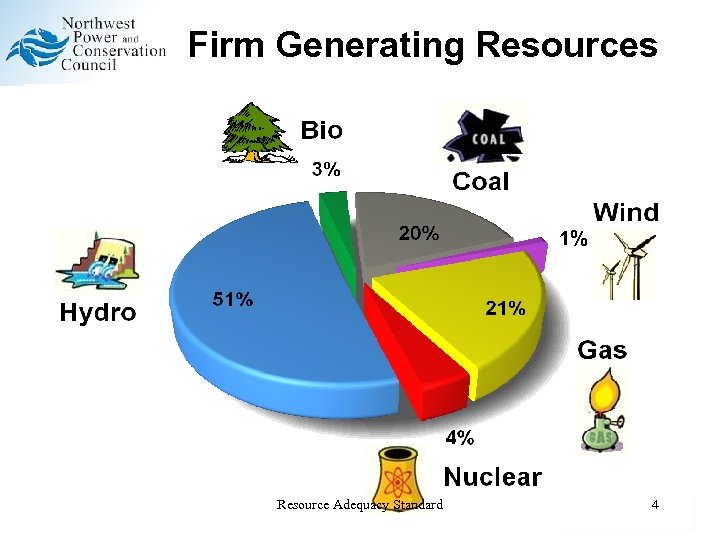
Firm Generating Resources 1% Resource Adequacy Standard 4
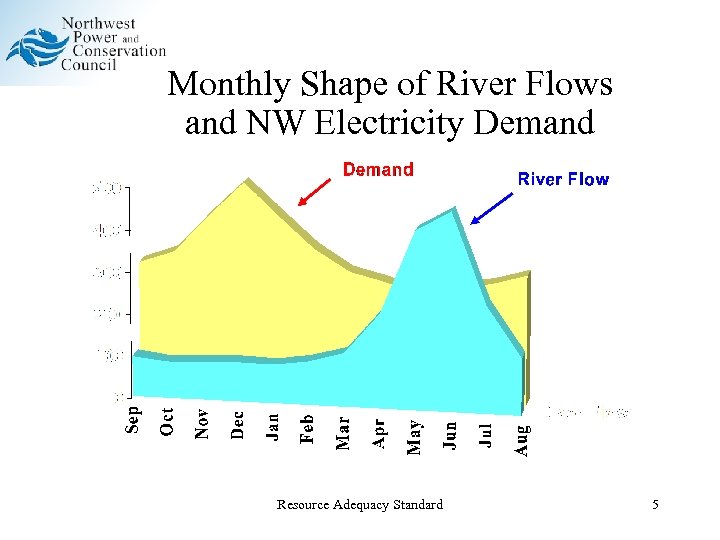
Monthly Shape of River Flows and NW Electricity Demand Resource Adequacy Standard 5
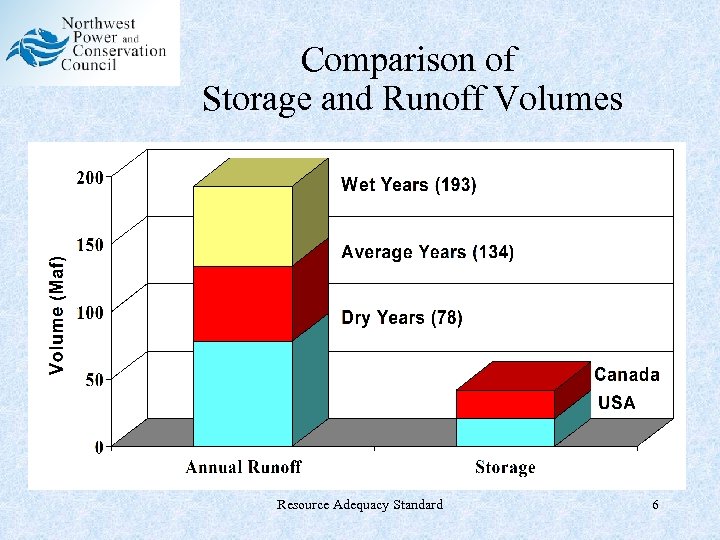
Comparison of Storage and Runoff Volumes Resource Adequacy Standard 6
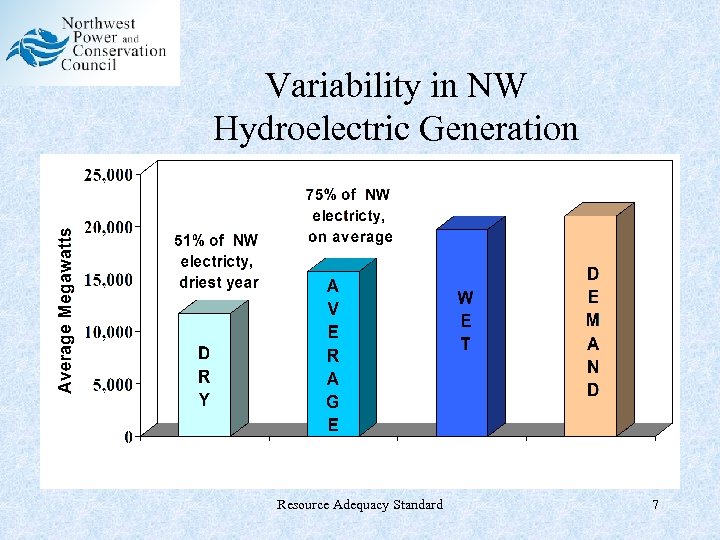
Variability in NW Hydroelectric Generation Resource Adequacy Standard 7
What is a “resource adequacy” standard? Resource Adequacy Standard
Three Components to Keeping the Lights On 1. Resource and fuel availability 2. Bulk delivery – high voltage transmission 3. Distribution – low voltage transmission Most outages are due to distribution Resource Adequacy Standard 9
What is resource adequacy? • Physical adequacy The region is assured that, in aggregate, loadserving entities have sufficient power resources to satisfy forecast future loads with an acceptable risk of curtailment • Economic adequacy The region is assured that, load-serving entities have sufficient power resources to satisfy forecast future loads with an acceptable risk of high cost years Resource Adequacy Standard 10
Build vs. Buy • Building more resources increases average cost but reduces risk of high cost years • Relying more on the market reduces average cost but increases the risk of high cost years Resource Adequacy Standard 11
Objectives for an Adequacy Standard 1. Transparent and easy to calculate 2. Linked to a more sophisticated analysis (like a Loss-of-load-probability assessment) 3. Provide adequate protection against • • Unwanted curtailments and High and/or volatile prices Resource Adequacy Standard 12
Didn’t we already have one? Resource Adequacy Standard
Historic NW Planning Criteria • • • Average annual load/resource balance of zero Critical water hydroelectric generation No spot-market supply No non-firm resource generation But. . . Resource Adequacy Standard 14
Historic NW Planning Criteria • • But, we could “borrow” energy stored in reservoirs by backing it up with agreements to curtail future loads, if necessary. This moves away from a strict “criticalwater” standard, without adding additional risk. Resource Adequacy Standard 15
Historic NW Planning Criteria • • • However, the region didn’t really plan to these criteria The region’s load/resource balance steadily grew more and more deficit throughout the 1990 s. Why were utilities not more concerned? Resource Adequacy Standard 16
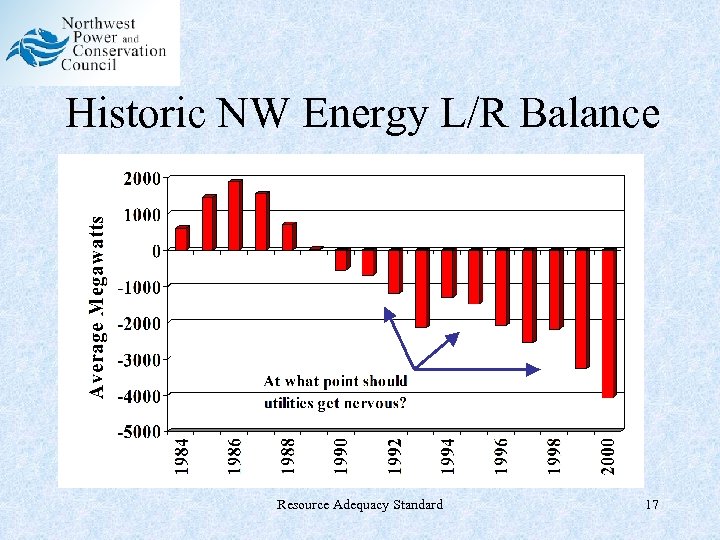
Historic NW Energy L/R Balance Resource Adequacy Standard 17
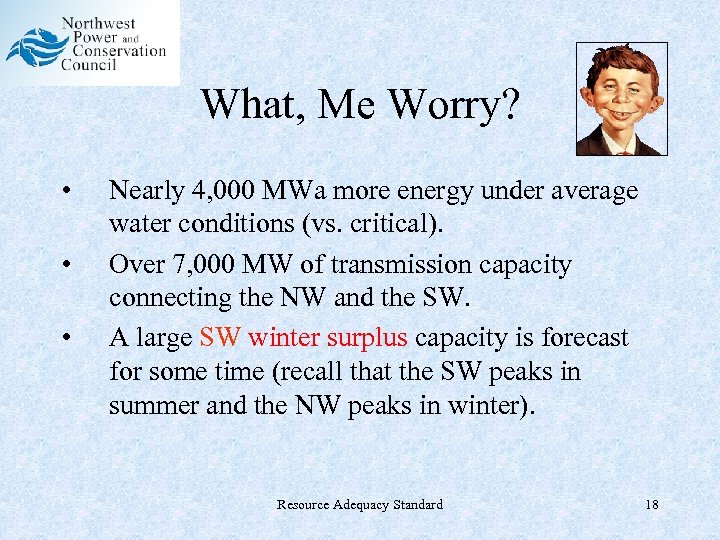
What, Me Worry? • • • Nearly 4, 000 MWa more energy under average water conditions (vs. critical). Over 7, 000 MW of transmission capacity connecting the NW and the SW. A large SW winter surplus capacity is forecast for some time (recall that the SW peaks in summer and the NW peaks in winter). Resource Adequacy Standard 18
Why do we need one? Resource Adequacy Standard
Why Now? • West Coast electricity crisis of 2000 -01 • 2005 Energy Bill • Increasing complexity of the power supply • • IPP and spot market generation Integrating wind Added constraints on hydro Increasing summer loads • Council’s Fifth Power Plan Resource Adequacy Standard 20
What Happened Leading Up to 2001? • • Very little resource development in the 1990 s Dysfunctional California market Second driest year in 2001 Led to a situation where the NW was short and could not make it up with better-than-critical hydroelectric generation or imports Resource Adequacy Standard 21
What Happened in 2001? • DSI loads were purchased • BPA curtailed fish bypass spill • Utilities forced to acquire very expensive resources (i. e. diesel generation) • Some load lost due to economic considerations • Region got through – but not the way it would have liked to! Resource Adequacy Standard 22
What’s Happened Since? • NW demand is still about 1, 500 MWa lower (mostly DSIs) • Over 9, 000 MW of new generating capacity • Turned the annual L/R deficit of 4, 000 MWa into a large surplus Resource Adequacy Standard 23
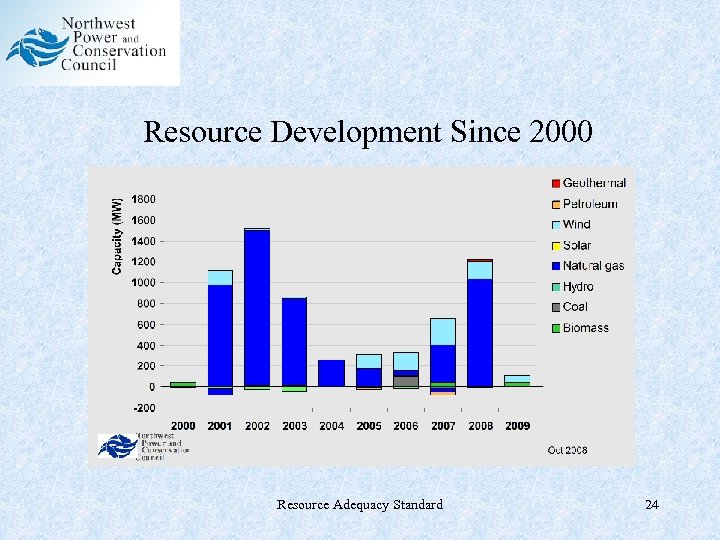
Resource Development Since 2000 Resource Adequacy Standard 24

What exactly is it? Resource Adequacy Standard
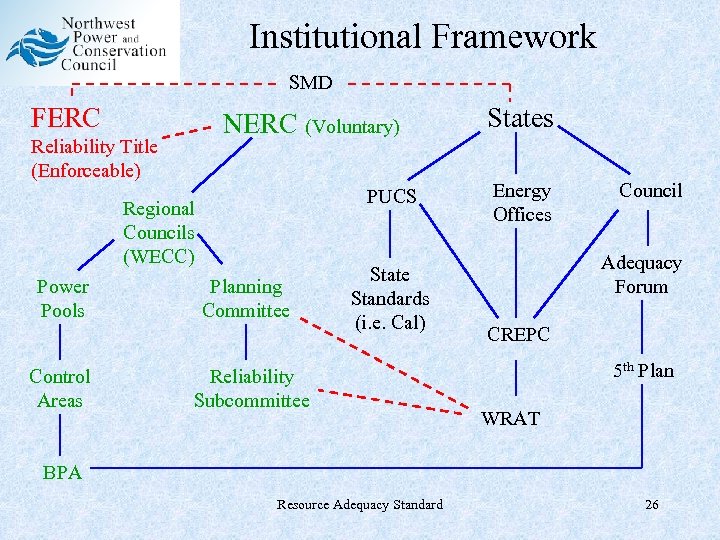
Institutional Framework SMD FERC NERC (Voluntary) Reliability Title (Enforceable) PUCS Regional Councils (WECC) Power Pools Control Areas Planning Committee State Standards (i. e. Cal) Reliability Subcommittee States Energy Offices Council Adequacy Forum CREPC 5 th Plan WRAT BPA Resource Adequacy Standard 26
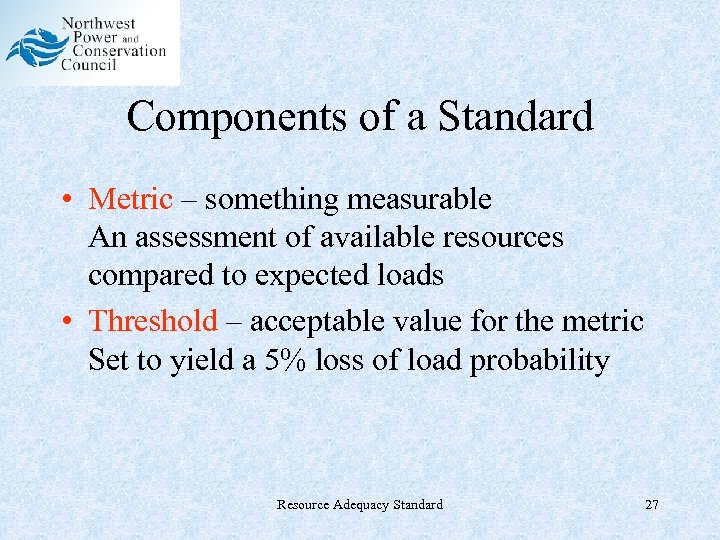
Components of a Standard • Metric – something measurable An assessment of available resources compared to expected loads • Threshold – acceptable value for the metric Set to yield a 5% loss of load probability Resource Adequacy Standard 27
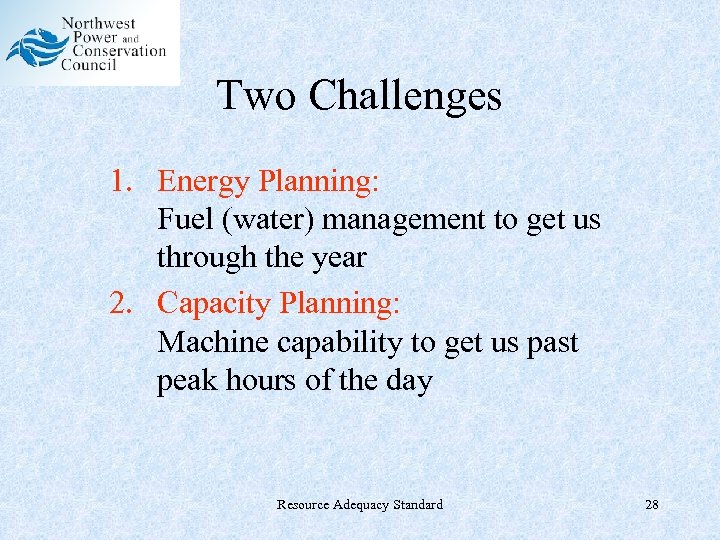
Two Challenges 1. Energy Planning: Fuel (water) management to get us through the year 2. Capacity Planning: Machine capability to get us past peak hours of the day Resource Adequacy Standard 28
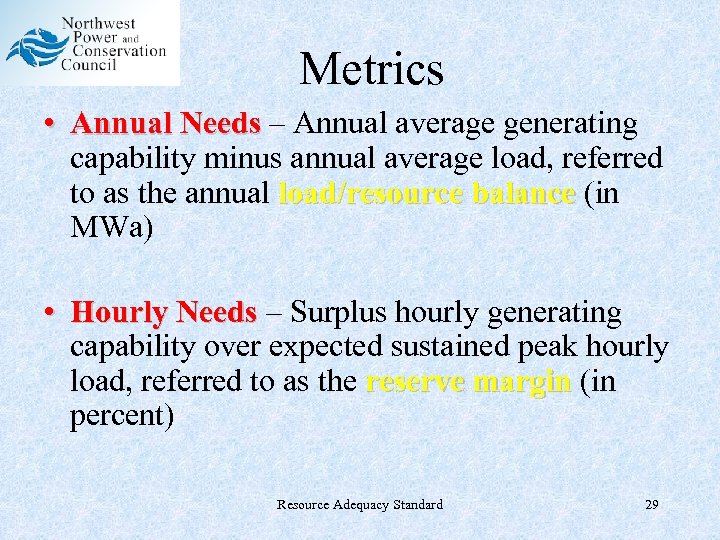
Metrics • Annual Needs – Annual average generating capability minus annual average load, referred to as the annual load/resource balance (in MWa) • Hourly Needs – Surplus hourly generating capability over expected sustained peak hourly load, referred to as the reserve margin (in percent) Resource Adequacy Standard 29
Thresholds • Energy – zero, i. e. loads and resources should be in balance, on average, over the year • Capacity – surplus percent required to cover – Operating reserves – Extreme weather event – Other contingencies Resource Adequacy Standard 30
Thresholds • Energy – Load/resource balance • Physical • Economic = 0 MWa = approx. 3, 000 MWa • Capacity – Reserve margin • Physical Winter • Physical Summer • Economic = 23% = 24% =? Resource Adequacy Standard 31
Current Energy Assumptions ü Out-of-region market • About 200 MWa per year ü Non-firm hydro • About 1, 100 MWa per year ü Uncommitted IPPs • Dispatched as regional resources limited by capacity assumptions ü Wind • 30 percent of nameplate annually Resource Adequacy Standard 32
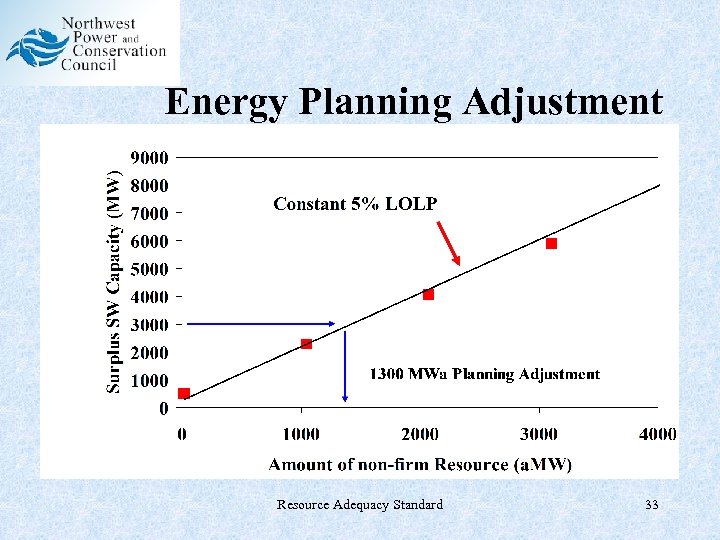
Energy Planning Adjustment Resource Adequacy Standard 33
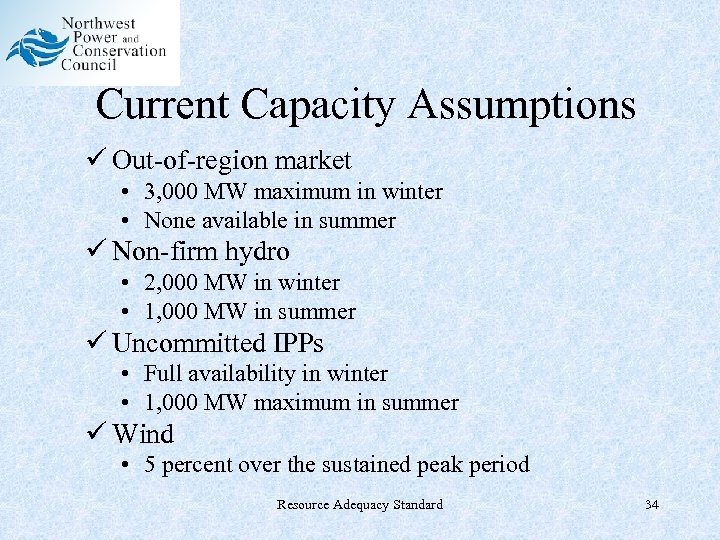
Current Capacity Assumptions ü Out-of-region market • 3, 000 MW maximum in winter • None available in summer ü Non-firm hydro • 2, 000 MW in winter • 1, 000 MW in summer ü Uncommitted IPPs • Full availability in winter • 1, 000 MW maximum in summer ü Wind • 5 percent over the sustained peak period Resource Adequacy Standard 34
How is it enforced? Resource Adequacy Standard
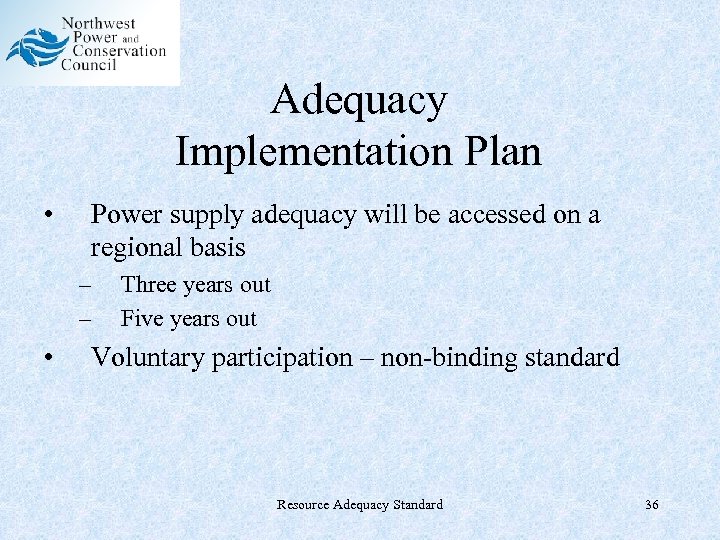
Adequacy Implementation Plan • Power supply adequacy will be accessed on a regional basis – – • Three years out Five years out Voluntary participation – non-binding standard Resource Adequacy Standard 36
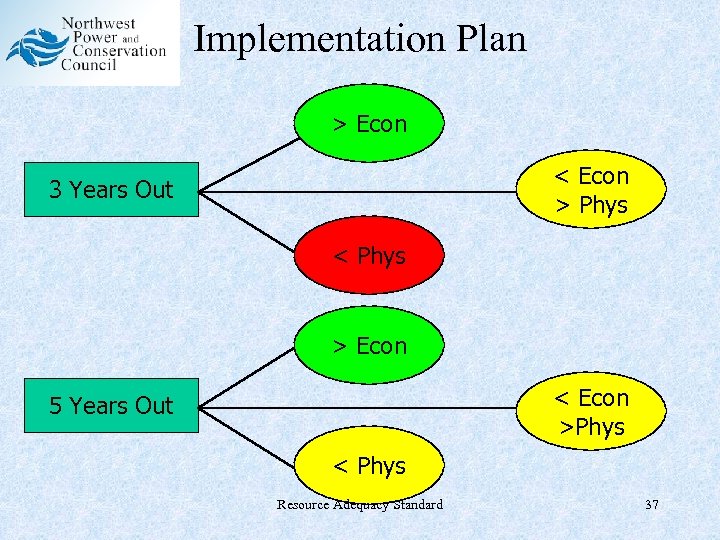
Implementation Plan > Econ < Econ > Phys 3 Years Out < Phys > Econ < Econ >Phys 5 Years Out < Phys Resource Adequacy Standard 37
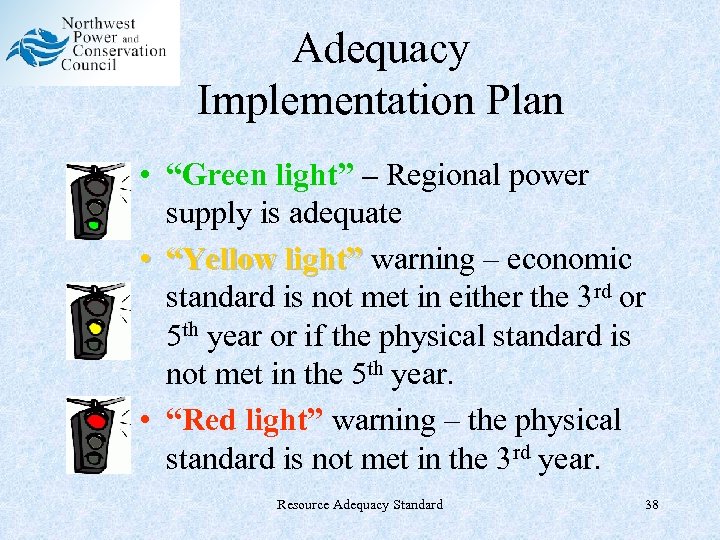
Adequacy Implementation Plan • “Green light” – Regional power supply is adequate • “Yellow light” warning – economic standard is not met in either the 3 rd or 5 th year or if the physical standard is not met in the 5 th year. • “Red light” warning – the physical standard is not met in the 3 rd year. Resource Adequacy Standard 38
Red-light Warning Actions • Heavily publicized adequacy report • Initiate a process to validate the data • Instigate public meetings to consider possible actions Resource Adequacy Standard 39
What is the status of the Northwest power supply? Resource Adequacy Standard
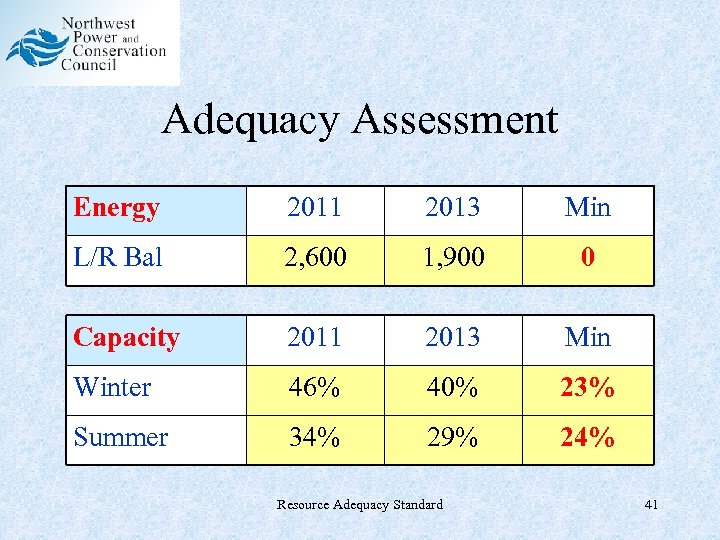
Adequacy Assessment Energy 2011 2013 Min L/R Bal 2, 600 1, 900 0 Capacity 2011 2013 Min Winter 46% 40% 23% Summer 34% 29% 24% Resource Adequacy Standard 41
How does it compare to last year’s assessment? Resource Adequacy Standard
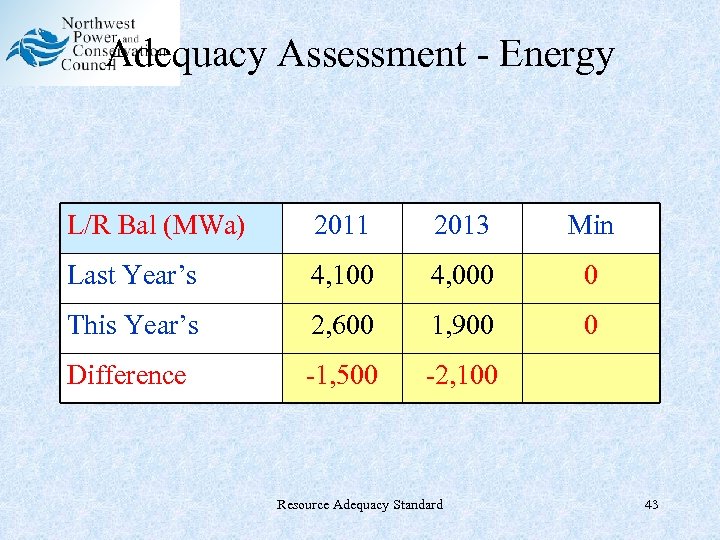
Adequacy Assessment - Energy L/R Bal (MWa) 2011 2013 Min Last Year’s 4, 100 4, 000 0 This Year’s 2, 600 1, 900 0 Difference -1, 500 -2, 100 Resource Adequacy Standard 43
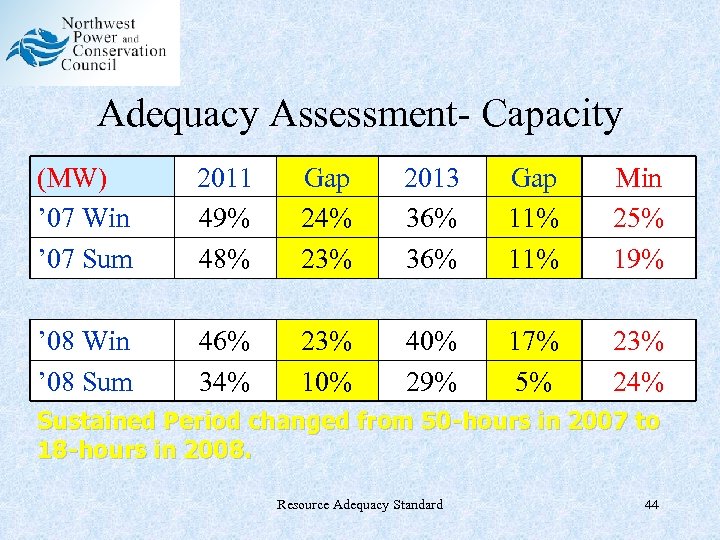
Adequacy Assessment- Capacity (MW) ’ 07 Win ’ 07 Sum 2011 49% 48% Gap 24% 23% 2013 36% Gap 11% Min 25% 19% ’ 08 Win ’ 08 Sum 46% 34% 23% 10% 40% 29% 17% 5% 23% 24% Sustained Period changed from 50 -hours in 2007 to 18 -hours in 2008. Resource Adequacy Standard 44
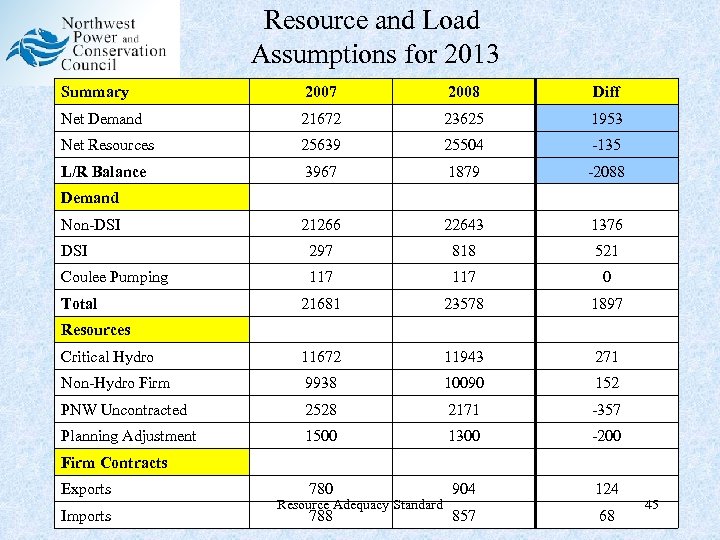
Resource and Load Assumptions for 2013 Summary 2007 2008 Diff Net Demand 21672 23625 1953 Net Resources 25639 25504 -135 L/R Balance 3967 1879 -2088 21266 22643 1376 DSI 297 818 521 Coulee Pumping 117 0 21681 23578 1897 Critical Hydro 11672 11943 271 Non-Hydro Firm 9938 10090 152 PNW Uncontracted 2528 2171 -357 Planning Adjustment 1500 1300 -200 780 904 124 788 857 68 Demand Non-DSI Total Resources Firm Contracts Exports Imports Resource Adequacy Standard 45
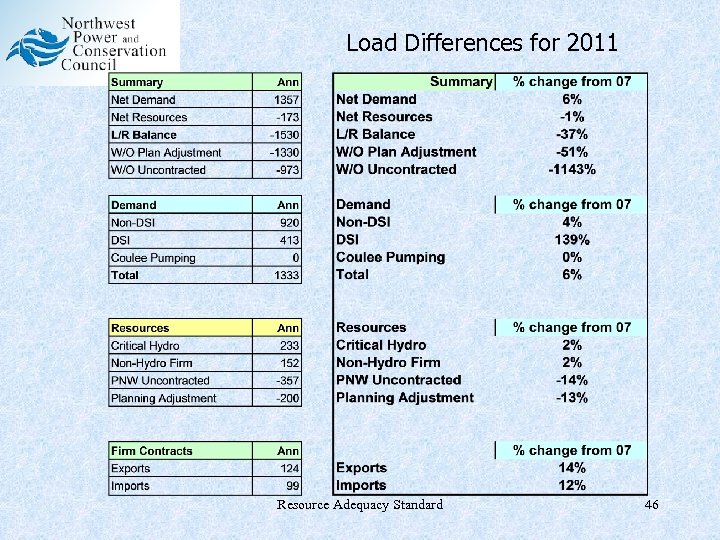
Load Differences for 2011 Resource Adequacy Standard 46
How does it compare to other regional reports? Resource Adequacy Standard
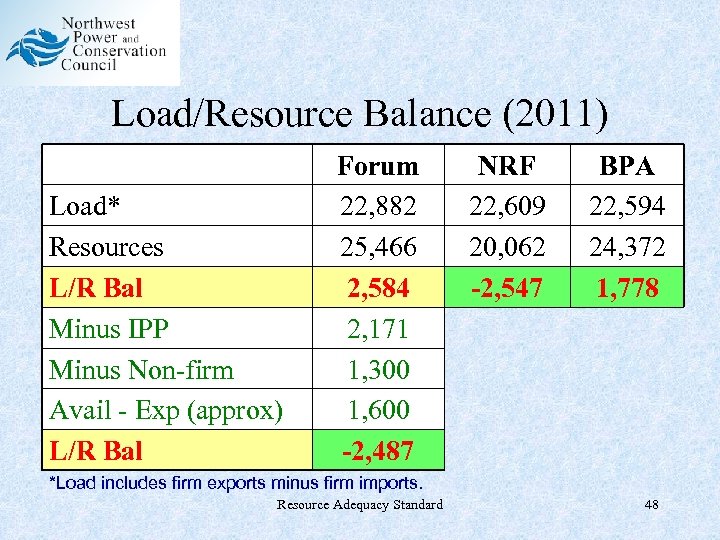
Load/Resource Balance (2011) Load* Resources L/R Bal Minus IPP Minus Non-firm Avail - Exp (approx) L/R Bal Forum 22, 882 25, 466 2, 584 2, 171 1, 300 1, 600 -2, 487 NRF 22, 609 20, 062 -2, 547 BPA 22, 594 24, 372 1, 778 *Load includes firm exports minus firm imports. Resource Adequacy Standard 48
Скачать презентацию Pacific Northwest Resource Adequacy Standard GRAC Meeting October
c05c7b8076faf4c8e80e6805e03611c1.ppt