


 Скачать презентацию PA Mammalian Predators Eastern Coyote p AKA
7fe44948413fe6f2970a6b0d15e4c41d.ppt
- Количество слайдов: 43
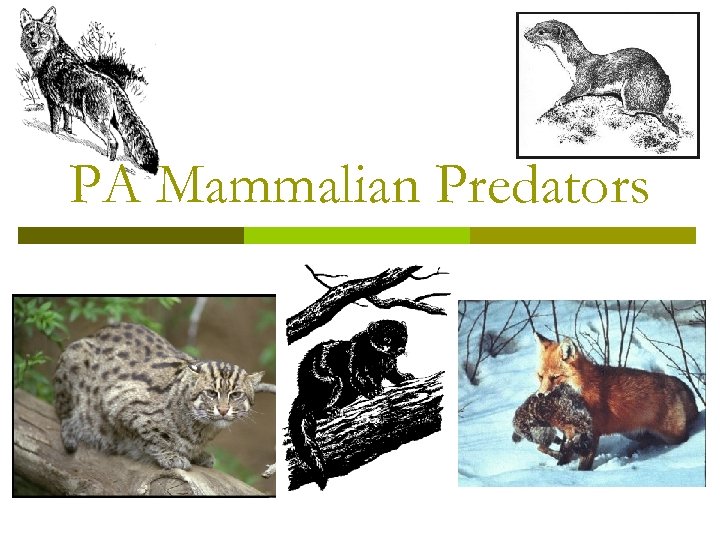 PA Mammalian Predators
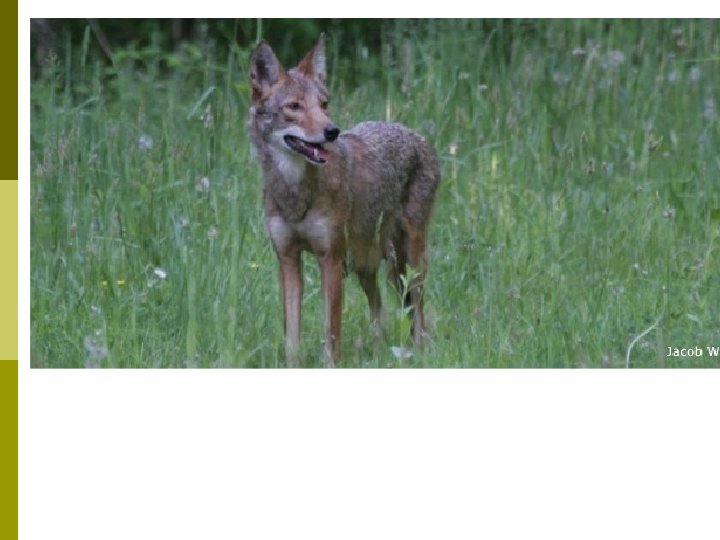
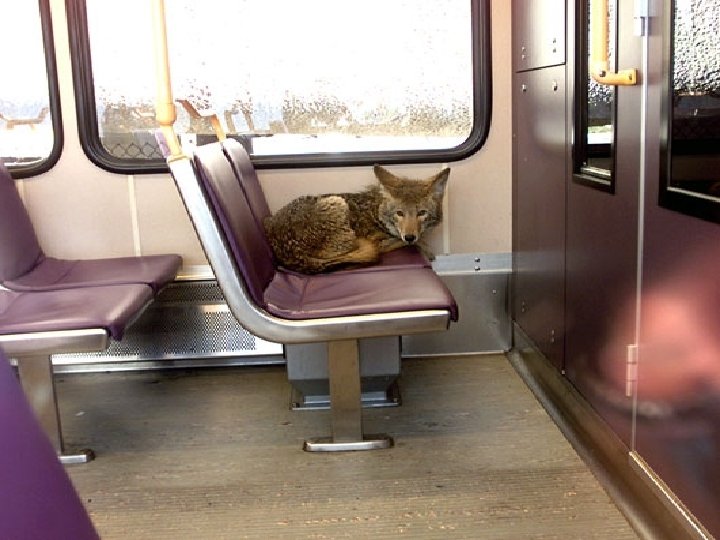
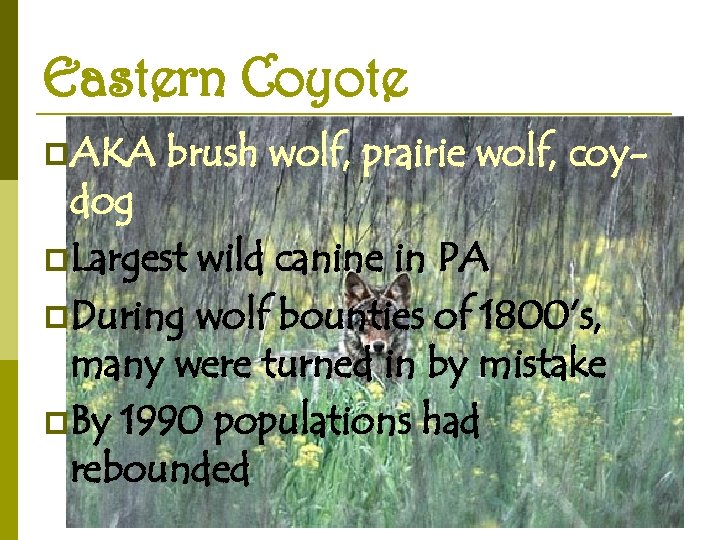 Eastern Coyote p. AKA brush wolf, prairie wolf, coy- dog p. Largest wild canine in PA p. During wolf bounties of 1800’s, many were turned in by mistake p. By 1990 populations had rebounded
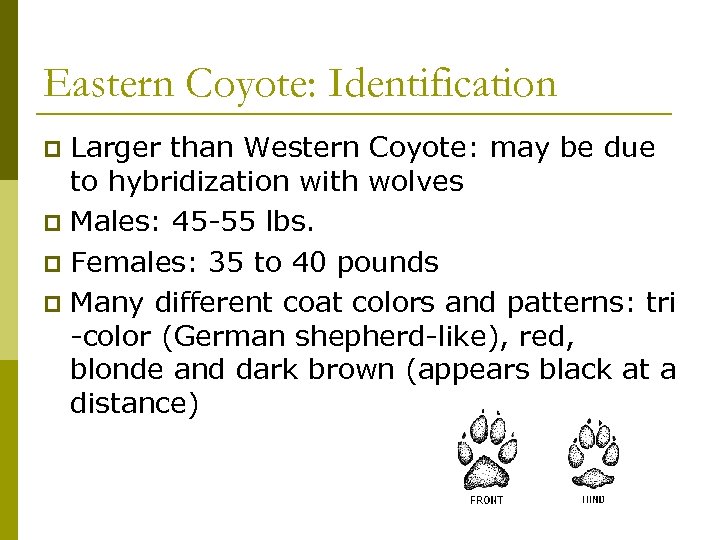 Eastern Coyote: Identification Larger than Western Coyote: may be due to hybridization with wolves p Males: 45 -55 lbs. p Females: 35 to 40 pounds p Many different coat colors and patterns: tri -color (German shepherd-like), red, blonde and dark brown (appears black at a distance) p
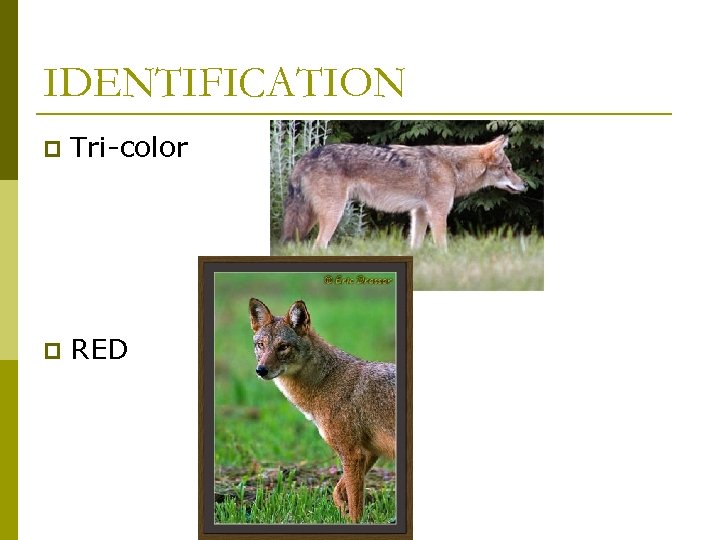 IDENTIFICATION p Tri-color p RED
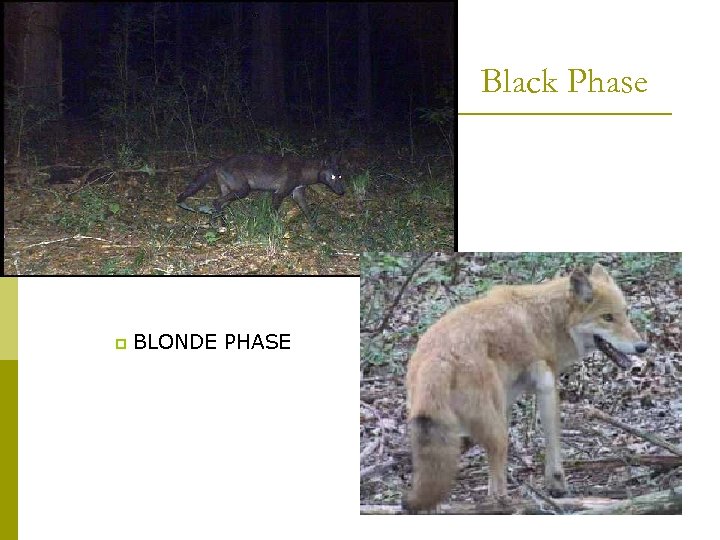 Black Phase p BLONDE PHASE
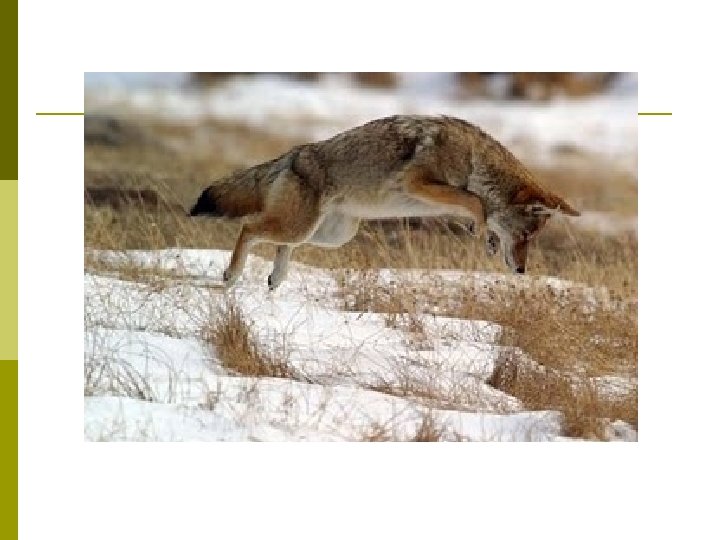
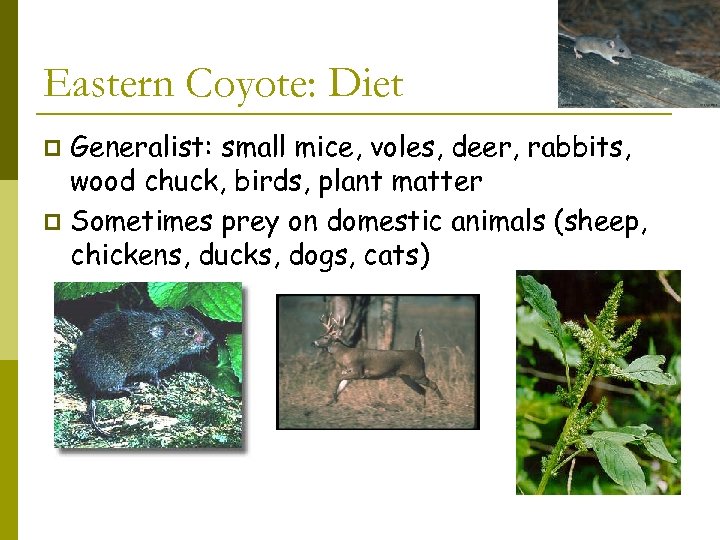 Eastern Coyote: Diet Generalist: small mice, voles, deer, rabbits, wood chuck, birds, plant matter p Sometimes prey on domestic animals (sheep, chickens, ducks, dogs, cats) p
 Eastern Coyote: General Biology p Monogamous, but not for life May hunt alone or with family group, not a true pack animal like the wolf p Nocturnal p Smell and hearing are keen; very alert p Prefer heavy brush, edges p PA population estimated at 40, 000 p
 PA Game Commission Bag Limits p COYOTES: No closed season. Unlimited. Outside of any big game season (deer, bear, elk and turkey), coyotes may be taken with a hunting license or a furtaker license, and without wearing orange. During any big game season, coyotes may be taken while lawfully hunting big game or with a furtakers license.
 Owl In an SUV grill http: //www. cnn. com/video/? hpt=hp_c 3#/vi deo/us/2013/02/11/dnt-owl-trapped-insuv. wsvn
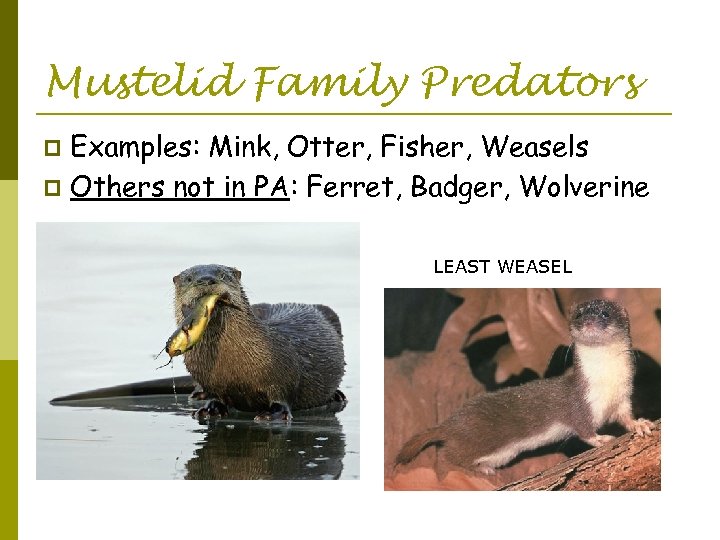 Mustelid Family Predators Examples: Mink, Otter, Fisher, Weasels p Others not in PA: Ferret, Badger, Wolverine p LEAST WEASEL
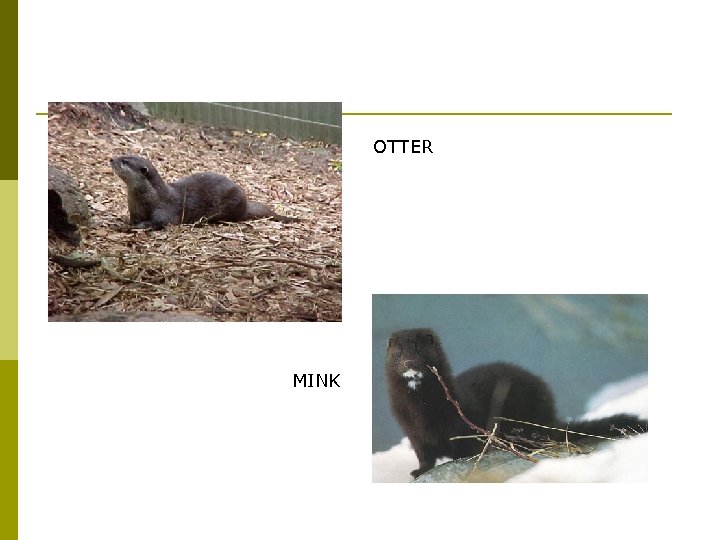 OTTER MINK
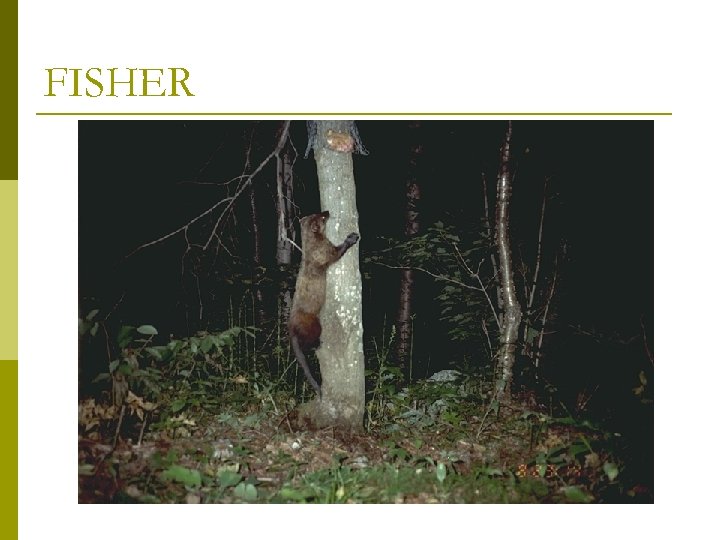 FISHER
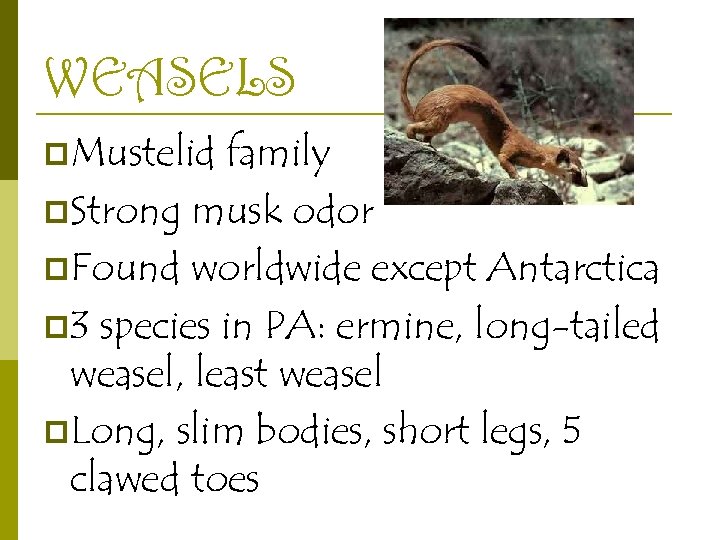 WEASELS p. Mustelid family p. Strong musk odor p. Found worldwide except Antarctica p 3 species in PA: ermine, long-tailed weasel, least weasel p. Long, slim bodies, short legs, 5 clawed toes
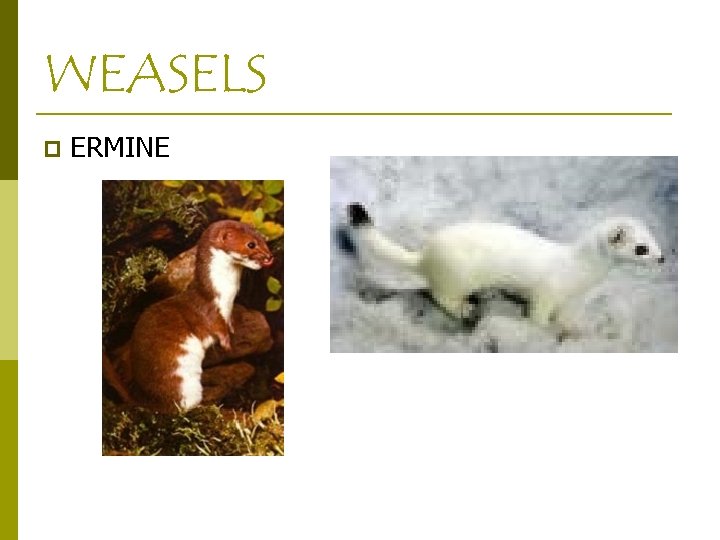 WEASELS p ERMINE
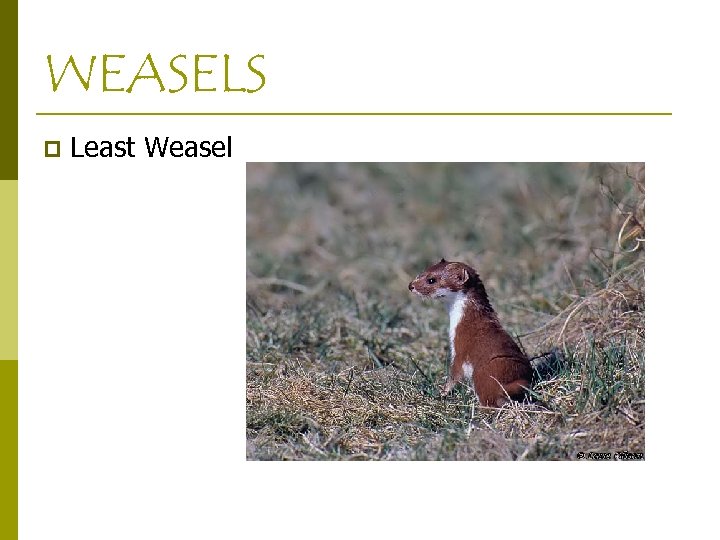 WEASELS p Least Weasel
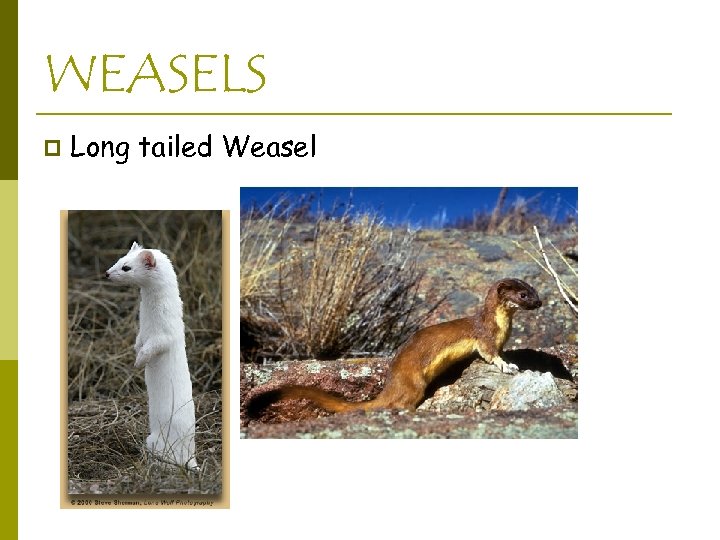 WEASELS p Long tailed Weasel
 WEASELS: Diet Consummate Predators: kill and consume wide varieties of prey (including animals larger than themselves) p Mice, voles, rats, shrews, snakes, birds, insects p Very fast metabolism for size: eat 1/3 body weight every 24 hrs. p Keen smell, sight, hearing p
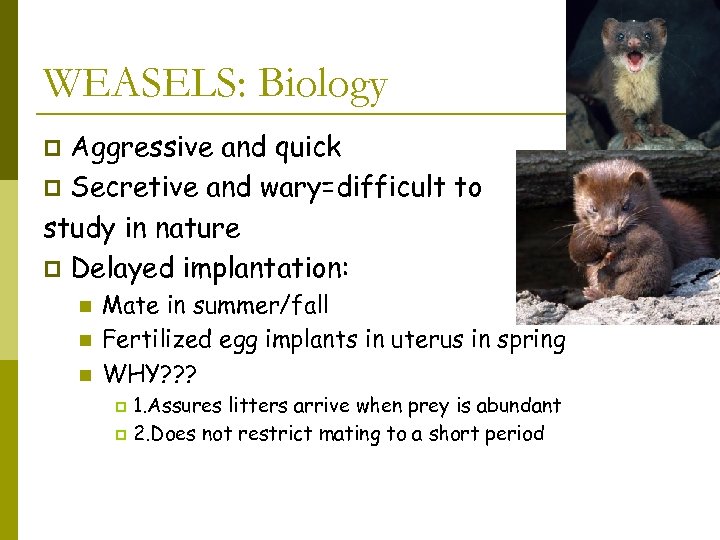 WEASELS: Biology Aggressive and quick p Secretive and wary=difficult to study in nature p Delayed implantation: p n n n Mate in summer/fall Fertilized egg implants in uterus in spring WHY? ? ? 1. Assures litters arrive when prey is abundant p 2. Does not restrict mating to a short period p
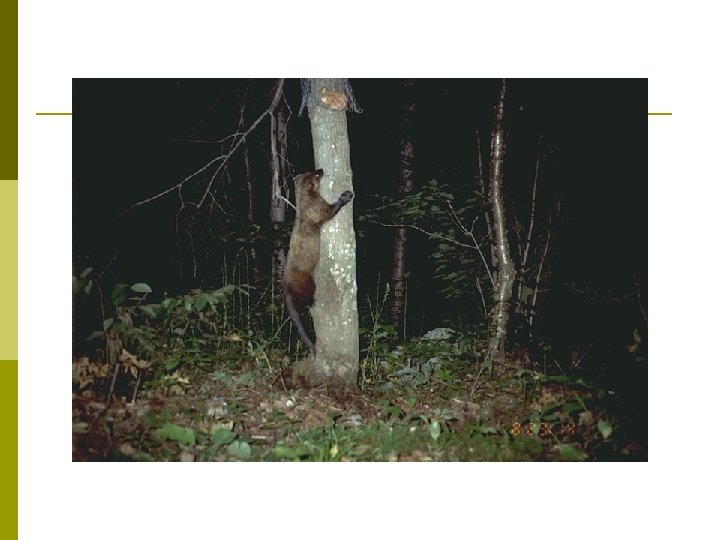
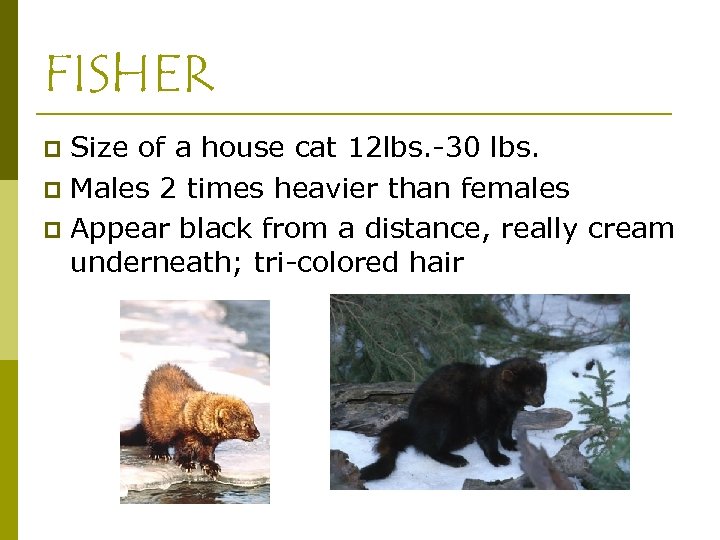 FISHER Size of a house cat 12 lbs. -30 lbs. p Males 2 times heavier than females p Appear black from a distance, really cream underneath; tri-colored hair p
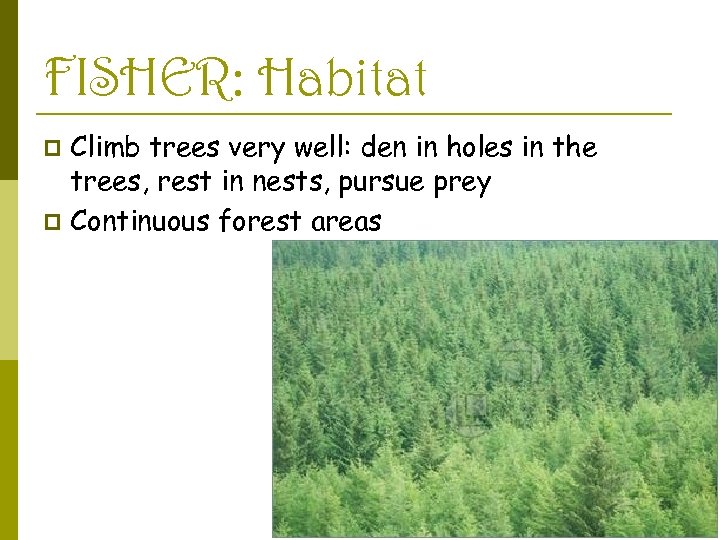 FISHER: Habitat Climb trees very well: den in holes in the trees, rest in nests, pursue prey p Continuous forest areas p
 FISHER: Biology Low population densities and large home ranges: 30 square miles p Nocturnal p Produce 1 litter per year: 2 or 3 cubs p Born and raised in a tree cavity p Solitary and opportunistic predators: p Snowshoe hare and porcupine p RARELY EAT FISH!! p
 FISHER: Population Widely distributed prior to 1800’s p Timber cutting and unregulated trapping almost eliminated by 1900’s p Reintroduced to Catskills, WV, PA p 1994 PSU and Game Commission released in Allegheny National Forest p
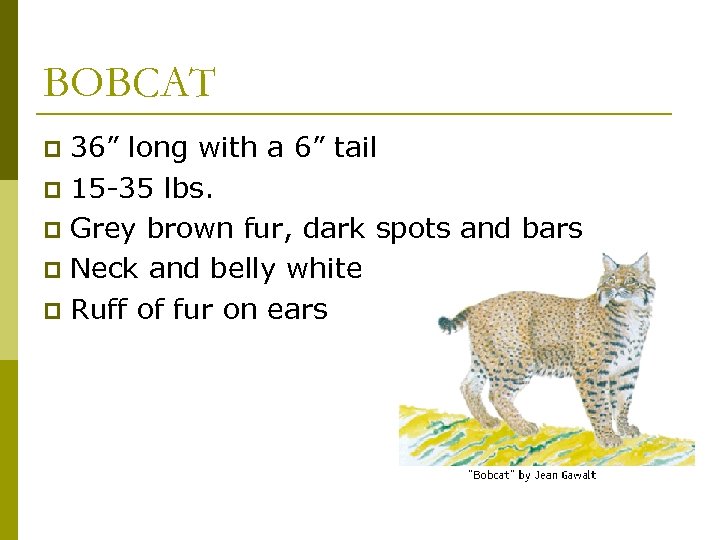 BOBCAT 36” long with a 6” tail p 15 -35 lbs. p Grey brown fur, dark spots and bars p Neck and belly white p Ruff of fur on ears p
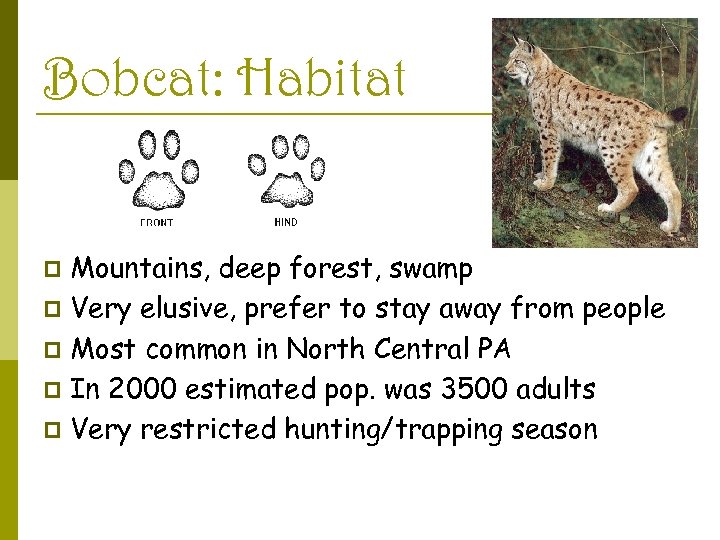 Bobcat: Habitat Mountains, deep forest, swamp p Very elusive, prefer to stay away from people p Most common in North Central PA p In 2000 estimated pop. was 3500 adults p Very restricted hunting/trapping season p
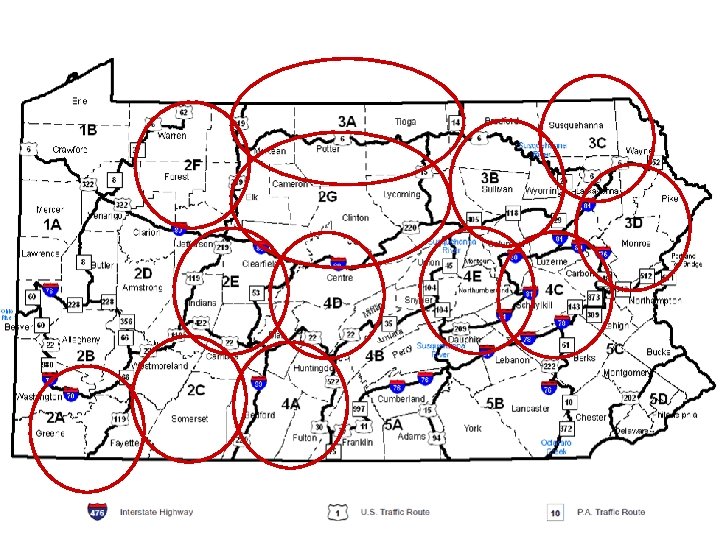
 PA Game Commission Bag Limits p. BOBCAT (WMUs 2 A, 2 C, 2 E, 2 F, 2 G, 3 A, 3 B, 3 C, 3 D, 4 A, 4 C, 4 D and 4 E): Jan. 15 -Feb. 5. One bobcat per license year, but all licensed furtakers may obtain one permit.
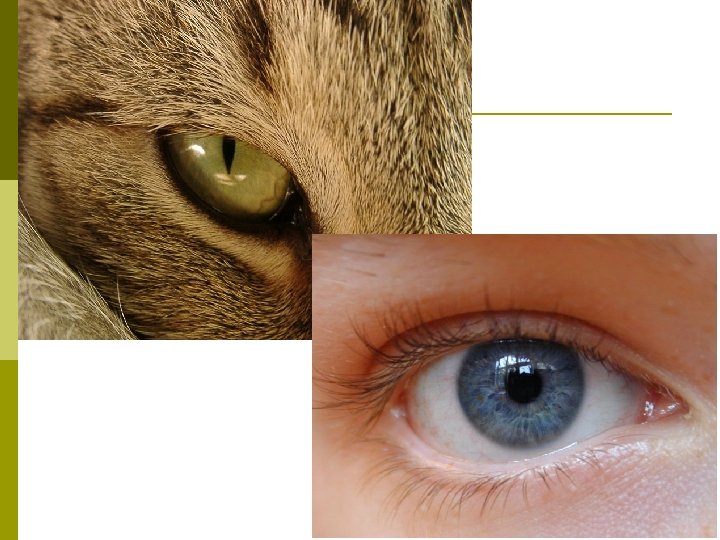
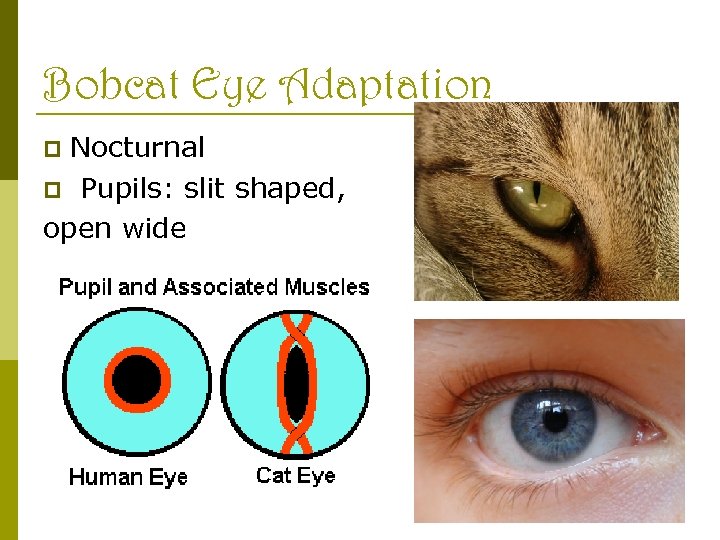 Bobcat Eye Adaptation Nocturnal p Pupils: slit shaped, open wide p
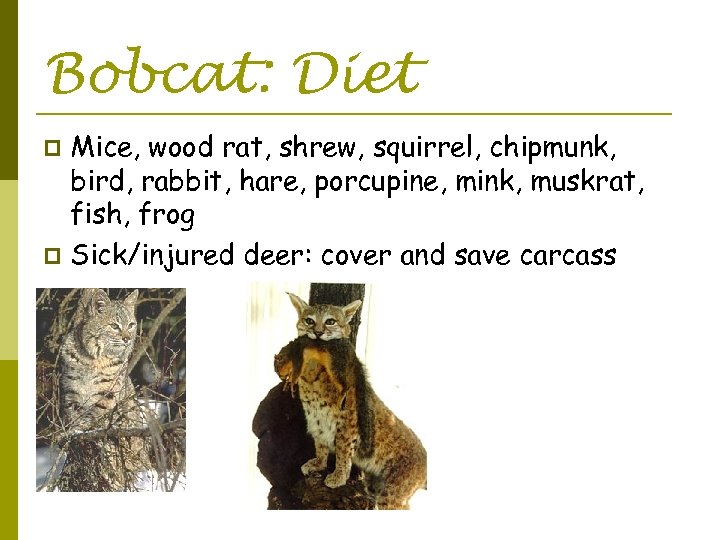 Bobcat: Diet Mice, wood rat, shrew, squirrel, chipmunk, bird, rabbit, hare, porcupine, mink, muskrat, fish, frog p Sick/injured deer: cover and save carcass p
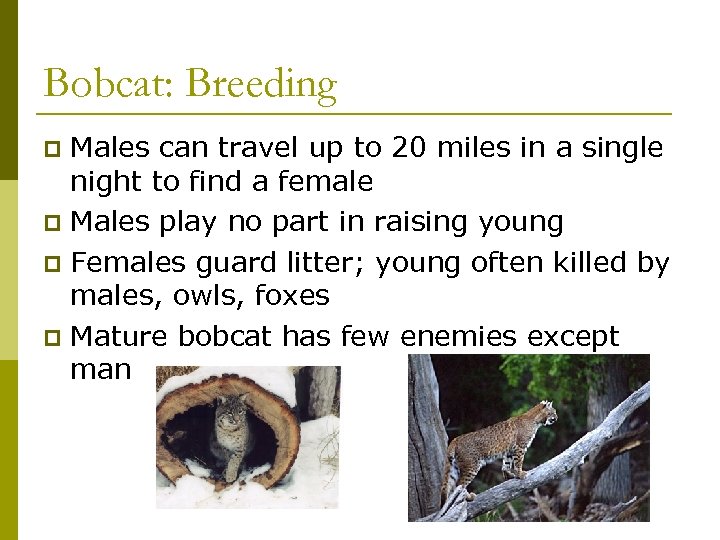 Bobcat: Breeding Males can travel up to 20 miles in a single night to find a female p Males play no part in raising young p Females guard litter; young often killed by males, owls, foxes p Mature bobcat has few enemies except man p
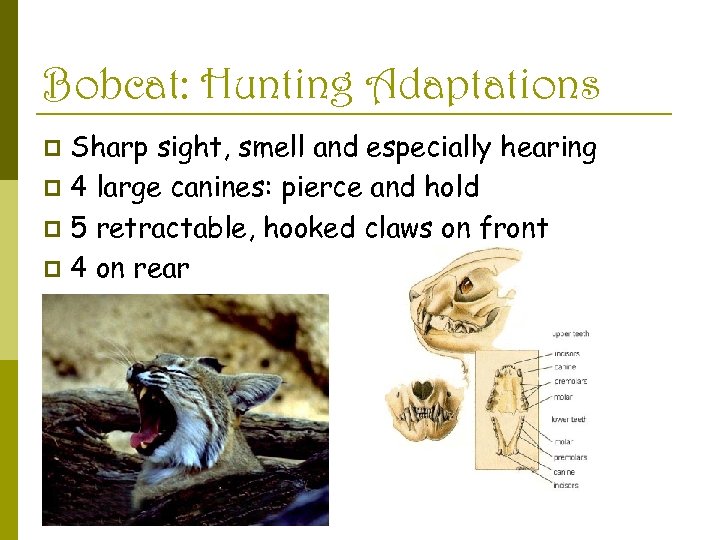 Bobcat: Hunting Adaptations Sharp sight, smell and especially hearing p 4 large canines: pierce and hold p 5 retractable, hooked claws on front p 4 on rear p
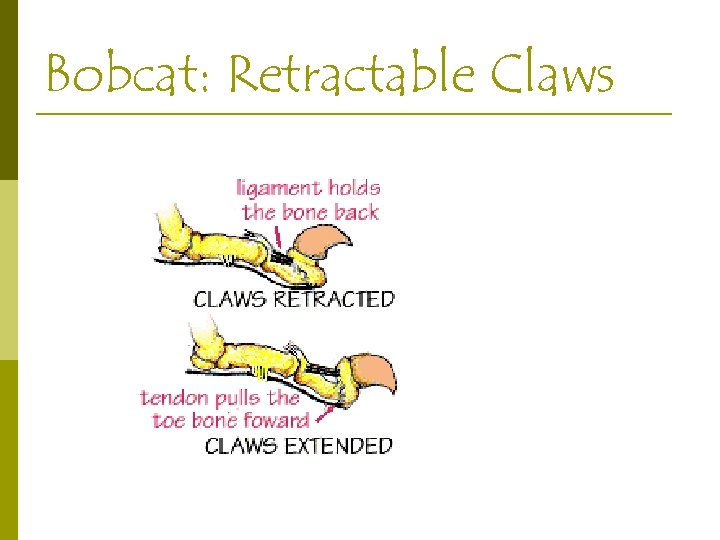 Bobcat: Retractable Claws
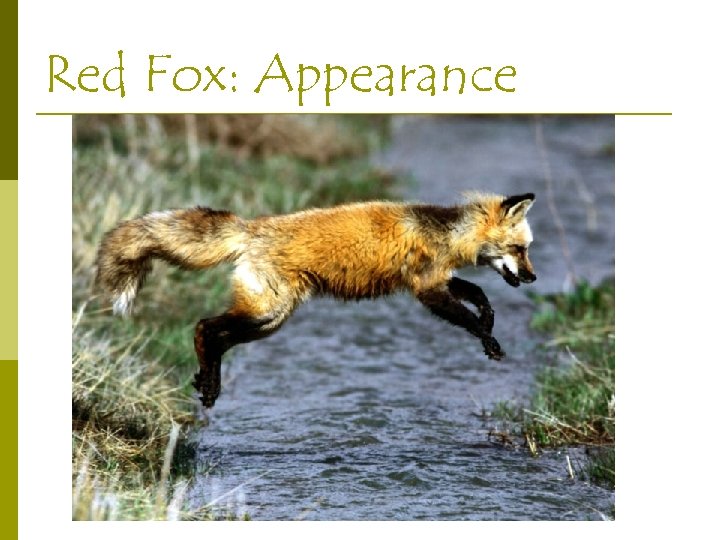 Red Fox: Appearance
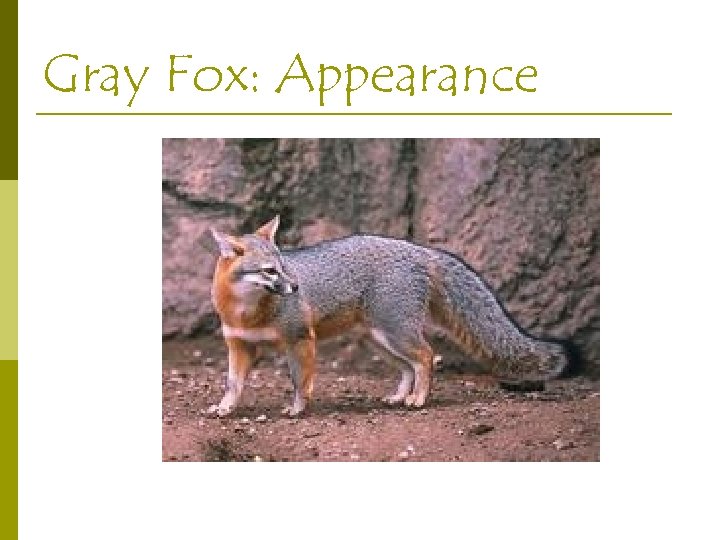 Gray Fox: Appearance
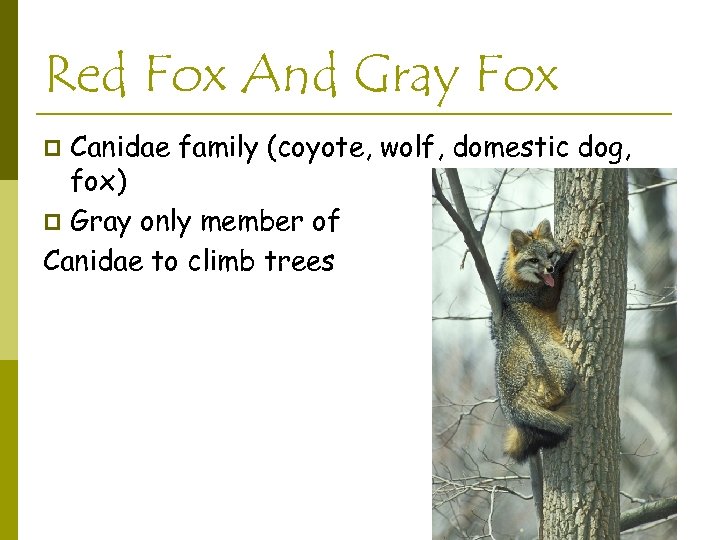 Red Fox And Gray Fox Canidae family (coyote, wolf, domestic dog, fox) p Gray only member of Canidae to climb trees p
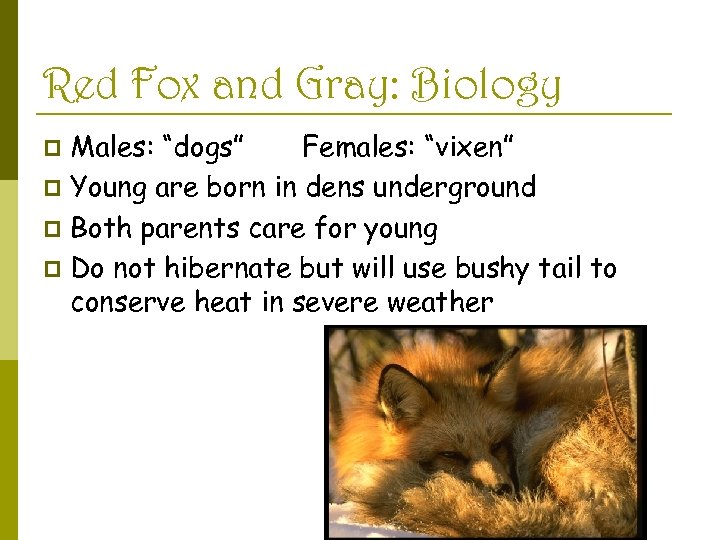 Red Fox and Gray: Biology Males: “dogs” Females: “vixen” p Young are born in dens underground p Both parents care for young p Do not hibernate but will use bushy tail to conserve heat in severe weather p
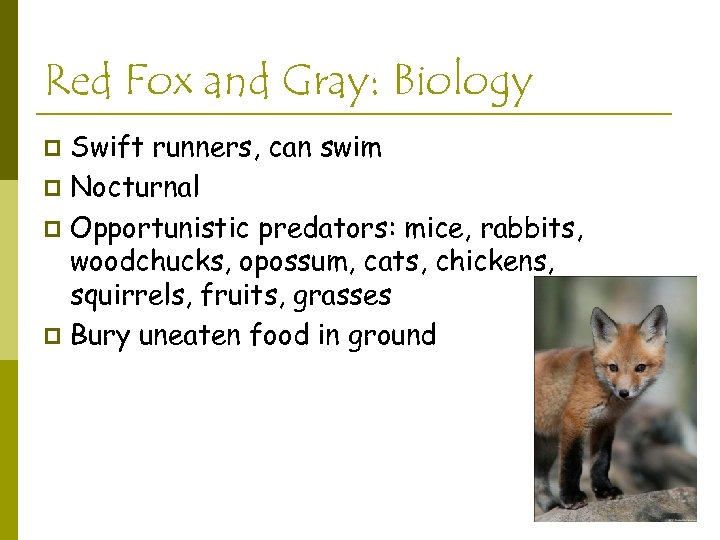 Red Fox and Gray: Biology Swift runners, can swim p Nocturnal p Opportunistic predators: mice, rabbits, woodchucks, opossum, cats, chickens, squirrels, fruits, grasses p Bury uneaten food in ground p
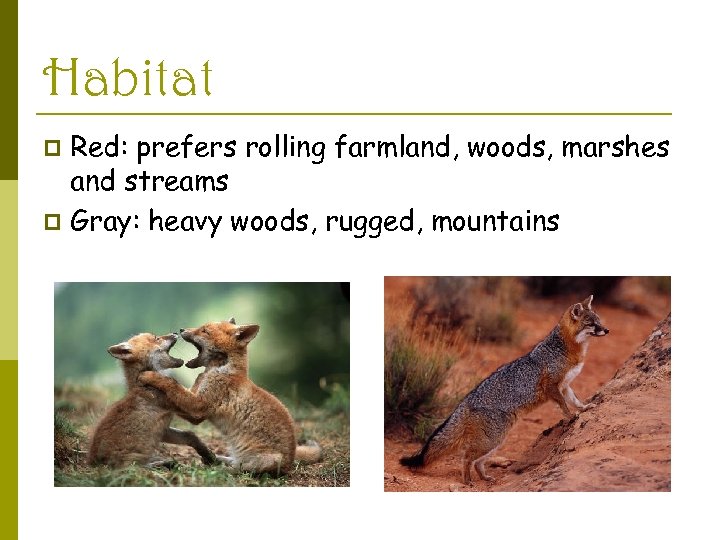 Habitat Red: prefers rolling farmland, woods, marshes and streams p Gray: heavy woods, rugged, mountains p
 Exit Ticket…. . To leave this room you must answer these questions…. 1. 2. 3. 4. 5. List one surprising new idea you learned about mammalian predators. Name 2 weasels found in PA. See #2. What is the common characteristic shared by the Mustelid family? Name 2 adaptations that help the canines locate prey.