Скачать презентацию P Sci Unit 4 Chapter 15 Energy
cdc3b9a8221b900479079b8097f50be3.ppt
- Количество слайдов: 32
 P. Sci. Unit 4 Chapter 15 Energy
 Energy and Work Copy this • Whenever work is done, energy is transformed or transferred to another system. • Energy is the ability to do work.
 • Remember – work is done only when an object moves. • But - energy can be present in an object or a system when nothing is happening. • However – it can only be observed when it is transferred from one object or system to another.
 SI Unit of Energy Copy this • Because the amount of energy transferred is measured by how much work is done – energy and work are expressed in the same unit. Joules
 Potential Energy Copy this AKA – Energy of Position Potential Energy is energy that is Stored. You can’t see it but you know it’s there
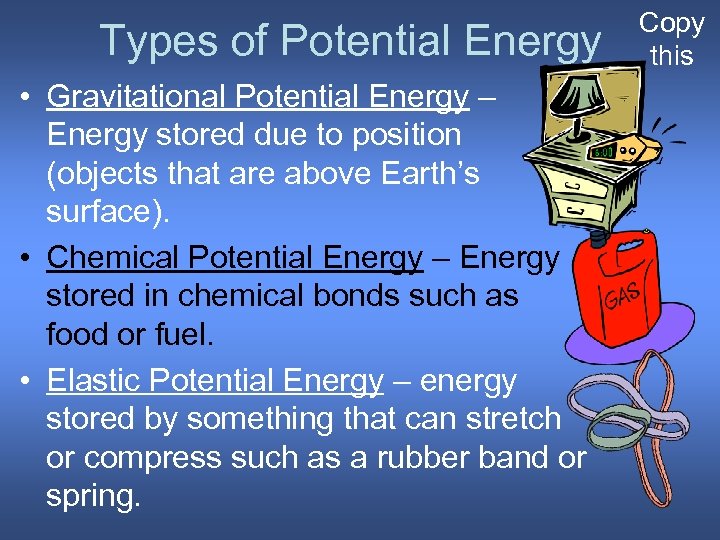 Types of Potential Energy • Gravitational Potential Energy – Energy stored due to position (objects that are above Earth’s surface). • Chemical Potential Energy – Energy stored in chemical bonds such as food or fuel. • Elastic Potential Energy – energy stored by something that can stretch or compress such as a rubber band or spring. Copy this
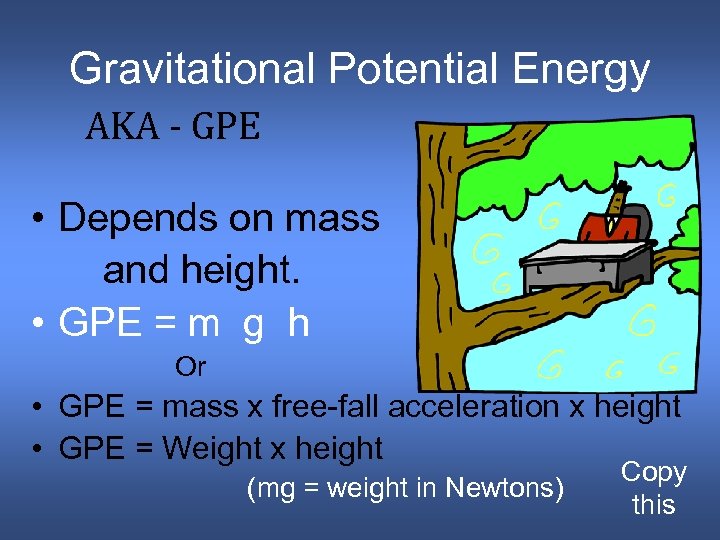 Gravitational Potential Energy AKA - GPE • Depends on mass and height. • GPE = m g h Or • GPE = mass x free-fall acceleration x height • GPE = Weight x height (mg = weight in Newtons) Copy this
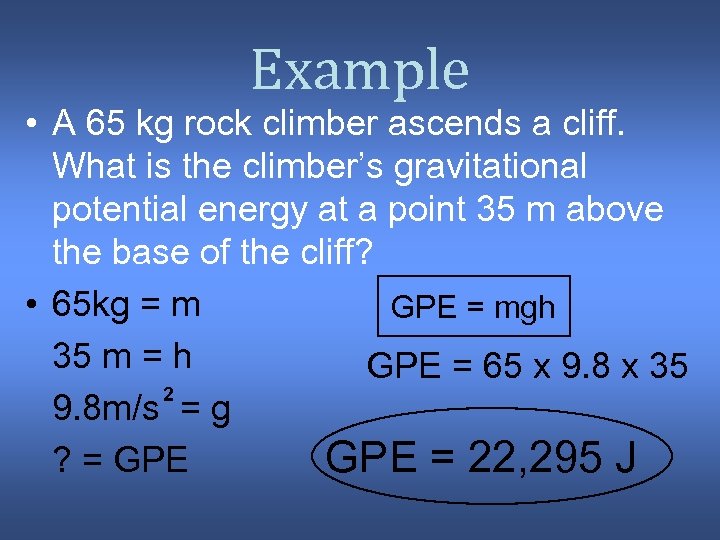 Example • A 65 kg rock climber ascends a cliff. What is the climber’s gravitational potential energy at a point 35 m above the base of the cliff? • 65 kg = m GPE = mgh 35 m = h GPE = 65 x 9. 8 x 35 2 9. 8 m/s = g ? = GPE = 22, 295 J
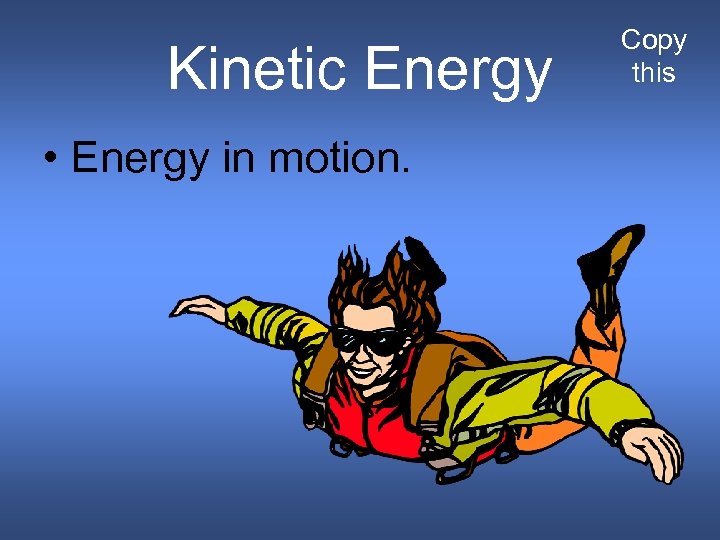 Kinetic Energy • Energy in motion. Copy this
 5 Kinetic Energy Copy this • Motion • KE of an object depends upon two variables: 1. the mass (m) of the object 2. the speed (v) of the object.
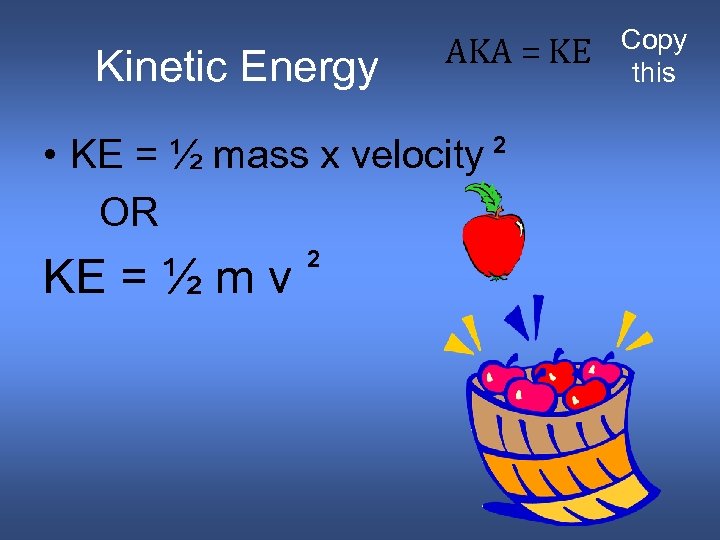 Kinetic Energy AKA = KE • KE = ½ mass x velocity OR KE = ½ m v 2 2 Copy this
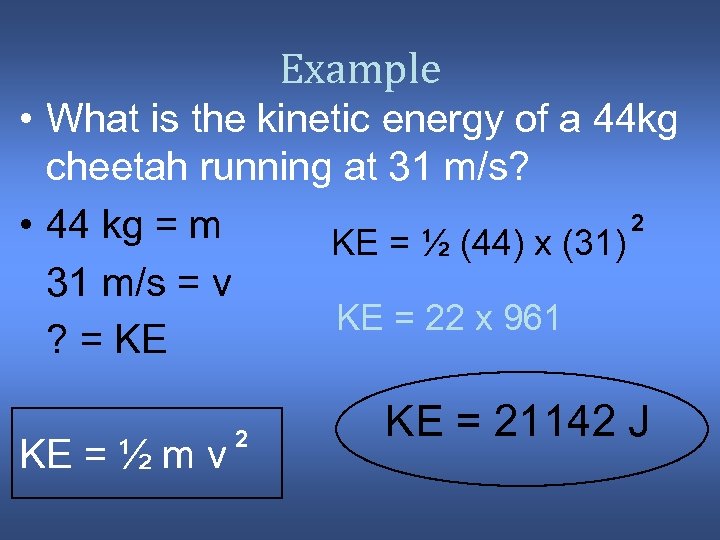 Example • What is the kinetic energy of a 44 kg cheetah running at 31 m/s? 2 • 44 kg = m KE = ½ (44) x (31) 31 m/s = v KE = 22 x 961 ? = KE KE = ½ m v 2 KE = 21142 J
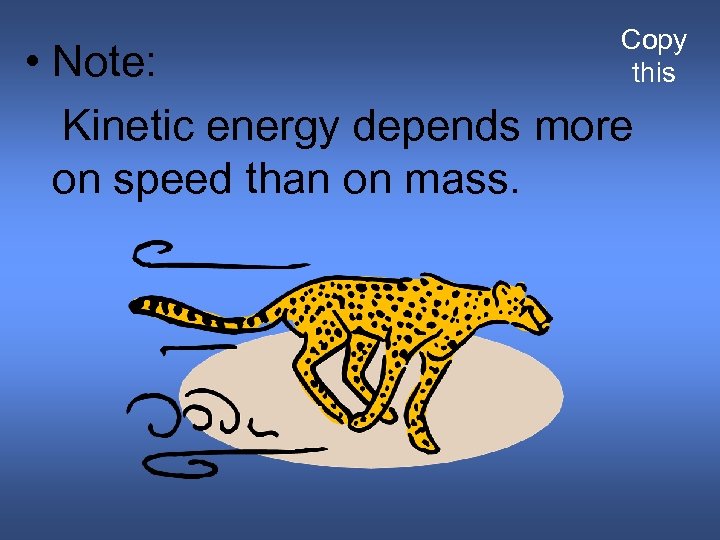 Copy this • Note: Kinetic energy depends more on speed than on mass.
 Forms of Energy • All energy can be considered to be: Copy this – Kinetic – Potential – Energy in fields (such as electromagnetic) • Major forms of energy are: mechanical, thermal, chemical, electromagnetic, and nuclear. • Each of these forms of energy can be converted into other forms of energy
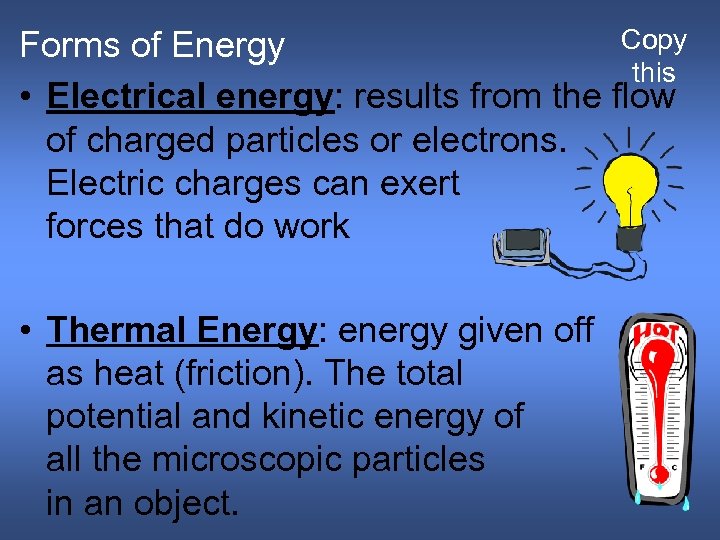 Copy Forms of Energy this • Electrical energy: results from the flow of charged particles or electrons. Electric charges can exert forces that do work • Thermal Energy: energy given off as heat (friction). The total potential and kinetic energy of all the microscopic particles in an object.
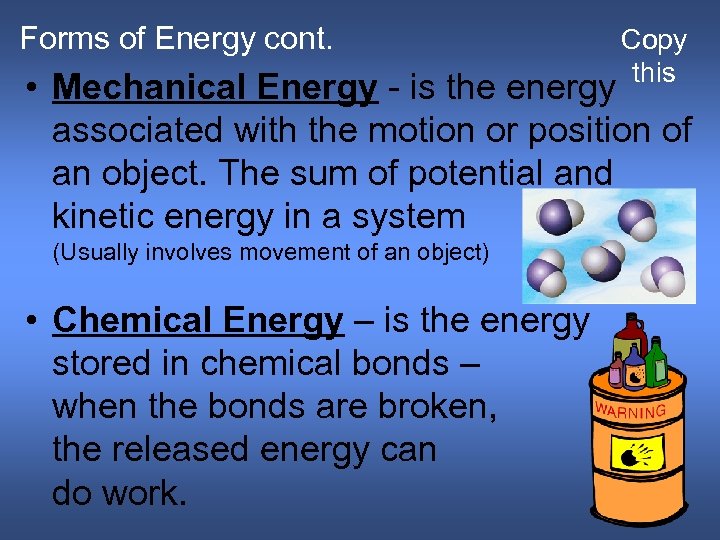 Forms of Energy cont. Copy this • Mechanical Energy - is the energy associated with the motion or position of an object. The sum of potential and kinetic energy in a system (Usually involves movement of an object) • Chemical Energy – is the energy stored in chemical bonds – when the bonds are broken, the released energy can do work.
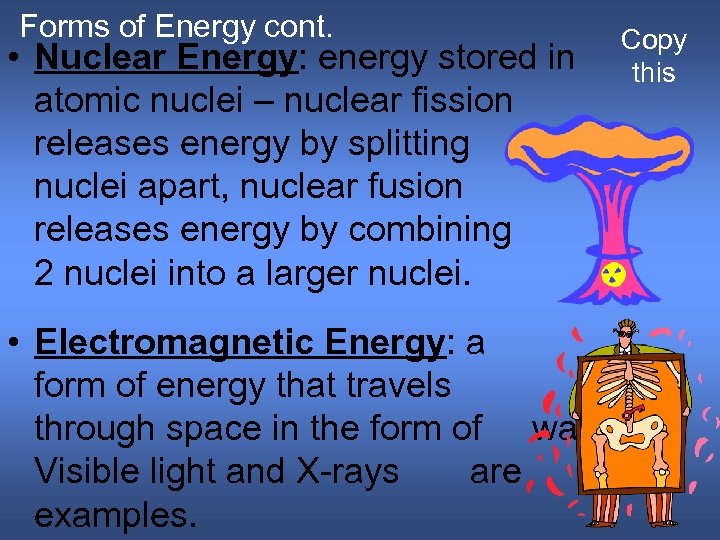 Forms of Energy cont. • Nuclear Energy: energy stored in atomic nuclei – nuclear fission releases energy by splitting nuclei apart, nuclear fusion releases energy by combining 2 nuclei into a larger nuclei. Copy this • Electromagnetic Energy: a form of energy that travels through space in the form of waves. Visible light and X-rays are examples.
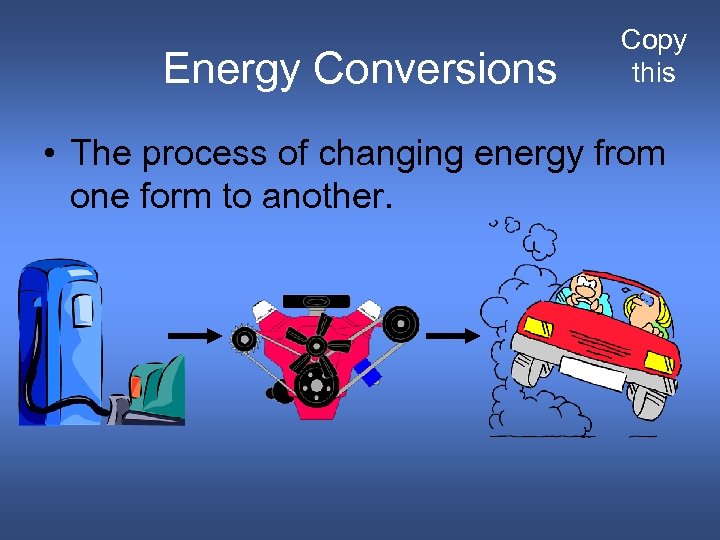 Energy Conversions Copy this • The process of changing energy from one form to another.
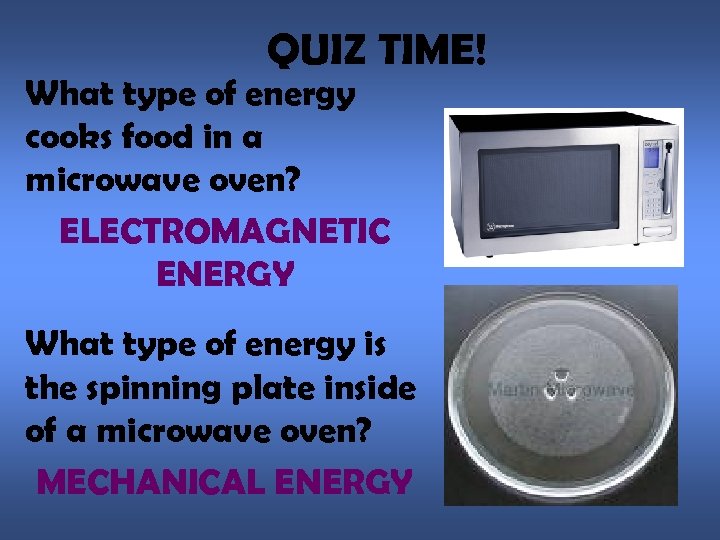 QUIZ TIME! What type of energy cooks food in a microwave oven? ELECTROMAGNETIC ENERGY What type of energy is the spinning plate inside of a microwave oven? MECHANICAL ENERGY
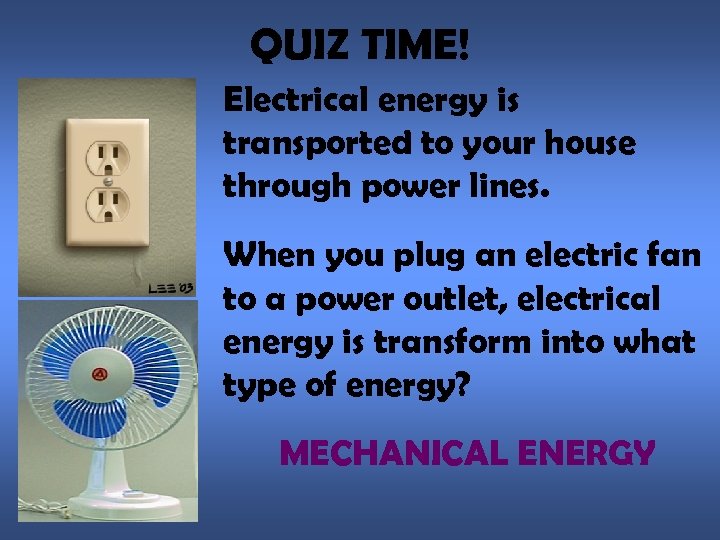 QUIZ TIME! Electrical energy is transported to your house through power lines. When you plug an electric fan to a power outlet, electrical energy is transform into what type of energy? MECHANICAL ENERGY
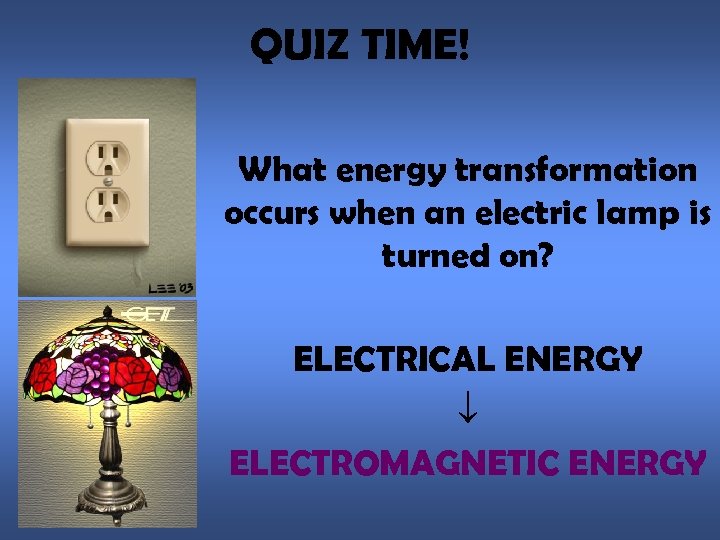 QUIZ TIME! What energy transformation occurs when an electric lamp is turned on? ELECTRICAL ENERGY ELECTROMAGNETIC ENERGY
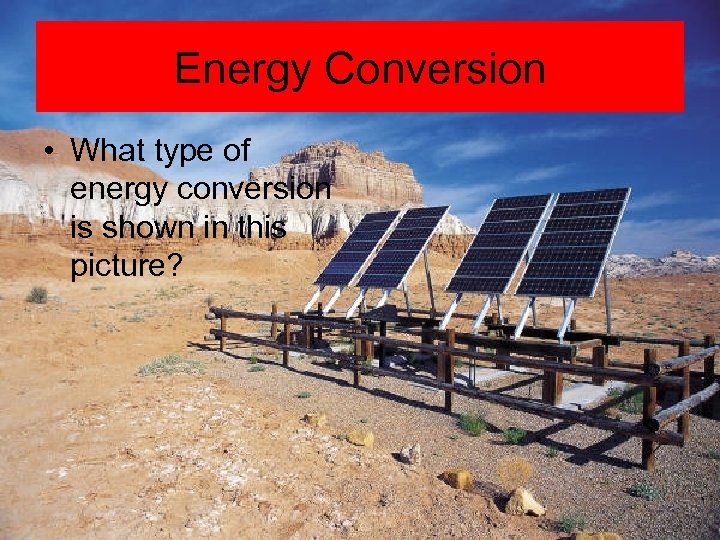 Energy Conversion • What type of energy conversion is shown in this picture?
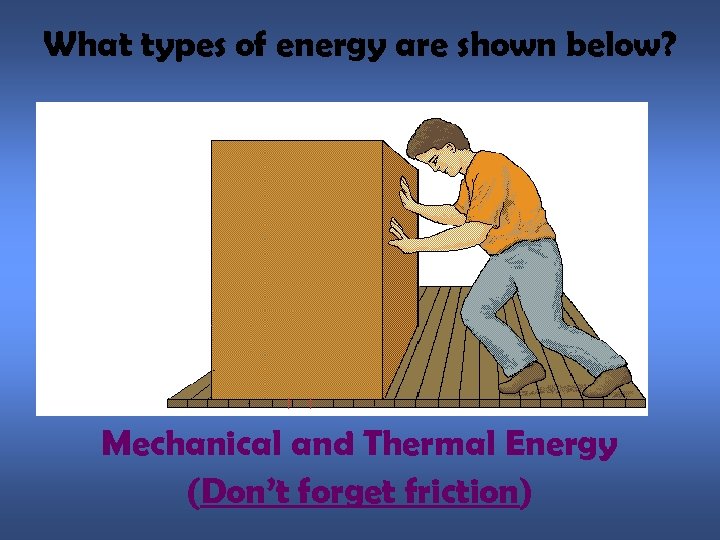 What types of energy are shown below? Mechanical and Thermal Energy (Don’t forget friction)
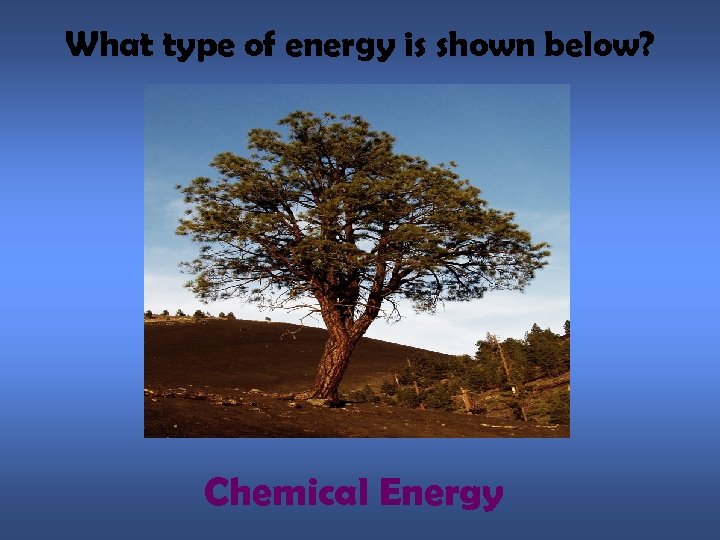 What type of energy is shown below? Chemical Energy
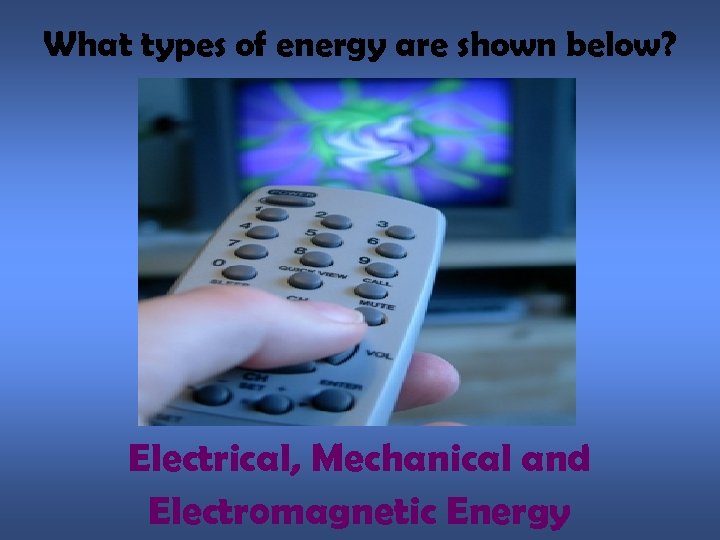 What types of energy are shown below? Electrical, Mechanical and Electromagnetic Energy
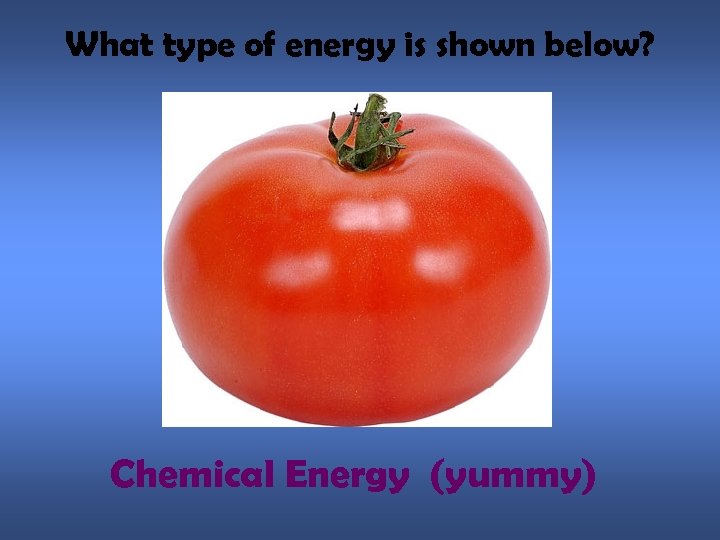 What type of energy is shown below? Chemical Energy (yummy)
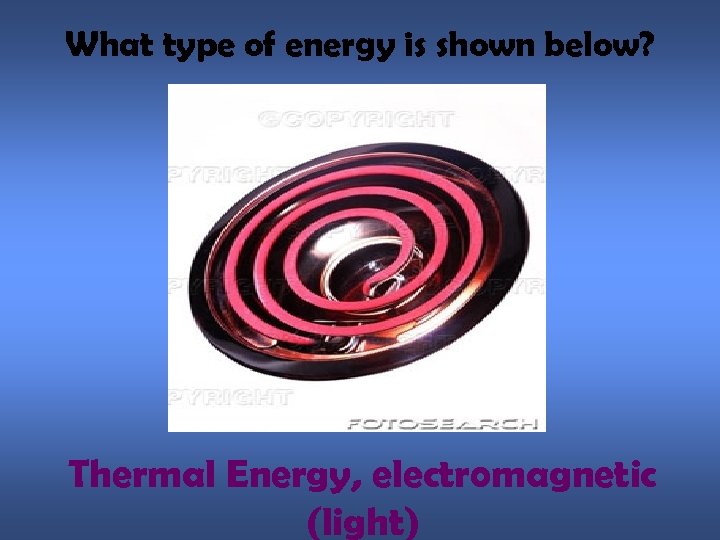 What type of energy is shown below? Thermal Energy, electromagnetic (light)
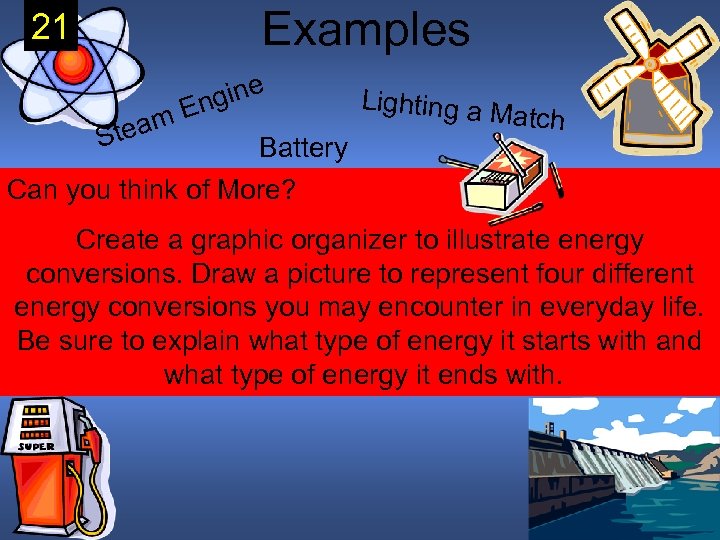 Examples 21 team S gine En Battery Can you think of More? Lighting a M atch Create a graphic organizer to illustrate energy conversions. Draw a picture to represent four different energy conversions you may encounter in everyday life. Be sure to explain what type of energy it starts with and what type of energy it ends with.
 Law of Conservation of Energy • Energy cannot be created nor destroyed it can only be changed. • Energy can be transferred to another object/system or to another form (potential to Copy Kinetic) this
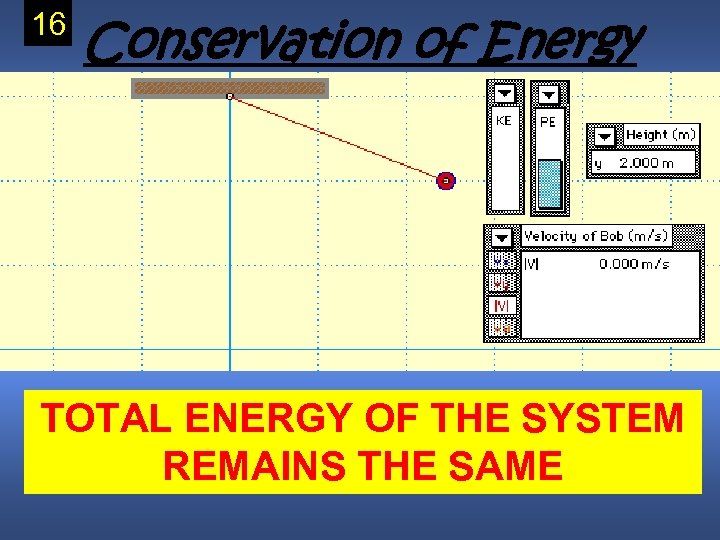 16 Conservation of Energy TOTAL ENERGY OF THE SYSTEM REMAINS THE SAME
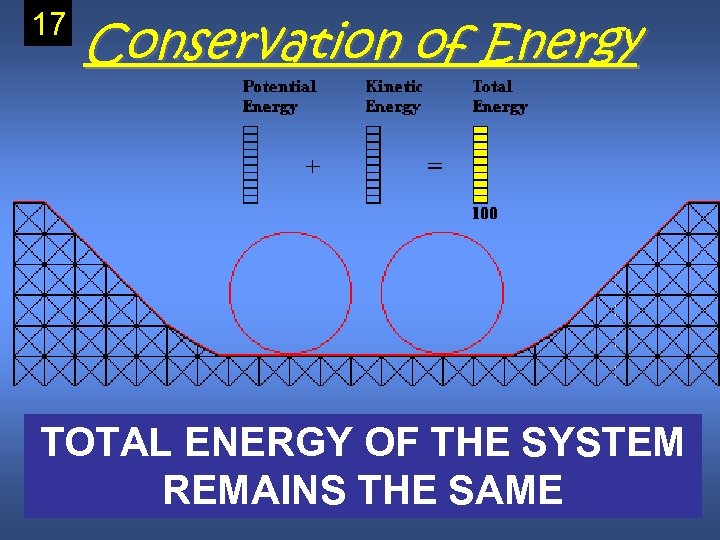 17 Conservation of Energy TOTAL ENERGY OF THE SYSTEM REMAINS THE SAME