

[p] – depressed, happy, upset, helpful [n] –

![[p] – depressed, happy, upset, helpful [n] – unhappy, lonely, frightened, energetic [t] –](https://present5.com/presentacii-2/20171208\17988-855_urok-angliyskogo-yazika-v-7-klasse-shkola-v-nashey-gizni.ppt\17988-855_urok-angliyskogo-yazika-v-7-klasse-shkola-v-nashey-gizni_1.jpg "[p] – depressed, happy, upset, helpful [n] – unhappy, lonely, frightened, energetic [t] –")
![Скачать презентацию [p] – depressed, happy, upset, helpful [n] –](https://present5.com/wp-content/plugins/kama-clic-counter/icons/ppt.jpg "Скачать презентацию [p] – depressed, happy, upset, helpful [n] –") Скачать презентацию [p] – depressed, happy, upset, helpful [n] –
Скачать презентацию [p] – depressed, happy, upset, helpful [n] –
17988-855_urok-angliyskogo-yazika-v-7-klasse-shkola-v-nashey-gizni.ppt
- Количество слайдов: 12
[p] – depressed, happy, upset, helpful [n] – unhappy, lonely, frightened, energetic [t] – tired, comfortable, strict, frightened, tolerant [l] – ill, lonely, lucky, pleased, self-controlled [d] – surprised, glad, independent, understanding [s] – smart, upset, nice, nervous, self-confident [ӕ] – sad, happy, angry, understanding
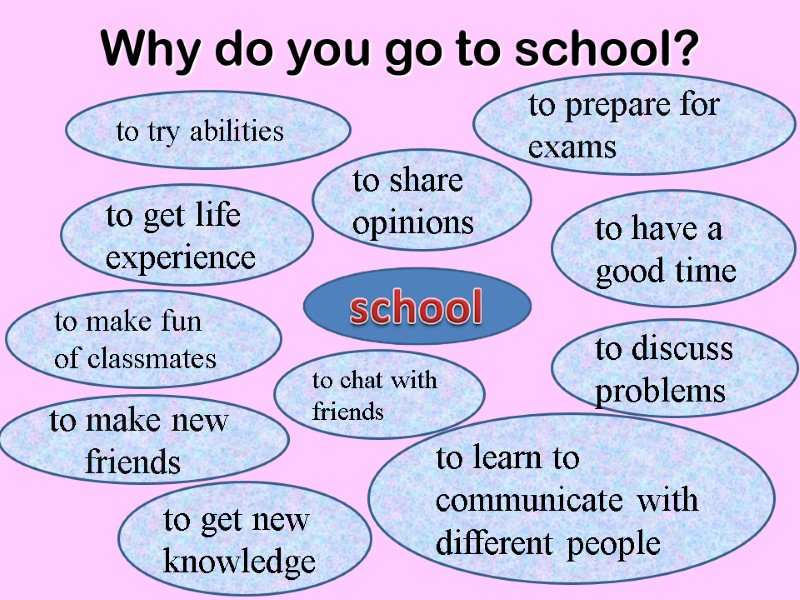
Why do you go to school? to try abilities to prepare for exams to make new friends to get life experience to share opinions to get new knowledge to learn to communicate with different people to discuss problems to chat with friends to have a good time to make fun of classmates
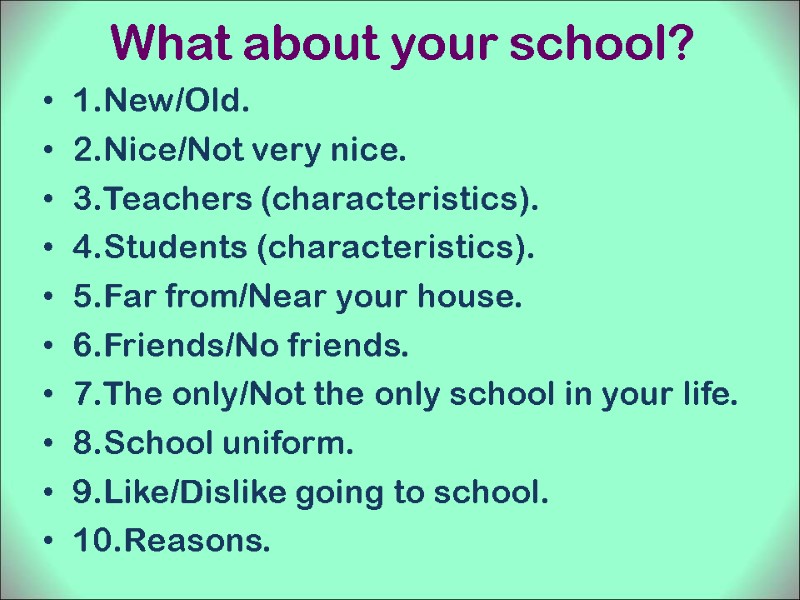
What about your school? 1.New/Old. 2.Nice/Not very nice. 3.Teachers (characteristics). 4.Students (characteristics). 5.Far from/Near your house. 6.Friends/No friends. 7.The only/Not the only school in your life. 8.School uniform. 9.Like/Dislike going to school. 10.Reasons.
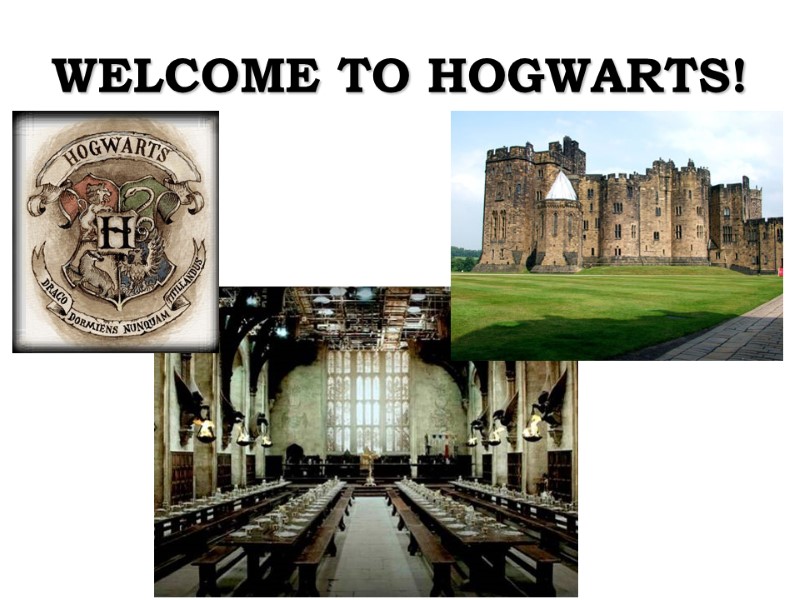
WELCOME TO HOGWARTS!
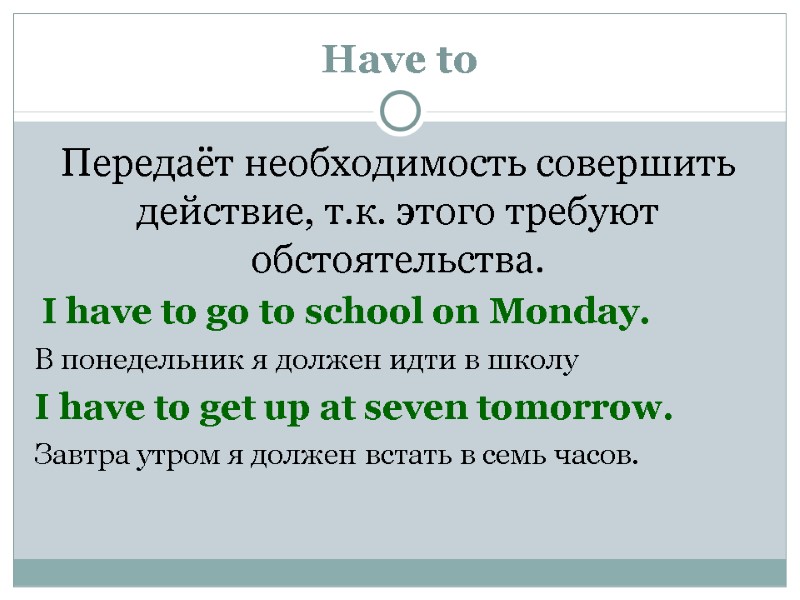
Have to Передаёт необходимость совершить действие, т.к. этого требуют обстоятельства. I have to go to school on Monday. В понедельник я должен идти в школу I have to get up at seven tomorrow. Завтра утром я должен встать в семь часов.
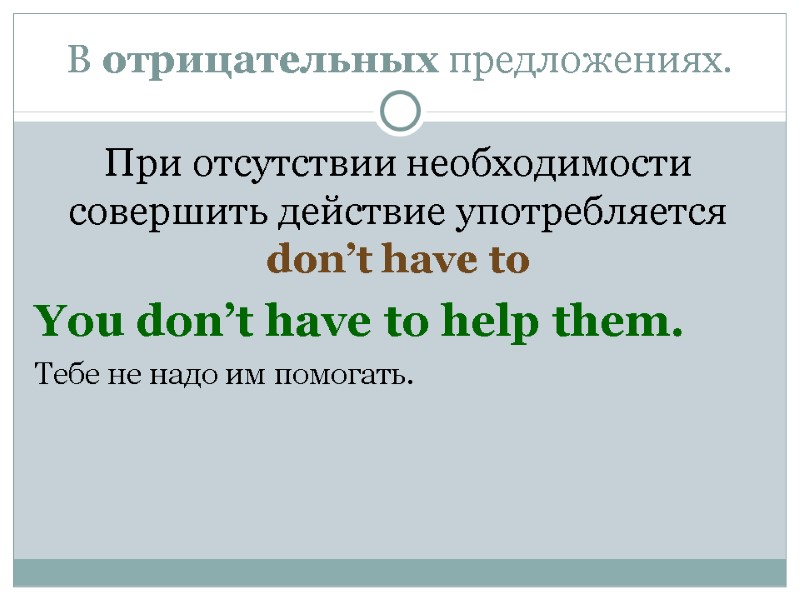
В отрицательных предложениях. При отсутствии необходимости совершить действие употребляется don’t have to You don’t have to help them. Тебе не надо им помогать.
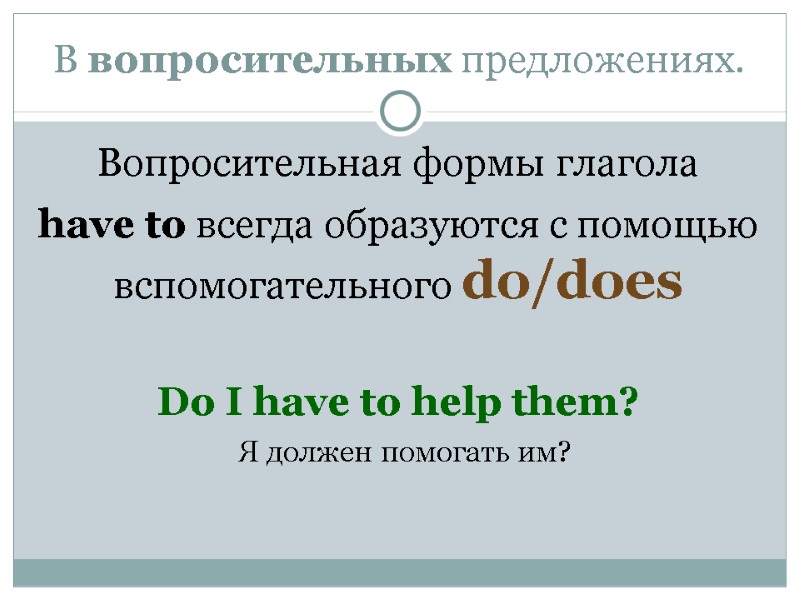
В вопросительных предложениях. Вопросительная формы глагола have to всегда образуются с помощью вспомогательного do/does Do I have to help them? Я должен помогать им?
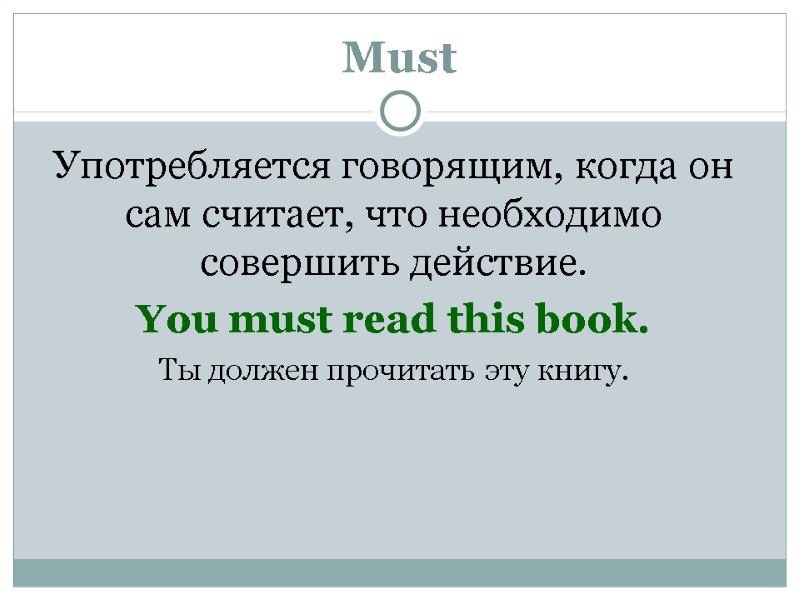
Must Употребляется говорящим, когда он сам считает, что необходимо совершить действие. You must read this book. Ты должен прочитать эту книгу.
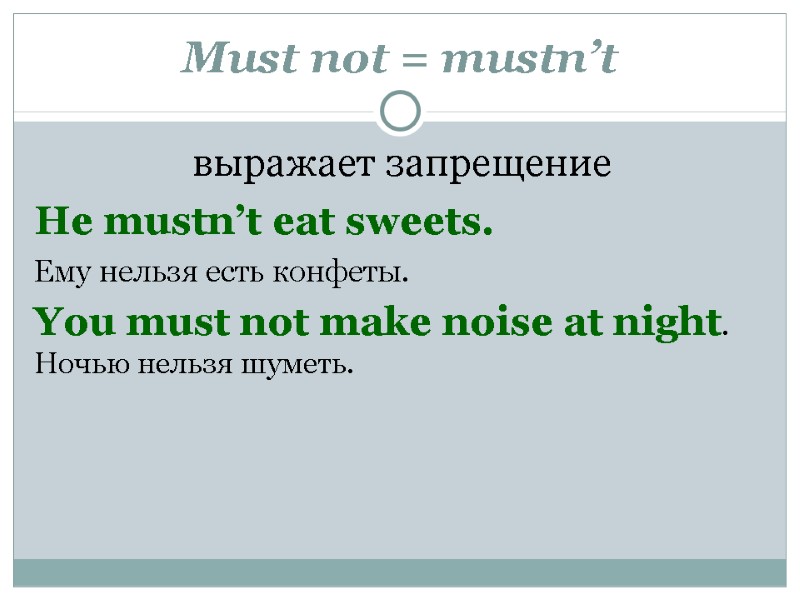
Must not = mustn’t выражает запрещение He mustn’t eat sweets. Ему нельзя есть конфеты. You must not make noise at night. Ночью нельзя шуметь.
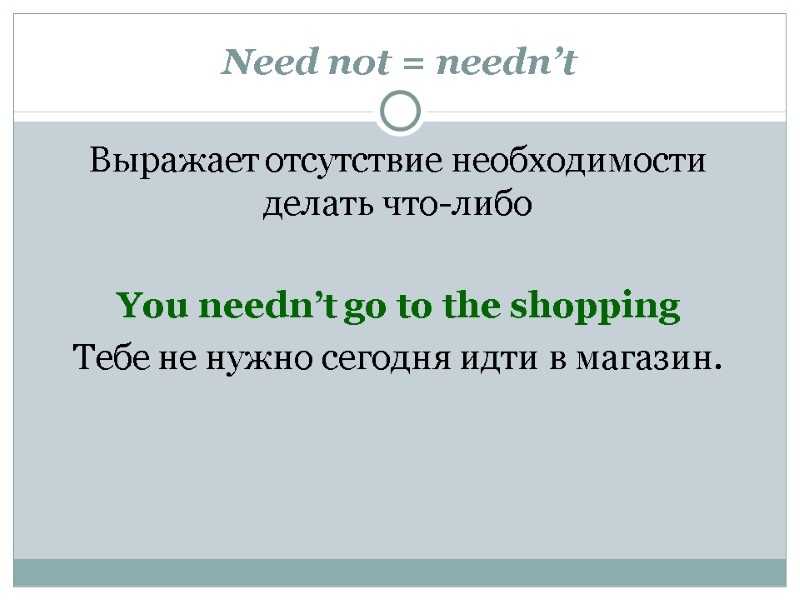
Need not = needn’t Выражает отсутствие необходимости делать что-либо You needn’t go to the shopping Тебе не нужно сегодня идти в магазин.
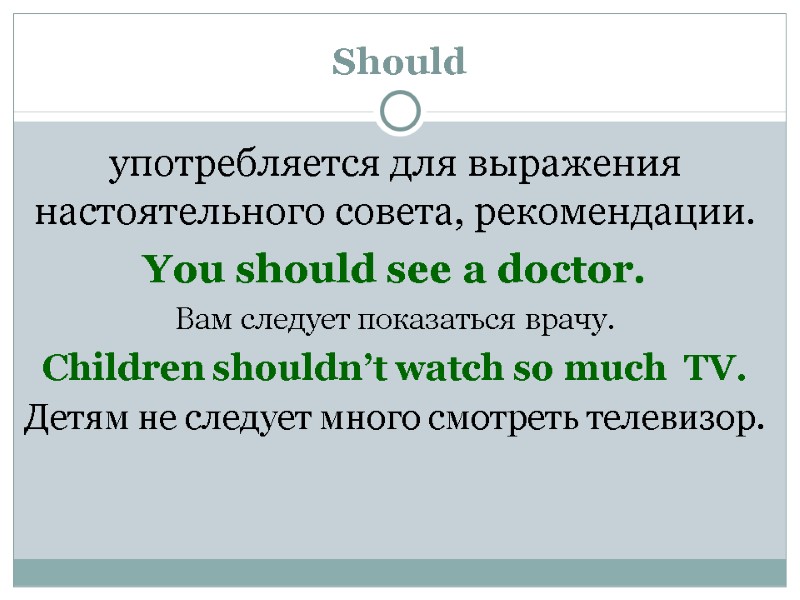
Should употребляется для выражения настоятельного совета, рекомендации. You should see a doctor. Вам следует показаться врачу. Children shouldn’t watch so much TV. Детям не следует много смотреть телевизор.
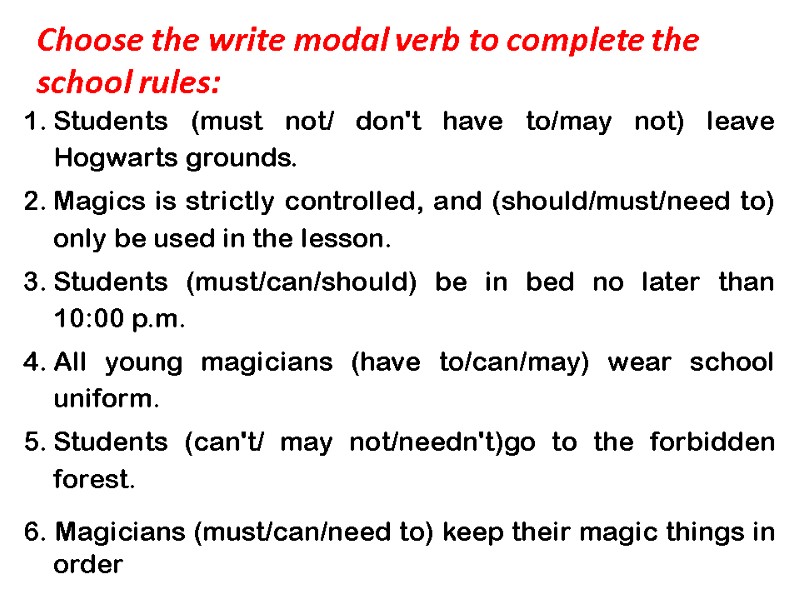
Choose the write modal verb to complete the school rules: Students (must not/ don't have to/may not) leave Hogwarts grounds. Magics is strictly controlled, and (should/must/need to) only be used in the lesson. Students (must/can/should) be in bed no later than 10:00 p.m. All young magicians (have to/can/may) wear school uniform. Students (can't/ may not/needn't)go to the forbidden forest. 6. Magicians (must/can/need to) keep their magic things in order