 Скачать презентацию P 07421 — Sustainable Technology for the RIT
c5240733bcf03835fdb20b63ec23cea2.ppt
- Количество слайдов: 32



P 07421 - Sustainable Technology for the RIT Campus Lu Xu Chris Chaput Sam Eng Jeff Hoover Bob Snow Jessie Gmeinder Kevin Costantini Wojciech Mysliwiec Scott Rishell Eric Wong
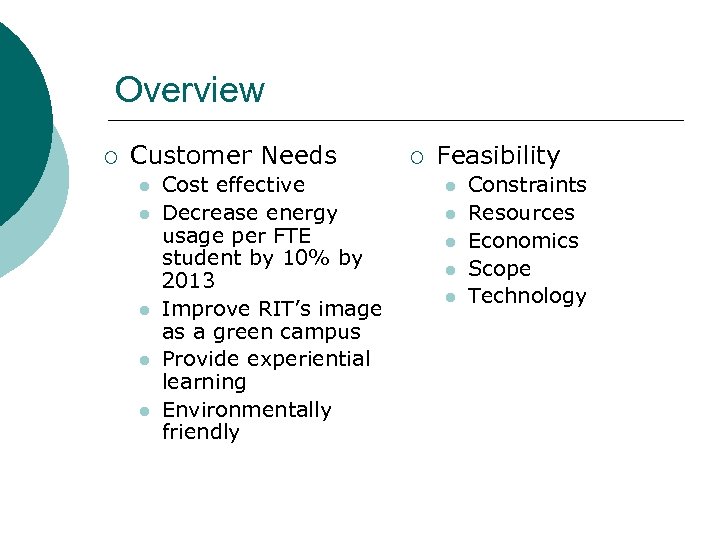
Overview ¡ Customer Needs l l l Cost effective Decrease energy usage per FTE student by 10% by 2013 Improve RIT’s image as a green campus Provide experiential learning Environmentally friendly ¡ Feasibility l l l Constraints Resources Economics Scope Technology
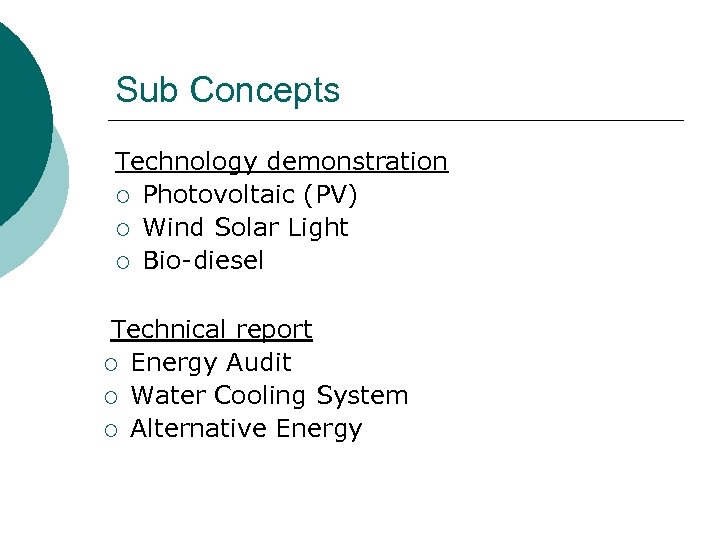
Sub Concepts Technology demonstration ¡ Photovoltaic (PV) ¡ Wind Solar Light ¡ Bio-diesel Technical report ¡ Energy Audit ¡ Water Cooling System ¡ Alternative Energy
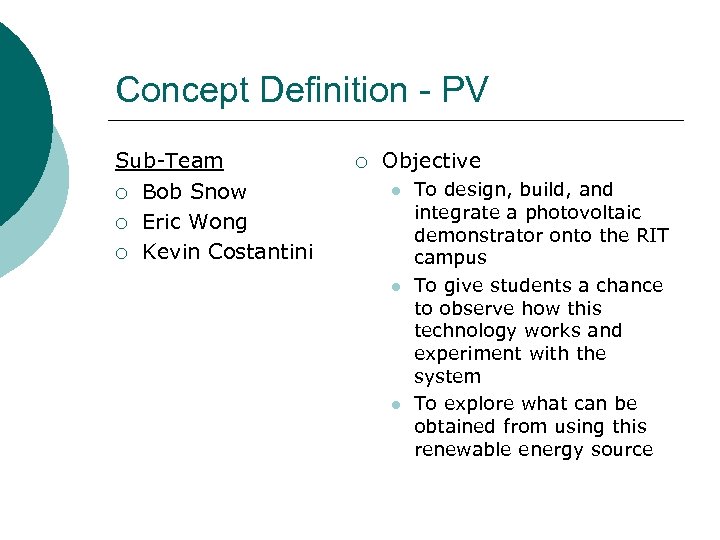
Concept Definition - PV Sub-Team ¡ Bob Snow ¡ Eric Wong ¡ Kevin Costantini ¡ Objective l l l To design, build, and integrate a photovoltaic demonstrator onto the RIT campus To give students a chance to observe how this technology works and experiment with the system To explore what can be obtained from using this renewable energy source
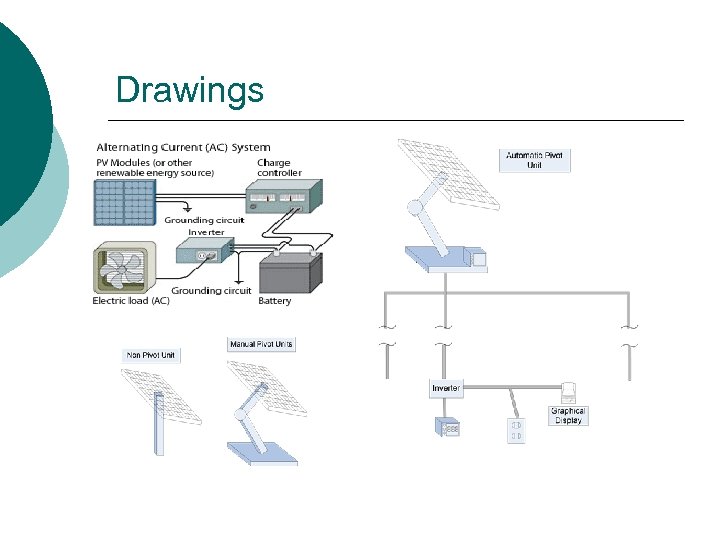
Drawings
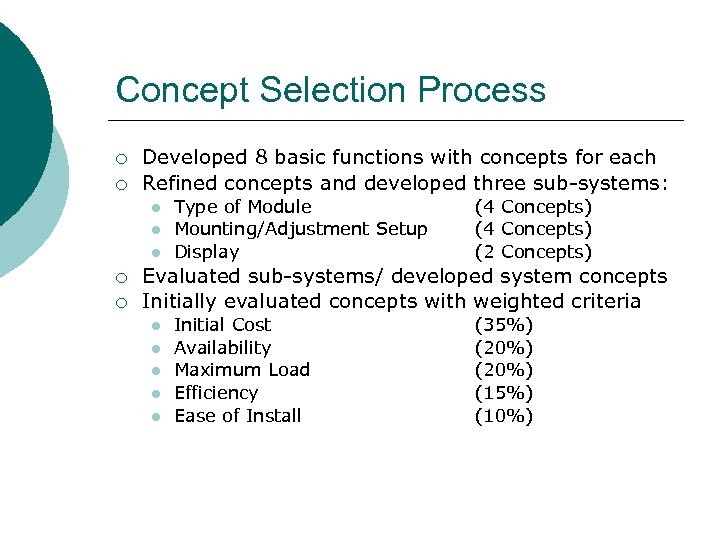
Concept Selection Process ¡ ¡ Developed 8 basic functions with concepts for each Refined concepts and developed three sub-systems: l l l ¡ ¡ Type of Module Mounting/Adjustment Setup Display (4 Concepts) (2 Concepts) Evaluated sub-systems/ developed system concepts Initially evaluated concepts with weighted criteria l l l Initial Cost Availability Maximum Load Efficiency Ease of Install (35%) (20%) (15%) (10%)
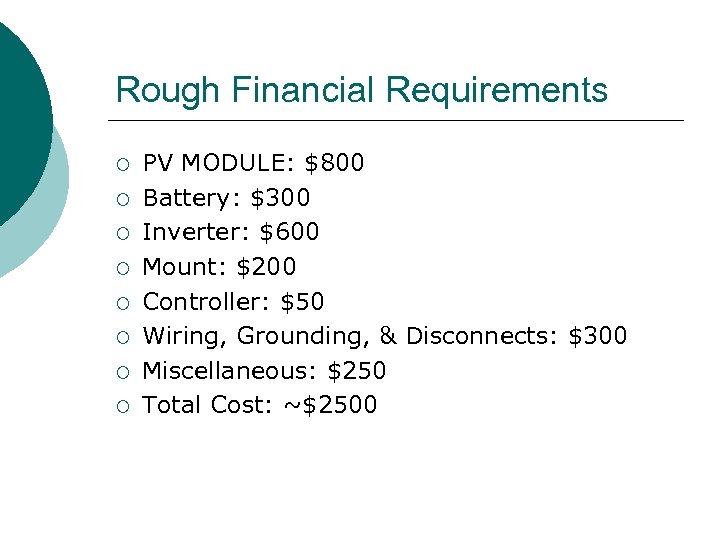
Rough Financial Requirements ¡ ¡ ¡ ¡ PV MODULE: $800 Battery: $300 Inverter: $600 Mount: $200 Controller: $50 Wiring, Grounding, & Disconnects: $300 Miscellaneous: $250 Total Cost: ~$2500
Concept Definition – Wind Solar Light Sub-Team ¡ Jessie Gmeinder ¡ Sam Eng ¡ Wojciech Mysliwiec ¡ Objective l l To produce 2 nd generation stand alone roadway light To utilize hybrid technology power generation for best performance
Concept Generation – Wind Solar light ¡ Current Roadway light l l l 30’ height 400 w HPS bulb 0. 6 ft-candles $3600 install ~$140/year to run ¡ 1 st generation – recommendations l l Upgrade turbine Upgrade lighting
Concept Selection Process ¡ ¡ Chose LED light based on luminance and style Developed 2 designs based on turbine changes l l ¡ Vertical Axis (Savonius Style) Horizontal Axis Evaluated concepts with weighted criteria l l l Power Output Cost Savings Ease of Demo Manufacture Durability Aesthetics (30%) (25%) (20%) (15%) (10%)
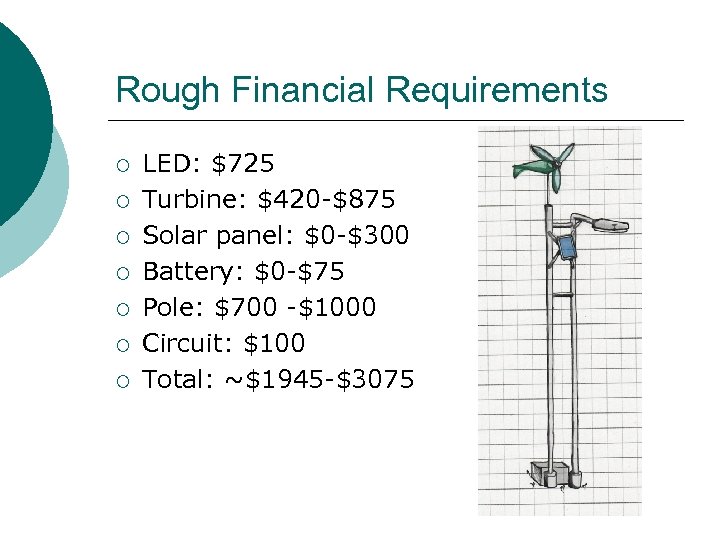
Rough Financial Requirements ¡ ¡ ¡ ¡ LED: $725 Turbine: $420 -$875 Solar panel: $0 -$300 Battery: $0 -$75 Pole: $700 -$1000 Circuit: $100 Total: ~$1945 -$3075
Concept Definition – Biodiesel ¡ ¡ ¡ Sub-Team Chris Chaput Scott Rishell Jeff Hoover ¡ Objective l l l To use RIT dining facilities existing waste vegetable oil (WVO) in producing usable biodiesel for campus vehicles To save $$ in amount of used diesel fuel Provide certain educational benefit for class learning from example
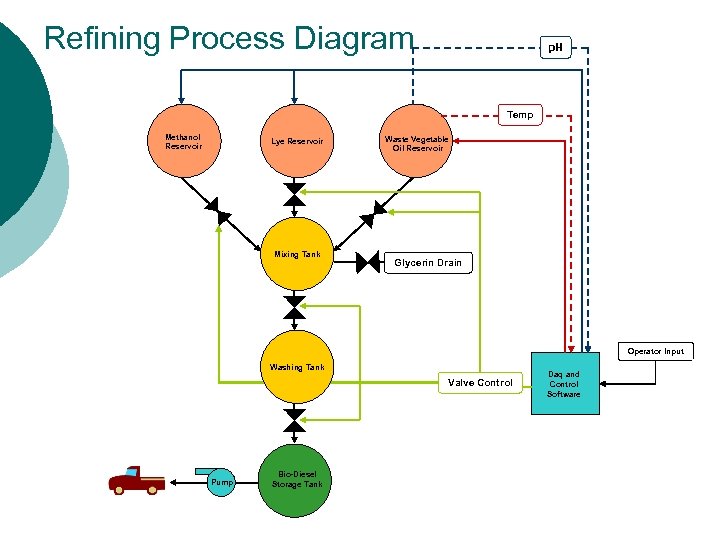
Refining Process Diagram p. H Temp Methanol Reservoir Lye Reservoir Mixing Tank Waste Vegetable Oil Reservoir Glycerin Drain Operator Input Washing Tank Valve Control Pump Bio-Diesel Storage Tank Daq and Control Software
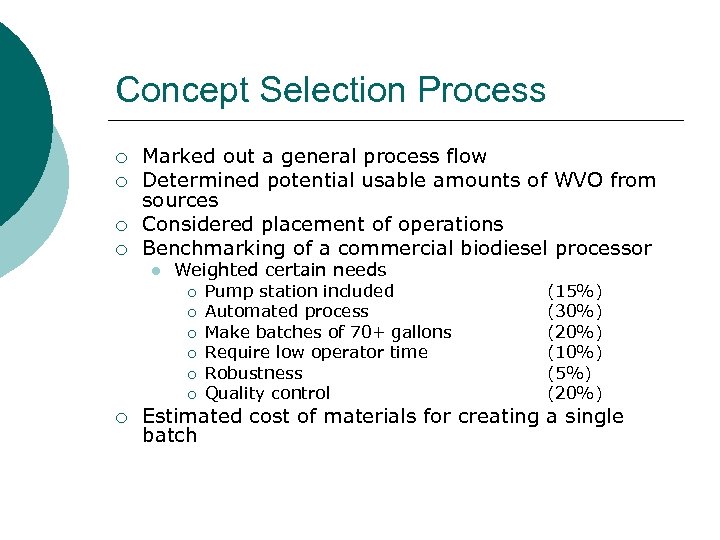
Concept Selection Process ¡ ¡ Marked out a general process flow Determined potential usable amounts of WVO from sources Considered placement of operations Benchmarking of a commercial biodiesel processor l Weighted certain needs ¡ ¡ ¡ ¡ Pump station included Automated process Make batches of 70+ gallons Require low operator time Robustness Quality control (15%) (30%) (20%) (10%) (5%) (20%) Estimated cost of materials for creating a single batch
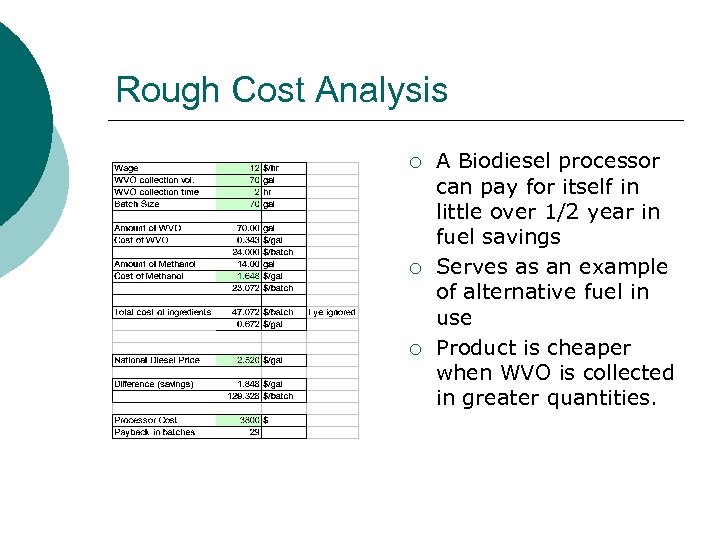
Rough Cost Analysis ¡ ¡ ¡ A Biodiesel processor can pay for itself in little over 1/2 year in fuel savings Serves as an example of alternative fuel in use Product is cheaper when WVO is collected in greater quantities.
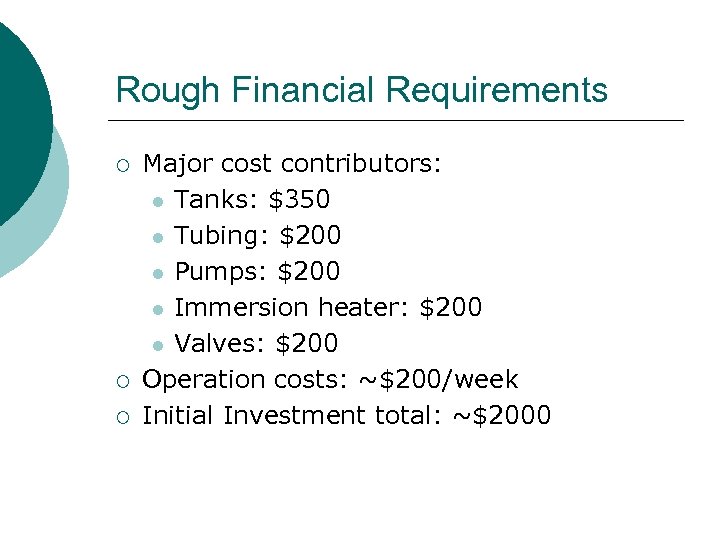
Rough Financial Requirements ¡ ¡ ¡ Major cost contributors: l Tanks: $350 l Tubing: $200 l Pumps: $200 l Immersion heater: $200 l Valves: $200 Operation costs: ~$200/week Initial Investment total: ~$2000
Concept Definition –Energy Audit Sub-Team ¡ Sam Eng ¡ Lu Xu ¡ Jessie Gmeinder ¡ Objective l To save energy by maximizing efficiency of building systems
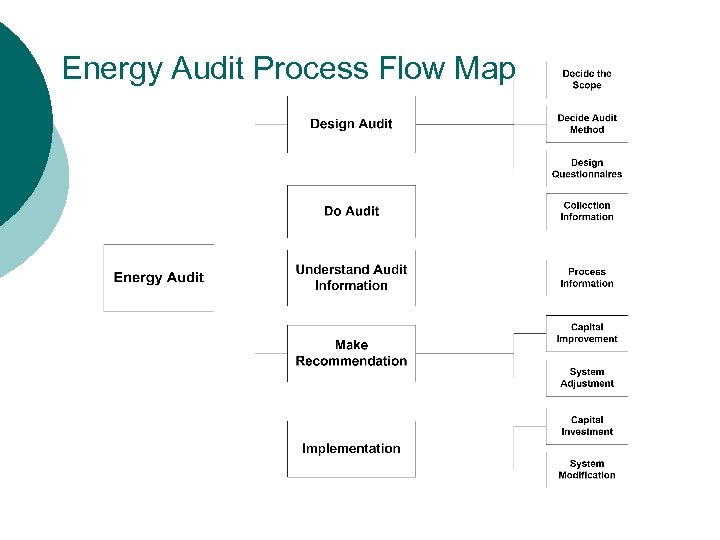
Energy Audit Process Flow Map
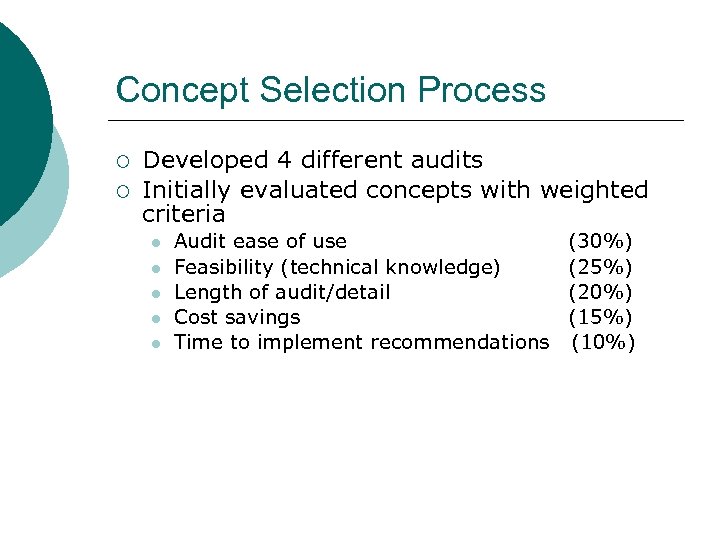
Concept Selection Process ¡ ¡ Developed 4 different audits Initially evaluated concepts with weighted criteria l l l Audit ease of use Feasibility (technical knowledge) Length of audit/detail Cost savings Time to implement recommendations (30%) (25%) (20%) (15%) (10%)
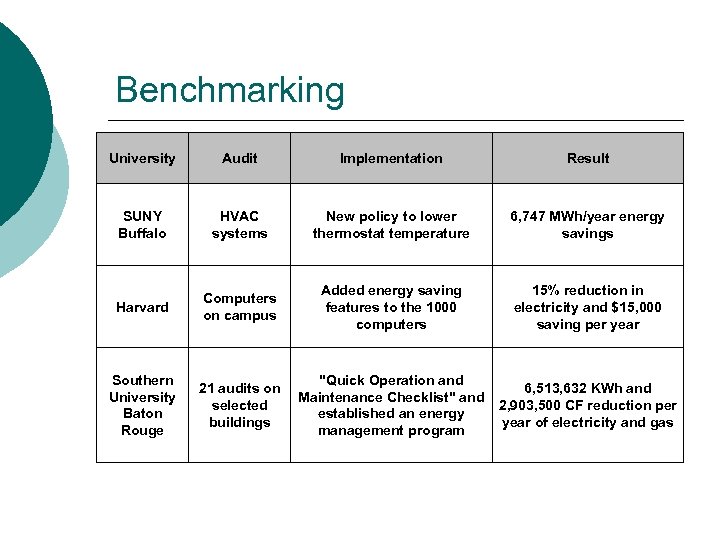
Benchmarking University Audit Implementation Result SUNY Buffalo HVAC systems New policy to lower thermostat temperature 6, 747 MWh/year energy savings Harvard Computers on campus Added energy saving features to the 1000 computers 15% reduction in electricity and $15, 000 saving per year Southern University Baton Rouge 21 audits on selected buildings "Quick Operation and Maintenance Checklist" and established an energy management program 6, 513, 632 KWh and 2, 903, 500 CF reduction per year of electricity and gas
Concept Definition – Water Cooling System ¡ ¡ Sub-Team Kevin Costantini Chris Chaput Scott Rishell Bob Snow ¡ Objective l To evaluate the implementation of a water cooling system that will: ¡ Meet campus cooling needs ¡ Save on energy consumption ¡ Utilize the Genesee River to provide a portion of cooling ¡ Reduce refrigerant usage
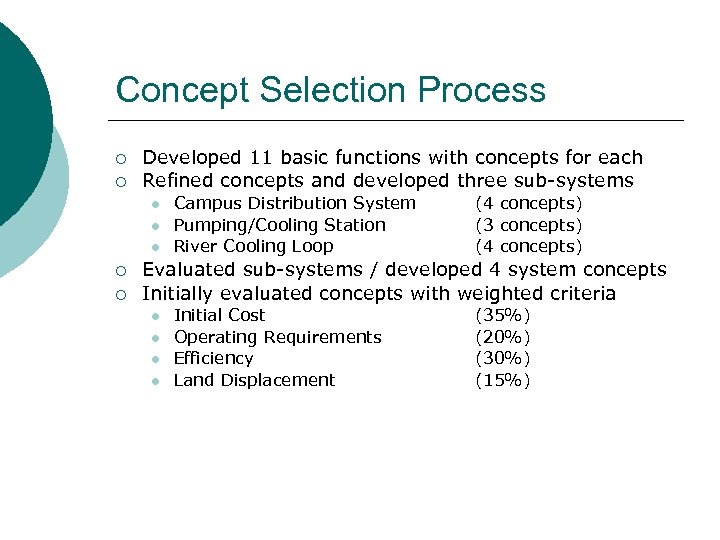
Concept Selection Process ¡ ¡ Developed 11 basic functions with concepts for each Refined concepts and developed three sub-systems l l l ¡ ¡ Campus Distribution System Pumping/Cooling Station River Cooling Loop (4 concepts) (3 concepts) (4 concepts) Evaluated sub-systems / developed 4 system concepts Initially evaluated concepts with weighted criteria l l Initial Cost Operating Requirements Efficiency Land Displacement (35%) (20%) (30%) (15%)
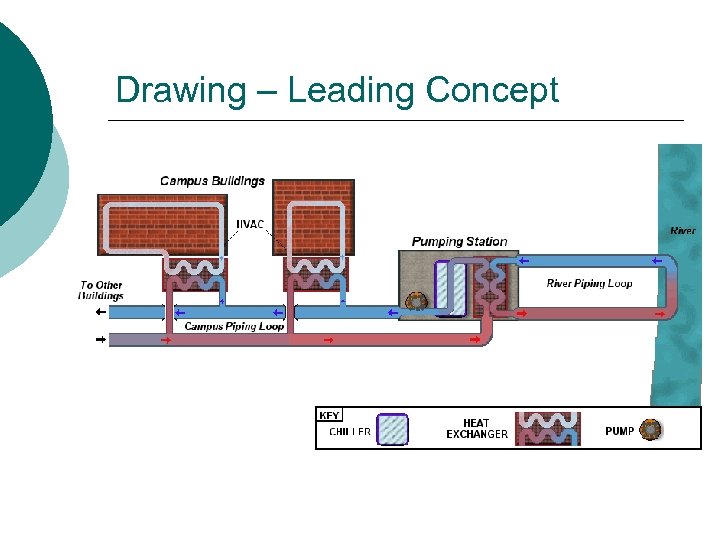
Drawing – Leading Concept
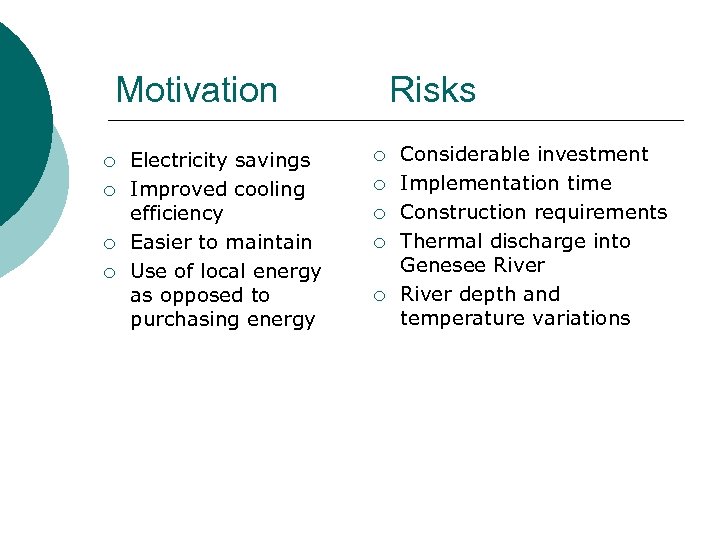
Motivation ¡ ¡ Electricity savings Improved cooling efficiency Easier to maintain Use of local energy as opposed to purchasing energy Risks ¡ ¡ ¡ Considerable investment Implementation time Construction requirements Thermal discharge into Genesee River depth and temperature variations
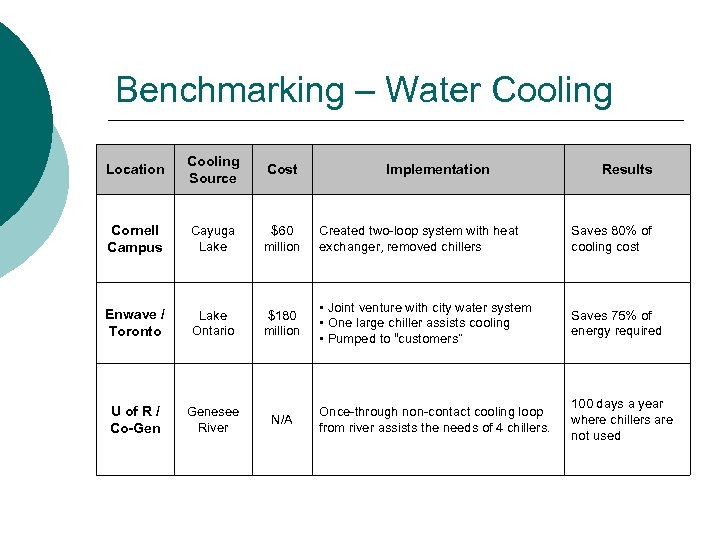
Benchmarking – Water Cooling Location Cooling Source Cost Cornell Campus Cayuga Lake $60 million Created two-loop system with heat exchanger, removed chillers Saves 80% of cooling cost Enwave / Toronto Lake Ontario $180 million • Joint venture with city water system • One large chiller assists cooling • Pumped to “customers” Saves 75% of energy required U of R / Co-Gen Genesee River N/A Once-through non-contact cooling loop from river assists the needs of 4 chillers. 100 days a year where chillers are not used Implementation Results
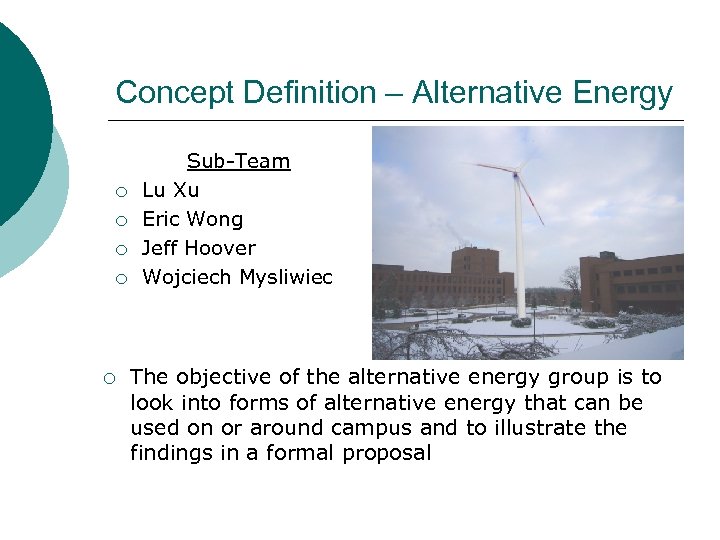
Concept Definition – Alternative Energy ¡ ¡ ¡ Sub-Team Lu Xu Eric Wong Jeff Hoover Wojciech Mysliwiec The objective of the alternative energy group is to look into forms of alternative energy that can be used on or around campus and to illustrate the findings in a formal proposal
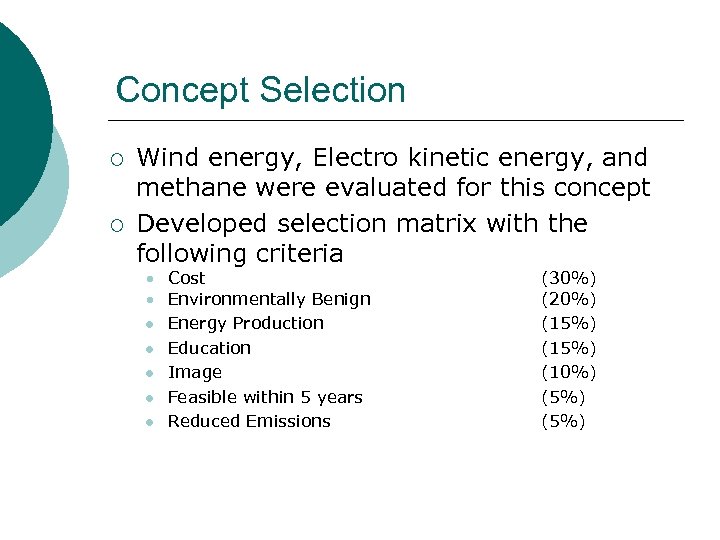
Concept Selection ¡ ¡ Wind energy, Electro kinetic energy, and methane were evaluated for this concept Developed selection matrix with the following criteria • Cost • Environmentally Benign l Energy Production l Education l Image l Feasible within 5 years l Reduced Emissions (30%) (20%) (15%) (10%) (5%)
Motivation ¡ ¡ Improve RIT’s financial position Reduce green house gas emissions Educational value Reduce 5 -10% of RIT’s overall energy consumption Risk ¡ ¡ ¡ Image acceptance Environmental impact (wetlands) Varying wind speeds Economic viability Location
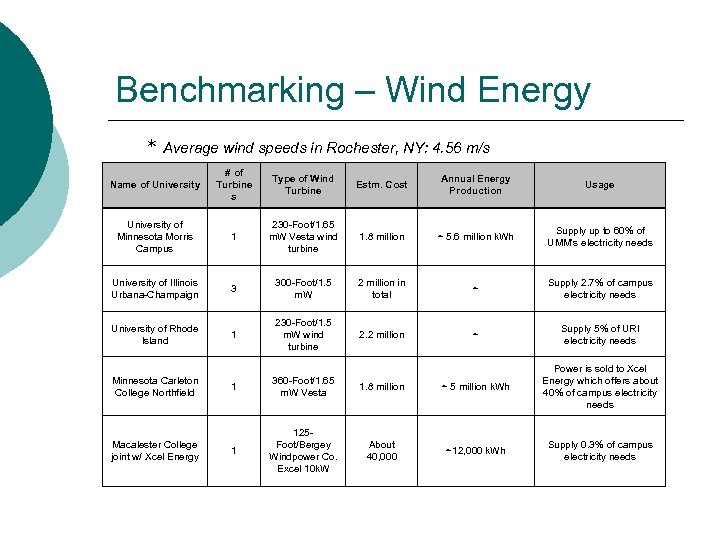
Benchmarking – Wind Energy * Average wind speeds in Rochester, NY: 4. 56 m/s Name of University # of Turbine s Type of Wind Turbine Estm. Cost Annual Energy Production Usage University of Minnesota Morris Campus 1 230 -Foot/1. 65 m. W Vesta wind turbine 1. 8 million ~ 5. 6 million k. Wh Supply up to 60% of UMM's electricity needs University of Illinois Urbana-Champaign 3 300 -Foot/1. 5 m. W 2 million in total ~ Supply 2. 7% of campus electricity needs University of Rhode Island 1 230 -Foot/1. 5 m. W wind turbine 2. 2 million ~ Supply 5% of URI electricity needs 1 360 -Foot/1. 65 m. W Vesta 1. 8 million ~ 5 million k. Wh Power is sold to Xcel Energy which offers about 40% of campus electricity needs 1 125 Foot/Bergey Windpower Co. Excel 10 k. W About 40, 000 ~12, 000 k. Wh Supply 0. 3% of campus electricity needs Minnesota Carleton College Northfield Macalester College joint w/ Xcel Energy
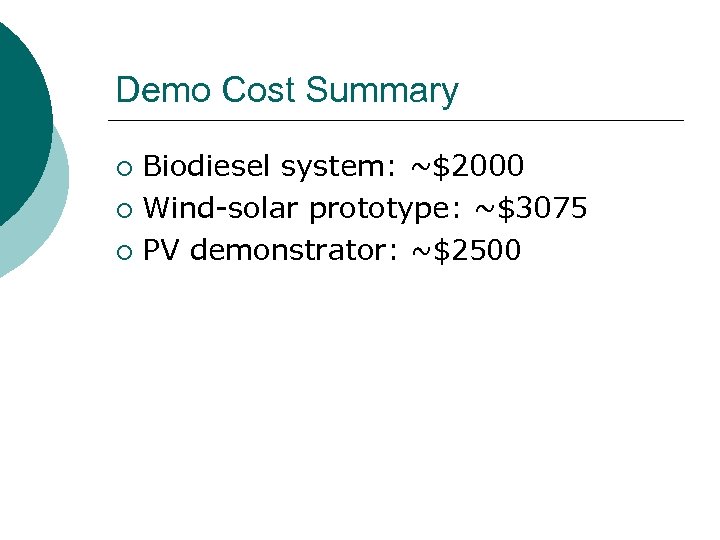
Demo Cost Summary Biodiesel system: ~$2000 ¡ Wind-solar prototype: ~$3075 ¡ PV demonstrator: ~$2500 ¡
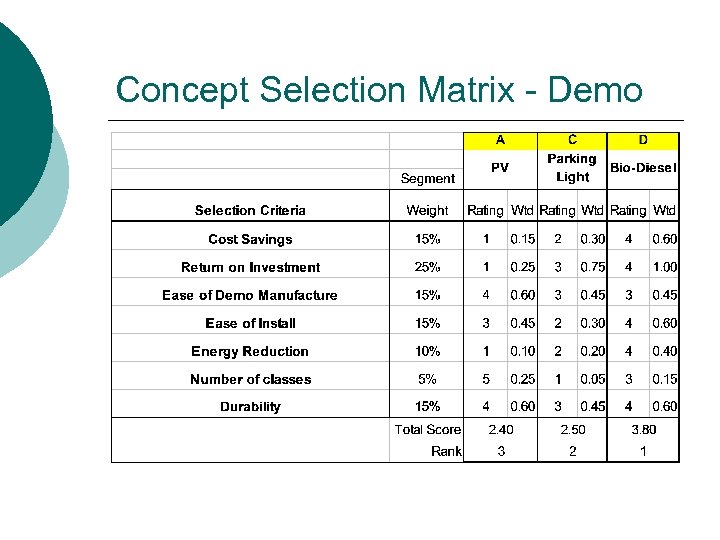
Concept Selection Matrix - Demo
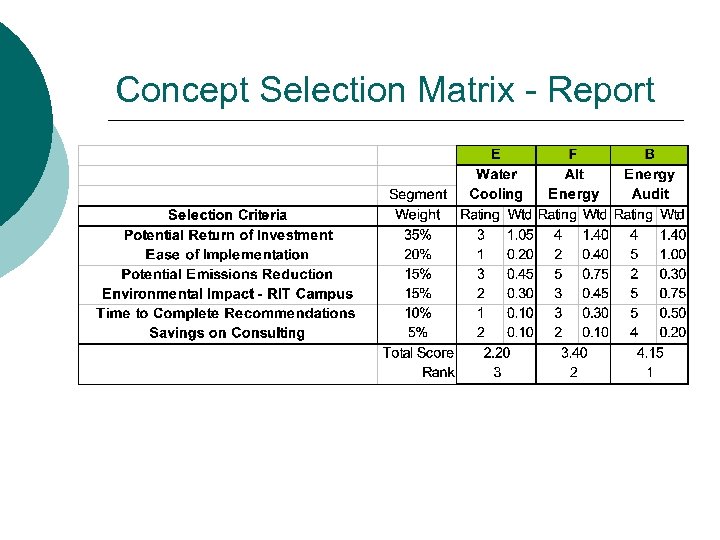
Concept Selection Matrix - Report
Скачать презентацию P 07421 — Sustainable Technology for the RIT
c5240733bcf03835fdb20b63ec23cea2.ppt