


 Скачать презентацию Overview of the Pacific Northwest Environmental Prediction System
9505af2e105854a222e94add1c167cb2.ppt
- Количество слайдов: 59
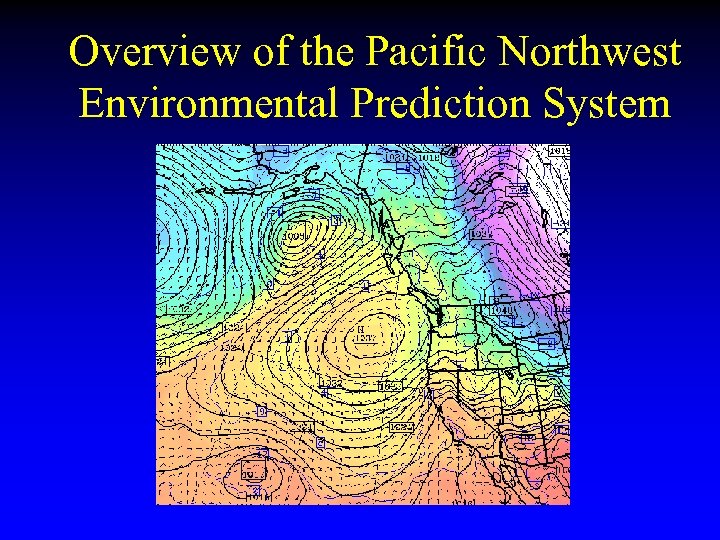 Overview of the Pacific Northwest Environmental Prediction System
 Supported by the Northwest Modeling Consortium…the regional modeling effort centered at the UW is • Running the MM 5 at 36, 12, and 4 km resolution • Running the new WRF model at 36, 12 km and 4 km resolution • Running TWO high resolution regional ensemble systems to provide probabilistic forecasts and data assimilation • Gathering all local weather observations from dozens of networks. Plus quality control. • Running a wide range of weather applications dealing with air quality, hydrology, transportation weather and fire weather.
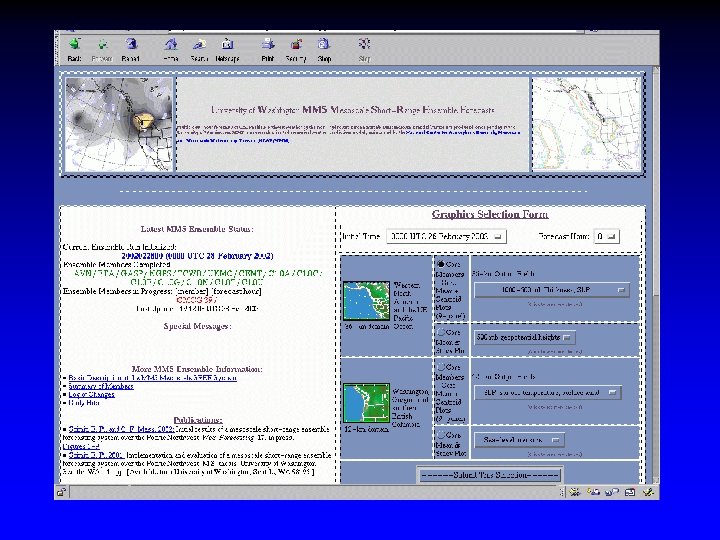
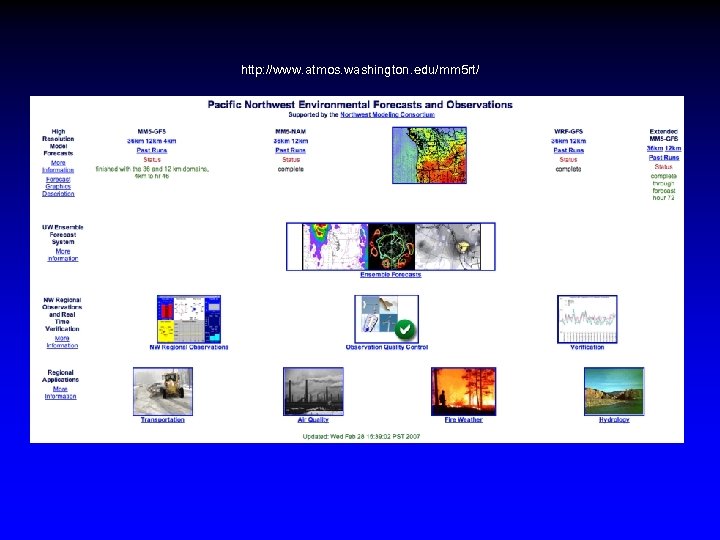 http: //www. atmos. washington. edu/mm 5 rt/
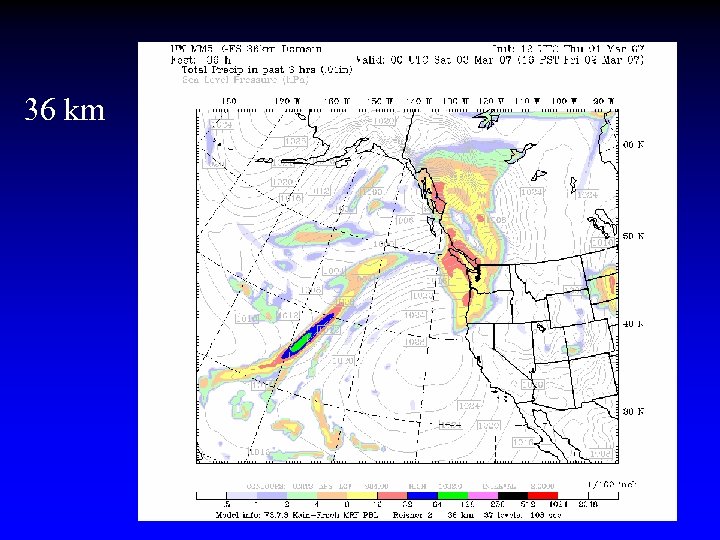 36 km
36 km
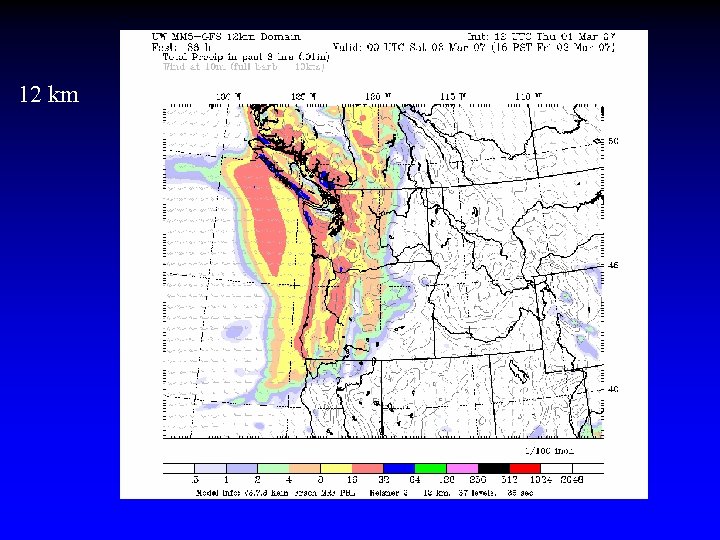 12 km
12 km
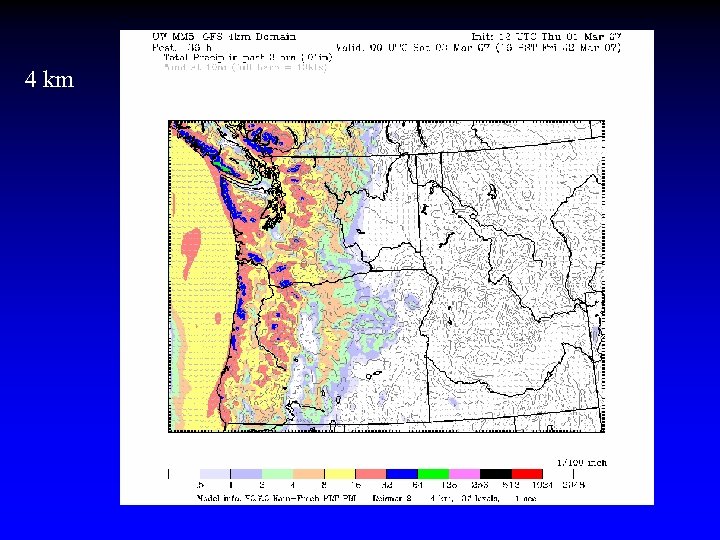 4 km
4 km
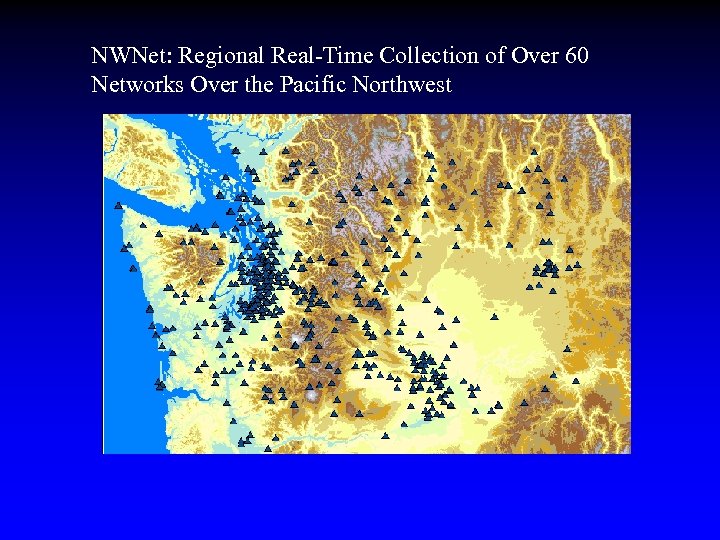 NWNet: Regional Real-Time Collection of Over 60 Networks Over the Pacific Northwest
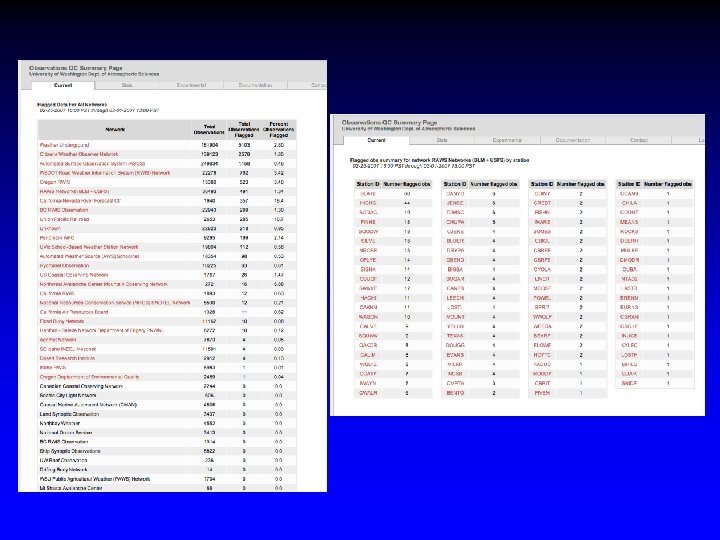
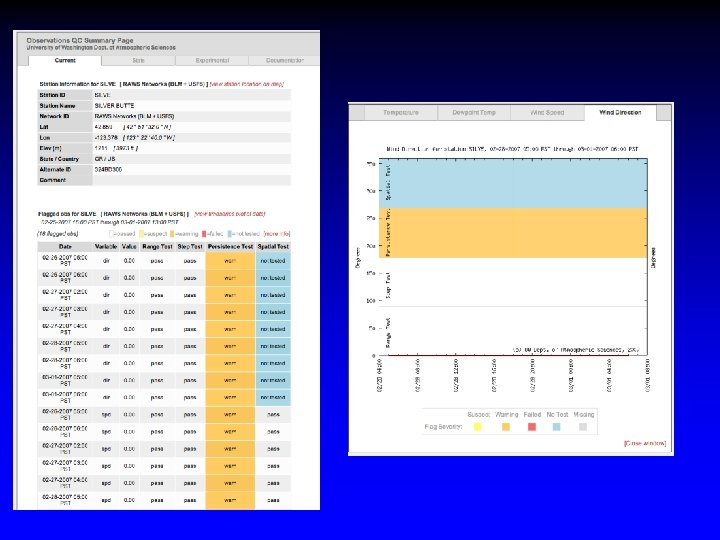
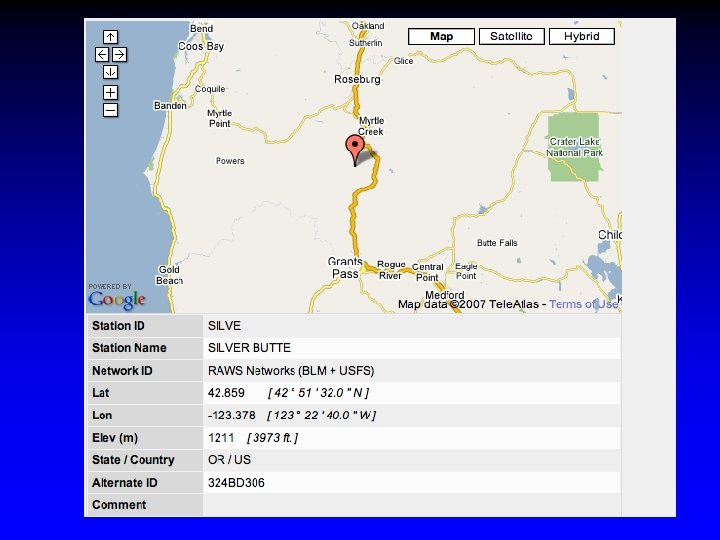
 The UW Quality Control System • A major task continues to be the gathering of all real-time observations of the region into one place • Right now we acquire over 60 networks in real time for displaying on our web site, verification, and many other uses • Quality Control is essential for such a heterogeneous network of networks.
 The UW Quality Control and Warning System • We have developed an advanced QC system suitable for an area of complex terrain Have also created an automated QC display system that one can check on the web and which can automatically tell the manager of a network when their data is suspect
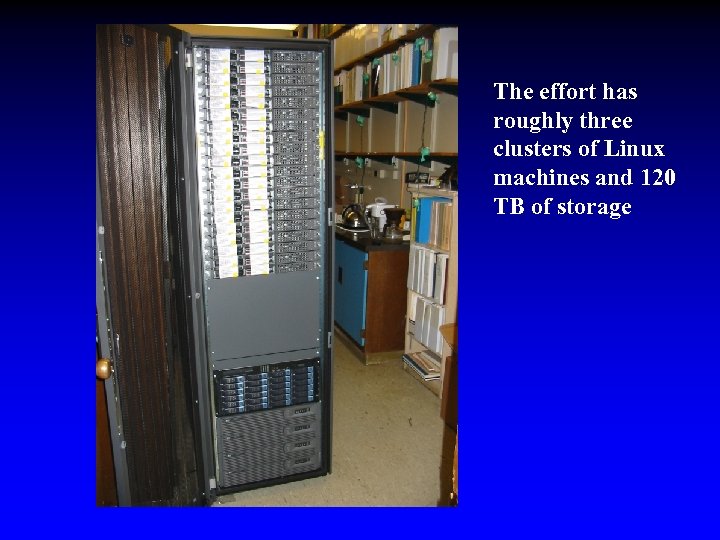 The effort has roughly three clusters of Linux machines and 120 TB of storage
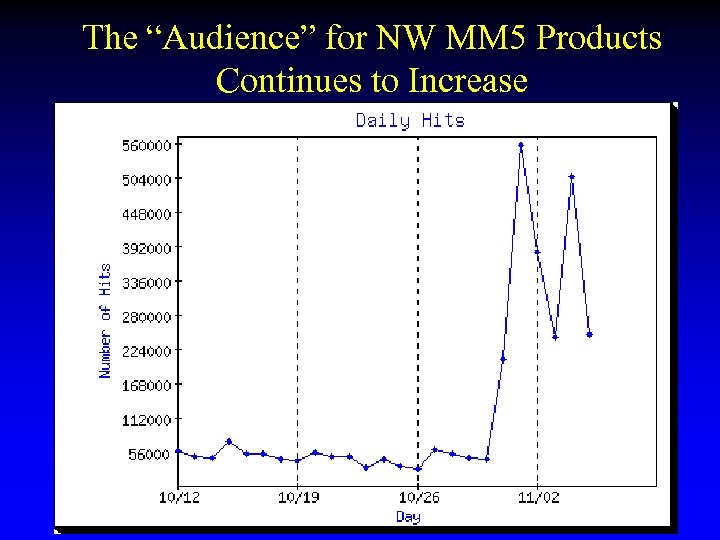 The “Audience” for NW MM 5 Products Continues to Increase
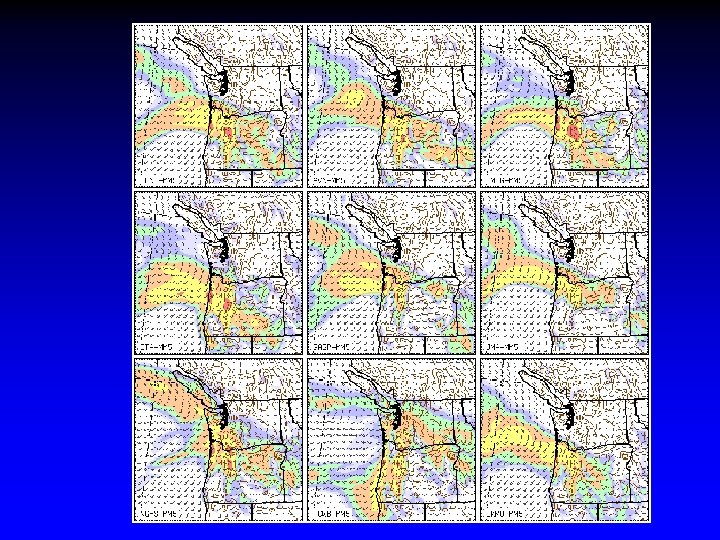
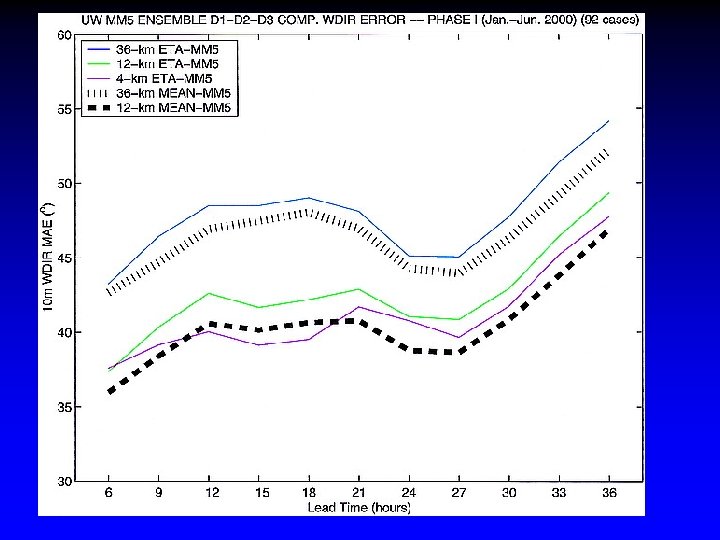
 The UW Ensemble System • The UW ensemble system was borne out of experience from the high-resolution local MM 5 effort (36 -12 -4 km resolution) • Specifically, although high resolution in general produced better (sharper, high amplitude) structures, the forecasts verified only marginally better than lower resolution forecasts using traditional measures. • UW research on forecast verification and evaluation revealed large differences, and thus uncertainty, in the initializations and forecasts of major operational forecasting systems. • Also apparent that there is considerable uncertainty in the model physical parameterizations.
 UW Ensemble System • Previous results showed that approximately 12 -km resolution was needed to get the major regional mesoscale features “right. ” • Thus, it was natural to create a 12 -km mesoscale ensemble system for the Northwest.
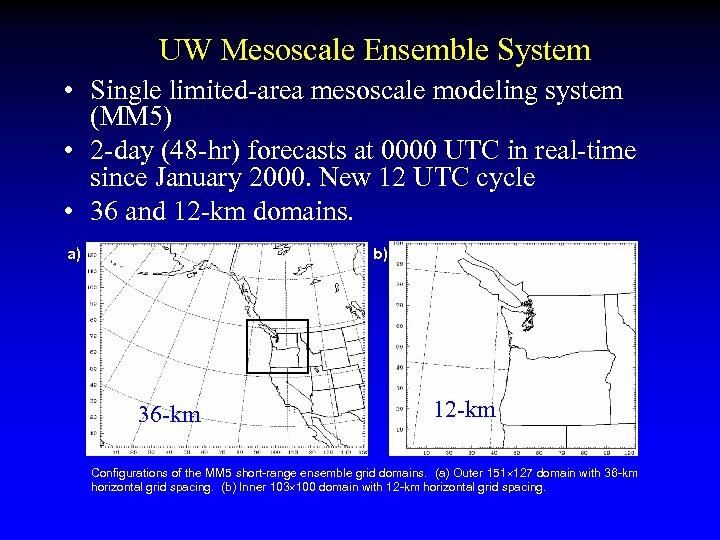 UW Mesoscale Ensemble System • Single limited-area mesoscale modeling system (MM 5) • 2 -day (48 -hr) forecasts at 0000 UTC in real-time since January 2000. New 12 UTC cycle • 36 and 12 -km domains. a) b) 36 -km 12 -km Configurations of the MM 5 short-range ensemble grid domains. (a) Outer 151 127 domain with 36 -km horizontal grid spacing. (b) Inner 103 100 domain with 12 -km horizontal grid spacing.
 UW Ensemble System • UW system is based on the use of analyses and forecasts of major operational modeling centers. • The idea is that differences in initial conditions of various operational centers is a measure of IC uncertainty. • These IC differences reflect different data inventories, assimilation schemes, and model physics/numerics and can be quite large, often much greater than observation errors. • In this approach ensemble member uses different boundary conditions--thus finessing the problem of the BC restraining ensemble spread.
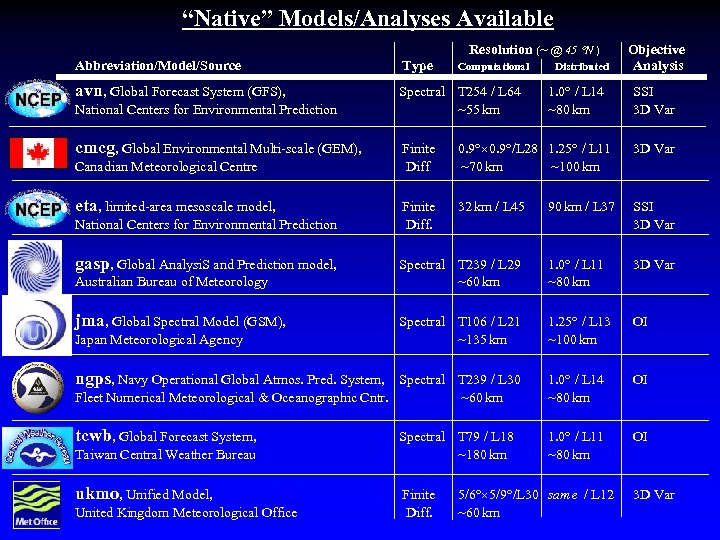 “Native” Models/Analyses Available Resolution (~ @ 45 N ) Abbreviation/Model/Source Type avn, Global Forecast System (GFS), Spectral T 254 / L 64 ~55 km Computational Distributed Objective Analysis 1. 0 / L 14 ~80 km SSI 3 D Var Finite Diff 0. 9 /L 28 1. 25 / L 11 ~70 km ~100 km 3 D Var Finite Diff. 32 km / L 45 90 km / L 37 SSI 3 D Var Spectral T 239 / L 29 ~60 km 1. 0 / L 11 ~80 km 3 D Var Spectral T 106 / L 21 ~135 km 1. 25 / L 13 ~100 km OI Spectral T 239 / L 30 Fleet Numerical Meteorological & Oceanographic Cntr. ~60 km 1. 0 / L 14 ~80 km OI tcwb, Global Forecast System, 1. 0 / L 11 ~80 km OI National Centers for Environmental Prediction cmcg, Global Environmental Multi-scale (GEM), Canadian Meteorological Centre eta, limited-area mesoscale model, National Centers for Environmental Prediction gasp, Global Analysi. S and Prediction model, Australian Bureau of Meteorology jma, Global Spectral Model (GSM), Japan Meteorological Agency ngps, Navy Operational Global Atmos. Pred. System, Taiwan Central Weather Bureau Spectral T 79 / L 18 ~180 km ukmo, Unified Model, United Kingdom Meteorological Office Finite Diff. 5/6 5/9 /L 30 same / L 12 ~60 km 3 D Var
 Relating Forecast Skill and Model Spread Mean Absolute Error of Wind Direction is Far Less When Spread is EXTREME (Low or High)
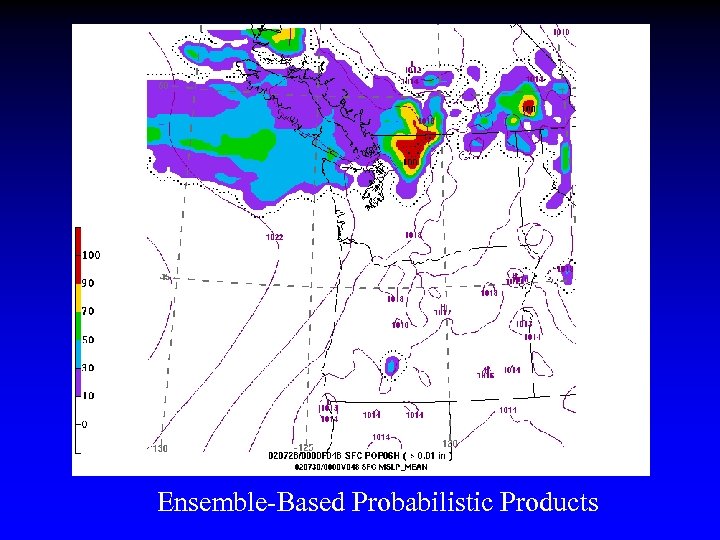 Ensemble-Based Probabilistic Products
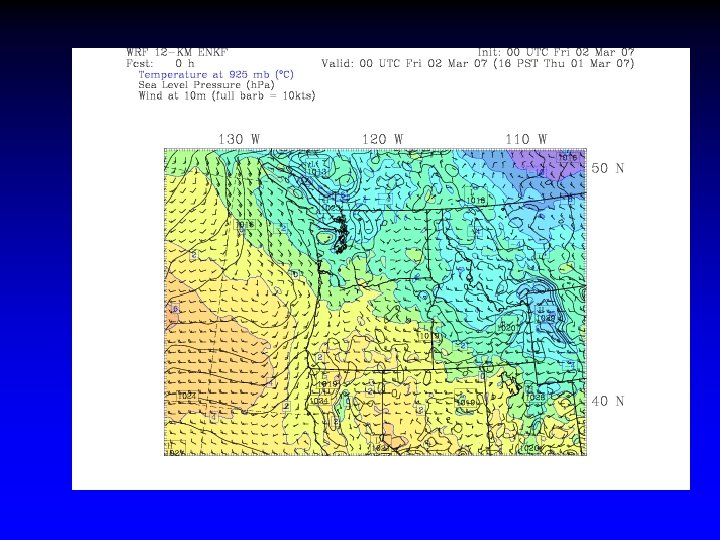
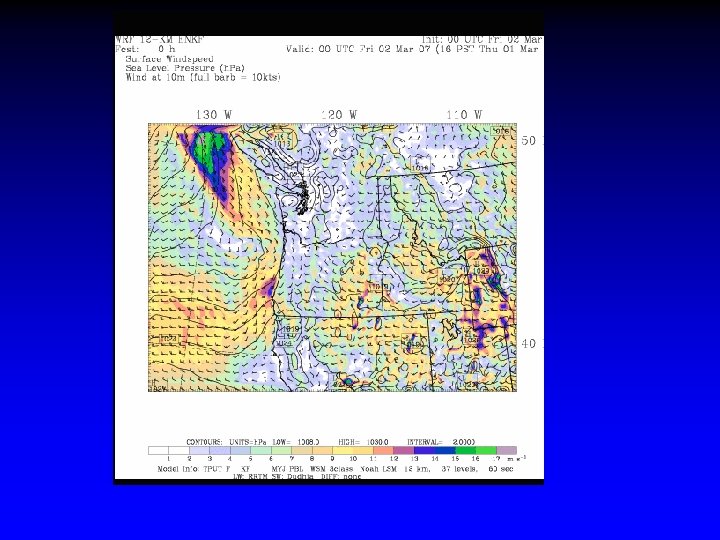
 Local Data Assimilation using an En. KF System • The system produces 90 different analyses that can be combined to produce the best guess at what is there and tell us the uncertainty in the analyses. • These analyses can be integrated forward in time to give us probabilistic predictions of the future • We now have it running at 36 and 12 km resolution…
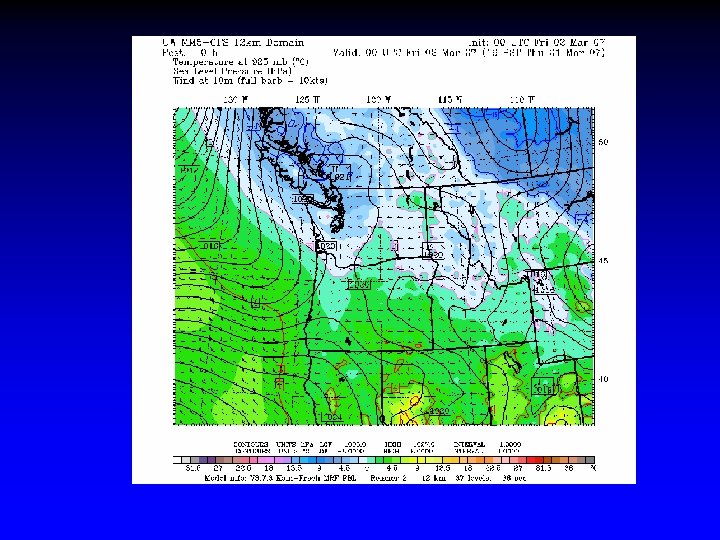
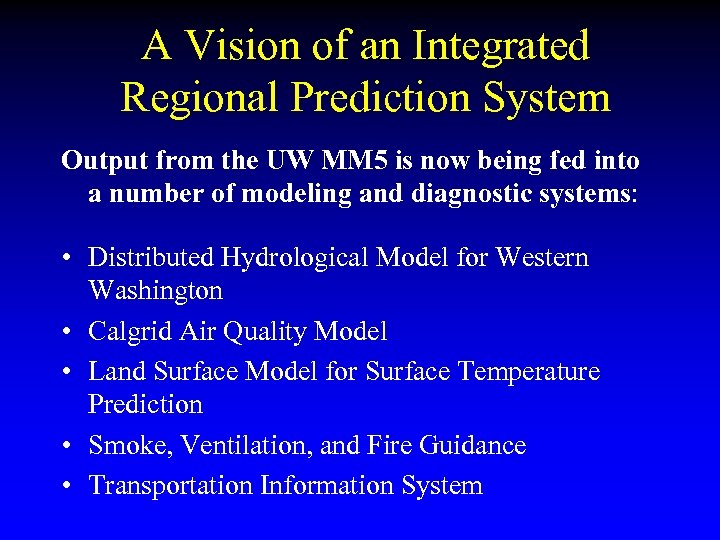 A Vision of an Integrated Regional Prediction System Output from the UW MM 5 is now being fed into a number of modeling and diagnostic systems: • Distributed Hydrological Model for Western Washington • Calgrid Air Quality Model • Land Surface Model for Surface Temperature Prediction • Smoke, Ventilation, and Fire Guidance • Transportation Information System
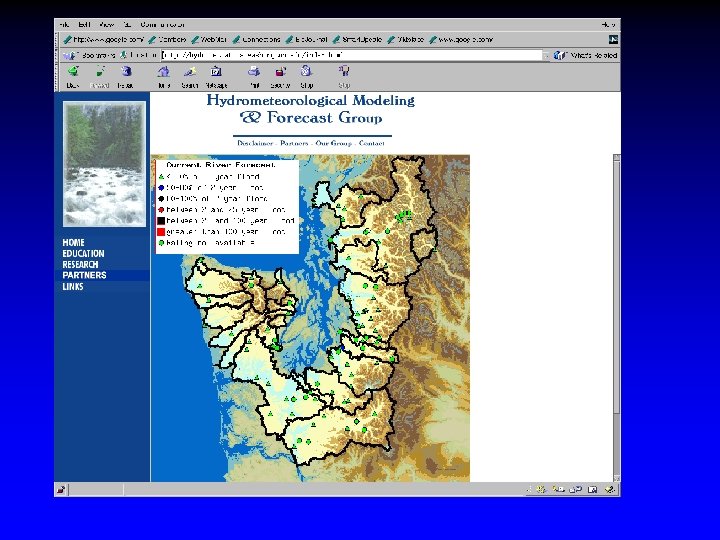
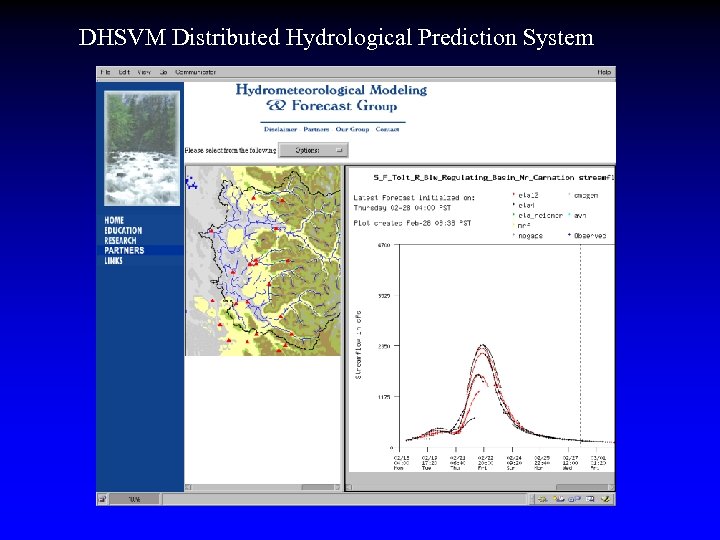
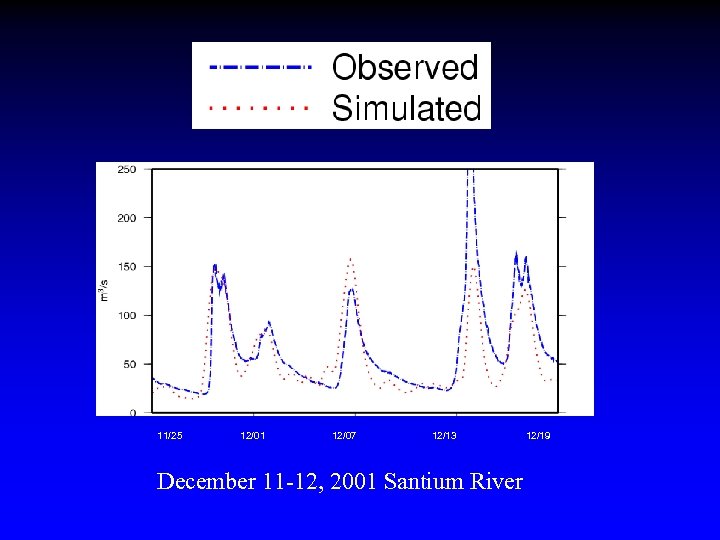
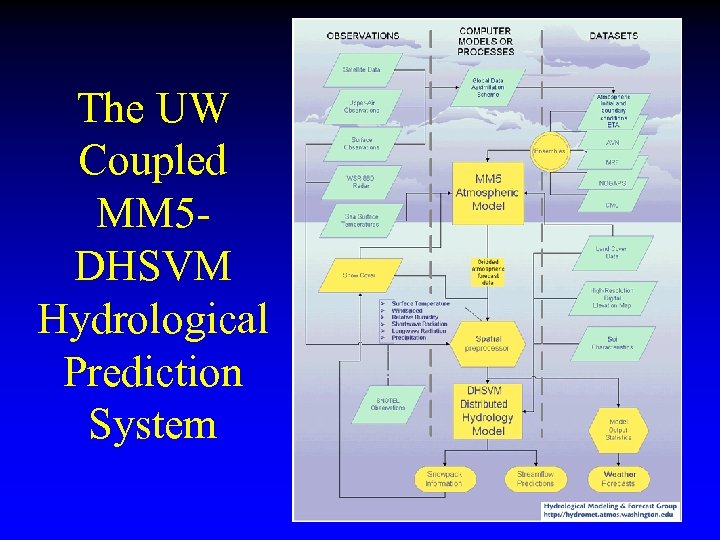 The UW Coupled MM 5 DHSVM Hydrological Prediction System
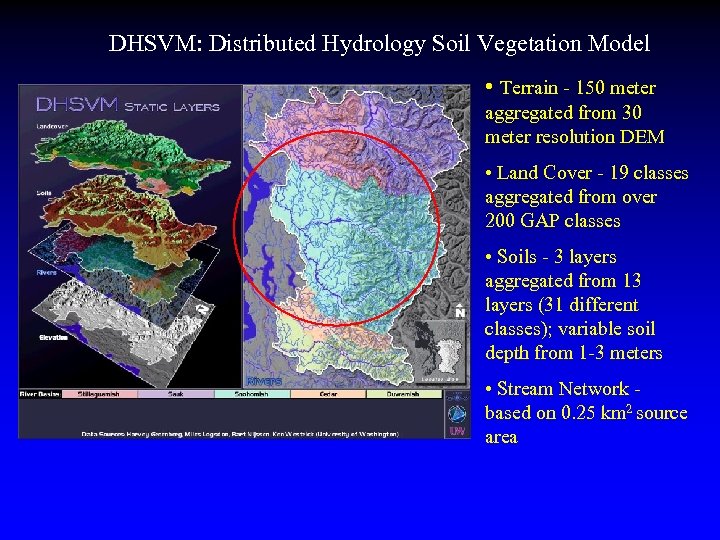 DHSVM: Distributed Hydrology Soil Vegetation Model • Terrain - 150 meter aggregated from 30 meter resolution DEM • Land Cover - 19 classes aggregated from over 200 GAP classes • Soils - 3 layers aggregated from 13 layers (31 different classes); variable soil depth from 1 -3 meters • Stream Network - based on 0. 25 km 2 source area
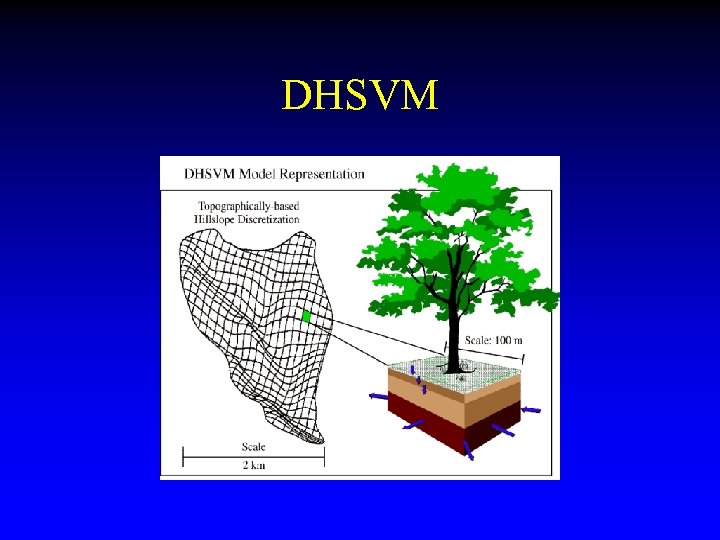 DHSVM
DHSVM
 DHSVM Distributed Hydrological Prediction System
 11/25 12/01 12/07 12/13 December 11 -12, 2001 Santium River 12/19
 The UW/Washington State University Coupled MM 5 -Air Quality Prediction System
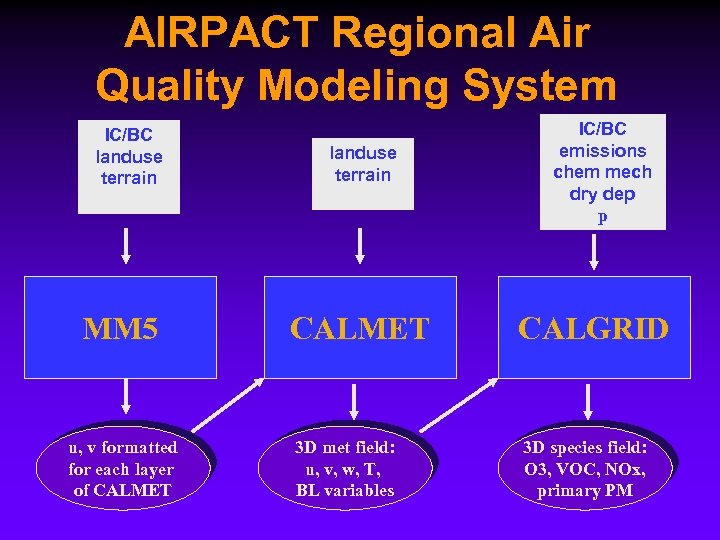 AIRPACT Regional Air Quality Modeling System IC/BC landuse terrain MM 5 u, v formatted for each layer of CALMET landuse terrain IC/BC emissions chem mech dry dep p CALMET CALGRID 3 D met field: u, v, w, T, BL variables 3 D species field: O 3, VOC, NOx, primary PM
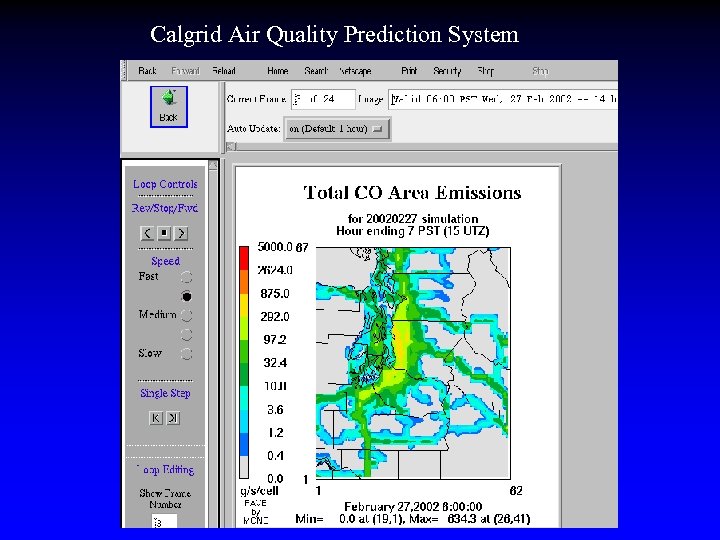 Calgrid Air Quality Prediction System
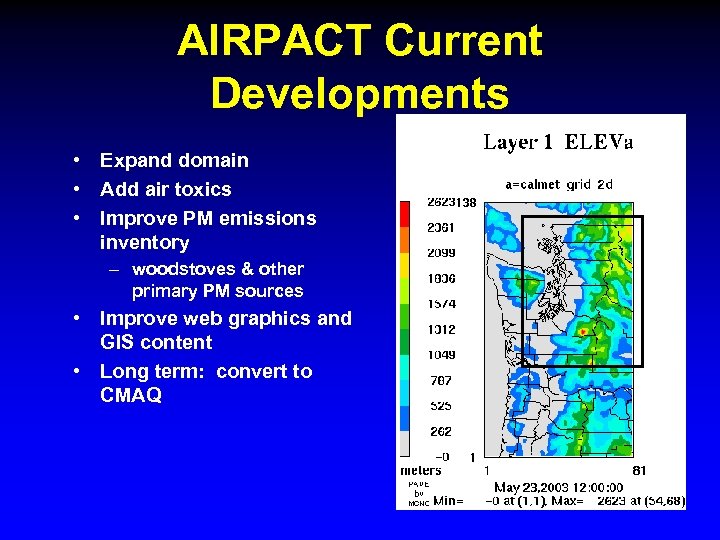 AIRPACT Current Developments • Expand domain • Add air toxics • Improve PM emissions inventory – woodstoves & other primary PM sources • Improve web graphics and GIS content • Long term: convert to CMAQ
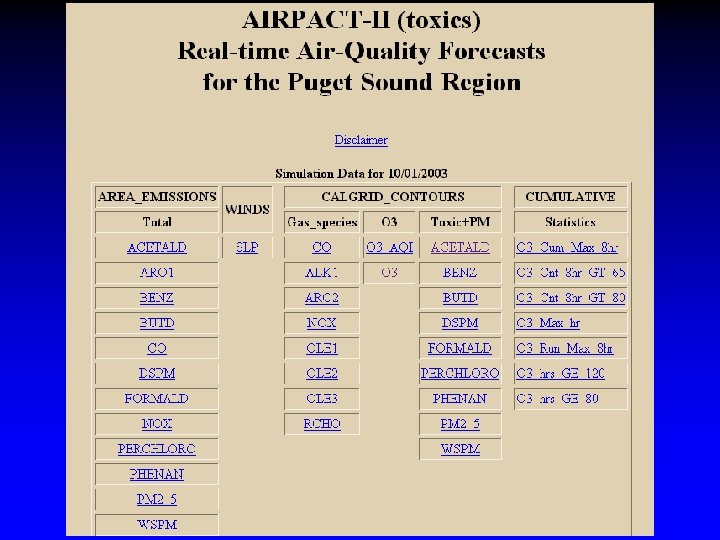
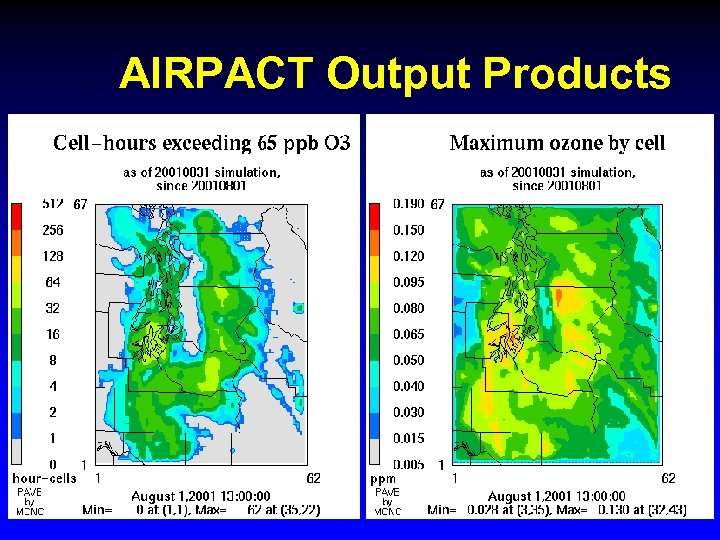 AIRPACT Output Products
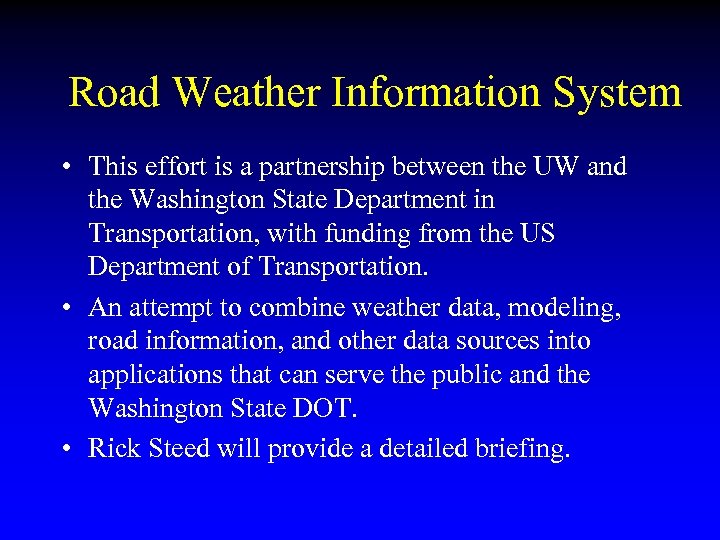 Road Weather Information System • This effort is a partnership between the UW and the Washington State Department in Transportation, with funding from the US Department of Transportation. • An attempt to combine weather data, modeling, road information, and other data sources into applications that can serve the public and the Washington State DOT. • Rick Steed will provide a detailed briefing.
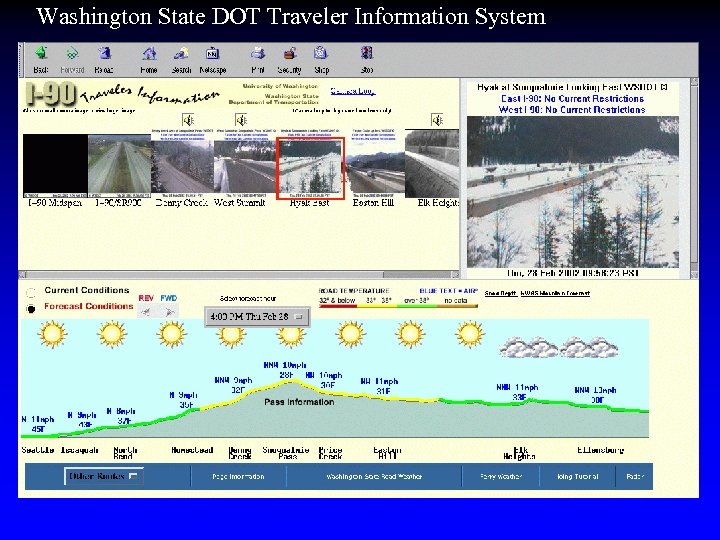 Washington State DOT Traveler Information System
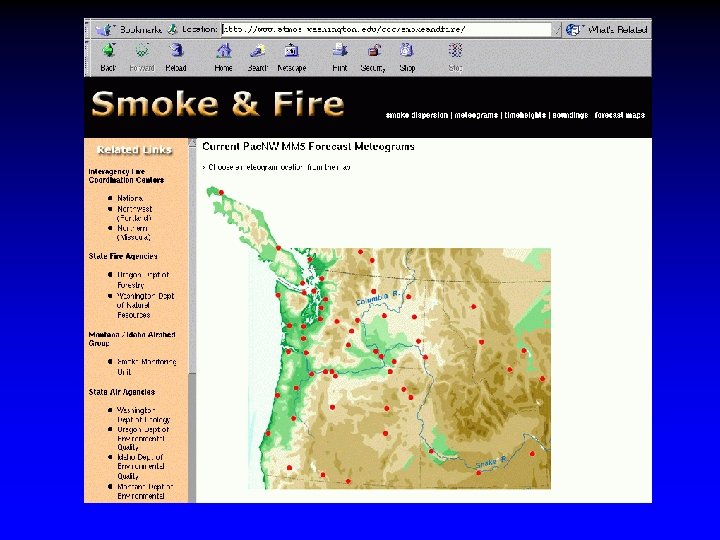
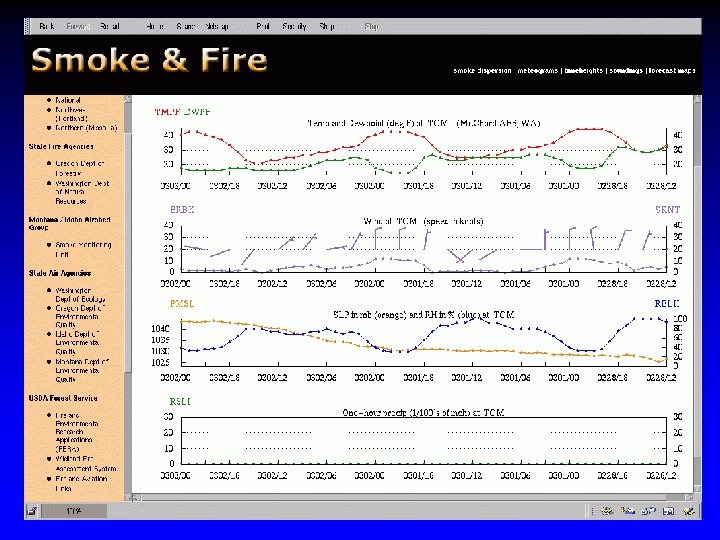
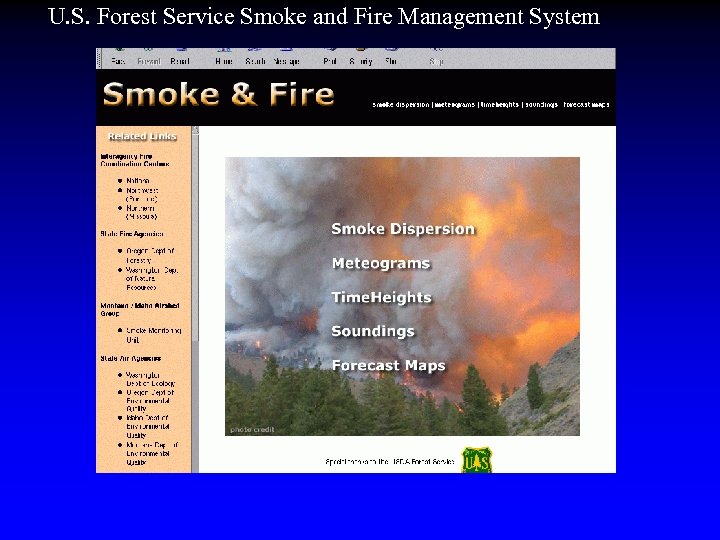 U. S. Forest Service Smoke and Fire Management System
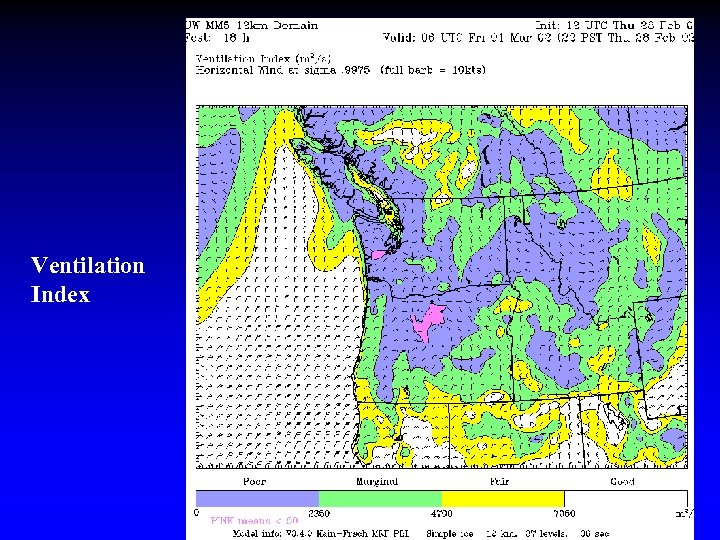 Ventilation Index
 U. S. Forest Service • MM 5 grids are sent to the field for running Eulerian and Lagrangian smoke plume/dispersion models. • MM 5 output used for fire fighting operations.
 Blue. Sky Simulating Wildland Fire in Real-Time (www. fs. fed. us/bluesky) Susan O’Neill, Sue Ferguson USDA Forest Service Rob Wilson US EPA
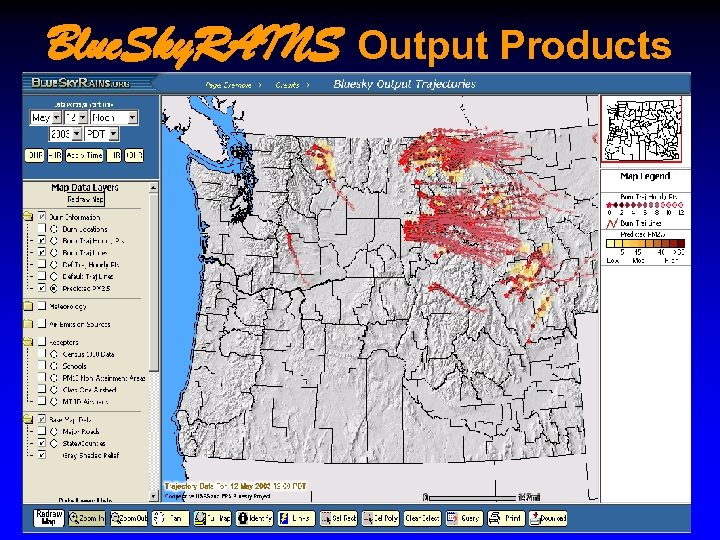
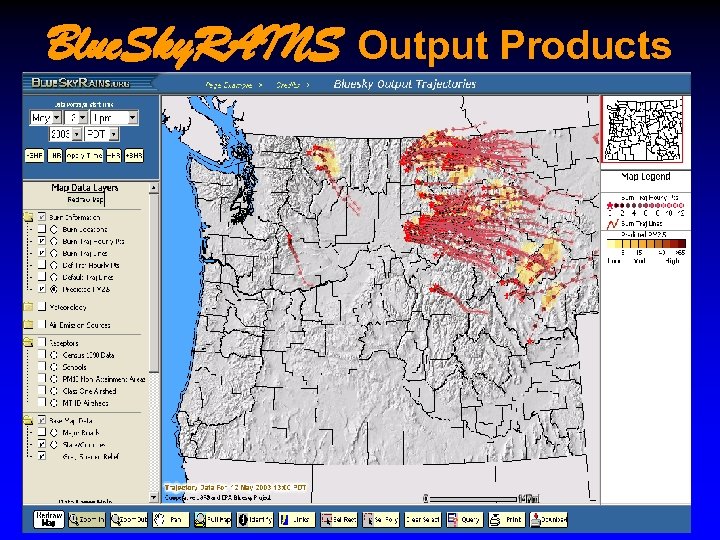
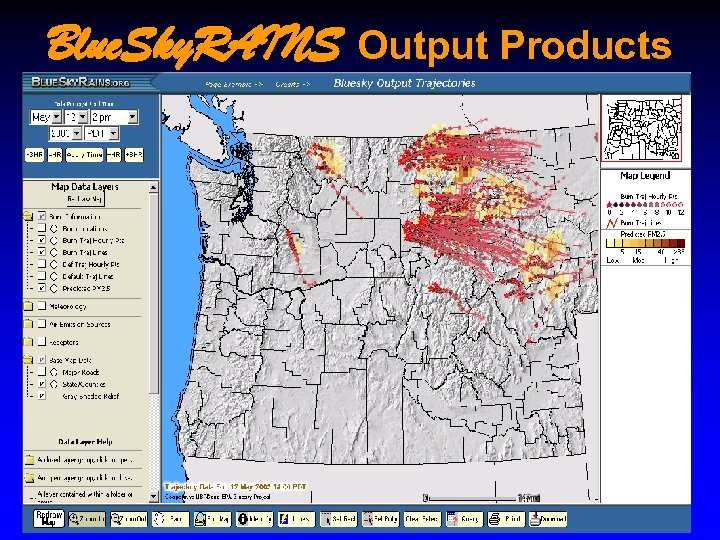
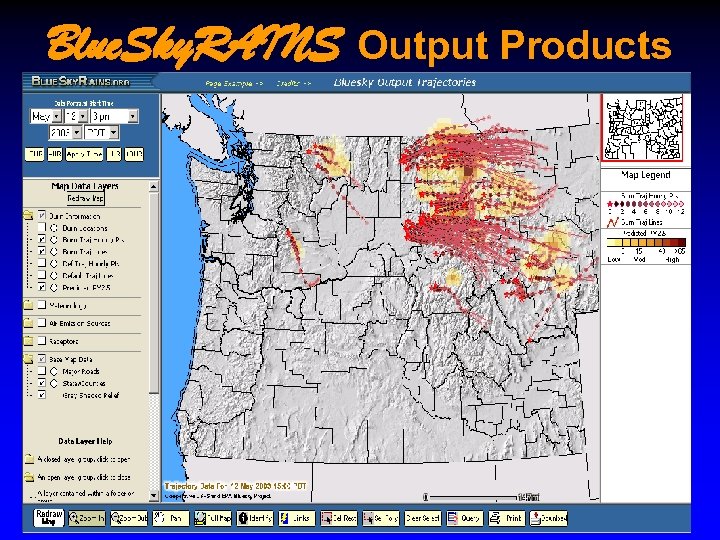
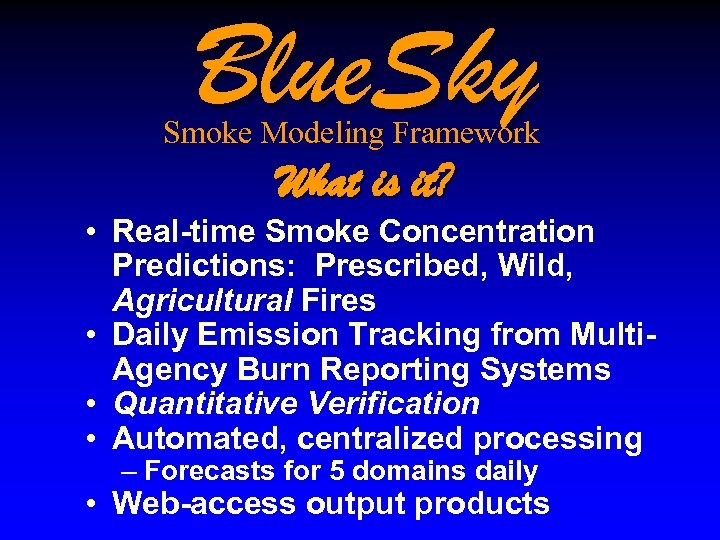 Blue. Sky Smoke Modeling Framework What is it? • Real-time Smoke Concentration Predictions: Prescribed, Wild, Agricultural Fires • Daily Emission Tracking from Multi. Agency Burn Reporting Systems • Quantitative Verification • Automated, centralized processing – Forecasts for 5 domains daily • Web-access output products
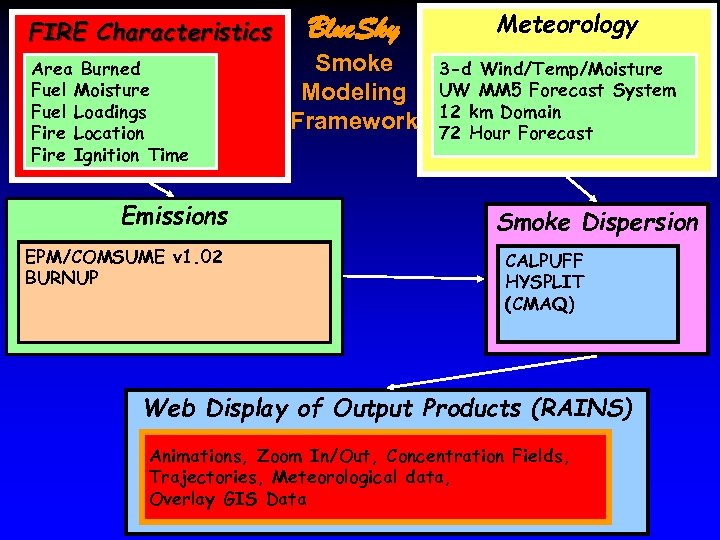 FIRE Characteristics Area Burned Fuel Moisture Fuel Loadings Fire Location Fire Ignition Time Blue. Sky Smoke Modeling Framework Emissions Calculate fuel consumption and EPM/COMSUME v 1. 02 variable rate emissions of: Heat BURNUP Released, PM 2. 5, PM 10, PM, CO 2, and CH 4 Meteorology 3 -d Wind/Temp/Moisture UW MM 5 Forecast System 12 km Domain 72 Hour Forecast Smoke Dispersion CALPUFF Visibility HYSPLIT Chemistry (CMAQ) PM Concentrations Plume Rise Web Display of Output Products (RAINS) Animations, Zoom In/Out, Concentration Fields, Trajectories, Meteorological data, Overlay GIS Data
 Blue. Sky. RAINS Output Products
 Blue. Sky. RAINS Output Products
 Blue. Sky. RAINS Output Products
 Blue. Sky. RAINS Output Products
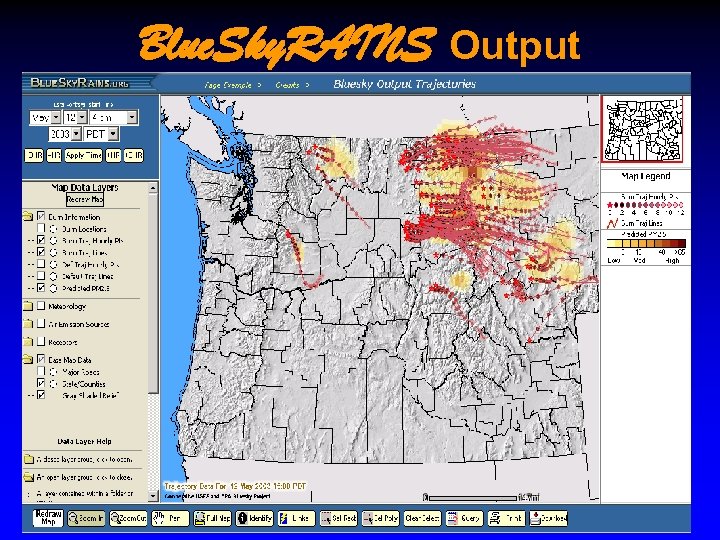 Blue. Sky. RAINS Output
 Military Applications • The NW MM 5 is now the main source of regional forecasts for Navy and Air Force operations at Whidbey NAS and Mc. Chord Air Force Base, as well as the Everett Carrier homeport.
 The End