 Скачать презентацию Overview of IEPM-BW Bandwidth Testing of Bulk Data
fec83872e775c341ca50d9d856942f4b.ppt
- Количество слайдов: 21



Overview of IEPM-BW Bandwidth Testing of Bulk Data Transfer Tools Connie Logg & Les Cottrell – SLAC/Stanford University Presented at the Internet 2 May 8, 2002 Partially funded by DOE/MICS Field Work Proposal on Internet End-to-end Performance Monitoring (IEPM), also supported by IUPAP 1
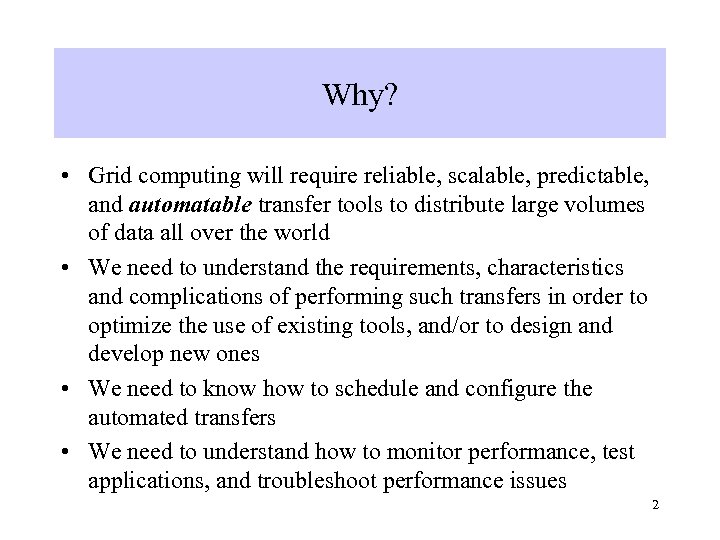
Why? • Grid computing will require reliable, scalable, predictable, and automatable transfer tools to distribute large volumes of data all over the world • We need to understand the requirements, characteristics and complications of performing such transfers in order to optimize the use of existing tools, and/or to design and develop new ones • We need to know how to schedule and configure the automated transfers • We need to understand how to monitor performance, test applications, and troubleshoot performance issues 2
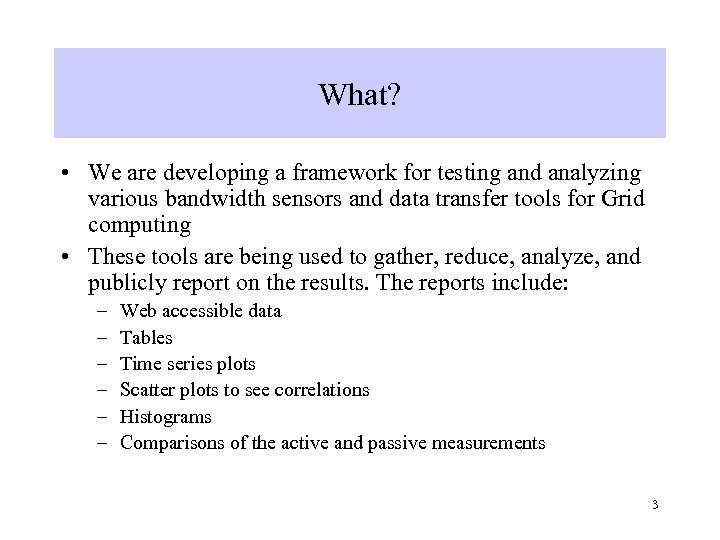
What? • We are developing a framework for testing and analyzing various bandwidth sensors and data transfer tools for Grid computing • These tools are being used to gather, reduce, analyze, and publicly report on the results. The reports include: – – – Web accessible data Tables Time series plots Scatter plots to see correlations Histograms Comparisons of the active and passive measurements 3
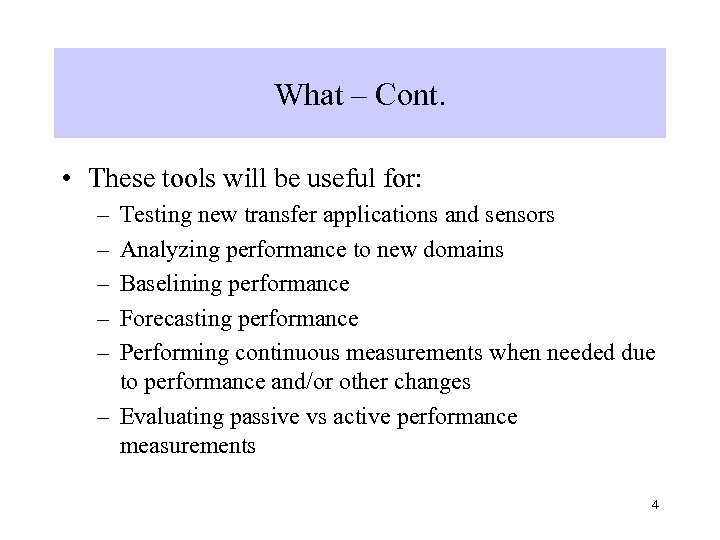
What – Cont. • These tools will be useful for: – – – Testing new transfer applications and sensors Analyzing performance to new domains Baselining performance Forecasting performance Performing continuous measurements when needed due to performance and/or other changes – Evaluating passive vs active performance measurements 4
Where? • To the world! • Currently we have 34 nodes in 8 countries around the world to which we are running the tests • We plan on adding more 5
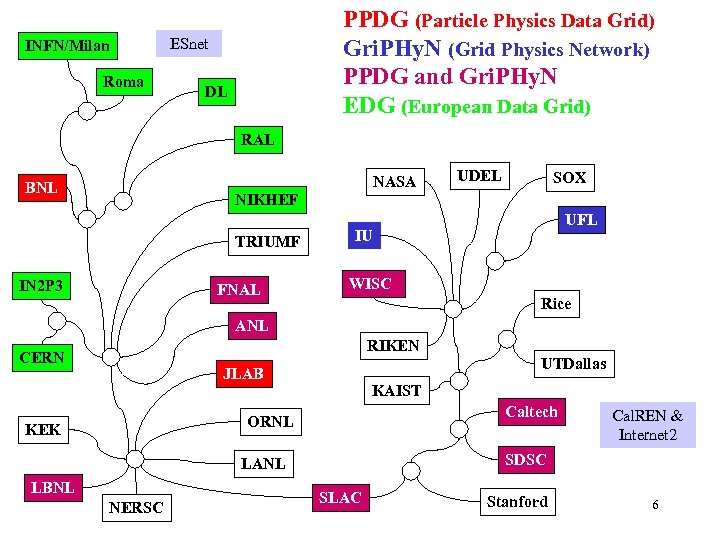
INFN/Milan Roma PPDG (Particle Physics Data Grid) Gri. PHy. N (Grid Physics Network) PPDG and Gri. PHy. N EDG (European Data Grid) ESnet DL RAL NASA BNL UDEL SOX NIKHEF TRIUMF IN 2 P 3 FNAL UFL IU WISC Rice ANL RIKEN CERN UTDallas JLAB KAIST Caltech ORNL KEK SDSC LANL LBNL NERSC Cal. REN & Internet 2 SLAC Stanford 6
Infrastructure Overview • Must get a system and accounts allocated for testing • Master configuration file with specifications for setting up and configuring the tests to each node • “remoteos. pl” uses master configuration file to set up remote hosts, push out latest releases of the sensors • “run-bw-tests” script which runs the tests approximately every 90 minutes (same code runs from command line as well as cron) • “codeanal” analyzes the performance of the “run-bw-tests” code • “post test processing” which extract the data and does the plots and analysis 7
“run-bw-tests” • Sequentially runs the following sensors – Ping – Traceroute – Iperf (10 seconds) – Bbcp memory to memory (10 seconds) – Bbcp disk to disk (file sized from memory to memory) – Bbftp disk to disk (save file as bbcpmem) – Pipechar (phasing out) Using the info in the configuration file • All text from the sensor runs is saved to a log file 8
“codeanal” • Looks at the logs of the run-bw-tests to analyze how well the test code itself performed. • Makes a summary web page • Useful for getting a picture of how things are working and patterns of failure 9
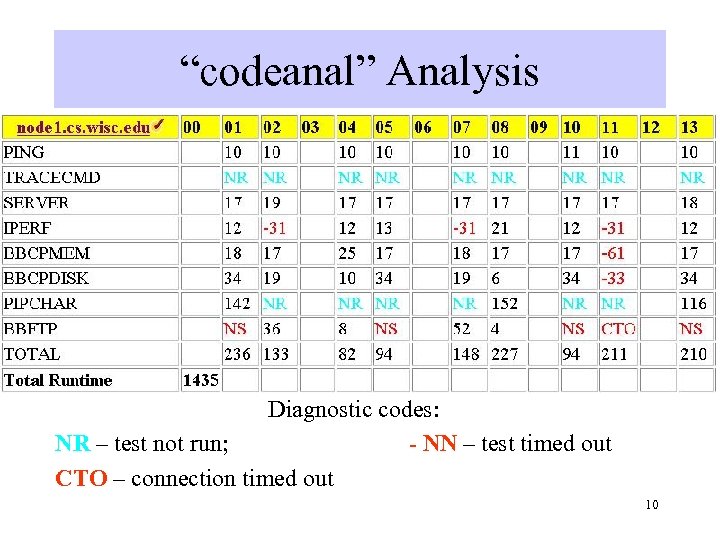
“codeanal” Analysis Diagnostic codes: NR – test not run; - NN – test timed out CTO – connection timed out 10
Analysis, Displays and Results • Time series plots • Scatterplots panels for visualizing correlations • Histogram panels for visualizing distribution of the data values • Scatterplots of all data for each sensor • Correlation tables • “Forecasting” experiments • Passive vs Active measurement comparisons 11
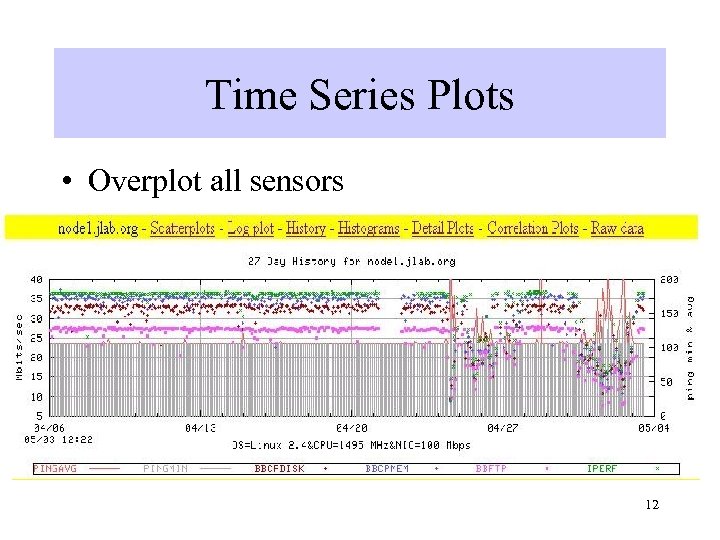
Time Series Plots • Overplot all sensors 12
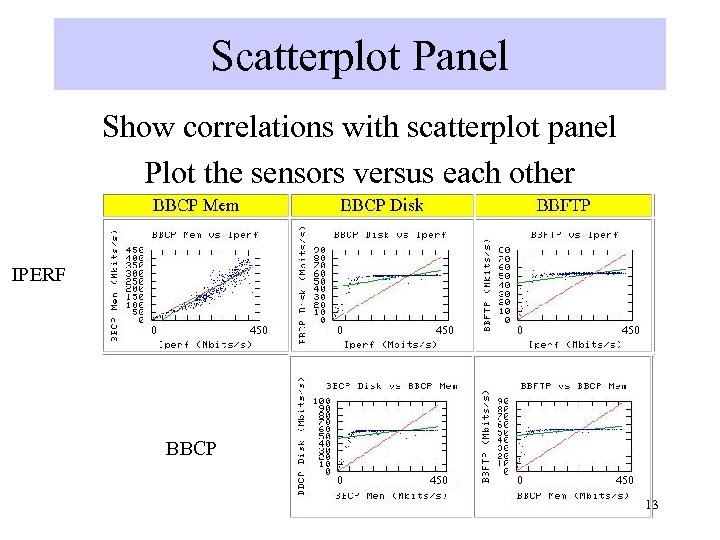
Scatterplot Panel Show correlations with scatterplot panel Plot the sensors versus each other IPERF 0 450 BBCP 0 450 13
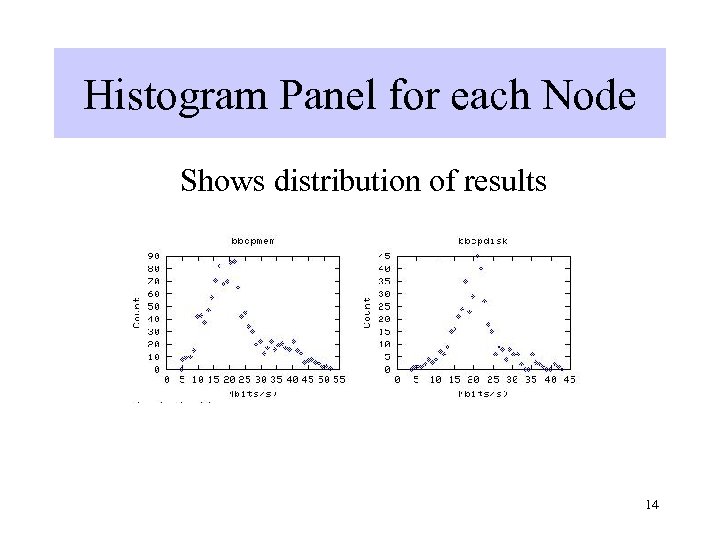
Histogram Panel for each Node Shows distribution of results 14
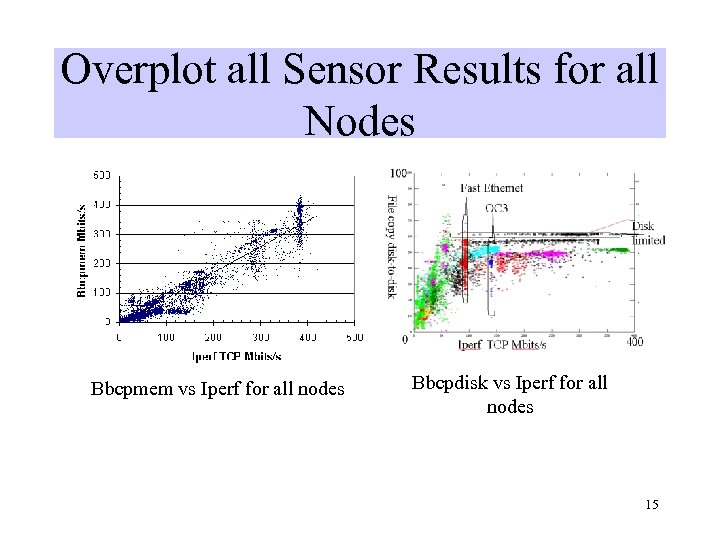
Overplot all Sensor Results for all Nodes Bbcpmem vs Iperf for all nodes Bbcpdisk vs Iperf for all nodes 15
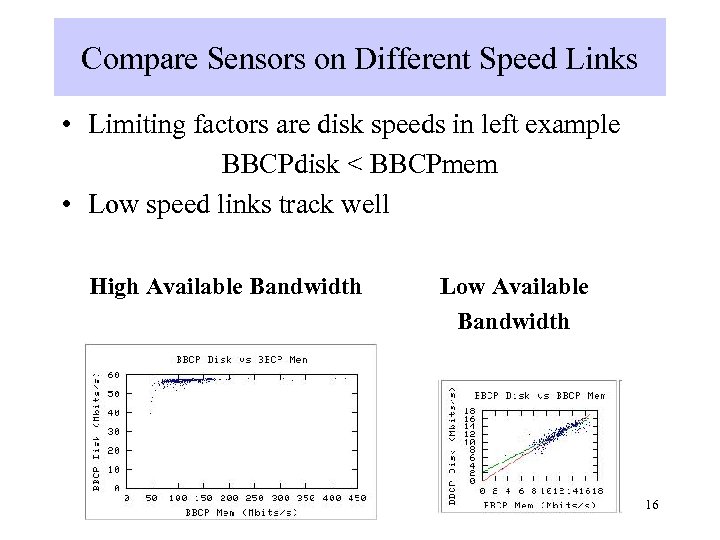
Compare Sensors on Different Speed Links • Limiting factors are disk speeds in left example BBCPdisk < BBCPmem • Low speed links track well High Available Bandwidth Low Available Bandwidth 16
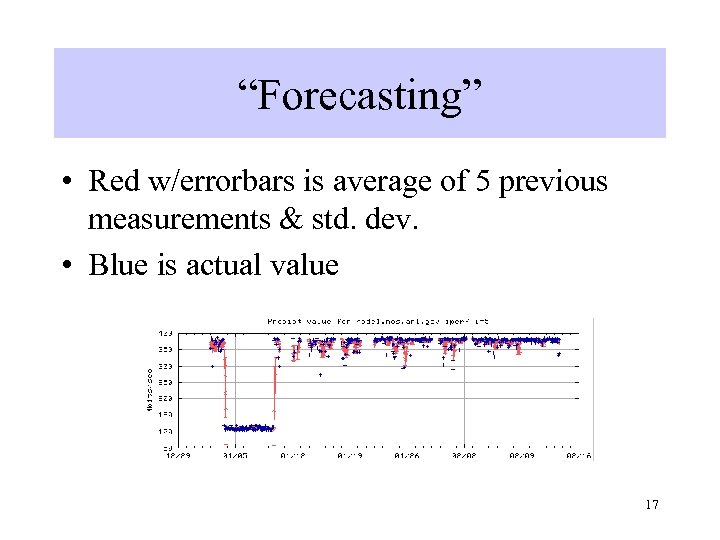
“Forecasting” • Red w/errorbars is average of 5 previous measurements & std. dev. • Blue is actual value 17
Active vs Passive Measurements • All the traffic going in and out of SLAC is recorded by the Cisco switch at our border using Netflow. • Just starting to compare the passive measurements of our active measurements. • Preliminarily, the results look promising. 18
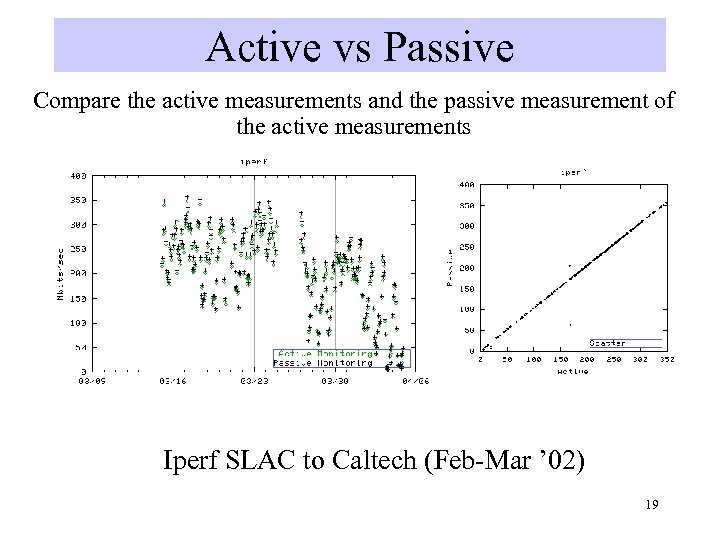
Active vs Passive Compare the active measurements and the passive measurement of the active measurements Iperf SLAC to Caltech (Feb-Mar ’ 02) 19
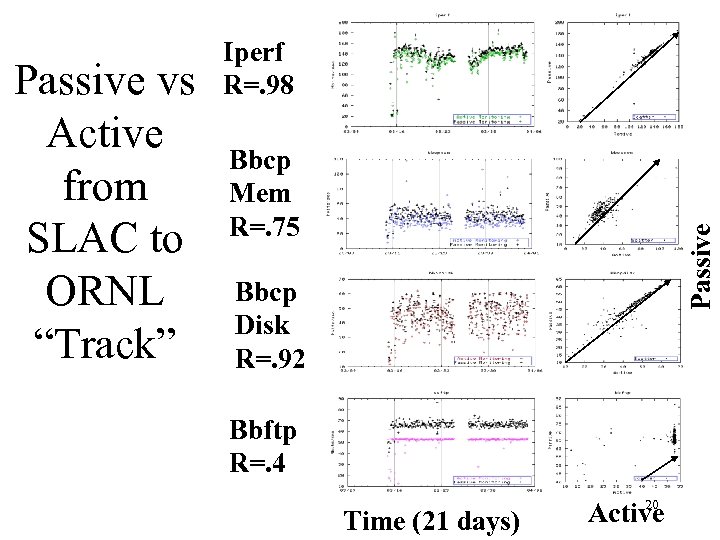
Bbcp Mem R=. 75 Passive vs Active from SLAC to ORNL “Track” Iperf R=. 98 Bbcp Disk R=. 92 Bbftp R=. 4 Time (21 days) 20 Active
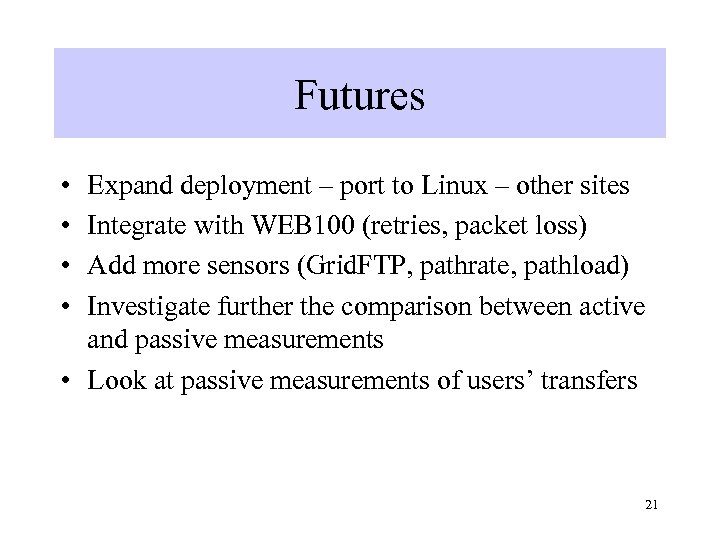
Futures • • Expand deployment – port to Linux – other sites Integrate with WEB 100 (retries, packet loss) Add more sensors (Grid. FTP, pathrate, pathload) Investigate further the comparison between active and passive measurements • Look at passive measurements of users’ transfers 21
Скачать презентацию Overview of IEPM-BW Bandwidth Testing of Bulk Data
fec83872e775c341ca50d9d856942f4b.ppt