 Скачать презентацию Overview of Hybridization Stringency and Genechip Processing
b01a4dd4682c372f9d0782a0756ee7de.ppt
- Количество слайдов: 21



Overview of Hybridization, Stringency, and Genechip Processing
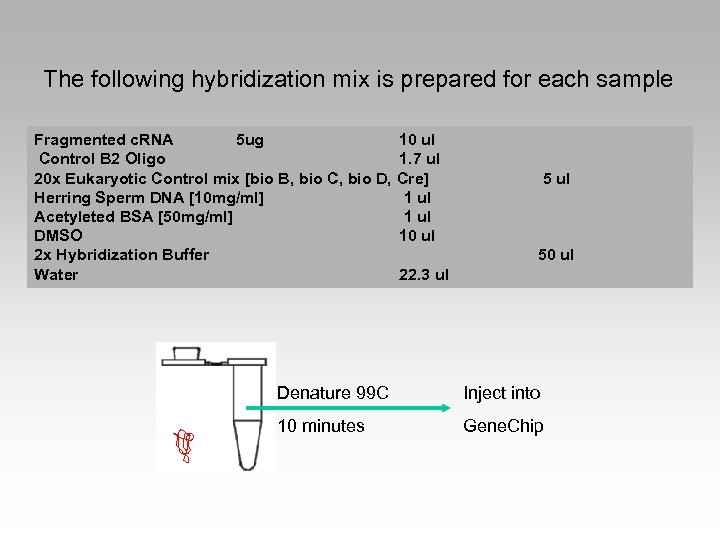
The following hybridization mix is prepared for each sample Fragmented c. RNA 5 ug 10 ul Control B 2 Oligo 1. 7 ul 20 x Eukaryotic Control mix [bio B, bio C, bio D, Cre] Herring Sperm DNA [10 mg/ml] 1 ul Acetyleted BSA [50 mg/ml] 1 ul DMSO 10 ul 2 x Hybridization Buffer Water 22. 3 ul 50 ul Denature 99 C Inject into 10 minutes Gene. Chip
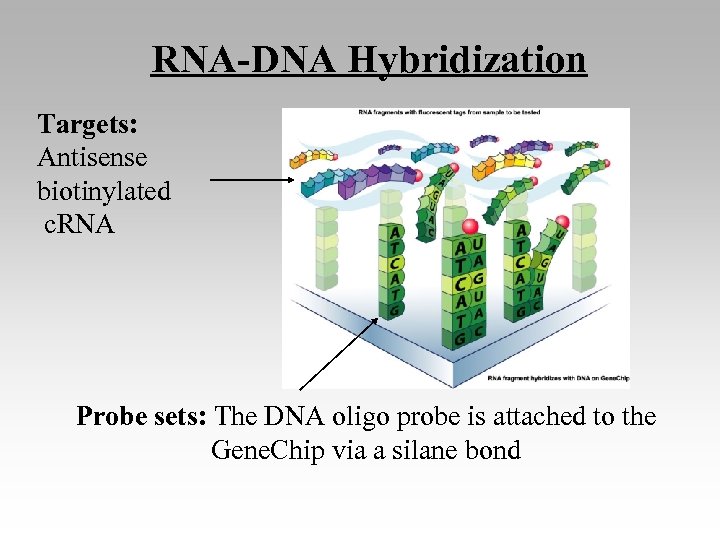
RNA-DNA Hybridization Targets: Antisense biotinylated c. RNA Probe sets: The DNA oligo probe is attached to the Gene. Chip via a silane bond
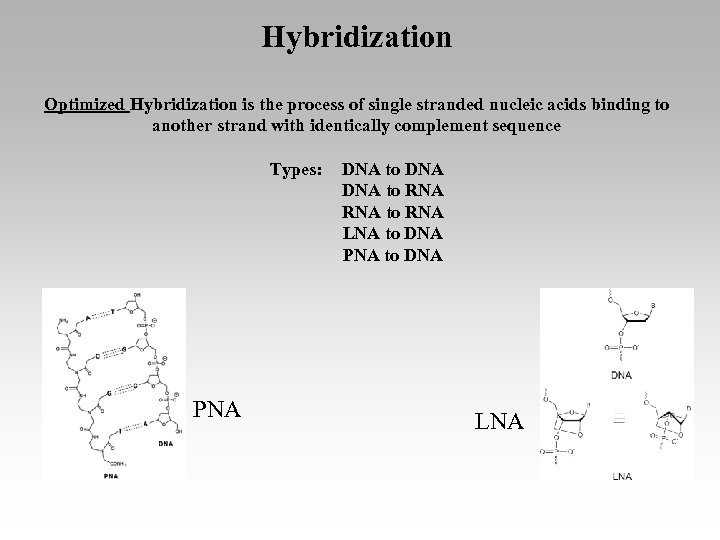
Hybridization Optimized Hybridization is the process of single stranded nucleic acids binding to another strand with identically complement sequence Types: DNA to RNA to RNA LNA to DNA PNA to DNA PNA LNA
Stringency is a condition that causes a change in the local hybridization environment and “interferes” with the binding kinetics Stringency prevents: . Binding of non-complementary strands Self hybridization – hairpin formation Disassociation of strands
Factors Influencing Stringency Intrinsic factors GC rich nucleic acid more stable because of triple H-bond Degree of complementarity Extrinsic factors Experimentally introduced Temperature Salt concentration- Na. Cl, Na citrate, morpholinoethanesulfonic acid Presence of denaturing agents (e. g. , formamide) Presence of high molecular weight polymers (e. g. , dextran sulfate) Shear forces Molecular tagging
Stringency In Microarray Hybridization High stringency is obtained by: Low salt or buffer concentration High temperature Low stringency is obtained by: Lowering the temperature of hybridization Increasing salt concentration [to a point]
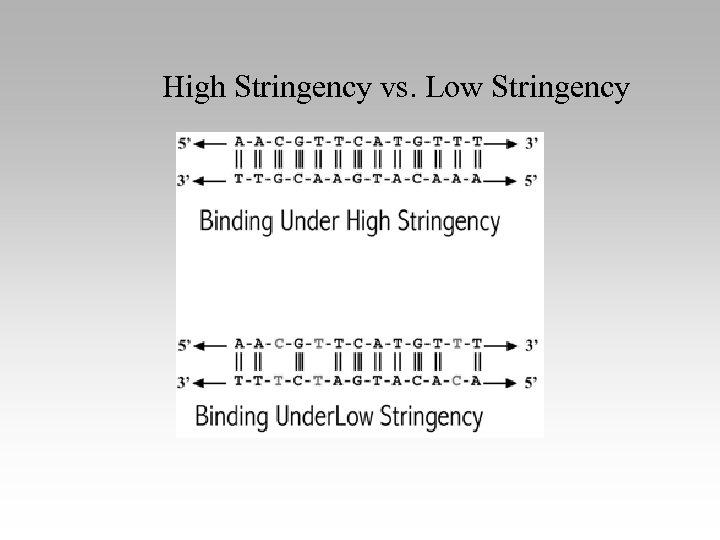
High Stringency vs. Low Stringency
Processing the Yeast Genechip
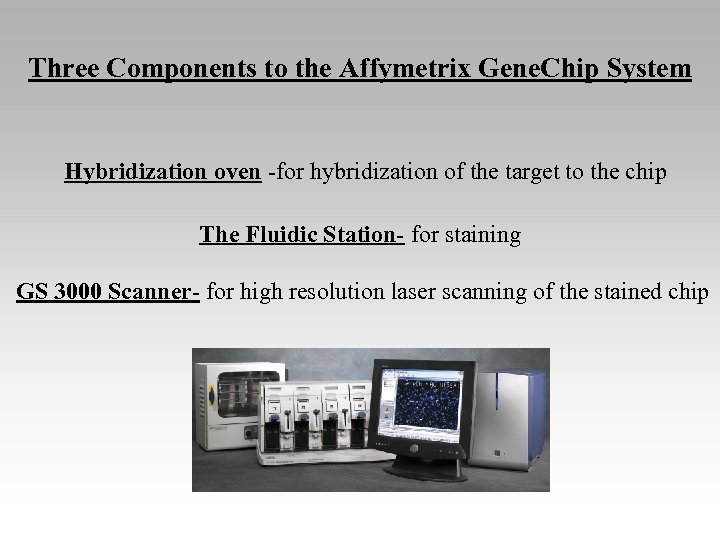
Three Components to the Affymetrix Gene. Chip System Hybridization oven -for hybridization of the target to the chip The Fluidic Station- for staining GS 3000 Scanner- for high resolution laser scanning of the stained chip
The Fluidics Station Staining the biotinylated fc. RNA An automated system to stain the target using streptavidin-phycoerythrin [SAPE], a biotinylated anti-SAPE antibody, and SAPE again… high and low stringency buffers are used
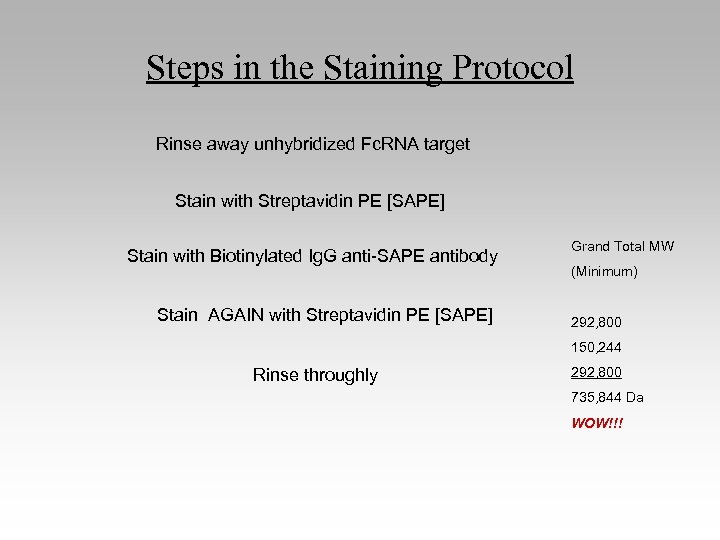
Steps in the Staining Protocol Rinse away unhybridized Fc. RNA target Stain with Streptavidin PE [SAPE] Stain with Biotinylated Ig. G anti-SAPE antibody Stain AGAIN with Streptavidin PE [SAPE] Grand Total MW (Minimum) 292, 800 150, 244 Rinse throughly 292, 800 735, 844 Da WOW!!!
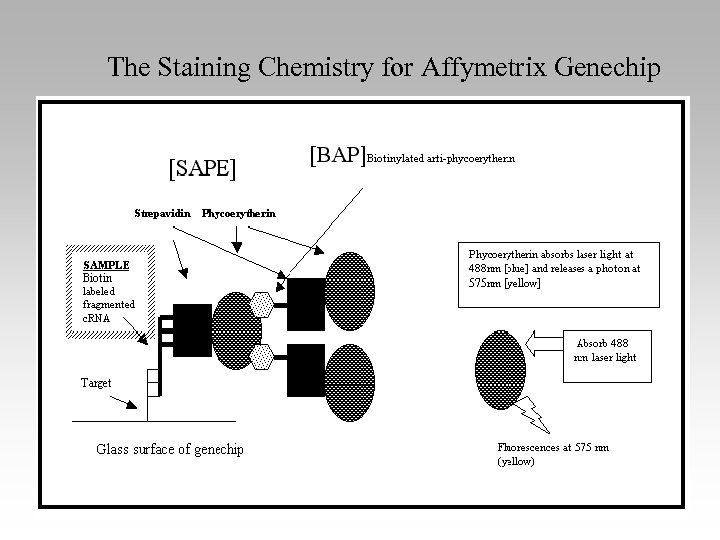
The Staining Chemistry for Affymetrix Genechip
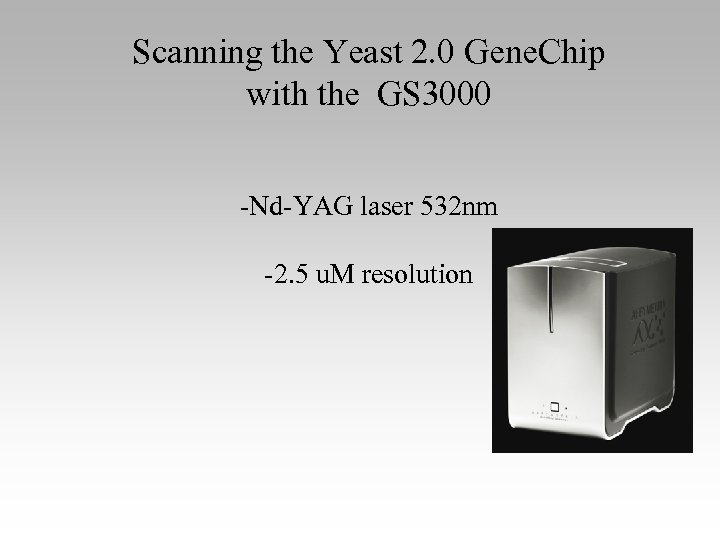
Scanning the Yeast 2. 0 Gene. Chip with the GS 3000 -Nd-YAG laser 532 nm -2. 5 u. M resolution
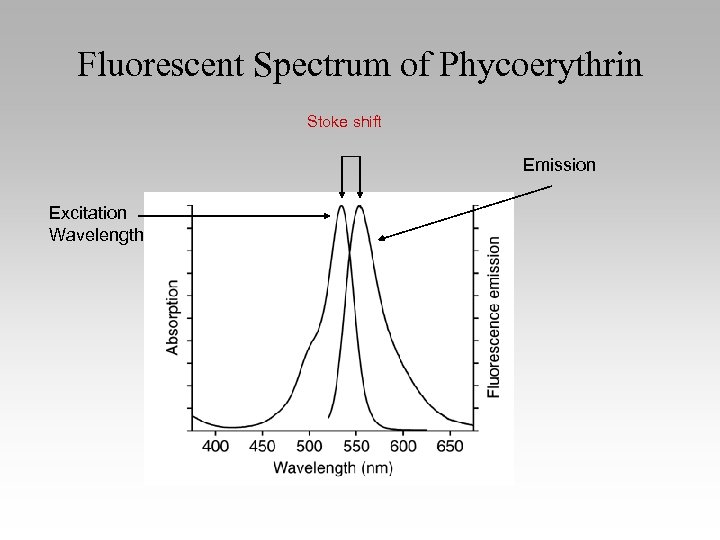
Fluorescent Spectrum of Phycoerythrin Stoke shift Emission Excitation Wavelength
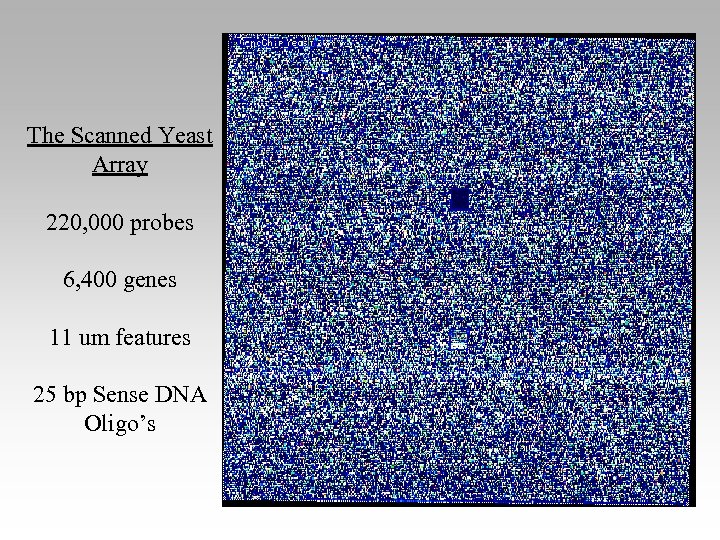
The Scanned Yeast Array 220, 000 probes 6, 400 genes 11 um features 25 bp Sense DNA Oligo’s
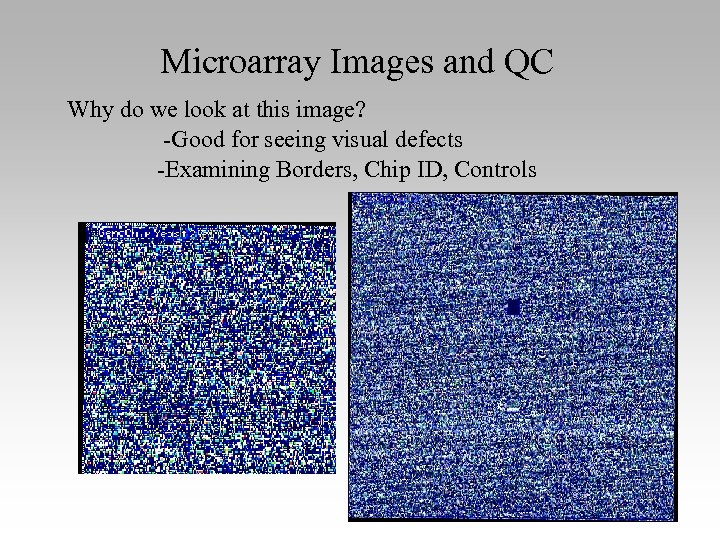
Microarray Images and QC Why do we look at this image? -Good for seeing visual defects -Examining Borders, Chip ID, Controls
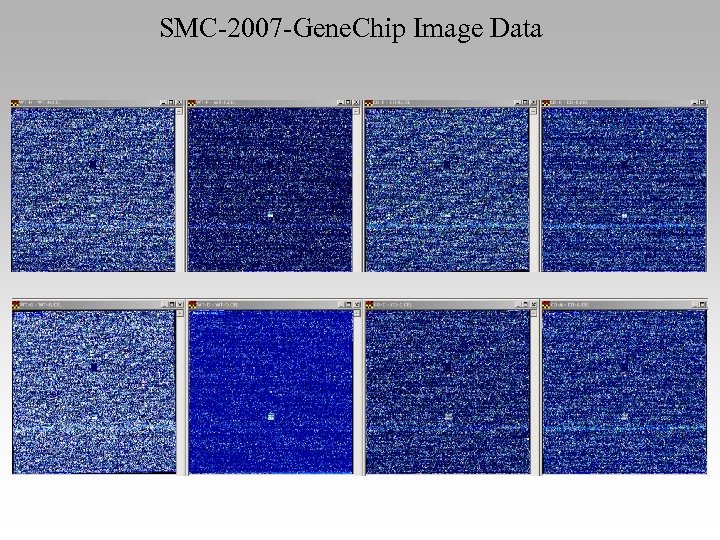
SMC-2007 -Gene. Chip Image Data
QC Report Why do we look at the QC report? -Check 3’ to 5’ ratios of housekeeping genes -Scaling factor -Spike in control signal -Percent present
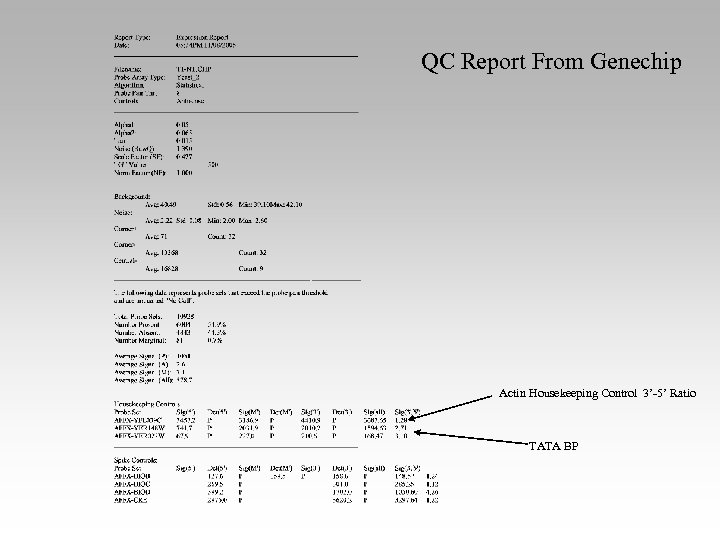
QC Report From Genechip Actin Housekeeping Control 3’-5’ Ratio TATA BP
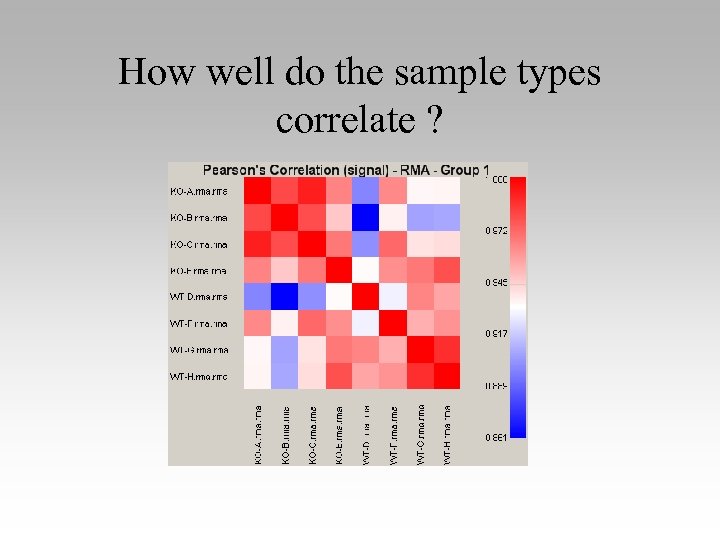
How well do the sample types correlate ?
Скачать презентацию Overview of Hybridization Stringency and Genechip Processing
b01a4dd4682c372f9d0782a0756ee7de.ppt