


 Скачать презентацию Overview of HIV Situation and National HIV Response
a2da01183722deb40961775356d2f693.ppt
- Количество слайдов: 40
 Overview of HIV Situation and National HIV Response in Swaziland Ms. T Gama NERCHA 05. MARCH 2013
 Outline…. • Knowing Your Epidemic (KYE) • Know Your Response (KYR) • Know Your Funding ( KYF) • Future of Response to HIV and AIDS
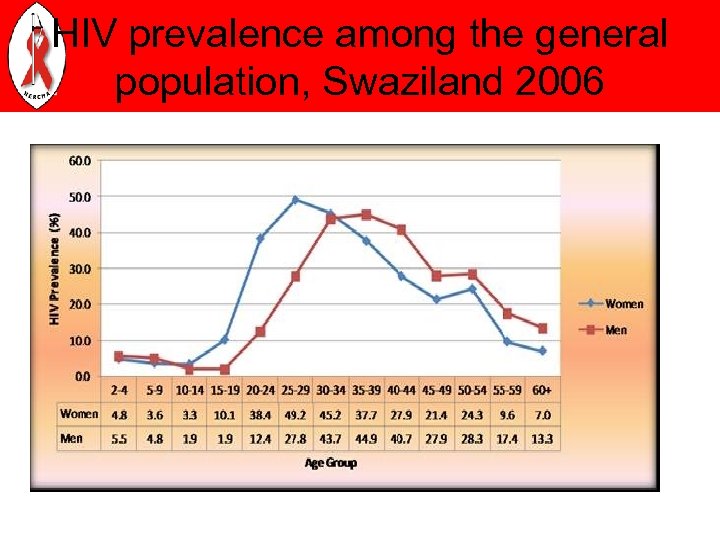 HIV prevalence among the general population, Swaziland 2006
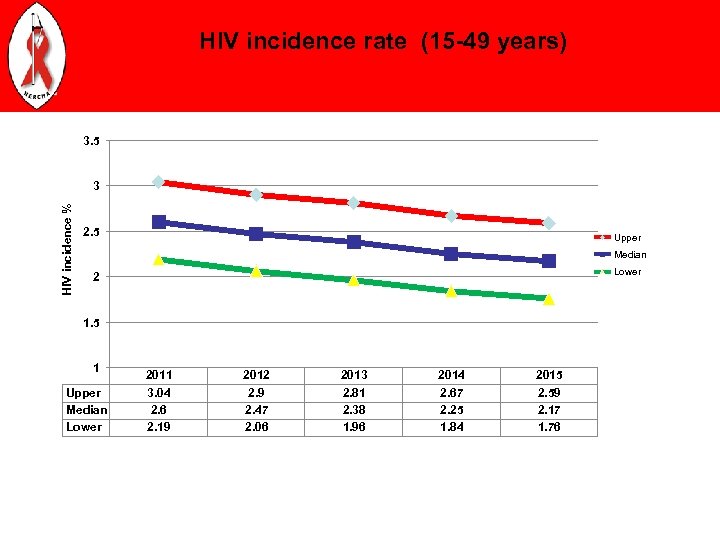 HIV incidence rate (15 -49 years) 3. 5 HIV incidence % 3 2. 5 Upper Median Lower 2 1. 5 1 Upper Median Lower 2011 3. 04 2. 6 2. 19 2012 2. 9 2. 47 2. 06 2013 2. 81 2. 38 1. 96 2014 2. 67 2. 25 1. 84 2015 2. 59 2. 17 1. 76
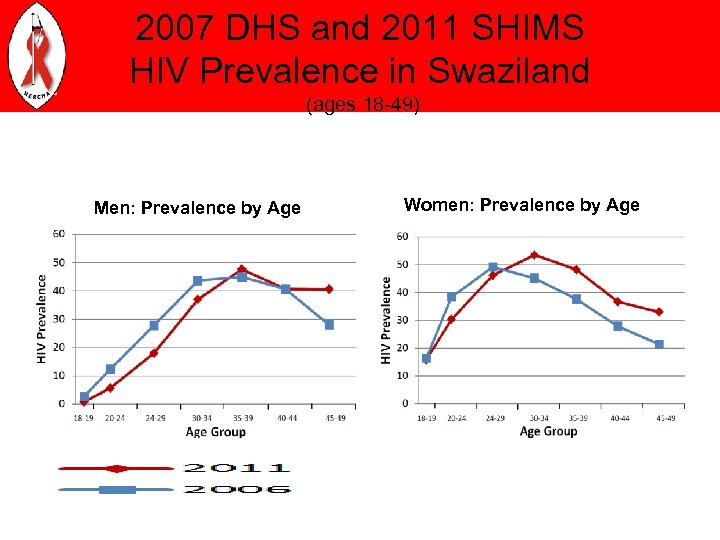 2007 DHS and 2011 SHIMS HIV Prevalence in Swaziland (ages 18 -49) Men: Prevalence by Age Women: Prevalence by Age
 Knowing Your Epidemic (KYE) • SDHS 2007 - 15 -49 years prevalence (26%) women more affected (31%) • MICS 2011 - youth adopting safer sexual behaviors and increased condom usage • SHIMS 2012 - prevalence (18 -49 yrs) 31% and incidence 2. 38% • BSS MARPS- baseline on MSM & SW
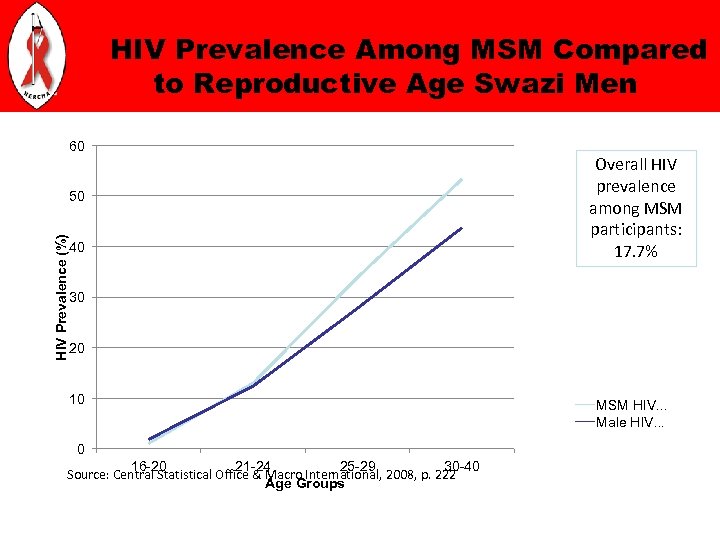 HIV Prevalence Among MSM Compared to Reproductive Age Swazi Men 60 HIV Prevalence (%) 50 40 Overall HIV prevalence among MSM participants: 17. 7% 30 20 10 0 16 -20 21 -24 25 -29 30 -40 Source: Central Statistical Office & Macro International, 2008, p. 222 Age Groups MSM HIV. . . Male HIV. . .
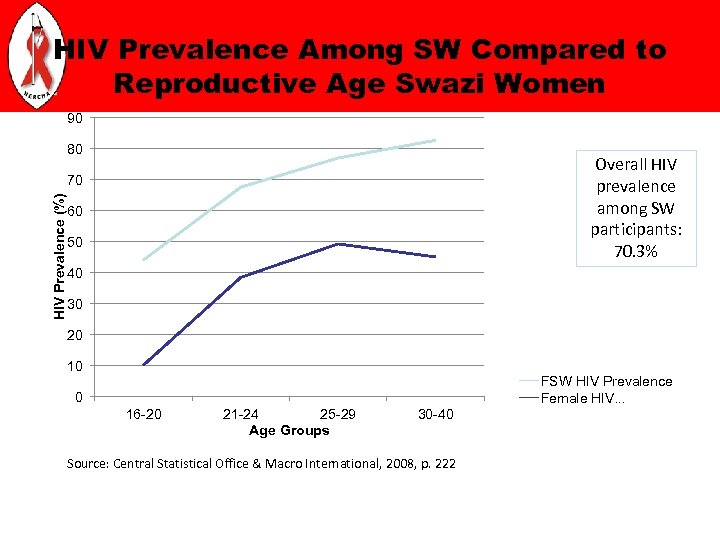 HIV Prevalence Among SW Compared to Reproductive Age Swazi Women 90 80 Overall HIV prevalence among SW participants: 70. 3% HIV Prevalence (%) 70 60 50 40 30 20 10 FSW HIV Prevalence Female HIV. . . 0 16 -20 21 -24 25 -29 Age Groups 30 -40 Source: Central Statistical Office & Macro International, 2008, p. 222
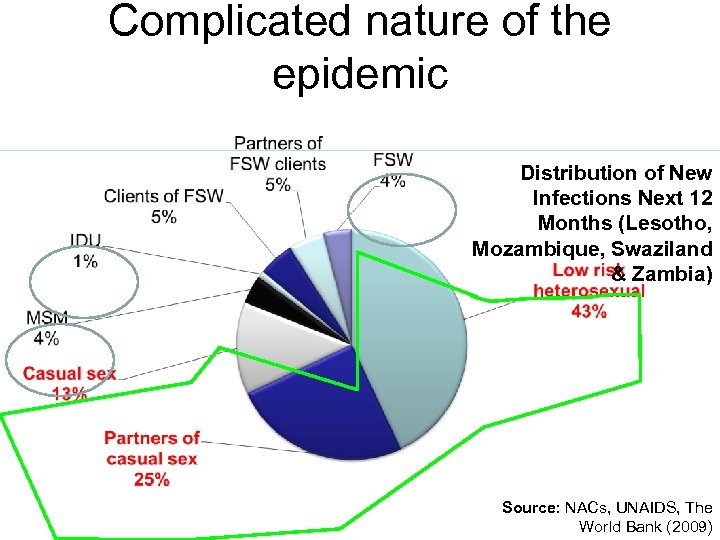 Complicated nature of the epidemic Distribution of New Infections Next 12 Months (Lesotho, Mozambique, Swaziland & Zambia) Source: NACs, UNAIDS, The World Bank (2009)
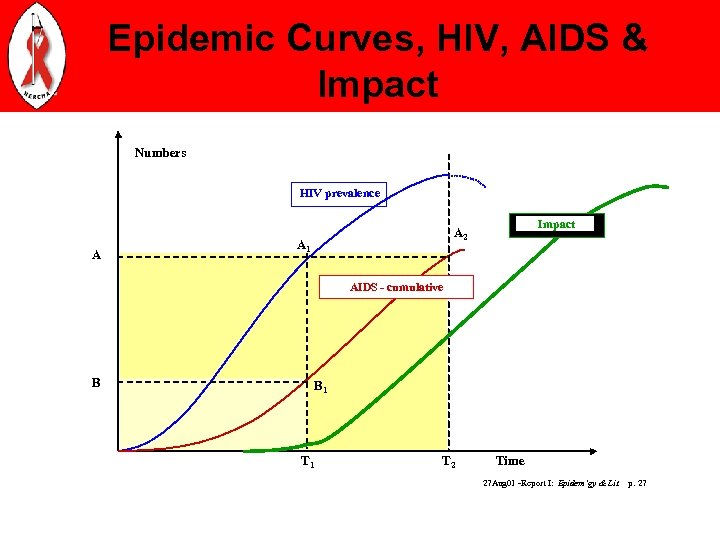 Epidemic Curves, HIV, AIDS & Impact Numbers HIV prevalence A Impact A 2 A 1 AIDS - cumulative B B 1 T 2 Time 27 Aug 01 -Report I: Epidem’gy & Lit. p. 27
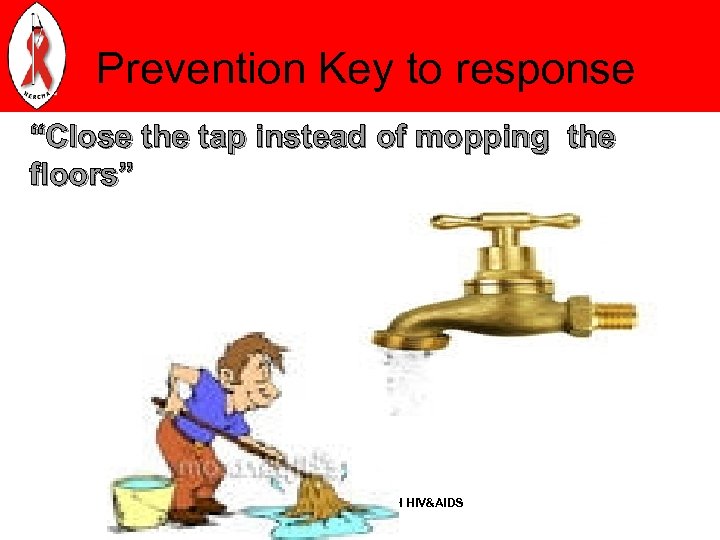 Prevention Key to response “Close the tap instead of mopping the floors” A NATION AT WAR WITH HIV&AIDS
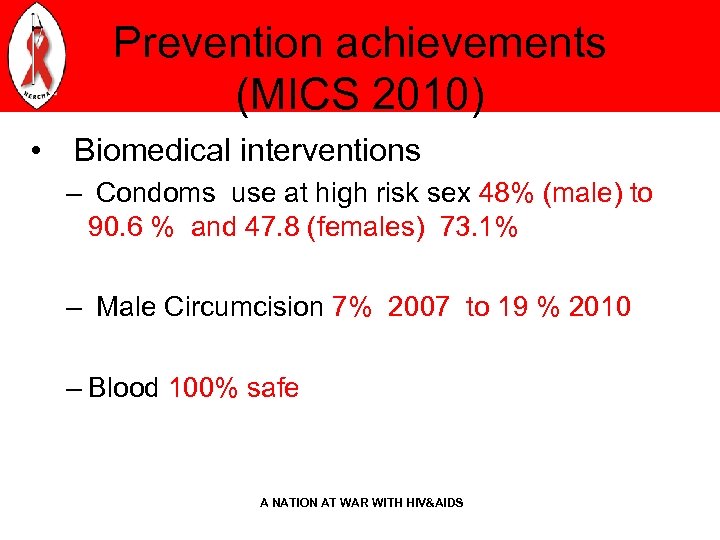 Prevention achievements (MICS 2010) • Biomedical interventions – Condoms use at high risk sex 48% (male) to 90. 6 % and 47. 8 (females) 73. 1% – Male Circumcision 7% 2007 to 19 % 2010 – Blood 100% safe A NATION AT WAR WITH HIV&AIDS
 Treatment of PLHIV • Over 80% of those in need of treatment accessing treatment • MTCT reduced from 32% in 2004 to 1. 4% in 2012 • Over 80% of children in need of treatment have access
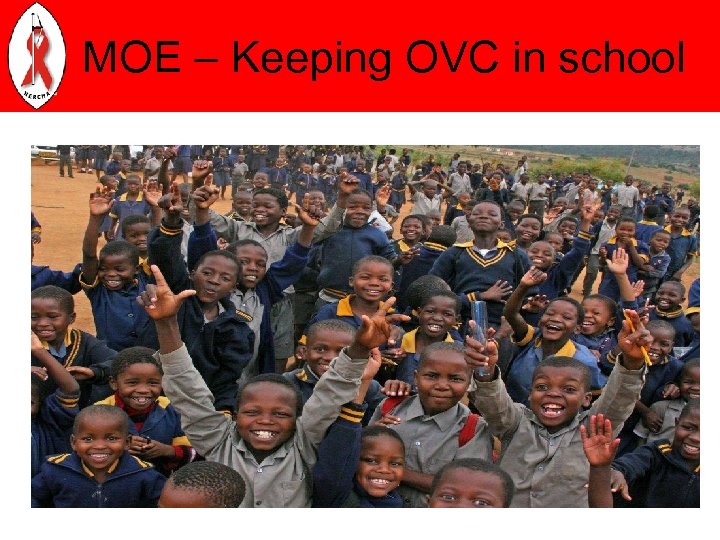 MOE – Keeping OVC in school
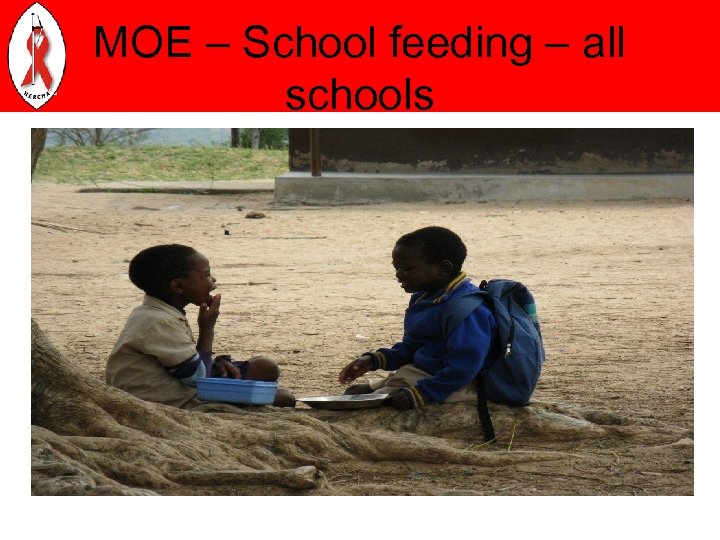 MOE – School feeding – all schools
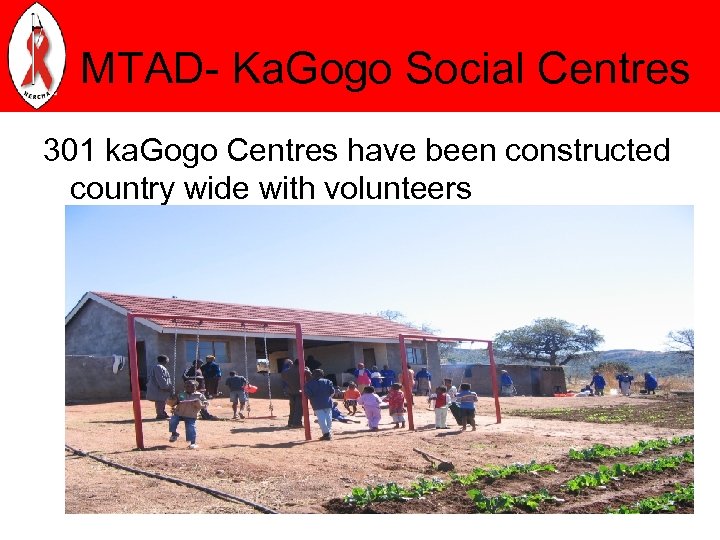 MTAD- Ka. Gogo Social Centres 301 ka. Gogo Centres have been constructed country wide with volunteers A NATION AT WAR WITH HIV&AIDS
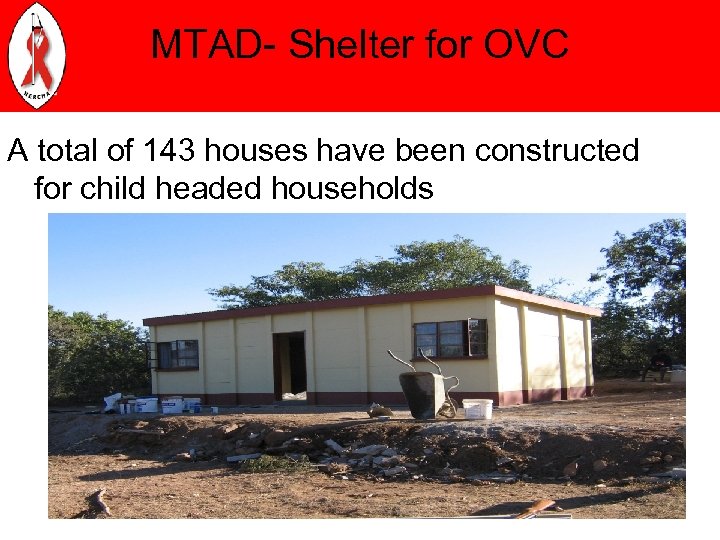 MTAD- Shelter for OVC A total of 143 houses have been constructed for child headed households A NATION AT WAR WITH HIV&AIDS
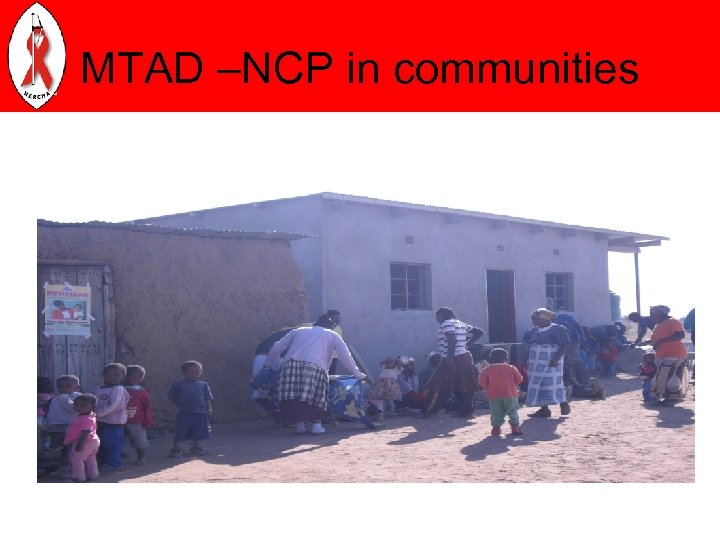 MTAD –NCP in communities
 Sector Response- Workplace PSHACC SWABCHA • HIV and AIDS workplace programmes in all Government ministries • Minimum package of workplace HIV services in private sector – Peer educators – Counsellors – Carers – Male involvement • Most big enterprises with vibrant programmes • Reach extended to SMME
 Sectors: Urban and FBO AMICAALL CHURCH FORUM • Services delivered to all cities and towns • Supporting churches to mainstream HIV and AIDS response • Mainstreaming HIV programmes
 Sectors: PLHIV & Media SWANNEPHA MISA • Coordination of service delivery to PLHIV and organizations of PLHIV • Coordination of the media sector response to HIV • Advocacy and promoting greater Involvement of people living with HIV
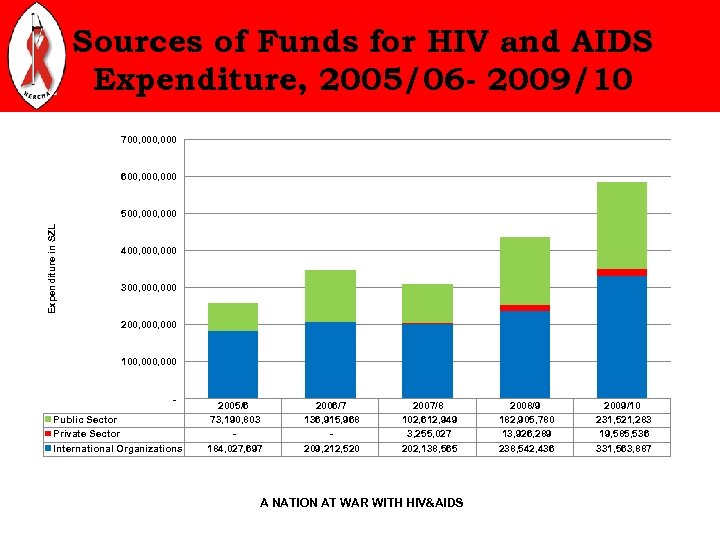 Sources of Funds for HIV and AIDS Expenditure, 2005/06 - 2009/10 700, 000 600, 000 Expenditure in SZL 500, 000 400, 000 300, 000 200, 000 100, 000 Public Sector Private Sector International Organizations 2005/6 73, 190, 803 184, 027, 697 2006/7 136, 915, 968 209, 212, 520 2007/8 102, 612, 949 3, 255, 027 202, 138, 565 A NATION AT WAR WITH HIV&AIDS 2008/9 182, 905, 780 13, 926, 289 238, 542, 436 2009/10 231, 521, 283 19, 585, 536 331, 563, 887
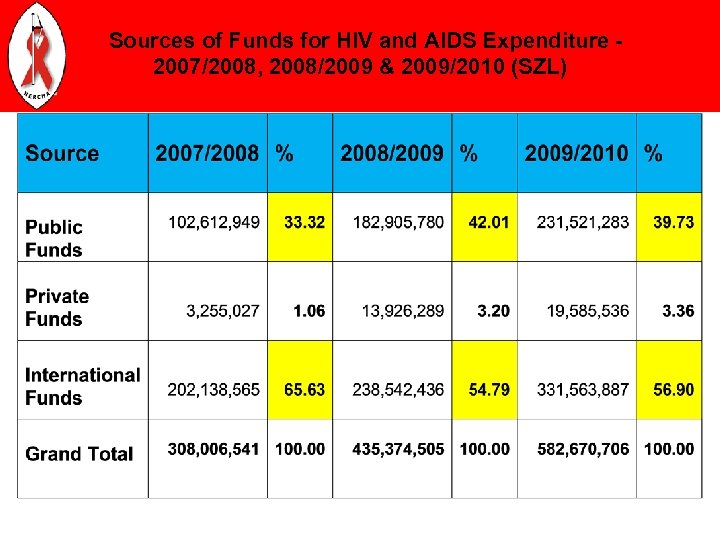 Sources of Funds for HIV and AIDS Expenditure 2007/2008, 2008/2009 & 2009/2010 (SZL)
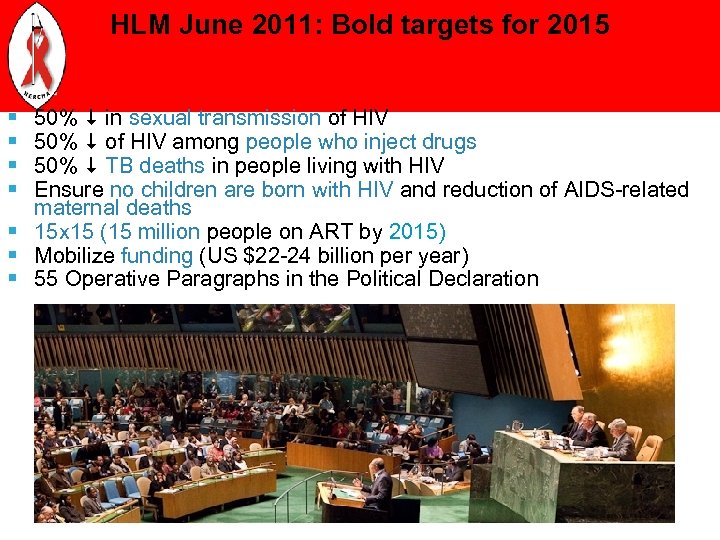 HLM June 2011: Bold targets for 2015 50% in sexual transmission of HIV 50% of HIV among people who inject drugs 50% TB deaths in people living with HIV Ensure no children are born with HIV and reduction of AIDS-related maternal deaths § 15 x 15 (15 million people on ART by 2015) § Mobilize funding (US $22 -24 billion per year) § 55 Operative Paragraphs in the Political Declaration § §
 The Future of the Response The New Investment Framework for the Global HIV Response
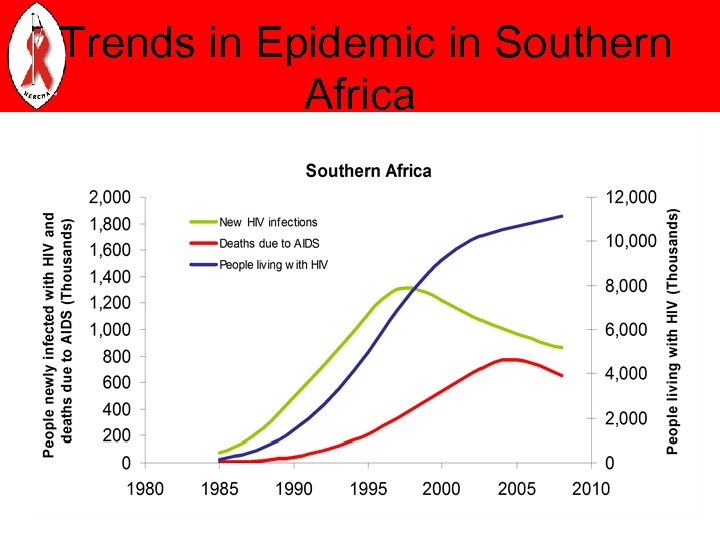 Trends in Epidemic in Southern Africa
 Aims of the Investment Framework • Maximize the benefits of the HIV response • Support more rational resource allocation based on country epidemiology and context • Encourage countries to prioritize and implement the most effective programmatic activities • Increase efficiency in HIV prevention, treatment, care and support programming
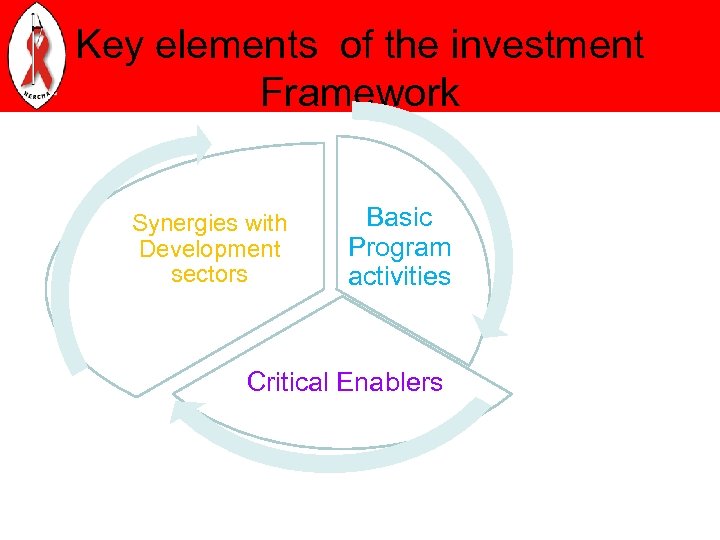 Key elements of the investment Framework Synergies with Development sectors Basic Program activities Critical Enablers
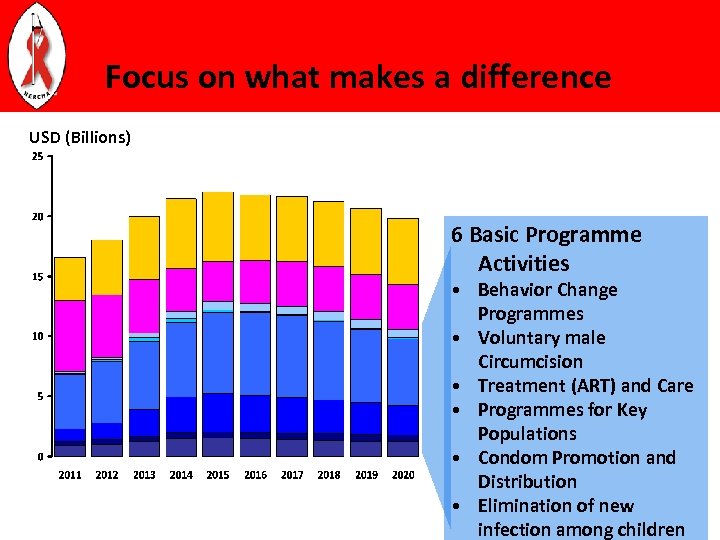 Focus on what makes a difference USD (Billions) 6 Basic Programme Activities • Behavior Change Programmes • Voluntary male Circumcision • Treatment (ART) and Care • Programmes for Key Populations • Condom Promotion and Distribution • Elimination of new infection among children
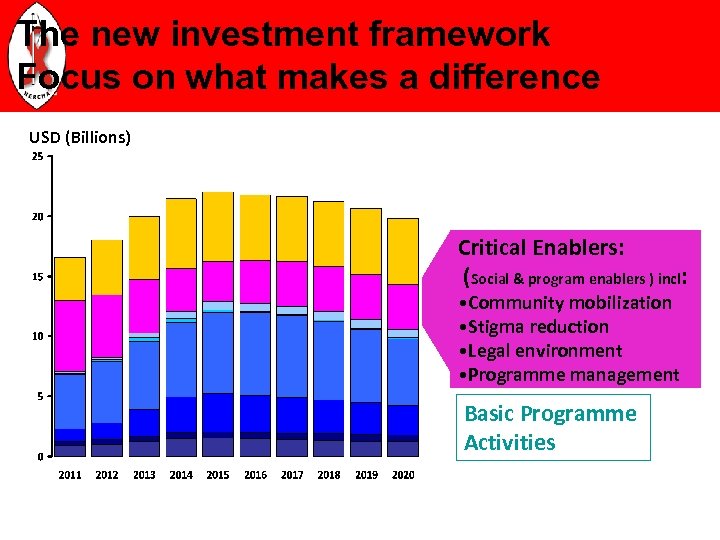 The new investment framework Focus on what makes a difference USD (Billions) Critical Enablers: (Social & program enablers ) incl: • Community mobilization • Stigma reduction • Legal environment • Programme management Basic Programme Activities
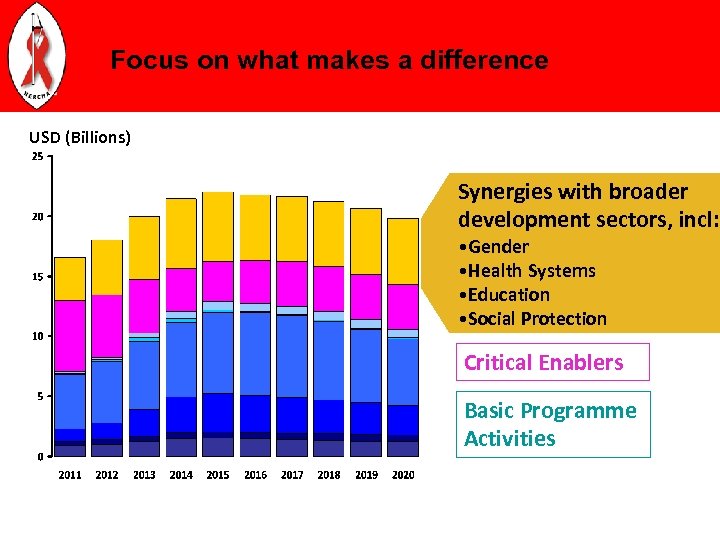 Focus on what makes a difference USD (Billions) Synergies with broader development sectors, incl: • Gender • Health Systems • Education • Social Protection Critical Enablers Basic Programme Activities
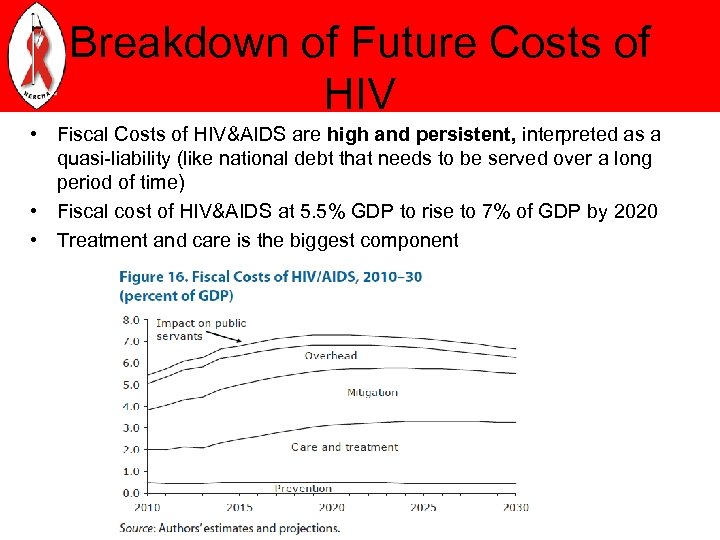 Breakdown of Future Costs of HIV • Fiscal Costs of HIV&AIDS are high and persistent, interpreted as a quasi-liability (like national debt that needs to be served over a long period of time) • Fiscal cost of HIV&AIDS at 5. 5% GDP to rise to 7% of GDP by 2020 • Treatment and care is the biggest component
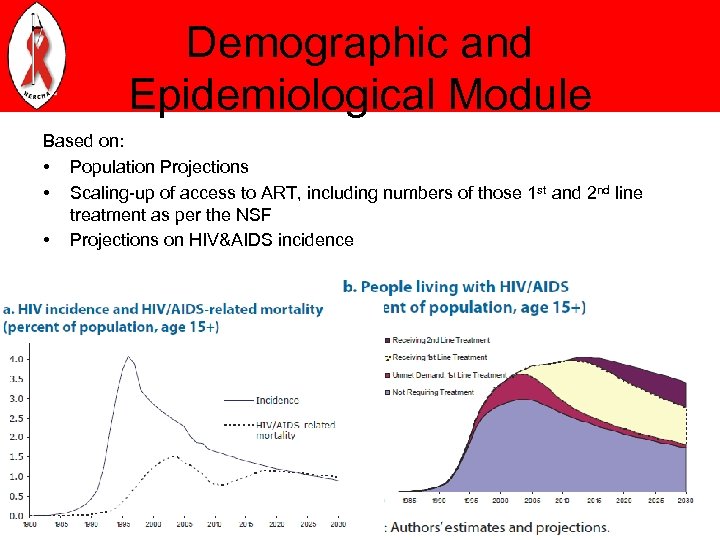 Demographic and Epidemiological Module Based on: • Population Projections • Scaling-up of access to ART, including numbers of those 1 st and 2 nd line treatment as per the NSF • Projections on HIV&AIDS incidence
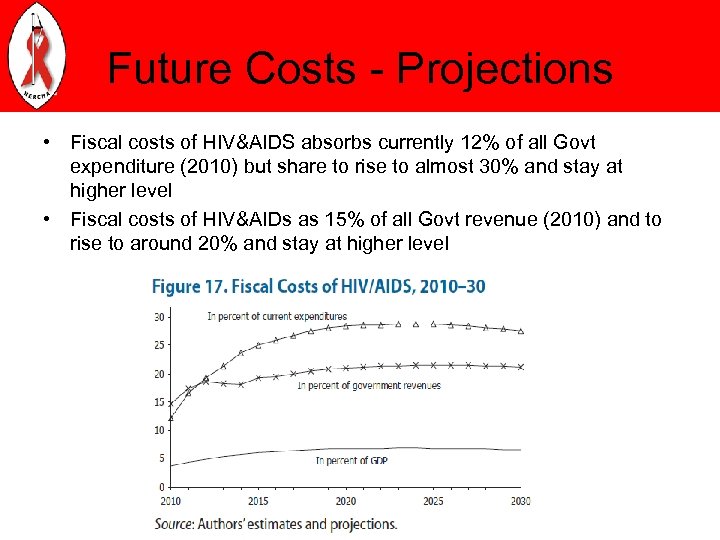 Future Costs - Projections • Fiscal costs of HIV&AIDS absorbs currently 12% of all Govt expenditure (2010) but share to rise to almost 30% and stay at higher level • Fiscal costs of HIV&AIDs as 15% of all Govt revenue (2010) and to rise to around 20% and stay at higher level
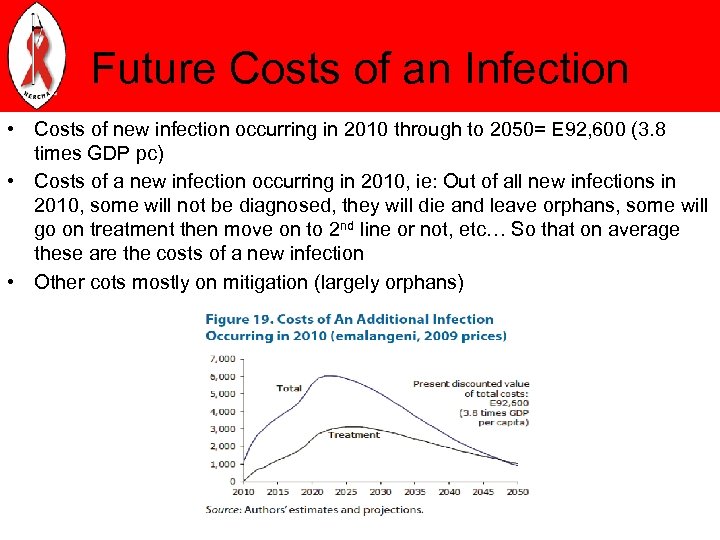 Future Costs of an Infection • Costs of new infection occurring in 2010 through to 2050= E 92, 600 (3. 8 times GDP pc) • Costs of a new infection occurring in 2010, ie: Out of all new infections in 2010, some will not be diagnosed, they will die and leave orphans, some will go on treatment then move on to 2 nd line or not, etc… So that on average these are the costs of a new infection • Other cots mostly on mitigation (largely orphans)
 The Case for Swaziland… • UNGASS commitments… political commitments by Government and partners! • Gender related conventions and declarations ratified and domesticated … need for more legislation to guide operations.
 In summary… • Outstanding successes in HIV response • Infection rates reducing • More people surviving, living productive lives • Fewer OVC • Sustaining the gains … increased demand on domestic resources.
 Conclusions • Fiscal costs of HIV/AIDs are extremely high and persistent • Even if external level of financing is maintained HIV and AIDS is an extraordinary fiscal challenge to Swaziland • Swaziland has the highest fiscal burden of HIV/AIDS of all countries survey at 293% of GDP. This compares to 212% GDP for Uganda, 192% of GDP for Botswana and 37% for South Africa.
 Role of the Media • Inform, educate, communicate and disseminate accurate information on HIV and AIDS and gender • Provide platform for dialogue and exchange of views within Government sectors and beyond • Ensuring Government action is in compliance to signed conventions and declarations and policies
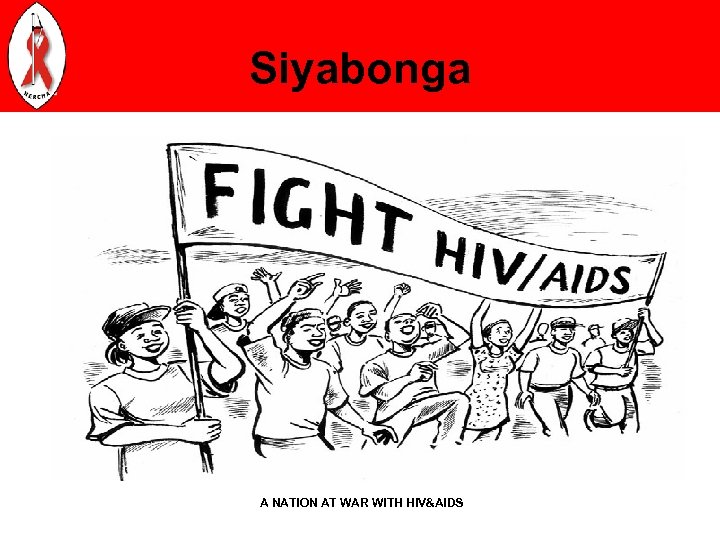 Siyabonga A NATION AT WAR WITH HIV&AIDS