 Скачать презентацию Overview of Chapter 1 -4 October 17
058a8dee7bb4e0bac7b380817286cbc3.ppt
- Количество слайдов: 36




Overview of Chapter 1 -4: October 17
![Chapter 1 Overview Dx dy = [R*cos * d ][Rd ] Application to Atmospheric](https://present5.com/presentation/058a8dee7bb4e0bac7b380817286cbc3/image-2.jpg "Chapter 1 Overview Dx dy = [R*cos * d ][Rd ] Application to Atmospheric")
Chapter 1 Overview Dx dy = [R*cos * d ][Rd ] Application to Atmospheric flow, e. g. , Exercise 1. 20
N 2, O 2 dissociation P=mg P ~ po exp(-z/H) O 3 dissociation Rad. + conv. Main gases + greenhouse gases (Table 1. 1)
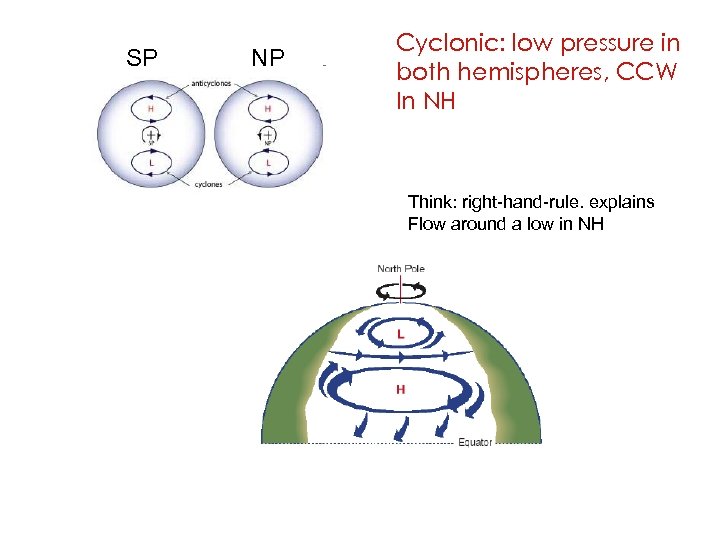
SP NP Cyclonic: low pressure in both hemispheres, CCW In NH Think: right-hand-rule. explains Flow around a low in NH
Horizontal heating gradients: aquaplanet simulation
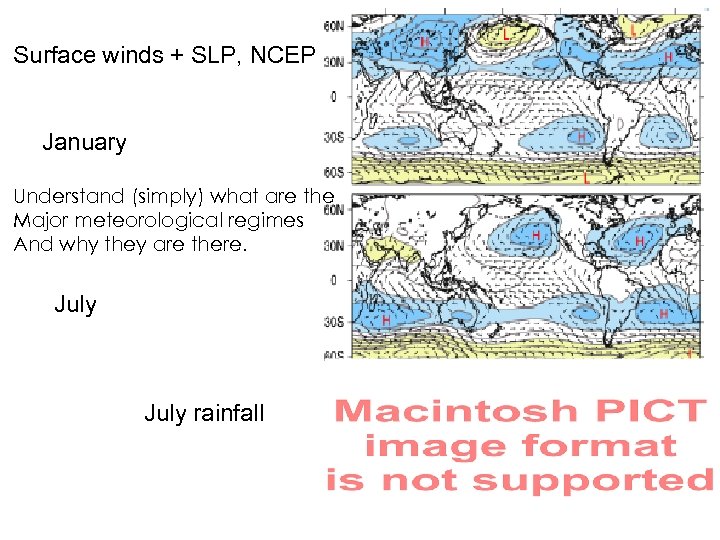
Surface winds + SLP, NCEP January Understand (simply) what are the Major meteorological regimes And why they are there. July rainfall
Chapter 2: The Earth System Thermohaline circulation Cryosphere budget (table 2. 1) Carbon Cycle Oxygen Earth History: hothouse period, glacial cycles Exercises: know how to do all of them, will provide numbers for calc.
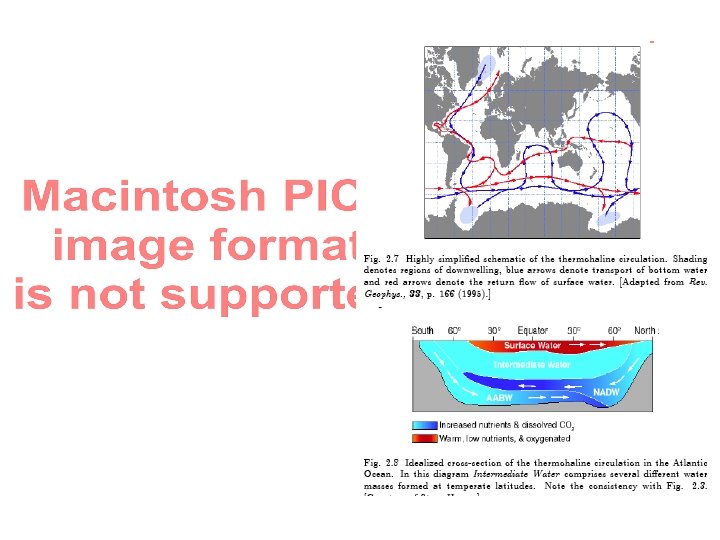
Thermohaline Driver: Heating @ Equator, Cooling and Freezing at High Latitude
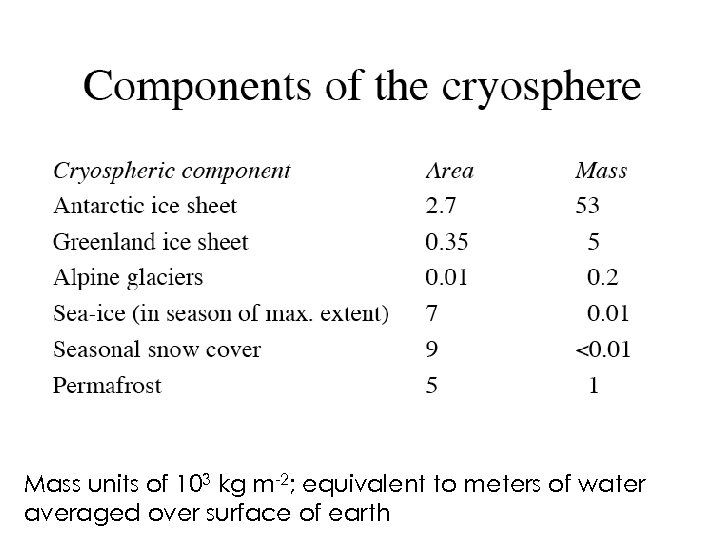
Mass units of 103 kg m-2; equivalent to meters of water averaged over surface of earth
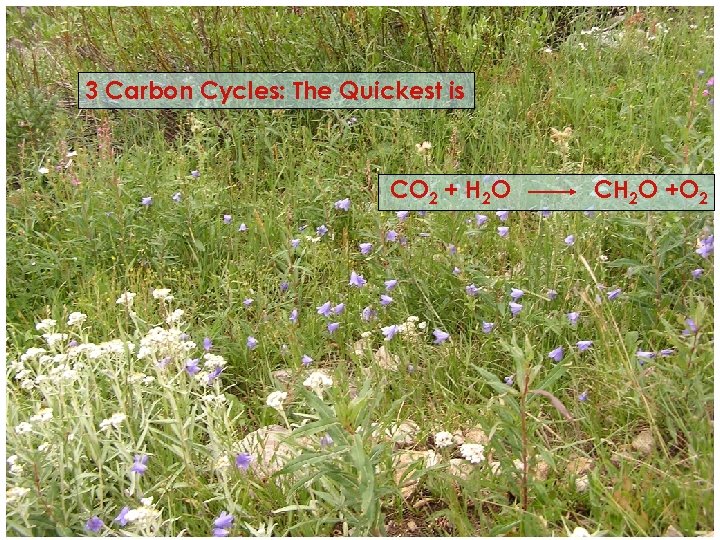
3 Carbon Cycles: The Quickest is CO 2 + H 2 O CH 2 O +O 2
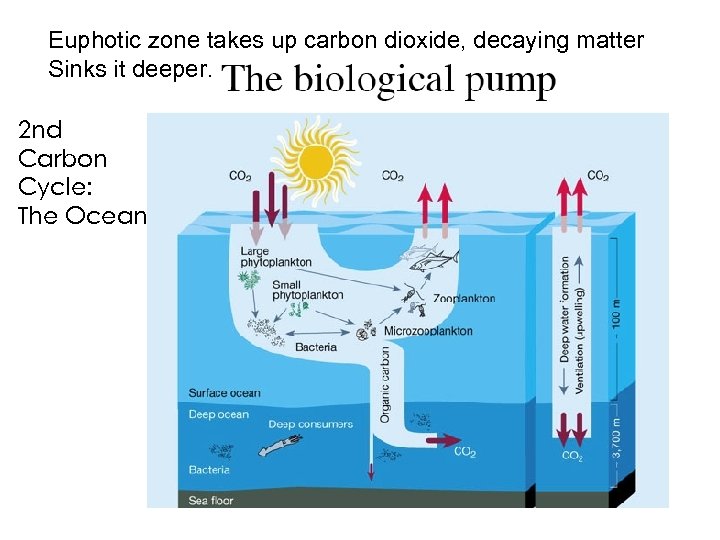
Euphotic zone takes up carbon dioxide, decaying matter Sinks it deeper. 2 nd Carbon Cycle: The Ocean
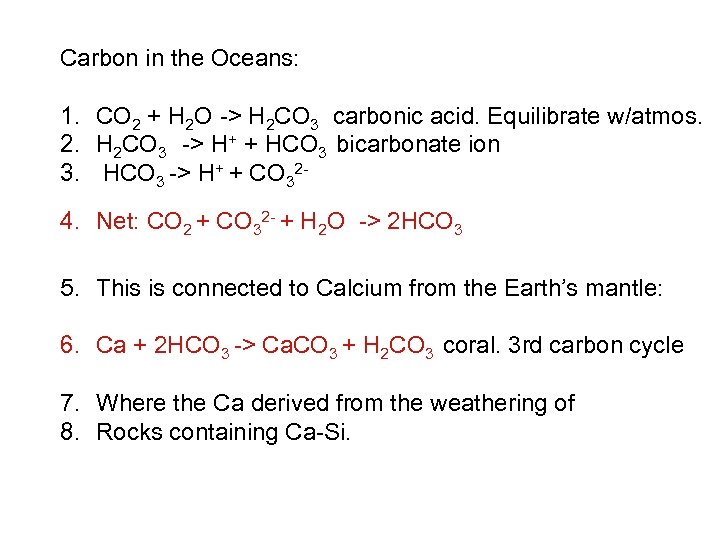
Carbon in the Oceans: 1. CO 2 + H 2 O -> H 2 CO 3 carbonic acid. Equilibrate w/atmos. 2. H 2 CO 3 -> H+ + HCO 3 bicarbonate ion 3. HCO 3 -> H+ + CO 324. Net: CO 2 + CO 32 - + H 2 O -> 2 HCO 3 5. This is connected to Calcium from the Earth’s mantle: 6. Ca + 2 HCO 3 -> Ca. CO 3 + H 2 CO 3 coral. 3 rd carbon cycle 7. Where the Ca derived from the weathering of 8. Rocks containing Ca-Si.

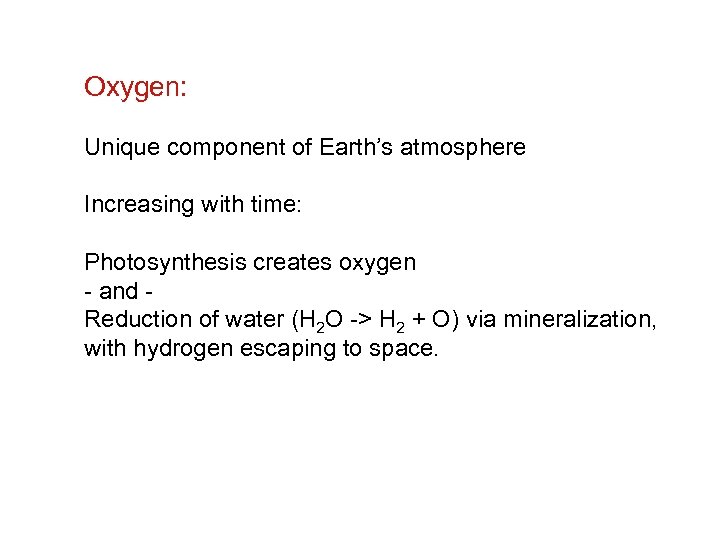
Oxygen: Unique component of Earth’s atmosphere Increasing with time: Photosynthesis creates oxygen - and Reduction of water (H 2 O -> H 2 + O) via mineralization, with hydrogen escaping to space.
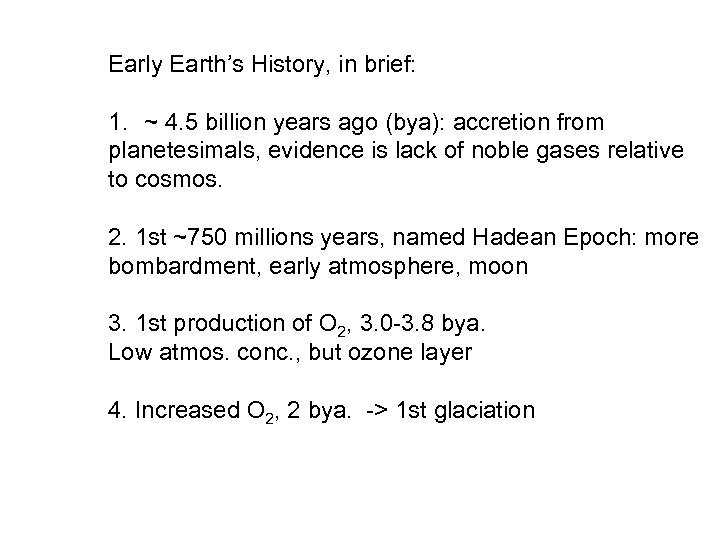
Early Earth’s History, in brief: 1. ~ 4. 5 billion years ago (bya): accretion from planetesimals, evidence is lack of noble gases relative to cosmos. 2. 1 st ~750 millions years, named Hadean Epoch: more bombardment, early atmosphere, moon 3. 1 st production of O 2, 3. 0 -3. 8 bya. Low atmos. conc. , but ozone layer 4. Increased O 2, 2 bya. -> 1 st glaciation
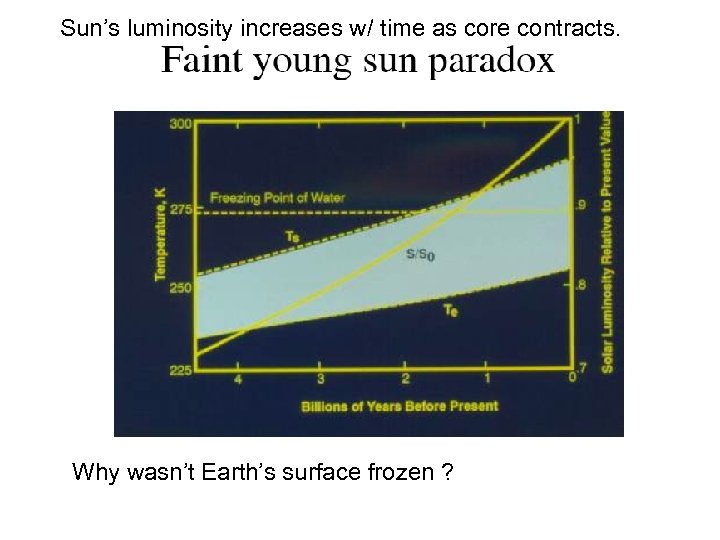
Sun’s luminosity increases w/ time as core contracts. Why wasn’t Earth’s surface frozen ?
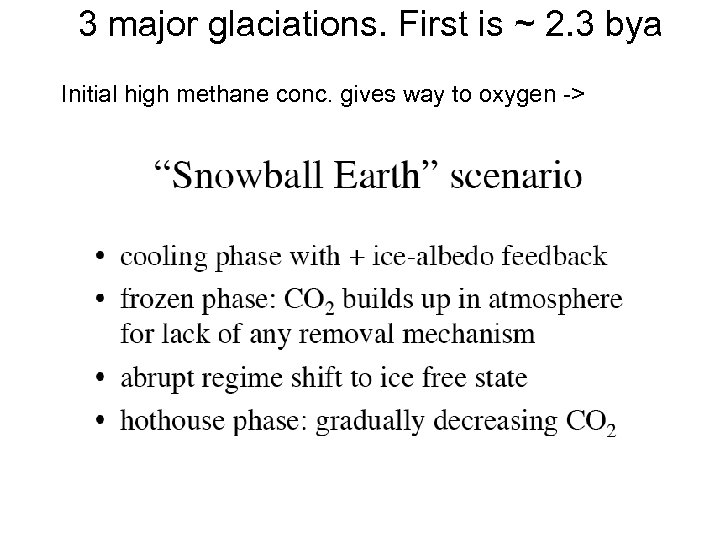
3 major glaciations. First is ~ 2. 3 bya Initial high methane conc. gives way to oxygen ->
2 nd glaciation: ~ 2. 5 million years ago. • Reduced plate tectonics -> reduced volcanic emission of CO 2. + • Increased sink of CO 2 in oceans through increased Atmospheric carbon • Movement of Antarctica to SP -> increased albedo • Drake Passage opens, Panama Isthmus closes -> Changing thermohaline circulation -> less poleward heat transport ->colder Arctic
3 rd glaciation mechanism: orbital mechanics primarily northern hemisphere summertime solar insolation changes that matter
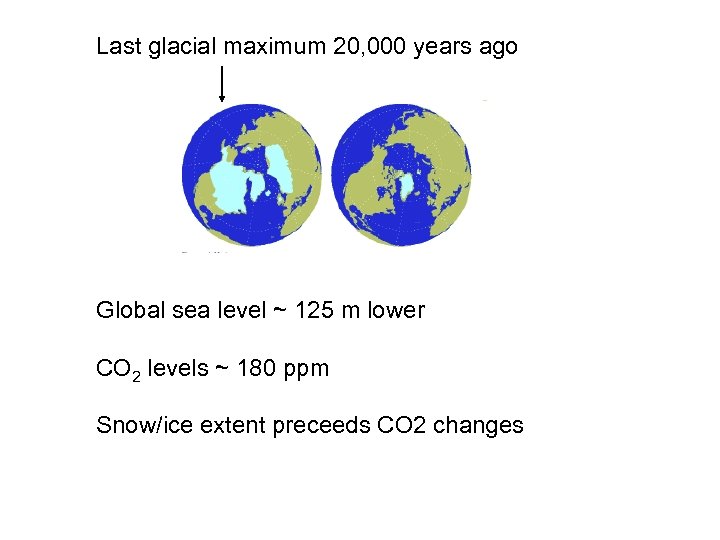
Last glacial maximum 20, 000 years ago Global sea level ~ 125 m lower CO 2 levels ~ 180 ppm Snow/ice extent preceeds CO 2 changes
Venus Hot: No oceans: No hydrogen or water Atmosphere all carbon “runaway greenhouse Effect” Mars Cold & small: No (liquid) water No vulcanism No atmosphere Jupiter WHY LIFE ON EARTH ? ROLE OF OCEANS: ROLE OF CHEMICAL PHYSICS: ROLE OF TECTONICS ROLE OF OTHER PLANETS:
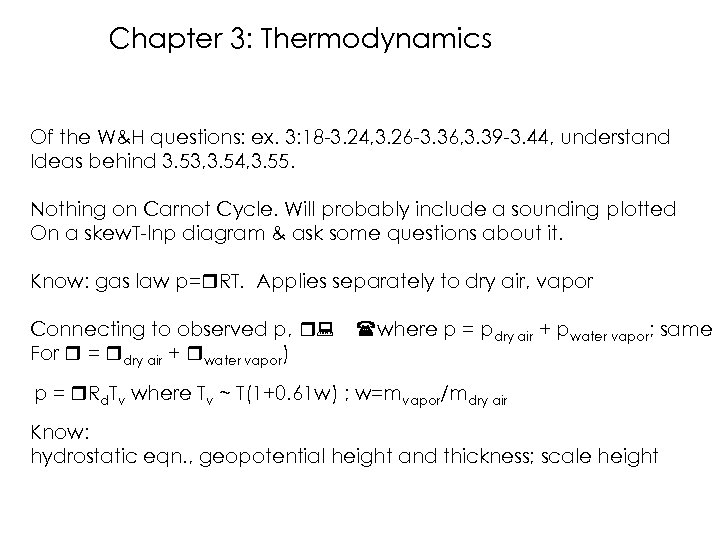
Chapter 3: Thermodynamics Of the W&H questions: ex. 3: 18 -3. 24, 3. 26 -3. 36, 3. 39 -3. 44, understand Ideas behind 3. 53, 3. 54, 3. 55. Nothing on Carnot Cycle. Will probably include a sounding plotted On a skew. T-lnp diagram & ask some questions about it. Know: gas law p= RT. Applies separately to dry air, vapor Connecting to observed p, where p = pdry air + pwater vapor; same For = dry air + water vapor) p = Rd. Tv where Tv ~ T(1+0. 61 w) ; w=mvapor/mdry air Know: hydrostatic eqn. , geopotential height and thickness; scale height
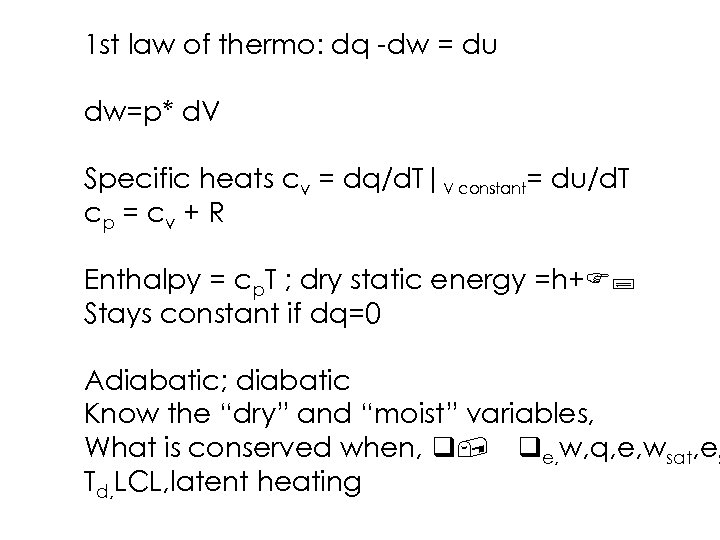
1 st law of thermo: dq -dw = du dw=p* d. V Specific heats cv = dq/d. T|V constant= du/d. T cp = cv + R Enthalpy = cp. T ; dry static energy =h+ Stays constant if dq=0 Adiabatic; diabatic Know the “dry” and “moist” variables, What is conserved when, e, w, q, e, wsat, es Td, LCL, latent heating
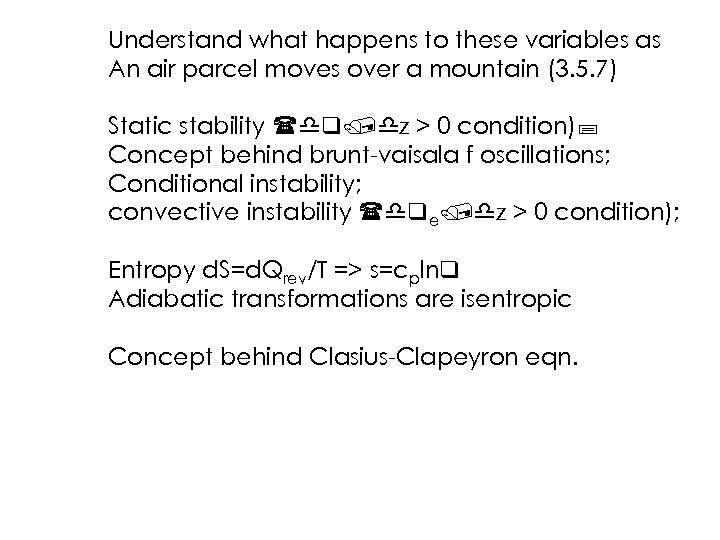
Understand what happens to these variables as An air parcel moves over a mountain (3. 5. 7) Static stability z > 0 condition) Concept behind brunt-vaisala f oscillations; Conditional instability; convective instability e z > 0 condition); Entropy d. S=d. Qrev/T => s=cpln Adiabatic transformations are isentropic Concept behind Clasius-Clapeyron eqn.
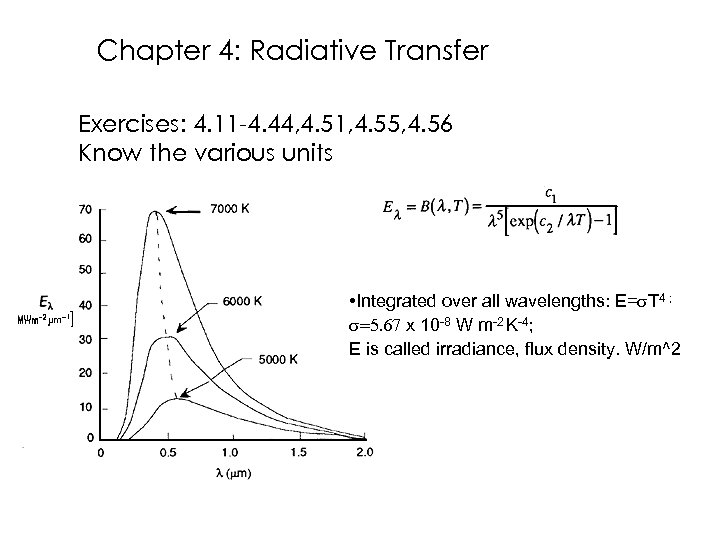
Chapter 4: Radiative Transfer Exercises: 4. 11 -4. 44, 4. 51, 4. 55, 4. 56 Know the various units • Integrated over all wavelengths: E= T 4 ; x 10 -8 W m-2 K-4; E is called irradiance, flux density. W/m^2

Sun visible Earth
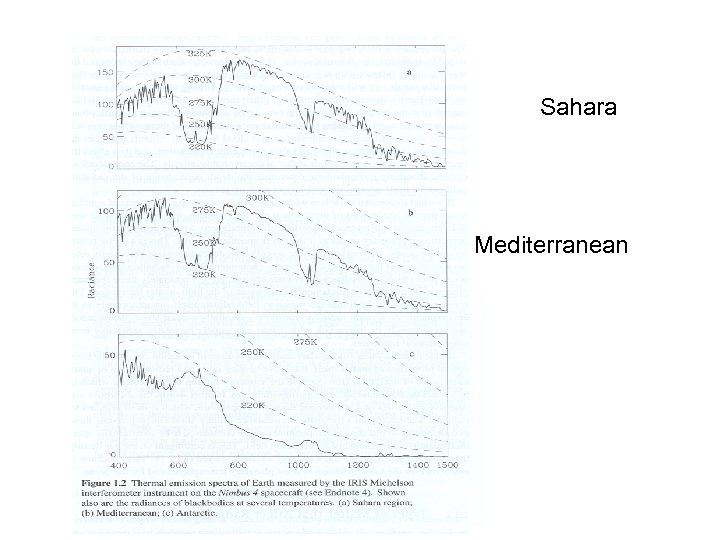
Sahara Mediterranean
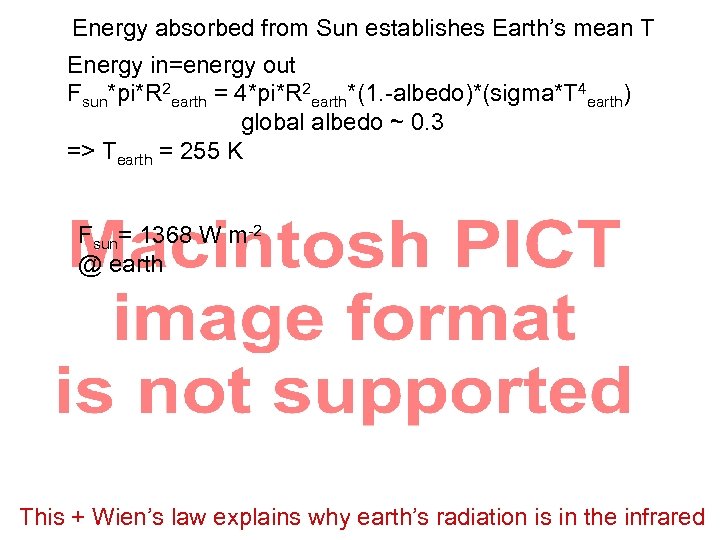
Energy absorbed from Sun establishes Earth’s mean T Energy in=energy out Fsun*pi*R 2 earth = 4*pi*R 2 earth*(1. -albedo)*(sigma*T 4 earth) global albedo ~ 0. 3 => Tearth = 255 K Fsun= 1368 W m-2 @ earth This + Wien’s law explains why earth’s radiation is in the infrared
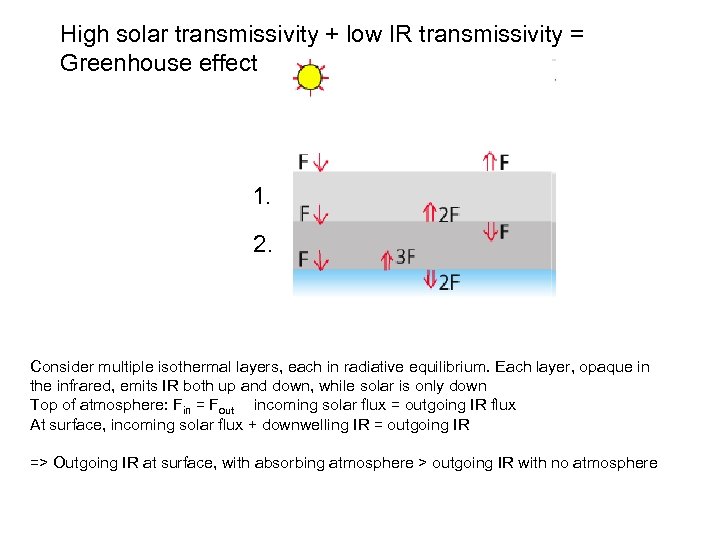
High solar transmissivity + low IR transmissivity = Greenhouse effect 1. 2. Consider multiple isothermal layers, each in radiative equilibrium. Each layer, opaque in the infrared, emits IR both up and down, while solar is only down Top of atmosphere: Fin = Fout incoming solar flux = outgoing IR flux At surface, incoming solar flux + downwelling IR = outgoing IR => Outgoing IR at surface, with absorbing atmosphere > outgoing IR with no atmosphere
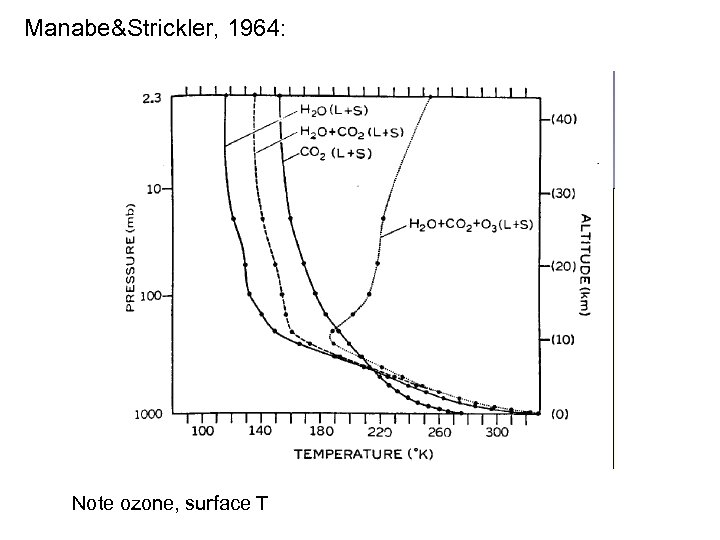
Manabe&Strickler, 1964: Note ozone, surface T
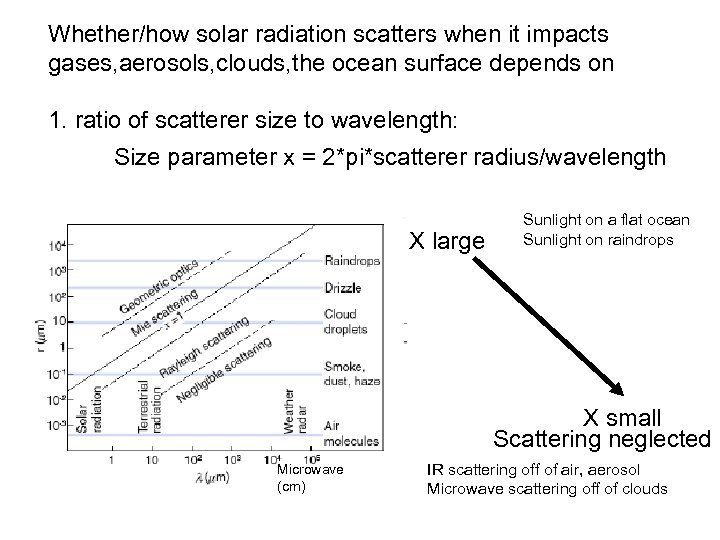
Whether/how solar radiation scatters when it impacts gases, aerosols, clouds, the ocean surface depends on 1. ratio of scatterer size to wavelength: Size parameter x = 2*pi*scatterer radius/wavelength X large Sunlight on a flat ocean Sunlight on raindrops X small Scattering neglected Microwave (cm) IR scattering off of air, aerosol Microwave scattering off of clouds
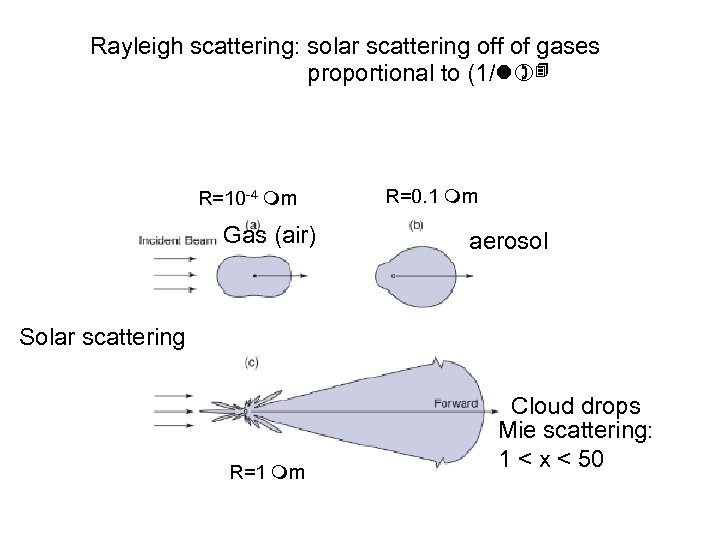
Rayleigh scattering: solar scattering off of gases proportional to (1/ R=10 -4 m Gas (air) R=0. 1 m aerosol Solar scattering R=1 m Cloud drops Mie scattering: 1 < x < 50
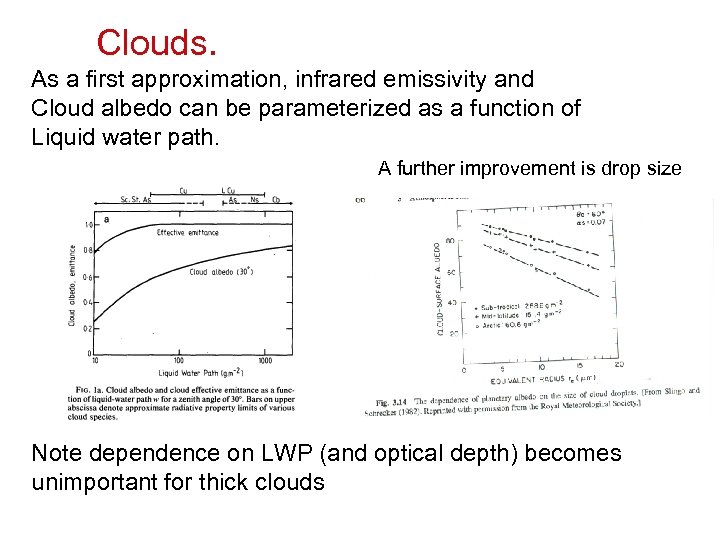
Clouds. As a first approximation, infrared emissivity and Cloud albedo can be parameterized as a function of Liquid water path. A further improvement is drop size Note dependence on LWP (and optical depth) becomes unimportant for thick clouds
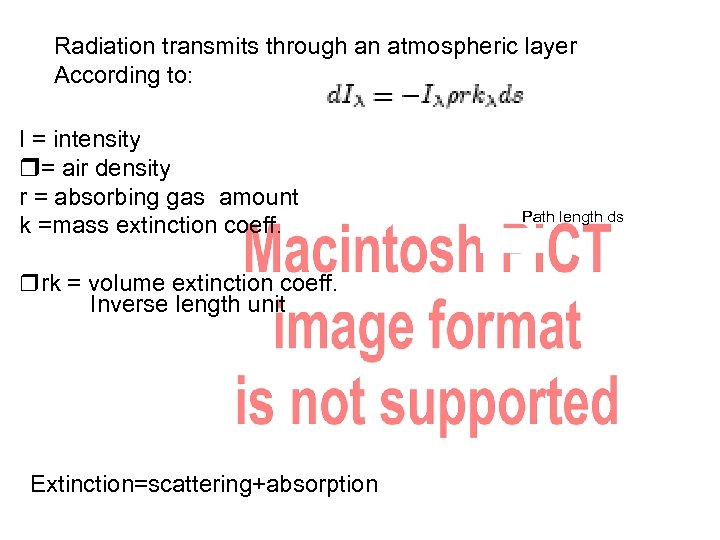
Radiation transmits through an atmospheric layer According to: I = intensity = air density r = absorbing gas amount k =mass extinction coeff. rk = volume extinction coeff. Inverse length unit Extinction=scattering+absorption Path length ds
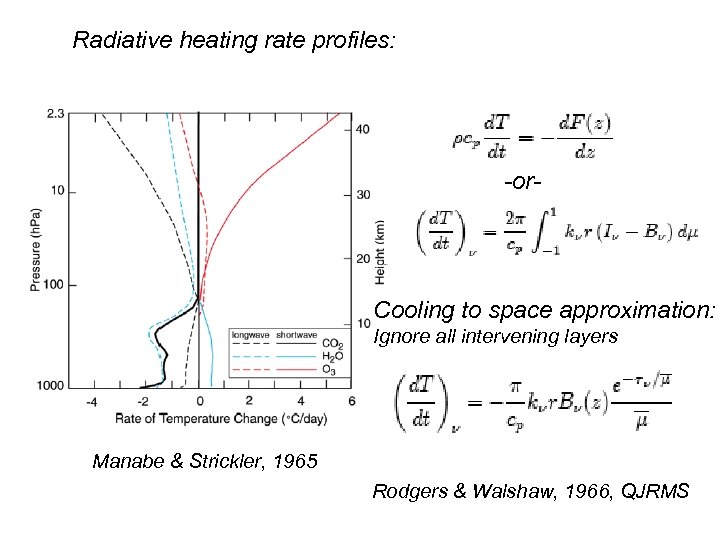
Radiative heating rate profiles: -or- Cooling to space approximation: Ignore all intervening layers Manabe & Strickler, 1965 Rodgers & Walshaw, 1966, QJRMS
Скачать презентацию Overview of Chapter 1 -4 October 17
058a8dee7bb4e0bac7b380817286cbc3.ppt