


 Скачать презентацию Overview of Advanced Traveler Information Systems Evaluations Joseph
d5ab5dac3b7f89e501203a77f6348e4f.ppt
- Количество слайдов: 21
 Overview of Advanced Traveler Information Systems Evaluations Joseph I. Peters, Ph. D. Manager, ITS Program Assessment U. S. Department of Transportation Research Board 85 th Annual Meeting Session 208 Recent Advances in Advanced Traveler Information Around the World January 23, 2006 8: 00 am - 9: 45 am January 23, 2006
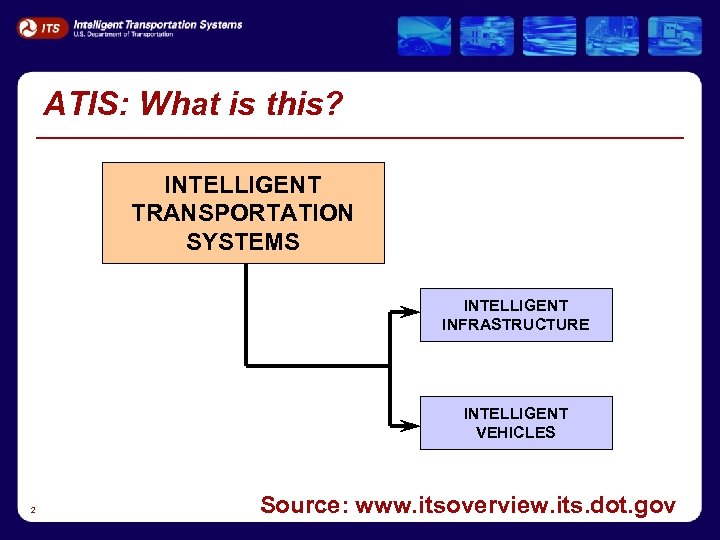 ATIS: What is this? INTELLIGENT TRANSPORTATION SYSTEMS INTELLIGENT INFRASTRUCTURE INTELLIGENT VEHICLES 2 Source: www. itsoverview. its. dot. gov
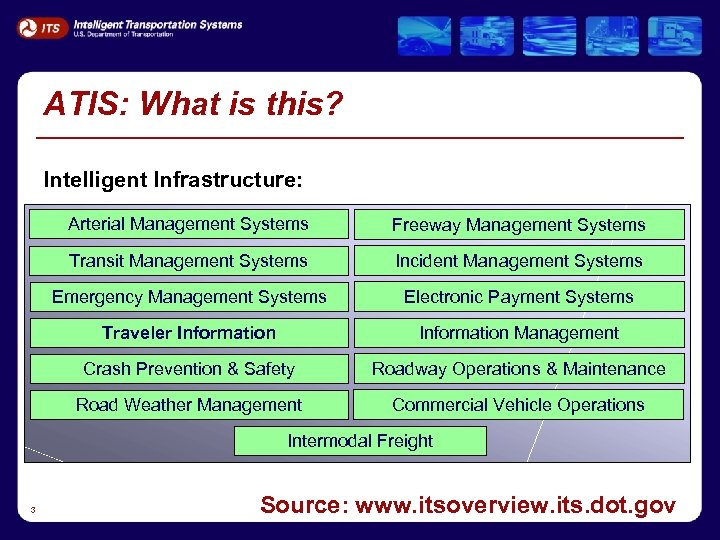 ATIS: What is this? Intelligent Infrastructure: Arterial Management Systems Freeway Management Systems Transit Management Systems Incident Management Systems Emergency Management Systems Electronic Payment Systems Traveler Information Management Crash Prevention & Safety Roadway Operations & Maintenance Road Weather Management Commercial Vehicle Operations Intermodal Freight 3 Source: www. itsoverview. its. dot. gov
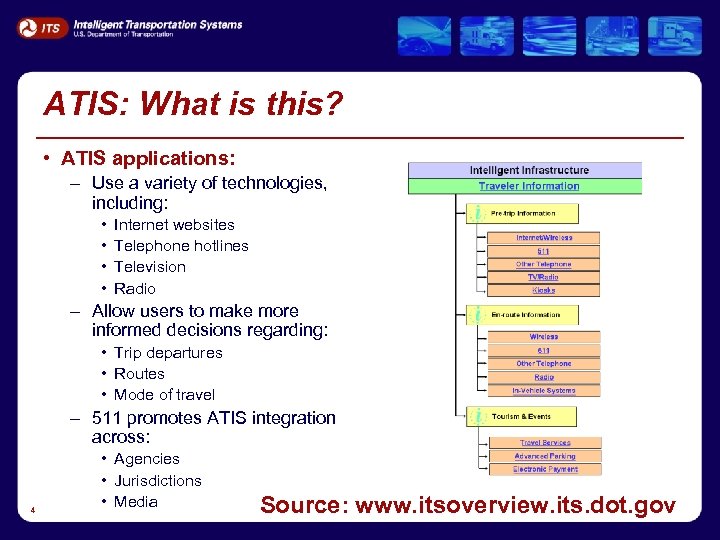 ATIS: What is this? • ATIS applications: – Use a variety of technologies, including: • • Internet websites Telephone hotlines Television Radio – Allow users to make more informed decisions regarding: • Trip departures • Routes • Mode of travel – 511 promotes ATIS integration across: 4 • Agencies • Jurisdictions • Media Source: www. itsoverview. its. dot. gov
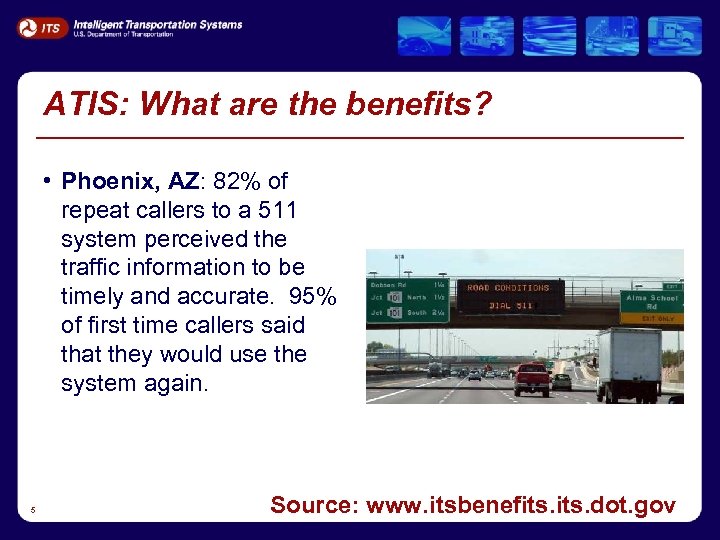 ATIS: What are the benefits? • Phoenix, AZ: 82% of repeat callers to a 511 system perceived the traffic information to be timely and accurate. 95% of first time callers said that they would use the system again. 5 Source: www. itsbenefits. dot. gov
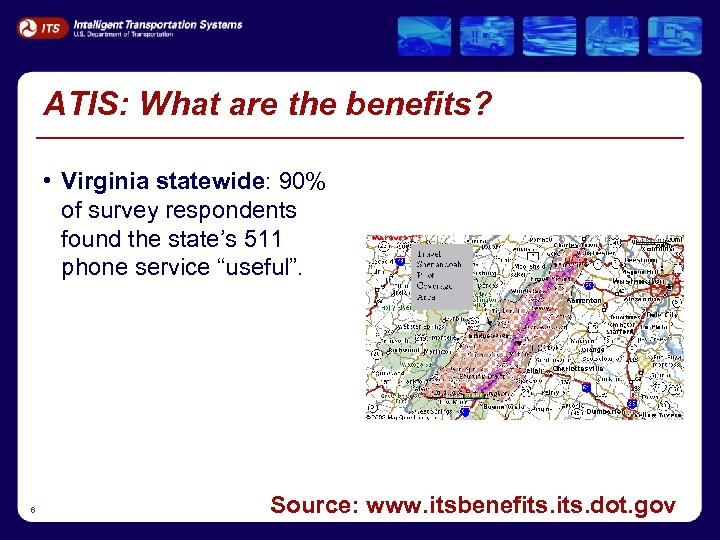 ATIS: What are the benefits? • Virginia statewide: 90% of survey respondents found the state’s 511 phone service “useful”. 6 Source: www. itsbenefits. dot. gov
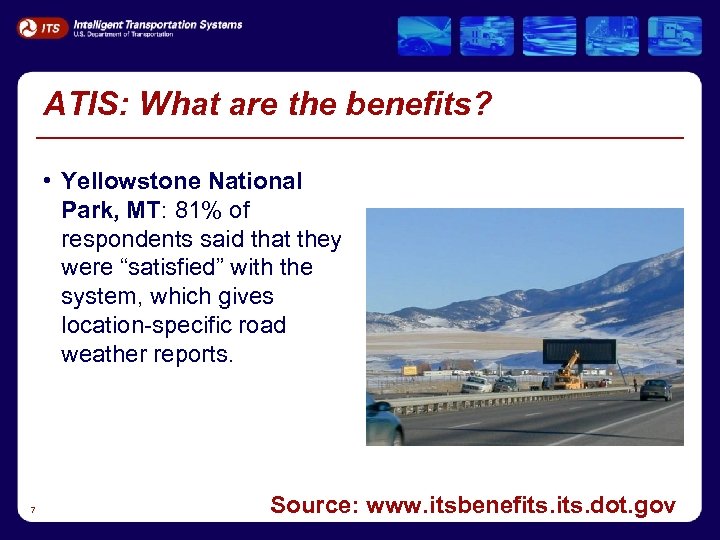 ATIS: What are the benefits? • Yellowstone National Park, MT: 81% of respondents said that they were “satisfied” with the system, which gives location-specific road weather reports. 7 Source: www. itsbenefits. dot. gov
 ATIS: What are the costs? • Where does your money go? ATIS cost components: – Data collection • Closed-circuit television (CCTV) cameras and field sensors, e. g. , microwave, infrared, loop detectors, machine vision – Data processing and analysis • Integration of data from multiple sources and packaging of information – Information dissemination • Media, e. g. , 511, dynamic message signs, Internet, wireless 8 Source: www. itscosts. its. dot. gov
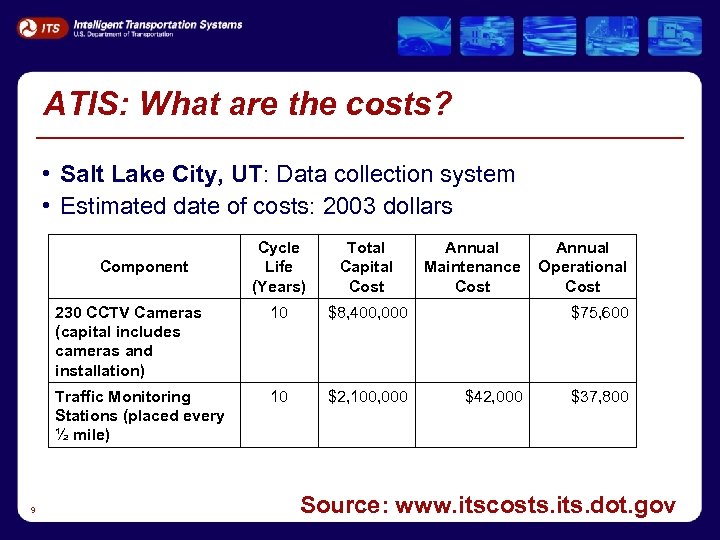 ATIS: What are the costs? • Salt Lake City, UT: Data collection system • Estimated date of costs: 2003 dollars Cycle Life (Years) Total Capital Cost 230 CCTV Cameras (capital includes cameras and installation) 10 $8, 400, 000 $75, 600 Traffic Monitoring Stations (placed every ½ mile) 10 $2, 100, 000 $42, 000 $37, 800 Component 9 Annual Maintenance Operational Cost Source: www. itscosts. its. dot. gov
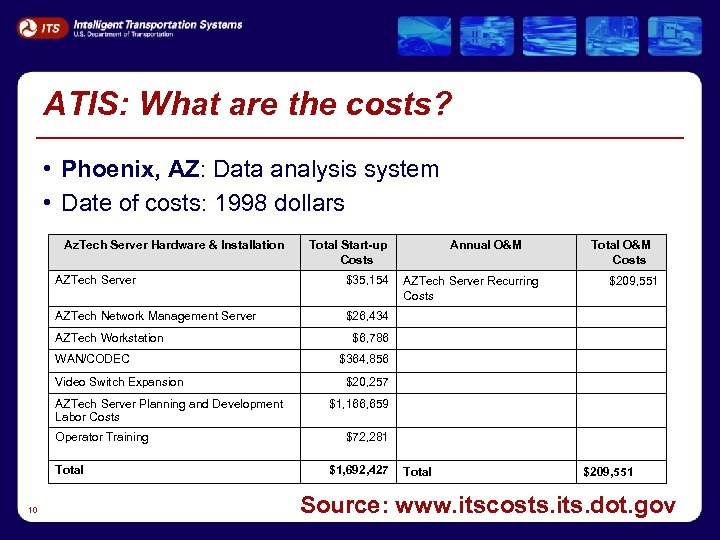 ATIS: What are the costs? • Phoenix, AZ: Data analysis system • Date of costs: 1998 dollars Az. Tech Server Hardware & Installation Total Start-up Costs AZTech Server $35, 154 AZTech Network Management Server Total O&M Costs $26, 434 AZTech Workstation WAN/CODEC Video Switch Expansion AZTech Server Planning and Development Labor Costs Operator Training Total 10 Annual O&M AZTech Server Recurring Costs $209, 551 $6, 786 $364, 856 $20, 257 $1, 166, 659 $72, 281 $1, 692, 427 Total $209, 551 Source: www. itscosts. its. dot. gov
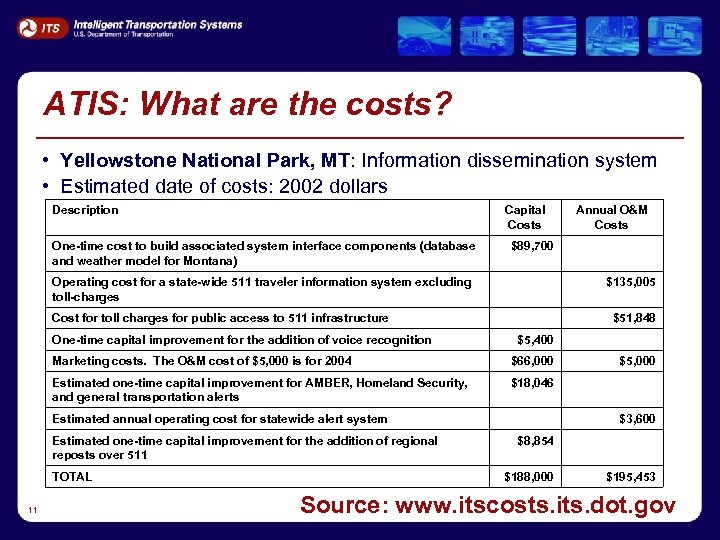 ATIS: What are the costs? • Yellowstone National Park, MT: Information dissemination system • Estimated date of costs: 2002 dollars Description Capital Costs One-time cost to build associated system interface components (database and weather model for Montana) Annual O&M Costs $89, 700 Operating cost for a state-wide 511 traveler information system excluding toll-charges $135, 005 Cost for toll charges for public access to 511 infrastructure $51, 848 $5, 400 Marketing costs. The O&M cost of $5, 000 is for 2004 $66, 000 $5, 000 Estimated one-time capital improvement for AMBER, Homeland Security, and general transportation alerts $18, 046 $3, 600 $8, 854 $188, 000 $195, 453 One-time capital improvement for the addition of voice recognition Estimated annual operating cost for statewide alert system Estimated one-time capital improvement for the addition of regional reposts over 511 TOTAL 11 Source: www. itscosts. its. dot. gov
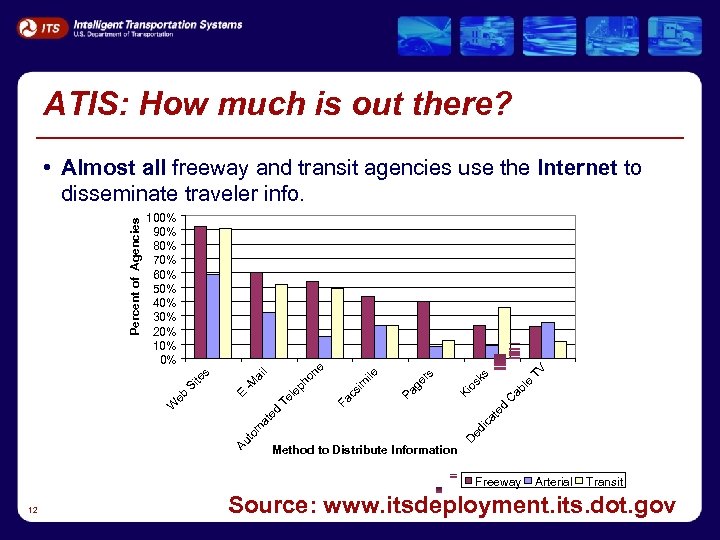 ATIS: How much is out there? V e T ks C ed at ed ic D Method to Distribute Information ab l Ki os rs Pa ge ile im cs T el e Fa l ai Au to m at ed E -M S i eb W ph on e 100% 90% 80% 70% 60% 50% 40% 30% 20% 10% 0% te s Percent of Agencies • Almost all freeway and transit agencies use the Internet to disseminate traveler info. Freeway 12 Arterial Transit Source: www. itsdeployment. its. dot. gov
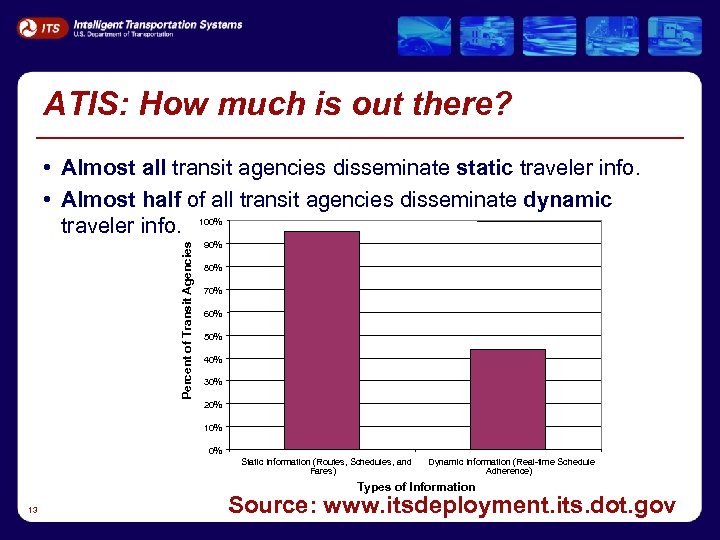 ATIS: How much is out there? • Almost all transit agencies disseminate static traveler info. • Almost half of all transit agencies disseminate dynamic traveler info. Percent of Transit Agencies 100% 90% 80% 70% 60% 50% 40% 30% 20% 10% 0% Static Information (Routes, Schedules, and Fares) Dynamic Information (Real-time Schedule Adherence) Types of Information 13 Source: www. itsdeployment. its. dot. gov
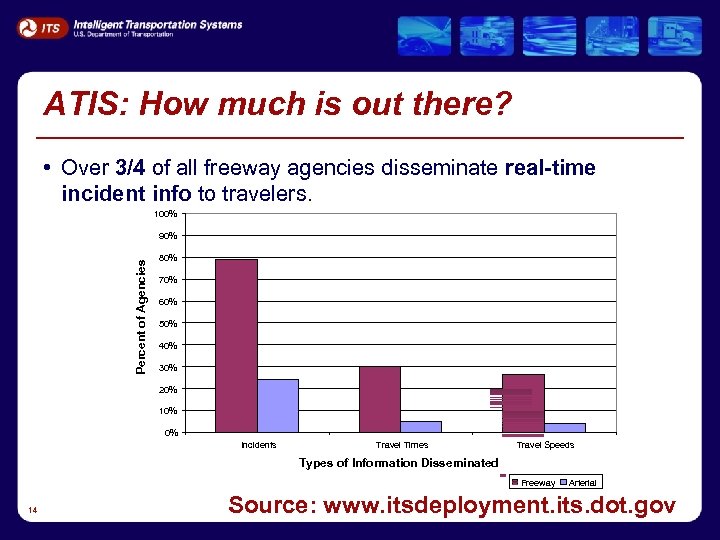 ATIS: How much is out there? • Over 3/4 of all freeway agencies disseminate real-time incident info to travelers. 100% Percent of Agencies 90% 80% 70% 60% 50% 40% 30% 20% 10% 0% Incidents Travel Times Travel Speeds Types of Information Disseminated Freeway 14 Arterial Source: www. itsdeployment. its. dot. gov
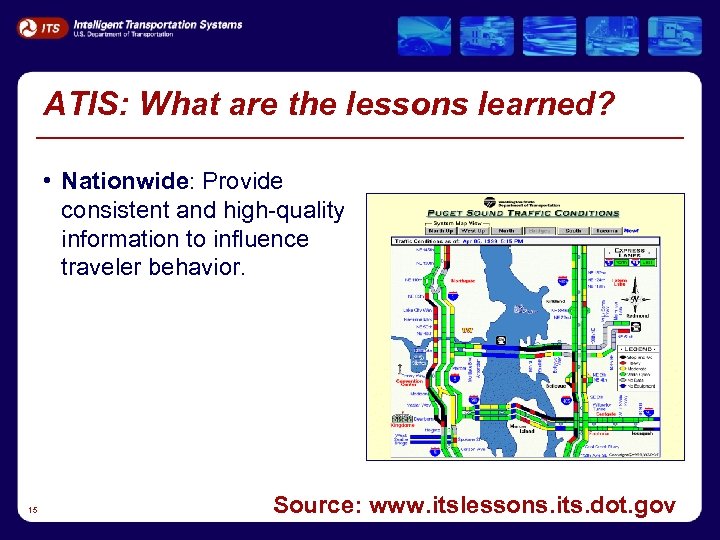 ATIS: What are the lessons learned? • Nationwide: Provide consistent and high-quality information to influence traveler behavior. 15 Source: www. itslessons. its. dot. gov
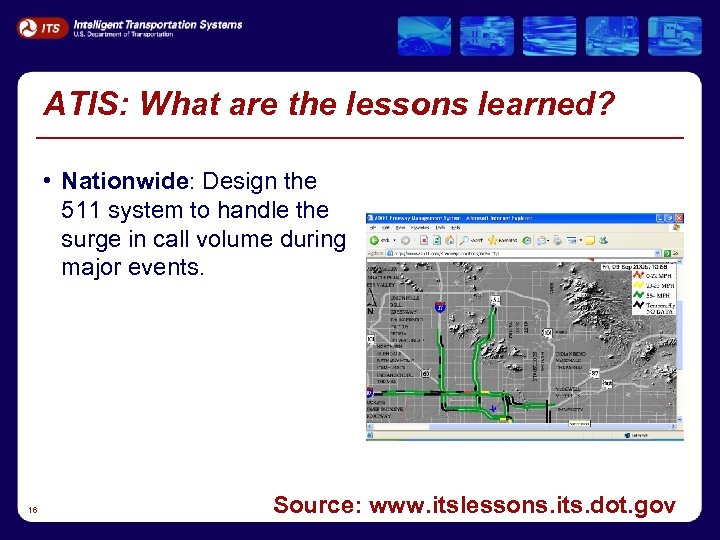 ATIS: What are the lessons learned? • Nationwide: Design the 511 system to handle the surge in call volume during major events. 16 Source: www. itslessons. its. dot. gov
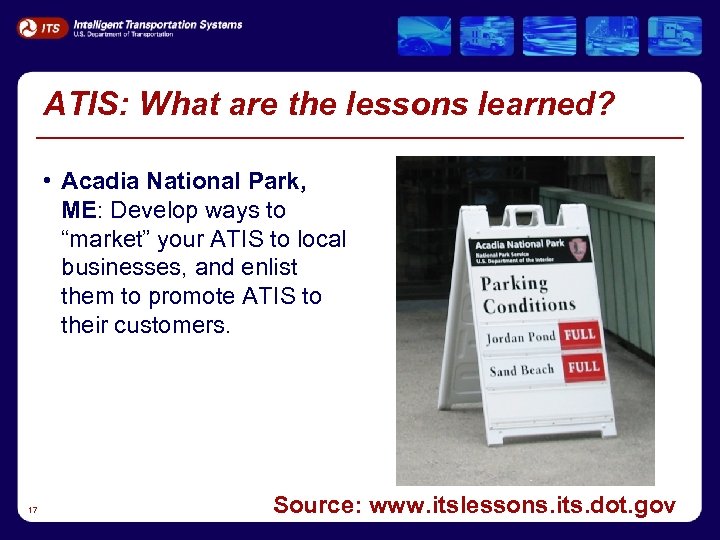 ATIS: What are the lessons learned? • Acadia National Park, ME: Develop ways to “market” your ATIS to local businesses, and enlist them to promote ATIS to their customers. 17 Source: www. itslessons. its. dot. gov
 ATIS: How did we learn all this? • Benefits, costs, and lessons learned: – U. S. DOT evaluates the following types of ITS projects: • Field operational tests, e. g. : – Acadia National Park (Acadia, ME) • Model deployments, e. g. : – Metropolitan Model Deployment Initiative (Phoenix, AZ; Seattle, WA; San Antonio, TX) – 511 Model Deployment (Arizona statewide) • ITS Integration Program projects (“earmarks”), e. g. : – Greater Yellowstone Regional Traveler and Weather Information System (Yellowstone National Park, MT) – Travel Shenandoah 511 (Virginia statewide) • Special events, e. g. : – ITS for the 2002 Winter Olympic Games (Salt Lake City, UT) • Simulation studies 18
 ATIS: How did we learn all this? • Deployment trends: – U. S. DOT surveys extent of ITS deployment in 78 of the country’s largest metro areas, 30 medium-sized cities, 20 tourist cities, and all 50 states. 19
 Conclusions • ATIS: What are the benefits? – ATIS improves customer satisfaction by allowing travelers to make informed decisions. • ATIS: What are the costs? – ATIS covers multiples components, such as traffic management centers and field devices. – Costs vary based on size and complexity of the system. – Consideration of both capital outlay and annual operations and maintenance costs are key to developing an accurate estimate. • ATIS: How much is out there? – Almost all freeway and transit agencies are using some sort of ATIS. • ATIS: What are the lessons learned? – Consistency, data quality, scalability, and marketing are key to deployment success. 20
 Resources • ITS Benefits Database – www. itsbenefits. dot. gov • ITS Costs Database – www. itscosts. its. dot. gov • ITS Deployment Statistics Database – www. itsdeployment. its. dot. gov • ITS Lessons Learned Database – www. itslessons. its. dot. gov • ITS Technology Overview – “One stop shopping” on the costs, benefits, deployment, lessons learned for ITS. More info available, too! – www. itsoverview. its. dot. gov 21 Source: www. itsoverview. its. dot. gov