


 Скачать презентацию Overview of 3 G Why 3 G
e976e38cc2cdd2133e1f5ec4d9032a06.ppt
- Количество слайдов: 41
 Overview of 3 G
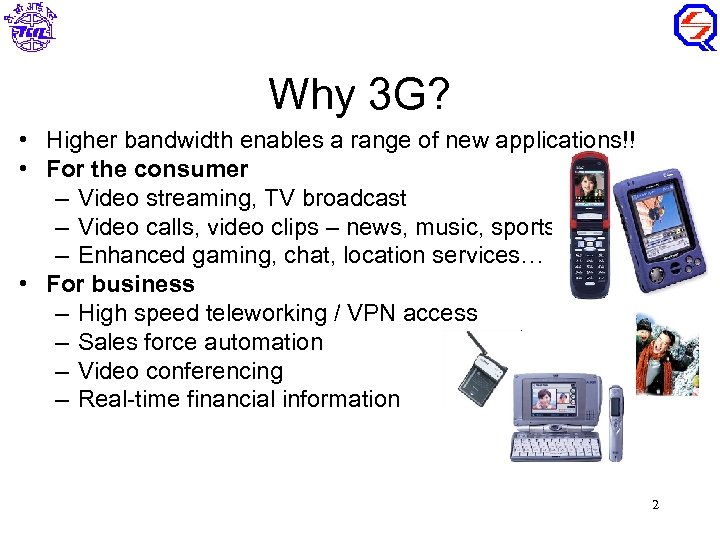 Why 3 G? • Higher bandwidth enables a range of new applications!! • For the consumer – Video streaming, TV broadcast – Video calls, video clips – news, music, sports – Enhanced gaming, chat, location services… • For business – High speed teleworking / VPN access – Sales force automation – Video conferencing – Real-time financial information 2
 3 G services in Asia • CDMA (1 x. EV-DO) – Korea: SKT, KTF – Japan: AU (KDDI) • WCDMA / UMTS – Japan: NTT Do. Co. Mo, Vodafone KK – Australia: 3 Hutchinson – Hong Kong: 3 Hutchinson 3
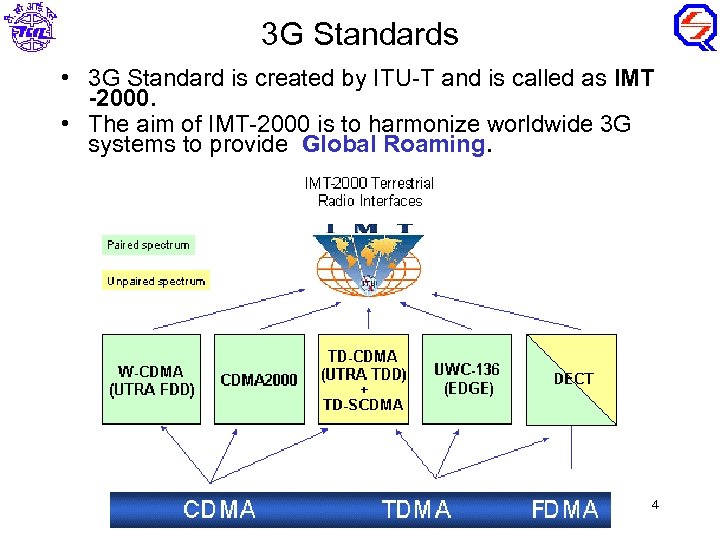 3 G Standards • 3 G Standard is created by ITU-T and is called as IMT -2000. • The aim of IMT-2000 is to harmonize worldwide 3 G systems to provide Global Roaming. 4
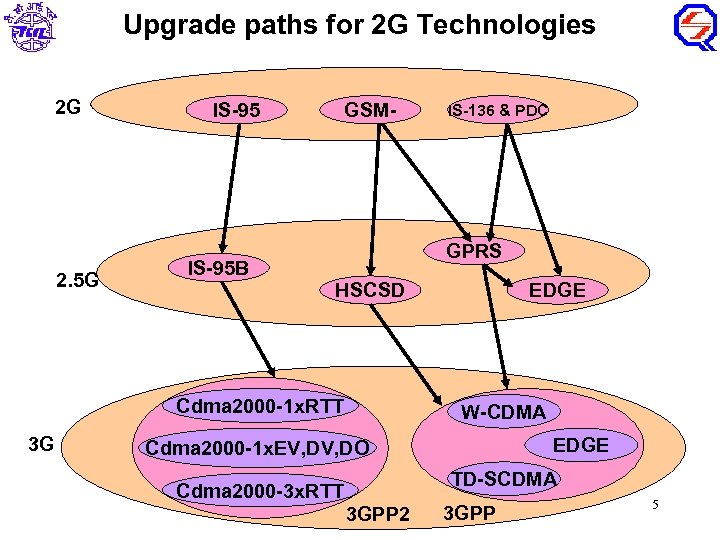 Upgrade paths for 2 G Technologies 2 G 2. 5 G IS-95 GSM- GPRS IS-95 B HSCSD Cdma 2000 -1 x. RTT 3 G IS-136 & PDC EDGE W-CDMA EDGE Cdma 2000 -1 x. EV, DO TD-SCDMA Cdma 2000 -3 x. RTT 3 GPP 2 3 GPP 5
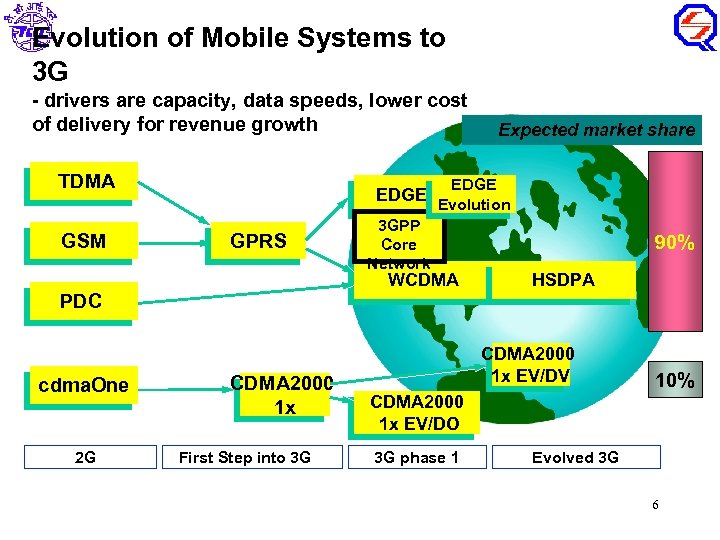 Evolution of Mobile Systems to 3 G - drivers are capacity, data speeds, lower cost of delivery for revenue growth TDMA GSM EDGE Evolution GPRS 2 G 3 GPP Core Network WCDMA PDC cdma. One Expected market share CDMA 2000 1 x First Step into 3 G HSDPA CDMA 2000 1 x EV/DV 90% 10% CDMA 2000 1 x EV/DO 3 G phase 1 Evolved 3 G 6
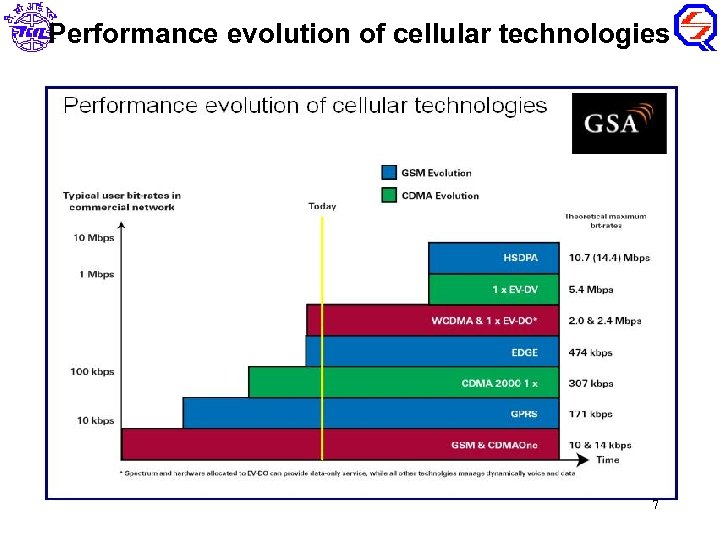 Performance evolution of cellular technologies 7
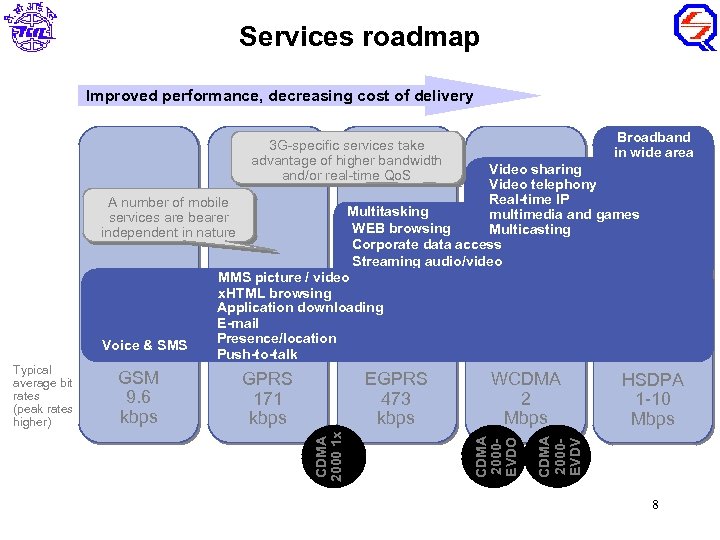 Services roadmap Improved performance, decreasing cost of delivery Broadband in wide area 3 G-specific services take advantage of higher bandwidth and/or real-time Qo. S Video sharing Video telephony Real-time IP A number of mobile Multitasking multimedia and games services are bearer WEB browsing Multicasting independent in nature Corporate data access Streaming audio/video MMS picture / video x. HTML browsing Application downloading E-mail Presence/location Voice & SMS Push-to-talk EGPRS 473 kbps WCDMA 2 Mbps HSDPA 1 -10 Mbps CDMA 2000 EVDV GPRS 171 kbps CDMA 2000 EVDO GSM 9. 6 kbps CDMA 2000 1 x Typical average bit rates (peak rates higher) 8
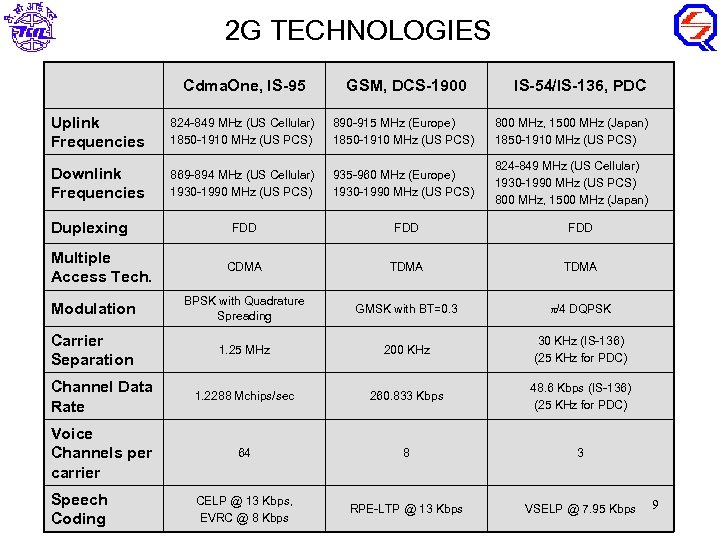 2 G TECHNOLOGIES Cdma. One, IS-95 GSM, DCS-1900 Uplink Frequencies 824 -849 MHz (US Cellular) 1850 -1910 MHz (US PCS) 890 -915 MHz (Europe) 1850 -1910 MHz (US PCS) 800 MHz, 1500 MHz (Japan) 1850 -1910 MHz (US PCS) Downlink Frequencies 869 -894 MHz (US Cellular) 1930 -1990 MHz (US PCS) 935 -960 MHz (Europe) 1930 -1990 MHz (US PCS) 824 -849 MHz (US Cellular) 1930 -1990 MHz (US PCS) 800 MHz, 1500 MHz (Japan) FDD FDD CDMA TDMA Modulation BPSK with Quadrature Spreading GMSK with BT=0. 3 /4 DQPSK Carrier Separation 1. 25 MHz 200 KHz 30 KHz (IS-136) (25 KHz for PDC) Channel Data Rate 1. 2288 Mchips/sec 260. 833 Kbps 48. 6 Kbps (IS-136) (25 KHz for PDC) Voice Channels per carrier 64 8 3 CELP @ 13 Kbps, EVRC @ 8 Kbps RPE-LTP @ 13 Kbps VSELP @ 7. 95 Kbps Duplexing Multiple Access Tech. Speech Coding IS-54/IS-136, PDC 9
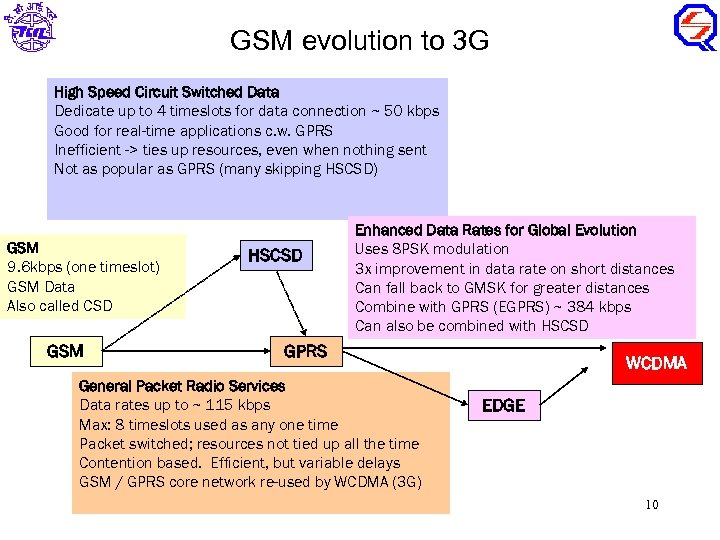 GSM evolution to 3 G High Speed Circuit Switched Data Dedicate up to 4 timeslots for data connection ~ 50 kbps Good for real-time applications c. w. GPRS Inefficient -> ties up resources, even when nothing sent Not as popular as GPRS (many skipping HSCSD) GSM 9. 6 kbps (one timeslot) GSM Data Also called CSD GSM HSCSD Enhanced Data Rates for Global Evolution Uses 8 PSK modulation 3 x improvement in data rate on short distances Can fall back to GMSK for greater distances Combine with GPRS (EGPRS) ~ 384 kbps Can also be combined with HSCSD GPRS General Packet Radio Services Data rates up to ~ 115 kbps Max: 8 timeslots used as any one time Packet switched; resources not tied up all the time Contention based. Efficient, but variable delays GSM / GPRS core network re-used by WCDMA (3 G) WCDMA EDGE 10
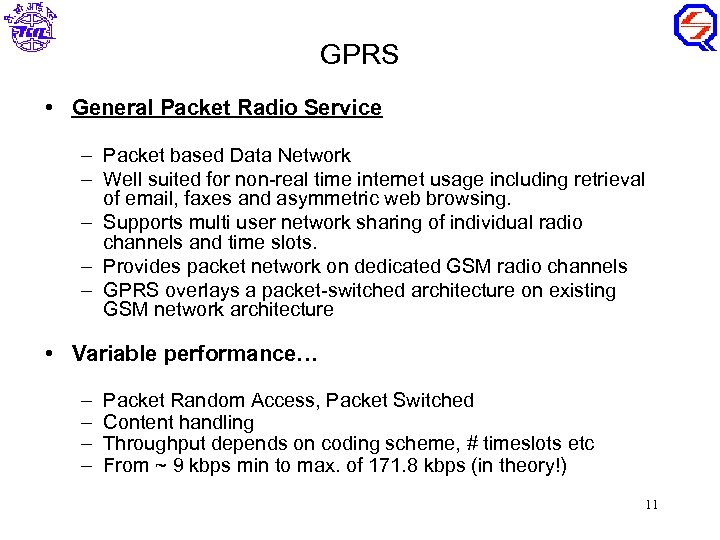 GPRS • General Packet Radio Service – Packet based Data Network – Well suited for non-real time internet usage including retrieval of email, faxes and asymmetric web browsing. – Supports multi user network sharing of individual radio channels and time slots. – Provides packet network on dedicated GSM radio channels – GPRS overlays a packet-switched architecture on existing GSM network architecture • Variable performance… – – Packet Random Access, Packet Switched Content handling Throughput depends on coding scheme, # timeslots etc From ~ 9 kbps min to max. of 171. 8 kbps (in theory!) 11
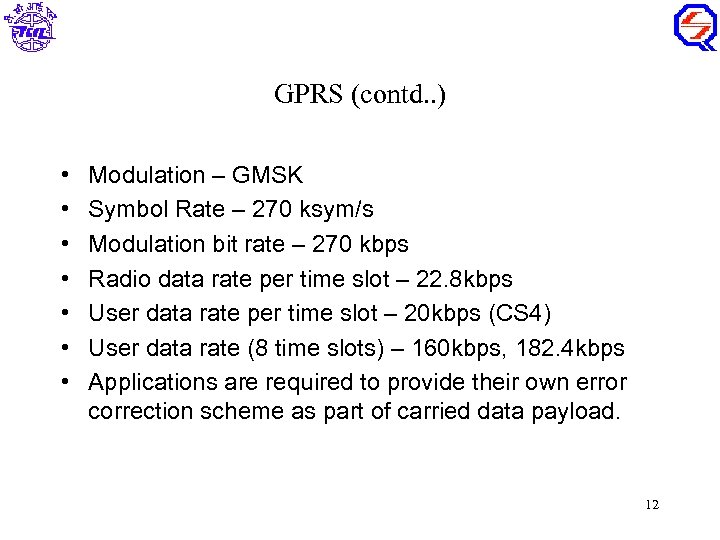 GPRS (contd. . ) • • Modulation – GMSK Symbol Rate – 270 ksym/s Modulation bit rate – 270 kbps Radio data rate per time slot – 22. 8 kbps User data rate per time slot – 20 kbps (CS 4) User data rate (8 time slots) – 160 kbps, 182. 4 kbps Applications are required to provide their own error correction scheme as part of carried data payload. 12
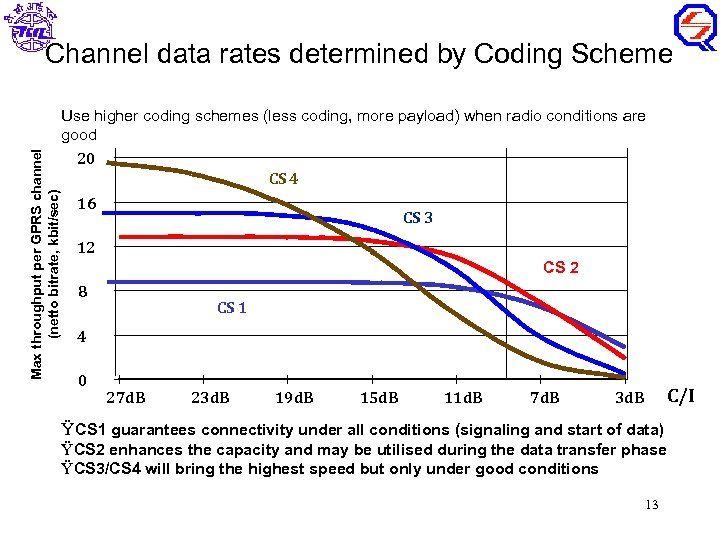 Max throughput per GPRS channel (netto bitrate, kbit/sec) Channel data rates determined by Coding Scheme Use higher coding schemes (less coding, more payload) when radio conditions are good 20 CS 4 16 CS 3 12 CS 2 8 CS 1 4 0 27 d. B 23 d. B 19 d. B 15 d. B 11 d. B 7 d. B C/I 3 d. B Ÿ CS 1 guarantees connectivity under all conditions (signaling and start of data) Ÿ CS 2 enhances the capacity and may be utilised during the data transfer phase Ÿ CS 3/CS 4 will bring the highest speed but only under good conditions 13
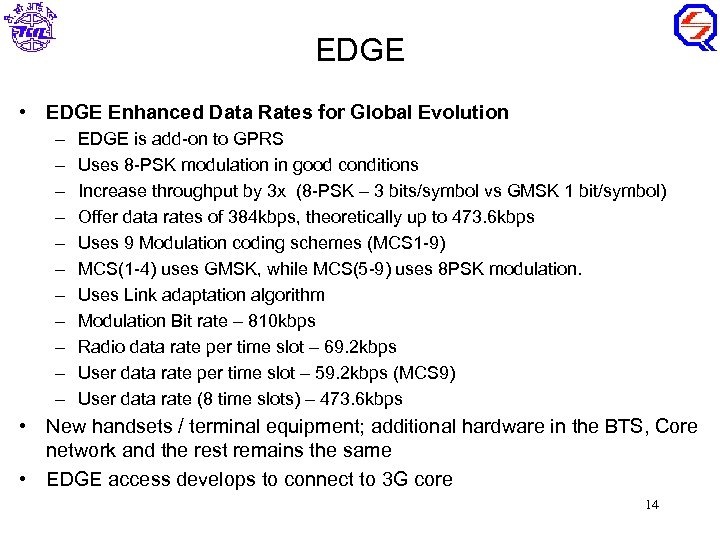 EDGE • EDGE Enhanced Data Rates for Global Evolution – – – EDGE is add-on to GPRS Uses 8 -PSK modulation in good conditions Increase throughput by 3 x (8 -PSK – 3 bits/symbol vs GMSK 1 bit/symbol) Offer data rates of 384 kbps, theoretically up to 473. 6 kbps Uses 9 Modulation coding schemes (MCS 1 -9) MCS(1 -4) uses GMSK, while MCS(5 -9) uses 8 PSK modulation. Uses Link adaptation algorithm Modulation Bit rate – 810 kbps Radio data rate per time slot – 69. 2 kbps User data rate per time slot – 59. 2 kbps (MCS 9) User data rate (8 time slots) – 473. 6 kbps • New handsets / terminal equipment; additional hardware in the BTS, Core network and the rest remains the same • EDGE access develops to connect to 3 G core 14
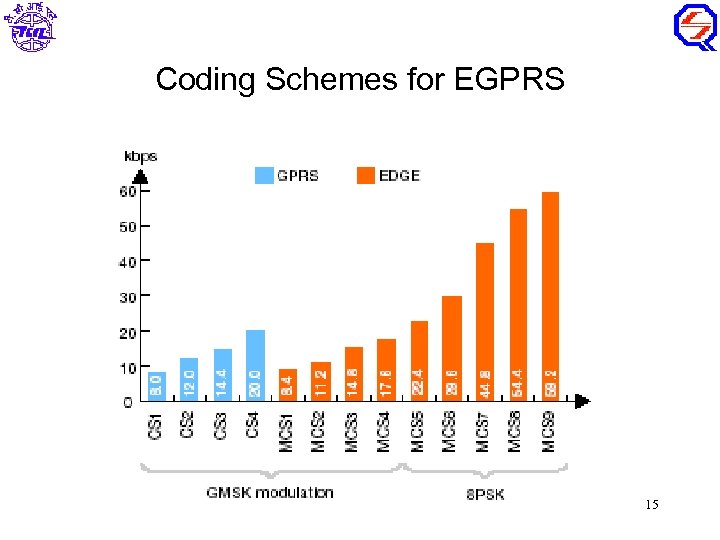 Coding Schemes for EGPRS 15
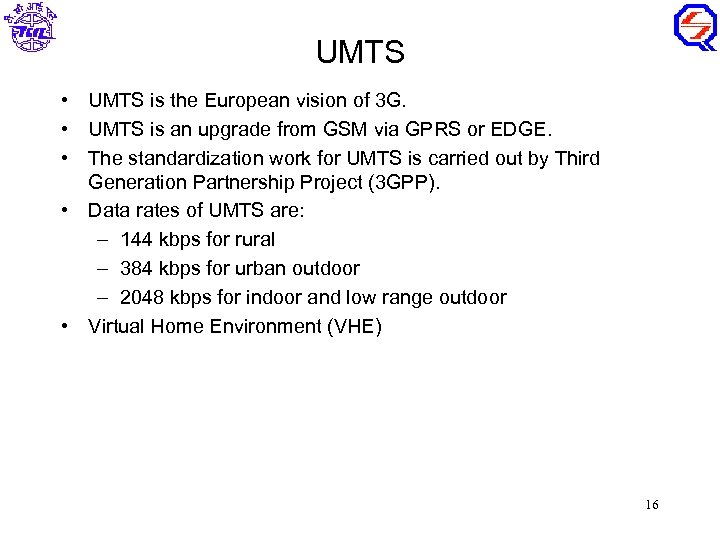 UMTS • UMTS is the European vision of 3 G. • UMTS is an upgrade from GSM via GPRS or EDGE. • The standardization work for UMTS is carried out by Third Generation Partnership Project (3 GPP). • Data rates of UMTS are: – 144 kbps for rural – 384 kbps for urban outdoor – 2048 kbps for indoor and low range outdoor • Virtual Home Environment (VHE) 16
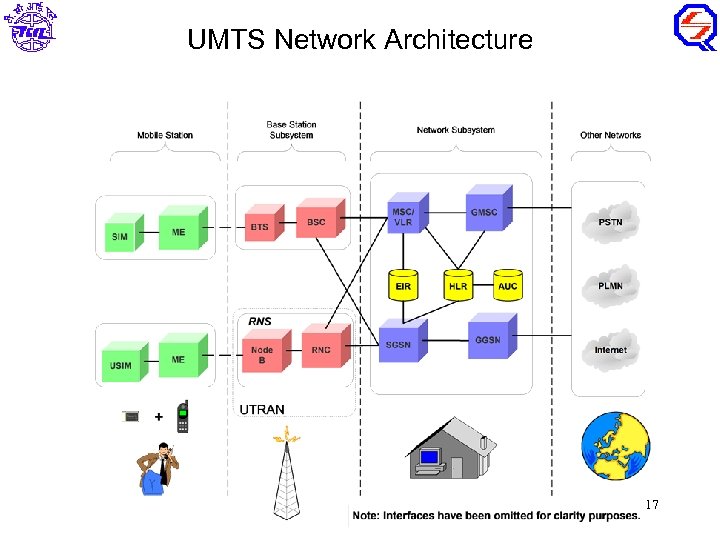 UMTS Network Architecture 17
 UMTS Network Architecture • UMTS network architecture consists of three domains: – Core Network (CN) : To provide switching, routing and transit for user traffic. – UMTS Terrestrial Radio Access Network (UTRAN) : Provides the air interface access method for User Equipment. – User Equipment (UE) : Terminals work as air interface counterpart for Node B. The various identities are: IMSI, TMSI, P-TMSI, TLLI, MSISDN, IMEISV. 18
 UTRAN • Wide band CDMA technology is selected for UTRAN air interface. • Base Station is referred to as Node-B and control equipment for Node-B’s is called as Radio Network Controller (RNC). – Functions of Node –B are: • Air Interface Tx/Rx • Modulation / Demodulation – Functions of RNC are: • Radio Resource Control • Channel Allocation • Power Control Settings • Handover Control • Ciphering • Segmentation and Reassembly 19
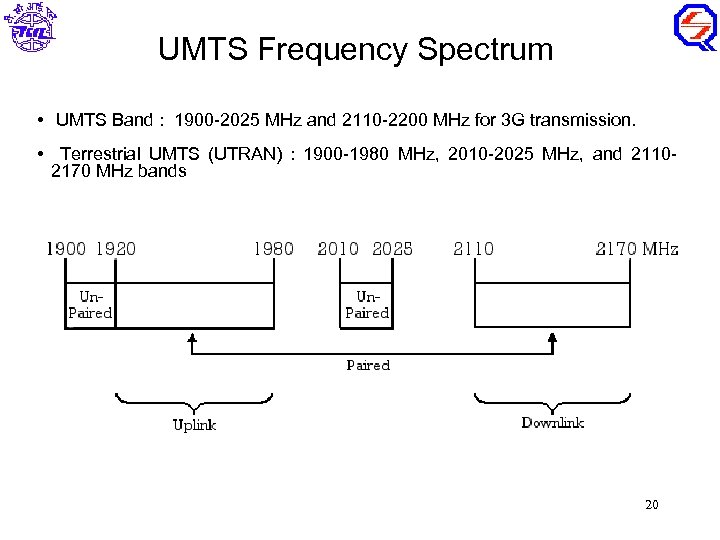 UMTS Frequency Spectrum • UMTS Band : 1900 -2025 MHz and 2110 -2200 MHz for 3 G transmission. • Terrestrial UMTS (UTRAN) : 1900 -1980 MHz, 2010 -2025 MHz, and 21102170 MHz bands 20
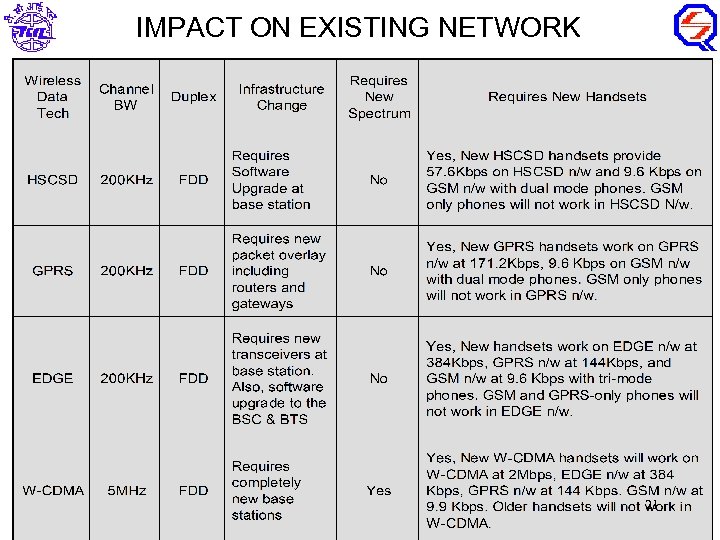 IMPACT ON EXISTING NETWORK 21
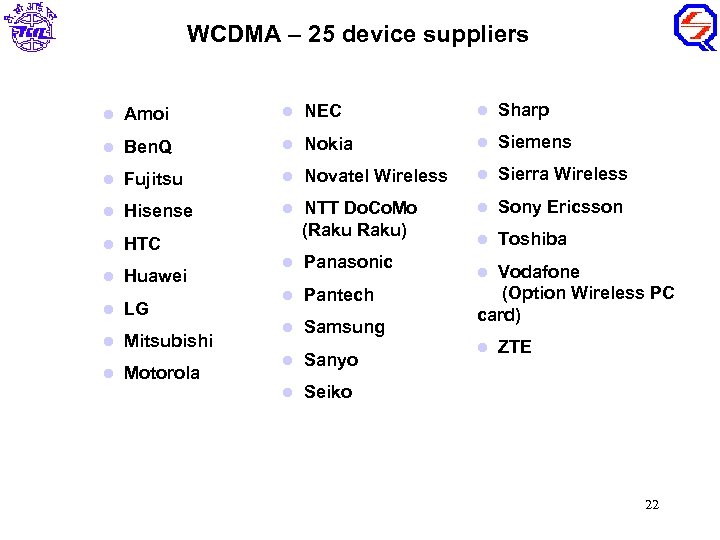 WCDMA – 25 device suppliers l Amoi l NEC l Sharp l Ben. Q l Nokia l Siemens l Fujitsu l Novatel Wireless l Sierra Wireless l Hisense l NTT Do. Co. Mo l Sony Ericsson l HTC l Huawei l LG l Mitsubishi l Motorola (Raku) l Panasonic l Pantech l Samsung l Sanyo l Toshiba l Vodafone (Option Wireless PC card) l ZTE l Seiko 22
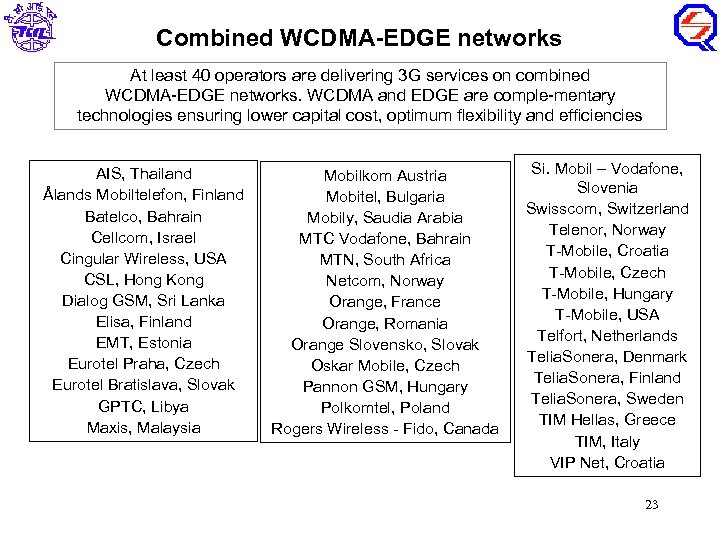 Combined WCDMA-EDGE networks At least 40 operators are delivering 3 G services on combined WCDMA-EDGE networks. WCDMA and EDGE are comple-mentary technologies ensuring lower capital cost, optimum flexibility and efficiencies AIS, Thailand Ålands Mobiltelefon, Finland Batelco, Bahrain Cellcom, Israel Cingular Wireless, USA CSL, Hong Kong Dialog GSM, Sri Lanka Elisa, Finland EMT, Estonia Eurotel Praha, Czech Eurotel Bratislava, Slovak GPTC, Libya Maxis, Malaysia Mobilkom Austria Mobitel, Bulgaria Mobily, Saudia Arabia MTC Vodafone, Bahrain MTN, South Africa Netcom, Norway Orange, France Orange, Romania Orange Slovensko, Slovak Oskar Mobile, Czech Pannon GSM, Hungary Polkomtel, Poland Rogers Wireless - Fido, Canada Si. Mobil – Vodafone, Slovenia Swisscom, Switzerland Telenor, Norway T-Mobile, Croatia T-Mobile, Czech T-Mobile, Hungary T-Mobile, USA Telfort, Netherlands Telia. Sonera, Denmark Telia. Sonera, Finland Telia. Sonera, Sweden TIM Hellas, Greece TIM, Italy VIP Net, Croatia 23
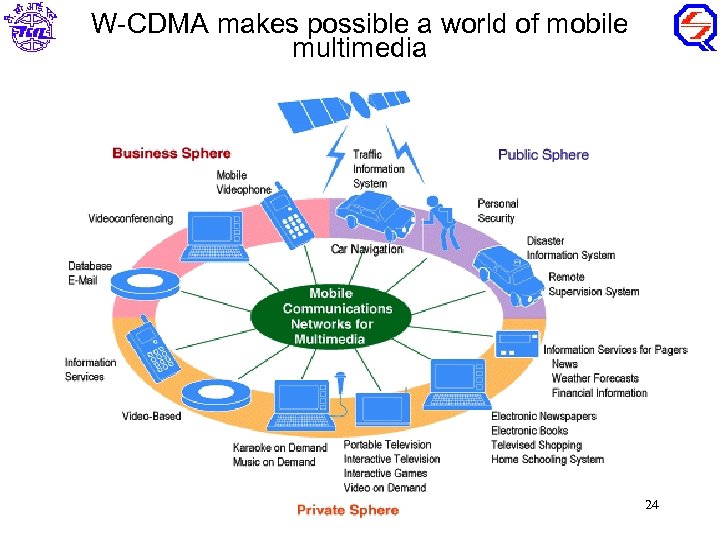 W-CDMA makes possible a world of mobile multimedia 24
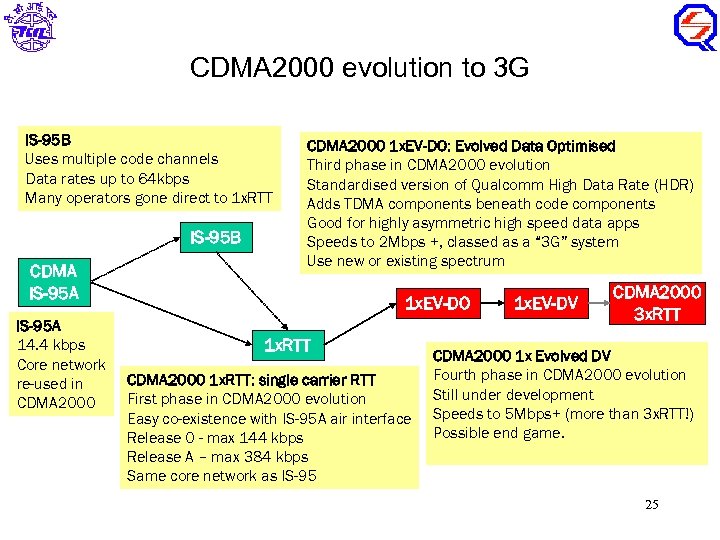 CDMA 2000 evolution to 3 G IS-95 B Uses multiple code channels Data rates up to 64 kbps Many operators gone direct to 1 x. RTT IS-95 B CDMA IS-95 A 14. 4 kbps Core network re-used in CDMA 2000 1 x. EV-DO: Evolved Data Optimised Third phase in CDMA 2000 evolution Standardised version of Qualcomm High Data Rate (HDR) Adds TDMA components beneath code components Good for highly asymmetric high speed data apps Speeds to 2 Mbps +, classed as a “ 3 G” system Use new or existing spectrum 1 x. EV-DO 1 x. RTT CDMA 2000 1 x. RTT: single carrier RTT First phase in CDMA 2000 evolution Easy co-existence with IS-95 A air interface Release 0 - max 144 kbps Release A – max 384 kbps Same core network as IS-95 1 x. EV-DV CDMA 2000 3 x. RTT CDMA 2000 1 x Evolved DV Fourth phase in CDMA 2000 evolution Still under development Speeds to 5 Mbps+ (more than 3 x. RTT!) Possible end game. 25
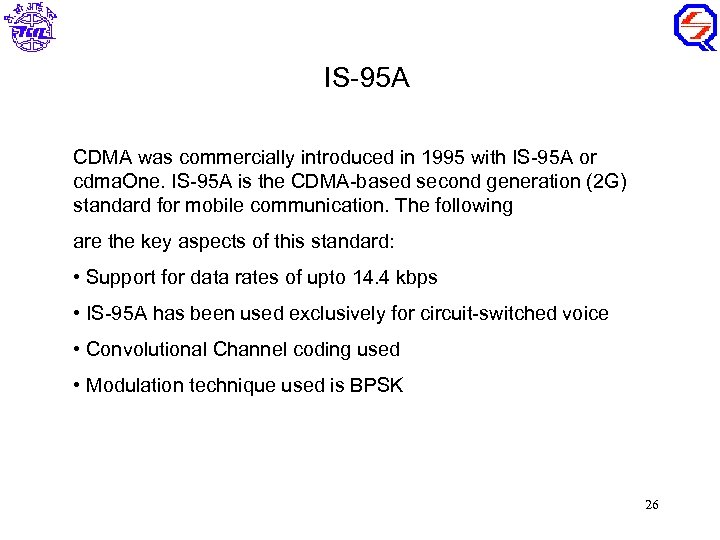 IS-95 A CDMA was commercially introduced in 1995 with IS-95 A or cdma. One. IS-95 A is the CDMA-based second generation (2 G) standard for mobile communication. The following are the key aspects of this standard: • Support for data rates of upto 14. 4 kbps • IS-95 A has been used exclusively for circuit-switched voice • Convolutional Channel coding used • Modulation technique used is BPSK 26
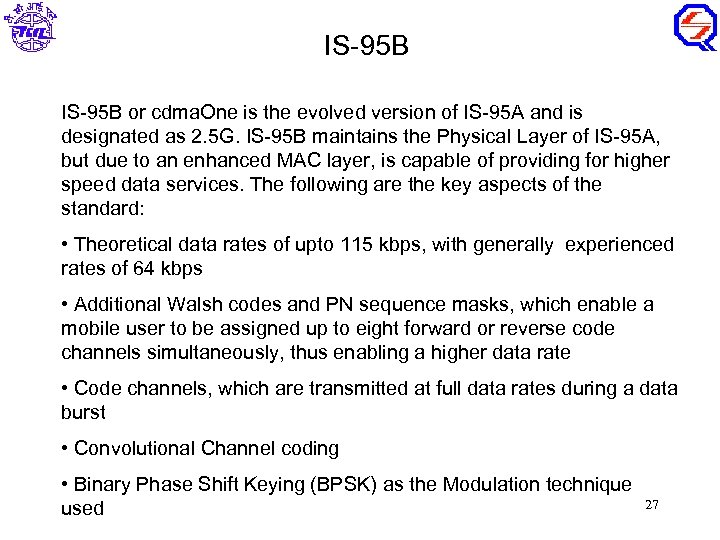 IS-95 B or cdma. One is the evolved version of IS-95 A and is designated as 2. 5 G. IS-95 B maintains the Physical Layer of IS-95 A, but due to an enhanced MAC layer, is capable of providing for higher speed data services. The following are the key aspects of the standard: • Theoretical data rates of upto 115 kbps, with generally experienced rates of 64 kbps • Additional Walsh codes and PN sequence masks, which enable a mobile user to be assigned up to eight forward or reverse code channels simultaneously, thus enabling a higher data rate • Code channels, which are transmitted at full data rates during a data burst • Convolutional Channel coding • Binary Phase Shift Keying (BPSK) as the Modulation technique used 27
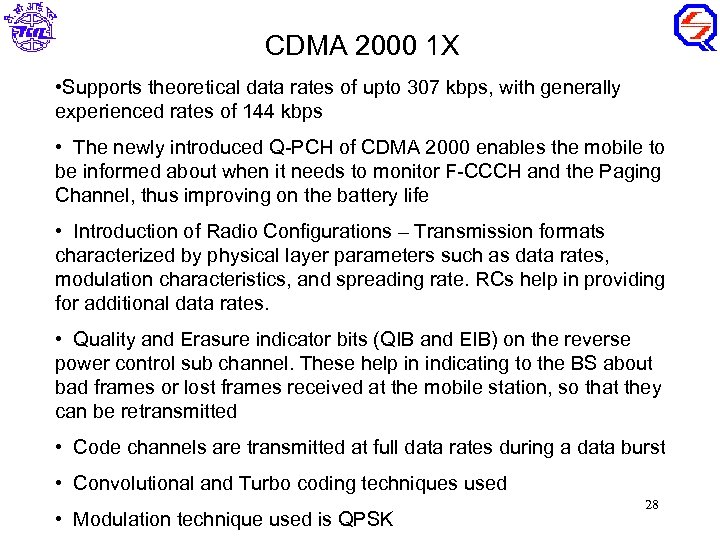 CDMA 2000 1 X • Supports theoretical data rates of upto 307 kbps, with generally experienced rates of 144 kbps • The newly introduced Q-PCH of CDMA 2000 enables the mobile to be informed about when it needs to monitor F-CCCH and the Paging Channel, thus improving on the battery life • Introduction of Radio Configurations – Transmission formats characterized by physical layer parameters such as data rates, modulation characteristics, and spreading rate. RCs help in providing for additional data rates. • Quality and Erasure indicator bits (QIB and EIB) on the reverse power control sub channel. These help in indicating to the BS about bad frames or lost frames received at the mobile station, so that they can be retransmitted • Code channels are transmitted at full data rates during a data burst • Convolutional and Turbo coding techniques used • Modulation technique used is QPSK 28
 CDMA 2000 3 X • Offering data speeds up to 2 Mbps • Using three standard 1. 25 MHz channels within a 5 MHz band • Leveraging deployment experiences, and manufacturers’ learning curves of today’s widely adopted, commercially available CDMA systems • Using Convolutional and Turbo coding techniques • Using QPSK as the Modulation technique 29
 1 X EV-DO • Supporting data rates of up to 2. 4 Mbps • Having no backward-compatibility with CDMA 2000 • Including two inter-operable modes: an integrated 1 x mode optimized for voice and medium data speeds, and a 1 x. EV mode optimized for non real-time high capacity/high speed data and Internet access • Providing Adaptive Rate Operation with respect to channel conditions • Providing Adaptive modulation and coding • Providing Macro diversity via radio selection • Providing an always-on operation of 1 x. EV-DO terminals in the active state • Using a multi-level modulation format (QPSK, 8 -PSK, 16 -QAM) 30
 1 x. EV-DV • Backward compatible with CDMA 2000. • EV-DV can be easily extended to operate in 3 x mode under the framework of current system. • Forward peak data rate : 3. 072 Mbps. • Reverse peak data rate: 451. 2 kbps. • Addition of three new channels to f/w link and reverse link for packet data operation and its support. • Adaptive modulation and coding : QPSK, 8 - PSK, 16 -QAM • Variable frame duration • Mobile station can select one of N base stations. • DTX transmission supported for saving battery life. 31
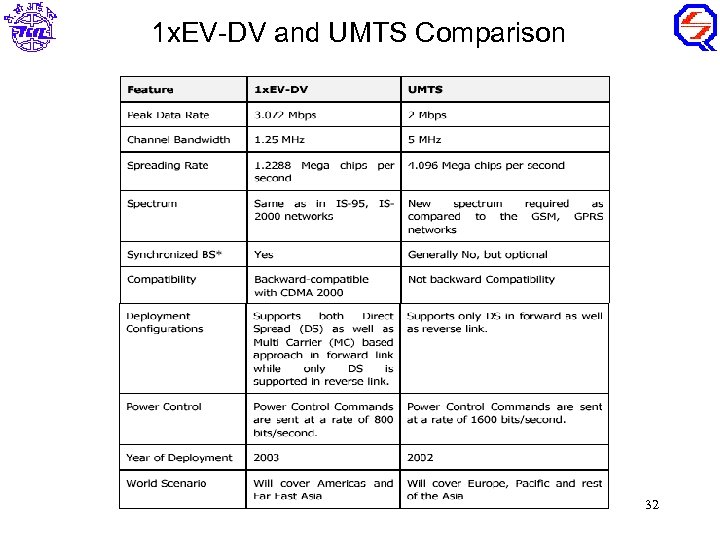 1 x. EV-DV and UMTS Comparison 32
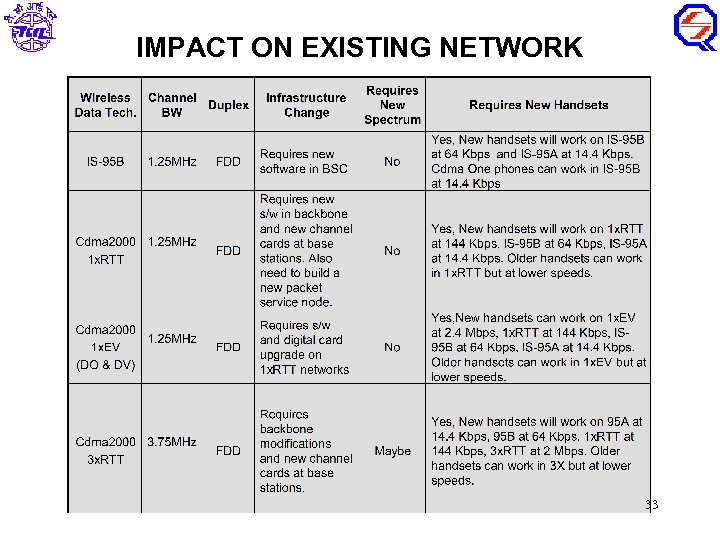 IMPACT ON EXISTING NETWORK 33
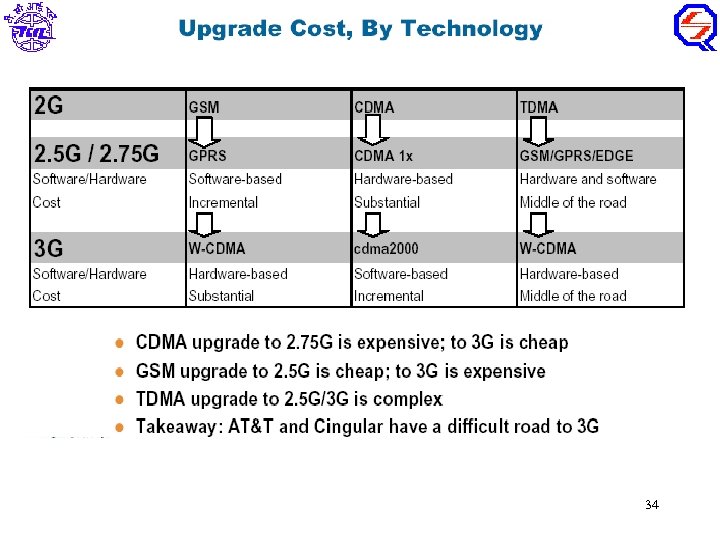 34
34
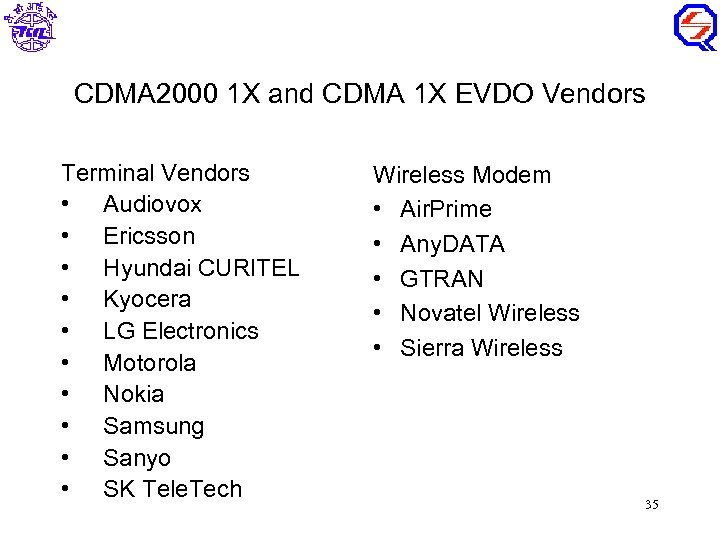 CDMA 2000 1 X and CDMA 1 X EVDO Vendors Terminal Vendors • Audiovox • Ericsson • Hyundai CURITEL • Kyocera • LG Electronics • Motorola • Nokia • Samsung • Sanyo • SK Tele. Tech Wireless Modem • Air. Prime • Any. DATA • GTRAN • Novatel Wireless • Sierra Wireless 35
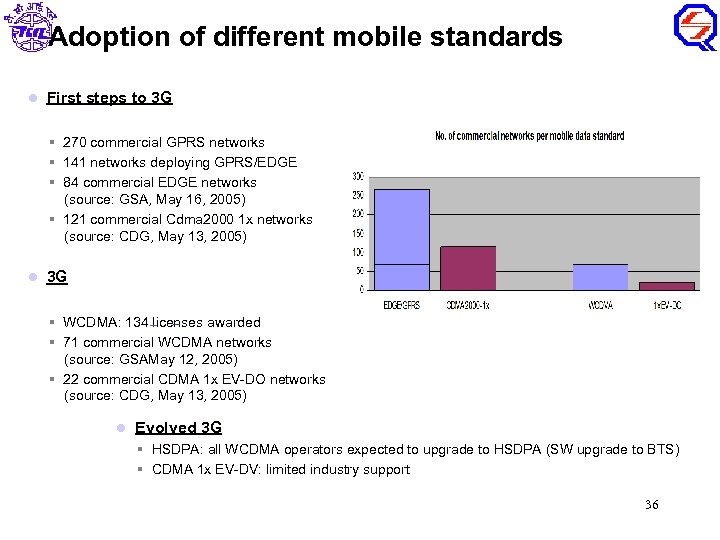 Adoption of different mobile standards l First steps to 3 G § 270 commercial GPRS networks § 141 networks deploying GPRS/EDGE § 84 commercial EDGE networks (source: GSA, May 16, 2005) § 121 commercial Cdma 2000 1 x networks (source: CDG, May 13, 2005) l 3 G § WCDMA: 134 licenses awarded § 71 commercial WCDMA networks (source: GSAMay 12, 2005) § 22 commercial CDMA 1 x EV-DO networks (source: CDG, May 13, 2005) l Evolved 3 G § HSDPA: all WCDMA operators expected to upgrade to HSDPA (SW upgrade to BTS) § CDMA 1 x EV-DV: limited industry support 36
 3 G Network Vendors: Groups and JV 1. ALCATEL + FUJITSU (Alcatel hold 66 percent of the shares of the Evolium SAS, and Fujitsu holds the rest) 2. SIEMENS + NEC (Mobisphere Ltd. , ) + CASIO / TOSHIBA 3. MOTOROLA + CISCO + FIJITSU + PIONEER + ALCATEL (Alcatel RNC, MOTOROLA Node B) 4. SAGEM + FUJITSU (Handset) 6. NOKIA + CISCO (IP Core network), 7. NOKIA + Interdigital (technology development relationship) 8. NORTEL + Matsushita/Panasonic + SAMSUNG 9. LUCENT (alone) 10. ERICSSON (alone) 11. CISCO+KPMG Cisco routeurs, KPMG consulting 37
 3. 5 G or HSDPA (High Speed Downlink Packet Access) is an enhanced version and the next intermediate generation of 3 G UMTS. It comprises the technologies that improve the Air Interface and increase the spectral efficiency, to support data rates of the order of 30 Mbps. 3. 5 G introduces many new features that will enhance the UMTS technology in future. 1 x. EV-DV already supports most of the features that will be provided in 3. 5 G. These include: • Adaptive Modulation and Coding • Fast Scheduling • Backward compatibility with 3 G • Enhanced Air interface 38
 4 G: Anytime, Anywhere Connection • Also known as ‘Mobile Broadband everywhere’ • ‘MAGIC’ – Mobile Multimedia Communication – Anywhere, Anytime with Anyone – Global Mobility Support – Integrated Wireless Solution – Customized Personal Service • According to 4 G Mobile Forum, by 2008 over $400 billion would be invested in 4 G mobile projects. • In India, communication Minister Mr. Dayanidhi Maran, has announced a national centre of excellence to work in 4 G arena. 39
 4 G: Data rate Facts • Transmission at 20 Mbps • 2000 times faster than mobile data rates • 10 times faster than top transmission rates planned in final build out of 3 G broadband mobile • 10 -20 times faster than standard ADSL services. • Companies developing 4 G technology – Cellular phone companies: Alcatel, Nortel, Motorola, – IT Companies: Hughes, HP, LG Electronics 40
 Thanks