


 Скачать презентацию Overview of 1366 -2001 Full Use Guide on
71ff1be918fbfa4259e1120c6d5b524b.ppt
- Количество слайдов: 39
 Overview of 1366 -2001 Full Use Guide on Electric Power Distribution Reliability Indices Panel Session – How to Define Major Events July 22, 2002 Presented by Cheryl A. Warren
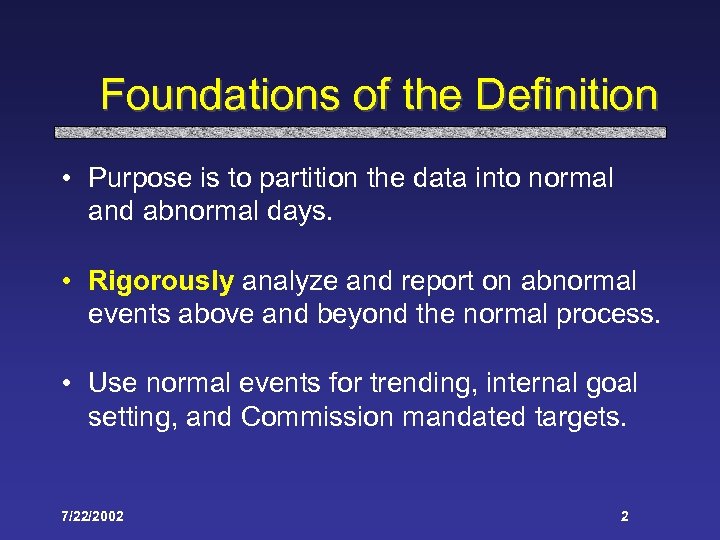 Foundations of the Definition • Purpose is to partition the data into normal and abnormal days. • Rigorously analyze and report on abnormal events above and beyond the normal process. • Use normal events for trending, internal goal setting, and Commission mandated targets. 7/22/2002 2
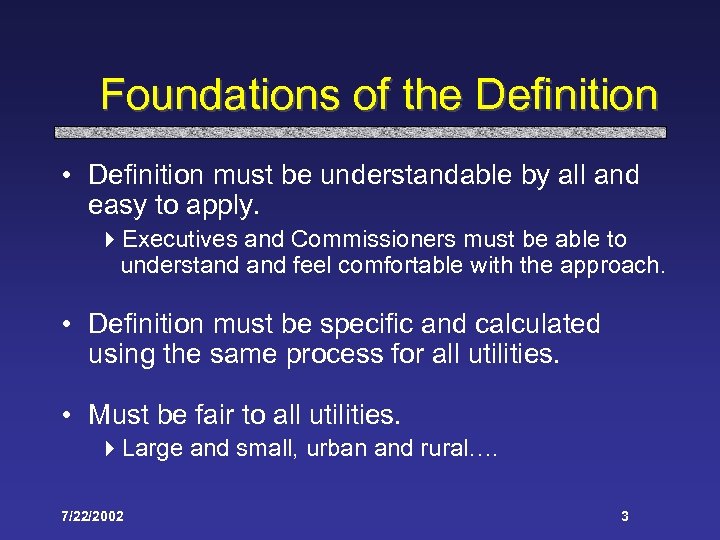 Foundations of the Definition • Definition must be understandable by all and easy to apply. 4 Executives and Commissioners must be able to understand feel comfortable with the approach. • Definition must be specific and calculated using the same process for all utilities. • Must be fair to all utilities. 4 Large and small, urban and rural…. 7/22/2002 3
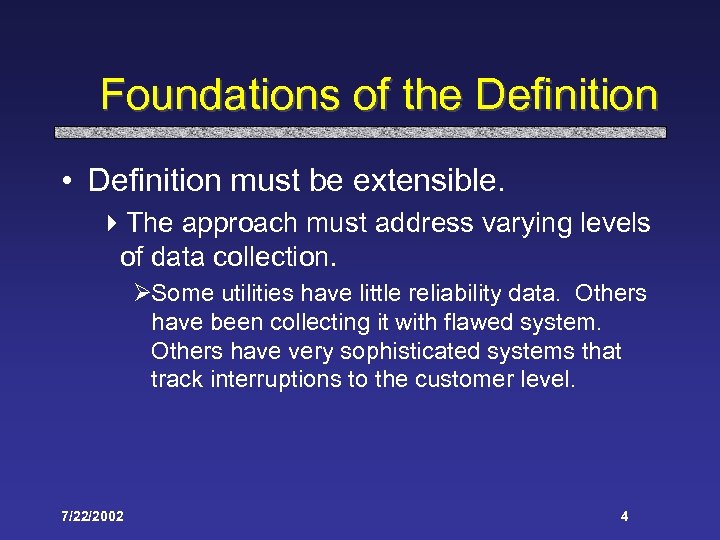 Foundations of the Definition • Definition must be extensible. 4 The approach must address varying levels of data collection. ØSome utilities have little reliability data. Others have been collecting it with flawed system. Others have very sophisticated systems that track interruptions to the customer level. 7/22/2002 4
 Process To Date • Members agreed that the current definition should be reevaluated. • A subgroup was formed to further analyze approaches. 4 Jim Bouford , Rich Christie, Dan Kowaleski, John Mc. Daniel, Dave Schepers, Cheri Warren, Charlie Williams & Joe Viglietta • Members discussed the options and performed analysis using real data. • This panel session will share some of the background behind the current thinking. 7/22/2002 5
 Summary • The assembled panel will describe 4 the proposed methodology, 4 why one is needed, and 4 potential benefits of the proposed approach. 7/22/2002 6
 Presenters • Rich Christie 4 University of Washington • Charlie Williams 4 Florida Power Corp A Progress Energy Company • Dan Kowalewski 4 Exelon – Com. Ed • Dave Schepers 4 Ameren Energy • Jim Bouford 4 National Grid 7/22/2002 7
 Major Reliability Events Self - Defining? Charlie Williams, P. E. Florida Power Senior Member IEEE
 Major Event Definitions • P 1366 (old)- 10% of customers in a 24 hour period • Regulatory Agencies - Severe Storms (Hurricane, Ice Storm, Tornado, Other) • P 1366 (new) - statistical outlier definition 7/22/2002 9
 Other Major Event possibilities • • Severe Lightning Storm Earthquake Dust Storm Other? ? ? 7/22/2002 10
 Reliability Accountability • Some events are severe - power systems cannot be reasonably or economically designed to withstand them. • What kind of events should the utility design consider? • With PBR these issues take on a potential economic impact to the utility and shareholders as well as rate payers. 7/22/2002 11
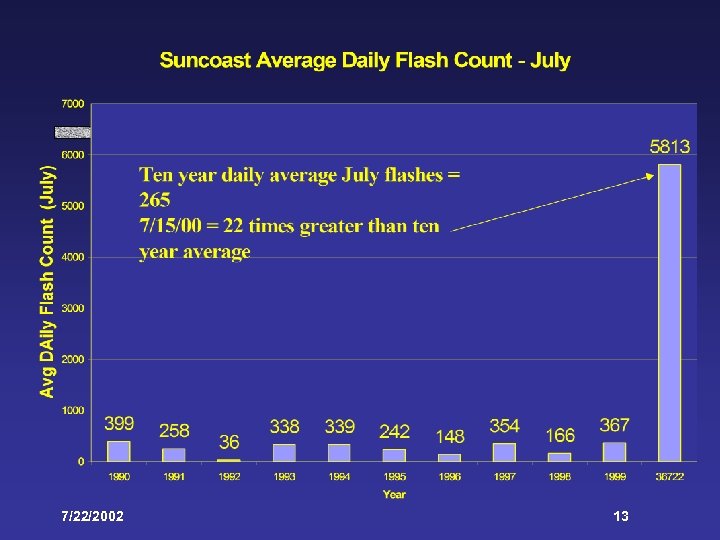
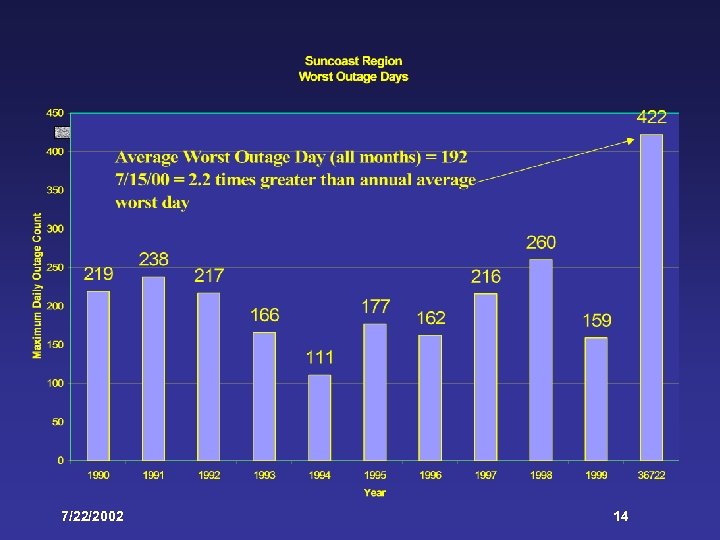
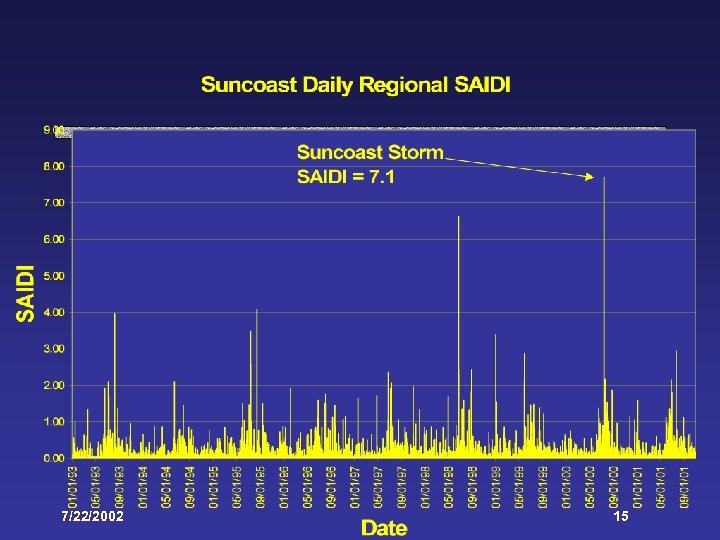
 Suncoast Lightning Storm • Major Event not defined as severe. • No definition of severe lightning by NWS • Lightning data shows it as a “once in 10 year event”. • Outside help required to assist with restoration 7/22/2002 12
 7/22/2002 13
 7/22/2002 14
 7/22/2002 15
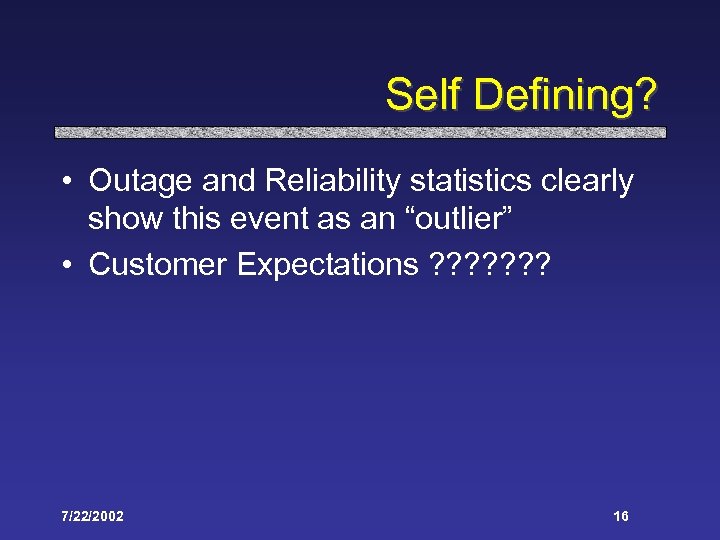 Self Defining? • Outage and Reliability statistics clearly show this event as an “outlier” • Customer Expectations ? ? ? ? 7/22/2002 16
 New Major Event Definition • Statistical process to establish “normal” reliability parameters for daily outage statistics based on historical data • Establish limits for major events • Review these limits annually 7/22/2002 17
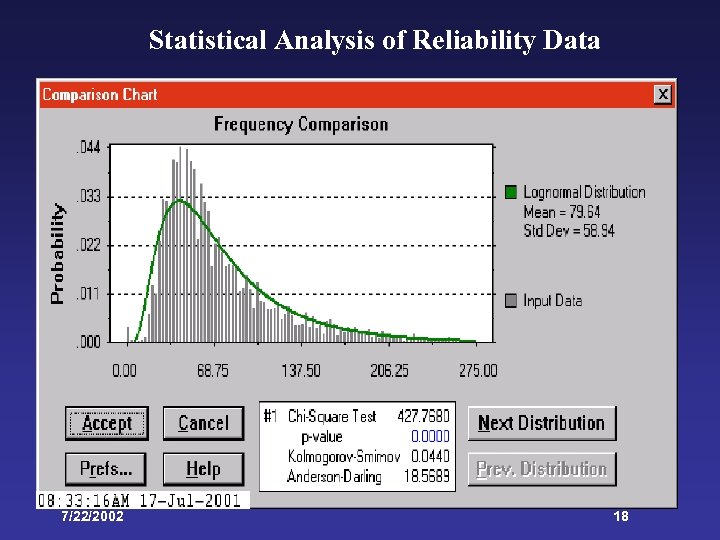 Statistical Analysis of Reliability Data 7/22/2002 18
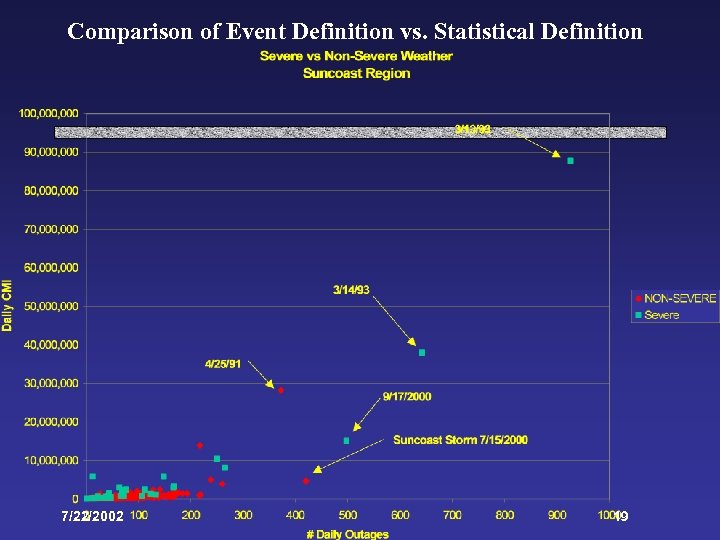 Comparison of Event Definition vs. Statistical Definition 7/22/2002 19
 Conclusion • Statistical Definition is definitive and non -ambiguous • Leaves little room for debate on major events. • Only excludes events that are of significant impact to the system. 7/22/2002 20
 IEEE Power Engineering Society Summer Meeting Reliability Surveying Criteria David J. Schepers, IEEE Member Manager, Distribution Operating Ameren - St. Louis, MO
 Why New Survey Criteria? • Desire to Benchmark 4 Utility Companies 4 Regulators • Performance-Based Rates • Continuous Improvement - Determine what makes a Difference • Need for comparative statistics 7/22/2002 22
 Problems with Current Surveys • No Company Identification • Issues of Data Accuracy 4 What’s Included/Excluded 4 Storms • Diverse Companies 4 Geography 4 Data Collection Capabilities 4 SCADA/DA Implementation 4 AMR Outage Reporting • Lack of Common Reporting Standards 7/22/2002 23
 Major Event Definition Problem • Storm-excluded indices are most valuable for benchmarking • Current published IEEE definition vague 4 Applied by 50% of respondents using 10% customers out, some >24 hours in a region (what’s a region? ) • Need a definition that puts everyone on a common standard • IEEE Working Group on System Designs new definition - Major Events 7/22/2002 24
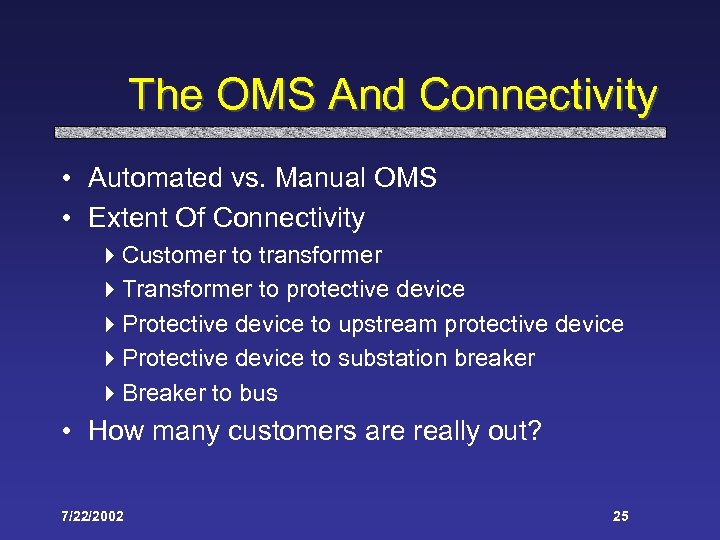 The OMS And Connectivity • Automated vs. Manual OMS • Extent Of Connectivity 4 Customer to transformer 4 Transformer to protective device 4 Protective device to upstream protective device 4 Protective device to substation breaker 4 Breaker to bus • How many customers are really out? 7/22/2002 25
 AMR Outage Reporting • Accurate maintenance outage records • Supplement phone calls for more accurate outage records 4 Number of customers affected 4 Outage start time 7/22/2002 26
 Outage Definition • Sustained vs. momentary 4 Time definition (IEEE 1366: >5 minutes) 4 Human intervention • Exclusions 4 Maintenance outages 4 Public-caused outages 4 Different definitions by cause by utility 7/22/2002 27
 DA/Scada • Affects CAIDI/SAIDI • Opportunity to change sustained interruptions into momentary (SAIFI/MAIFI) • Knowing the extent of implementation allows for better comparison 7/22/2002 28
 System Geography • Urban/Suburban/Rural • Network vs. radial • Urban radial (many feeder ties) vs. rural radial (few feeder ties) • Circuit length issues • Customer density 7/22/2002 29
 New Questions In EEI Survey • Do you have an automated OMS with Full Connectivity? • Percentage of Customers with AMR Outage Reporting • Percentage of Customers served by SCADA Substations • Percentage of Customers on Distribution Circuits with Automated Switching • Urban/Suburban/Rural Geography • Does your OMS have Partial Restoration Capability? • Will your utility identify itself for others willing to do likewise? 7/22/2002 30
 What to Report to EEI • Standard IEEE Indices 4 SAIFI, CAIDI, SAIDI, MAIFI • Percentage of Interruptions and Hours by Cause, by System Location • Actual & Normalized for Major Events • Percentage of Customers with 0, 1, 2, 3, 4, 5 or more Normalized Interruptions (CEMI) 7/22/2002 31
 Data and Indices Definitions • Use IEEE 1366 Definitions for Standard Indices • Sustained Interruptions >5 minutes • No outage types excluded other than Customer Outage caused by Customer Equipment 7/22/2002 32
 Summary • Need exists for benchmarking for utilities and regulators alike • Current surveys do not allow for accurate comparisons • More segmentation is needed and possible • EEI Reliability Survey is moving in this direction today 7/22/2002 33
 The Need to Segment (Exclude) Abnormal Events from the Calculation of Reliability Indices Presented by Jim Bouford National Grid
 I. Reasons for Measuring Reliability • • • Identification of Problems Allocation of Resources Accepted Measure of Customer Service Performance Based Ratemaking Comparison with Other Utilities 7/22/2002 35
 II. Requirements of Measurements • Comparable 4 Year-to-Year ( Trends ) 4 Utility-to-Utility ( Regulatory ) • Universally Applicable • Correlates Output to Input 7/22/2002 36
 III. Design and Operation Realities • Systems are NOT built to withstand all contingencies • Workforce levels are set to handle routine activities • Systems are designed and operated to deal with a defined level of adverse occurrences • Abnormal occurrences stress the design and/or the operation of the system and Require Abnormal Operational Response 7/22/2002 37
 IV. Simple Truths • Expected Occurrences only Require Normal Response • Abnormal Occurrences Require Abnormal Response • Abnormal Occurrences Will Distort the Measures; Requirements of Measurement Will Not be Met 7/22/2002 38
 V. What To Do • Separate Abnormal from Normal Occurrences • Review the Response to the Abnormal Occurrence • Use Normal Occurrences for Measurements 7/22/2002 39